Welcome to a brief update of the carer forum for Southwark & Lambeth. The forum is facilitated by Matthew McKenzie, carer activist and author. The online carer led group runs once a month.
Here is a brief update for November 2024. However before continuing on to the blog, here is a quick update from Southwark Council and South East London ICS aimed at carers from Southwark.
Have your say on Southwark Council’s new Carer Centre
Southwark Council would like your views to help design a new Carer Centre for unpaid carers living in Southwark, aged 18+.
Unpaid carers are people who provide care for a child, family member, friend, or neighbour who has an illness, disability, mental health concern, or who is older and needs extra support. The new Carer Centre will be located in Southwark and will offer a range of services aiming to improve the wellbeing of unpaid carers, empower them in their caring role, and support them to access health and care services and other voluntary and community services that can offer support.
An online survey is also now open to hear about what services you would like the new carer centre to deliver, with paper copies available at a range of locations in Southwark. In the new year, carers will also have the opportunity to participate in focus groups and be part of a working group to co-design the new service.
For more information about the new Carer Centre and/or to complete the survey, please visit www.southwark.gov.uk/carer-survey-2024
Quick recap
The meeting focused on the experiences and challenges of carers, with discussions on the roles and responsibilities of community mental health teams, the impact of the Mental Health Act, and the importance of mental health support for carers. The group also explored the roles of care coordinators, peer support workers, and the challenges faced by mental health patients and their families in accessing resources and support. Lastly, the meeting emphasized the rights of carers, the need for more focus on prevention and community support, and the importance of advocacy and recognition for carers.
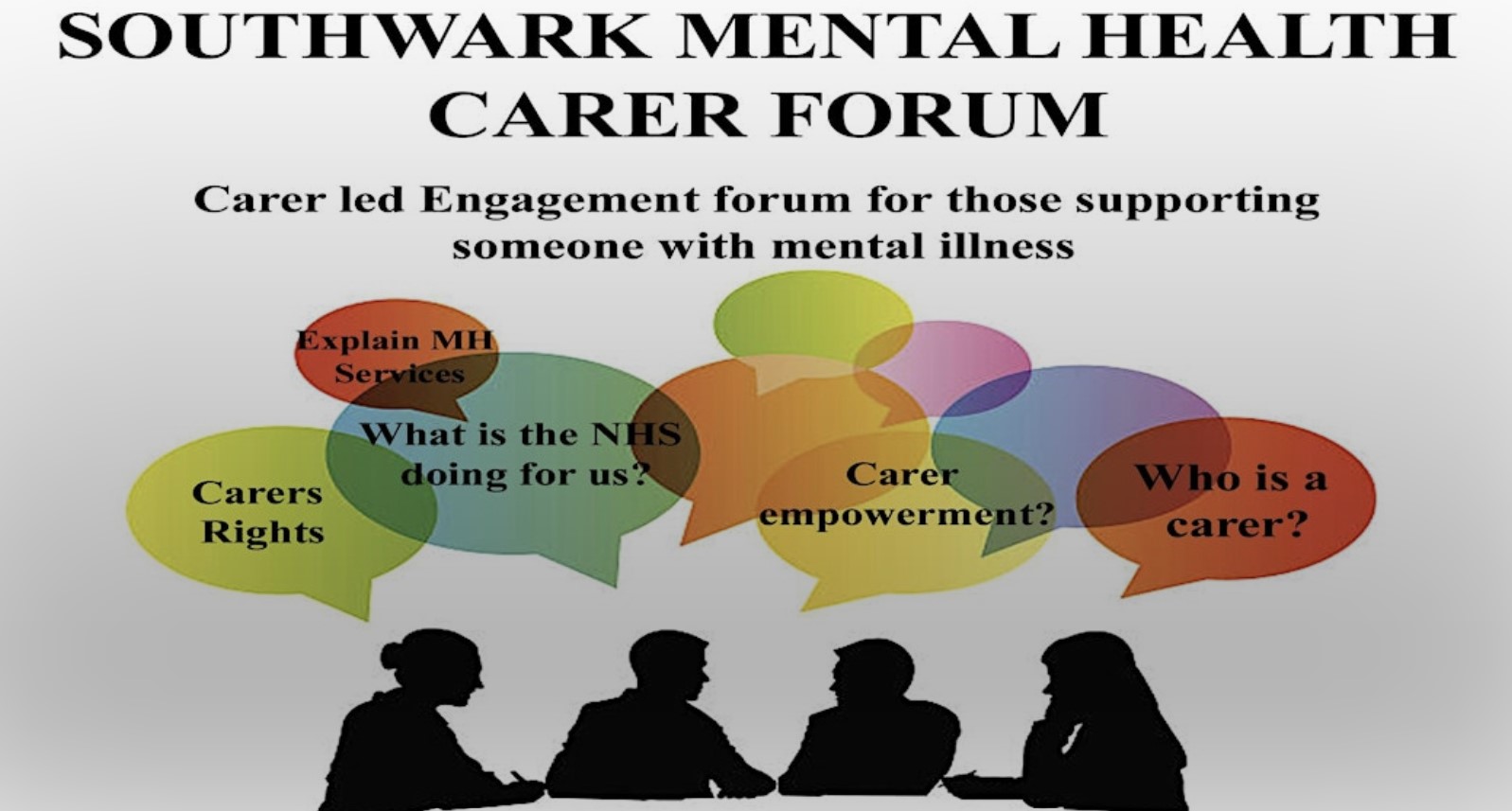
Carers Share Experiences and Challenges
In the meeting, a carer for over 20 years, shared her experiences and her role to the person she supports. A carer who is currently on a break from her role, expressed her interest in the mental health acts and her appreciation for Matthew’s blogs. Another carer for her mother diagnosed with spinal stenosis, shared her journey and her current CBT sessions to deal with her anxiety. Another carer for her adult child with a disability, expressed her commitment to being a silent listener. Then another carer for her partner, shared her struggles with isolation and the challenges of accessing mental health services for her partner.
Community Mental Health Team Roles
Matthew led a discussion about the roles and responsibilities of the community mental health team, with a focus on Southwark and Lambeth. He also mentioned the possibility of providing lectures on the topic. A new carer member, introduced herself and shared her experiences as a carer for her mother and stepfather. Another member, also shared her experiences as a carer for her son. A carer provided an update on the new Revamped Mental Health Act, explaining the stages of its passage through the House of Lords and the House of Commons. She also mentioned that the next stage would be in two weeks’ time. A representative, from PowHer, an advocacy agency, offered her assistance to those looking to make an NHS complaint in Southwark.
Mental Health Act and Carer Advocacy
In the meeting, A carer discussed the Mental Health Act and its potential impact on carers. She suggested that carers should engage with their MPs to advocate for their concerns. Another carer mentioned that she is a member of Rethink and that they have links with those preparing the bill. A carer expressed the importance of carers being updated on the Mental Health Act and encouraged them to raise their concerns with their MPs.
Community Mental Health Team Roles
Carers discussed the role of community mental health teams in Southwark and Lambeth. A carer clarified that Lambeth now uses the term “staying well centers” instead of community mental health teams, but the services remain similar. Matthew expressed concern about the high threshold for accessing community mental health team services, which could leave patients stuck. A carer emphasized the importance of prevention and community-friendly language in mental health care. Matthew also mentioned his intention to invite a manager from Southwark’s community mental health team to discuss their role, but they have not responded so far.
So he then outlined the typical roles of a community mental health team, including developing treatment plans, providing on-going support, crisis intervention, relapse prevention, therapeutic support, rehabilitation, and social integration. He also mentioned his plan to discuss the roles of social workers and care coordinators in the New Year.
Mental Health Support for Carers
Matthew discussed the importance of mental health support and the challenges faced by carers in navigating the complexities of mental health services. He highlighted the need for a single person to advocate and support carers, and suggested that mental health trusts should have a similar service to Cygnet regarding carer advocates. A carer added that would be beneficial for carers, and another carer asked for clarification on the role of an independent mental health advocate. Matthew also discussed the role of community mental health teams, emphasizing their responsibility for conducting assessments, diagnoses, and risk assessments, as well as monitoring physical health. He encouraged carers to raise questions and concerns, even if they don’t have direct access to community mental health teams.
Community Mental Health Team Overview
Matthew discussed the role and functions of a Community Mental Health Team (CMHT). He highlighted that CMHTs develop accurate understanding of a person’s needs, create individualized treatment plans, and provide ongoing support and monitoring. Matthew also emphasized the importance of carers and family members being involved in the treatment process. He mentioned that CMHTs offer various therapeutic services, including counselling, cognitive behavioural therapy, and social skills training. Matthew also noted that CMHTs work in partnership with other services such as housing, employment, and substance abuse programs. He concluded by mentioning the typical members of a CMHT, including consultants, psychiatrists, psychologists, psychiatric nurses, social workers, and occupational therapists. Dione, a psychotherapist, then introduced a monthly group for black carers group in Southwark.
Mental Health Challenges and Support
Carers then discussed the challenges faced by mental health patients and their families, particularly in relation to access to resources and support. Matthew highlighted the importance of peer workers in supporting mental health patients and the need for more resources in the community. A carer emphasized the need for a more imaginative and visionary approach to community living, and Yvonne suggested a more sensitive approach to language around mental health patients occupying hospital beds. The group also discussed the Darzi report and the need for more focus on prevention and community support. Matthew shared his ongoing work on developing resources for carers, including a blog about PCREF. The conversation ended with Matthew sharing his most up-to-date resource on carers’ rights.
Carers’ Rights and Advocacy Importance
Matthew discussed the rights of carers, emphasizing the importance of information, education, and advocacy. He highlighted the right to information about the person’s condition, treatment options, and care plans, as well as the right to be trained on how to support the person effectively. Matthew also stressed the importance of setting boundaries and respecting privacy, as well as the right to participate in decision-making and advocacy. He mentioned the new carers’ leave act and the need for carers to be recognized as partners in care. Matthew also emphasized the need for carers to be acknowledged and validated for their emotional experiences, and to have access to support services. He encouraged carers to attend the monthly group meetings and to advocate for themselves and the person they care for.
 A Caring Mind