By Matthew McKenzie – Facilitator of Cancer Caregiver group
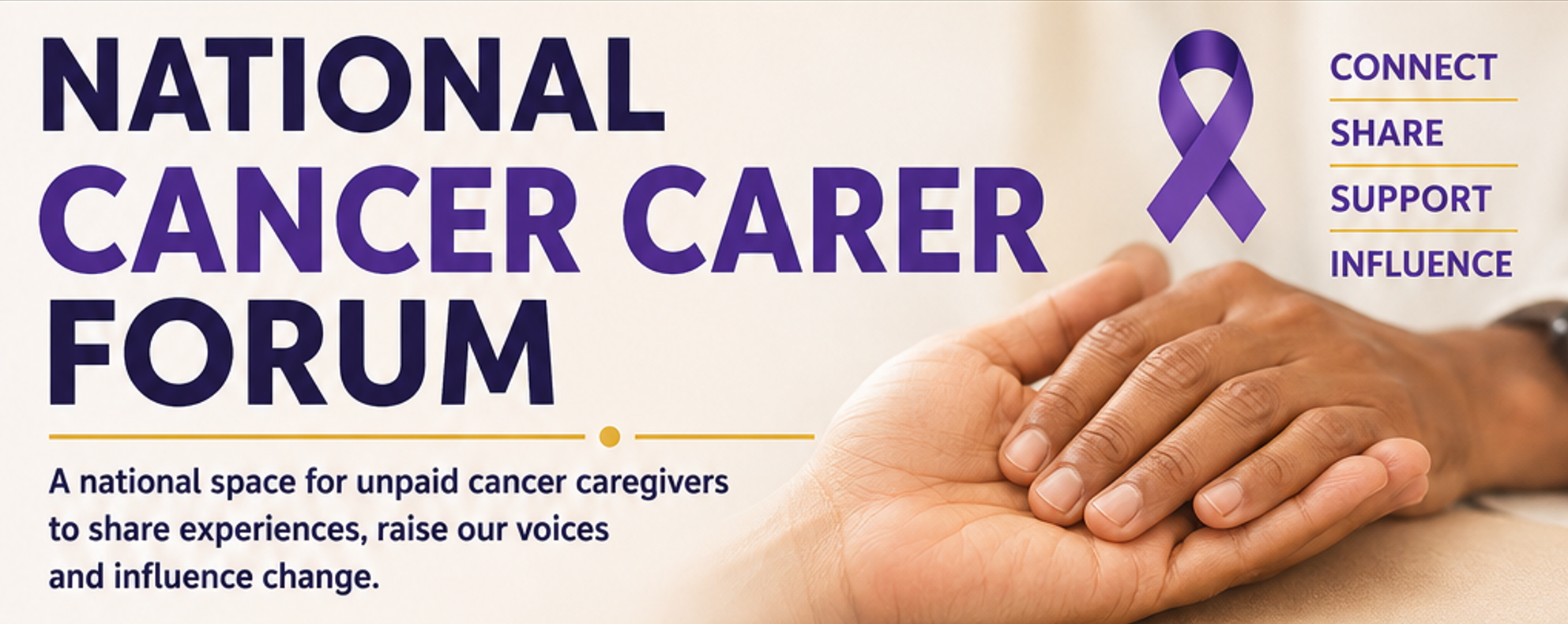
Welcome to the October update from my National Cancer Caregiver Forum, reflecting on our meeting held on 30 September.
I chair this forum to help bring greater attention to the experiences of people supporting someone living with cancer. Cancer care can involve a whirlwind of appointments, investigations, treatment decisions and changes at home. Behind all of this, family members, partners and friends often provide considerable practical and emotional support.
By Matthew McKenzie – Chair of ethnic MH Carer forum / Chair of Cancer Carergiver group
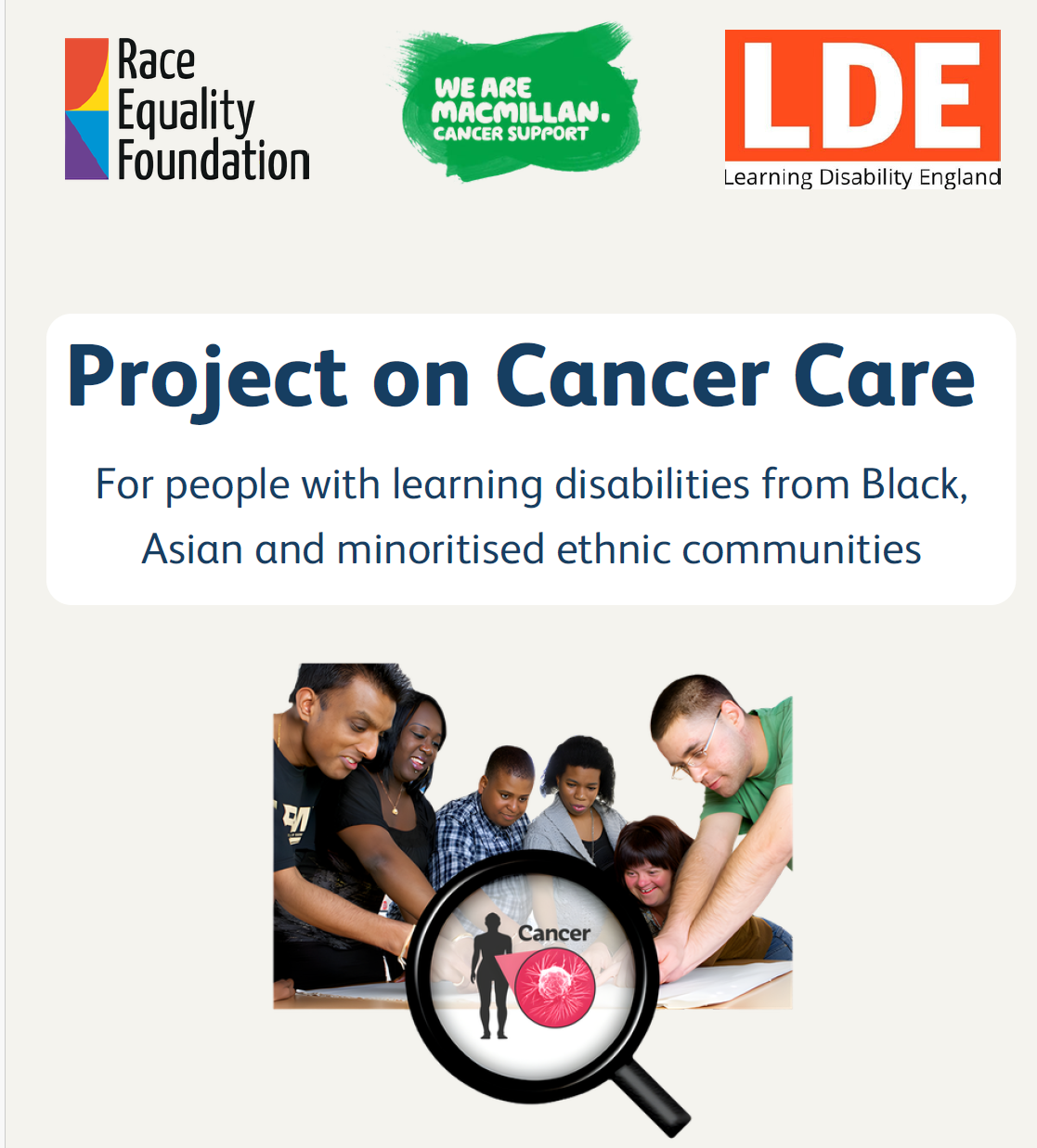
I was recently sent information about an important cancer care project being led by Learning Disability England in partnership with the Race Equality Foundation which is funded by Macmillan Cancer Support.
The project aims to improve cancer care for people with learning disabilities from Black, Asian and minoritised ethnic communities. A working group is being established involving self-advocates, family members and friends who have experience of cancer.
By Matthew McKenzie – Facilitator of Cancer Caregiver group
It has been a long while since I published a full update from my National Cancer Caregiver Forum. Although I have continued working to raise awareness of unpaid cancer caregiving, this latest meeting reminded me why the forum remains so necessary.
The National Cancer Caregiver Forum provides an online space for people caring for someone affected by cancer, former carers, researchers and organisations interested in improving support. It combines peer support with engagement, research and opportunities to influence cancer services.
Why cancer caregivers still need a voice
I opened the forum by reflecting on the shortage of dedicated groups for unpaid cancer carers. There are many services and support groups for people receiving cancer treatment, as there should be, but far fewer spaces focused specifically on the partners, relatives and friends supporting them.
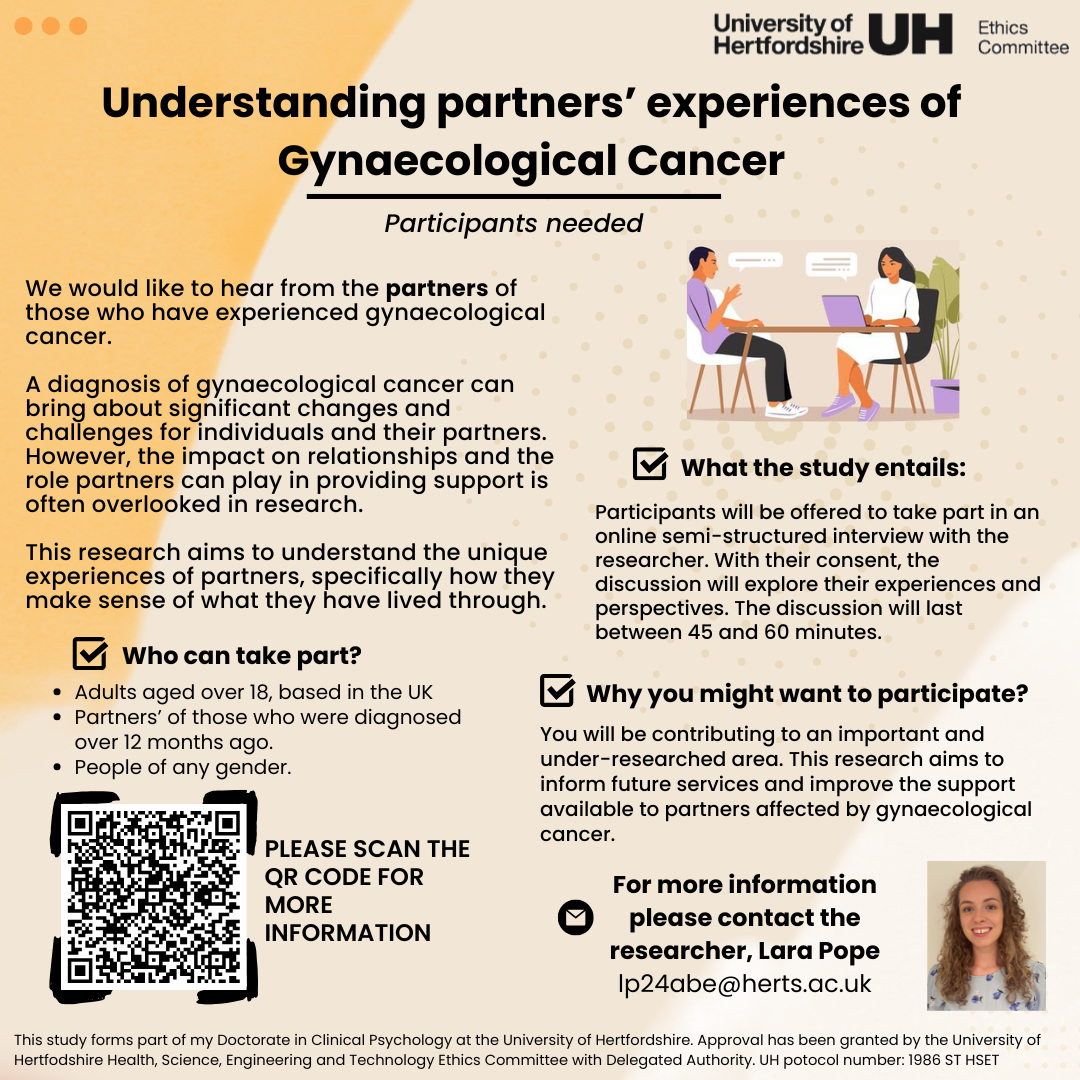
I am pleased to share a research opportunity from Lara Pope, a Doctoral Clinical Psychology student at the University of Hertfordshire, who is looking to hear from partners of people who have experienced gynaecological cancer.
As someone who campaigns for greater recognition of unpaid carers and those supporting someone affected by cancer, I know that the experiences of partners can sometimes become overshadowed by the understandable focus on the person receiving treatment.
Yet partners can experience considerable emotional, practical and relationship changes of their own.
About the research
“Exploring partners’ experience of gynaecological cancer: An Interpretive Phenomenological Analysis.”
The research aims to better understand what it is like to be the partner of someone who has experienced gynaecological cancer, including how partners navigate their own needs, relationships, identity and intimacy.
Lara is particularly keen for the research to reach people whose voices can sometimes be less visible in research, including male partners, people from Global Majority communities and LGBTQ+ communities.
Who can take part?
You may be eligible if you:
Are aged 18 or over
Live in the UK
Speak English
Are the partner of someone diagnosed with gynaecological cancer at least 12 months ago
There are some additional eligibility considerations which Lara can discuss with anyone interested in participating.
What does taking part involve?
Participants will take part in an online semi-structured interview, providing an opportunity to talk about their experiences and perspectives as a partner.
The interview will last approximately 45–90 minutes.
Participants can choose either a £20 Love2Shop voucher or have £20 donated to one of three selected cancer charities in recognition of their participation.
The importance of the research
Cancer does not only affect the person receiving the diagnosis.
Partners may find themselves providing emotional support, attending appointments, managing additional responsibilities and trying to support the person they love while also dealing with their own fears and emotions.
Research that listens directly to partners can help improve understanding of these experiences and potentially inform recommendations for services, professionals and organisations supporting families affected by cancer.
Interested in taking part?
Please see the research recruitment poster accompanying this article, including the QR code for further information.
You can also contact the researcher directly:
Lara Pope Doctoral Clinical Psychology Student University of Hertfordshire Email: lp24abe@herts.ac.uk
By Matthew McKenzie – Chair of Cancer Caregiver group
Supporting a loved one through a cancer diagnosis is a journey that often goes unseen. Family members, partners, friends, and other caregivers provide emotional support, help navigate appointments, and stand alongside patients during one of the most challenging periods of their lives. Yet their experiences are rarely heard.
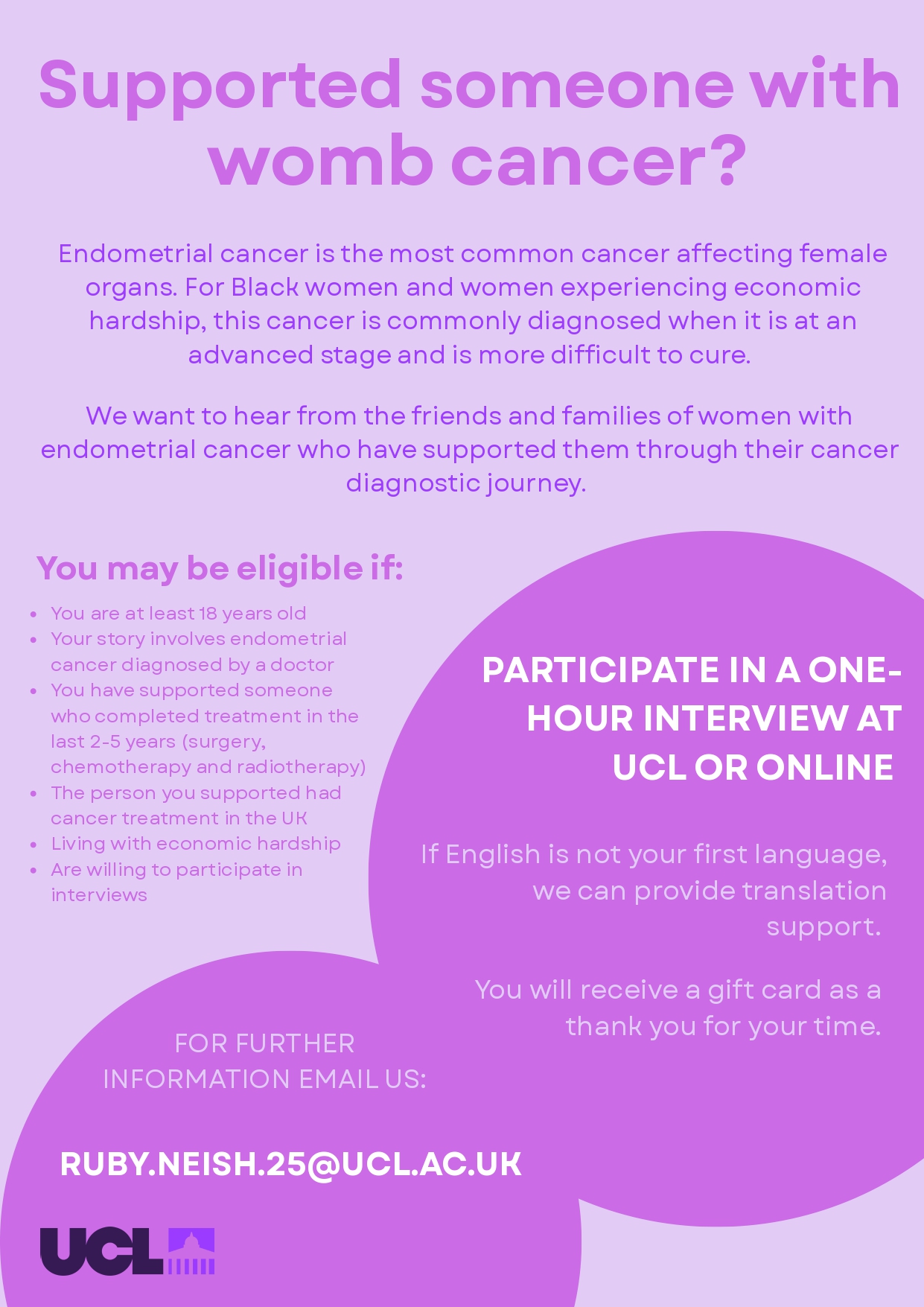
Researchers at University College London (UCL) are inviting people who have supported someone with endometrial (womb) cancer to take part in a research study exploring the cancer diagnostic journey. The study is particularly interested in hearing from people who have supported women experiencing economic hardship, as well as Black women, who are more likely to be diagnosed with endometrial cancer at a later stage, when treatment can be more difficult.
Your Story Matters
Every caregiver’s experience provides valuable insight into the challenges people face before, during, and after a cancer diagnosis. By sharing your story, you can help researchers better understand the barriers to timely diagnosis and identify ways to improve support for future patients and their families.
Every year on 4 February, World Cancer Day brings people together to raise awareness, inspire action, and support everyone affected by cancer. This year’s theme, United By Unique, reminds us that every cancer experience is different yet no one should face it alone.
Behind many cancer journeys are unpaid caregivers. They are partners, friends, parents and family members who provide emotional support, organise appointments, manage daily routines, and help loved ones navigate some of life’s most difficult moments. Their contribution is invaluable, but too often it goes unseen.
To mark World Cancer Day 2026, I have created a short video highlighting the vital role of unpaid cancer caregivers and the importance of fair, person-centred care across the UK. The video also reflects key messages from Macmillan Cancer Support, including the urgent need to address inequalities in cancer care and ensure that everyone receives the support they need, when they need it most.
Also for World Cancer day 2026comes alongside the newly released National Cancer Plan for England, which outlines ambitions to improve early diagnosis, treatment and personalised support so more people can live well with and beyond cancer. You can read more about the Plan here: https://www.gov.uk/government/publications/national-cancer-plan-for-england
At least every 75 seconds, someone in the UK is diagnosed with cancer. In that moment, lives change not only for the person diagnosed, but also for those who step into caregiving roles. By recognising caregivers and amplifying their voices, we can help build a more compassionate and supportive future for everyone affected by cancer.
This World Cancer Day, we invite you to take a moment to reflect, learn, and share. By raising awareness and working together, we can support unpaid caregivers, challenge inequalities in care, and help create a future where no one feels lost or alone.
Welcome to a brief update from Carer activist Matthew McKenzie on the national cancer carer forum.
This group is online and is a mix of a peer group and engagement for those who care for someone with cancer.
Quick update for the Cancer carer group October 2024
Matthew, a mental health advocate, hosted the National Cancer Carers Forum and discussed the challenges of being a cancer caregiver, emphasizing the importance of understanding the diagnosis and treatment plan, seeking support, and planning for the future.
Also discussed was practical day-to-day care for someone undergoing cancer treatment, the importance of self-reflection and mental health support for carers, and the need for caregivers to advocate for patients and manage potential side effects of treatments. The conversation ended with requests for future discussions on accessing clinical trials, supporting caregivers’ mental health, and guidance on what to do if the primary caregiver is unavailable.
Understanding Diagnosis and Treatment Plans
Matthew discussed the importance of understanding the diagnosis and treatment plan for a loved one, particularly in mental health cases. He emphasized the need to be aware of any side effects from medication or treatment and to relay these concerns to the healthcare professionals. Matthew also mentioned the potential for a future session focusing on engaging with the NHS professionals and understanding who to ask questions to at different stages of the cancer journey.
Cancer Caregiving, Self-Reflection, and Planning
Matthew discussed the importance of self-reflection and planning for future recovery and well-being, particularly in the context of cancer caregiving. He emphasized the need for mental health support for cancer carers emotional struggles and the importance of setting goals and monitoring changes in the condition of the loved one. Matthew also stressed the importance of educating oneself about the cancer condition and seeking support from different groups. He suggested that training and workshops could be beneficial for gaining insight and planning for the future
Caregiver Challenges and Emotional Support
Matthew discussed the challenges faced by caregivers in advocating for patients and managing potential side effects of treatments. He suggested that caregivers should attend medical appointments to stay informed and asked for questions to be emailed to him for further research. Matthew also emphasized the importance of emotional support for both the patient and the caregiver, suggesting that caregivers should be sensitive to the patient’s feelings and avoid constant positivity. He mentioned that he would run a group again in the next month to further discuss these topics.
This concludes the brief update of the National cancer care group for October
We dont often always notice, but behind someone diagnosed with cancer is usually a close relative or friend. Often we focus on what support can be provided to the cancer patient. The person affected by this awful disease can be fighting for their very life and will need all the support they can get.
but what about the cancer caregiver?
All too often we may forget that the carer will need support for themselves as well. It might not even dawn upon cancer carers as they focus all their efforts on caring for their loved one. It might be a partner caring for their other partner, a young carer supporting their parent. Or even a parent caring for an elderly relative. The caring situations can be long, complex and emotionally trying.
The situation above and many other reasons are why we need to raise awareness for cancer caregivers. It can be so easy to be hidden as a carer and hope for the best. Just because the carer is not suffering the physical and emotional affects of cancer, does not mean they should not be given support.
With Cancer Support Macmillan being the UK’s leading charities fighting against cancer, I help raise awareness of families affected by Cancer. Cancer is not contagious, but anxiety, uncertainty and depression cancer brings will affect those close by.
Not everyone will think of themselves as a carer, they are more than happy to focus all their efforts just so their loved ones see another day. It is so important we stress to someone caring that they do have access to support and this includes their carer’s rights.
No one should have to give care if it makes their quality of life suffer. Those caring for someone might need emotional support. They might even need their caring situation assessed, especially if the carer is unable to work. Some people caring for someone with cancer might actually need time off for work to support the cancer patient. This links to carer’s rights at work.
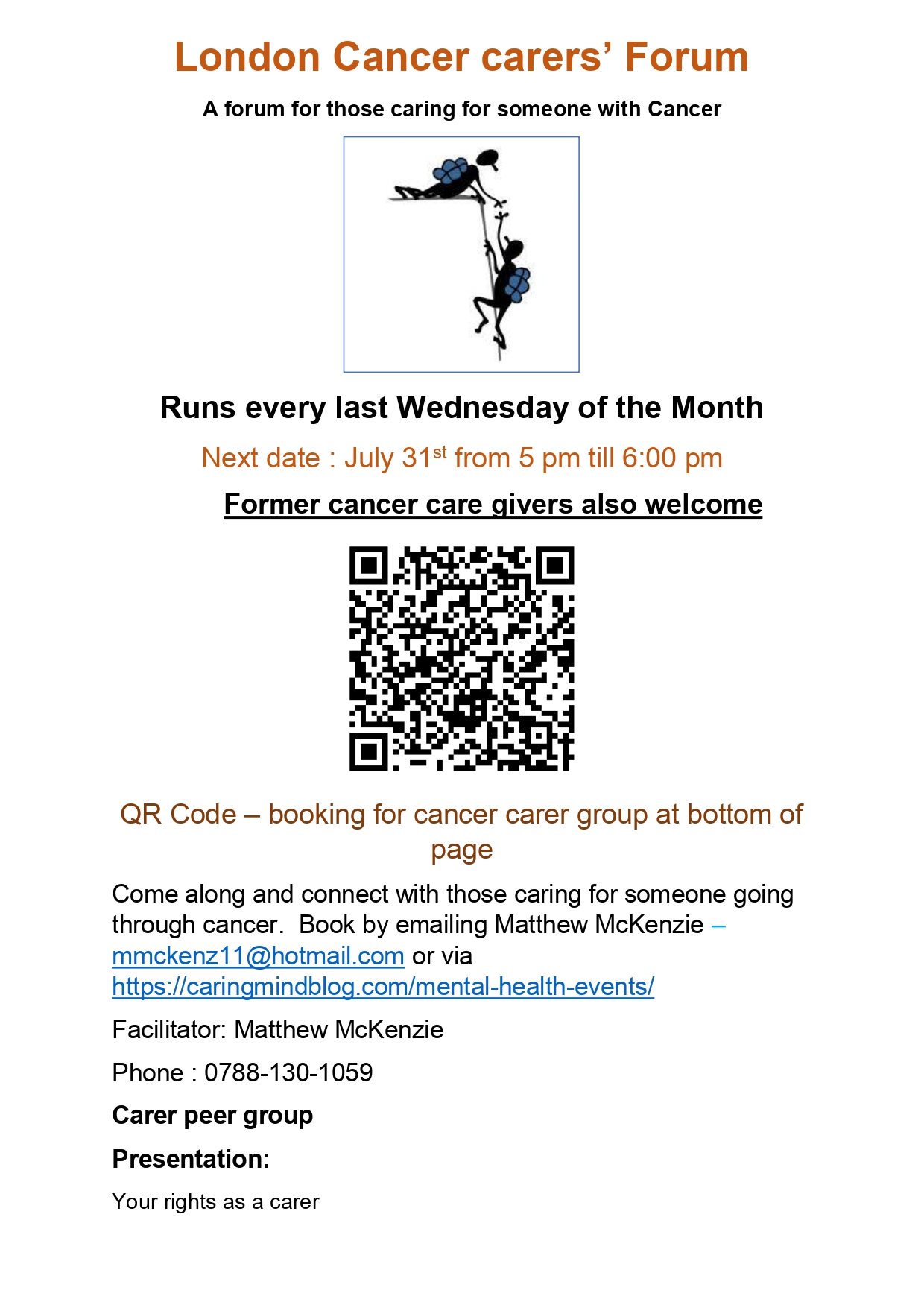
With the London Cancer carer forum, which I run online for the last Wednesday of the month. I seek to bring cancer carers together to hear experiences and feedback. Caring for someone with cancer is not the same as caring for someone with a broken leg. Sometimes we need to be heard by those who just “Get it!”. Cancer carers will not feel judged or feel as if they let someone down. Caring for someone without being heard or being connected can lead to isolation. Carers can feel they are coping by themselves without an outlet so it is important a group can provide some peer support.
If carer isolation was not the main issue, then there is advocacy and navigating the health and social care system. Not everyone will be skilled on knowing who to ask and what to ask if their caring role changes. Advocacy and health system guidance can be useful when a carer does not know where to turn. It is important carers have a chance to be referred to local support and be assessed on challenges in their role.
Cancer is one of the most difficult and damaging illness to impact friends and families. It could happen to any of us and it is so important we get the knowledge to lessen the impact. Please check out Macmillan’s London Cancer Community Newsletter for August 2024 for more information about Matthew McKenzie’s Cancer carer group and other cancer support initiatives below.
Welcome to another update from Carer activist Matthew McKenzie. I run many carer groups aimed at unpaid carers, one of them focuses on the experences of those caring for someone with Cancer.
Caring for a close relative can be an isolating experience, especially when trying to navigate the health and social care system. Carers can often be providing care and support behind the scenes almost forgetting about their own health and care needs.
If you are caring for someone with cancer, feel free to check out my next carer forum which I run once a month online for the last wednesday of that month.
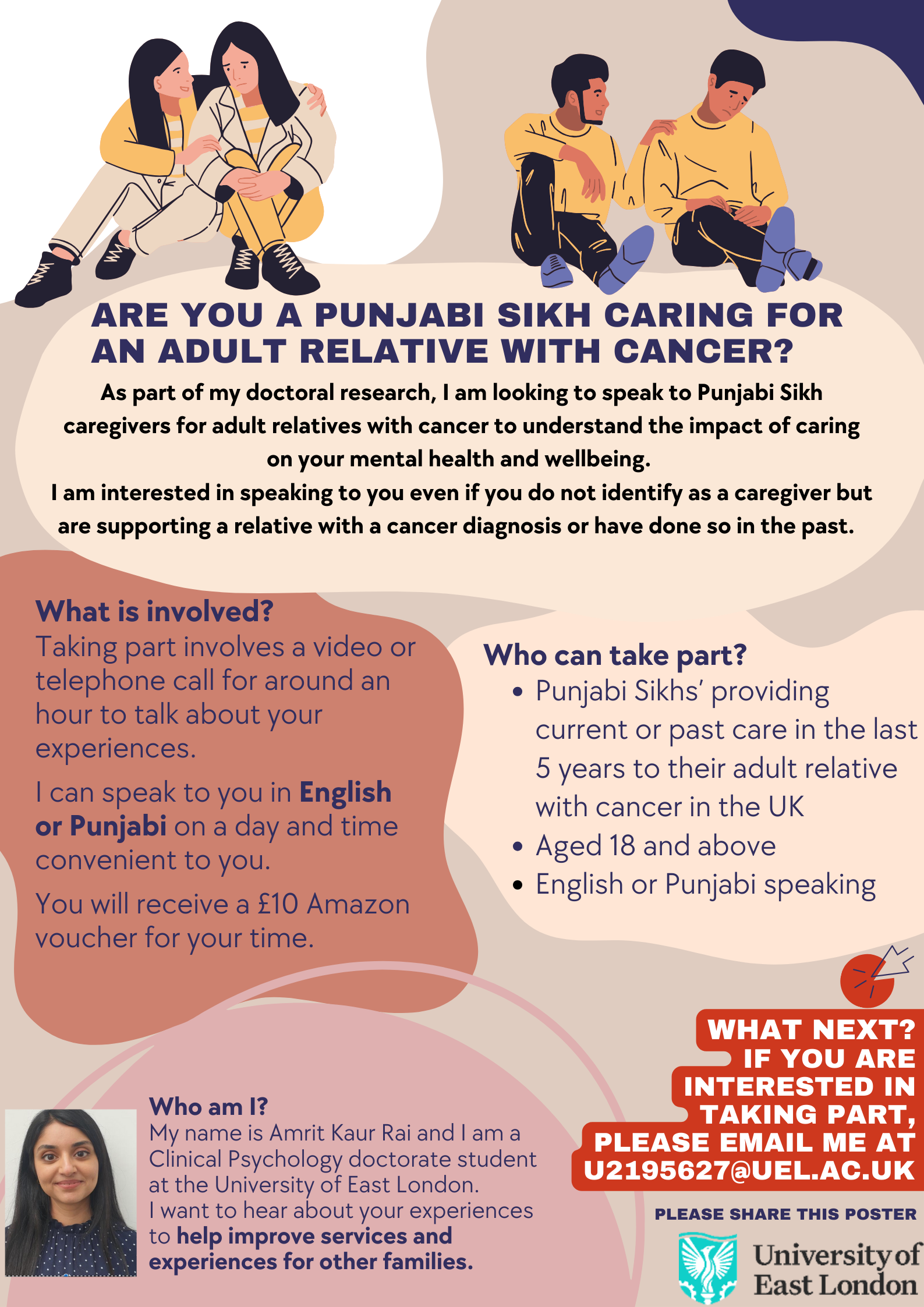
I will also cover carer rights. Plus for those from minority backgrounds there is an exciting opportunity to share your experiences. We can often ignore those from ethnic groups providing support and unpaid care.
So Amrit Kaur from East London university is conducting research to hear from Punjabi Sikhs who have cared for someone with cancer. Please see poster below for more details or email Amrit at u2195627@uel.ac.uk
Welcome back to my carer website. As you might already know I faciliate the London Cancer Caregiver group. The group is supported by several London NHS trusts who also seek feedback on cancer services at 3 of their 8 hospitals.
You can take part
If you have been diagnosed with, or treated for cancer at Hammersmith, Charing Cross or St Mary’s hospitals within the last 12 months.
Or
If you have supported someone important to you who meets the above criteria. For example, you have attended appointments with them or helped them understand information.
If you wish to send feedback please contact – imperial.userinsights@nhs.net