IT Officer for London School of Osteopathy and a Carer representative for Maudsley. As you can see, I have many interests shown off my blog. I hope to keep it updated with posts and more things to come soon.
By Matthew McKenzie – Carer and Carers UK Ambassador
As unpaid carers, many of us know what it feels like to operate in the background. We juggle complex health systems, care for our loved ones, and manage our own lives, all too often feeling invisible.
That is why I am excited to share a major milestone for our community.
The Department of Health and Social Care (DHSC), alongside the Departments for Education, Business and Trade, and Work and Pensions has officially launched the Unpaid Carers Action Plan: Recognize, Refer, Reach.
This is England’s first-ever cross-government action plan dedicated entirely to supporting unpaid carers.
I was honored to attend the official launch event to represent our community, meet with Minister for Care Stephen Kinnock MP, and participate in the official DHSC launch video.
This isn’t just another policy document; it is a commitment across multiple government sectors to drive real, practical change.
The plan is built around three core pillars:
1. Recognise
Carers must be identified early. One of the most exciting digital updates is a new “MyCarer” section being introduced on the NHS App, allowing us to easily register our caring role so healthcare staff know who we are from the start.
2. Refer
No carer should have to navigate the system alone. This pillar focuses on making sure we are directed to local carer centres, financial advice, and emotional support early on. Crucially, it aims to ensure we are formally included in major healthcare decisions, like hospital discharge planning.
3. Reach
Caring shouldn’t mean giving up on your own future. For working carers, the plan explores paid carer’s leave and will require large employers (250+ staff) to publish carer support plans from spring 2027. For young carers, it means stronger support within schools so their education doesn’t suffer.
A Message to My Fellow Carers and Carer Centres
For years, we have argued that caring is not just a “health” issue, it impacts our jobs, our education, our finances, and our mental health. Seeing four government departments finally come together to address I feel is a massive step forward.
To my fellow unpaid carers: Please know that using your voice gives you a chance at being heard. It is important to get carers “on the map” to be recognised, and this plan is a direct result of carers sharing their lived experiences.
To Carer Centres and Forums: This action plan is a powerful tool for us. It gives us a framework to hold local services accountable and ensure the “Recognise, Refer, Reach” goals are delivered on the ground.
Of course change doesn’t happen overnight, but this plan gives us a vital foundation to build on. Let’s keep pushing, keep connecting, and make sure every single unpaid carer gets the recognition and support they deserve.
A fantastic new opportunity from King’s College London is inviting unpaid carers and members of the public to capture these experiences through photography.
Free Online Photography Workshops
Whether you’ve never taken a photograph beyond snapping pictures on your phone or you already enjoy photography, these free online workshops are designed for everyone.
You’ll learn how to:
Use your smartphone to take more meaningful photographs.
Participants will have the opportunity to submit their photographs to be displayed at the DUALITY: Journeys of Ageing and Multiple Long-Term Conditions community exhibition.
The exhibition celebrates the real-life experiences of people living with long-term health conditions, those who support them, and the communities around them.
Join the DUALITY Community Event
The exhibition forms part of a free community event taking place at Bush House, King’s College London.
Date: Tuesday 8 September Time: 4:00pm – 7:30pm
Visitors can enjoy:
A community photography exhibition.
Conversations with people who have lived experience of long-term conditions.
Information from local health and community organisations.
A discussion about realistic ways to include exercise and wellbeing in everyday life.
Complimentary refreshments.
The event is open to everyone, but registration is required as places are limited.
If you’re an unpaid carer and would like to explore your creativity while helping raise awareness of the realities of caring and long-term health conditions, we encourage you to register for these free workshops.
Places are limited, so early booking is recommended.
This opportunity is free, welcoming, and open to everyone, no photography experience required.
This week (6–12 July) marks Alcohol Awareness Week 2026, organised by Alcohol Change UK. This year’s theme, “Alcohol and Me,” encourages us to take a moment to reflect on our own relationship with alcohol and the impact it can have on our health, mental wellbeing, relationships and everyday lives.
For many unpaid carers supporting someone with a mental health condition, life can be emotionally demanding. While we often focus on the person we care for, it’s just as important to look after our own wellbeing. This campaign reminds us that seeking support, talking openly and making small positive changes can make a real difference.
To support this important awareness week, I’ve created a new video on my YouTube channel, A Caring Mind, exploring why Alcohol Awareness Week matters, particularly for carers and families affected by mental ill health.
If this post resonates with you, please share the video to help raise awareness, reduce stigma and remind carers that their wellbeing matters too.
By Matthew McKenzie – Chair of Cancer Caregiver group
Supporting a loved one through a cancer diagnosis is a journey that often goes unseen. Family members, partners, friends, and other caregivers provide emotional support, help navigate appointments, and stand alongside patients during one of the most challenging periods of their lives. Yet their experiences are rarely heard.
Researchers at University College London (UCL) are inviting people who have supported someone with endometrial (womb) cancer to take part in a research study exploring the cancer diagnostic journey. The study is particularly interested in hearing from people who have supported women experiencing economic hardship, as well as Black women, who are more likely to be diagnosed with endometrial cancer at a later stage, when treatment can be more difficult.
Your Story Matters
Every caregiver’s experience provides valuable insight into the challenges people face before, during, and after a cancer diagnosis. By sharing your story, you can help researchers better understand the barriers to timely diagnosis and identify ways to improve support for future patients and their families.
Your voice could contribute to research that helps reduce health inequalities and improve cancer care across the UK.
Who Can Take Part?
You may be eligible if:
You are 18 years or older.
You supported a friend or family member diagnosed with endometrial (womb) cancer.
The person you supported completed treatment (such as surgery, chemotherapy, or radiotherapy) within the last 2–5 years.
Their cancer treatment took place in the UK.
Your experience involved economic hardship.
You are willing to participate in a one-hour interview.
What’s Involved?
Participants will be invited to take part in a one-hour interview, either online or at UCL. Translation support is available for people whose first language is not English, and participants will receive a gift card as a thank-you for their time.
Interested?
If you think you may be eligible or would like to learn more, please contact the research team:
By Matthew McKenzie – Ethnic Mental Health Carer and Poet
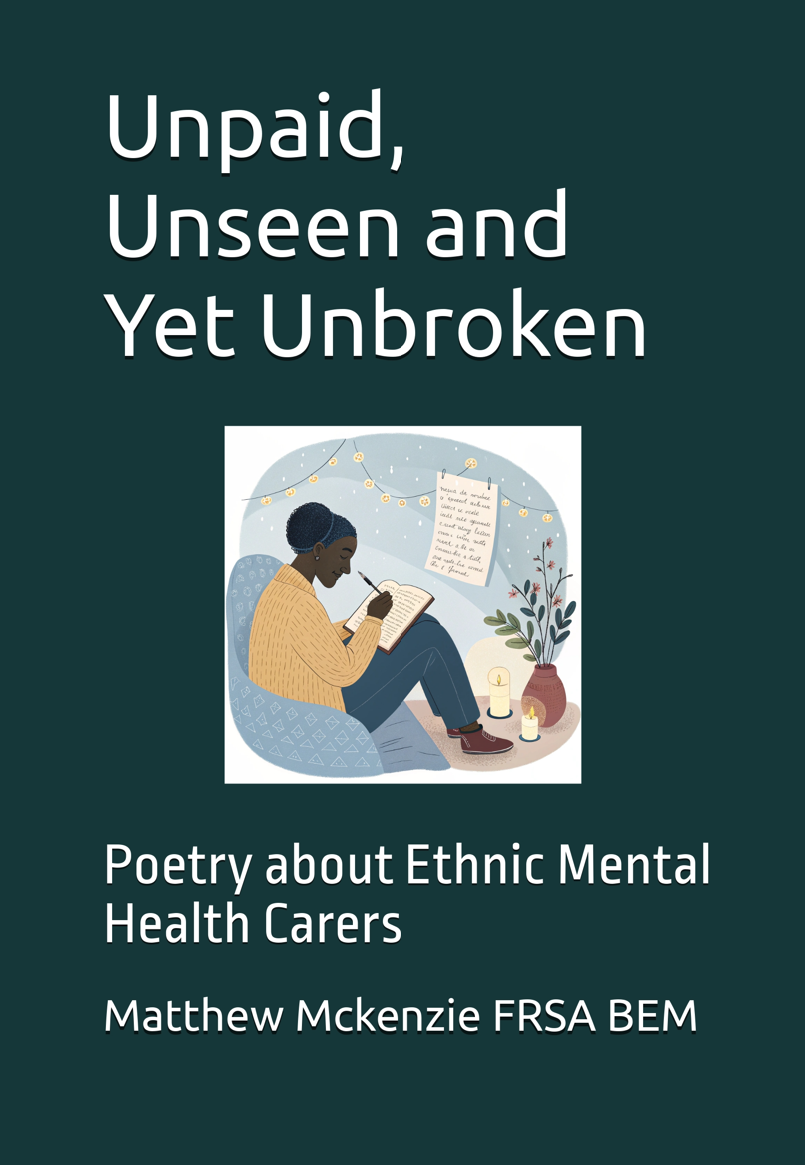
invisible challenge for ethnic minority mental health carers. “Poem 15: The friends I have lost,” a powerful spoken-word piece from Matthew McKenzie’s poetry book that is in development Unpaid, Unseen and Yet Unbroken, sheds a crucial light on this hidden struggle.
It captures the profound loneliness of an unpaid carer who watches friendships fade away as community members close their ears and elders demand privacy over open support. By highlighting the intersection of familial duty, mental illness, and societal rejection, this moving presentation exposes the heavy emotional toll born by those who care for loved ones behind closed doors.
This poem serves as a stark reminder of why initiatives like the Patient Carer Race Equality Framework (PCREF) are so urgently needed in healthcare and community support networks today.
Watch the full poetry video to immerse yourself in this essential conversation, and help us raise awareness for the vital support and recognition that ethnic minority mental health carers truly deserve.
By dismantling the barriers of stigma and addressing the specific inequalities faced by ethnic minority families, PCREF aims to ensure that no carer is left to navigate this challenging journey in absolute isolation.
By Matthew McKenzie – Chair of the Greenwich MH carers forum
The forum continues to provide a safe space for carers to receive updates, influence local services and learn about developments that affect both carers and the people they support.
This month’s forum focused on three important themes:
New support available for carers through the Greenwich Mental Health Hub.
Major reforms to the Mental Health Act and what they mean for carers.
Why unpaid carers must continue to have a voice in shaping local mental health services.
New Mental Health Support for Carers
We were pleased to welcome Jana, Mental Health Carers Advisor from the Greenwich Mental Health Hub, who introduced a relatively new service specifically supporting carers experiencing their own mental health difficulties.
Many carers spend years putting someone else’s wellbeing first while their own emotional health suffers. Stress, anxiety, depression, trauma, loneliness and exhaustion are common experiences among unpaid carers. The Mental Health Hub aims to provide early support before these issues become more severe.
The service accepts referrals primarily through GPs and offers:
Individual mental health assessments
Short-term personalised support
Advice on carers’ rights
Signposting to benefits, housing and community organisations
Emotional wellbeing support
Practical coping strategies
Access to peer support groups
Support can be delivered face-to-face, online or by telephone, making it more accessible for carers with demanding caring responsibilities.
One particularly welcome development is the dedicated carers’ drop-in sessions, which are open even to carers who have not been referred into the Hub. These sessions provide opportunities to discuss issues such as:
Sleep difficulties
Self-care
Stress management
Accessing local services
Benefits advice
Carers’ Assessments
Meeting other carers facing similar challenges
As carers repeatedly tell us, simply speaking with someone who understands the realities of caring can make an enormous difference.
Carers Continue to Raise Important Gaps
One of the strengths of the forum is that carers are able to raise concerns directly with professionals.
During the discussion several important issues were highlighted.
Many carers continue to experience difficulties navigating complex mental health systems and understanding their rights.
Questions were raised about the lack of specialist advocacy for mental health carers in Greenwich. While support and signposting are available, carers discussed how independent advocacy can be invaluable when attending meetings, challenging decisions or ensuring their voice is properly heard during difficult situations.
The discussion recognised that navigating the Mental Health Act, hospital admissions and care planning can be overwhelming, particularly for new carers who may have little understanding of the legal processes involved.
These conversations reinforce why forums like this remain so important. They allow carers to identify gaps in services while helping organisations understand where further improvements are needed.
Understanding the New Mental Health Act
A major part of the forum explored the forthcoming reforms to the Mental Health Act.
Although the original Mental Health Act dates back to 1983, significant reforms have now received Royal Assent and will gradually be introduced over the coming years.
These reforms aim to create a more person-centred approach by strengthening:
Choice and control
Therapeutic benefit
Least restrictive care
Respect for individual dignity
For unpaid carers, these reforms are particularly significant because they affect how decisions are made when someone is detained for assessment or treatment under the Mental Health Act.
Universal Care Plans and Care Contingency Planning
The forum also introduced another important development currently being rolled out across London: the Universal Care Plan.
This digital record allows important information about both carers and the person they support to be shared appropriately across health and care services.
For carers, this can help:
Ensure professionals know who provides care.
Reduce the need to repeat information.
Improve emergency planning.
Support continuity of care.
Make carers more visible within NHS systems.
Alongside this sits the Care Contingency Plan, which records what should happen if a carer suddenly becomes unable to provide support due to illness or an emergency.
Many carers have never considered what would happen if they themselves became unwell. Having a contingency plan can prevent crises and ensure continuity of care for vulnerable people.
Local Updates
Greenwich Carers Centre also shared news of a new partnership with the South East London Cancer Alliance. I will be involved regarding my Cancer Caregiver group
The project will establish local peer support opportunities for carers and people affected by cancer, alongside awareness events covering issues such as breast cancer, prostate cancer and wider health and wellbeing topics.
Further information will be shared by Greenwich Carers Centre over the coming months.
Looking Ahead
The Greenwich Mental Health Carers Forum continues to demonstrate why unpaid carers need opportunities to come together.
The discussions during this meeting highlighted both the progress being made and the challenges that remain. Carers continue to advocate for better information, stronger involvement in care planning, improved advocacy services and clearer communication from health professionals.
As the Mental Health Act reforms begin to take shape over the coming years, carers will play an increasingly important role in ensuring these changes lead to meaningful improvements for both carers and the people they support.
If you were unable to attend this forum, we hope this summary has helped keep you informed. We encourage all unpaid mental health carers to join future meetings, share their experiences and help shape the services that support carers across Greenwich.
If you weren’t able to join our June South London Mental Health Carers Group meeting, here’s a summary of the main discussions and updates. As always, the meeting brought together unpaid carers from across Lambeth, Lewisham, Southwark and Croydon to share experiences, raise concerns and keep each other informed about developments affecting mental health carers.
Why these meetings matter
One of the strongest themes throughout the meeting was the importance of carers staying connected. Many carers cannot attend every committee or involvement meeting due to their caring responsibilities, work or other commitments. By sharing updates, we can help ensure everyone remains informed about changes that may affect them and the people they support.
Several carers commented that services sometimes feel like they are “reinventing the wheel”, with the same issues being raised repeatedly. While progress can be slow, continuing to speak up and share experiences remains essential.
Updates from the Maudsley Family and Carers Committee
Carers who attended the latest South London and Maudsley (SLAM) Family and Carers Committee shared several important developments.
Review of the Involvement Register
SLAM is reviewing its Involvement Register over the coming months. Working groups will look at areas including:
Outcomes
How involvement is delivered
Governance and policy
Carers interested in influencing how services engage with families are encouraged to consider joining the register. Participation is flexible, allowing carers to contribute when they are able.
Triangle of Care
The Triangle of Care continues to be a significant focus, particularly around how carers are identified, involved and supported during someone’s mental health care.
Discussions also covered how Trusts monitor their progress and how carers’ details are recorded to ensure families receive appropriate information and support.
Information for carers
Work is continuing to improve the information provided to carers. Rather than relying on a single handbook that can quickly become outdated, there are plans to develop more flexible information resources that can be updated more easily and provided when carers actually need them.
Mental Health Act reforms
A significant part of the meeting focused on the recent changes to the Mental Health Act and what they could mean for unpaid carers.
Key topics included:
Greater emphasis on patient choice and involvement.
The introduction of the Nominated Person, replacing the traditional “Nearest Relative” in many situations.
The importance of Advance Choice Documents, allowing people to record their wishes while they are well.
The need for carers to understand their legal rights and ask questions during admissions, treatment planning and discharge.
Carers discussed both the opportunities and concerns arising from these changes, particularly where someone may lose insight during periods of illness. There was broad agreement that carers need clear information about how the reforms will be implemented locally and how families will continue to be involved.
Advocacy and complaints
Members shared experiences of trying to access advocacy services and navigate complaints processes.
Concerns included:
Limited access to independent mental health advocacy in some boroughs.
Unclear complaints pathways.
The need for carers to be listened to, even when confidential information cannot be shared with them.
The importance of raising concerns through appropriate safeguarding and governance routes where necessary.
Several carers also shared positive experiences where persistence had led to improvements in care.
Local updates from across South London
One of the strengths of the South London Mental Health Carers Group is the opportunity for carers from different boroughs to share what is happening locally. While each area faces its own challenges, many of the issues raised were common across South London.
Lambeth
Carers discussed the continuing work of the Lambeth Living Well Collaborative, which brings together carers, service users, voluntary organisations and professionals to improve local mental health services. Members were reminded that carers are welcome to attend collaborative meetings and contribute to discussions about service improvements.
The conversation also recognised the wider pressures affecting carers beyond mental health services. Rising living costs, reductions in council tax support for many working-age residents receiving benefits, and the increasing financial pressures on families continue to affect carers’ wellbeing. These wider social issues inevitably have an impact on people’s ability to sustain their caring role.
Lewisham
Carers provided an update on Lewisham’s Community Mental Health Transformation programme. While work continues to redesign community services, concerns remain about what happens when someone is discharged from specialist mental health services back to primary care.
Several carers highlighted unanswered questions around:
How GPs will be supported to manage people with ongoing severe mental health needs.
What support carers can expect once specialist services are no longer involved.
Whether communication between secondary mental health services and GP practices is sufficiently robust.
These are important questions that carers hope local services will continue to address as transformation plans progress.
Croydon and Lewisham carer information
Members also heard that new information resources for carers are being developed in Croydon and Lewisham. Rather than relying on lengthy booklets, services are creating a series of practical information sheets covering different aspects of mental health care. This approach should allow information to be updated more regularly and provided when carers need it most.
Carers welcomed this change, noting that people often need specific information at different stages of their caring journey rather than receiving a large handbook all at once.
The important role of GP practices
An interesting discussion focused on the role of GP practices in supporting unpaid carers.
Members recognised that experiences vary considerably between surgeries. Some GP practices have developed strong support for carers, while others still have some way to go.
One positive example shared was Wells Park Practice, where carers have become actively involved in developing support, including helping to establish a regular carers’ coffee morning. This demonstrates what can be achieved when GP practices actively engage with carers and recognise the valuable role they play.
The meeting reinforced several practical messages for carers:
Make sure your GP practice knows that you are an unpaid carer and ask to be recorded on their carers register.
Ask what support your surgery offers to carers, including health checks, referrals or local support groups.
If your current practice offers limited support for carers, it may be worth exploring what neighbouring GP practices provide, particularly if they have developed a stronger carers programme.
As community mental health services increasingly work alongside primary care, ensuring that GP practices recognise and support unpaid carers is becoming more important than ever.
Learning from each other
Perhaps the most valuable part of the local updates was hearing how carers are finding solutions in different boroughs. Good practice in one area can often inspire improvements elsewhere.
Whether discussing carers’ information, community transformation, GP engagement or involvement opportunities, the message was clear: carers’ experiences are a vital source of learning, and sharing those experiences helps improve services across South London as a whole.
Looking ahead
One of the biggest messages from the meeting was that carers have valuable lived experience that services need to hear. Whether through local carers’ centres, involvement registers, Trust committees or community groups, every contribution helps shape future services.
If you are interested in becoming more involved but can only contribute occasionally, don’t let that put you off. Many opportunities allow carers to participate as much or as little as their circumstances allow.
Thank you to everyone who attended and contributed so openly. Your experiences continue to help improve understanding and influence services across South London.
We look forward to welcoming both new and returning carers to our next meeting.
By Matthew McKenzie – Chair of Triangle of Care community group, NHS England involvement & Carer Poet
We are delighted to invite carers to “Caring Together, Stronger Together” a special event hosted by West London NHS Trust to recognise, support and celebrate the vital role of carers.
The event is open to all carers across Ealing, Hounslow, and Hammersmith & Fulham, so please could you share this information and the attached flyer with all of your networks.
Join us for an enjoyable and informative afternoon featuring:
Opportunities to socialise and connect with other carers
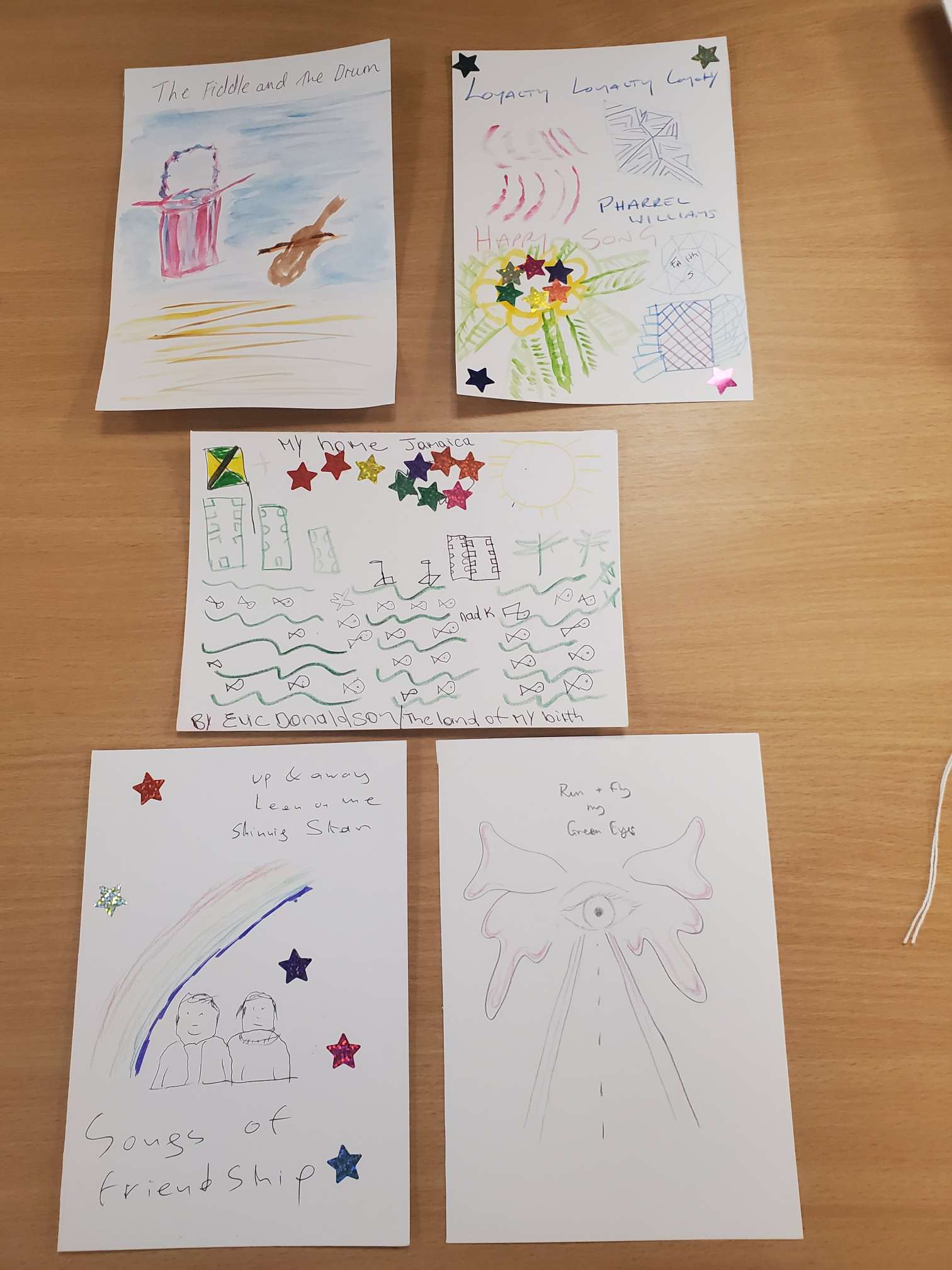
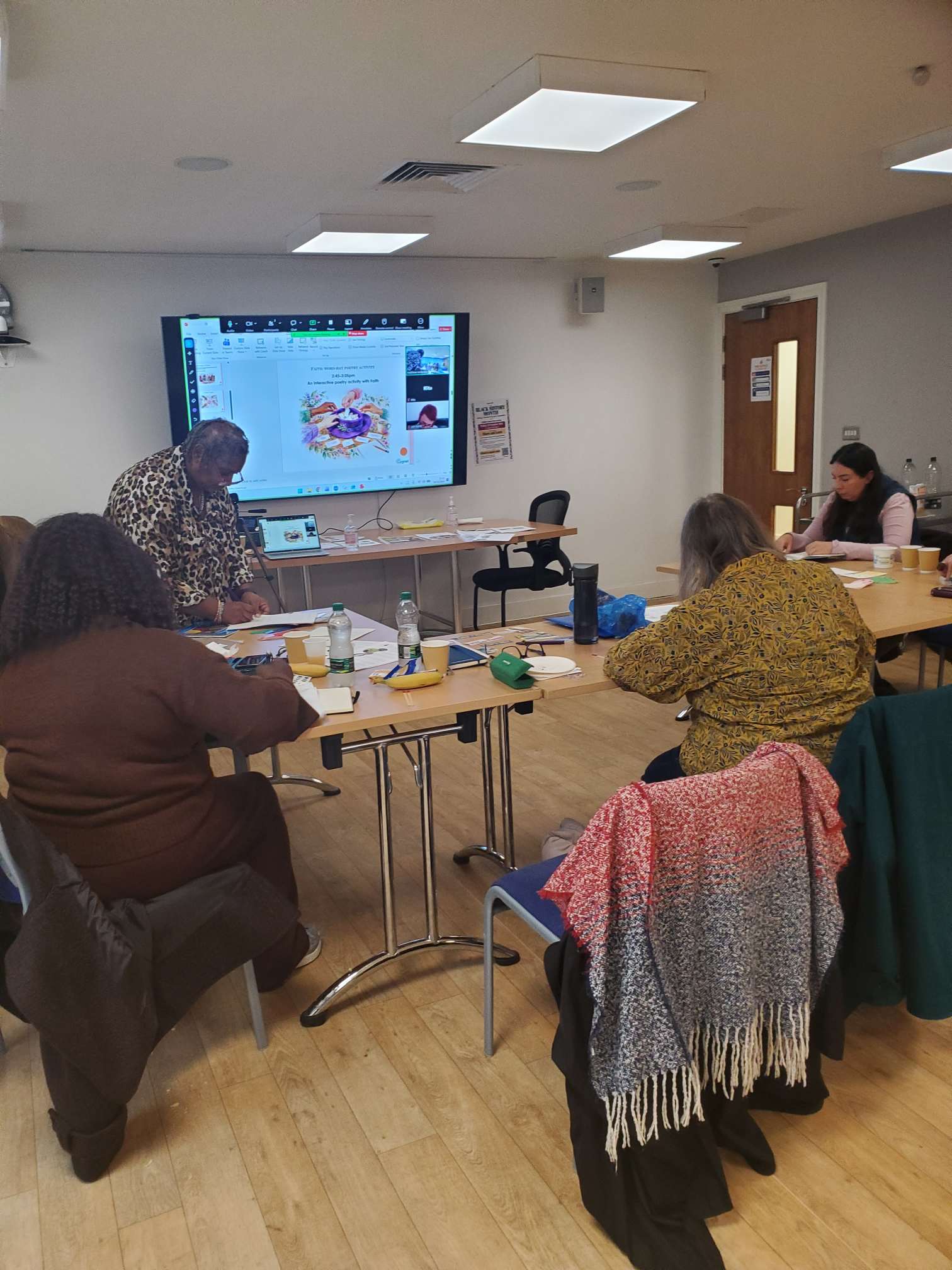
Inspiring talks, presentations and poetry
A carers’ services marketplace with information stands
I will also be hosting a Carer stall providing leaflets for Carers including UCP
Wellbeing activities, including mindfulness and hand massages
A complimentary hot lunch
Event details: 📅 Wednesday 29 July 🕐 1:00pm – 4:00pm 📍 Irish Cultural Centre, 5 Blacks Road, London W6 9DT
The event is designed to help carers connect, access information, and take some well-deserved time for themselves in a welcoming and supportive environment.
Looking forward to welcoming carers from across our West London communities. Please help us spread the word by sharing this invitation and the attached flyer.
By Matthew McKenzie – Carer & Chair of the National Ethnic MH carer Forum
The June 2026 National Ethnic Mental Health Carer Forum brought together carers, NHS Trusts, researchers, voluntary organisations and mental health professionals from across England to discuss one shared ambition improving mental health services through genuine co-production with ethnic minority carers.
Matthew reminded delegates that carers develop expertise through lived experience. Supporting a family member with severe mental illness means navigating NHS services, social care, benefits systems and advocacy. These experiences provide knowledge that cannot be learned through textbooks alone.
Opening Presentation
Matthew McKenzie
The Importance of Co-production
Forum Chair Matthew McKenzie opened the meeting by welcoming carers and professionals from across England and reflecting on more than a decade of leading the National Ethnic Mental Health Carer Forum.
He explained how the forum has evolved alongside the NHS Patient and Carer Race Equality Framework (PCREF), providing an increasingly important national platform for ethnic minority carers to influence mental health services.
A recurring theme throughout the presentation was the internationally recognised principle:
“Nothing About Us Without Us.”
He explained that this principle has guided disability rights and patient involvement movements for many years and remains just as relevant today for carers supporting loved ones with serious mental illness. Family carers often spend years navigating mental health services, social care systems and community support, developing valuable knowledge through lived experience that professionals alone cannot acquire. This expertise is especially important for carers from minority ethnic communities who may also encounter cultural misunderstandings, language barriers, discrimination or unequal access to services. Matthew argued that services cannot fully understand these challenges without involving the people who experience them every day. He encouraged carers to recognise that their experiences are not simply personal stories but a form of expertise that should be valued equally alongside professional knowledge when designing, reviewing and improving services.
The presentation concluded with a powerful call for organisations to move beyond consultation towards genuine partnership working. Matthew explained that when co-production is absent, services risk misunderstanding community needs, developing policies that fail to reflect lived experience and missing opportunities to reduce long-standing inequalities. Conversely, meaningful engagement enables carers to become active partners in service improvement, helping organisations build trust with communities, improve cultural responsiveness and design services that are accessible to everyone.
He also highlighted complementary approaches, including the Triangle of Care, Open Dialogue, cultural competence and shared decision-making, all of which reinforce the importance of collaboration between professionals, service users and carers. Matthew ended by encouraging every organisation represented at the forum to ensure that diverse voices are heard throughout the decision-making process, not simply those that are easiest to reach. His closing message resonated throughout the rest of the meeting: meaningful change begins by listening, respecting lived experience and ensuring that carers have a genuine seat at the table whenever mental health services are being designed or improved.
Q&A Highlights
Q: Why is co-production particularly important for ethnic minority carers?
Because carers from minority communities often experience additional barriers including discrimination, cultural misunderstandings and language challenges. Their lived experience helps services recognise issues that routine data alone cannot identify.
Q: What happens when services fail to co-produce?
Participants suggested services become “them and us” organisations where carers feel excluded, policies fail to meet community needs and trust declines.
Bradford District Care NHS Foundation Trust
Bronte Dines-Allen
Bronte Dines-Allen, Reducing Health Inequalities Lead at Bradford District Care NHS Foundation Trust, provided an inspiring overview of the Trust’s journey in implementing the Patient and Carer Race Equality Framework (PCREF). Introducing herself not only as a senior NHS leader but also as someone with lived experience as a family carer supporting her mother with mental ill health, Bronte spoke passionately about the importance of understanding services from both professional and personal perspectives.
She described Bradford as one of the most culturally diverse areas in England, with more than 150 languages spoken across the district and a population representing a wide range of ethnic communities. This rich diversity presents both opportunities and responsibilities for healthcare providers, requiring services to continually adapt, listen and ensure that care is culturally responsive and accessible to everyone. Bronte explained that Bradford’s approach to PCREF has been built around openness and transparency, with the Trust publishing annual progress reports and equality data to demonstrate both achievements and areas where further improvement is needed.
A major focus of Bronte’s presentation was the Trust’s recent “Amplifying Voices” event, which brought together NHS staff, voluntary and community organisations, chaplaincy services, neighbouring NHS Trusts and people with lived experience to discuss health inequalities and mental health care. Rather than concentrating solely on statistics, the event was designed to explore the stories behind the data, recognising that every figure represents a real person, family or community whose experiences deserve to be heard.
Participants shared personal accounts of navigating mental health services, building trust with professionals, overcoming barriers related to culture and language, and the importance of feeling genuinely listened to. Bronte stressed that collecting feedback is only meaningful if organisations demonstrate how that feedback influences future decision-making. One of the most encouraging outcomes of the event was the commitment from senior leaders that the experiences shared would directly inform the Trust’s refreshed organisational strategy, ensuring that health equity and reducing inequalities remain central to future service development.
Looking ahead, Bronte outlined several priorities that will continue to strengthen Bradford’s PCREF programme. These include expanding cultural competency training for staff, increasing awareness of PCREF throughout the organisation, developing educational resources that encourage conversations about race equality, and creating further opportunities for carers to contribute to service improvement.
She acknowledged that the Trust is still early in parts of its journey, particularly in strengthening engagement with carers and improving mechanisms for gathering feedback, but emphasised that genuine progress comes through honesty, collaboration and a willingness to learn from others. During the discussion that followed, delegates praised Bradford’s transparent approach and shared examples of similar work taking place across other NHS Trusts, reinforcing one of the key messages of the forum that improving mental health services is a shared national endeavour. Bronte concluded by reiterating that sustainable change depends upon building trusting relationships with communities, valuing lived experience as expertise and ensuring that carers remain active partners in shaping the future of mental health care.
Q&A Highlights
Q: What specific work is being undertaken with older adults?
Bronte acknowledged that Bradford is still developing this area and welcomed suggestions from carers and other Trusts, emphasising the importance of learning nationally.
Q: How is co-production influencing your work?
The event itself was co-designed with voluntary sector partners and accountability groups, ensuring community voices shaped both the programme and future priorities.
Q: How do you collect meaningful feedback?
Bradford continues improving its feedback systems following technical challenges and is exploring better ways of gathering and acting on carers’ experiences.
Research Presentation
Dr Meghana Kamble
Families of Children with Disabilities: Perspectives from South Asia
Dr M. Kamble from the University of East Anglia presented an insightful overview of an international research project exploring the experiences of South Asian families caring for children and adults with intellectual and developmental disabilities.
The study spans the United Kingdom, India, Sri Lanka and the United States, bringing together the voices of parents, siblings, carers, people with disabilities and professionals to better understand the challenges faced by families across different cultural settings. Dr Kamble explained that despite increasing awareness of health inequalities, the experiences of many ethnic minority families remain underrepresented in both research and service development. The project seeks to address this gap by examining not only access to services but also how cultural beliefs, family dynamics and lived experience influence the support that families receive. Underpinning the research is the principle of family-centred care, recognising that supporting one individual also means understanding and supporting the wider family network that cares for them.
Drawing on early findings from interviews, focus groups and surveys, Dr Kamble highlighted several recurring themes that resonated strongly with delegates at the forum. Families consistently reported difficulties accessing culturally appropriate services, navigating complex health and social care systems, and finding professionals who understood the realities of their lived experience. Stigma, social isolation and language barriers were frequently identified as obstacles that prevented families from seeking support at an early stage.
One particularly interesting finding challenged common assumptions about South Asian communities. While it is often believed that extended family networks naturally provide substantial support, many participants described relying far more heavily on peer support groups, community organisations and voluntary sector services than on relatives. Dr Kamble also observed that outside Europe many people do not identify themselves as “carers” in the formal sense; instead, they simply see themselves as sons, daughters, brothers or sisters fulfilling their family responsibilities. This distinction has important implications for how services identify and engage people who may be eligible for support but never recognise themselves under the label of “carer.”
The discussion following the presentation explored how research findings can influence future policy and practice. Delegates highlighted the need for clearer information about carers’ rights, improved communication with communities and greater transparency from statutory services about the support that is available. Several participants emphasised that trust can only be built when organisations consistently involve communities in decision-making and demonstrate that lived experience genuinely shapes service improvements. Dr Kamble agreed that while systems and policies are important, individual professionals often make the greatest difference by taking the time to guide families through complex services and helping them understand their rights. Looking ahead, the research team plans to share its findings through publications, webinars, community engagement events and partnerships with organisations across the UK and internationally. The presentation served as a powerful reminder that reducing inequalities requires not only better research but also culturally responsive services that recognise and value the diverse experiences of families from every community.
Q&A Highlights
Q: How will the research findings be shared?
The project plans to publish papers, webinars, newsletters and community engagement events, with researchers keen to work alongside carers in disseminating findings.
Q: How can services better reach ethnic minority carers?
Participants emphasised:
clearer information about rights
better community engagement
trusted local organisations
simpler access to support
transparent communication.
Q: Should organisations rethink the word “carer”?
Yes.
Several delegates suggested that many people never identify with the label “carer,” meaning they may never seek available support. Researchers agreed this requires further exploration.
Nottinghamshire Healthcare NHS Foundation Trust
Ashley Bertie
Accelerating PCREF Implementation
Ashley Bertie, Associate Director for Participation, Co-production and Patient Care Experience at Nottinghamshire Healthcare NHS Foundation Trust, provided an informative update on the Trust’s progress in implementing the Patient and Carer Race Equality Framework (PCREF). Ashley explained that although the Trust recognises there is still much work to do, PCREF has become a strategic priority across the organisation and is helping to drive meaningful cultural change.
Since taking up his role, one of his key objectives has been to accelerate implementation by embedding race equality, co-production and lived experience into the Trust’s everyday work. He described how the organisation has established a comprehensive governance structure, including a PCREF Steering Group chaired by the Chief Nurse, supported by specialist groups focusing on health inequalities, workforce development and lived experience. Importantly, carers, patients, Equality, Diversity and Inclusion (EDI) ambassadors and voluntary sector representatives are all involved in shaping the Trust’s work, demonstrating a commitment to partnership rather than top-down decision making.
Ashley emphasised that improving mental health services cannot be achieved by the NHS working in isolation. A significant part of Nottinghamshire Healthcare’s strategy involves developing strong partnerships with voluntary and community organisations, local authorities, Integrated Care Boards and other NHS Trusts.
He explained that many people from ethnic minority communities have longstanding relationships with trusted community organisations but may be reluctant to engage directly with statutory services due to previous negative experiences or cultural barriers. As a result, the Trust is increasingly taking its engagement activities into local communities, holding events in community centres, places of worship and neighbourhood venues where people already feel comfortable and supported. Alongside this community-based approach, the Trust is investing in cultural capability training for staff, improving transparency through publicly available equality dashboards and developing a new Lived Experience Advisory Group to ensure that carers and service users play a central role in monitoring progress and influencing future service improvements.
Looking ahead, Ashley outlined an ambitious programme of work designed to embed PCREF throughout the organisation over the coming years. Funding secured through NHS England will support a wide range of initiatives, including cultural awareness workshops, staff development programmes, community capacity-building projects and expanded opportunities for people with lived experience to influence recruitment, service design and quality improvement.
One of the Trust’s key ambitions is to ensure that at least 80 per cent of its workforce receives training on the principles of PCREF, helping staff to better understand health inequalities and deliver more culturally responsive care. Throughout his presentation, Ashley reinforced the importance of meeting communities where they are, listening carefully to lived experience and building relationships based on trust rather than assumptions. His presentation reflected the wider theme of the forum: that lasting improvements in mental health services depend upon genuine collaboration between professionals, carers, service users and the communities they serve.
Q&A Highlights
Q: Why are community partnerships so important?
Ashley explained that local organisations often have trusted relationships with communities that NHS services may not yet possess.
Q: How will Nottinghamshire involve carers?
Through a new Lived Experience Advisory Group, strengthened co-production arrangements and wider involvement in service design, recruitment and evaluation.
King’s College London
Ida Doherty
Supporting Ethnic Carers in South West London
Although this presentation formed part of the meeting agenda, discussion focused on ongoing work supporting ethnic carers across South West London through research and partnership working. The emphasis was on better understanding carers’ experiences and ensuring that future services are informed directly by those experiences.
More on her talk will be for the next forum due to time.
Looking Ahead
The National Ethnic Mental Health Carer Forum continues to provide a valuable national platform where carers, researchers, NHS Trusts and community organisations can learn from one another.
The discussions demonstrated that progress is being made through PCREF, research and community partnerships, but also recognised that significant challenges remain.
Moving forward, success will depend on maintaining the principles that underpinned every presentation:
listening before acting
valuing lived experience
strengthening trust
improving cultural responsiveness
ensuring carers remain genuine partners in shaping mental health services.
The forum closed with networking and an invitation for organisations across England to continue sharing good practice, supporting one another and working collectively to reduce inequalities in mental health care.
By Matthew McKenzie – member of UCP Lived experience group
Many unpaid carers worry about one question: “What would happen if I suddenly became ill or was unable to provide care?” It is a concern that often sits in the background but can cause enormous anxiety.
A new approach being developed across London aims to provide reassurance and practical support. Through the Universal Care Plan (UCP) and the Carer Contingency Plan (CCP), unpaid carers can record important information and make plans so that the people they care for continue to receive support if circumstances change.
What is a Universal Care Plan?
The Universal Care Plan (UCP) is a secure digital care record used across London. It allows important information to be shared with health and care professionals involved in a person’s care.
The plan records information that matters most to the individual, including:
Health conditions and medical information.
Personal wishes and preferences.
Details about family members and carers.
Important contacts.
Information that can help professionals provide better care.
The UCP can help reduce the need to repeat information and ensures that health and care staff have access to information when it matters most.
People of all ages can have a Universal Care Plan, including both carers and the people they support.
For unpaid carers, one of the most valuable developments is the Carer Contingency Plan (CCP).
The CCP allows carers to record what should happen if they are suddenly unable to continue caring because of illness, an emergency or another unexpected event.
The plan can include:
Emergency contacts.
Information about daily routines.
Medication arrangements.
Communication needs.
Important preferences and wishes.
Details about replacement support or family members who could help.
Having this information available means professionals and family members can respond more quickly and with greater confidence during a crisis.
Why is this important for unpaid carers?
Many carers provide support around the clock and often put their own needs last. Yet emergencies can happen to anyone.
A Carer Contingency Plan can:
Provide peace of mind.
Help avoid unnecessary hospital admissions.
Ensure continuity of care.
Reduce stress during emergencies.
Make carers more visible to health and care services.
Improve communication between professionals and families.
Most importantly, it recognises the crucial role unpaid carers play and helps ensure they are not overlooked.
Accessible and Easy to Use
Universal Care Plans and Carer Contingency Plans are designed to be practical and accessible.
Plans can be created:
In hospitals.
In community services.
Through voluntary sector organisations.
By individuals themselves using the NHS App and NHS digital services.
Support materials and guidance are continuing to expand, making it easier for both professionals and carers to understand and use the system.
Working Together Across Health and Care
The UCP and CCP are being used across hospital, community and voluntary sector settings. Their purpose is simple but powerful: to improve communication, support carers and ensure that important information is available when it is needed most.
For unpaid carers, this represents a positive step forward. Carers have long spoken about wanting greater recognition and reassurance that there is a plan in place should something happen to them. The Carer Contingency Plan helps answer that concern.
A Message to Carers
If you support a family member, partner, friend or neighbour, you are not alone. Your role matters, and planning ahead is not about expecting the worst—it is about providing reassurance and protecting the person you care for.
The Universal Care Plan and Carer Contingency Plan offer a practical way to make your wishes known, improve communication with professionals and ensure that support can continue when it is needed most.
If you would like to know more, speak to your hospital’s carers service, community team, GP practice, local carers organisation or ask a member of your health and care team about the Universal Care Plan and Carer Contingency Plan.
Planning ahead today can bring peace of mind tomorrow for both carers and the people they care for.