Category Archives: Carers Southwark MH Forum

Lewisham, Southwark & Lambeth carer forum update May 2026

Update by Matthew McKenzie – Chair of South London Mental Health Carers Forum

The South London Mental Health Carers Group met for the month of May for a wide-ranging and thoughtful discussion covering carers’ experiences, mental health support systems, involvement opportunities, and an important research presentation focused on support networks and long-term care.

The group covers areas of Lewisham, Southwark, Lambeth & Croydon, although Mental Health Carers from outside those areas are welcime to attend

The session brought together carers, advocates, involvement leads, and guest speaker Dr Anna De Simone from Queen Mary University of London. As always, the discussion highlighted both the challenges carers continue to face and the value of shared lived experience and peer support.

Opening Discussions: Challenges in Mental Health Care Systems

The meeting began with carers sharing experiences of navigating mental health services for loved ones with complex needs. There was extensive discussion around:

  • difficulties accessing appropriate placements,
  • safeguarding concerns,
  • discharge planning,
  • lack of continuity between NHS trusts and local authorities,
  • and ongoing challenges around funding responsibility between different services.

A recurring issue raised was the pressure on inpatient beds and the concern that discharge decisions can sometimes feel driven more by system pressures than by clinical readiness. Carers spoke openly about the emotional impact of repeatedly having to advocate for vulnerable loved ones while navigating fragmented systems.

There was also discussion around the importance of carers being recognised and included in communication and planning processes. Participants highlighted how carers are often the people most aware of deterioration, risks, or safeguarding concerns, and how vital it is that services engage meaningfully with families and informal supporters where appropriate.

Despite frustrations, carers also acknowledged examples of good practice and supportive professionals within mental health services. Several attendees noted that they had seen gradual improvements in carer involvement and listening exercises within parts of South London and Maudsley NHS Foundation Trust (SLAM), particularly in Lambeth.

Updates on Carer Involvement and Support Activities

The group received updates from carers and representatives involved in local mental health engagement work and carers’ organisations.

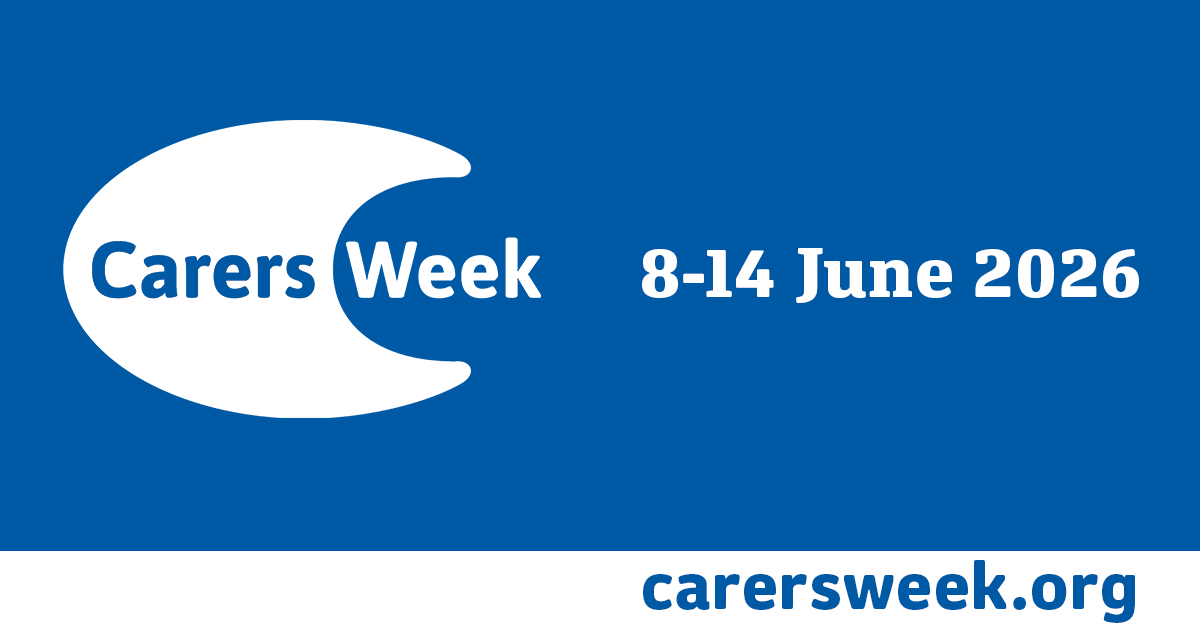
Carers Week Activities

Karen from Carers Hub Lambeth shared details of upcoming Carers Week activities, including:

  • outreach events,
  • wellbeing sessions,
  • information stalls,
  • and activities for both adult and young carers.

The events aim to provide carers with opportunities for support, networking, practical advice, and wellbeing activities.

Here is more info on Carers Week 2026

https://www.carersweek.org/about-carers-week/latest-news/posts-folder/2026/january/carers-week-dates-for-2026

SLAM and Carer Involvement

There was also discussion around changes and developments within SLAM involvement structures, including:

  • continuation of family and carers meetings,
  • changes to involvement leads,
  • and ongoing reviews of the involvement register.

Attendees reflected positively on the increasing recognition of carers’ voices in some forums and clinical meetings, while acknowledging that there is still much work to do to ensure consistent involvement across all boroughs and services.

Guest Presentation: Mapping Patient Support Networks

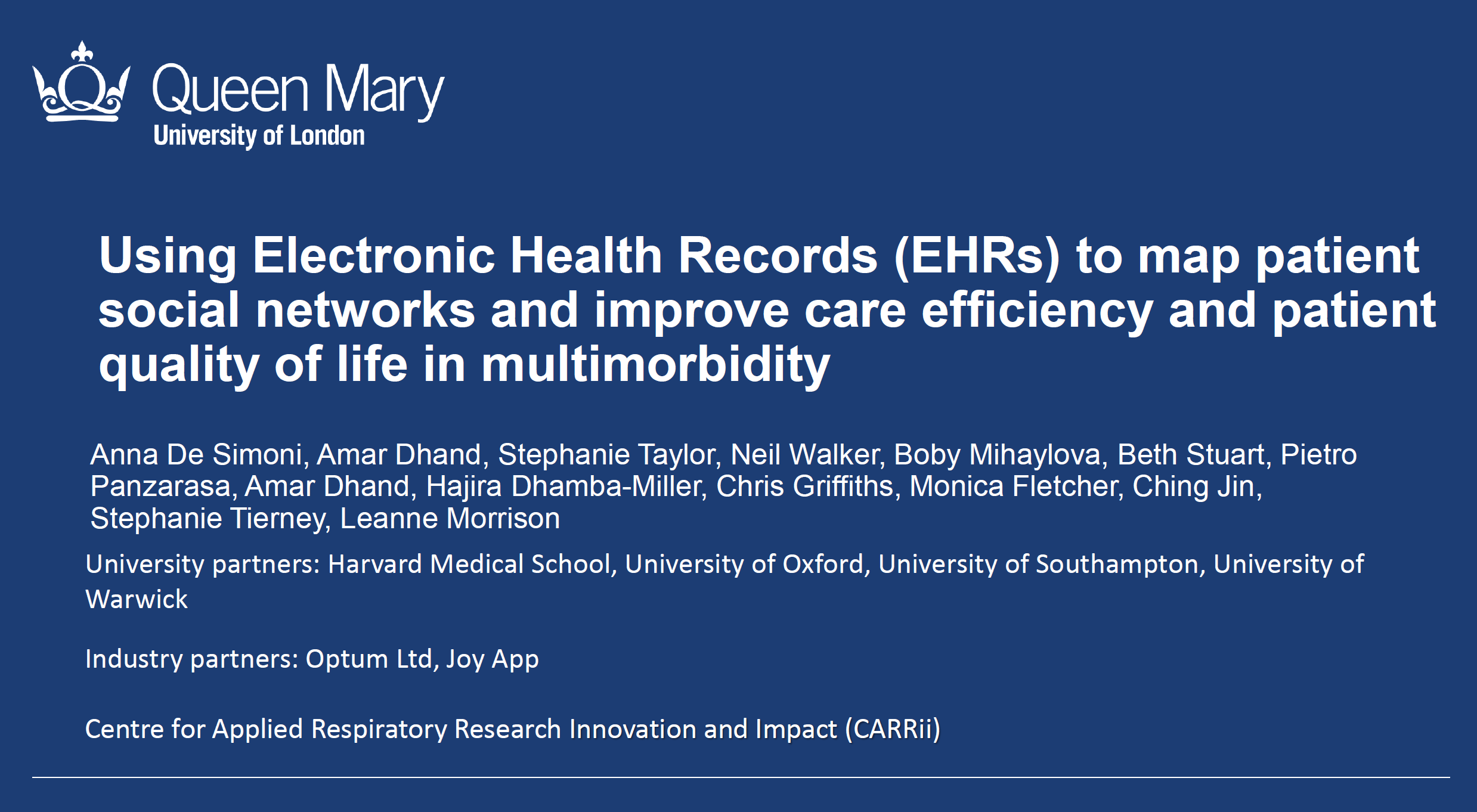
The second half of the meeting focused on a presentation from Dr Anna De Simone, GP and Associate Professor of Primary Care at Queen Mary University of London.

Anna introduced a proposed research project exploring how healthcare systems might better understand and map patients’ support networks using electronic health records and social network tools.

The research proposal focuses particularly on patients with long-term conditions such as COPD (Chronic Obstructive Pulmonary Disease), many of whom also experience multiple additional health conditions and varying levels of social isolation.

The Core Idea

Anna explained that while healthcare professionals can currently access limited information such as next of kin or household members, they often lack a fuller understanding of:

  • who actually supports the patient,
  • how reliable that support is,
  • whether support networks are connected or fragmented,
  • and how socially isolated a patient may be.

The proposed research would explore whether creating visual “maps” of support networks could help:

  • improve care planning,
  • reduce crises,
  • improve coordination between services,
  • and enhance patients’ quality of life.

The project would also examine how social prescribing, community services, online support groups, and carers fit into these wider support networks.

Carers’ Feedback on the Research Proposal

The discussion following Anna’s presentation was extremely rich and constructive, with carers offering both enthusiasm and important cautionary perspectives.

Strong Support for the Concept

Many attendees felt the project addressed an important gap in healthcare planning. Several carers spoke about how informal support networks had been essential to helping them or their loved ones survive periods of crisis.

Participants agreed that professionals often underestimate the role played by:

  • friends,
  • neighbours,
  • online communities,
  • peer groups,
  • and unpaid carers.

The ability to visualise these networks was seen as potentially valuable for both professionals and patients themselves.

Importance of Non-Traditional Support Networks

A strong theme throughout the discussion was that support does not always come from family.

Some carers explained that family relationships can sometimes be unsafe or abusive, and that support may instead come from trusted friends, neighbours, carers’ groups, or online communities.

The group stressed that any future system should avoid assuming that family automatically equals safety or support.

Online Communities and Digital Support

Participants also highlighted the increasing importance of online support systems.

Several carers explained that:

  • Zoom groups,
  • Facebook communities,
  • online peer support,
  • and digital communication
    can provide essential social connection, especially for disabled or isolated people.

One participant noted that online support networks had directly helped them access practical support and reduce isolation when physical mobility was limited.

At the same time, carers cautioned that not everyone has equal access to digital services. Concerns were raised about:

  • digital exclusion,
  • accessibility barriers,
  • lack of digital skills,
  • and the risk of widening inequalities.

The importance of offering both digital and non-digital forms of support was strongly emphasised.

Privacy, Consent, and Mental Health

Carers also discussed potential challenges around privacy and consent, particularly for people experiencing paranoia or severe mental illness.

Some attendees noted that patients may not always feel comfortable sharing details about their social networks, and that trust and safeguarding would need to be central to any future system.

There was discussion about the delicate balance between:

  • confidentiality,
  • safety,
  • carer involvement,
  • and patient autonomy.

Role of Social Prescribers

The group generally agreed that social prescribers could play an important role in helping patients map support networks, because they often have more time and a stronger focus on community support than standard GP appointments allow.

However, concerns were raised about long-term funding and sustainability for social prescribing services.

Looking Ahead

Anna thanked the group for their detailed feedback and explained that carers’ insights would help shape the next stage of the research proposal before submission later this year.

There was strong interest from attendees in remaining involved should the project move forward, particularly around future patient and public involvement opportunities.

The meeting once again demonstrated the depth of knowledge, experience, and expertise held by unpaid carers. The discussion reflected not only the challenges carers continue to face, but also the importance of ensuring carers are recognised as essential partners in both healthcare delivery and future research.

Lewisham, Southwark & Lambeth carer forum update March 2026

Facilitated by Matthew McKenzie – Carer Activist

The March 2026 Lewisham, Southwark and Lambeth Mental Health Carers Forum brought together a small but deeply engaged group of carers. Although numbers were lower than usual, the conversation allowed for something more valuable: honesty, depth, and space for lived experience to be properly heard.

From the outset, the tone was reflective rather than formal. The meeting coincided with World Bipolar Day, which prompted an opening discussion about diagnosis and how often it fails to reflect real-life experience. One carer described how their son’s diagnosis had changed over time—from bipolar to schizoaffective disorder, yet the symptoms and challenges remained largely the same. This led to a wider reflection that services often focus heavily on labels, while carers are more concerned with whether the person is actually supported to live a stable and meaningful life.

There was also a recognition that misdiagnosis is common, particularly where bipolar disorder is initially treated as depression, sometimes leading to inappropriate medication and worsening symptoms. For many carers, the journey to a correct diagnosis is long, frustrating, and emotionally draining.


A shared frustration: being needed, then excluded

As the discussion moved on, a familiar and longstanding issue surfaced again, confidentiality.

Several carers spoke about the contradiction at the heart of the system. They are relied upon heavily during crisis, often holding situations together at home with little support. But once their loved one enters formal services, especially inpatient care, they can suddenly be excluded from conversations.

One carer described escalating concerns about a home treatment team all the way to regulators just to be heard. Another spoke about years of frustration with what was described as the “carer’s lament”: you are essential when things go wrong, but once professionals step in, your voice can be sidelined.

What carers emphasised very clearly is that they are not asking for unrestricted access to confidential information. What they want is much simpler and more reasonable: to be listened to, to have their observations recorded, and to be treated as part of the care system rather than outside it.


Lewisham: transition, discharge, and GP concerns

Much of the Lewisham-focused discussion centred on transitions in care and the role of GPs.

One parent shared the experience of their daughter’s first psychotic episode, which resulted in a five-month hospital stay. Following discharge, she was moved into supported accommodation, but the family were not meaningfully involved in that transition. Communication was limited, and the daughter chose not to share information with her family, leaving them in a difficult position deeply concerned, but largely excluded.

There were also concerns about medication refusal and the risk of relapse, particularly when individuals are discharged while still emotionally fragile. The emotional toll on carers in these situations was evident: watching, waiting, and trying to prevent another crisis without adequate support.

Alongside this, mental health carers from raised ongoing concerns about what happens when people are discharged back to primary care. There was strong anxiety about the lack of GP engagement in mental health pathways. One carer involved in the Lewisham Community Mental Health Transformation programme described repeated attempts to involve GPs in discussions, with little success.

The worry is clear: if someone is discharged too early from specialist services and handed back to a GP who may not have the capacity or expertise to manage complex mental health needs, the system effectively resets often leading to relapse and re-entry into crisis services.

At the same time, there was acknowledgement that some GP practices do provide excellent support. But this inconsistency, what many described as a “postcode lottery” remains a major issue.


Southwark: carer-led work and navigating confidentiality

In contrast, much of the Southwark discussion highlighted strong carer-led involvement, alongside the same systemic challenges.

A carer from Southwark spoke about running inpatient carers groups and co-facilitating sessions linked to outreach and rehabilitation services. There was also involvement in the Patient and Carer Race Equality Framework (PCREF), where carers and service users are contributing directly to shaping services.

This level of involvement shows what is possible when carers are treated as partners. However, even within this more engaged environment, the issue of confidentiality remains difficult to navigate.

The discussion here was more nuanced. It was acknowledged that confidentiality is necessary, but that staff often lack clarity about what can be shared. Carers described the “grey area” where basic information could be communicated, but often isn’t. There was also emphasis on the need for staff training, something that carers themselves are increasingly involved in delivering.

carers from Southwark also highlighted the importance of peer-led spaces. Inpatient carers groups were described as vital, especially for those supporting someone currently in hospital, where isolation and lack of information can be overwhelming.


Lambeth: legacy of collaboration and ongoing involvement

Lambeth’s contribution to the discussion brought a slightly different perspective. one shaped by a longer history of co-production and collaboration.

One participant spoke about their involvement in the Lambeth Living Well Collaborative, a model that has historically placed lived experience and peer support at its centre. There was a sense that Lambeth has been ahead in recognising the value of lived experience, although there was also uncertainty about how much of that approach is still embedded in current services.

An upcoming Lambeth Living Well Collaborative meeting was mentioned, with an open invitation for carers to join and stay connected to ongoing developments.

There was also reference to wider Lambeth-based engagement work happening at the same time, including events asking what changes should be made to mental health services. This reflects an ongoing effort within the borough to involve carers and service users in shaping future provision.

At the same time, carers noted that even in areas with strong histories of co-production, the same structural challenges persist—particularly around confidentiality, access to information, and the pressures placed on families.


Crisis support and gaps in awareness

One of the most striking moments in the meeting came from a carer describing their current situation: a son in relapse, not taking medication, and moving in and out of the house at night. The impact was immediate and severe, no sleep, constant vigilance, and a sense that another crisis was approaching.

What stood out was not just the situation itself, but the fact that the carer was not aware of available crisis support options. Another participant shared information about a crisis line covering Lewisham and Southwark, something they had helped establish years earlier.

This exchange highlighted a recurring problem: services and support may exist, but awareness is inconsistent. Carers often find out about help only through chance conversations, rather than through systematic communication.


National update: Carers UK and the CQC “Share for Better Care” campaign

Alongside the local discussions, the forum also highlighted a national development that could become significant for carers across Lewisham, Southwark and Lambeth.

Carers UK has recently begun supporting a campaign with the Care Quality Commission (CQC) called “Share for Better Care.” This initiative is encouraging unpaid carers across England to come forward and share their experiences of health and social care services.

The intention behind the campaign is to gather real-world evidence directly from carers—what is working, what is not, and where systems are failing. This information is expected to inform how the CQC assesses services in the future, particularly in relation to how well they engage with and support carers.

In the forum, this was welcomed, but also met with a degree of cautious realism. Carers have shared their experiences many times before, often without seeing meaningful change. The key question raised was: what will actually happen with this information once it is collected?

There was a suggestion that this campaign could lead to:

  • future events or consultations involving carers
  • greater scrutiny of how services involve carers
  • potential shifts in how inspections measure “carer involvement”

The forum facilitator indicated they would follow up with Carers UK to better understand what outcomes are expected and whether a speaker could attend a future session to explain the campaign in more detail.

For carers, this presents both an opportunity and a challenge. It is another chance to have their voices heard at a national level, but it also raises the ongoing issue of whether those voices will translate into real, tangible improvements in practice.

London-wide update: taking carers’ voices into policy

The forum also included a detailed update from myseld, who had recently contributed to a London Assembly session on unpaid carers.

They described speaking directly to policymakers about the realities faced by carers across boroughs, including those discussed in forums like this one. A key focus was on mental health carers, who were described as particularly “hidden” within the system.

The update painted a broader picture. Official figures suggest around 600,000 unpaid carers in London, but the real number is likely much higher. Many people do not identify as carers, and as a result, they miss out on support entirely.

Financial pressure was another major theme. Carers often reduce or give up work, face additional costs, and rely on limited financial support. Respite care remains difficult to access, and carers’ assessments frequently do not lead to meaningful help.

Importantly, the discussion emphasised that identification is the starting point for everything. Without being recognised as a carer, none of the available support systems can be accessed.


The underlying reality

Across Lewisham, Southwark and Lambeth, the details may differ slightly, but the core experiences are strikingly similar.

Carers are holding complex situations together, often with limited support. They are navigating systems that can feel fragmented, inconsistent, and at times unresponsive. They are expected to manage risk, prevent crises, and support recovery, yet are not always included in the decisions that affect those outcomes.

And yet, within the forum itself, there was also clear evidence of strength. Carers are not passive participants. They are running groups, training staff, contributing to policy discussions, and supporting each other.


Closing reflection

What this forum made clear is that change is happening—but slowly, and unevenly.

There are examples of good practice in all three boroughs:

  • collaborative work in Lambeth
  • strong carer involvement in Southwark
  • active transformation discussions in Lewisham

But these sit alongside persistent gaps:

  • lack of GP integration
  • inconsistent communication
  • limited recognition of carers’ roles

For those who couldn’t attend, the key message is this:

The issues you experience are not isolated. They are shared, recognised, and increasingly being raised not just in forums like this, but at policy level across London.

And just as importantly your voice, whether in a meeting or not, is part of that collective push for change.

Lewisham, Southwark & Lambeth carer forum update February 2026

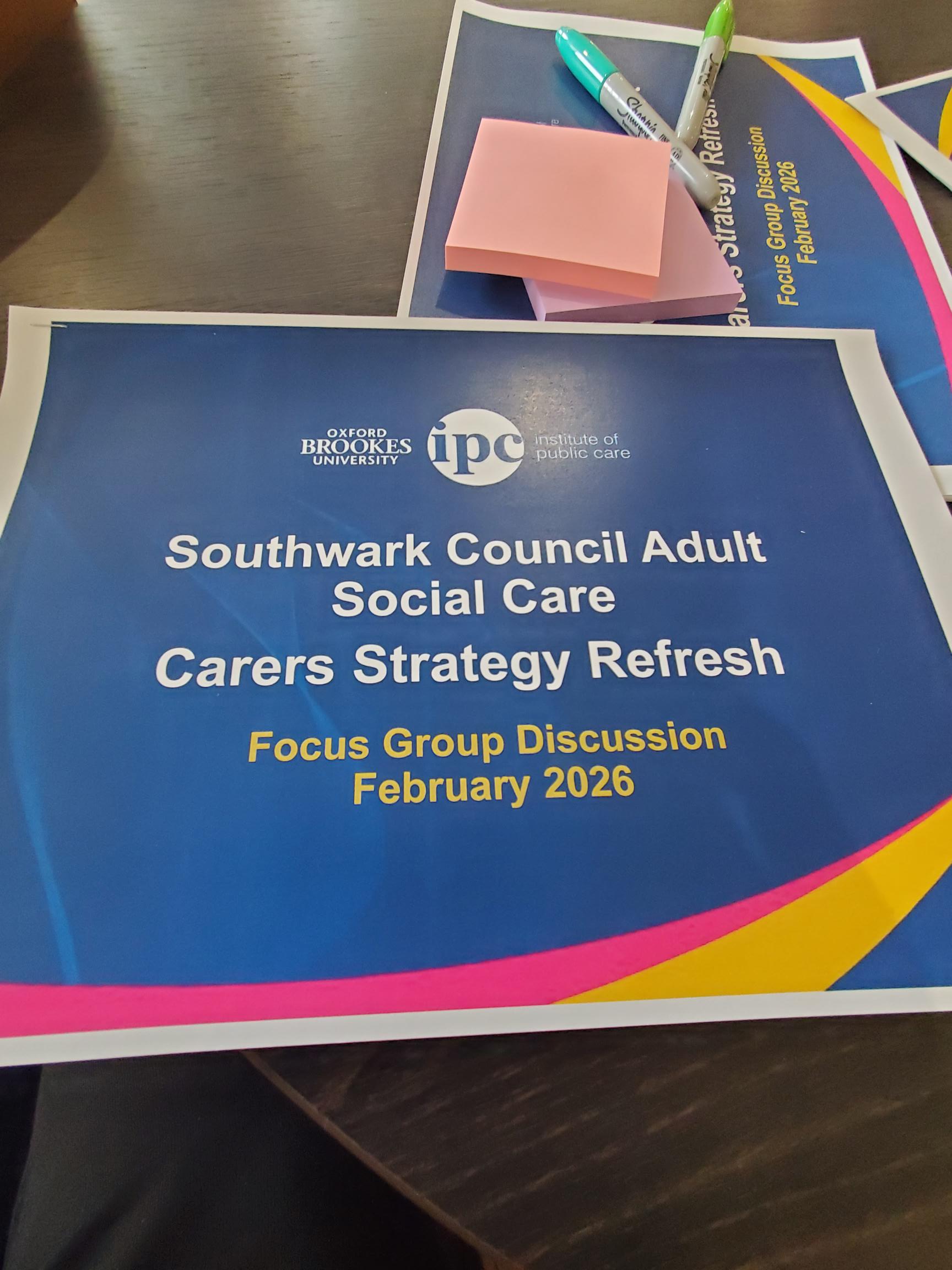
This month’s Mental Health Carers Forum brought together carers, local authority representatives, and carers’ organisations across Southwark, Lambeth and Lewisham. The main focus of the session was the development of Southwark’s new Unpaid Carers Strategy, alongside wider discussions about safeguarding, service gaps, hospital pathways, and national pressures affecting carers.

The discussion reflected both strategic planning and powerful lived experiences.


1. Development of the New Unpaid Carers Strategy (Southwark)

The Strategy and Policy Lead for Adult Social Care outlined plans to develop a new Unpaid Carers Strategy, due to launch in October 2026, alongside the new Carers Hub (currently going through procurement).

Why a New Strategy?

The council has reviewed its Joint Strategic Needs Assessment (JSNA), which estimates that there are between:

  • 18,000 and 37,000 unpaid carers in the borough
  • Around 2,000 carers currently known to Adult Social Care

This gap highlights the scale of “hidden carers” who may not be registered, identified, or receiving support.

Importantly, the council acknowledged that strategy priorities should not simply be based on data analysis alone. Instead, they are aiming for genuine co-production — asking carers directly what matters most.


2. Engagement Plan

The strategy is currently in Phase One: Listening and Engagement.

Engagement methods include:

  • Two in-person focus groups
  • One online evening session (to accommodate working carers)
  • A borough-wide survey (in development)
  • One-to-one carer story interviews
  • A draft strategy consultation phase

The council hopes to produce a draft strategy by June, followed by further consultation before final sign-off.

Attendance Challenges

While engagement sessions were organised, numbers were lower than hoped:

  • ~16 signed up for morning session
  • ~11 for afternoon
  • ~18 for virtual session

This led to discussion about why engagement can be difficult.


3. Why Engagement Is Difficult

Several themes emerged:

  • Carers often feel over-consulted but under-informed about outcomes
  • Carers are extremely time-poor and emotionally stretched
  • Communication may not be filtering through GP surgeries, mental health services, or hospitals effectively
  • Some carers do not self-identify as carers
  • Many want to see tangible change before engaging again

There was also discussion about compensation for carers’ time. While payment isn’t possible, vouchers are being offered to recognise contributions.

A broader issue remains: How do we reach the thousands of carers who are currently unknown to services?


4. Safeguarding and Social Work Concerns

One of the most powerful parts of the session came from carers sharing lived experiences.

Concerns raised included:

  • Lack of trauma-informed practice
  • Social workers not understanding autism, ADHD, or PTSD
  • Carers feeling triggered or retraumatised by professional behaviour
  • Repeated changes of social worker
  • Safeguarding flags raised but no follow-up
  • Carers left to “self-safeguard”

There was frustration that safeguarding processes sometimes feel procedural rather than protective particularly when no one follows up after concerns are logged.

While individual cases cannot be addressed within a strategy meeting, the recurring themes of:

  • Training
  • Empathy
  • Communication
  • Accountability
  • Follow-through

will be fed into the strategy consultation.


5. Hospital Pathways & Carer Identification

Discussion also focused on the hospital experience.

Key questions raised:

  • Are carers being identified at admission?
  • Are they being referred to carers centres?
  • Is there a clear pathway from hospital discharge to community support?
  • Are hospitals promoting local carer engagement events?

It was noted that discharge teams do significant work, particularly around bereavement support, but carers want clearer and more consistent pathways.

There was also discussion about cross-borough complexity especially for carers living near boundaries (e.g. Southwark/Lambeth), where services can feel fragmented.

The need for joined-up working across boroughs and hospital trusts was emphasised.


6. Inclusion & Underrepresented Groups

Several groups were identified as needing more targeted engagement:

  • Mental health carers
  • Ethnic minority carers
  • Male carers (who are often underrepresented)
  • Young carers
  • Working carers

There was a clear call to ensure the strategy does not become “one-size-fits-all.”

In particular:

  • Cultural expectations can prevent some carers from seeking support.
  • Male carers may be less likely to self-identify.
  • Working carers face employment pressures despite recent legislation.

7. National Pressures on Unpaid Carers

A short presentation was delivered by Matthew McKenzie on national developments affecting carers.

Financial Pressures

  • Carer’s Allowance remains one of the lowest benefits of its kind.
  • Ongoing overpayment recovery cases have caused distress for many carers.
  • Cost-of-living pressures are increasing hardship.
  • Many carers are limiting working hours to avoid breaching earnings thresholds.

Service Pressures

  • NHS workforce shortages.
  • Increasing waiting lists for mental health services.
  • Limited psychological support tailored specifically for carers.
  • Strain on carers centres due to funding pressures.

Policy Gaps

  • No current overarching national carers strategy.
  • Low awareness of carers’ rights under the Care Act 2014.
  • Postcode variation in support.
  • Inconsistent carer involvement in service design.

It was highlighted that unpaid care is estimated nationally at around £160 billion annually demonstrating the enormous economic value of carers’ contribution.


8. Key Strategic Themes Emerging

Across all discussions, several recurring themes emerged:

  1. Carers must see outcomes from engagement.
  2. Safeguarding must involve follow-up and accountability.
  3. Training for social workers must include trauma-informed and neurodiversity awareness.
  4. Hospital discharge pathways need clarity and consistency.
  5. Carers need better communication and joined-up systems.
  6. Underrepresented groups require targeted inclusion.
  7. Engagement must move beyond consultation into meaningful co-production.

Lewisham, Southwark & Lambeth carer forum update October 2025

The recent Carers Forum brought together unpaid carers, health professionals, and community organisations from across South London to share updates, experiences, and ideas for improving mental health support. The event, chaired by Matthew McKenzie, created a safe and open space for carers to connect, exchange information, and have their questions heard by local health leaders.

Setting the Scene

Matthew opened the session by welcoming carers from across Lambeth, Lewisham, and Southwark. He spoke about the importance of providing carers with dedicated time to hear from service providers, particularly those supporting someone with mental ill-health and to ensure their voices shape local mental health strategies.

Continue reading

Lewisham, Southwark & Lambeth carer forum update September 2025

By Matthew McKenzie – Carer activist and facilitator of the group

The group is a community of carers in Lambeth, Southwark and Lewisham that exists to provide support, advocacy, and connection for people looking after loved ones living with mental illness. It brings together unpaid carers of all ages and backgrounds to share experiences, learn from one another, and build confidence in dealing with health and social care professionals. A core part of its mission is reducing isolation by creating a safe space where carers can speak openly, develop skills, and access practical resources like advocacy services.

The meeting began with introductions and updates from various participants, including myselff where I discussed work with London Hospitals and the NHS app, while other carers introduced themselves to the group. In attendance was Tama from PohWer presented information about carer complaints and support services across different regions, including discussions about the potential impact of Healthwatch’s dissolution on patient and carer support services.

Continue reading

Lewisham, Southwark & Lambeth carer forum update August 2025

The meeting facilitated by Matthew McKenzie began with introductions from participants and updates on various carer support initiatives, including forum mergers and NHS plan changes.

Local council strategies and initiatives were discussed across different boroughs, with particular focus on Lambeth and Southwark’s carer support plans and the development of a carer’s forum in Lewisham. The group explored challenges faced by carers, including access to primary care and the need for better coordination, while discussing recent conferences and upcoming events aimed at supporting and advocating for carers’ rights.

Lewisham Carers Strategy and Service Updates

Lewisham is currently refreshing its Carers Strategy to strengthen support for unpaid carers and improve access to local services. The focus is on ensuring carers are included in decision-making through co-production and collaboration with the council, health providers, and community organisations. A major priority is improving well-being services, providing better information, and ensuring carers know their rights under the Carers Leave Act.

As part of wider NHS reforms, Lewisham is moving towards a neighbourhood-based care model designed to bring services closer to local communities. While this aims to make access more seamless, carers raised concerns about inconsistent GP access, gaps in communication, and challenges navigating between boroughs when supporting loved ones. The forum highlighted the importance of better coordination between primary care, hospital discharge planning, and mental health services to ensure carers are recognised and supported.

Lambeth Carers Strategy Refresh

Lambeth is currently refreshing its Carers Strategy with the aim of improving services, increasing visibility, and ensuring carers have a stronger voice in decision-making. The updated strategy focuses on key priorities such as well-being, access to assessments, respite options, and workforce training for those supporting unpaid carers.

There was a particular focus on improving support for mental health carers in Lambeth. The Carers Hub Lambeth team continues to facilitate peer support groups and collaborates closely with the South London and Maudsley NHS Foundation Trust to ensure carers are recognised as partners in care planning. Initiatives like Triangle of Care are gaining momentum, emphasising better communication between professionals and families while creating pathways for carers to get involved in shaping local mental health services.

Carers Hub Lambeth also celebrated the growing range of community-based activities available for carers and families in Lambeth. Over the summer, there have been several events designed to support young carers, including trips, tours, and group workshops aimed at helping them connect with others and access emotional support. These initiatives are part of Lambeth’s broader goal to make sure younger carers, who are often overlooked, receive the help they need both at home and within education.

One of the key upcoming events for Lambeth carers is the Lambeth Carers Strategy Event taking place on 25th September 2025 at 336 Brixton Road. The session will bring together carers, professionals, and decision-makers to review plans, share ideas, and set priorities for the future. Carers are strongly encouraged to attend to ensure their voices are heard and to take part in shaping the borough’s action plans moving forward.

Southwark Council Carers Support and Strategy Group

Matthew fed back on how Southwark Council continues to strengthen its approach to supporting unpaid carers, with a growing emphasis on improving access to information, assessments, and respite services.

The Unpaid Carers Strategy Refresh is a project running from August 2025 to April 2026, led by Southwark Council in collaboration with Adult Social Care, the NHS, local voluntary groups, and unpaid carers themselves. The plan focuses on improving support for carers by updating evidence on local needs, strengthening engagement with seldom-heard groups, and mapping gaps in current services.

Key priorities include better access to respite care, enhanced referral pathways, stronger partnerships with health services, and improved inclusion of young carers, carers with disabilities, and LGBTQ+ carers. The initial phase, from August to October, involves reviewing existing strategies, mapping current services, gathering insights through focus groups and surveys, and benchmarking against national policies and neighbouring boroughs.

The forum highlighted the importance of co-production, ensuring that carers are actively involved in shaping local strategies and service priorities.

Update on Key Themes from the final NHS England Carers Conference

Matthew highlighted that the 2025 NHS England carers conference placed a strong emphasis on recognising unpaid carers as essential partners in delivering effective healthcare. The NHS stressed its commitment to involving carers in shaping services and policies, ensuring their voices are reflected at every stage of decision-making. There was a clear acknowledgement that without unpaid carers, many health and social care systems would face significant pressure.

You can watch the conference below.

A major focus was on the NHS’s shift towards neighbourhood-based care models designed to bring services closer to communities. Matthew explained that this change aims to improve coordination between GPs, hospitals, and mental health services, but he also highlighted concerns raised about fragmented communication and the risk of carers being left out of local planning. Carers at the conference called for better access to information and more joined-up pathways across boroughs.

The conference also featured interactive workshops and discussion groups focused on co-production, digital innovations, and addressing inequalities among carers. Specific sessions explored improving support for young carers, carers from minority backgrounds, and those supporting loved ones with mental health needs. The event closed with a call to action for stronger collaboration between carers, NHS teams, local authorities, and community organisations. Attendees were encouraged to get involved in upcoming forums and engagement opportunities to help shape future services and ensure carers’ voices are at the heart of decision-making.

Matthew shared updates on national policy developments discussed at the conference, including the Carers Leave Act and commitments to expanding access to respite, assessments, and flexible working rights. There was also a discussion about new digital tools and support platforms designed to make it easier for carers to connect with professionals and access resources. However, many attendees expressed concerns that these initiatives need proper funding and training to work effectively in practice.

Lewisham, Southwark & Lambeth Mental Health carer forum – July 2025 update

By Matthew McKenzie

LLS Carers Forum – July Update: Voices, Concerns & Community Strength

Welcome to the July update for the Lewisham, Lambeth, and Southwark Mental Health Carers Forum. This month’s meeting, chaired by Matthew McKenzie, provided space for powerful updates, critical reflections, and a sobering insight into national developments affecting carer support.

🔸 Growing the Carers Voice

Our forum continues to evolve, bringing together unpaid carers from across boroughs. It remains a space for empowerment, where carers can speak openly, challenge services, and influence support structures. Several attendees introduced themselves and reflected on their caring roles, often crossing borough boundaries and facing ongoing questions about their own place in the system.

🔸 Spotlight: Healthwatch Update

One of the major concerns raised was the planned abolition of Healthwatch England and its local branches, which is a development that has deeply unsettled many in our community.

Anna from Healthwatch Lambeth joined us (on her day off—thank you, Anne!) to explain what’s happening:

  • Healthwatch functions—listening to service users, signposting, and enter-and-view visits, which are set to be absorbed by local authorities and ICBs.
  • As a statutory body, Healthwatch cannot be dissolved without legislation, so operations continue for now.
  • Carers voiced serious concerns over the loss of Healthwatch’s independence and trust, especially as a safe channel for feedback.

Anne reminded us: Healthwatch is still active and listening. A final report on black men’s experiences in Lambeth mental health services is due by mid-August.

🔸 Key Questions Raised

  • How will services preserve independent feedback mechanisms once Healthwatch is gone?
  • What accountability structures will replace them?
  • What are the implications of the broader wave of health service body consolidations?

🔸 Updates from the Ground

We also heard from other carer members:

  • A carer from Lewisham shared feedback she submitted to the Lewisham Unpaid Carers Forum regarding carer engagement, with little response so far unfortunately highlighting an all-too-common issue.
  • Other Carers reflected on Lambeth’s carer engagement structures, noting some decline in carer-led decision-making over the years.
  • Another Carer emphasized the importance of real, consistent carer champions within NHS teams particularly in mental health crisis services.

🔸 Carers Forum Reflections

Matthew provided a helpful comparison between Lewisham and Lambeth carer engagement models. While Lewisham has a formal Unpaid Carers Forum, its independence is limited. Lambeth’s model leans more on the collaborative network and carer support groups. Both boroughs face challenges in consistency, clarity, and co-production.

A concern raised repeatedly: carer champions are often named but rarely visible and sometimes, not even known by their own teams.

📅 Next Forum: August 25 or 26

Due to the bank holiday, the next forum will likely be held on August 26. We’ll aim to have a guest speaker and will explore new ways for carers to hold services to account especially in light of the potential Healthwatch closure.


If you’d like to contribute to future discussions or attend the next forum, please reach out. This is your space.

📣 Let’s continue to speak up, stand together, and push for better mental health support for all carers.

Lewisham, Southwark & Lambeth Mental Health carer forum – June 2025 update

About the Forum:
The Lewisham, Lambeth & Southwark Carers Forum is a collaborative online space that brings together unpaid carers, carer leads, mental health professionals, and support organizations to share experiences, raise concerns, and influence change. Focused primarily on mental health caregiving, the forum serves as a platform for peer support, policy updates, training insights, and service development. Led by carer advocate Matthew McKenzie, the group fosters empowerment through regular discussions, creative expression, and co-produced solutions, ensuring carers’ voices are heard across local systems and beyond.

Carers Week Collaboration Discussion

The meeting began with introductions from Matthew McKenzie, who leads a merged online carers group, and other participants including Yvonne, a carers navigator at Southwark Carers, and Margaret, a carer representative with the Royal College of Psychiatrists. The group discussed Carers Week activities and their various roles in supporting carers across different organizations. Karen Hooper, connected with the Lambeth Living Well Collaborative, while Lee Roach, the carers lead for South London & Maudsley in Lambeth, shared his involvement with the Trustwide Family and Carers Committee.

Continue reading

Southwark & Lambeth carer forum update February 2025

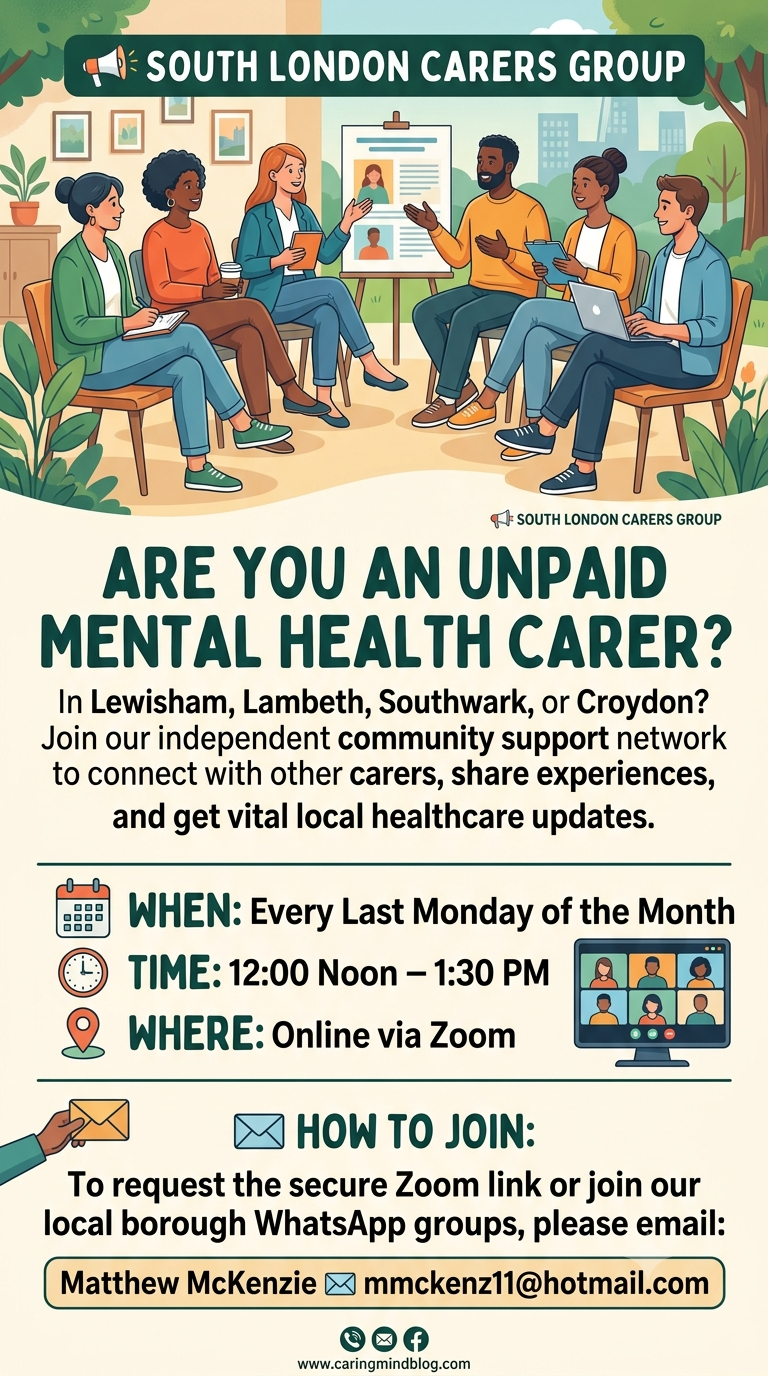
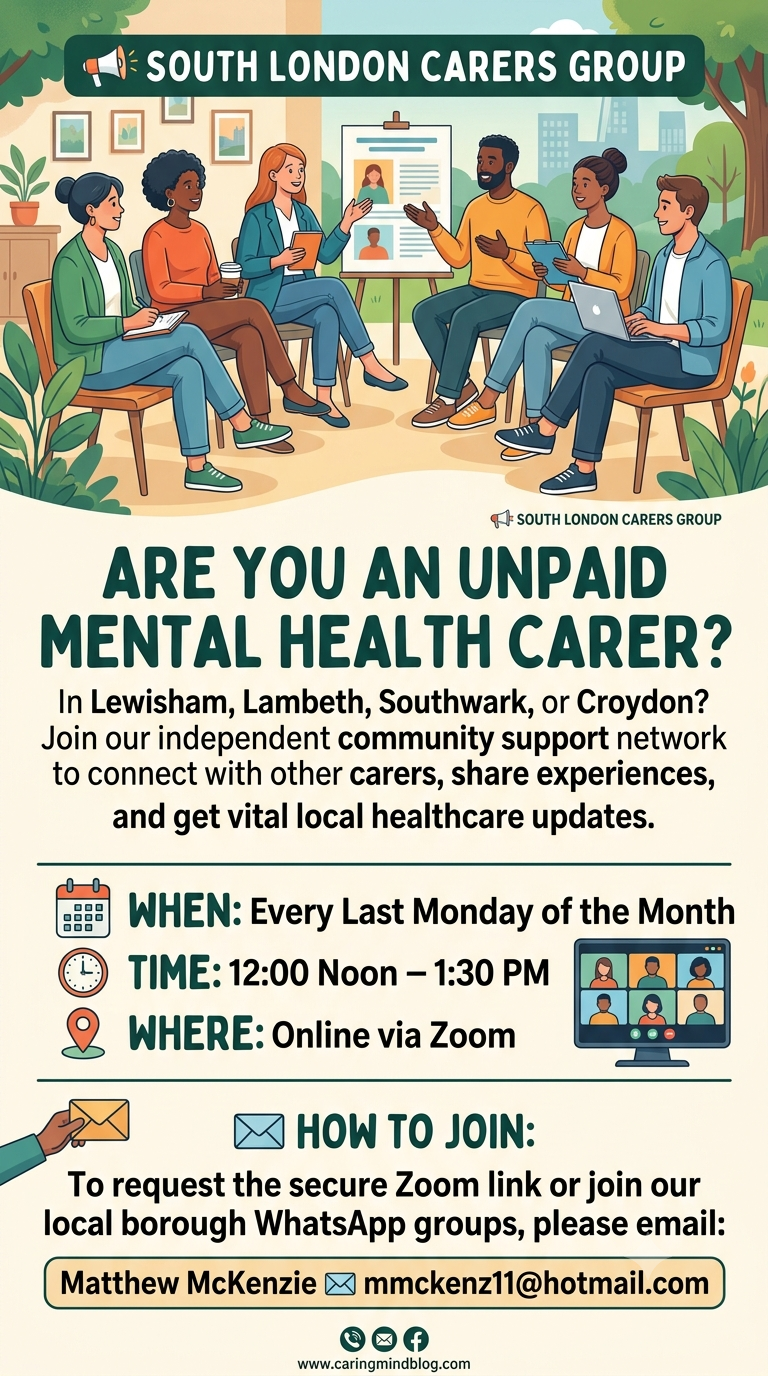
Here is a brief update of the joint Southwark & Lambeth mental health carers forum I run the last monday of the month. The forum is a space for those caring for someone with mental ill health to connect and get updates from service providers.

As facilitator Matthew McKenzie emphasized the importance of managing guilt as a mental health carer, challenging unrealistic expectations, and setting boundaries for one’s own well-being. Matthew also stressed the need for self-care, seeking professional guidance, and advocating for respite care. The conversation ended with discussions on the concept of guilt, the challenges of being a carer, and strategies for holding care coordinators and social workers accountable.

Continue reading

Southwark & Lambeth carer forum update November 2024

Welcome to a brief update of the carer forum for Southwark & Lambeth. The forum is facilitated by Matthew McKenzie, carer activist and author. The online carer led group runs once a month.

Here is a brief update for November 2024. However before continuing on to the blog, here is a quick update from Southwark Council and South East London ICS aimed at carers from Southwark.

Continue reading