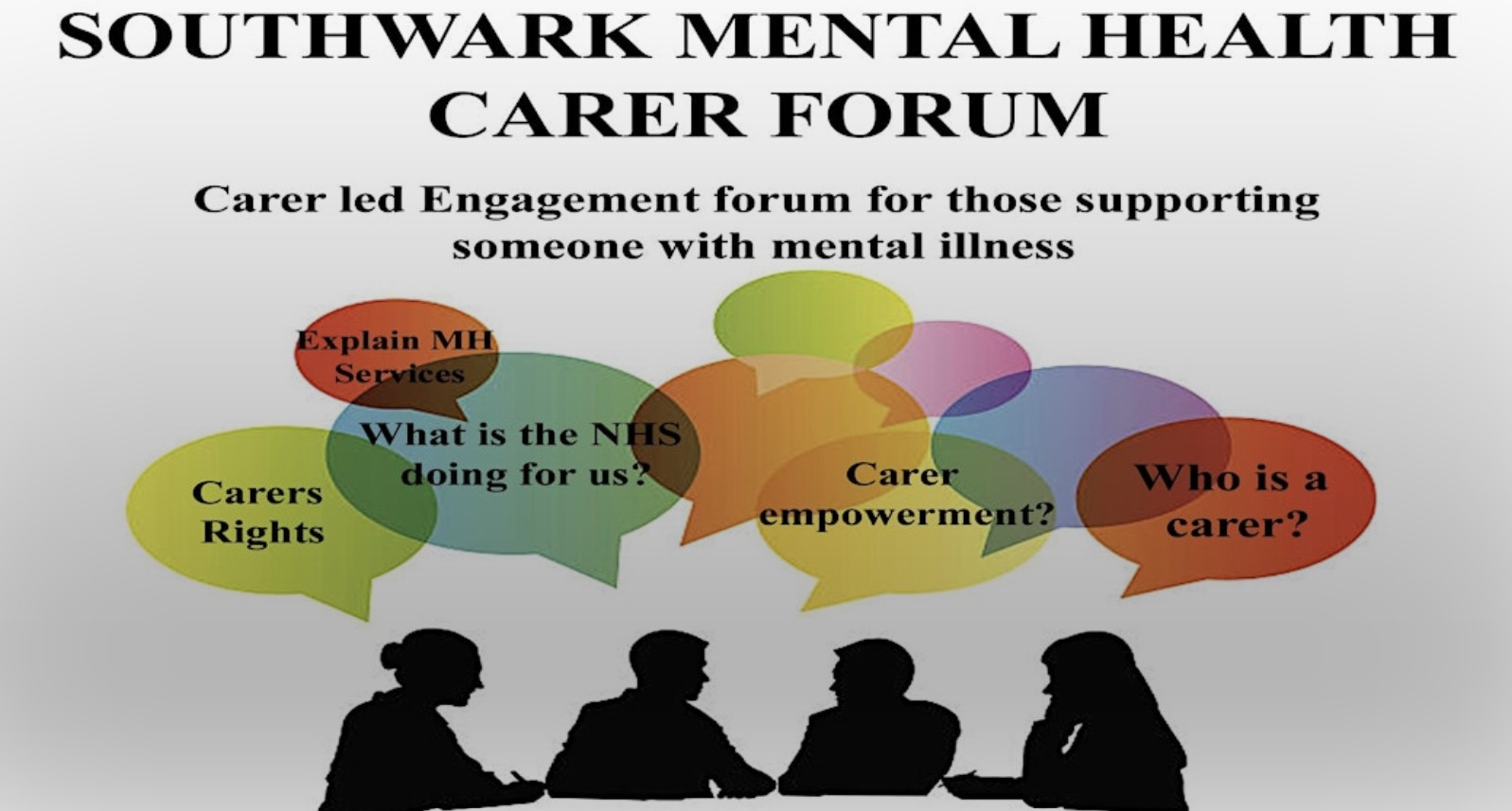
Here is a brief update of the joint Southwark & Lambeth mental health carers forum I run the last monday of the month. The forum is a space for those caring for someone with mental ill health to connect and get updates from service providers.
As facilitator Matthew McKenzie emphasized the importance of managing guilt as a mental health carer, challenging unrealistic expectations, and setting boundaries for one’s own well-being. Matthew also stressed the need for self-care, seeking professional guidance, and advocating for respite care. The conversation ended with discussions on the concept of guilt, the challenges of being a carer, and strategies for holding care coordinators and social workers accountable.
Managing Guilt as Mental Health Carers
In the meeting, Matthew discussed the importance of managing guilt as a mental health carer. He emphasized that guilt is a natural response to a demanding role and encouraged participants to recognize and process their emotions. Matthew also highlighted the importance of challenging unrealistic expectations and setting boundaries for one’s own well-being. The conversation ended with an invitation for participants to introduce themselves and share their experiences as carers.

Embracing Help and Self-Compassion in Caring
Matthew emphasized the importance of seeking help as a strength, not a weakness, and reframing guilt into compassion. He encouraged recognizing efforts and setting realistic goals, especially in demanding unpaid caring roles. Matthew also stressed the need for self-appreciation and acknowledging limits, as mental health conditions are complex and recovery is not a straightforward path. He reminded the group that it’s not their fault and that they are making a difference, even if it’s small.
Self-Care for Carers: Prioritizing Mental Health
Matthew emphasized the importance of self-care for carers, suggesting that it’s not selfish to prioritize one’s own well-being. He recommended engaging in joyful and relaxing activities, connecting with others, and prioritizing healthy habits like sleep, diet, and exercise. Matthew also highlighted the need for professional guidance, such as therapy or counseling, to process guilt and develop coping strategies. He encouraged unpaid carers to seek out mental health organizations and educational programs to better understand mental health challenges. Lastly, he stressed the importance of advocating for respite care, as it can be difficult to access.

Addressing Guilt and Coping Strategies
Matthew discussed the importance of recognizing and tackling guilt, emphasizing the need to learn from past mistakes and avoid dwelling on them. He suggested practicing mindfulness and meditation as coping strategies. A carer shared her personal experience of feeling guilty due to the lack of support systems for mental health, highlighting the need for self-compassion. Matthew thanked the carer for her bravery in admitting her feelings. The conversation ended with Matthew preparing to discuss more tips on mindfulness and coping strategies.
Exploring Guilt and Self-Compassion
In the meeting, carers discussed the concept of guilt and its impact on individuals. A carer shared her perspective on guilt, suggesting that it can be a wasted energy if one hasn’t done something wrong. She emphasized the importance of self-compassion and doing the best one can with the resources available. Another carer shared her experience with a course on acceptance and cognitive therapy, which she found moderately helpful. She also mentioned the Maudsley Recovery College, a service that offers courses for carers and patients, including mindfulness courses. Matthew provided details about the Recovery College and encouraged everyone to enroll in courses that interest them. Carers agreed with each other’s points and expressed their hope that the meeting would be helpful.
Visit link below for more information.
Parenting Adult Children With Mental Health
A carer shared her experiences as a parent of an adult child with mental health issues, emphasizing the importance of self-care and seeking support. She highlighted the challenges of dealing with guilt and judgment from others, and how therapy helped her cope with these emotions. The carer also stressed the need to let go and not fix everything for one’s child, as it’s their responsibility. Another carer added to this discussion, noting the difficulty of dealing with a lack of insight or manipulation from the person being cared for, and the importance of self-kindness and not judging oneself. Both agreed on the need to step back and accept that one cannot always change things, especially when dealing with an adult child.
Carers’ Experiences and Support Challenges
In the meeting, unpaid carers discussed the challenges of being a carer and the importance of acknowledging and sharing experiences. A carer shared her work with the Carers Hub Lambeth, offering mindfulness sessions for carers. A carers advocate emphasized the need for self-compassion and suggested that carers should treat themselves as they would a friend. Another carer shared her experiences with guilt and hospitalization, highlighting the importance of early intervention and support for carers. Matthew then moved on to a new topic, discussing the role of care coordinators and social workers and the need for accountability in their work.

Mental Health Carer Accountability Strategies
Matthew presents strategies for mental health carers to hold care coordinators and social workers accountable. He emphasizes the importance of knowing their responsibilities under the Care Act 2014 and Mental Health Act. Matthew advises carers to keep detailed records of all interactions, including dates, times, and content of conversations. He outlines a process for escalating issues, starting with diplomatic communication, then escalating to managers, and finally using formal complaints procedures if necessary. Matthew also suggests engaging legal or advocacy support and, as a last resort, using media or public pressure. He stresses the importance of staying informed, being persistent, and documenting everything to strengthen one’s case.
Carers hope for engagement from services to get updates and empowerment.
This is the brief update of Matthew’s Southwark & Lambeth carers forum.
 A Caring Mind