Welcome to another blog post by carer Matthew Mckenzie who raises awareness of mental health carers as an Author, activist and poet. I have been quite busy working on several books, although for this particular blog I am focusing on how my audiobook is developing. This audiobook is called “Providing Care & other short stories”.
You can actually watch my first carer story at the end of the blog.
The audiobook will contain 20 short stories focusing on the experience and challenges of those caring for someone suffering mental illness. Each story will raise common themes mental health carers face, e.g. the anxiety of suddenly falling into the caring role, dealing with carer or mental health stigma, clashes with confidentiality, discrimination and misunderstandings, Young carers, minority and ethnic carers and more. There will be plenty other themes I will be raising regarding unpaid carers.
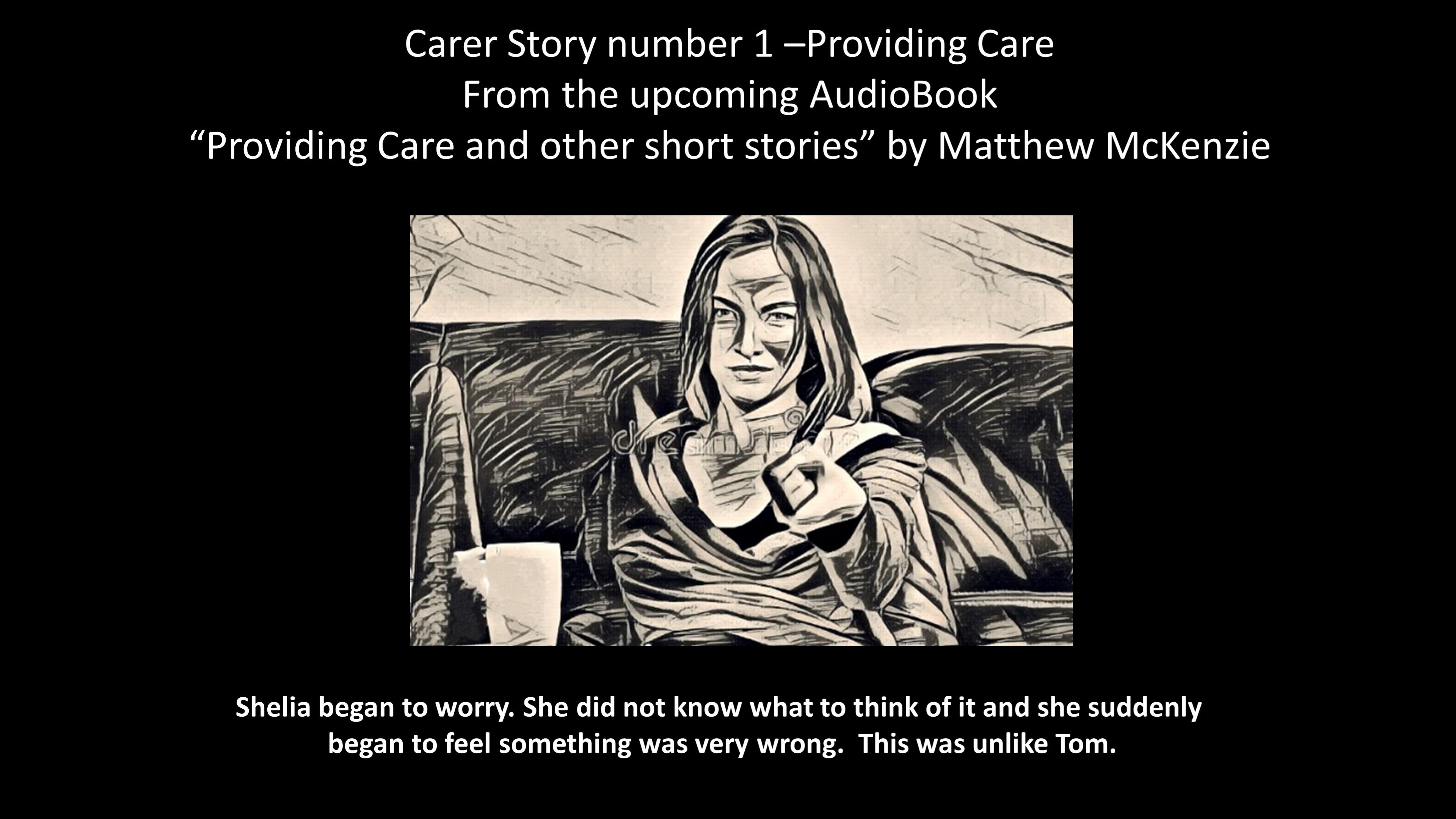
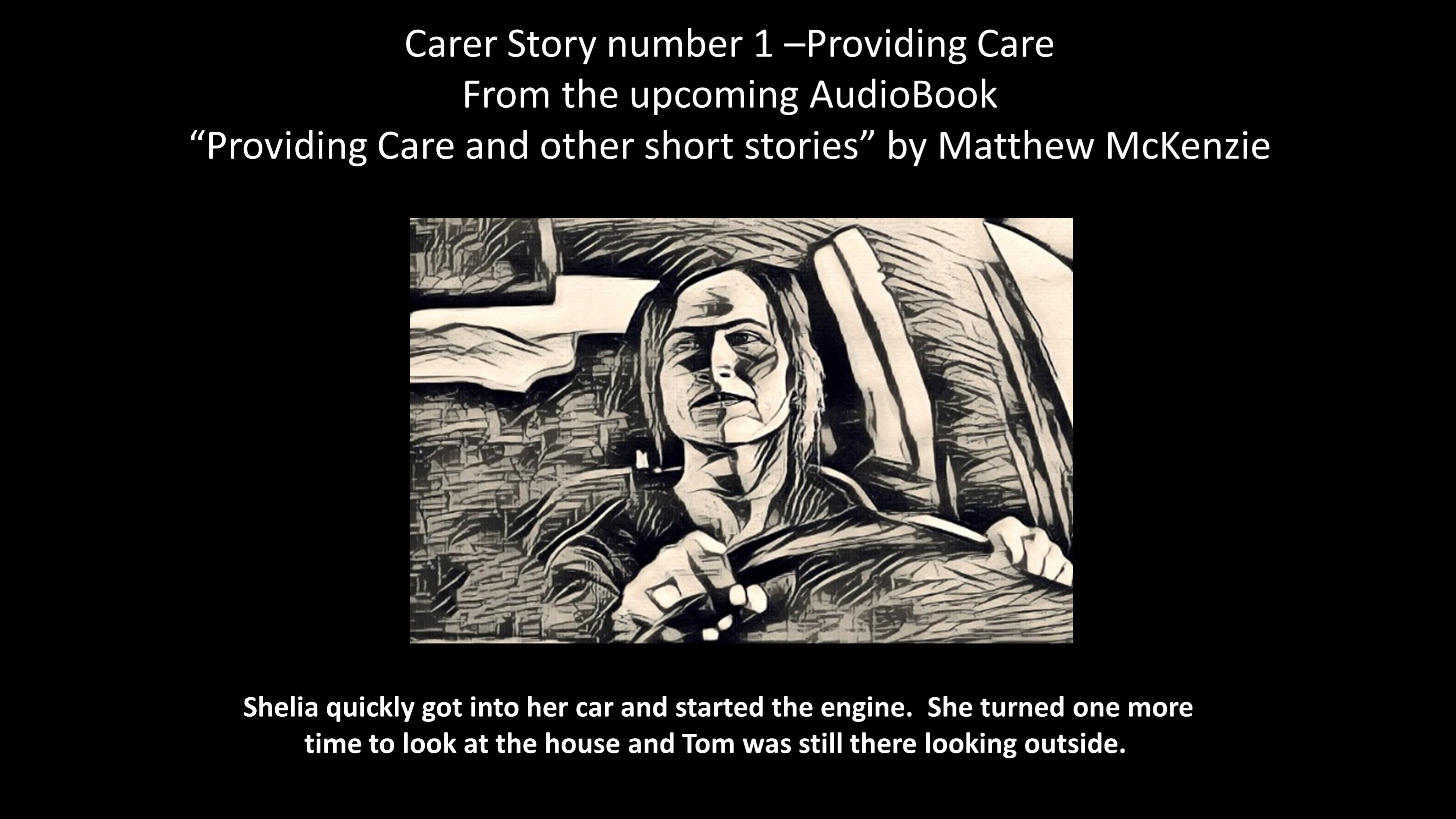
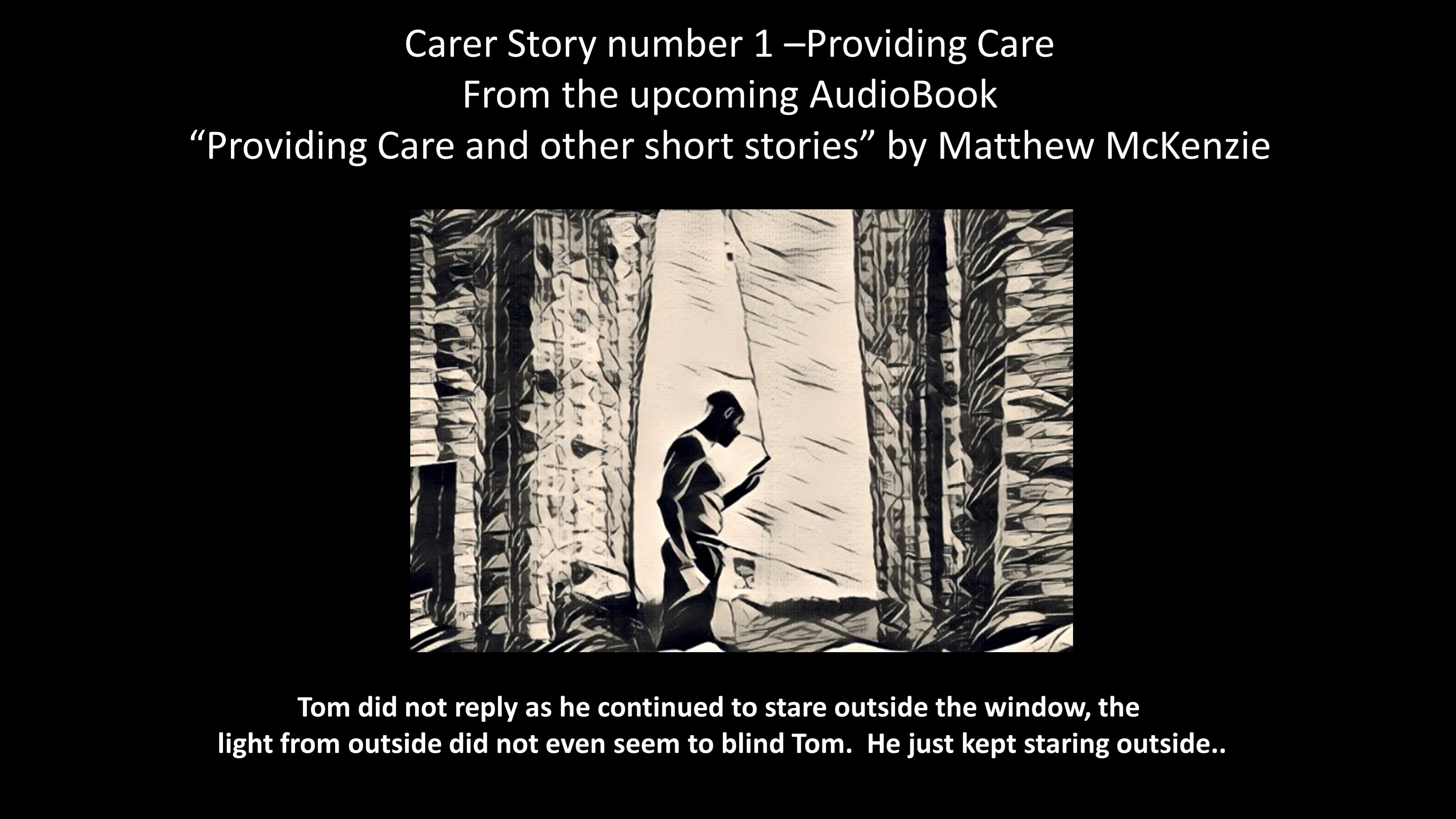
The first story providing care focuses on a young woman who suddenly falls into providing care, even if she thinks she is not a carer. I do not go and outright tell readers and listeners what is going on, I want them to discover the themes themselves and let me know what they have found out.
A lot of audio stories will be changed into video stories, depends how much time I have on my plate. I am still busy writing the stories and working on a story about a woman in a same sex partnership, unfortunately LGBTQ partnerships can still be driven into mental illness. A lot of the stories I write are quite dark, but those stories do need to be told.
Let us focus on the story Providing Care.
The story tells of a young women named Shelia caught unaware when her husband Tom begins to act strangely. Shelia becomes concerned, confused and wondering what to do next. She is thrown into a situation she has not been trained for as her world turns upside down.
It is not long before Shelia tries to save what is left of her relationship by doing all that she can, but can this be enough?
The story “Providing Care” highlights the sudden realisation of falling into unpaid care, there is little preparation if any at all. You can actually watch the draft of this the story for free by clicking the link below…..Enjoy!!
Welcome back to another carer blog post by Matthew McKenzie carer activist and author in London.
I thought to try promote carer causes and focus on things that I reckon carers struggle with. As usual when I am talking about carers, I am talking about caring for someone in the family or as a friend.
Whether a person is caring out in the community or visiting the person they care for in hospital, there are challenges people need to take note of.
Here is a list down below
Isolation – Caregivers can often feel cut off from the outside world, especially if caring, hard to understand
Emotionl strain – Taking care of a loved one and being responsible for their health can be very stressful. depression, guilt, sleep loss.
Financial situation – This struggle can cause all sorts of stress, the financial burden felt by caregivers should not be overlooked.
How Caring can impact on opportunities – if your caring, then you are not earning or developing other skill bases. Still caring can develop it’s own skill base.
identification as a carer – people do not always see themselves as a carer, but can lose out on support
Getting access to support – respite, advocacy, emotional support, planning for the future
Strains on Relationships – caring can be a joyful experience, but also stressful, lack of time for friends or family
Being involved in care – confidentiality, jargon in NHS, relationship breakdowns, sometimes being missed in identification. These things can cause the carer to be uninvolved.
Advocating for the cared for – need to deal with GPs, social workers, pharmacists, care agencies, receptionists and so on.
Not being able to Focus on themselves – most of the previous things mentioned focus on the struggles carers face when caring, but too much focus can cause the carer to loose sight of their own well being. It is important to take time out, sleep, talk to a friend. Not easy if caring in crisis.
If you want a more detailed explanation I have also made a video below.
Welcome back to another blog post by former mental health carer matthew mckenzie. I am also an author, poet, carer activist and faciliator of carer groups. This blog is going to be a bit of an update on how my new audiobook development is getting along.
The audiobook is called “Providing care & other short stories”. This new audiobook is about the experience of care provided by families to someone suffering mental illness. The audiobook will be my first attempt at fiction, although to be fair I have done some fiction before mainly through blog posts.
The short story titles are as follows (titles subject to change)
Providing Care
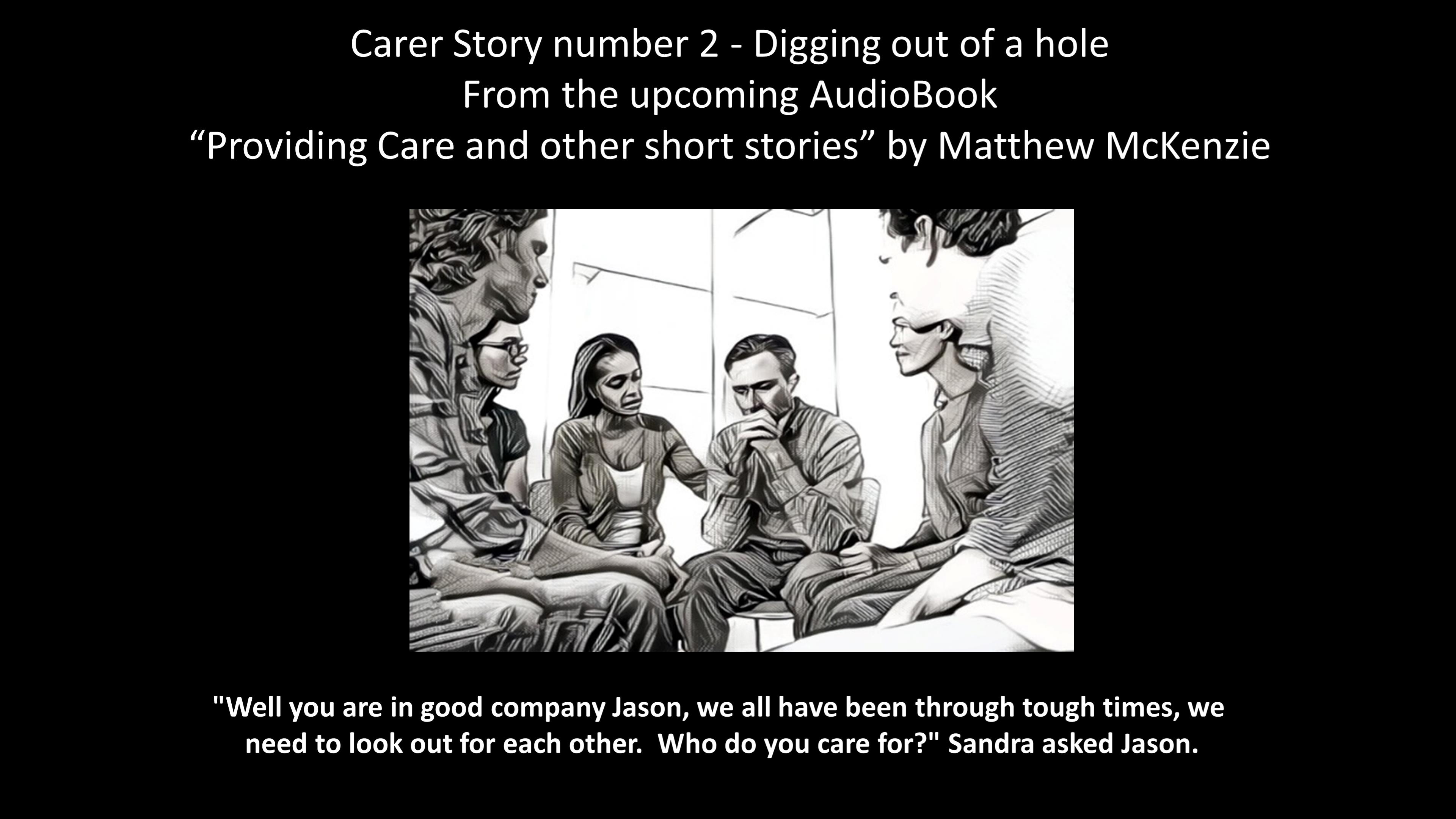
Digging out of a hole
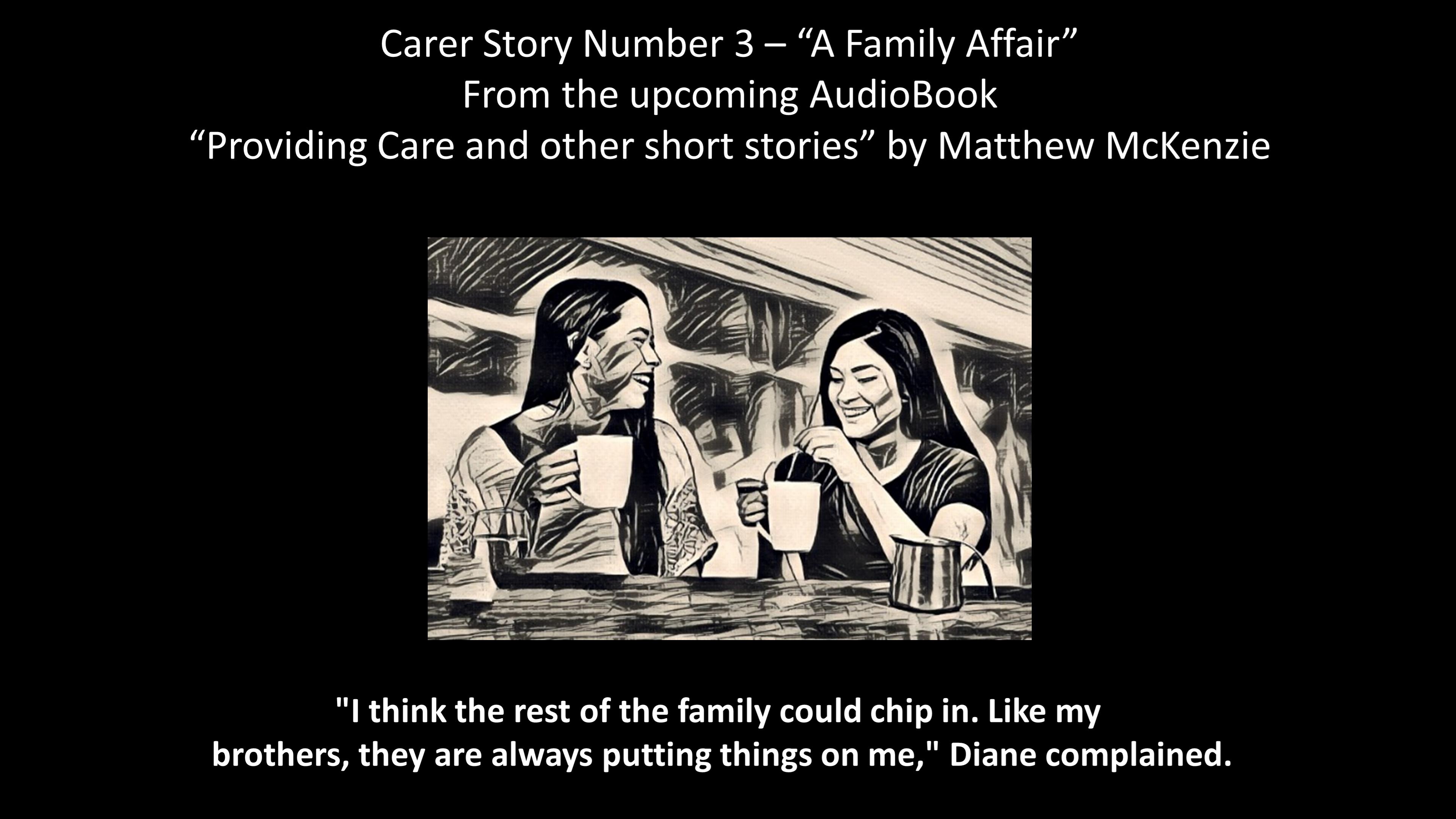
A family Affair
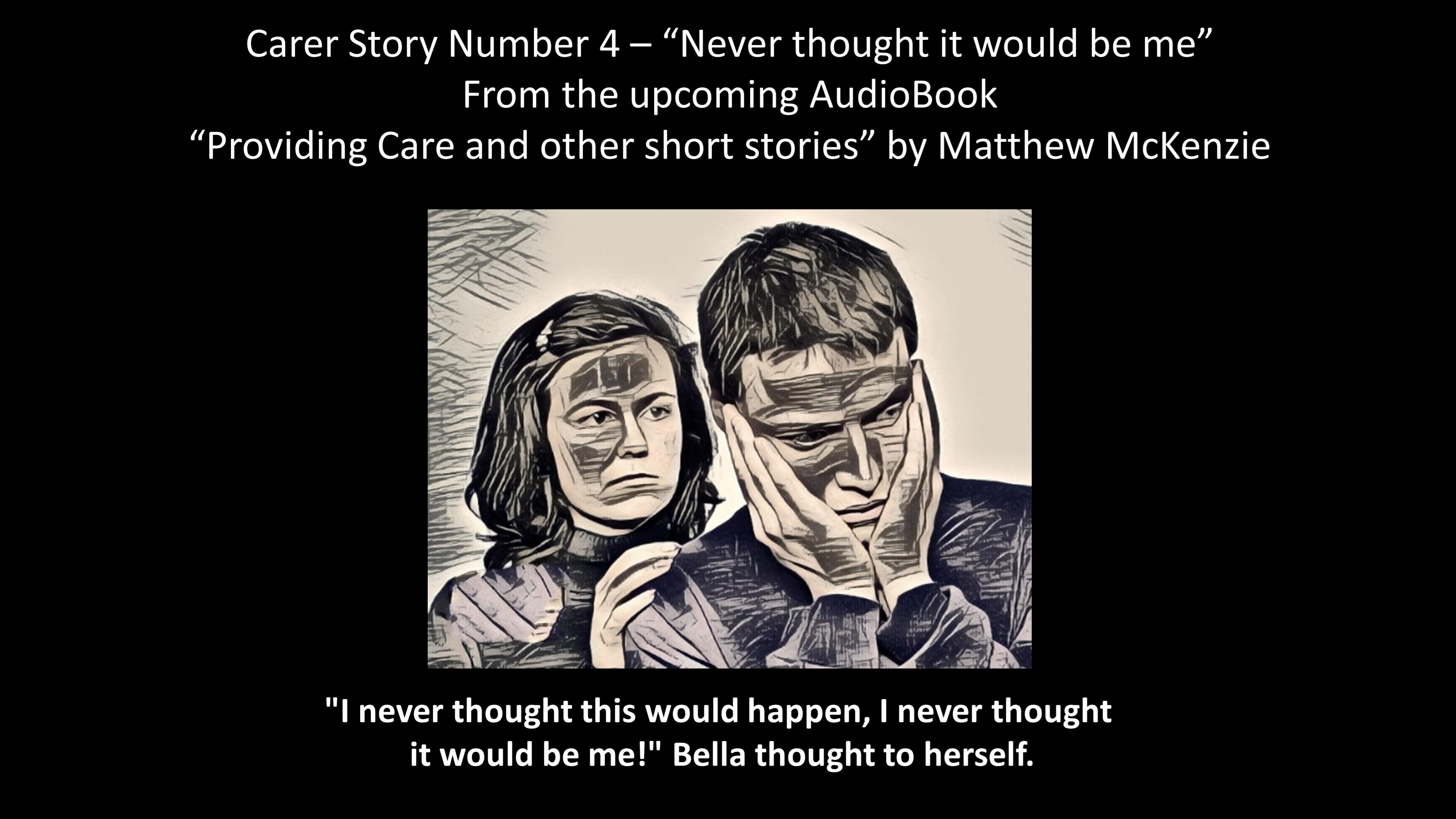
Never thought it would be me
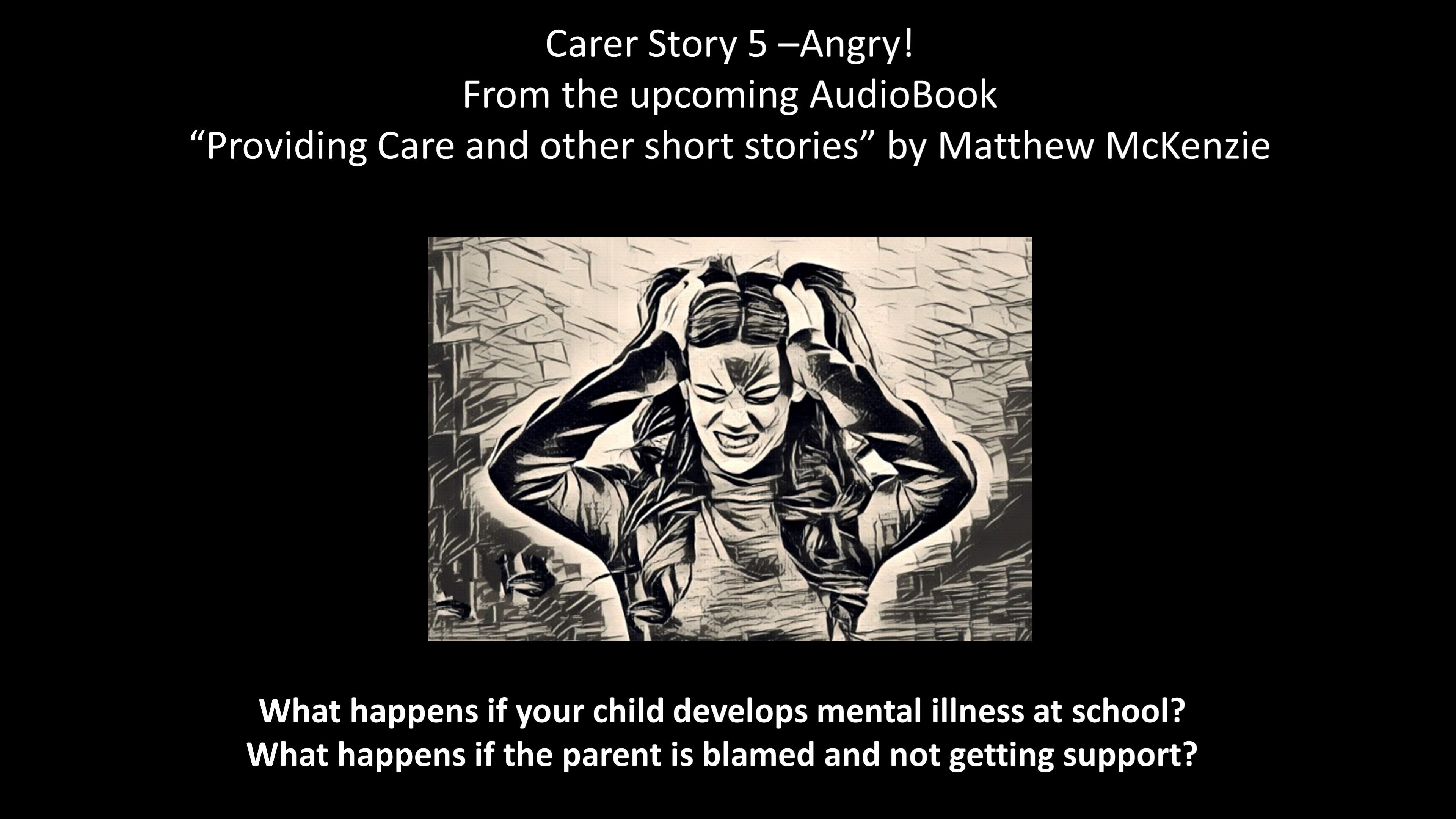
Angry
Just when I needed you
A story of Hope
Discriminated
View from the other side
Communication
Banding together
Solitude
Its my right
Wellbeing
Empowerment
Former Carer
Trying to make sense of it all
Young carer
If Only
Until the end
Since the short stories are about providing unpaid care, expect some dark subject content in these stories. The stories might be fiction, but I did want to add some realism. Within each of the stories, there are challenging things that happen to the carers or I could say families and friends. These would be not knowning what to do when someone becomes unwell, encounters with professionals who are not carer aware, struggling with their own mental health and being neglected by health and social care.
It is unfortunate that although many carers do get some level of support, the are those out there going through the same challenges as the carers in my stories
The good news is out of 20 stories, I have finished 4 of the stories. I should pat myself on the back, because I started the project over christmas.
The first story is the main story about providing care, but seen through the carer’s eyes.
The second story is dark with some glimmers of hope when a person is trying to pick up the pieces, but not finding any answers. As the picture shows, there is a mistake as I labelled it
The third story as shown in the picture below shows how not all things are equal in caring
The fourth story regards experiences in the hospital
I am just about to start my fifth story, which is probably quite depressing, but it does open up the struggles of carers and misunderstandings concerning mental illness.
Hello visitors and those providing care or caregiving to someone close. Here is another carer awareness blog from Matthew Mckenzie, carer activist, poet and author from Lewisham.
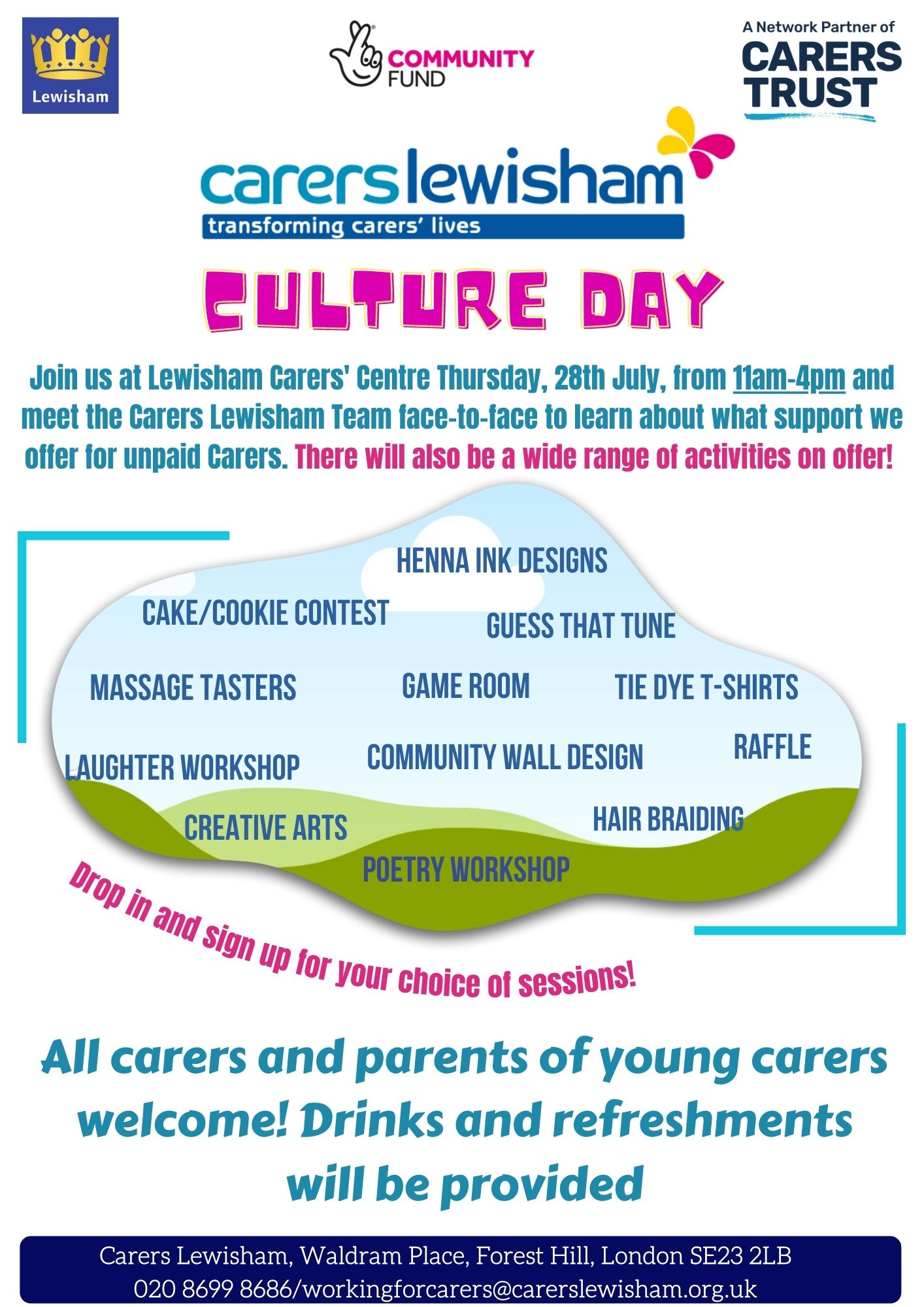
This blog is about Carers Lewisham Hub’s culture day. Carer centres are a vital part of providing support and services for those giving unpaid care. Carers Lewisham fights hard to identify carers, advocate for them and give as much support as possible.
I often visit the carers centre for their forums and support groups. On the 28th of July 2022, since the borough of Lewisham was the borough of culture. Carers Lewisham was hosting their culture day at their carers centre. A list of activities, networking and events was provided for carers who wanted to feel valued.
We had the game room and Raffle ticket event. Massage for those who have stress, aches and pains. Creative art sessions for those wanting to be……well creative. We also had laughter workshop, book readings and also my poetry reading (more on that later.)
I think most of all, carers who came along to the event wanted to network with others. They wanted to reduce isolation and link up with carers, staff and advocate to get support, information and to feel valued.
Since my poetry book “The Poetry book of mental health caring” was released in July 2022. Carers Lewisham was kind enough to offer me a poetry workshop. It is well known that over time, poetry can contribute to forms of culture. Most if not all my poems focus on the aspect of the caring experience. The poems look to raise the awareness of those providing mental health care. That means providing unpaid care to someone suffering mental illness.
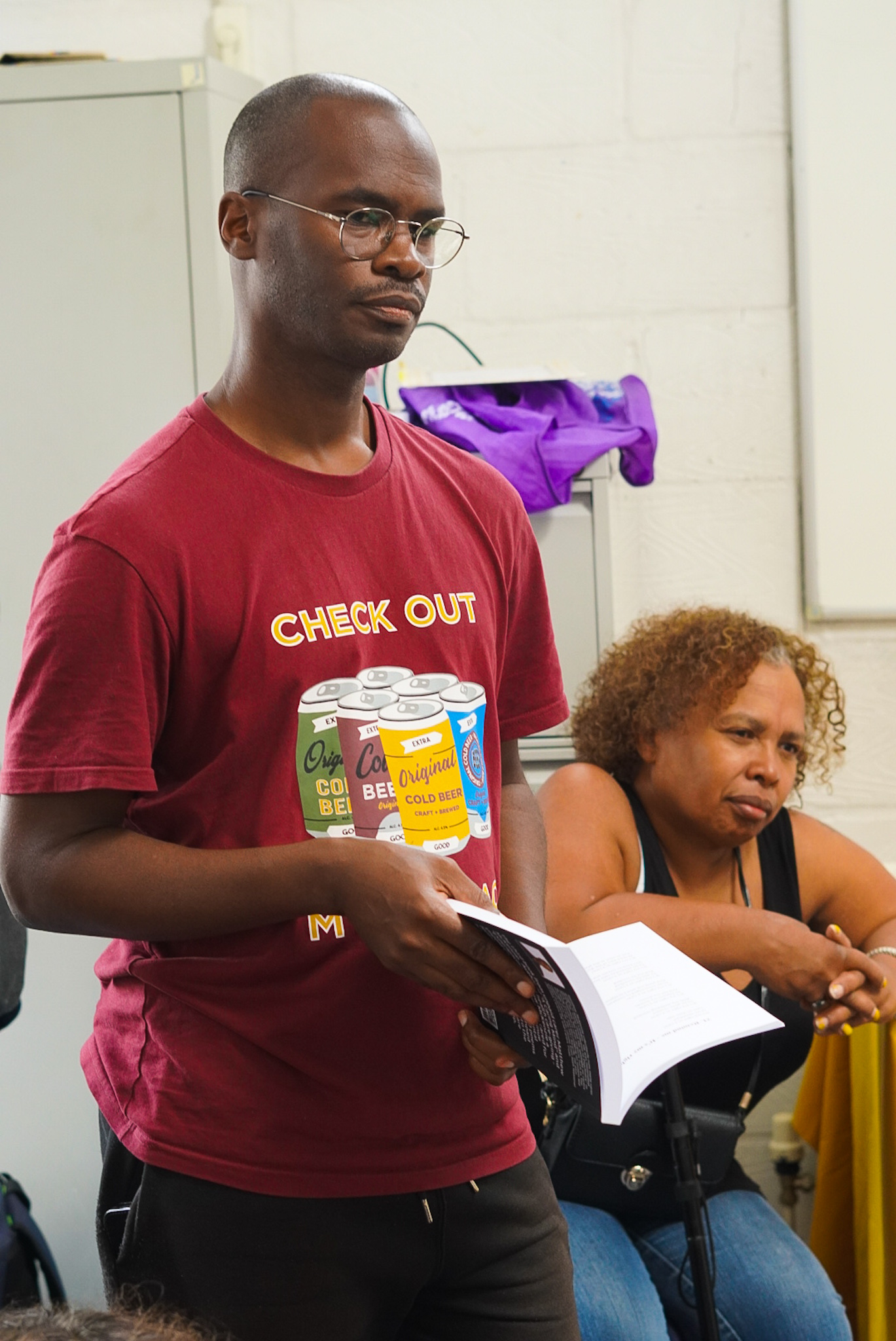
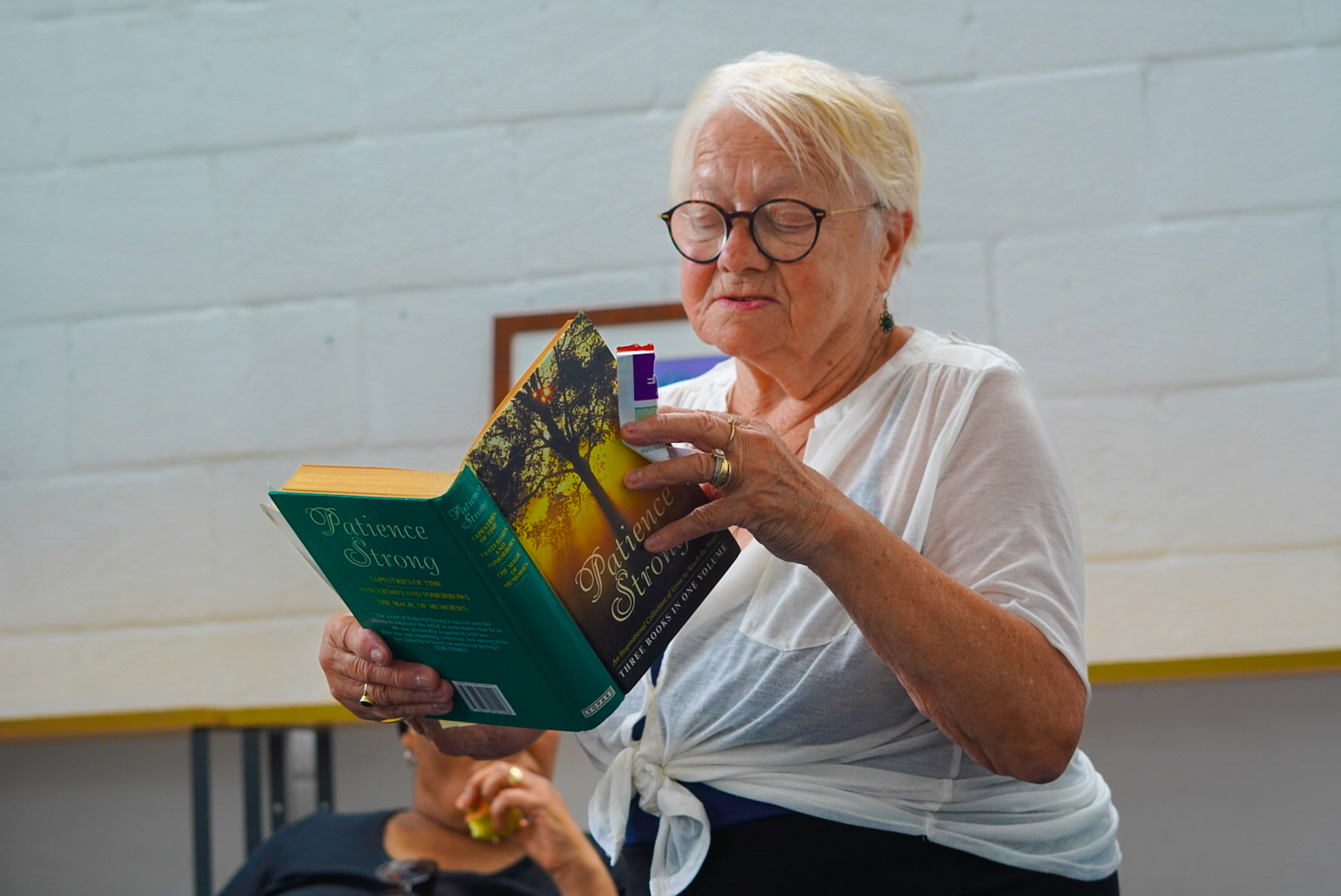
At the book reading and poetry workshop, we had other carers reading from their poems which they have developed. Tess read a wonderful poem and also Brenda.
I ran my workshop by reading a poem and then asking others to also choose a poem to read. We then reflected on the meaning and definitions of those poems. You can see the video of my poetry workshop below.
Hello fellow unpaid carers, new blog from Matthew McKenzie carer activist. I have not blogged in a while, because I am so busy writing my books about unpaid care. The thing is, while I am writing stories about the experience of providing care, I could not help think about the term ‘carer’. I could be more clearer and say what does the word ‘carer’ mean.
If i Google the term ‘what is a carer‘ The following turns up.
Wikipedia states the following
“A caregiver or carer is a paid or unpaid member of a person’s social network who helps them with activities of daily living.”
NHS England focuses the word ‘carer’ as the following.
‘A carer is anyone, including children and adults who looks after a family member, partner or friend who needs help because of their illness, frailty, disability, a mental health problem or an addiction and cannot cope without their support’
Come to think of it, if I google the word carer then most if not all of the following links agree with NHS England’s definition of a carer. The following links (subject to change) are from
Bristol and South Gloucestershire carers centre on “What is a carer” Caring together – Cambridgeshire on – “who is a carer” Carers Trust on Caring as an Unpaid Carer Even the citizens advice site has a section on Carers: help and support
So ok, why am I blogging about the definition of carers? Well as you can see things are not all that simple. Get ready because it gets political, but that is nothing new here.
The word ‘carer’ is shared depending on who uses it and why they are using the word. As far as I know, carer workers use the term carer. I run a carers stall at some hospitals and people often come up to me asking the following.
“Do you have the number of a carer to help with looking after someone?”. I then explain the stall is for unpaid carers.
Others ask
“Do you have a job for working as a carer?” “How much does it pay to be a carer?” “Can you be my carer?”
Well, the above highlights there are some concerns, because to be fair paid carers / careworkers do care for people, but they are paid to do so. We also have to notice the word ‘carer’ carries with it a vast amount of prestige. It becomes political if people hijack the word to push out those who are providing unpaid care. There is a tug of war between those who want to be defined as carer. Do not get me wrong, as many in the professional sector are vocal that the word should belong to unpaid carers. Still, another problem I am aware of is that those providing unpaid care do not often recognise themselves as a carer. Some even deem the word as an insult because they are caring for someone as a family member and want to be recognised as that first. This is fine and there should be little arguements of this, except what happens if the person continues to struggle providing unpaid care? They are not recognised by certain health and social care systems as needed support.
With the blurred term of ‘carer’, it means not only the carer suffers, but the person needing the care might also suffer because the strain on the family member becomes challenging. We also now have the word ‘carer’ being used for those who work in the NHS. It is true nurses and doctors ‘care’ for their patients, but even that causes problems because what happens when a health professional has to provide care for someone at home or close to them? How would they be identified? Would the strain of care push them out of the health profession?
It gets worse, even if you someone become aware you are a carer caring for someone in the family, what are your duties? Another google search of “carer duties” or “duties as a carer” brings up the duties of care workers. So someone provding unpaid or informal care will get stuck, because sometimes they have no idea what to do.
This is all confusing, I do not have the answers and I am sure someone out there does. Come to think of it, The care act 2014 is under scrunity. The House of Lords adult social care committee released a report in December 2022. The report mentioned that the government’s white paper does not go far enough.
There is a risk more unpaid carers and those they provide care for will suffer. It was stated that more support from health and social care professionals is needed to identify unpaid carers. As too many carers lose out on support, even if referred a large number might not be able to access support. I did warn it would get political.
To be honest, my thoughts on solutions would be education, education and campaigning. The big hurdle is getting others to scream that they are carers and that they need support. The cost of living, strain on health services and pandemic have highlighted the need for unpaid carers to get support. If the NHS continues to struggle it can only mean one thing, the community has to pick up the slack. That means carers will have to do more and also understand the health and social care system.
You can read the House of Lords adult social care committee report below from section 123 – What does it feel like to be an unpaid carer today?
Coming out of hospital checklist – This will be useful for my carer stalls at hospitals. This helpful checklist on what should happen before the person is discharged into someone’s care.
Welcome to a very late update of one of my carer forums. These are updates of the groups I run whose members are those caring for someone with mental ill health. For my September SW London carers forum, we were joined by Professor Caroline Glendinning who is the Emerita Prof of Social Policy at the University of York.
Prof Caroline presents on Carers and personal budgets
Caroline thanks us for having the chance to engage with unpaid carers and a way to learn from them. She was interested in our personal experiences, especially from the experience of caring for someone with a mental illness. She was pleased to see there are carer led groups fighting to engage with services.
Professor Caroline spoke at length regarding how Personalisation and carer policies have developed separately. She mentioned what the choices are disabled people, being either direct Payments/Personal Budgets/Individual Budgets.
She then spoke a bit about Carer’s rights being the importance of having a carer’s Assessment, how Carers Allowance Support should work and also the need for carer respite.
Professor Caroline gave some examples regarding cash schemes, but also highlighted some problems. Comparisons were from the following.
Where schemes were designed to support carers (Germany / Austria) Plus some plans aim to increase choice for service users (England/Nlds)
Professor Caroline then moved into what trigger her research into these areas. These were “How do local authorities recognise/balance the rights, needs and wishes of service users and carers?”.
She wanted to find out what roles should carers play in assessment /planning support? Carers at the group were interested if there was there any consultation or involvement that was flagged up by her research.
Professor Caroline surveyed many Local authorities by running.
Lead officer interviews Focus groups with front-line practitioners Interviews with service users and carers
The results from her research lead to several findings, which Professor Caroline explained at length to the forum.
Joint/holistic family assessments desirable – carers usually involved
In practice assessments focused on service users – little attention to carers’ needs, apart from ‘willing and able’
Carers offered separate assessments but low take up
Even where separate carer assessment done, little consistent practice in bringing 2 together
Service user budget reduced by carer support
No guidance on carers’ role in planning service user support
Carers often involved in managing service user personal budget
Carers’ organisations not involved in developing personal budget policies/practice
Poor coordination of subsequent reviews of service users’ and carers’ needs
Discussion time from the group
Professor Caroline wanted to find out our experiences in regards to her research paper. There was a lengthy discussion on the following.
What were members experiences? Any feelings regarding Assessments How did people feel about Planning support When did Reviews take place?
Professor Caroline then spoke about the conclusions of her research
Carers not involved in developing personal budget policies/practice Failure to assess carer needs: Just asked ‘willing and able’ Too few separate carer assessments Service user budgets routinely reduced because of carer help Funds for carer breaks included in SU budgets
This was a brief update to my SW London mental health carers forum.
Welcome to the latest update of my Greenwich mental health carer forum. I run this with the support of Greenwich carers bi-monthly. The focus of the forum is to give unpaid carers a chance to query, understand and focus on the complex world of mental health provision, especially trying to influence mental health providers of the importance of unpaid carers. In a sense, carers can be service users as well, so services should take account families and friends supporting those with mental ill health.
Speakers for the October Greenwich forum were
Peter Ley – Oxleas Greenwich Service Manager Myles Thorpe – Voice & Engagement Officer for Greenwich Area Involvement Network Jason Mcculloch – Service Manager, Commissioning, Health & Adults Services for Royal Borough of Greenwich
Peter Ley Updates MH carer forum
Peter talked to our group regarding the work going on between Oxleas and Bromley, Lewisham and Greenwich mind in order to create a well being hub. Peter explained that basically, it’s a merging of those kind of services, to kind of provide something for people where there is an easy to access. So when you go to a GP service, or maybe you just want to drop some concerns, what they are developing is a hub of different types of interventions for people that can be accessed really quickly
The intention is to provide people with prompt access to things that will help on their mental wellbeing. The idea is that rather than go through a kind of long drawn out process of repeatedly being assessed for mental health, the idea is to get to something that’s helpful intevention and be quite quick about it, provide things to people in a matter of days, rather than months. This is opposed to when a situation gets worse, then more kind of time has to be taken to get service users back on their feet.
Peter then mentioned how the pandemic is still impacting the NHS. The impact certainly has been felt from a community mental health team point of view, so they coming back into a greater number of face to face visits at home, rather than using the phone or waiting for people to come to them. So people should notice where there’ll be more of contact that is actually face to face. There should be more home visits. Something new were put in place to help with that is something called “The Care Teams Approach”.
So across all the community teams in Oxleas e.g. psychosis teams, the intensive case management for Psychosis services, what they will be doing is getting two care coordinators together and supporting them two support workers. So the kind of caseloads will spread across four people rather than one. So caseload sizes that those four will be looking after will workout to, ideally 50 patients, but in some cases, is 65. The standard there is that each of those workers does at least 10 to 10 face to face visits each week, which should instantly increase the amount of face to face visits that people can expect to get across the month in the community.
QUESTIONS FROM CARER MEMBERS
I’m understanding correctly, your well being hub, I noticed that it’s still a trial at the moment. But the referrals, are you saying that the referral has to be done via the GP? From my personal point, they cannot manage the services that they’ve already got. I’ve got health problems at the moment, and I’m struggling for myself, if I had to reach out about the person I care for, then the chances are, for example, I call trying to get an appointment on an urgent need. When there’s no appointments, you get referred to the Greenwich hub, they call it a Greenwich hub. And all what they do is triage you over the phone, and then refer you back to the GP anyway
You said it’s two CCOs and two support workers. Are they permanent staff, or are they locums? Because Oxleas seems to me to be running on locums. At the moment.
Peter we have not seen you for a while, we do hope you can engage with mental health carer groups, so there is an understanding of how Oxleas supports and engages with carers.
I myself asked the following questions
Who leads regarding care coordinators and social workers? If a Medical director leads regardings psychiatrists, then does Oxleas have a director of Social care? Although I understand care coordinators can be a generic role, plus what sort of training do staff at Oxleas get regarding carer identification and engagement?
Bonus update from Debora Mo – Mental Health Commissioning Support and Engagement Officer at SE ICB
Debora updated that they are conducting workshops with clients in a range of supported accommodations in Greenwich. So mainly from bridge support, one housing and Sanctuary. They already had their first workshop but they would like a couple of mental health carers to join if they were able to. There was a contribution for lived experience people, which is London living wage level. The sessions are held at the “London Marathon playing fields” (https://www.accessable.co.uk/venues/london-marathon-playing-fields) and the next one is on the fourth of November. They can only accommodate about one to two carers because the facilitators they are working with are really keen that the group of people who actually have the lived experience.
Myles Thorpe on the focus of Greenwich Area Involvement Network
Myles introduced himself regarding his work with GAIN. Myles mentioned it’s a was Community Action Group that worked closely with Oxleas and various public mental health bodies to improve representation of seldom heard groups, this means lived experience of mental health users to engage with the service providers. So this is incorporated in the decision making and service provision. The goal is to improve access to mental health services.
GAIN recently registered as a charity, and Myles is their first member of staff. He is doing research essentially, in connecting with various communities. There’s a whole number of groups, networks and subgroups where all of the information that they gather, whether that’s on service users or members of the community, gets fed into a kind of working group. They try and bring the provision of mental health forward so that it’s fit and efficient based on the resources that they have in the community.
QUESTIONS FROM CARER MEMBERS
It’s good to hear that carers are going to be involved and I hope fully involved, not not just as an afterthought, which we feel we are at the moment.
Wasn’t there a recent event regarding GAIN? I was wondering that turned out?
So Myles and myself sit in different things together, apart from the fact we do communicate a lot, but we also sit in different meetings that involve others like Oxleas and BLG Mind. So we are trying to focus on a united front, in a sense of all the work that’s happening, and also share all this information and knowledge.
Jason Mcculloch updates on Royal Borough of Greenwich Carers Strategy
Jason talked about what his remit covers, which is a number of service areas, but unpaid carers is one of them. He has been coordinating the delivery of a new carer strategy for the borough of Greenwich, this is a joint carer’s strategy with health colleagues, which was launched formally a couple of weeks ago, down at town hall. The launch was followed up with an event at Greenwich carer center. They are now planning further events in the evening, where the date is to be confirmed.
Jason was at the meeting to let everybody know that they have launched this new carer strategy that they are now moving into the sort of implementation phase of that strategy.
One of the key aspects of the strategy for Jason is that carers should receive a consistent level of service regardless of where they connect with health and social care services across the borough. So whether it’s at the GP, whether it’s with a social care team, either at the carer forum or with Oxleas, whether whether it’s a hospital, and you should expect the same basic level of service, the same sort of consistent information and advice.
In the background to make sure that colleagues across the health and social care sector and are aware of the strategy. We need to make sure they are aware of the commitments within it and understand what services are available for carers, which you can access or can be referred to. So as of this moment they are starting that work now, talking to the various social work teams getting engaged with GPS, and so on.
QUESTIONS FROM CARER MEMBERS
I’ve done so much for my son in the last two years. And I sit my listen to all these promises, and all the research and projects that have been done. And I’ve heard it all before they come and they take information from us, and then we don’t see them again.
Were there any mental health carers on your working working group? I was on this for 4 or 6 years ago, I was part of the original carer and strategy working group that you were setting up, but it all fell apart and I never heard anything more about it. Will there be more focus on mental health carers this time?