By Matthew McKenzie FRSA BEM – Carer Activist
Caring for a loved one with a mental illness is a demanding, often under-recognized role. Many unpaid carers find themselves thrust into complex scenarios, navigating mental health crises, advocating for proper support, balancing their own wellbeing, and, too often, facing these challenges in isolation. While every carer’s journey is unique, a core set of resources can make a dramatic difference between feeling overwhelmed and finding sustainable ways to cope and thrive.
This article and video unpacks those essential resources through the lens of an experienced carer activist and carer, offering both a practical hierarchy of importance and actionable insights. Using a “tier list” as a framework, we’ll explore which resources are most urgent and why, how they fit together, and tips for navigating the labyrinth of mental health care.
To watch which resources are essential for mental health carers, watch the video below.
The Tiered Approach: Prioritizing Carers’ Needs
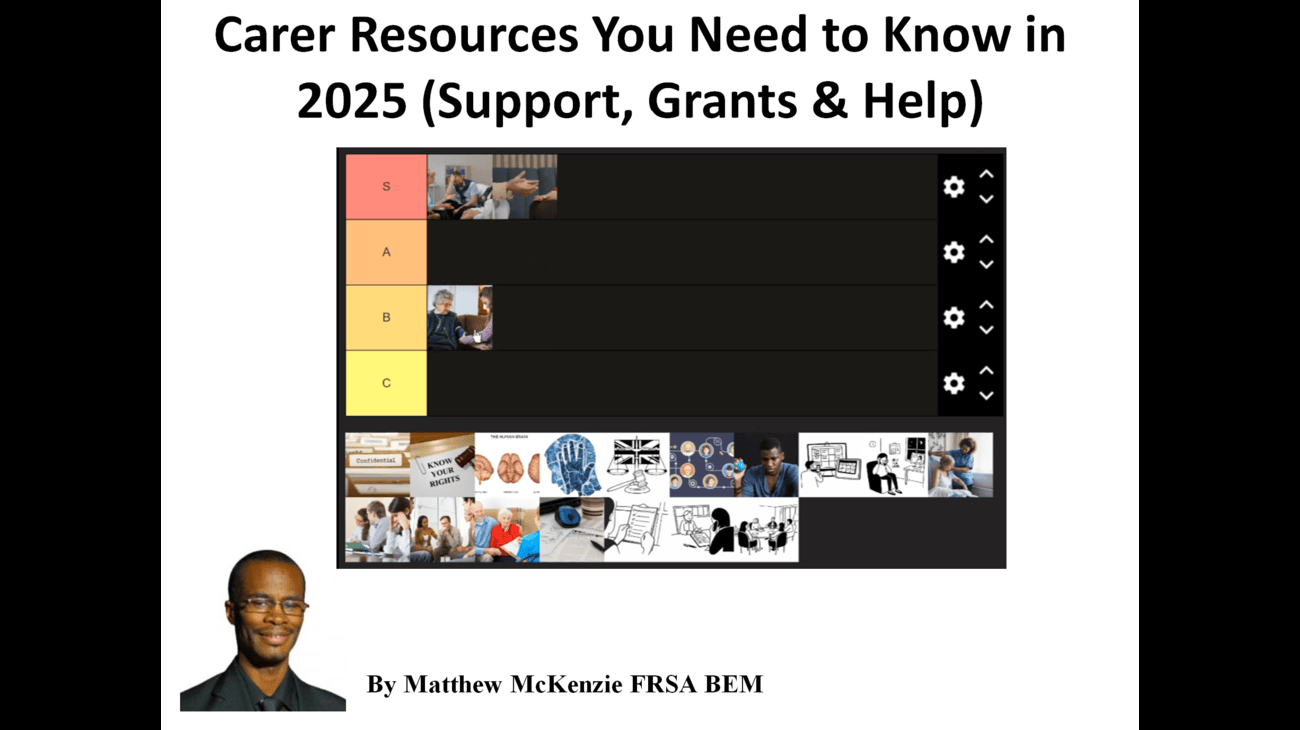
Resources for mental health carers can be overwhelming in scope from legal advice and crisis hotlines to financial support and practical training. To create clarity, resources are placed into four tiers:
- S Tier (Essential): Survival-level supports; absolutely critical for continued caring and crisis management.
- A Tier (Sustaining): Highly valuable resources that keep your caring role tenable in the long run.
- B Tier (Enhancing): Important support systems that reduce daily strain and improve quality of life but aren’t as immediately pressing.
- C Tier (Auxiliary): Long-term stability and planning; often overlooked but still necessary.
Let’s break down what falls into each tier and how you can access and leverage these resources effectively.
Carers: Unsung Heroes, Essential Supports
Mental health carers are the invisible backbone of the support system—shouldering enormous responsibility, often without recognition or adequate support. By focusing on these critical resources and prioritizing self-care as well as advocacy, carers can find greater resilience, confidence, and sustainability.
Remember, you are not alone. Whether you access support online, through local groups, or formal agencies, reach out, ask questions, and don’t accept “no” as the final answer when it comes to your rights and wellbeing. With the right resources and support system, caring for a loved one with mental illness can be not just a challenge to survive—but a journey where you both can thrive.
 A Caring Mind