Dr Eiluned Pearce, a trainee clinical psychologist and researcher at the University of Oxford, is seeking help recruiting participants for an important study about unpaid carers’ wellbeing.
The study will explore whether attending social and community groups, including carer support groups, clubs and other group activities is associated with improved wellbeing among people supporting someone with a severe mental illness.
This is particularly relevant to what I promote at my site because many unpaid carers rely on peer groups and carer forums for understanding, information and a sense of connection. However, you do not need to attend any kind of group to participate. The researchers need to hear from carers who attend groups and those who do not.
Who can take part?
You may be eligible if you:
Are aged 18 or over
Live in the United Kingdom
Speak English fluently
Provide unpaid emotional or practical support to someone aged 16 or over
Support someone experiencing psychosis, bipolar disorder, an eating disorder, or complex emotional needs/personality disorder
Do not personally experience a severe mental illness
You do not have to describe yourself as a “carer” or “caregiver”. You might consider yourself a relative, partner, parent, sibling or friend who provides essential support.
What does participation involve?
Participants will complete an anonymous online survey lasting approximately 40 minutes. You can take breaks and return to it using the same internet browser, provided it is completed within one week of starting.
Questions will cover your wellbeing and mental health, the support you provide, its impact on you, any groups you attend and some information about your background.
Individual responses will not be shared outside the research team, and IP addresses will not be recorded.
Take part in the study
To read more about the research and access the survey, visit:
Research into carers’ wellbeing remains limited, and it is important that the experiences of people supporting someone with a severe mental illness are properly heard and understood.
Written by Matthew McKenzie, Speaker, Carer, Campaigner and Poet
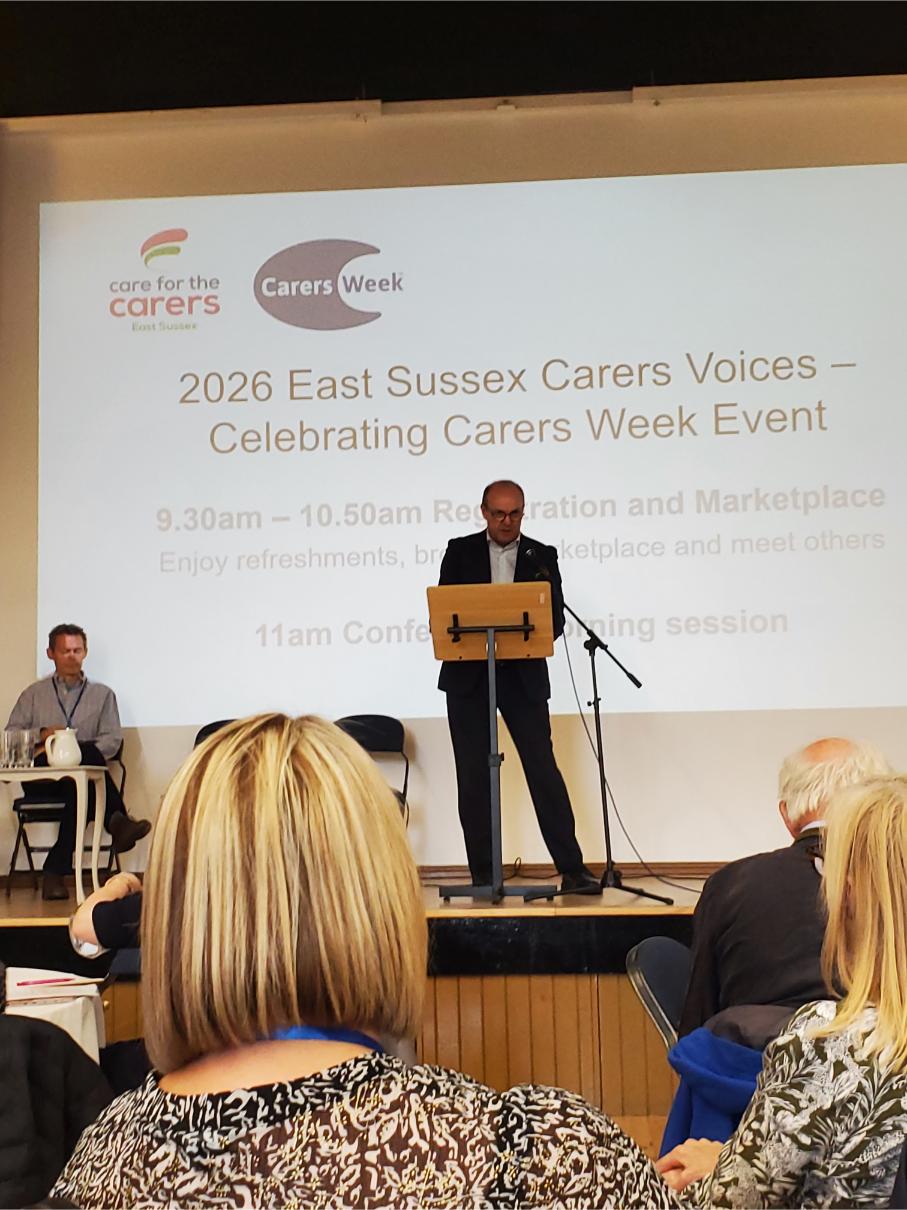
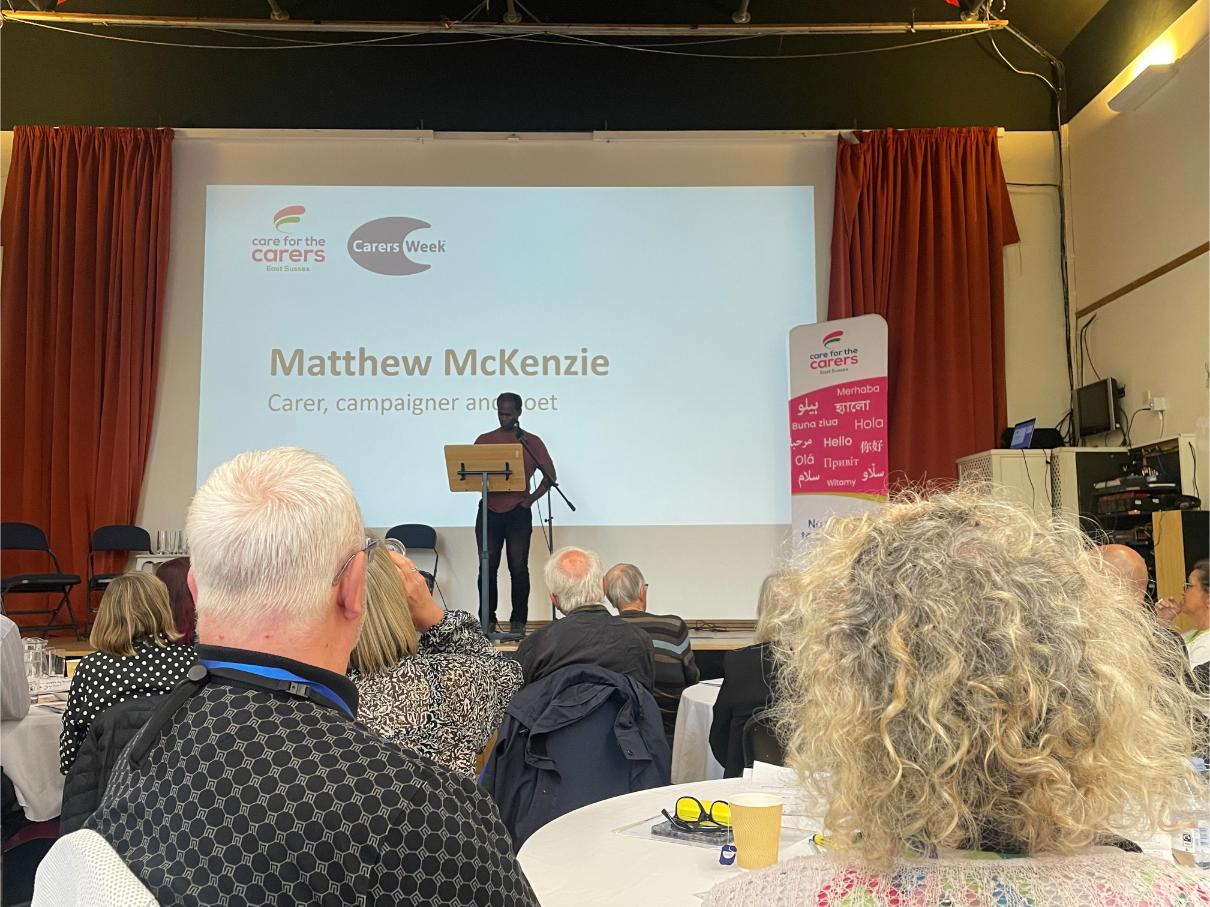
As part of Carers Week 2026, I had the privilege of travelling to East Dean in East Sussex to speak at the East Sussex Carers Voices – Celebrating Carers Week Event, organised by Care for the Carers. The event brought together unpaid carers, carers’ organisations, NHS representatives, local authority leaders, health professionals, community groups and carers from across East Sussex to discuss the realities of caring and identify ways to improve support for unpaid carers.
The event was hosted by Dr Neil Churchill, Chair of Care for the Carers, who guided the day’s discussions and emphasised the vital role carers play in society. Throughout the day, carers shared their personal stories, experiences and recommendations directly with decision-makers and service providers.
This blog post provides an overview of the key themes, speakers and discussions for those who were unable to attend.
Opening Remarks – Dr Neil Churchill
Dr Neil Churchill opened the event by welcoming attendees and recognising the significant contribution unpaid carers make to families, communities and public services.
He highlighted several key challenges currently facing carers:
• Rising financial pressures and cost-of-living concerns. • The growing number of carers leaving employment due to caring responsibilities. • Increased risks of poor physical and mental health among carers. • Social isolation and loneliness experienced by many carers. • Growing concerns around carer burnout.
Dr Churchill stressed that the country depends heavily on unpaid carers and that health and social care systems would struggle to function without them. He also spoke about the importance of moving towards a model where carers are treated as equal partners in care rather than simply being expected to cope alone.
A key message from his introduction was that carers should not be left to navigate fragmented services by themselves. Instead, health, social care and voluntary sector organisations must work together more effectively to recognise, support and value carers.
Carer Stories and Lived Experience
One of the most powerful aspects of the event was hearing directly from carers themselves.
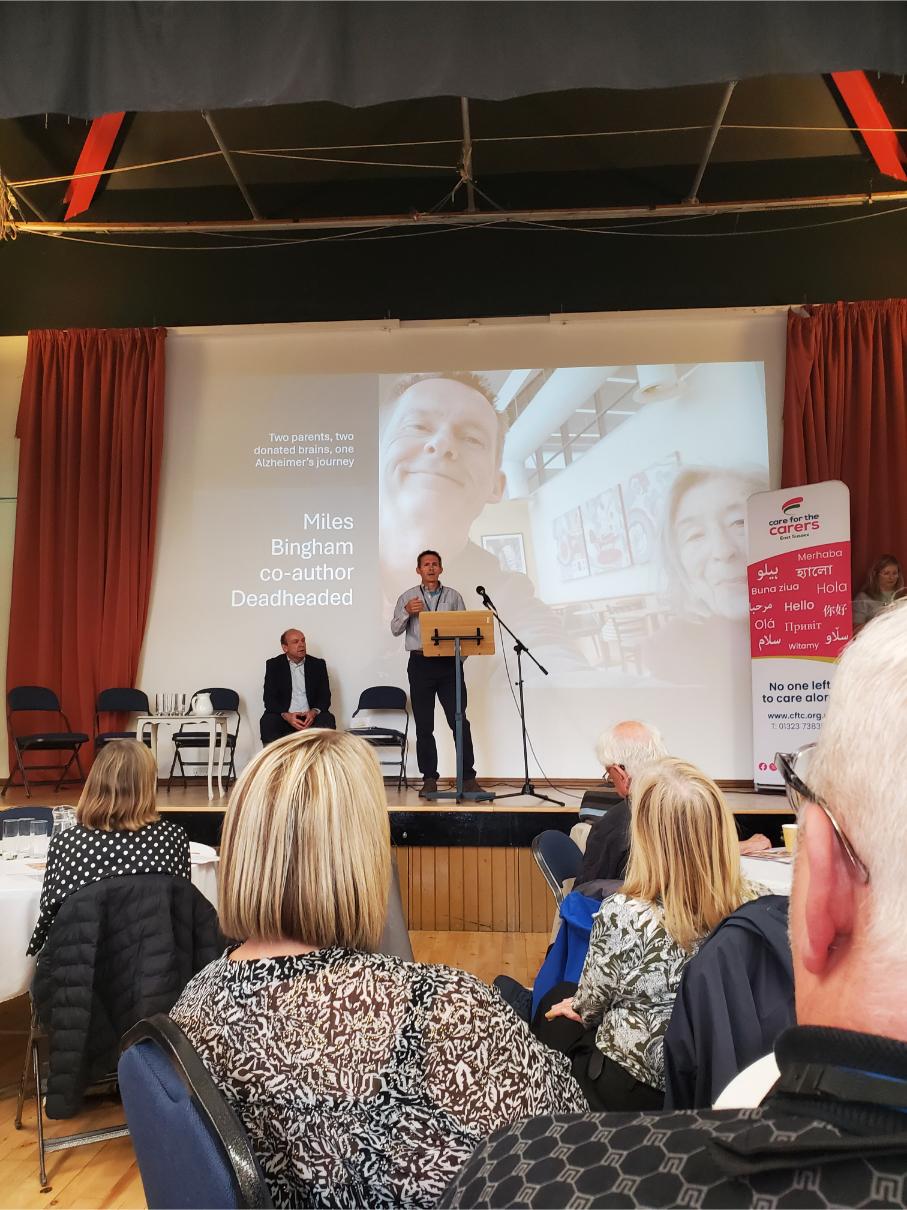
Miles Bing – Caring Through Dementia
The first speaker was Miles Bing, author of “Deadheaded: An Alzheimer’s Memoir by Mother and Son”.
Miles shared his family’s experience of supporting both of his parents through Alzheimer’s disease. His presentation explored the emotional impact of caring at a distance, the guilt often experienced by family members who live far away, and the difficulties of coordinating support across multiple services.
He spoke about:
• The long-term impact of dementia on families. • The challenges of accessing services in rural areas. • The lack of coordination between health and social care systems. • The practical and emotional burden placed on carers.
Many attendees identified strongly with his comments regarding the need for carers to act as coordinators between multiple organisations that often fail to communicate effectively with one another.
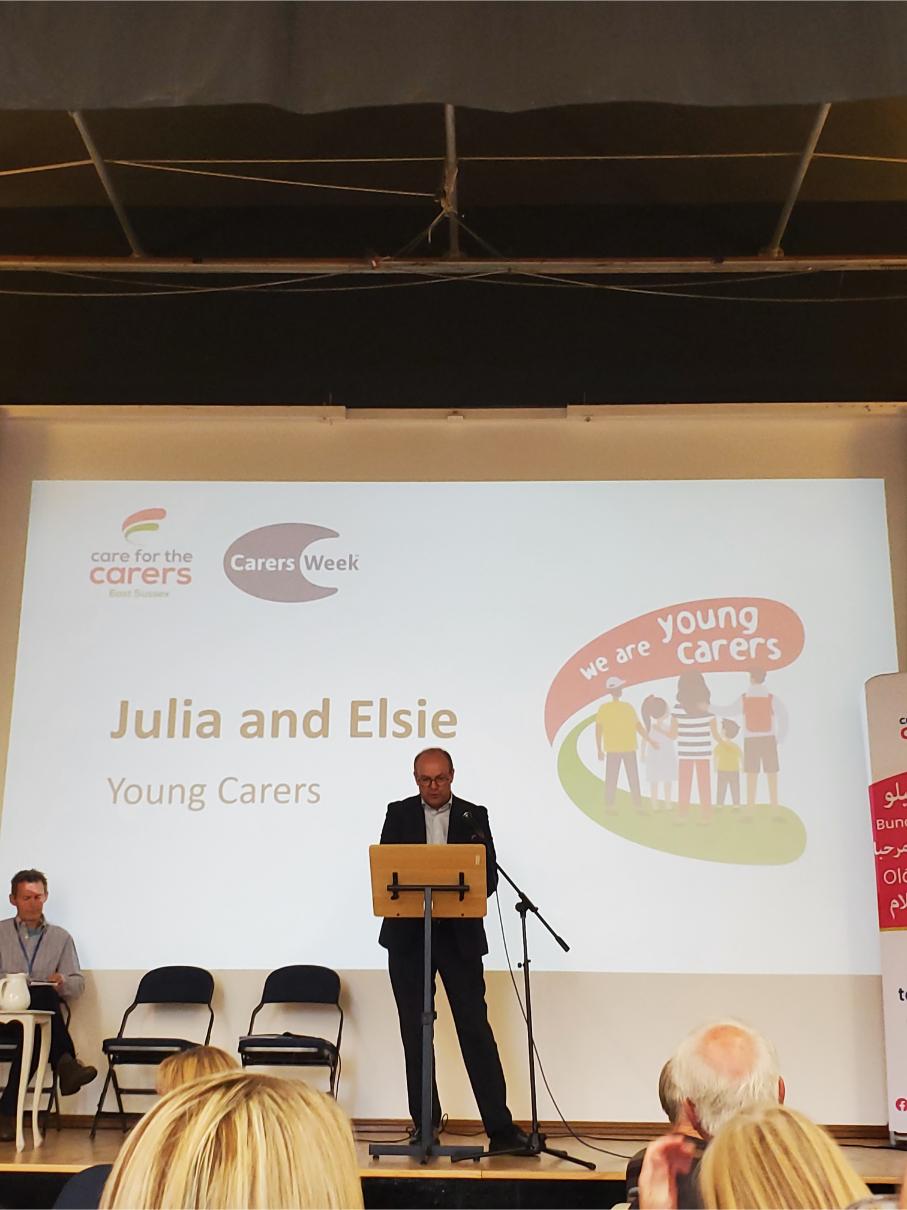
Young Carers – Julia and Elsie
The audience then heard from young carers Julia and Elsie, whose presentations left a lasting impression on everyone in the room.
Both spoke honestly about growing up while caring for family members with complex needs. They described responsibilities that included supporting parents during health crises, helping siblings with disabilities and managing situations involving emergency services.
Their stories demonstrated:
• The hidden nature of young caring responsibilities. • The emotional impact caring can have on children and young people. • The importance of early intervention and support. • The value of dedicated young carers services.
Perhaps most importantly, they highlighted that while caring can build resilience, no child should have to face these responsibilities without support.
The standing ovation they received reflected the courage and honesty with which they shared their experiences.
Round Table Discussions
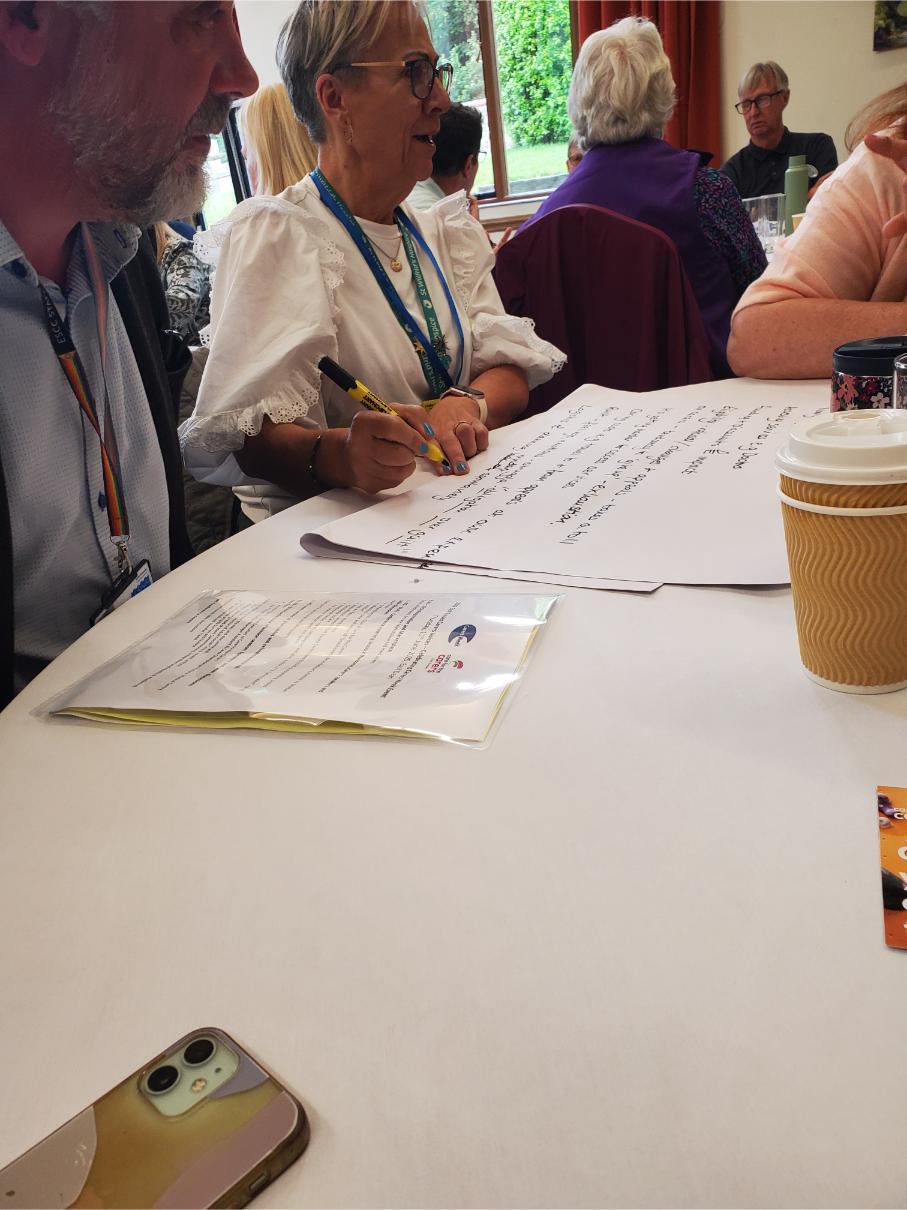
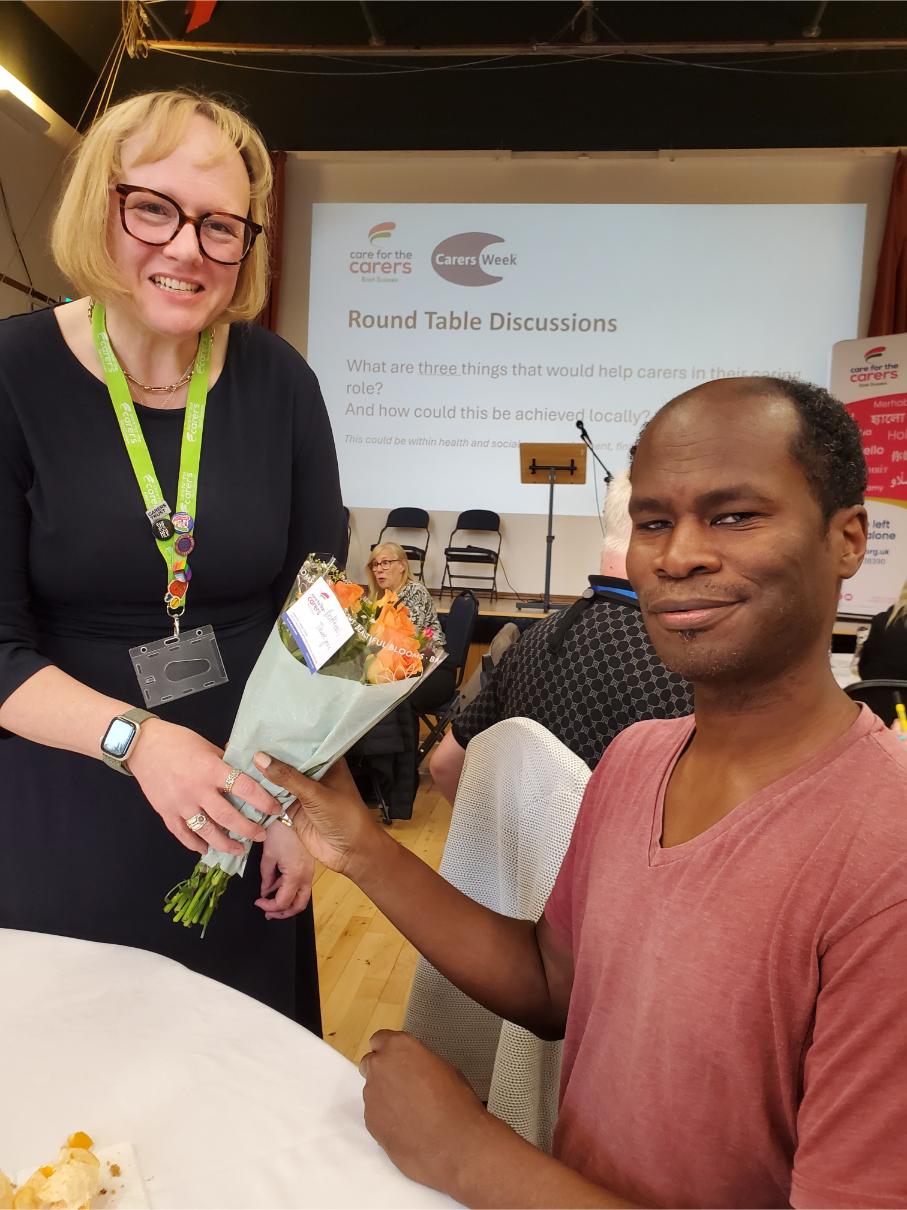
Following the morning speakers, attendees participated in facilitated round table discussions.
These conversations focused on:
• The biggest issues facing carers over the next six months. • Practical actions that could help carers in their caring role. • Barriers to accessing support. • Positive examples of support that should be expanded.
Several common themes emerged from these discussions:
Earlier Identification
Many carers reported not being recognised as carers until they had reached crisis point. Participants called for earlier identification within GP surgeries, hospitals and community services.
Access to Information
Attendees highlighted how difficult it can be to find accurate and timely information about available support.
Financial Pressures
Many carers discussed the financial impact of caring, including reduced employment opportunities and increasing household costs.
Mental Health and Wellbeing
Carers spoke about the emotional strain of caring and the importance of counselling, respite and peer support services.
Speaker sessions resumes
Diverse Communities and Caring
A particularly thought-provoking presentation was delivered by Manal Ahmed, who supports carers from ethnically diverse and refugee communities.
She discussed additional challenges experienced by carers from minority communities, including:
• Language barriers. • Cultural differences. • Social isolation. • Displacement trauma. • Immigration-related issues. • Financial and emotional dependency.
Manal explained that many carers experience multiple layers of disadvantage and that support services must be culturally aware and accessible to everyone.
She also highlighted positive examples of community-building activities that help carers connect with one another and reduce isolation.
Her presentation reinforced the importance of ensuring that no carer is excluded from support because of their background, language or circumstances.
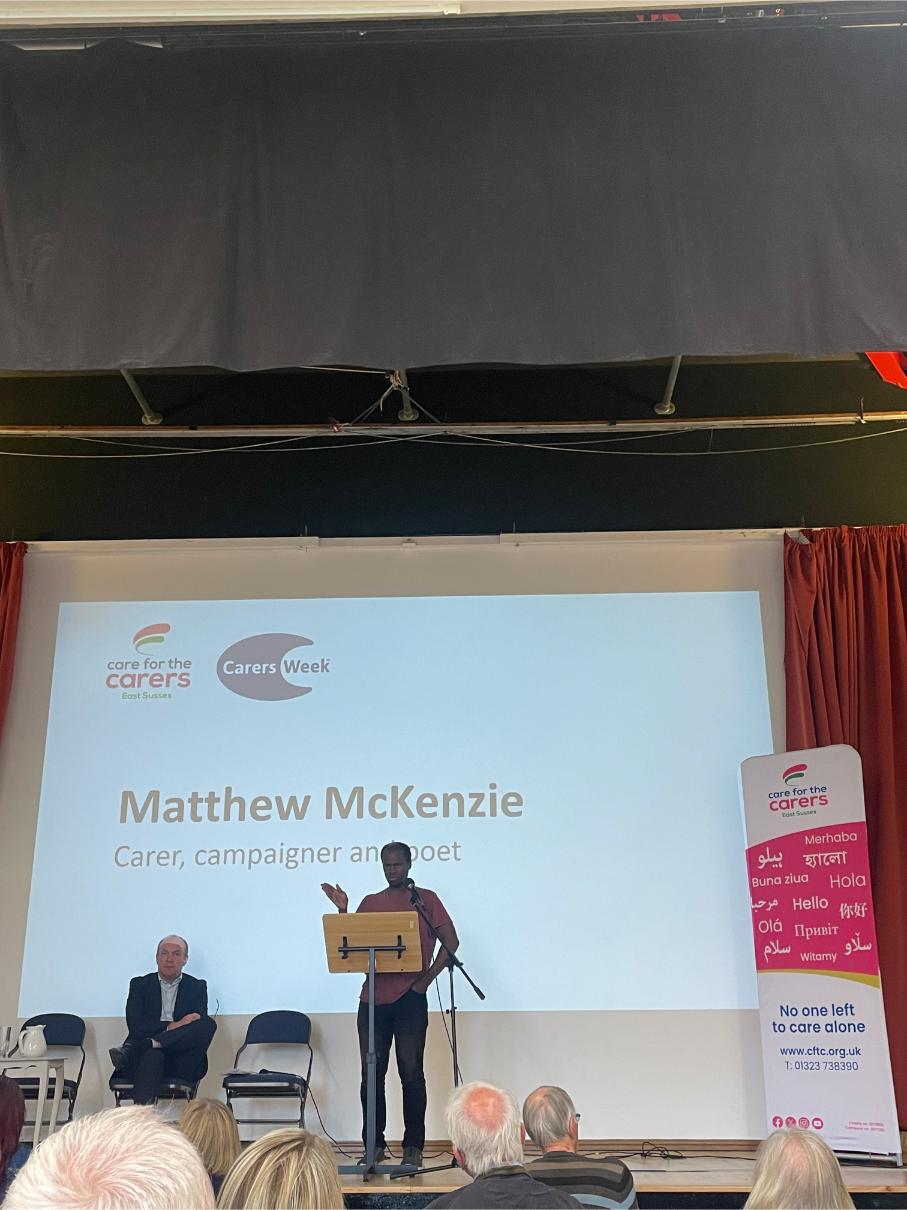
My Presentation – A Carer’s Journey
I was invited to speak about my own experiences as a young carer and later as an adult carer supporting family members with autism and serious mental illness.
One of the key messages I shared was that many carers do not initially recognise themselves as carers. Like many people, I simply viewed what I was doing as helping my family.
However, over time I found myself:
• Coordinating care. • Supporting hospital admissions and discharges. • Managing appointments. • Advocating with professionals. • Navigating complex systems. • Supporting multiple family members simultaneously.
I spoke about how difficult it can be when carers are not listened to or involved in important decisions.
I also highlighted the importance of recognising carers as equal partners in care and ensuring that professionals understand the expertise carers develop through lived experience.
One of the central themes of my presentation was carers’ rights.
I encouraged carers to:
• Identify themselves as carers. • Seek support from local carers organisations. • Request carers assessments. • Learn about their rights. • Participate in co-production and service improvement. • Share their experiences to help reduce stigma.
To conclude, I performed my poem “It’s My Right”, which focuses on the rights every carer should expect to receive, including recognition, respect, involvement, information and support.
Afternoon Reflections and Future Priorities
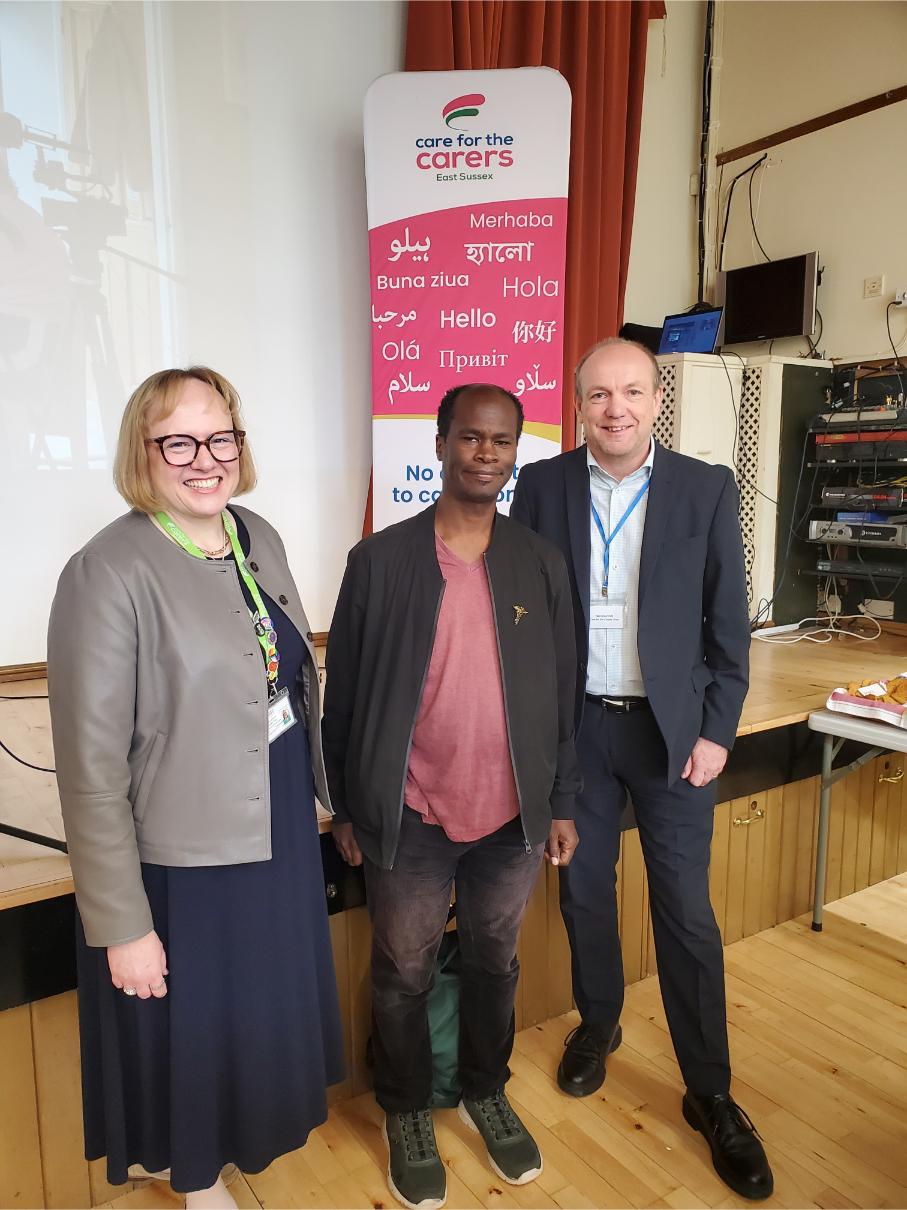
The afternoon session included reflections from senior leaders from Care for the Carers, East Sussex County Council and NHS Sussex.
Discussions focused on:
• Improving identification of carers. • Supporting carers before crises occur. • Encouraging carers to access support services. • Learning from positive experiences of care. • Strengthening partnerships between carers and professionals.
Representatives acknowledged the crucial role carers play and listened to feedback gathered throughout the day.
Many carers expressed concerns about navigating systems that can often feel complicated and difficult to access. There was broad agreement that services should be simpler, more joined-up and more responsive to carers’ needs.
Key Messages from the Day
Several important messages emerged consistently throughout the event:
Carers Need Recognition
Many carers remain hidden and unidentified. Earlier recognition can lead to earlier support.
Carers Need Practical Support
Information, respite, emotional support and financial advice remain essential.
Carers Must Be Involved
Carers are experts in the lives of the people they support and should be treated as partners in care.
Young Carers Need Protection
Children and young people with caring responsibilities require dedicated support and opportunities to thrive.
Communities Matter
Strong local networks can help reduce isolation and improve wellbeing.
Prevention Is Better Than Crisis Management
Supporting carers early can prevent breakdowns in caring arrangements and reduce pressure on services.
Conclusion
The East Sussex Carers Voices Event was an excellent example of what can happen when carers, professionals and decision-makers come together to listen, learn and work collaboratively.
Throughout the day, carers shared powerful stories of resilience, commitment and compassion. They also spoke honestly about the challenges they face and the changes they want to see. I also recognised Agi who does lots of work raising carer awareness in Sussex, she recently spoke at my national ethnic mental health carers forum. So it was great to see her there.
Dr Neil Churchill’s leadership as host helped create an environment where carers felt able to speak openly and where decision-makers could hear directly from those with lived experience.
As Carers Week 2026 comes to a close, the challenge now is to turn these conversations into meaningful action. Carers should not have to struggle to be recognised, supported or heard.
The event demonstrated that when carers’ voices are placed at the centre of discussions, better solutions can emerge for everyone.
Thank you to Care for the Carers, all speakers, volunteers, professionals and carers who contributed to such a valuable and inspiring day.
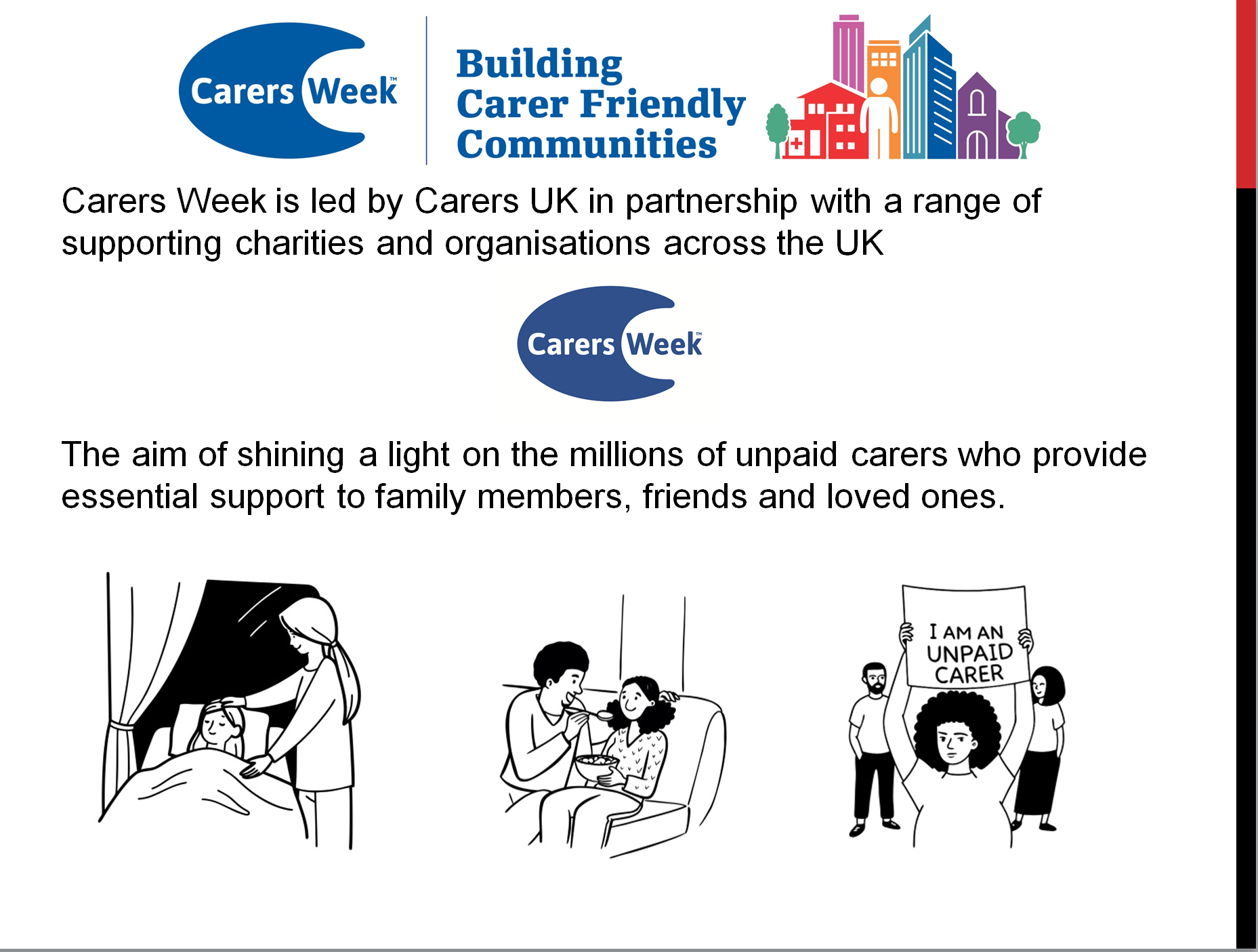
For Carers Week 2026, it takes place from 8–14 June and shines a spotlight on the millions of unpaid carers who provide essential care and support to family members, friends and loved ones throughout the UK.
This year’s theme, Building Carer Friendly Communities, highlights the need for workplaces, healthcare services, schools, local authorities and communities to better recognise and support unpaid carers.
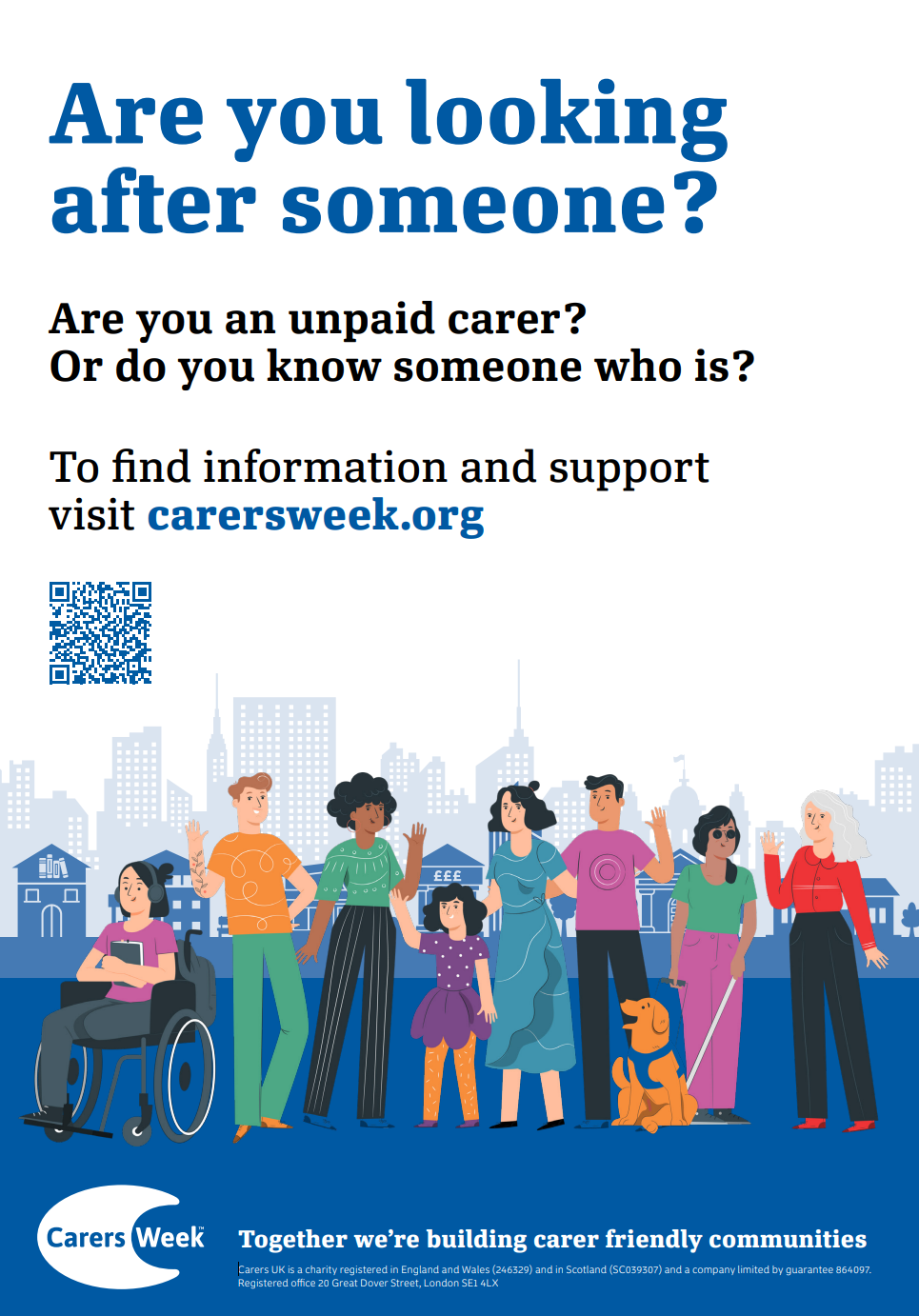
Despite contributing billions of pounds worth of care each year, many unpaid carers continue to face challenges including financial hardship, social isolation, poor mental health and difficulties accessing support. So Carers Week aims to raise awareness of these issues while encouraging practical action to create a society where carers are valued, respected and included.
As a carer activist and founder of my site A Caring Mind, I am sure that creating carer-friendly communities starts with understanding the realities of caring. Whether you are caring for an ageing parent, a disabled child, a partner with a long-term condition or someone experiencing mental ill health, carers play a vital role in keeping families and communities together.
However, there are still many people do not identify themselves as carers and therefore miss out on important support, benefits and services. Carers Week 2026 provides an opportunity for individuals, organisations and policymakers to listen to carers’ experiences, champion carers’ rights and improve access to support for unpaid carers across the UK.
Watch my Carers Week 2026 video below to learn more about the campaign, this year’s theme and how you can get involved in supporting unpaid carers. Please share the video to help raise awareness and encourage more people to recognise the invaluable contribution that carers make every single day.
Together, we can build stronger, more inclusive and more carer-friendly communities
May is Mental Health Awareness Month 2026 over in the states, with this year’s theme, “More Good Days, Together”, encouraging communities to support mental well-being.
Unpaid carers and family caregivers often face unique challenges, and organizations like Mental Health America, National Alliance for Caregiving, Family Caregiver Alliance, AARP, and the American Association of Caregiving Youth provide valuable resources and guidance.
This month is a reminder that small acts of support and self-care can make a big difference in creating more good days for everyone.
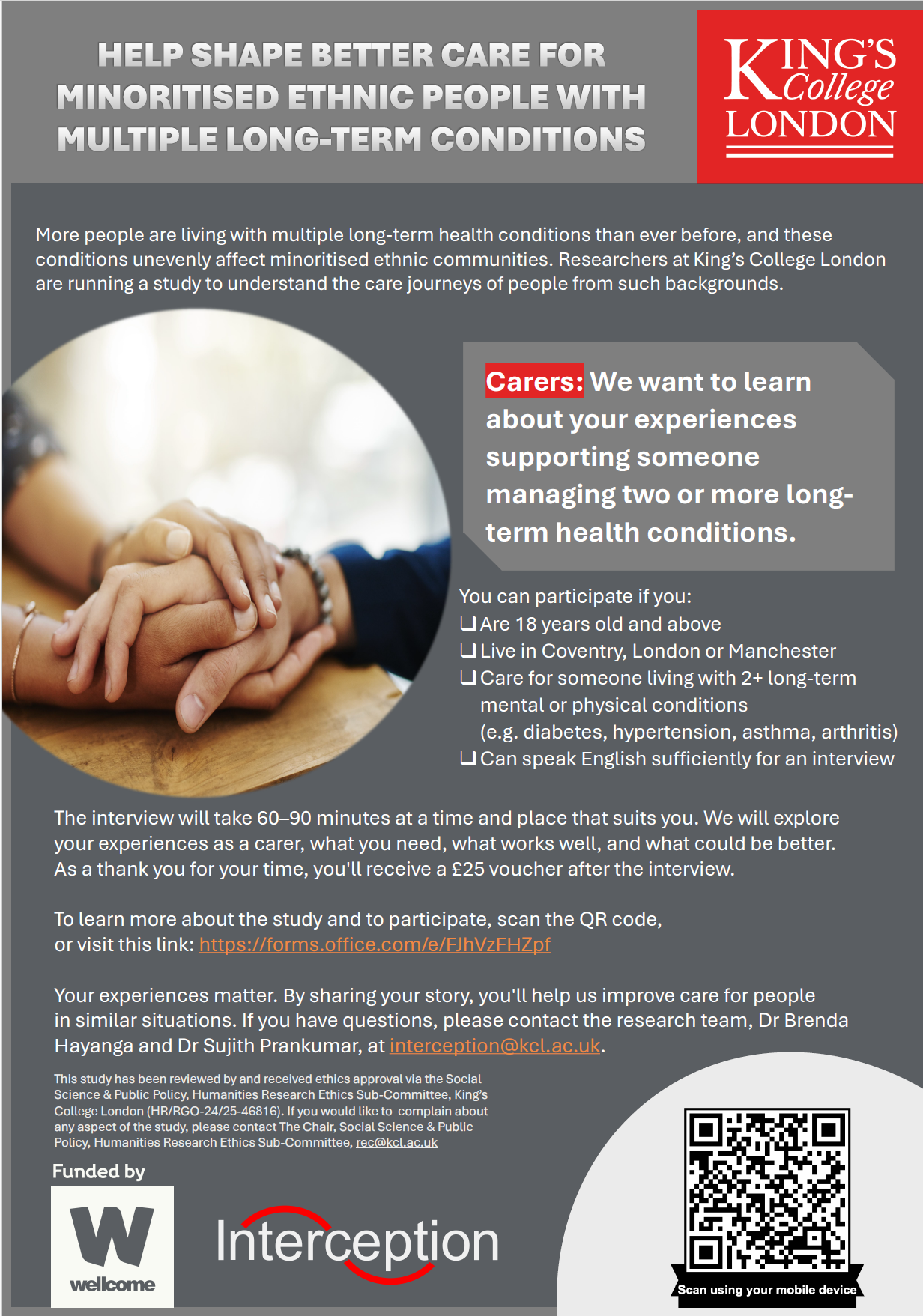
Caring for someone with multiple long-term health conditions can be both rewarding and challenging. More people than ever are living with conditions like diabetes, asthma, arthritis, or hypertension and these health challenges often affect minoritised ethnic communities disproportionately.
King’s College London is running the INTERCEPTION study to better understand the experiences of carers like you and the people you support. The goal is to improve how community leaders, healthcare professionals, and policymakers perceive and support those living with multiple conditions.
Your Voice Matters
Your experiences as a carer provide invaluable insights into what works, what could be better, and what support is most needed. By sharing your story, you help shape the future of care for people in similar situations, both locally and nationally.
Who Can Take Part
You can join the study if you:
Are 18 years old or above
Live in Coventry, London, or Manchester
Care for someone with two or more long-term physical or mental health conditions
Can communicate in English for an interview
What Participation Involves
The study involves a one-to-one interview lasting 60–90 minutes at a time and place that suits you. Everything you share will be kept confidential. As a thank you for your time, participants receive a £25 voucher.
How to Get Involved
To learn more or sign up, scan the QR code on the flyer or visit this link . If you have any questions, you can contact the research team, Dr Brenda Hayanga and Dr Sujith Prankumar, at interception@kcl.ac.uk.
Your experiences truly matter. By participating, you help researchers understand what carers need and influence better care for minoritised ethnic communities living with multiple long-term conditions.
Caring for a loved one with a mental illness is a demanding, often under-recognized role. Many unpaid carers find themselves thrust into complex scenarios, navigating mental health crises, advocating for proper support, balancing their own wellbeing, and, too often, facing these challenges in isolation. While every carer’s journey is unique, a core set of resources can make a dramatic difference between feeling overwhelmed and finding sustainable ways to cope and thrive.
This article and video unpacks those essential resources through the lens of an experienced carer activist and carer, offering both a practical hierarchy of importance and actionable insights. Using a “tier list” as a framework, we’ll explore which resources are most urgent and why, how they fit together, and tips for navigating the labyrinth of mental health care.
To watch which resources are essential for mental health carers, watch the video below.
The Tiered Approach: Prioritizing Carers’ Needs
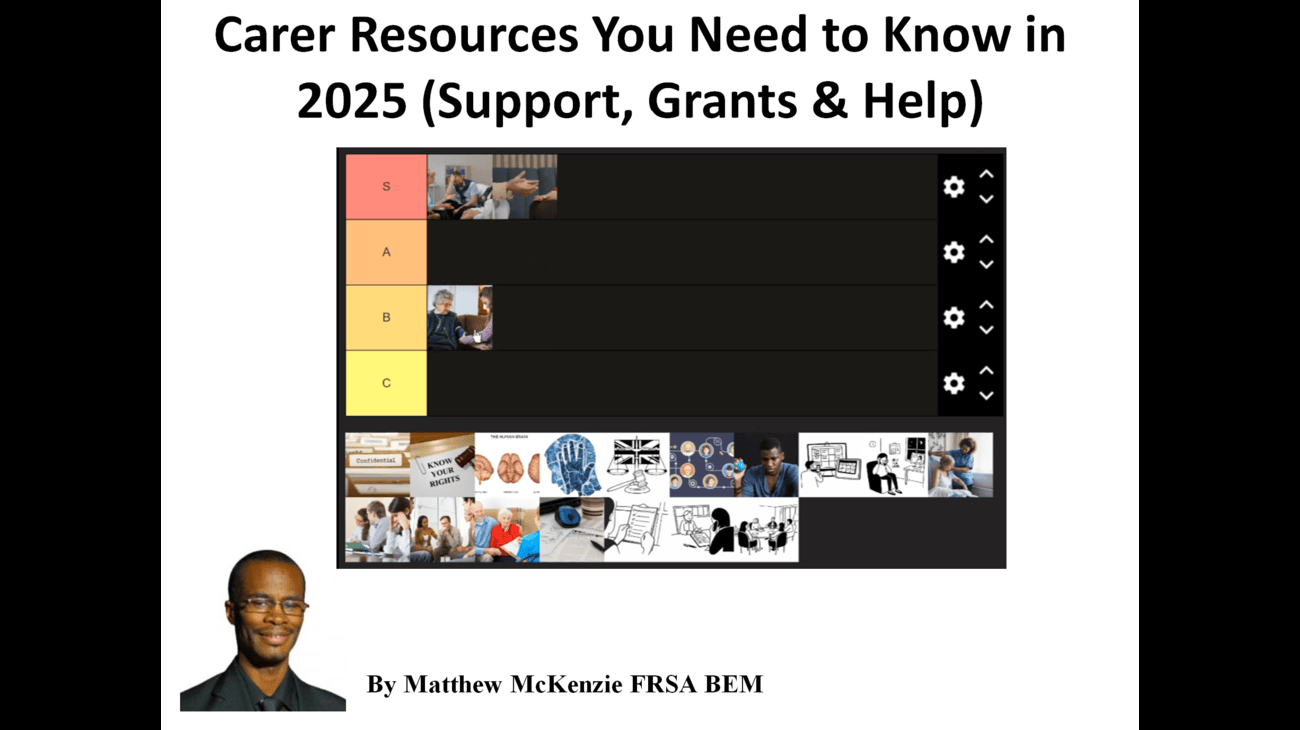
Resources for mental health carers can be overwhelming in scope from legal advice and crisis hotlines to financial support and practical training. To create clarity, resources are placed into four tiers:
S Tier (Essential): Survival-level supports; absolutely critical for continued caring and crisis management.
A Tier (Sustaining): Highly valuable resources that keep your caring role tenable in the long run.
B Tier (Enhancing): Important support systems that reduce daily strain and improve quality of life but aren’t as immediately pressing.
C Tier (Auxiliary): Long-term stability and planning; often overlooked but still necessary.
Let’s break down what falls into each tier and how you can access and leverage these resources effectively.
Carers: Unsung Heroes, Essential Supports
Mental health carers are the invisible backbone of the support system—shouldering enormous responsibility, often without recognition or adequate support. By focusing on these critical resources and prioritizing self-care as well as advocacy, carers can find greater resilience, confidence, and sustainability.
Remember, you are not alone. Whether you access support online, through local groups, or formal agencies, reach out, ask questions, and don’t accept “no” as the final answer when it comes to your rights and wellbeing. With the right resources and support system, caring for a loved one with mental illness can be not just a challenge to survive—but a journey where you both can thrive.
On this World Lung Cancer Day (1st of August), we spotlight not only the impact of lung cancer itself, but also theose behind the scenes the unpaid family members, friends, and carers who provide unwavering love, support, and strength.
In this 8-minute video, hosted by myself from A Caring Mind, I explore:
The profound emotional and physical toll of caring for someone with cancer
The critical need for early detection, expanded research funding, and global health equity
The indispensable role of families and unpaid carers—whose contributions often go unrecognized
I also introduce major organizations leading the lung cancer fight:
European Respiratory Society (ERS) – promoting lung health through education, early diagnosis, policy advocacy, and improved treatment pathways
Forum of International Respiratory Societies (FIRS) – uniting global respiratory health organizations to advocate for prevention, clean air, and equitable access to care
Lung Cancer Foundation of America (LCFA) – funding innovative lung cancer research and amplifying the voices of patients and survivors to raise awareness and reduce stigma
Lung Cancer Research Foundation (LCRF) – accelerating research, supporting affected individuals, and organizing global awareness initiatives like World Lung Cancer Day
In the video I remind that behind the tragic statistic of over 1.6 million annual deaths worldwide, are stories of resilience and compassion: nights spent advocating in hospitals, hands held during chemotherapy, and hope sustained in the darkest moments.
What You Can Do:
Share the video to raise awareness
Support carers through mental health resources and recognition
Advocate for policies that include carers in healthcare support systems
Approach lung cancer conversations with empathy—not stigma
Today, we honor not just the patients, but those who stand beside them—quietly, persistently, lovingly.
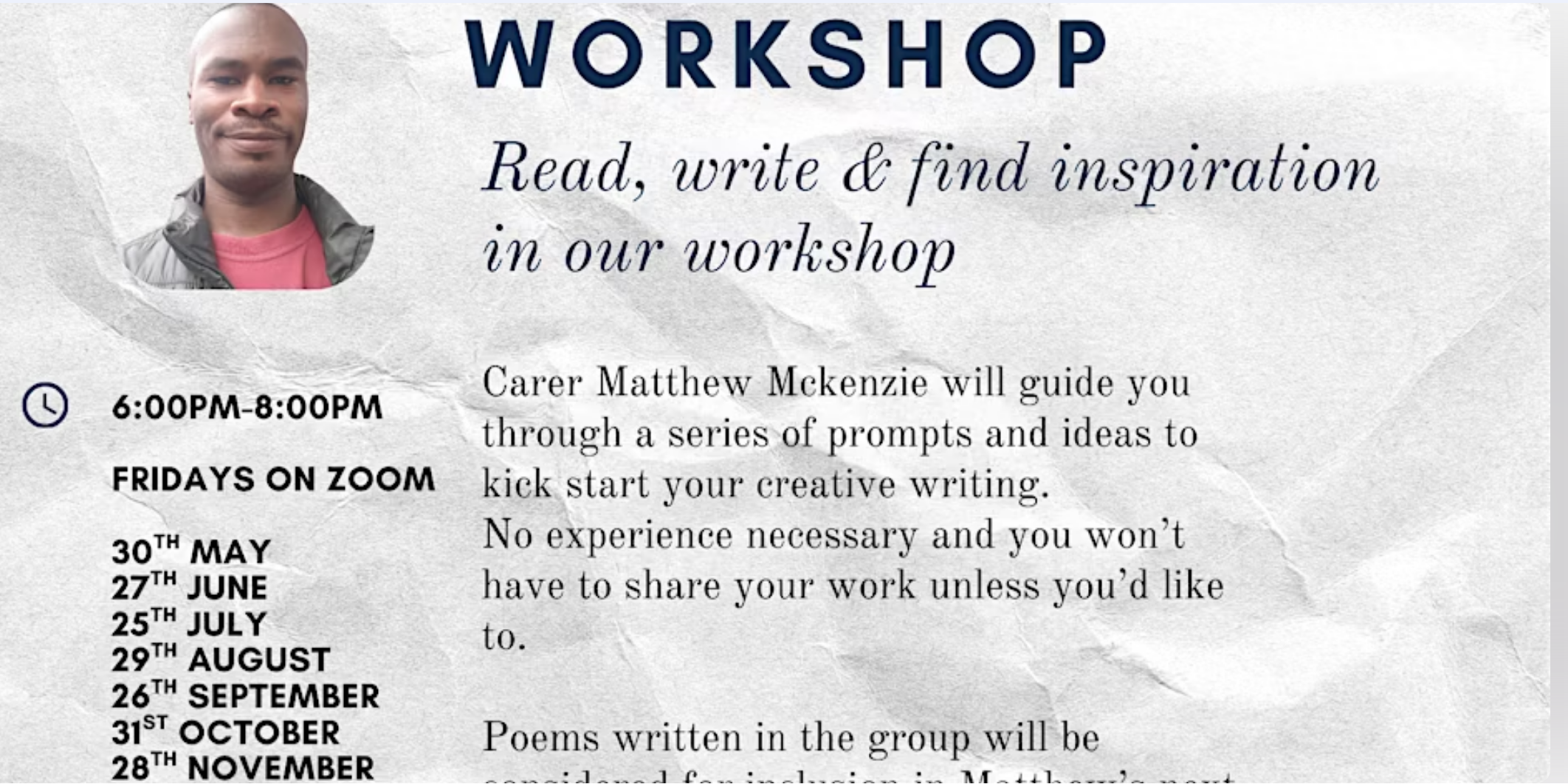
“Caring feels like towels.” “Smells like sweat.” “Sounds like silence.” These are not lines from a published anthology, but heartfelt expressions from unpaid carers who meet every month in a quiet online space to write, reflect, and reconnect—through poetry.
Welcome to the Ealing Carers Poetry Workshop, an online community gathering for carers, hosted on the last Friday of each month at 6 PM. It’s free, friendly, and, for many, deeply healing.
Why Poetry? Why Now?
For unpaid carers, life is often consumed by routines, responsibilities, and quiet sacrifices. There’s little time to stop and process the emotional weight of the role, let alone articulate it. That’s where poetry comes in.
Poetry doesn’t demand polished grammar or clever rhymes. It simply asks: What do you feel? And from that question, remarkable truths begin to emerge.
In a recent session, one carer described how “caring tastes like sweet and sour”—a vivid metaphor for the moments of tenderness mixed with exhaustion, patience, and the daily challenge of giving so much of oneself.
Another shared, “Caring feels like a balloon… slowly inflating until it might burst.” The group nodded. They understood. No further explanation needed.
More Than Words
Each workshop is a gentle hour of guided prompts, group sharing (if you feel like it), and poetic reflection. Some come to listen. Some come to write. All leave feeling a little more grounded, and a little less alone.
Here’s what you can expect:
Creative prompts to help spark inspiration
No pressure to share if you’re not ready
A safe, confidential space led with empathy
A supportive community that “gets” the highs and lows of caring
Gentle encouragement to save and revisit your poetry as a personal record
One participant put it perfectly:
“You don’t have to be a poet. You just need to be willing to put words to what you feel.”
Healing Through Expression
We often talk about self-care for carers, poetry is one powerful, practical form. It’s a creative release that helps untangle emotions that don’t have easy answers. It can reflect joy, grief, humour, fatigue, hope. It can be messy. It can be raw. But above all, it’s yours.
As the facilitator beautifully says,
“Poetry holds up a mirror. What you see in it is up to you.”
For many carers, this monthly workshop has become a lifeline. A moment of peace. A reminder that their experiences matter.
If you are an unpaid carer, then Join Us – You Are Welcome
Whether you’re new to writing or simply curious, we invite you to take an hour for yourself.
🗓️ When: Last Friday of every month 🕕 Time: 6:00 PM (UK time) 🌐 Where: Online – attend from the comfort of your own home 🎟️ Reserve your free place here: 👉 Ealing Carers Poetry Workshop – Eventbrite
Grab a notebook. Pour a cup of tea. Come write with us.
Understanding the Role of Faith and Spirituality in Caregiving
Caregiving is often seen as an act of love and dedication, where individuals selflessly care for loved ones dealing with long-term physical or mental health issues. For many, the journey of caregiving can be particularly challenging, filled with emotional, physical, and psychological hurdles. However, one essential aspect often intertwined in this journey, especially for black carers, is faith and spirituality.
To watch the video lecture by Matthew McKenzie, click the video below
The Intersection of Faith, Spirituality, and Caregiving
Faith and spirituality can significantly influence those who are unpaid carers or caregivers, particularly within minority communities. Whether through organized religious beliefs, church communities, or personal spirituality, faith can provide strength, resilience, and coping mechanisms essential for caregivers.
Here is another blog post aimed at those caring for a loved one living with mental illness. If you want to see the video lecture of “Advocacy & Mental Health Care Top Questions Every Carer Should Ask”. Click on the video below.
Caring for someone with a long-term mental illness is both a noble and challenging task. In today’s society, unpaid carers, often family members or close friends, play a crucial role in supporting individuals with mental health needs. Despite their importance, unpaid carers frequently navigate a complex and overwhelming landscape of rights, services, and support systems.