On March 7, 2025, The Foundry in London became the epicenter of a powerful movement towards racial equity in healthcare.

The London Anti-Racism Collaboration for Health (LARCH), Health Innovation Network and Race Equality Foundation hosted their Annual Conference and Learning Event, bringing together thought leaders, policymakers, and community advocates dedicated to dismantling systemic racism in health and social care.

Setting the Stage: A Call for Change
The event was chaired by Dame Marie Gabriel, a pioneering advocate for equity in the NHS. Kicking off with opening remarks from Dr. Debbie Weekes-Bernard, Deputy Mayor for Communities & Social Justice, the conference established a clear message: structural racism in healthcare is a pressing issue that demands systemic solutions.
Peter Goldblatt from the Institute for Health Equity highlighted critical findings on how racism and socioeconomic disparities intertwine, exacerbating health inequalities. Peter Goldblatt’s talk focused on the need for stronger institutional and legislative efforts to tackle systemic racism in London. He emphasized that while some ethnic groups, such as white, Indian, and Chinese communities, tend to achieve higher outcomes, others—particularly Gypsies, Roma, and certain Black and minority groups—are doing significantly worse. He called for better enforcement of the Equality Act, the restoration of funding for regulatory bodies, and the development of proactive anti-racism strategies within organizations. Goldblatt also highlighted the role of technology in combating misinformation, improving ethnic data collection in healthcare, and addressing disparities in employment and education. He stressed the importance of reframing anti-racism efforts as beneficial to all communities, warning that neglecting these issues could lead to increased social unrest and inequality.
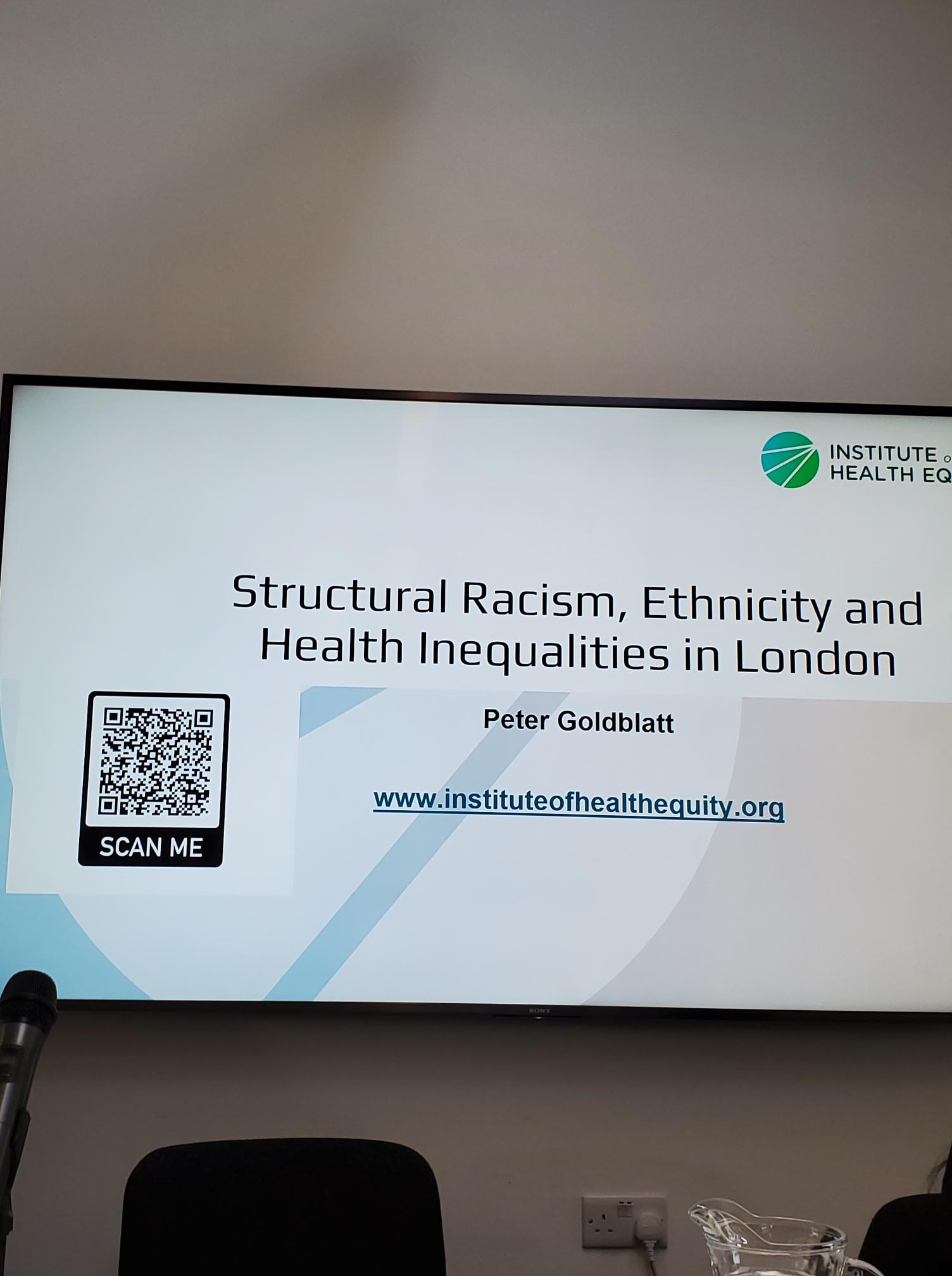
Following this, Professor Kevin Fenton, Regional Public Health Director for NHS London, delivered a keynote address emphasizing the importance of data, policy reform, and community engagement in tackling these disparities.
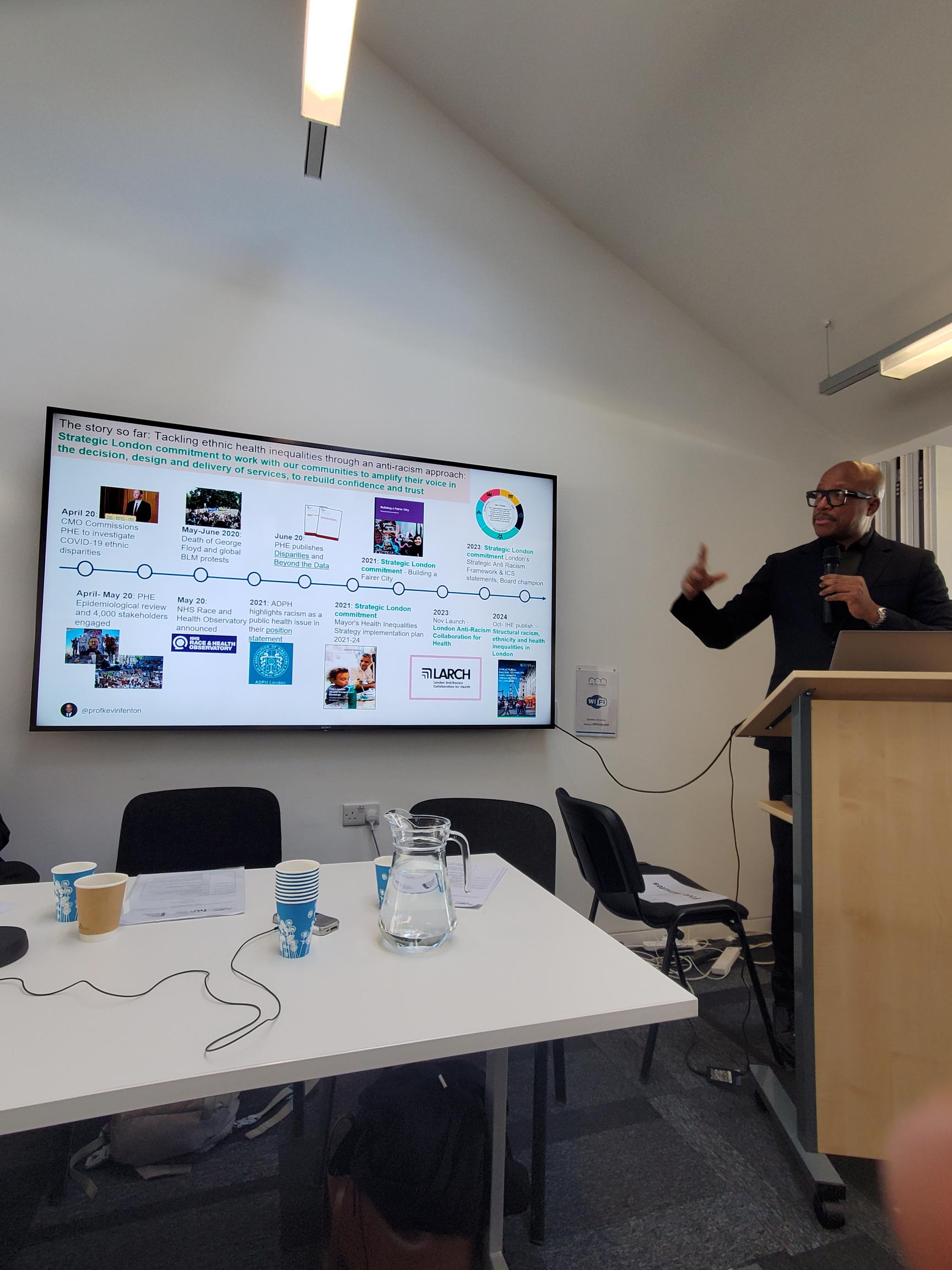
Professor Kevin Fenton’s talk highlighted how structural racism deeply impacts access to healthcare, patient outcomes, and workforce disparities within the NHS and beyond. He explained that language barriers, migration status, and cultural differences prevent many ethnic minorities from effectively navigating healthcare services, as seen during COVID-19 when non-English speakers struggled to access emergency advice. He also pointed out biases in clinical decision-making, leading to worse health outcomes for Black and minority ethnic women, especially in maternal care and cancer screening. These disparities result in delayed diagnoses, suboptimal treatment, and lower trust in healthcare services, which contributed to higher mortality rates during the pandemic. Additionally, Fenton addressed workforce inequalities, where minorities are underrepresented in senior NHS roles but overrepresented in low-paid positions, negatively impacting their long-term health.
Panel Discussion: Embedding Anti-Racism Across Healthcare
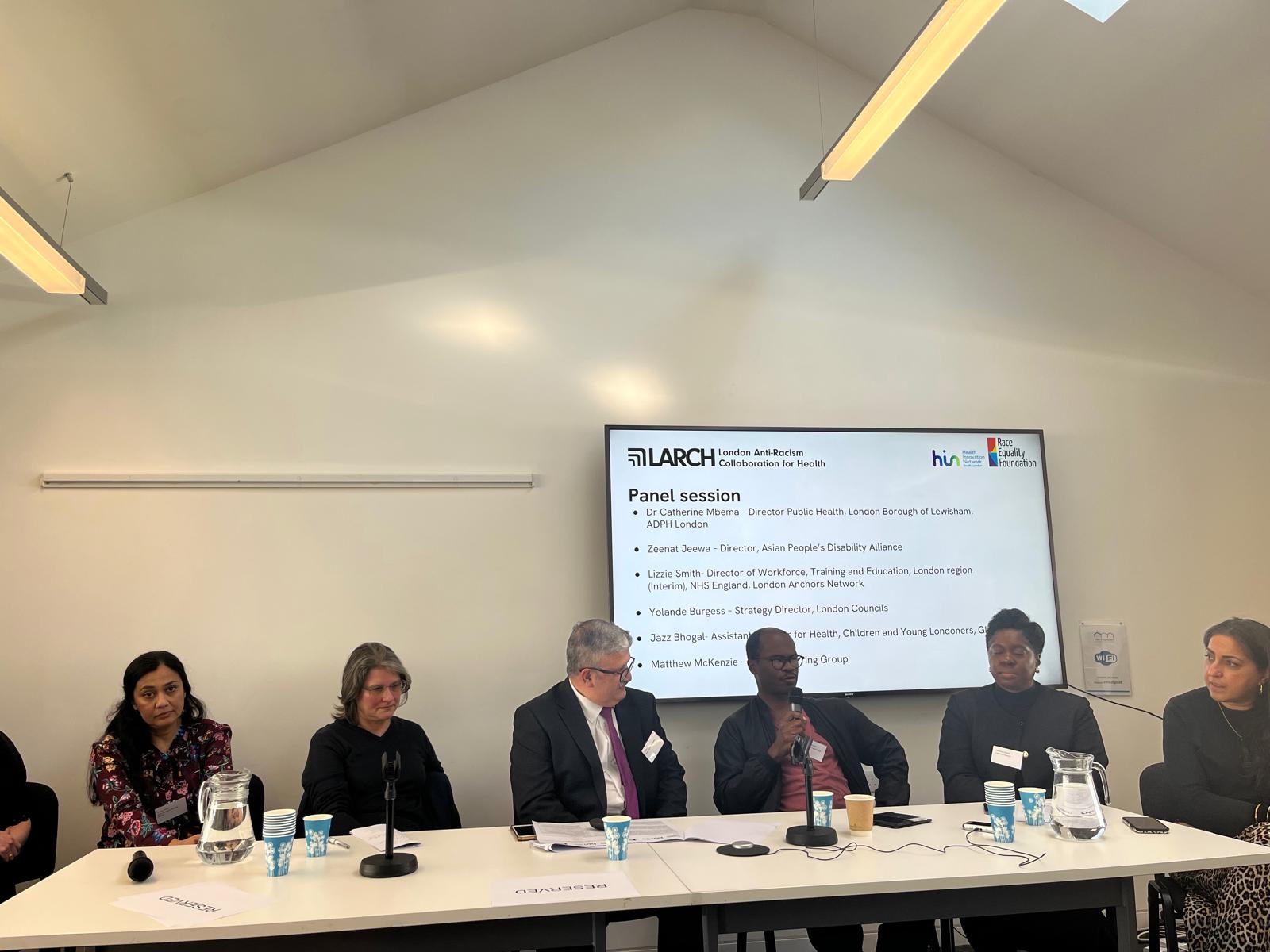
A panel chaired by Jabeer Butt, OBE, explored how anti-racism strategies can be effectively implemented across various healthcare sectors. Experts including Dr. Catherine Mbema, Zeenat Jeewa, and others including myself as a stakeholder on the panel discussed challenges and shared successful models for improving access, equity, and trust in health services (Thanks to Deniece for taking the picture). The conversation underscored the necessity of cross-sector collaboration and continuous advocacy.
Diving Deeper: Breakout Sessions on Key Issues
The afternoon featured breakout sessions tackling specific areas of racial health disparities, including:
- Data for Equity: Dr. Brenda Hayanga led a discussion on how data collection can drive policy changes and improve patient outcomes.
- Building Trust in Communities: Adeola Agbebiyi shared strategies for strengthening partnerships between healthcare providers and marginalized groups.
- Mental Health Equity: Kadra Abdinasir addressed the racial disparities in mental health treatment and the importance of patient and carer engagement. This was the workshop I attended.
- Maternal Health: Dr. Nandi Simpson emphasized the urgent need to address racial disparities in maternal and infant mortality rates.
These sessions provided attendees with practical tools and insights to drive meaningful change within their own organizations.
Case Studies in Action
A series of case studies showcased successful anti-racism initiatives in healthcare. Catherine Dale from the Health Innovation Network South London and Safia Marcano from the Association of Directors of Public Health London presented real-world examples of systemic change, offering tangible solutions for embedding anti-racist policies.
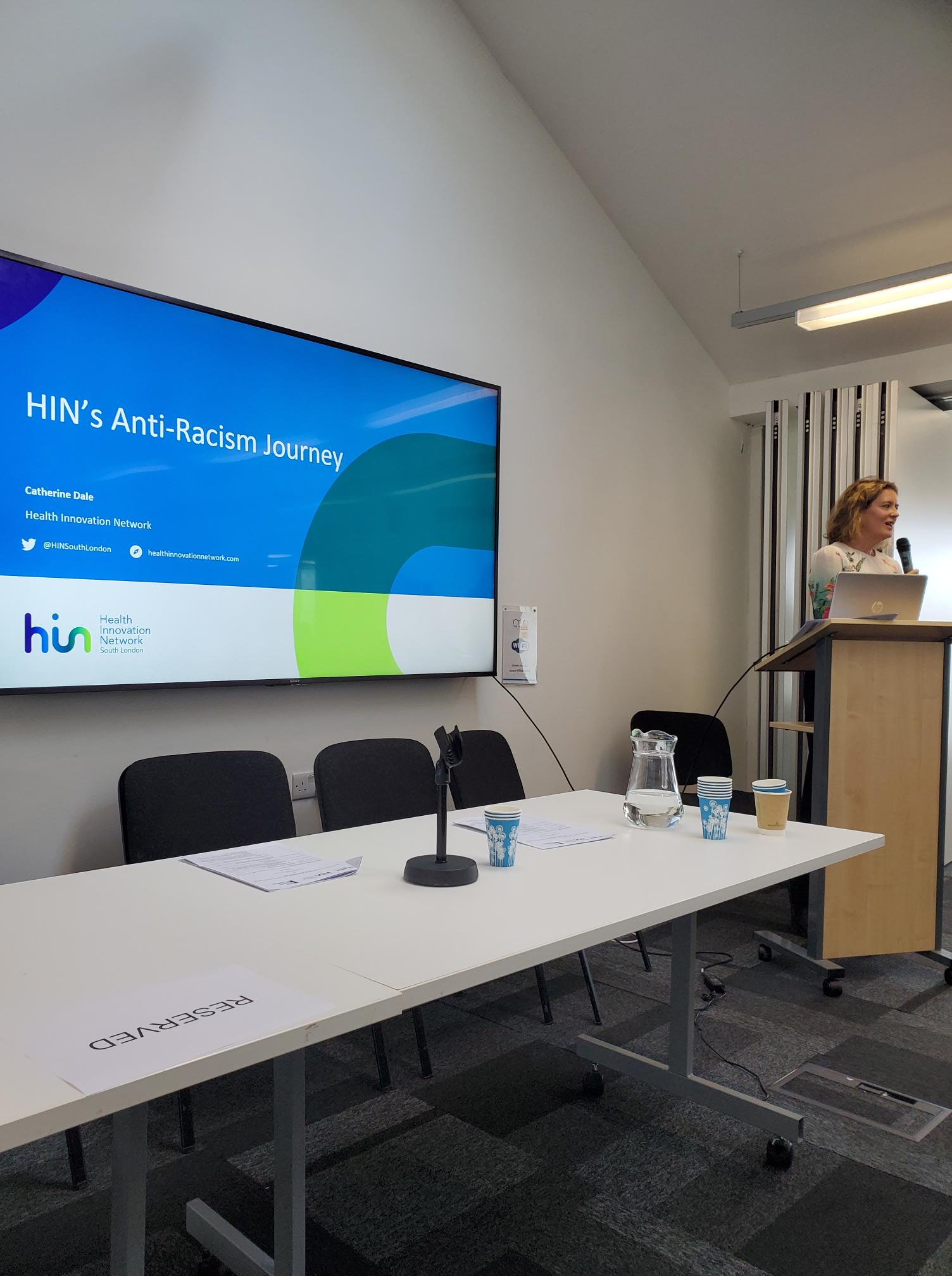
Catherine Dale’s talk focused on her experience as a white professional leading anti-racism work within the NHS, particularly within the Health Innovation Network (HIN). She discussed how the organization, while diverse in some ways, did not reflect the full ethnic makeup of South London, especially at senior levels. In response to the racial justice movement of 2020, sparked by George Floyd’s murder and COVID-19 disparities, the organization committed to becoming actively anti-racist. She highlighted the challenges of discussing race in predominantly white spaces, noting that discomfort often hindered progress.
Using co-design methodologies, her team worked to rebalance power dynamics, ensuring that global majority voices were heard and included in decision-making. Dale emphasized the need for psychological safety, where both white people and people from minoritized backgrounds could engage in brave conversations without fear of backlash. She acknowledged that anti-racism work requires ongoing learning, unlearning, and resource investment, stressing that white allies must actively engage while avoiding placing the burden of change solely on people of color. Her team focused on practical strategies, including training on microaggressions, bystander intervention, and power dynamics, while measuring progress through qualitative and quantitative assessments. She concluded by emphasizing that anti-racism is a collective effort requiring ongoing commitment, systemic change, and shared leadership across all levels of the NHS.
A Call to Action
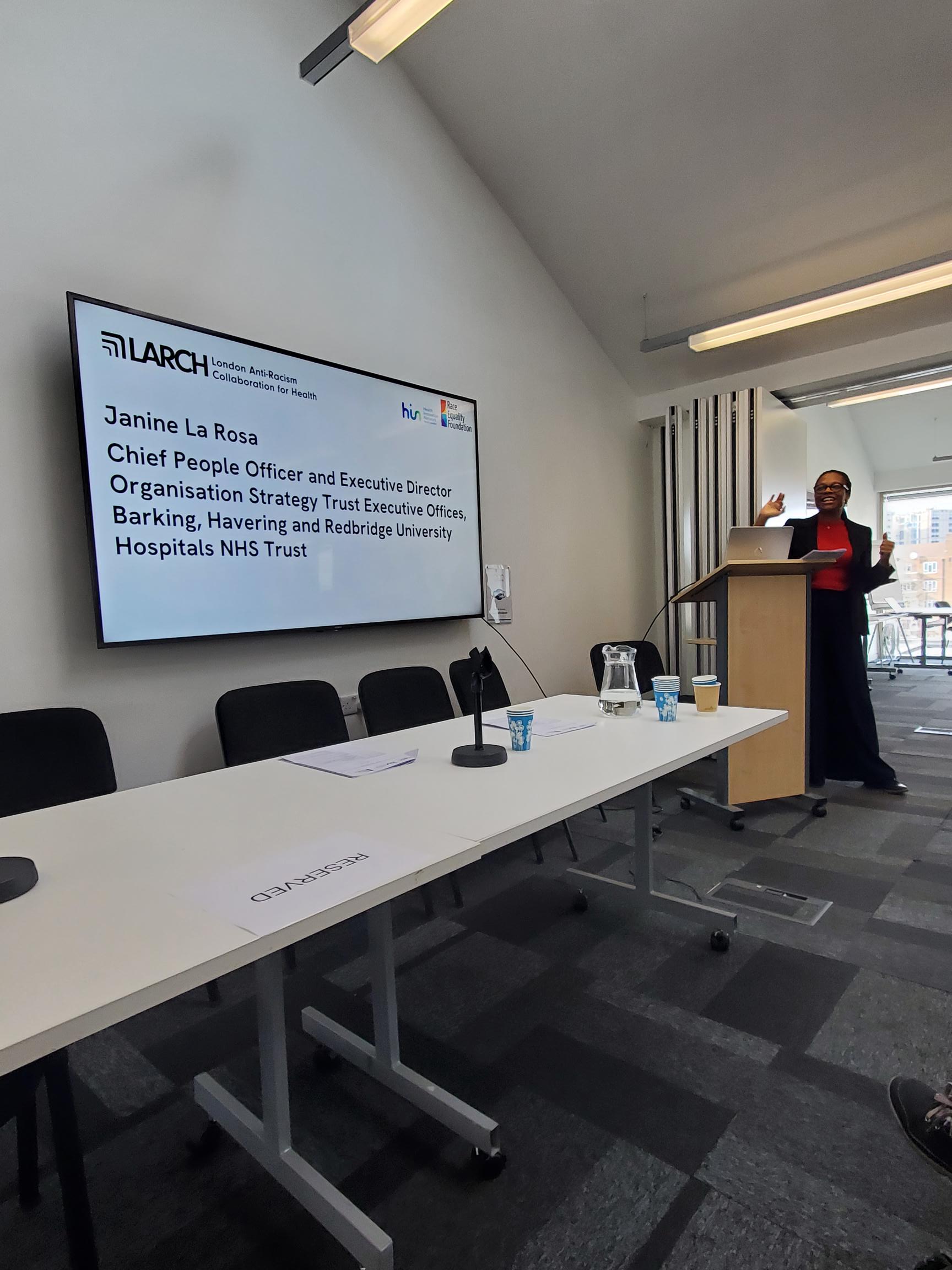
Janine La Rosa, Chief People Officer at Barking, Havering and Redbridge University Hospitals NHS Trust, concluded the event with a compelling reflection on the urgency of sustained action. She urged attendees to take the insights gained and transform them into concrete policies and practices that challenge and dismantle systemic racism in health and care.
The Road Ahead
The 2025 LARCH Conference reaffirmed that anti-racism work in healthcare is not just necessary but non-negotiable. The conference emphasized that real progress requires ongoing commitment, accountability, and collaboration between policymakers, healthcare professionals, and communities.
As London continues to lead in this crucial area, it is imperative that the momentum generated at this event is carried forward. By integrating anti-racist policies, investing in diverse leadership, and engaging communities, we can create a healthcare system that truly serves everyone equitably.
What’s Next? The fight against racial health disparities continues beyond the conference. LARCH encourages individuals and organizations to join the movement, contribute to research, and advocate for systemic change. Together, we can build a future where healthcare is truly inclusive and just for all.
To find out more about LARCH, watch the video below.
 A Caring Mind