By Matthew McKenzie – Carer activist with Think Tenacity Academy CIC at Nando’s High Street Kensington
(Event held during Black History Month 2025)
A Warm Welcome and a Powerful Beginning
On Tuesday 28 October 2025 at Nando’s, 229 Kensington High Street.
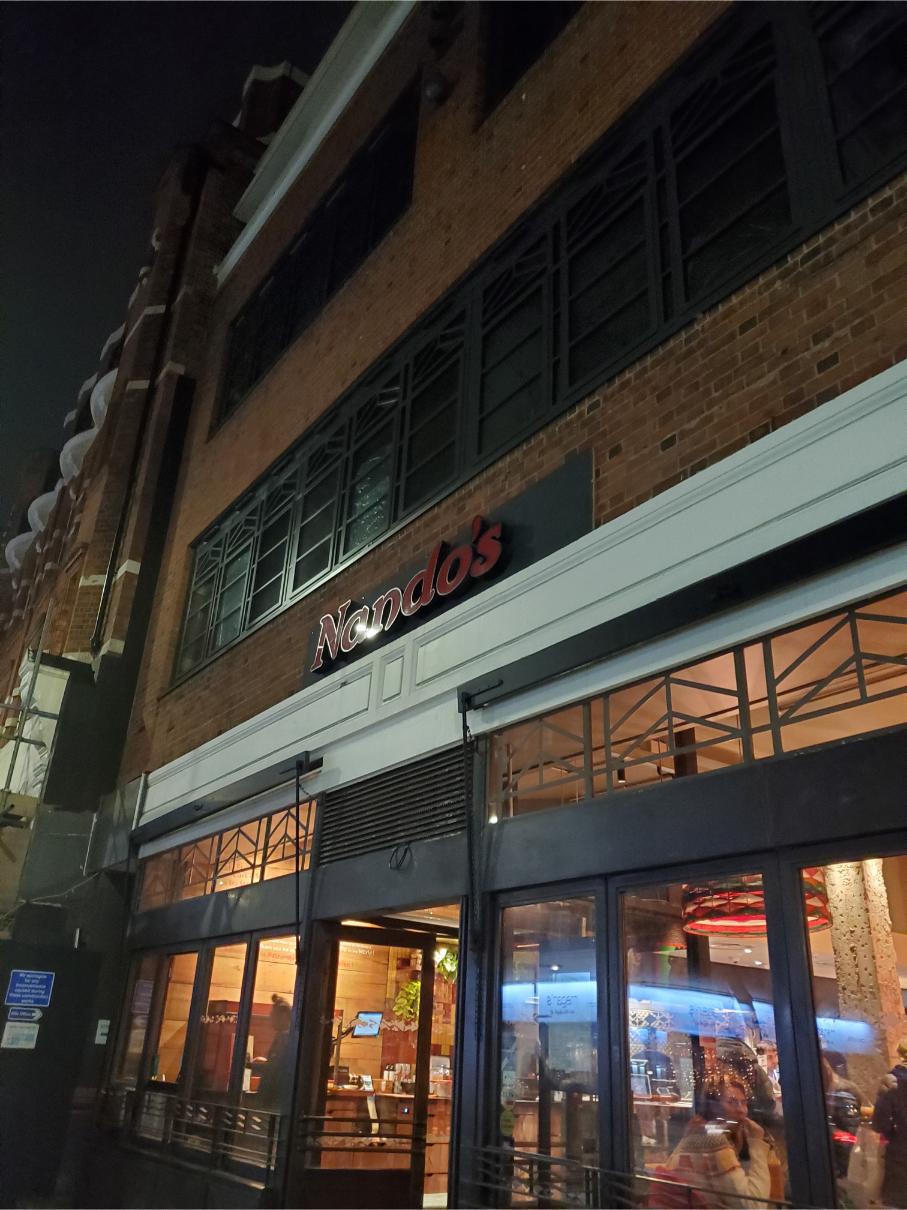
As soon as I entered, the scent of grilled peri-peri wings mixed with the buzz of conversation. The event Making Time for Black Mental Health was hosted by Think Tenacity Academy CIC, led by founder Bella Rareworld.

The evening opened with words from Mayor of Kensington and Chelsea, https://www.rbkc.gov.uk/council-councillors-and-democracy/how-council-works/your-mayor
The Mayor thanked Bella and her team for “championing Black mental health” and acknowledged the anxiety of modern life.
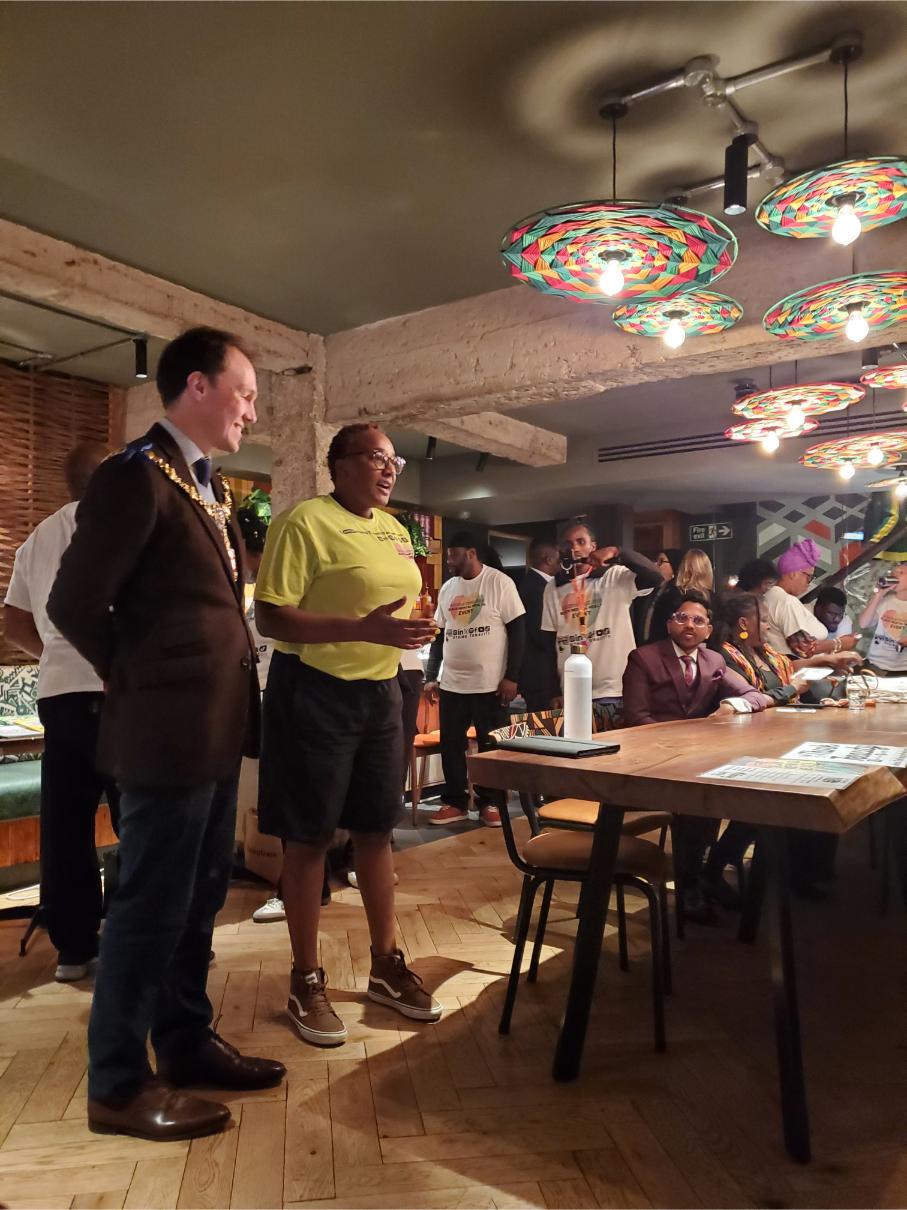
He spoke about loneliness, addiction, and the pressures of today’s fast-paced world, saying:
“Everything needs to be done yesterday. We face so many challenges to our mental health, loneliness, addiction, life pressures. When you take all those challenges and then see how they affect the Black community, it’s even greater.”
He urged everyone to talk openly and reject the idea that seeking help is weakness:
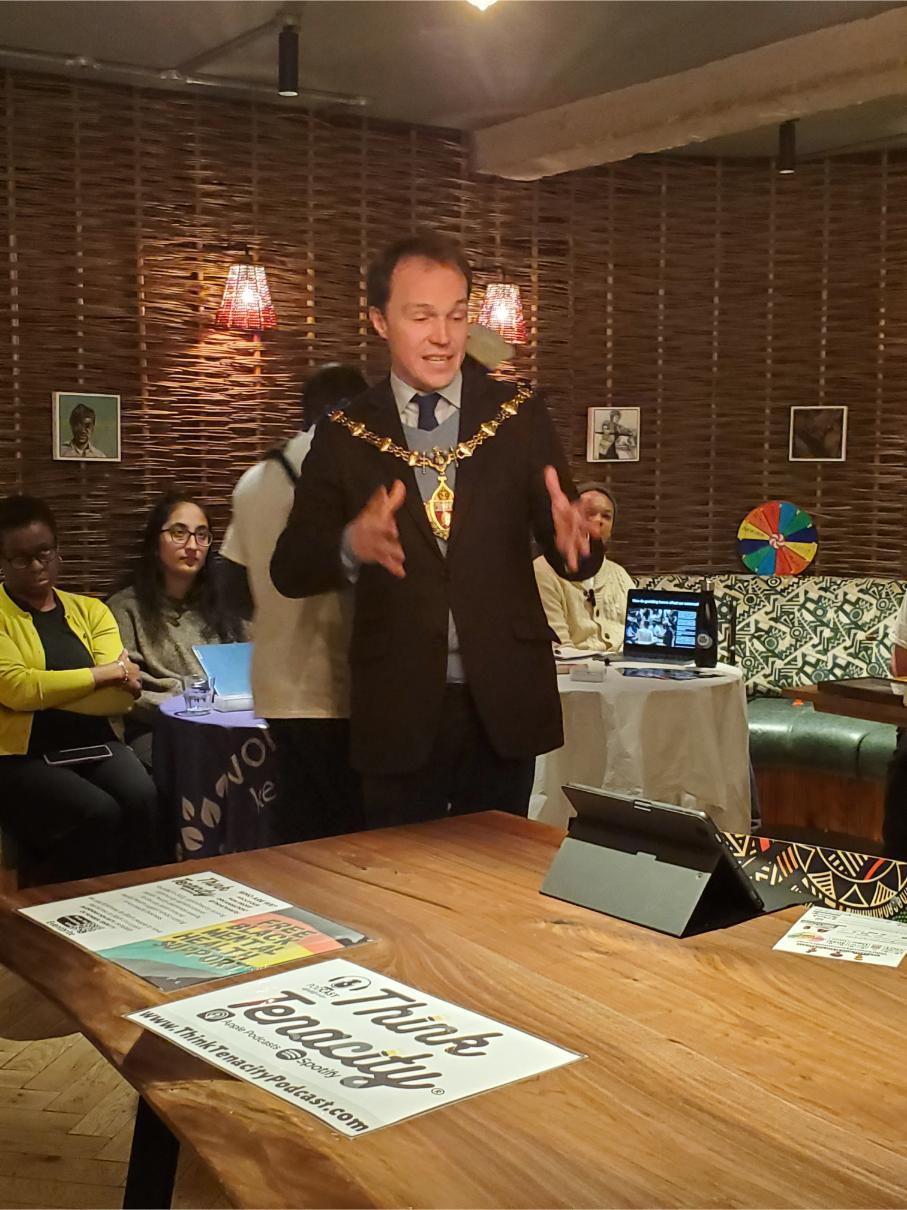
“It’s not weak to seek help. You’re looking after yourself and those around you when you talk to someone about your mental health.”
His compassion set the tone an atmosphere of honesty and care. As a Black male carer, I felt relief. So often we’re expected to carry everyone’s burdens in silence; hearing the borough’s Mayor validate our experiences was a strong start.
“Can Racism Affect Your Mental Health?”
Bella Rareworld introduced herself by sharing her lived experience of bipolar disorder, PTSD, anxiety, and borderline personality disorder.
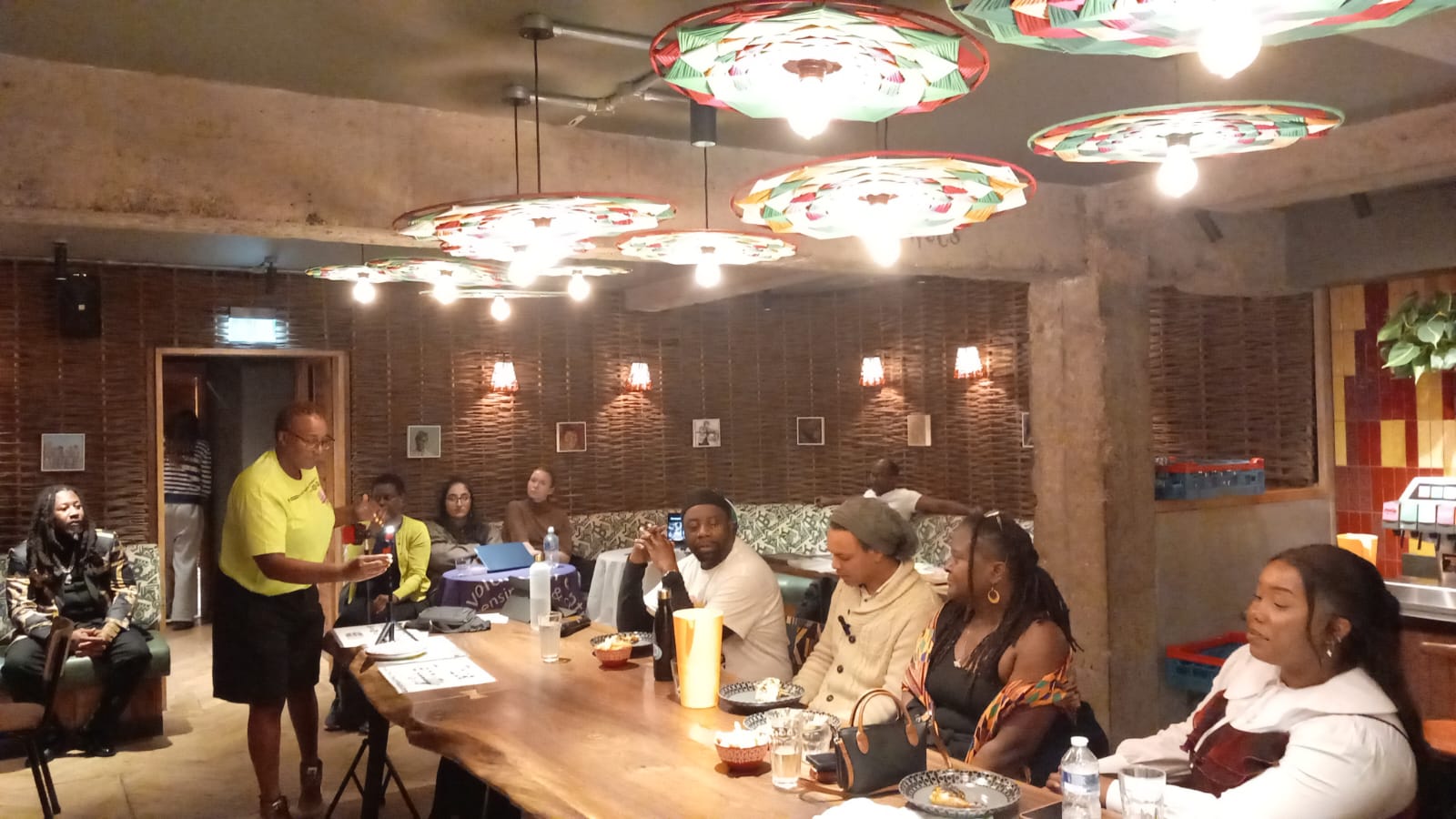
She described how surviving a mental-health-hospital stay inspired her to build Think Tenacity Academy CIC so Black people could “get access to Black therapists that look like you.”
She reminded us that the evening might be triggering and encouraged anyone struggling to speak to volunteers or step outside an act of genuine care.
The first discussion question was powerful:
“Can racism affect your mental health?”
The unanimous answer across the room was “Yes.”
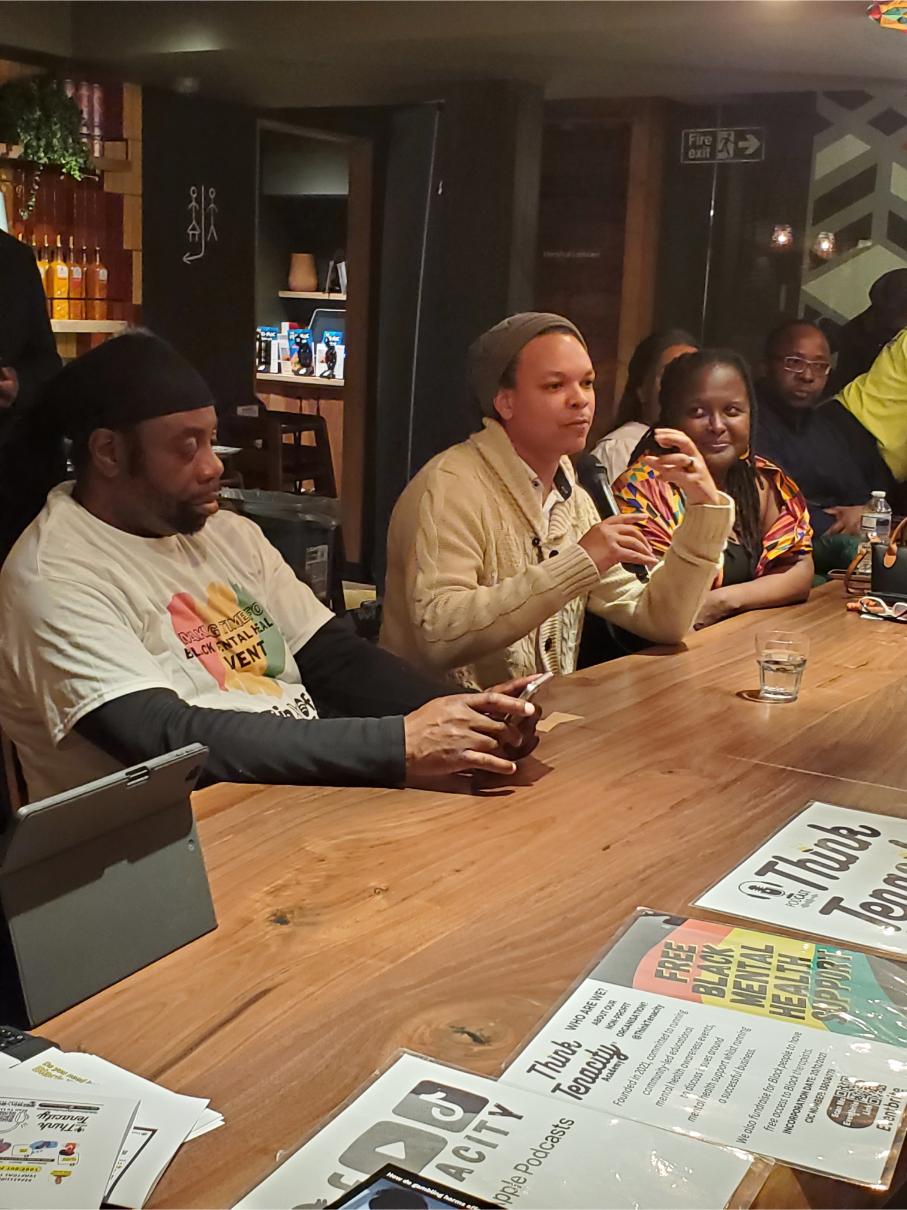
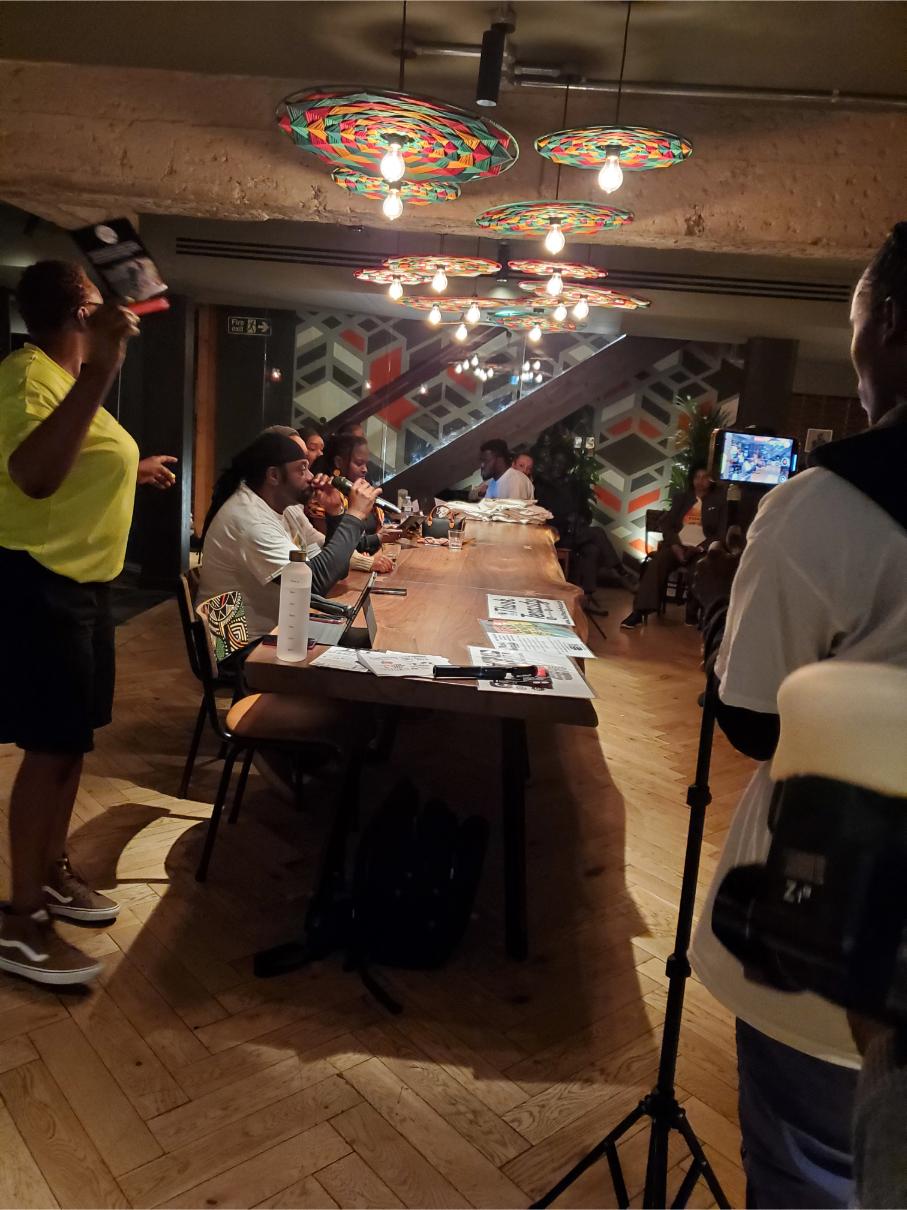
A Think Tenacity Community Speaker called Lloyd who is also an occupational therapist, spoke of growing up in Bristol where daily racial abuse left deep scars:
“I was always the only Black boy in the school photo always on the edge. Called names every day until fighting felt like survival.”
Years later, working in healthcare, he was racially abused by a patient, only to be told by a manager that it was “part of his illness.” which he had to challenge:
“There’s nowhere in the DSM that says racism is a mental illness.”
His words hit hard, and many nodded we’ve all seen trauma excused or ignored when the victim is Black.
A Think Tenacity Therapist Emily Lewis echoed him, explaining that Black people “are often not believed, not listened to, and not heard.”
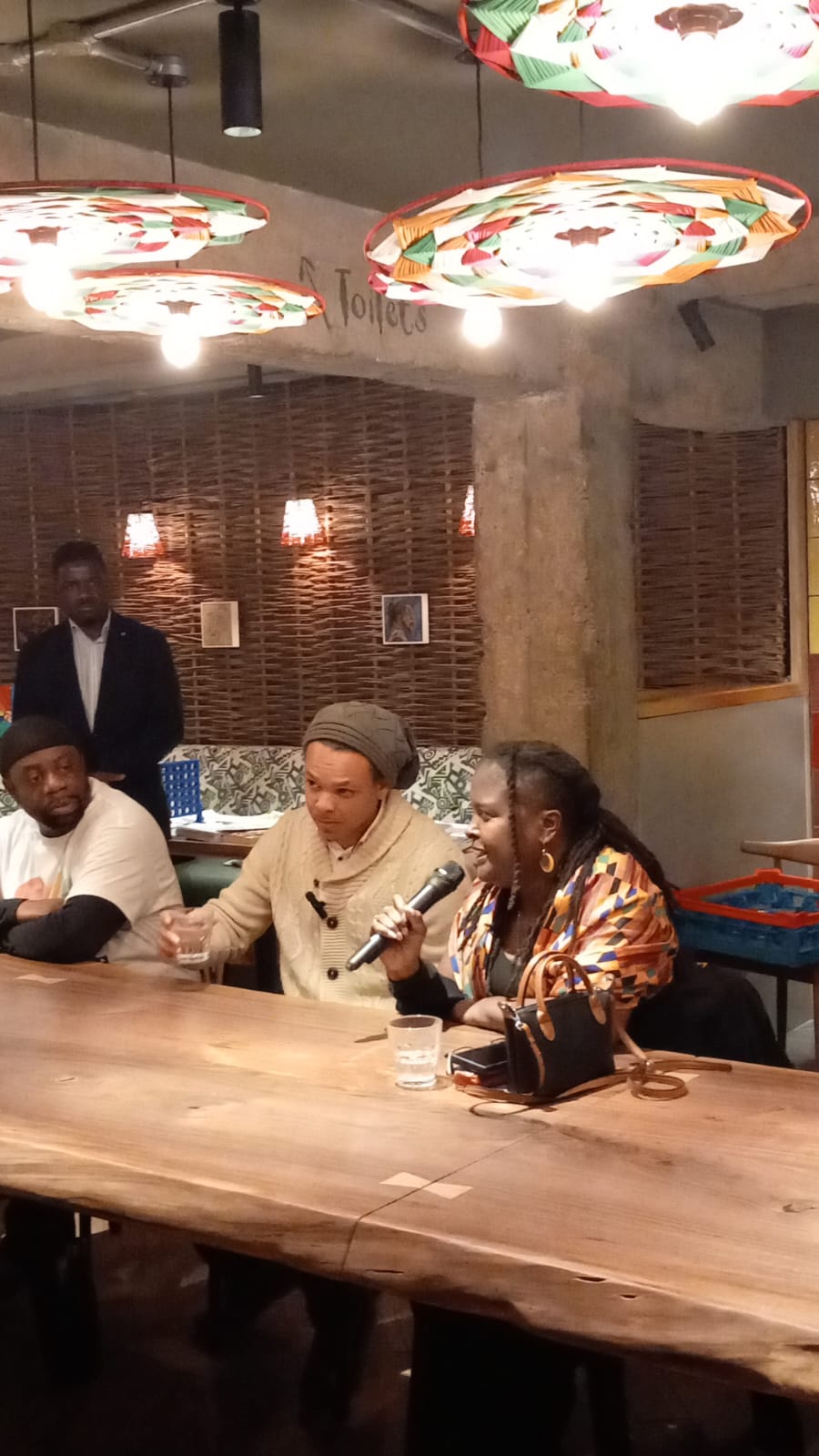
She described how cultural misunderstandings can lead to dangerous outcomes even people being sectioned for ordinary cultural practices, like singeing chicken before cooking.
Bella guided us to pause, breathe, and think about self-care. She distributed links for self-care cards and reminded us that wellness can begin with simple acts as cooking our favourite food, taking time for ourselves, or talking to a therapist who understands.
Fear, Faith, and the Fight for Change
The second big question on the floor:
“Why do some Black people fear the NHS or their doctor?”
This opened a flood of emotion.
A carer shared how her mother died after poor hospital treatment, saying, “You take the time to show up and then get told there’s a waiting list. That’s not care.”
Emily Lewis added that many Black clients come to her service after being dismissed by mainstream mental-health teams:
“They tick boxes but don’t listen. And because of the myth that Black people are strong or don’t feel pain, many of our women still die in childbirth.”
David Bello, Director of Health Partnerships and Mental Health for Royal Borough of Kensington & Chelsea and Westminster, took the mic next.
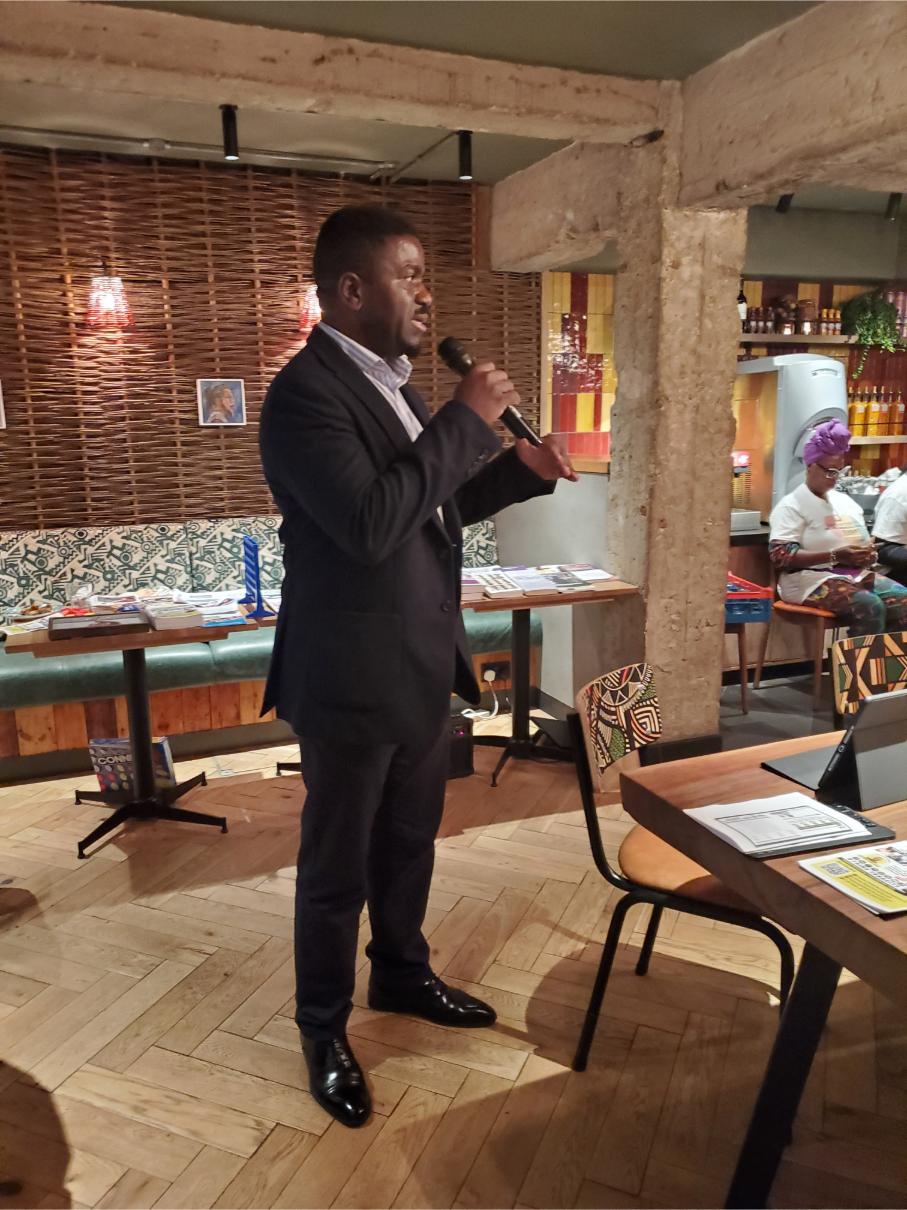
“We know that as Black people we’re over-represented in mental-health services. We need to change that. The council is investing in outreach so that mental health becomes everybody’s business.”
Rita Takaria, Partnership Director for Cross-Healthy Care, spoke candidly:
“When the NHS was designed, it wasn’t built around communities like ours. We’re now committed to co-production designing pathways with communities, not for them.”
Tanisha, Taneisha Scanlon, Assistant Director Place, Central London (Westminster) her colleague, reinforced this:
“We’re determined to put the community at the heart of commissioning. We don’t do anything without community input now.”
Hearing those words gave me cautious optimism. But what moved me most was the acknowledgment of Black men. Bella asked everyone to applaud us, saying, “It’s really nice to come to an event and see Black men here — we need you as part of the discussion.”
For me, that moment was profound. Too often, we’re invisible in these spaces.
Breaking the Cycle: Hope, Healing, and Action
Later, Ryan Taylor-Hinds from Betknowmore UK introduced his project, Breaking the Cycle, addressing gambling harm and mental health in the Black community. Through a moving story about his grandfather, a man with untreated bipolar disorder and gambling addiction
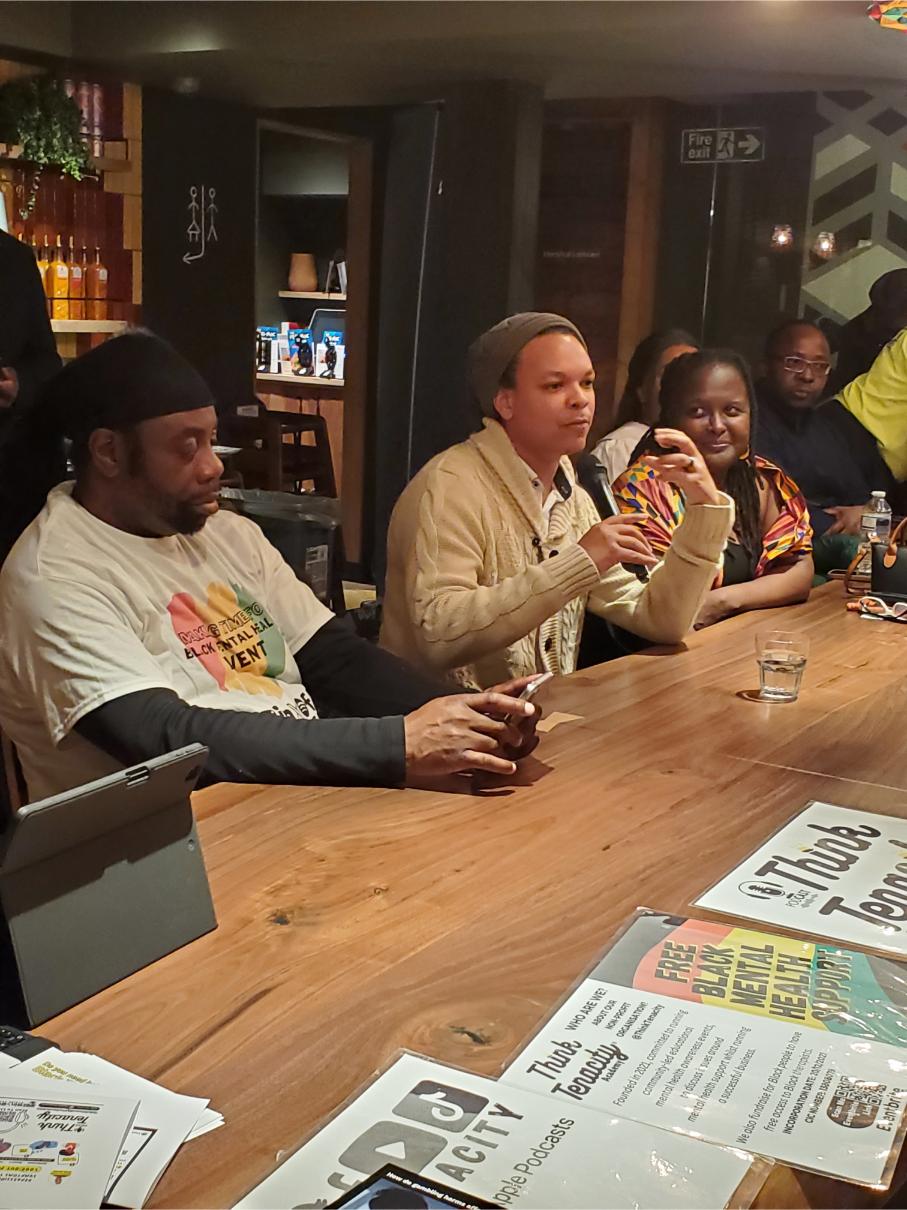
Ryan illustrated how trauma passes down generations.
“Maybe if my grandfather had got help for his gambling, they’d have considered his mental health. And maybe then, he wouldn’t have been so angry, and I would’ve known him.”
His vulnerability drew a standing ovation. Ryan’s call was simple: “Don’t leave without having a conversation. You might be the one to break the cycle.”
As the event closed, Bella reminded us:
“Mental-health education and awareness should be free. Together, we can make change, but we must act.”
She encouraged donations to keep sessions accessible and invited us to photograph the moment to share it widely and continue normalising these discussions.
Walking out onto Kensington High Street, I felt uplifted. As a lived experienced black male carer, I’d spent years focusing on others’ wellbeing, so that evening reminded me to look after my own as well.
The phrase that stayed with me came from Bella herself:
“We can break stigma together.”
And that’s what the night was truly about community, courage, and care.
Volunteer Centre Kensington & Chelsea had a charity table at the event in the Think Tenacity Black Wellness market offering volunteers opportunities to enhance delegates’ wellbeing by sharing their Wellbeing programme, designed to support those with disabilities or mental health needs living in Kensington and Chelsea.
Final Reflection
For me, Making Time for Black Mental Health was a healing space.
It reminded me that mental health isn’t only about diagnoses or therapy sessions; it’s about listening, learning, and leading with empathy.
As carers, as men, and as members of the Black community, we must keep these conversations alive not only during Black History Month, but every single day.
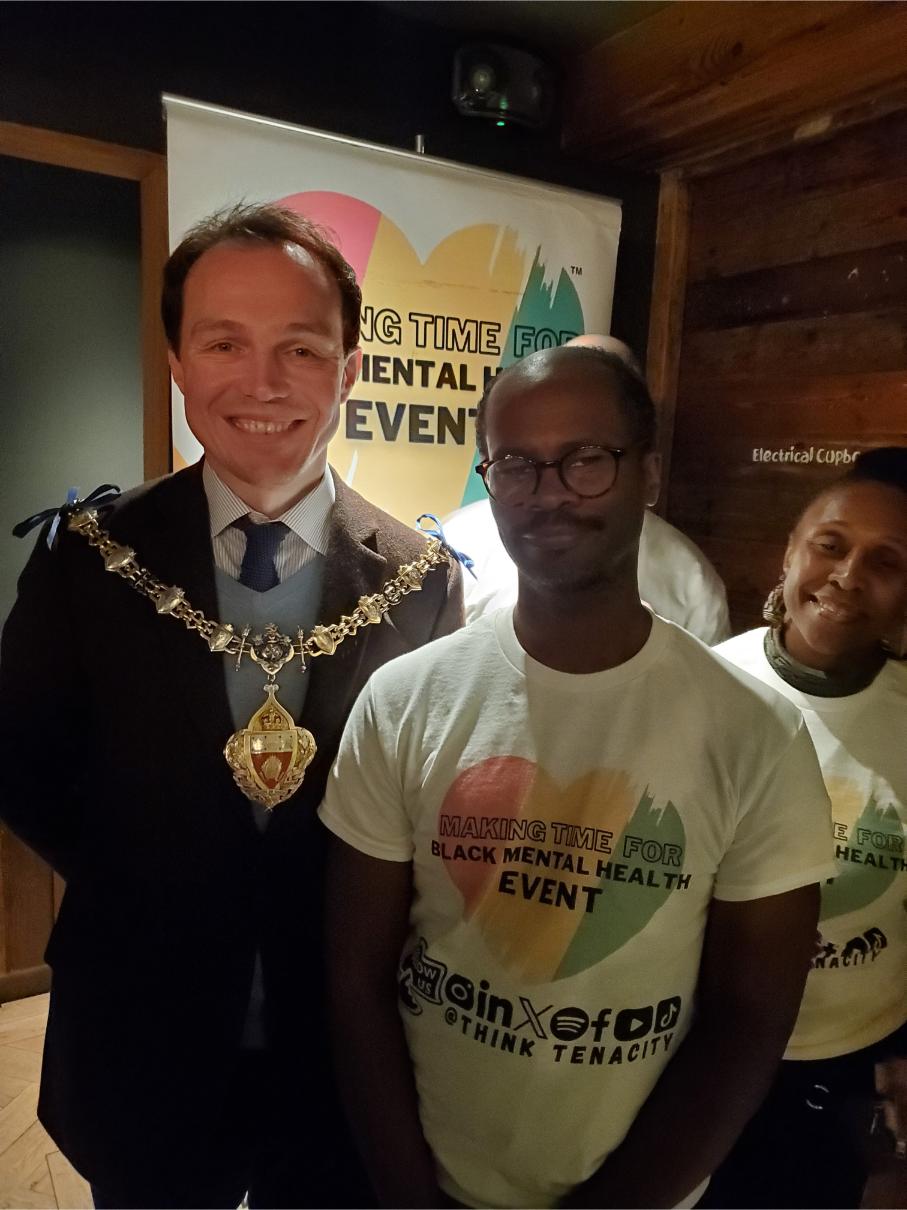
The next Making Time for Black Mental Health Event will be held on Monday 1st December at 4pm-6.30pm at Kensal Rise Nando’s, Nando’s Kensal Rise, 29 Chamberlayne Road, London NW10 3NB and every delegate receives a free Nando’s meal. Limited free tickets available via Eventbrite link. – ThinkTenacity.eventbrite.com
 A Caring Mind
Pingback: November 2025 Carers News — New Release from A Caring Mind | A Caring Mind