Welcome to a very late update of one of my carer forums. These are updates of the groups I run whose members are those caring for someone with mental ill health. For my September SW London carers forum, we were joined by Professor Caroline Glendinning who is the Emerita Prof of Social Policy at the University of York.
Prof Caroline presents on Carers and personal budgets
Caroline thanks us for having the chance to engage with unpaid carers and a way to learn from them. She was interested in our personal experiences, especially from the experience of caring for someone with a mental illness. She was pleased to see there are carer led groups fighting to engage with services.
Professor Caroline spoke at length regarding how Personalisation and carer policies have developed separately. She mentioned what the choices are disabled people, being either direct Payments/Personal Budgets/Individual Budgets.
She then spoke a bit about Carer’s rights being the importance of having a carer’s Assessment, how Carers Allowance Support should work and also the need for carer respite.
Professor Caroline gave some examples regarding cash schemes, but also highlighted some problems. Comparisons were from the following.
Where schemes were designed to support carers (Germany / Austria) Plus some plans aim to increase choice for service users (England/Nlds)
Professor Caroline then moved into what trigger her research into these areas. These were “How do local authorities recognise/balance the rights, needs and wishes of service users and carers?”.
She wanted to find out what roles should carers play in assessment /planning support? Carers at the group were interested if there was there any consultation or involvement that was flagged up by her research.
Professor Caroline surveyed many Local authorities by running.
Lead officer interviews Focus groups with front-line practitioners Interviews with service users and carers
The results from her research lead to several findings, which Professor Caroline explained at length to the forum.
Joint/holistic family assessments desirable – carers usually involved
In practice assessments focused on service users – little attention to carers’ needs, apart from ‘willing and able’
Carers offered separate assessments but low take up
Even where separate carer assessment done, little consistent practice in bringing 2 together
Service user budget reduced by carer support
No guidance on carers’ role in planning service user support
Carers often involved in managing service user personal budget
Carers’ organisations not involved in developing personal budget policies/practice
Poor coordination of subsequent reviews of service users’ and carers’ needs
Discussion time from the group
Professor Caroline wanted to find out our experiences in regards to her research paper. There was a lengthy discussion on the following.
What were members experiences? Any feelings regarding Assessments How did people feel about Planning support When did Reviews take place?
Professor Caroline then spoke about the conclusions of her research
Carers not involved in developing personal budget policies/practice Failure to assess carer needs: Just asked ‘willing and able’ Too few separate carer assessments Service user budgets routinely reduced because of carer help Funds for carer breaks included in SU budgets
This was a brief update to my SW London mental health carers forum.
Welcome to the latest update of my Greenwich mental health carer forum. I run this with the support of Greenwich carers bi-monthly. The focus of the forum is to give unpaid carers a chance to query, understand and focus on the complex world of mental health provision, especially trying to influence mental health providers of the importance of unpaid carers. In a sense, carers can be service users as well, so services should take account families and friends supporting those with mental ill health.
Speakers for the October Greenwich forum were
Peter Ley – Oxleas Greenwich Service Manager Myles Thorpe – Voice & Engagement Officer for Greenwich Area Involvement Network Jason Mcculloch – Service Manager, Commissioning, Health & Adults Services for Royal Borough of Greenwich
Peter Ley Updates MH carer forum
Peter talked to our group regarding the work going on between Oxleas and Bromley, Lewisham and Greenwich mind in order to create a well being hub. Peter explained that basically, it’s a merging of those kind of services, to kind of provide something for people where there is an easy to access. So when you go to a GP service, or maybe you just want to drop some concerns, what they are developing is a hub of different types of interventions for people that can be accessed really quickly
The intention is to provide people with prompt access to things that will help on their mental wellbeing. The idea is that rather than go through a kind of long drawn out process of repeatedly being assessed for mental health, the idea is to get to something that’s helpful intevention and be quite quick about it, provide things to people in a matter of days, rather than months. This is opposed to when a situation gets worse, then more kind of time has to be taken to get service users back on their feet.
Peter then mentioned how the pandemic is still impacting the NHS. The impact certainly has been felt from a community mental health team point of view, so they coming back into a greater number of face to face visits at home, rather than using the phone or waiting for people to come to them. So people should notice where there’ll be more of contact that is actually face to face. There should be more home visits. Something new were put in place to help with that is something called “The Care Teams Approach”.
So across all the community teams in Oxleas e.g. psychosis teams, the intensive case management for Psychosis services, what they will be doing is getting two care coordinators together and supporting them two support workers. So the kind of caseloads will spread across four people rather than one. So caseload sizes that those four will be looking after will workout to, ideally 50 patients, but in some cases, is 65. The standard there is that each of those workers does at least 10 to 10 face to face visits each week, which should instantly increase the amount of face to face visits that people can expect to get across the month in the community.
QUESTIONS FROM CARER MEMBERS
I’m understanding correctly, your well being hub, I noticed that it’s still a trial at the moment. But the referrals, are you saying that the referral has to be done via the GP? From my personal point, they cannot manage the services that they’ve already got. I’ve got health problems at the moment, and I’m struggling for myself, if I had to reach out about the person I care for, then the chances are, for example, I call trying to get an appointment on an urgent need. When there’s no appointments, you get referred to the Greenwich hub, they call it a Greenwich hub. And all what they do is triage you over the phone, and then refer you back to the GP anyway
You said it’s two CCOs and two support workers. Are they permanent staff, or are they locums? Because Oxleas seems to me to be running on locums. At the moment.
Peter we have not seen you for a while, we do hope you can engage with mental health carer groups, so there is an understanding of how Oxleas supports and engages with carers.
I myself asked the following questions
Who leads regarding care coordinators and social workers? If a Medical director leads regardings psychiatrists, then does Oxleas have a director of Social care? Although I understand care coordinators can be a generic role, plus what sort of training do staff at Oxleas get regarding carer identification and engagement?
Bonus update from Debora Mo – Mental Health Commissioning Support and Engagement Officer at SE ICB
Debora updated that they are conducting workshops with clients in a range of supported accommodations in Greenwich. So mainly from bridge support, one housing and Sanctuary. They already had their first workshop but they would like a couple of mental health carers to join if they were able to. There was a contribution for lived experience people, which is London living wage level. The sessions are held at the “London Marathon playing fields” (https://www.accessable.co.uk/venues/london-marathon-playing-fields) and the next one is on the fourth of November. They can only accommodate about one to two carers because the facilitators they are working with are really keen that the group of people who actually have the lived experience.
Myles Thorpe on the focus of Greenwich Area Involvement Network
Myles introduced himself regarding his work with GAIN. Myles mentioned it’s a was Community Action Group that worked closely with Oxleas and various public mental health bodies to improve representation of seldom heard groups, this means lived experience of mental health users to engage with the service providers. So this is incorporated in the decision making and service provision. The goal is to improve access to mental health services.
GAIN recently registered as a charity, and Myles is their first member of staff. He is doing research essentially, in connecting with various communities. There’s a whole number of groups, networks and subgroups where all of the information that they gather, whether that’s on service users or members of the community, gets fed into a kind of working group. They try and bring the provision of mental health forward so that it’s fit and efficient based on the resources that they have in the community.
QUESTIONS FROM CARER MEMBERS
It’s good to hear that carers are going to be involved and I hope fully involved, not not just as an afterthought, which we feel we are at the moment.
Wasn’t there a recent event regarding GAIN? I was wondering that turned out?
So Myles and myself sit in different things together, apart from the fact we do communicate a lot, but we also sit in different meetings that involve others like Oxleas and BLG Mind. So we are trying to focus on a united front, in a sense of all the work that’s happening, and also share all this information and knowledge.
Jason Mcculloch updates on Royal Borough of Greenwich Carers Strategy
Jason talked about what his remit covers, which is a number of service areas, but unpaid carers is one of them. He has been coordinating the delivery of a new carer strategy for the borough of Greenwich, this is a joint carer’s strategy with health colleagues, which was launched formally a couple of weeks ago, down at town hall. The launch was followed up with an event at Greenwich carer center. They are now planning further events in the evening, where the date is to be confirmed.
Jason was at the meeting to let everybody know that they have launched this new carer strategy that they are now moving into the sort of implementation phase of that strategy.
One of the key aspects of the strategy for Jason is that carers should receive a consistent level of service regardless of where they connect with health and social care services across the borough. So whether it’s at the GP, whether it’s with a social care team, either at the carer forum or with Oxleas, whether whether it’s a hospital, and you should expect the same basic level of service, the same sort of consistent information and advice.
In the background to make sure that colleagues across the health and social care sector and are aware of the strategy. We need to make sure they are aware of the commitments within it and understand what services are available for carers, which you can access or can be referred to. So as of this moment they are starting that work now, talking to the various social work teams getting engaged with GPS, and so on.
QUESTIONS FROM CARER MEMBERS
I’ve done so much for my son in the last two years. And I sit my listen to all these promises, and all the research and projects that have been done. And I’ve heard it all before they come and they take information from us, and then we don’t see them again.
Were there any mental health carers on your working working group? I was on this for 4 or 6 years ago, I was part of the original carer and strategy working group that you were setting up, but it all fell apart and I never heard anything more about it. Will there be more focus on mental health carers this time?
Welcome to an update from my unpaid carers blog. Recently I attended Lewisham Carers Hub event. They are relaunching their carers forum, which is a great way for unpaid carers to connect, network and voice their feedback.
Lewisham Carers Hub provides a range of services including advice, information, emotional support, short breaks, opportunities to meet other carers to reduce isolation and build resilience.
The event was chaired by Sue Stockman – Director of carers services. Sue listened to carers carefully and responded very well to queries and concerns. With the relaunch of the carers forum, Carers Hub Lewisham wants to be more inclusive and give carers a chance to co-chair the meeting.
I was excited to hear about work to promote a carer’s charter developed in conjunction with unpaid carers. A carer’s charter helps carers and others know about carers rights. I also learned about IT development support for carers struggling with digital literacy and upcoming services at the carers centre including carers counselling service, health and wellbeing activities and cost of living workshops.
At the forum was Tristan Brice from Lewisham council. Lewisham council wants carers to feed back on recommissioning and also wants to hear from carers about carer identification, carer assessments and other things.
Lewisham Carers Hub are also going through a rebranding process and I have included part of the branding below. There will be more to come.
In the end I thought that well attended with many carers contributing their thoughts and suggestions. I feel having a carers forum shows how a carers centre can give carers a voice and a say on what helps them overall. So even though it is early days, we can see how the carers forum develops.
Been a while since I did a carer forum update, but felt I should do one otherwise I would be distracted by something else. Here is the brief update of my ethnic mental health carer forum for September 2022. The forum is aimed at those from an ethnic background caring for someone with mental illness.
The speakers for September are listed below
Madeleine Oakley on her Kings College London carers peer research group
Colin King presenting on the Lancet report – Whiteness, madness, and reform of the Mental Health Act
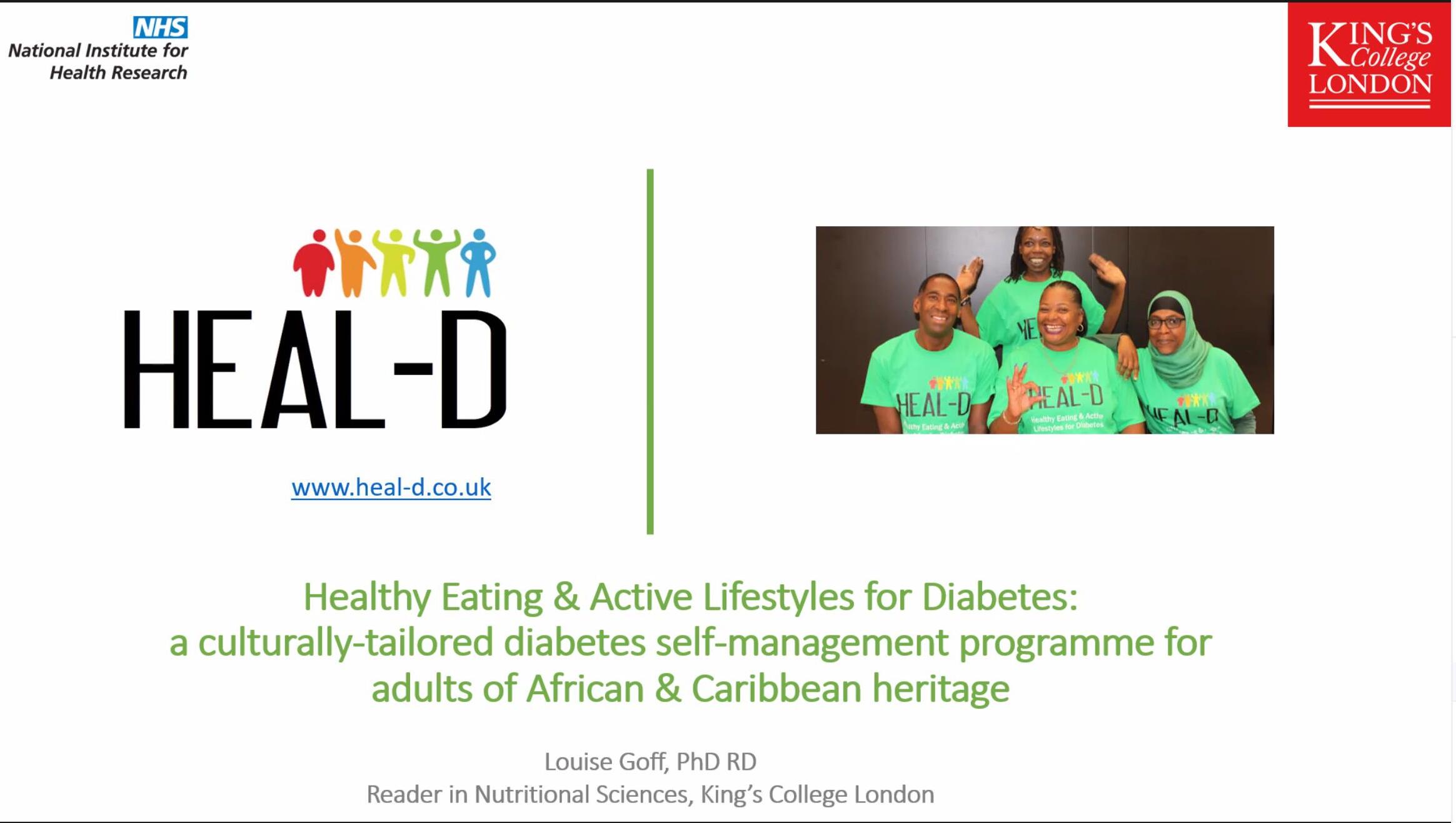
Louise Goff on the Kings college London Health promotion Heal-D: a culturally-tailored diabetes self-management programme for adults of African & Caribbean heritage
Madeleine Oakley presents on her carers peer group
Madeleine from Kings College London has been using her skills as a psychotherapist to give people space to talk about their experiences, she has found that carers really appreciate connecting with each other. Madeleine also has the lived experience of caring for somebody with autism. Her groups have been for people who are caring for a family member who has got autism. So she started with autism and eating disorders, because there was a lot of research going on about that at the South London and Maudsley.
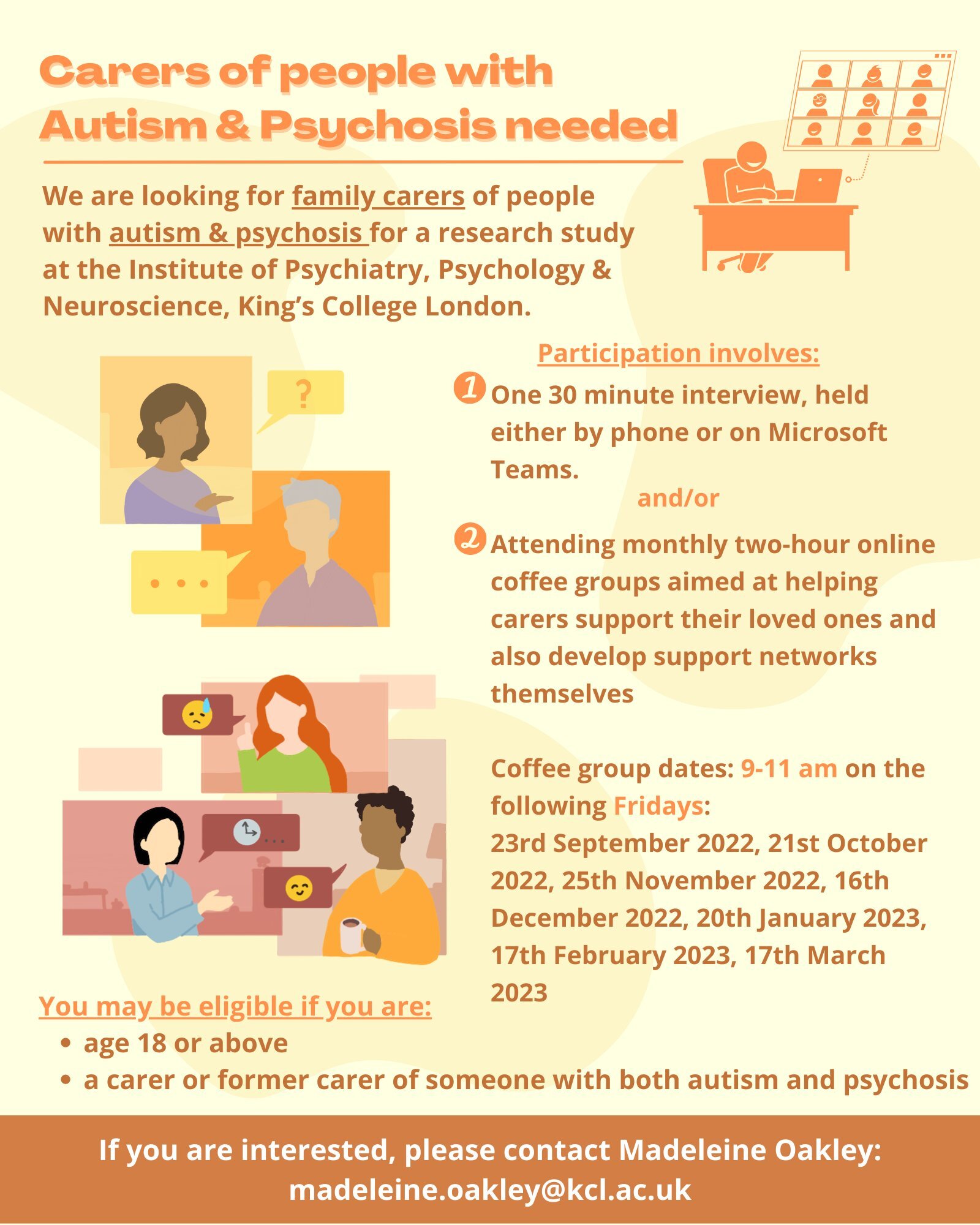
She is now doing an autism and psychosis carer group. Which is once every Friday morning, a month. Madeleine stated that unfortunately it does clash with my group one Friday morning, but basically, the next one is on the 23rd of October. The latest one has already started in September. Madeleine hopes members of my group can help spread the message.
Madeleine has also been interviewing family carers of people with autism and psychosis. So they’ve got both conditions that people are looking after. She is trying to explore the experiences of carers. How did they get the assessments? How did they get the treatments, how was being a carer affecting their lives?
Questions from carers
I started off asking “Is this group indefinite or is it just runs for a set period?”
Madeleine responded
The she wishes it was indefinitely. They are always looking for more funding, but it’s only until the end of March. So it’s a short thing as it is basically part of her PhD. But at the same time, she is applying for funding to sort of make the carers group permanent because the sad thing is all the work that she has done with carers since 2019, when she finishes her PhD, then where is the group going to?
Colin King presenting on Whiteness, madness, and reform of the Mental Health Act
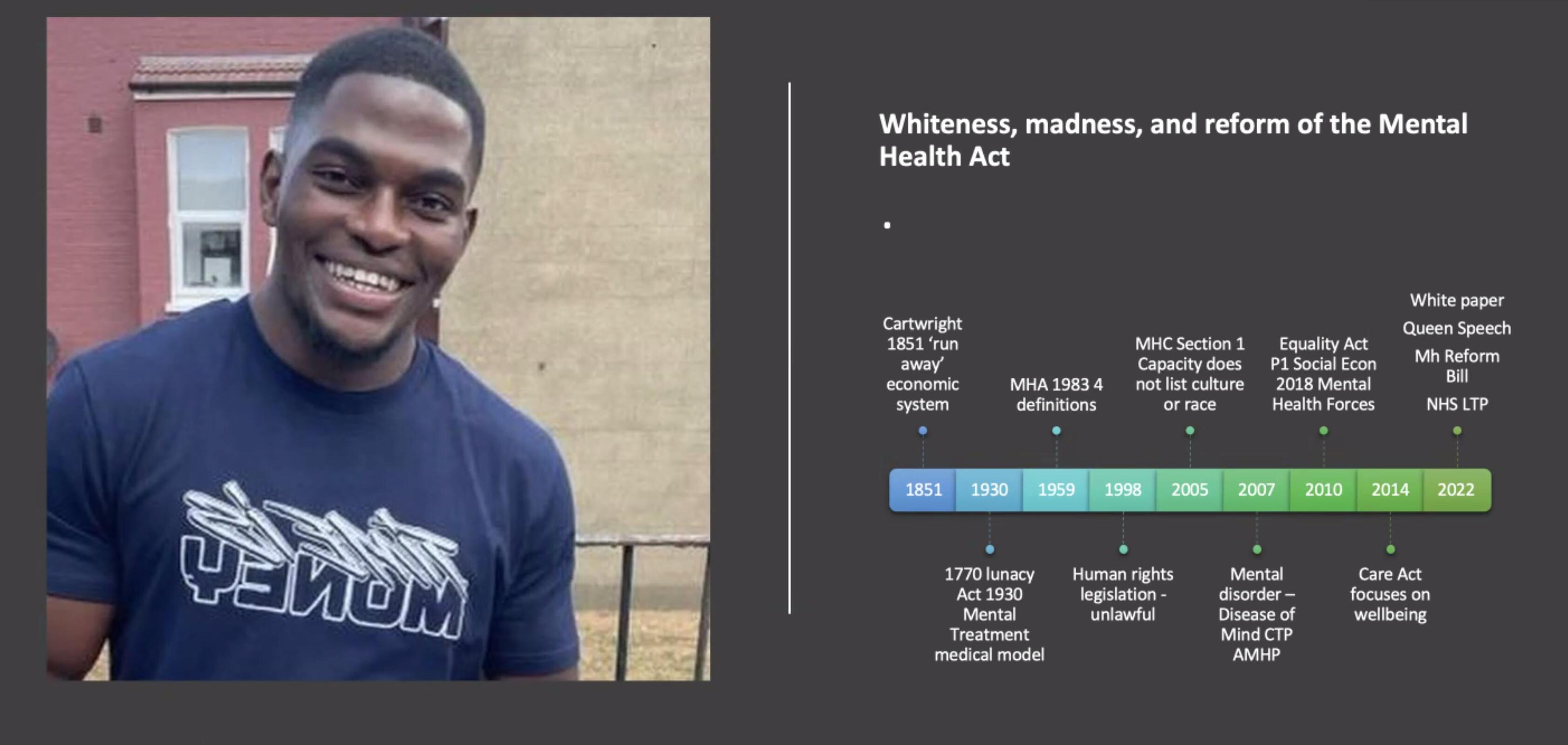
Colin explained that he was sectioned schizophrenia within Maudsley many years ago, but what he was really concerned about was the whiteness within the theoretical and diagnostic framework was leading to historically the over representation of particular groups.
This led Colin to do an analysis looking at the start of something called cartwright 1851, which is the first diagnosis of race, which is when the black person ran away with slavery, they were diagnosed with, with depomania, and if you do the travel on the lunacy Act, at the mental health Act to the white paper Act to the White Paper review, Colin mentioned that we still got an over representation or of communities in the mental health system.
Colin wanted to understand what was whiteness, what why was whiteness, such a pervasive, intrusive and powerful intervention is in terms over representation.
Colin stated that some of it can be located in the history of theories of psychology and psychiatry that perpetuate eugenic theories about the black body and the black mind. And these theories emerged in the period of slavery, when there was a perpetuation of a division between what was whiteness as superior, and blackness as inferior. And these are some of the writers from Cartwright perpetuate his idea. Colin mentioned that even Henry Maudsley who ran the Maudsley had perpetual eugenic ideas about race.
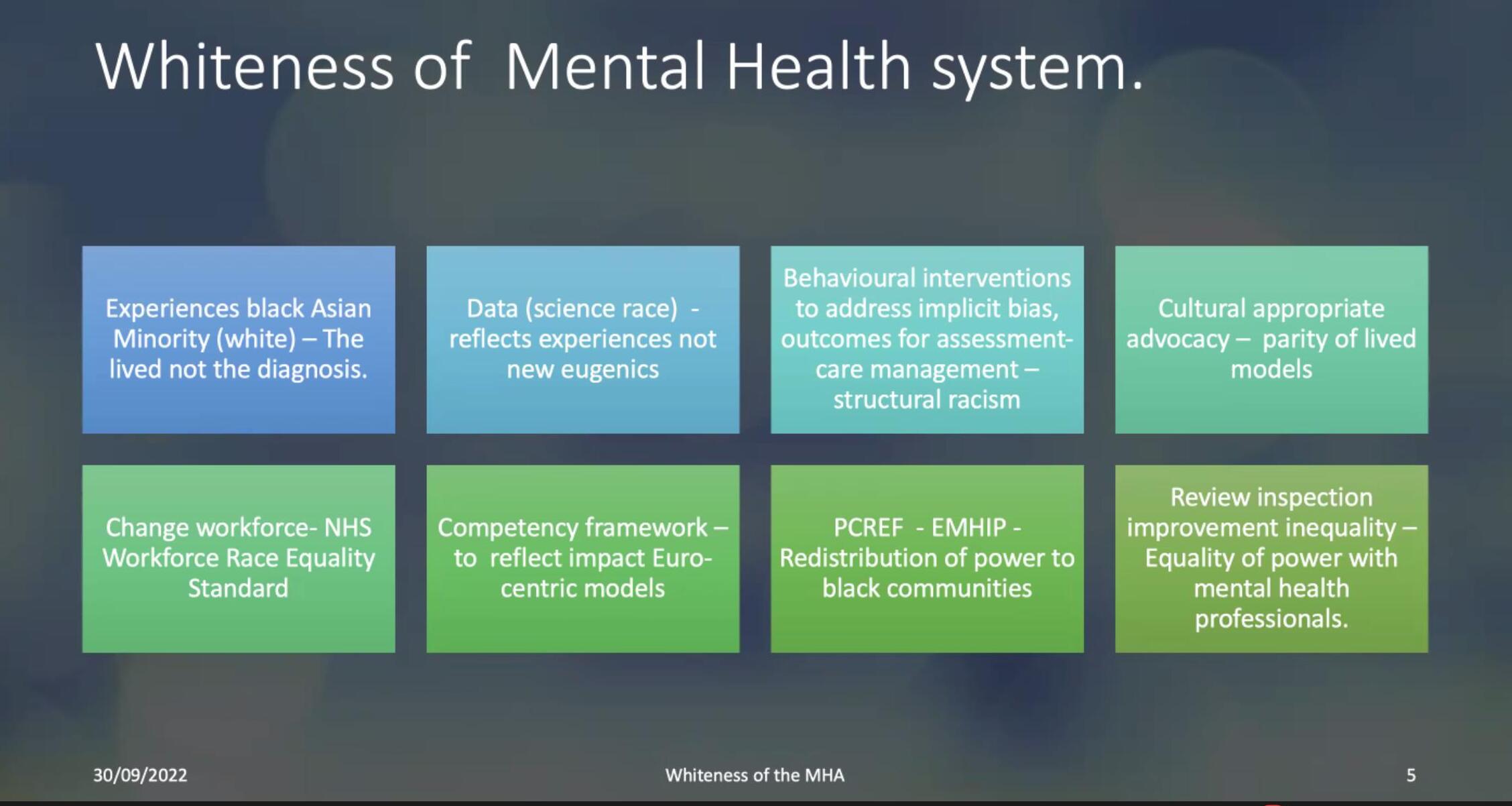
Colin was really concerned about what the outcome this lead into in terms of particular types of whiteness, and the outcomes for diverse communities over the last 400 years, but particularly where we are with the activism for the PCREF (Patient Carer Race Equality Framework) and other campaigning groups.
So Colin began to analyze two diagnostic frameworks in terms of why they were leading to these race diverse outcomes, DSM-5, and also ICD-10. Colin mentions a book where whiteness contributes to the legalization of race as a diagnostic framework.
This leads to a problems with ideas that black people are much more naturally disordered, and what’s more psychotic. Colin felt that as activists, instead of trying to change the diagnostic framework, we should try to improve the system rather than dismantle it. THe main concern he was looking at, was community treatment orders.
And the data has continued to show that a particular groups are over represented are usually black Caribbean men, South Asian patients, women, but the biggest concern for him was why is it in 2007, when they introduced something called Community Treatment orders that 92% of them are used in relation to black men. And why is it with restraints show 75% of them have been used in relation to men. So Colin wrote a paper and it was really a plea for the abolition of community treatment order which he interpreted as a new type of slavery in mental health care and needed to be changed.
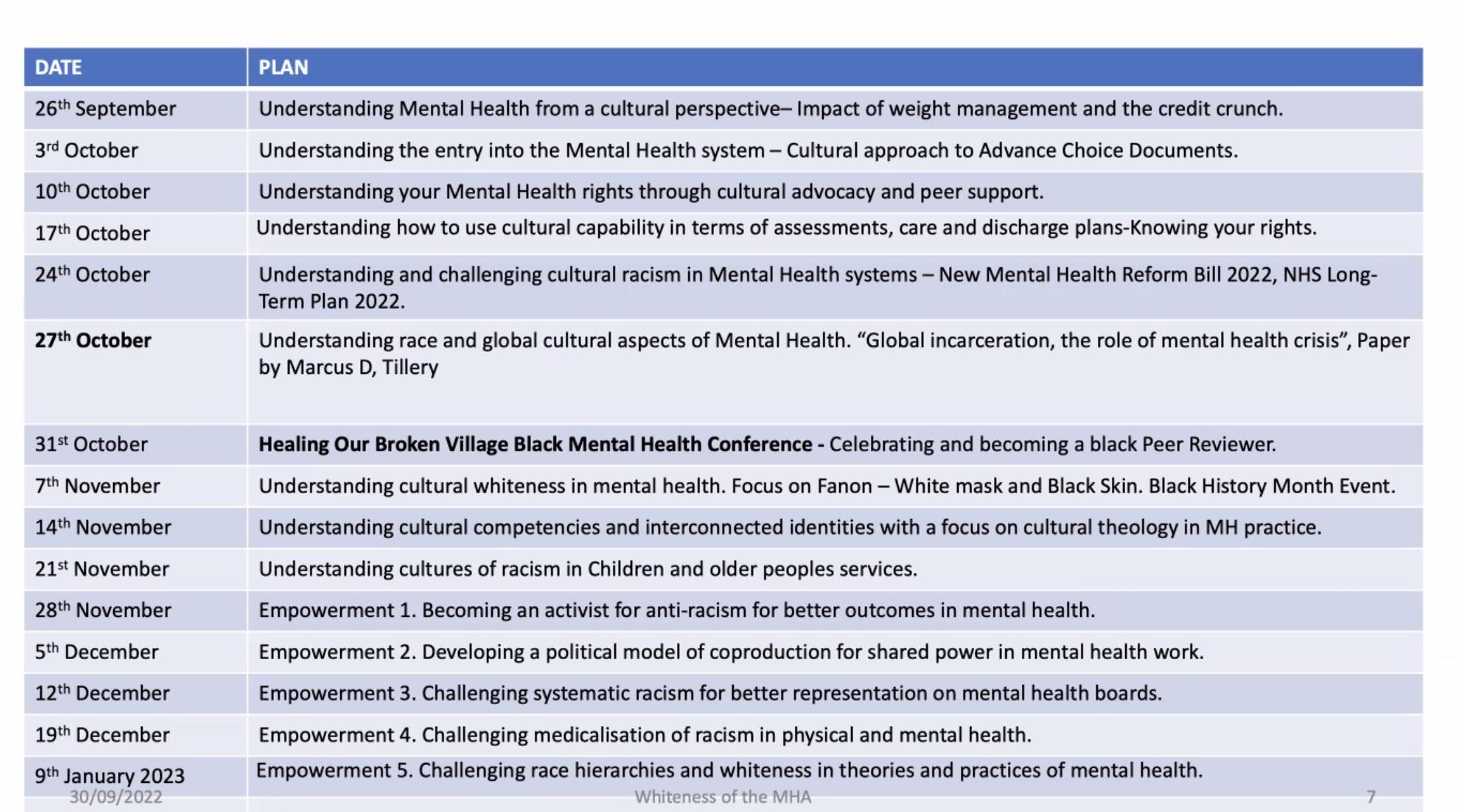
Colin spoke about the importance of being an activist, but also allowing lived experienced from the community to be involved in training and raising the importance mental health in the communities. Colin mentioned we all have something to contribute and if MH systems and beyond including schools, housing and communities services do not include minority lived experience then it hurts the community as a whole.
Louise Goff presents on a culturally-tailored diabetes self-management programme for adults of African & Caribbean heritage
Louise started training as a dietitian about 25 years ago, and then she went straight into a research career all focused around type-2 diabetes. This was on how nutrition and food affects diabetes, how it can prevent diabetes, how it can treat diabetes, She has been doing that for about 25 years now. However through her education, she was well aware that rates of diabetes were were significantly higher in people from African and Caribbean backgrounds, as well as in other minority ethnic backgrounds in the UK.
She then became really aware of contradictory messages from her professional colleagues compared to her own family and my social network. The messages that she had from her professional colleagues and network was that, people weren’t showing up for their diabetes appointments, and therefore, they didn’t care about their diabetes. This was particularly common in people of African or Caribbean heritage. And so there was this perception that diabetes wasn’t thought to be serious and wasn’t cared about. Speaking to her friends and family, particularly people who had diabetes, were so fearful of their diabetes, and so worried about their diabetes, and really wanted information about how to improve diabetes, how to avoid diabetes.
So that really led to her wanting to focus her research career more towards understanding that situation and understanding on what is going on in the health system. And what is going on in the communities. She has been using her research platform to try and unpick and work towards trying to improve that situation really. A while back she received some research funding to develop diabetes self management program specifically tailored to the needs of adults from African and Caribbean backgrounds
The project has the following skills
• Group-based • 7 sessions of 2 hours – 1-hr educational discussion & 1-hrexercise class • Delivered weekly • Delivered using video conferencing • Dietitian & community facilitators
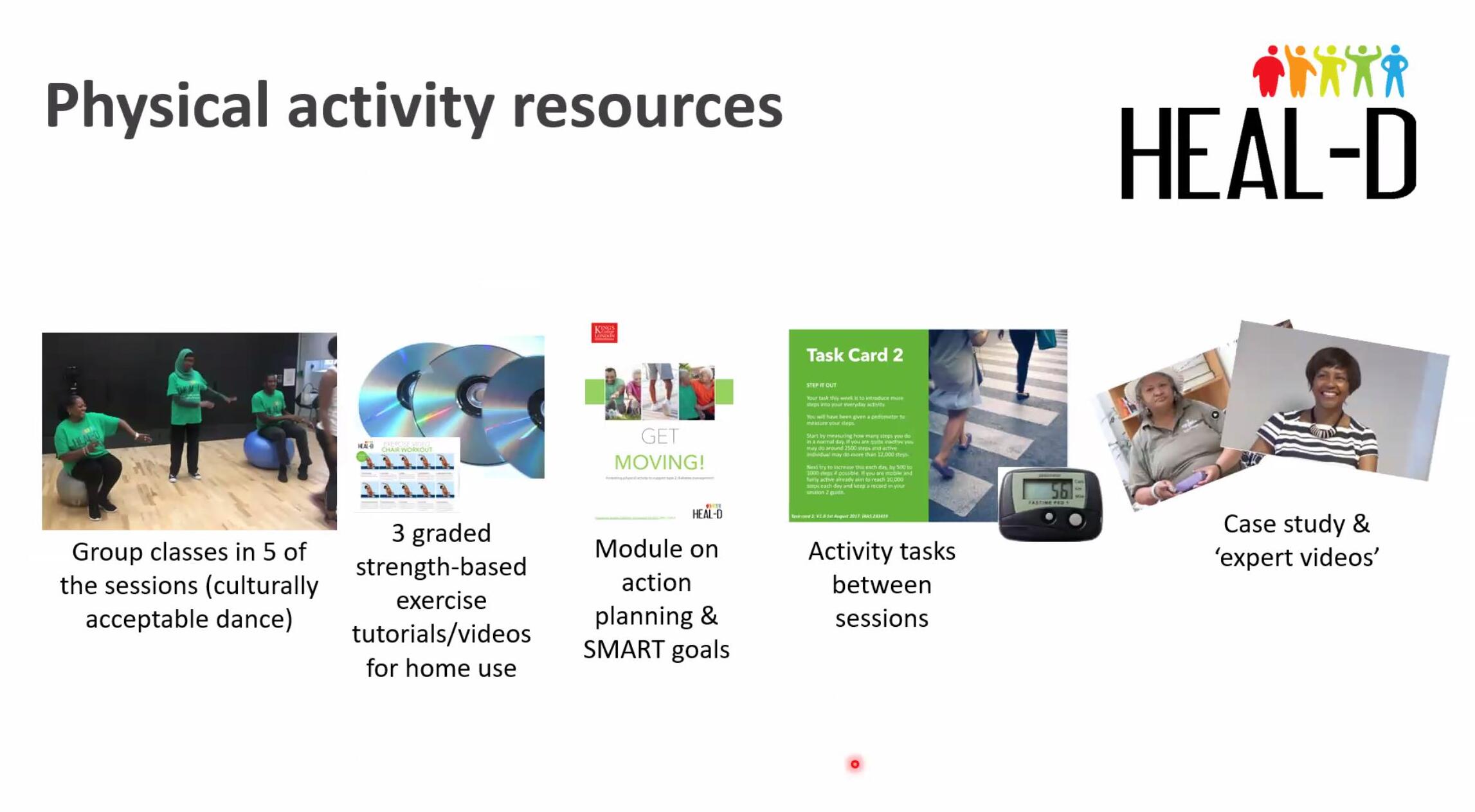
The program is called healthy eating and active lifestyles for diabetes, or abbreviated down to heal D, but it’s a self management program that’s been developed to help people who are living with type-2 diabetes, to really understand what they need to do in their self management. In terms of diet and physical activity and other lifestyle components to improve the management of diabetes, all the while specifically tailored to African and Caribbean culture.
The program is called healthy eating and active lifestyles for diabetes, or abbreviated down to heal D, but it’s a self management program that’s been developed to help people who are living with type-2 diabetes, to really understand what they need to do in their self management. In terms of diet and physical activity and other lifestyle components to improve the management of diabetes, all the while specifically tailored to African and Caribbean culture.
Louise stated that this is about cultural health beliefs, cultural foods, cultural practices around food and physical activity and body weight. And all of the things that we know about medications and all of the things that we know that are related to diabetes management.
Louise continued she is actually following on from the really important messages that Colin was just sharing with us. when she went about developing this program, she knew that it was the people with the lived experience who were the experts through their lived experience that really needed to lead this project to understand what was needed in a program that would really support people.
So all of this work was done using a sort of community partnership approach, whereby they engaged with our communities, and this was conducted in southeast London.
Welcome to a quick update from one of my carer groups. This one is from the August gathering of the online Ethnic BAME mental health carer forum. A group that focuses on ethnic mental health carers, diversity, race and mental health. I am being a bit naughty since I have not done an update on my groups for some months (busy working on a few things as usual).
We were lucky to have the following speakers attend for August 2022
Dr Karen Jutlla (Dementia Lead for the Institute of Health at the University of Wolverhampton) on Race and Dementia
Faith Nyandoro (Senior Lecturer) – impact of culturally and personally tailored music and singing interventions
Dr Sheila Hardy (GP, Carer and Primary Care Mental Health Trainer) – Parity of Esteem
Melanie Crew (Senior Policy and Research Officer at Carers UK) – Carers UK campaign updates
Dr Karen Jutlla presents to the group
Dr Karen started out by stating what her current role is being the dementia lead at the University of Wolverhampton. She talked about her research interests which has been on going for 15 years looking at dementia care and ethnic minorities, and what research she can do to improve care. The research then feeds into her teaching. This is where she feels responsible for overseeing all the dementia education on the courses she teaches. Dr Karen mentioned lot of her work is about supporting services, healthcare workers and policy makers to make sure that their services are culturally inclusive.
Karen then pointed out that she invited her PhD students Faith along to the ethnic MH carer forum, because she thought we would be interested in the work that she’s doing. Plus it would be a fabulous opportunity for Faith to get our feedback. This is because the group is seen as people with experts by experience, and Faith is looking at music therapy and the African Caribbean community for people living with dementia and what the benefits of such a creative therapy can be.
Faith Nyandoro presents on music therapy for dementia project
It was now Faith’s turn to present as she mentioned her supervisor is looking at her research interest in dementia and music therapy for people living with people living in the Afro Caribbean community.
Faith pointed out that it is a qualitative study. And the topic is to explore “the impact of culturally and personally tailored Music”. Plus also seeing individual the health and well-being of people living with dementia from black, African Caribbean background.
The group started to ask a few questions on what it means, where Faith explained that they where looking at different types of music in which she also listened to from the Afro Caribbean community, but also Africans include music such as Calypso, Afro beats, reggae and so on to see if that has an impact on the health and well being of people living with dementia.
Faith mentioned what Karen was talking about, in that there’s been different interventions to manage Dementia, and some of the interventions that have come up have been political interventions and medical interventions, using drugs available to treat dementia. There also have been some non pharmacological interventions using therapies that being reality orientations and validation, CBT, and so on. Faith stated that unfortunately pharmacological interventions although good, can come with side effects. So with this, the government really pressing on to looking at non-pharmacological interventions. These interventions may not really need the use of drugs. It can improve the health and well being of people living in the moment with dementia.
Faith continued by stating that few black Caribbean people have access to these non pharmacological interventions. So a critical aspect of supporting people with dementia, particularly people from BME communities is by developing interventions that are meaningful and culturally sensitive. And so in terms of music, which is her area of interest, you can find that the interventions that are out there, should be specifically tailored for people. Just as it is for Caucasian people.
Faith then talked about the different types of music interventions that are out there and what the research has a found out, so researchers suggest that people who engage in arts and health problems are at lower risk of dying and are more likely to report good health. This is because the role of art and music in supporting the patient well-being is increased and being recognised.
The way Faith will work on her research is discussing with participants about their memories, thoughts and feelings and about the music. And this will take about 20 minutes. At the end of the nine weeks. She will then carry out that same assessment that she spoke about with the group earlier. She wants to look at the dementia mood and the quality of life. Where Faith will measure the differences.
Faith then arranged a quick workshop session with the group focusing on her project.
Dr Sheila Hardy presents on Parity of Esteem
Dr Shelia was next to present, she was happy to see our group feedback on the previous presentation. Shelia mentioned her PhD was on physical health and mental illness, where she was trying to show how important it is to check physical health in primary care. Most of her research was about the impact of training the trainers, training nurses and on the health of people with severe mental illness.
Shelia also spoke about her own caring duties as she is caring for dementia. It was tricky for Shelia to present due to her caring role, but we were appreiciative that she engaged with the ethnic carer group.
There is high interest on why people with severe mental illness (SMI) are more likely to have the following, which Dr Shelia presented on:
Why those with SMI’s Die prematurely
Have a preventable condition – respiratory disease, sexually transmitted infection, sexual dysfunction, obstetric complications, osteoporosis, cancer, dental problems, metabolic disease, diabetes or pre-diabetes, cardiovascular disease, obesity, hypertension, and raised cholesterol
Lead unhealthy lifestyles – smoke, eat a poor diet, have low levels of exercise, have a high alcohol intake, misuse drugs, engage in unsafe sex
Experience diagnostic overshadowing
Be prescribed medication which may have a negative effect on physical health, e.g. antipsychotic
Live in poverty
Since this forum is an ethnic minority carer forum. Dr Shelia spoke on the following regarding how SMI’s impacted on ethnic minority groups.
In England, there are health inequalities between ethnic minority and white groups, * and between different ethnic minority groups
Access to primary care health services is equitable for ethnic minority groups, but less consistent across other health services
People from ethnic minority groups are more likely to report being in poorer health and to report poorer experiences of using health services than their white counterparts
People from the Gypsy or Irish Traveller, Bangladeshi and Pakistani communities have the poorest health outcomes across a range of indicators
Compared with the white population, disability-free life expectancy is estimated to be lower among several ethnic minority groups
Rates of infant and maternal mortality, cardiovascular disease (CVD) and diabetes are higher among Black and South Asian groups
Mortality from cancer, and dementia and Alzheimer’s disease, is highest among white groups
Half way through Dr Shelia’s presentation there were a few questions where Shelia explained Why people with mental illness have poor physical health
Next to present and engage with our ethnic carer group was Melanie who is the Senior Research Officer from Carers UK. She Thanked us for giving her the opportunity to present Carers UK updates.
Carers UK is a national carer’s charity fighing and supporting millions of carers for the UK. They campaign heavily for Carer’s rights and carer awareness.
Melanie spoke on a few updates on what Carers UK have been working on. She mentioned that they have their annual survey running at the moment, which is called “state of caring”. This is where they asked carers quite a lot of questions about their experiences. So it covers issues like “cost of living”, “delays with accessing health care” and other recurring themes like mental health, employment and technology.
Melanie mentioned that it’s really important that they know what carers are struggling with, otherwise they can’t claim to campaign on behalf of people fighting to provide care. Surveys are an important tool because if they are not listening to carers, and asking them what they want or what they need. Then carers will continue to struggle.
Even at the time, they have not had loads of responses, especially responses from ethnic minority carers. So Carers UK are trying to contact lots of different organisations who work with ethnic minority carers, and also try to share the survey with them.
Melanie raised the importance that it would be really great if any of us have the time to go though the survey, as the charity feel that the responses are really important to them.
Melanie then mentioned anothe project that Carers UK are working on called “Making carers count”. This is done in partnership with another national carers organisation called “Carers Trust”.
The project is looking at certain groups of carers that they know less about, so we kind of refer to them as underrepresented groups. This includes carers from ethnic minority backgrounds. So her role in that project is carrying out research which led to a published a research report about the experiences of ethnic minority carers during the pandemic.
Melanie updated on more research, ideas and campaigns from Carers UK, where members got the chance to ask questions and probe about projects. I appreciate Carers UK engaging with our ethnic mental health carers forum and look forward for more updates in the future.
Carers UK is working on a new campaign, if interested see the link below
Hello fellow unpaid carers. Kings College Institute of Psychiatry, Psychology and neuroscience are launching a new group. The groups will be facilitated by Madeleine Oakley who is the Senior Teaching Fellow in Mental Health Studies at Kings College London. Madeline also has experience of care as she is also a family carer of her young adult son who has autism, who has a learning disability and mental health problems.
Please see poster below and you can also contact Madeleine at madeleine.oakley@kcl.ac.uk
Hello fellow mental health carers. Have not blogged an update in a while regarding my carer forums. Probably due to being busy publishing my 3rd book on mental health carer poetry. More on that later. I have also been developing online courses aimed at mental health carers. I am now preparing to work on my 6th online course “caring for someone with a mental illness”.
Back to this blog update. This is an update from my monthly ethnic carer forum. A forum for those from ethnic backgrounds caring for someone with mental illness.
Speakers
Rev Dr Cameron Langlands – Head of Pastoral & Spiritual Care at South London & Maudsley
Carl Nando – Amenity Care update
Rubbia Ali – Black families involvement in new elearning.
Rev Dr Cameron Langlands – Head of Pastoral & Spiritual Care at South London & Maudsley
Did you know I also facilitate the West London NHS trust ethnic carers peer group? We recently had the Head of Pastoral care visit and engage with carers from the black community.
So it was great to have Rev Dr Cameron Langlands attend and engage with our community group. Dr Cameron looks after the chaplaincy service at South London and Maudsley. Dr Cameron takes care of service users who are inpatients and will often see people in community, but only if they are tied into the SLaM services. Dr Cameron would love to engage with more patients, but there are only three chaplains in the full time role. Plus they have four sites to cover, as well as some community settings.
They also have a part time Imam who works with them on a Tuesday. Plus a part time Deacon who works at ladywell unit over in Lewisham on Thursday.
Dr Cameron has been in the NHS now for just over 20 years in chaplaincy, and what they find particularly within mental health chaplaincy is that when people say they want a specific chaplain, often they don’t. Because they’re looking for is someone who is an appreciation as to where the patient is coming from. That would be who has the ability to sit and listen to them, especially on the difficult situation that they’re in. This is where the nursing staff are trained to do that, but unfortunately, they are often incredibly busy. So that allows those within the chaplaincy team to be able to augment the clinical team and do that.
The team are running a training program for transpersonal therapists who are in training. They focus on more spirituality based transpersonal side of things, and have to do 100 hours within psychiatric setting. So most of the work now has a chaplaincy volunteer as well. They can dovetail into the service. The other thing they do is that they can offer volunteers in the befriending service that run via the volunteer coordinator as well. So they tie in with people in community who have either been discharged from service but still want that link or are being looked after by their GP or their community mental health team.
Dr Cameron has also asked for a befriender in a new service that runs twice a year, the befriender service is now online, the service can also be accessed in person. The course is ran over a 10 week period and it covers all aspects of mental health.
Dr Cameron mentioned that In South London, they have managed to secure funding from the from NHS England, and have started a bereaved suicide service, which is aimed at those who have been bereaved by suicide, or those who have been witnesses to suicide or attempted suicide. In that team, they have got a bereavement manager, two support workers and a couple of counselors, and they are the only service in the UK to have two community champions employed in that service reaching out to people on non faith based basis.
QUESTIONS FROM CARERS
Can there be a conflict on spiritual conversion regarding a patient’s faith?
How is spirituality being used as a way to be inclusive and, and bring out these outcomes to be more favorable towards those ethnic communities using those services?
Is there a spiritual and pastoral policy? Is it inclusive of families and carers?
Carl Nando updates on AmenityCare update
Next was Carl Nando’s turn to update the carer forum on his project Amenity care, which looks to support carers with a package for the person suffering ill health. Carl talked about how Mental health is one of the key pillars for Amenity Care and its clients.
Carl talked about the struggles he had in the past supporting his parents and the racism they experienced. Carl feels this is an issue for today. Carl mentioned how tough it was to provide that care and how it inspired him to set up his own business that focuses on advocacy and support for those suffering ill health.
Carl thinks it is very important to have more black own mental health businesses tailored to the community, but there are struggles and getting access to business support is difficult. There were lots of questions from carer members on how Carl can raise the awareness of black mental health and at the same time run a business.
Rubbia Ali presents on Black families involvement in new elearning project
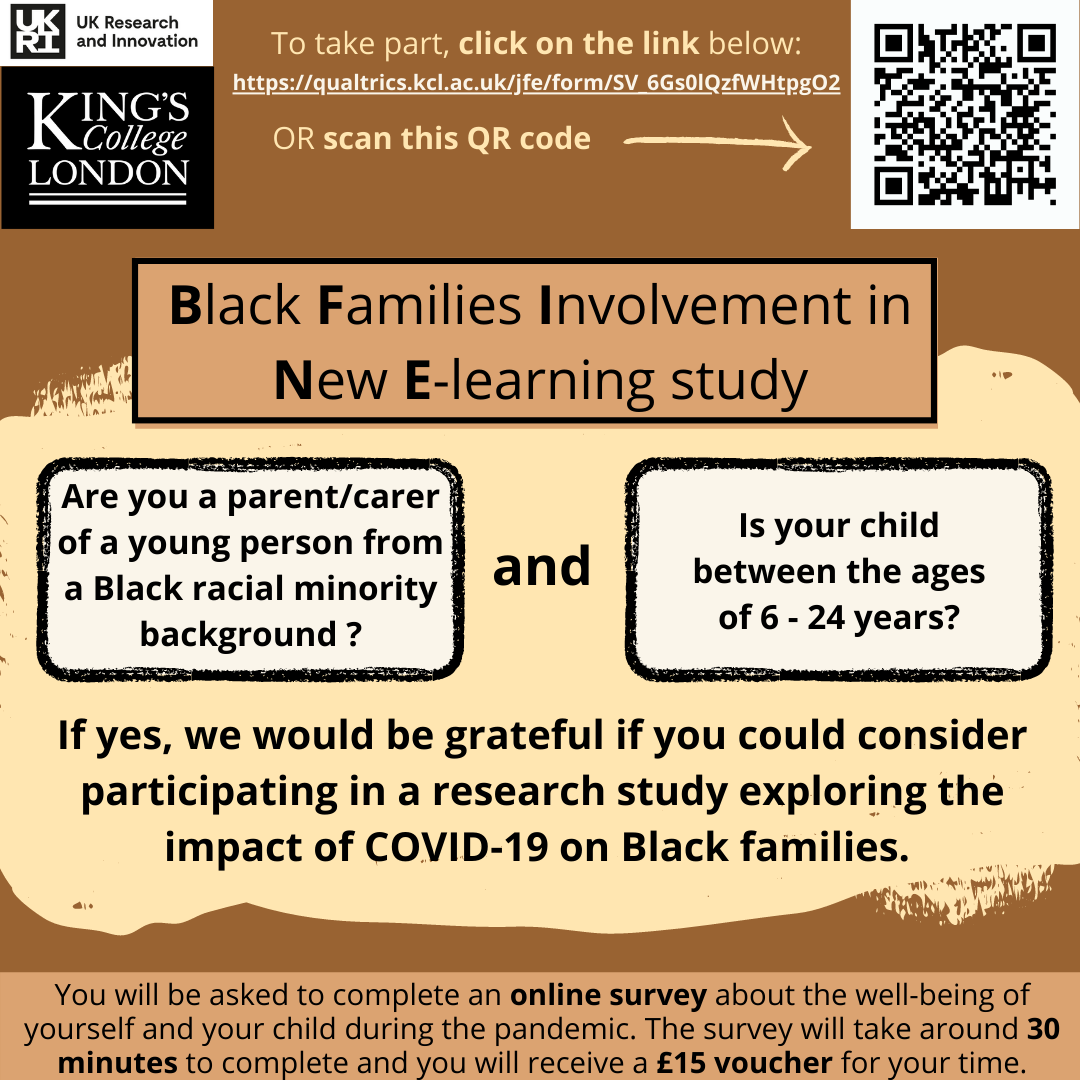
Lastly it was Rubbia’s turn to present to the ethnic carers group. She is a research worker at King’s College London. She spoke about her current study where they just received funding and they are now working on a project tailored to black families. It is called Black families involvement in E-learning. This is being led by two psychologists at King’s College London, by Dr Valentina Cardi and Dr Juliana Onwumere.
The study has two aims. Firstly, to understand the experiences and impact of the COVID-19 pandemic on the carers of children and young people (6-24 years) from Black minority ethnic communities in the UK. The second aim is to explore with carers of children and young people from Black minority ethnic communities, the type of information they would find helpful to include in an online course that aims to offer carers skills to support children and young people with their mental health and wellbeing. The Be FINE study will employ a mixed methods design, using both online surveys and individual and group-based interviews.
The study has two parts; an online survey and focus groups. To participate, individuals have to be parents or carer of a young person from a Black racial minority and the child has to be aged between 6 – 24 years. We then ask that the participant fills out the online survey, this should take around half an hour. The participant will receive £15 amazon voucher for participating. Following this, the participant will have the chance to also sign up to the focus groups.
This concludes the brief update for April – phew! I am so far behind!!





 A Caring Mind