Tag Archives: family

Seeing the whole family: reflections on Sussex’s Psychosocial Interventions for Nurses conference

By Matthew McKenzie – Carer Lived experienced member of Royal College of Nursing

On Friday 23 October 2026, I joined Sussex Partnership NHS Foundation Trust’s Psychosocial Interventions for Nurses conference at the University of Sussex in Falmer.
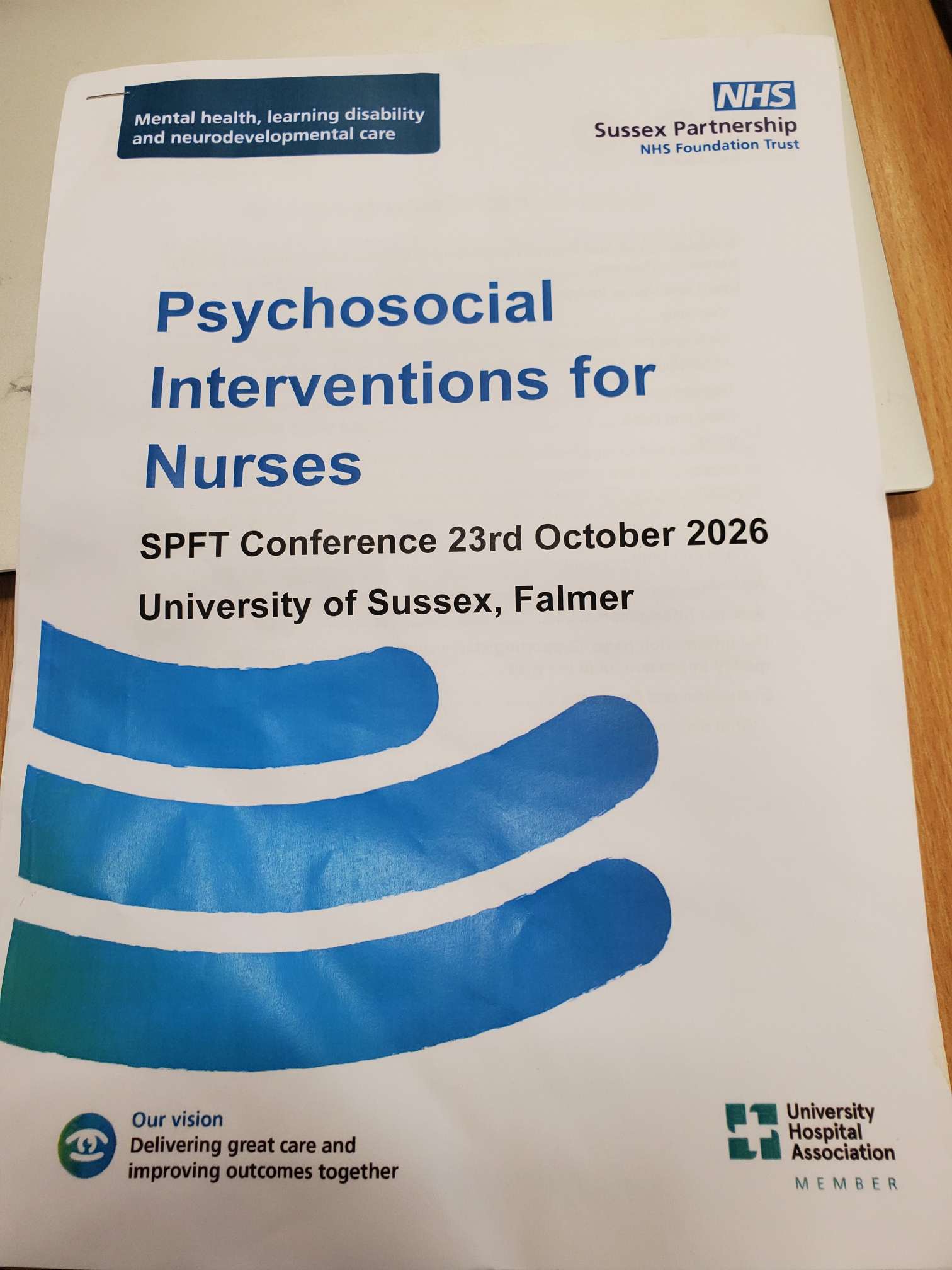
The day brought together mental health nurses, educators and people with lived experience to explore psychosocial interventions, often shortened to PSI, and their place in everyday nursing practice.

I contributed through poetry, a conversation about lived experience and an afternoon carers and families workshop. As a carer activist, I wanted to bring attention to the relatives and friends whose knowledge, concerns and wellbeing can become overlooked within mental health services.

Across the day, one theme kept returning: the importance of relationships. What does it mean to stay alongside someone in distress? How do we build trust with families? And how can staff protect that work when services face competing pressures?

Opening with poetry and lived experience

The conference began with poems and reflections from Royal College of Nursing Lived Exprience group including myelf.

Hannah, the Royal College of Nursing’s Lead Nurse for Lived Experience, shared a poem about moving from being a nurse to receiving mental health care, and eventually returning to nursing.

Her words explored the loss of identity, fear and vulnerability that can accompany becoming a patient. They also recognised the nurses who continued trying to connect with her, including through small, ordinary acts of kindness.

That opening placed lived experience at the centre of the conference. Before discussing approaches and training, we heard about what receiving care can feel like.

Another lived experienced poem explored his personal history and experiences of treatment at the Cassel Hospital. His account highlighted the importance of community, boundaries, everyday activities and relationships with nurses.

Together, these contributions reminded us that care is experienced through how people listen, respond and remain alongside someone.

“The Carer They Didn’t See”

In my opening contribution, I explained that I did not immediately recognise myself as a carer. I was my mother’s son, trying to support someone I loved.

It took time before someone helped me recognise that caring role. Meanwhile, my own needs could easily slip into the background.

I shared my video poem, “The Carer They Didn’t See,” connecting that experience with the workshop planned for later in the day.
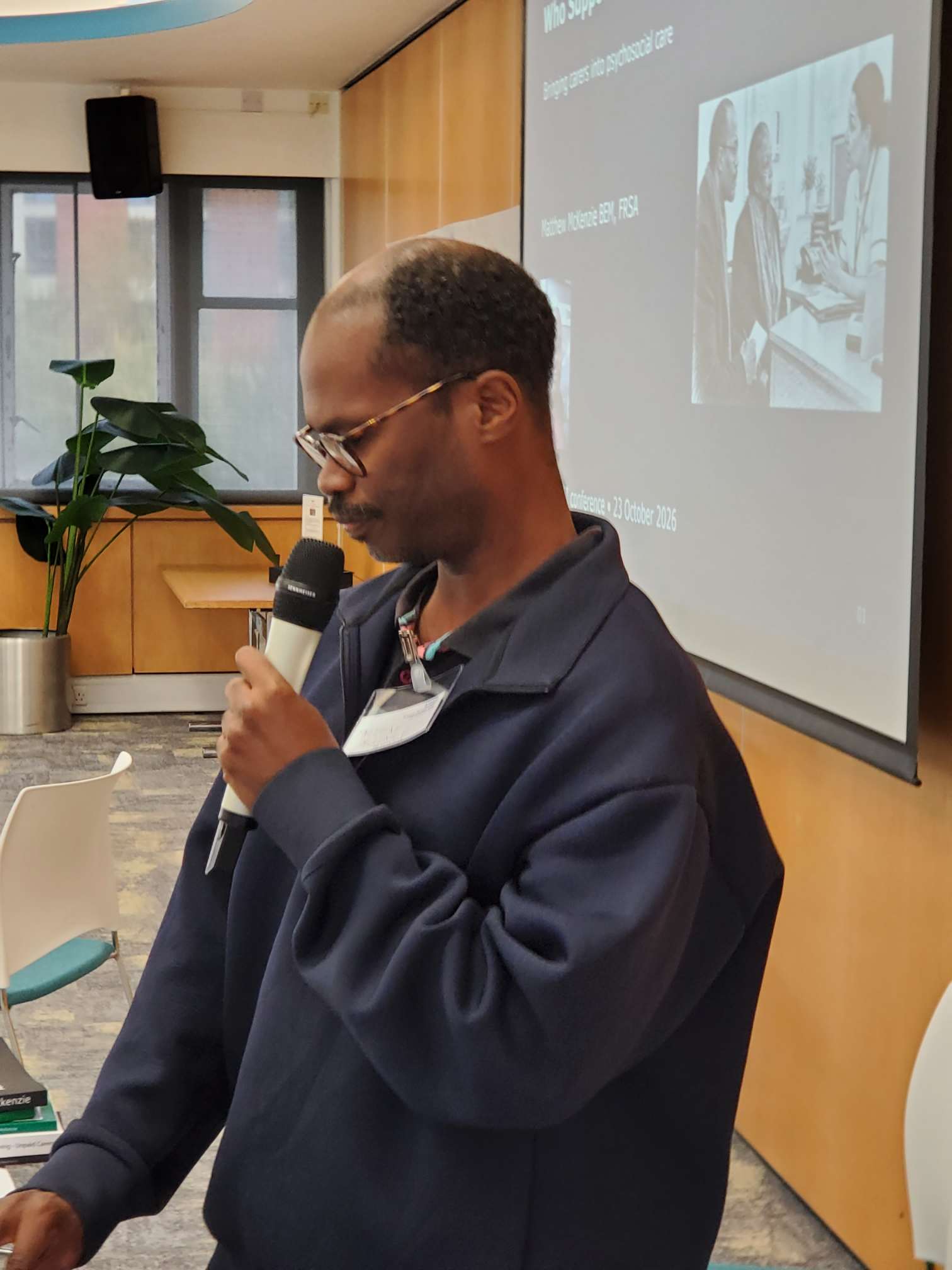
For me, poetry offers a way to communicate the emotional reality behind carer inclusion: being present, listening, remembering information and worrying about what happens next, while feeling that nobody has asked how you are managing.

Watch “The Carer They Didn’t See” here.

Hannah’s embroidery: finding a way through together

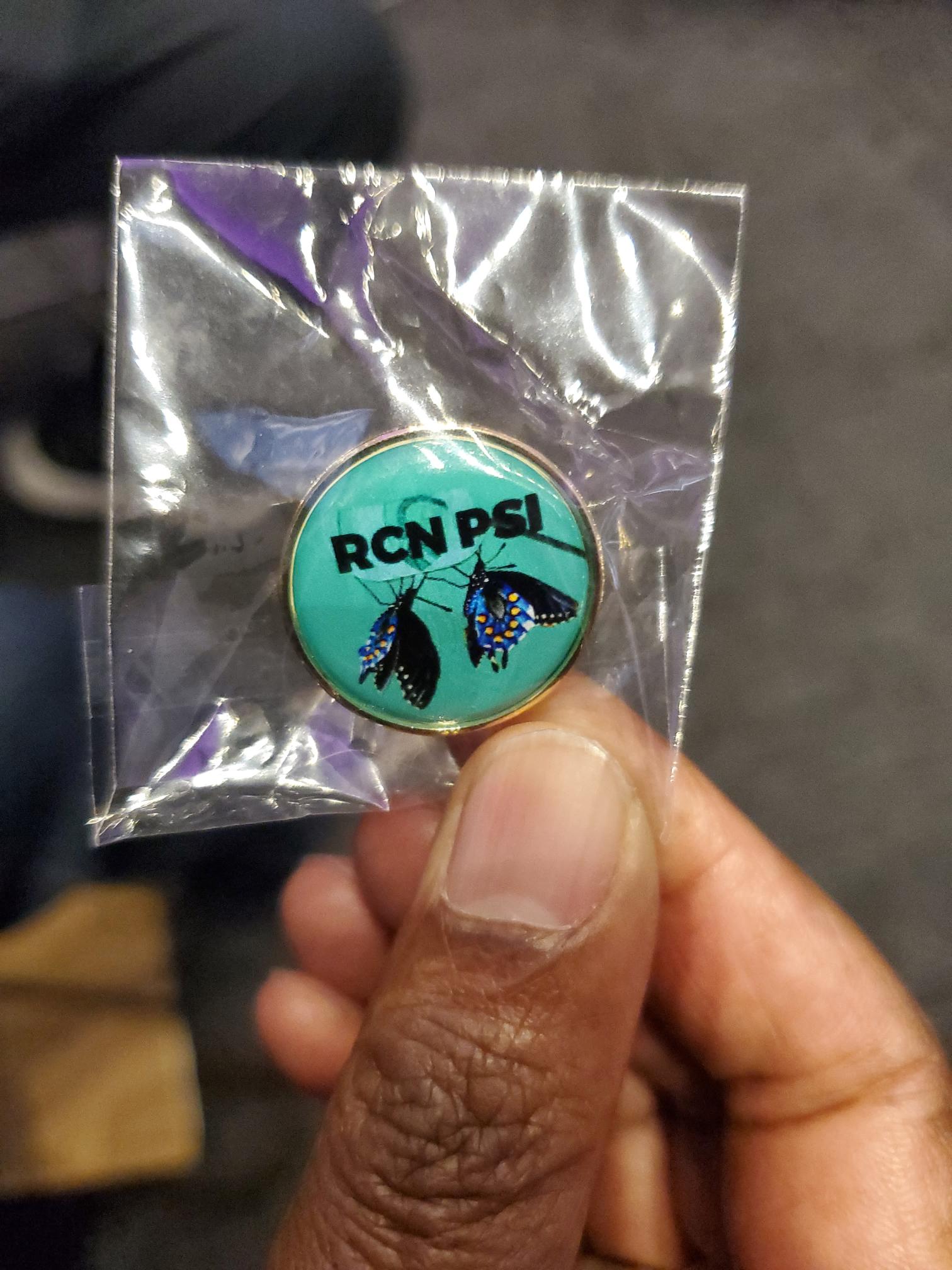
Hannah also explained the meaning behind her embroidered butterfly imagery, used in connection with the PSI programme.

She described recovery as a journey made through relationships, with each person needing space to find their own way. Her explanation connected creativity with identity, trust and the experience of being supported to become yourself.

This stayed with me because creative activity can provide opportunities for connection when words are difficult. Poetry, embroidery, drawing and other forms of expression can give people another way to communicate what matters to them.

Geoff Brennan: where the PSI programme came from

Geoff Brennan presented the session on the development of PSI, explaining that Cath Gamble was unable to attend because she was caring for her mother.

For a conference that included carers’ experiences, that was a reminder that caring responsibilities also sit within professional lives.

Geoff traced the programme’s roots to concerns in the 1990s about how mental health nurses were supported to work with people experiencing serious mental illness.
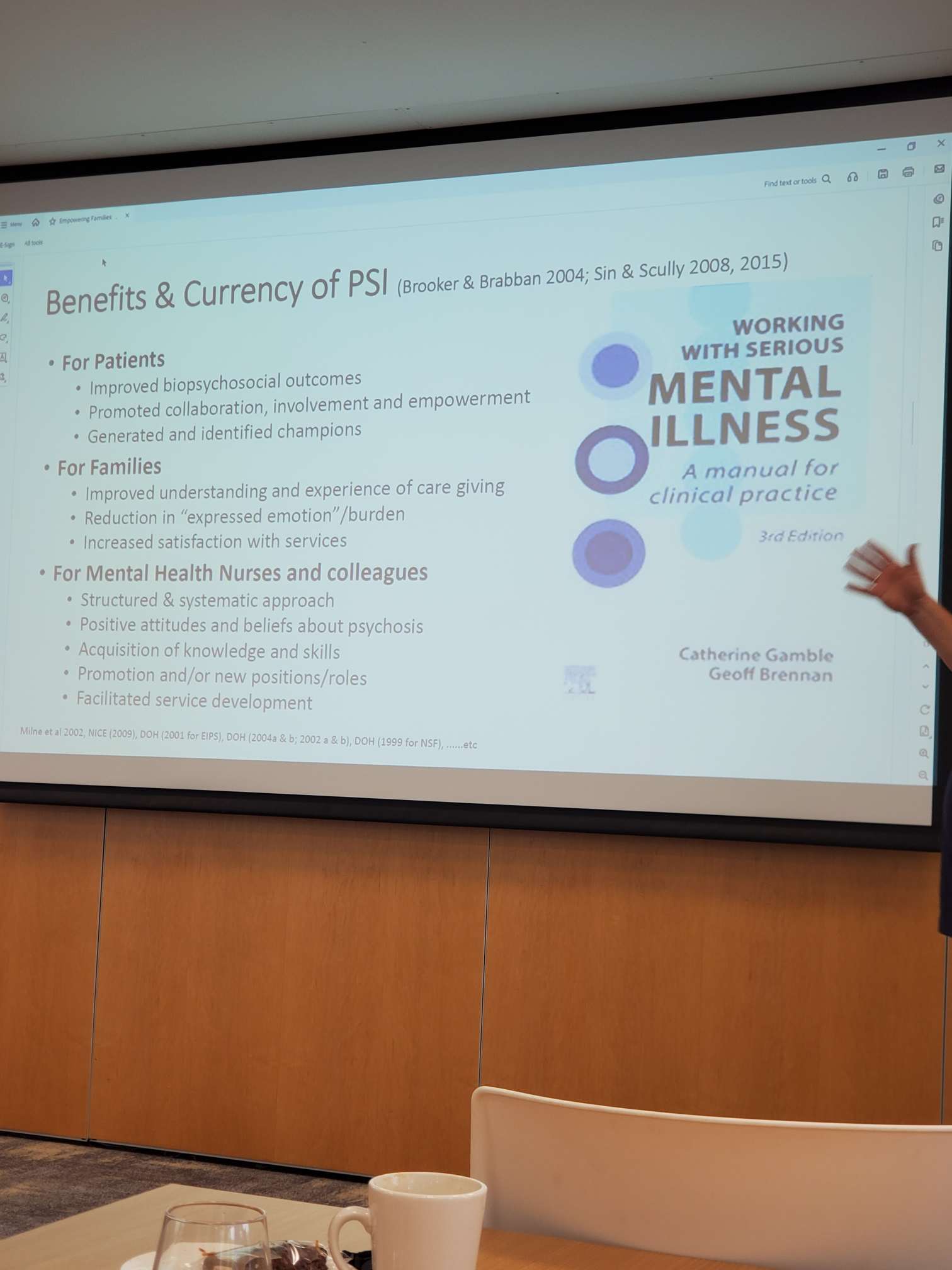
He described the development of the Thorn programme, including its emphasis on working with families and helping nurses develop practical therapeutic skills.

An important part of his message was that nurses need both skills and permission to use them. Training has limited value if staff return to environments where they lack time, supervision or encouragement to put their learning into practice.

He also reflected on the difficulty of sustaining progress when courses disappear or experienced practitioners move on. That helped explain the day’s emphasis on building a community of practice.

Protecting the therapeutic role of mental health nurses

The discussion included questions about what PSI adds to work already happening in services.

Some participants described established psychological and group-based approaches within Sussex. Others spoke about pressures that left them feeling increasingly occupied with risk assessment and tasks, with less room for meaningful connection.

Hannah brought this back to the experience of needing support at two o’clock in the morning. The mental health nurse is often the professional present at that moment.

Her point was powerful: nurses need confidence and support to respond to emotional distress, rather than feeling that every therapeutic conversation belongs elsewhere.

For me, this also matters to families. Carers need to know that someone can hear their concerns, help them make sense of a situation and respond with understanding.

Our conversation: what happens when carers are excluded?

During the morning conversation, I was asked what happens when a carer is overlooked or excluded.

I spoke about feeling unheard and outside the team, even while trying hard to support someone who is struggling.

Exclusion can leave carers uncertain about their role. Some withdraw because they feel their contribution is unwanted. Others keep pushing to be heard, often at a cost to their own wellbeing.

I connected this with the Triangle of Care: the person receiving support, their unpaid carer and professionals working in partnership.

The discussion also recognised that family involvement can be complicated. People may have different wishes, relationships may be strained, and relatives may fear being blamed.

That calls for thoughtful engagement. Sometimes a less formal conversation can provide a starting point for trust.

Hannah’s account: a nurse who did not give up

Hannah described the sustained support of a psychiatric nurse who worked alongside her over several years.

She explained that she had not initially been able to engage with psychological therapy. Her nurse helped her move towards a point where that became possible.

What stood out was his persistence. He kept returning, believed in her and continued trying to understand what she needed.

Her account showed the significance of work that may be difficult to capture in a short appointment or a checklist: building enough trust for someone to accept support.

The conversation also recognised the emotional demands of this work and the importance of supervision. Staff need opportunities to reflect on what they are holding and to receive support themselves.

Jim Turner: tracing the history of mental health nursing

Dr James “Jim” Turner led an interactive exploration of how mental health nursing had developed alongside changing psychological ideas, treatments and service structures.
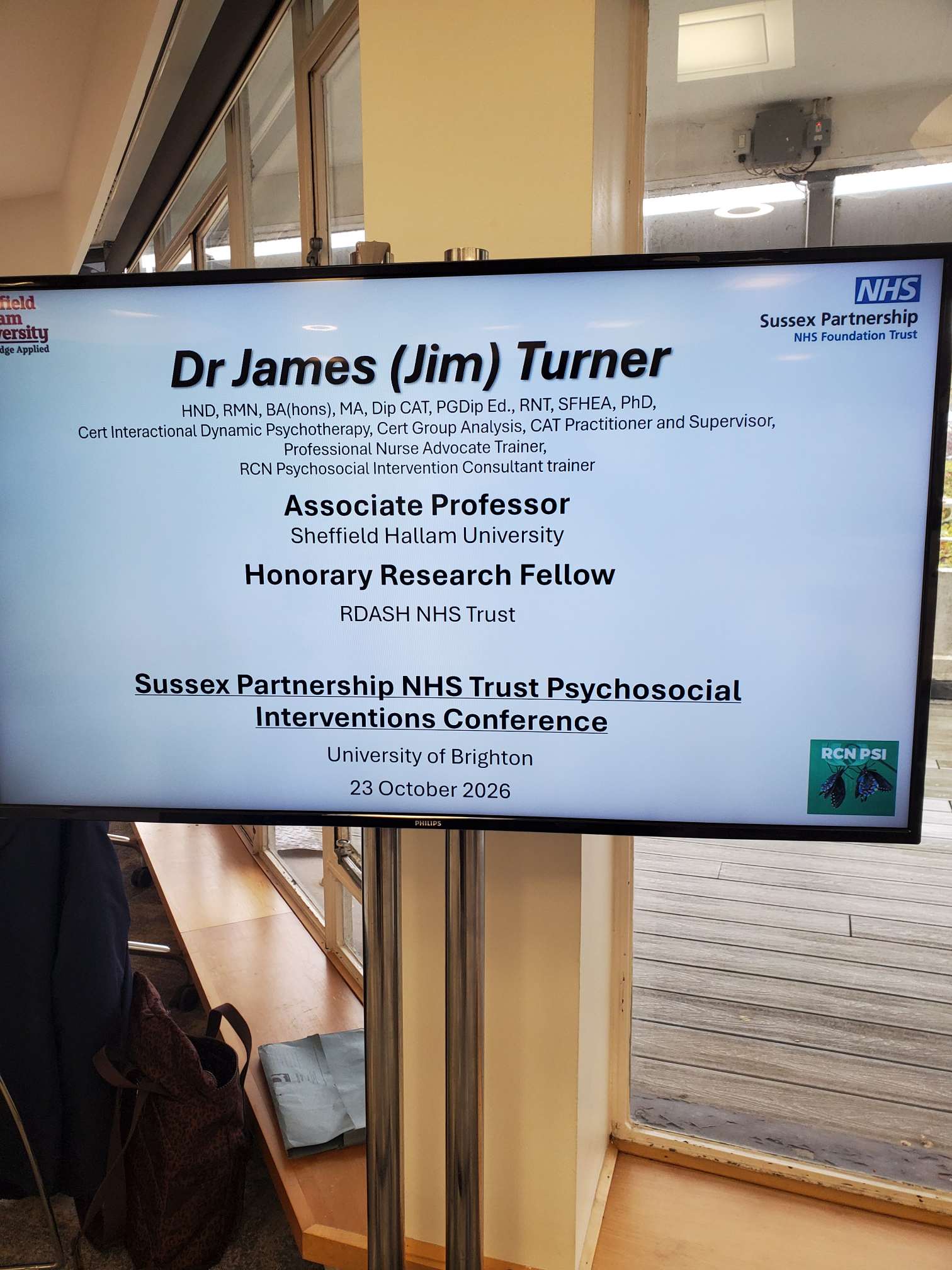
Although his programme slot was titled “Five Stages Intervention,” the recorded session included a much broader historical timeline.

Jim invited the room to think across roughly a century, beginning around the early twentieth century and moving towards contemporary practice. Participants contributed ideas as he connected different influences on the profession.

His central message was that psychosocial nursing has a history. It draws on generations of learning about distress, behaviour, relationships and the circumstances in which people live.

Beginning with an encounter, rather than a theory

Jim opened with an example from his early nursing career involving a person who was frightened by what he believed he could see outside.

He described going outside with him, exploring what was there and offering another interpretation. They did not arrive at the same explanation, but they were able to remain together and share a calmer moment.

Looking back, Jim recognised therapeutic elements within that encounter: listening, exploring someone’s understanding and gently considering another perspective.

For me, the significance was in his willingness to spend time with the person and take the fear seriously. The relationship made that exploration possible.

Psychological ideas and the understanding of relationships

Jim’s timeline considered the influence of psychoanalysis, including Freud and later thinkers concerned with relationships and emotional development.

He discussed ideas such as defence mechanisms, projection and the ways people respond to anxiety or difficult feelings.
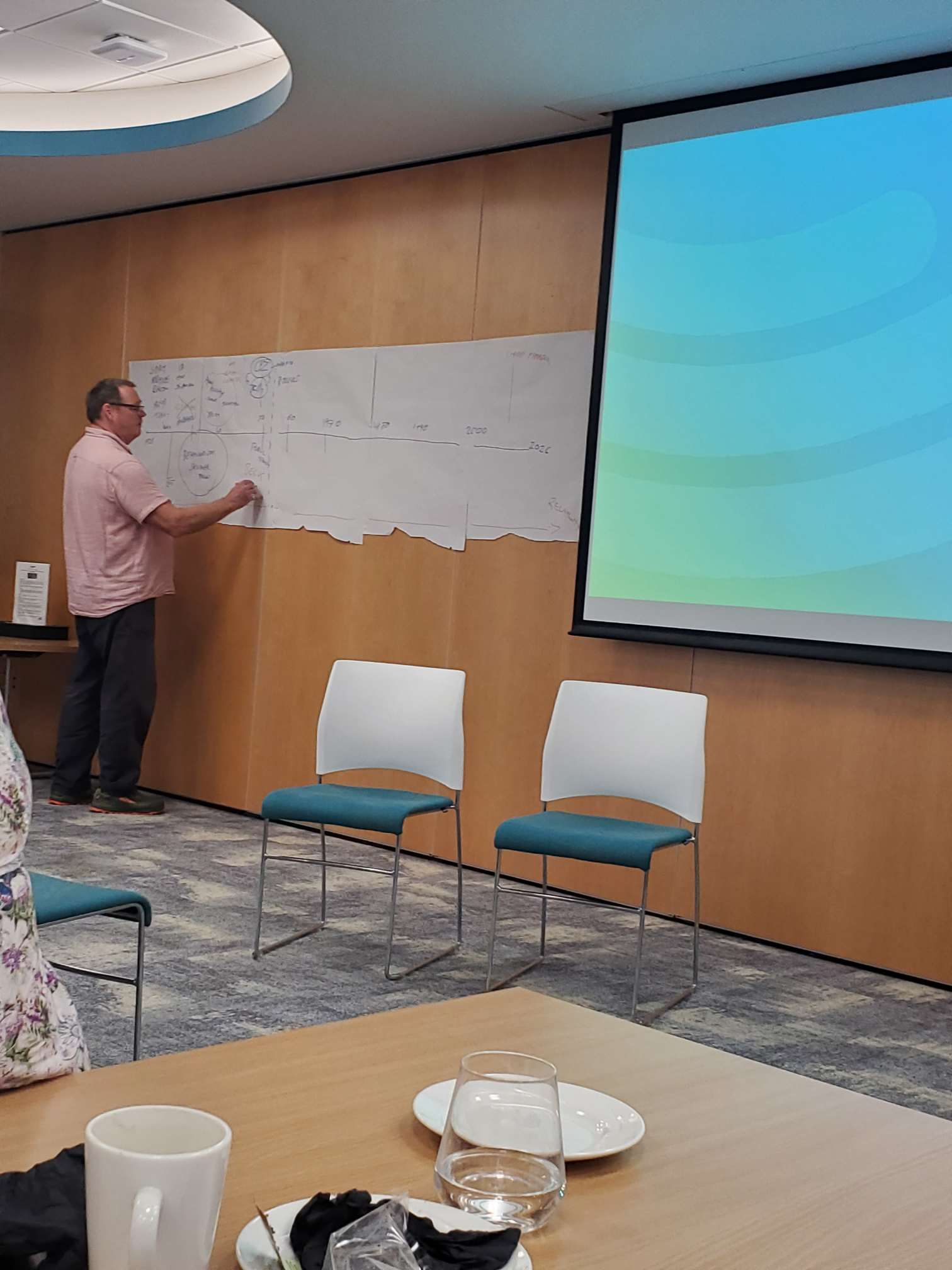
He approached these theories critically, questioning some of their assumptions while considering what they contributed to understanding human relationships.

A recurring theme was that people bring earlier experiences into present encounters. Trust, fear, closeness and rejection can affect how someone experiences support.

For nursing, Jim connected this with being curious about the person and working collaboratively, rather than assuming a professional interpretation must be the whole answer.

Behavioural approaches and group work

The discussion moved through the influence of behavioural approaches, including reinforcement and token economies.

Jim explored how these approaches helped nurses identify and describe particular therapeutic interventions.

He also referred to Annie Altschul and the importance of group work. His discussion connected groups with families, encouraging participants to think about how people relate to one another within both.

From my perspective, that connection mattered. Mental health difficulties affect relationships, and relationships can also become sources of support. Understanding the wider picture requires attention to the people around someone.

Medication and the changing responsibilities of nurses

Jim included the arrival of medicines such as chlorpromazine within his account of changes in mental health care.

He connected medication with nursing responsibilities around helping people understand treatment, discussing its effects and supporting them with difficulties they experience.

The conversation also touched on ECT and the tensions nurses can encounter when treatment, distress, consent and maintaining trust come together.

For me, this part raised the importance of honest communication. People receiving care and their families need opportunities to ask questions and explain their experiences.

Cognitive approaches and integrating knowledge

Jim went on to discuss cognitive and behavioural approaches, including CBT, and referred to Eric Berne’s Transactional Analysis.

He explored how different approaches contributed ways of understanding thoughts, feelings, behaviour and interactions.

A distinction he emphasised was between selecting an approach with a clear understanding of its purpose and trying different techniques without knowing why.

That linked his historical discussion directly to training and supervision. Nurses need opportunities to understand the approaches they use and reflect on how they fit the person and situation.

From institutions to community care

Another part of Jim’s timeline considered the movement away from large institutions towards community services.
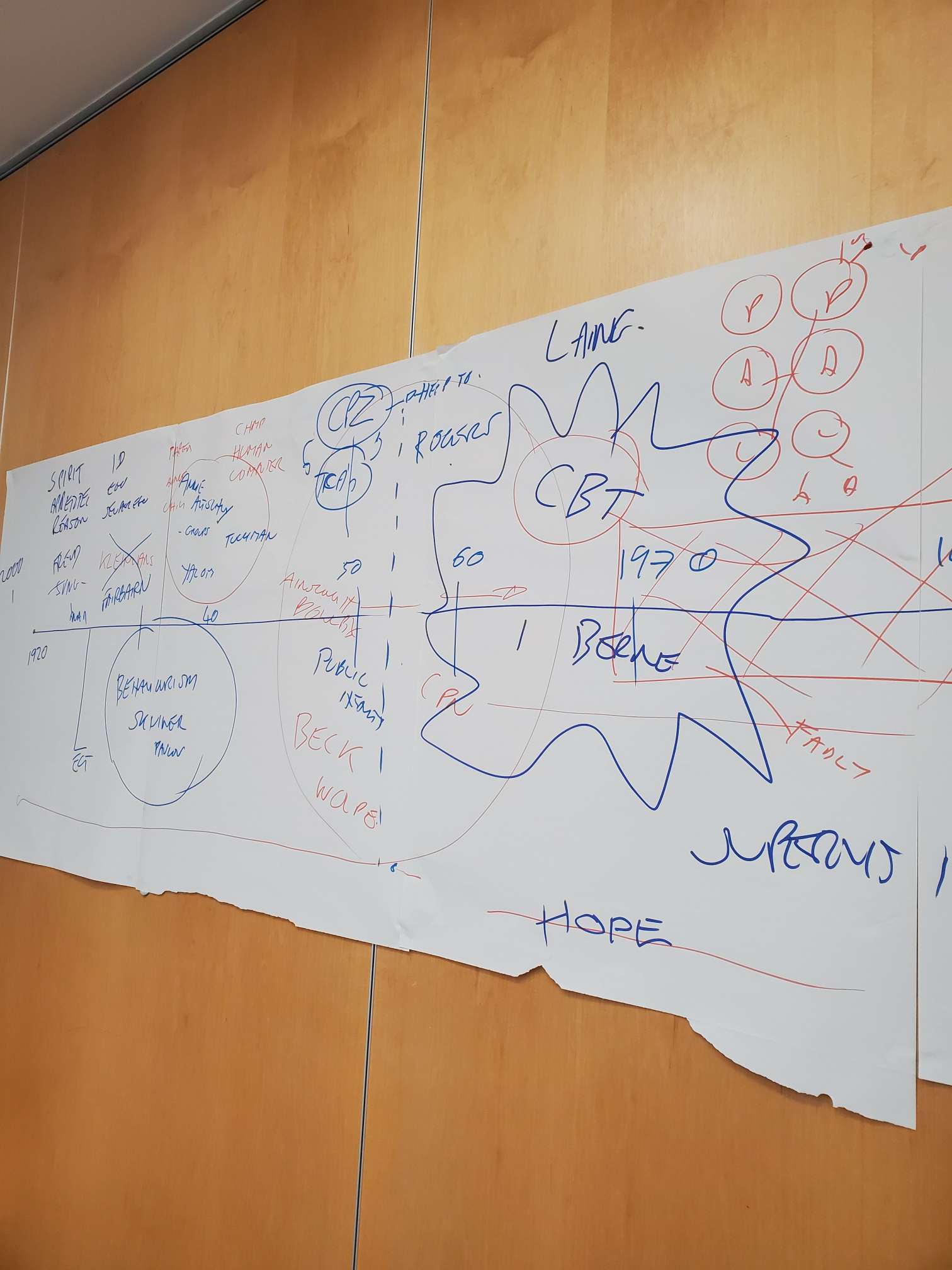
He questioned whether changing the location of care always changed the experience of it. His examples invited reflection on whether institutional habits could continue in smaller settings.

He also discussed changes in service organisation, care coordination and the development of more specialised approaches.

As a carer activist, I found this relevant to what happens when care moves into the community. Families may take on substantial responsibilities, so services need to understand what support is actually available at home.

The “golden thread”: relationship and hope

Throughout the historical discussion, Jim returned to the therapeutic relationship as a “golden thread.”

Models, treatments and service structures change, but the ability to build a relationship remains central to mental health nursing.

He also spoke about hope: the importance of entering a situation believing that progress is possible and helping someone hold onto that possibility.

Towards the end, the discussion returned to creativity, imagery, drawing, music and shared activity. This connected with Hannah’s embroidery and the poetry that opened the day.

For me, Jim’s session explained why the history mattered. It encouraged nurses to understand the foundations of their work, recognise the value of their therapeutic role and use their knowledge deliberately.

My afternoon carers and families workshop

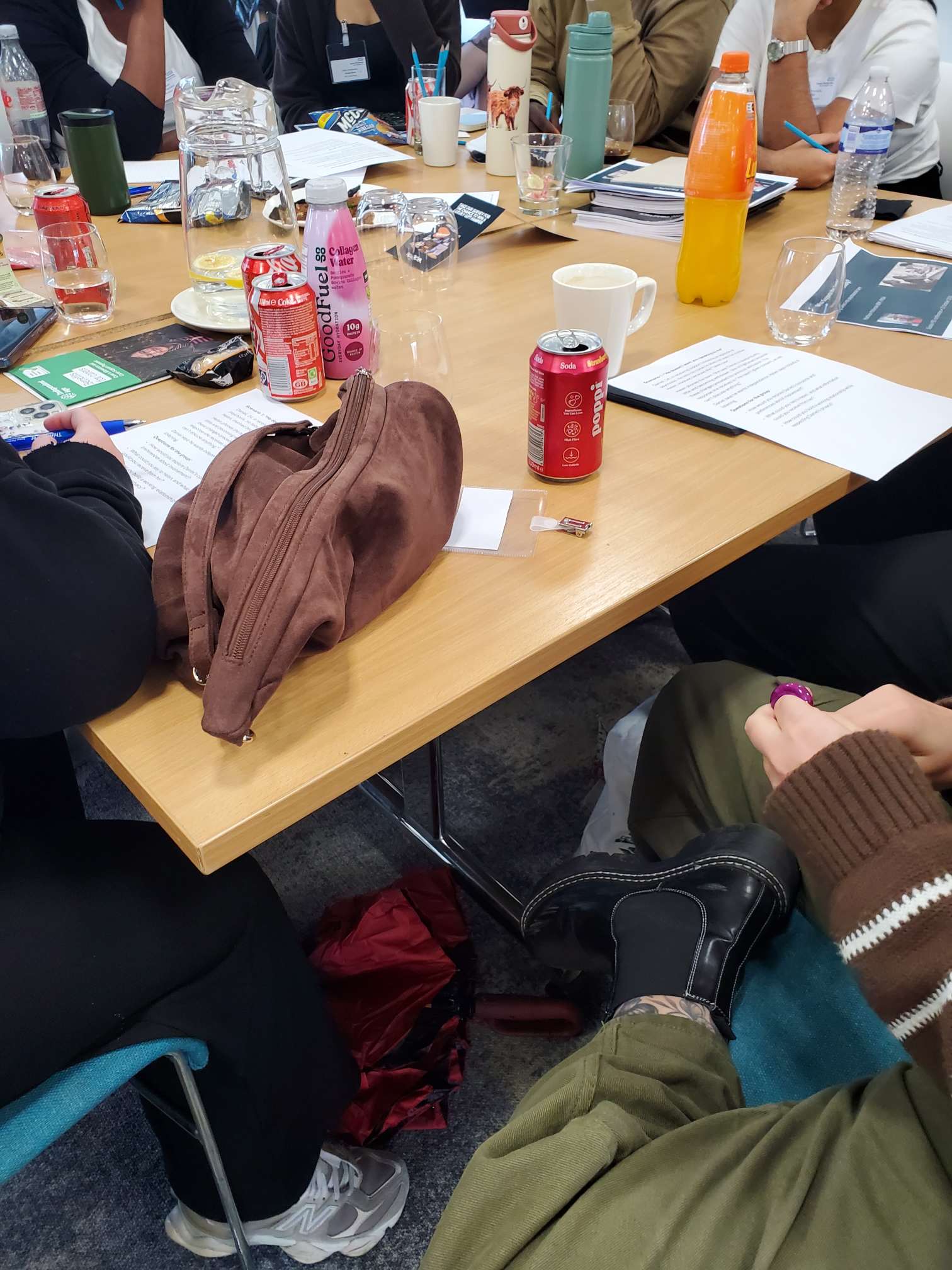
After lunch, I led a workshop using three fictional scenarios.

I wanted participants to explore situations that many families will recognise: uncertainty about confidentiality, assumptions about a relative’s behaviour and expectations placed on carers when someone returns home.
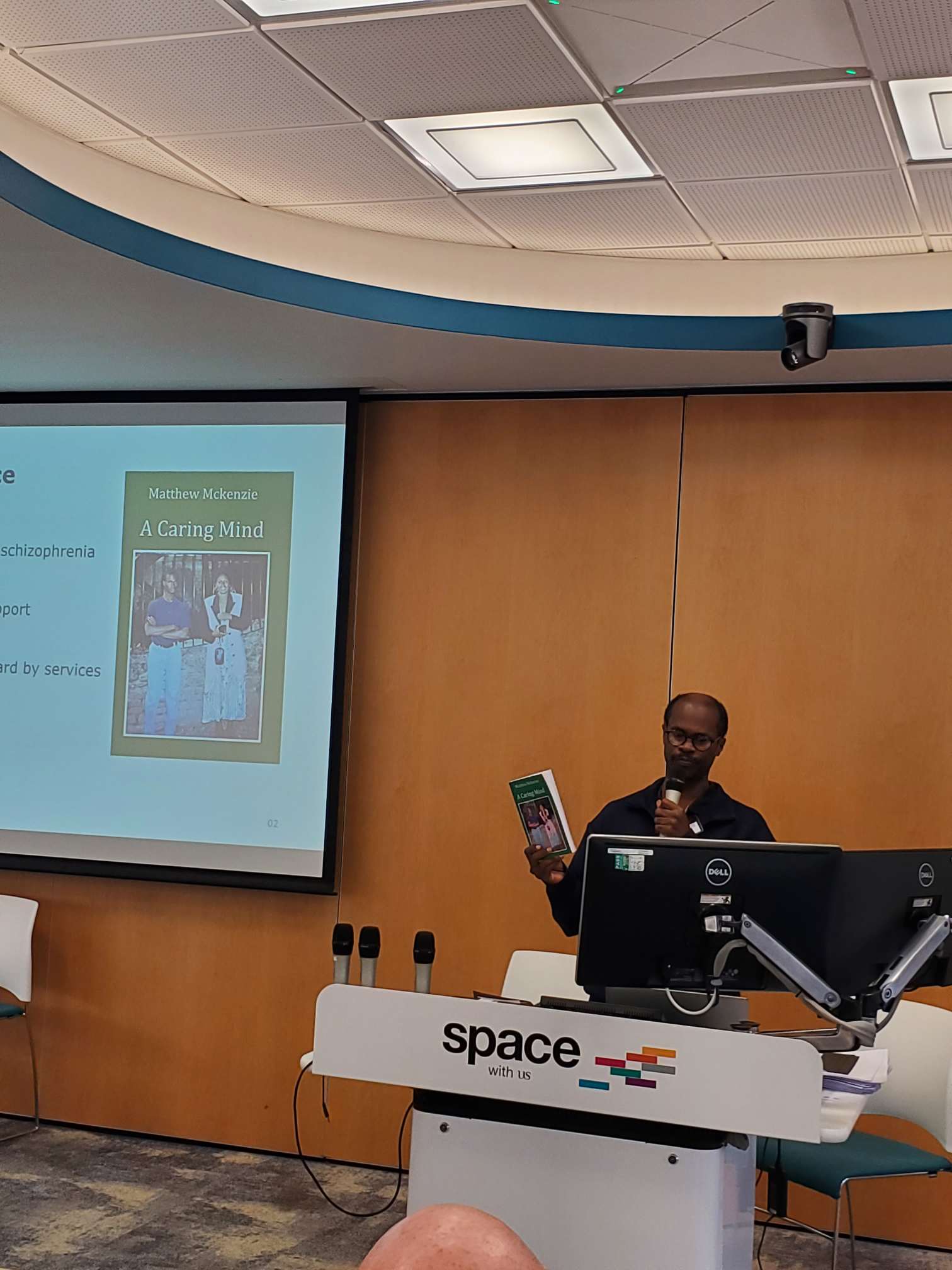
The scenarios encouraged discussion about what staff could do, what they needed to understand and whose voice might be missing.

Confidentiality and a mother’s concerns

One scenario explored a mother’s concerns alongside her son’s wish for independence and limits on family involvement.

Participants discussed how to understand his preferences while still making space to hear her observations and offer support.

They considered the distinction between receiving information from a relative and sharing someone’s confidential information.

The feedback also recognised the mother’s own wellbeing. Supporting her meant acknowledging her relationship with her son and the strain she might be experiencing.
Questioning the word “demanding”

Another scenario explored assumptions about a family, unfamiliar clinical language and the importance of faith.

Participants challenged the description of a relative as “demanding.” They asked what might be behind repeated requests for information or meetings.

Fear, confusion and a need for reassurance could all be relevant. Describing someone negatively too quickly could prevent those concerns from being understood.

The discussion also considered asking someone what their faith means to them, using clearer language and arranging conversations around practical circumstances such as employment.

This connected closely with my work on culturally responsive carer inclusion: understanding the individual and questioning the assumptions shaping our response.

Discharge planning and sustainable support

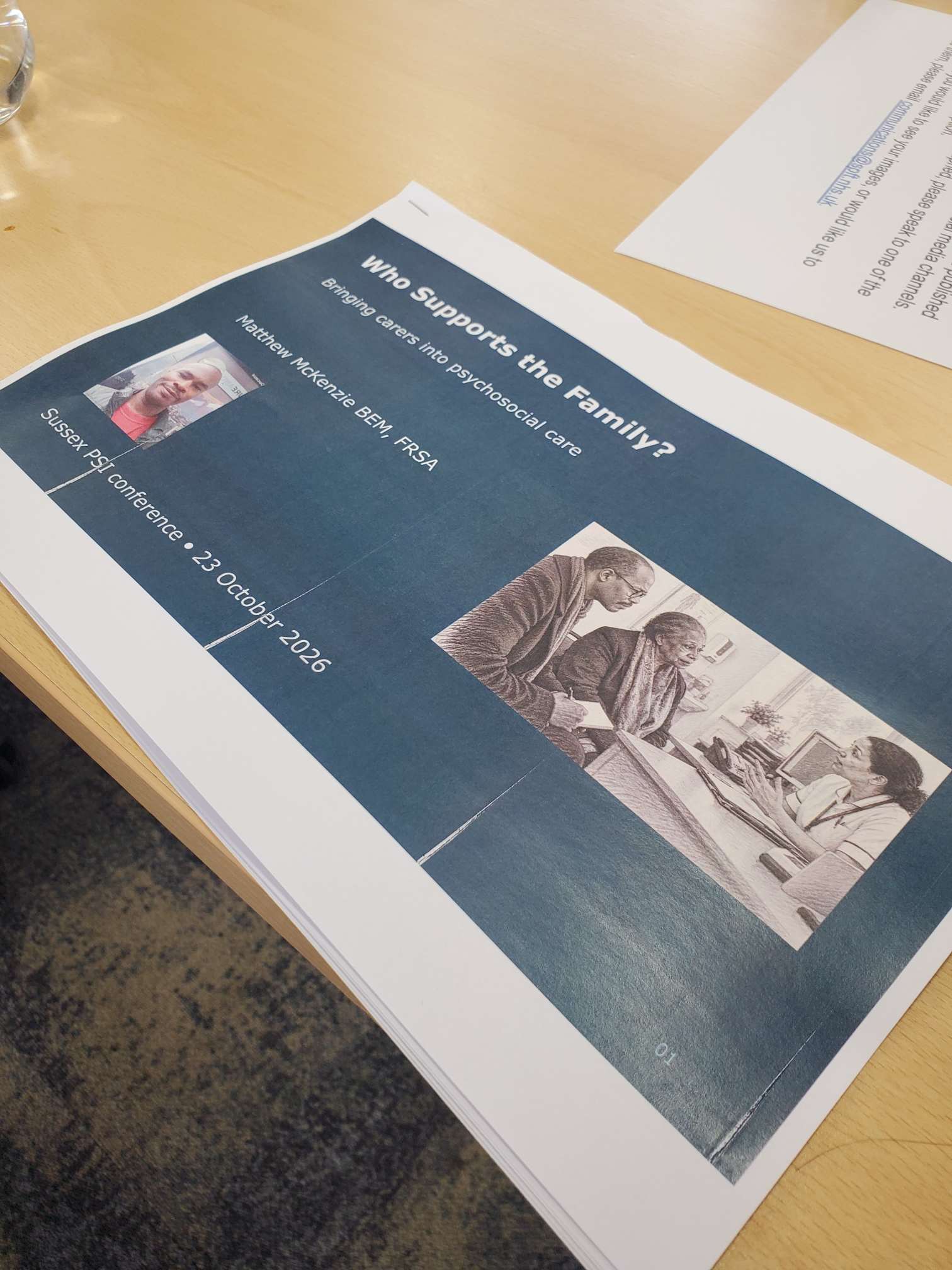
The third scenario concerned a wife facing substantial expectations when her husband returned home.

She had work commitments, health difficulties and disrupted sleep, yet the proposed arrangements relied heavily on her.

Participants questioned that assumption and discussed the need to understand both partners’ concerns, identify professional responsibilities and consider support for the carer herself.

For me, this was an essential message: discharge planning needs an honest conversation about what a carer is willing and able to do.
Love and concern do not remove exhaustion or create unlimited capacity.

Keeping the learning going

The wider afternoon programme included PSI in Sussex, the Sussex Partnership Recovery College and discussion about a community of practice and peer support.

These themes connected with concerns raised earlier: staff need support to continue developing and using their skills after training ends.

I hope that ongoing learning also continues to include the experiences of people receiving care and the relatives and friends supporting them.

Thank you

My thanks to Dr Ali Smith, the organising team, the Royal College of Nursing contributors and everyone who took part.

I appreciated the opportunity to bring poetry, caring experience and practical scenarios into the day.

The conference offered space to consider where mental health nursing has come from and what needs protecting as it develops.

For me, that includes time to listen, the confidence to build relationships and a commitment to seeing carers as people whose knowledge and wellbeing matter.
Supporting someone with psychosis? Share your experience through the OSMOSIS study

Welcome to another update from A Caring Mind. I am sharing a research opportunity for unpaid carers who support someone with psychosis and live in Hackney, Tower Hamlets or East Sussex.

As someone with lived experience of caring, I know how much attention can focus on the person receiving care, while the support needs of family members and friends remain less visible. Listening to carers can help us understand what happens when we reach out for support ourselves.

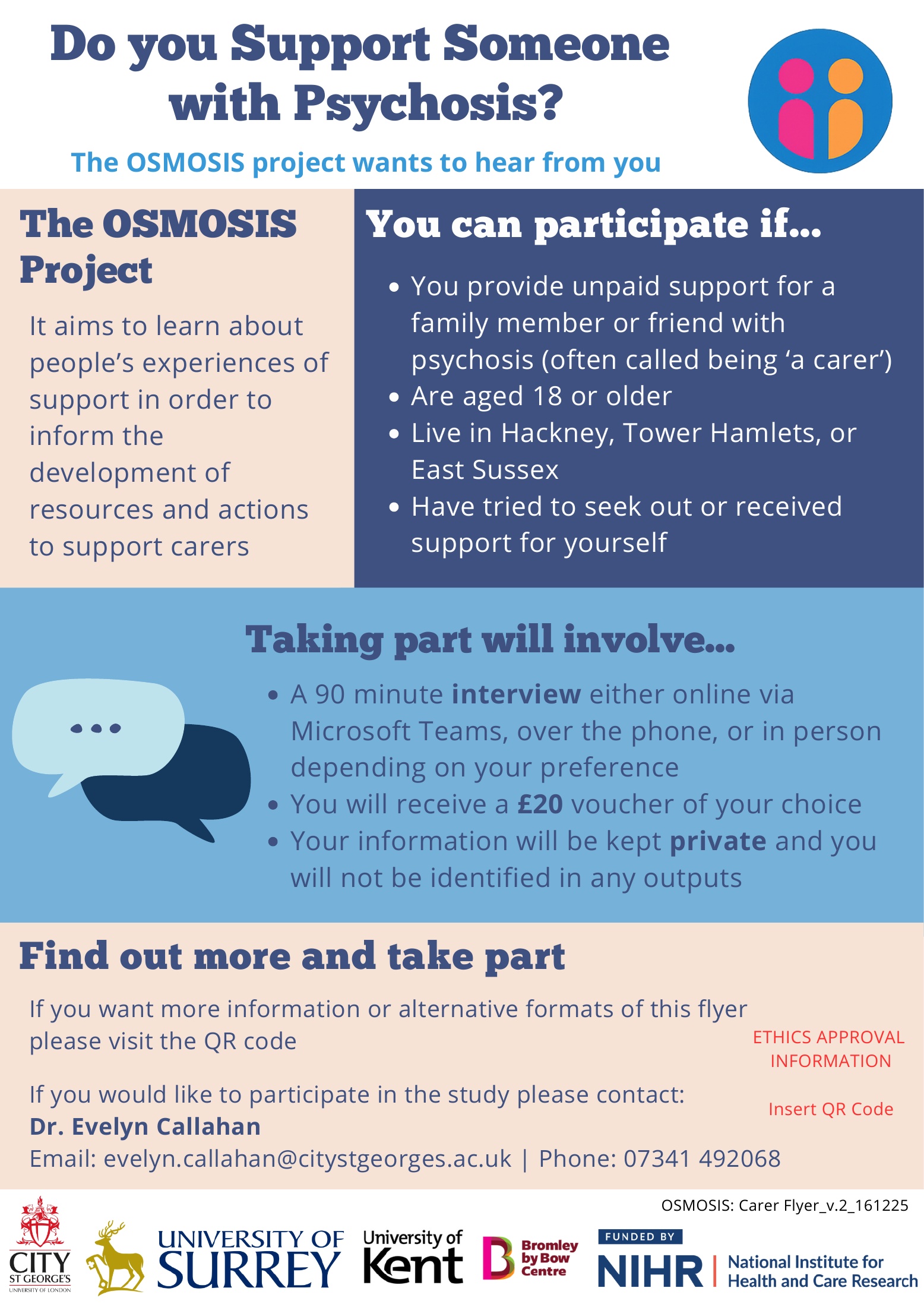
The OSMOSIS project is exploring carers’ experiences of support to inform the development of resources and actions to support carers.

Whose voices are needed?

The research team would particularly welcome interest from carers from minoritised communities, who are currently underrepresented in the study.

This matters to me because carers’ experiences can differ across communities. Creating opportunities for people to share those experiences can help bring overlooked needs and barriers into view.

The study is only recruiting carers who live in Hackney, Tower Hamlets or East Sussex. Within these areas, the team would like to hear from people who meet all the criteria below.

Who can take part?

You may be eligible if you:

  • Provide unpaid support for a family member or friend with psychosis.
  • Are aged 18 or over.
  • Live in Hackney, Tower Hamlets or East Sussex.
  • Have tried to seek out, or have received, support for yourself.

You do not have to use the word “carer” to describe yourself. You might simply see yourself as a brother, sister, parent, partner, relative or friend who provides unpaid support.

What does taking part involve?

Taking part involves a 90-minute interview, either online through Microsoft Teams, over the phone or in person, depending on your preference.

Participants will receive a £20 voucher of their choice.

The study flyer states that your information will be kept private and you will not be identified in any outputs.

How to find out more

If you are interested in participating, or would like to ask questions before deciding, please contact:

Dr Evelyn Callahan
Email: evelyn.callahan@citystgeorges.ac.uk
Phone: 07341 492068

The study flyer accompanies this post with further details.

Please share this opportunity with eligible carers and local networks in Hackney, Tower Hamlets and East Sussex, particularly networks reaching carers from minoritised communities.

Carers’ experiences deserve to be heard—including our experiences of seeking support for ourselves.

Greenwich Mental Health Carers Forum – June Update

By Matthew McKenzie – Chair of the Greenwich MH carers forum

The forum continues to provide a safe space for carers to receive updates, influence local services and learn about developments that affect both carers and the people they support.

This month’s forum focused on three important themes:

  • New support available for carers through the Greenwich Mental Health Hub.
  • Major reforms to the Mental Health Act and what they mean for carers.
  • Why unpaid carers must continue to have a voice in shaping local mental health services.
Continue reading →

Maintaining Family Bonds in Caregiving: Communication and Support

Here is another blog by Matthew McKenzie author of “Experiences of Mental Health unpaid caring”. This time I am covering a difficult and compex topic. Caring for someone and trying to maintain the family connection.

If you want to watch the detailed version of this blog, you can watch the video below.

Continue reading →

Being there for the family

cover-blogIt has been a while since my last blog post. Usually I review psychiatry or psychology lectures, but I thought to go back into writing more about carers. This time I think I shall blog about why people want to be there for others, especially those that are close to them.
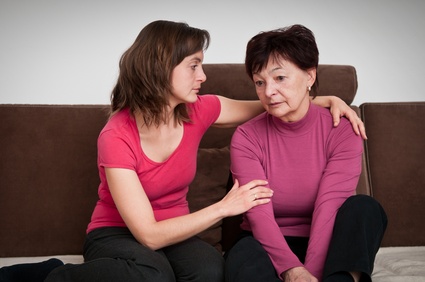

The role of a carer unfortunately is not an easy task or one that people are often ready for. Who is to say when the next person is to be struck down by a physical or mental illness. If we are to begin that journey where we are to care for our loved one, there are many paths that we can go down and each path can make things easier or incredibly difficult in the long run.

Continue reading →

Difficult things that carers go through on their journey of caring.

When I started caring even though I did not see it as a choice at the time, I did not notice how much of an impact it would have in my life. I initially started my caring journey because mainly I was afraid what would happen if no one was there to help provide any care for my loved one. I was fearful for my relative.

Almost 14 years of caring I now look back at the journey I have taken and have learnt how caring not only has affected my life, but many other carers out there. My caring experiences have not always been difficult, there has been many great things about being a carer, but what some people might not realize is that carers can loose many things when they take up the role of caring.

I am hoping my blog can shed at least some light on such a difficult and sensitive subject, although I must note that I seek not to blame anyone for what carers go through. We all have difficult choices to make and we all responsible to a point. When I started caring for someone struck down with mental health difficulties, I did not foresee how much of a struggle they would have to go through.

Maybe it was my own ignorance or stigma of mental health, maybe I did not educate myself enough on how mental health illness can affect families, but I can only hope my journey in the realm of caring can lead me up an easier path where I learn more about the struggles of others and how I can cope with my own struggles as a carer.

Caring

Almost everything needs careful planning

One thing I noticed what carers have to do from the outset is plan for things. As a carer you never know what the future might bring or if the illness might get better or unfortunately get even worse. This is why carers have to dedicate time to plan for as many things as possible. It is best not to leave too many things to chance.  As a carer I looked back on the support I was given and I am very grateful for such support. I have used Carers center in my district a few times over the years called Carers Lewisham and I advise other people who have become carers to check out their area for carers centers.

Embed from Getty Images


The reason I mentioned the carers centers is that I feel carers should never be placed in a position where they are left to do so much by themselves. We carers need that support and if things need planing, its always helpful to have others help you with such plans. Usually it can be great if you can plan for things with whoever you care for, but unfortunately when you care for someone who is either too unwell to help out or you need to consider help for yourself, you will need a carers center support.

Embed from Getty Images


Careful planning for the future does take time and for this carers need time to plan. Such things cannot be rushed.

Very little time for carers needs

This might sound selfish, but I want to be honest not only for myself, but for others struggling to care for their loved ones. Carers can and often do lack the time for their own needs. Perhaps this is one of the most common situations a carer can find themselves in. Perhaps us carers do not notice that we give up a lot of our time to provide care because we want to see our loved ones recover, we carers want to see that we are making a difference and we want our loved ones quality of life to improve.


Depending on how unwell our loved ones are, all this takes time. As long as you are a carer, I hope that I have made you aware that you will loose time for yourself, but its one of the things I wish to make known to others out there who may not understand the carers world.

Guilt

Perhaps this is something built within my own character, as a carer from all these years of caring. I feel guilty, I feel that I have let my loved one down especially if they fall deeper into their own illness. The darkest guilt may hit carers when they notice their loved ones first become unwell from mental illness, us carers feel that it might have been something we have done to cause this, perhaps we should have done something sooner in order to stop the mental health problems from hitting our loved ones sooner.

Embed from Getty Images


Guilt can hit care-givers so hard that they may often risk their own mental well-being. Guilt does not always have to be the worst thing to affect a carer, sometimes guilt is like a form a stress that helps us carers react under difficult circumstances, but too much guilt can be very bad thing. As a carer of someone suffering mental health difficulties, I am sure you have felt guilty of not doing something and I know how bad such a thing can affect yourself. It is ok and I have been there.

Every day tasks can become more difficult / some impossible

Embed from Getty Images


This is not the case for all carers, but I have to acknowledge those who are unfortunately caring for their loved ones who are sinking deeper into ill health. I do not want to be the bringer of negative and depressing news, but it is a fact that there are carers out there caring for those who unfortunately may never recover, this leads such carers to take on even more tasks and such carers can be hit by difficulties within systems that are meant to support families and carers.

Wouldn’t it be good if every carer around the world all received the best support they can get in order to provide care? Well if that was the case then perhaps we would not have to care in the first place, but even worse we know the balance of carer support can be lacking. In the UK there are around 6.5 million carers providing care for their loved ones, without those carers the UK’s National Health System would grind to a halt.

Lack of time

If you have been reading through my blog posts you might have noticed that I mention time quite a lot. This might be the time you are providing as a carer or the time you use to reflect on your journey as a carer. However without a doubt carers will find themselves loosing or lacking time for not only their own lives, but also to help provide care. We all know that time is precious and once its gone then you will not get it back.

Embed from Getty Images


Caring for your family or loved one takes time and it does depend on how unwell your loved one is. If your loved one sinks deeper into ill health then carers may notice that they lack the time for many things. Please note I am not seeking to blame anyone for what carers go through, but I am pointing out the major things that hit carers and their families.

Disappearance of friends

Have you heard of the expression “when times are good then friends are near, but when times are bad friends disappear”?

Well I have probably summed up another thing carers go through. Think about it, lets say you was friends with someone and you had great times doing many activities with them. You both go out and have a laugh, perhaps socialize with others and you were always happy to see your friend. The one day they start caring for someone in the family who perhaps is suffering bipolar or depression. You notice perhaps signs of frustration from your friend, you may notice that they do not seem so cheerful as they use to be. This in turn affects how you feel and you wish to be happy again, you notice your friend stating that they lack the time to do the things they used to do with yourself. So the big question is would you hang around?

Embed from Getty Images


This is the situation many carers can find themselves. Their social life can take a nose dive, their friends move on or carers just do not have the time to sustain their friendships anymore. Would like to point out that its not impossible for carers to make new friends, but unfortunately carers can find themselves isolated, especially if they are caring for someone suffering chronic mental health problems.

We all need friends, especially when we as carers really need that support to forget our own worries or fears. Friends can really make a difference in our lives, but when they go, the difference can also be a terrible price to pay.

Diminishing social life

This is probably almost as similar to the what I have mentioned above. Expect the major difference is that us carers can struggle to make new friends, which is what you can get when you have an active social life. The result is the same, carers can find themselves isolated. This does again heavily depend on how well their loved ones are recovering, but again if things become difficult then something has got to give and carers may find that their social life diminishes.

Embed from Getty Images


Lives can limited by the mental illness

There is a belief that lives can be enhanced by mental illness and I can actually see a point to this argument. Acknowledging mental illness can be a step towards recovery and bring hope for the future, it is known that artists, musicians and many others creativity is enhanced by their mental illness. Unfortunately the opposite can be true as well, not many would openly admit that they would love chronic depression or they would want Schizophrenia or other difficult mental health symptoms.

When such mental health problems hit families, their lives can be limited and the family unit can be fractured. Carers try to seek the answer to this situation and some may find ways to cope, while others are left with lives that limited, but there is always some hope as long as care is provided.

Embed from Getty Images


Some people can’t see a future plan that is right for both themselves and their loved ones.

Not everyone is like this, but what people fail to take note of is that carers or care givers are the ones who do not walk away. Ok I admit we all have the choice to care for someone and no one can take that choice away, but such choices are a big step to take. The fear is that carers may not fully understand what they are taking on, but us carers cannot bear to not help or support those who we known for most of our lives, be it our friends, mothers, fathers, sons or daughters.

Embed from Getty Images

We do not want to see those who are unwell fall deeper into neglect or lack of self care. At the same time there are those in society who will not think twice but to move on before providing care or after a while in caring. I do not want to criticize anyone, but these are the issues for carers in society.

Final thoughts

I am sure there are many blogs out there where carers are providing thoughts and stories about caring and this post is probably no different, but one of the reasons I wanted to post this blog is that I wish to help educate others on what carers go through, I wish to get my voice across on my own experiences and I also find writing about my carer experiences as a way to share what I have faced on my journey. This post can be dark and depressing, but I hope I have been honest and have managed to get most of my points across.

With careful support and planing maybe and just maybe us carers will not have to struggle so hard, but this will be a long journey.

Good luck in your caring role!!

Matthew Mckenzie

Caring is being there for someone

Here is another skill set for carers which I want to raise on this blog post. Oddly enough this one is the most common that is used among carers.

There are times when some of the most simple things in providing care is all that is needed. You do not have to spend large amounts or money or lots of energy. Sometimes you do not have to say a word. If you are a carer or have been a carer then you perhaps already guessed what I am talking about.

Being there…..

Caring for family

If you felt you have done nothing or not provided much of any care and yet you visited your loved one, then at least you are providing some sort of care. This is done by just being there.

If you feel you are the only one in a large family providing care to someone, then rest assured you are being there for them.

If you feel a family relationship breakdown has pushed you away, then at least you have been there for them.

If you speak to someone on your loved one’s behalf then that is still classified as being there for them.

Even phoning, writing a letter or asking if everything is ok, is still being there for someone.

You know who I am talking about. Yes! Its you.

Embed from Getty Images

If you have done any of the above and feel down because things are not going as planned, then at least you have been there for someone. Being there is half the battle, because you have turned up to be part of someone’s world, unfortunately their world is falling apart perhaps due to mental health problems, but you have and will be there for them.

We are sometimes placed in difficult situations where in today’s society we are told that we should be there for ourselves. We should be independent, we should move on and get a life and not spend too much time or energy on our loved ones.

Carers can be often told that they should have their own families, if they are caring for a relative, who may be deemed as a burden.
Carers can be told that they should find another partner if the one they are with is suffering mental health difficulties.
Carers can be told that other services will take care of the situation if their loved ones health deteriorates.

Embed from Getty Images

I can imagine that perhaps there are some very good reasons for carers to move on, but there are times that “being there” for someone especially through the hard times is a noble thing.

In this society you may not have to look far, when someone ends up cutting their losses and runs at the slightest hint of their loved ones failing mental health. People do it all the time, we all have our limits. I am not saying those people should be despised, but what I am saying is that carers caring through difficult situations should be acknowledge for being there.

Time and time again, I hear of carers having to cope on their own. I have heard of carers with large families left to handle caring for their mother, father or relative, because that’s the way it has always been.


Embed from Getty Images

You often wonder to yourself if such carers should demand help from their families, you wonder if such carers are a pushover or too weak. Yet, the same situation is that no one wants to be “burdened” in providing care.

No one wants to give up time at work because they need the money.
No one wants to sacrifice time with their own family or friends.
No one wants to experience sadness or anger, because those feelings are painful.

This makes sense doesn’t it? Why would anyone want to give up their time?

Because of a simple reason……They care!!

Embed from Getty Images

Carers care because they may be related to their loved ones, who they have known ALL their lives.
Carers care because they hate to see the person suffer so much.
Carers care because they imagine what if they were ill, who would be there for them?
Carers care because they have the strength and energy to carry the load.
Carers care because they WANT to be there.

If you have been there or are being there for someone, you know what I mean. I do not have to tell you that “being there” is so important, but carers can be worn down by the stresses of their role. Society does not always seem to value carers and so I find myself writing this blog post to highlight a simple act that can make society more caring.

Being there…..

Embed from Getty Images

There is a saying which goes like this “A person without a friend is like a life without a witness”. Can you imagine what it could be like when someone suffering a mental health condition becomes isolated? All too often this is the case.

There are no witnesses, no one to see what is happening to them or anyone share the pain. I am not saying all carers are the same as we know some carers can be the “very problem” of their loved ones situation. However it must be noted that if you care for someone, you wish to be that witness to share their pain or happiness. You wish to see what is going on, you wish to make that difference.

You wish to be there for them…..

Embed from Getty Images

If your caring role has come to an end a long while ago, take heart that you have been there for someone you care for.

The situation might have been enjoyable or it may have been painful, but take heart that you tried. You were there for them.

Being there for someone is just the start of a journey where you can then be able to assess the situation and carry out more of a caring role.

By being there, this can lead you to try understand what the person is going through, you may not need to say anything, you can just listen. By being there you are a vessel of information which you can share with health professionals when the patient can no longer communicate.

There will come a time when your loved one does not want you to be there, but that is ok, you may need to give them space. Sometimes you have to back off to give yourself your OWN space.

If you have been there for your loved one by sacrificing your time, then it is important for you. It is your decision and perhaps it did not work out for the best, but you did it, you were there for them.

We may have our own families, or close friends. Perhaps a neighbour we often talk to. We just cannot see it, not so easily. We wake up and wonder about our own problems, perhaps rush off to work or pay the bills to survive and achieve our dreams. Yet, there will be a time, since time is the ruler of many things. It need not be mental health, it can be physical health. Just think to yourself, when the time comes…..will you be there for them?

Crossed off family member