By Matthew McKenzie – Carer activist
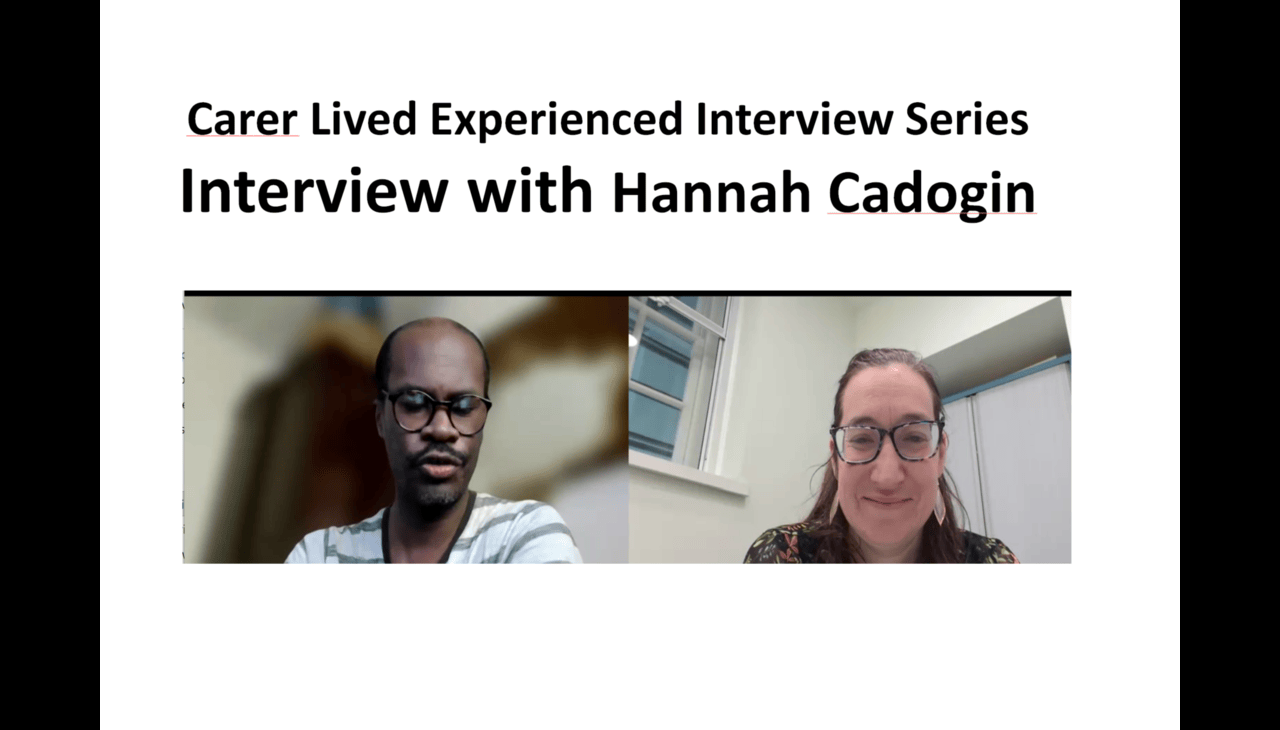
In a recent interview, Matthew McKenzie sat down with Hannah Codigan, a palliative care nurse who brings a unique perspective to healthcare, not only as a professional but also as someone with lived experience of serious mental illness. Together, they explored the importance of recognising unpaid carers and embedding lived experience voices in the design and delivery of healthcare services.
Caring Beyond the Patient
Hannah shared how her role in hospice care extends beyond patients to include families and carers who often struggle without recognition. She emphasised that carers need as much emotional and practical support as the people they care for, noting how time pressures in nursing can make it difficult to truly listen to their experiences.
To watch the interview, click on the video below
Lived Experience as a Catalyst for Change
Drawing from her own journey, Hannah explained how her lived experience of mental illness helps her connect with carers and patients alike. She’s part of a Healthcare Education Network for Co-Production at Roehampton University, where she works to ensure both carers’ and lived experience voices are valued in health education. This initiative aims to shape future healthcare professionals’ understanding of empathy, inclusion, and respect.
The Importance of Peer and Emotional Support
For unpaid carers, Hannah’s advice was simple but powerful: seek support. Whether through peer groups, local resources, or conversations with healthcare professionals, finding a space to talk openly about the challenges of caring can be transformative. For those who have lost someone they cared for, she stressed the importance of seeking help and recognising the ongoing value of their experiences in shaping better systems of care.
A Call to Value Every Voice
Matthew and Hannah’s discussion highlighted the urgent need for healthcare systems to amplify the voices of carers and people with lived experience.
 A Caring Mind