Why Unpaid Carers Should Connect with Other Carers
Unpaid carers play an essential role in society, often providing support to loved ones with long-term illnesses, both physical and mental. However, the journey of caregiving can be challenging and isolating, making it crucial for carers to connect with others in similar roles. Establishing these connections can provide numerous benefits, including emotional support, practical advice, and a sense of community. In this blog by Matthew McKenzie, we will explore the reasons why unpaid carers should connect with other carers, structured around several key areas: emotional support, reducing isolation, accessing resources, practical advice, and mutual support for self-care.
If you want to watch the 20 minute in depth lecture, the click the video below.
Welcome to another blog post by Carer Activist Matthew McKenzie. This blog and video is from my lived experience caring for a close relative and also supporting my brothers.
To watch the video lecture, please click below.
The holiday season is a time filled with joy, celebration, and connection. However, for unpaid carers, it can also be a period laden with stress, isolation, and heightened responsibilities.
Welcome back to another Carer Champion interview. Carers play an essential role in our society, often operating behind the scenes and without pay. In this interview, we meet Maz, a volunteer with Carers UK, who sheds light on the nature of unpaid care work, the challenges carers face, and the significant support networks available for them. Let’s dive into her invaluable insights.
To watch the video, please click play on the video below.
The Hidden Army of Carers
Maz describes unpaid carers as a “hidden army” that tirelessly provides care for loved ones, often without much recognition or support. Unlike professional care workers who are trained and compensated for their services, unpaid carers usually step into the role out of necessity and affection for those they care for. Maz herself is an example of a “sandwich carer,” a term used for someone who cares for both their elderly parents and their adult children.
Welcome to a brief update of my Lewisham mental health carer forum aimed at those caring for someone living with mental illness.
Forum update for October
Matthew Mckenzie led a meeting for mental health carers, introducing new members and discussing essential questions for service users’ care and treatment. The group explored various aspects of mental health care, including diagnosis, treatment plans, medication, legal rights, and the importance of carer involvement in the recovery process. The conversation ended with a presentation on the challenges faced by unpaid carers and a discussion on the importance of peer support and knowledge empowerment for carers navigating the mental health system.
Mental Health Carer Group Organizing
Matthew Mckenzie, who has lived experience of being a mental health carer was the group organizer. He led a meeting with various carers and professionals. Matthew introduced himself and his various groups, including one for South West London.
He also mentioned his carer website and the previous meeting’s link. Matthew then proceeded with introductions from various attendees who also are unpaid carers. Matthew then introduced Nadine, the new Lewisham Mental Health Carer’s social worker, who shared her role and responsibilities. The conversation ended with Matthew planning to present on what carers need to prepare for if they’re going to end up in a role with mental ill health.
Carer Support Worker’s Role and Plans
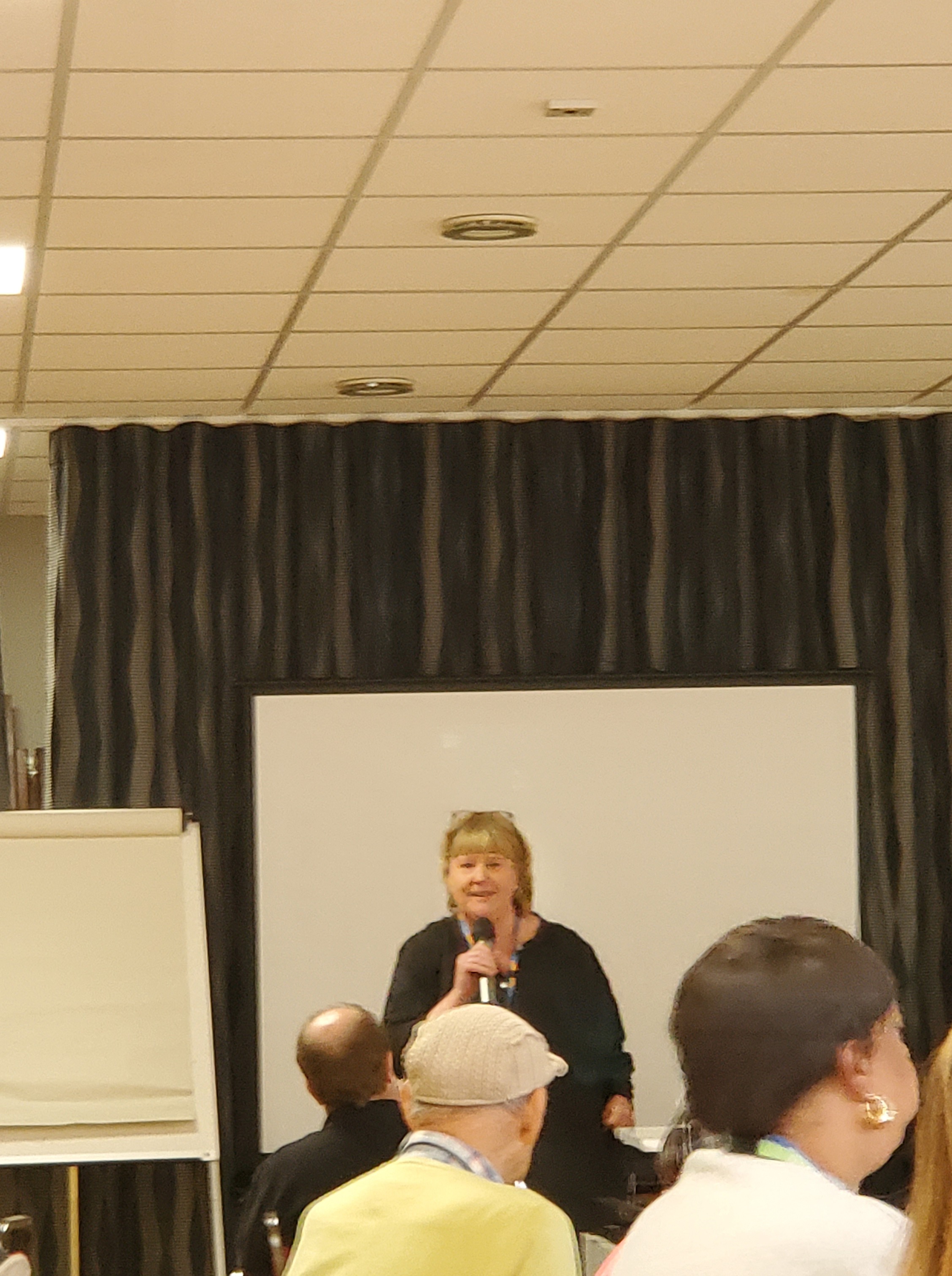
In the meeting, Nadine Denniss-Baker discussed her role as the new Lewisham carer’s support worker, emphasizing her commitment to understanding and addressing the needs of carers. She highlighted her involvement in various groups, including a carer’s group and carer’s champions meetings, and her plans to update and expand these initiatives. Nadine also shared her personal experiences as a carer and her professional background as an approved mental health professional. She discussed the importance of transparency and the need for better communication and collaboration between different organizations and groups. Also discussed was the potential for Nadine to attend national meetings and share best practices with other trusts. The conversation ended with a discussion on the importance of sharing good practice documents and resources to support carers and staff.
Introducing New Members and Questions
Matthew led a meeting where he introduced two new carer members group. Matthew then presented a list of essential questions for carers to ask regarding service users’ care and treatment, which he plans to blog about in the future. He also mentioned that he would record the meeting for those who couldn’t attend. The meeting was part of a carer’s forum, and Matthew emphasized the importance of carers being aware of these questions to better support their loved ones using mental health services.
Understanding Mental Health Diagnosis and Treatment
Matthew discussed the importance of understanding the diagnosis and treatment plan for a loved one’s mental health. He emphasized the need to ask about the current diagnosis, treatment plan, and the effectiveness of the treatment. Matthew also highlighted the importance of monitoring side effects and the potential for medication adjustments. He stressed the need for carers to engage with the multidisciplinary team, including primary contacts, and to inquire about the roles of specialists like occupational therapists. Matthew also mentioned the importance of understanding the medication’s purpose, dose, and potential side effects, and the need to clarify with the loved one if they can refuse medication. He concluded by emphasizing the importance of education regarding medication and mental health
Discussing Relapse and Care Plans
Matthew also highlighted the importance of asking about signs of relapse and what to do in emergencies, as these should be included in the care plan. Another member of the carer group, Faith mentioned a carer’s emergency card discussed at a recent forum, which Matthew agreed was a valuable tool. The group agreed on the need for a two-way conversation about relapse signs and for these to be recorded for quicker response times.
Carer Awareness, Training, and Rights
Matthew emphasized the importance of carer awareness and training, urging carers to ask questions and seek clarification when necessary. He also highlighted the need for carers to know their rights and how to make complaints if they’re not satisfied with the care provided. A carer suggested adding a section on how to make a complaint, which Matthew agreed to include in his future lectures. A carer stressed the importance of knowing the names of the care team and their managers to ensure effective communication and support. Matthew concluded by discussing the need for carers to understand what information can be shared with them, and the importance of obtaining consent from their loved ones to be involved in their care.
Involving Carers in Recovery Plans
Matthew discussed the importance of involving carers in the recovery plan of their loved ones, especially when they are living with them. He emphasized the need for a comprehensive care plan, which should be shared with the carer and the service user. Matthew also highlighted the importance of establishing specific goals for the service user’s mental health and social well-being. He suggested asking essential questions about the discharge plan, support after discharge, and the involvement of the community mental health team. Matthew also stressed the need for carers to understand the goals set for the service user’s recovery and to ask for practical advice on how to support their loved one. He concluded by mentioning the need for carers to know the roles and responsibilities of the care coordinator and other team members.
Challenges of Unpaid Carers in Borough
In the meeting, Matthew presented a detailed account of the challenges faced by unpaid carers in the borough, highlighting the what type of support and resources available to them. Carers discussed the need for better advertising and involvement of carers in services. A carer raised a question about encouraging carers to be more involved in services, to which Matthew responded that it’s a challenge due to the carers’ heavy workload. Matthew agreed to share his presentation in PDF format and to write a blog on the topic. Several carers expressed appreciation for Matthew’s presentation, noting that it provided a clear guide for navigating the complex network of resources and services.
Challenges of Carers and Peer Support
The carer group discussed the challenges faced by carers and the importance of peer support. A carer shared their experience of dealing with the mental health system, highlighting the lack of support and the invisibility of carers. Matthew emphasized the need for carers to be equipped with knowledge to ask specific questions during meetings to avoid being lost in the system. A carer asked another member about her experience of caring for her loved one regarding psychosis, and the carer responded by shared her journey, highlighting the importance of peer support and retaining hope. Matthew ended the conversation by encouraging the use of triangle of care and inviting everyone to attend future meetings.
Welcome to another carer educational and carer awareness blog post from carer activist matthew mckenzie. This time I present about the top tips for using carer centers as an unpaid carer.
This time we shall explore the comprehensive support provided by care centers for unpaid carers, from access to information to emotional support and practical advice. Learn how these centers help in navigating the healthcare system, offer specialized services, and promote carer well-being.
Remember, you can watch my video presentation which has a lot more detailed information (51 minutes) of educational resources aimed at unpaid carers.
Introduction
Caring for someone with long-term ill health or specific needs due to conditions like autism can be a demanding and often isolating role. As a care activist, I aim to illuminate the invaluable resources available to unpaid carers through Carer Centers across the UK. This guide delves into the myriad support services, emotional and peer networks, skill development programs, and practical advice that Carer Centers offer. Whether you are new to the caregiving journey or have been providing care for years, this information can empower you to navigate this challenging yet fulfilling role.
Access to Information and Resources
The Role of Carer Centers
Carer Centers are pivotal in providing unpaid carers with vital information and resources. They furnish up-to-date leaflets, guides, and access to workshops that cover various topics, including benefits, entitlements, healthcare options, and legal rights. This information empowers carers to make informed decisions about their caregiving responsibilities and the needs of those they care for.
Importance of Updated Information
Having current and relevant information is crucial for carers. Whether it’s about the latest benefits or new health services available, staying informed helps carers to plan effectively and manage their responsibilities better. Carer Centers strive to provide this information comprehensively and accessibly.
Emotional and Peer Support Networks
Managing Isolation and Emotional Strain
Caregiving often brings emotional strain and isolation. Carer Centers offer counseling services, although availability can vary due to funding constraints. Where accessible, one-on-one emotional support services help carers manage the emotional ups and downs of their role.
Peer Support Groups
Peer support groups are a cornerstone of emotional support. These groups allow carers to connect with others in similar situations, share experiences, and gain practical advice. Whether in-person or online, these sessions foster a sense of community and collective understanding.
Skills Training and Advocacy
Essential Skills Development
Carer Centers provide essential training workshops. These can include medication management, stress handling techniques, and specialized skills such as dementia care or effective communication with individuals with mental health conditions. These workshops equip carers with the tools they need to provide effective care.
Advocacy Services
Advocacy is a crucial, though sometimes scarce, service provided by Carer Centers. Advocates assist carers in representing their needs with local authorities and healthcare providers. This support can be invaluable when navigating the complex healthcare and social care systems.
Respite Care and Financial Support
Importance of Respite Care
Respite care services, though increasingly rare, are essential for preventing carer burnout. Carer Centers help arrange respite care, ensuring that carers can take essential breaks while their loved ones receive quality care.
Financial Guidance
Carer Centers offer advice on financial support, such as applying for carer’s allowance and accessing local grants. This financial assistance helps alleviate some of the financial strain that comes with caregiving responsibilities.
Legal Rights and Practical Care Advice
Access to Legal Rights
Understanding legal rights is fundamental for carers. Carer Centers provide information on powerful attorney, guardianship, and other legal aspects related to caregiving. These rights ensure that carers can make informed decisions and manage their caregiving responsibilities more effectively.
Practical Advice
Carer Centers also offer practical advice on aspects of caregiving, including personal care techniques and communication strategies. This advice helps carers improve their caregiving skills and better address the challenges they face.
Breaks and Activities, One-to-One Support
Organizing Social Activities
Organizing social activities, such as art workshops or short trips, allows carers to relax and socialize. These activities are crucial for maintaining a sense of normalcy and social engagement, which helps prevent isolation.
One-to-One Support
One-to-one support services, where available, provide personalized guidance tailored to the individual needs of carers. This personalized attention can make a significant difference in managing the unique challenges of each caregiving situation.
Specialized Support Groups
Support for Young Carers
Young carers face unique challenges, balancing caregiving with education and personal growth. Specialized support groups provide young carers with the resources and community they need to navigate these challenges successfully.
Support for Minority Groups
Carer Centers also offer specialized services for minority groups and those who are unwell themselves but have caregiving responsibilities. These services ensure that all carers, regardless of their specific circumstances, receive the support they need.
Stress Management and Health Resources
Stress Management Workshops
Carer Centers frequently offer workshops on stress management, mindfulness, and relaxation techniques. These resources are invaluable for helping carers cope with the emotional and physical stress of caregiving.
Promoting Physical Health
In addition to emotional support, Carer Centers promote physical health through exercise classes, health check-ups, and nutrition advice. These programs ensure that carers take care of their own health, which is often neglected due to caregiving demands.
Navigating the Healthcare System
Understanding Care Plans
Navigating the healthcare system can be daunting. Carer Centers assist carers in understanding care plans, medications, and treatments for their loved ones. This support helps carers make informed decisions and advocate effectively for their loved ones.
Accessing Specific Services
Carer Centers help carers access specific health services, navigate legal and healthcare bureaucracy, and advocate for their needs. This assistance can be particularly valuable when dealing with complex healthcare systems.
Housing and Home Adaptations
Physical Modifications
Carer Centers provide advice on adapting homes to make caregiving easier. This might include physical modifications like installing fall alarms or home adaptations to improve mobility and safety.
Technological Aids
Technological aids, such as monitoring systems, can significantly enhance caregiving. Carer Centers advise on and sometimes provide these technologies, helping carers maintain a safe and efficient caregiving environment.
Carer Assessments and Wellbeing Services
Accessing Formal Assessments
Carer assessments are vital for identifying the support and financial aid that carers may be entitled to. These assessments help in planning caregiving roles and addressing the specific challenges that carers face.
Wellbeing Services
Wellbeing services include exercise classes, nutrition advice, and support groups. These services are designed to improve the physical and mental health of carers, providing a supportive environment for sharing experiences and managing stress.
Conclusion
In conclusion, Carer Centers offer a wealth of support and information for unpaid carers. These services range from practical advice and skills training to emotional support and advocacy. While resources vary, the dedication of Carer Center staff and the availability of diverse programs make a significant difference in the lives of carers. If you are a carer, registering at your local Carer Center can provide essential support and enhance your caregiving role, helping you navigate this challenging journey with confidence and resilience.
Welcome back to another blog post from carer activist Matthew McKenzie. I am involved in quite a few things to raise awareness of unpaid mental health carers. One of them is Carers Trusts Triangle of Care Framework.
Triangle of Care is a framework developed to improve collaboration between mental health services, service users (patients), and carers. It was created by the Carers Trust in the UK, focusing on involving carers (family members or friends who support individuals with mental health issues) in care and treatment decisions, while ensuring they receive the support and recognition they need.
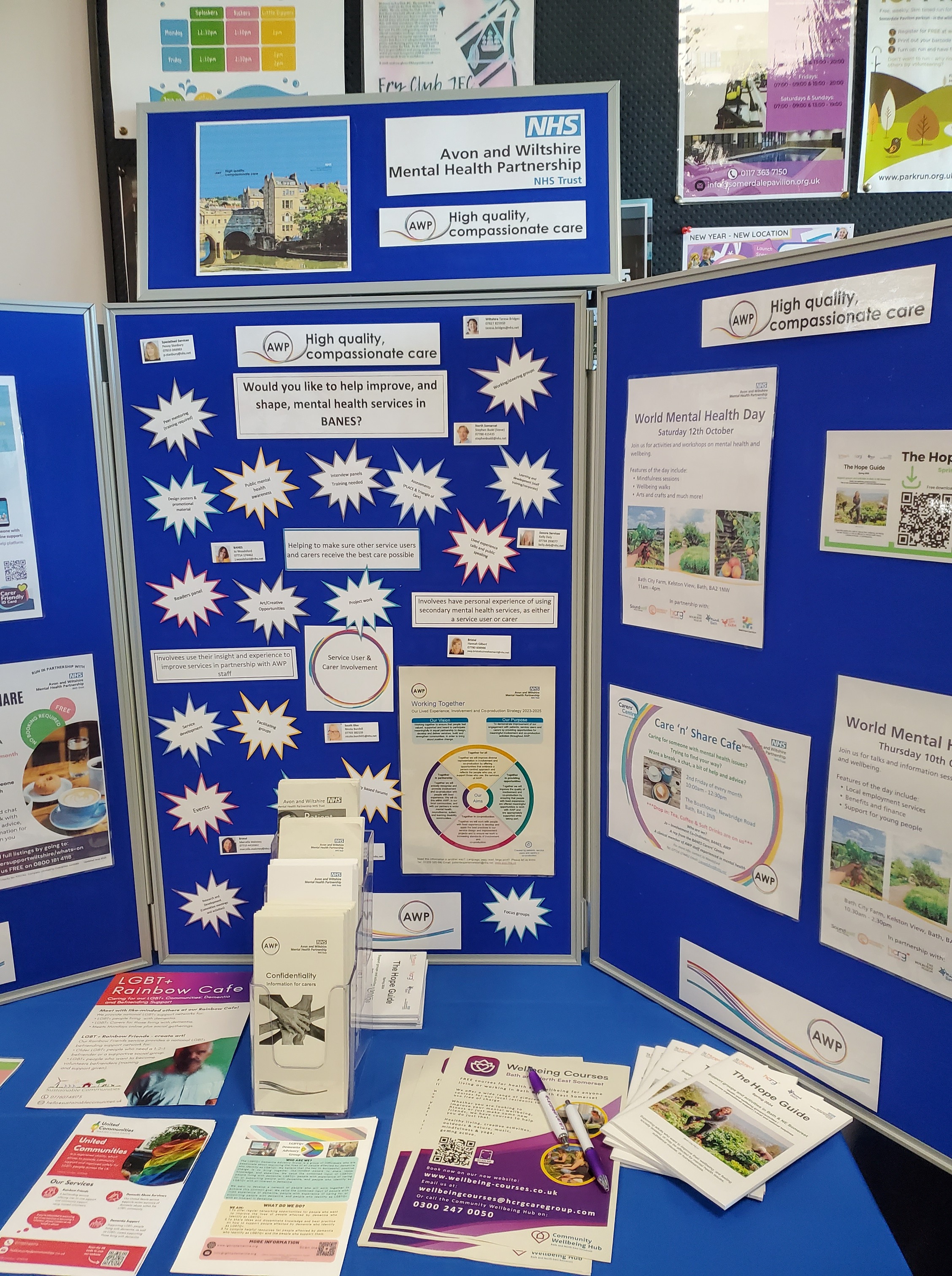
We have many mental health trusts who are members of the Triangle of Care. One of them is Avon and Wiltshire Mental Health Partnership NHS Trust or AWP for short.
Avon and Wiltshire Mental Health Partnership NHS Trust (AWP) is the lead provider of healthcare for people with serious mental illness, learning disabilities and autism across Bath and North East Somerset (BaNES), Swindon and Wiltshire, and Bristol, North Somerset and South Gloucestershire.
With support from Laura Sheridan who leads on carers at Cygnet. We both attended and supported the event at the mental health partnership trust. I took the time to explore the wonderful area of Bristol. Everyone I met was welcoming and friendly.
AWP have taken up the challenge to implement the Triangle of care and listen to carers. One of the best ways to listen to carers is through engagement and celebration events.
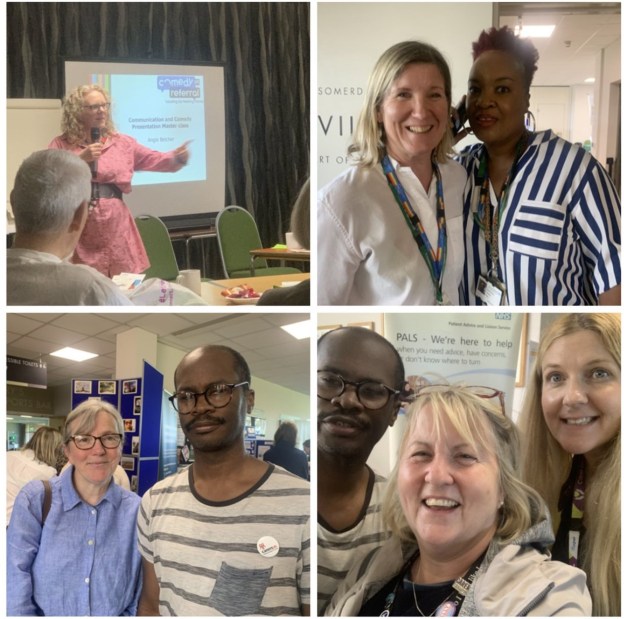
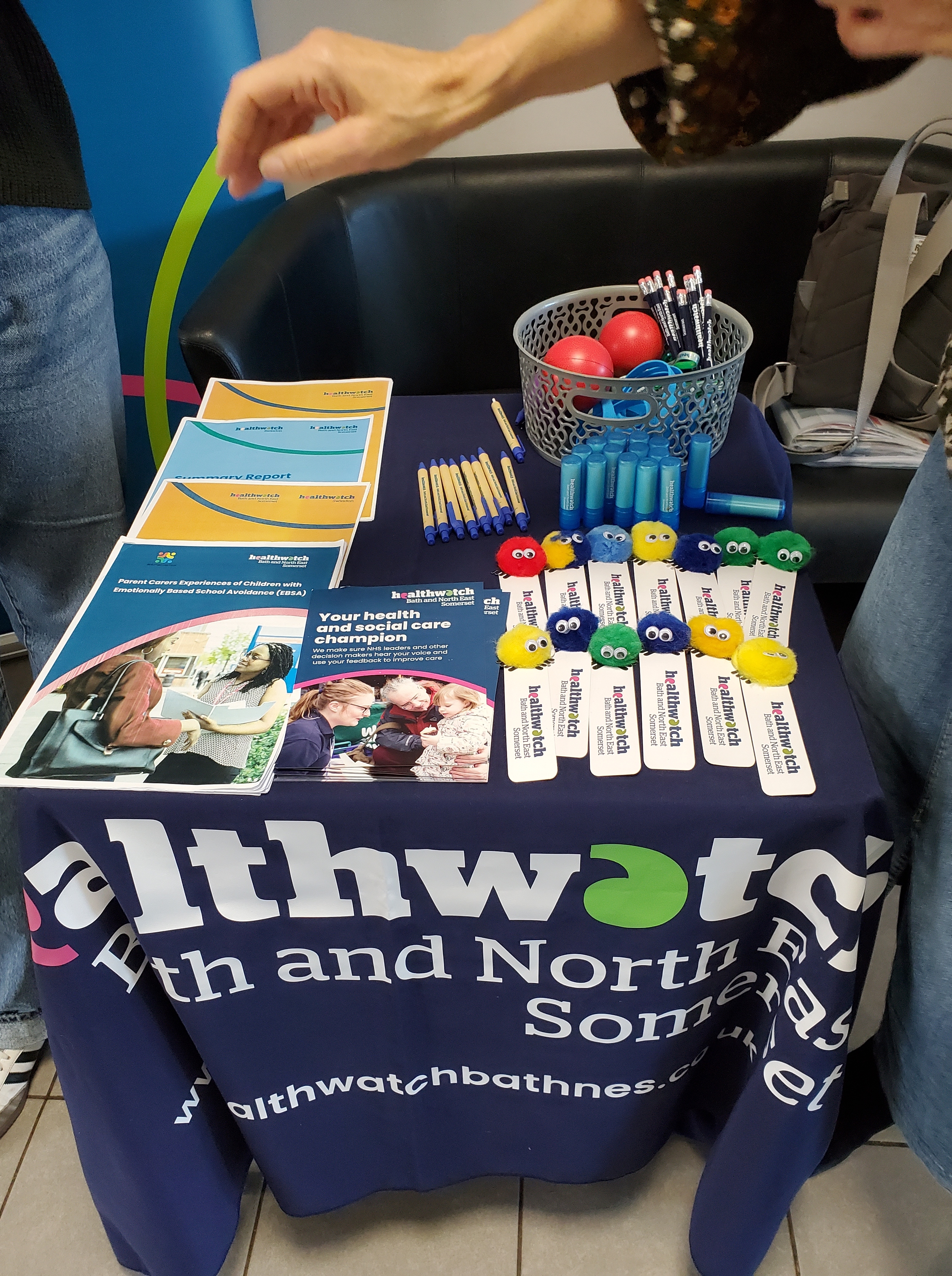
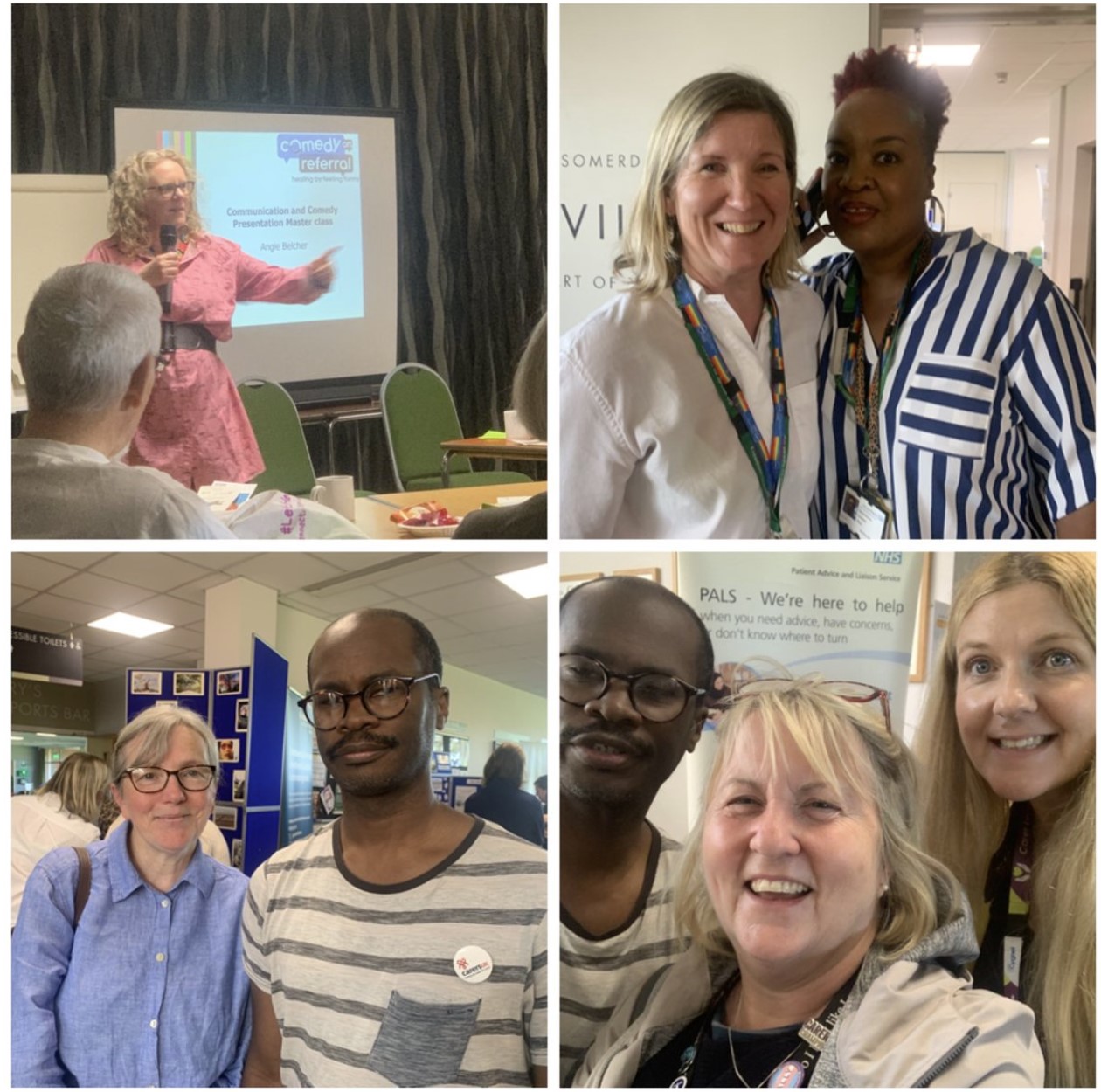
So on Thursday 3rd of October Avon and Wiltshire Mental Health Partnership NHS Trust (AWP) ran their #LetsHearCarers event. The event was held over at Somerdale Pavilion, Keynsham.
The day started off with a welcome from Sarah Jones, Director of Nursing and Quality at AWP.
We then got to hear from Ayesha Ahmed-Mendoza on the Black2Nature campaign to enable minorty ethnic children to have better access to nature camps. Next I was impressed with the presentation from Elaine Bennett regarding experiences of deaf carers.
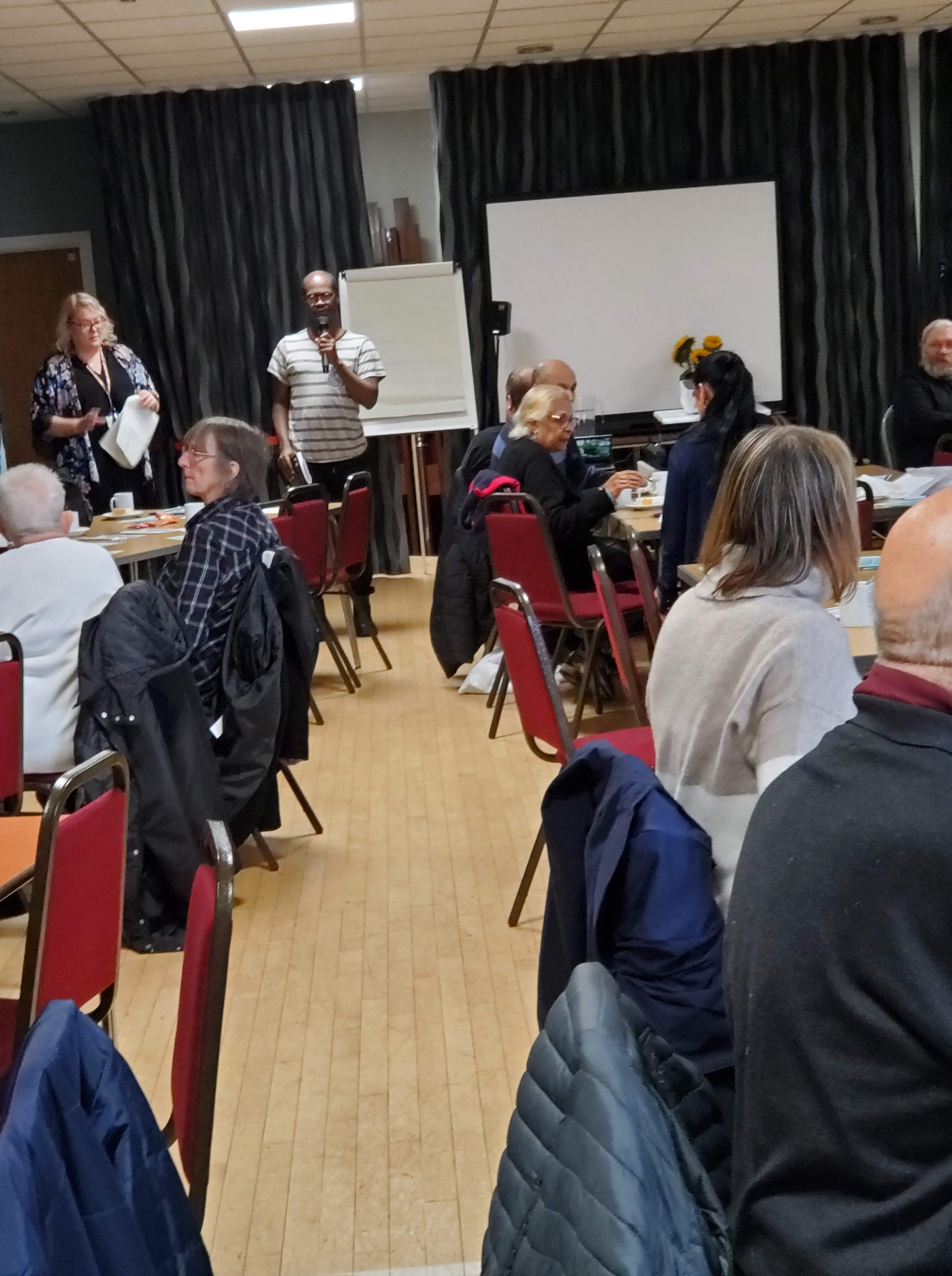
Then we had the panel of carers giving their experiences of involvement at the NHS trust. I personally feel involvement of carers shaping services is a powerful way of allowing carers to have their say.
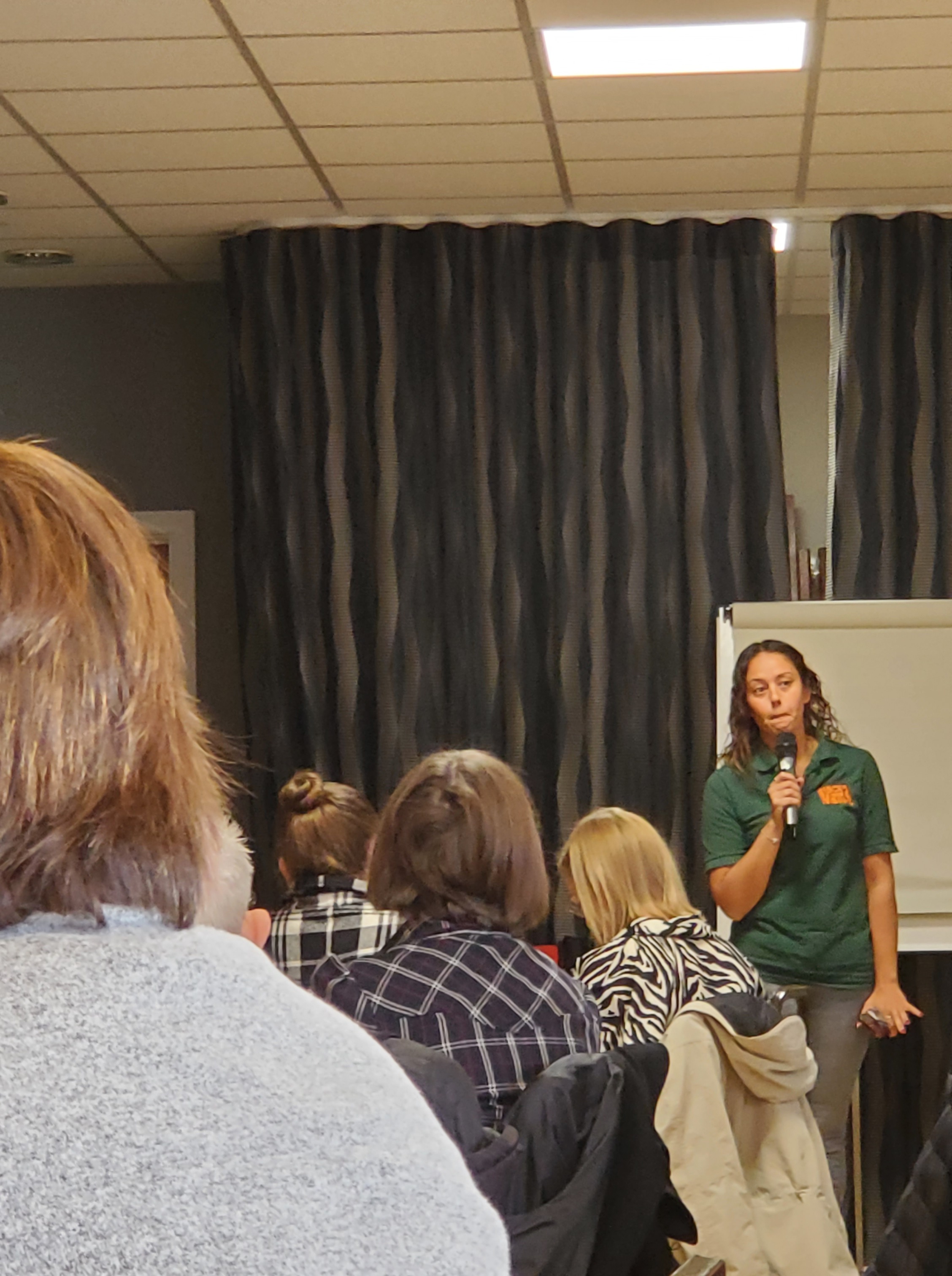
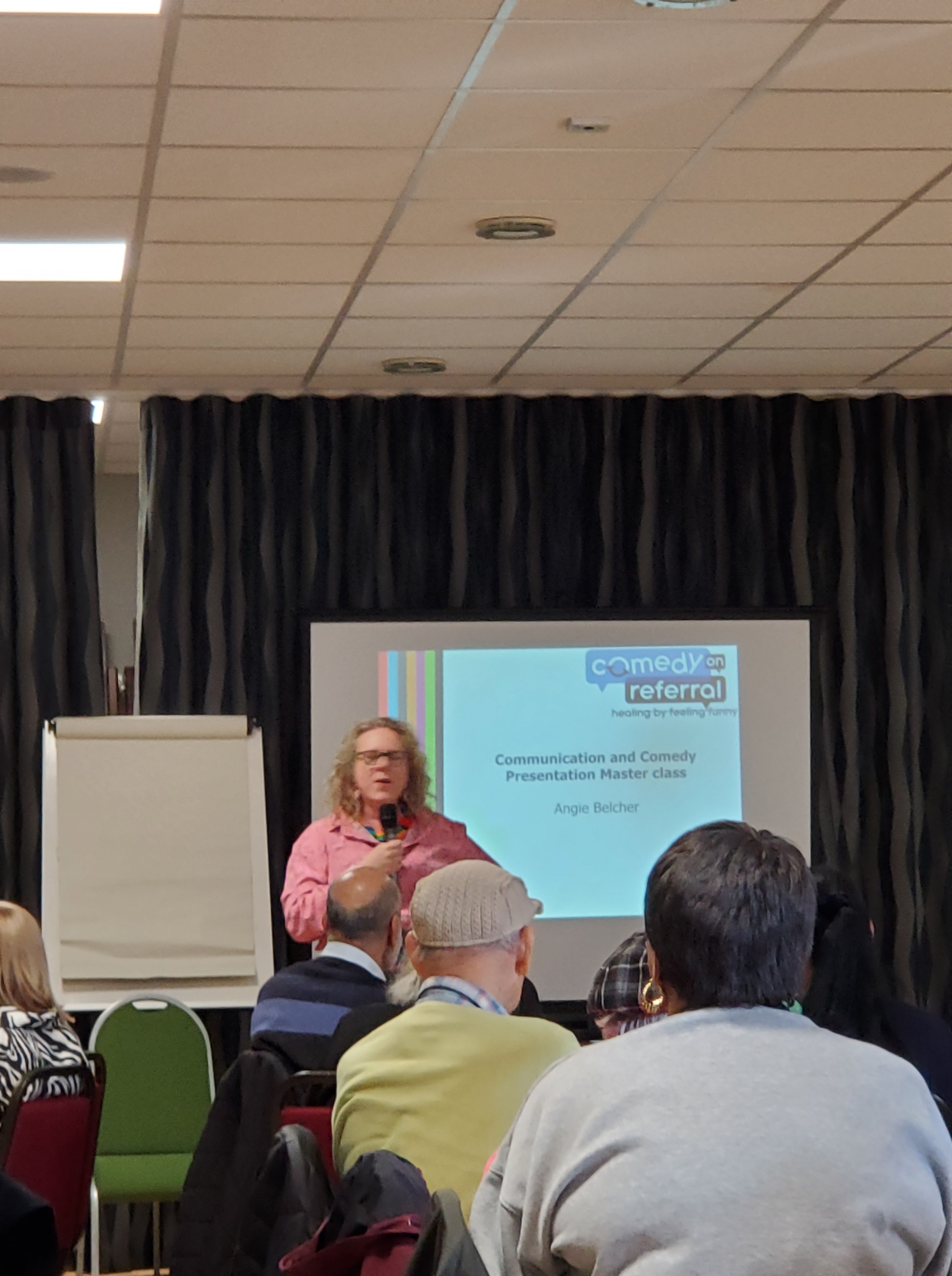
After the break, we got to hear from Debbie Hustings who is the new Triangle of Care lead for Carers Trust. Debbie used to be the former NHS England carers lead for London and has a wealth of experience when it comes to unpaid carers. Debbie presented on carers rights as she presented with her carers hat on. Next there was a comedy session from Angie Betcher who is a comedian at Bristol university, she is also skilled as a poet as well as a comedy performer.
Next was Lunch and workshops to cater for the wellbeing of carers who attended.
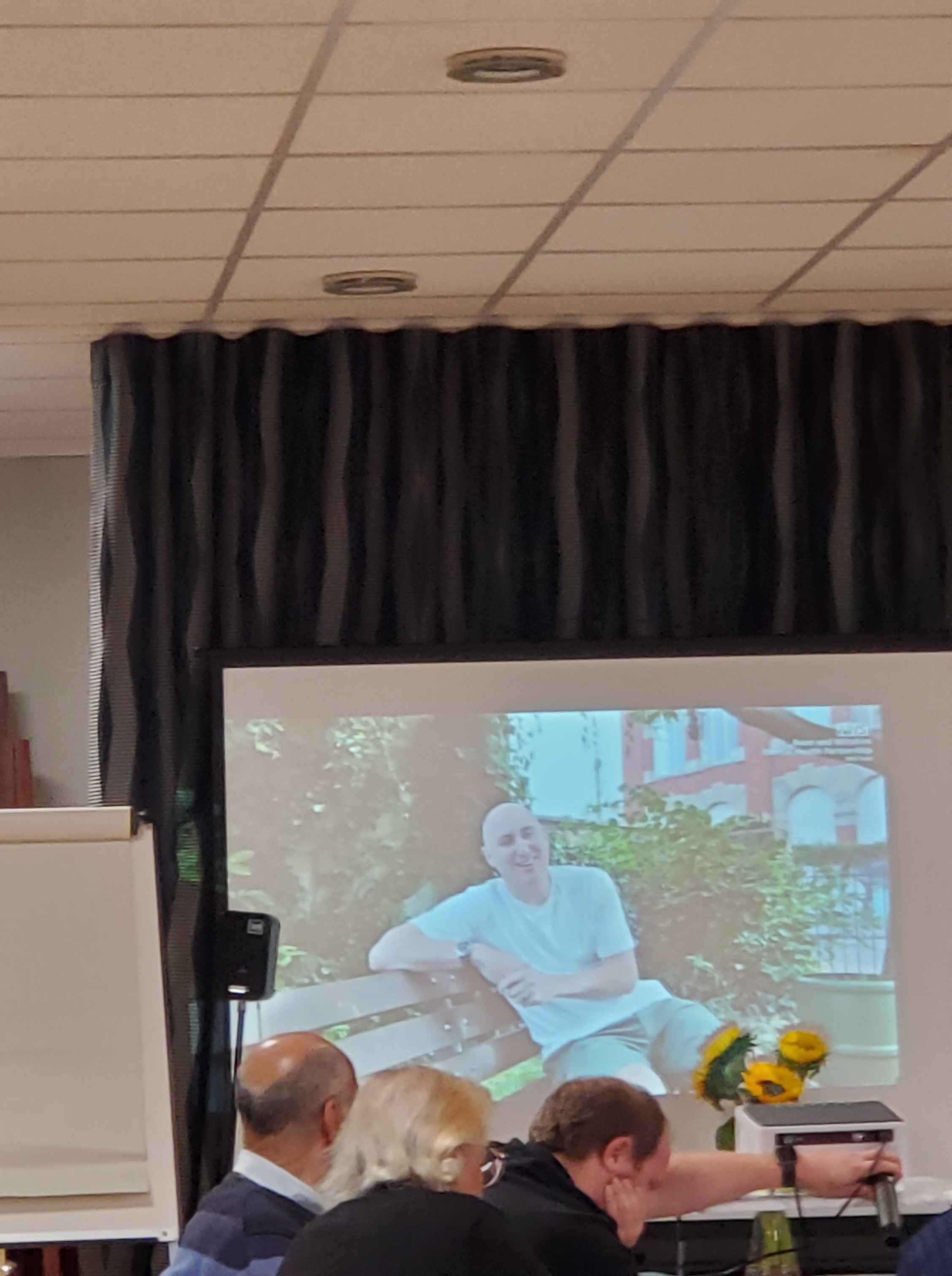
Have lunch I was up to read out 2 poems. One of the poems you can see from Avon and Wiltshire Mental Health Partnership NHS Trust’s video of the carer event below.
After more performances and networking with carers, I headed home. I would like to thank Avon and Whiltshire for the excellent event they put on for the community. Everything was planned brilliantly and I did not hear any grumbling from carers. I look forward to more events in future.
Welcome to another deep dive into the pressing issues faced by unpaid carers, brought to you by Matthew McKenzie, a dedicated carer activist. In today’s discussion, we confront the grim reality of how poverty exacerbates the struggles of unpaid carers.
If you want to see the short video version of this blog post, watch below
These unsung heroes often sacrifice their personal well-being to look after loved ones. However, when poverty is added to the equation, the challenges they face multiply exponentially. Throughout this article, we will explore various dimensions of the caregiving crisis, touching upon financial hardships, mental and physical health issues, social isolation, generational poverty, and more. The goal is to raise awareness and advocate for targeted support systems that can alleviate these burdens.
Financial Hardships
Income Reduction
Many unpaid carers find themselves in a predicament where they have to reduce their working hours or quit their jobs altogether to provide adequate care for their loved ones. This significant drop in income makes it difficult to meet everyday expenses, let alone the additional costs that caregiving entails, such as medical supplies and transportation.
Lack of Awareness About Financial Aid
It is troubling to note that many carers are unaware they might qualify for financial aid or benefits. This lack of awareness leaves them in a precarious financial situation, struggling to make ends meet.
Mental and Physical Health Challenges
Mental Toll
Balancing caregiving responsibilities with financial insecurity takes a severe toll on mental health. Chronic stress, anxiety, and depression become constant companions for many unpaid carers. This emotional strain can lead to a devastating cycle of mental health issues that are hard to break.
Physical Health Deterioration
Due to their all-consuming caregiving duties, many carers neglect their own physical health. They often face barriers to accessing healthcare, making it nearly impossible to afford basic medical services. This neglect further compounds their stress levels and deteriorates their overall well-being.
Lack of Respite Care
Imagine being on duty 24/7 with no opportunity for a break. The inability to afford respite care leads to inevitable burnout. This constant state of exhaustion further compromises the carer’s ability to provide quality care.
Social Isolation
Limited Social Interactions
Poverty significantly limits social interactions for carers. The costs associated with transportation and social activities create barriers that are hard to overcome. Consequently, many carers find themselves socially isolated, worsening their emotional well-being.
Stigma and Shame
The social isolation is often compounded by feelings of shame and stigma related to their financial situation. These feelings make it even harder for carers to seek help, exacerbating their sense of loneliness.
Quality of Care
Limited Resources
When resources are limited, carers struggle to provide the best possible care for their loved ones. This situation often leads to feelings of guilt and distress, knowing they cannot do more. The quality of care inevitably suffers, affecting both the carer and the care recipient.
Emotional Availability
Stress and burnout diminish the emotional availability needed for providing quality care. When carers are overwhelmed, they cannot offer the emotional support that is crucial for the well-being of their loved ones.
Generational Poverty
The Cycle of Financial Hardship
Generational poverty is another facet of this issue. Many carers look after older family members who have also faced financial hardships, creating a cycle of poverty. This intergenerational strain further depletes already limited resources, especially in households where young carers are involved.
Barriers to Education and Employment
Financial constraints and time demands make it incredibly challenging for carers to pursue education or training. Job flexibility is rarely an option, making it difficult for carers to find or keep employment. These barriers hinder their ability to break free from the cycle of poverty.
Emotional Burden
Guilt and Stress
Emotionally, carers often carry a heavy burden of guilt and stress. Feeling inadequate or ashamed of their financial situation adds to a sense of hopelessness. The constant worry about bills, care, and personal needs can lead to overwhelming exhaustion.
Navigating Complex Systems
Navigating the complex systems for financial aid and support is another layer of stress. The time and energy required to deal with bureaucratic hurdles can be overwhelming, adding yet another burden to the already strained carers.
Long-Term Consequences
Poverty in Old Age
Many carers face the grim prospect of poverty in their old age, having sacrificed their careers and savings to provide care. Chronic stress and poor health further reduce their life expectancy and quality of life.
Key Takeaways
Poverty significantly amplifies the struggles of unpaid carers. To improve their well-being, there is a pressing need for:
Targeted Support: Comprehensive support systems that address the unique challenges faced by unpaid carers.
Financial Assistance: Adequate financial aid to help carers manage their expenses.
Accessible Healthcare: Affordable healthcare services to ensure carers can maintain their physical and mental health.
Respite Care: Opportunities for respite care to prevent burnout and ensure carers have the necessary breaks.
By shedding light on these critical issues, we can advocate for changes that will make a tangible difference in the lives of unpaid carers. Let’s work together to ensure that these unsung heroes get the support they desperately need.
Remember to take care of yourselves, and for more insightful discussions, please like, share, and subscribe. God bless.
Welcome to another blog post off my carer and mental health website.
Caring for a loved one is a profoundly rewarding experience, but it can also be an incredibly challenging journey. The role often comes with feelings of isolation and overwhelming responsibility.
Fortunately, networking with fellow caregivers can make a significant difference in the lives of unpaid carers. Connectivity fosters emotional support, practical advice, resource sharing, community building, resilience, and even advocacy. In this article, we’ll explore the importance of networking for unpaid carers and how it can enrich their caregiving journey.
Video Version
To watch a brief video of the blog please view the video below
Emotional Support: You Are Not Alone
One of the most significant benefits of networking is emotional support. Caring for a loved one can often feel isolating, and the weight of responsibilities can be heavy. Connecting with other caregivers who truly understand your experiences can lighten this emotional load. Sharing your stories, challenges, and triumphs with those who “get it” provides comfort and a sense of belonging. Knowing you are not alone in this journey can significantly improve mental health and resilience.
Access to Practical Advice
Networking allows carers to exchange invaluable tips and strategies. Each caregiving situation is unique, but many challenges are universal. Experienced carers can offer practical advice on managing specific conditions, navigating healthcare systems, or handling day-to-day tasks. This shared knowledge acts as a collective wisdom pool, making the caregiving process more manageable for everyone involved.
Resource Sharing
In addition to practical advice, networking facilitates the sharing of resources. Information about local services, support groups, and community resources can be invaluable. Imagine having a treasure map that leads you to various forms of support tailored for carers—this is what resource sharing can achieve. These exchanges can lead to discovering programs, grants, respite care options, and other services that ease the caregiving burden.
Community Building
Establishing connections with other caregivers fosters a sense of community and belonging. In many ways, caregiving can be a lonely journey, but community building changes this narrative. Community groups provide a space where carers can interact and engage in meaningful conversations. For example, caregiver groups run locally can offer a support system where members can share experiences, support each other, and even socialize. Such communities act as pillars of strength for carers, reinforcing that they are part of a larger, caring network.
Enhancing Resilience Through Shared Strategies
Resilience is a necessary trait for carers. The demands of caregiving require constant adaptation and emotional strength. By networking, carers can learn effective coping strategies from one another. These shared strategies can empower carers, building their resilience and enhancing their ability to provide care. Learning from others’ experiences offers new insights and techniques, reinforcing the carer’s own skills and capacities.
Boosting Advocacy and Awareness
When caregivers come together, their collective voice becomes stronger. Networking can boost advocacy and awareness of the issues that matter most to carers. Advocacy can lead to policy changes, more resources, and greater recognition of the challenges faced by carers. Whether it’s campaigning for more support services or raising awareness about the realities of caregiving, a united front can make a substantial impact.
Amplifying Voices
Together, caregivers can amplify their voices to influence change. Advocacy efforts become more effective when carers unite. These collective efforts can bring about policy changes, increased funding for caregiving resources, and greater public awareness of the importance of supporting unpaid carers. By networking and working together, carers can drive systemic changes that benefit the entire caregiving community.
Tips for Building a Caregiving Network
Join or Form Caregiver Support Groups
Consider joining or forming caregiver support groups in your local community or online. These groups create a space for regular interactions, exchanges of advice, and mutual support. You might want to check out the carer forums I run off my website.
Attend Workshops and Conferences
Workshops, seminars, and conferences are excellent opportunities to meet other carers and professionals in the field. These events often provide both educational content and networking opportunities.
Utilize Social Media
Social media platforms can also serve as networking tools. Joining caregiver groups on platforms like Facebook or participating in Twitter chats can connect you with a broad community of caregivers worldwide.
Engage with Local Nonprofits and Organizations
Local nonprofits and organizations often have resources and networks specifically designed for carers. Engage with these entities to tap into their resources and support networks.
Leverage Online Forums
Online forums and communities, such as Reddit or specialized caregiving forums, allow for the exchange of advice, experiences, and support. These platforms can be especially beneficial for those who may not have access to local groups. I even utilise Whatsapp to provide a network for carers to connect.
Reach Out to Healthcare Providers
Healthcare providers often have connections to support groups and resources for carers. Don’t hesitate to ask your loved one’s doctor or nurse for referrals to local or online caregiver networks.
Create Personal Connection Lists
Keep a list of contacts that you can reach out to for different types of support. This can include other carers, healthcare professionals, and service providers. A well-maintained list can be a quick reference for resources and advice when needed.
Conclusion
Networking for unpaid carers is more than just a beneficial activity—it’s a necessary lifeline. Emotional support, practical advice, resource sharing, community building, resilience, and advocacy are some of the many advantages that come from connecting with fellow carers. By fostering these connections, carers can significantly enrich their caregiving experience and improve their well-being and the quality of care they provide. Remember, you are not alone in this journey. Reach out, connect, and together, we can create a supportive and empowered caregiving community. Take care!
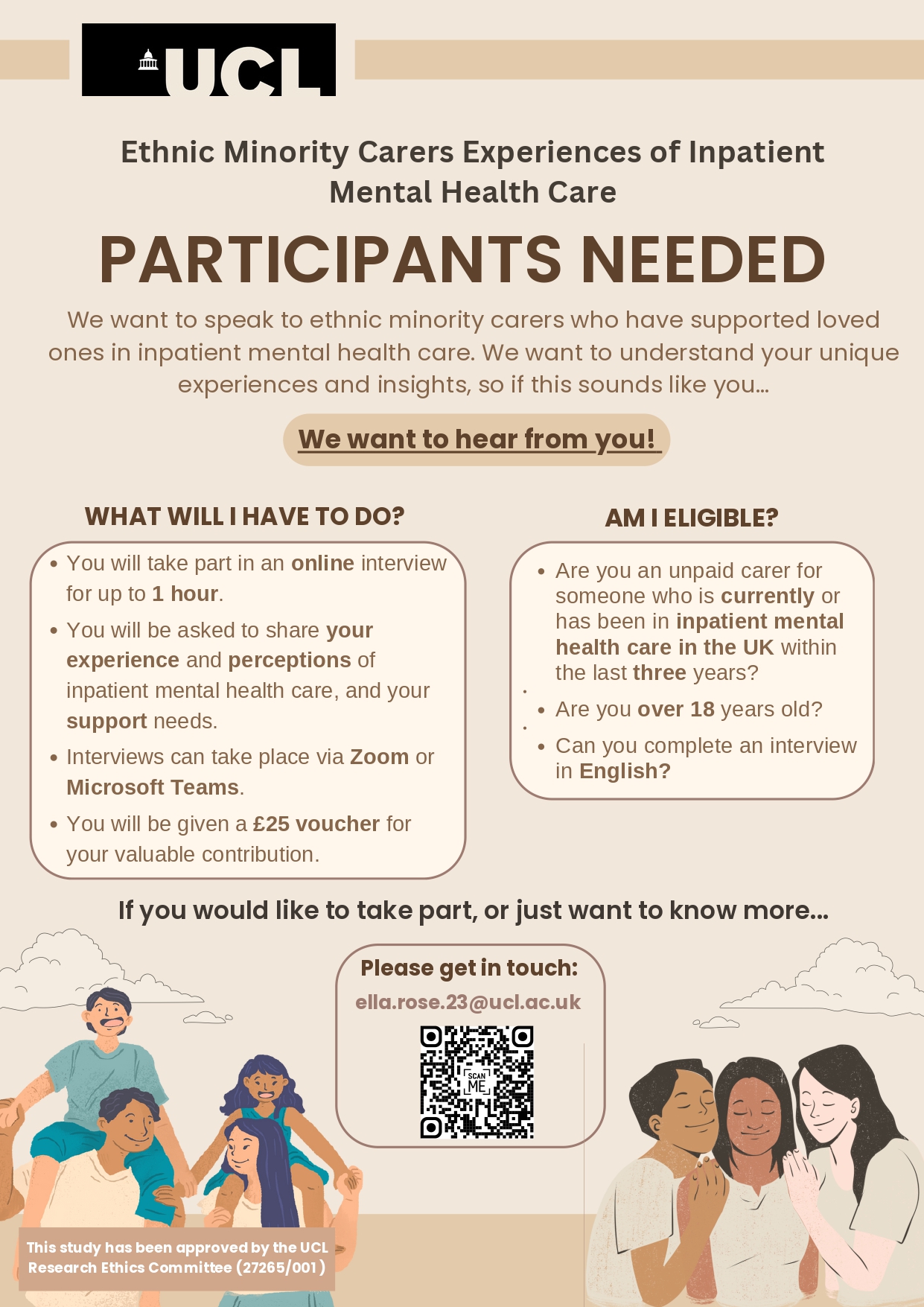
Welcome back to another update from Carer activist Matthew McKenzie. I have some exciting research in which carers can feedback their experiences.
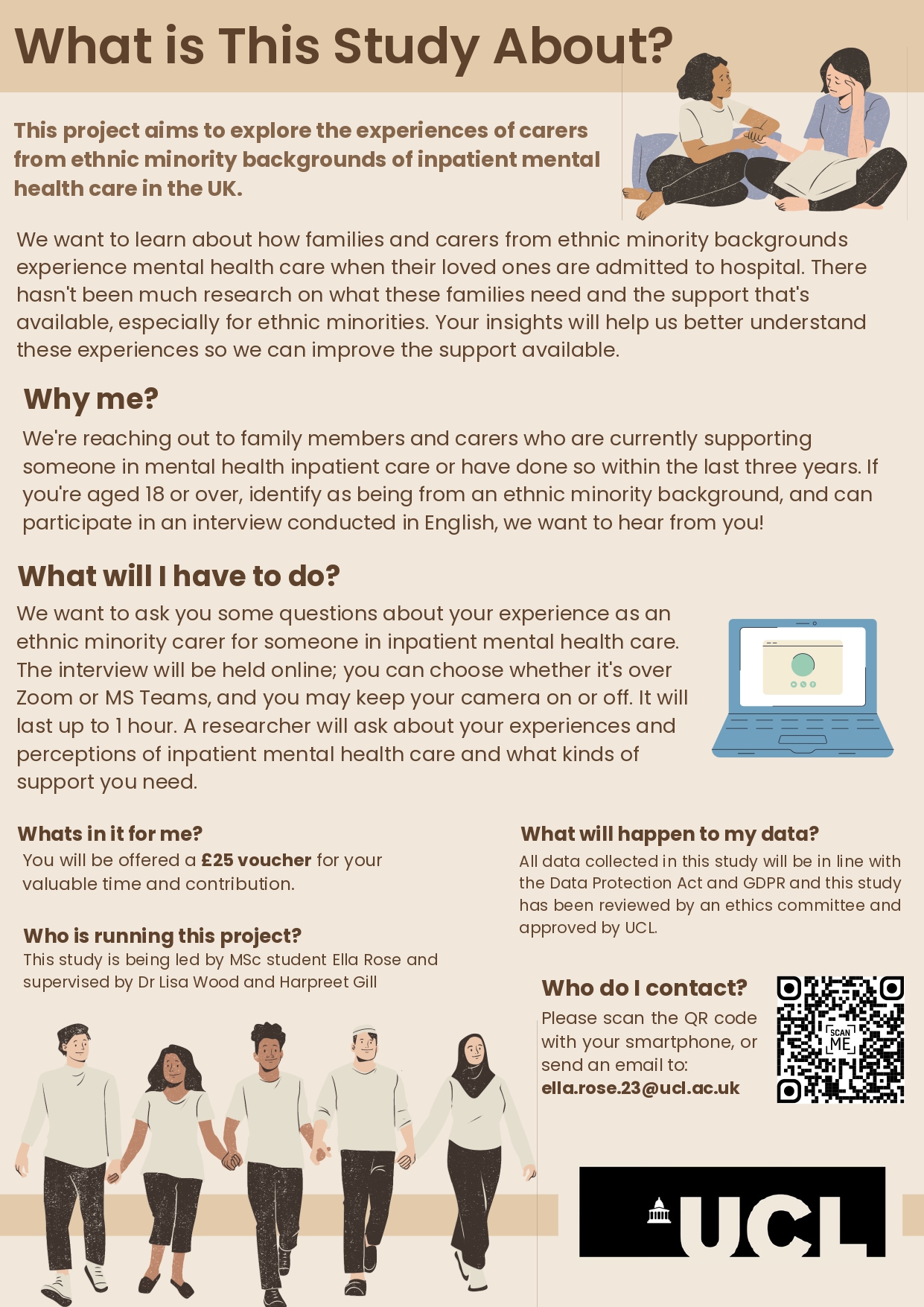
Ella Rose a researcher from University College London is conducting a study focusing on the experiences of carers from ethnic minority backgrounds of inpatient mental health care in the UK. There are currently very few studies documenting the experiences of ethnic minority carers of mental health services. She hopes this study will fill an important gap in current research and help identify the specific needs of ethnic minority carers, and how services can best support them.
Participation in this study will involve a one-hour interview to discuss their experiences as carers of a loved one receiving inpatient mental health care in the UK, their views, and their support needs. She is recruiting individuals over 18 who identify as being from an ethnic minority background and who are carers for someone currently or previously admitted to inpatient mental health care within the last three years. As a thank you for their time, she will offer participants a £25 voucher.
To take part in the study please see the poster below or email Ella at ella.rose.23@ucl.ac.uk













































 A Caring Mind