By Matthew McKenzie BEM, FRSA
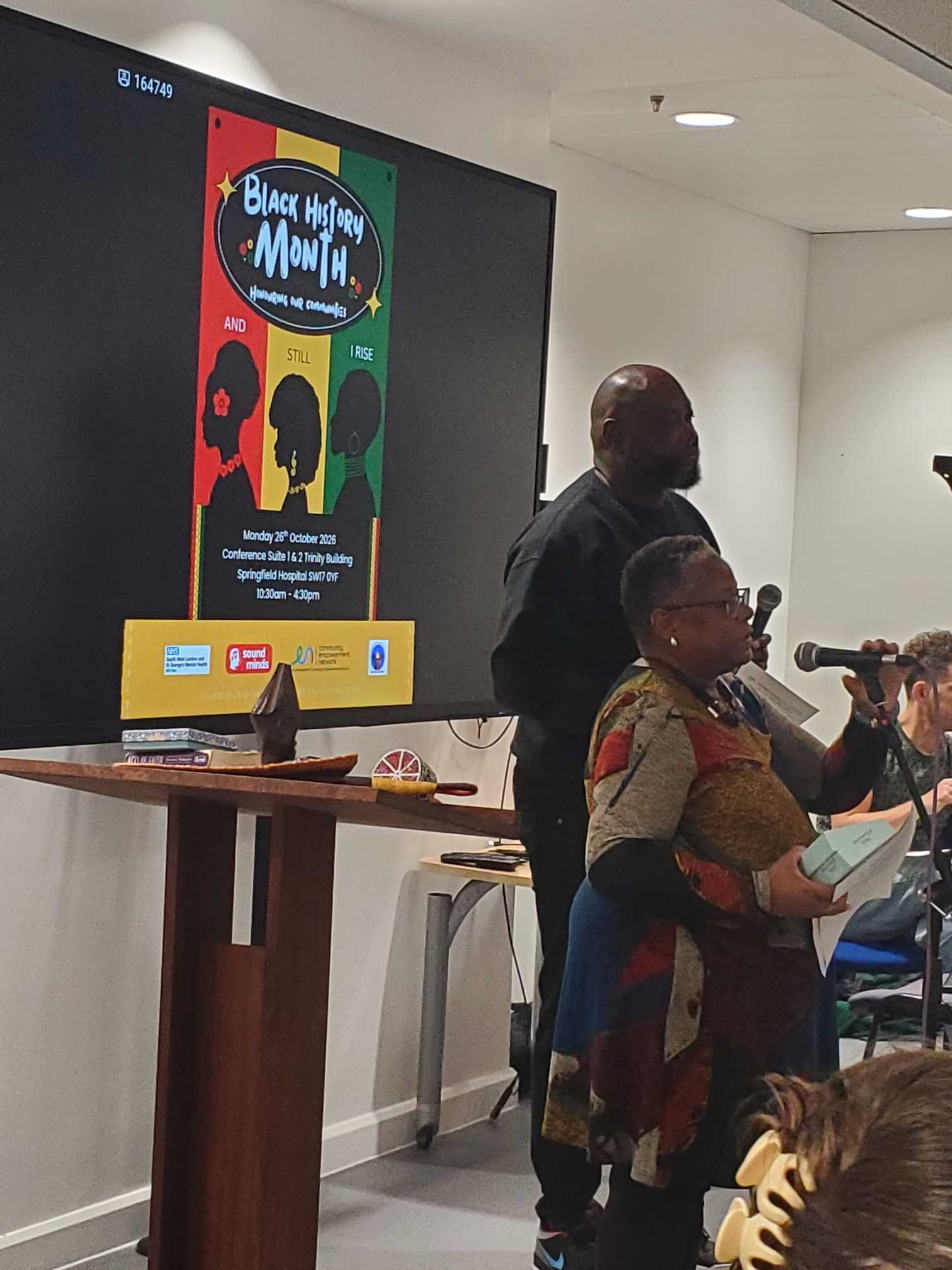
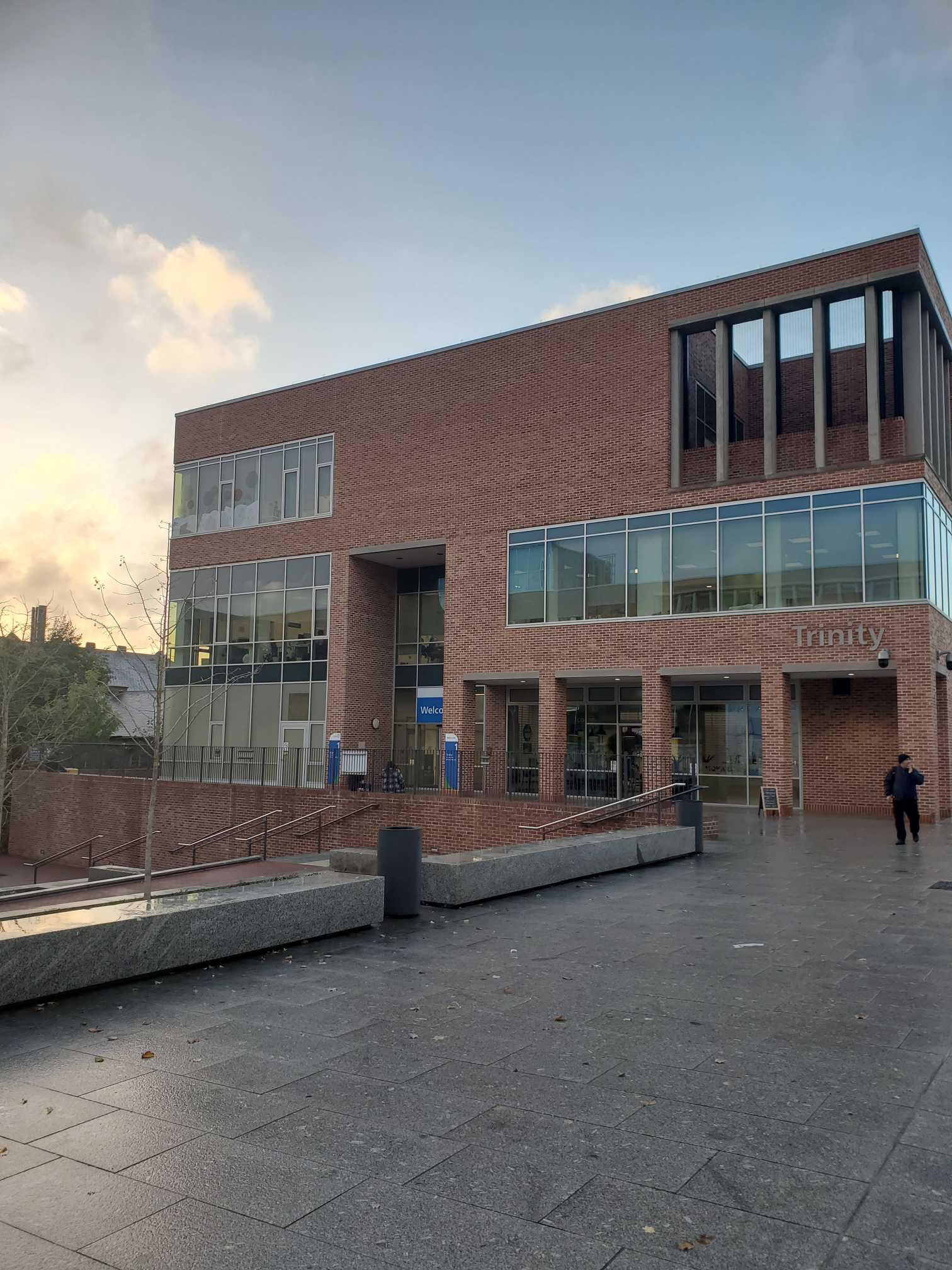
On Monday 26 October 2026, I attended a Black History Month event at Springfield Hospital, where I was also invited to give a presentation about the experiences of Black unpaid carers.
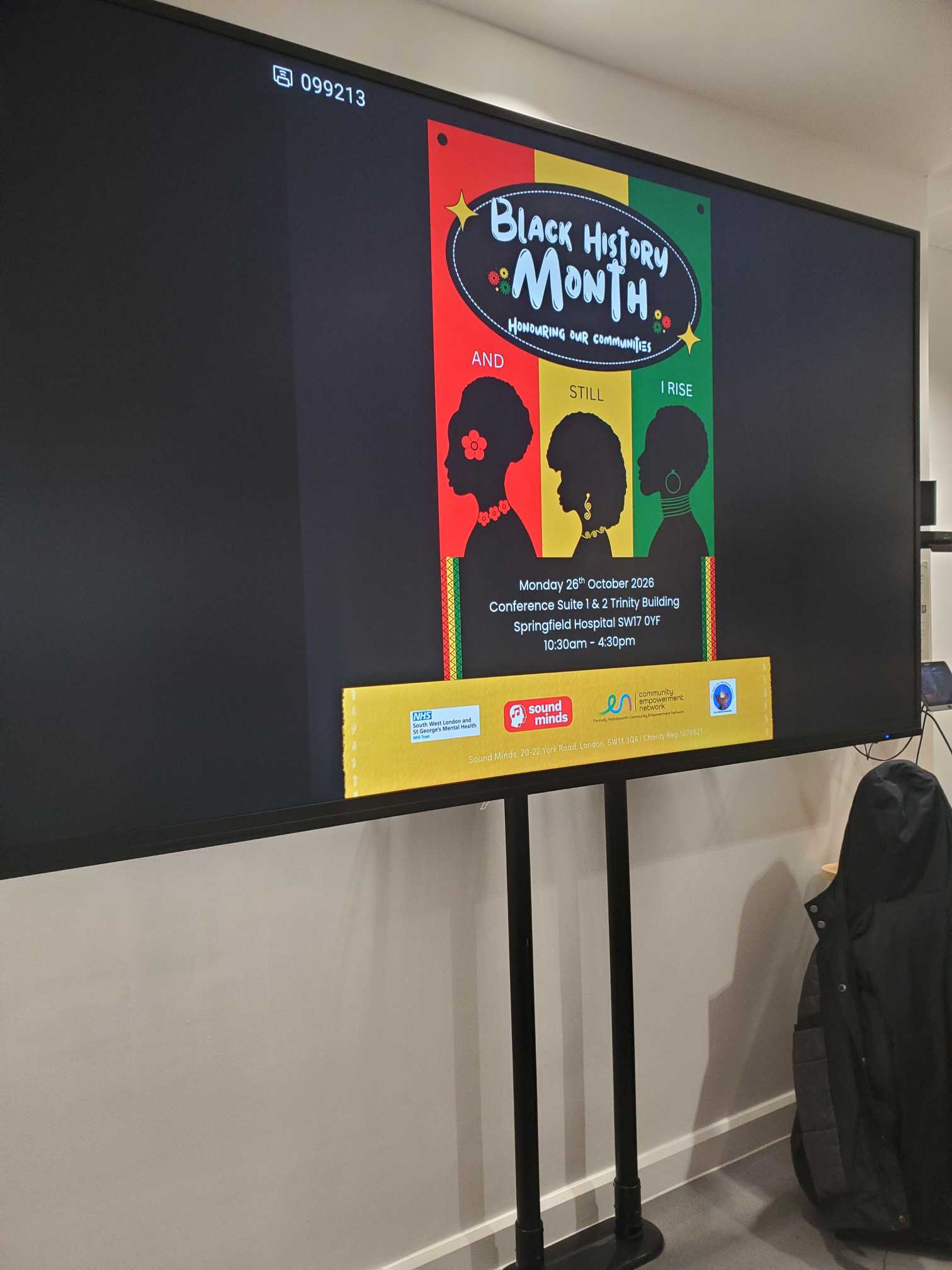
The event was made possible through the combined efforts of Sound Minds, South West London and St George’s Mental Health NHS Trust, the Community Empowerment Network and the Hope Project. Together, they brought people with lived experience, community organisations, mental health professionals, artists and carers into the same space to celebrate Black history and culture. Their contributions showed the value of partnership in creating welcoming spaces where people can share their stories, connect through creativity and support one another’s wellbeing.
The event brought together people with lived experience, mental health professionals, community organisations, artists, poets and supporters. Throughout the day, we heard stories of resilience, creativity and community. We also had opportunities to reflect on what it means to be seen, heard and supported.
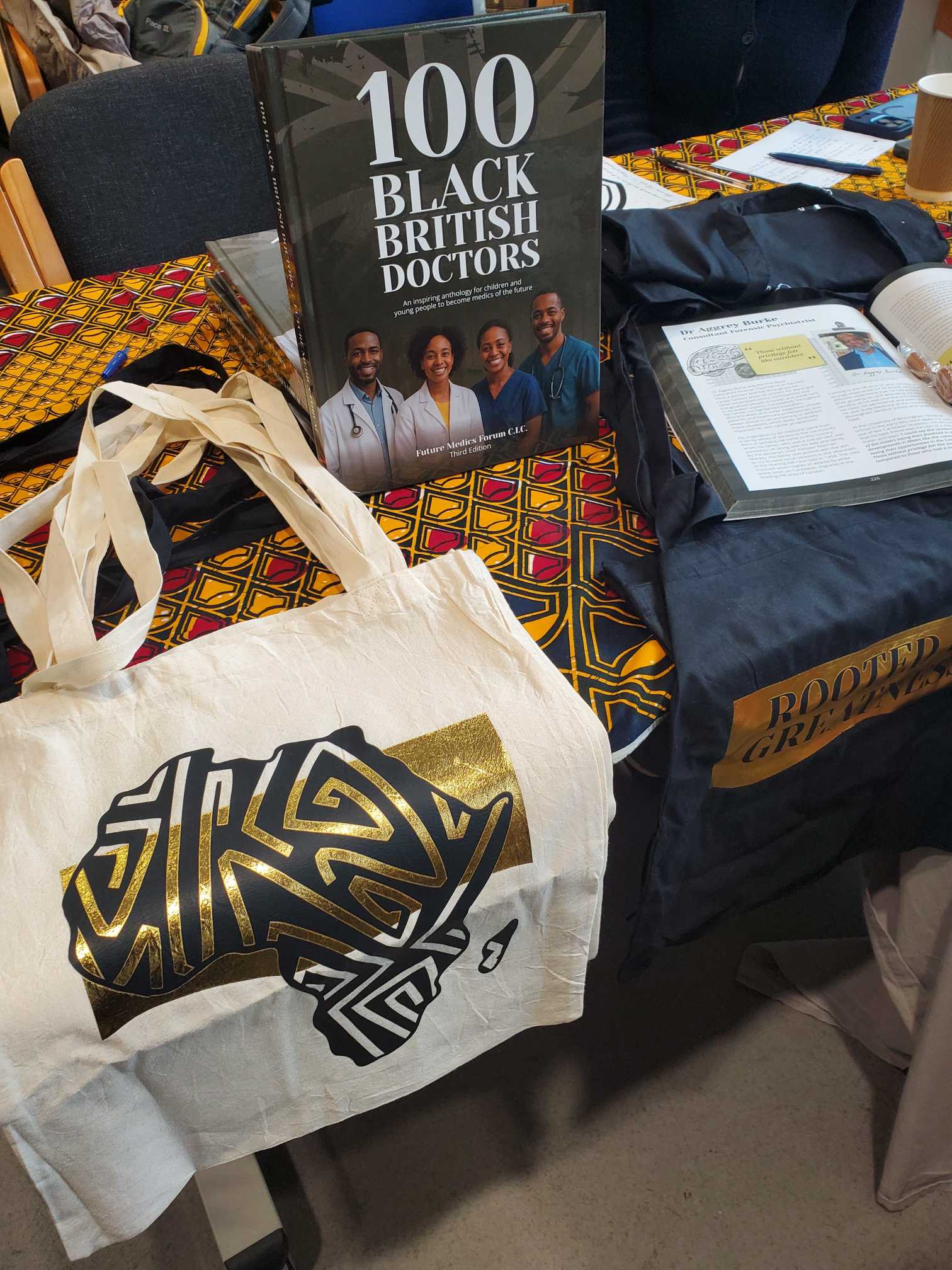
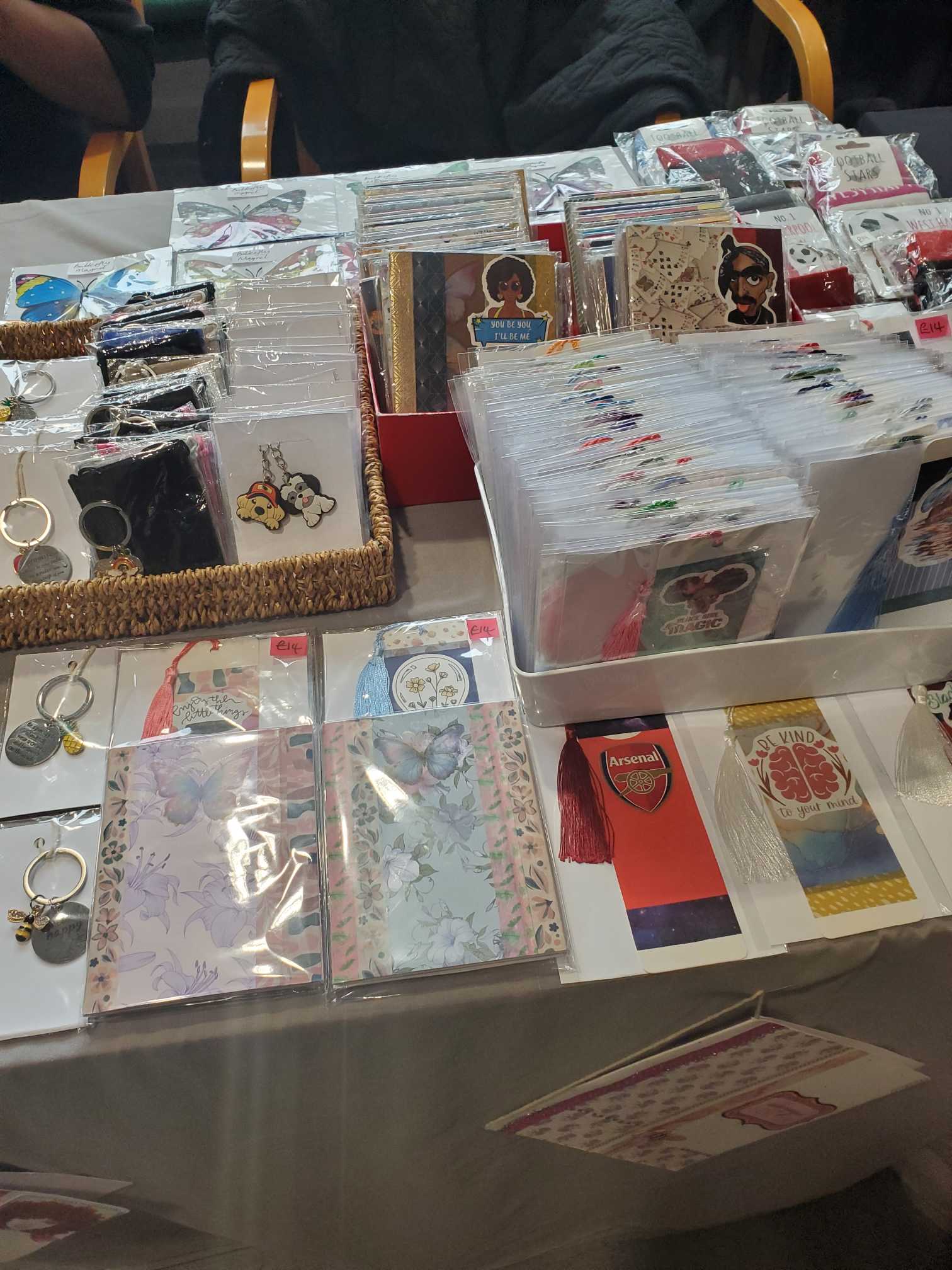
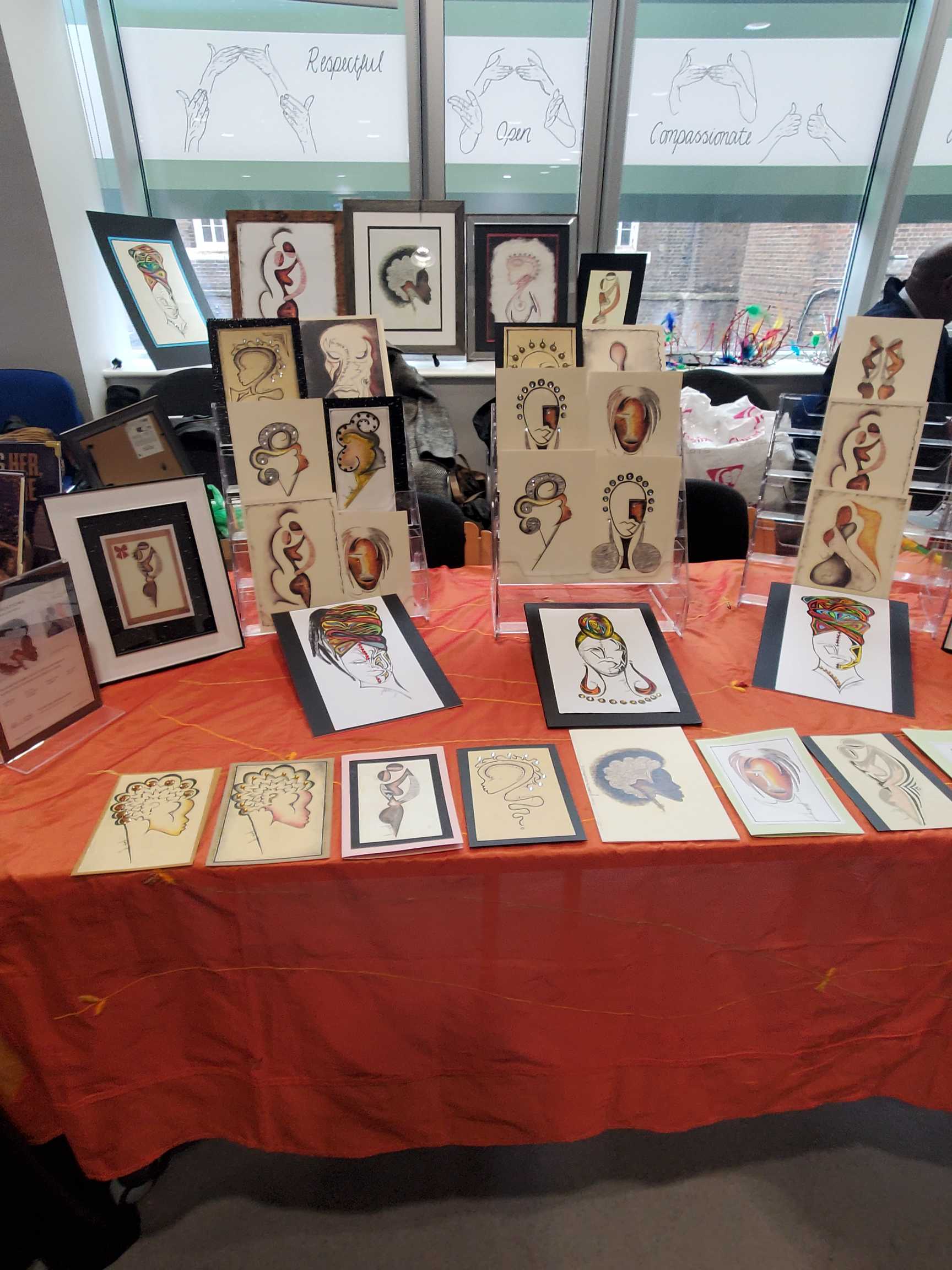
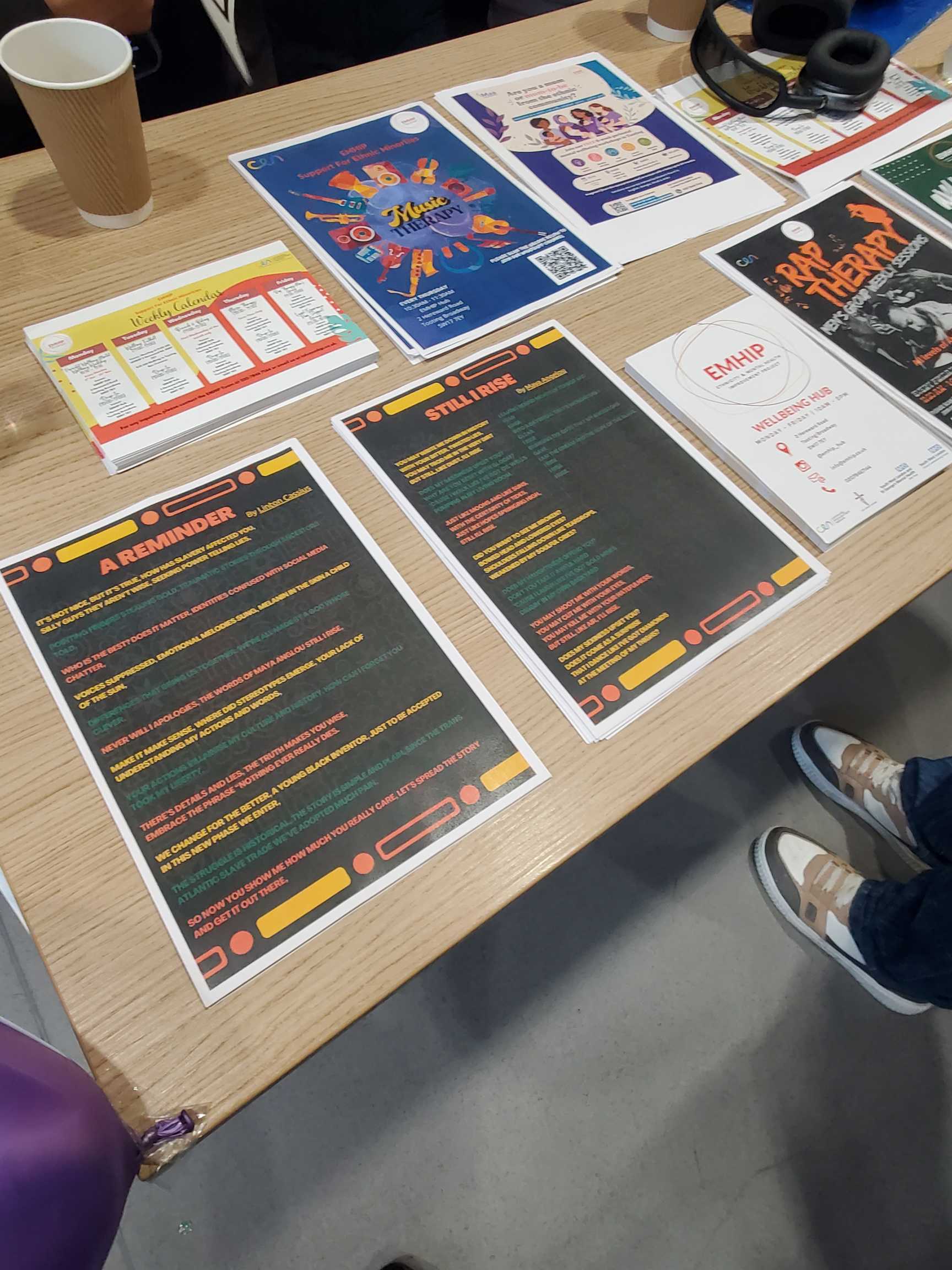
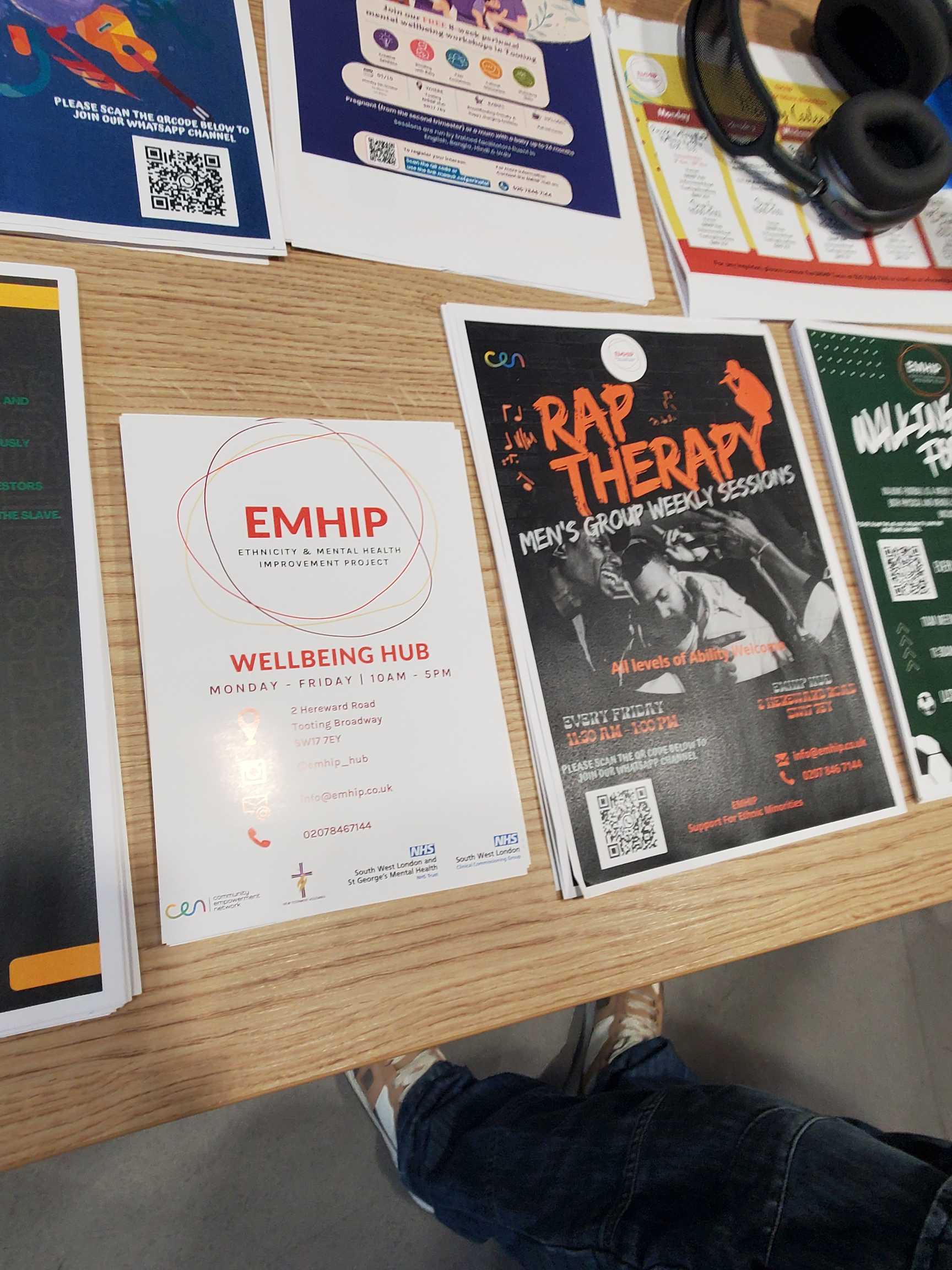
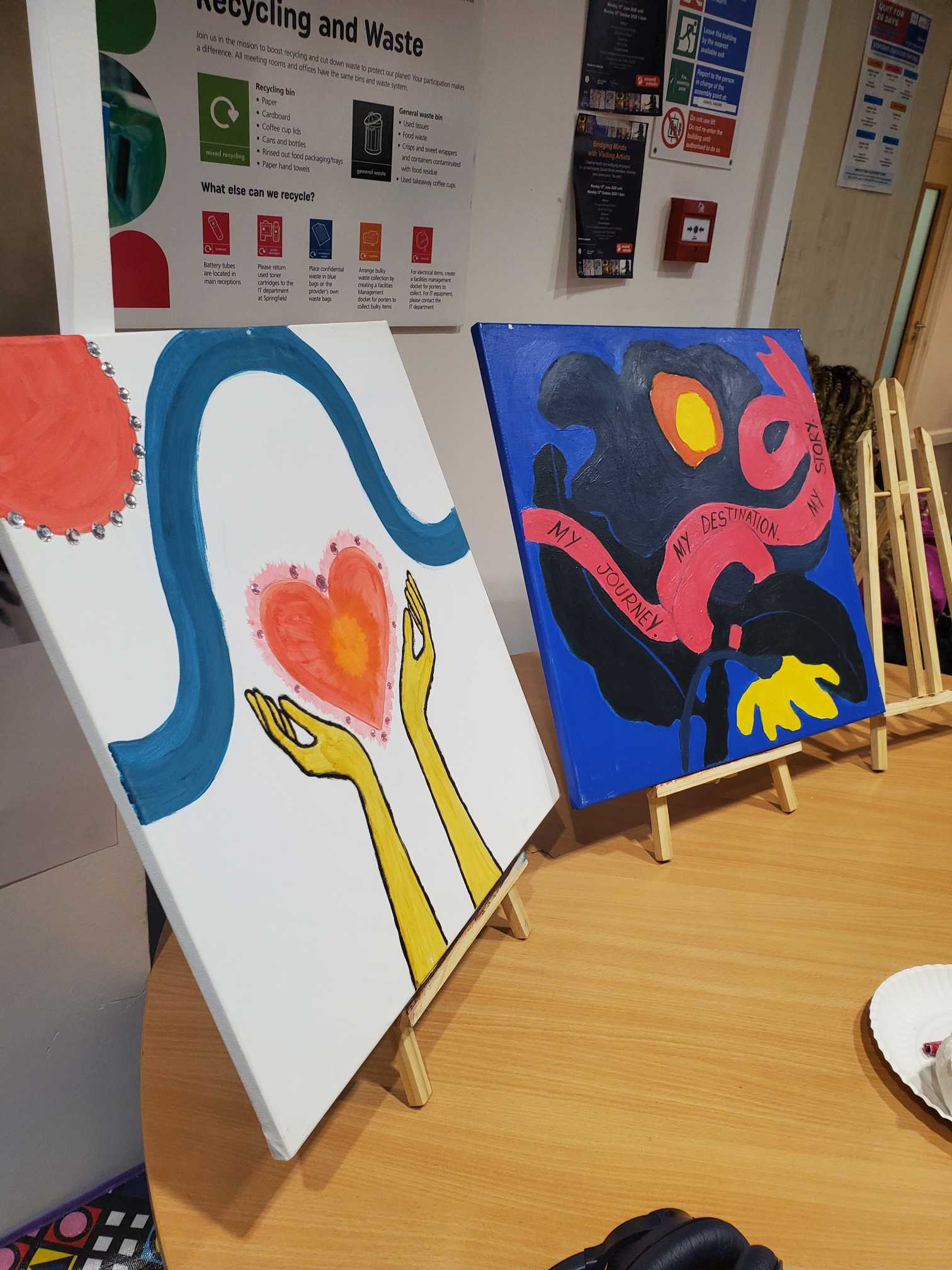
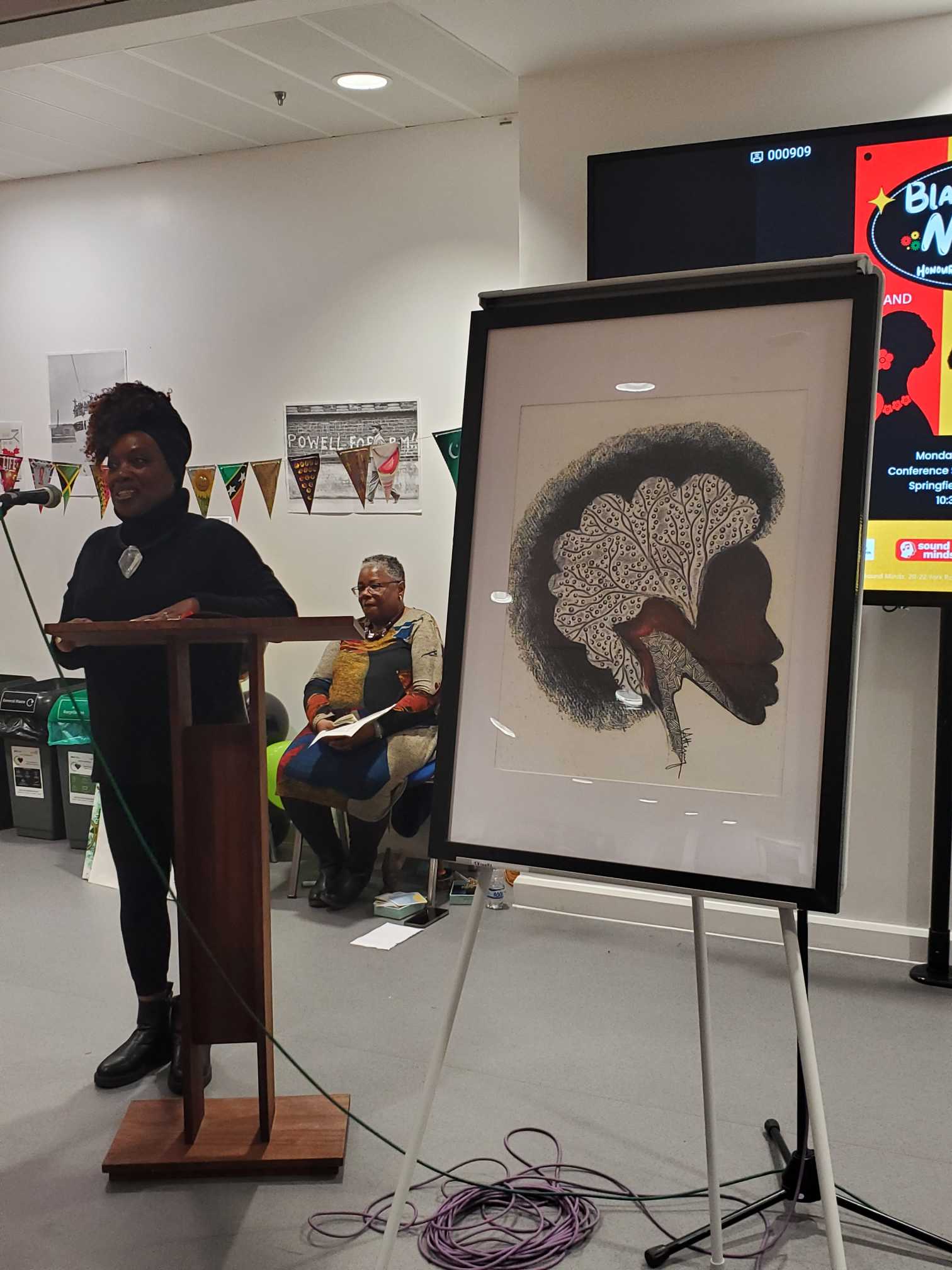
For me, the event was a reminder that Black History Month is not only about looking back. It is also about recognising the people whose experiences continue to shape our communities today, including the unpaid carers who are often missing from conversations about mental health.
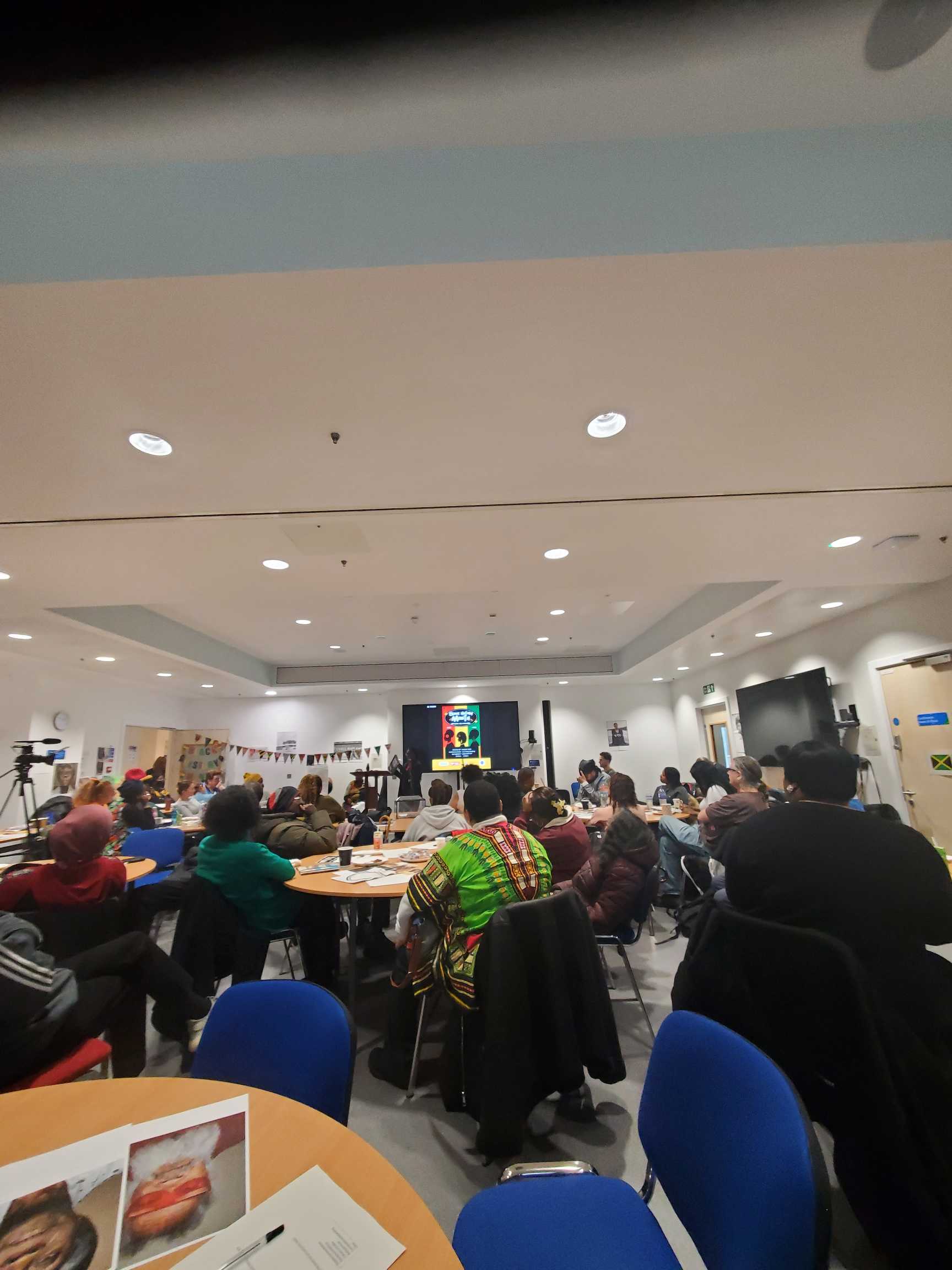
A space for community and connection
The day began with a creative activity called “My Shield of Strength.” We were invited to think about what brings us joy, what resilience means to us and what helps us through difficult times.
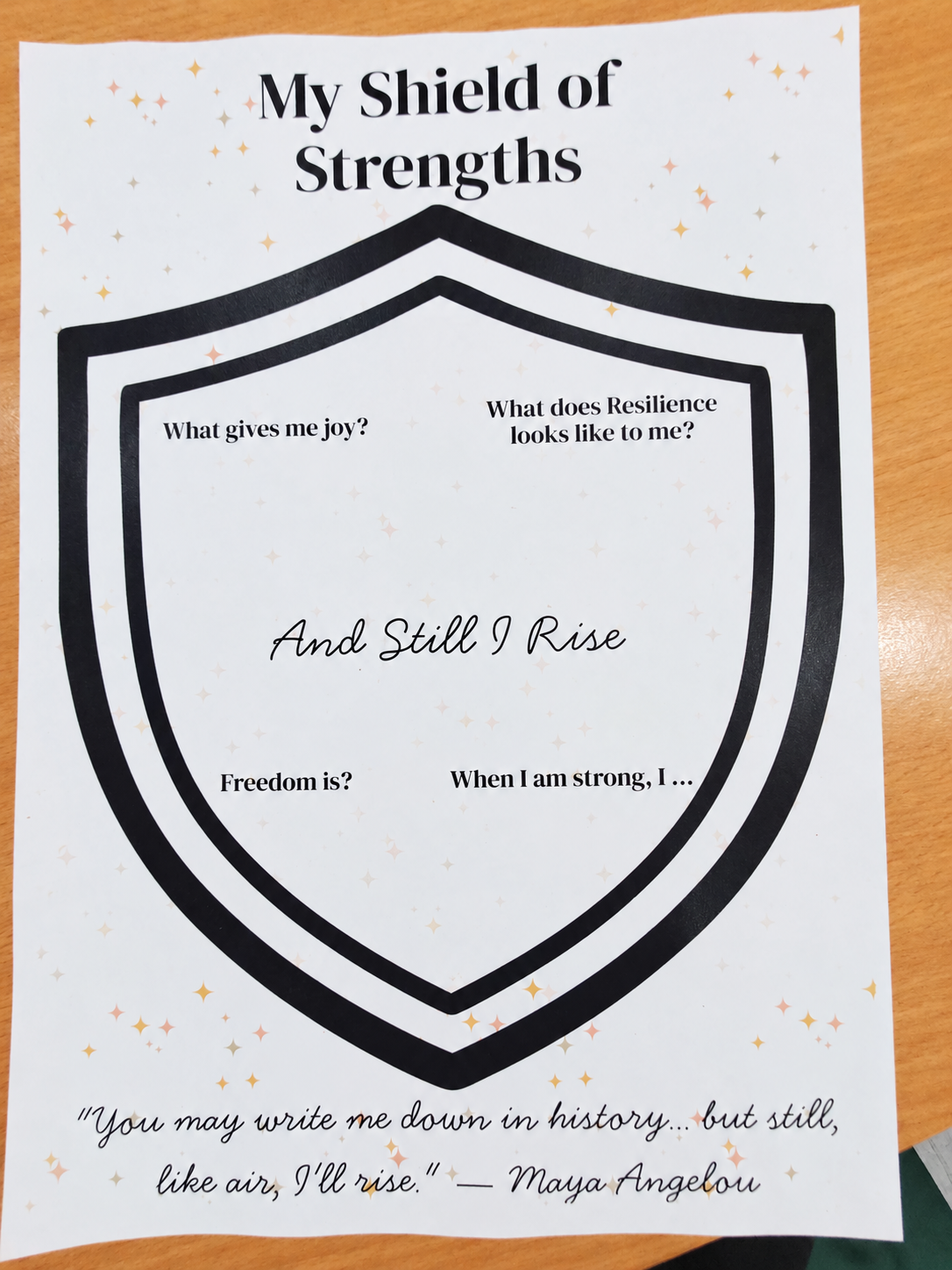
People spoke about family, community, freedom and helping others. Listening to those reflections made me think about how important it is for carers to have spaces where they can consider their own needs and strengths.
When you are supporting someone else, it can be easy to become so focused on their wellbeing that you forget to ask what sustains you. A carer might find strength in faith, friendship, creativity, family or simply having time to rest. Those things matter.
The event also highlighted the work of community organisations supporting mental health and wellbeing. We heard about welcoming spaces where people can take part in activities, connect with others and access practical support. Such spaces can help people build trust and find a sense of belonging, particularly when formal services may feel difficult to approach.
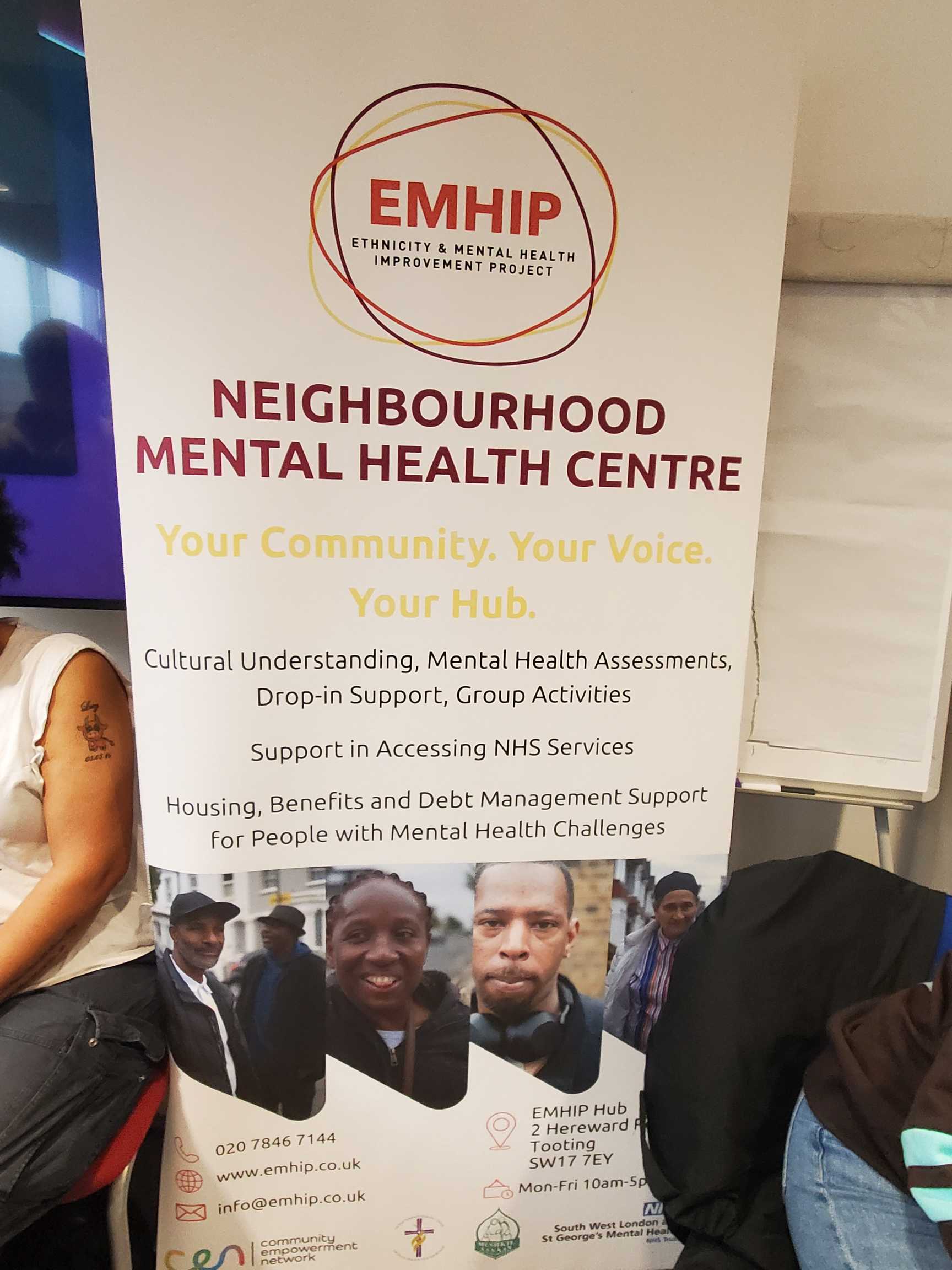
Sound Minds shared how creativity, music, art and peer support can help people connect with one another. As someone who uses poetry in my own carer engagement work, I appreciated seeing creativity given such a prominent place in the programme.
Recognising Black unpaid carers
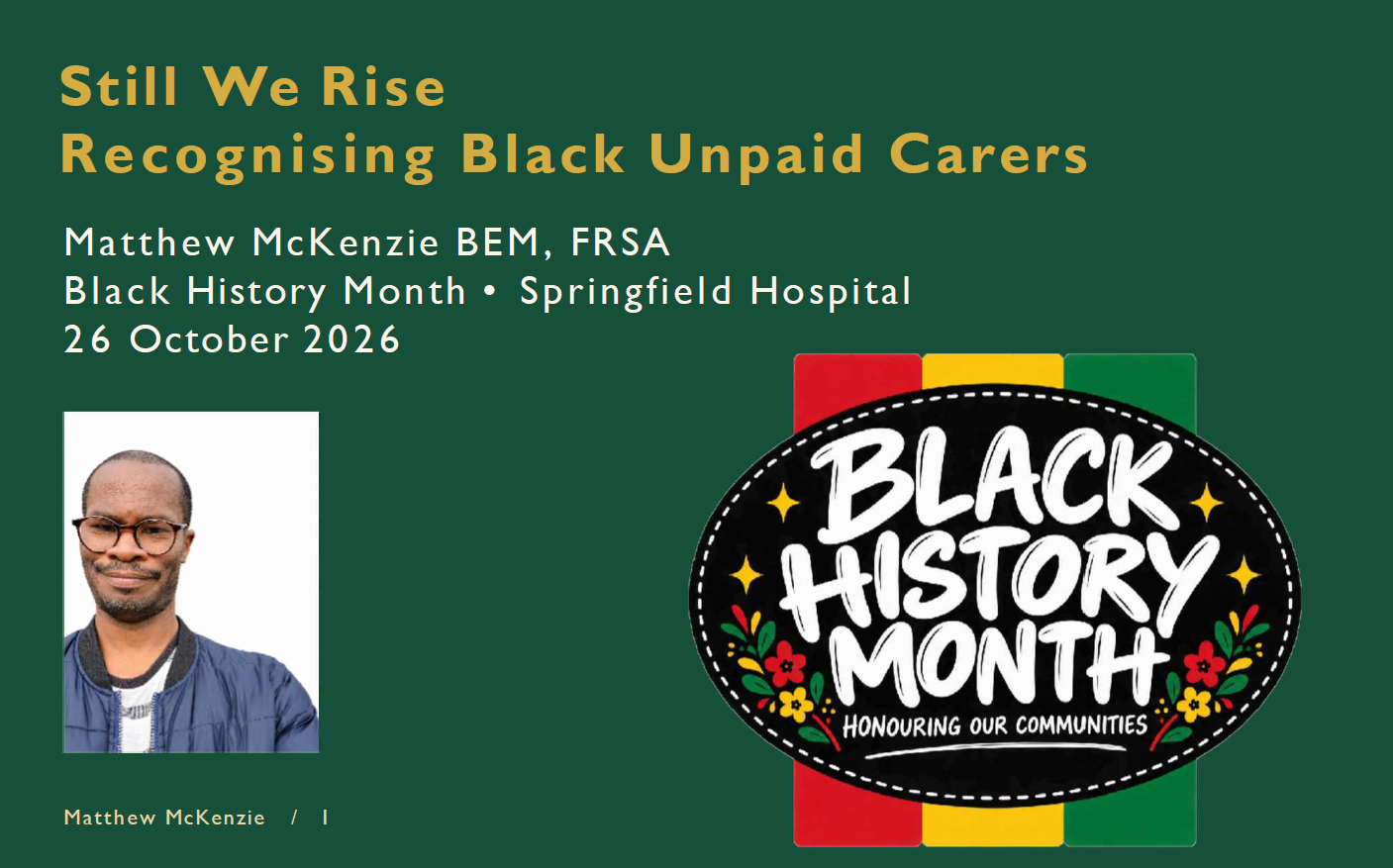
My presentation was called “Still We Rise: Recognising Black Unpaid Carers.” It drew on my experience of caring for my mother, who lived with schizophrenia, and my continuing role supporting my two autistic brothers.
I wanted to speak about the caring that people do not always see: the phone calls after a difficult appointment, the worry that follows you home, the questions you carry into meetings and the knowledge built up over years of supporting someone.
Families and carers can know a great deal about the people they support. They may recognise when something has changed, understand what helps a loved one feel safe or know how best to communicate with them. Yet carers can still struggle to have their concerns heard.
For Black carers, those difficulties can be compounded by racism, stereotyping and assumptions about family life. One assumption is that Black families will always cope because they have strong family or community networks. Those networks can be a source of strength, but their existence should never be used as a reason to overlook a carer’s need for support.
Every family is different. Every carer deserves the opportunity to explain their own situation.
What does it mean for a carer to rise?
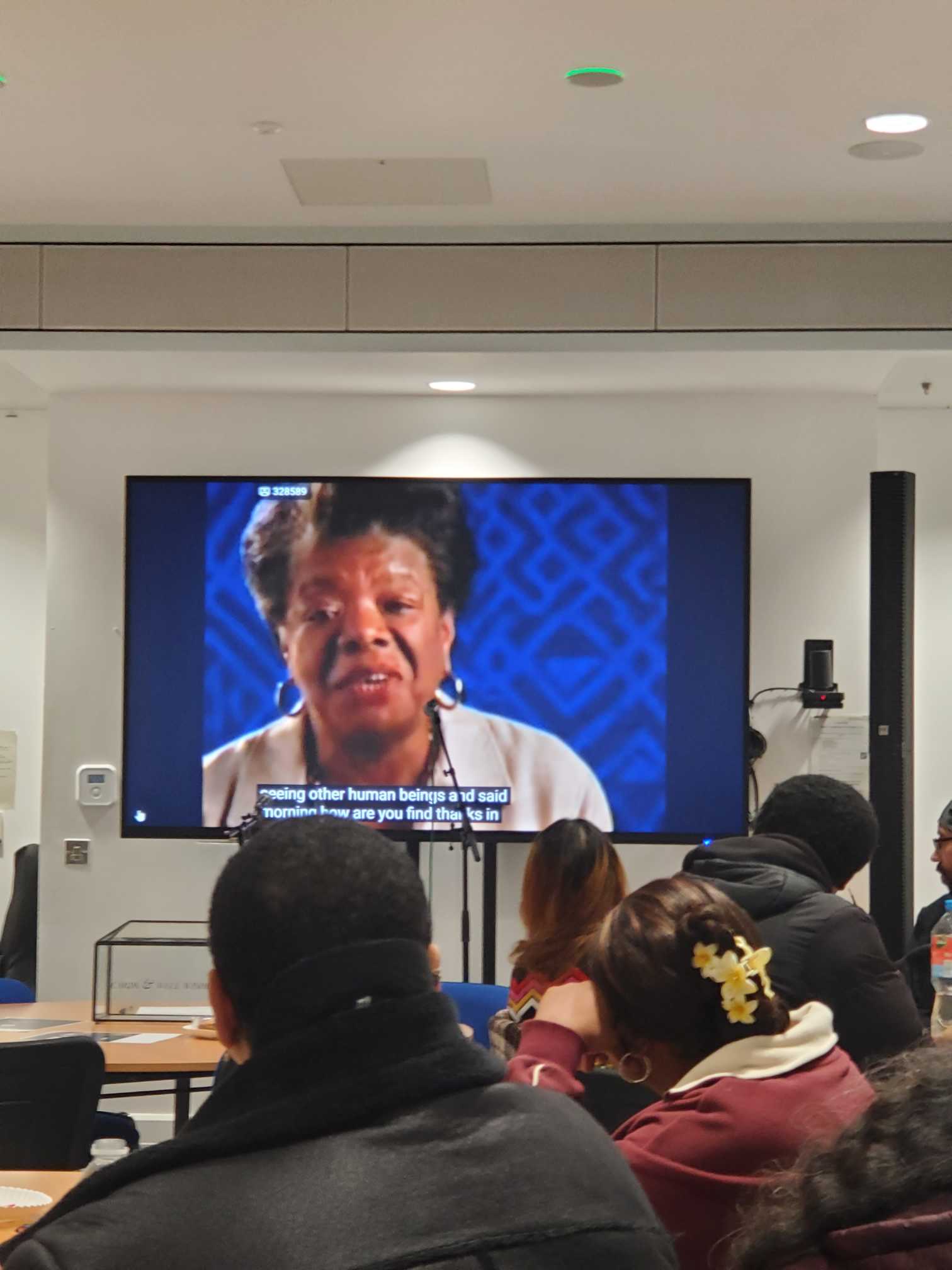
Maya Angelou’s Still I Rise provided inspiration for the event and for my own contribution. Her poem speaks powerfully to dignity, resistance and the determination to rise in the face of oppression.
I found myself asking what rising might mean for a carer who has struggled to be heard by health and social care services.
Perhaps it means finding the confidence to ask a question again when the first attempt was dismissed. Perhaps it means finding a community of other carers who understand. It might mean being recognised as a person with needs of your own, as well as someone who provides support.
But I also think we need to be careful about how we speak about resilience. Black carers should not have to carry an ever-growing burden simply because they have shown they can be strong. Recognition should lead to practical support, genuine involvement and a willingness to challenge unfair treatment.
Room for our voices
During my presentation, I shared my poem “Room for Our Voices.” It begins with a carer bringing a notebook to a meeting, filled with names, dates and questions gathered through difficult nights.
Behind those notes is a person the carer wants professionals to understand. The poem asks for space at the table and for those questions to reach the room.
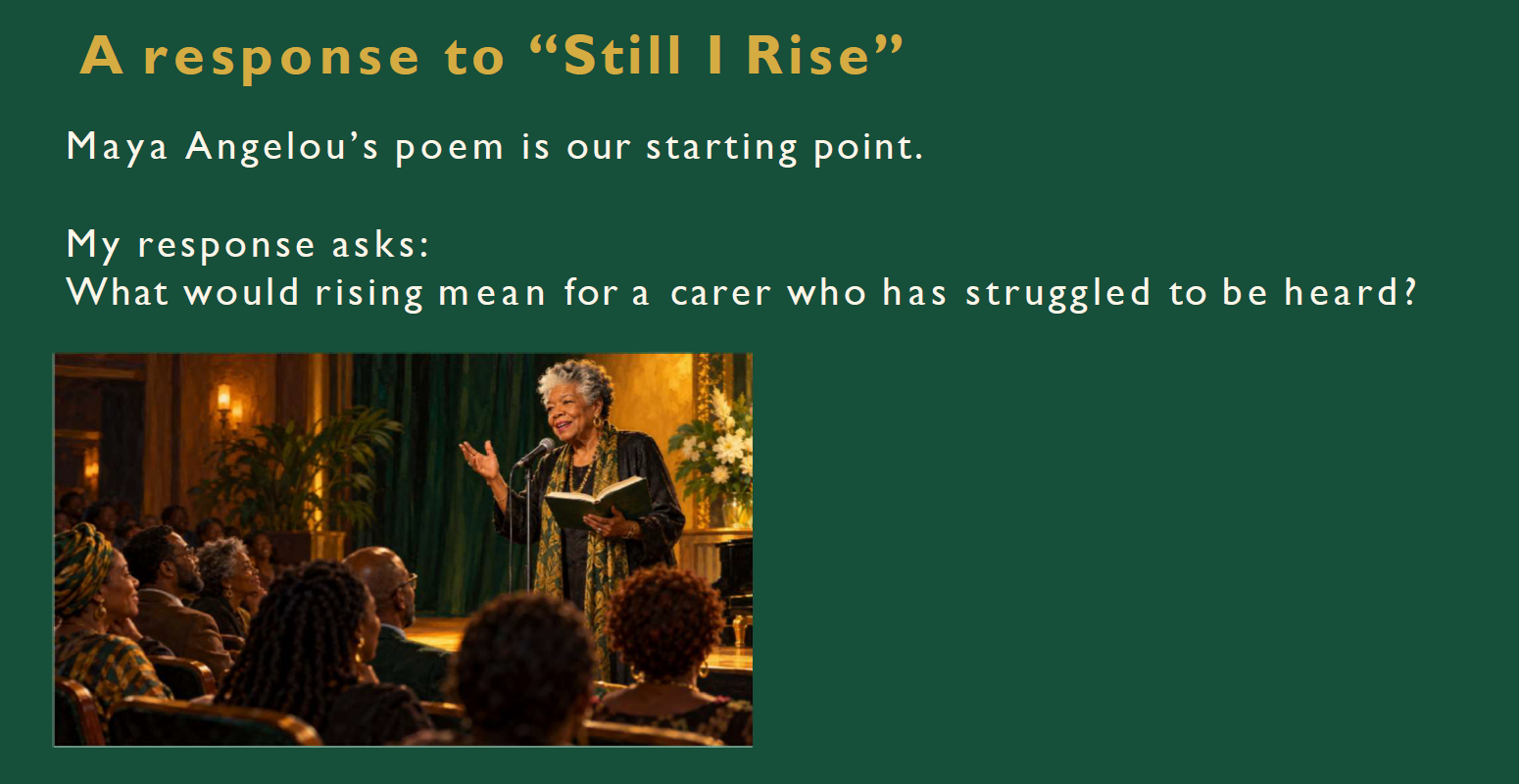
It also makes room for something else: joy, friendship, creativity and life beyond caring. Carers need support when they are tired, but they also need opportunities to be seen as whole people, with their own interests, hopes and identities.
Poetry can open up a conversation in a different way. It can help us describe emotions and experiences that do not always fit neatly into a form, assessment or meeting agenda. At this event, poetry became a way of connecting Black history, mental health and lived experience.
A family story behind an artist’s achievement
One contribution that stood out was a family perspective on the artist Nnena Kalu, who won the 2025 Turner Prize.
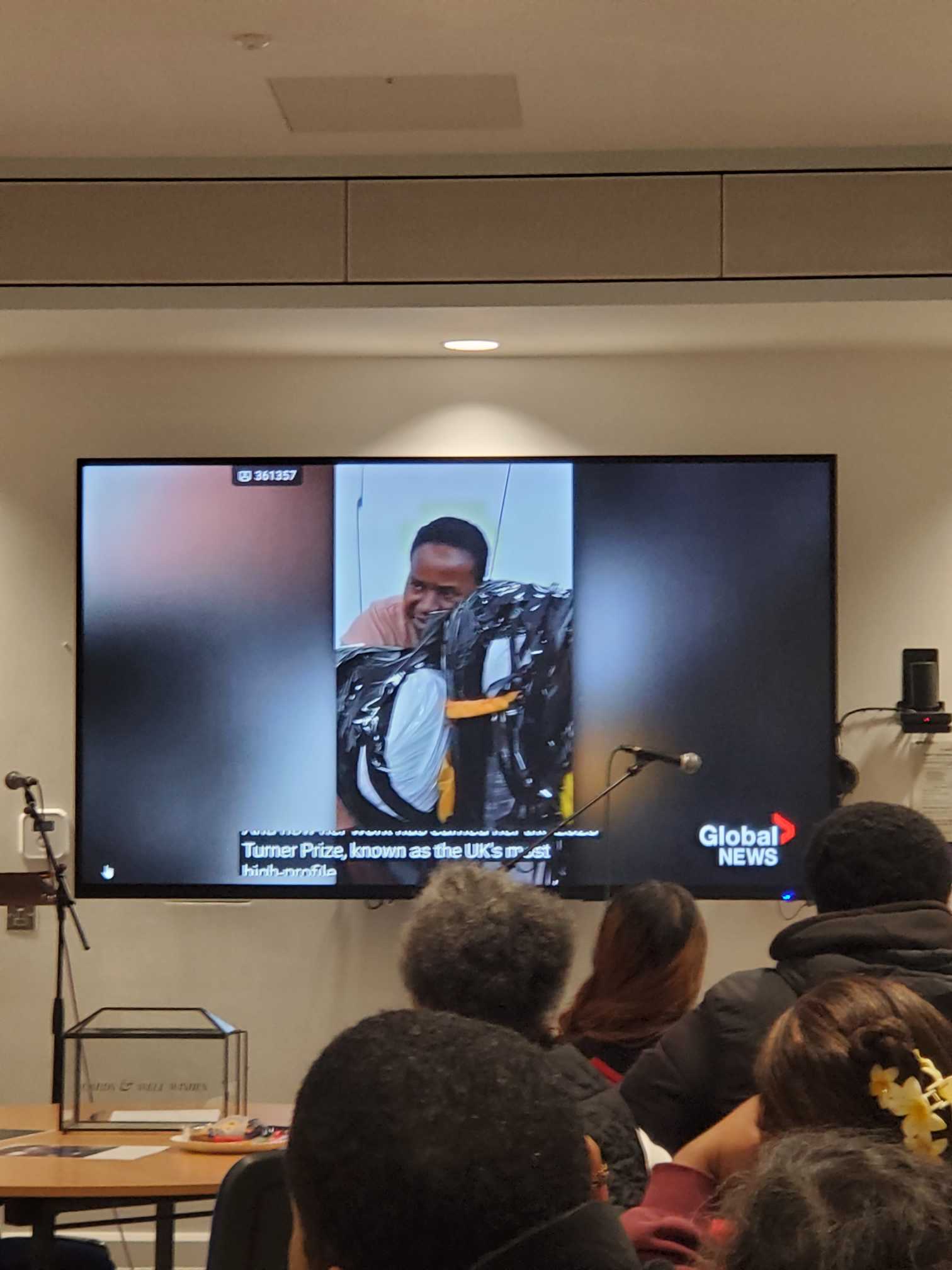
Her brother shared his pride in her achievement and spoke about their family history, her communication and the support she needs in everyday life. He also reflected on discovering the scale of her artistic success through a news story.
What stayed with me was his reminder that needing support in one part of life does not tell us everything about a person’s abilities. His account encouraged us to look beyond labels and consider how people express themselves in different ways.
As someone who supports my own brothers, I connected with the importance of recognising the person behind a diagnosis or description. Families can offer valuable insight, while each person also deserves space to be recognised for their own identity, talents and achievements.
Poetry, music and shared experience
The event included performances and contributions from poets, artists and musicians. We heard reflections on identity, history, mental health, belonging and the experiences of the Windrush generation.
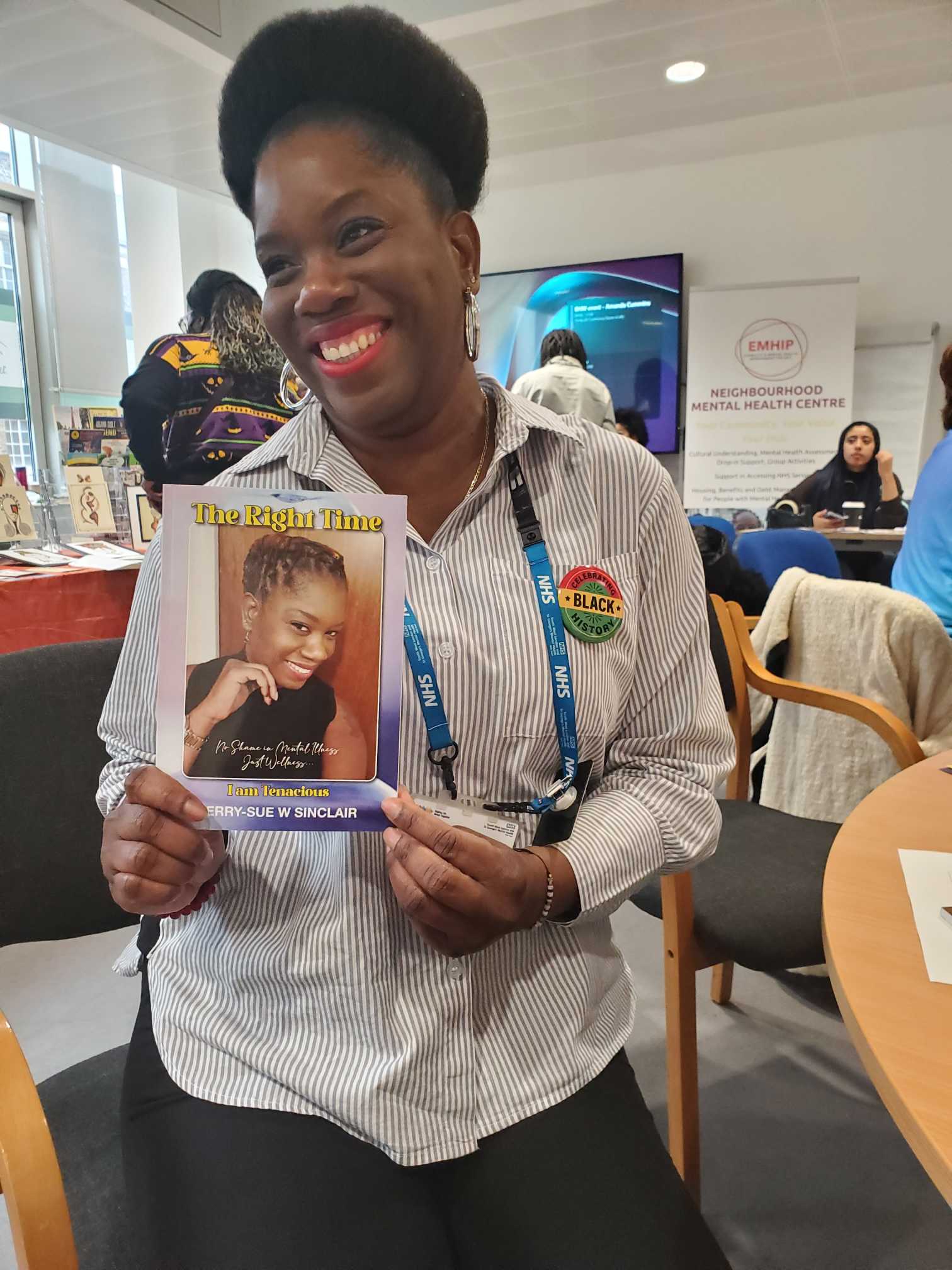
There was also a collective musical performance and an opportunity for people to join in singing together. These moments brought warmth to the day and reminded me that conversations about mental health do not always have to happen in clinical language.
Creativity can give people a way to express pain, pride, memory and hope. It can also bring people together, helping them feel less isolated.
For carers, having access to creative spaces can be especially valuable. It offers a chance to reflect on our experiences, connect with others and be heard in ways that feel meaningful to us.
Turning recognition into action
Events like this are valuable because they create a space for stories and perspectives that are too often overlooked. However, the conversations should continue beyond Black History Month.
In my presentation, I encouraged services and professionals to:
- Ask carers what they need in their own right, rather than assuming they are managing.
- Make space for carers’ knowledge in conversations about the care of the person they support.
- Challenge assumptions and follow up on concerns, including where racism or bias may be affecting someone’s experience.
- Offer support that respects culture and individual choice, recognising that no community or family is the same.
These are practical steps towards a more inclusive relationship between services, patients and carers.
Looking beyond October
I was grateful for the opportunity to contribute to the event and to listen to the other voices represented throughout the day. Thank you to Mia, Sound Minds, the community partners, speakers, performers and everyone who helped bring people together.
Black History Month gives us a chance to celebrate the contributions of Black communities and reflect on the inequalities that remain. As a Black carer, I want those reflections to lead to conversations throughout the year: conversations in which carers are welcomed, their knowledge is valued and their concerns are taken seriously.
I ended my presentation with a question that I hope people will continue to consider:
Who could you help to feel heard this week?
Find out more about my carer advocacy, forums and poetry at A Caring Mind.

