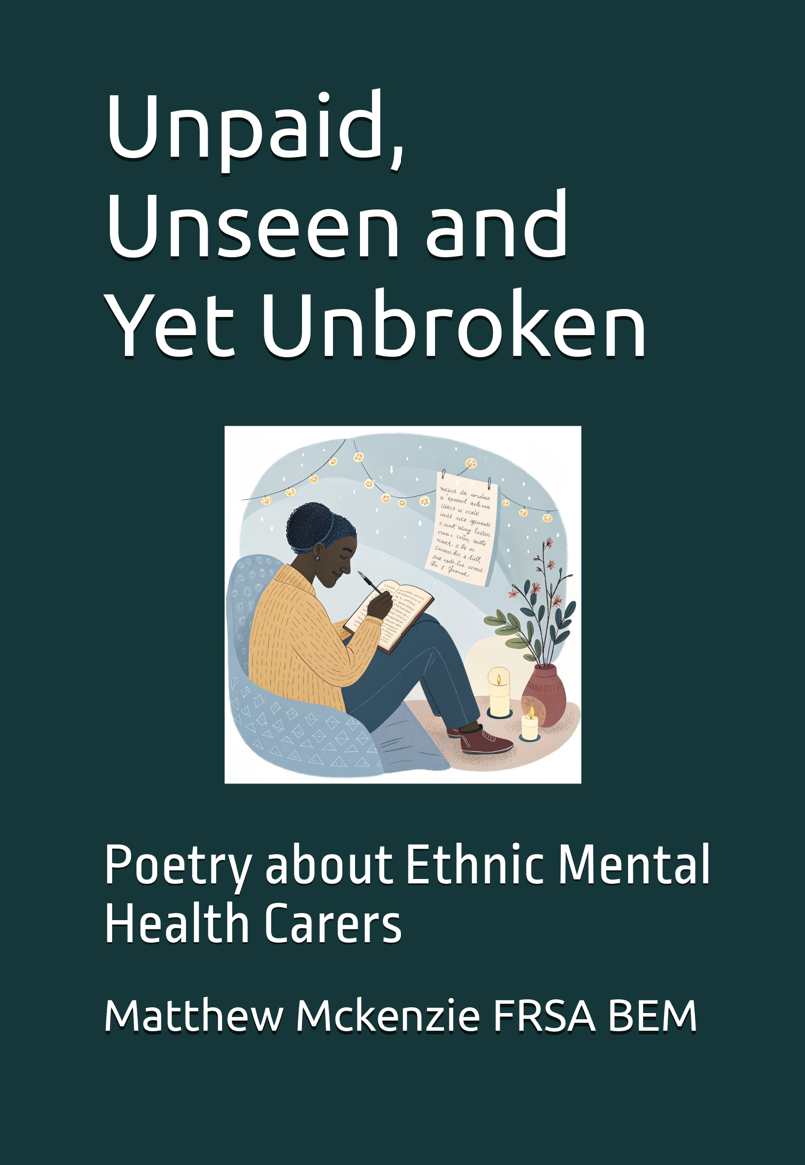
As I continue developing my poetry collection Unpaid, Unseen and Yet Unbroken: Poetry about Ethnic Mental Health Carers, I wanted to share another poem from the collection called Language as Comfort.
This is Poem 30 and explores something that can easily be overlooked when we talk about involvement in mental health services: the comfort and belonging that can come from being able to communicate in your own language.
Watch the poem below.
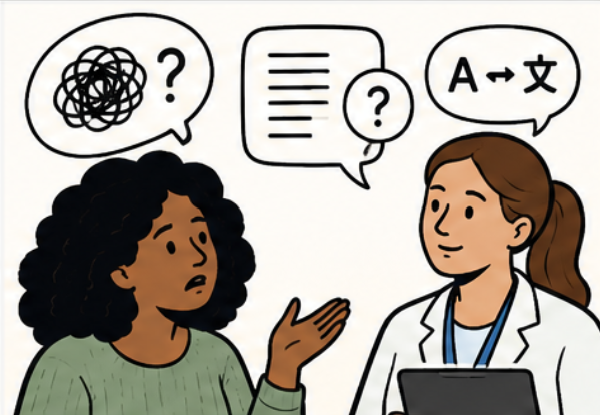
For many ethnic minority carers, language is about much more than translating individual words. Our mother tongue can be connected to family, culture, identity, memory and a feeling of safety.
When language becomes part of carer inclusion
Language barriers can affect how confidently carers participate in assessments, consultations and discussions about the person they support.
This is why one part of the poem asks services to record a carer’s language needs:
A carer should not have to start again at every appointment, repeatedly explaining how they need information to be communicated.
This connects strongly with the Patient and Carer Race Equality Framework (PCREF). If we want meaningful involvement from diverse communities, we need to think about whether our usual ways of communicating actually enable people to participate.
The poem ends with the idea of language helping someone to “break free from this cage”.
For me, that is the central message of Language as Comfort. Being understood can create confidence. Being able to communicate can create involvement. And recognising someone’s language can help create a sense of belonging.
Language should not be another barrier between carers and mental health services.
It can instead become part of the bridge.
Poem 30 from the developing collection Unpaid, Unseen and Yet Unbroken: Poetry about Ethnic Mental Health Carers.
By Matthew McKenzie – Chair of the Greenwich Mental Health Carers Forum
Welcome to the September update of the Greenwich Mental Health Carers Forum, held on Tuesday 29 September 2026.
This month, we welcomed representatives from Greenwich Carers Centre, the Royal Borough of Greenwich, Healthwatch Greenwich and Greenwich Mental Health Hub, alongside unpaid carers.
Our discussion explored the future of carer support in Greenwich, difficulties accessing respite, support available through the Mental Health Hub, and how carers’ feedback can influence services.
For those unable to attend, here is an overview of the meeting.
Greenwich Carers Centre: opportunities to connect and receive support
Catherine Hope joined us on behalf of Greenwich Carers Centre to share its forthcoming activities.
The programme included employment and digital support, the Mindcare Memory Café, a men’s carers group, karaoke, bereavement support, and information sessions about wills and disabled persons’ trusts. A community health event was also highlighted for late October.
Alongside these events, the Centre continues to offer regular activities such as dance, art, Tai Chi, knitting and social gatherings.
These opportunities matter because caring can leave little time for friendship, enjoyment or attention to our own wellbeing. A welcoming place to meet others can make a considerable difference.
Carers interested in attending should contact Greenwich Carers Centre for the latest programme, booking arrangements and eligibility information.
Shaping the future of carer support in Greenwich
Caleb and Evie from the Royal Borough of Greenwich commissioning team updated us on work to review commissioned carer services and prepare for the next stage of the borough’s carers strategy.
The current strategy comes to an end in 2027. Commissioners have been gathering feedback through workshops, carers groups and community engagement, including sessions focused on mental health carers and culturally inclusive support.
They explained that this feedback is helping shape the requirements for future carer services. It will also inform thinking about a future strategy or charter, although the final approach has not yet been decided.
The intention is to develop proposals and return to carers groups, potentially early next year, to check whether those proposals reflect what carers have said.
I welcome that commitment to return. Carers need opportunities to see how their experiences have influenced decisions and to challenge proposals where something important has been missed.
Respite: carers need breaks that work in everyday life
Respite was one of the strongest themes raised during the meeting and across the council’s wider engagement.
Commissioners reported concerns about access, suitability, affordability and the complexity of finding the right support.
Our discussion showed why respite needs to fit the realities of caring. Some carers need a longer break, while others need smaller, regular periods of rest within their weekly routine.
One carer described difficulties obtaining support when the person they care for lives in accommodation in another borough. Their caring responsibilities continue despite living at different addresses.
This raised an important issue: services need to understand the care someone actually provides, including practical support, emotional support and ongoing responsibility across borough boundaries.
Commissioners also described an apparent mismatch between carers reporting a strong need for breaks and some commissioned respite beds remaining unused. They are exploring why this is happening and where access arrangements may be failing.
For me, this is a clear example of why listening to carers matters. The existence of a service does not tell us whether people can use it or whether it meets their needs.
How does feedback reach people who can change services?
I asked how concerns about difficult-to-access or unsuitable services reach those responsible for making improvements.
The commissioning team explained that they have brought together feedback on respite into a report and are sharing it with colleagues responsible for different services, including learning disability, mental health and care home provision.
Other concerns, including carers’ assessments, direct payments and support for parent carers, require work across several teams.
They acknowledged that the timescale for change varies. Some improvements may be possible through changes to contracts, while others require longer-term planning.
The team also expressed an interest in publishing an account of what they have heard and what they intend to do.
That would be a useful step towards accountability. Carers should be able to follow the connection between the experiences they share, the decisions made and the improvements delivered.
Earlier identification and culturally inclusive support
Commissioners highlighted several recurring themes from their engagement:
Inconsistent information and advice across services.
Missed opportunities to identify carers earlier.
Difficulty navigating health and social care.
A need for more proactive support.
The importance of trust and relationships.
Barriers involving access to interpreters.
The discussion about interpreting was particularly important. Carers should be able to explain their situation, understand information and take part in decisions in a language they can use confidently.
The council’s culturally inclusive engagement has also explored systemic barriers and anti-racist approaches to commissioning.
There was positive feedback too. Commissioners reported that carers place a high value on peer support, with Greenwich Carers Centre described by some as a lifeline.
Greenwich Mental Health Hub: understanding the support available
Jackie, representing Greenwich Mental Health Hub, gave a detailed presentation about its integrated approach.
The Hub brings together Oxleas clinical services and voluntary sector partners, including South East London Mind and Bridge Support. Its aim is to offer personalised support that considers someone’s psychological, physical and social circumstances.
The presentation described support involving:
Mental health assessment and brief interventions.
Medication advice and support.
Peer support and group programmes.
Housing, benefits and employment advice.
Social prescribing and community connections.
Support with co-occurring mental health and alcohol difficulties.
A dedicated carers advisor.
Jackie explained that much of the Hub’s work involves short-term support, generally around 12 weeks, with onward referral where further help is needed.
She also reported more than 7,000 referrals over the preceding year, illustrating the scale of demand.
Referral routes and carers’ concerns about deterioration
I asked what happens when a carer notices that the person they support is becoming more unwell, and how that information reaches the appropriate team.
In the discussion, Jackie described the GP referral route into the Hub. She explained that carers seeking their own support would also generally need a GP referral unless they were already receiving support through an active Hub referral.
The Hub was described as an appointment-based service rather than a walk-in service.
Jackie explained that referrals are screened regularly and urgent referrals prioritised. Screening is an initial review of the referral; it should not be confused with a confirmed appointment or treatment starting immediately.
These questions remain important for carers. When someone’s health is deteriorating, families need clear information about who to contact, how concerns are considered and what happens next.
Carers’ assessments and waiting for support
A carer raised concerns about waiting for a carers’ assessment without being given a clear timescale.
The discussion clarified that a local authority carers’ assessment and a mental health assessment through the Hub serve different purposes. One looks at the caring role and its impact; the other considers mental health support needs.
The carer was encouraged to ask the council for an expected timescale. An offer was also made to seek information about average waiting times and follow up.
The forum did not establish a confirmed waiting period. However, the discussion highlighted how uncertainty itself adds pressure when someone is already struggling.
Community organisations and mental health inequalities
Jackie also described the Hub’s grants programme supporting community organisations to provide mental health support.
She reported that ten community groups had received funding over the past year. The approach recognises that trusted local organisations can help people access support, particularly where stigma or other barriers make conventional services difficult to approach.
Further information about the grants was requested during the meeting.
Healthwatch Greenwich: another route for sharing experiences
Katie from Healthwatch Greenwich explained how residents can share experiences of health and social care, including through conversations and anonymous online feedback.
She described how information is anonymised when reported to commissioners, helping services understand what is working and where improvements are needed.
For carers who would prefer to speak privately rather than share an experience in a group, this offers another route to contribute.
Looking ahead
Thank you to all the carers and professionals who joined the September forum.
The meeting showed both the value of existing support and the difficulties carers still face. Respite, clear referral routes, timely assessments, consistent information and earlier recognition of caring responsibilities all need continued attention.
Our next Greenwich Mental Health Carers Forum is planned for November. I look forward to continuing these discussions and hearing how the feedback shared by carers is being taken forward.
By Matthew McKenzie – Facilitator of Cancer Caregiver group
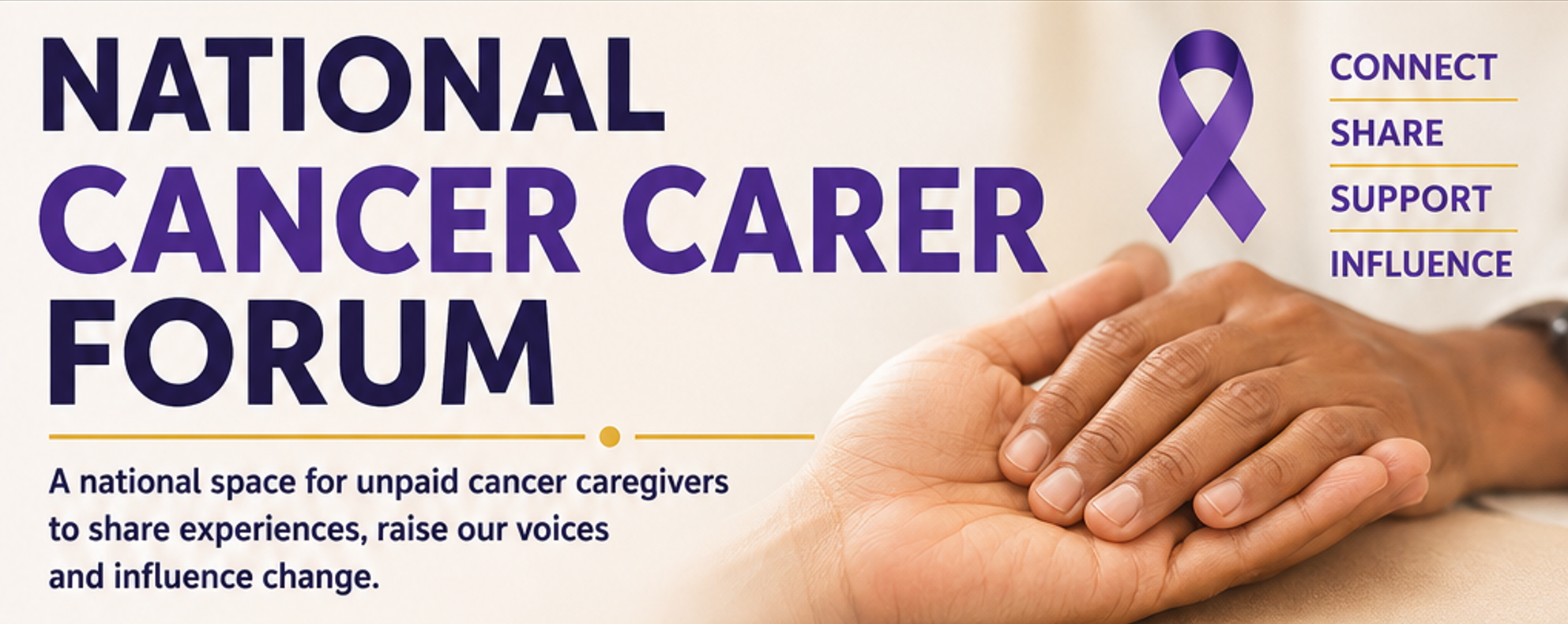
Welcome to the October update from my National Cancer Caregiver Forum, reflecting on our meeting held on 30 September.
I chair this forum to help bring greater attention to the experiences of people supporting someone living with cancer. Cancer care can involve a whirlwind of appointments, investigations, treatment decisions and changes at home. Behind all of this, family members, partners and friends often provide considerable practical and emotional support.
Yet their own needs can remain hidden.
Our latest meeting brought together carers, a representative from the South East London Cancer Alliance and trainee clinical psychologist Lara Pope. We explored how carers can navigate services, how their experiences can inform improvements, and why support for their own wellbeing needs to be more visible.
Hearing from the South East London Cancer Alliance
We welcomed a programme lead from the South East London Cancer Alliance, whose work includes patient experience, involvement and inequalities.
The discussion acknowledged an important gap: while services collect information about patients’ experiences of cancer care, there has been less information available about the experiences of those supporting them.
To help address this, colleagues from several Cancer Alliances worked with carers to develop a cancer carers survey. The aim is to understand the impact of caring, identify unmet needs and explore whether experiences differ between areas.
At the time of our meeting, approximately 150 responses had been received across the participating areas. We were told that the survey would remain open until the end of October.
Early responses were highlighting the emotional impact of caring, the pressure of managing appointments and responsibilities, and difficulties accessing support. These were emerging themes rather than final findings.
The Alliance also explained that the findings could help inform conversations with clinical teams and national colleagues. Some improvements might involve clearer communication or different ways of working, alongside identifying gaps in services.
For me, the important next step is ensuring that carers can see what happens after they contribute. Sharing experiences should lead to feedback, discussion and opportunities to influence change.
We discussed how hospitals, cancer information centres, clinical nurse specialists, hospices and community organisations could help people find support.
One challenge is that many people do not describe themselves as carers. They see themselves as a husband, wife, partner, daughter, son or friend doing what needs to be done.
That is understandable. However, it can mean they miss information or support advertised specifically for “carers”.
Services need to explain what support is available in language that people recognise. Asking someone whether they help a loved one with appointments, medication, daily activities or emotional support may open a conversation that the word “carer” alone does not.
The discussion also recognised that attending a forum is not always easy. Some people are exhausted, some are still processing a diagnosis, and others want their limited free time to offer a break from talking about cancer.
This makes it important to offer different ways to connect, including written updates, individual conversations and opportunities to contribute when people feel ready.
My presentation: navigating cancer services without being excluded
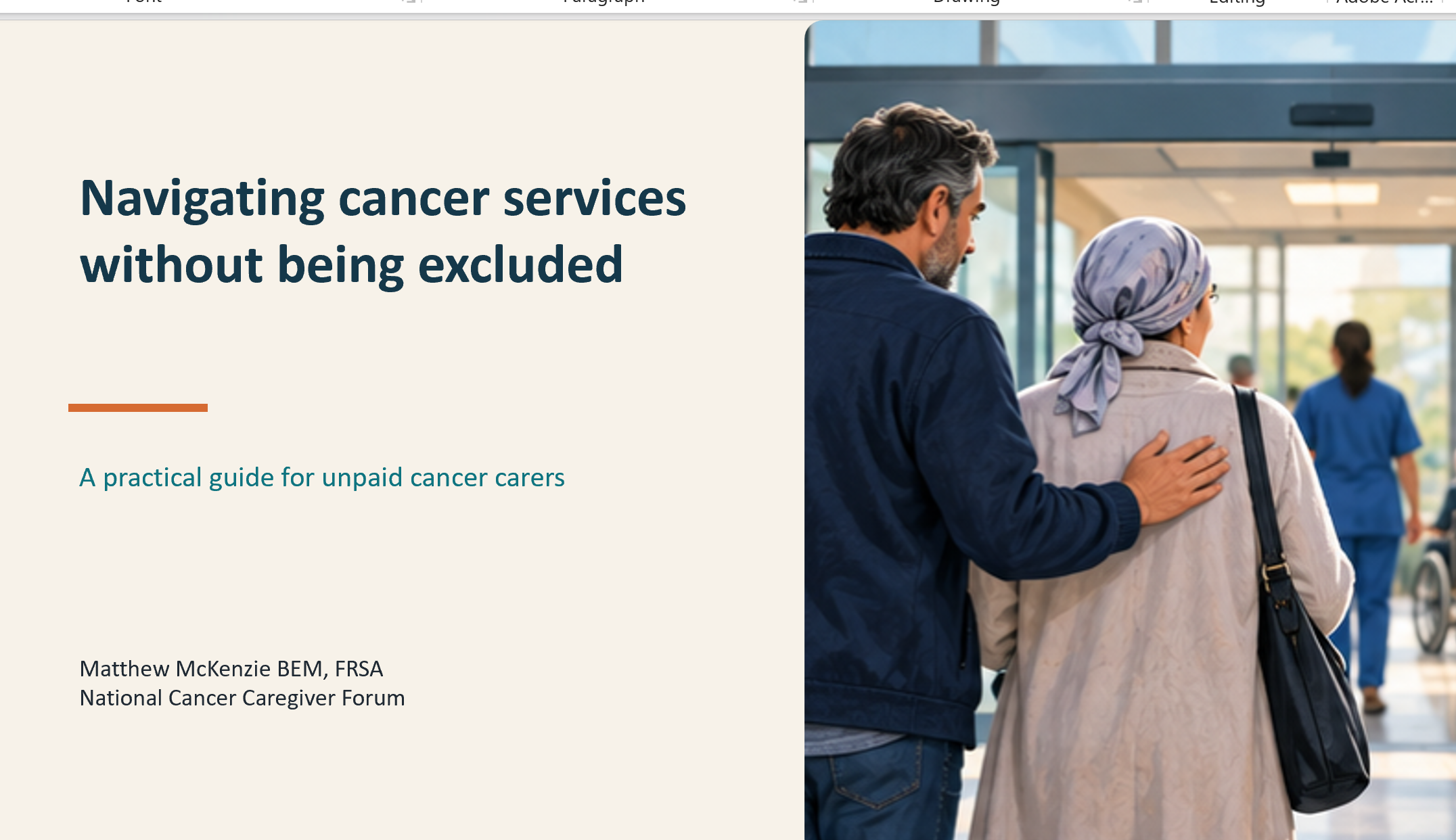
During the meeting, I gave a short presentation on “Navigating cancer services without being excluded.”
Drawing on my caring experiences and work with unpaid carers, I focused on some practical questions for people who may be new to the role.
Exclusion can happen when the person providing care at home is overlooked, when information is difficult to understand, or when nobody explains who to contact next.
Carers may then find themselves trying to coordinate support without a clear picture of how the system works.
Five questions formed a central part of the presentation:
Have you recorded me as the person providing support?
What do I need to know to support care safely at home?
Who should I contact if something changes?
What information can be shared with me, with the patient’s consent?
Where can I get support for my own wellbeing?
These questions will not resolve every difficulty, but they can help begin conversations about recognition, communication and support.
The final question matters especially. Carers’ health can easily slip down the list while they concentrate on the person they love.
When carers become the link between services
An important theme was the amount of coordination that can fall to families.
Carers described having to keep track of appointments, help explain medical histories, learn unfamiliar terminology and make sure information reaches the right professional.
One contribution highlighted how different record systems can leave families helping clinicians locate information from another hospital. Others described the strain of repeatedly explaining what had already happened.
There were also positive experiences. Specialist cancer teams were described as listening to carers and including families in discussions. However, that sense of inclusion was not always consistent across other parts of the system.
This raises an important question: how can good carer involvement follow the person throughout their care, rather than depend on which service they happen to encounter?
Even someone familiar with health and social care can feel overwhelmed when supporting a loved one through cancer. Knowledge of the system does not remove the emotional pressure.
Hospital discharge and preparing for care at home
The move from hospital to home was another significant part of our discussion.
For a carer, discharge may bring new responsibilities around medication, side effects, appointments and knowing when to seek help. Coming home can be frightening if the family does not feel prepared.
We discussed the importance of clear explanations and knowing who is responsible for the next step.
A discharge plan needs to take account of the person who will provide support at home, including what they understand, what they feel able to do and what help they need.
Contributions also illustrated how delays and communication failures can create additional distress. Carers need opportunities to raise concerns and receive clear answers about what is happening.
Carers’ own health must remain part of the conversation
We heard how easily carers can put their own health needs on hold.
When someone is seriously unwell, it can feel impossible to step away for an appointment, treatment or rest. Carers may feel that nobody else can provide the same support, or worry about what will happen during their absence.
The discussion reminded us that exhaustion can remain hidden behind a person who appears organised and capable.
Supporting a carer means asking about their wellbeing and helping them think through practical arrangements. It also means recognising that a carer may have health conditions or treatment needs of their own.
Carers should not have to reach a crisis before their needs are noticed.
Peer support and advocacy
Peer support was described as a lifeline.
Speaking with people who understand caring can provide space to acknowledge the pressure, exchange practical ideas and feel less alone.
However, we also discussed the need for stronger advocacy. Sometimes a carer needs someone alongside them who understands services, can help them prepare questions and support them to raise concerns.
One practical suggestion was to keep a notebook containing appointments, contact details, questions and information given by professionals. When events move quickly, having a record can help carers return to something they need clarified.
Participants also highlighted positive experiences of support from St Christopher’s. This prompted discussion about possible future connections and how the forum could help organisations learn from one another.
Lara Pope’s request: please help share her research
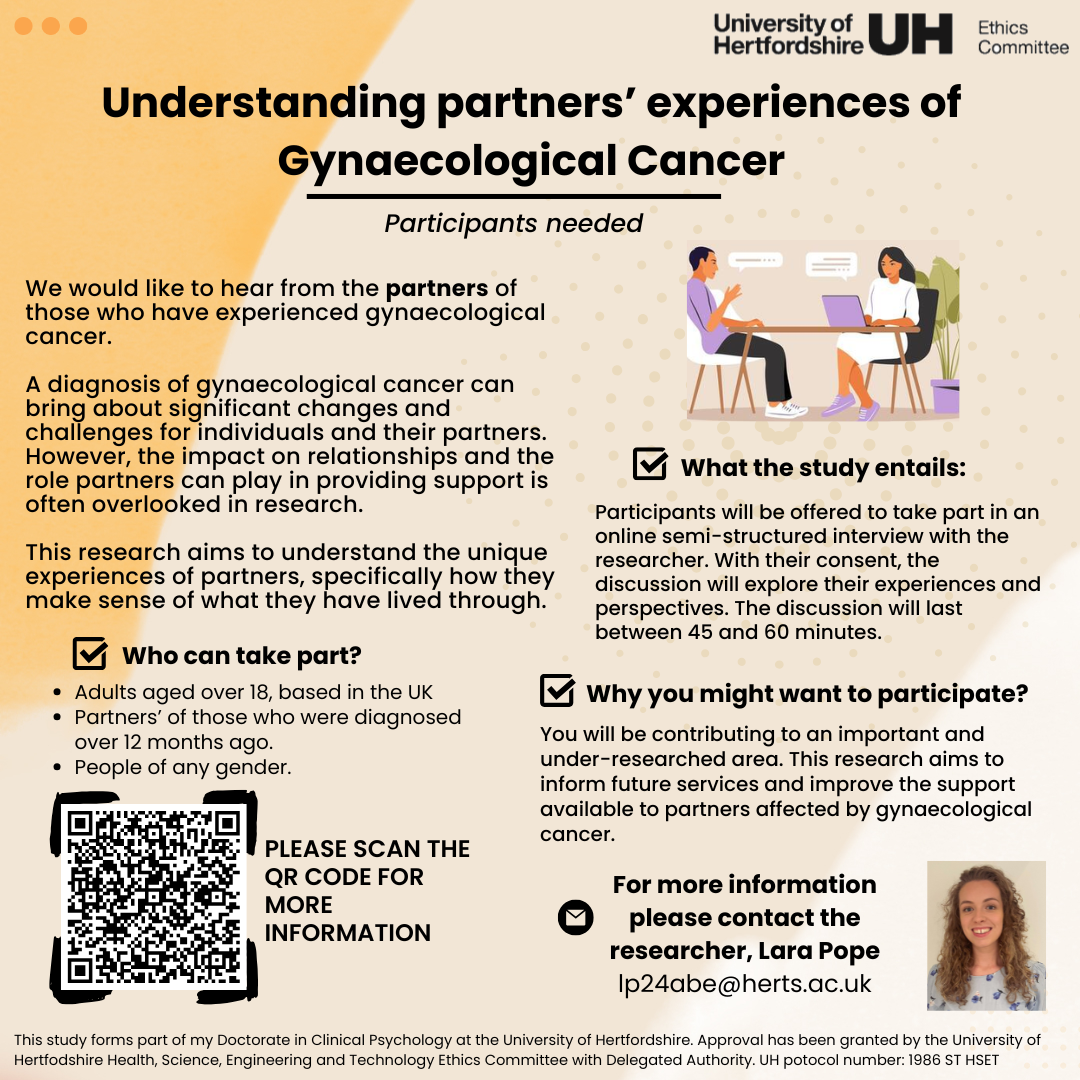
We also welcomed Lara Pope, a third-year trainee clinical psychologist at the University of Hertfordshire, who is undertaking research for her thesis.
Lara spoke about her research into partners’ experiences in the context of gynaecological cancer. She also described the difficulty of finding relevant support groups, which underlined our wider discussion about how hard it can be for families to locate support.
At the end of the meeting, Lara asked whether I could share her research again. She explained that she had made minor amendments to her ethics documentation and would be grateful for another opportunity to raise awareness.
Our meeting took place on the final day of Gynaecological Cancer Awareness Month. Lara hoped to build on that awareness and keep attention on experiences that may be difficult to discuss or remain overlooked.
Please see Lara’s latest research invitation below for the full eligibility criteria, what participation involves and how to contact her.
At our forum, Lara asked for help sharing the research again following minor amendments to her ethics documentation. Understanding partners’ experiences could help draw attention to needs that are often overlooked.
If you are interested in participating, please contact Lara for the latest eligibility criteria and information about what taking part involves:
If you work with a carers’ organisation, cancer support group or relevant community network, please consider sharing the updated invitation with people who may be interested. Anyone considering taking part should read the study information and contact Lara directly with questions.
Continuing to build the forum
This forum is still growing, but the discussion showed the value of bringing carers, researchers and services together.
It offers a space to exchange information, identify gaps and help carers contribute to conversations about how support could improve.
Future discussions could include hearing from other Cancer Alliances, hospice carer services, hospital teams and organisations supporting carers in the community. These were suggestions raised during the meeting, rather than confirmed speakers.
I would particularly like to strengthen the links that help people find the forum and ensure that carers’ experiences reach those responsible for developing services.
Join a future meeting
The National Cancer Caregiver Forum meets online on the last Wednesday of each month at 5 pm.
The next meeting is scheduled for Wednesday 28 October 2026 at 5 pm. Joining details and speaker information will be shared nearer the time.
Thank you to everyone who contributed to our September discussion, and to those helping raise awareness of the forum.
Cancer caregivers bring knowledge, commitment and experience that services need to hear. They also need recognition and support for themselves.
By Matthew McKenzie BEM FRSA, Chair of the Carers Hospital Discharge Group
Thanks to Carer Centre representatives, Hospital reps and Local authorites who joined our September Hospital Carer Discharge Meeting. The group brings together unpaid carers, NHS staff, councils and carers organisations to share practical work and improve how carers are recognised and involved when someone leaves hospital.
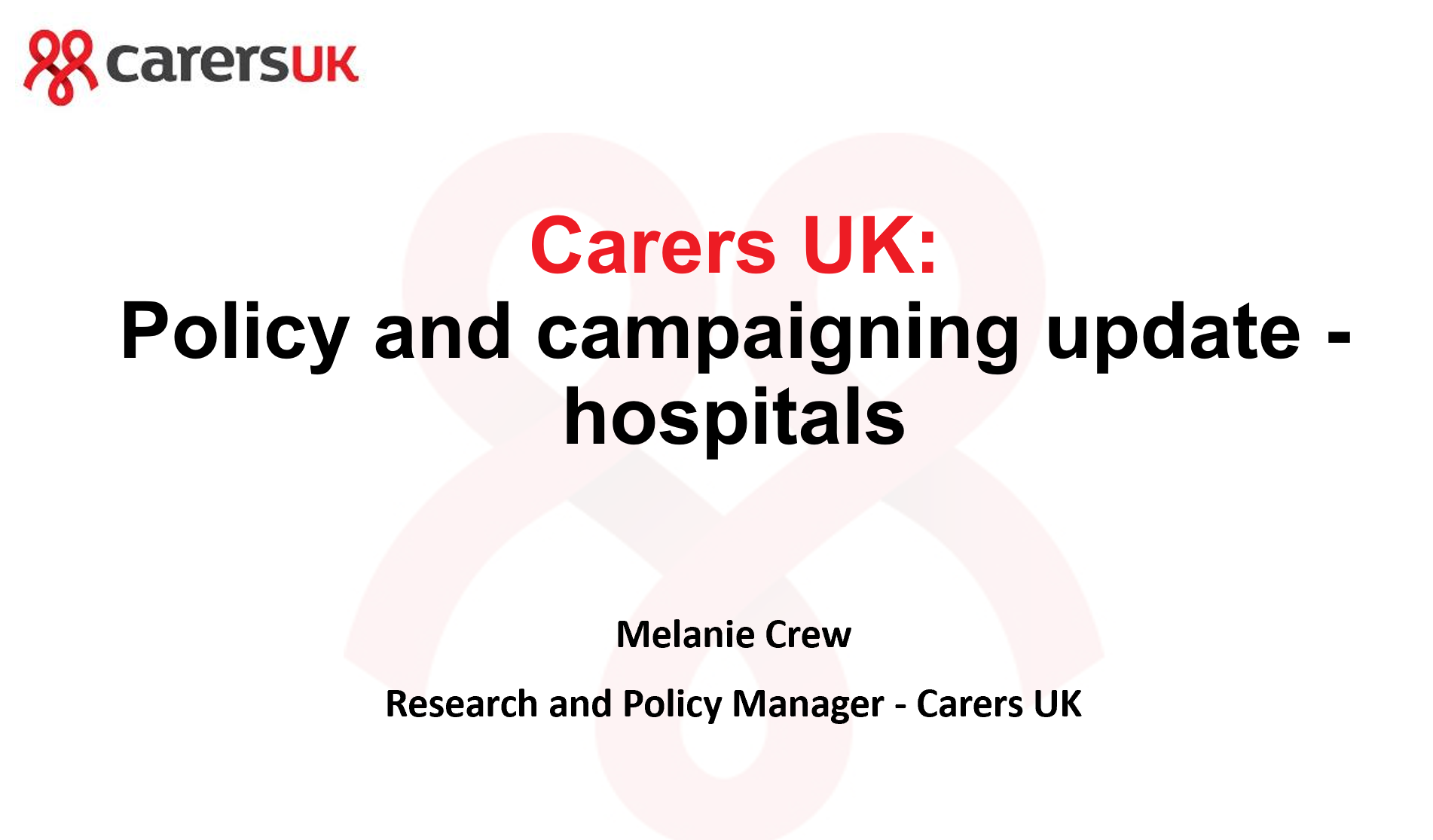
Our guest speaker was Melanie Crew, Research and Policy Manager at Carers UK. Her presentation gave us a national picture of carers’ experiences, followed by a discussion that brought the issue back to what happens on wards and in local communities.
What carers are telling Carers UK
Melanie explained that Carers UK has asked about hospital discharge in its annual State of Caring survey for several years. The results show little improvement. In its 2025 survey, only 14% of carers said they had been asked about their ability and willingness to provide care when the person they supported was discharged. Melanie also reported that 38% said they had been involved in discharge decisions.
Those figures should concern everyone involved in discharge planning. A carer may be expected to help with medication, mobility, appointments or personal care once someone gets home. Staff need to ask what that person can do, what they feel able to do, and what support they will need. They cannot assume that a family member is available or willing to take on new tasks.
Melanie also highlighted findings from the Care Quality Commission’s inpatient survey: 23% of patients said their family member or carer was not at all involved in discussions about leaving hospital, while a further 19% said they were involved not very much.
Behind these figures are carers trying to prepare for life after discharge, sometimes without enough information about a condition, the equipment needed at home or the care they may be expected to provide. Poor communication can leave both the carer and the person returning home in a difficult position.
Why does good work in hospitals fail to reach some carers?
One of the strongest questions in the discussion came from Richmond Borough Mind. The described hearing from carers who received no discharge information, despite attending meetings where NHS teams reported substantial work on carer identification and support. Why is there such a gap between the initiatives being developed and what carers experience?
There was no single answer. A hospital may have a policy, a carers champion or information packs, but these only help if staff identify the carer, make contact and provide information that fits their situation. A referral to support is valuable, yet it may not meet an immediate need if there is a long wait for a carer’s assessment.
Melanie suggested that services need to look more closely at what happens after identification. Was the carer given information they could use? Did they understand what help was available? Were their concerns addressed before discharge? Could they get advice later as the person’s needs changed?
This is an important distinction for our group. We should measure whether carers receive useful support, as well as whether a process or referral exists.
Identifying carers early and hearing their own feedback
Carers UK would like hospitals to identify carers early, ideally from admission. Some people will have been caring for years; others may have become carers suddenly after an illness or accident. Many will not use the term “unpaid carer” to describe themselves. Staff therefore need to ask clear questions about who provides support and what that support involves.
Melanie also described work examining how the NHS collects and uses feedback from patients, service users and carers. Carers UK is contributing to a project involving the King’s Fund, National Voices, The Foundation and Edge Health. Its message is that carers should be able to describe their own experience as carers, rather than speak only on behalf of the patient.
For example, were they identified? Did they receive enough advice? Were they treated as a partner in care? And when they raised concerns, did anything change? These questions could tell us much more about where a discharge pathway succeeds or breaks down.
National policy and work ahead
Melanie outlined Carers UK’s campaigning on the Health Bill 2026. Carers UK proposed duties for Integrated Care Boards to identify and record unpaid carers and to promote their health and wellbeing, alongside other proposals concerning breaks from caring and access to the Single Patient Record. The proposed duties on identification and wellbeing were not adopted, although Melanie noted support for them across parties. Carers UK intends to continue making the case for stronger action.
The discussion reflected the difficulty local projects can face when carer identification depends heavily on individual staff members or teams. Eleanor, from the North Central London Carer Support Project, described the effort involved in building partnerships with hospital trusts and asked whether a mandatory duty might help make this work more consistent.
Carers UK is also contributing to communities of practice on hospital discharge, supported through the Better Care Fund. Thirty areas are taking part, with Carers UK working with half and Carers Trust with the other half. NHS, council and voluntary sector representatives will share challenges, examples of good practice and possible improvements. Wider webinars are planned so others can learn from the work.
Looking ahead to Carers Rights Day on 19 November, Carers UK plans to publish a report on carer identification across healthcare, councils and employers. Melanie stressed that being recognised as a carer must lead to meaningful information and support.
A practical idea from St George’s, Epsom and St Helier
Wendy shared work underway across St George’s, Epsom and St Helier hospitals. The hospitals have a carers charter, information packs and follow-up calls for identified carers, but Wendy acknowledged that some carers still miss out. Identification on wards remains a challenge.
One proposed response is to develop volunteer roles that can help recognise carers, speak with them and connect them with staff and information. The plan also includes support around discharge. Wendy explained that the teams are working with Helpforce as they develop and recruit for the roles.
The conversation also covered accessibility and reasonable adjustments. For some patients, having their carer alongside them throughout their hospital journey may be essential to communication and care. Wendy described work with safeguarding, learning disability and dementia teams to strengthen this approach, alongside activity concerning Martha’s Rule and John’s Campaign.
Others noted that carers organisations can also be willing to work directly on wards, but need workable routes into hospitals. This is an area where better partnership arrangements could make existing support much easier for carers to reach.
Lewisham and Greenwich: charter, training and support on site
An update from the patient experience team at Lewisham and Greenwich NHS Trust, said the trust plans to review its carers charter with carers and support organisations across Greenwich, Bexley and Lewisham. The aim is to understand different needs and use that feedback to make changes in the hospitals.
They also reported that Queen Elizabeth Hospital has approved catering for carers who are staying in hospital with the person they support. It may sound like a small change, but for someone spending long hours beside a loved one, practical support matters.
Staff training on identifying and supporting carers is also developing at Lewisham Hospital and Queen Elizabeth Hospital, with local carers organisations involved. I welcomed this update and offered to contribute the questions and experiences I hear when I run carer information stalls at Lewisham Hospital.
Southwark Council carers strategy and new service
Representatives from Southwark Council updated the group on their four-year carers strategy, which was approaching sign-off. They plan to develop a delivery group for its action plan and continue involving carers in how the strategy is put into practice.
Sarah also described progress on Southwark’s new carers service. At the time of our meeting, the contract award was going through final internal governance, with a planned contract start date of 1 March and a period for the provider to prepare the service before launch. The proposed model would have a base at Southwark Resource Centre and activities in other community locations. Further launch details will follow from the council.
The discussion prompted a useful commitment to strengthen links between the future carers service, GP practices, social prescribers and other health contacts. Southwark representatives also reflected on the need to explain carers’ assessments in a way that makes their purpose and possible benefits clear to each carer, rather than simply handing out more information.
Lambeth and Richmond updates
Carers’ Hub Lambeth shared difficult news: its funded hospital discharge project was due to end in September because continued funding was unavailable. The team intends to maintain its relationships with King’s College Hospital and Guy’s and St Thomas’, continue carers awareness training, and extend its work with GPs and social prescribers where possible. Its monthly emergency planning workshops will also continue.
This was a reminder that valuable partnerships need sustained support. The learning and relationships built through a project should not disappear when its funding ends.
Richmond Borough Mind described work on a handbook for mental health carers. It will include information about mental health conditions and what happens when the person they support goes into hospital, including discharge. Richmond Borough Mind is also planning a Carers Rights Day gathering that combines support, information and an opportunity for carers to come together.
What I took from the meeting
September’s discussion returned repeatedly to a simple test: does the carer actually know what is happening, what may be expected of them, and where they can get help?
Policies, charters, digital plans, volunteers and training can all contribute. Their value lies in what happens during a real hospital stay: whether someone notices the carer early, listens to their knowledge and concerns, asks about their own capacity, and makes sure they have support before and after discharge.
I was grateful to Melanie for sharing Carers UK’s research and campaigning work, and to every organisation and carer who contributed openly to the discussion. At our next meeting in November, I hope we can hear more about how these local initiatives are progressing and continue learning from carers who have experienced discharge themselves.
Thank you to everyone helping to make this group a place where we can share challenges honestly and work together on practical improvements.
As I continue developing my poetry collection Unpaid, Unseen and Yet Unbroken: Poetry about Ethnic Mental Health Carers, I wanted to share another poem from the collection called Fear Has Roots.
The poem explores something I feel mental health services need to understand more deeply: mistrust does not always begin with the person standing in front of you.
Sometimes it has a history.
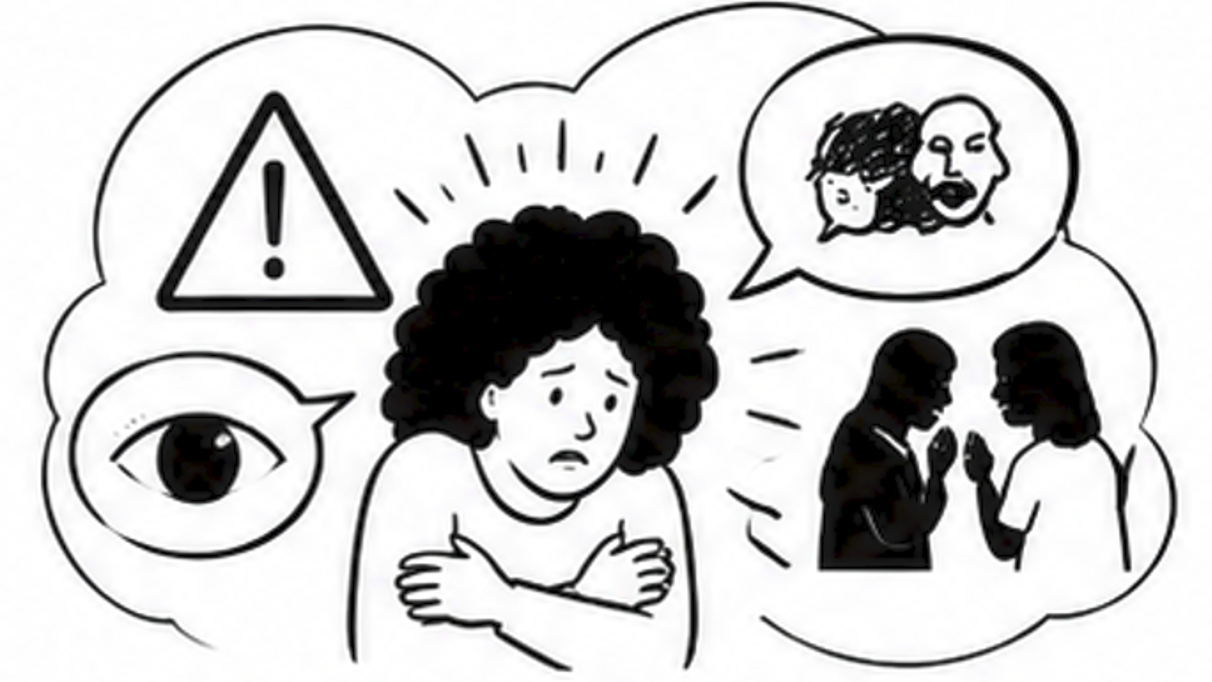
A carer may have experienced years of being dismissed, misunderstood or having their concerns minimised. They may have watched other carers from their community struggle to be heard. Experiences of discrimination can also travel through families and communities, influencing how safe people feel when approaching services.
Fear Has Roots explores what happens when those experiences begin to change the way a carer communicates.
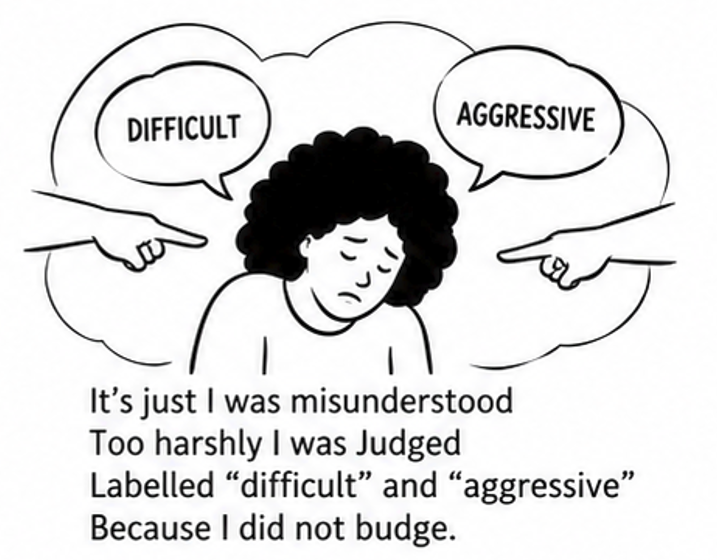
The carer starts choosing their words carefully. They worry about appearing angry. They fear being labelled “difficult” or “aggressive”. Even when trying to advocate for someone they love, they may feel that one wrong word could change how professionals see them.
One section of the poem says:
For me, this is particularly important when thinking about ethnic minority carers and the Patient and Carer Race Equality Framework (PCREF).
If services want to build trust with communities, it is not enough simply to ask why somebody mistrusts the system. We also need to ask what happened before that mistrust developed.
Listening to what sits behind the fear
The poem is not anti-professional. In fact, its opening line deliberately makes that clear:
“Fear has roots, I am not anti-professional.”
Instead, it asks professionals and services to become curious about the experiences behind a carer’s behaviour.
Repeated dismissal can wear somebody down. Discrimination can leave lasting memories. Feeling judged when advocating for a loved one can make a carer more cautious the next time they enter a meeting, ward or assessment.
This is why culturally responsive carer involvement matters.
We should not only hear what carers are saying. We should also understand the history, culture and experiences that may sit behind their words.
Fear has roots.
Mistrust has a history.
And perhaps listening is one of the places where rebuilding trust can begin.
Fear Has Roots is part of my developing poetry collection Unpaid, Unseen and Yet Unbroken, which explores race, culture, identity, inequality, resilience and the experiences of ethnic minority unpaid mental health carers.
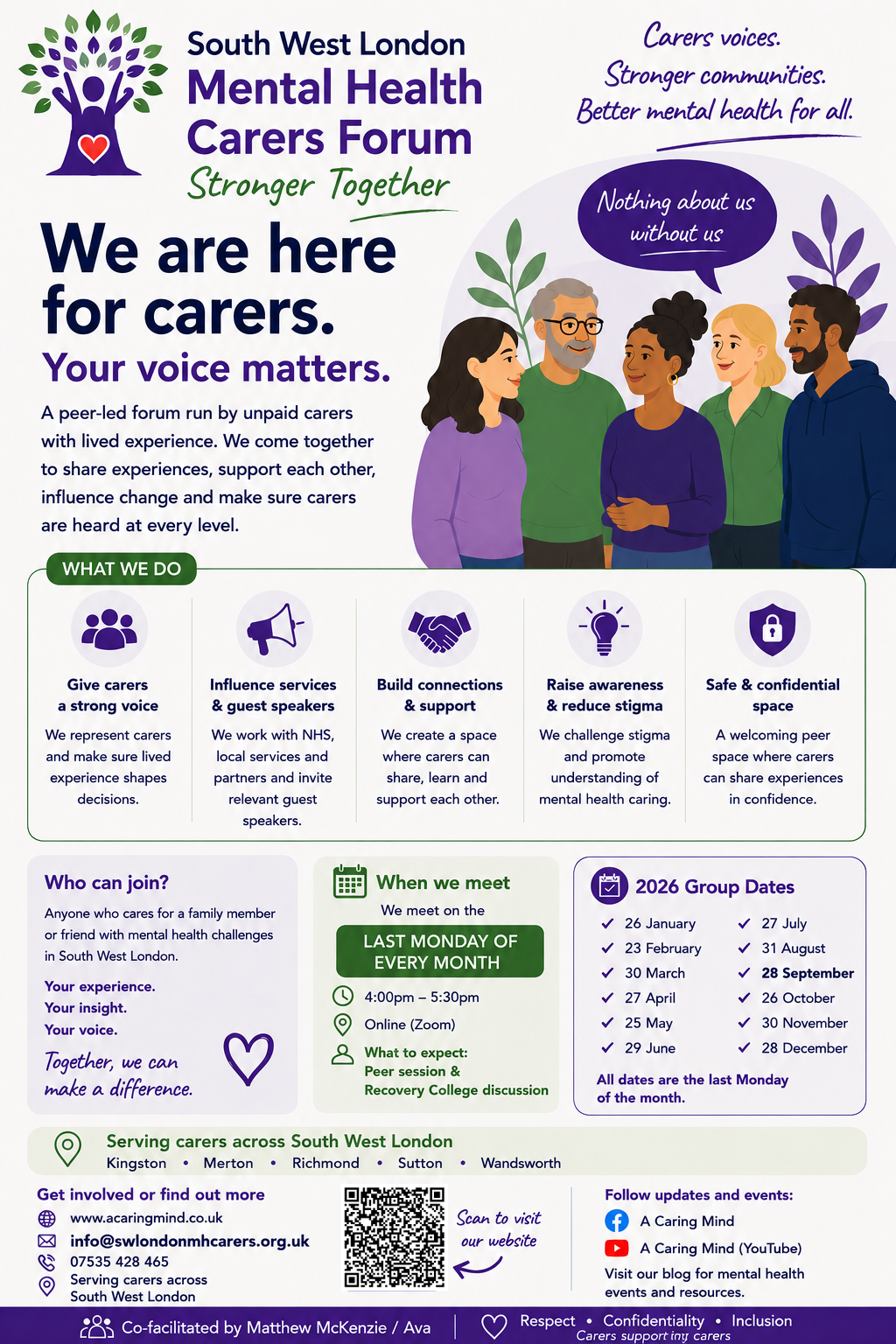
By Matthew McKenzie, Co-Facilitator – South West London Mental Health Carers Forum
Our September forum brought carers together with Nisha from the South West London and St George’s Mental Health NHS Trust Recovery College.
We explored the courses available to carers, how to join them, and a question that matters well beyond the college: what happens when a carer still needs support after a time-limited service ends?
What the Recovery College offers carers
Nisha explained that Recovery College courses are co-produced and delivered by a practitioner trainer alongside a peer trainer with lived experience. The college offers face-to-face courses across Kingston, Richmond, Sutton, Merton and Wandsworth, as well as online learning.
Five online courses run each term specifically for friends, family members and carers: Your Role in Recovery, What Is Recovery?, Responding to Extremes, Planning for Well-being, and Navigating Support Services. Carers who meet the college’s eligibility criteria can also explore its wider range of courses.
We also heard about Navigating the Wards, a newer course for families and carers whose loved one has been admitted to a mental health ward. It brings together practical information, contact with ward staff and a chance to meet others who understand that experience. A carer may need time before feeling ready to attend, so it was reassuring to hear that the course is intended to run again rather than being a one-off opportunity.
Caring does not end after 12 months
The most important discussion came from a carer who had benefited from Recovery College courses but questioned the limit on access after a loved one leaves trust services. Nisha explained that eligible carers can continue to access courses for up to 12 months after discharge, while webinars remain available more widely.
A caring role rarely follows that timetable. Someone may need to pause their learning during a difficult period, return to a course when they are better able to take it in, or seek support years later as circumstances change. A second member also asked about eligibility, showing how relevant this question is to carers trying to find the right help.
Nisha listened to these concerns and said she would take the question of eligibility back for further discussion. She also described work to strengthen links with community and voluntary organisations, so that carers have clearer routes to support when their access to the college ends. It was a constructive exchange, and one we hope can continue.
Members also spoke about how hard it can be to discover support in the first place. Carers should not have to find every course or service by chance while managing an already demanding role. Clear information, accessible formats and active outreach matter, including for carers from ethnic minority communities and people who may face other barriers to taking part.
How carers can take part
Nisha explained that prospective students can look through the Recovery College timetable and complete an online registration form, selecting courses that interest them. The team checks eligibility and confirms a place if one is available; if a course is full, there may be a waiting list. Open days offer a chance to talk through the options, but a registered student does not need to attend an open day each term to book another course. Courses in a different borough may also be an option.
We asked how carers from this forum could help shape future courses. Nisha welcomed continued discussion about carer involvement in course design and delivery. We also talked about sharing information both ways: making more carers aware of the college, and helping people who attend its carer courses find our forum.
A space for carers to connect
At the start of the meeting, I shared a glimpse of a recent carers’ art and poetry session. Creative expression can give carers another way to speak about experiences that are difficult to put into everyday conversation. I would welcome the chance to explore a similar opportunity in South West London with interested carers and local partners.
Thank you to Nisha for joining us and answering members’ questions openly, and to the carers who shared their experiences. Their questions helped move the conversation from a list of courses to the practical issue of whether support remains accessible when carers need it.
The South West London Mental Health Carers Forum meets monthly and welcomes unpaid mental health carers across the five boroughs. Our next meeting is planned for Monday 26 October 2026. To ask about joining, email info@swlondonmhcarers.org.uk.
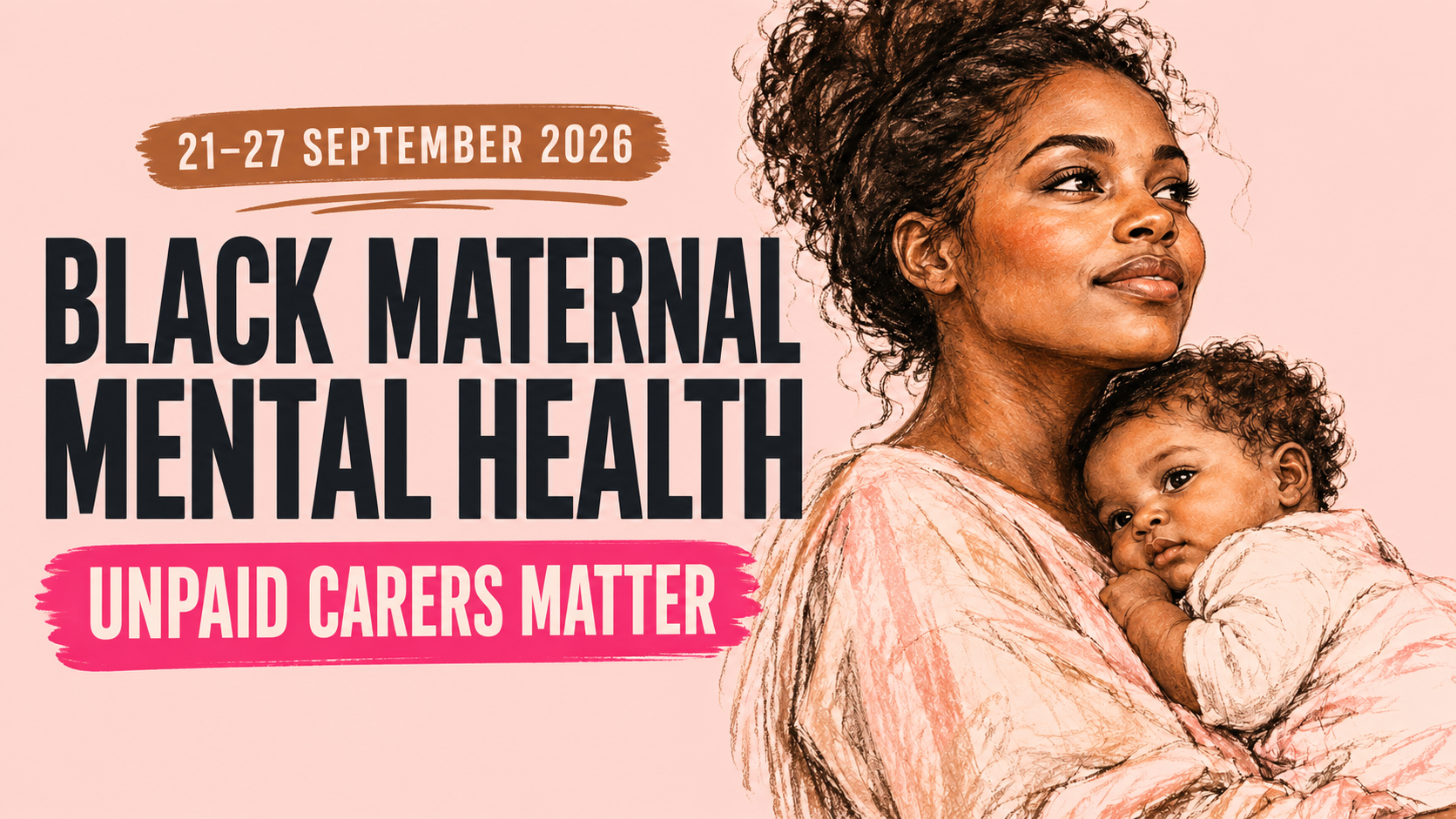
Black Maternal Mental Health Week is a chance to celebrate Black mothers and speak honestly about the inequalities they can face when seeking support. This year’s theme, Joy • Justice • Journey, reminds us that a mother’s mental health matters before, during and long after birth.
For some Black mothers, asking for help can mean overcoming stigma, cultural misunderstanding, racism or the fear that their concerns will be dismissed. Support needs to arrive early, and services need to listen to what mothers say about their own lives.
I also want to recognise unpaid carers. A partner, parent, sibling or friend may notice when a mother is struggling, help her manage daily life and support her through appointments. Yet carers can feel exhausted or excluded when they try to ask questions. A mother’s wishes and confidentiality must remain central, while the people she trusts should be included in her care when she wants them there.
Black Maternal Mental Health Week UK is founded and led by The Motherhood Group, with Mumbrite supporting this year’s programme. The Motherhood Group is also working with the Maternal Mental Health Alliance and Centre for Mental Health on a separate project examining inequalities in Black maternal mental health care.
I have made a short video reflecting on the week, racial inequalities and the importance of hearing both Black mothers and unpaid carers:
The week ends on 27 September, but listening and changing services must continue beyond it. Black mothers deserve care that takes their concerns seriously. Unpaid carers deserve to be heard and supported too.
By Matthew McKenzie – Ealing Carers Poetry Group facilitator
At our September Ealing Carers Poetry Group, we tried something different: bringing drawing and poetry together. I invited carers to sketch something simple, notice the words and feelings it brought to mind, and then write as though the picture could speak.
There was no expectation to be an artist or an experienced poet. A few lines on paper were enough. What mattered was giving carers room to express something important to them.
Draw a moment, write its voice
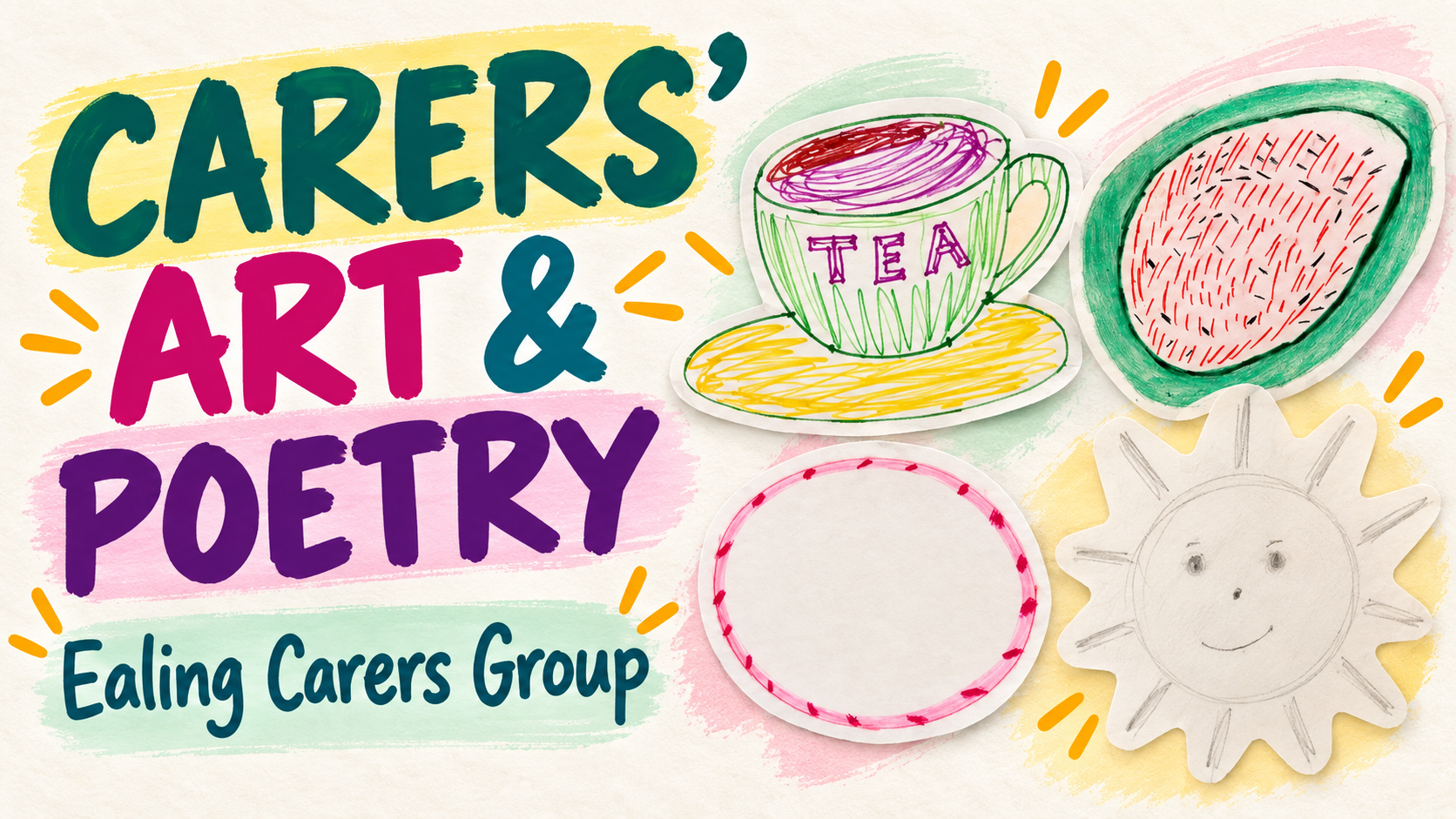
The drawings included a cup of tea, a bed, a slice of watermelon, a circle, a birthday card, two hands holding one another and a smiling sun. Each became a starting point for a different poem.
A cup of tea brought out the closeness between a carer and her son, and the hope found in sitting together. A drawing of a bed led to a poem about watching someone you care for and wishing you could do more. The green, black and red of a watermelon became a way to describe the daily cycle of caring and the return of brighter moments.
Other poems explored bonds that continue through difficult times, memories held in an old birthday card, the reassurance of holding hands, and the need for carers to find moments of joy and self compassion.
Some drawings were emailed to me; others were held up to the webcam. Even when a picture was difficult to see on screen, the person who made it could tell us what it meant. Hearing each poem in the carer’s own voice added something the image alone could not convey.
The objects we keep close
For a second exercise, I asked carers to choose an everyday object and begin with the idea, “You might think this is just…” A cardigan became a source of comfort. A pen represented both creativity and the practical work of caring. A book of poems, a blanket and an iPad used to play music opened up thoughts about memory, connection and changing emotions.
I was struck by how generously everyone listened. Carers noticed details in one another’s work and offered encouragement. One person found it difficult to write during the exercise, and that was welcome too. Being part of the group does not depend on producing a poem every time.
Watch the carers’ poems and artwork
I have brought the drawings and poems together in a short video so that more people can see what the group created:
Thank you to everyone who drew, wrote, read aloud, listened and supported someone else. The session reminded me that a simple picture can hold a great deal of experience, and that carers deserve space for their own creativity as well as their caring role.
Join us
The Ealing Carers Poetry Group is a welcoming online space for unpaid carers, including mental health carers. You can write, share, or simply come along and listen. Carers from Ealing and beyond are welcome to enquire.
I will also be leading a free in person poetry workshop on Thursday 8 October 2026, 11 am–1 pm, at Ealing Central Library. Places are limited, so please contact Ealing Carers Partnership to register.
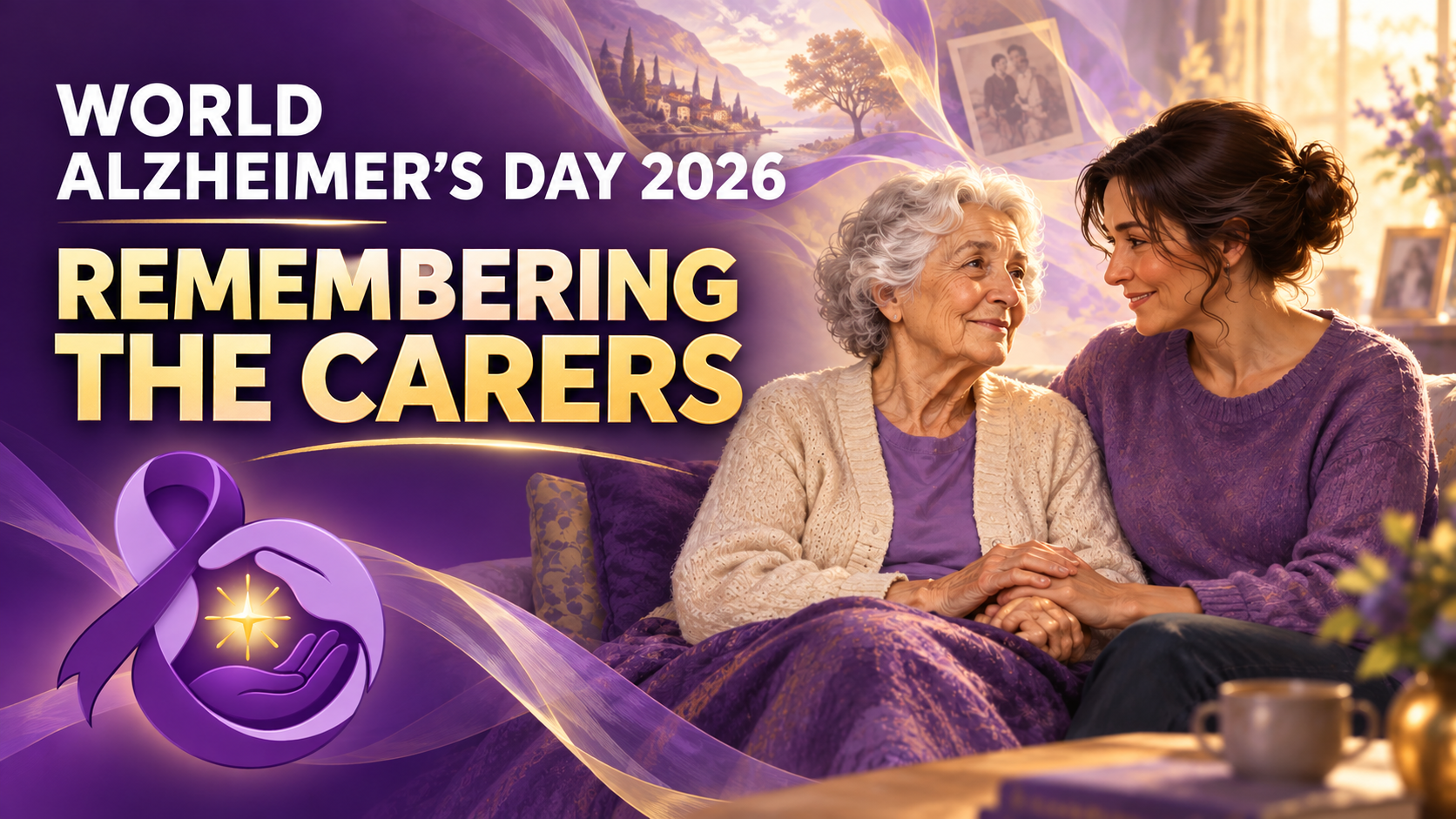
To mark World Alzheimer’s Day, I have produced a new A Caring Mind video focusing on the unpaid carers supporting relatives and friends living with Alzheimer’s disease and other forms of dementia.
Alzheimer’s is a progressive neurological disease rather than a mental illness. However, its emotional and psychological impact can be profound—not only for the person diagnosed, but also for those caring beside them.
The video explores the importance of earlier diagnosis, including carers in decisions, recognising anticipatory grief and connecting families with appropriate support. It also highlights organisations such as Alzheimer’s Society, Dementia UK, Carers UK and Carers Trust.
Carers may manage appointments, medication, personal care, changing behaviour and difficult decisions, often without enough information or support for their own wellbeing.
World Alzheimer’s Day gives us an opportunity to challenge stigma, listen to people affected by dementia and recognise the contribution of unpaid carers.
Neither the person living with dementia nor the carer walking beside them should be forgotten.
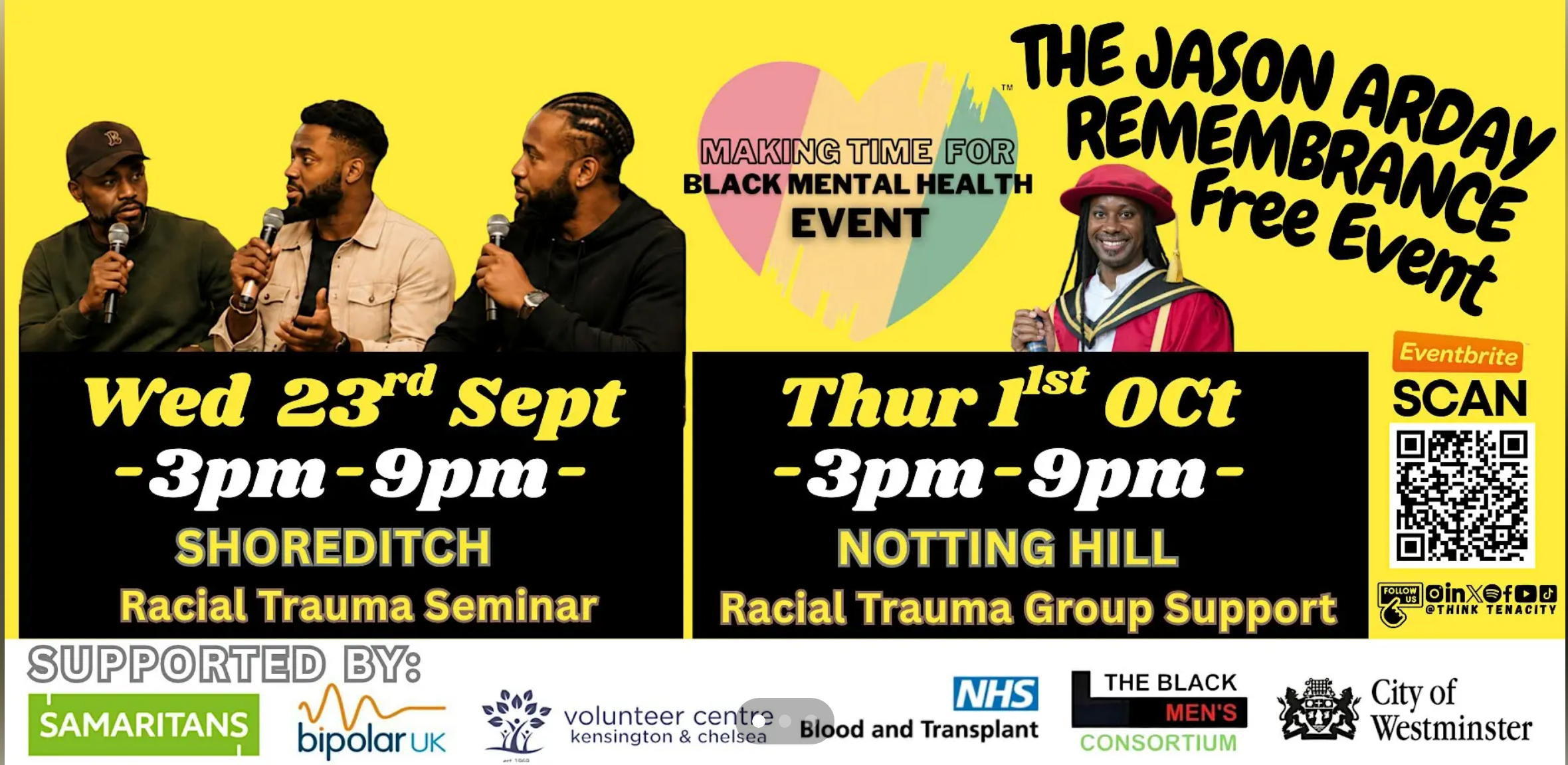
Think Tenacity Academy CIC is hosting another important Making Time for Black Mental Health event in London.
The free racial trauma seminar will take place on:
Wednesday 23 September 2026 3:00 pm–9:00 pm Cottons Shoreditch, 321 Old Street, London EC1V 9LE
The event will provide a culturally informed space to explore racial trauma, mental health and wellbeing within Black communities. It will also create opportunities for people with lived experience, carers, professionals and community organisations to connect and learn from one another.
I attended a previous Making Time for Black Mental Health event and saw how valuable these community-led spaces can be. They enable conversations about race and mental health to take place in an environment where people feel understood, represented and supported.
As a lived experience Black mental health carer and advocate, I know that racial trauma can affect not only individuals but also families and unpaid carers. We need more culturally responsive spaces that recognise these experiences and make it easier to discuss mental health without fear, judgement or stigma.
The event is free to attend, but capacity is limited to approximately 45 places, so early booking is strongly recommended.
A related Racial Trauma Group Support event is also advertised for Thursday 1 October in Notting Hill.