Hello Carers. There is a new research opportunity for carers of those using mental health services. The project is being carried out by Lewys Beames, PhD Student from Kings College London. Lewys will also be attending my ethnic mental health carers forum, which is many of the groups I run voluntary to give carers a platform for engagement and updates.
The project focuses on people who access mental health services will receive care and treatment for a time in a hospital ward or inpatient setting. In these settings service users are sometimes subject to practices which may be experienced as forceful or restrictive, such as physical restraint (being physical held by trained mental health staff) or being forced to take medication. These types of practices are commonly and collectively referred to as coercive practices.
We know that service users and carers can find experience of coercive practices distressing.
The purpose of this project is to ask about and understand the views of mental health services users, informal carers and inpatient mental health staff on coercive practices and ideas of how to improve experiences for service users and informal carers where coercive practice has occurred during a psychiatric inpatient admission.
As informal or unpaid carers, this is your chance to give feedback.
For more information, you can contact
Lewys Beames, PhD Student Department of Psychology, Institute of Psychiatry, Psychology & Neuroscience, King’s College London Email: lewys.beames@kcl.ac.uk Telephone: 07876875892
CONNECT REFLECT VALIDATE – 3 key takeaways to support someone in suicidal crisis
Jo Lambert
My name is Jo Lambert and I am one of six volunteers who made Hold the Hope, a suicide prevention film which explores how to support someone in suicidal crisis though a lived experience lens.
Over the last year, we have been working with film production company Creative Colony to bring our ideas and vision for Hold the Hope to life.
The film is split into two parts, with the first part told through two spoken word poems Today’s the Day and Hold the Hope (written by me and performed by award winning George the Poet).
It depicts the journey of someone who is in mental health crisis and the thoughts, feelings and emotions they experience. The second part of the film features behind-the-scenes footage and interviews with me and my lived experience colleagues.
Hold the Hope was funded by NHS South West London’s Suicide Prevention Programme (part of the NHS South West London Integrated Care Board).
The film will form part of a new life-saving training course that will be co-delivered by me and other volunteers alongside NHS staff for schools and the British Transport Police in South West London.
At the start of the project, I wrote a carer narrative, a distillation of my lived experience supporting a loved one in suicidal crisis. I condensed it into three key takeaway points – CONNECT REFLECT and VALIDATE in the hope that this might be easy to remember in a crisis situation. These three words and their significance are themes which run through both of the poems in the first film’s voiceover and in the second film, my colleagues and I share our lived experience examples of how to connect, reflect and validate someone in crisis and what holding the hope for them means. The film’s name derives from the name of the second poem.
As a mental health carer, I joined this project because I wanted to share what I wish I had known at the start of our family’s crisis. I am delighted that there are plans not just to deliver Hold the Hope into the police and secondary schools, but that there are already discussions about sharing it more widely across communities – with mental health carers, parents, universities etc.
Hold the Hope has been produced from lived experience, and my belief is that it is versatile and eminently portable because of that. For me the beauty of Hold the Hope is that it can be shared anywhere – it is just as applicable in a corporate setting so that staff can learn how to support family members and colleagues as it is for clinicians in a hospital who can deepen their understanding of their patients’ experience.
For me, this is the most important part of the poem. Once you start to understand the details of the back story to someone’s suicidal crisis, what is remarkable is not that the person had thoughts of ending their life but that they coped with as much as they did, as well as they did and for so long. The act of connecting, reflecting back and validating someone’s experience and holding the hope for them in their moment of crisis, can re-connect someone with their own immense internal power to survive.
It was an honour and a privilege to be part of this project and I have made what I hope will be lifelong friends as well as extended my own understanding from the shared experience of my colleagues.
Final words by Matthew McKenzie
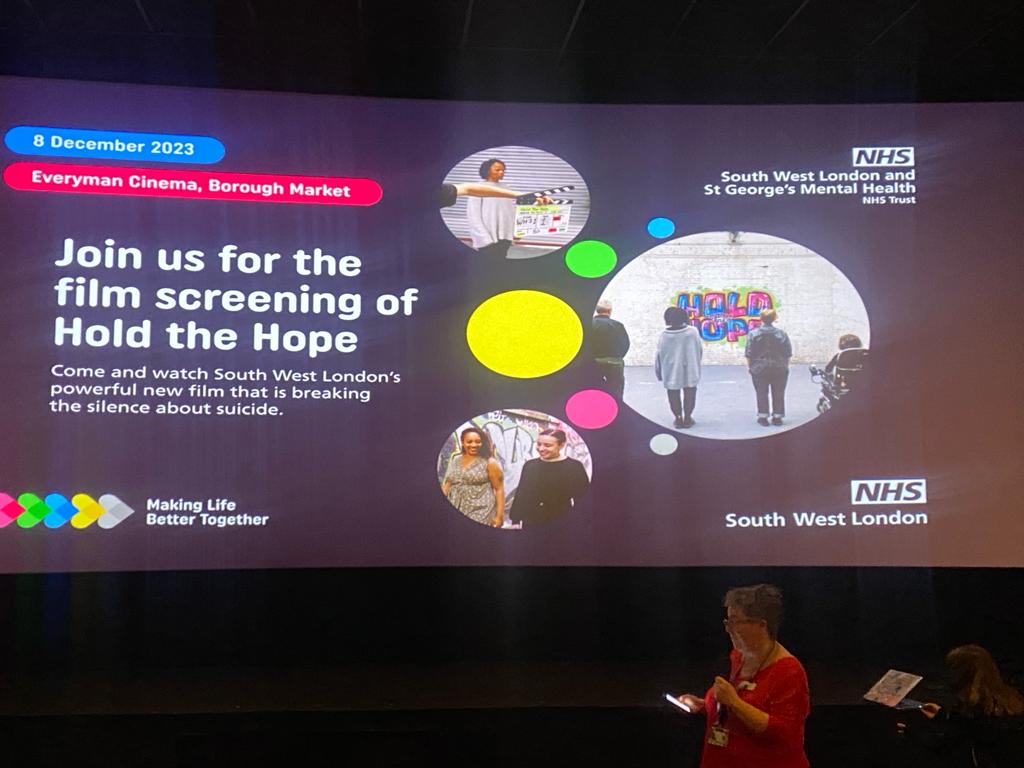
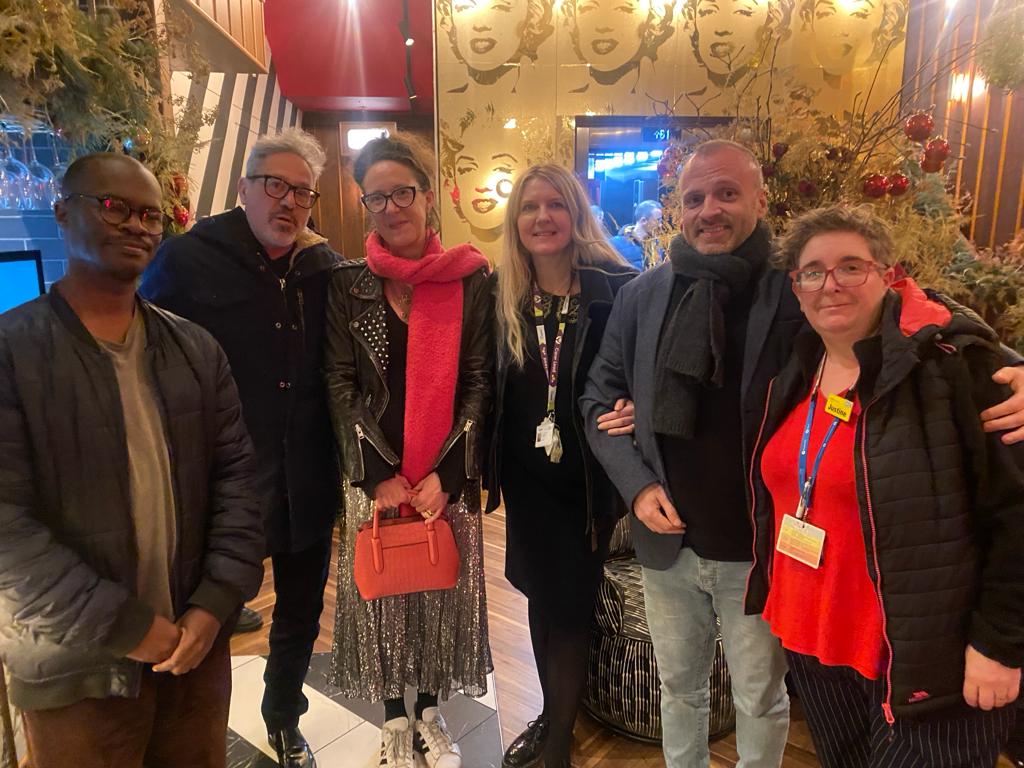
I attended the Hold the Hope Launch on Friday the 8th of December 2023. The launch was at the Everyman Cinema Borough Yards.
I was not sure what to expect, but felt welcomed and involved. With collegues from Cygnet attending along with me, it was a great way to support the amazing work Jo Lambert and others had put into the project.
After watching the video Hold the Hope, I can certainly see the challenge that must be taken up by the police, rail service, schools and more. Suicide must be tackled as soon as possible and one of the best ways to do this is through education.
Health, social care and the mental health services can only grow stronger with the inclusion of those who have lived experience. It takes courage, determination and care for those who get involved, because they have their own challenges and trauma.
The film clearly shows the importance of holding on to hope. There is always a chance, but sometimes we cannot see this. Sometimes those who attempt suicide cannot see any hope and those who should help can lack the skills to spot and prevent suicides.
With Jo Lambert’s poem, I can see how this hits home. I can feel her words gently remind that there is hope.
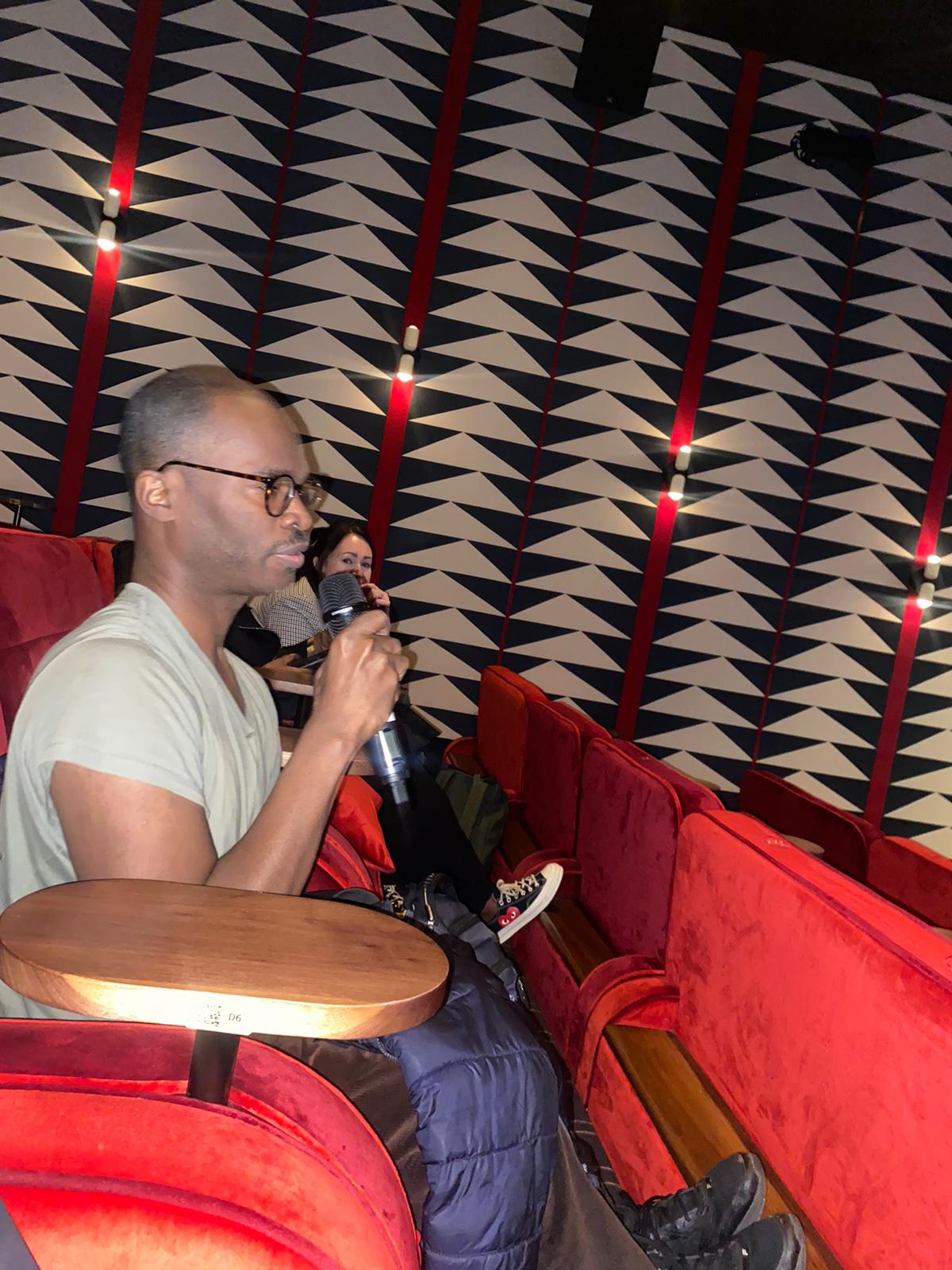
I could not help but be intrigued after the film was shown. I wanted to hear so much from the inclusion of lived experience.
I asked Jo what she expected from the project and was amazed at how thoughtful her answer was. As a carer I can see the potential of the project. We need to include carers and help them tackle the challenges when caring for someone going Suicidal Ideation.
I admit there is so much to do, but with the Hold The Hope project, I can certainly see a strong foundation.
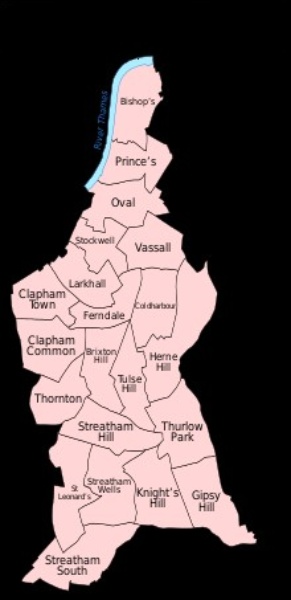
Calling carers from Black African and/or Black Caribbean communities in Lambeth. There is an exciting project that asks for your views.
It has consistently been shown that black men have the poorest experiences and outcomes when it comes to mental health services. So Healthwatch Lambeth wants to hear your experiences of caring a male relative who has a Serious Mental Illness, been hospitalise as a result of their illness and then discharged to their GP.
This is a core part of Healthwatch Lambeth’s new mental health project and each carer would receive a £15 shopping voucher for their time.
The borough of Lambeth want those to recover, stay well, and lead a fulfilling life.
Lambeth Healthwatch also wants to talk to carers as they play a key role in supporting people with a Serious Mental Illness.
To share your views, please contact Anna D’Agostino at 07737 599224 or email Anna at anna.dagostino@healthwatchlambeth.org.uk
Welcome to another carers blog from carer activist Matthew McKenzie. I blog and promote awareness campaigns, events and updates for unpaid carers. Just so you know, an unpaid carer is someone caring for a person who suffers from a serious mental or physical health need. An unpaid carer is not a care worker, so carers need their own specific support needs.
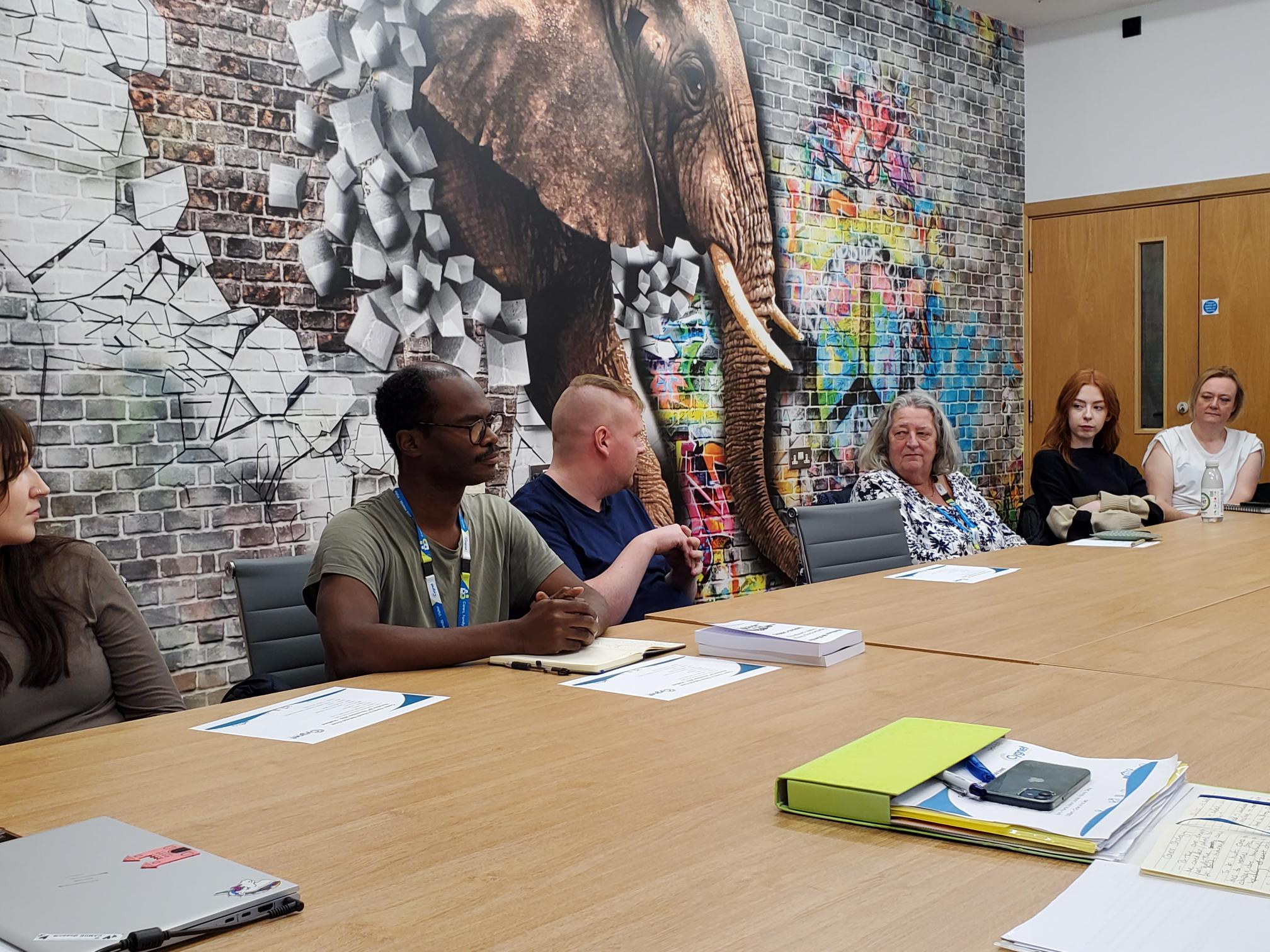
This leads on to an event I attended as one of the Cygnet carer network ambassodor. The event was another of the carers, families and friends network event. Cygnet try very hard to reach out to unpaid carers whose loved ones are using their services. It is a great way to network with staff and other carers. Carers go through many struggles and one of them is caring in isolation. So what I often tell carers is that they should network with other carers. This can help build up a support structure where carers can become peer supporters. Of course there are boundaries as carers do not often have the time to check in with other carers, but we still have to value the importance of a carer support network.
Cygnet Sheffield
Cygnet Hospital Sheffield offers a low secure service for women and CAMHS services for male and female adolescents over three distinct wards. When I mention CAMHS I am talking about Child and Adolescent Mental Health Services.
We cannot ignore that children and young people can also develop serious mental health problems and the outcome can be devastating for carers, friends and families.
Carers need all the information and support they can get. So it helps to have these events. The event took place on Carers Rights day, which is held on the 23rd of November each year. Please check out my earlier blog post on Carers Rights day to find out more.
Also presenting at the Sheffield Carers Network event were
Ali Curtis – CAMHS Service Lead for Cygnet Sheffield and CAMHS Lead Nurse for Cygnet
Dr Seb Thompson – Head of Psychology at Cygnet Sheffield and CAMHS Lead Psychologist for Cygnet
Lesley Mellor – Parent & Carer
Julian de Takats – Parent & Carer
Kate Mercer – Family Advocate, Black Belt Advocacy
Ali Curtis started off the event. Ali who is a qualified learning disability nurse started her career nursing within medium and low secure forensic services before progressing to management within locked rehabilitation and children’s community services.
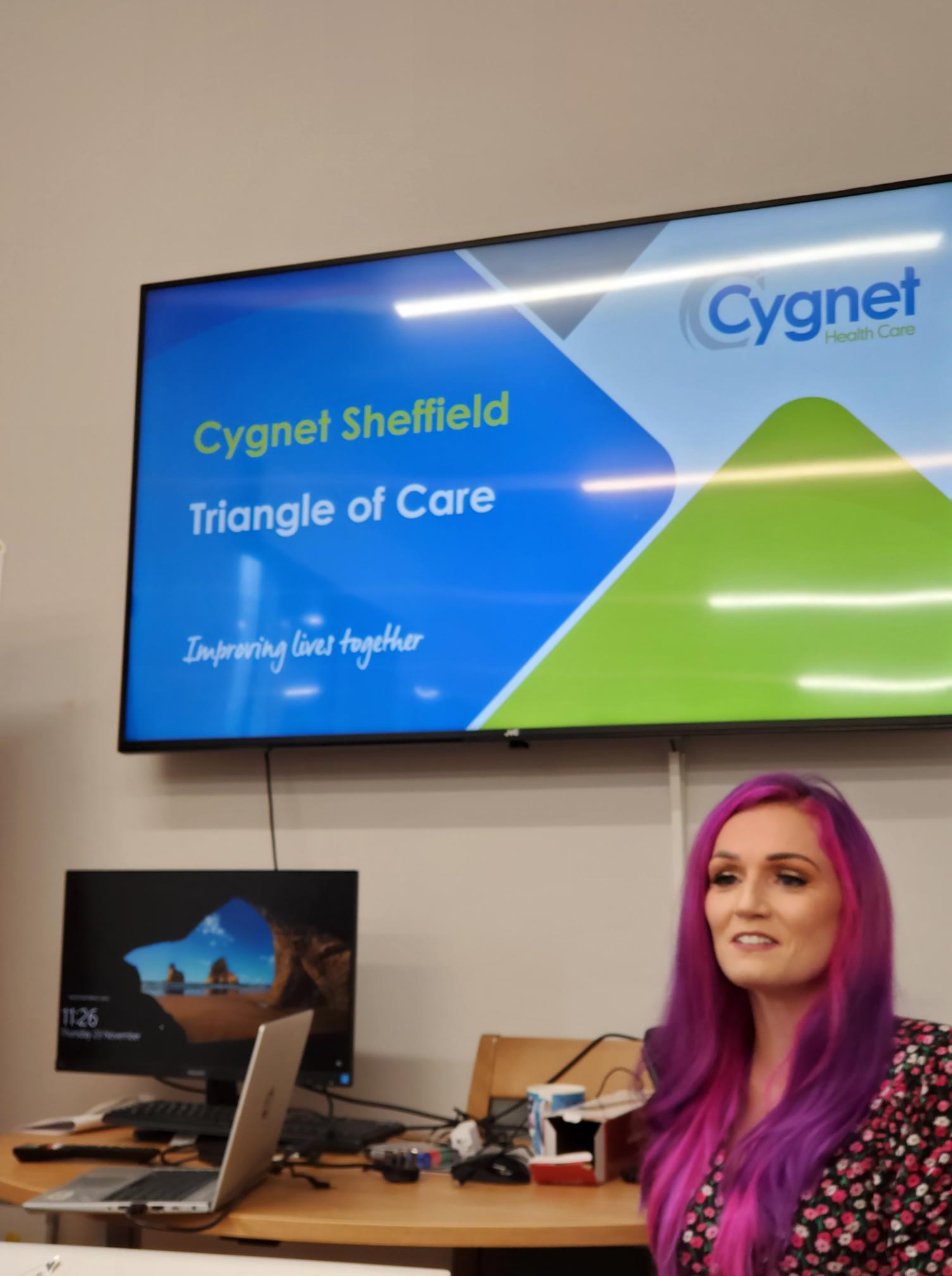
She her presentation and introduction to the event on what the service provides for those who use Sheffield hospital services. Ali presentated on aspects of the Triangle of Care, which is a scheme to improve mental health services for unpaid carers.
Sheffield hospital has done an amazing amount of work to develop and improve carer engagement and support. This was done in co-production with unpaid carers. This includes
Developing a Carers Welcome Pack
Carer awareness training
Carers contributions and videos and podcasts
Communication Care Plans, including information sharing agreement
Family Forums and so much more.
The above was developed to connect to the triangle of care 6 standards.
Dr Seb also contributed to the presentation on how the triangle of care made improvements to severals. If we include the families and carers in our mental health services then the quality of the services improve.
We then had Lesley Mellor talk about her caring role and feeding back what she heard from Dr Seb and Ali Curtis.
Lesley is the chair of Dorset Parent Carer Council. She is also the founder and administrator of West Dorset Coping with Chaos Plat Scheme for children with disabilities / additional needs. Lesley is a parent of 2 sons with disabilities. Lesley gave a passionate and indepth talk about the importance of parent carers.
Next up to speak was myself where I wanted to get views from those in attendance regarding carer awareness. I read out one of the poems out of my carer poetry book focusing on the desperate need for carer identity. I also talked about the importance of Carers Rights day and how we can use the day to highlight carers rights.
Up next to present during Lunch time was Kate Mercer. She runs a training organization called Black Belt Advocacy that offers support and formal qualifications to independent advocates including a National Advocacy Conference each year.
Kate spoke about the importance of advocacy for carers and the impact advocacy has in their lives. With support of the Care Act and mental health laws, there has been an increase in carer rights, but this is no good if services are unaware of these rights and they must be practiced and promoted to carers.
Last to speak was the 3rd member of the Cygnet Carers Network Julian de Takats. Julian is also a parent carer and used his lived experience to present the importance of including carers.
Overall the event increased carer awareness for those in attendance. I will continue to urge carers attend such events so they get a chance to network, ask questions and learn about how Cygnet services are developing to include carers.
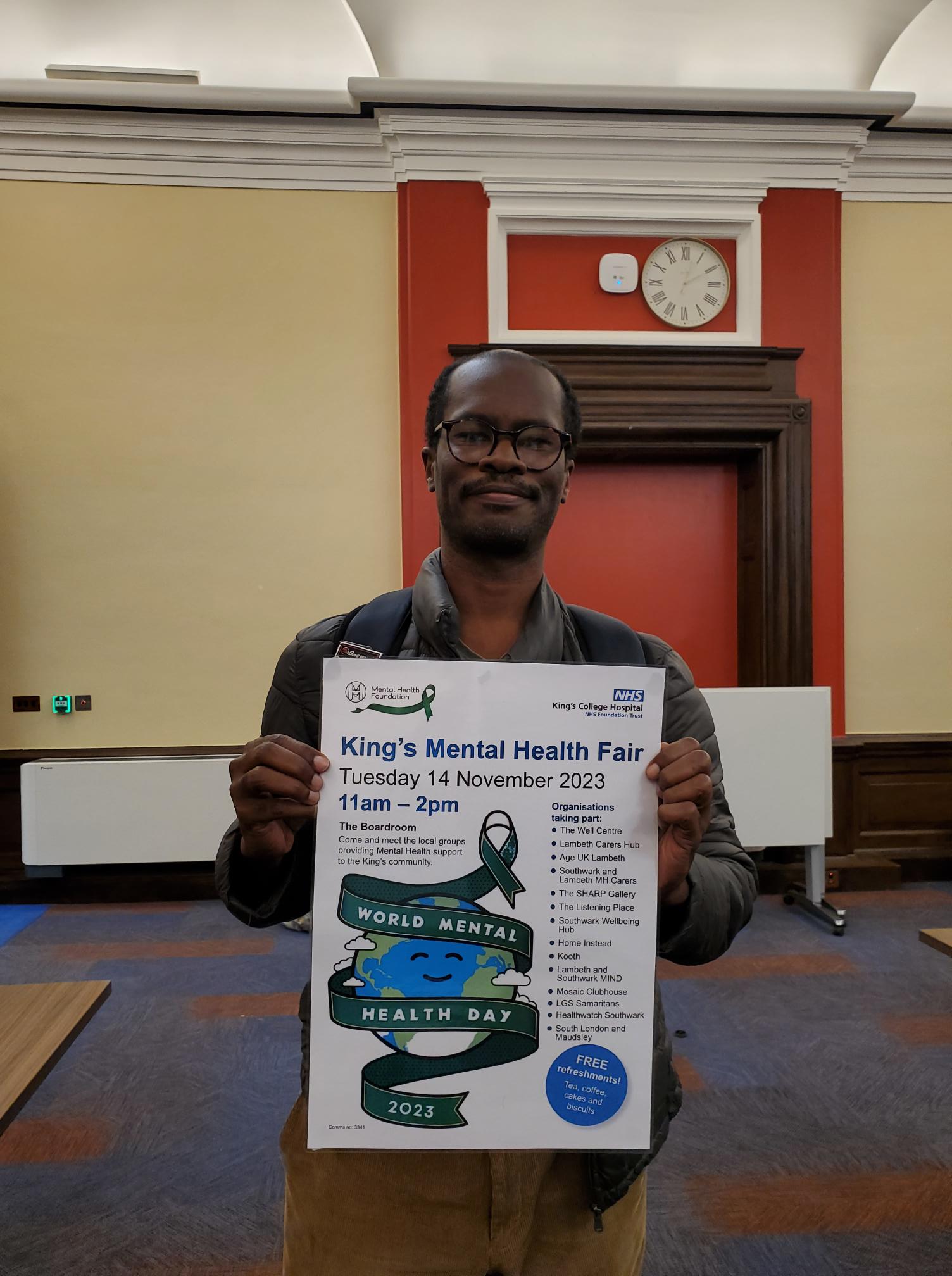
Welcome back to another carer and mental health blog post for November. This blog focuses on Kings College hospital event for Tuesday 14th of November. The event was called “King’s Mental Health Fair”.
King’s College Hospital is a major teaching hospital and major trauma centre in Denmark Hill, Camberwell in the London Borough of Lambeth. Kings provide local hospital services for people living in the boroughs of Lambeth, Southwark, Lewisham, and Bromley.
However Kings college hospital feels not only physical health is important, but also mental health. Kings hospital also wants to work with community groups to help promote good health and mental wellbeing. So for 2023 it was the 2nd ever Mental Health Fair.
The mental health fair took place in the Boardroom which is in the Hambleden Wing, which ran from 11 am till 2 pm and hosted by Kieran Quirke who is the Associate Director of Nursing for Mental Health at Kings. The fair was open to all patients, staff and carers, which staff from Kings hospital attending and also staff from NHS maudsley dropping by.
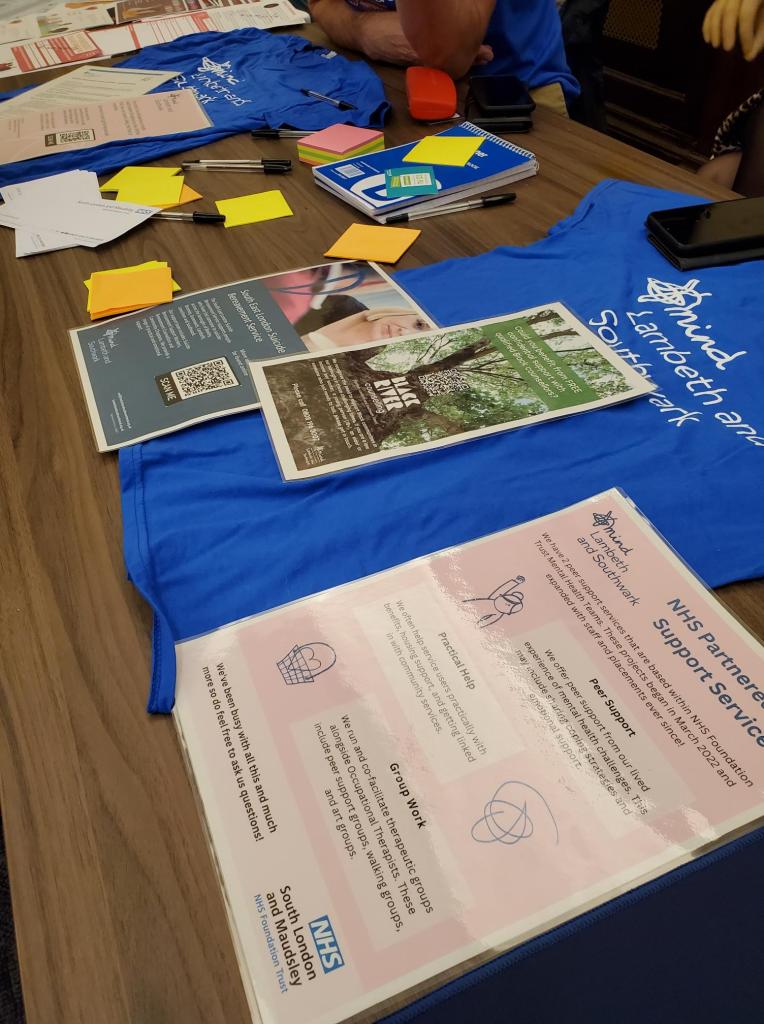
There were some excellent stalls from organisations taking part. I visited a stall from the SHARP gallery where they mentioned exhibitions and workshops.
Age UK Lambeth had some very interesting handouts. Age UK Lambeth is an independent local charity working in Lambeth to offer support and services to older people.
I also checked a few things from the Kooth stall, which provides an anonymous site which helps children and young people to feel safe and confident in exploring their concerns and seeking professional support.
Then I spoke to Nathan who running the Lewisham, Greenwich and Southwark Samaritans stall. Samaritans is a registered charity aimed at providing emotional support to anyone in emotional distress, struggling to cope or at risk of suicide
The next stall I visited was from Southwark Healthwatch. Healthwatch Southwark are the independent champion for the patient and public voice. They bring people together to influence health and social care services in Southwark to make them better. Everything they say and do is informed by their engagement with local people. Their aim is to address inequalities in health and social care and ensure local services are appropriate for Southwark’s diverse communities.
I then spoke to familiar faces at Lambeth Carers Hub. The carers hub seek to limit the challenges that carers face. They achieve this through four core workstreams: raising awareness of carers, influencing local policy through community engagement activities, improving carer wellbeing and connecting carers to each other and to support and training opportunities through their services.
I was also privileged to be part of the mental health fair as I promoted information on unpaid carers these being info on Carers UK, plus I gave away some of the books I wrote on carer awareness for those caring for someone with a mental illness and promoted my group for the Southwark & Lambeth MH carers forum.
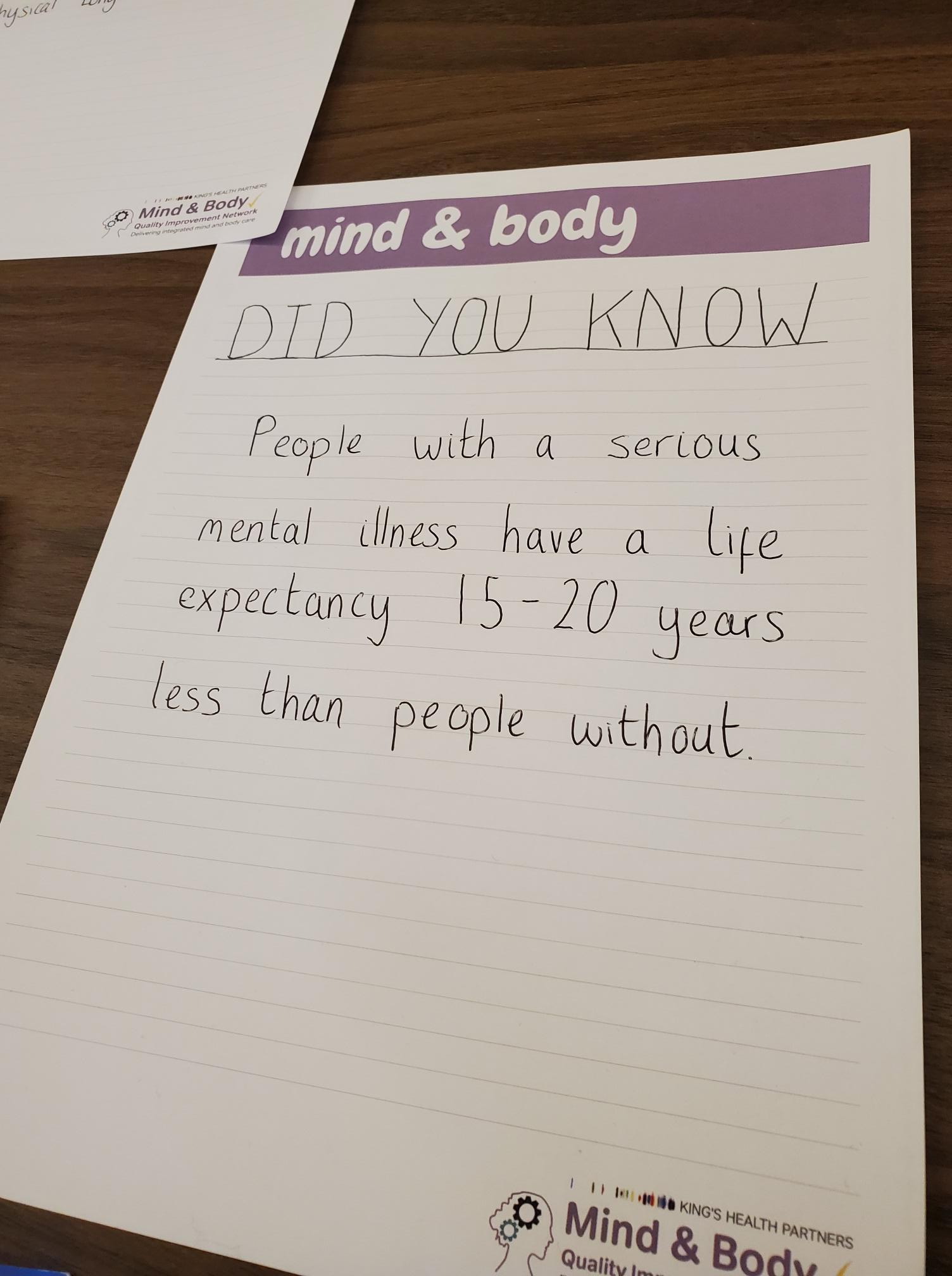
Other important stalls were on the Mind and Body programme where they are committed to join up and deliver excellent mental and physical healthcare, research and education so that they treat the whole person.
There were many other organisations and stalls, but overall I felt the event was great partnership working with the community as we all work together with the hospital to increase awareness, health and wellbeing for all.
Another blog post from carer activist Matthew McKenzie. New research over from Kings are looking for service users, carers and inpatient mental health staff members with experience of coercive practices such as restraint in inpatient mental health settings.
If you are interested to give your views, please contact
Lewys Beames PhD Student Department of Psychology Institute of Psychiatry, Psychology & Neuroscience King’s College London Email: lewys.beames@kcl.ac.uk
Welcome to another blog post by Matthew McKenzie carer activist and one of the carer network ambassdors for Cygnet.
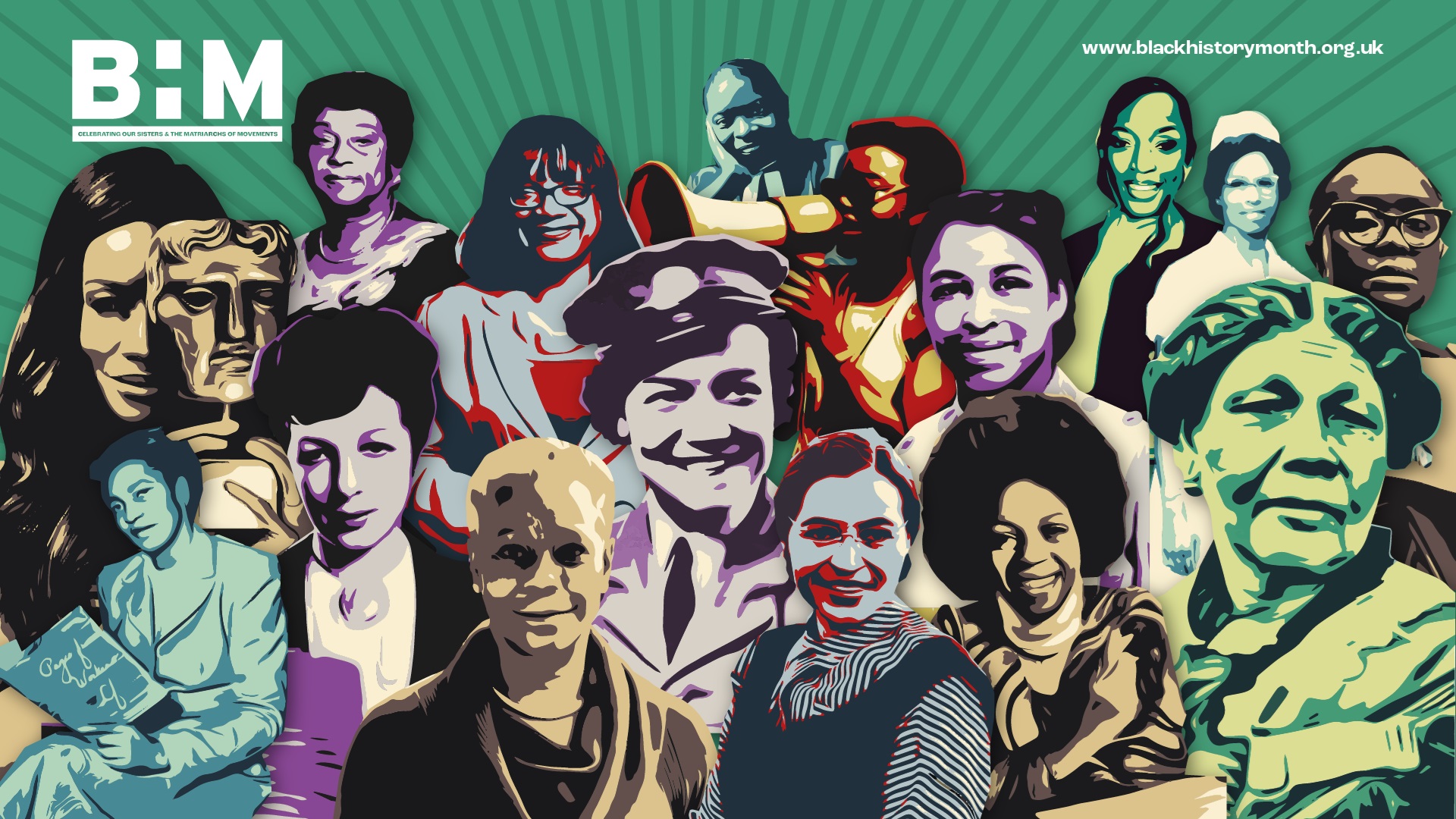
As of this month for October 2023 it is Black History month. This month is a special theme for me since the theme is ‘Saluting our Sisters’. The theme highlights the crucial role Black women have played throughout history.
There are so many famous black women throughout history
Rosa Parks – for her courageous participation in the Montgomery Bus Boycott to push forward the civil rights movement against racial segregation on public transport.
Maya Angelou – who was famous for poetry and also a civil rights activist.
Mary Seacole – Contributing to medicine and nursing where she even helped British soldiers being injured in the Crimean war while fighting discrimination.
There are of course many more famous black sisters who are far too numerous to mention, but the above have shows the importance history plays in shaping our lives.
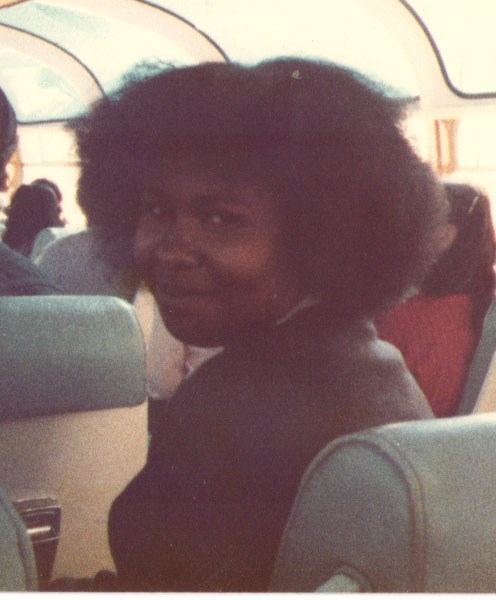
Still, I want to focus on someone very special and dear to me as she has not only shaped my life, but in a strange way inspired many others. Around 2019 during the pandemic the country was fighting an unknown and dangerous virus. That virus turned out to be COVID-19 and the outcome changed my life. My mother struggled with her mental illness in her later years, which in turn led her to also struggle with her physical health. With resources running low in the health service my mother was the unfortunate casualty of dwindling health resources during the pandemic.
Like so many other vulnerable groups. My mother did not actually die of virus, but just could not access emergency healthcare as resources were focused on covid victims.
The impact left me wondering what could I learn from my many years of caring for my mother. I had a choice either to share my story to other carers or completely move in another direction of my life. I made the former choice, because it helped me heal and also pay rememberance not only to my mother, but to myself.
So around 2020 I wrote my first book about my experiences as a mental health carer. The book was called “A caring Mind”, which was named after my blogsite which was born raising carer awareness after writing blogs for South London & Maudsley NHS trust.
Even when caring for my mother, I was also helping to care for an old friend who also inspired me to write. However it was my mother Rosemarie McKenzie who spent so much time writing poetry. My mother also wrote stories and even managed to get a story published in a magazine while she was struggling with mental illness.
My mother enjoyed singing and used to sing at our local African/Carribean community centre (family Health ISIS) that catered for those struggling with mental illnes.
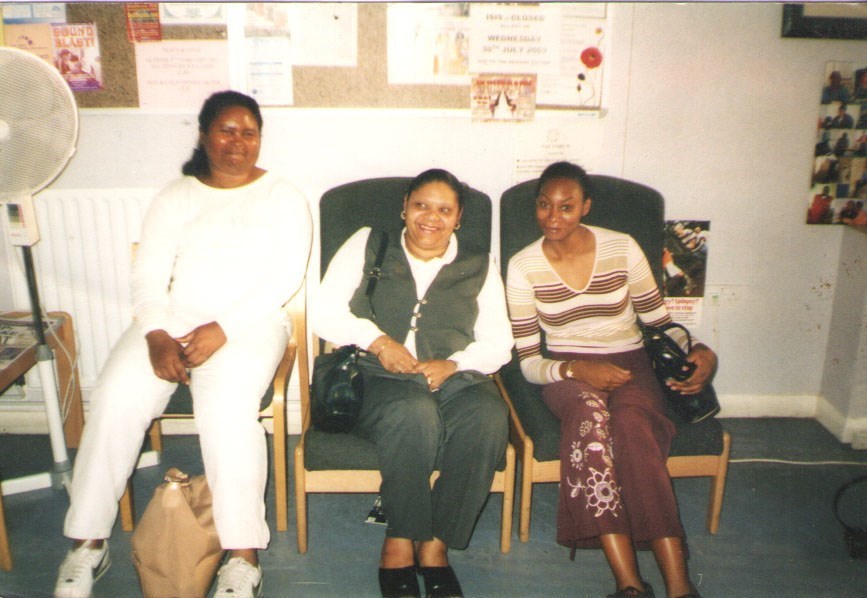
Rosemarie McKenzie to the left dressed in white
My mother inspired many other clients at the community centre to be creative with poetry, singing and writing. It did not matter the mental struggle other clients was going through at the centre. They saw my mothers, as long as they could be creative, it helped them express traumatic feelings in a positive way. This was one of my mother’s strengths. No matter how many times she was would suffer with her health, she always found strength to be more than her illness. She made me find cause in highlighting awareness for vulnerable groups. This in turn led me to continue writing and using creative ways to express my lived experience.
Of course I could never fully understand my mother’s illness and could only express my mothers creativity as a dutiful son and a mental health carer. In the end I feel we cannot always look to the famous and fortunate of our black sisters. We all contribute to history in our own way. My mother used her own creativity to tell her story and I will continue that story hoping to contribute to black history.


















 A Caring Mind