Welcome fellow unpaid carers. This blog focuses on those caring for someone suffering through mental illness. I chair the Triangle of Care community meeting. You might have already heard about Triangle of Care from national carers charity Carers Trust.
Basically the Triangle of Care describes a therapeutic relationship between the patient, staff member and carer that promotes safety, supports communication and sustains wellbeing. Many NHS Mental health trusts across the country have taken up the challenge and signed up to the scheme.
However if you are a carer, knowing about the triangle of care is not enough. You should try work out what your NHS trust is doing with triangle of care policy.
Some questions you could ask
Have you as an NHS organisation signed up to the triangle of care?
What are your plans to get feedback from carers to help shape triangle of care at your organisation?
How do you promote triangle of care to unpaid carers?
How is triangle of care helping to change the experiences of carers at your NHS organisation?
There are many more questions to ask senior NHS staff at your local mental health trust, but it is so important carers do not just blindly accept carer policies without some scrutiny.
We have our next Triangle of Care community meeting for 21st of september. See below.
Remember, unpaid carers also use services and it is their right influence or feedback experiences of health care.
Another blog from carer activist Matthew McKenzie highlighting an opportunity of joining a research project at Kings College London.
What is the purpose of the project?
Many people with a severe mental illness (SMI) may live with or be supported by a close relative or friend, whom can often be referred to as informal carers.
We know that caring for a relative with lived experience of SMI is an important and valued role that can be associated with many rewarding and positive experiences. We also know, however, that it can be associated with different challenges for which some can include exposure to aggression from their relative.
The purpose of the project is to trial a new group training programme for informal carers who have had times in their relationship when they have been exposed to aggression from the person they care for with SMI.
The researcher is inviting informal carers in SMI who have been exposed to aggression in their caregiving relationship, from the person they provide care for.
If you are happy to take part and the research team have answered any questions you have, you will be given an information sheet to keep and asked to sign a consent form.
Here is a brief outline of what you can expect from the group training:
An opportunity to meet other carers with similar experiences
Understanding of severe mental illness
Discussing communication skills
Discussing problem-solving and de-escalation skills
Discussing of strategies to promote positive wellbeing, support, and safety
Discussing of helpful resources and strategies to access support
If you have any questions or require more information about this study, please contact the researcher using the following contact details:
Lee Zi Min Beatrice, Clinical Psychologist in Training, ASB, Institute of Psychiatry, 4 Windsor Walk, London, SE5 8AZ
Welcome to another blog post by Matthew McKenzie promoting research from psychiatry and psychology.
There is new research taking place at the institute of Psychiatry, Psychology and Neuroscience. They are working on a new way of Virtual training for unpaid mental health carers.
People with lived experiences of mental health problems, such as psychosis, can have a range of experiences that might include worrying or unusual beliefs about other people, themselves and events. These experiences can sometimes influence their styles of communication with other people, including close friends and relatives. Families and friends (sometimes collectively described as carers) are an important source of support to people living with psychosis. This caring role can be challenging, especially when communication might feel confusing and difficult. As such, carers understandably often want their own help on how best to provide support particularly in terms of identifying helpful communication styles.
In the study the IOPPN will look at whether it is possible to use a new virtual reality (VR) training programme designed specifically for carers of people with lived experiences of psychosis. By carrying out a smaller study, the research will want to see if a larger study would work in the future. The training will aim to guide a carer’s development and use of helpful communication styles with their relative with psychosis.
For more details see poster below.
If interested please contact
Laurence Rogers (Trainee Clinical Psychologist; Laurence.p.rogers@kcl.ac.uk) Department of Psychology, King’s College London Institute of Psychiatry, Psychology and Neuroscience De Crespigny Park Denmark Hill London SE5 8A
Welcome to another blog post from Carer activist Matthew McKenzie. I do many roles to connect with unpaid carers and I am now a Expert by Experience Carer Ambassador for Cygnet. I want to keep carers at the heart of healthcare services and one of the best ways to do this is speak at conferences.
Cygnet Health Care is taking on the challenge of and striving to make sure mental health carers get the best support possible. Cygnet are running “Regional Carer Network events”.
This recent Carer Network Event took place at one of Cygnet’s sites. That being Cygnet Hospital Bierley.
Before the event, Cygnet’s Group Service Improvement Manager Lauran Sheridan provided support to make sure Carer Ambassador’s were looked after. It was thanks to Laura that we were given a voice and place to reach out to carers who often feel they are forgotten.
We had a lovely stay at Premier Inn and the food was lovely. It was important to get a good nights rest to feel refreshed and ready to engage with staff at Cygnet and unpaid carers.
Just before the event, I took the time to explore the wonderful City of Bradford and event went walking along some rocks to watch the sunset.
AT THE EVENT
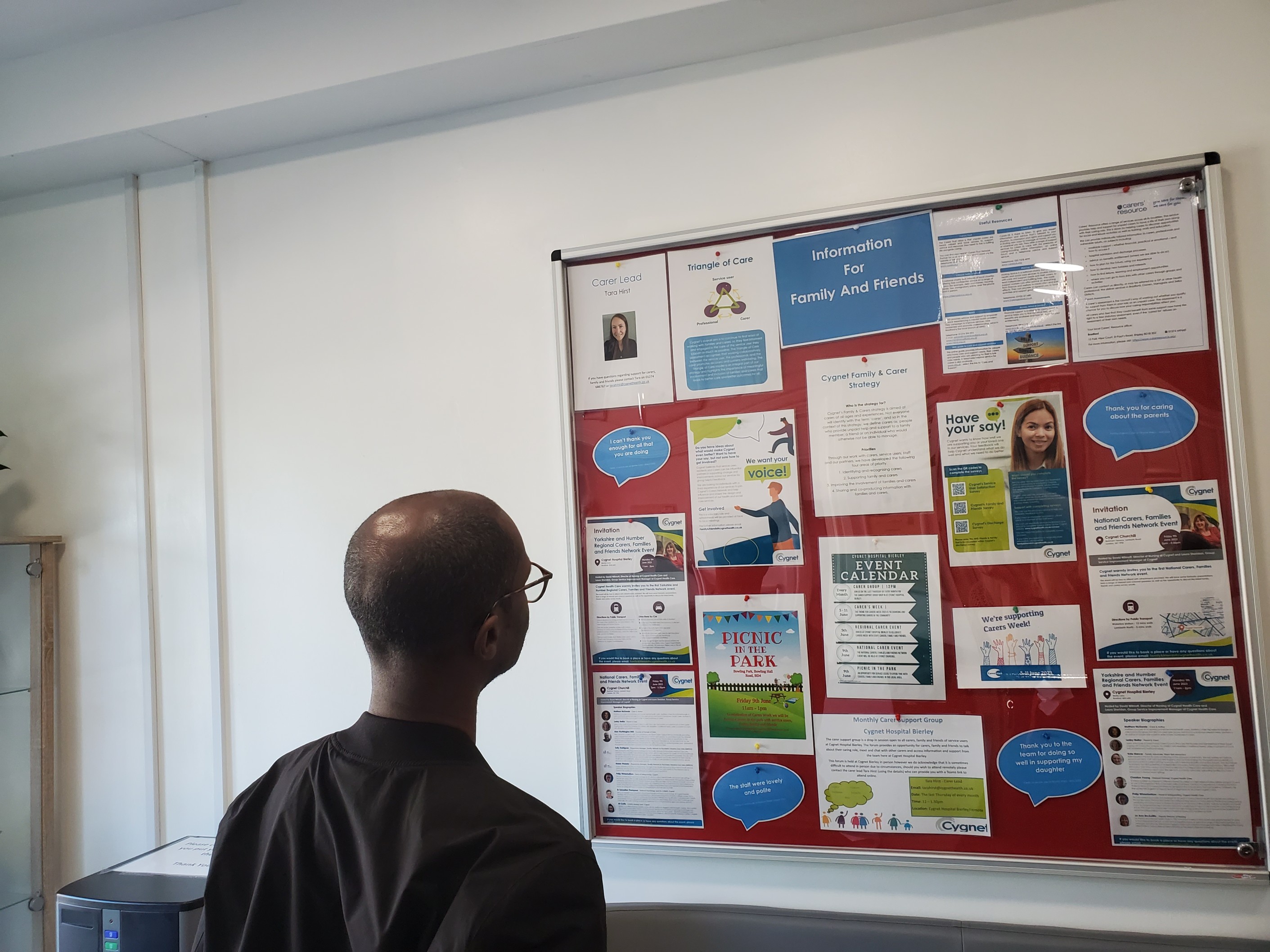
As usual, the first thing I look for when I enter a hospital is to examine what is displayed for unpaid carers. I was glad to see a Carer’s board and advertisements for carer events and initiatives e.g.
Events Calendar,
Awareness of Carers Week 2023,
who is the Carer’s Lead
Triangle of Care
Family & Carer strategy …..and lots more..
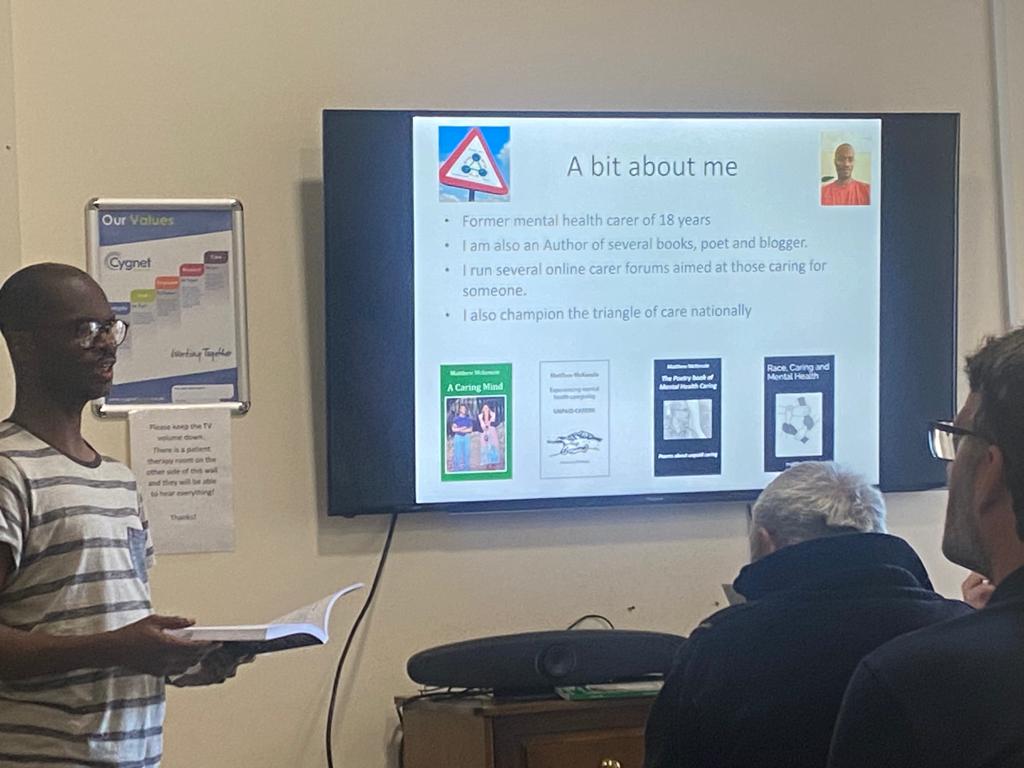
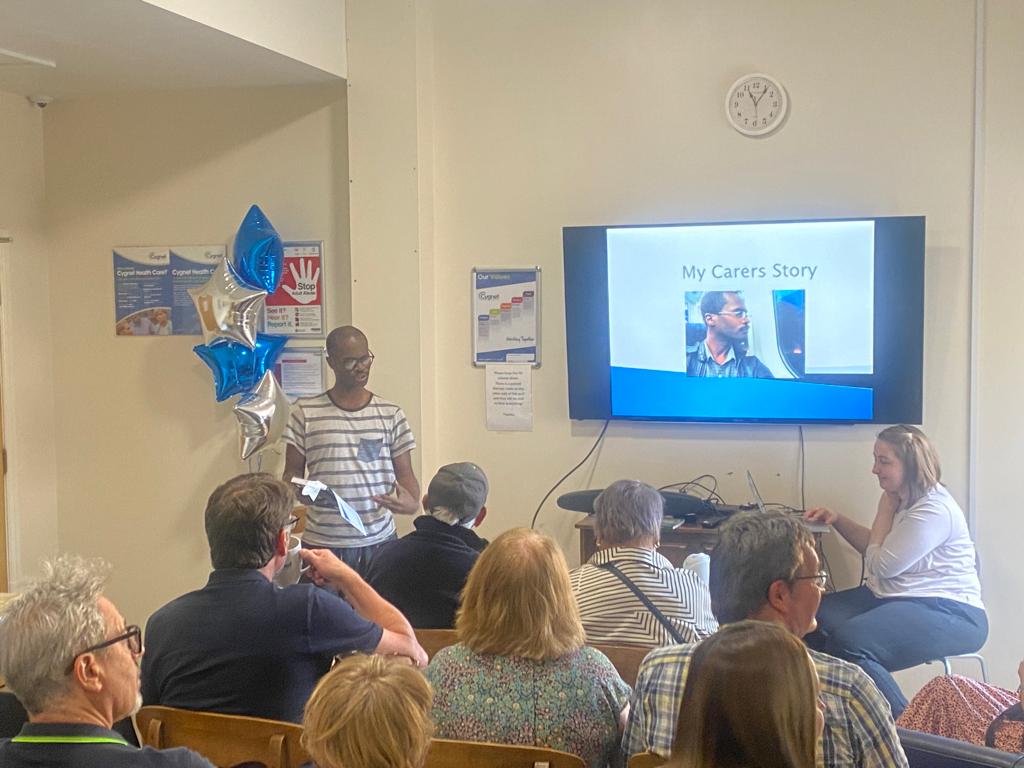
I opened the event with a focus on why I think carer networks are so important. I often write books on why carers need to connect and also why services should provide the empowerment and platform for carers to connect. If we connect, we can listen and try to understand the complex world of unpaid carers.
The speakers for the Regional Carer Network event were as follows.
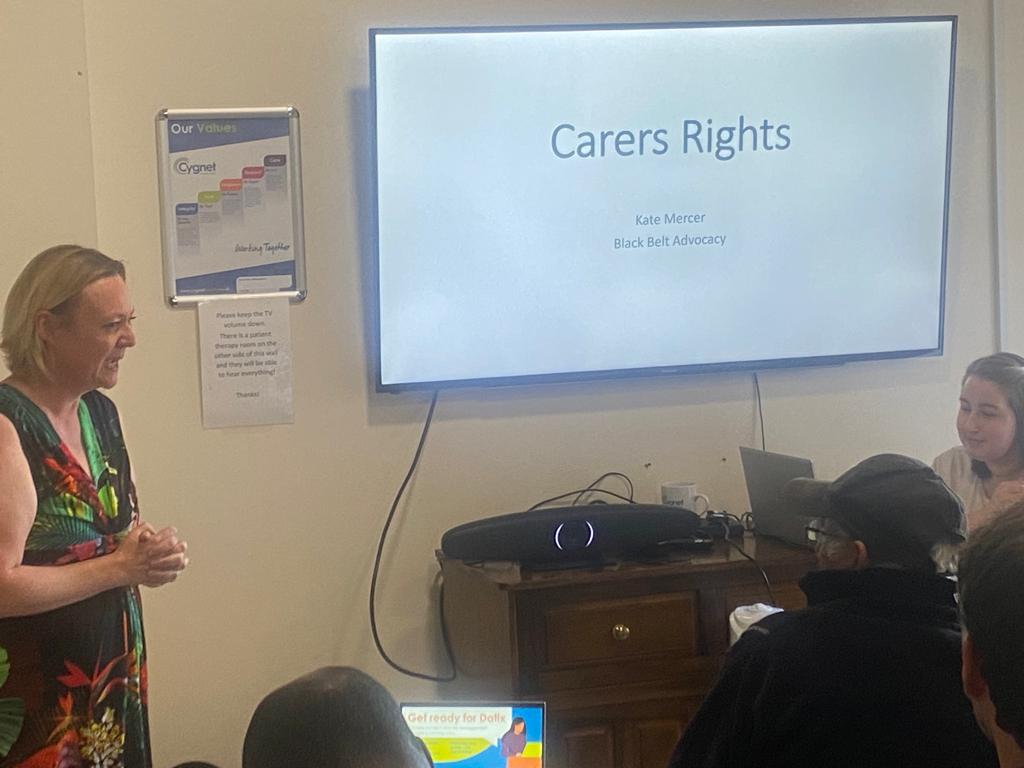
Kate Mercer who is a Family Advocate from Black Belt Advocacy. Kate spoke about carer’s rights. She has worked on national projects with NICE, CSIP, NDTi and NHS England, most recently looking into the quality and availability of advocacy within in-patient settings for people with a learning disability and autistic people.
We also had Christian Young who is the General Counsel at Cygnet Health Care. Christian qualified as a lawyer in 1998, he then joined NHS England as Deputy Head of Legal Services before moving on to Cygnet.
Next to present was Philip Winterbottom who is Head of Safeguarding at Cygnet Health Care. Philip did an excellent presentation on the importance of safeguarding at health services. It is important we all know our duties to provide the best care of those who use our services.
We also was joined by Jo-Ann McAuliffe who is Deputy Director of Nursing. Jo spoke about the importance of recognising carers and how Cygnet can work with unpaid carers.
Lesley Mellor who is the other Expert by Experience Carer Ambassador for Cygnet spoke about her experience of providing care. Lesley is the is the chair of Dorset Parent Carer Council.
During the event, attendees were certainly looked after. We had a lovely lunch and I actually took some of the food home with me.
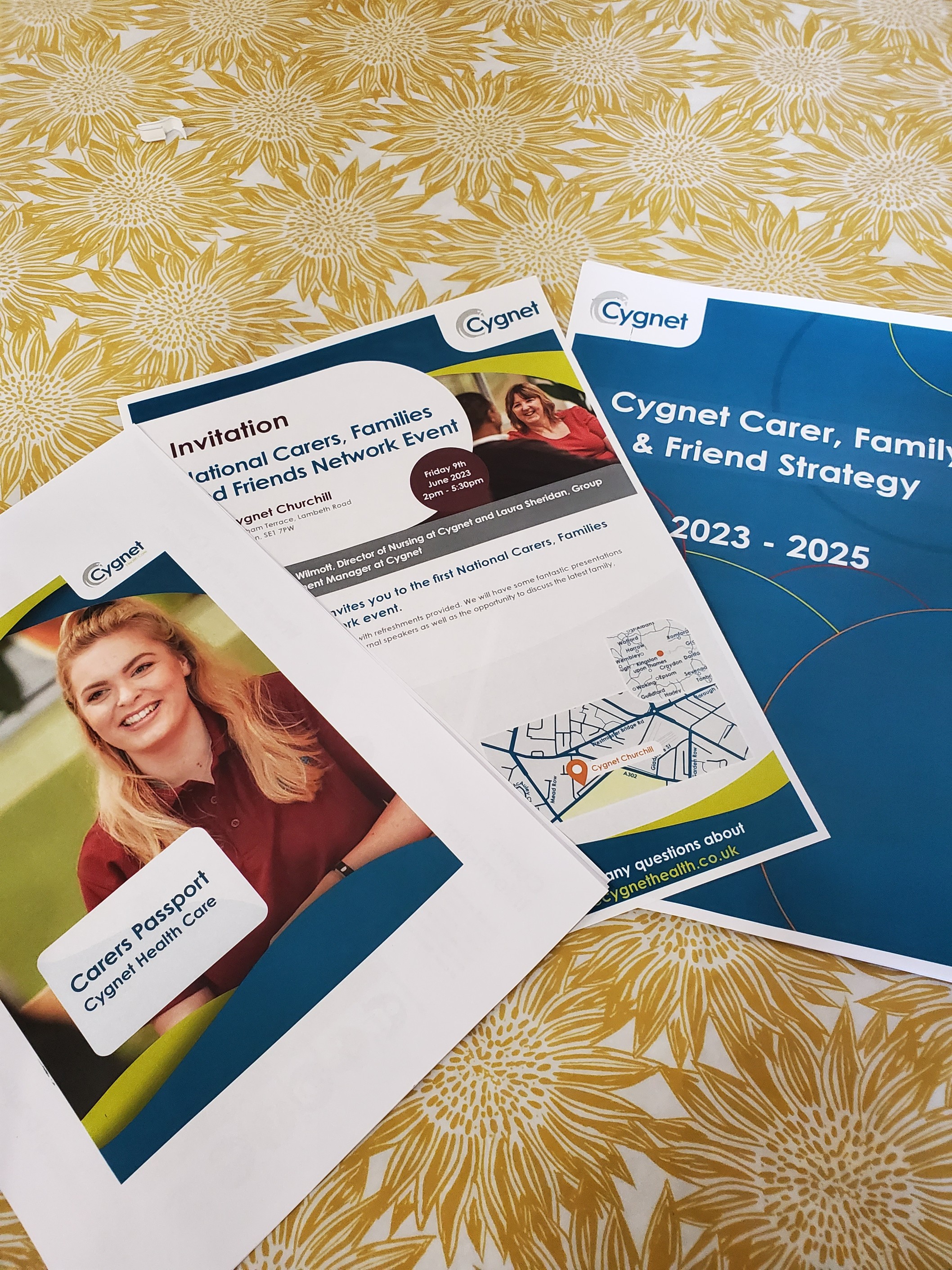
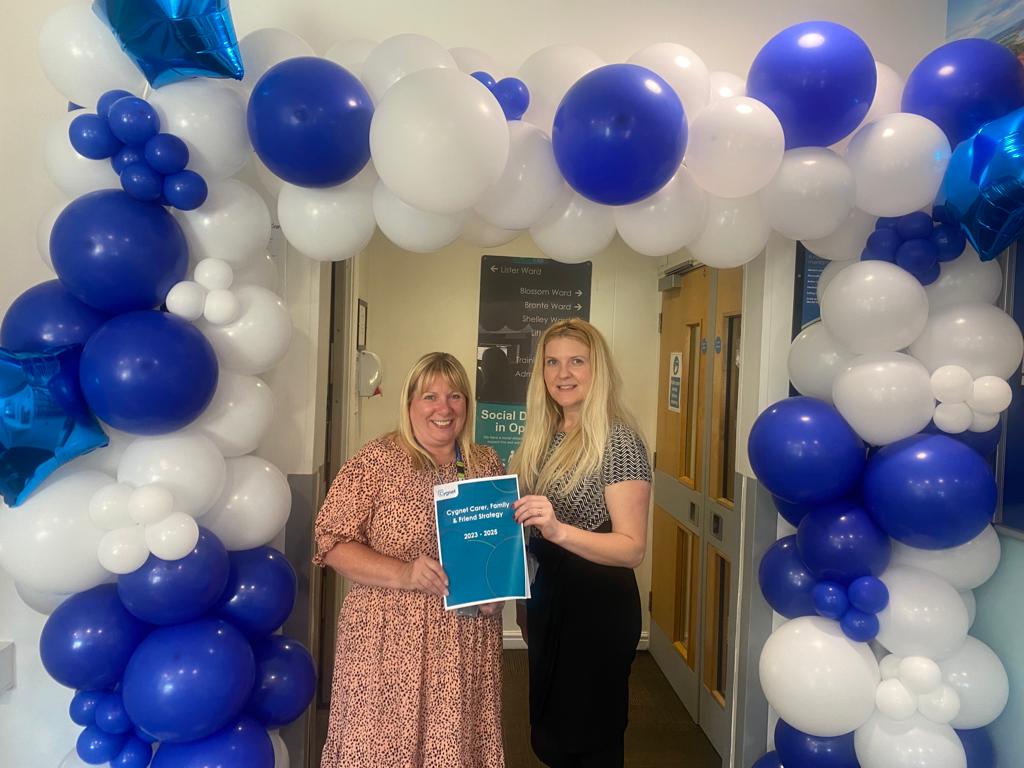
Cygnet also provided carers we lots of information, where Laura and Jo promoted Cygnet’s new Carers Strategy with more carer information to take home after the event.
All in all I enjoyed the regional carer network event and have connected to a few carers. The network will take time to develop, but we can all learn from each other. As the core of the Triangle of Care, we need to balance the connection so carers are not shut out.
Thanks for reading. More blogs to come for Carers Week 2023
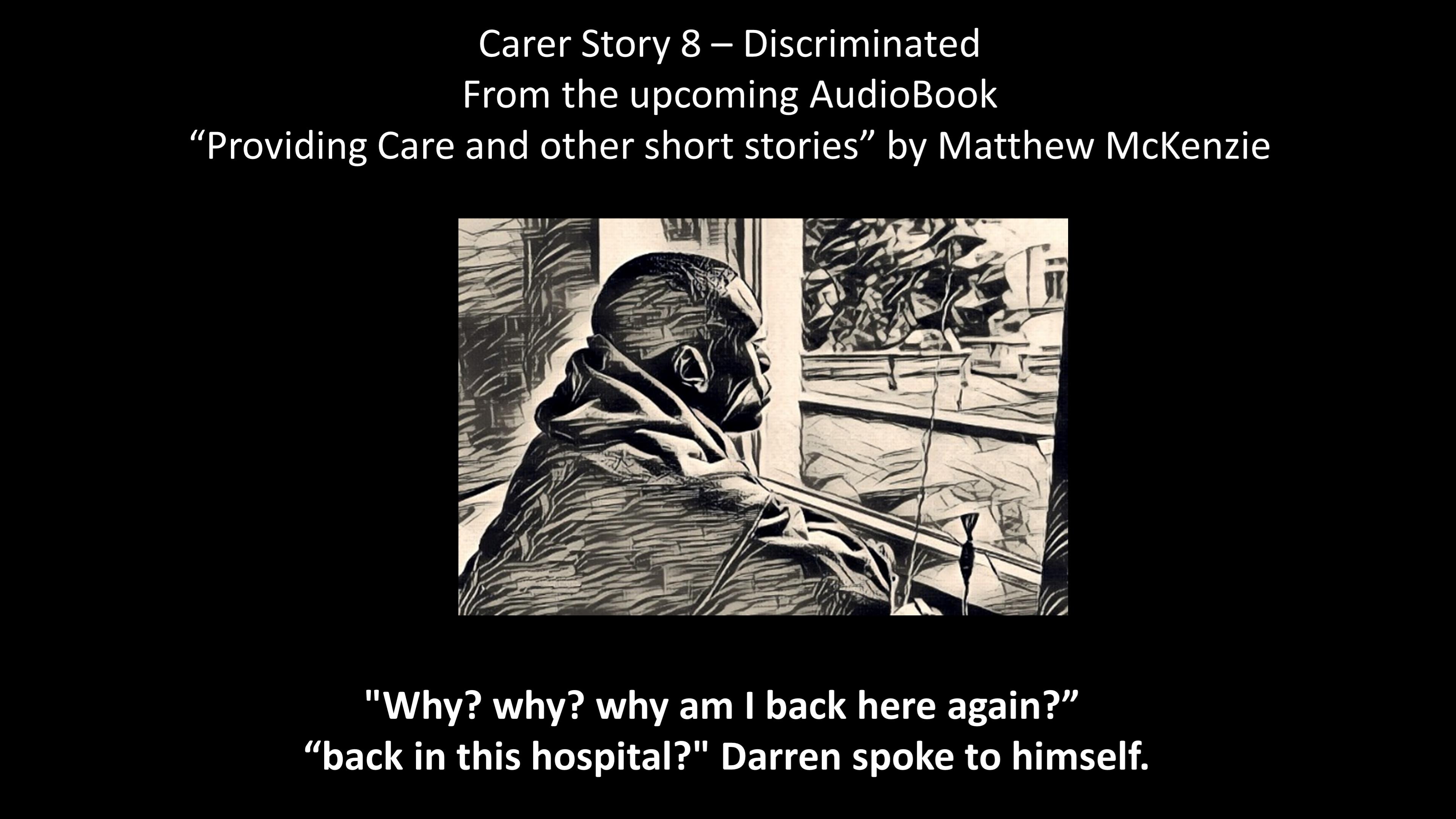
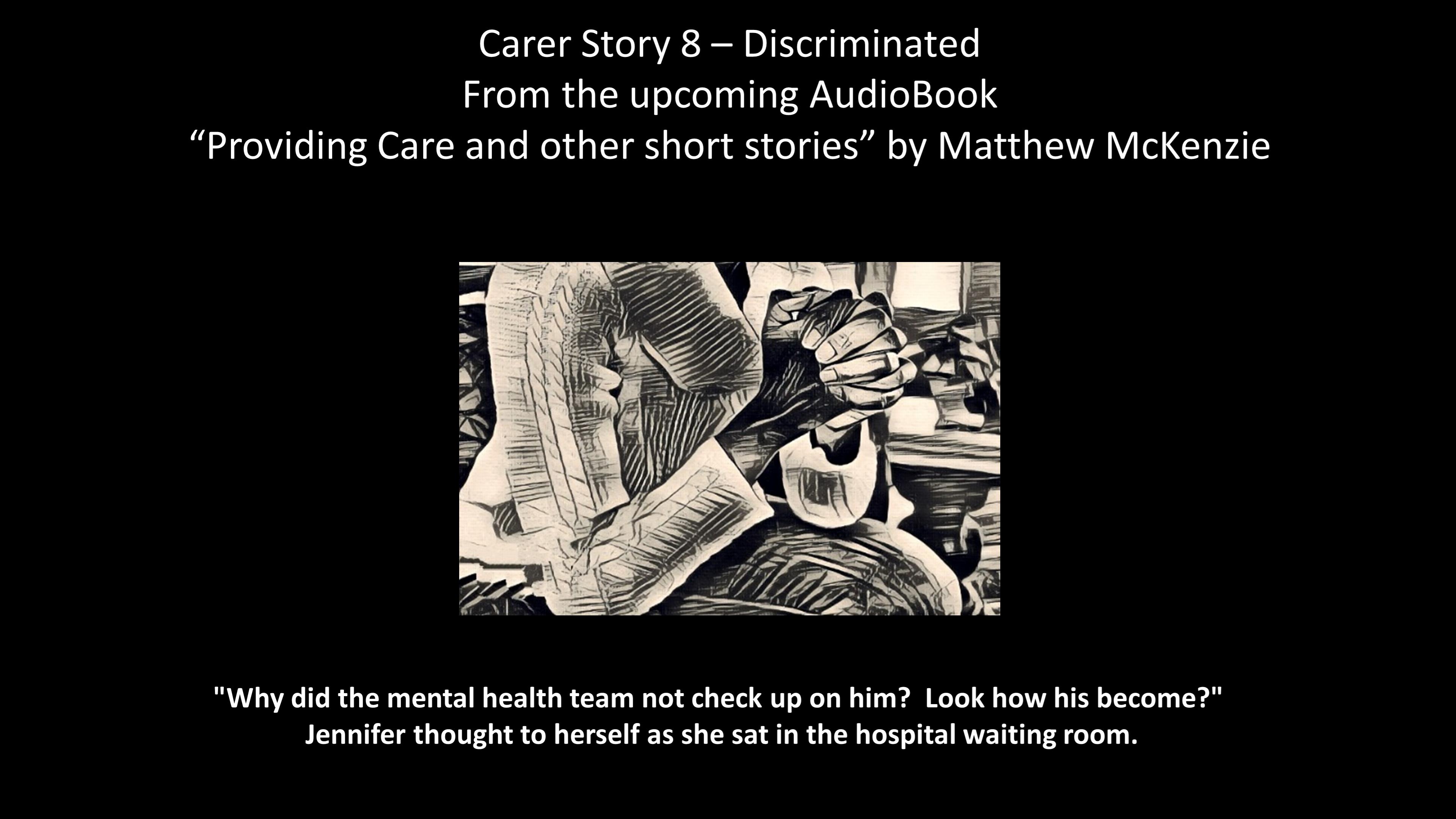
Welcome back fellow carers. Carer Story number 8 is nearly finished. As promised, I am continuing to write carer fictional stories. These stories are based on those caring for someone suffering mental illness.
All audio and video stories are from the book I am working on “Providing Care & Other short stories”. I aim to write 20 short carer stories and add them to an audio book. The quality of the audio stories are increasing each time.
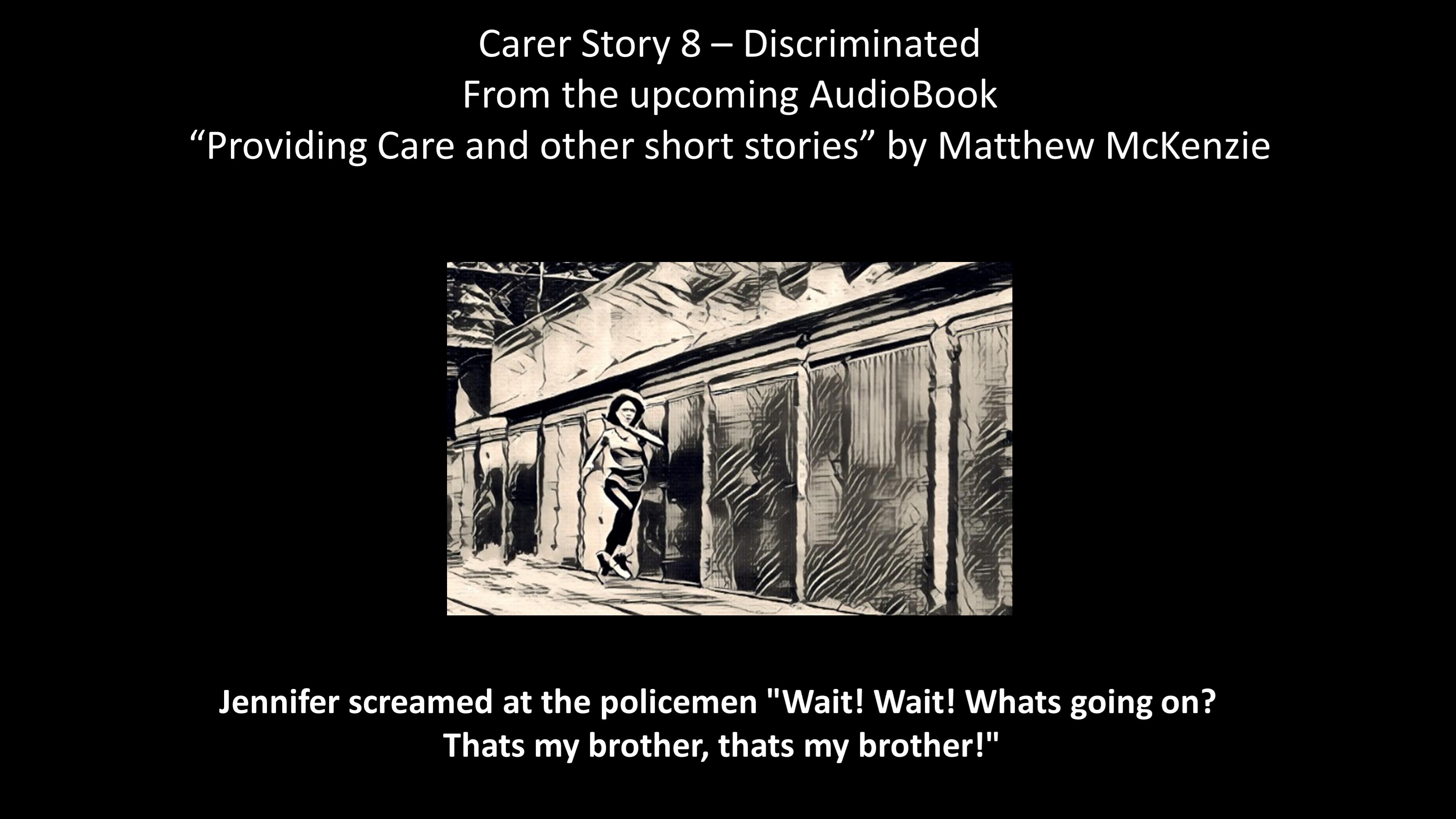
Story number 8 is unfortunately very difficult to listen to. Not because of any quality issues, but due to the nature of the story. As a carer campaigner, I often raise awareness of mental health carers. This time I am focusing on ethnic mental health carers. The story discriminated looks at the challenges a young black woman called Jennifer will face when caring for her brother Darren.
The story also follows Darren’s traumatic journey through the mental health system and the fragmented role of the NHS and the Police.
At the time of the release of this story, you might have heard the police refusing to take mental health calls.
Once you have watched this story, you will probably understand why. With mental illness increasing at rapid levels, health and social care are struggling to catch up. It is now the family, friends who are caring that will have to step in.
The question remains on if unpaid mental health carers have the resources to cope.
Story number 8 – Discriminated to be release soon.
Hello everyone, welcome to another blog post by carer activist and author Matthew McKenzie. To watch the video version of this blog, click the video below.
I raise awareness of those caring for someone with a mental illness. I also raise awareness regarding cancer carers. Those caring for someone with cancer can also suffer mental health due to stress, guilt, anxiety and depression. In fact everyone actually has levels of mental health. It is not just reserved for those suffering mental illness. We need to be aware and awareness events are just the thing to help with that awareness.
So from May 15 to may 21 it is Mental Health Awareness week 2023. Now this is an annual event to raise awareness of the importance of mental health.
The official theme for this year, as set by the Mental Health Foundation, is ‘anxiety’.
Mental Health Awareness Week will increase people’s awareness and understanding of anxiety by providing information on the things that can help prevent it from becoming a problem.
Anxiety disorders affect over 8 million people in the UK – that’s a little over 1 in 10 of us and there are lots of different types.
For carers as I have mentioned before, there are many things that can cause anxiety. The first is worrying about the health of the person you care for. We also need to remember that The cost of living crisis is affecting the mental health of millions.
You can Get involved this Mental Health Awareness Week by checking out Rethink mental illness, Mind, Sane, Mental Health Foundation social media and share on your Facebook, Twitter or Instagram profiles.
Welcome back to a quick update of my carer groups and forums. I have resorted to doing a brief update due my current projects raising carer awareness. As of this moment, I am writting fiction carer stories. You can check out my YouTube channel to view those stories. I have around 13 more stories focusing on caring for someone with mental illness, I will then work on stories focusing on caring for someone with cancer and follow that up with a book.
Until then, here are my updates below.
Lewisham Mental Health carer forum
For my Lewisham MH carers forum we had engagement from Mina Hadi who have lived experience of mental health. She is the service user representative for the Patient Carer Race Equality Framework over at East London NHS Foundation Trust.
Mina would have attended my ethnic carer forum, but there was a clash, so we agreed she can present at my Lewisham carer forum. I often say to members of my carer group to network. This is vitally important if carer members are involved in a community project. This is why I try to link up with other groups involved in increasing equity for ethnic minorities using mental health services.
Mina talked about the importance of PCREF and how East London NHS FT is working towards reaching out to marginalised groups. These being diverse ethnic groups, refugees, asylum seekers, the homeless and the LGBTQ community. All are vulnerable to mental illness due to discrimination, stigma and lack of support. Mina talked about what needs to be done and work in progress.
The next speaker was Dr Georgina Charlesworth from University College London.
She is the Associate Professor in Research Department of Clinical, Educational and Health Psychology.
Her main focus is on dementia where she has wrote a number of papers. Some are shown below
Living alone and risk of dementia: A systematic review and meta-analysis
Befriending carers of people with dementia: randomised controlled trial
Peer support and reminiscence therapy for people with dementia and their family carers: a factorial pragmatic randomised trial.
Examining the Lancet Commission risk factors for dementia using Mendelian randomisation
Dr Georgina was joined by another researcher linked to North East London NHS Foundation Trust. Dr Georgina spoke heavily on the importance of dementia carers. She was impressed that such a carer forum existed and felt that we as a group set an example. Dr Georgina spoke about the problems of stigma and she talked about one of her projects, which was the Carer Supporter Programme within Prof Martin Orrell’s NIHR-funded programme entitled “Support at Home: Interventions to Enhance Life in Dementia”.
The new Alzheimer’s Society service manager for South East London was also due to join us, but were unavailable and I am hoping they will be free next time.
Ethnic mental Health carer forum
This is a forum not bound to a specific area. There should be places for minority ethnic carers to attend, so I often advertise the group to other NHS mental health trusts. The main group members are usually from South London.
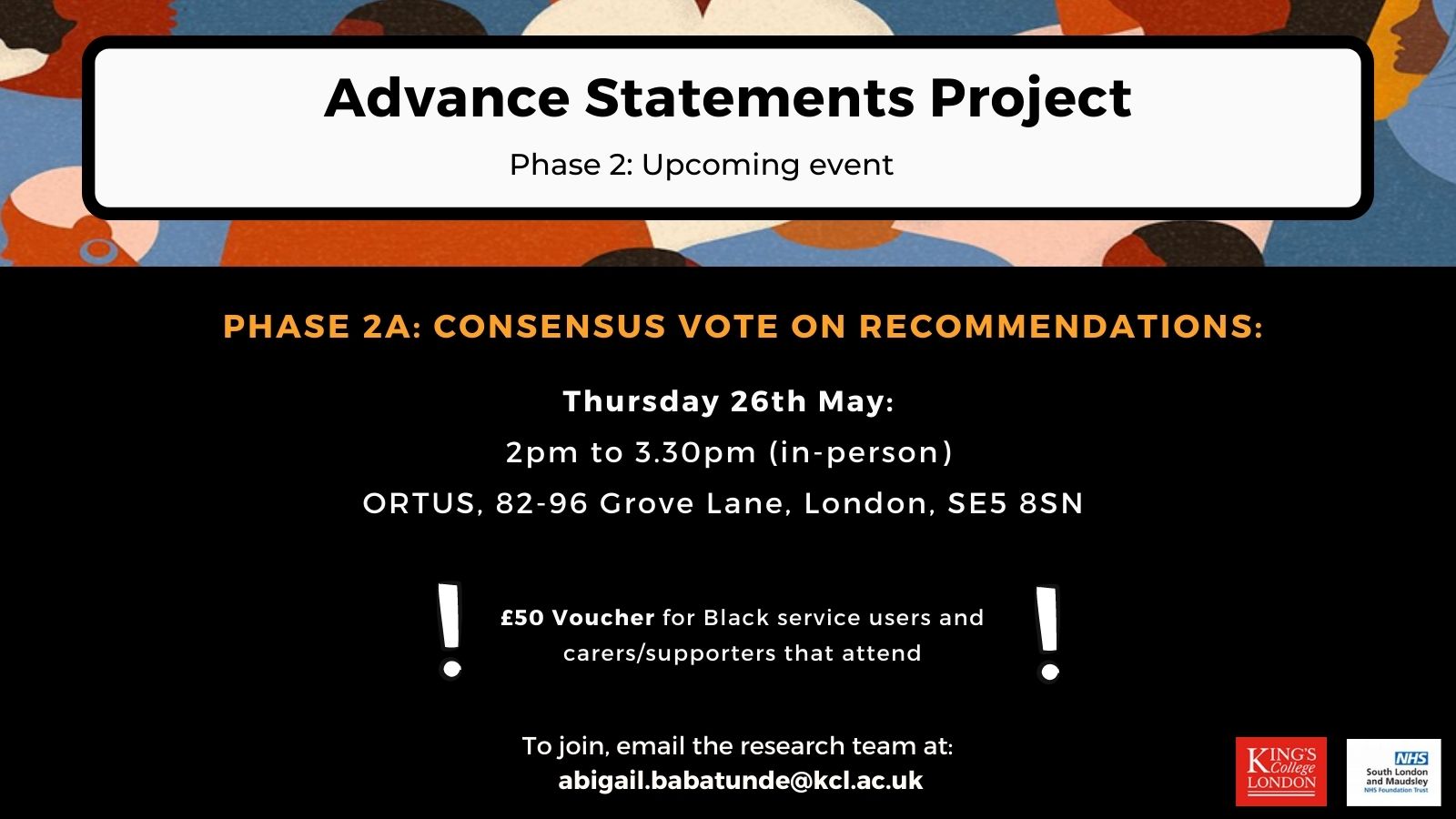
The first speaker for this carer group was Abigail Babatunde from Kings College London. She spoke on updates for the project advanced directives black people.
The Advance Statements Project is a research project on getting advance statements – also known as advance choice documents or advance directives – to work for Black African and Caribbean service users who have previously been detained under the Mental Health Act, their carers, and mental health staff.
The goal of the research is to:
Help reduce detention under the Mental Health Act for Black service users, Support, hear and understand Black service users and their carers/supporters,
Know and further understand the issues surrounding using advance choice documents and why staff members may not follow them,
Reduce coercive care in mental health care, and to better the relationships between Black service users, their carers/supporters and staff/professionals.
There is a follow up event at the Ortus (Maudsley NHS) below.
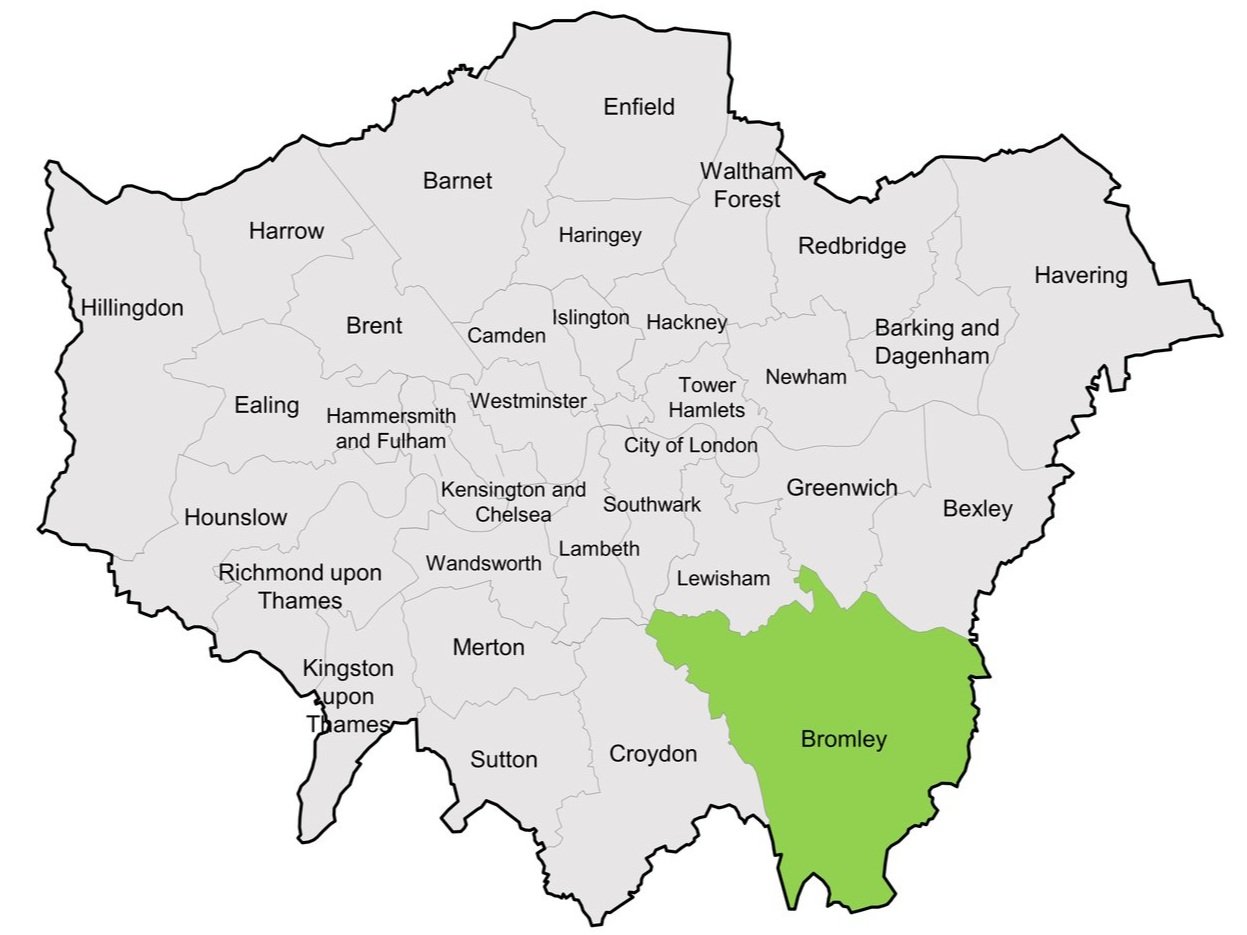
The next speaker was Denise Mantell from Bromley council. Bromley Council is currently developing its Carers Strategy and would like to hear from as many carers as possible. Since Oxleas mental health services covers Bromley, it was a chance carers could get to be involved. It would help if the carers strategy involve those caring for someone with mental illness.
Talking about Oxleas NHS Foundation trust, we were joined by Japleen Kaur and Marie-france mutti. They spoke about the new Funding scheme – Improving patient and carer experience grants.
If those within Oxleas have an idea that will improve patient or carer experience, they can bid for funding (up to £750) from our charitable funds. The project ideas need to be developed jointly between members of staff and people who use Oxleas services or care for people who use Oxleas services.
Stages
Application form completed and sent to our Involved Network
Applicant informed of bid outcome
Transfer of funding arranged
Activity takes place
Bidder shares photos/feedback on how funds have been used.
Scheme criteria
• The grant should be spent on enhancing the experience of people using our services and their families • It should be used for activities/items that are not funded by trust services. • It should benefit at least three service users. • All bids need to developed joined with people using our services and staff members.
The first application period for the Improve Fund is open now until 31 May 2023.
If you have a query about the fund, please email: oxl-tr.involved@nhs.net.
Joint Southwark and Lambeth Mental Health Carers forum
Here are the update’s for my other carer forum I run in the afternoon for the last friday of the month. I used to run these forums seperately, but due to covering a lot. I have decided to merge them.
We were delighted to be joined by another speaker from University College London. This was Dr Rebecca Lacey who talked about her study on Young Adult carers in the UK.
This was following off from Carers Trust “Young Carers Action Day”, but unfortunately it was too late for Dr Lacey to attend in March.
Staff from Lambeth Carers Hub attended to hear more on her research.
The next speaker was Sarah Allen who is the Head of Patient Experience at Guys & St Thomas NHS FT. The hospital trust is currently working on their Carers Strategy. I often to say to all carers that it is very important to engage with hospital service carers strategy.
It is not enough for a carers strategy to exist, but to be used to hold services to account as in “You Say We did” focus.
GSTT want to involve families and carers in all aspects of their services.
They aim to recognise, value, include and respect carers. Plus treat them as expert partners at the heart of decision making for the person they care for.
I also presented the new NHS England hospital discharge toolkit to the group, there was a bit of confusion as some felt the toolkit was for triangle of care.
In the end I pointed that this was for acute hospital services in London.
I am also pushing to engage with GSTT Cancer and Surgery Clinical Group to raise the profile of cancer carers. Once I have built a group of cancer carers, I am hoping for engagement for that hospital trust especially regarding the cancer group. I am also getting support from Kings NHS and eventually will expand to other hospital trusts.
South West London MH carers group
This group is a hybrid as there is a carer-led peer focus for the first part of the group. The next part is finding out about services and how they are supporting carers.
The group is strictly carer-led and co-facilitated by SW London carer Ava. She does the peer group section, while I will focus on speakers and engagement.
We had a great turnout as all 5 carer centre’s help promote the group, but we can out of time for the peer support section. The group seeks engagement from the local mental health trust South West London & St George, but this can be difficult, probably lack of staff maybe? Still we got engagement from Kingston Hospital who have a strong carer focus.
We where joined by Beth Mburu who is one of the Clinical Liaison Practitioners. Kingston Hospital is working on their carers focus and Beth talked about the following
Hosp. Discharge Planning Toolkit (aimed at staff)
Carers’ Needs Assessment Template (augmenting and embedding the Carers’ Agreement)
Carers’ Passport
Triangle of Care – hospital self-assessment tool and lessons learned/embedded
Resource for first time Carers / people who give their time to support a vulnerable person
National resources -already in existence from Carers’ UK – communicate and disseminate to the right people
Live/real-time digital tool aimed at Carers’ drawing together local provision and resources
Safe Transitions of Care – checklist for front-line staff
Hospital checklist / advice and Information
Kingston hospital NHS FT also had a carers event on the 4th of May to engage with carers and let them know about the work they are doing to support carers.
Again I am also focusing on engagement from the hospital’s cancer services to prepare for my cancer carer group. It is important to know who does what and how they focus on cancer carers.
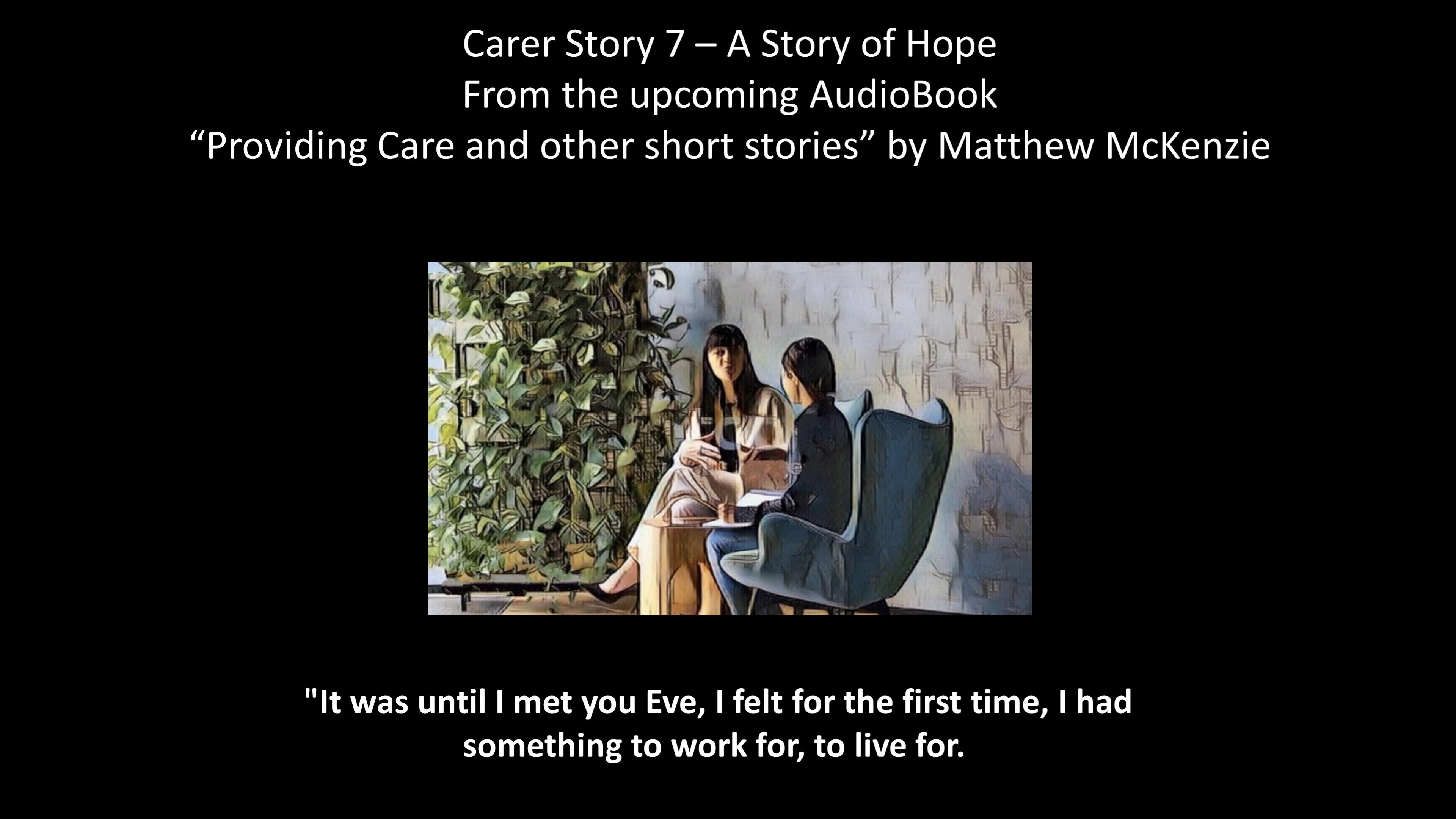
Welcome back fellow carers to my blog site raising awarness of unpaid caring by carer activist Matthew McKenzie. I have now released my 7th carer story off my YouTube channel. You can watch the story for free at the end of the blog page. The new carer story now uses advanced AI voices, although I am still experimenting with some new techniques.
This new story is called “A story of Hope”, a longer story than my previous carer stories. This story focuses on raising awareness of same sex partnerships and the impact of mental health. It is unfortunately common for LGBTQ+ to go through higher rates of mental illness. Stigma often hits those groups and to make matters difficult we need to account for mental health stigma.
The story examines a woman’s race to say her partner. Many things are against her and she is unsure of herself. She was never a strong woman, but that all changed when Susan entered her life. As we all know, life is not perfect and certainly not predictable.
Now Eve has to fight for her love, she now has to understand what it means to be a carer. If you love someone then you want to care for them. However is Eve’s love enough? She now finds herself in new territory and making the wrong decision can be costly.
The story raises many themes including the anxiety of being a carer, feeling lost in the system and trying to rebuild relationships. Eve tackles many difficult experiences and discussions. What she finds out about mental health services makes her journey challenging as a carer.
Still, providing unpaid care will give meaning as to why we fight so hard for those who need us.


















 A Caring Mind