Tag Archives: mental health

National MH Nurses director forum – Building Resilience

D_BbtpdXYAEqkWdThanks for stopping by my blog-site. I thought to try and note down a lovely conference I was involved in as a guest speaker, but before I begin explaining more about the National directors nurses forum 2019. I want to pitch some ideas for any unpaid carer reading this blog post. Have you ever wondered what inspires team leaders on hospital wards? Have you wondered about how senior nurses inspire their staff? What makes nurses tick and how do they become more resilient in there roles?

As carers, I often try and get families and carers to become excited about the NHS. If not that, then try to inquire what the NHS is doing for you or what you can help the NHS in regards to promotion and co-production. We carers are unique in our roles and sometimes we stay silent and get on with it, but we should try use our voices to influence health services.

About the National MH Nurses director forum

I now want to talk about the forum which runs each year, I think the one for 2019 was the fourth of its kind. The NMHND forum aims to focus on leadership for mental health and learning disability nursing. It also wants to help spread best practice in mental health and learning disability nursing. It helps bring together those who work in the field of nursing to help raise the voices in regards to the pressures of nursing.

You can find out more about the National Mental Health Directors Forum (NMHND) off their site shown below.

https://mhforum.org.uk/

Plus you can find out about Directors of Nursing for the UK through the forum site.

https://mhforum.org.uk/trust-breakdown

The 2019 National MH Nurses Directors forum was held at Warwick University. I was impressed by the conference center and the facilities, which also had a bar, large canteen and many conference rooms. I was told Warwick University had many conference centers and as a carer guest speaker, I felt I was really spoilt since I was provided a room at the center, the Dinner, Breakfast and lunch was fantastic.

The theme of the 2019 NMHND forum was on “Building Resilience”, which was fitting due to the pressures the NHS is under. Plus if the NHS is facing large challenges, it will filter down from leaders, to senior staff and front line staff and guess what? The patient and carer will be next in line. So I was glad that the National MH Nurses forum raised the theme, but it was not moaning and groaning, we sought to find answers, solutions and inspirations into building resiliance. We do not want nurses to struggle and leave the profession.

About the Forum Chair and Organisers

To open the event we had Mel Coombs who is the Director of Nursing at Cambridge and Peterborough NHS Foundation Trust. I felt comfortable with her chairing style and that put me at ease as I felt welcomed. I was fascinated by her inspirational story into the role of Nursing and felt she was ever so dedicated in her field, but more on that later.

You can find out more about Cambridge and Peterborough NHS trust and their board of directors below.

https://www.cpft.nhs.uk/about-us/board-of-directors.htm

I was also welcomed by Professor Hilary McCallion CBE and was shocked that she remembered me from when I spoke at South London and Maudsley carer conference almost 6 years ago.

If it was not for Hilary, I doubt I would be speaking at the Nurses forum that day and thank her for involving me at such a level. Prof Hilary is the Director of Nursing and Lead Nurses National forum, plus she is also a Trustee of Dementia UK and Bethlem Museum of the Mind, which I aim to get involved on Bethlem museum latest project soon, watch this space.

Last but certainly not least was Peter Hasler who I have known for a very long time and has inspired me to get involved at South London and Maudsley as a carer when I first started out learning more about the NHS. Peter has many roles, but he is the Forum Development Officer.

What happened throughout the day

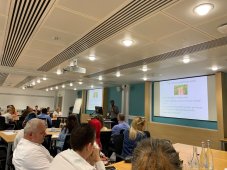
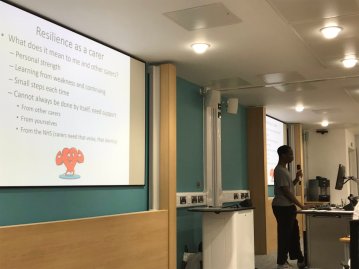
After the welcome by the chair, I spoke about resilience as a Carer and the impact of mental health needs in the family. I spoke passionately and from the heart as I wish to lead by example when I want to raise the profile of families & carers in the NHS.
D_BbBkrWwAAQk4C

My talk consisted of the importance of Carers being empowered to network
My background and the Triangle of Care, plus the Health Service Journal.
Carers Navigating the NHS
The need for support from nurses and also resilience of carers.

I hope my message was inspirational and I felt those who work within the NHS have families and patients in mind. I want to inspire nurses to join and avoid leaving the profession, especially in the mental health field, which is very challenging.

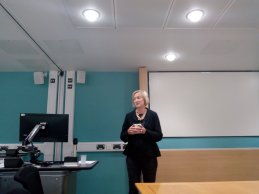
We then had Ruth May who Chief Nurse of NHS England speaking about “Nursing Resilience in delivering the NHS Long Term Plan”. I am looking forward to hearing more on how she can help educate us on the NHS Long term plan. She answered many challenging questions from the audience and I noticed she has her work cut out, but her passion and drive shows that she will make great progress.
D_BdRWvXsAY6mMu

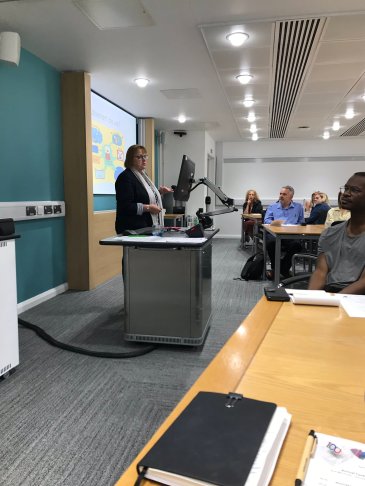
After the break Prof Hilary McCallion spoke about patient Observations on inpatient wards. As a carer, her talk was easy to understand and there was an interest in psychiatry as she provided many insights as to why patient observations in hospital mental health wards was so important.
D_BxNXRX4AECYAP

I admired her knowledge and energy and I felt jealous when someone in the audience got her the questions correct and won a box of chocolates.

After the lecture the forum split up into 3 work-group sessions. The first session was presented by Learning disability nurses Simon Jones and Alison Williamson from Oxford Health NHS Foundation Trust on PBS in Forensic Services.

You can find out more about Oxford NHS Trust below

https://www.oxfordhealth.nhs.uk/

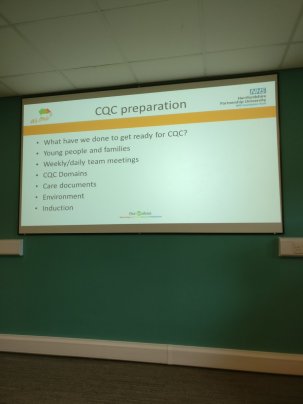
The second Session was on Stepping Up via Resilience through the CQC, which was presentation by Amanda Griffiths and Jane Fullard from the Hertfordshire Partnership University NHS Trust, which recently got an Outstanding ranking from the CQC on their mental health services.
D_B709rX4AIn244

This was the session I joined, probably due to the CQC paying even more attention to the Triangle of Care and being active on twitter, plus engaging with my Carer strategy forums. Amanda and Jane spent a lot of time education myself and other trusts in the room, which an impressive presentation. As a side note, I met nurse from SLaM based in Lewisham who spoke kindly about my presentation. I was glad we had more SLaM staff at the forum and hope they will also continue to engage with the carer forums.

You can find out more about Hertfordshire Partnership University NHS Trust below

https://www.hpft.nhs.uk/

The third and final session was on How do mental health practitioners understand & experience resilience which was presented by Simon Wharne of Sussex Partnership NHS Foundation Trust. I have nothing but admiration for Sussex staff and their CEO Sam Allen who has supported my work for quite while and they are heavy advocates of Triangle of Care. I will never forget Sussex involving me as a carer at their event a while ago.

You can find more about Sussex Partnership NHS Foundation Trust

https://www.sussexpartnership.nhs.uk/

After a tasty lunch at the conference center, I got the feeliing at ate too much and it made me sleepy, but I couldnt help myself as I networked with NHS staff from other trusts. There are going to be some exciting projects coming up soon.

The forum moved on to Resilience in your NHS Career Journey, were we got to hear personal stories from Mel Coombs, Christine Hutchinson who is the Nurse on Learning Disability at Lancashire Care NHS Foundation Trust and Francis Adzinku who is the Service Delivery Director at Oxleas NHS Foundation trust.

You can find out more about Lancashire and Oxleas below.

https://www.lancashirecare.nhs.uk/

http://oxleas.nhs.uk/

I would like to give Special thanks to Warwick university and Radcliff conference center as I found the food, facilities and guest room excellent.

How I felt about the event.

I was delighted to be invited to participate in such an influencial nursing forum. If I did not blog on such a forum, it really would have been a missed opertunity. I felt the event was very well organised and kept to time.

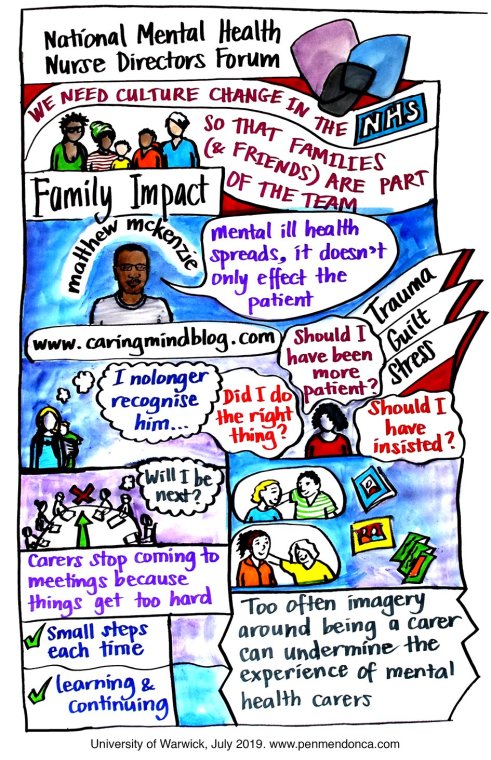
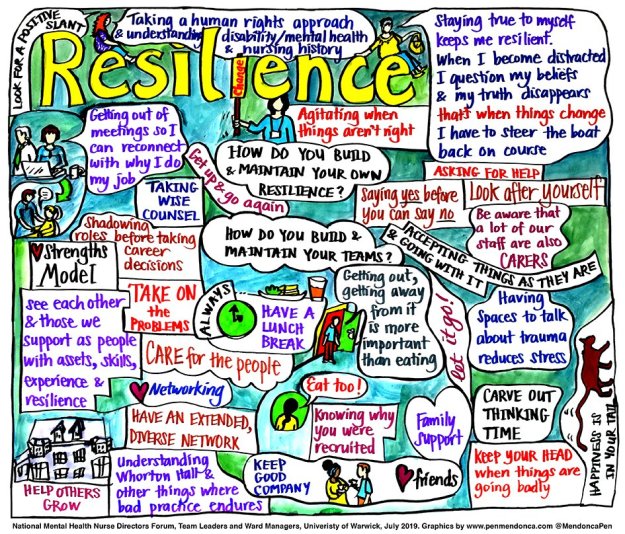
I enjoyed the art work of the event done by Dr Pen Mendonca.  The art really summed up the day as words cannot always be the best representation of describing things.
D_CFjyoXkAALP-i

I hope to meet up again with Prof Hilary McCallion again over at SLaM and most of all I was impressed by the caring attitude of the audience making me feel welcomed as a carer among friends.

I would like to mention Lookout for my next blog which will be a video timeline of UK nursing throughout the ages.

Thank you for reading.
D_DEDXZXoAIF4jE

Health and well-being in the community

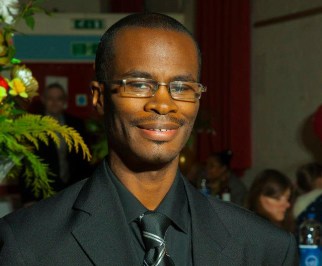
https___cdn.evbuc.com_images_50751415_246297577353_1_originalI recently came back from an event held by an award winning social consultancy called “We Coproduce”. The event was a 2 day look at Trauma and its causes due to the tragady of Grenfell Tower, it was one of the best times for the community over in the London borough of Kensington and Chelsea. When I arrived at the event, I was amazed to see how many of the public turned up and how many were interested in the talks.
Continue reading

Sometimes us unpaid carers need to step up

smallerHello again, I have not blogged in a while, because being so active in my area due to attending events, running carer strategy forums and networking like hell. I know the title might seem a little off putting, but in my long experience of being involved in health and mental health services as an unpaid carer, there are a few things I have noticed.
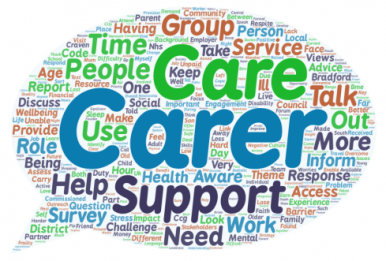

Just to note, I am writing as an unpaid mental health carer, basically a carer supporting someone close who has mental health needs. Unpaid carers struggle quite a bit to get noticed, their culture is to put the ‘cared for first’ and themselves last. Perhaps it is a respected human trait, carers come with a big heart, but it does come with some risks. This is what I will be blogging about today.

Continue reading

Poem – She Never Gave up

img-3-1576

Welcome back to my carer blog.   I guess it has been a while, but it is creative corner time.  I have received a lovely poem from an unpaid carer who networks with our forums from the NHS Oxleas services.

SHE NEVER GAVE UP

The challenges were bad
They were ever so mad
A Son she loved – lost
In the abyss of madness – tossed
To and fro from pillar to post
The Son she once knew now a ghost

SHE NEVER GAVE UP

Despite being banished from the lips of her Son
She faced the choice and won
Won the many fights but not the War
Against his brain so horribly sore
Deep inside she could see
The ghost of her Son fighting to be free

SHE NEVER GAVE UP

Poem by – Elsie Cronin

106542

Carer engagement – What works?

D7PTBDUW4AApqKm

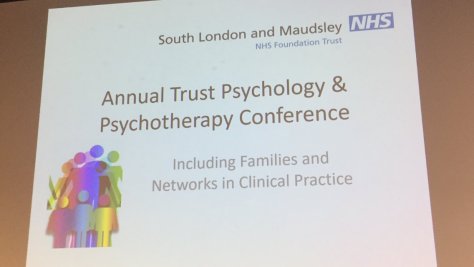
Welcome back to another blog post from an unpaid mental Health carer. Just a day ago of this blog post, I attended and spoke at the South London & Maudsley trust Psychology and Psychotherapy conference 2019. It’s theme for this year was on involving families and carers. I was excited to be part of the event to get my thoughts out to the audience and on reflection, I felt I pulled no punches. With over 20 years of unpaid carer experience, I have seen and experienced quite a lot in regards to carer involvement and I expect there is more to come. One day I should write a book about it, but this is probably a very long way off.

Still, I feel a lot is at stake and there are times we have to be passionate because we are dealing in peoples lives, since that is the nature of business. Connecting with others at a deep, but difficult level. However when things work out, the rewards pay very high because we can reuse what we have learnt. Yes, I am talking about psychology and psychotherapy. I am no expert in these subjects, but being involved at the NHS trust and in the community for long, I suspect that I have been exposed to such powerful, wonderful and mysterious methods.

Continue reading

Triangle of Care – Learning from each other

Giving helpWelcome back to another blog post from unpaid carer Matthew Mckenzie. I often blog about the situation many mental health carers face up and down the UK, however not only do i write about the caring journey, I get involved and take the initiative to network with many other unpaid carers supporting ‘loved ones’ with mental health needs.
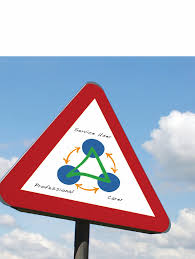

I champion and praise many projects that work towards the good of the community, especially health care projects and the ones that take note of families and carers have my keen interest. One of these projects looks to create good practice and work towards culture change in regards to the carer journey. This policy is the called Triangle of Care, which I have blogged about a while back.

toc

The triangle of care works towards bringing together unpaid carers, carers’ centres, third sector organisations and mental health service providers to work together to insure best practice for mental health services.

When I attend triangle of care meetings I am often amazed at the dedication and work that many NHS mental health service providers share with each other. The lastest triangle of care meeting was hosted by Kent and Medway NHS trust over at Dartford, we were joined by many other NHS trusts where some already were members, while other are working towards joining, we also were joined by other other carers and third party community charities.

As a carer, I learnt so much about the work mental health trusts were doing and i am impressed to see many london NHS trusts attend and share knowledge about the work they do including Central and North West London NHS Foundation Trust, Oxleas, South West London St Georges, Surry & Boarders NHS Trust, Berkshire NHS trust, the Sussex Partnership NHS Foundation Trust and many more.

meeting

One of the strong points of The triangle of care is self-assessments for existing service provision, this was achieved by Kent and Medway two years ago and I have learnt that KMPT has been awared their second star for for completing self-assessments for all community services (all mental health, learning disability, older people and dementia and substance misuse services). I would like to offer my congratulations to Kent and Medway NHS trust and hope they keep building on their success.

You can learn more about KMPT from their site https://www.kmpt.nhs.uk/

Plus feel free to check out Kent & Medways work on the triangle of care below.

https://www.kmpt.nhs.uk/carers/triangle-of-care/

Another strong point of the triangle of care is principles. Principles are usually things people can often try and remember and the triangle of care has six.

These being :

1) Carers and the essential role they play are identified at first contact or as soon
as possible thereafter.

2) Staff are ‘carer aware’ and trained in carer engagement strategies.

3) Policy and practice protocols re confidentiality and sharing information are in place.

4) Defined post(s) responsible for carers are in place.

5) A carer introduction to the service and staff is available, with a relevant range of information across the acute care pathway.

6) A range of carer support services is available

More details can be found on the triangle of care below.

No one is saying such principles are easy to achieve and a lot of hard work and dedication has gone into culture change in the mental health services. We need input from all involved being staff, patient and carers.

You can learn more about the triangle of care here.

https://carers.org/article/triangle-care

One thing I want to note is that every time I attend such meetings, I have always felt I managed to contribute as a carer, especially since I network and hold forums with other carers in South London, I feel us carers can work together and feel part of the system, rather than battling the system.

I look forward to the next Triangle of Care meeting hosted by South West London st Georges NHS trust.

One last thing to mention is we are due to hear some exciting news from the Royal College of Nursing and I hope carers will be a strong focus point in the work they will do.

I would like to thank KPMT for letting me use the photos and well done Kent and Medway NHS trust for their 2nd award.

Happy Nurses day 2019 everyone.

meeting 2

Triangle of care – Excellent NHS carer engagement

10177241_747738765268892_5890142387668348507_nIt has been a while since I blogged off my site, almost a month now. Still I have been very busy, lots going on and still lots to do. I run 4 carer forums each month and am also an unpaid carer working part time and contributing to so much in the community.

Yet I am aware many unpaid carers supporting those with mental health needs cannot easily engage with services. This is one of the many reasons why I chose to write this post. I am an unpaid mental health carer in south london, and have been involved with the Triangle of Care at a high level. Due to the involvement I am proud to be part of such a successful initiative. My trust has not been part of the Triangle of Care scheme even though I battle on, but it has got me wondering.

toc

What would it be like to be a carer whose NHS Trust is part of the Triangle of Care scheme?

If you do not know about the Triangle of Care policy, let me enlighten you.

Taken from the Carers Trust website, which is national charity fighting for the rights of young carers and carers alike.

“The Triangle of Care guide was launched in July 2010 by The Princess Royal Trust for Carers (now Carers Trust) and the National Mental Health Development Unit to highlight the need for better involvement of carers and families in the care planning and treatment of people with mental ill-health.”

Many Mental health NHS trusts up and down the country have taken the challenge and value the needs not only of their patients/service users, but also unpaid carers who often can be forgotten in Trust Policy, let alone in government policy.

The triangle of care gives six standards

1) Carers and the essential role they play are identified at first contact or as soon as possible thereafter.
2) Staff are ‘carer aware’ and trained in carer engagement strategies.
3) Policy and practice protocols re: confidentiality and sharing information, are in place.
4) Defined post(s) responsible for carers are in place.
5) A carer introduction to the service and staff is available, with a relevant range of information across the care pathway.
6) A range of carer support services is available.

I have mentioned such standards because there is a lot more to the Triangle of Care, but if you are not versed in policy then at least focus on the standards above.

So what could it be like being a carer linked to ToC?

If you are a carer whose mental health trust has signed or is working towards the triangle of care, I will list why it perhaps is a good thing.

1) You are lucky enough to have a trust working towards a national standard.
2) As a carer you can learn more about what your trust is doing for carers and their loved ones.
3) You can use these standards to protect your rights.
4) You have a mental health trust that can link into partner trusts all working together for the good of unpaid carers.
5) Standards that can be measured and assessed by others.
6) A mental health trust brave enough to change its culture on unpaid carers.
7) A way to hold mental health trusts to account on how it engages and provides services for carers.
8) Hidden issues that can be unraveled by triangle of care.

Obviously the list can go on and continue to go on, but an NHS trust that can put some resources to the Triangle of care should be held in high regard among carers.

I am not saying that the system is perfect, it is NOT a quick fix solution, especially in the era of NHS cuts, cuts to staff, cuts to community services and a lack of understanding in mental health. We are also living in a complex society where so much is demanded from us, be it Brexit, having to struggle for education, fragmentation in communities and the lack of volunteering since everyone wants to be better off.

All I am saying is if you are an unpaid carer thinking how can your NHS trust support, engage or value you, then please see what they are doing with the Triangle of Care.

Although the triangle of care is going through some changes. You can find out more about the Triangle of Care below.

https://professionals.carers.org/working-mental-health-carers/triangle-care-mental-health/triangle-care-membership-scheme


Gone too Soon

Sad man sitting head in hands on his bed in a bedroom at home

Just to note this particular blog can be triggering and not just for those suffering mental ill health needs, but also for families and carers.

As you can tell by the title of this particular blog post, this centres on the devastating experiences which mental ill health can cause to families and loved once.

There are some families that do not often get a chance to share their experiences when something tragic has happened to the person they are trying to support or care, although I know full well that this can also happen two close friends, relatives and perhaps even a neighbour.

As a care of myself I know in the back of my mind that there will a time when I will have to fight a mental health crisis for the person I support. Perhaps I will succeed, but I know out there carers up and down the country will have to deal with the devastating experiences when a loved one by finally succumbs to mental ill health.

melancholy and sad young  woman  at the window in the rain

I’m afraid I’m not going to pull any punches, when I mean succumb to mental ill health. I am talking about suicides, deaths due to addiction (alcohol or drug related), death Due to an accumulation of medication side effects causing massive strain on physical health. I am talking when the mental health sufferer cannot cope anymore with dementia, Parkinson’s or degenerative illnesses affecting the brain.

I am not going to use this blog post to lay blame at anyone’s door. However I just would like to raise the issue that’s such experiences need to be highlighted and discussed. We should never expect families and mental health sufferers to just cope and get on with it.

Coping with death

It is never easy to try and deal the situation when someone loses a loved one two mental illness. Unpaid Carers and families can often blame themselves as if they feel they have not done enough to save the loved one’s life. Some people think mental illness can only affect the one person who has been diagnosed with the condition.

In some ways this is possible, but not often the reality. We should try to avoid putting people in boxes. When death strikes a family due to mental ill health, i’m sure that grief, depression and anxiety will affect those that was close to the patient or service user. If you were a carer caring for someone long-term suffering from mental health, the grief stricken experiences will climb to unsustainable levels.

As unpaid carers it is important to respectively raise the awareness of coping with death, especially if you have been a long time carer. We all need to work together with the health services and our loved ones to avoid situations where patients might end up being failed by the system.

If anything off this post has affected you please call Samaritans on

116 123 (UK)
116 123 (ROI)

Thanks for reading.

Top 70 Contributions to Psychiatry and Psychology

Relationship psychology concept created with man and woman heads profiles, vector logo or symbol of gender problems and conflicts in family, close relations and society. Classic style simple design.Its been a while since I have made another video. This one is back on the psychiatry field. In this video I have introduced a list of notable figures who have made an impact on sub fields of psychiatry.

I have made a video which can be viewed below showing the top 70 contributors to different fields within psychiatry.  It was not possible for me to include anymore due to time and length of the video.

The video includes names such as :-

Adolf Meyer
Carl Gustav Jung
Elisabeth Kübler-Ross
Eugen Bleuler
Eve Johnstone
Franco Basaglia
Frantz Fanon
Hans Steiner
Jaakko Seikkula
John Cade
Pierre Janet
Robert Spitzer
Seymour Kety
Viktor Frankl
Wilfred Bion

…and many more.

Hope you enjoy!!

The stigma of an unpaid Mental Health Carer

matthew-mckenzieWelcome back to another blog from unpaid carer in the south of London. As world Mental Health Day draws near, a lot of emphasis is placed on those suffering angel problems. I find it quite important that you must not forget the hidden Heroes who’s tape in when their loved ones are in most need. This is not to take away the difficult battles mental health survivors face, however all too often sigma hits out at more than one person.

Mental health stigma hits the family, the friend, the husband, the wife and even the neighbour. This blog will concentrate on another type of stigma, which can be all Too Well forgotten. I am going to talk about carer stigma. Now it is very important that not all unpaid carers suffer from carer stigma.

First you must differentiate what or who is an unpaid carer. I am talking about the person who suddenly finds themselves caring for someone close to them who has been unfortunate to pick up either physical or mental health problem. I am not talking about paid care workers, although I do admit care workers to find they can have a difficult job, they are paid for their role and can be protected by Union.

Arguments.

With carers they are not trained and often care out of closeness and love for the person they are trying to look out for. It gets really difficult if that person has a mental health illness.

The types of carer stigma.

So Let’s Begin, I cannot really produce an exhaustive list of different types of carer stigma, but the ones that i am showing i’ll probably the most recognisable types of carers take life out there.

Depends on the illness.

When a loved one become very unwell, he often try as hard as he can to support them. The problem is the more chronic the illness the more is stigma lash out. A good example is when a carer is caring for someone suffering psychosis, those suffering from this difficult illness can often present challenging behaviours. If such behaviour is out in public, then the challenge is not only faced by the mental health Survivor but also the carer.

Embed from Getty Images

It only takes one person to ridicule the suffering from a mental health problem. This can then extend to the person family, the risk is once a community starts to gossip about the situation, it can cause the carer to become more isolated. This in turn leads to stigma of both mental health and carer. As a note not or carers go through this and it probably can depend upon the illness anyway.

The Label

Although not as devastating as the first form of carer stigma, it still can be rather destructive. Some people carry on caring and supporting those close to them out of desperation. They carry on caring regardless of the support mechanisms that amen applied to the family network.

At first it seemed really brave, it is great to hear a carer battle it out no matter what the situation. However there is one big problem, no matter what are the carers might say to this situation, the person still feels that they do not deserve the term of being labelled a carer. The problem is that this person will then like the support network available for carers.

Clashing forms of relations

This type of stigma is actually quite similar to the one mentioned previously. A good example is when a person marries someone they marry for better or worse. When the worst does arrived, the person cares especially out of love. They care because they are either the husband or wife. If you try to tell them that they are now a carer, that person may become very irritated. They refuse to be labelled as a carer, and yes this is the right, but the risk is lack of support network available to them.

This care stigma can also extend to other relations within the family, another good example is a young person caring for a parent, or even especially a young carer. Can you imagine as a child having to suddenly provide care for an older adult suffering a mental health condition?

The terrible characteristics of an unpaid mental health carer

There are several characteristics, which are aimed at carers. I am going to go through a few that come off the top of my head.

Embed from Getty Images

Being labelled as lazy

All too often we have to work for a living, we have to pay our dues. The harder the work we do, the more we expect to be paid. The more complex the role, the more we expect be rewarded. There is this review going around that the Caring role is fairly easy, because some people think that it is easy, they think that the carer does not have to do much at all. This can lead to carers being labelled as lazy. Once a person is targeted as lazy, they do not really want to be labelled as a carer.

Being blamed

This is quite common in the field of psychology/psychiatry, especially in America. When someone is unfortunate enough to develop a mental health problem, all too often psychiatrists tend to probe the family structure. All too often, it says if the carer is not doing their job properly. It might even go so far as to state that the carer is causing the mental health relapse or has caused the mental health problem to manifest itself in the first place.

One of the main criticisms of psychiatry, is at one end it might exclude the carer in their supporting role/care plans or confidentiality and at the other end label the carer as the problem within care plans and assessments. This can lead to a person not really wanting to find the energy battling a mental health system that can misunderstand the caring role.

Confrontational

Another good example of how the mental health system might fail families and carers, is if the carer has experienced failures in support of their loved ones and even the care of them self. It then becomes only a matter of time before the carer becomes more confrontational. No one really wants to be labelled as aggressive, uncooperative and confrontational. This is just another label a person can do without, so why would they want to be labelled as a carer?

Embed from Getty Images

Risk of declining health

Again this might depend upon the type of illness the person is trying to care for, the more chronic the illness, the most stressful situation is for the carer. Since the NHS is under severe strain, a person would have to think hard and long before they would want to commit themselves in becoming an unpaid carer. It is like that there has been a secret contract, stating that the carer now must take the role of the lack of staff within the health system. This could be administering medication, advocating, understanding side effects, understanding social welfare, mental health legal matters, engaging with doctors and also mental health advocate and peer supporters.

Is there any wonder why carers can end up with depression, anxiety, stress and worry? One could say that mental health illness can be catching.

Hiding it all away

I’m afraid I have bad news, for what I have mentioned is only the tip of the iceberg when it comes to Carer stigma. I did not want to make this blog post overly long. With the above issues mentioned, is it any wonder why someone wants to hide themselves from being labelled as a carer?