By Matthew McKenzie – Carer poet and Carer activist
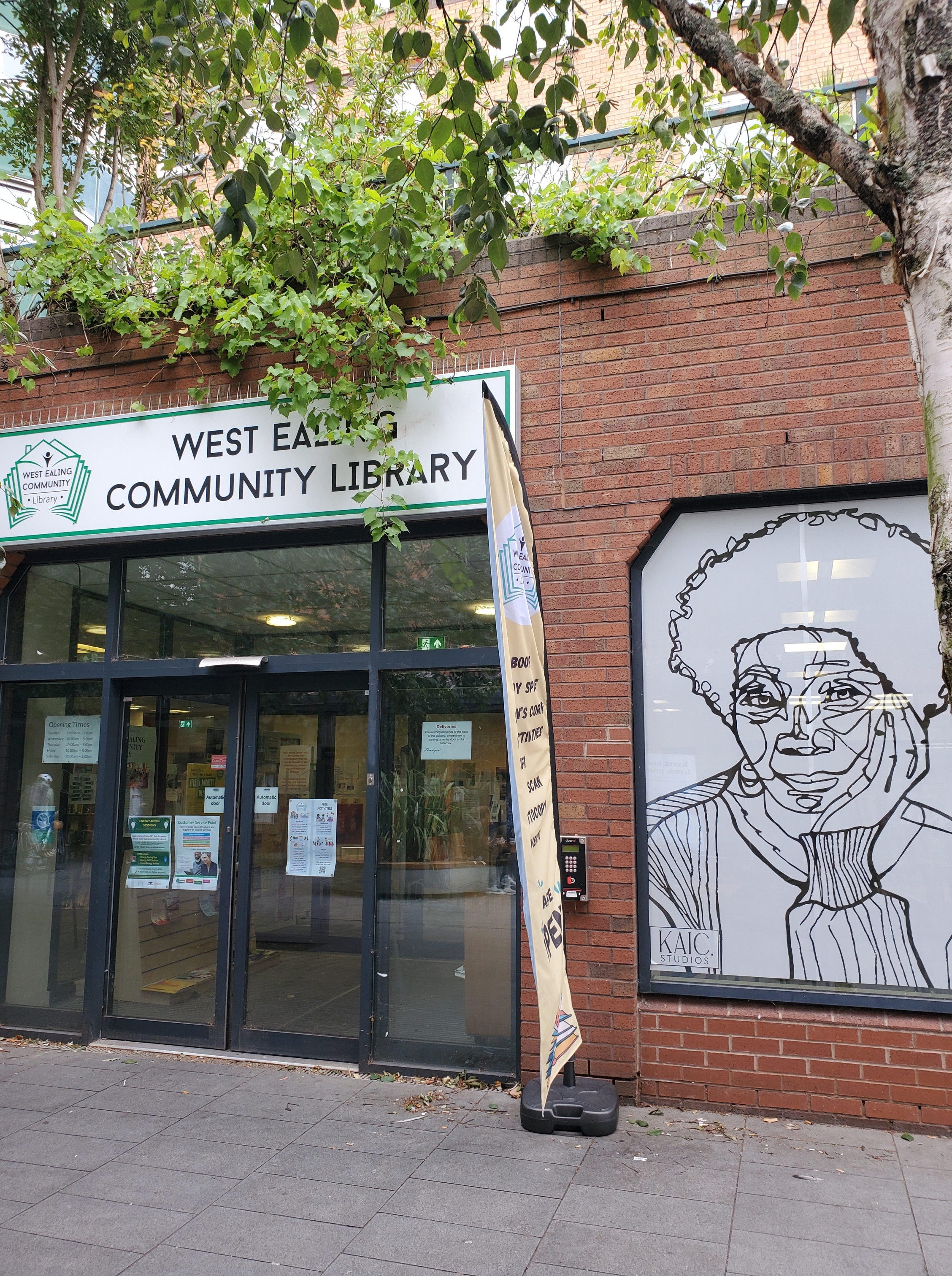
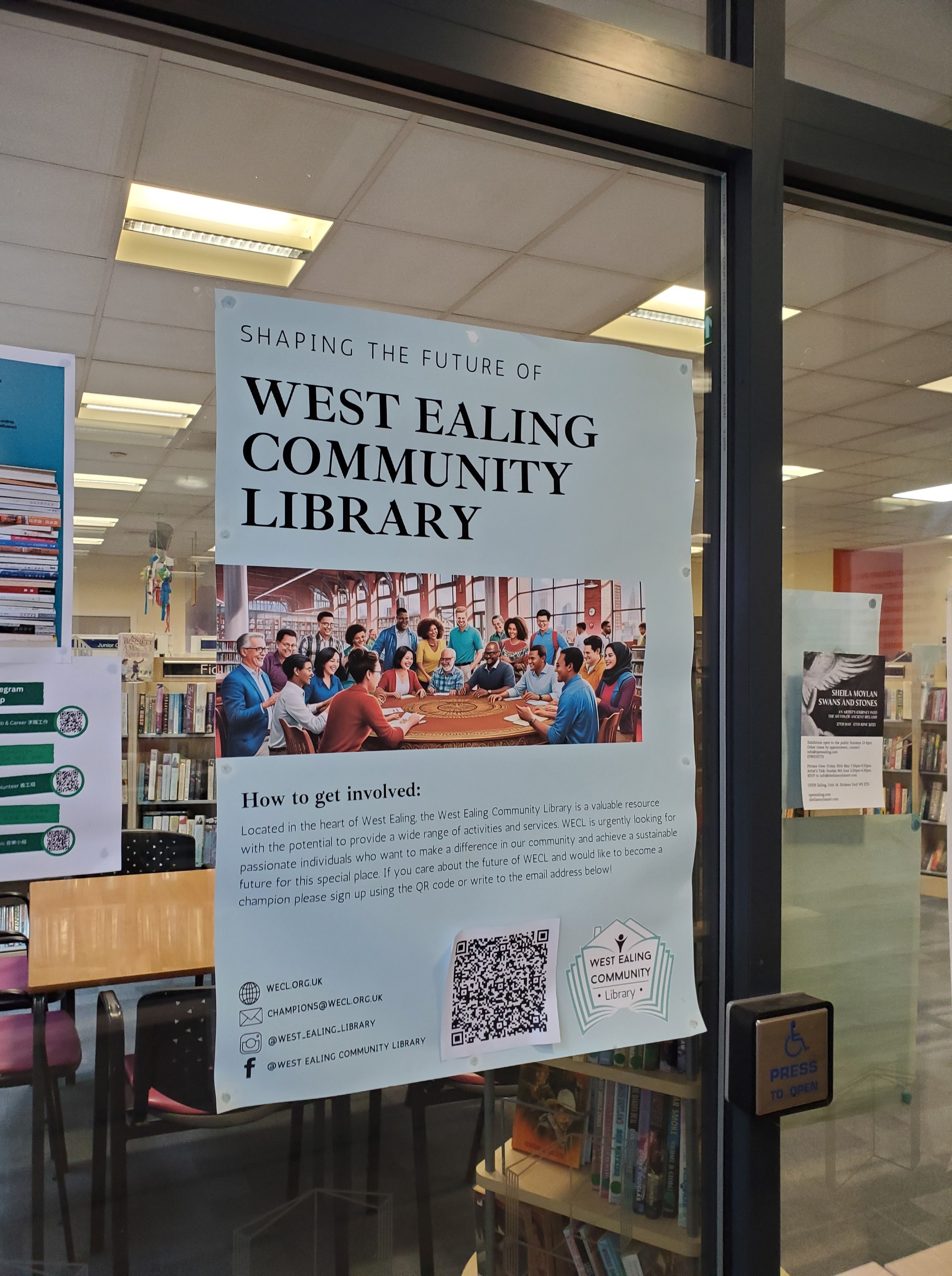
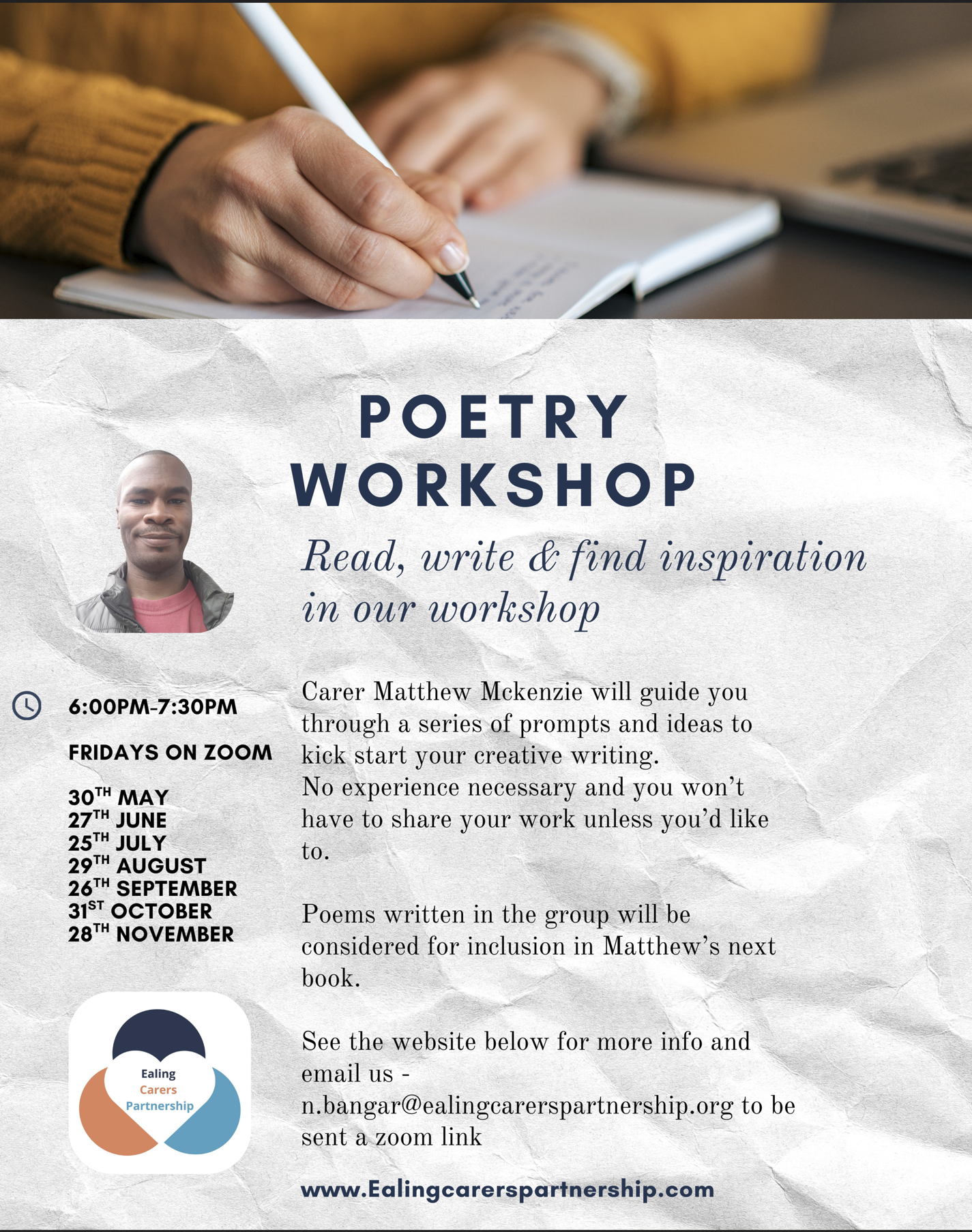
On the 18th of September, West Ealing Library once again became a hub of creativity, reflection, and connection as carers gathered for our second poetry workshop. Guided by carer activist and writer Matthew McKenzie, the session offered not just writing prompts, but a safe and supportive space to explore the healing power of words.
Poetry as Expression and Healing
The morning began with Matthew sharing his personal journey from caring for his mother living with schizophrenia, to writing books on mental health and carer experiences, and now using poetry as a tool for both advocacy and self-expression.
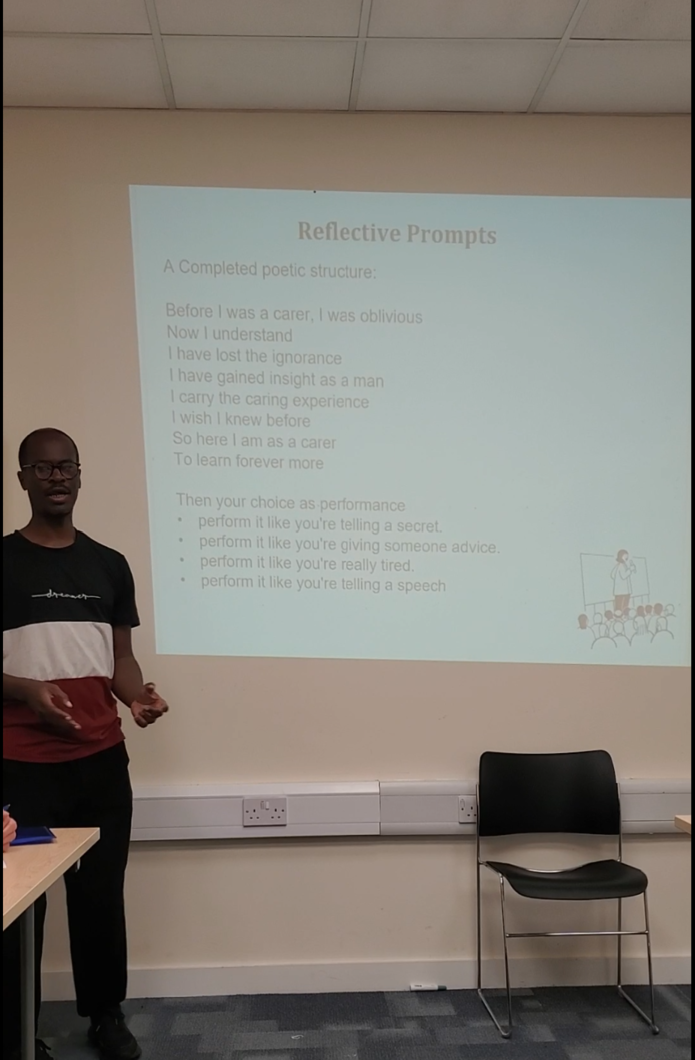
For many carers, life can feel isolating, exhausting, and invisible to wider society. Poetry offered participants a way to give voice to those emotions. As I reminded carers, “Poetry gives shape to what’s hard to say” — even if it’s just a few lines scribbled on paper, those words can carry truth, comfort, and even influence change.
Watch a short video of the Poetry workshop.
A Safe Space for Sharing
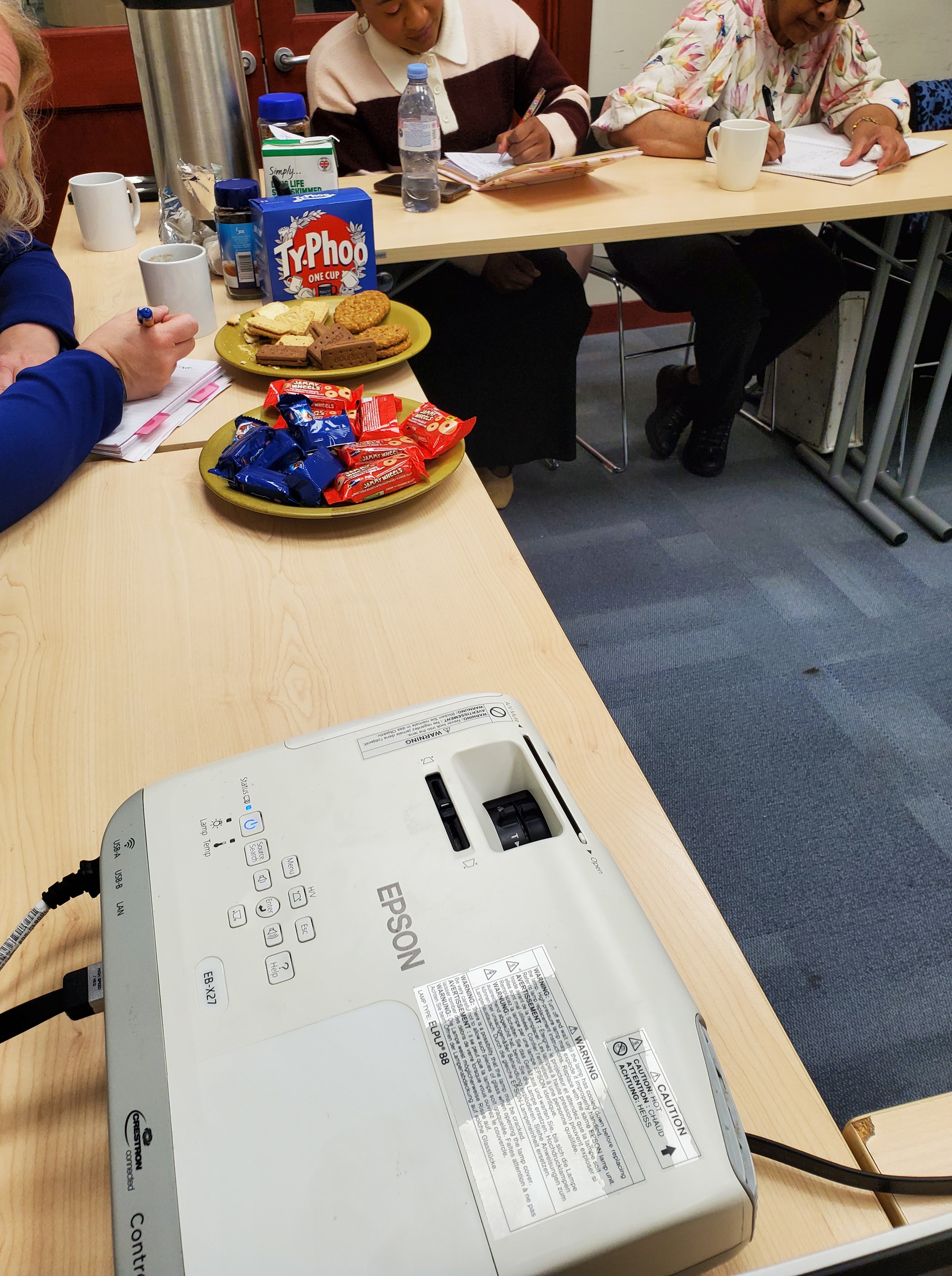
No prior experience was needed, and carers were free to write and share only if they wished. Some participants bravely stood to read their verses, reflecting the daily realities of caring the busyness, the endless to-do lists, the loss of friendships, and the quiet pride carried in the role. Others chose to listen, finding recognition in each poem and reassurance that they were not alone.
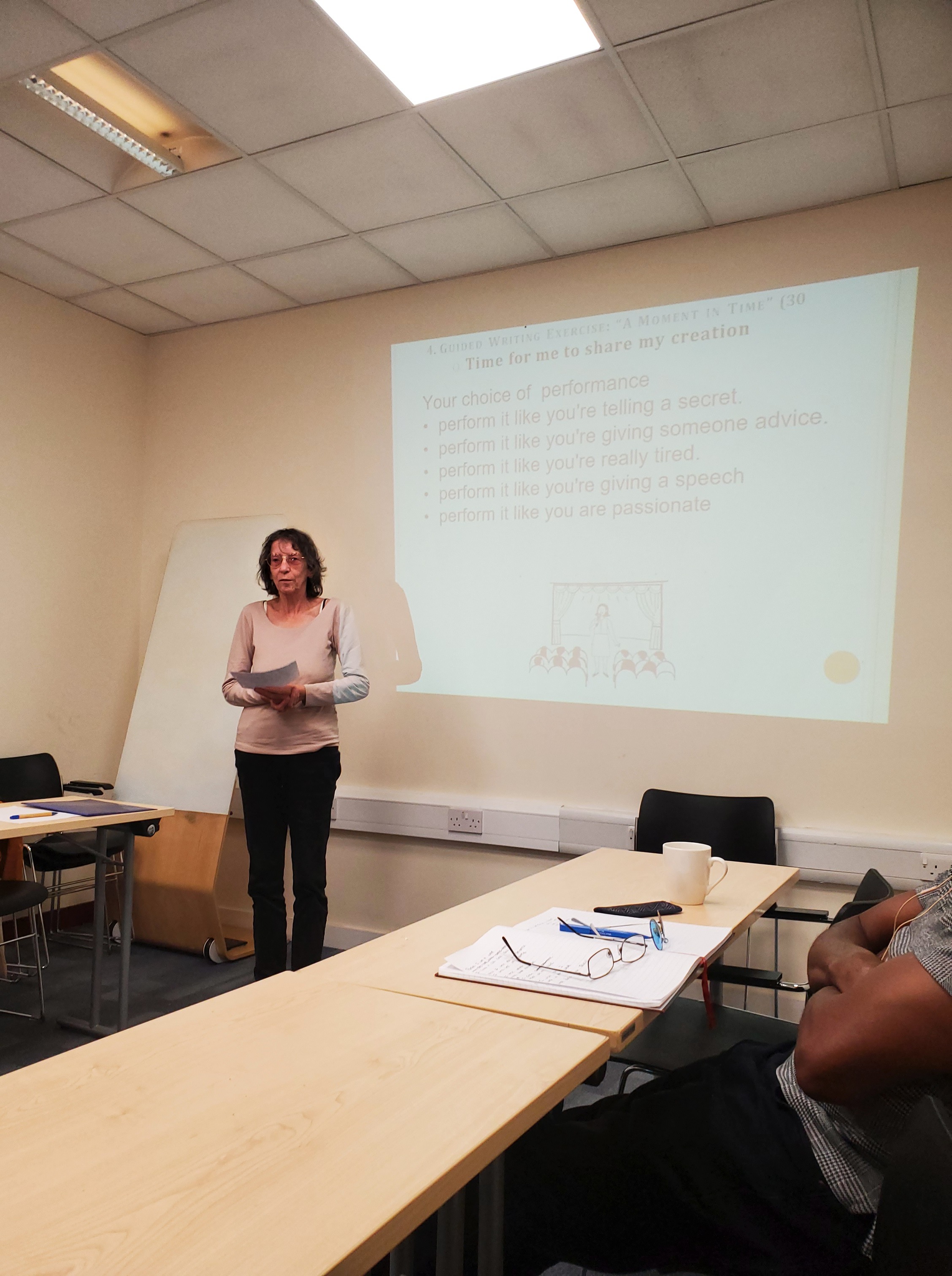
One carer’s words resonated deeply: “Before I was a carer, I lived carefree. Now I care for my daughter… I carry my heart on my sleeve.” Another participant described caring as “an endless list, where one task is ticked off only for another to appear.” These honest lines drew nods of understanding from the group, showing how poetry can connect experiences across different journeys.
Performance and Reflection
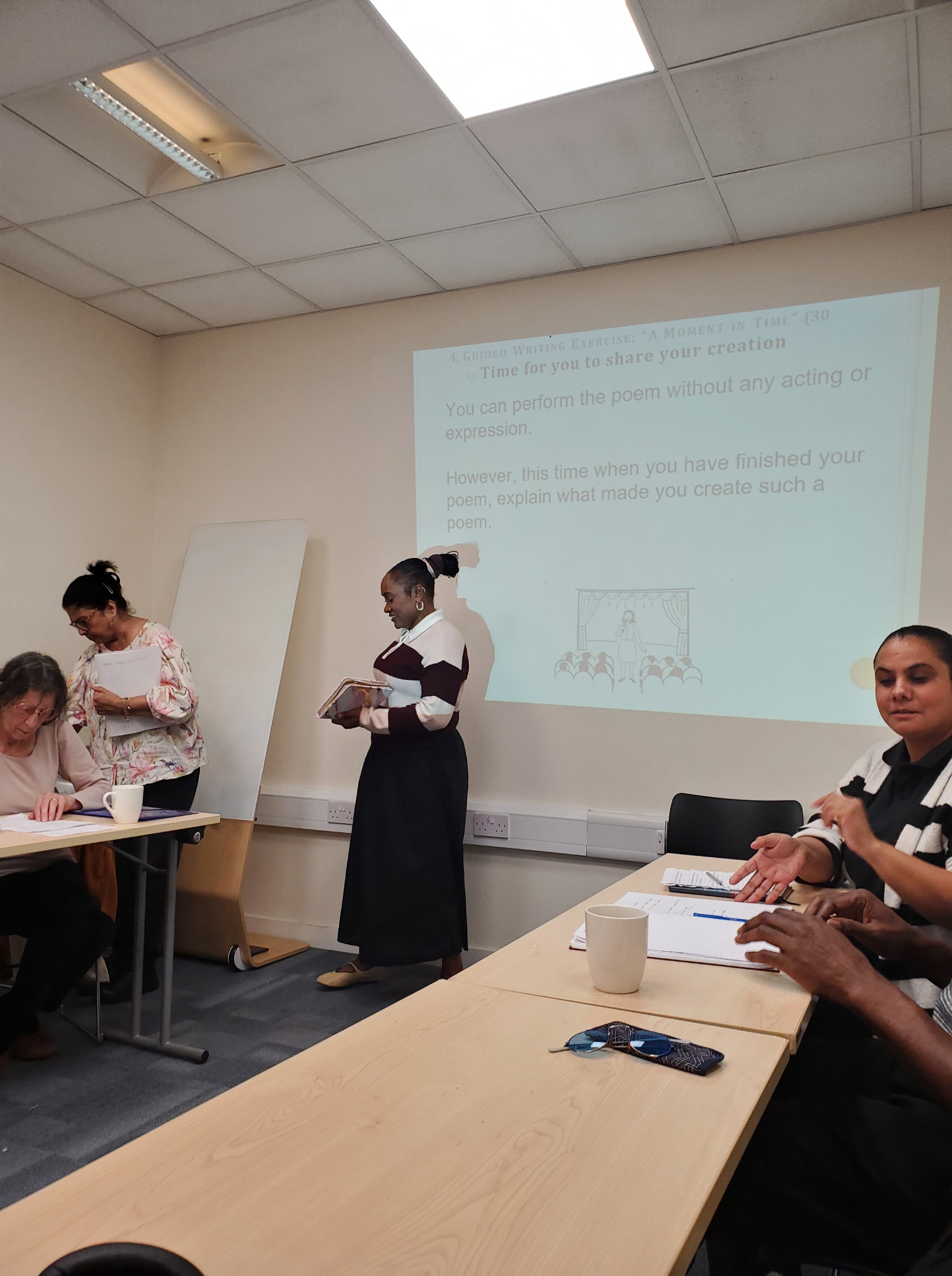
Matthew encouraged participants to not only write but to perform their poems experimenting with tone, body language, and delivery. Speaking a poem aloud added new dimensions, whether whispered as a secret, voiced as advice, or shared as a speech. The performances were followed by gentle feedback from peers, highlighting what moved them, what stood out, and what emotions were stirred.
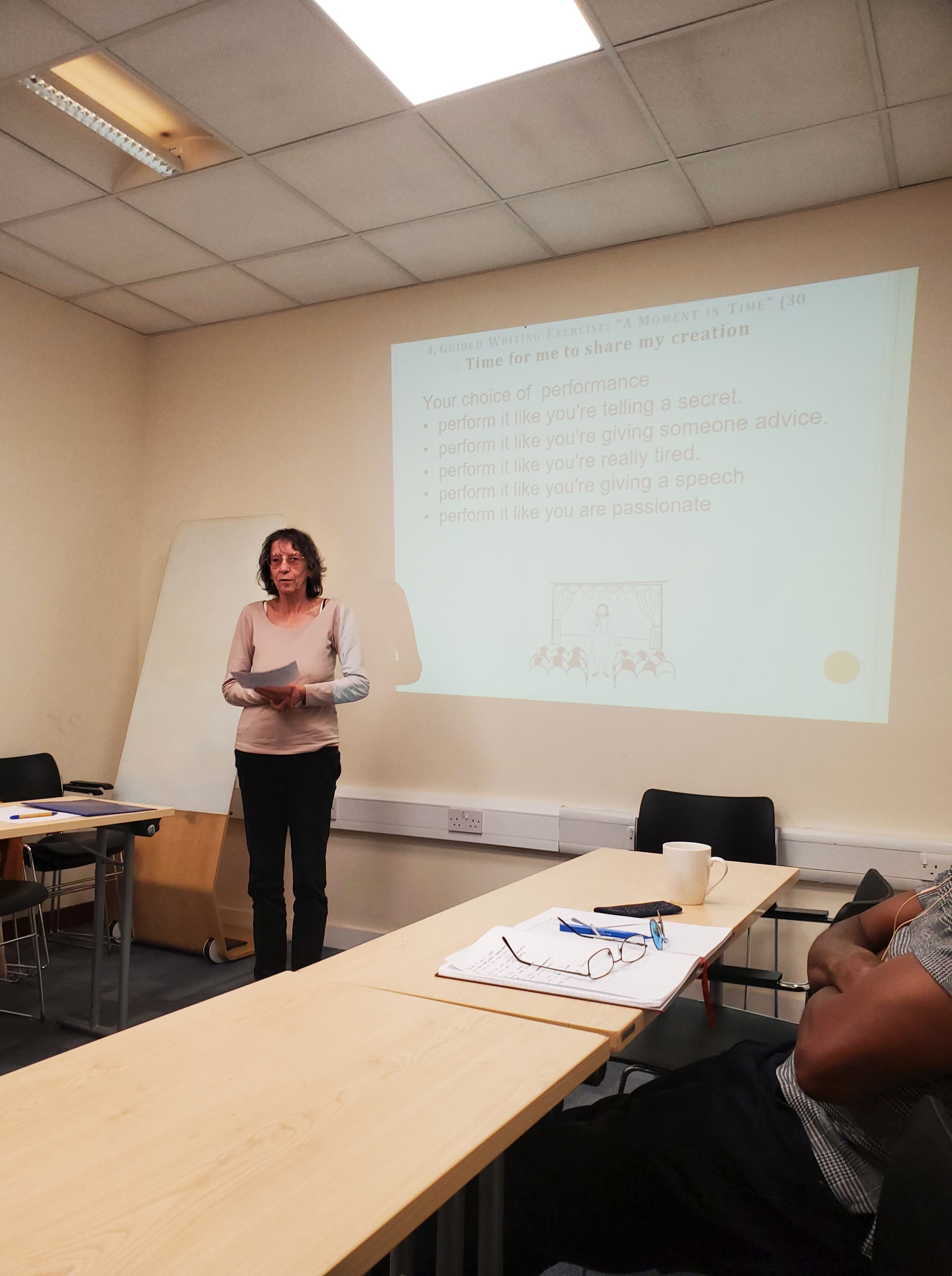
This interactive style made the workshop feel more like a conversation than a class — a reminder that poetry is as much about listening as it is about speaking.
Building Community Through Creativity
Beyond the writing exercises, the workshop highlighted the importance of community. Carers often face stigma, isolation, and a lack of recognition. Coming together in a creative space allowed participants to validate one another’s experiences and see the value in their stories.
As Matthew explained, poetry can be both a personal act of healing and a political act of visibility a way of telling society: we are here, and our voices matter.
Looking Ahead
The session closed with a collaborative exercise: writing a group poem on the theme of healing from trauma. Each participant contributed a line, weaving together a shared reflection on pain, resilience, and hope. It was a fitting reminder of the workshop’s ethos that healing doesn’t have to happen alone, and that even small acts of creativity can help lighten the weight of caring.
With one more session left in September, the poetry workshops continue to build momentum, offering carers not only tools for self-expression but also a growing network of support and solidarity.
 A Caring Mind