Tag Archives: carer wellbeing

South West London Mental Health Carers Forum – August 2026 Update

By Matthew McKenzie, Co-Facilitator – South West London Mental Health Carers Forum

The South West London Mental Health Carers Forum met again during August 2026, bringing together unpaid carers to share experiences, discuss how the forum is developing and look at ways we can strengthen the voice of carers across South West London.

The forum continues to be a peer-led space shaped by carers themselves. An important message from the August meeting was that this is a group for carers, run with carers and influenced by carers. Members spoke about wanting people who join the forum to feel recognised, valued and able to support one another, rather than the group becoming overly formal or service-led.

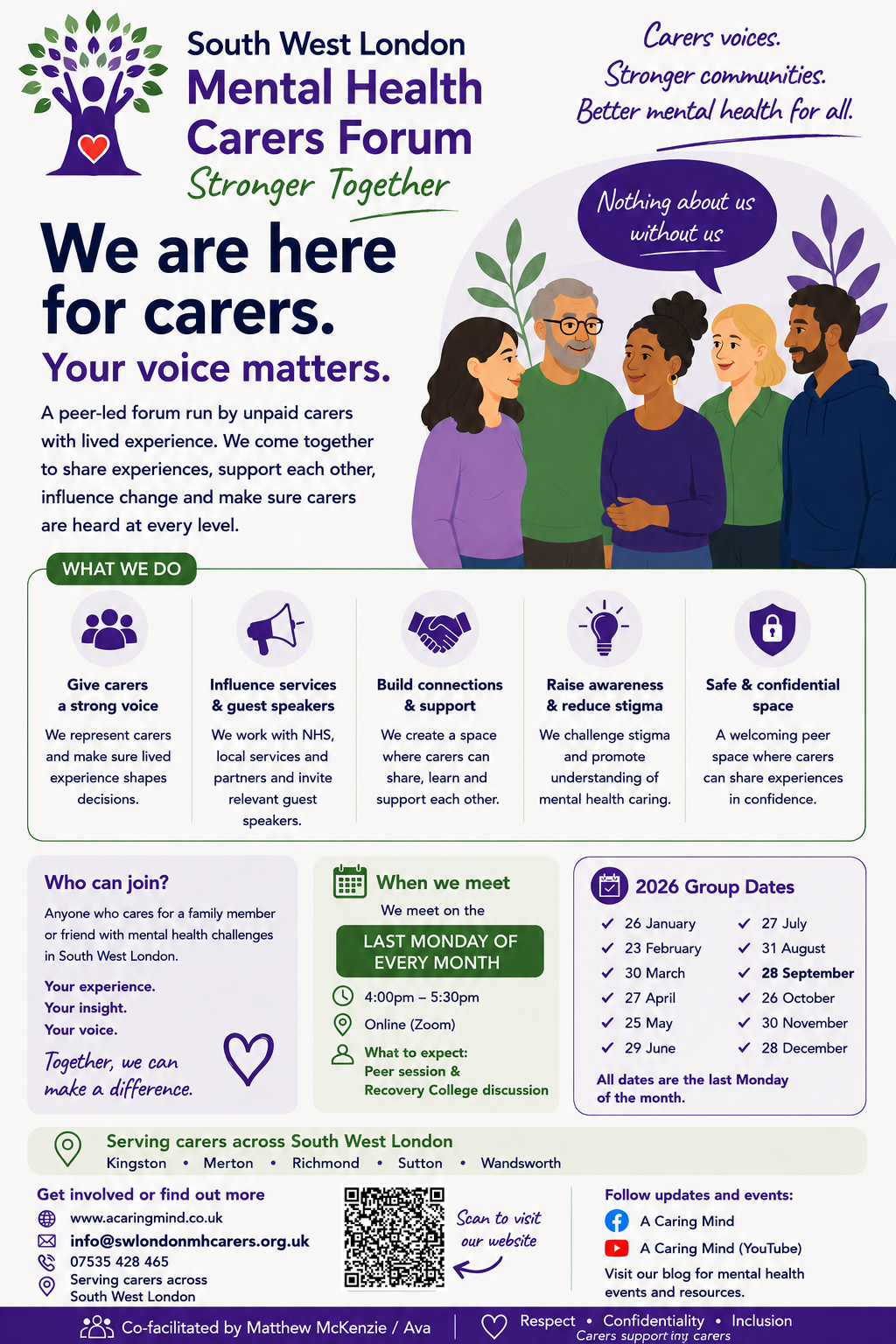
Co-producing our new forum poster

A significant part of the August meeting was devoted to reviewing a new promotional poster for the forum.

Rather than simply designing a poster and distributing it, we wanted members to see the draft first and help shape the final version. This became a useful co-production exercise in its own right.

Members were generally positive about the design and felt it was clear and welcoming. There was discussion about the wording “We are here for carers – Your voice matters”, and what the word “we” represents. The intention is that “we” means the forum collectively rather than any individual facilitator. The poster therefore needs to communicate that the forum belongs to its members.

Members also discussed the importance of showing what actually happens at the forum. This includes giving carers a stronger voice, influencing services, building connections, raising awareness, providing peer support and occasionally inviting relevant guest speakers.

There was a particularly useful suggestion to make “safe and confidential space” more prominent. Members felt that carers considering joining should know that they can talk about their experiences in an environment where confidentiality and respect are taken seriously.

The discussion also reinforced that guest speakers are useful, but they should support rather than dominate the forum. Speakers can help carers understand services and, importantly, give carers opportunities to raise common concerns directly with people who may be able to influence change.

Keeping the forum safe online

Another important discussion concerned how people access our Zoom meetings.

Members considered whether the Zoom link should simply appear on the poster. We decided against this. Previous experiences of open Zoom links have shown why online carer spaces need some protection.

Instead, the promotional material will direct people towards registration or contact information. This gives us a better idea of who is joining and helps maintain a safer environment for carers discussing potentially sensitive experiences.

The QR code was tested during the meeting and members were able to use it successfully to reach the registration information.

At the same time, an important accessibility point was raised: not every carer has a smartphone or feels comfortable using QR codes. For that reason, the poster includes conventional contact information so nobody is excluded simply because they are less confident with technology.

Making the forum easier to find

We also talked about getting the poster beyond our existing membership.

Members suggested continuing to circulate promotional material through local carer organisations and displaying posters in appropriate NHS and community settings. There was discussion about posters appearing on carer noticeboards and, where possible, reaching wards and other places where families may see them.

The intention is to have both a general poster containing the forum’s regular dates and updated promotional material for individual meetings.

This matters because there are unpaid carers across South West London who may have no idea that a peer forum such as ours exists.

Creating a stronger identity for the forum

One suggestion that came from members was to develop a more independent identity for the forum, including a dedicated email address.

Members felt this could make the forum easier to recognise and give carers a clearer point of contact instead of relying on individual personal accounts. There was also a feeling that having a dedicated identity would help the forum look more established while still remaining a voluntary, carer-led group.

Since the August meeting, I have acted on that suggestion.

The forum now has its own domain and dedicated contact address:

info@swlondonmhcarers.org.uk

This is a small development, but I think it represents an important step in giving the forum an identity that belongs to the group.

Valuing carers’ time in research

Our meeting also led to a wider discussion about research involving unpaid carers.

I shared information about an Oxford University study exploring caregiver wellbeing and participation in social groups. The proposed survey takes around 40 minutes to complete.

This prompted some strong and thoughtful feedback.

Members were supportive of research that can improve understanding of unpaid caring, but questioned the repeated expectation that carers should contribute substantial amounts of their time without any recognition or reimbursement.

Carers already give enormous amounts of unpaid time. Members felt universities and research organisations should think more carefully about recognising lived-experience contributions, whether through vouchers, reimbursement or even a contribution to an appropriate charity.

This was not about carers being unwilling to help research. In fact, the opposite is often true. Carers repeatedly give their experiences because they hope things will improve for others.

The question raised by the forum was:

If lived experience is valuable enough to research, shouldn’t the time of the people providing that lived experience also be valued?

I agreed to feed this point back.

Moving forward together

What I particularly valued about August’s meeting was that something as straightforward as reviewing a poster developed into a much broader conversation about what kind of forum we want to be.

Members want a welcoming and confidential peer space. They want carers to have a stronger voice. They want relevant speakers and opportunities to influence services, but they also want the forum to remain somewhere carers can simply connect with people who understand the realities of caring.

As one part of the discussion emphasised, we are not a large organisation or charity. We are a group of people coming together to support one another and help ensure carers feel recognised and valued.

That is something worth protecting as the forum grows.

Our next forum

The South West London Mental Health Carers Forum will next meet online on:

Monday 28 September 2026
4:00 pm – 5:30 pm
Online via Zoom

The September session will include a peer session and Recovery College discussion.

The forum covers carers across Kingston, Merton, Richmond, Sutton and Wandsworth.

For information about joining or future meetings, contact:

info@swlondonmhcarers.org.uk

If you are a carer from the boroughs above, you can also click on the link below to book.

Book here to attend this forum for September

The Heart of Care – Ealing Carers Online Poetry Group August 2026

By Matthew McKenzie – Poetry group facilitator

The Ealing Carers Online Poetry Group returned in August for another warm and creative evening of poetry, reflection and peer support. Delivered with the support of Ealing Carers Partnership, the group has now been running for two years and continues to provide carers with a welcoming space in which they can express themselves, meet others and take some valuable time away from the pressures of their caring roles.

Carers joined the session for different reasons. Some wanted inspiration to write, while others valued the opportunity to relax, listen and spend time with people who understood the realities of caring. One member described how they often begin an exercise believing they will not be able to write anything, only to be surprised by the words and emotions that emerge.

This is an important part of the poetry group. Nobody needs to be an experienced poet, and there is no pressure to read aloud. People are welcome to participate at their own pace, listen to other carers and gradually build their confidence.

Exploring “The Heart of Care”

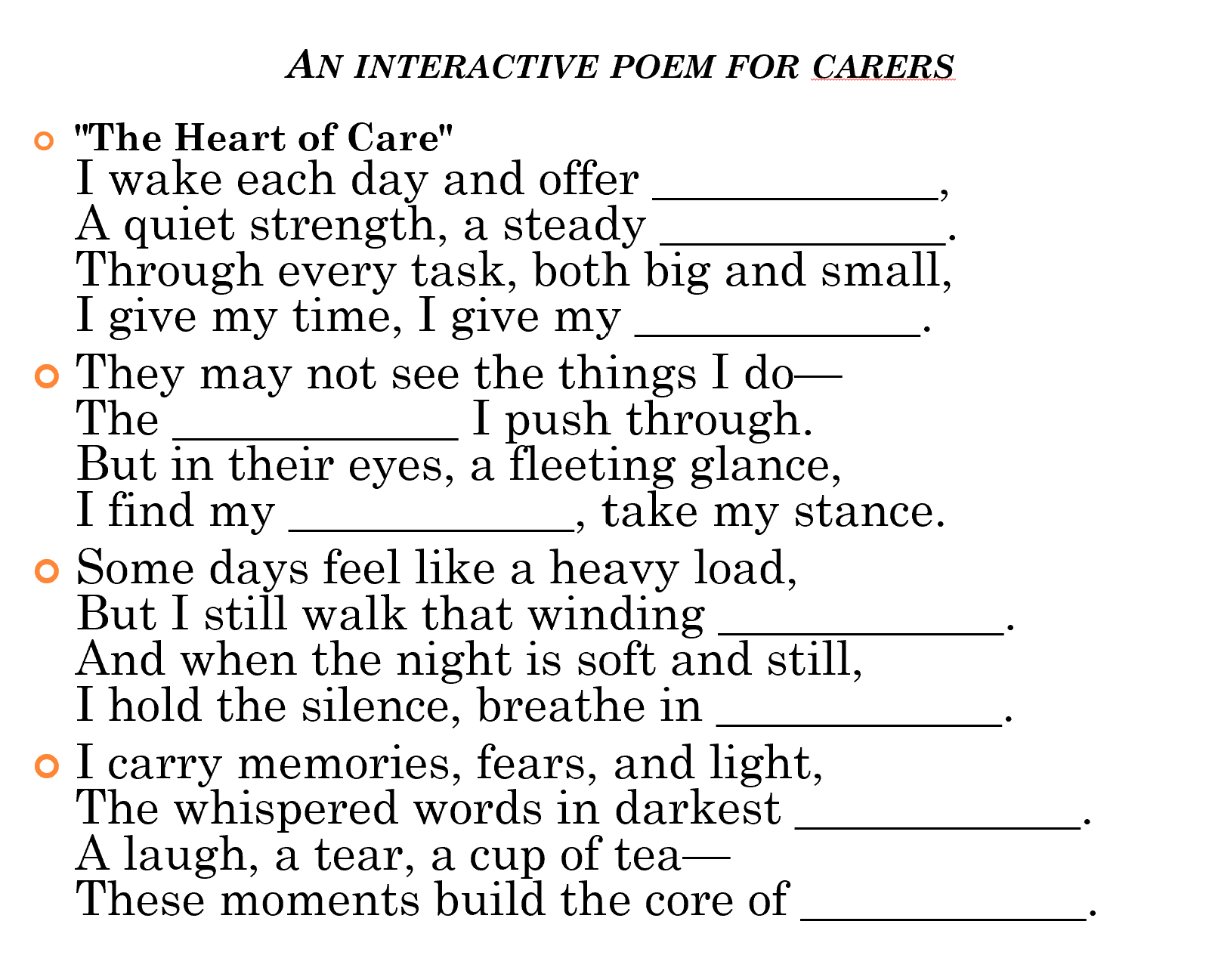
The main writing exercise was called “The Heart of Care”. Carers were given the beginnings of lines and invited to complete them using words drawn from their own experiences. They could choose whether or not to use rhyme.

The poems explored dedication, courage, memories, exhaustion, prayer, quiet reflection and the determination required to continue caring through difficult days. Familiar moments, including sharing a laugh, shedding a tear or simply making a cup of tea, became meaningful images within the poems.

Although everyone worked from the same starting point, each poem developed its own character and voice. One contribution focused on the strength needed to continue walking along the “winding road” of caring. Another described finding a voice and taking a stance, while another ended by recognising that small moments of reflection can help build the core of a carer’s wellbeing.

The exercise reminded us that poetry does not need to be complicated. A few carefully chosen words can express feelings that may otherwise be difficult to explain.

Listening, reflecting and encouraging one another

After each poem was shared, group members were encouraged to ask thoughtful questions and reflect on what they had heard. This created some powerful conversations about finding your voice, managing negative thoughts and recognising your own efforts.

One carer spoke about replacing late-night self-criticism with positive affirmations: reminding themselves that they had done their best and did not need to solve everything before allowing themselves to rest.

Another spoke about the “will” carers must find each morning to get up and continue. Even though they felt nervous about reading aloud, the encouragement they received demonstrated the peer-support element at the heart of the group.

Carers were encouraged to keep their poems together in a folder or notebook. Returning to words about hope, warmth, identity and resilience can offer reassurance during times when someone is feeling low or overwhelmed.

When a carer’s poem becomes a song

A particularly moving part of the evening came when one member shared a song developed from their own poem about caring. The piece was originally inspired by the theme “A Carer Is” and offered a heartfelt message to other carers: you are seen, you matter and the contribution you make deserves to be recognised.

Members described the song as a love letter to carers. They felt it was something from which carers could draw comfort and strength, particularly because recognition does not always come from services or even from the people receiving care.

The writer generously gave permission for the song to be shared with other carer groups, forums and events.

Listen to the carer’s song here:
https://www.mureka.ai/song-detail/125940401242114

Carers helping to shape future poetry events

The session was also an opportunity to ask carers what they would like to experience at upcoming in-person and hybrid poetry events.

Ideas included combining poetry with art, drawing and music; creative activities based on hope, wellbeing and resilience; choosing unexpected words from a hat and using them to write a poem or short story; and using simple unfinished lines to help people try poetry for the first time.

Members also suggested introducing relaxation, breathing and gentle body-awareness activities. These could help carers settle their minds, release some tension and feel ready to write.

Most importantly, carers wanted opportunities to perform their own work and help lead parts of future workshops. One member volunteered to lead a creative word-picking exercise at a future event. This is an exciting step towards making the programme increasingly carer-led and co-produced.

Upcoming activities discussed during the session included an Ealing Central Library workshop on 8 October, a future workshop at Greenford Library and an event at Manor House Library in Lewisham on 4 November. Further details will be shared once all arrangements have been confirmed.

Join the Ealing Carers Online Poetry Group

The Ealing Carers Online Poetry Group is more than a writing workshop. It is a friendly and supportive community where carers can connect, develop their creativity and have their experiences heard and valued.

You do not need to consider yourself a poet. You can write in rhyme or free verse, share something you have already created or simply attend and listen. Carers from Ealing and beyond are welcome to take part.

The next online meeting is planned for Friday 25 September 2026. Please contact the group organiser for the joining details and to be added to the mailing list.

info@ealingcarerspartnership.org

Whether you are looking for creative inspiration, companionship, a little relaxation or a safe way to express your caring experiences, you will be warmly welcomed.

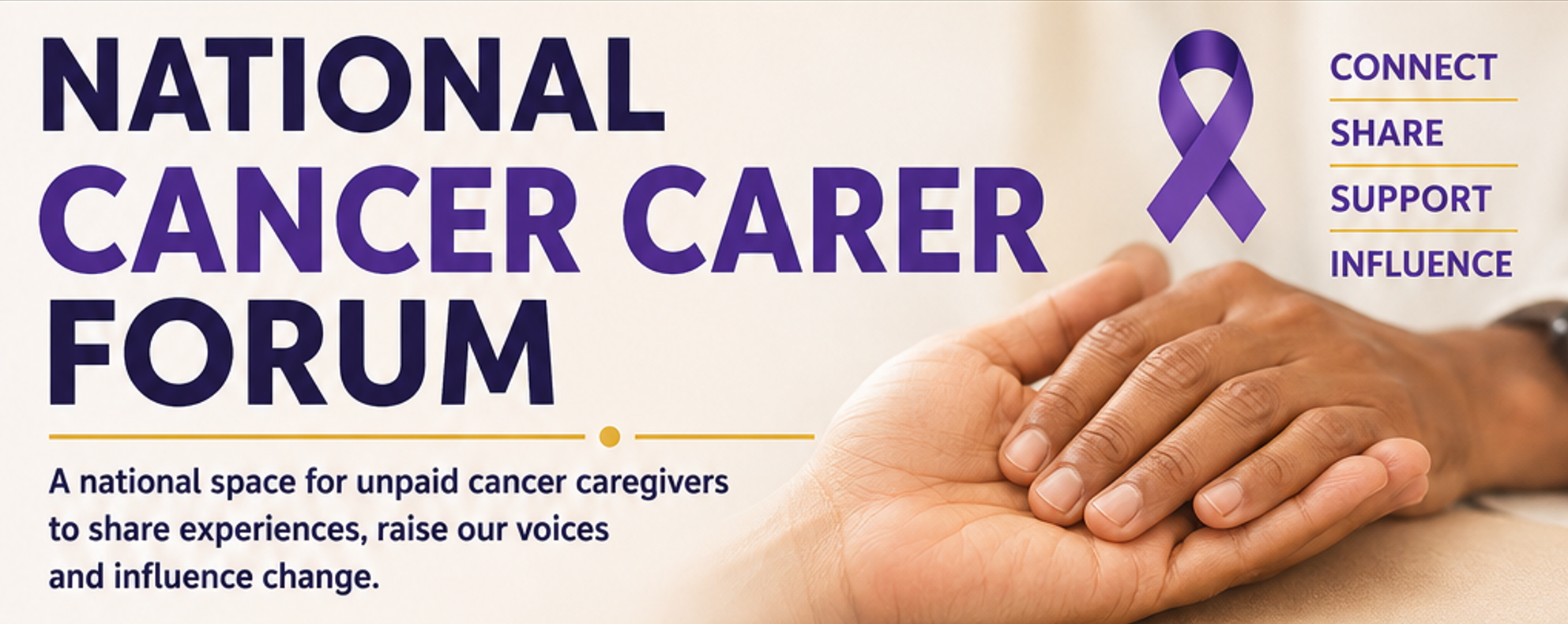
National Cancer Caregiver Forum – August 2026 update

By Matthew McKenzie – Facilitator of Cancer Caregiver group

It has been a long while since I published a full update from my National Cancer Caregiver Forum. Although I have continued working to raise awareness of unpaid cancer caregiving, this latest meeting reminded me why the forum remains so necessary.

The National Cancer Caregiver Forum provides an online space for people caring for someone affected by cancer, former carers, researchers and organisations interested in improving support. It combines peer support with engagement, research and opportunities to influence cancer services.

Why cancer caregivers still need a voice

I opened the forum by reflecting on the shortage of dedicated groups for unpaid cancer carers. There are many services and support groups for people receiving cancer treatment, as there should be, but far fewer spaces focused specifically on the partners, relatives and friends supporting them.

Some dedicated cancer carer groups have disappeared because funding ended, while others have struggled to reach carers. This does not mean the need has disappeared. Cancer caregivers are often supporting someone through appointments, treatment, recovery, recurrence or end-of-life care while also managing employment, children, household responsibilities and their own emotional wellbeing.

Unlike some longer-term caring roles, cancer caregiving can begin very suddenly. A diagnosis can quickly change someone’s relationships, responsibilities, finances and plans for the future.

Many people also do not identify with the word “carer”. They may say, “I am their husband,” “I am their wife,” or “I am their daughter.” Those relationships remain important, but recognising the additional caring role can open the door to information, carers’ assessments, local carer services and support from a GP practice.

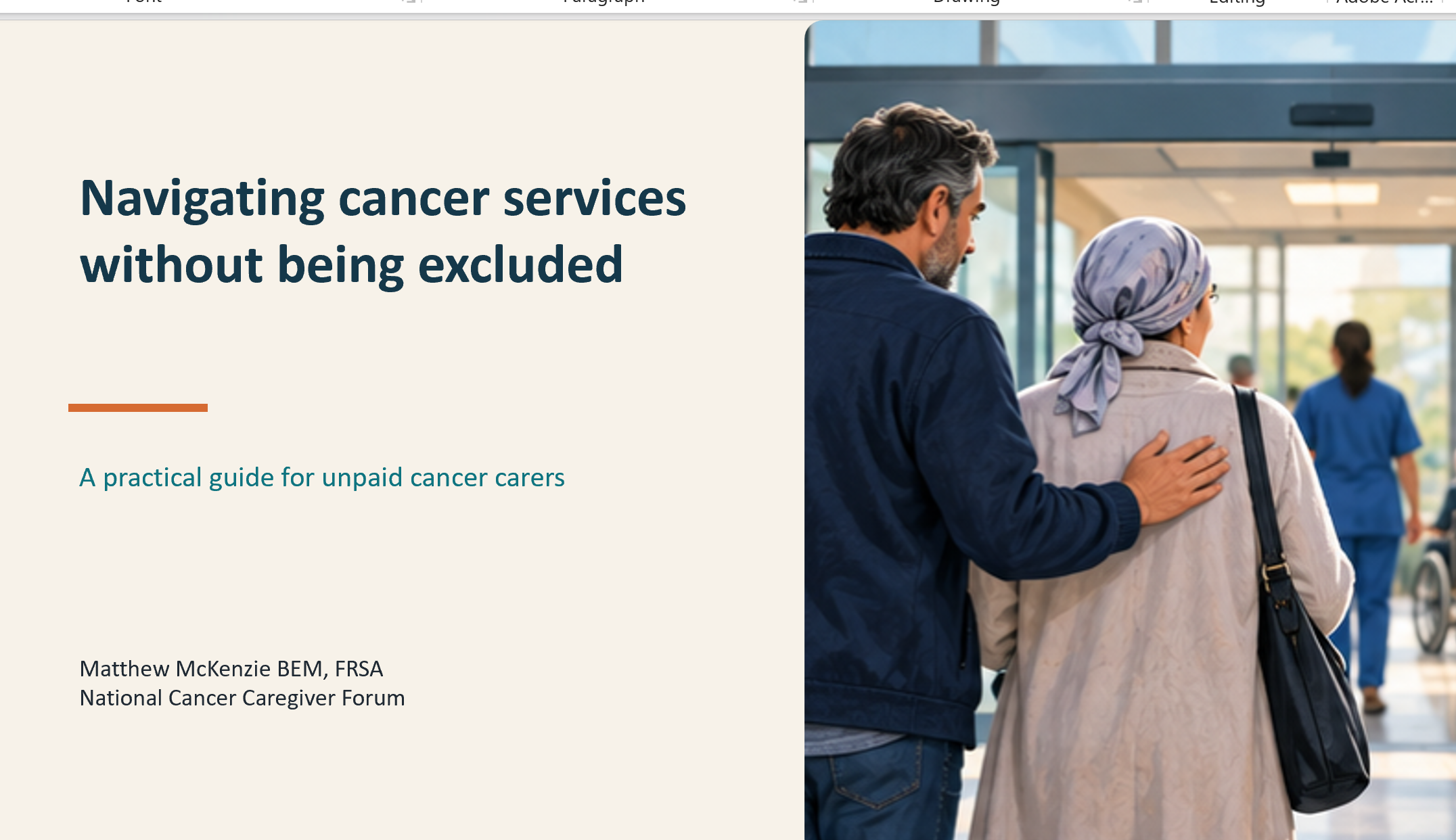
My presentation on the cancer caregiving journey

I delivered a short presentation setting out a roadmap of what an unpaid cancer caregiver may experience. I emphasised that cancer affects more than the person receiving the diagnosis. It also affects the people providing transport, emotional reassurance, advocacy, medication support, practical care and coordination between different services.

Carers need clear information about what is happening, what warning signs to look out for, who to contact when something changes and what may happen next. Without this information, people can be left frightened that they might overlook something important.

Confidentiality must always be respected, but it should not become a blanket reason for excluding carers from every conversation. Professionals can still listen to information from a carer and provide general guidance about services, warning signs and sources of help. Information should also be given in plain language, because people under severe stress may not remember everything the first time it is explained.

The emotional impact of cancer caregiving can be hidden. Carers may feel they must remain strong for their loved one while privately experiencing fear, exhaustion, isolation or guilt. They may feel guilty about needing time away, becoming frustrated or thinking about their own wellbeing. Support should not automatically disappear when active treatment finishes, because uncertainty and the consequences of the caring experience may continue.

I also highlighted how culture, ethnicity, gender, sexuality, age, disability, income and digital exclusion can affect whether someone is recognised and supported. Male partners may be less likely to identify as carers, people from minority ethnic communities may experience barriers involving trust or culturally appropriate support, and LGBTQ+ partners may encounter assumptions about their relationships or family structures.

Good support asks rather than assumes.

University of Hertfordshire research

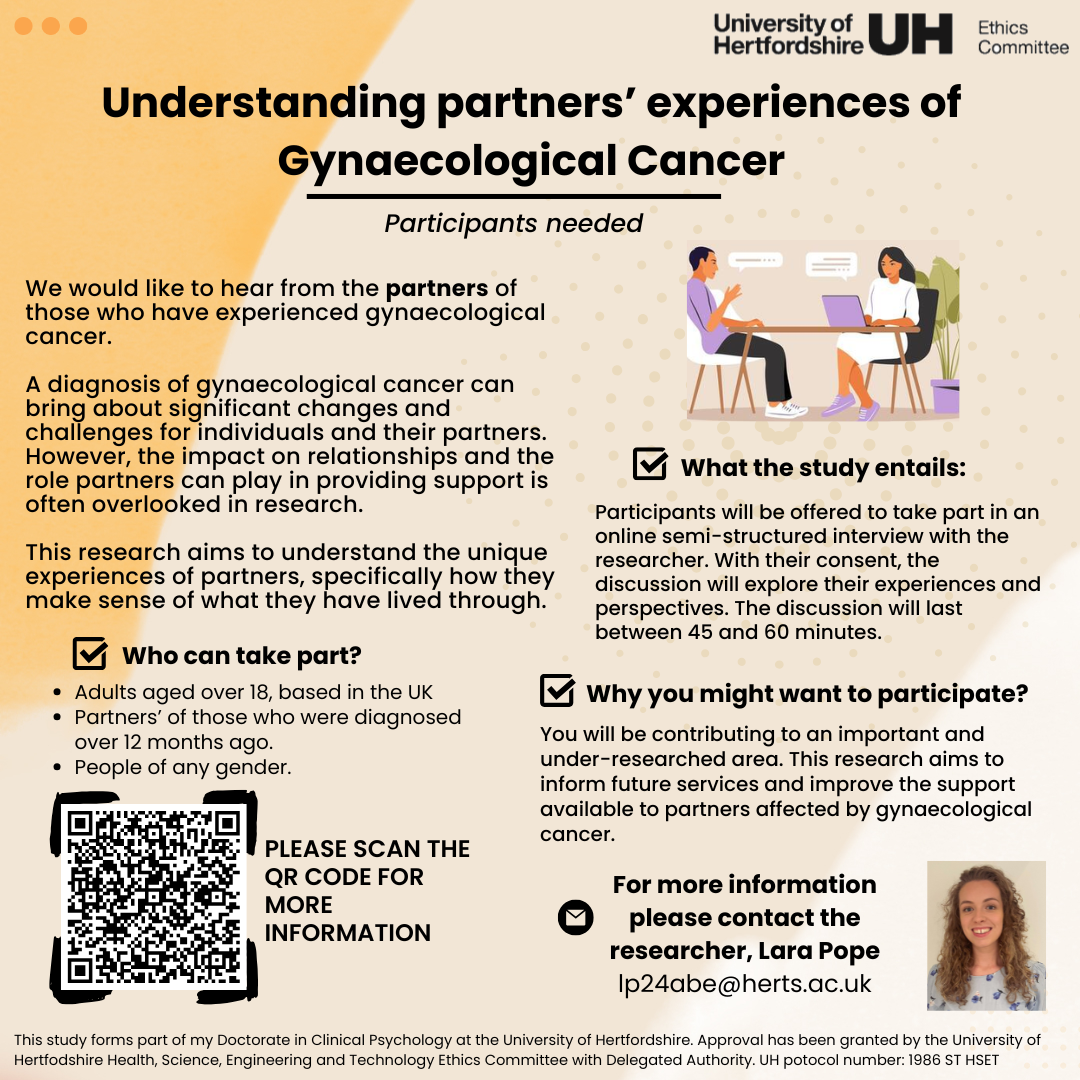
We then heard from Lara, a trainee clinical psychologist at the University of Hertfordshire. Her doctoral research is exploring the experiences of people whose partners have been affected by gynaecological cancer.

Lara explained that while there is research focused on people diagnosed with cancer, considerably less is known about how partners experience diagnosis, treatment and life afterwards. Her interest is also informed by her family’s experience of recurrent gynaecological cancer.

The research covers experiences connected with ovarian, cervical, womb or endometrial, vaginal and vulval cancers. It may explore changing responsibilities, fertility, intimacy, body image, emotional wellbeing and the accessibility of support. Participation is open to eligible partners from different backgrounds and relationships, including members of LGBTQ+ communities.

Participants would take part in an online interview lasting approximately 45 to 60 minutes. Information would be anonymised, and participants could withdraw if the conversation became too difficult. A £20 voucher is offered as thanks for taking part, or the participant can choose for £20 to be donated to a selected gynaecological cancer charity.

Lara hopes the findings will help services understand what partners actually need instead of making assumptions. Recruitment has been challenging, partly because this is a sensitive and often stigmatised subject, but that difficulty further demonstrates why the research matters.

Healthwatch Lewisham’s carers project

Hannah from Healthwatch Lewisham joined us to explain its role in championing the independent voices of local people using health and social care services. Healthwatch gathers patient and carer experiences, provides signposting and advocacy, and uses evidence to influence services, commissioners and decision-makers.

Healthwatch Lewisham is contributing to a wider carers project involving four Healthwatch organisations across London. A questionnaire is being developed to understand what is working for carers, where support is failing and what needs to change.

Hannah explained that the wording and tone of the questions are important. This cannot be treated simply as a data-collection exercise because the answers concern people’s lives, relationships and often painful experiences. Some people will be comfortable completing a questionnaire independently, while others may prefer to talk through their experiences.

The findings will be shared with organisations including GP practices, hospitals, NHS bodies and integrated care boards. The aim is to promote good practice while challenging areas where carers repeatedly report that support is missing.

Healthwatch Lewisham also offered to help publicise Lara’s research through its website, social media and links with other Healthwatch organisations. Possible connections with local services, including St Christopher’s, were discussed, along with the value of the Cancer Care Map for finding nearby cancer support.

Building the forum again

This meeting showed the importance of bringing lived experience, research and community organisations together. It also exposed a continuing gap: cancer caregivers are doing vital work, but many remain poorly identified, inadequately informed and unable to find others facing similar circumstances.

Hospitals, cancer alliances, GP practices, carer centres, charities and social prescribers all have a role in helping people recognise themselves as carers and find support before they reach crisis point. Services should routinely ask:

Who is providing support at home? What does that person need to know? How is caring affecting them? Have they been told where to find independent support? How will they be involved as circumstances change?

The National Cancer Caregiver Forum will continue to provide a space for these conversations. Attendance may take time to build, but the evidence from this meeting is clear: the need exists.

I would like to thank everyone who attended and contributed, particularly the carer who shared his personal experience. Lived experience is what gives this forum its purpose and helps researchers and organisations understand what caring for someone with cancer is really like.

The forum usually meets online on the last Wednesday of each month. I welcome unpaid cancer carers, former carers, researchers, cancer professionals and organisations that want to listen, contribute and help strengthen support.

The National Cancer Caregiver Forum is still a work in progress, but it is also a space I remain determined to develop.

Oxford University study seeks unpaid carers supporting someone with severe mental illness

By Matthew McKenzie – facilitator of carer groups

Dr Eiluned Pearce, a trainee clinical psychologist and researcher at the University of Oxford, is seeking help recruiting participants for an important study about unpaid carers’ wellbeing.

The study will explore whether attending social and community groups, including carer support groups, clubs and other group activities is associated with improved wellbeing among people supporting someone with a severe mental illness.

This is particularly relevant to what I promote at my site because many unpaid carers rely on peer groups and carer forums for understanding, information and a sense of connection. However, you do not need to attend any kind of group to participate. The researchers need to hear from carers who attend groups and those who do not.

Who can take part?

You may be eligible if you:

  • Are aged 18 or over
  • Live in the United Kingdom
  • Speak English fluently
  • Provide unpaid emotional or practical support to someone aged 16 or over
  • Support someone experiencing psychosis, bipolar disorder, an eating disorder, or complex emotional needs/personality disorder
  • Do not personally experience a severe mental illness

You do not have to describe yourself as a “carer” or “caregiver”. You might consider yourself a relative, partner, parent, sibling or friend who provides essential support.

What does participation involve?

Participants will complete an anonymous online survey lasting approximately 40 minutes. You can take breaks and return to it using the same internet browser, provided it is completed within one week of starting.

Questions will cover your wellbeing and mental health, the support you provide, its impact on you, any groups you attend and some information about your background.

Individual responses will not be shared outside the research team, and IP addresses will not be recorded.

Take part in the study

To read more about the research and access the survey, visit:

https://tinyurl.com/CaregiverSMIWellbeingOrgs

The study has been approved by the University of Oxford Central University Research Ethics Committee (reference: MS IDREC 2204969).

For questions about the research, please contact:

Dr Eiluned Pearce
Email: eiluned.pearce@psy.ox.ac.uk
Telephone: 07775 229377

Dr Lorna Hogg
Email: lorna.hogg@hmc.ox.ac.uk

Dr Shama El-Salahi
Email: Shama.ElSalahi@oxfordhealth.nhs.uk

Research into carers’ wellbeing remains limited, and it is important that the experiences of people supporting someone with a severe mental illness are properly heard and understood.

2nd Voices & Verses – PCREF Poetry Event

By Matthew McKenzie – Cygnet PCREF Carer Lead & Carer Ambassador

Cygnet PCREF Carer Lead & Carer Ambassador

On 4 August 2026, unpaid carers, professionals and people with lived experience came together at Cygnet Churchill for the second Voices & Verses Carers Poetry Event. The purpose of the afternoon was not simply to read poetry, but to create a safe space where carers could express experiences that are often overlooked within mental health services.

The event formed part of Cygnet’s ongoing commitment to the Patient and Carer Race Equality Framework (PCREF) by exploring how creativity, culture and storytelling can strengthen co-production and improve relationships between carers and services. The afternoon was designed around inclusion, psychological safety and optional participation, allowing people to contribute in whatever way felt comfortable to them.

As someone who has cared for family members affected by severe mental illness for many years, I continue to believe that poetry allows carers to communicate emotions that ordinary conversations often fail to capture. Statistics tell us what is happening, but poetry often explains how it feels. This aligns closely with PCREF’s ambition to humanise care, improve understanding of racial inequalities and ensure lived experience genuinely influences service development.

The event opened with readings from my forthcoming collection of PCREF poems, including “Change is Possible.” Rather than focusing solely on racism, the discussion explored hope, community, partnership, co-production and carers becoming recognised as equal partners within mental health care. Participants reflected that although change often feels slow, meaningful progress can still occur when carers are given opportunities to influence services.

One participant commented that the poem should never have needed to exist because carers should already be recognised and listened to. Another reflected that the line “those doors open slowly” accurately described the experience of advocating for loved ones over many years. These discussions reminded everyone that poetry can stimulate conversations which may never emerge during formal meetings or consultations.


One of the highlights of the afternoon was a collaborative workshop led by Jo Lambert, introducing participants to the Hold the Hope project through art, colour and reflection.

Rather than asking carers to simply colour a picture, participants were encouraged to think about what hope, equality, dignity and belonging meant to them personally. They selected PCREF-related words, explored why particular colours reflected their emotions and discussed how creativity can communicate experiences beyond spoken language.

The discussion demonstrated that every participant interpreted the same image differently.

Some chose calming blues to represent peace and trust.

Others used brighter colours to symbolise recovery, resilience and optimism.

Several carers explained that colouring became a form of mindfulness, allowing them to process difficult emotions whilst talking with others.

The activity also highlighted something particularly important from a lived experience perspective. Mental health carers frequently spend years speaking on behalf of others. Opportunities to express their own feelings are much rarer. Through art and poetry, carers were able to focus on themselves without feeling they had to justify or defend their experiences.

This reinforced one of the strongest messages of the day:

Creative expression is not simply an enjoyable activity, it is another form of lived experience evidence.

Participants also appreciated that there were no “right” or “wrong” answers. Every artwork reflected an individual caring journey, demonstrating the diversity that exists within the unpaid carer community.


The power of shared lived experience

Perhaps the most valuable aspect of the event was the conversation that developed naturally between carers.

Discussions moved beyond poetry into themes including:

  • feeling excluded because of confidentiality
  • racial inequality within services
  • the emotional burden of long-term caring
  • recognition of carers as equal partners
  • loss of identity through caring
  • maintaining hope during crisis
  • the importance of community support

Many participants reflected that carers often possess significant practical knowledge but are still not viewed as equal partners within clinical decision making.

One participant explained that carers are frequently expected to educate professionals whilst simultaneously managing the emotional impact of supporting someone in crisis. Others spoke about the exhaustion of constantly advocating for loved ones whilst trying to maintain their own wellbeing.

These conversations demonstrated exactly why creative events have an important place within PCREF. Rather than collecting another questionnaire, participants were able to describe experiences in their own words, using poetry, storytelling and discussion.

Importantly, professionals attending the session also listened.

This helped create genuine dialogue rather than the traditional model where professionals ask questions and carers provide short answers.

The atmosphere remained respectful throughout, allowing difficult topics including racism, discrimination and feeling unheard to be explored constructively.

For many attendees, simply meeting other carers who understood their experiences reduced feelings of isolation.


Celebrating culture and creativity

The second half of the afternoon celebrated cultural diversity through music, spoken word and performance.

Faith shared “Soothing Blue,” a poem that had been transformed into music. Hearing lived experience expressed through song demonstrated another creative way carers can communicate emotions that may otherwise remain hidden. Participants reflected on themes of healing, identity and rediscovering themselves beyond their caring role.

Brenda then performed traditional Jamaican folk songs, including “Chi-Chi Bud Oh” and “By the Rivers of Babylon.” These performances reminded everyone that culture forms an important part of identity and wellbeing. Cultural expression can strengthen belonging and create opportunities for people from different backgrounds to learn from one another.

The PCREF word search and poetry activity further encouraged participants to explore words such as community, dignity, inclusion, hope, equality and compassion before creating short poems of their own. What initially appeared to be a simple puzzle became another opportunity for reflection and discussion.

Throughout the afternoon there was laughter, encouragement and mutual support. Participants applauded one another’s contributions regardless of previous poetry experience, reinforcing that everyone had something valuable to contribute.

By combining poetry, visual art, music and conversation, the event demonstrated that creativity can become a powerful vehicle for engagement with carers who may not usually participate in traditional consultation events.

Reflections and looking ahead

Looking back as both a lived experience carer and PCREF Carer Lead, I believe this event demonstrated several important lessons.

Firstly, carers do not simply want to be consulted, they want to be heard.

Secondly, creative approaches allow conversations to emerge that formal meetings often miss.

Thirdly, culture matters. When people feel safe enough to bring their whole identity into a room, discussions become richer, more authentic and more meaningful.

The Voices & Verses programme is gradually becoming more than a poetry group. It is developing into a community where carers can connect, learn from one another and influence future mental health services through creativity.

Future events will continue to develop this approach by:

  • expanding hybrid participation so more carers can join remotely;
  • increasing opportunities for cultural storytelling;
  • creating more collaborative art and poetry projects;
  • transforming poems into music and other creative media;
  • strengthening links between PCREF, Triangle of Care and co-production.

Most importantly, the event reminded us that lived experience should never be viewed as an optional extra.

Every poem, every conversation and every shared story represented expertise developed through years of caring.

PCREF asks organisations to listen more carefully to diverse communities.

This event showed that when carers are given the right environment, they do not simply speak—they inspire, educate and help shape better mental health services for everyone.

Triangle of Care Community Meeting: July 2026 update

By Matthew McKenzie – Triangle of Care – Community group chair

Putting Carers at the Centre of Care

The latest Triangle of Care Community Group brought together carers, professionals and partner organisations from across England to share learning, celebrate progress and identify where further improvements are needed. The meeting highlighted the growing influence of the Triangle of Care across mental health and acute services, whilst reinforcing that there is still much work to do to ensure carers are consistently recognised, valued and supported.

One of the most powerful aspects of the meeting was hearing directly from carers about their experiences. Whilst many spoke positively about the progress that has been made over recent years, there was a shared view that carer involvement remains inconsistent across services. Carers described feeling more included than ever before, with greater awareness of the Triangle of Care principles and more opportunities to participate in steering groups, service developments and community discussions. However, concerns remain around automatic carer identification, information sharing and ensuring that carers are genuinely recognised as partners in care.

Several carers reflected on the importance of having their voices heard early in a patient’s care journey. Examples were shared of services introducing carer contribution templates that ensure family members are involved within 72 hours of admission, whilst others highlighted improvements to confidentiality processes that allow patients to determine what information can be shared with carers at different stages of their recovery. These practical changes demonstrate how relatively small adjustments can have a significant impact on relationships between carers, patients and professionals.

Progress Across the Triangle of Care Programme

Mary Patel, Triangle of Care Programme Lead at Carers Trust, provided an update on developments across the national programme. The Triangle of Care continues to grow, with a number of organisations progressing through the STAR accreditation process and demonstrating their commitment to embedding carer-inclusive practice across services.

Importantly, members were reminded that the STAR awards are not designed to rank organisations, but instead reflect the breadth of implementation across different service areas. STAR I focuses primarily on inpatient and crisis services, STAR II expands into community services, whilst STAR III recognises organisations delivering integrated services across multiple clinical areas.

Several trusts have recently achieved STAR awards, whilst others are progressing through the assessment process over the coming months. The programme’s peer review approach continues to ensure that carers remain central to the assessment process, with carers actively involved in reviewing evidence, identifying good practice and making recommendations for future development.

The Triangle of Care Member Hub continues to provide valuable opportunities for peer learning, resource sharing and collaborative working. Upcoming webinars will include sessions exploring Open Dialogue approaches developed by Devon Partnership NHS Trust, providing members with further opportunities to learn about therapeutic models that place families and carers at the heart of care planning.

Advancing Equality Through the Patient and Carer Race Equality Framework

A significant development announced during the meeting was the launch of Phase Two of the Triangle of Care and Patient and Carer Race Equality Framework (PCREF) project.

PCREF represents the first mandatory anti-racism framework within mental health services in England. Recognising that carers from racially marginalised communities often experience poorer outcomes and face additional barriers when accessing support, the Triangle of Care programme has been working collaboratively with carers and mental health providers to strengthen the way services assess and respond to carers’ needs.

The revised self-assessment framework encourages services to move beyond assumptions and adopt a more professionally curious approach to understanding carers’ individual experiences. Rather than viewing carers as a homogenous group, the framework recognises that caring experiences are shaped by culture, identity, language, personal circumstances and wider health inequalities.

Pilot sites from across England are now testing the revised guidance, with learning being shared nationally throughout the project. Importantly, organisations do not need to be participating in the pilot to begin implementing the principles and learning that emerge from this work.

Alongside PCREF, Carers Trust continues to contribute to national policy developments, including the Modern Service Framework for Severe Mental Illness and the forthcoming Mental Health Strategy for England. Throughout these discussions, there has been a consistent message that carers must be recognised as partners in care and have access to appropriate support in their own right.

Confidentiality, Information Sharing and Carer Inclusion

Confidentiality remained one of the most prominent themes throughout the meeting. Whilst participants acknowledged the importance of protecting patients’ rights and preferences, carers highlighted that confidentiality can sometimes become a barrier to meaningful engagement.

Several contributors reflected that confidentiality should never prevent professionals from listening to carers’ concerns or receiving valuable information that may support a patient’s care. Others spoke about the importance of revisiting conversations around consent over time, recognising that patients’ preferences may change as their circumstances and wellbeing improve.

Practical examples of good practice included breaking confidentiality discussions down into specific areas, allowing patients to decide what information can be shared about medication, activities, wellbeing and treatment plans, rather than relying on simple ‘yes or no’ decisions. There was also discussion around the importance of staff training to improve confidence when navigating complex conversations around confidentiality and information sharing.

Participants agreed that carers should never be expected to provide significant levels of support without receiving the information necessary to do so safely and effectively. Achieving the right balance between confidentiality and partnership working remains an important priority for the Triangle of Care community.

Triangle of Care Principles Within Acute Services

The meeting concluded with an inspiring presentation from Wendy Doyle, Head of Patient Experience at St George’s University Hospitals NHS Foundation Trust and Epsom and St Helier Hospitals, exploring how Triangle of Care principles can be successfully implemented within acute hospital settings.

Whilst the Triangle of Care originated within mental health services, Wendy demonstrated that its principles are equally applicable across acute care environments. Her organisation supports approximately 19,000 members of staff across multiple hospital sites and has developed a comprehensive approach to identifying, recording and supporting unpaid carers.

Staff are encouraged to identify carers at the earliest possible opportunity, with this information recorded within patient records to ensure continuity throughout the patient’s hospital journey. Comprehensive carer awareness training is delivered through virtual sessions, ward-based education and e-learning resources, helping staff understand both the practical and emotional importance of recognising carers.

Importantly, identifying carers is only the beginning of the process. Every carer recorded within the hospital system receives a follow-up wellbeing check from the Patient Experience Team to discuss their own support needs, identify any challenges and facilitate referrals to local carers’ organisations where appropriate.

Partnership working sits at the heart of this approach, with close collaboration between acute services and local carers’ centres ensuring carers can access a broad range of practical and emotional support. Adult and Young Carers’ Charters have also been co-produced with carers themselves, helping to shape organisational commitments around kindness, inclusion and meaningful engagement.

Perhaps most importantly, Wendy highlighted that supporting carers improves outcomes for everyone. Better communication strengthens discharge planning, reduces avoidable hospital admissions and readmissions, improves patient safety and helps prevent carer burnout. Acute hospital stays can provide valuable opportunities to identify carers who may previously have remained invisible and connect them with longer-term support.

Looking Ahead

The discussions throughout the meeting demonstrated both the progress that has been made and the challenges that remain. There is increasing recognition that carers are essential partners in delivering high-quality care across both mental health and acute services. However, meaningful involvement cannot rely upon individual goodwill alone; it requires consistent systems, robust policies and a genuine commitment to partnership working.

Looking ahead, the Triangle of Care programme will continue to expand opportunities for peer learning, influence national policy developments and support organisations to embed carer-inclusive practices across services. The ongoing work around PCREF and wider mental health policy developments provide important opportunities to ensure that carers’ voices remain central to future service transformation.

Above all, the meeting reinforced a simple but powerful message: carers must not be viewed as an afterthought or an optional addition to care planning. They are experts through experience, invaluable partners in care and individuals with support needs of their own. When carers are identified early, listened to meaningfully and supported appropriately, outcomes improve not only for carers themselves, but for patients, families and services alike.

The Triangle of Care Community Group continues to provide an important space where carers and professionals can learn from one another, challenge existing practices and work collectively towards more compassionate, inclusive and effective care.

Carers Week 2026 Round-Up

By Matthew McKenzie – Carer, Campaigner, Author and Speaker

5 June 2026 – Supporting Kent County Council’s Carer Awareness Campaign

Although not officially part of Carers Week, my activities with Kent County Council formed an important part of my ongoing commitment to raising awareness of unpaid carers. I supported the county’s long-term carer awareness campaign by taking part in filming designed to help train council staff to better recognise and support carers.

I also discussed future opportunities to speak at Kent County Council carer groups and continued promoting my own support groups across the county. It was encouraging to see local government investing in carer awareness and recognising the importance of ensuring carers are identified, valued and supported within their communities.

9 June 2026 – Developed Video promotion for Carers Week 2026

I did my bit to raise awareness of Carers Week 2026 via a video I developed, which you can see below.

8 June 2026 – Carers Week Stall at St George’s University Hospital

Carers Week officially began with a rewarding day at St George’s University Hospital, where I hosted a Carers UK information stall. The event provided an opportunity to engage directly with unpaid carers, patients, hospital staff and visitors, sharing information about the support available to carers both locally and nationally.

I was particularly pleased to see the hospital’s dedicated carers information board, which demonstrated a clear commitment to recognising and supporting unpaid carers. Throughout the day, I spoke with many people who were caring for family members and helped raise awareness of carers’ rights, available services and the importance of seeking support. It was a positive start to Carers Week and highlighted the vital role healthcare settings can play in identifying and supporting carers.

10 June 2026 – Ealing Carers Week Celebration at Perceval House

On 10 June, I attended the Carers Week Celebration 2026 at Perceval House in Ealing, organised by Ealing Carers Partnership, Ealing Carers Hub and Ealing Council. As someone who supports both of my elderly parents, I understand first-hand the rewards and challenges of caring. During the event, I had the privilege of hosting a Carers UK information stall while also attending as a carer, poet and author.

The day brought together carers, charities, community organisations, health professionals and council representatives in a welcoming and supportive environment.

Carers had access to information, advice and wellbeing activities, including complimentary refreshments, free manicures provided by Uxbridge College students, artwork exhibitions and opportunities to connect with others who understand the caring journey. The event served as a powerful reminder that carers matter, their voices are important and they should never feel alone.

You can find out more about the event below from Ealing Local Community news

10 June 2026 – Carers Week Parliamentary Drop-In Event, Westminster

Later that day, I attended the Carers Week Parliamentary Drop-In Event at Portcullis House, Westminster. The event brought together unpaid carers, carers’ organisations, MPs and Peers to discuss the realities of caring and the support carers need.

Designed as a speed-networking event, it offered an important platform for carers to share their experiences directly with policymakers and raise awareness of both the immense contribution carers make and the challenges they face. It was encouraging to see parliamentarians engaging with carers and supporter organisations, demonstrating a growing recognition of the need for stronger policies and greater support for unpaid carers across the country.

11 June 2026 – East Sussex Carers Voices Event, East Dean Village Hall

As part of Carers Week, I travelled to East Dean in East Sussex to speak at the East Sussex Carers Voices – Celebrating Carers Week Event, organised by Care for the Carers. The event brought together unpaid carers, NHS representatives, local authority leaders, health professionals, carers’ organisations and community groups to discuss how support for carers can be improved.

Hosted by Dr Neil Churchill, Chair of Care for the Carers along with Jennifer Twist CEO of Care For The Carers, the day focused on listening to carers’ experiences and ensuring their voices were heard by decision-makers.

I was honoured to contribute to these discussions and to share insights from my own caring journey. The event demonstrated the value of bringing carers and professionals together to shape services and create positive change for unpaid carers across East Sussex.

12 June 2026 – Speaking at the Cygnet National Carers Event

On 12 June, I had the privilege of speaking at the Cygnet National Carers Event in London as Cygnet’s PCREF Carer Lead, Carer Network Ambassador and carer author. The event brought together carers, healthcare professionals and sector leaders to celebrate carers and discuss the support they need. I shared my experiences as a lifelong carer and highlighted the importance of recognising carers as equal partners in care.

It was inspiring to hear from a diverse range of speakers, including experts by experience, researchers, advocates and service leaders, all united by a shared commitment to improving outcomes for carers. The event reinforced the importance of lived experience in shaping services and ensuring carers’ voices remain central to policy and practice.

13 June 2026 – Carers Community and Support Day at Wells Park Practice

I concluded Carers Week 2026 by hosting a carers information stall alongside Wendy (who is also a devoted carer campaigner at our Lewisham group) at Wells Park Practice during their Carers Community and Support Day.

The event celebrated carers within the local community and provided an opportunity for unpaid carers to access information, advice and support in a relaxed and welcoming environment.

Throughout the afternoon, I spoke with carers about the challenges they face and the services available to help them. The event also highlighted the importance of building a carer-friendly community by recognising carers, understanding the realities of caring and empowering carers to live fulfilling lives. It was a fitting way to end a busy and rewarding week dedicated to championing carers and raising awareness of their invaluable contribution to society.

Reflection

Carers Week 2026 was an incredibly busy and meaningful week, providing opportunities to raise awareness, influence decision-makers, support carers directly and celebrate the extraordinary contribution that unpaid carers make every day.

From hospitals and GP surgeries to Parliament, local authorities and national conferences, the message remained the same: carers are essential, carers deserve recognition and carers must be supported. I am proud to have contributed to so many events throughout the week and remain committed to ensuring that carers’ voices continue to be heard long after Carers Week has ended.

CarersWeek2026, #CarersWeek, #UnpaidCarers, #CarerAwareness, #SupportCarers, #CarersMatter, #NHS, #MentalHealth, #HealthAndSocialCare

Mental Health Awareness Week 2026 – Take Action

Mental Health Awareness Week 2026 over in the UK runs from Monday 11 to Sunday 17 May, and the theme is Take Action. I know firsthand how challenging it can be to look after someone while managing your own wellbeing.

Mental Health Foundation is the main charity behind Mental Health Awareness Week in the UK, but there are many other important organisations playing key roles in mental health support, advocacy, treatment and public awareness.

So for the week of this blog, it is a reminder that even small steps can make a big difference, whether it’s checking in on a friend, practicing self-care, or seeking support from local and national organisations.

As a reminder Carers often put themselves last, but protecting your own mental health is essential and taking action starts with acknowledging that you deserve support too.

During this Mental Health Awareness Week, there are many organisations and local NHS carer support services provide invaluable guidance, counselling, and resources for unpaid carers.

The theme is “Every action counts”. From reaching out to your community, to joining peer support groups, to simply taking a moment for yourself.

Watch my video above for practical tips, encouragement, and ways to take action for your mental health and the wellbeing of those you care for.

Let’s work together to make mental health a priority for everyone, today and every day.

Additional Resources for Carers and Mental Health Support

Mental Health Awareness Month 2026

May is Mental Health Awareness Month 2026 over in the states, with this year’s theme, “More Good Days, Together”, encouraging communities to support mental well-being.

Unpaid carers and family caregivers often face unique challenges, and organizations like Mental Health America, National Alliance for Caregiving, Family Caregiver Alliance, AARP, and the American Association of Caregiving Youth provide valuable resources and guidance.

This month is a reminder that small acts of support and self-care can make a big difference in creating more good days for everyone.


Mental Health & Caregiver Resources (U.S. & UK)

United States

  1. Mental Health America (MHA)
  2. National Alliance for Caregiving (NAC)
  3. Family Caregiver Alliance (FCA)
  4. AARP Caregiving Resources
  5. American Association of Caregiving Youth (AACY)

United Kingdom

  1. Carers UK
  2. Mind (UK Mental Health Charity)
  3. The Mental Health Foundation
  4. Young Carers Action Day / Carers Trust (UK)

A New Study Giving Voice to Carers Experiencing Domestic Abuse

Caring for a loved one at the end of life is often described as an act of compassion and dedication. But for some carers, this role comes with a hidden and deeply challenging reality, experiencing domestic abuse from the very person they are supporting.

A new research project led by the University of Southampton is shining a light on this often overlooked issue. The study aims to understand what it is like to experience domestic abuse in a caring relationship, particularly when the person receiving care is seriously ill or nearing the end of life. It also seeks to explore what kinds of support carers need, and how health and social care services can respond more effectively.

This project brings together carers, professionals, and experts to share experiences and co-design practical guidance that could improve support systems and overall wellbeing for carers. By listening directly to those affected, researchers hope to create meaningful change in how services identify and respond to abuse in caregiving situations .

If you are a carer who has experienced domestic abuse or a professional working in health or social care, your insights could make a real difference. Taking part in the study is an opportunity to help shape better support for others facing similar challenges.

To learn more or get involved, you can contact the research team at ceda@soton.ac.uk or call 023 8059 7581.

Your voice matters. By sharing your experience, you can help build safer, more supportive care environments for everyone.