By Matthew McKenzie, Facilitator, National Ethnic Mental Health Carer Forum
Introduction: A Forum that Connects and Challenges
As the facilitator of the National Ethnic Mental Health Carer Forum, I never take for granted how special these sessions are. Each month, carers, professionals, and researchers from all over the UK log in to share knowledge, raise awareness, and push for change in how mental health services understand and support ethnic minority communities.
Our October 2025 session was a powerful one. Falling on the last day of Black History Month, it brought together crucial themes on race equality, co-production, research, and carer visibility.
We heard from two key areas shaping mental health equity right now:
- The OSMOSIS Project, led by Dr. Jacqueline Sin and Sharon Galliford, focusing on developing social care-based support for carers of people with psychosis.
- The Patient and Carer Race Equality Framework (PCREF), presented by Aboobaker Bhana, Equality and Involvement Manager for South West Yorkshire Partnership NHS Foundation Trust.
The forum also provided space for attendees to challenge, reflect, and engage and those questions, as always, brought the richest insights.
The OSMOSIS Project: Co-Producing Support with and for Carers
Dr. Jacqueline Sin and Sharon Galliford opened the morning with a comprehensive look at The OSMOSIS Project, funded by the National Institute for Health and Care Research (NIHR).
The project’s goal is to co-produce community resources for carers of people living with psychosis, drawing from both professional and lived experience knowledge.
Jacqueline explained that carers often sit in a kind of “limbo” between systems:
“The person they care for is supported by the NHS, but the carer themselves often falls under social care or nowhere at all. They are visible only when they reach a crisis.”

OSMOSIS is working across three regions, East Sussex, Hackney, and Tower Hamlets chosen to capture contrasting experiences between rural and urban, less diverse and highly diverse areas. The project aims to identify gaps in carer support, particularly for ethnic minority and socially excluded carers.
Sharon added:
“This isn’t just a research paper that’ll gather dust. We’re creating resources that carers and services can actually use training tools, community directories, and co-produced guidance that reflects reality, not theory.”
Questions and Discussion: Inclusion, Representation, and Realism
The Q&A with attendees was lively and heartfelt. Here are some key exchanges that stood out:
1. How will carers with disabilities or limited English be included?
A carer of a disabled parent-carer from Newham, raised the point that “hidden carers” especially those facing language or accessibility barriers — often miss out on involvement opportunities.
Jacqueline responded:
“We’ve built this into our research design. Flyers will be translated into multiple languages. We’re also providing data vouchers and flexible meeting options to include those who can’t attend online due to cost or time constraints.”
Sharon added with emotion:
“We know carers are promised the world and handed scraps. That frustration fuels us. We’ll make sure those voices that usually go unheard are prioritised in this project.”
2. Will the findings go beyond the three pilot sites?
Another participant from Bexley asked how the project’s lessons would reach other Trusts.
Jacqueline clarified:
“Our funding covers three main sites, but we’ve already had interest from other regions wanting to replicate the model. We’ll publish open-access resources and run dissemination events, so other areas can adapt our findings rather than start from scratch.”
3. How many carers are involved, and is it true co-production or tokenism?
A question from a carer advocate, challenged the notion of co-production:
“So many projects call themselves co-produced, but carers are only invited once everything’s already decided.”
Sharon acknowledged the concern:
“We agreed co-production is often misused. We’ve been involved since before the funding application was written. We even helped shape the ethics, recruitment criteria, and carer advisory group structure.”
Jacqueline expanded:
“We consulted carers before funding was approved. They told us what ‘real co-production’ should look like flexibility, reimbursement, and decision-making power. That’s the model we’re using.”
4. What about sustainability? What happens when funding ends?
Another attendee, asked:
“These projects are brilliant, but what happens after 13 months? How will it live on?”
Jacqueline reassured the group:
“We’ve built in training for carer members and local partners so the work continues beyond funding. Some participants have already used their involvement to progress into research or community leadership roles.”
The OSMOSIS session ended with a sense of optimism the project still has much to do, but it’s already redefining how carer expertise drives mental health innovation.
The PCREF Update: Turning Race Equality from Policy into Practice
Our next presentation came from Aboobaker Bhana, Equality and Involvement Manager at South West Yorkshire Partnership NHS Foundation Trust.
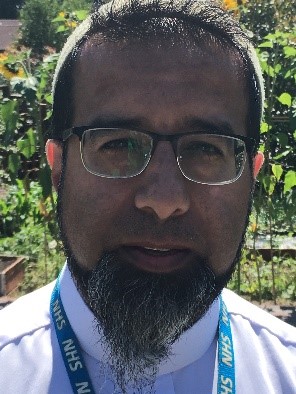
His talk on the Patient and Carer Race Equality Framework (PCREF) grounded the morning in the realities of policy implementation and accountability.

Aboobaker began by framing PCREF’s purpose:
“For too long, the mental health system has accepted racial disparities as inevitable. PCREF is about changing that narrative through data, transparency, and lived experience.”
He explained that every mental health trust must now implement the framework, which includes five pillars:
- Leadership and Governance – ensuring senior leaders are accountable for race equality.
- Workforce – addressing diversity, representation, and anti-racism training.
- Service User Experience – gathering honest feedback from racialised communities.
- Carer Experience – ensuring carers’ voices shape policy and practice.
- Data and Transparency – publishing progress openly.
Aboobaker mentioned Service User Experience, focuses on honest feedback and co-production with racialised communities. Aboobaker described how his Trust has built community partnerships with local Black churches, mosques, and cultural centres to gather authentic views.
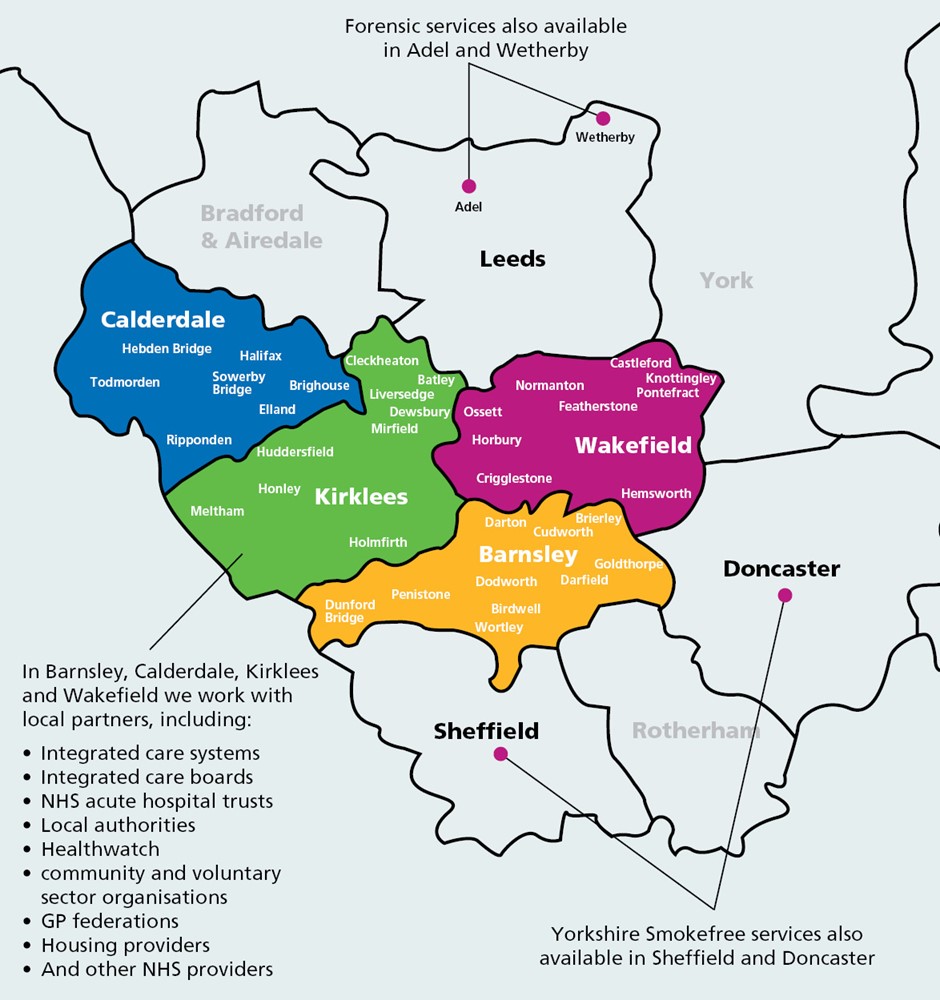
Here were the groups and organisations South West Yorkshire Partnership NHS Foundation Trust engaed with regarding PCREF
- African Caribbean Mental Health Association (ACMHA) – highlighted as a long-standing partner supporting carer engagement and advocacy within West Yorkshire.
- Kirklees Faith Network – a multi-faith partnership bringing together Christian, Muslim, Sikh, and Hindu leaders to discuss cultural safety and access to mental health services.
- Touchstone Leeds – a community-based mental health and wellbeing charity that has led on equality, diversity, and inclusion projects across Yorkshire.
- Muslim Women’s Council (Bradford) – recognised for its outreach to South Asian women carers and for hosting community listening sessions.
- African Caribbean Elders Group (Huddersfield) – a grassroots organisation working to tackle isolation and provide peer support to older carers in African and Caribbean communities.
- The Carers’ Voice Forum (South West Yorkshire) – a network of unpaid carers, many from ethnic minority backgrounds, who feed directly into the Trust’s PCREF steering group.
- Local mosques and churches, including Al-Hidayah Mosque (Dewsbury) and Mount Zion Baptist Church (Leeds) – mentioned as key venues for dialogue sessions and culturally sensitive engagement events.
Questions and Dialogue: Accountability and Carer Power
The PCREF discussion was one of the most engaging I’ve seen. Carers came forward with thoughtful, sometimes challenging questions — and Aboobaker responded with candour.
1. “How do we know PCREF won’t just be another box-ticking exercise?”
This question came from a long-time forum member who’s seen many equality strategies come and go.
Aboobaker replied:
“That’s the biggest fear — and the biggest motivator. PCREF requires public reporting and lived experience sign-off. In our Trust, we’ve embedded carer and community members into steering groups so they can challenge decisions directly.”
2. “How can carers report racial bias safely?”
Another participant asked about trust:
“When carers complain about racism, they’re often ignored or labelled as ‘difficult’. How do we change that?”
Aboobaker’s response was straightforward:
“We’re creating confidential reporting routes through community partners. We’re also training staff on bias recognition and communication so carers feel heard rather than dismissed.”
He added that cultural safety must become as important as clinical safety:
“If people don’t feel culturally safe, they won’t engage. It’s that simple.”
3. “Who monitors PCREF compliance across England?”
A question from another carer pressed on national oversight.
Aboobaker clarified that NHS England and the Care Quality Commission (CQC) now review PCREF progress during inspections. Trusts that fail to engage with communities can be formally challenged.
“This is the first time equality has been tied to regulation,” he noted. “It’s a turning point — if we make it work.”
Lessons from the Carer Voice
The conversation shifted toward the power of carer involvement.
Aboobaker shared that in his Trust, carers from African, Caribbean, and South Asian backgrounds now sit on PCREF panels alongside executives.
“Carers have moved from being guests in the room to co-authors of policy,” he said. “That’s the kind of shift we need everywhere.”
Participants responded enthusiastically, with several offering to link local carer groups to future PCREF consultations. This was a reminder of what the forum does best — connecting lived experience directly to people in positions of influence.
Closing Reflections: Black History, Racism, and the Way Forward
As we closed the session, I reflected on the day’s themes research, accountability, and identity.
We discussed how racism in mental health care remains an entrenched issue, but also how community-led initiatives like OSMOSIS and frameworks like PCREF represent progress. Both rely on co-production, transparency, and trust, which are three pillars that have long been missing.
I reminded participants that Black History Month is not just a time for remembrance, but a call to action as I showed my awareness video, which has been ranked high in google search.
“We can’t change systems without changing culture. And culture changes when carers, families, and communities take up space like we do here every month.”
The chat filled with thank-yous, links shared, and promises to collaborate beyond the session, the next group for november is below.

We ended on a note of unity not naive optimism, but collective resolve.
As one carer summed it up beautifully:
“Every time we meet, we take another step from being invisible to being indispensable.”
Matthew McKenzie
Facilitator, National Ethnic Mental Health Carer Forum
info@caringmindblog.com
www.caringmindblog.com
 A Caring Mind