Matthew McKenzie FRSA BEM – Caring Mind
If you support someone who has received care in a secure mental health hospital or from a community forensic mental health team, what questions would you most like researchers to answer?
Richard Keers got in touch to ask me to share the second survey from a James Lind Alliance Priority Setting Partnership. It’s an opportunity for people who have used these services, unpaid carers and staff to help decide what future research should focus on across England, Scotland and Wales.
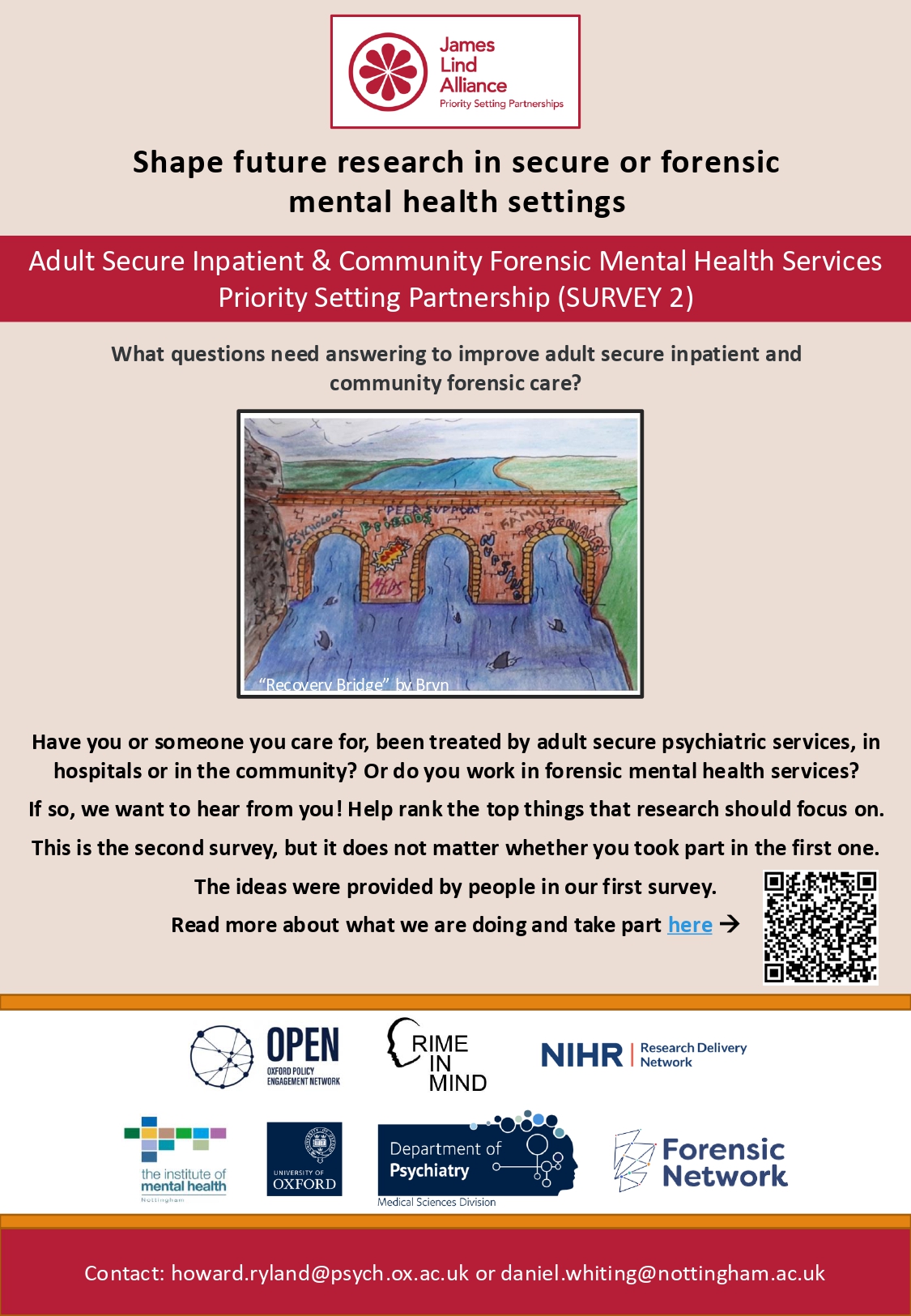
More than 300 people contributed to the first survey. The team brought their suggestions together into around 50 questions. This second survey asks you to help rank which questions matter most. You can take part even if you missed the first round.
Who can take part?
- People who have received care from adult secure inpatient or community forensic mental health services.
- Family members, friends and other unpaid carers who support someone who has received care from these services.
- Staff who work or have worked in these services.
Through my work with mental health carers, I hear how much families learn from supporting someone through hospital care and the move back into the community. Carers see where communication helps, where support falls away and what happens between appointments. Those experiences can help shape the questions researchers ask.
Take part in the forensic mental health research priorities survey
For questions or to ask about paper copies, contact Howard Ryland or Daniel Whiting.
If you’re part of a carers’ group, a carers centre or a mental health service, please share this post or the survey poster with people who may want to take part.

