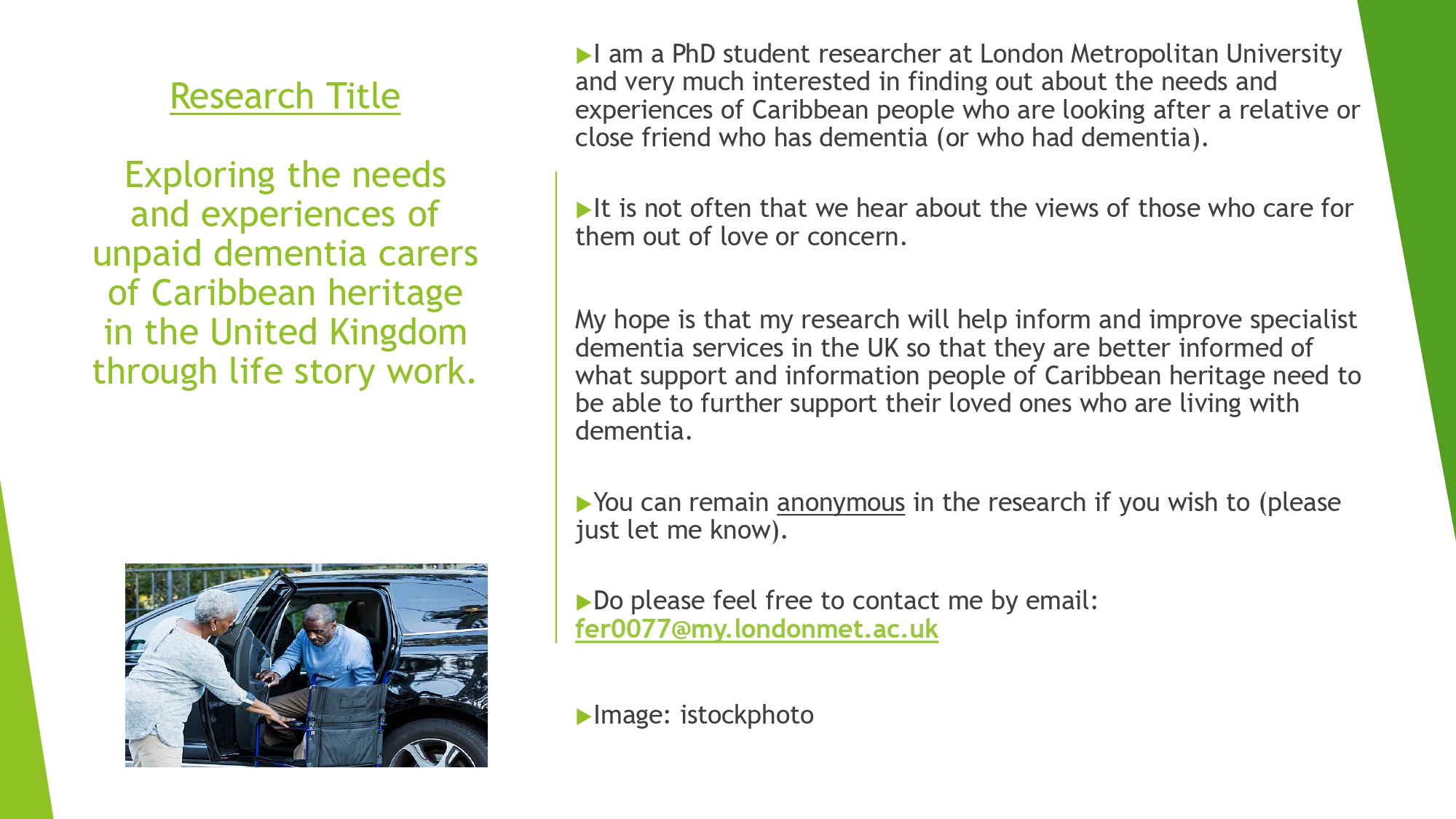
An exciting new research opportunity for Caribbean heritage dementia carers. Feyi Abraham a PhD student researcher at London Metropolitan University is looking for carers to share their experiences.
Please view the poster below or contact fer0077@my.londonmet.ac.uk for more details.
Welcome back to another blog post from carer activist Matthew McKenzie. Did you know it is ADHD Awareness Month?
To watch the video of the blog, please view below.
Understanding ADHD: An Overview
Attention Deficit Hyperactivity Disorder (ADHD) affects millions of individuals worldwide, impacting not only those diagnosed but their families, friends, and caregivers. ADHD is characterized by symptoms of inattention, hyperactivity, and impulsiveness, which can significantly impair daily functioning in various spheres of life, including school, work, and relationships. Every October, ADHD Awareness Month is observed to shed light on this condition, promote understanding, and advocate for better support systems. The theme for 2024 is “Awareness is Key,” emphasizing the importance of knowledge in fostering support and empathy.
The Importance of Education
Empowering Through Understanding
One of the most crucial steps in supporting someone with ADHD is to educate yourself about the condition. Understanding ADHD, its symptoms, and its challenges can foster empathy, patience, and a supportive attitude. Knowledge truly is power. The more you know about ADHD, the better equipped you are to provide the necessary support. This includes learning about common behaviors, the impact of ADHD in daily life, and effective management strategies.
Promoting a Learning Culture
Families, schools, and workplaces should prioritize awareness and education about ADHD. Regular training sessions, workshops, and informational resources can significantly improve how people understand and interact with those affected by ADHD. When communities are informed, they can collectively create more supportive environments.
Creating Structure
The Power of Routines
Establishing routines and daily schedules offers predictability and stability for individuals with ADHD. Structure can provide a sense of security, helping to manage time more effectively and reduce feelings of overwhelm. Visual aids such as calendars, planners, or to-do lists can be extremely helpful in keeping track of tasks and responsibilities. These tools can serve as constant reminders and help individuals prioritize their actions.
Breaks Are Essential
Regular short breaks are crucial during tasks. These breaks allow individuals with ADHD to recharge and maintain their focus. It’s not about working less, but about finding a balance that promotes productivity and reduces fatigue. Identifying the optimal schedule for breaks can make a significant difference in performance and overall well-being.
Effective Communication
Concise and Specific Instructions
When giving instructions to someone with ADHD, it’s important to be concise and specific. Using clear and simple language, avoiding unnecessary details, and breaking tasks into smaller, manageable steps can make a huge difference. This approach ensures that instructions are understood and followed more easily, leading to better outcomes.
Minimizing Distractions
Creating a calm and focused environment is paramount. Reducing noise, limiting visual distractions, and providing a quiet space can significantly improve the ability of individuals with ADHD to concentrate. Environmental modifications might include soundproofing a room, using noise-canceling headphones, or setting up a dedicated workspace that is free from interruptions.
The Power of Personal Stories
Insights from Lived Experiences
Personal stories are incredibly powerful in understanding ADHD. Hearing from individuals with ADHD and their caregivers can provide valuable insights and foster empathy. These stories highlight the real-world challenges and successes of living with ADHD, offering practical advice and hope.
Case Studies
Sarah’s Story: Sarah struggled in school until she found a teacher who understood ADHD and adapted her teaching methods. This timely intervention made all the difference, helping Sarah excel academically and boosting her self-esteem.
Jake’s Journey: As a carer, Jake found solace in a local carer support group. Connecting with others who understood his challenges provided him with coping strategies and a sense of community. This network of support was instrumental in helping him manage his caregiving responsibilities.
Advocating for ADHD Awareness
Community Engagement
This ADHD Awareness Month, let’s commit to raising awareness and advocating for those with ADHD. Small actions, such as sharing information, participating in community events, and supporting advocacy groups, can lead to significant changes. Community engagement helps build a support system that is informed, compassionate, and proactive.
Educational Campaigns and Resources
Supporting ongoing educational campaigns and providing resources can help spread awareness and understanding. Schools, workplaces, and community centers can play a pivotal role by organizing seminars, distributing literature, and facilitating support groups.
Conclusion
ADHD Awareness Month serves as a crucial period for promoting understanding and support for individuals with ADHD. By educating ourselves, creating structured and supportive environments, and listening to personal stories, we can become better allies. Let’s take this opportunity to make a positive impact. Awareness indeed is key—it opens doors to empathy, effective support, and advocacy.
If you found this content helpful, consider sharing it to spread awareness further. By working together, we can make a significant difference in the lives of those affected by ADHD.
Welcome back caregivers. I have some exciting research involvement for you.
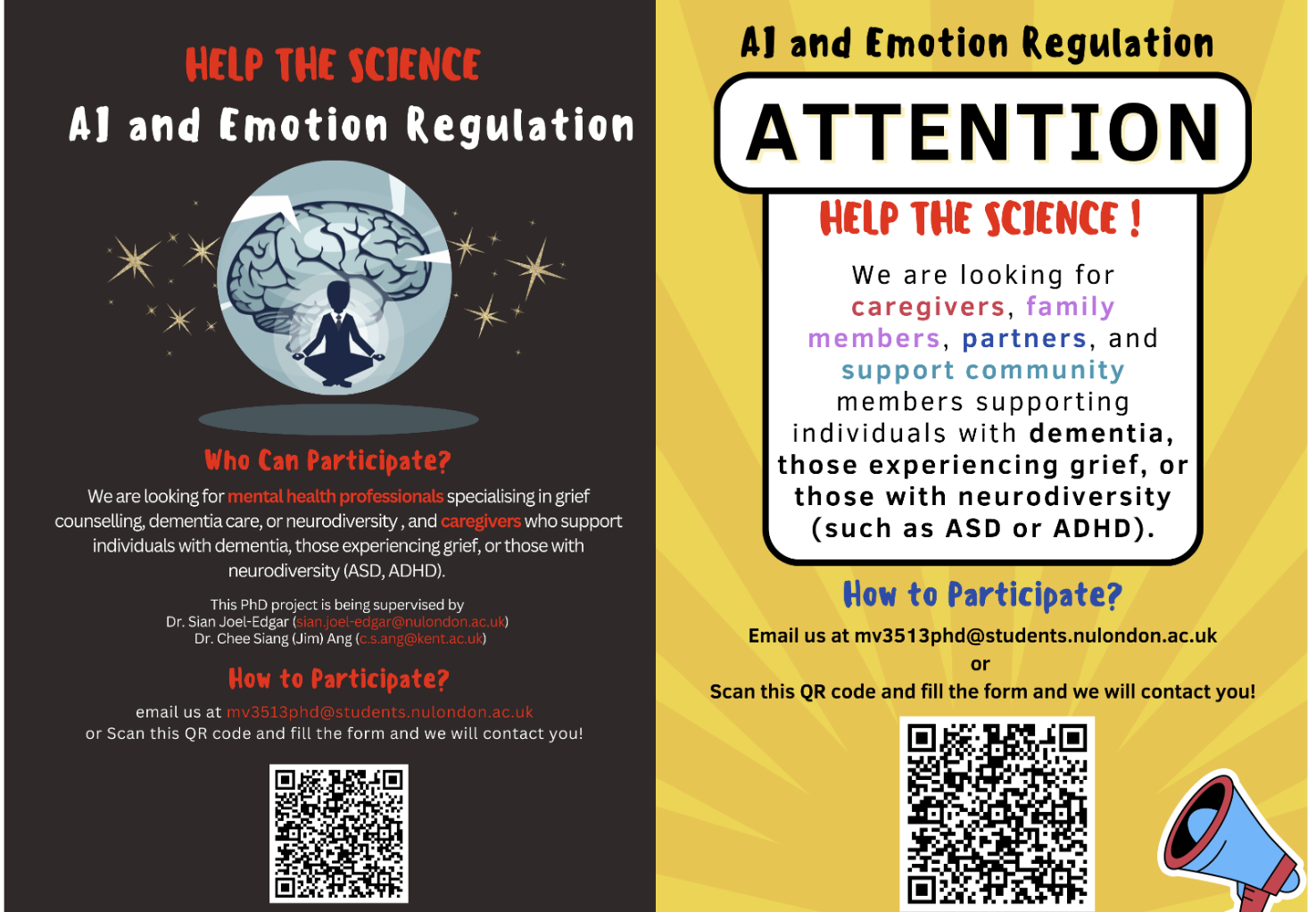
Melika who is a PhD student at Northeastern University London & University of Kent. Is currently conducting a study on AI-facilitated emotion regulation, which focuses on co-designing AI prompts with input from clinicians, developers, and support community (caregivers).
click on the posters below for more details about the study
Welcome back to another update from Carer activist Matthew McKenzie. I have some exciting research in which carers can feedback their experiences.
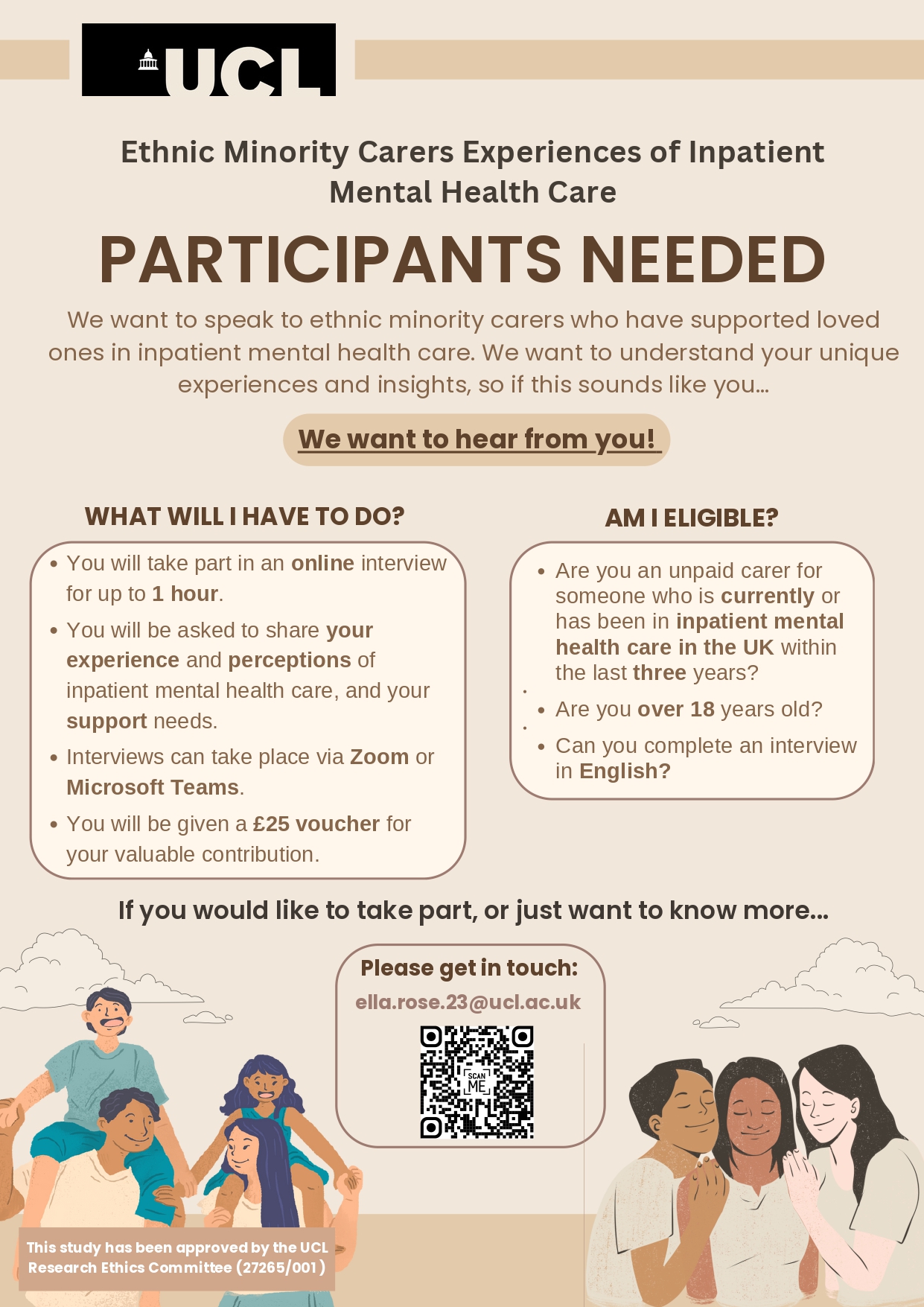
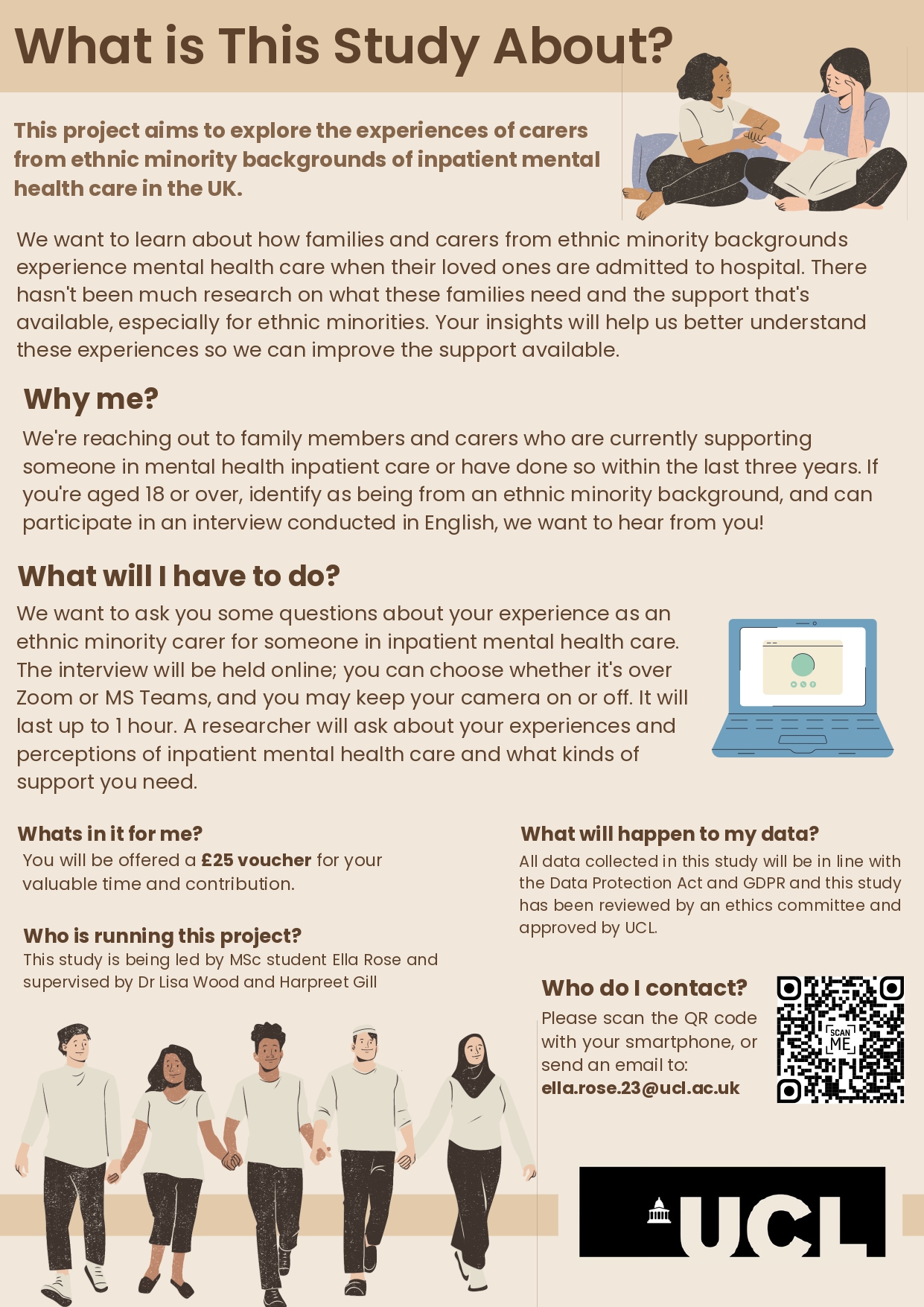
Ella Rose a researcher from University College London is conducting a study focusing on the experiences of carers from ethnic minority backgrounds of inpatient mental health care in the UK. There are currently very few studies documenting the experiences of ethnic minority carers of mental health services. She hopes this study will fill an important gap in current research and help identify the specific needs of ethnic minority carers, and how services can best support them.
Participation in this study will involve a one-hour interview to discuss their experiences as carers of a loved one receiving inpatient mental health care in the UK, their views, and their support needs. She is recruiting individuals over 18 who identify as being from an ethnic minority background and who are carers for someone currently or previously admitted to inpatient mental health care within the last three years. As a thank you for their time, she will offer participants a £25 voucher.
To take part in the study please see the poster below or email Ella at ella.rose.23@ucl.ac.uk
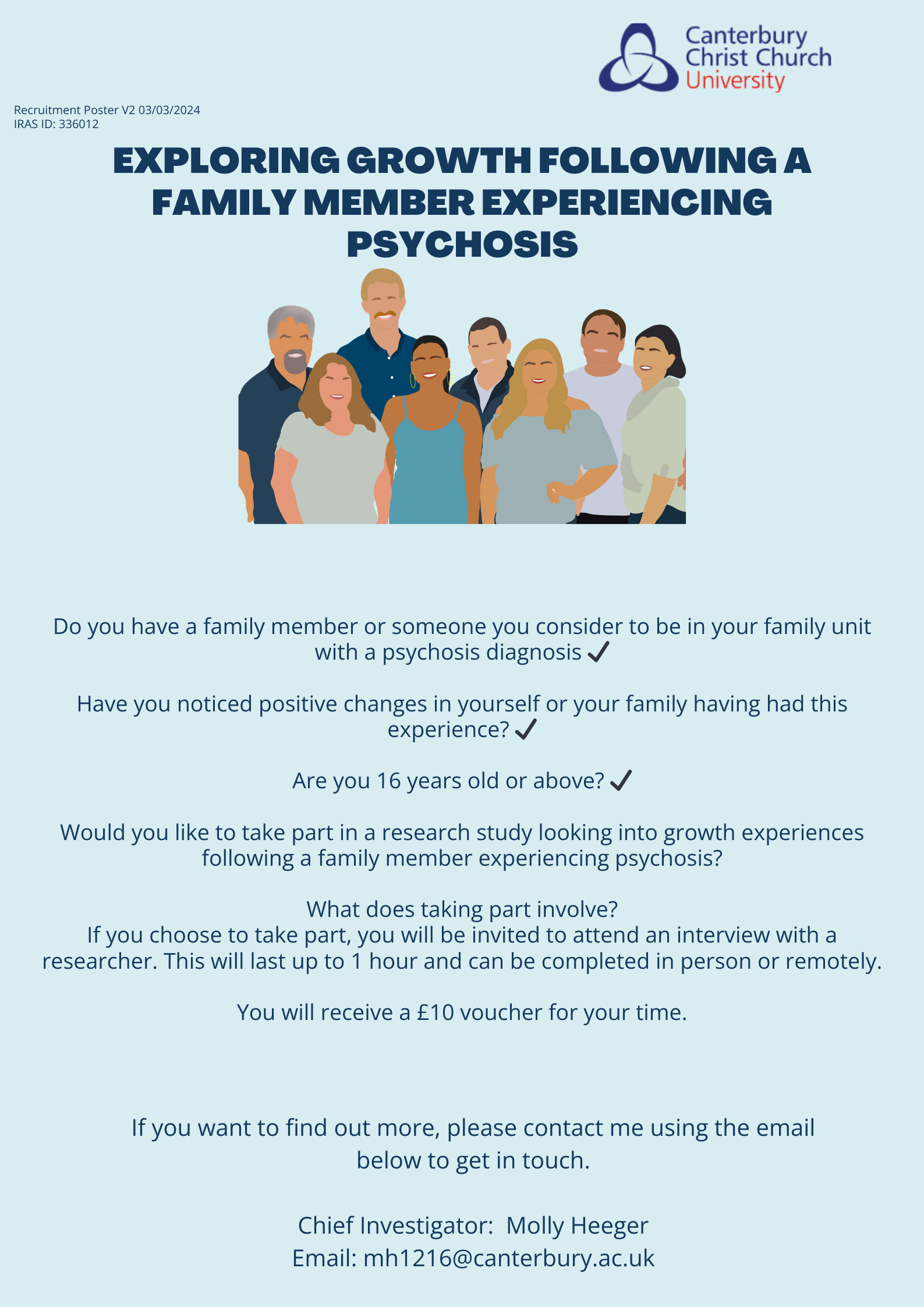
Latest blog post by Matthew McKenzie on this exciting new research study from Molly Heeger who is a Trainee Clinical Psychologist from the Salomons Institute for Applied Psychology.
She is recruiting for her research project exploring family members experiences of supporting someone with psychosis. If you are caring for someone suffering from psychosis and would like to be involved in the study, please see poster below.
You can contact Molly through the following email : mh1216@canterbury.ac.uk
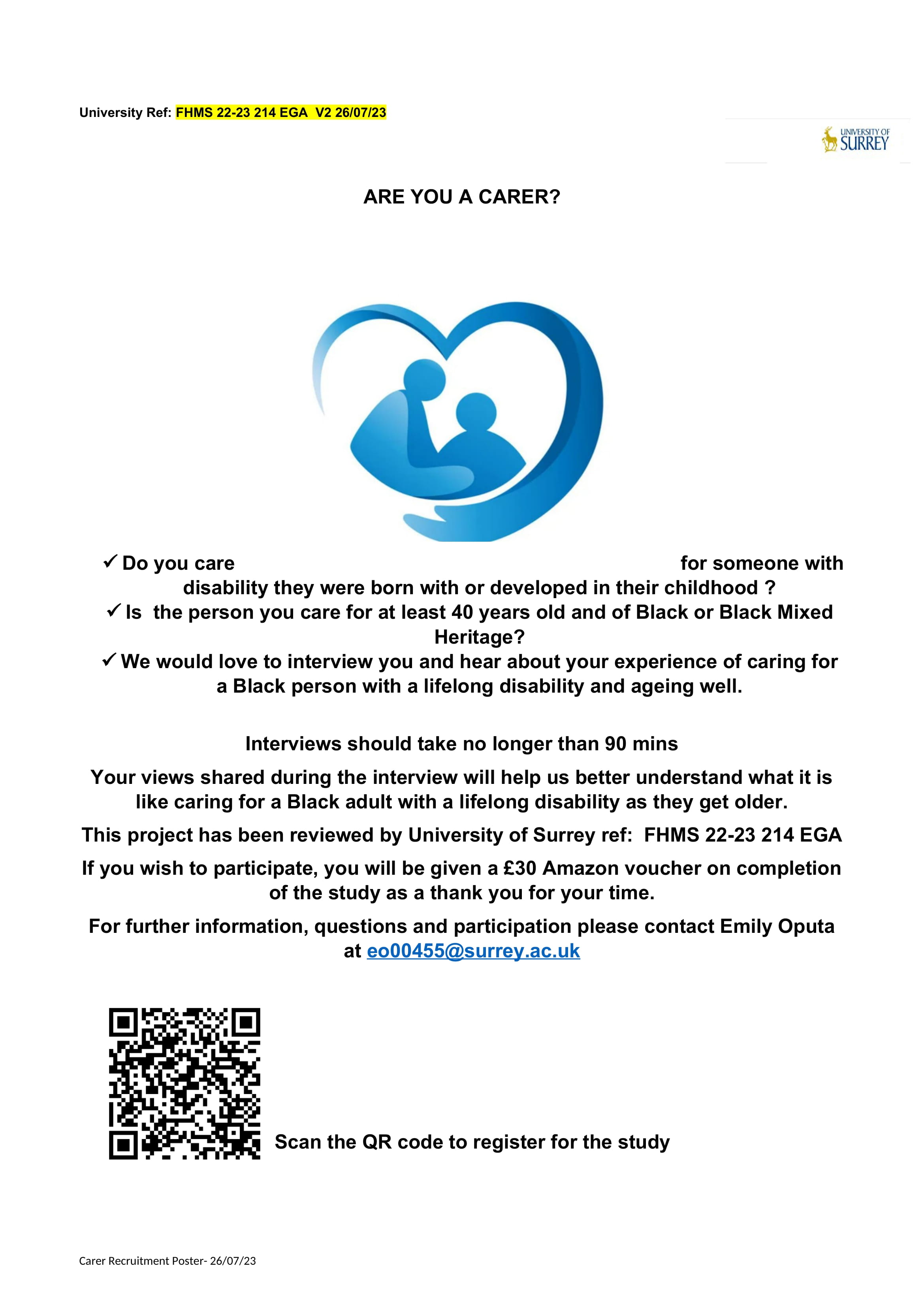
Welcome carers. Another new research project for unpaid carers to get involved and feedback their lived experience. This research is from Emily Oputa who is doing her Postgraduate Research in Psychology. She is studying at the University of Surrey.
Emily would like to interview carers and hear about their experience of caring for a Black person with a lifelong disability including ageing.
If you want to give your views please contact Emily Oputa at eo00455@surrey.ac.uk
Welcome to another blog post by Matthew McKenzie promoting research from psychiatry and psychology.
There is new research taking place at the institute of Psychiatry, Psychology and Neuroscience. They are working on a new way of Virtual training for unpaid mental health carers.
People with lived experiences of mental health problems, such as psychosis, can have a range of experiences that might include worrying or unusual beliefs about other people, themselves and events. These experiences can sometimes influence their styles of communication with other people, including close friends and relatives. Families and friends (sometimes collectively described as carers) are an important source of support to people living with psychosis. This caring role can be challenging, especially when communication might feel confusing and difficult. As such, carers understandably often want their own help on how best to provide support particularly in terms of identifying helpful communication styles.
In the study the IOPPN will look at whether it is possible to use a new virtual reality (VR) training programme designed specifically for carers of people with lived experiences of psychosis. By carrying out a smaller study, the research will want to see if a larger study would work in the future. The training will aim to guide a carer’s development and use of helpful communication styles with their relative with psychosis.
For more details see poster below.
If interested please contact
Laurence Rogers (Trainee Clinical Psychologist; Laurence.p.rogers@kcl.ac.uk) Department of Psychology, King’s College London Institute of Psychiatry, Psychology and Neuroscience De Crespigny Park Denmark Hill London SE5 8A
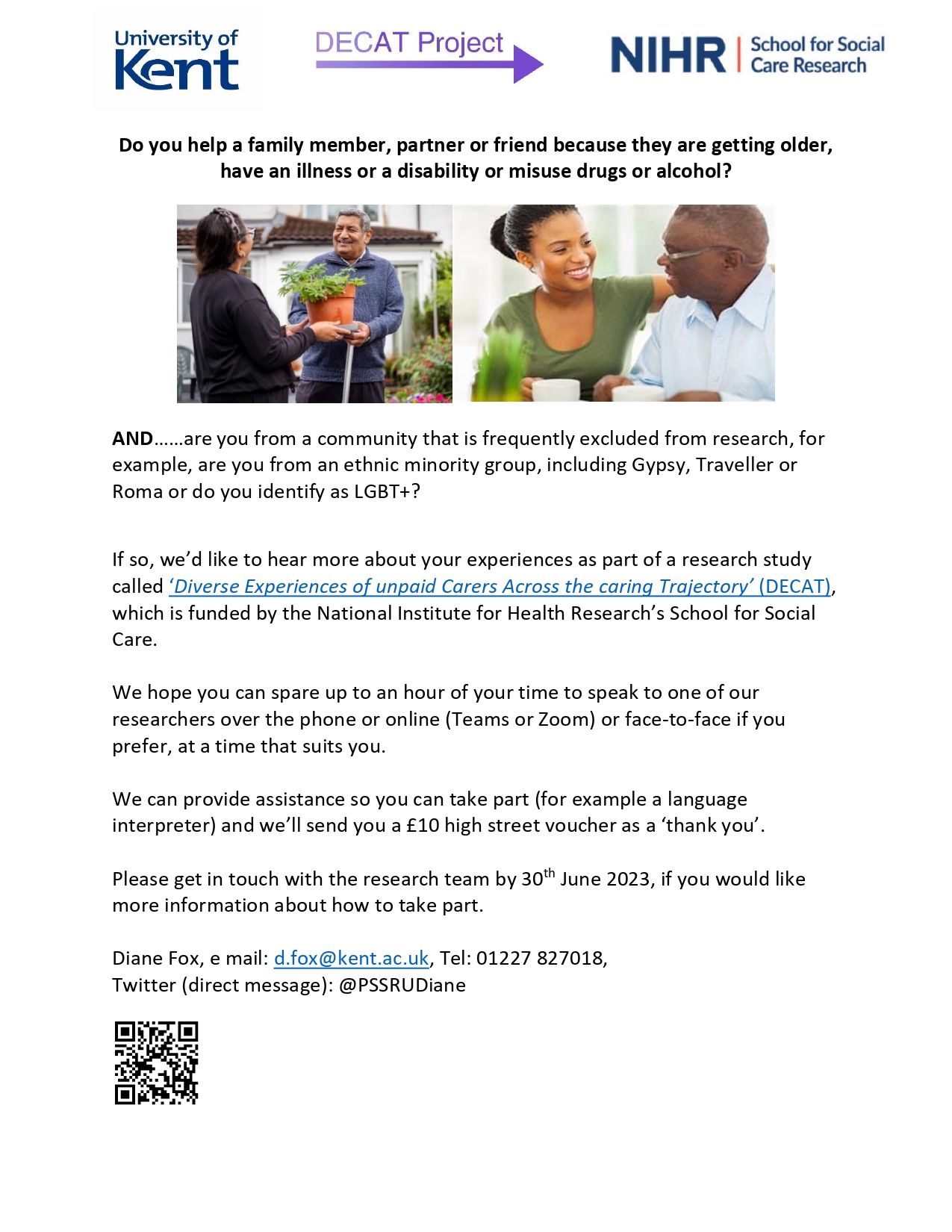
A new research project is underway at the University of Kent. The research is called Diverse Experiences of unpaid Carers Across the caring Trajectory (DECAT). DECAT is looking for carers to take part in a telephone interview about their experience of being a carer. Currently, Black and Asian carers and carers who are LGBT+ are under-represented within our participants.
The main aim of this study is to understand the factors linked to carers’ satisfaction with social services and quality of life over time.
A questionnaire will be sent to a sample of carers recruited via four local authorities containing questions previously collected in the 2018/19 Personal Social Survey for Adult Carers in England, plus additional questions. The degree to which carers’ satisfaction and quality of life scores differ from scores collected in 2018/19 will be examined. Factors associated with changes will be explored and the scores of subgroups of carers will be compared.
You can contact Dr Diane Fox
Contact
Diane Fox University of Kent Personal Social Services Research Unit Cornwallis Central Canterbury Kent CT2 7NF
Hello fellow carers. New blog from Matthew McKenzie
I have a new research project for those from ethnic backgrounds to get involved in.
This research study is to understand the occupational experiences of unpaid BAME unpaid mental health carers. Occupation refers to the purposeful activities that ensure individuals have a sense of identity and live independently.
What is the purpose of the study?
Using the OPHI-II semi-structured interview will provide an exploration of the occupational choices, critical life events, daily routine, occupational roles and environment of the BAME mental health caregivers. This will provide insight into the respective communities’ occupational experiences.
For more details you can contact Halima Ali Email: 2051364@brunel.ac.uk or see poster below.
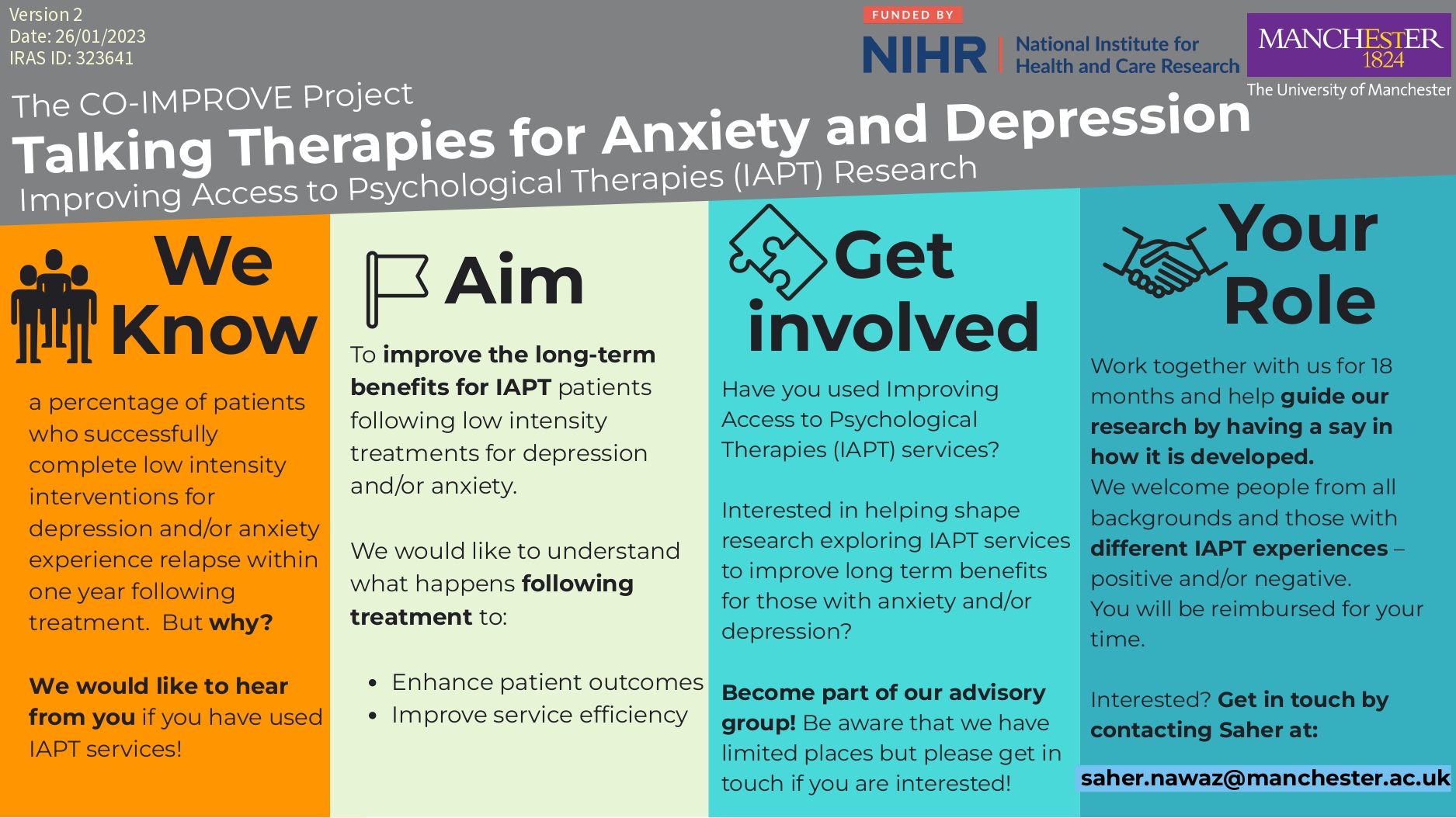
There is an exciting opportunity for mental health carers and those who have used Increasing Access to Psychological therapies.
Have you used Improving Access to Psychological Therapies (IAPT) services?
If so, you might be interested in helping shape research exploring IAPT services to improve long term benefits for those with anxiety and/or depression. A new Advisory group is forming, but there are limited places.
Please see poster below.
For more information please contact saher.nawaz@manchester.ac.uk