Category Archives: Uncategorized

Croydon’s Hear Us Open Forum – March

Hello Everyone, welcome to another of my blog posts and this time I am covering an event or forum shall we say. This open forum is from Hear-Us. Now “Hear US” is Croydon’s Mental Health Service User Group. They act as a coordinating body to facilitate, and ensure service users involvement in, the planning, delivery and monitoring of mental health services in Croydon.

logo

So on Tuesday 1st March 2016 I was back at the CVA centre in Croydon. I guess It has been a while since I was over there.

Continue reading

National Eating Disorders Awareness Week

ribbon

Welcome to another blog post by mental health carer Matthew Mckenzie. Sometimes I write about coping as a mental health carer, other times I ll review an event or lecture, but I think its about time to raise some awareness. Of the time of this blog post, it is National Eating Disorder Awareness week, usually runs near the end of February.

Continue reading

Review on How Perspectives Influence Us

Welcome to another blog post from Matthew Mckenzie a carer from South London. I thought to do another lecture review from the course “Perspectives On Abnormal Psychology”. The course is taught by Drew Westen who is currently the professor in the Departments of Psychology and Psychiatry.

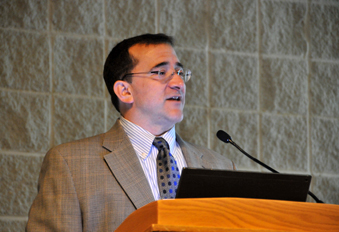
Drew Weston

Professor Drew Westen

Professor Drew received a Bachelor of Arts from Harvard University, then went on to the University of Sussex (England), and also received a Doctor of Philosophy in clinical psychology from the University of Michigan.

I want to go through lecture 1 from this course which looks into How Perspectives Influence Us

Dr Drew Opens the lecture talking about Phrenology and how researchers “if you can call them that” were trying to find out the relationships between skull size, personalities and brain structures.

Continue reading

Carers Rights Day 2015

Hello again and welcome to another blog post from Mental Health Carer Matthew Mckenzie. As of this blog post, today is Carers Rights day 2015. The theme for carers rights day 2015 is “Looking after someone”.

However what is Carers Rights day all about?

Basically a carer is someone who is looking after someone and I mean not a professional paid carer, but those who are unpaid and are not always receiving the support that can be so desperately needed.

Continue reading

Review of play – So You Think I am Crazy?

Welcome to another blog post from Matthew Mckenzie a carer in Lewisham, On the 13th of March I took a trip over to the Albany theatre in Lewisham.  I heard there was a play regarding the journey of a young black man through the mental health system. I had booked my tickets to see the play.  The play was called “So you think I am Crazy” and I heard the play was shown over in the London Borough of Croydon and also played at the Maudsley Learning Centre in 2014.

Here is a video of the review if you wish to sit and watch instead of having to also read the blog.

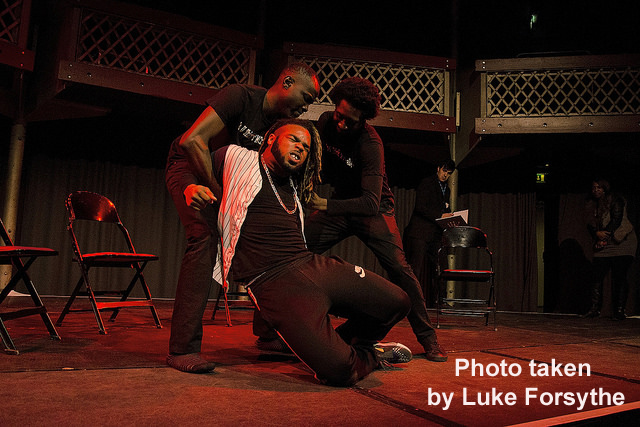
I was very excited to at last have a chance to see the play which is directed and written by Ekanem Hines. The play on Friday also got a donation by Quo Vadis Trust & Equinox Lewisham.  The play originated from a group of carers.  On that evening the play sold out as news travelled about how good the play was.  The play delivered various songs, powerful thought provoking scenes and rap throughout the night, however being a carer myself of someone who uses the mental health services, what were my thoughts about the play?

6Take to Seclusion copy

I do not want to spoil the play, but I felt it was very hard hitting. Half way through the play you actually begin to wonder about the title of the play “So you think I am crazy?”.  You begin to question to yourself if not only the mental health system, but also society would need to take a long hard look at itself.  Each scene looked deeply at the intentions of those who are unfortunately struggling to work out who is unwell and the reasons for the illness, but the resources are clearly not provided to tackle the stigma and discrimination within society and the mental health system.

Stop 'n Search

As I sat throughout the play thinking how easy it would be for me to turn from carer to someone using the services, plus the added stigma of me as a black male.  I would be lying if the system had not judged me for being unpredictable, maybe violent, untrust worthy and even so far to go as crazy.  Still, throughout the play I felt proud that I have kept my patience with those who have judge and will continue to judge based on my own difficult journey as a carer.

The problem is that society takes strong and caring people, breaks them down and many end up within the mental health system where many are vulnerable.  To make matters even more difficult, they have to focus on recovery and yet many in society will continue to judge those who are not only broken in spirit, but also in the mind.  So thus we have the added stigma and discrimination of those who not only behave unwell, but are deemed to look out of place.

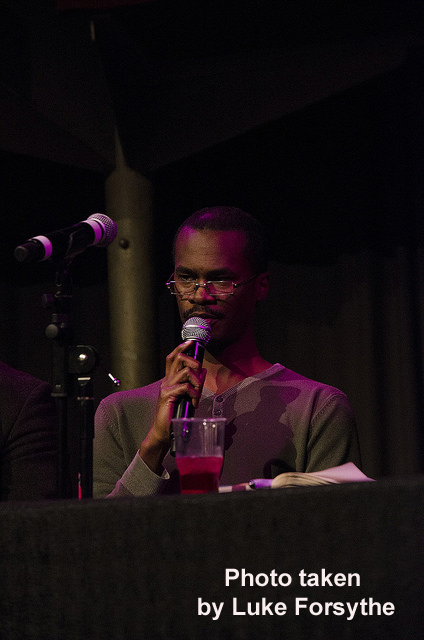
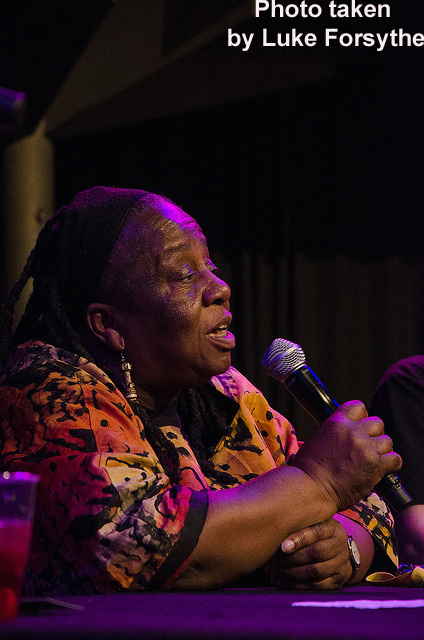
As I sat on the panel at the end of the play, I was proud and delighted to sit next to prominent figures such as

Marcia Riggs
Sephton Henry
Peter Wilson
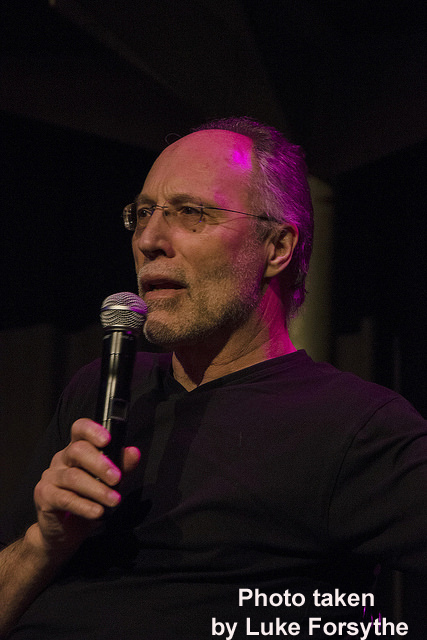
Dr. Ayonrinde
Ekanem Hines

Peter Wilson copy Matthew McKenzie copy Marcia Rigg copy Director & Author - Ekanem Hines copy

I thought long and hard about my answer to the audience as deep thought provoking questions and answers were explored about the theme of the play and tackling such difficult subjects. My answer to the audience is that each time we seek to understand the battle between mental health, race and society, we can only gain from this.

We need to congratulate ourselves for taking the time to understand other people’s journeys. We must EDUCATE ourselves and question prejudice, stigma and discrimination, hence the title of the group “kNow My Mind”. If we take the time to learn about mental health, raise awareness and tackle stigma then we can truly battle the idea of who is crazy and who isnt.

Caring – What it means to me

I was so chuffed to be asked by Matthew to do a guest blog. Matthew is such a star raising awareness about carers’ issues that I feel honoured that he has asked for my views!

I regularly do a slot at Corporate Induction for South London and Maudlsey NHS – “What it feels like to be a carer?” . It is great to have a “captive audience” to get the message across about the valuable work that carers do and how involving them has a real potential to make the medical professionals’ job easier – not more complicated as is often believed to be the case.

Continue reading

Moral Luck – Choice and Chance

Welcome to my first review from a lecture I picked up this course from the teaching company called “Questions of Value”. This lecture although rather deep, is quite a fairly good start to my blog since it involves ethics, something family, carers and the community can become involved in from daily situations.

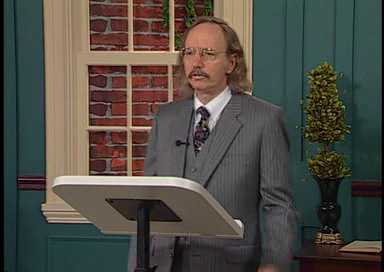
The course is taught by Professor Patrick Grim from State University of New York.
Professor Patrick Grim

Within this particular course I look at lecture 19 out of 24 called “Choice and Chance”. Here this particular lecture looks at how the role of luck affects ethics and morality. We explore in this lecture Is life a mere matter of luck?

First the lecture explores why Immanuel Kant a famous philosopher thought that luck plays no role in mortality, Kant thinks that it is the good will that’s important and luck should not be a factor in moral decisions.

Embed from Getty Images


Here is a passage where Kant explains why he feels Luck has no place in the idea of moral decisions.

“A good will is good not because of what it effects, or accomplishes, not because of its fitness to attain some intended end, but good just by its willing, i.e. in itself; and, considered by itself, it is to be esteemed beyond compare much higher than anything that could ever be brought about by it in favor of some inclinations, and indeed, if you will, the sum of all inclinations.”

However Prof Patrick feels moral value of an action CAN depend on mere luck, there are factors of luck that can affect the outcome of an action. Some outcomes can be favourable, while others can cause disaster.


This lecture explores how morality is open to chance and for most of the lecture, Prof Patrick concentrates on factors of the law. We have several examples where ethics and the law are open to dispute. A good example brought up in the lecture was for instance the idea of crime of murder and the idea of attempted crime. The law has varying levels of different punishment, hence the act of attempted and the act of murder carried out.

Prof Patrick poses several questions
– How can these cases be treated so differently?
– What the person was trying to do, if successful?

Patrick starts that attempted murder may be unsuccessful because something outside your control could have happened e.g. Luck or something deeper that changes the outcome.

so here we have the law which allows one person to be executed to death, and the other is in jail a few years. The lecture looks at what how much of a difference that the mere amount of luck plays. Plus it seems unfair because of the ethical differences, but mainly just down to chance.

The lecture looks at the idea of intent, for instance when two drunken men fight in a bar and one yells out “I ll Kill you” and pushes the other man far back, which leads to the man falling and cracking his skull. We are asked what was the intent?

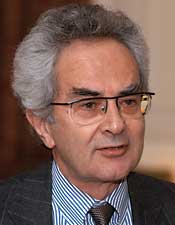
Another view from a philosopher Thomas Nagel, feels something seems unfair about this. Thomas feels moral luck does play a part in ethics and how it affects us. Thomas explored the ideas of 4 types of moral luck.

Being : –

Circumstantial Moral Luck
Constitutive Moral Luck
Causal Moral Luck
Resultant Moral Luck
thomas-nagel

The lecture examines the idea of “Resultant Moral luck” further by exploring the following example.

A speeding truck driver runs over a person, the driver will feel bad about this, however the truck driver can be negligence if he did not check his truck’s tires. While another truck driver also drives dangerously, but for him, even though he was speeding as well, the person was crossing on the road at the time.

Although negligence seems to be the case for both examples, the main difference is that outside forces e.g. the person being on the road must have played a part in how luck can affect the outcome.

Nagel shows our moral values can be self contradictory and he feels Kant conclusion of moral luck is unacceptable. However there are still some problems with this conclusion, the course feels Nagal is wrong, and there is a deeper level of ethics and intuition that plays its part in the human condition. Sometimes the legal system struggles take these factors into account because of the cost of social resources.

Embed from Getty Images


The lecture also looks into the problem of how social machinery operates, where we all know that no social machinery operates flawlessly, we are all prone to error. The social machinery design to present harm, can actually cause harm as it sways from one factor to another in balancing social issues.

So the fine line between the truck drivers is that they have both done something wrong, whether or not the person dies…which leads kant to be roughly right, but the social machinery needs to fit in to this structure, which it sometimes does not do.

How can this relate to families and carers? How can moral principles affect how society views them. we all question ourselves about if we are negligent towards our loved ones. We wonder if they suffer more because we have made the wrong decision. I sometimes feel that as a carer it is not possible to cover all bases, sometimes carers are in a position where outside factors can affect the result of care.

Embed from Getty Images

The lecture states that Morality has a social machinery as well, some moral principles are maybe too difficult to frame without expecting people to apply them without moral error.

The lecture finally looks at the problem of the transmission of ethical principles from generation to generation, such principles need to be generally effective and easily taught. Not all can be easily transferred, some are just not quite right where legal frameworks can also fail. for instance the idea of inherent wrongness cannot be easily identified.

There are problems where there are levels of social complexity in morality. The law also has is own problems because of social complexity. Prof Thomas feels that we have to take into account that some of our moral conditions or intuitions are far deeper than others, but the difficultly is identifying the ones that form some truth against the easy principles.

Psy Med Update September 2014

I am in a group of around 15 people with a special interest in
emergency mental health services (eg A&E psychiatric liaison or home treatment), and mental health services where there are links with physical health (eg eating disorders, chronic fatigue, brain injury). We are interested because we have direct experience of using these types of services or of supporting someone who does.

We meet monthly and work with managers and clinicians to keep the views of
service users & carers at the heart of all service developments and improvements. 10 of us were at the September meeting along with senior staff including the Clinical Director, and the Service Director.

Click Below to view our latest newsletter

September newsletter 2014