By Matthew McKenzie – Chair of Ethnic MH Carer forum
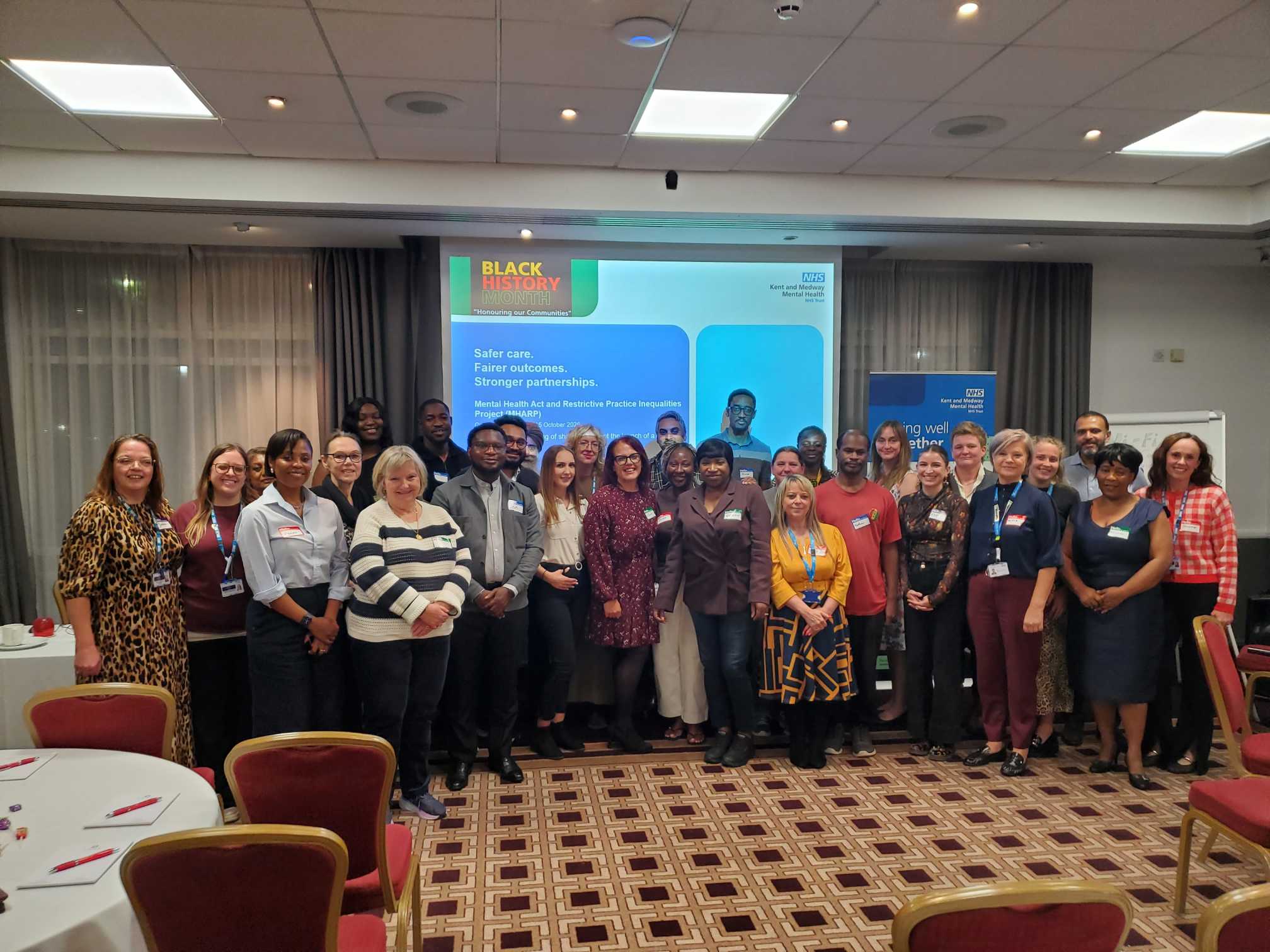
On Thursday 15 October 2026, I attended an evening event hosted by Kent and Medway Mental Health NHS Trust, bringing together staff, community representatives, faith voices and people with lived experience to discuss racial inequalities in mental health care, although I attended as Chair of the National ethnic mental health carer forum, It was also lovely to be joined by Beata Bikowska and Tina Stevens from Cygnet Hospital Maidstone, alongside NHS colleagues and community partners, for this important conversation on tackling mental health inequalities.
The evening launched the Mental Health Act and Restrictive Practice (MHARP) project, which is exploring ethnic inequalities in Mental Health Act detentions and restrictive practices across Kent and Medway.
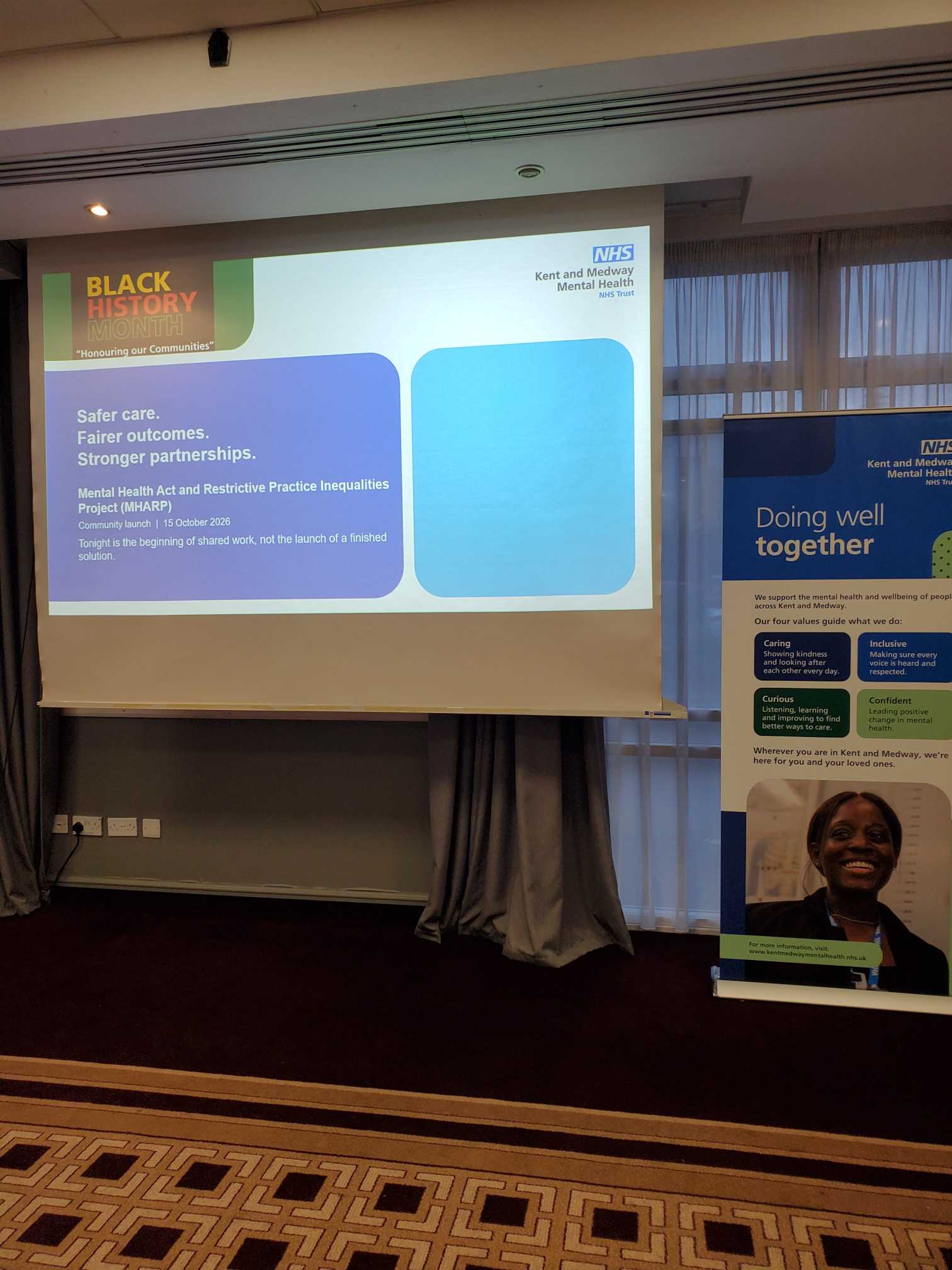
As a Black mental health carer and carer activist, these conversations matter deeply to me. Behind every discussion about detention, restraint or seclusion are people, families and communities whose experiences deserve to be heard.
Beginning the work together
Shannon Paine, Corporate Head of Nursing and Quality, and her colleague Jackie introduced the project and explained why this work was needed.
An important message ran through the evening: this was the beginning of shared work. The Trust was inviting people to help understand the problems and shape what should happen next.
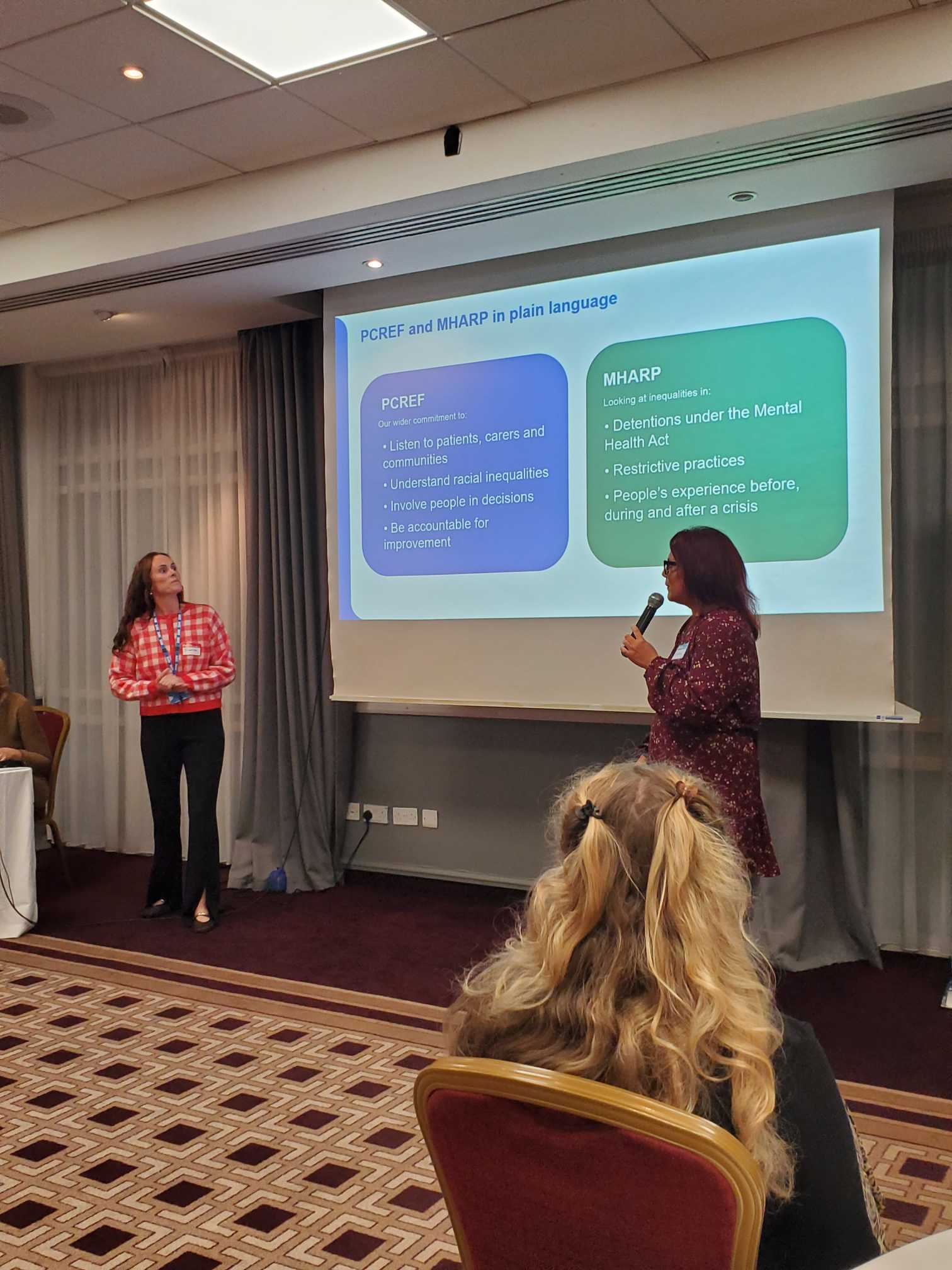
We also had Kamila Lobuzinska, the Trust’s PCREF Lead and Patient Equity and Health Inequalities Lead, whose work supports the wider commitment to addressing racial inequalities and involving patients, carers and communities in shaping improvements.
Shannon’s invitation had explained that the project was in its analysis and engagement phase. Staff, service users, carers, communities and partner organisations were being asked to contribute their understanding of experiences, care pathways and the factors that may contribute to inequalities.
That approach matters. People affected by services need opportunities to influence decisions while those decisions are still being formed.
Being honest about inequalities
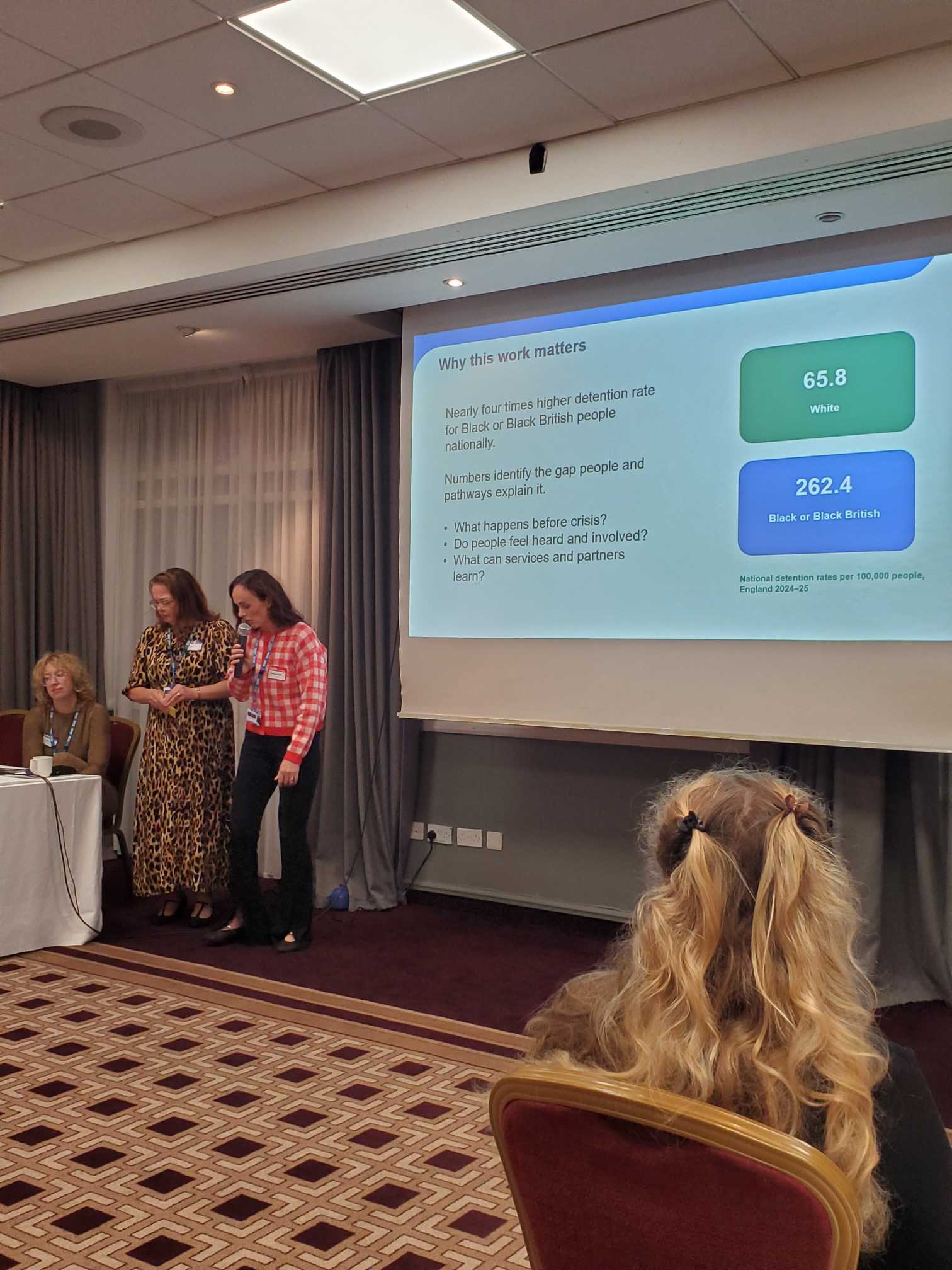
The presentations described how the Trust had reviewed its 2024–25 data and identified inequalities affecting Black patients in detention and restrictive practices, including restraint and seclusion.
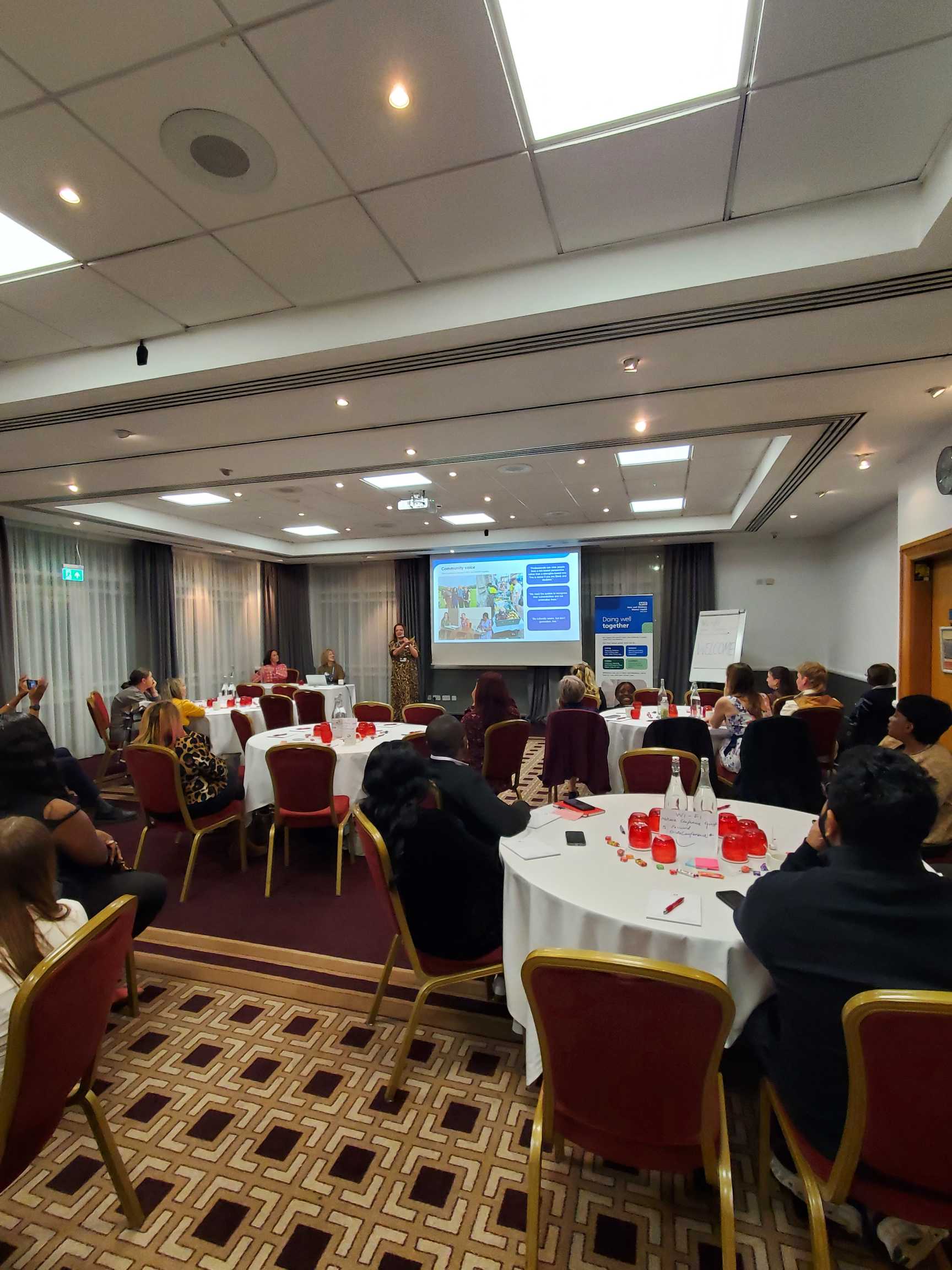
There was a willingness to acknowledge difficult questions about bias, institutional racism and how services operate.
Recognising a gap in the data is an essential step. Understanding how people arrive at that point requires listening to their experiences: what happened before admission, whether support was available early enough, how concerns were understood and how people were treated when they sought help.
The speakers recognised that this could involve uncomfortable conversations. Those conversations are necessary if services are serious about change.
Bringing PCREF into practice
The evening also explored the Patient and Carer Race Equality Framework, known as PCREF.
The discussion focused on how care is experienced, how staff experience working within the organisation and whether those experiences differ for people from racialised communities.
There was an emphasis on openness, involvement and accountability. Communities should be able to hear what the organisation is learning, what action follows and whether that action is making a difference.
For me, this is where PCREF becomes meaningful: when it influences relationships, decisions and everyday care.
Community voices and earning trust
Some of the most powerful contributions came from community speakers.
We heard about loneliness, food insecurity, cultural misunderstanding and the work already taking place within communities to support people who may feel disconnected from formal services.
Florence challenged the description of communities as “hard to reach”. Her contribution highlighted the importance of understanding the barriers created by systems and recognising the places where people already feel safe and welcome.
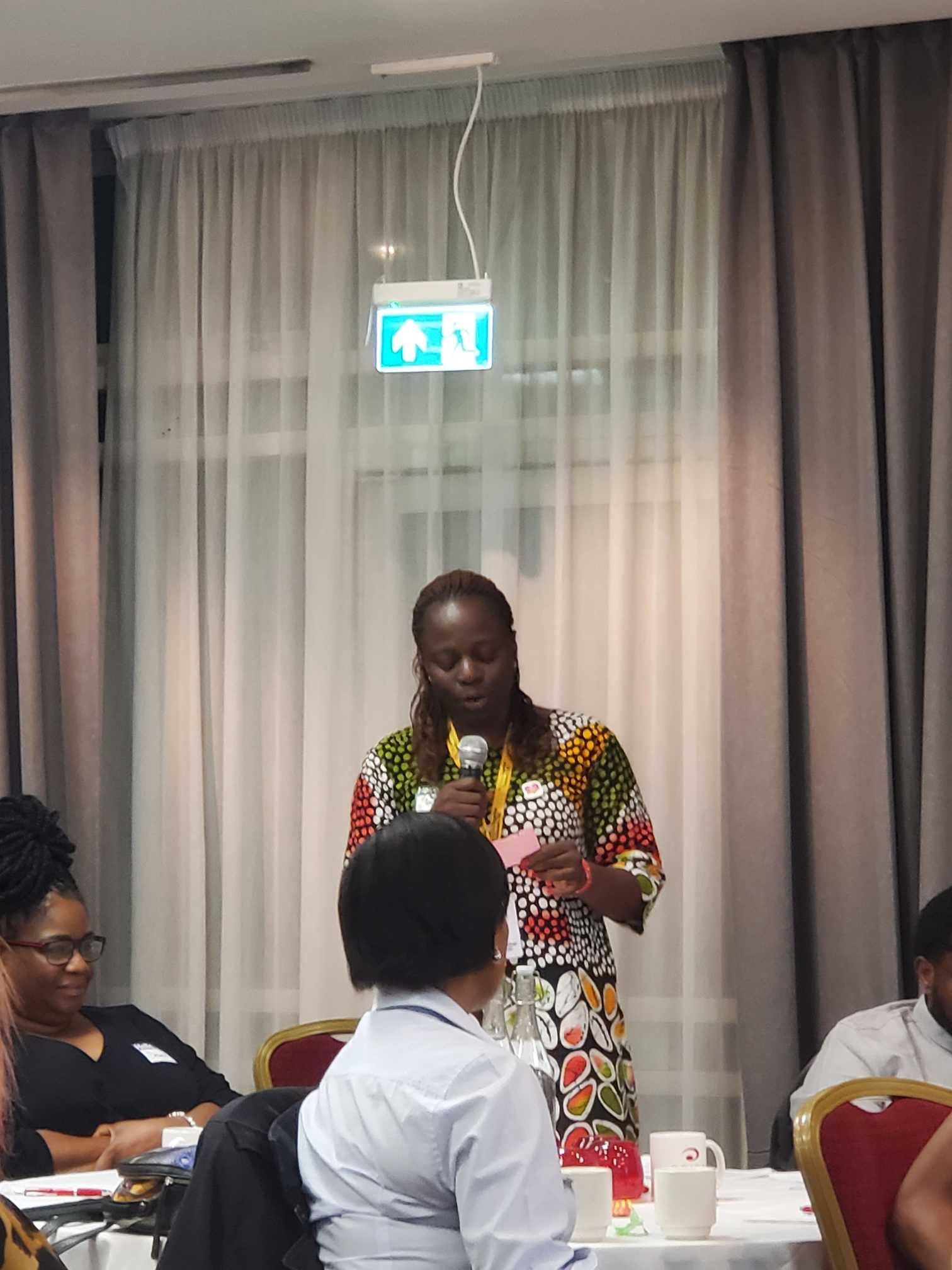
Faith leaders, community organisations and trusted individuals often spend years building relationships. Their knowledge and contribution deserve recognition.
A strong message was that institutions need to earn trust through consistent action. Asking communities to engage carries a responsibility to listen, respond and maintain those relationships beyond a single event.
Remembering families and unpaid carers
As an unpaid carer, I listened with families firmly in mind.
When someone experiences a mental health crisis, detention or restrictive intervention, the effects can reach across the family. Carers may be frightened, exhausted and uncertain about what is happening to someone they love.
For Black families and other racialised communities, those experiences can also sit alongside previous encounters with discrimination, cultural misunderstanding or exclusion.
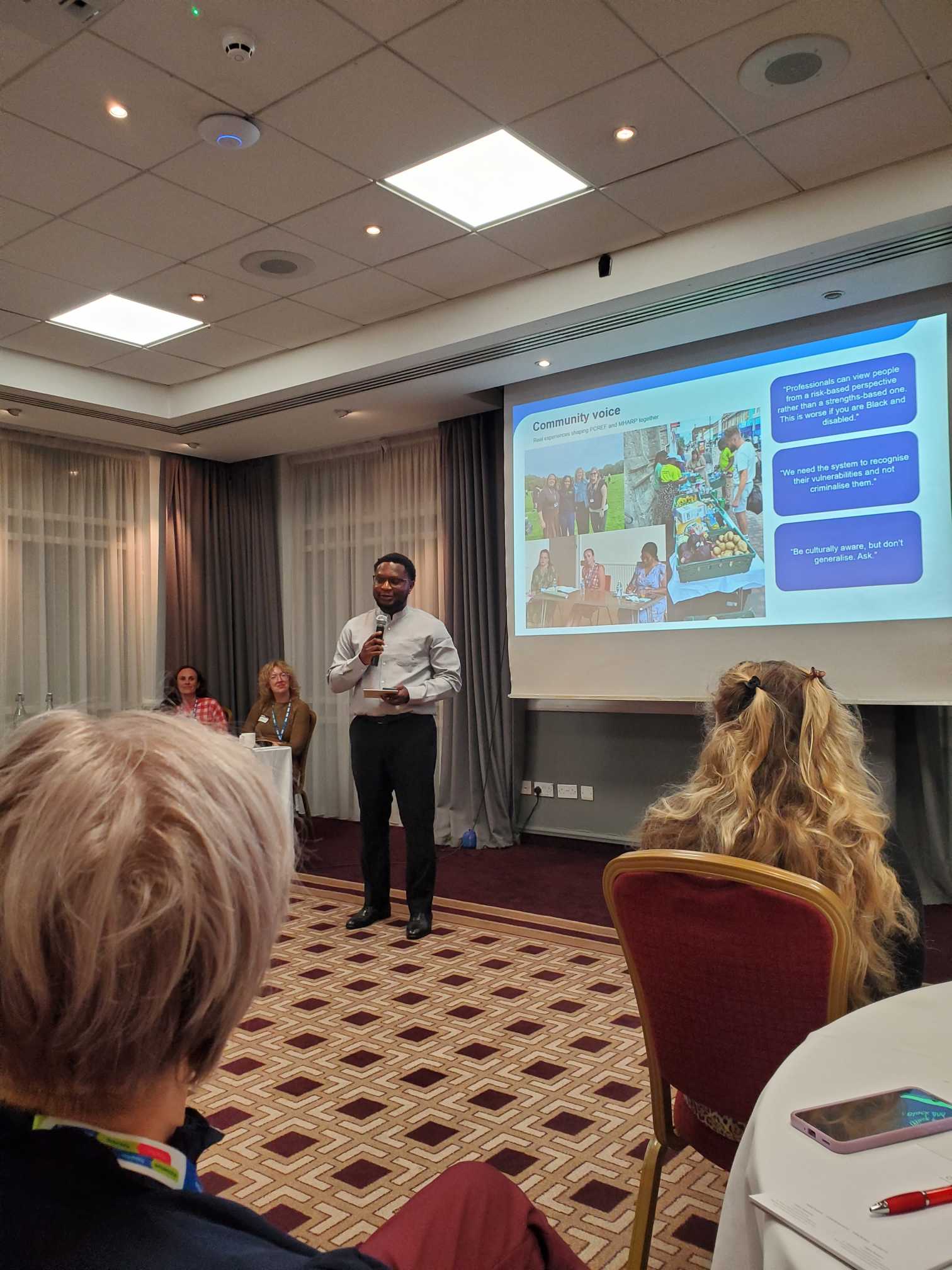
My reflection is that carers must remain visible throughout this project. Families can offer valuable knowledge about a person’s communication, culture, faith, support networks and early signs of distress. Carers also need information, support and opportunities to raise concerns themselves.
This connects closely with my work around the Triangle of Care: building stronger relationships between the person receiving care, their unpaid carer and professionals.
Carer inclusion needs to be culturally responsive, with space to understand each family’s circumstances.
Creating opportunities to stay involved
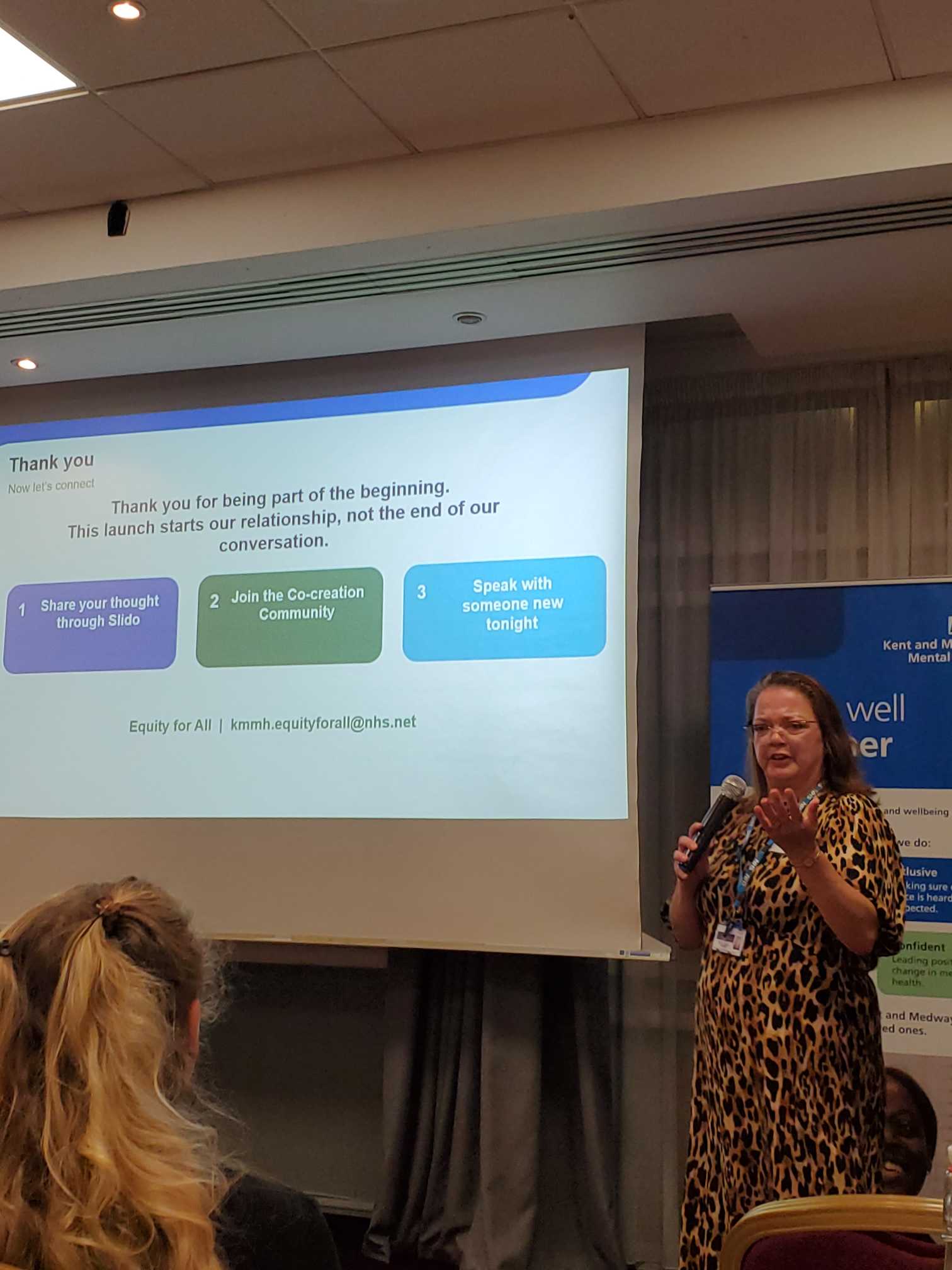
Hayley, the Trust’s Community Engagement and Involvement Lead, introduced the co-creation community and encouraged people to remain connected.
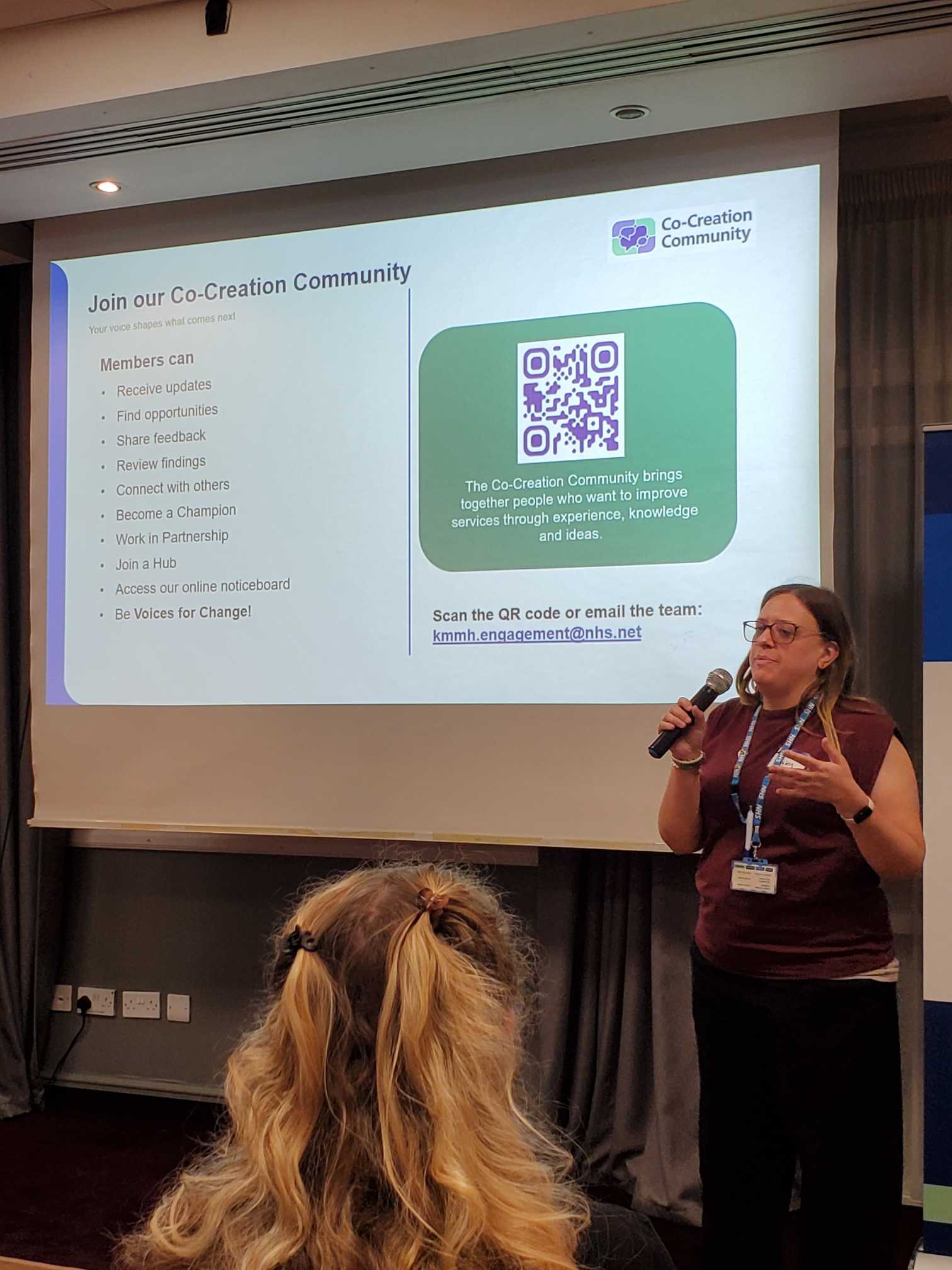
This offers opportunities to receive updates, share ideas and experiences, and become involved in work to improve services.
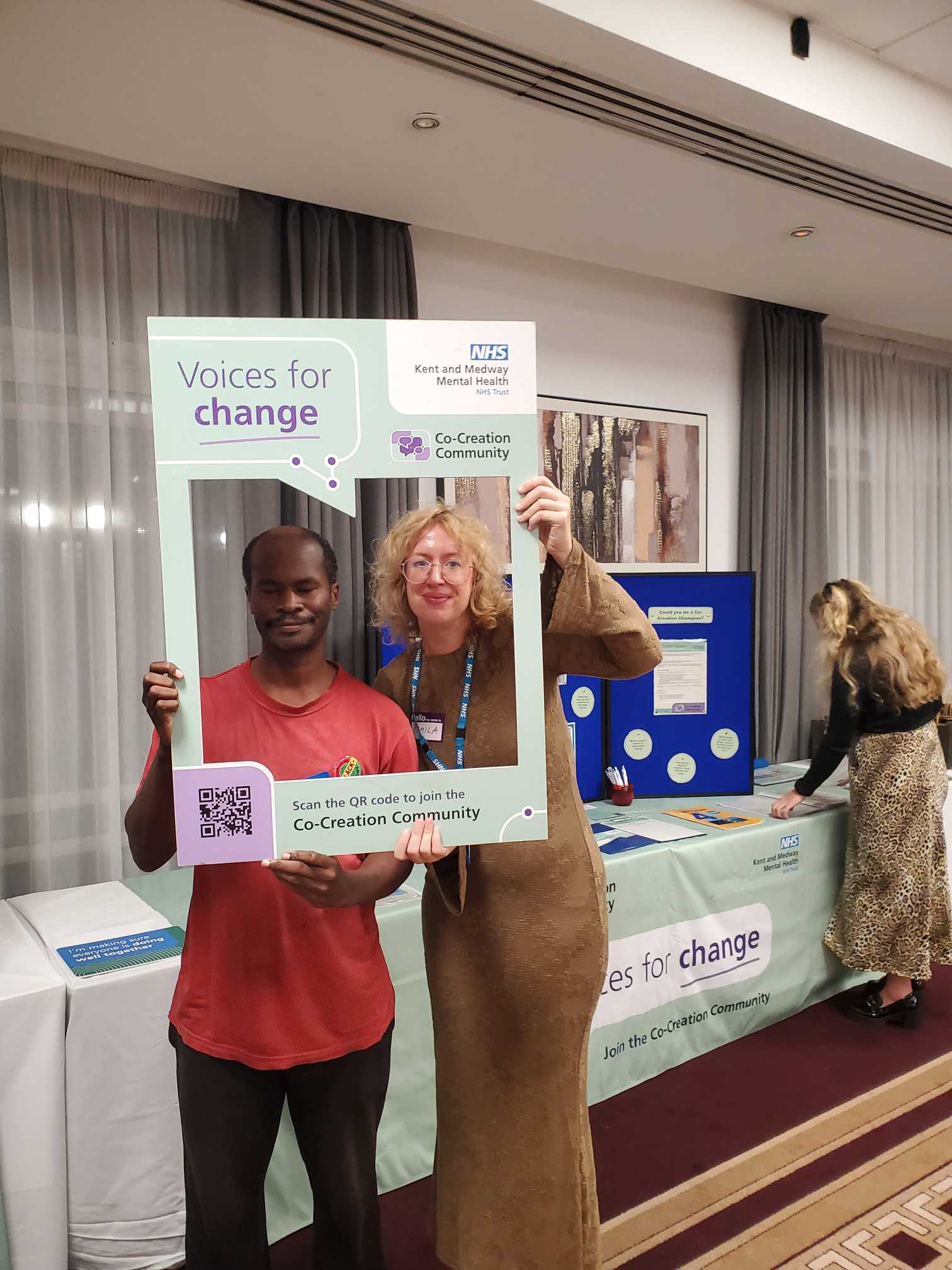
Around the room were displays about involvement, recovery and wellbeing. The “Voices for change” materials reflected the evening’s wider purpose: creating opportunities for people to help shape services.
Attendees were also invited to suggest a hashtag for the project through Slido, giving those present a role in shaping how the work would be communicated.
Making room for connection
The evening included food, networking and opportunities to speak with people around the room.
These informal conversations are valuable. They allow people to ask questions, discover shared interests and begin relationships that can support future collaboration.
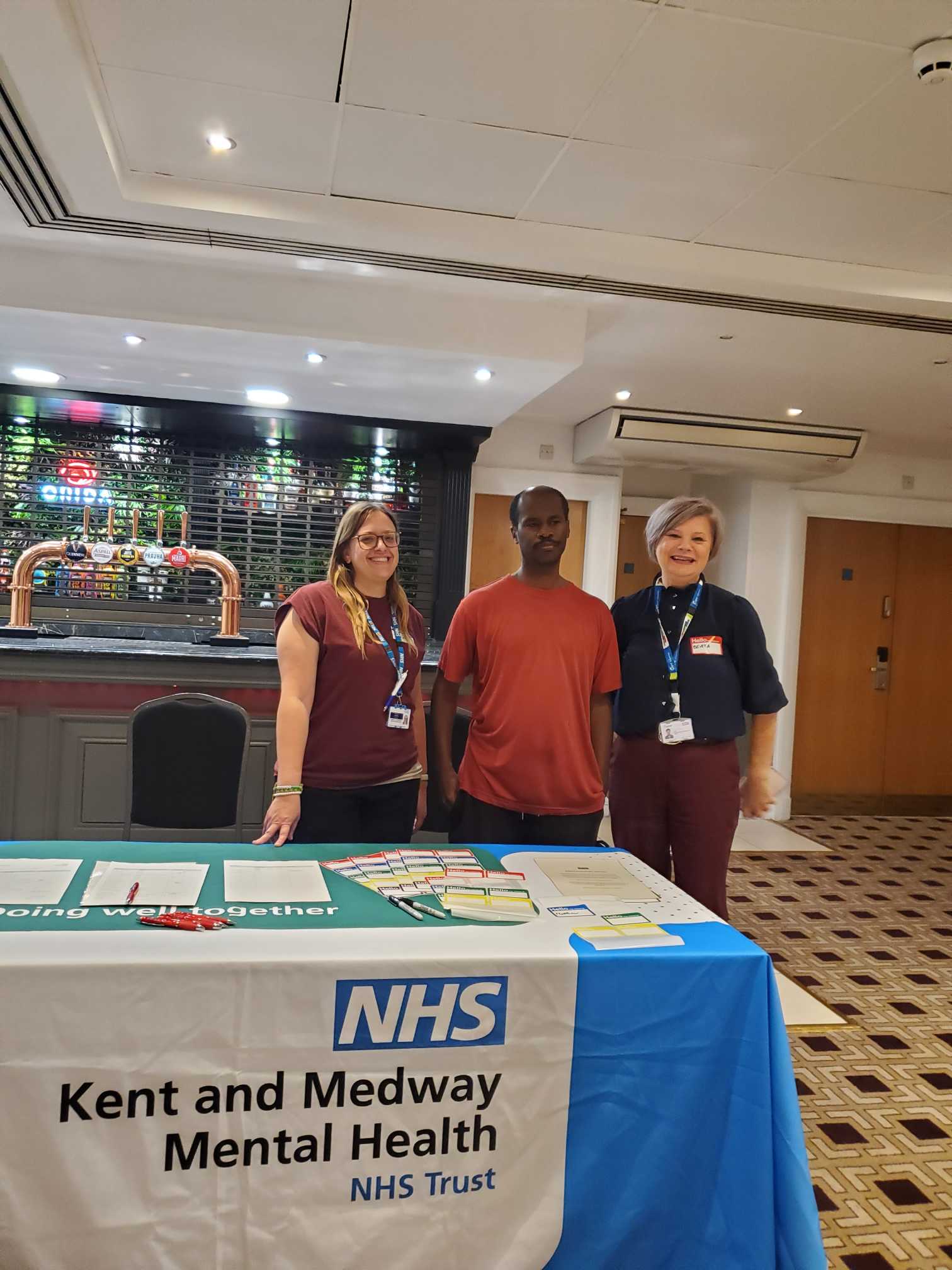
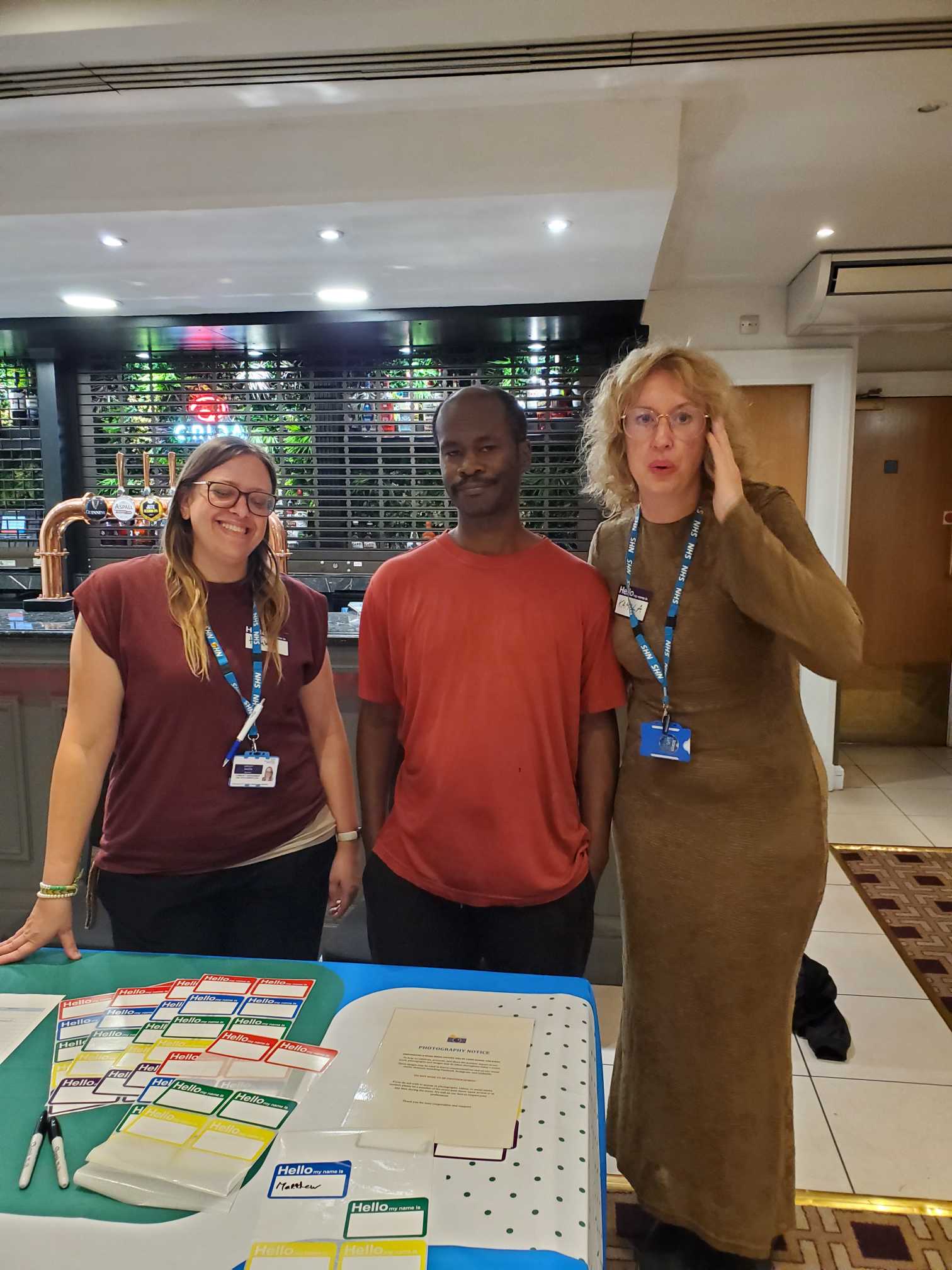
My photographs capture those moments alongside the presentations: people meeting at information stands, sharing conversations and coming together for a group photograph.
Looking towards what happens next
I welcomed the opportunity to attend and hear the Trust acknowledge the inequalities it wants to address.
The next stage will be important: maintaining community involvement, agreeing actions together and showing how people’s contributions influence the work.
For me, meaningful progress will include service users and carers being able to recognise improvements in their own experiences of care.
Thank you to Shannon, Jackie, Hayley, the wider Kent and Medway team and everyone who contributed their experiences and ideas. I look forward to seeing how this shared work develops.