By Matthew McKenzie – Carer Lived experienced member of Royal College of Nursing
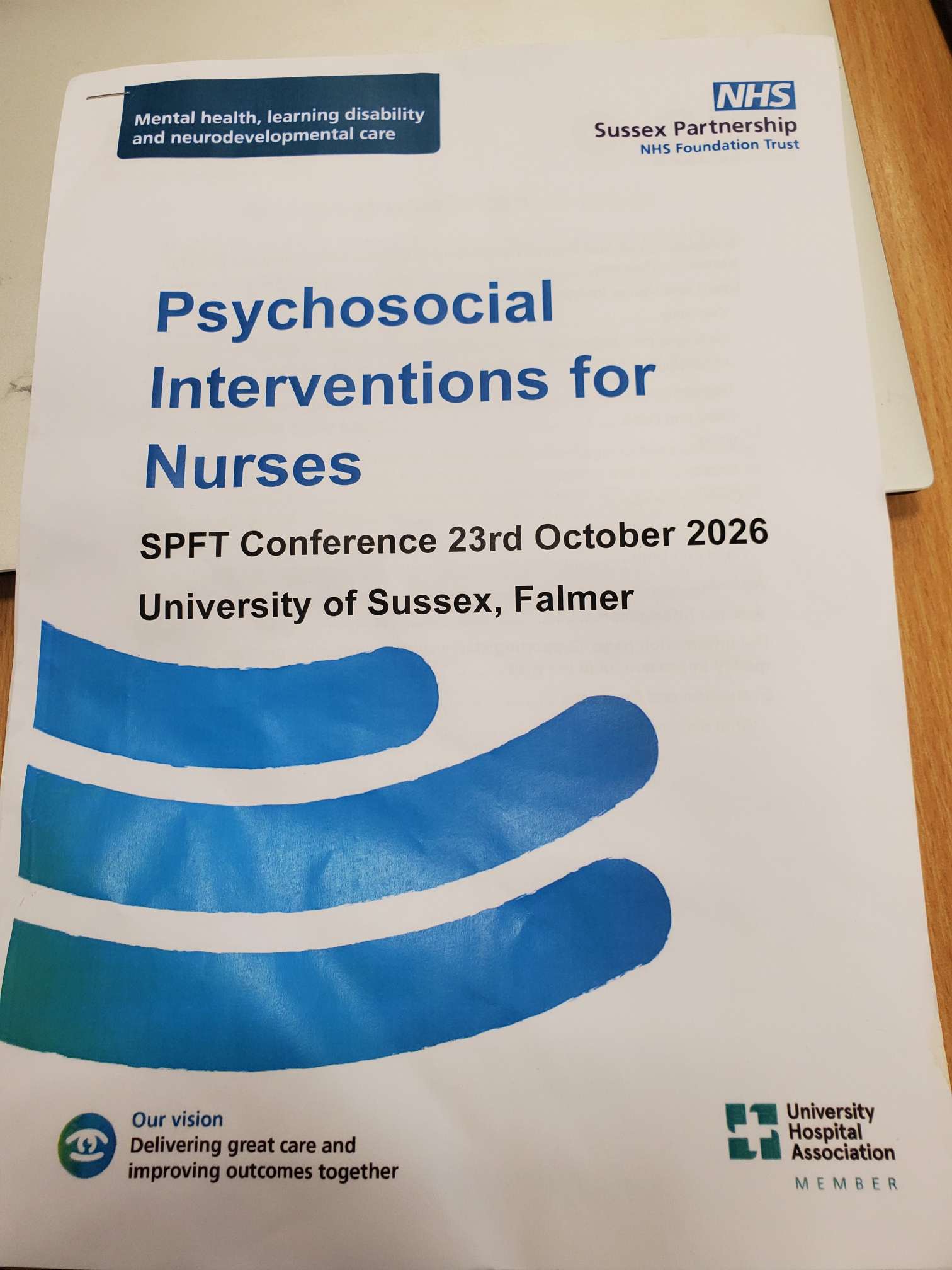
On Friday 23 October 2026, I joined Sussex Partnership NHS Foundation Trust’s Psychosocial Interventions for Nurses conference at the University of Sussex in Falmer.
The day brought together mental health nurses, educators and people with lived experience to explore psychosocial interventions, often shortened to PSI, and their place in everyday nursing practice.
I contributed through poetry, a conversation about lived experience and an afternoon carers and families workshop. As a carer activist, I wanted to bring attention to the relatives and friends whose knowledge, concerns and wellbeing can become overlooked within mental health services.
Across the day, one theme kept returning: the importance of relationships. What does it mean to stay alongside someone in distress? How do we build trust with families? And how can staff protect that work when services face competing pressures?
Opening with poetry and lived experience
The conference began with poems and reflections from Royal College of Nursing Lived Exprience group including myelf.
Hannah, the Royal College of Nursing’s Lead Nurse for Lived Experience, shared a poem about moving from being a nurse to receiving mental health care, and eventually returning to nursing.
Her words explored the loss of identity, fear and vulnerability that can accompany becoming a patient. They also recognised the nurses who continued trying to connect with her, including through small, ordinary acts of kindness.
That opening placed lived experience at the centre of the conference. Before discussing approaches and training, we heard about what receiving care can feel like.
Another lived experienced poem explored his personal history and experiences of treatment at the Cassel Hospital. His account highlighted the importance of community, boundaries, everyday activities and relationships with nurses.
Together, these contributions reminded us that care is experienced through how people listen, respond and remain alongside someone.
“The Carer They Didn’t See”
In my opening contribution, I explained that I did not immediately recognise myself as a carer. I was my mother’s son, trying to support someone I loved.
It took time before someone helped me recognise that caring role. Meanwhile, my own needs could easily slip into the background.
I shared my video poem, “The Carer They Didn’t See,” connecting that experience with the workshop planned for later in the day.
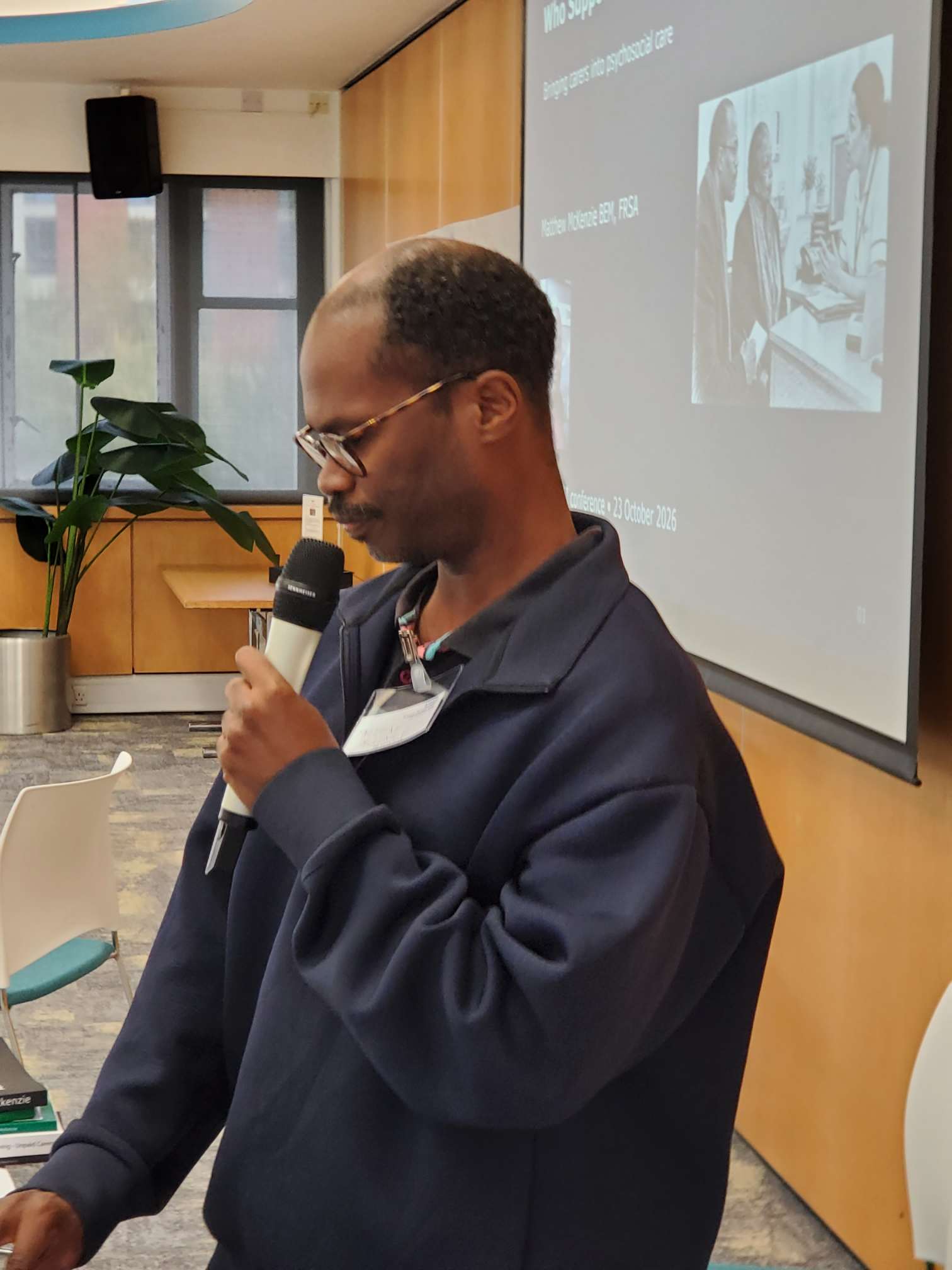
For me, poetry offers a way to communicate the emotional reality behind carer inclusion: being present, listening, remembering information and worrying about what happens next, while feeling that nobody has asked how you are managing.
Watch “The Carer They Didn’t See” here.
Hannah’s embroidery: finding a way through together
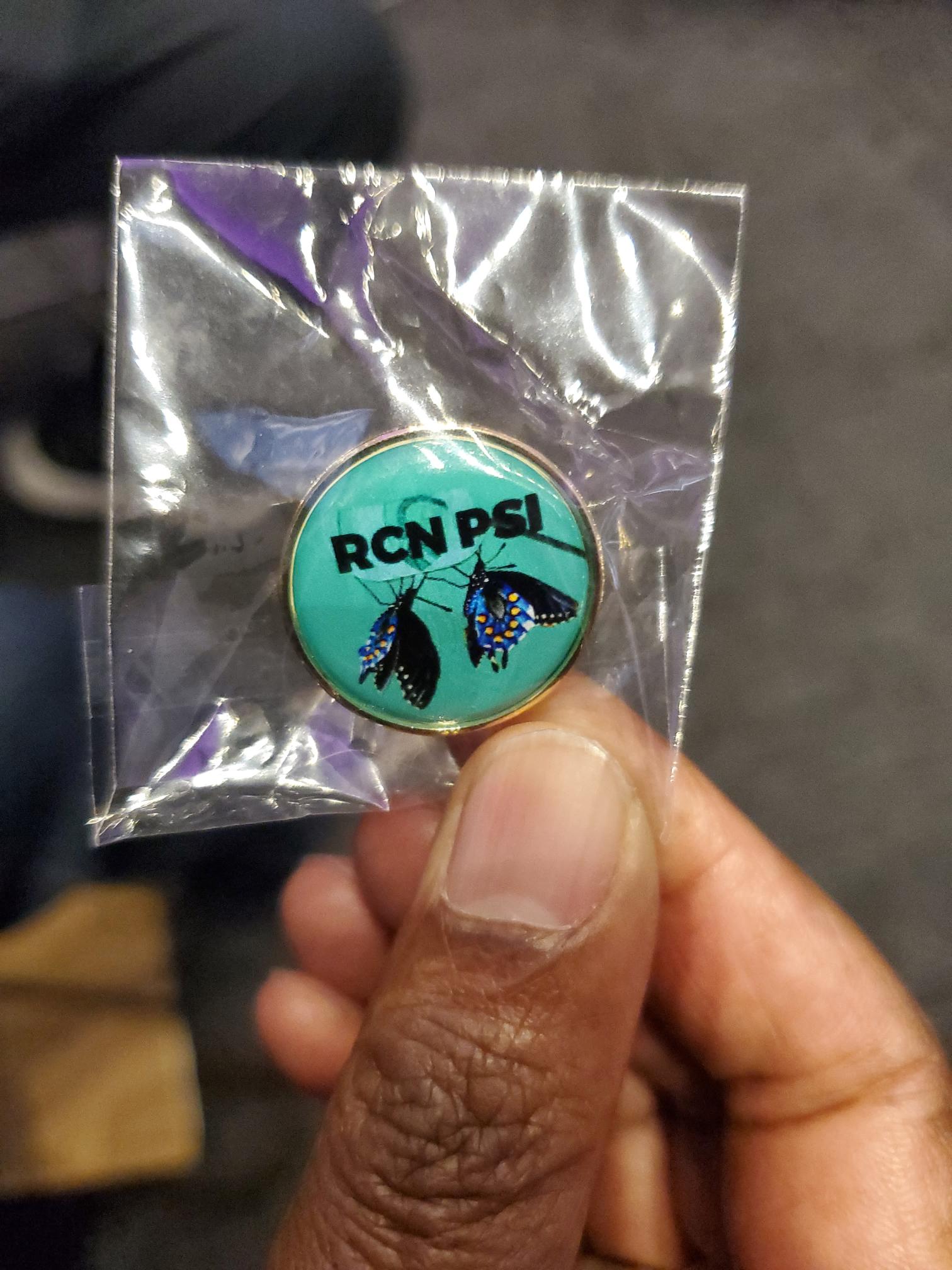
Hannah also explained the meaning behind her embroidered butterfly imagery, used in connection with the PSI programme.
She described recovery as a journey made through relationships, with each person needing space to find their own way. Her explanation connected creativity with identity, trust and the experience of being supported to become yourself.
This stayed with me because creative activity can provide opportunities for connection when words are difficult. Poetry, embroidery, drawing and other forms of expression can give people another way to communicate what matters to them.
Geoff Brennan: where the PSI programme came from
Geoff Brennan presented the session on the development of PSI, explaining that Cath Gamble was unable to attend because she was caring for her mother.
For a conference that included carers’ experiences, that was a reminder that caring responsibilities also sit within professional lives.
Geoff traced the programme’s roots to concerns in the 1990s about how mental health nurses were supported to work with people experiencing serious mental illness.
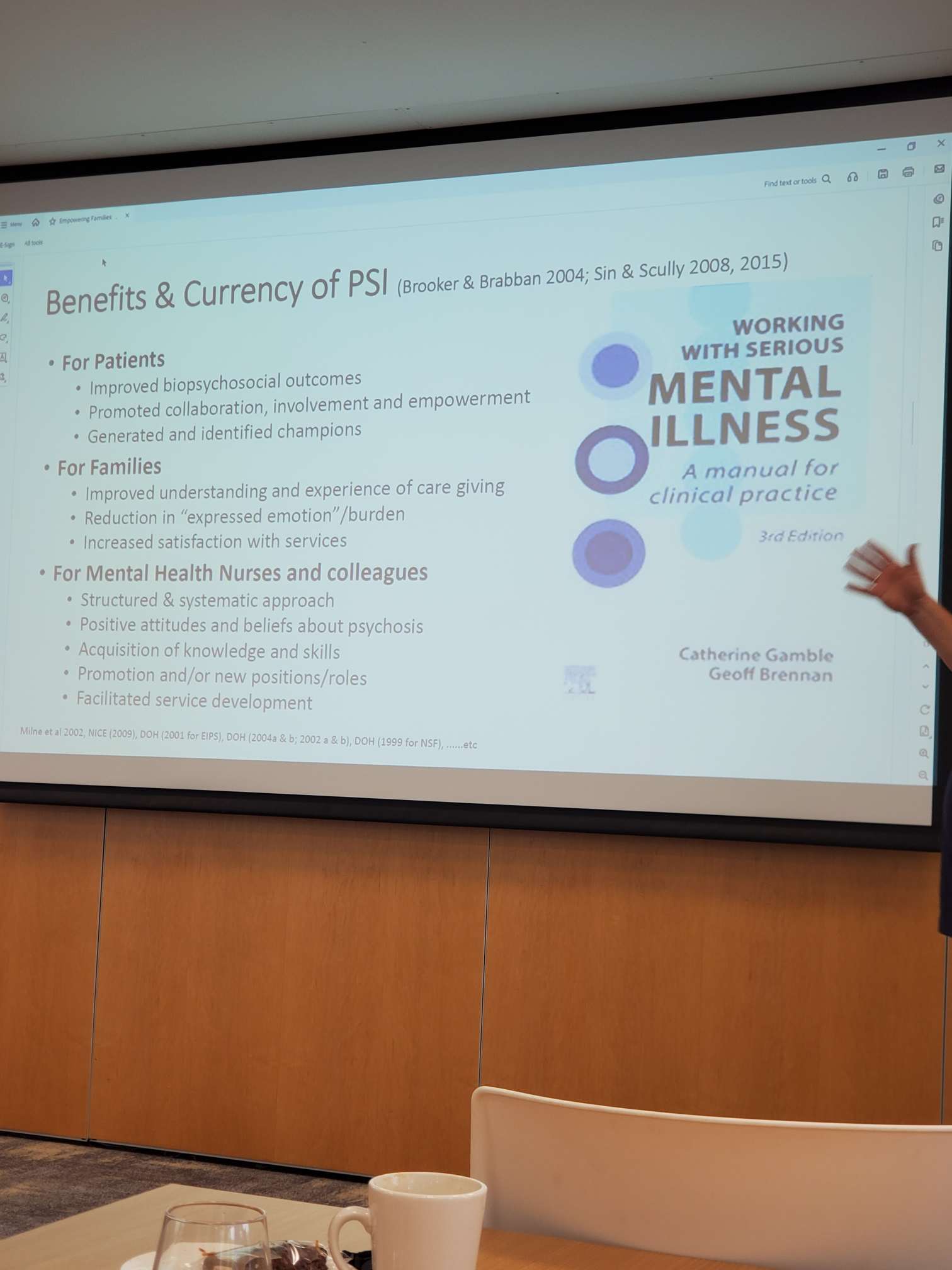
He described the development of the Thorn programme, including its emphasis on working with families and helping nurses develop practical therapeutic skills.
An important part of his message was that nurses need both skills and permission to use them. Training has limited value if staff return to environments where they lack time, supervision or encouragement to put their learning into practice.
He also reflected on the difficulty of sustaining progress when courses disappear or experienced practitioners move on. That helped explain the day’s emphasis on building a community of practice.
Protecting the therapeutic role of mental health nurses
The discussion included questions about what PSI adds to work already happening in services.
Some participants described established psychological and group-based approaches within Sussex. Others spoke about pressures that left them feeling increasingly occupied with risk assessment and tasks, with less room for meaningful connection.
Hannah brought this back to the experience of needing support at two o’clock in the morning. The mental health nurse is often the professional present at that moment.
Her point was powerful: nurses need confidence and support to respond to emotional distress, rather than feeling that every therapeutic conversation belongs elsewhere.
For me, this also matters to families. Carers need to know that someone can hear their concerns, help them make sense of a situation and respond with understanding.
Our conversation: what happens when carers are excluded?
During the morning conversation, I was asked what happens when a carer is overlooked or excluded.
I spoke about feeling unheard and outside the team, even while trying hard to support someone who is struggling.
Exclusion can leave carers uncertain about their role. Some withdraw because they feel their contribution is unwanted. Others keep pushing to be heard, often at a cost to their own wellbeing.
I connected this with the Triangle of Care: the person receiving support, their unpaid carer and professionals working in partnership.
The discussion also recognised that family involvement can be complicated. People may have different wishes, relationships may be strained, and relatives may fear being blamed.
That calls for thoughtful engagement. Sometimes a less formal conversation can provide a starting point for trust.
Hannah’s account: a nurse who did not give up
Hannah described the sustained support of a psychiatric nurse who worked alongside her over several years.
She explained that she had not initially been able to engage with psychological therapy. Her nurse helped her move towards a point where that became possible.
What stood out was his persistence. He kept returning, believed in her and continued trying to understand what she needed.
Her account showed the significance of work that may be difficult to capture in a short appointment or a checklist: building enough trust for someone to accept support.
The conversation also recognised the emotional demands of this work and the importance of supervision. Staff need opportunities to reflect on what they are holding and to receive support themselves.
Jim Turner: tracing the history of mental health nursing
Dr James “Jim” Turner led an interactive exploration of how mental health nursing had developed alongside changing psychological ideas, treatments and service structures.
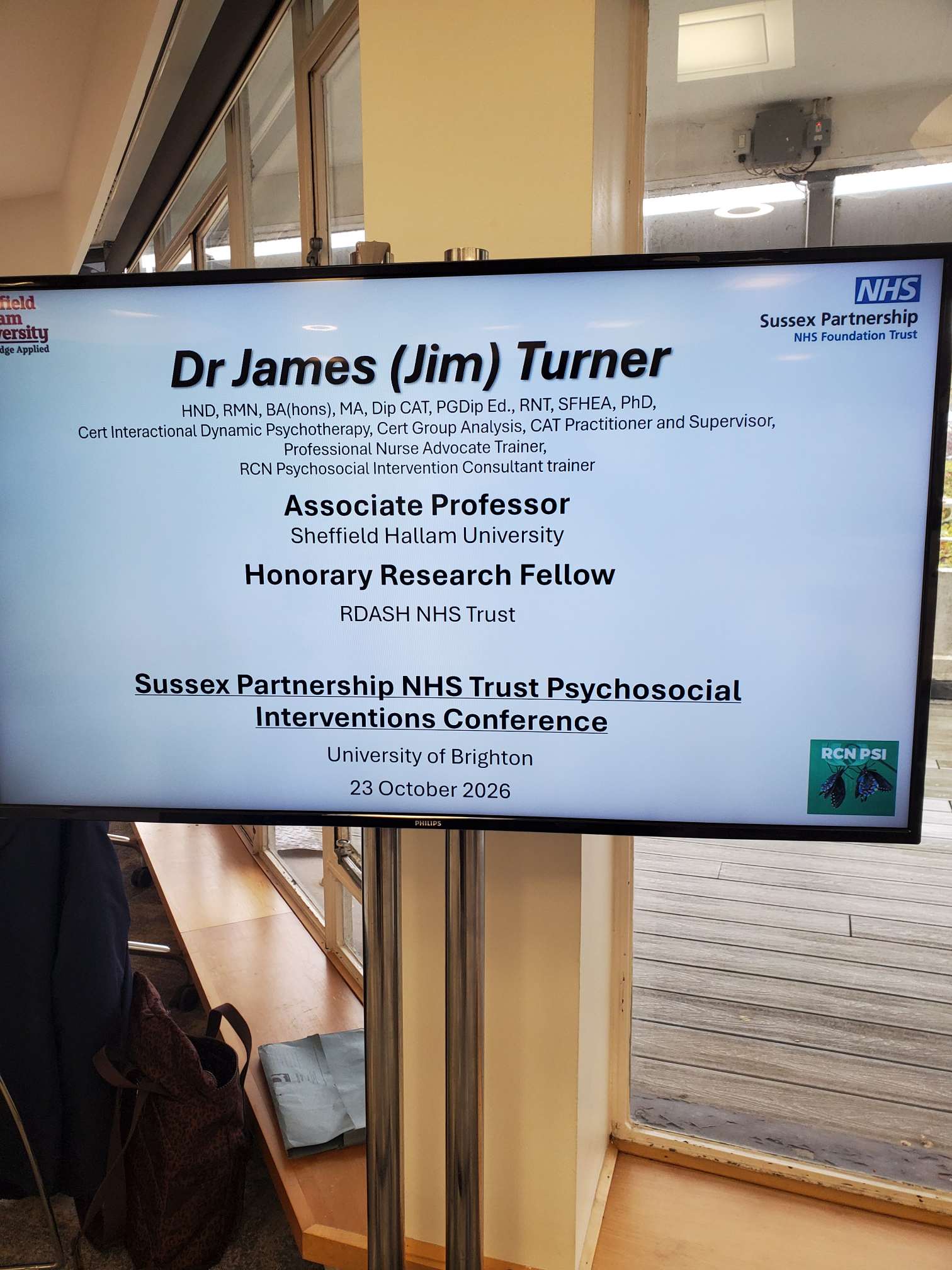
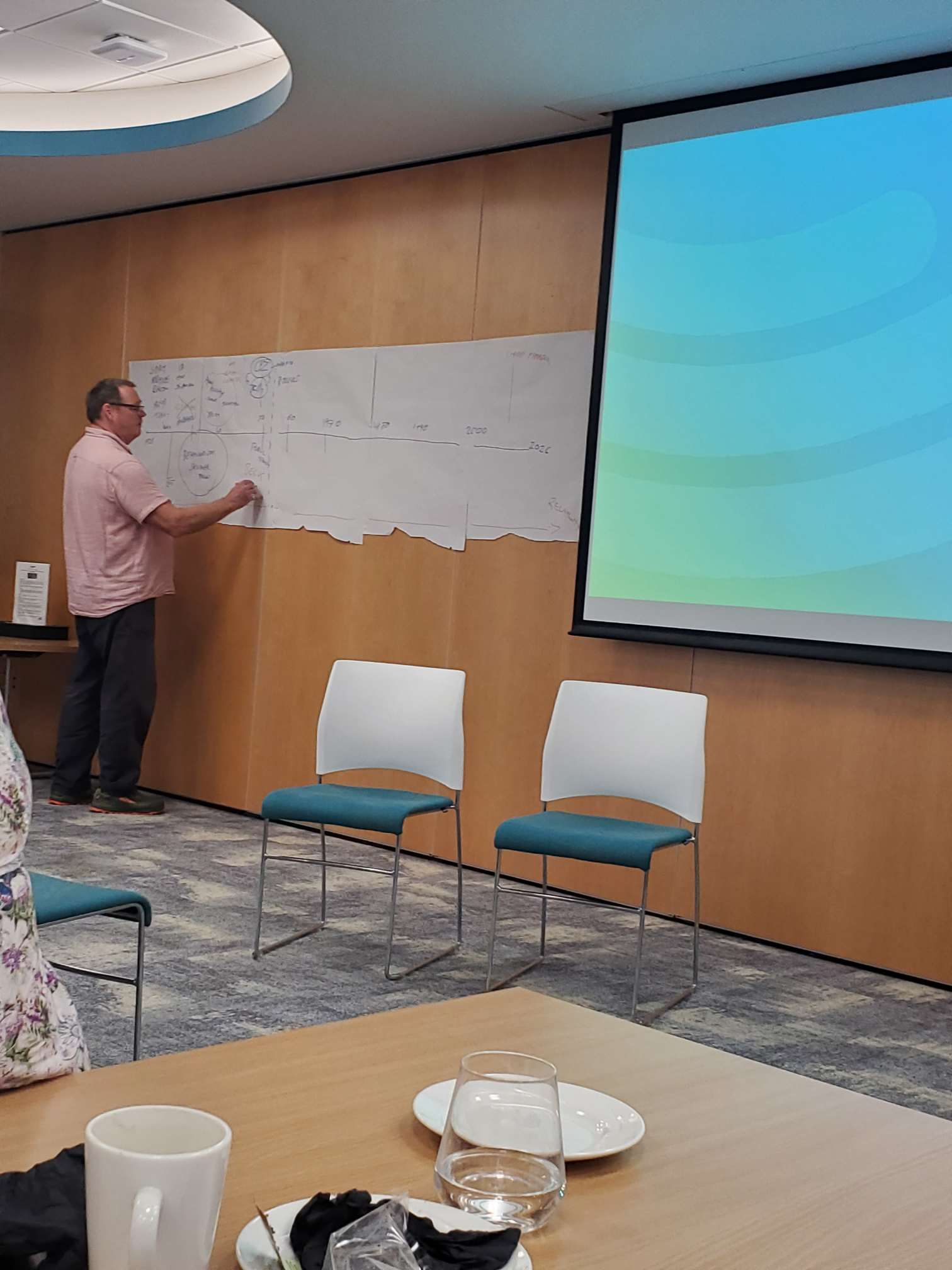
Although his programme slot was titled “Five Stages Intervention,” the recorded session included a much broader historical timeline.
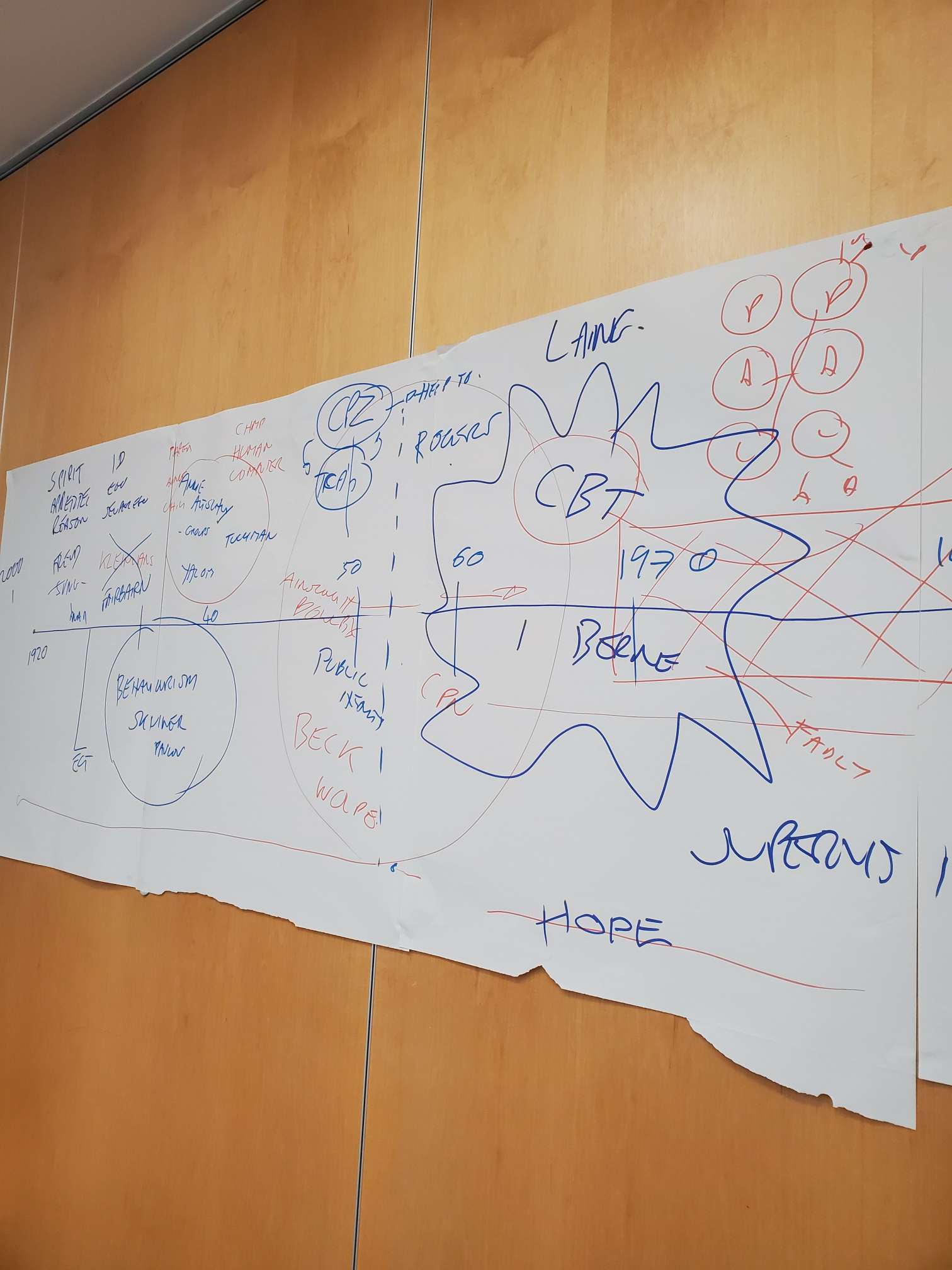
Jim invited the room to think across roughly a century, beginning around the early twentieth century and moving towards contemporary practice. Participants contributed ideas as he connected different influences on the profession.
His central message was that psychosocial nursing has a history. It draws on generations of learning about distress, behaviour, relationships and the circumstances in which people live.
Beginning with an encounter, rather than a theory
Jim opened with an example from his early nursing career involving a person who was frightened by what he believed he could see outside.
He described going outside with him, exploring what was there and offering another interpretation. They did not arrive at the same explanation, but they were able to remain together and share a calmer moment.
Looking back, Jim recognised therapeutic elements within that encounter: listening, exploring someone’s understanding and gently considering another perspective.
For me, the significance was in his willingness to spend time with the person and take the fear seriously. The relationship made that exploration possible.
Psychological ideas and the understanding of relationships
Jim’s timeline considered the influence of psychoanalysis, including Freud and later thinkers concerned with relationships and emotional development.
He discussed ideas such as defence mechanisms, projection and the ways people respond to anxiety or difficult feelings.
He approached these theories critically, questioning some of their assumptions while considering what they contributed to understanding human relationships.
A recurring theme was that people bring earlier experiences into present encounters. Trust, fear, closeness and rejection can affect how someone experiences support.
For nursing, Jim connected this with being curious about the person and working collaboratively, rather than assuming a professional interpretation must be the whole answer.
Behavioural approaches and group work
The discussion moved through the influence of behavioural approaches, including reinforcement and token economies.
Jim explored how these approaches helped nurses identify and describe particular therapeutic interventions.
He also referred to Annie Altschul and the importance of group work. His discussion connected groups with families, encouraging participants to think about how people relate to one another within both.
From my perspective, that connection mattered. Mental health difficulties affect relationships, and relationships can also become sources of support. Understanding the wider picture requires attention to the people around someone.
Medication and the changing responsibilities of nurses
Jim included the arrival of medicines such as chlorpromazine within his account of changes in mental health care.
He connected medication with nursing responsibilities around helping people understand treatment, discussing its effects and supporting them with difficulties they experience.
The conversation also touched on ECT and the tensions nurses can encounter when treatment, distress, consent and maintaining trust come together.
For me, this part raised the importance of honest communication. People receiving care and their families need opportunities to ask questions and explain their experiences.
Cognitive approaches and integrating knowledge
Jim went on to discuss cognitive and behavioural approaches, including CBT, and referred to Eric Berne’s Transactional Analysis.
He explored how different approaches contributed ways of understanding thoughts, feelings, behaviour and interactions.
A distinction he emphasised was between selecting an approach with a clear understanding of its purpose and trying different techniques without knowing why.
That linked his historical discussion directly to training and supervision. Nurses need opportunities to understand the approaches they use and reflect on how they fit the person and situation.
From institutions to community care
Another part of Jim’s timeline considered the movement away from large institutions towards community services.
He questioned whether changing the location of care always changed the experience of it. His examples invited reflection on whether institutional habits could continue in smaller settings.
He also discussed changes in service organisation, care coordination and the development of more specialised approaches.
As a carer activist, I found this relevant to what happens when care moves into the community. Families may take on substantial responsibilities, so services need to understand what support is actually available at home.
The “golden thread”: relationship and hope
Throughout the historical discussion, Jim returned to the therapeutic relationship as a “golden thread.”
Models, treatments and service structures change, but the ability to build a relationship remains central to mental health nursing.
He also spoke about hope: the importance of entering a situation believing that progress is possible and helping someone hold onto that possibility.
Towards the end, the discussion returned to creativity, imagery, drawing, music and shared activity. This connected with Hannah’s embroidery and the poetry that opened the day.
For me, Jim’s session explained why the history mattered. It encouraged nurses to understand the foundations of their work, recognise the value of their therapeutic role and use their knowledge deliberately.
My afternoon carers and families workshop
After lunch, I led a workshop using three fictional scenarios.
I wanted participants to explore situations that many families will recognise: uncertainty about confidentiality, assumptions about a relative’s behaviour and expectations placed on carers when someone returns home.
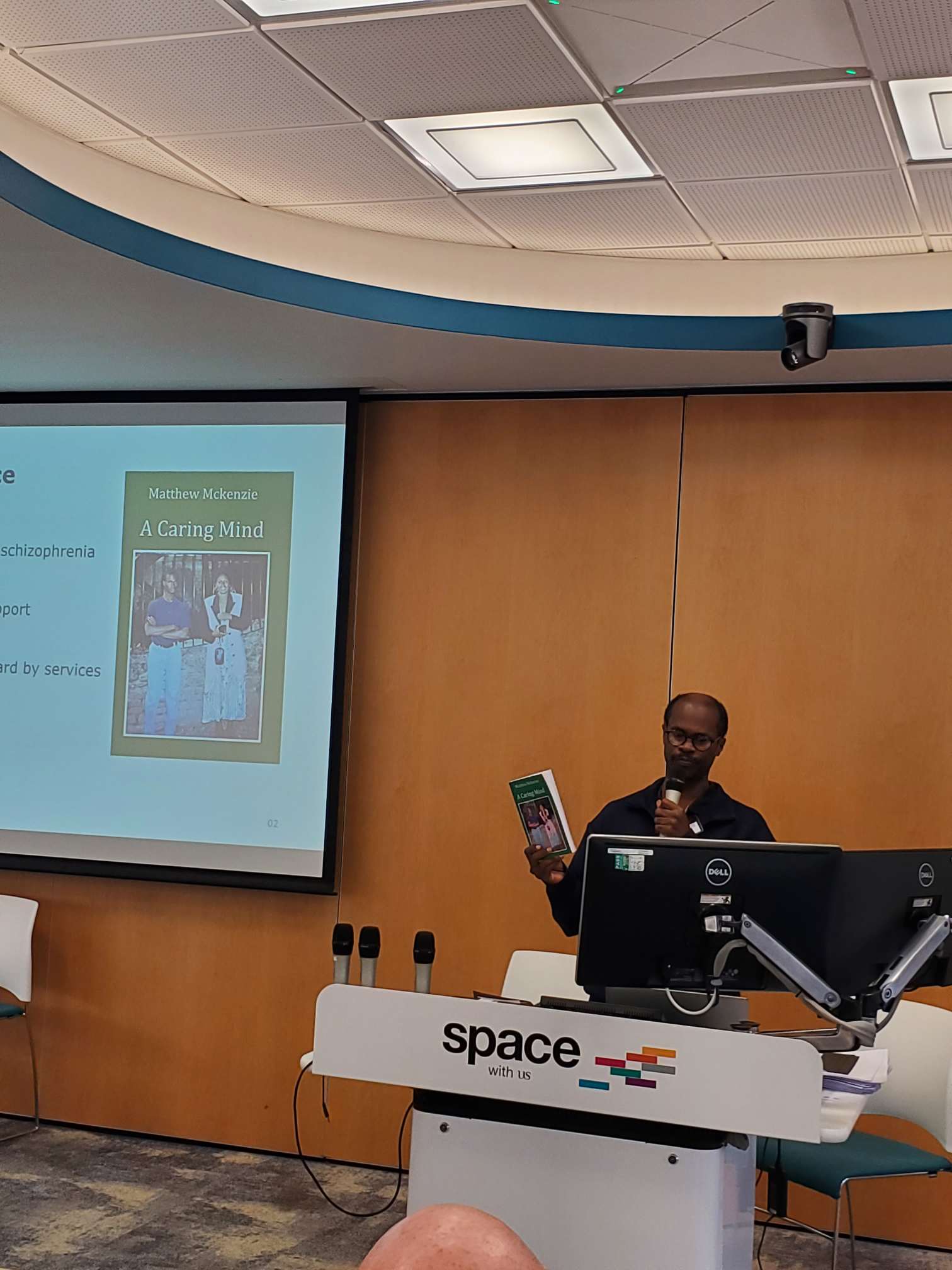
The scenarios encouraged discussion about what staff could do, what they needed to understand and whose voice might be missing.
Confidentiality and a mother’s concerns
One scenario explored a mother’s concerns alongside her son’s wish for independence and limits on family involvement.
Participants discussed how to understand his preferences while still making space to hear her observations and offer support.
They considered the distinction between receiving information from a relative and sharing someone’s confidential information.
The feedback also recognised the mother’s own wellbeing. Supporting her meant acknowledging her relationship with her son and the strain she might be experiencing.
Questioning the word “demanding”
Another scenario explored assumptions about a family, unfamiliar clinical language and the importance of faith.
Participants challenged the description of a relative as “demanding.” They asked what might be behind repeated requests for information or meetings.
Fear, confusion and a need for reassurance could all be relevant. Describing someone negatively too quickly could prevent those concerns from being understood.
The discussion also considered asking someone what their faith means to them, using clearer language and arranging conversations around practical circumstances such as employment.
This connected closely with my work on culturally responsive carer inclusion: understanding the individual and questioning the assumptions shaping our response.
Discharge planning and sustainable support
The third scenario concerned a wife facing substantial expectations when her husband returned home.
She had work commitments, health difficulties and disrupted sleep, yet the proposed arrangements relied heavily on her.
Participants questioned that assumption and discussed the need to understand both partners’ concerns, identify professional responsibilities and consider support for the carer herself.
For me, this was an essential message: discharge planning needs an honest conversation about what a carer is willing and able to do.
Love and concern do not remove exhaustion or create unlimited capacity.
Keeping the learning going
The wider afternoon programme included PSI in Sussex, the Sussex Partnership Recovery College and discussion about a community of practice and peer support.
These themes connected with concerns raised earlier: staff need support to continue developing and using their skills after training ends.
I hope that ongoing learning also continues to include the experiences of people receiving care and the relatives and friends supporting them.
Thank you
My thanks to Dr Ali Smith, the organising team, the Royal College of Nursing contributors and everyone who took part.

I appreciated the opportunity to bring poetry, caring experience and practical scenarios into the day.
The conference offered space to consider where mental health nursing has come from and what needs protecting as it develops.
For me, that includes time to listen, the confidence to build relationships and a commitment to seeing carers as people whose knowledge and wellbeing matter.