Tag Archives: mental health

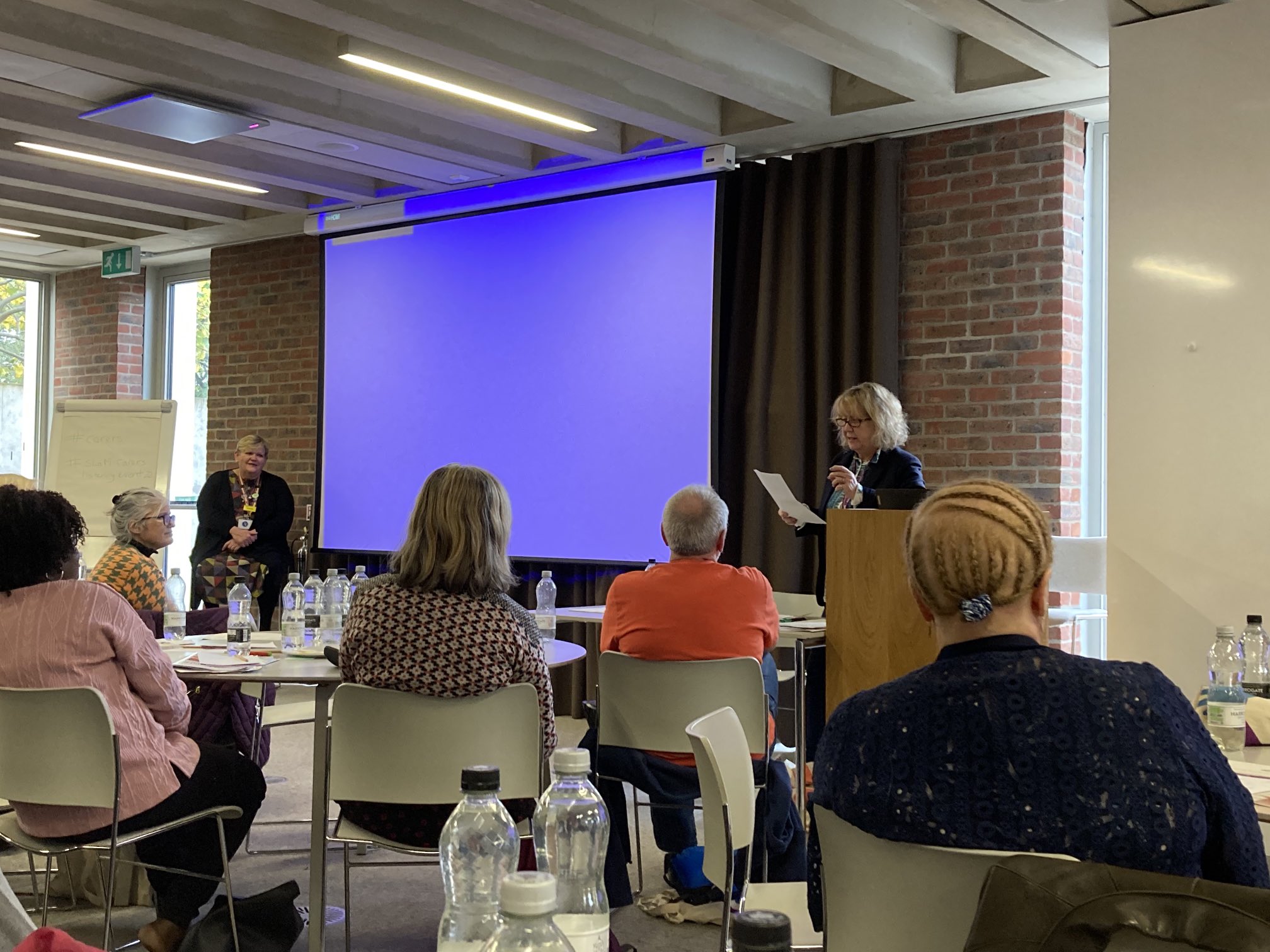
Lewisham Mental Health Carers forum October 2022

Hello fellow mental health carers and readers, been a while since I have been blogging due to working on my new book called “Race, caring and mental health”. This book will be my 2nd release for 2022, the book will reflect how mental illness impacts on carers from ethnic minorities especially black people. I hope to get that book out for November 2022.

Going away from promoting my new book, this is just a quick blog for my Lewisham mental health carers forum. A forum aimed at those caring for someone suffering mental illness.

The speakers for October 2022

Marie Cooper RGN BSc MSc (Florence Nightingale Foundation) – Pallative care “walking the walk”
Evelyn Sample (South London & Maudsley NHS Trust) – Approved Mental Health Professional / Mental Health Act presentation

  • Marie Cooper presents on Palliative and End of Life Care

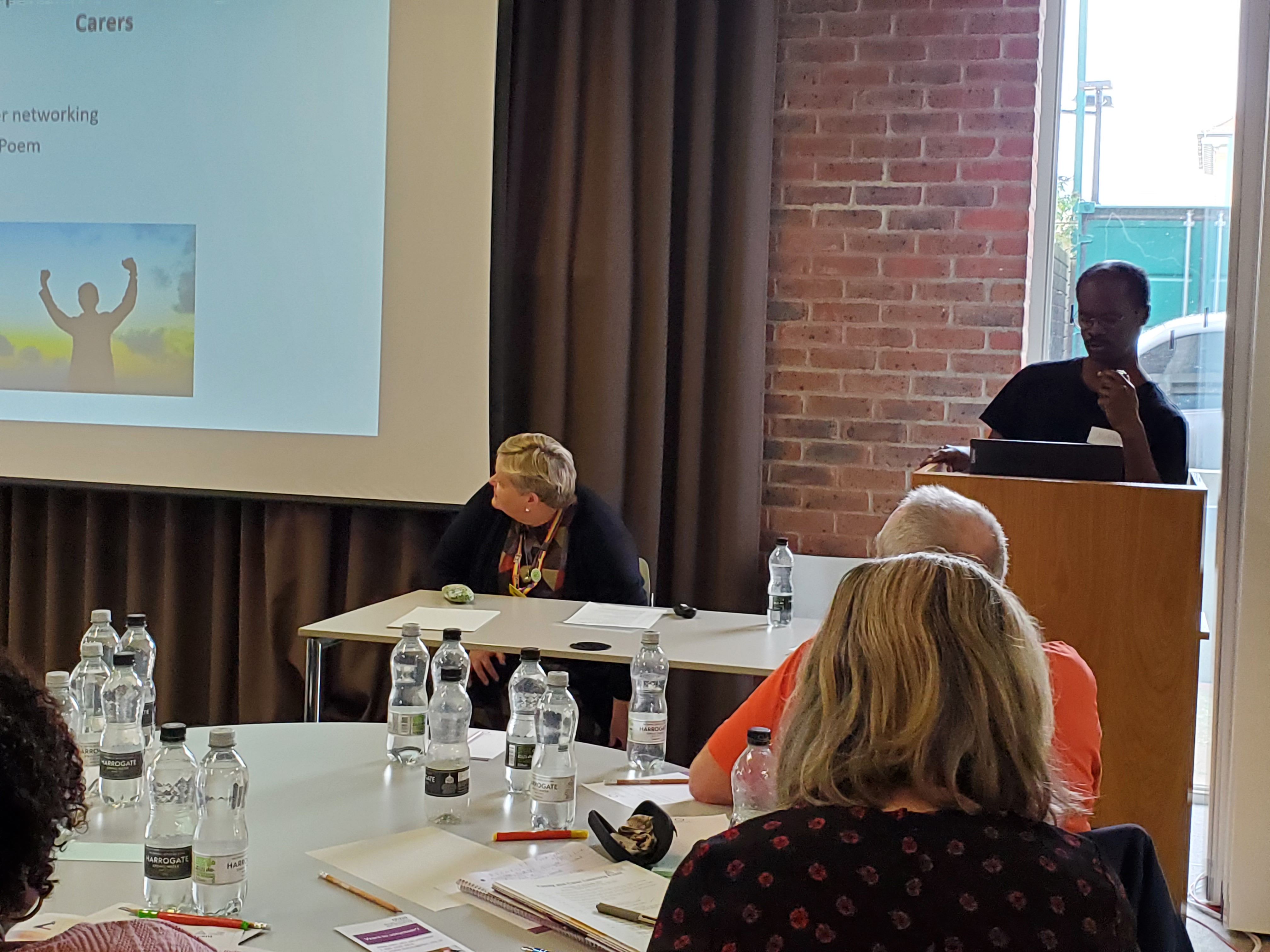
Marie Cooper who is also the Project Lead for Palliative Care Nursing at St Christopher’s wanted to understand the experience of the carer when its come them supporting a loved one coming to the end of their life. Marie mentioned when it reaches that stage, the term for that person becomes more personal as they see themselves more than just carer. They are perhaps a family member, a loved one, anybody of importance to that person.

Marie mentioned it is really important to hear the voice of the relative or person experiencing their loved ones end of life care. Marie started off by showing a few pictures of hospital rooms.

In her talk it was stated that in hospitals, where someone was visiting a loved one or someone who had died. The experience of walking through the hospital or the bereavement suite makes a big difference in someone life, this will stay with them forever. So the project Marie mentioned was “Walking the walk” as Marie and her colleagues would become the carer as they walk through the wards. They travel right through the hospital into understand the entrance, the experience of what that family might be going through as they visit a loved one who has died. Marie focuses on emotions of that time, some people are rushing to get to where their loved ones are, or the people being there for days waiting and attending to their loved one and what support is there for them.

The overall aim of the project is to improve the experience for the family and the friends, anybody. What they did was they worked with 25 hospitals, those being 25 acute trusts over the past and pre COVID period. They have just done the Evelina hospital for Children with parents, which has been a very powerful experience. That hospital is formed from Guys and St Thomas NHS FT.

As mentioned in her talk, Marie literally walks through the hospital, they do the walking, and this would be a team of four of them. They would visit all the public sites, look at the toilets, look at the phones, look at the cafeteria. They would take photographs and eventually they report back to the hospital to get feedback on improvements. In the end it just gives them a chance to speak to the nurses, the doctors on what their experience of people coming to the hospital in their last days? What’s working well, what would they like to see different.

Marie and her work partners look at four areas, they look at the environment to practical facilities, is it clean? Is it comfortable? Is it hostile? Is it something that they would want to sit in which is accessible? They also talk to families to get their experience e.g. caring for my loved one for many years? Can they still care for them? How much can they be involved in the care of their loved one? Then thirdly, what support is there for that person? Have they got Wi Fi access at that hospital site? Can they get access to food? Can they park? Can they shower? Can somebody be their key person? tell them what’s going on so they can support their loved one? Plus what about the care after death? What care is there for the person after that loved ones dying. So they look at all those four elements as they traveled through the hospitals.

Marie should has a picture slide of waiting rooms at a children’s hospital. The experiences when children die, the memories and all the incredible work in children’s hospitals and hospices around trying to contain those lost memories, and about how to show a child are still being cared for after their passing, through the use of fabrics and cots and other furniture. So that in keeping the personhood of that deceased person relevant and respected that the family might be find helpful and comforting in future.

QUESTIONS FROM CARER MEMBERS

Is there capacity for cultural improvement for the experience of pallative care regarding ethnic minority carers.

Do You get any push back from Chaplin services as hospitals?

I run a carer stall at several hospitals, What can you say to someone who’s going through a difficult time when their loved one has died or is dying?

How can mental health trusts take on the programme? People do not die as in a planned state, but pallative care is a concern due to sudden death or complications from mental and physical health.

One person mentioned that their are two end of life care situations that comes around in different ways. For some people it’s planned that they’re goning to die. Often in certainly adult mental health services, we don’t always know when people are going to die. It is usually quite traumatic and when they do die, either through suicide or premature death, because they’re physically unwell, we are not sure if we have a sort of clear cut response. Often, there’s lots of practical things that we might help families after, but from the presentation there are a lot of things to query.

It was raised that the way carers centers respond to end of life, is that they would not normally stop someone’s membership when they cease to become a carer. Because they know that that’s a really difficult time, and they’re going to need help, sometimes they might keep them for like 18 months after to help them, especially if their caring role has been their full time job and their identity, they would help them sort of replace it with other things, volunteering, getting back to work, that sort of thing. It would be bad pratice to tick a carer off membership if their loved one passed away, but then it is also a decision for the carer.

Are pallative care policies updated at mental health trusts compared to accute trusts?

One person responded I don’t think or I’m not aware that we do have a brief new policy, we have a certain minimum as unfortunately and tragically, a very high disproportion of our service users die prematurely. The experience and impact of death has a huge strain and trauma on the carers health.

As in the past there are a number of our service users who commit suicide and when there is an incident then there is an investigation process that goes into reviewing the care that was provided to that individual.

  • Evelyn Sample presents on the mental health act

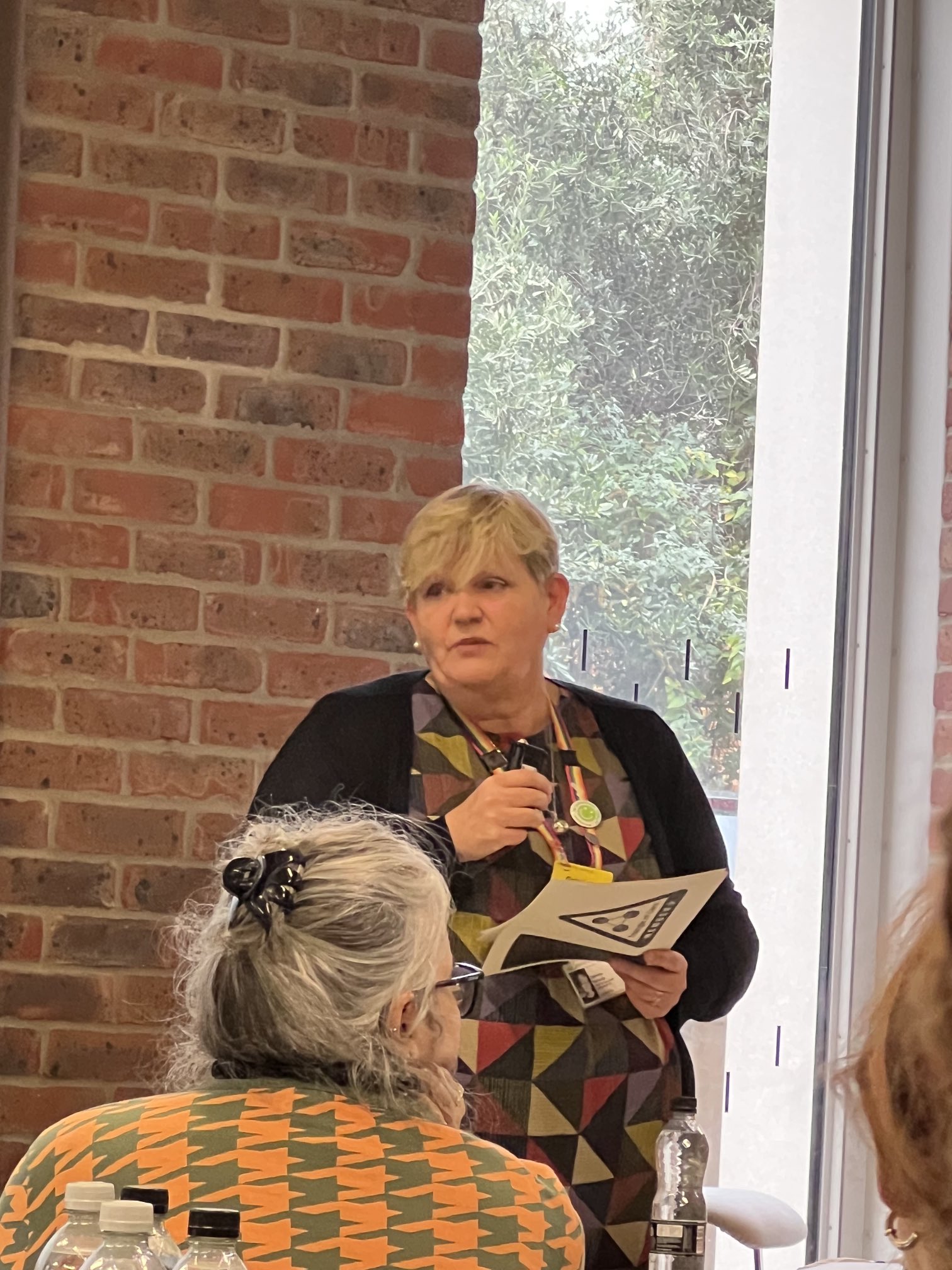
Evelyn looked into the role of the nearest relative under the Mental Health Act and how it’s changing in the coming years. She is aware for a lot of carers that the Mental Health Act and the functions of the nearest relative are quite confusing. So she thought that she would talk to us about what the nearest relative rules are and why some people are nominated as the nearest relative. Plus how and what are the rights and responsibilities of the nearest relative and how that might be changing.

Evelyn reminded us that she is a mental health social worker, which means she is an “Approved Mental Health Professional (AMHP)”. Now the approved mental health professional historically has been as A role that was exclusively for social workers. Since 2008, it has been possible for non social workers, nurses, occupational therapists, psychologists to have that role.

Evelyn feels what is really important is that people have information about the role of the nearest relative, because what happens as an AMHP is that you are assessing someone under the Mental Health Act, either you’re planning an assessment that’s going to take place in the community or you’ve been asked to assess someone who’s already an inpatient in the mental ward. This could be because they have come in as an informal inpatient, and they are now having a mental health assessment on the ward.

The function of the nearest relative is to provide a safeguard under the mental health act. So in order to ensure that people have person/patient interests and also they have the person’s well-being considered. The nearest relative has an important role other than the doctors who are involved in making recommendations for detention, or the amp who is employed by the local authority to also act as a safeguard.

The idea is that the nearest relative is intended to be the person who is thought to be closest to the patient, and who therefore knows them best, and is able to, to act in their best interest.

When the Mental Health Act was originally devised in the early 80s (1983), the current Mental Health Act, used as a sort of table for identifying new relatives. That table now seems quite outdated so therefore there was a proposal to change the act so that people can actually choose the nearest relative. Evelyn mentioned they have a system where the nearest relative ( Section 26 of the act). says if you are the husband or wife or civil partner of a person, then generally you will be the nearest relative. Then the table goes on from there.

Husband, wife or civil partner
Son or daughter
Father or mother
Brother or sister
Grandparent
Grandchild
Uncle or aunt
Nephew or niece

The issue is that it is a rigid order that is set out in the law that determines who is the nearest relative? And currently, the amp and the patient have little to no say over that.

The proposal is that under the Under the new Mental Health Act that’s coming in; Mental Health patients in advance of mental health assessments, when they have “capacity” to do so will be able to nominate their OWN nearest relative and choose the person that they think will best reflect their their wishes, and will act in their interests.

So this change is going to be significant in the legal situation, assuming that the The bill has not yet gone through Parliament, which is about increasing the patient’s choice, and enabling patients to be more involved in the decisions around there care and treatment.

QUESTIONS AND STATEMENTS FROM MEMBERS

Sometimes the nearest relative is usually the carer or friend. So when it comes to the nearest relative, could it not be changed to “The nearest relative or carer?”. Because sometimes the nearest relative might be 100 miles away.

Can the nearest relative refuse because of bad history with their parents, whether they’d been abused and they just they just basically have cut links can they refuse if they were contacted?

Do you have any like sort of queries or concerns regarding the new changes to the mental health act? and the second question on is there like a list somewhere on like the duties an AMHP that could be tailored to how they deal with unpaid carers?

King’s College Hospital – World Mental Health Fair

Welcome back to another blog by Matthew McKenzie carer advocate and campaigner. Just a quick reminder this website focuses on those who care for someone with a mental illness. I am talking about unpaid carers, usually friends and families. Just recently we had an awareness campaign “World Mental Health Day” 2022.

World Mental Health Day runs on Monday, 10 October. For the UK, the national mental health charity “Mental Health Foundation” leads on raising awareness and campaigning for better mental health.

https://www.mentalhealth.org.uk/our-work/public-engagement/world-mental-health-day

Of course there are other organisations and charities that help raise awareness of mental health. I have recently been engaging with hospitals to focus on unpaid carers. King’s College Hospital NHS Foundation Trust is one of the organisations that engages heavily with one of my carer forums (Joint Southwark and Lambeth). I was delighted to be asked to promote my carers group at the latest World mental health fair organised by King’s college Hospital.

King’s College Hospital mental health lead Kieran Quirke organised the event. Kieran is the associate Director of Nursing for Mental Health at King’s College Hospital. The fair was to introduce to staff, patients and carers about what is available in the community.

The organisations that took part were the following

The Well Centre
Lambeth Carers Hub
Age UK Lambeth
Southwark and Lambeth Mental Health carers Forum
The SHARP Gallery
Southwark Wellbeing Hub
The Butterfly Dementia Cafe
Kooth (youth mental wellbeing support)
Lambeth and Southwark MIND
Mosaic Clubhouse
South London and Maudsley NHS Foundation Trust.

I am sure there were many more, but the important thing is that the community was brought together to network and help raise awareness of all the important work that they do. I was told that the room the MH fair took place, had just been recently decorated. This shows that King’s College Hospital are trying their best to invest in what is important to the community.

For my stall, I focused on the importance of unpaid carers given the empowerment to promote networking, peer groups and advocacy.

I hope there will be more events like this next year.

September Carer News Updates 2022

SEPTEMBER 2022 Carer and Mental Health news <- read more news items here

For the September edition on caring and mental health we have

How is the cost of living crisis affecting unpaid care? – Report that looks into the struggles unpaid carers are facing.

State of Caring conference 2022 – Carers UK conference with updates and campaigns, plus a chance to network with other carers.

Whiteness and Race Equality network. Training opportunities to increase participation in peer review – Conference at how race operates in the research and publication. For more details, check my ethnic carer forum update for September.

Allied Health Professions (AHPs) Deliver: Implementation Framework – The framework gives guidance on how the AHPs strategy for England: should be applied during the five years of its lifespan, 2022-2027.

‘London, You Good?’ NHS campaign launches to encourage young people to seek help for mental health problems : West London Health Trust – Campaign to encourage young people to come forward for support early and potentially prevent experiencing a mental health emergency

SIGN UP TO NEWS SITE HERE

Ethnic mental health Carer Forum August 2022

Welcome to a quick update from one of my carer groups. This one is from the August gathering of the online Ethnic BAME mental health carer forum. A group that focuses on ethnic mental health carers, diversity, race and mental health. I am being a bit naughty since I have not done an update on my groups for some months (busy working on a few things as usual).

We were lucky to have the following speakers attend for August 2022

  • Dr Karen Jutlla (Dementia Lead for the Institute of Health at the University of Wolverhampton) on Race and Dementia
  • Faith Nyandoro (Senior Lecturer) – impact of culturally and personally tailored music and singing interventions
  • Dr Sheila Hardy​ (GP, Carer and Primary Care Mental Health Trainer) – Parity of Esteem
  • Melanie Crew (Senior Policy and Research Officer at Carers UK) – Carers UK campaign updates

  • Dr Karen Jutlla presents to the group

Dr Karen started out by stating what her current role is being the dementia lead at the University of Wolverhampton. She talked about her research interests which has been on going for 15 years looking at dementia care and ethnic minorities, and what research she can do to improve care. The research then feeds into her teaching. This is where she feels responsible for overseeing all the dementia education on the courses she teaches. Dr Karen mentioned lot of her work is about supporting services, healthcare workers and policy makers to make sure that their services are culturally inclusive.

Karen then pointed out that she invited her PhD students Faith along to the ethnic MH carer forum, because she thought we would be interested in the work that she’s doing. Plus it would be a fabulous opportunity for Faith to get our feedback. This is because the group is seen as people with experts by experience, and Faith is looking at music therapy and the African Caribbean community for people living with dementia and what the benefits of such a creative therapy can be.

To hear more about Dr Karan’s work, check out her website – https://drjutlla.com/

  • Faith Nyandoro presents on music therapy for dementia project

It was now Faith’s turn to present as she mentioned her supervisor is looking at her research interest in dementia and music therapy for people living with people living in the Afro Caribbean community.

Faith pointed out that it is a qualitative study. And the topic is to explore “the impact of culturally and personally tailored Music”. Plus also seeing individual the health and well-being of people living with dementia from black, African Caribbean background.

The group started to ask a few questions on what it means, where Faith explained that they where looking at different types of music in which she also listened to from the Afro Caribbean community, but also Africans include music such as Calypso, Afro beats, reggae and so on to see if that has an impact on the health and well being of people living with dementia.

Faith mentioned what Karen was talking about, in that there’s been different interventions to manage Dementia, and some of the interventions that have come up have been political interventions and medical interventions, using drugs available to treat dementia. There also have been some non pharmacological interventions using therapies that being reality orientations and validation, CBT, and so on. Faith stated that unfortunately pharmacological interventions although good, can come with side effects. So with this, the government really pressing on to looking at non-pharmacological interventions. These interventions may not really need the use of drugs. It can improve the health and well being of people living in the moment with dementia.

Faith continued by stating that few black Caribbean people have access to these non pharmacological interventions. So a critical aspect of supporting people with dementia, particularly people from BME communities is by developing interventions that are meaningful and culturally sensitive. And so in terms of music, which is her area of interest, you can find that the interventions that are out there, should be specifically tailored for people. Just as it is for Caucasian people.

Faith then talked about the different types of music interventions that are out there and what the research has a found out, so researchers suggest that people who engage in arts and health problems are at lower risk of dying and are more likely to report good health. This is because the role of art and music in supporting the patient well-being is increased and being recognised.

The way Faith will work on her research is discussing with participants about their memories, thoughts and feelings and about the music. And this will take about 20 minutes. At the end of the nine weeks. She will then carry out that same assessment that she spoke about with the group earlier. She wants to look at the dementia mood and the quality of life. Where Faith will measure the differences.

Faith then arranged a quick workshop session with the group focusing on her project.

  • Dr Sheila Hardy​ presents on Parity of Esteem

Dr Shelia was next to present, she was happy to see our group feedback on the previous presentation. Shelia mentioned her PhD was on physical health and mental illness, where she was trying to show how important it is to check physical health in primary care. Most of her research was about the impact of training the trainers, training nurses and on the health of people with severe mental illness.

Shelia also spoke about her own caring duties as she is caring for dementia. It was tricky for Shelia to present due to her caring role, but we were appreiciative that she engaged with the ethnic carer group.

There is high interest on why people with severe mental illness (SMI) are more likely to have the following, which Dr Shelia presented on:

  • Why those with SMI’s Die prematurely
  • Have a preventable condition – respiratory disease, sexually transmitted infection, sexual dysfunction, obstetric complications, osteoporosis, cancer, dental problems, metabolic disease, diabetes or pre-diabetes, cardiovascular disease, obesity, hypertension, and raised cholesterol
  • Lead unhealthy lifestyles – smoke, eat a poor diet, have low levels of exercise, have a high alcohol intake, misuse drugs, engage in unsafe sex
  • Experience diagnostic overshadowing
  • Be prescribed medication which may have a negative effect on physical health, e.g. antipsychotic
  • Live in poverty

Since this forum is an ethnic minority carer forum. Dr Shelia spoke on the following regarding how SMI’s impacted on ethnic minority groups.

  • In England, there are health inequalities between ethnic minority and white groups, * and between different ethnic minority groups
  • Access to primary care health services is equitable for ethnic minority groups, but less consistent across other health services
  • People from ethnic minority groups are more likely to report being in poorer health and to report poorer experiences of using health services than their white counterparts
  • People from the Gypsy or Irish Traveller, Bangladeshi and Pakistani communities have the poorest health outcomes across a range of indicators
  • Compared with the white population, disability-free life expectancy is estimated to be lower among several ethnic minority groups
  • Rates of infant and maternal mortality, cardiovascular disease (CVD) and diabetes are higher among Black and South Asian groups
  • Mortality from cancer, and dementia and Alzheimer’s disease, is highest among white groups

Half way through Dr Shelia’s presentation there were a few questions where Shelia explained Why people with mental illness have poor physical health

  • Genetics – low HDL, raised blood glucose, low lung function values
  • Poor motivation (due to their mental health problem)
  • Difficulty in concentration and planning (due to their mental health problem)
  • Less likely than the general population to receive support to change unhealthy behaviour
  • Less likely than the general population to receive medical examination and intervention
  • Physical symptoms often attributed to mental health problem so early intervention not offered

Lastly and most importantly Dr Shelia finished up on what actions can help to prevent health problems

  • Engaging in healthy lifestyle behaviours which include:
  • Eating healthily
  • Exercising regularly
  • Getting adequate rest and relaxation
  • Limiting caffeine and alcohol intake
  • Avoiding drugs and smoking
  • Safe sex
  • Maintaining physical personal care
  • Seeking medical care when required

Obviously there are more things that can combat the problem of paraity of esteem, but this is a start to educate others on the challenges.

Dr Shelia Hardy has a book out if interested Mental Health and Wellbeing: A guide for nurses and healthcare professionals working with adults in primary care

  • Melanie Crew presents updates from Carer’s UK

Next to present and engage with our ethnic carer group was Melanie who is the Senior Research Officer from Carers UK. She Thanked us for giving her the opportunity to present Carers UK updates.

Carers UK is a national carer’s charity fighing and supporting millions of carers for the UK. They campaign heavily for Carer’s rights and carer awareness.

Melanie spoke on a few updates on what Carers UK have been working on. She mentioned that they have their annual survey running at the moment, which is called “state of caring”. This is where they asked carers quite a lot of questions about their experiences. So it covers issues like “cost of living”, “delays with accessing health care” and other recurring themes like mental health, employment and technology.

Melanie mentioned that it’s really important that they know what carers are struggling with, otherwise they can’t claim to campaign on behalf of people fighting to provide care. Surveys are an important tool because if they are not listening to carers, and asking them what they want or what they need. Then carers will continue to struggle.

Even at the time, they have not had loads of responses, especially responses from ethnic minority carers. So Carers UK are trying to contact lots of different organisations who work with ethnic minority carers, and also try to share the survey with them.

Melanie raised the importance that it would be really great if any of us have the time to go though the survey, as the charity feel that the responses are really important to them.

Melanie then mentioned anothe project that Carers UK are working on called “Making carers count”. This is done in partnership with another national carers organisation called “Carers Trust”.

The project is looking at certain groups of carers that they know less about, so we kind of refer to them as underrepresented groups. This includes carers from ethnic minority backgrounds. So her role in that project is carrying out research which led to a published a research report about the experiences of ethnic minority carers during the pandemic.

Melanie updated on more research, ideas and campaigns from Carers UK, where members got the chance to ask questions and probe about projects. I appreciate Carers UK engaging with our ethnic mental health carers forum and look forward for more updates in the future.

Carers UK is working on a new campaign, if interested see the link below

New Prime Minister must act quickly for unpaid carers

Carer of People with Autism & Psychosis – KCL group

Hello fellow unpaid carers. Kings College Institute of Psychiatry, Psychology and neuroscience are launching a new group. The groups will be facilitated by Madeleine Oakley who is the Senior Teaching Fellow in Mental Health Studies at Kings College London. Madeline also has experience of care as she is also a family carer of her young adult son who has autism, who has a learning disability and mental health problems.

Please see poster below and you can also contact Madeleine at madeleine.oakley@kcl.ac.uk

August Carer News Updates 2022

The latest edition of Matthew McKenzie’s online carer, mental health and ethnic mental health news is out for August.

AUGUST 2022 Carer and Mental Health news

For the August edition we have

Cost of living crisis: Bills soar for carers – Sky News : Sky News reports on the soaring costs of bills making life harder for unpaid carers.

Impact of cost of living crisis on unpaid carers – Mobilise : GBNews report and interview where Sarifa, an unpaidcarer in Newham talks about her experience on the cost of living crisis.

Carer wellbeing : New online course developed by Matthew McKenzie. Only £2 via paypal or just contact me to access the course

New Data Shows The Number Of Unpaid Carers Has Almost Doubled Over The Last 10 Years : New Data Shows The Number Of Unpaid Carers Has Almost Doubled Over The Last 10 Years To Over 10 Million In The UK

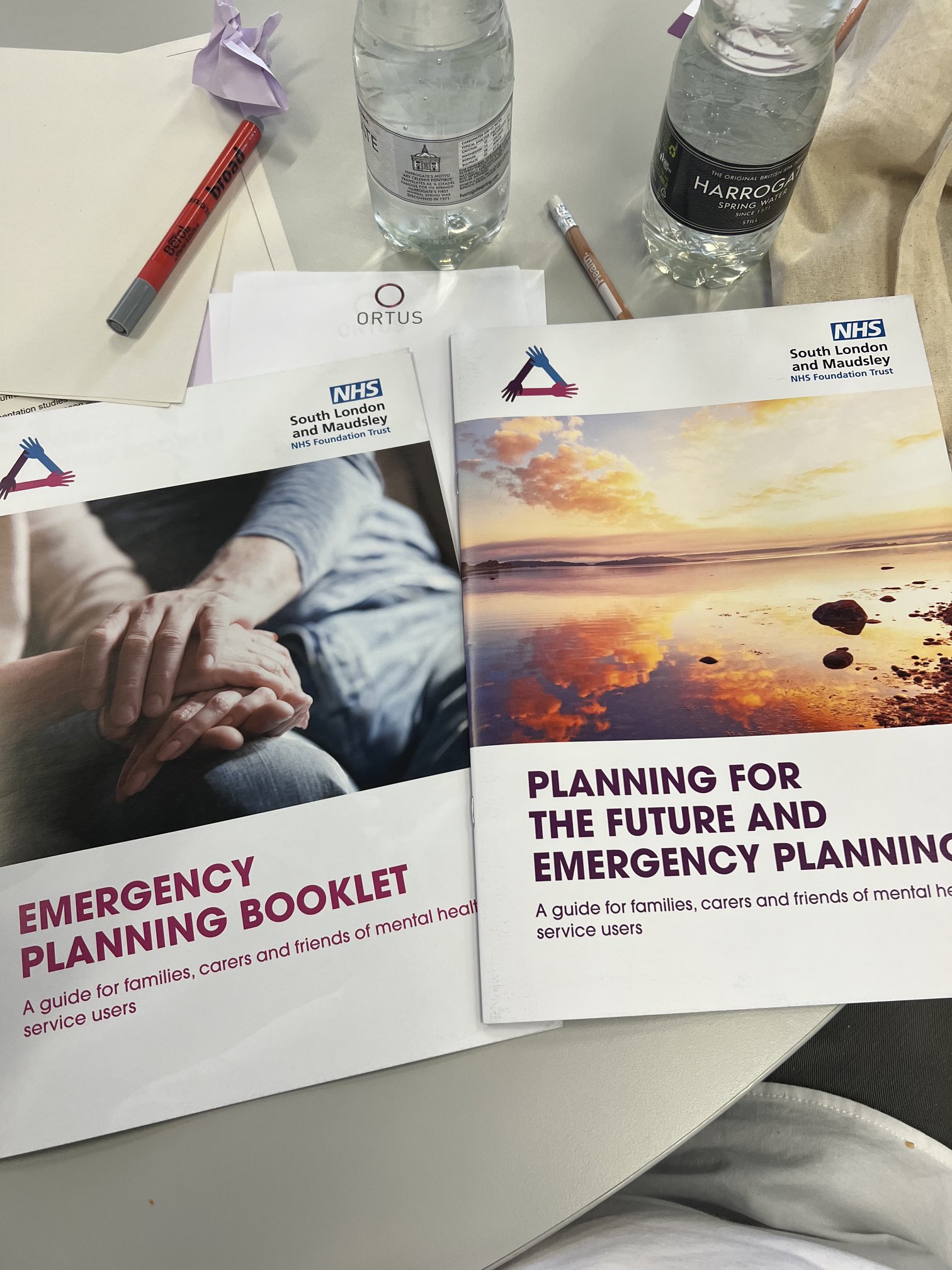
Haringey residents welcome campaign launch by Carers First  : Carers First is rolling out free emergency plan packs exclusively in Haringey for people who care for a relative or friend.

A coproduced approach to tracking young Black men’s experiences of community wellbeing and mental health programmes : Funded by Mind, Centre for Mental Health has designed a new, culturally informed approach to monitoring young Black men’s outcomes for accessing wellbeing support.

SIGN UP TO NEWS SITE HERE

Bromley, Greenwich, Bexley & Lewisham Ethnic Carer Forum April 2022

Hello fellow mental health carers. Have not blogged an update in a while regarding my carer forums. Probably due to being busy publishing my 3rd book on mental health carer poetry. More on that later. I have also been developing online courses aimed at mental health carers. I am now preparing to work on my 6th online course “caring for someone with a mental illness”.

Back to this blog update. This is an update from my monthly ethnic carer forum. A forum for those from ethnic backgrounds caring for someone with mental illness.

Speakers

  • Rev Dr Cameron Langlands – Head of Pastoral & Spiritual Care at South London & Maudsley
  • Carl Nando – Amenity Care update
  • Rubbia Ali – Black families involvement in new elearning.
  • Rev Dr Cameron Langlands – Head of Pastoral & Spiritual Care at South London & Maudsley

Did you know I also facilitate the West London NHS trust ethnic carers peer group? We recently had the Head of Pastoral care visit and engage with carers from the black community.

So it was great to have Rev Dr Cameron Langlands attend and engage with our community group. Dr Cameron looks after the chaplaincy service at South London and Maudsley. Dr Cameron takes care of service users who are inpatients and will often see people in community, but only if they are tied into the SLaM services. Dr Cameron would love to engage with more patients, but there are only three chaplains in the full time role. Plus they have four sites to cover, as well as some community settings.

They also have a part time Imam who works with them on a Tuesday. Plus a part time Deacon who works at ladywell unit over in Lewisham on Thursday.

Dr Cameron has been in the NHS now for just over 20 years in chaplaincy, and what they find particularly within mental health chaplaincy is that when people say they want a specific chaplain, often they don’t. Because they’re looking for is someone who is an appreciation as to where the patient is coming from. That would be who has the ability to sit and listen to them, especially on the difficult situation that they’re in. This is where the nursing staff are trained to do that, but unfortunately, they are often incredibly busy. So that allows those within the chaplaincy team to be able to augment the clinical team and do that.

The team are running a training program for transpersonal therapists who are in training. They focus on more spirituality based transpersonal side of things, and have to do 100 hours within psychiatric setting. So most of the work now has a chaplaincy volunteer as well. They can dovetail into the service.
The other thing they do is that they can offer volunteers in the befriending service that run via the volunteer coordinator as well. So they tie in with people in community who have either been discharged from service but still want that link or are being looked after by their GP or their community mental health team.

Dr Cameron has also asked for a befriender in a new service that runs twice a year, the befriender service is now online, the service can also be accessed in person. The course is ran over a 10 week period and it covers all aspects of mental health.

Dr Cameron mentioned that In South London, they have managed to secure funding from the from NHS England, and have started a bereaved suicide service, which is aimed at those who have been bereaved by suicide, or those who have been witnesses to suicide or attempted suicide. In that team, they have got a bereavement manager, two support workers and a couple of counselors, and they are the only service in the UK to have two community champions employed in that service reaching out to people on non faith based basis.

QUESTIONS FROM CARERS

  • Can there be a conflict on spiritual conversion regarding a patient’s faith?
  • How is spirituality being used as a way to be inclusive and, and bring out these outcomes to be more favorable towards those ethnic communities using those services?
  • Is there a spiritual and pastoral policy? Is it inclusive of families and carers?

  • Carl Nando updates on AmenityCare update

Next was Carl Nando’s turn to update the carer forum on his project Amenity care, which looks to support carers with a package for the person suffering ill health. Carl talked about how Mental health is one of the key pillars for Amenity Care and its clients.

Carl talked about the struggles he had in the past supporting his parents and the racism they experienced. Carl feels this is an issue for today. Carl mentioned how tough it was to provide that care and how it inspired him to set up his own business that focuses on advocacy and support for those suffering ill health.

Carl thinks it is very important to have more black own mental health businesses tailored to the community, but there are struggles and getting access to business support is difficult. There were lots of questions from carer members on how Carl can raise the awareness of black mental health and at the same time run a business.

  • Rubbia Ali presents on Black families involvement in new elearning project

Lastly it was Rubbia’s turn to present to the ethnic carers group. She is a research worker at King’s College London. She spoke about her current study where they just received funding and they are now working on a project tailored to black families. It is called Black families involvement in E-learning. This is being led by two psychologists at King’s College London, by Dr Valentina Cardi and Dr Juliana Onwumere.

The study has two aims. Firstly, to understand the experiences and impact of the COVID-19 pandemic on the carers of children and young people (6-24 years) from Black minority ethnic communities in the UK. The second aim is to explore with carers of children and young people from Black minority ethnic communities, the type of information they would find helpful to include in an online course that aims to offer carers skills to support children and young people with their mental health and wellbeing. The Be FINE study will employ a mixed methods design, using both online surveys and individual and group-based interviews.

The study has two parts; an online survey and focus groups. To participate, individuals have to be parents or carer of a young person from a Black racial minority and the child has to be aged between 6 – 24 years. We then ask that the participant fills out the online survey, this should take around half an hour. The participant will receive £15 amazon voucher for participating. Following this, the participant will have the chance to also sign up to the focus groups.

This concludes the brief update for April – phew! I am so far behind!!

July Carer News Updates 2022

The latest edition of my online carer, mental health and ethnic mental health news is out for July.

Click below to view latest carer news by Matthew Mckenzie for July

JULY 2022 Carer & Mental Health news

For the July edition we have

Swindon Carers Centre: 2022 AGM Recording : YouTube video of Swindon Carers AGM. Hear the latest updates on what the carers centre has been doing for carers.

Carer Activism : My latest online course for carers. This one is on applying activism for carers who struggle with engagement from health and social care. Only £2 via paypal.

Walking the Walk: How can we use carers’ experiences to improve end-of-life care? – BMJ : Paper on how carers experiences of end of life care can reflect on professionals.

State of Caring Survey 2022 – Carers UK : Carers UK release their “State of caring survey” for 2022. Important to collect the experiences of carers.

Equality and Human Rights Commission Annual Report 2021-2022 : Latest update and report from the Equality and Human Rights Commission

SIGN UP TO NEWS SITE HERE

SW London MH Carer Forum March 2022

Welcome to my March 2022 update of our SW London mental health carers forum. The group is a hybrid group of my other forums. Usually my carer forums focus on engagement and updates, but this one sometimes acts as a peer and network group for those caring for someone with mental illness.

Speakers for March 2022

  • Karen Persaud – SWLSTG – Carers, friends and family involvement coordinator
  • Gary Baker – Carers Support Worker – Richmond Mind
  • Antonia Buamah – Patient peer support – EMHIP– Ethnicity and Mental Health Improvement Project.

Karen from South West London & St George Presents

Karen who sometimes attends and engages with our group updated us on carer developments at the local SW London mental health trust. Karen spoke about the new carers peer support worker Zoe Hannah. The new role will be running for one year and should hopefully continue onwards.

The trust is actually really committed to pushing forward the lived experience workforce as part of their overall service delivery. This is where they have four services user peer support workers in posts. SWLSTG are also currently reviewing the trust’s carers strategy, which is quite outdated.

The new strategy will also be reflecting on the need for the trust to do more around supporting carers through their carers recovery journey, because carers go through a recovery alongside supporting loved ones through their own recovery journey. This means it is trying to balancing out wellbeing needs.

The next update for SWLSTG is there new recovery college course, which is being facilitated by Kingston adults education, college. The course has been adapted for wellbeing techniques for carers, families and friends. The course should be running for 10 weeks. Karen also updated briefly on the friends, families and carers group incase new members of our forum are interested in trust involvement.

Last updates from Karen was on the carer awareness training for staff, especially on induction for staff. This would involve carer communication skills plus carer involvement in the planning and discharge.

Gary Baker – Carers Support Worker – Richmond Mind presents

Gary fed back on how Ricmond Mind works closely with Richmond carers regarding mental health carers. Carers can be self refered or be referred to by another professional. Once they received that referral, Richmond Mind will contact the carer. From there the carer will be given access to support and workshops.

Gary mentioned that quite a few people tend not to like the term carer and tend to prefer being called a client or the person’s relative.

  • Responses from carer members.

Are services at Richmond could be offered in Merton or Kingston? (quite a few members asked about the services)
My question was on engagement from SWLSTG, I wondered if Richmond Mind staff have been invited to meetings. Gary talked at length regarding carer champion meetings.
The next question I asked for engagement from community mental health teams. This is where Gary mentioned that there was not enough.

Antonia presents on the Ethnicity and Mental Health Improvement Project (EMHIP)

Antonia talked about how the Ethnicity and Mental Health Improvement Project (EMHIP) is an attempt to reduce inequalities in access, experience and outcome of mental health care in South West London (Wandsworth & Tooting, Battersea locality). It was developed through the leadership and activism of leaders within the African, African Caribbean, and Asian communities.

The EMHIP advocates for a practical, locally based service improvement programme, co-designed with service users and local Black and Asian communities, based on established evidence, building on existing community led, co-produced projects.

In the UK, people from the Black and Asian community are being denied equal and compassionate mental health care.

  • They more likely to be brought to and kept in without their consent.
  • They are more likely to access mental health services through the police and criminal justice systems.
    find themselves unwell and back again, once released, particularly men
  • be forcibly restrained and given more than the recommended amount of medication.
  • The fence of mental heath for the Black and Asian community has been broken for several generations and the many promises of repair (partial or full) has not materialised to date.
  • We have delved deep, hence, our toolkit EMHIP– Ethnicity and Mental Health Improvement Project.

Antonia pointed out that as a community we’ve recognised that our broken fence must be repaired once and for all and have forged collaborations and partnership with many friends

South West London CCG (CCGs are now replaced to Integrated Care Boards)
South West London and St. George’s Mental Health NHS Trust
Local context of Black and Asian – voluntary, faith and community groups

This can be organized via the non-profit Wandsworth Community Empowerment Network (WCEN)

The Hub offers our guests, visitors and other attendees a communal safe place to sit down, relax and have a conversation in a hospitable environment.

Service/Sessions provided:

¨ Physical Health and Wellbeing checks
¨ Citizen Advice Bureau/Housing First Aid
¨ Pastoral Systemic Therapy
¨ Mental Health and Wellbeing Out-patients type clinics
¨ Explore training or employment opportunities
¨ Promote on-going recovery
¨ Social life wellbeing
¨ Effective “active sign-posting” to the supportive local services or agencies

More information can be found below

Website: http://www.emhip.co.uk

Email: info@emhip.co.uk

This was a brief update for my SW London mental health carers peer group. For the month of July SW London NHS will be engaging our group regarding SW London’s mental health strategy. I for one will hope it will include families and carers.

Joint Southwark & Lambeth MH Carers forum April 2022

Hello fellow carers. A quick update from my past carer forums. This is the April update of my Joint Southwark and Lambeth mental health carers forum.

Speakers for this forum were

Naomi Good – Engagement from Guys & St Thomas NHS FT

Rachel Braverman – Expert by experience at Royal College of Psychiatrists

Just a quick note, I cannot remember if Rachel managed to attend this forum. I think should could not make it and attended my south west London carers group at a later date.

It was however good that Naomi engaged with carers who look after someone with a mental illness. The thing is that patients also use physical health services. So it was important to get stakeholder engagement from Guys & St Thomas hospitals.

Naomi Good Presents to the forum.

I know Naomi very well when she used to work at NSUN, this being the National Service User Network. Naomi did a lot for developing the 4PI involvement standards at mental health NHS trusts. These standards are still very much in use today, although there still needs to be a lot of work done.

Naomi is now the stakeholder engagement at GSTT and is also a carer herself and spoke on the following.

  1. Joint Programme for Carers and Patients in Covid Recovery
  2. Surgical Strategy – delivery workshops and steering group
  3. Apollo Programme – Electronic Health Care Record
  4. Carers Strategy – development

Naomi started by presenting the Joint Program for Carers and Patients.

Basically the programme aims to make sure the views of patients, carers and the public help with future service changes during the pandemic especially those who have been most affected by the pandemic. GSTT want to continue to improve and provide the very best care to patients, especially to those who are:-

Waiting for treatment
Virtual access to care
Struggling with Long COVID

There actually were some workshops back in April and May which Naomi presented on the surgical strategy

The Apollo Programme

The Apollo Programme

Naomi then spoke about how Apollo will be the most ambitious programme of transformation they have undertaken. GSTT will be replacing many of the systems (both digital and paper). GSTT currently use with a single, integrated and comprehensive source of information across Guys and St Thomas’ (including Royal Brompton and Harefield) and
Kings College Hospital Trusts. Epic is a US-based provider of electronic health records (EHR). It is used in some of the best hospitals around the world including the majority of top-ranked US hospitals, and UK trust’s such as Great Ormand Street and Cambridge.

GSTT Carer Strategy

I asked a quick question regarding GSTT’s carer’s strategy in which Naomi responded they do have one. The GSTT carer’s strategy is embedded within each of the different strategies, but there is an effort in refreshing that and making sure it is available across the trust, which is seen as priority area.

GSTT involvement

Naomi talked about how others could have the opportunity to make a huge impact to the care of patients and the experience of carers across Guy’s and St Thomas’ and King’s College London. During the programme to date, the carer’s voice has been integral to shaping how they will support carer’s to access care on their loved ones behalf’s. In future phases of the programme, patients and carers will help GSTT to user test the patient-facing applications, and design their patient communications and training programmes.

• Reimbursement of time spent in workshops and meetings in line with Trust policy
• Reimbursement of travel expenses, childcare costs, and carer costs
• Access to various IT training opportunities
• Foundation Trust Membership (for those 18 years of over).
• Job references