By Matthew McKenzie – Carer forum facilitator
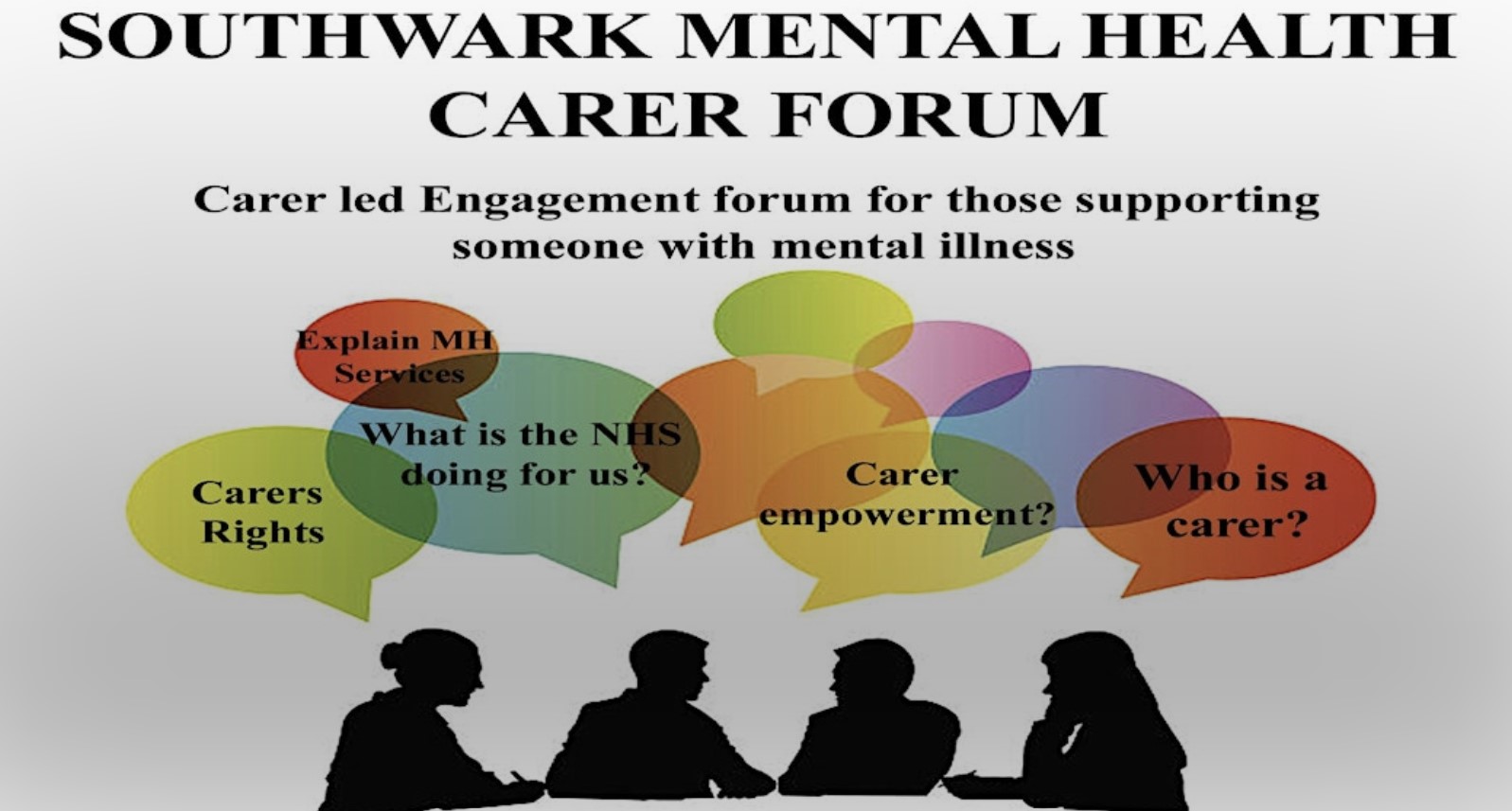
On Monday 24 August, I facilitated another meeting of the South London Mental Health Carers Forum. The forum brings together unpaid carers and carer representatives from Lewisham, Lambeth, Southwark and Croydon, giving people a space to share experiences, learn about their rights and influence the development of local mental health services.

We welcomed carers with many different experiences, including parents supporting adult children with serious mental illness, autism and substance misuse, as well as people involved in advocacy, peer support, staff training and service development. Some members had been navigating the mental health system for many years, while others were newer to caring and looking for guidance.
A powerful message emerged from the introductions: even experienced carers can struggle to understand how different parts of the mental health system fit together. Services can feel fragmented, with carers passed between teams or excluded from discussions despite holding important information about their loved one’s history, warning signs and support needs.
Supporting the Supporters research
We were joined by Carol, an unpaid carer and postgraduate student studying psychology and neuroscience of mental health at King’s College London.
Carol introduced her research project, Supporting the Supporters: Professional Perspectives on Integrating Informal Care into the Mental Health Ecosystem. The study explores how professionals understand the contribution made by unpaid carers, how information and support could be improved, and how carers could be more meaningfully involved alongside mental health professionals.

As part of the research, Carol is interviewing people with professional or advocacy perspectives, including psychologists, psychiatrists, GPs, commissioners, teachers, service providers and carer advocates. I have already taken part in an interview, and several forum members expressed an interest in contributing.
The discussion highlighted why it is so important for carers’ experiences to be represented in academic research. Research can help shape future policy and practice, but carers also stressed that participants should be kept informed about what happens to the findings. Too often, people share deeply personal experiences with research projects and never hear about the outcome.
I also informed members about a separate University of Oxford study exploring wellbeing and social-group attendance among people caring for someone with a serious mental illness. We hope to hear more about this opportunity at a future meeting.
Triangle of Care: more than an accreditation badge
The main presentation focused on the Triangle of Care, a framework developed by Carers Trust to improve cooperation between the person receiving mental health services, the professionals supporting them and their unpaid carer.

As facilitator, I explained that the framework should be something carers experience in practice, not simply an accreditation badge displayed by an organisation.
South London and Maudsley NHS Foundation Trust has achieved Triangle of Care Star 1 for inpatient services and Star 2 for community services. With this work now being reviewed, there is an important opportunity for carers to help examine whether the standards are making a noticeable difference across local services.
Carers should be recognised and recorded, listened to when they provide relevant information, given clear explanations about confidentiality, offered appropriate information and support, and involved at important points in care and discharge planning. Staff should also understand that carers have needs and rights of their own.
Confidentiality should not become exclusion
Confidentiality produced one of the most detailed and passionate discussions of the meeting. Several carers described situations in which confidentiality had been used to shut down communication completely.
Respecting the service user’s privacy is essential, but confidentiality does not prevent professionals from listening to a carer’s concerns. A carer may hold vital information about changes in behaviour, medication, relapse indicators, risks or what the person is like when well.

Even when professionals cannot disclose personal clinical information, they can usually provide general information about how a service works, explain how a carer can submit concerns and signpost the carer towards available support. Carers should not simply be told, “We cannot speak to you,” and then left without guidance.
Members also discussed situations where a person experiencing a serious deterioration may withdraw consent for family involvement. These cases require careful professional judgement, particularly where there may be questions about safety, insight or decision-making ability. Carers felt that staff need more confidence and training to manage these situations without automatically treating the family as a problem.

Carers were encouraged to ask whether their role has been recorded, how they can share information with the clinical team, how they will be involved in care and discharge planning, and who they can approach if their perspective is being overlooked. Where serious concerns are ignored, carers should raise them in writing so there is a clear record.
Carer involvement in discharge
The discussion then moved to hospital discharge. Carers can sometimes be contacted shortly before someone returns home, without a proper conversation about whether they are able or prepared to provide the expected support.
A safer discharge should include an early discussion with the carer about the help they can realistically offer. Information about medication, warning signs, follow-up arrangements and points of contact should be explained clearly. Professionals should not assume that a family member can take on intensive caring responsibilities simply because they are related to the person.
Carers also need to know that they can request a carer’s assessment from their local authority. An assessment can help identify the effect caring is having on their own wellbeing and what support may be needed. Existing assessments should be reviewed when circumstances or caring responsibilities change.
What carers raised during the forum
A substantial part of the meeting was led by carers sharing what they had experienced while supporting relatives through mental health services. Although everyone’s circumstances were different, many common concerns emerged across Lewisham, Lambeth, Southwark and Croydon.
Several carers described the mental health system as fragmented and difficult to navigate. Families may deal with inpatient wards, community mental health teams, crisis services, supported accommodation, GPs and social care, but these services do not always appear to communicate effectively with one another. One carer reflected that even after years of involvement, it can still be difficult to know whom to contact when a new crisis develops. This raised concerns about how much harder the system must be for people who are new to caring.
Carers also felt that decisions made at senior levels do not always reflect what happens in practice. Policies, pathways and strategies may appear clear on paper, but families can experience delays, poor communication and a lack of coordination. Members wanted more people with direct experience of using or working within mental health services to influence decisions at the highest levels.
A major concern was the failure to listen when carers report early signs of deterioration. Carers often recognise changes in sleep, behaviour, medication use, substance misuse or communication long before a situation reaches crisis point. Some members described situations in which their warnings were overlooked, only for the person’s condition to worsen later. Carers felt that their observations should be recorded and considered as part of risk assessment and relapse prevention, even when professionals cannot share confidential clinical information in return.
Confidentiality was one of the most strongly debated issues. Carers understood that people using mental health services have a right to privacy. However, they felt that confidentiality is sometimes interpreted too rigidly and used to exclude families from almost every conversation.
The group stressed that professionals can still listen to information provided by a carer. They can also explain how the service operates, receive concerns, provide general guidance and direct the carer towards support. Saying “we cannot tell you anything” should not bring all communication to an end.

Some carers described being excluded after their relative had withdrawn consent for family involvement, sometimes during a period of serious illness or limited insight. Members questioned how consent is considered when someone’s mental state or decision-making ability may be changing. They felt staff should look carefully at the individual circumstances, risks and history instead of applying confidentiality as an automatic barrier.
The inconsistency between professionals was another concern. Some staff members communicate sensitively and recognise the value of family knowledge, while others refuse even to listen. Carers felt that the quality of their involvement should not depend on which professional happens to answer the telephone. Better training, management support and accountability are needed so that good carer practice becomes consistent across services.
There was also discussion about inaccurate or outdated information remaining in health records. Carers described how an early diagnosis, allegation or misunderstanding can continue to influence future treatment long after it has been challenged. Correcting such information can be extremely difficult, yet it may affect how professionals view both the person receiving care and their family. Members wanted clearer ways to challenge inaccuracies and ensure that corrections or alternative professional opinions are properly recorded.
Carers raised concerns about attitudes towards families. While relationships can sometimes be complicated, relatives should not automatically be viewed as interfering or obstructive. Where disagreements arise, members suggested that an independent person, advocate or senior professional could help everyone understand the different perspectives. Completely blocking communication can damage family relationships and may also undermine the person’s recovery and safety.
The experiences of carers from racialised communities were also recognised. One member spoke about the fear and mistrust that can develop when Black men repeatedly come into contact with mental health services or the criminal justice system. The forum acknowledged the importance of culturally responsive services that understand how race, stigma, previous experiences and unequal treatment can affect whether families feel safe seeking help.

Hospital discharge was another prominent concern. Some carers reported being contacted too late, with an expectation that they would immediately resume significant caring responsibilities. Members felt carers should be involved early enough to discuss what support they can realistically and safely provide. They should receive clear information about medication, warning signs, follow-up arrangements and who to contact if the person’s condition deteriorates.
Carers should not be treated as an unlimited resource. Being a parent, partner, sibling or other relative does not automatically mean someone is physically, emotionally or practically able to provide the level of support being assumed. The carer’s own health, employment, family responsibilities and wellbeing must be considered during care and discharge planning.
Members also discussed the importance of carer’s assessments. Some people had received very few assessments despite caring for many years. Carers were encouraged to request an assessment from their local authority and to seek a review when their responsibilities or personal circumstances change. An assessment creates a formal record of the caring situation and may identify support needed to protect the carer’s wellbeing.
Another recurring issue was accountability. Guidance about involving carers may exist, but families are not always sure what to do when services fail to follow it. Members were encouraged to put important concerns in writing, keep records of correspondence and ask for matters to be escalated when necessary. A clear written record can become particularly important if warnings have been ignored or a serious incident later occurs.

Despite these difficult experiences, the conversation also demonstrated the strength of peer support. Carers shared knowledge, validated one another’s concerns and helped newer members understand that they were not alone. The group strongly encouraged carers not to remain isolated, even when their loved one appears relatively well. Joining a carers’ centre, peer-support group or advocacy forum can provide information and connections before another crisis occurs.
The overall message from carers was clear: they are not asking to take over clinical decisions. They are asking to be recognised as people with valuable knowledge, their own support needs and an important role in safer care. The Triangle of Care will only have meaning if carers can see and feel these principles operating in their everyday contact with services.
Turning shared experience into influence
This meeting demonstrated why independent, carer-led forums remain so important. They reduce isolation, allow newer carers to learn from those with longer experience and help identify patterns that may otherwise be dismissed as individual incidents.
Members involved in SLaM meetings and the forthcoming carers’ listening event were encouraged to raise the Triangle of Care and ask how carers will contribute to its review. I will also seek to invite representatives leading this work at SLaM to a future forum so that they can update carers directly and respond to questions.
Our next South London Mental Health Carers Forum is due to take place on Monday 28 September 2026. We will continue examining the Triangle of Care, with a stronger focus on carers’ experiences and the practical changes they want to see across mental health services.
I would like to thank everyone who attended and spoke so openly. The experiences shared were sometimes difficult, but they reinforced an important principle: carers should not have to fight simply to be recognised, heard and supported.