Tag Archives: mental health

Bromley, Greenwich, Bexley & Lewisham Ethnic Carer Forum February 2022

Welcome to a brief update of my february ethnic mental health carer forum. As usual the forum is an engagement platform for those caring for someone suffering mental illness from an ethnic background. I run the forum via zoom with the support of several mental health trusts.

Speakers at my carer forum for February were

  • Lisa Fannon the Public Health Training and Development Manager for Lewisham updating on Health inequalities
  • Ellie Wharton Senior Project Manager for Health Innovation Network
  • Engagement from the Police on mental health
  • Lisa Fannon presents on health inequalities project

Lisa wanted to update us on the health inequalities project. Since last month there was a discussion with KINARA who attended and talked about the work that they are undertaking in the community, specifically around the Birmingham and Lewisham health inequalities review that is being undertaken with the African and Caribbean communities.

That work has now been concluded and she has received a report. Lisa hopes that they will be able to launch all of that information with an event that’s taking place soon. Lisa reminded that some of us may have received the invite to that event already, but she wanted to ensure that as a community group that we were aware what is happening.

The event will be overseen and organised by Public Health Lewisham. They will also plan to have a additional event following the one just mentioned and it will specifically be for community members. This will be essentially a second in series of events around health inequalities where they are aiming to bring together community groups, and members of the health and social care and health and social care leaders talk about health inequalities. Lisa wants this to be done in partnership with the health and well-being to address health inequalities in Lewisham, and bring together everybody to discuss the situation.

There of course will be opportunities to look at some of the achievements of this work, but also to discuss further action on what needs to be done to tackle health inequalities. Lisa mentioned they will look at what kind of plans that they are hoping to undertake across this year and what future needs is happening at the event.

The event will run in the evening at a Community Centre, where she has sent in advance of this meeting, information about the event to Matthew.

  • Ellie Wharton presents on the Health Innovation Network

Ellie wanted to tell us about the mental health patient safety network event, which is part of their mental health safety improvement programme. Ellie apologised for the acronyms flying around on the programme, but thanked us for inviting her to join and speak at our ethnic carer group.

Ellie agreed with some members that health inequalities is such an important topic, which is why they have chosen it for their second event to focus for the safety network. Ellie talked about what the Health Innovation Network is, which is an Academic Health Science Network (AHSN) for south London, one of 15 AHSNs across England.

The AHSN exist to speed up the best in health and care. They have been commissioned by NHS England and Improvement to focus on Mental Health Safety. Which involves developing a Safety network and supporting quality improvement work in certain areas (such as restrictive practice).

Their principles are central to how the programme runs:
• co-design with people with lived experience
• Creating shared learning, connection and Joy
• Foundations of systematic QI
• Engaging with inequalities where they exist
• Working with their foundations and all the good things that already exist

Ellie then pointed out a member of my ethnic carer forum and stated one of the members was involved in the event. This is when the carer member spoke on her section regarding health inequalities and carers.

Ellie then talked about the mental health safety network.

The network is an interactive designed to bring together individuals across the system with the shared goal of improving mental health safety it is co-hosted by the HIN and the 3 south London Mental Health Trusts (South London & Maudsley NHS Trust, Oxleas NHS Trust and South West London & St George NHS Trust). It’s purpose is to create value through sharing learning, creating connections and building energy and capability in safety improvement

The event welcomes people who share the MH safety network’s goals of improving mental health safety. Registration is open to people with lived experience of mental health services, including carers, clinical and managerial staff from NHS, independent and private health and social care providers, commissioning leads, local authorities, voluntary sector partners, police, emergency services and other system partners.

Ellie then talked to us about the agenda of the event.
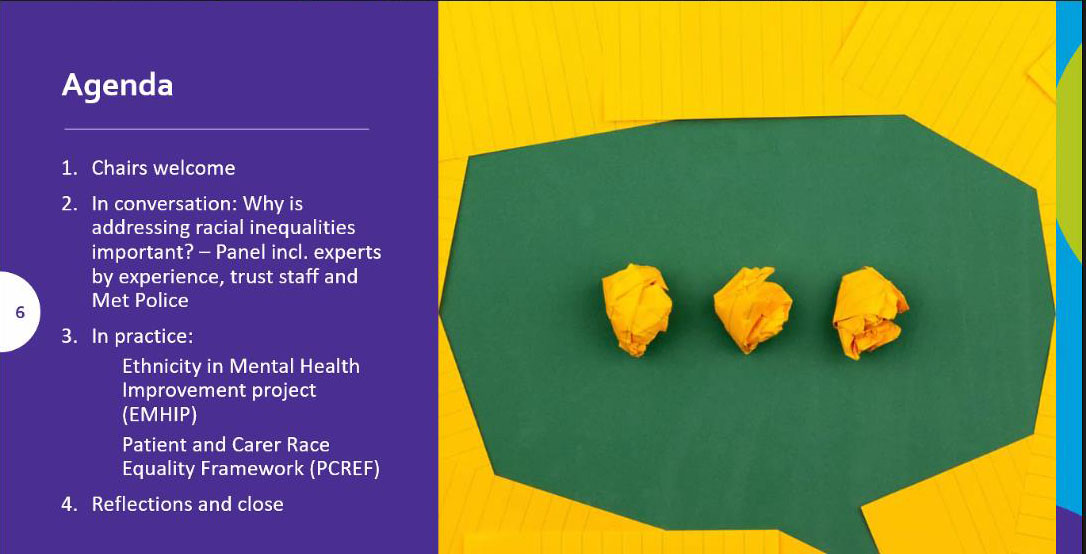
  • Mental health Police engagement from South London

The forum gets engagement from the police every now and then. This is mostly because the police have an interest in mind while helping those in a crisis, they want to connect and reassure carers. The police talked about what sites they cover this being Sutton, Croydon and Bromley although its quite a small team.

Their main sort of role and objectives is being a direct liaison with the NHS and mental health trusts. There are other objectives dealing with assaults against NHS, racial assaults against NHS staff where the perpetrators is having mental health issue.

The police then talked about section 136 and how they have been dealing with a lot of escalations. The police think the section is being overused. They think there’s things that they can do as a team to prevent that. There was also some talk about what they can do to help with people out in the streets dealing directly with mental health issues.

The police try and get out and about to the hospitals as well. They have got a police liaison officer that works at the hospital and who deals with crime at other Hospitals.

In a nutshell the police work directly with mental health patients once they were coming into contact with police.

SW London MH Carer Forum February 2022

Welcome to a brief update of my South West London carers peer group. The reason this update is brief is because we had no speakers planned to attend and sometimes carer members just update on their situation.

A quick reminder is this group is aimed at those who are caring for someone with serious mental illness, they could be using the services of the local mental health trust South West London & St Georges or perhaps the person they are caring for is not in recipt of services. The carer group is a peer, engagement, networking and empowerment group covering the 5 boroughs SWLSTG covers (Richmond, Wandsworth, Merton, Kingston & Sutton).

For february we had a very good turn out and some new members. Most of the discussion was on sharing knowledge to those new to caring or those who were not sure what support they could get.

As usual I wont report anything confidential between members, only when speakers talk about issues that those unable to attend can catch up on.

Fast forward to May and engagement has been increasing between my groups and engagement from NHS England & Improvement and the local Healthwatches. Even if members struggle to feedback, they can at least understand what are the important issues of the day.

Mental Health poem by Matthew McKenzie

Welcome to my latest blog post. It has been a while since I have uploaded a poem. I have written close to 65 poems on the carer experience since the start of this year. Slowly a fair number of poems will be uploaded to my YouTube Playlist. The poems will play by themselves.

Plus I have added some podcasts of my poems

My latest poem is called “Confusion”

This poem is quite dark, but tells an often all too familiar story where the carer is trying to care for someone who has relapsed into mental illness. There are no beds or resources for the person who is very sick and thus the carer is confused on what to do. She will stick it out and try and cope as she watches her ‘loved one’ descend into madness.

Confusion by Matthew McKenzie

I sit and wait wondering what is next
Too scared to look at whats before me
The phone sits on the table, i am not sure who to call
I just dont know…I have tried before

The sounds…so distressing, so much is on me
but time is going so slow as my mind torments me
I look at him as his eyes look straight past
My heart sinks as my mind is harassed

Minute by minute..hour by hour
Not a word heard or a form of contact
I sit and wait wondering whats next
confusion takes me and I cannot find the solution.

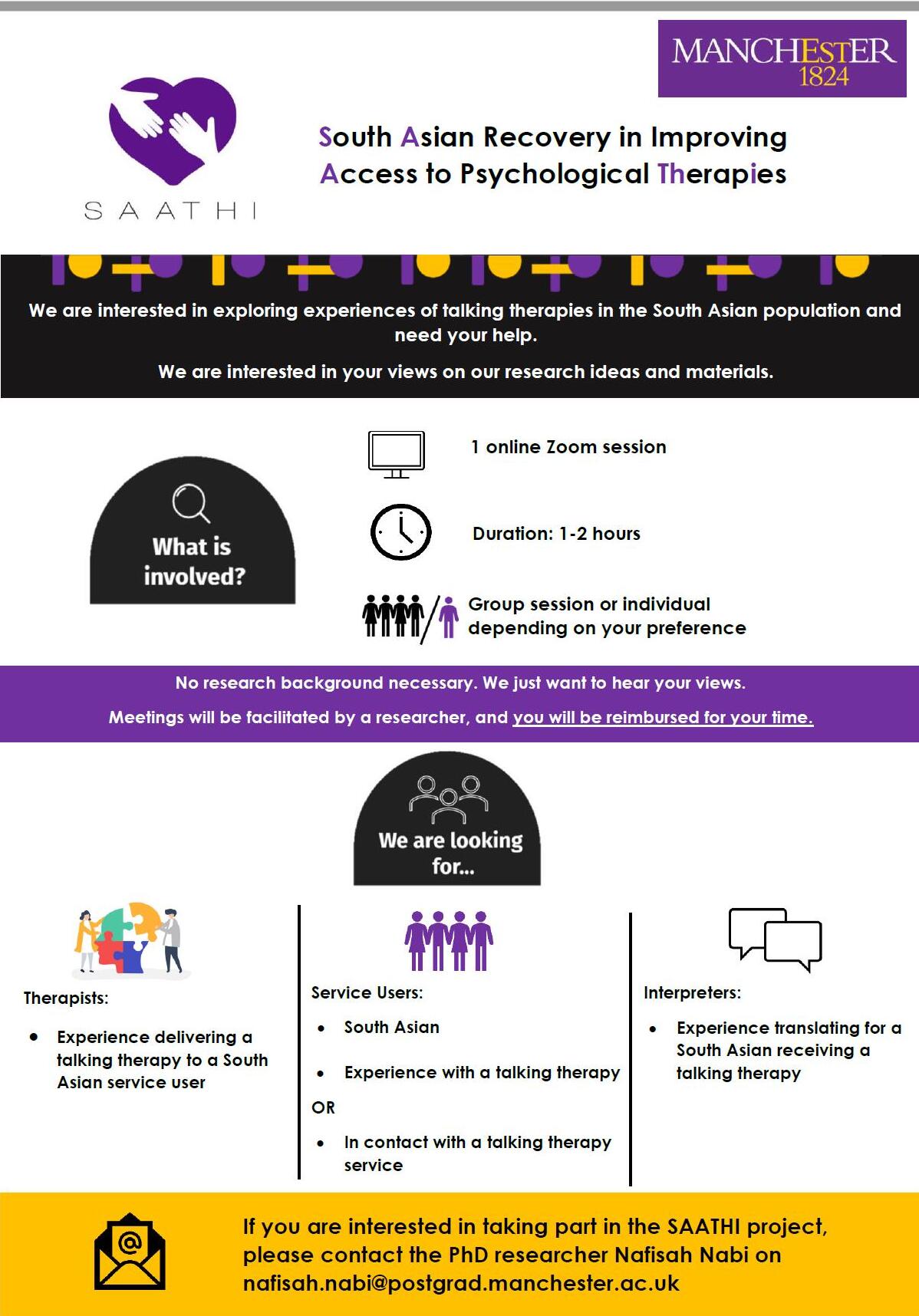
Exploring the barriers and facilitators to recovery for South Asian service users 

Nafisah Nabi a PhD student at the University of Mancheste is working on a PhD research project focuses on exploring the barriers and facilitators to recovery for South Asian service users within IAPT services. Nafisah is looking to recruit a Patient and Public Involvement Group who can offer feedback on research plans and study materials.

Please see the poster below. You can contact Nalisah at nafisah.nabi@postgrad.manchester.ac.uk

SW London MH Carer Forum January 2022

Back again with another blog post from unpaid carer Matthew McKenzie. I run many carer peer groups and forums and it has been a while since I updated on my SW London carers group. This is because I have been very busy working on my new poetry book for 2022.

Speakers for January
Karen Persaud – Involvement project
Discussion on speakers for the year
Matthew McKenzie – Involvement comparison

Karen Persaud Presents on SWLSTG involvement project

Karen come from a caring background and has been a carer for 14 years. Karen was impressed with the stories that have been shared at my group and felt they related to her at a deep level. Karen explained her past work as a carers champion and the work she did with the Royal College of Psychiatrists on formulating the Community Mental Health pathway, the Mental Health Act review and a few other bits and pieces she got involved in.

Karen felt she could actually influence the way carers were being treated because she was often ignored as a carer in the past and wanted to make a difference. In the long run Karen ended up having to make a lot of formal complaint and even though things were slow going through the formal complaints procedure, she felt thats when things were changed. All this ended up where doors were slowly open for her.

Now Karen is working with SWLSTG it has been quite inspiring. Karen added that she is in awe of what Matthew does especially his commitment and how much he actually takes on and actually gets done.

Karen thanked the carers group for having her and that she was really pleased to present what SWLSTG involvement team has been getting up to.

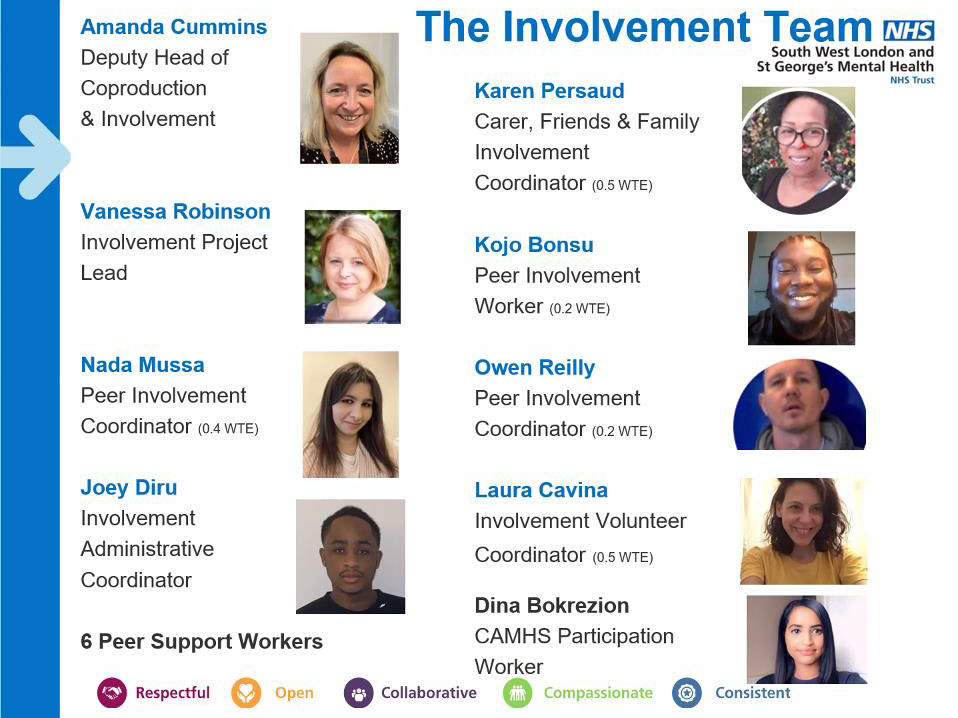
Karen mentioned about involvement team. The recruitment and the in patient involvement of people with lived experience of mental distress in developing services for the for the vocal trust in the community. What Karen is looking to do is involve from basic involvement to full Co-production as much as is humanly practicable.

The team has grown over the last year. Since she has only been there for a few months at the mental health trust. Karen then explained who was in the involvement team and what day do.

Karen mentioned that she is also passionate about, one of them being CAMHS which is child and adolescent mental health services, but not something that she is directly involved in at the moment.

Since Karen only just started work she has noticed the involvement activities slowly increasing where they have now got six peer support workers who have started, one of whom is a dedicated carer, peer support worker, and her name is Zoe Hannah.

Members of the group asked why should carers be involved which lead Karen to explain the following.

  • Carers have a unique insight that can help shape a more appropriate recovery plan
  • Carers are more than a point of contact, they play a vital role in patient and service users recovery.
  • Carers will often be responsible for managing medication, accommodation, finances and a range of other social, emotional and healthcare needs.
  • They may not be clinically trained so it’s crucial that they are supported.
  • Carers are a vital piece of the puzzle and their health and lives are impacted by their responsibilities
  • SWLStG is committed to improving the experience of carers and supporting carers, supports patients and service users so improves outcomes.
  • To show SWLStG commitment, we invest in resourcing and embedding quality standards and processes outlined in Triangle of Care, Carers Engagement Thermometer, NSUN 4Pi in addition to NICE Guidelines and CQC Regulations.

Matthew presents on carer involvement

Since I am mainly on involvement at South London & maudsley, I wanted to compare how involvement was developing at another mental health trust who is part of the South London Partnership.

South London Partnership link

This part of the group where we want engagement on how involvement works at other NHS trust and I recently asked this off my local mental health trust in regards to involvement as a form of comparison.

I pointed out to the group that one of the worst aspects of being a carer is to be isolated and uninvolved. This means not on being involved for caring for someone, but being involved regarding changes to health & social care services.

The idea basically, you know, one of the worst aspects of care is to be isolated and uninvolved when I say uninformed, I mean getting involved in, I suppose veteran services Metro services not just involved in regards to the care of someone, but how services work and given their ideas and learning from other carers who’ve been involved just as what Karen presented before.

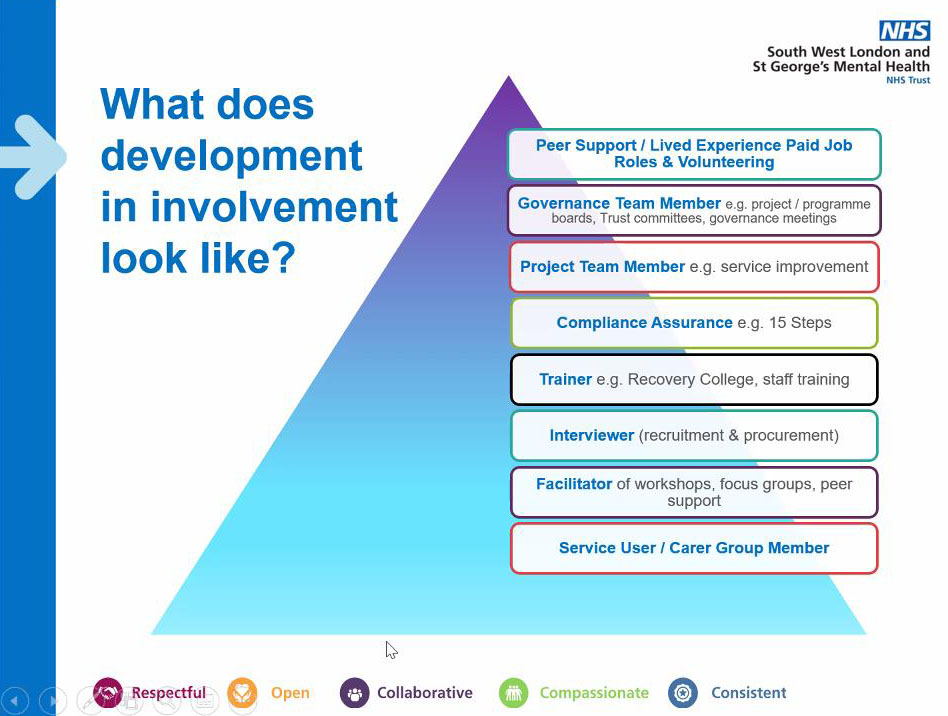
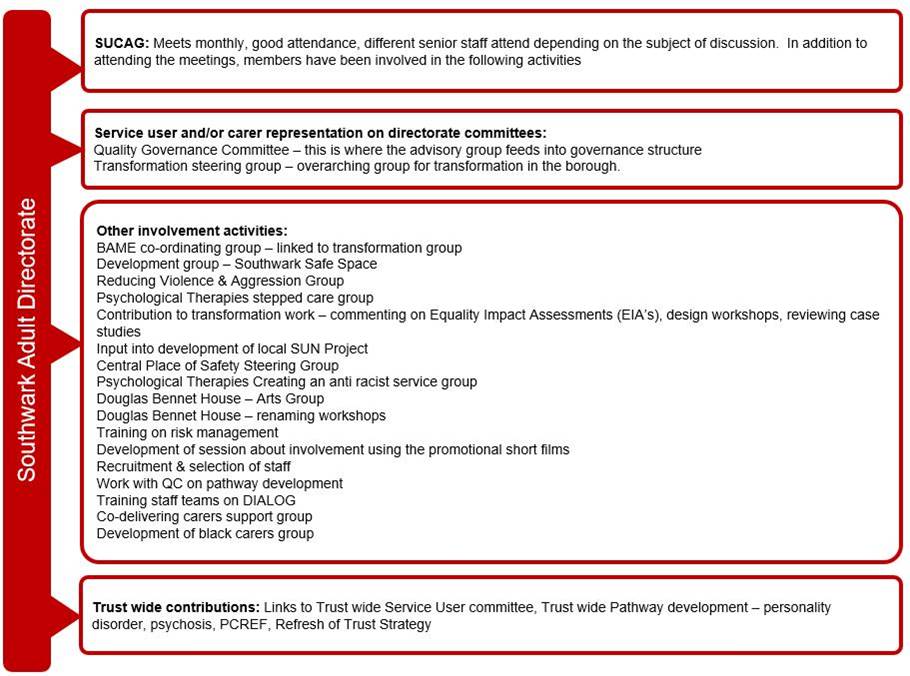
I explained to the group that a good involvements structure easily shows a bird’s eye view of services, and how it reveals involvement for both patient and carer.

The picture above shows an update on the projects showing involvement in the Southwark mental health services. I showed involvement updates and structure for some other services, but felt carers should do the same regarding SWLSTG.

This is the update for January for my SW London carers forum.

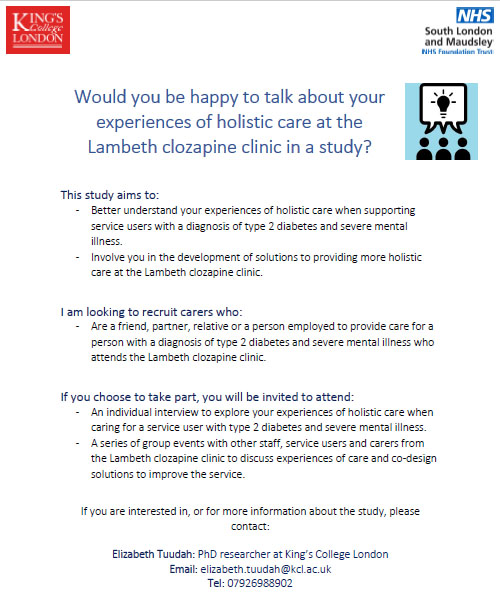
Experiences of holistic care at the Lambeth clozapine clinic research

Elizabeth Tuudah is looking for unpaid carers from the Maudsley for her PHD study. The study is to better understand your experiences of holistic care at the Maudsley clozapine clinic. Holistic care is care that addresses the whole person’s needs (e.g., mental and physical health) and involves different health professionals working together with you to provide person-centred care.

The experienced-based co-design (EBCD) approach involves bringing together service users, carers, and staff in a series of events to improve healthcare services. The EBCD approach has previously been used to redesign both mental health and diabetes services to improve service user and staff experiences.

Please see poster below.

The thin line of Patience – Carer Poem by Matthew McKenzie

This poem is number 9 of the new book I am working on regarding the experience of care expressed as poetry.

I am looking at that clock again
Tick tock, tick tock
The sound is driving me crazy
Tick tock, tick tock

His in the ward again, being detained
It has been weeks now, and I am going insane
All these thoughts rushing through my brain
Wondering when if things will ever be the same

I think I will sit down and watch the TV
Maybe if I put something on, the time will pass easy
My brain hurts and my stomach is queasy
Oh when will they ring, so someone can inform me

While the TV is on, its only been 20 minutes
Nothings good worth watching and I am hitting my limits
The sound of that clock, its making me fidgit
Maybe I ll head out and see him on one of my visits

Oh I don’t know. Why am I doing this
I rang them ages ago, something is amiss
I grit my teeth, have a frown
Something needs to turn around
No one is calling
My heart is falling
My patience is gone and I am about to start bawling

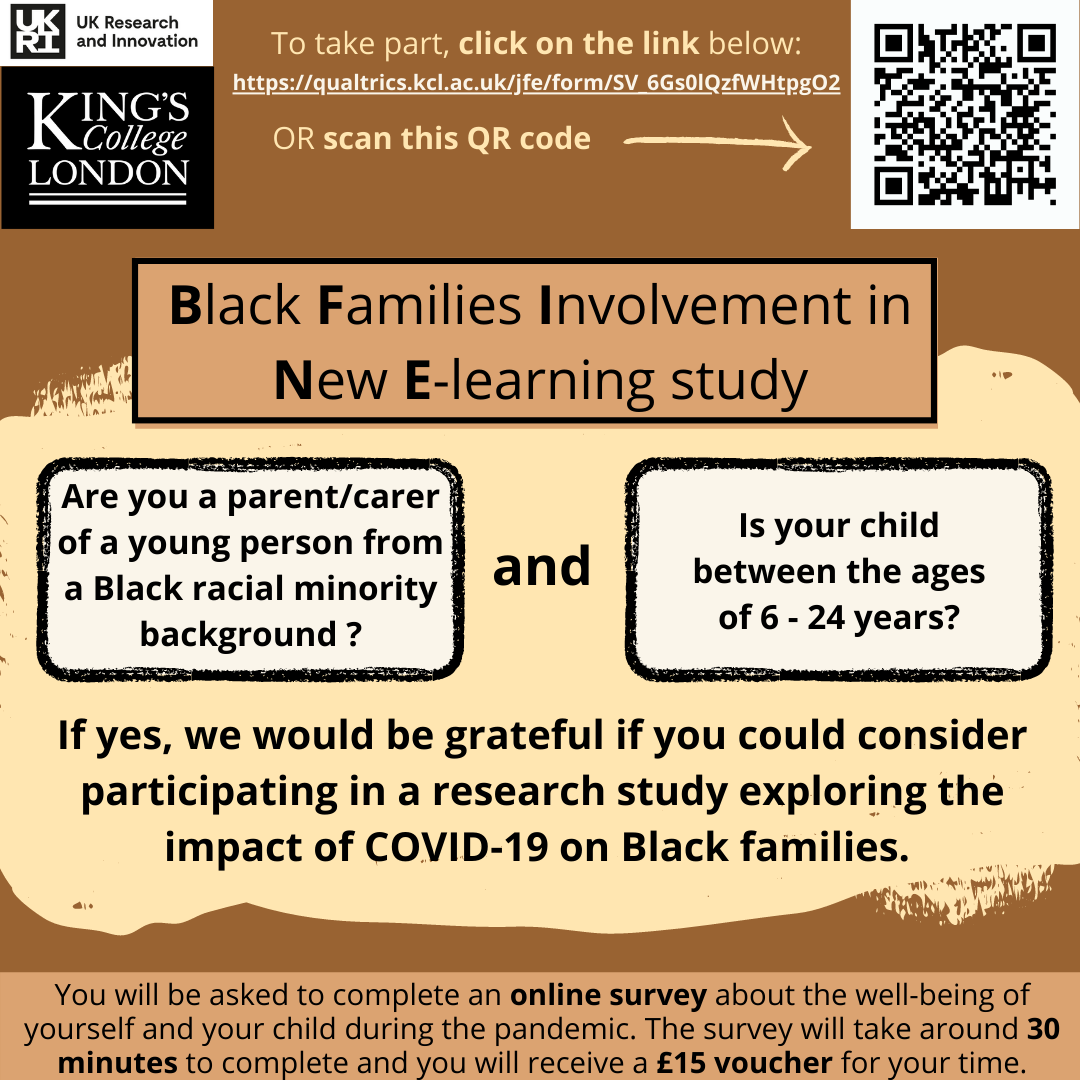
Black Families Involvement in New E-learning (Be FINE) Project

Welcome back to another blog by former mental health carer Matthew McKenzie. I have an exciting project which black families could be interested in.

Black Families Involvement in New E-learning (Be FINE), is a new study funded by the Economic and Social Research Council, as part of UK Research and Innovation’s rapid response to COVID-19 and is led by Dr Valentina Cardi and Dr Juliana Onwumere at King’s College London.

The study has two aims. Firstly, to understand the experiences and impact of the COVID-19 pandemic on the carers of children and young people (6-24 years) from Black minority ethnic communities in the UK. The second aim is to explore with carers of children and young people from Black minority ethnic communities, the type of information they would find helpful to include in an online course that aims to offer carers skills to support children and young people with their mental health and wellbeing. The Be FINE study will employ a mixed methods design, using both online surveys and individual and group-based interviews.

The study has two parts; an online survey and focus groups. To participate, individuals have to be parents or carer of a young person from a Black racial minority and the child has to be aged between 6 – 24 years. We then ask that the participant fills out the online survey, this should take around half an hour. The participant will receive £15 amazon voucher for participating. Following this, the participant will have the chance to also sign up to the focus groups. These will last around an hour and the participant will receive a further £15 amazon voucher for this.

Black communities have been disproportionately impacted by COVID-19. We hope the study findings will aid the development of a more in-depth understanding of the experiences of Black minority families during the pandemic, and of what type of help, delivered online, might be perceived as beneficial in empowering carers to support the psychological wellbeing of children and young adults.

Below is the Link to the survey people can take part in.

https://qualtrics.kcl.ac.uk/jfe/form/SV_6Gs0lQzfWHtpgO2

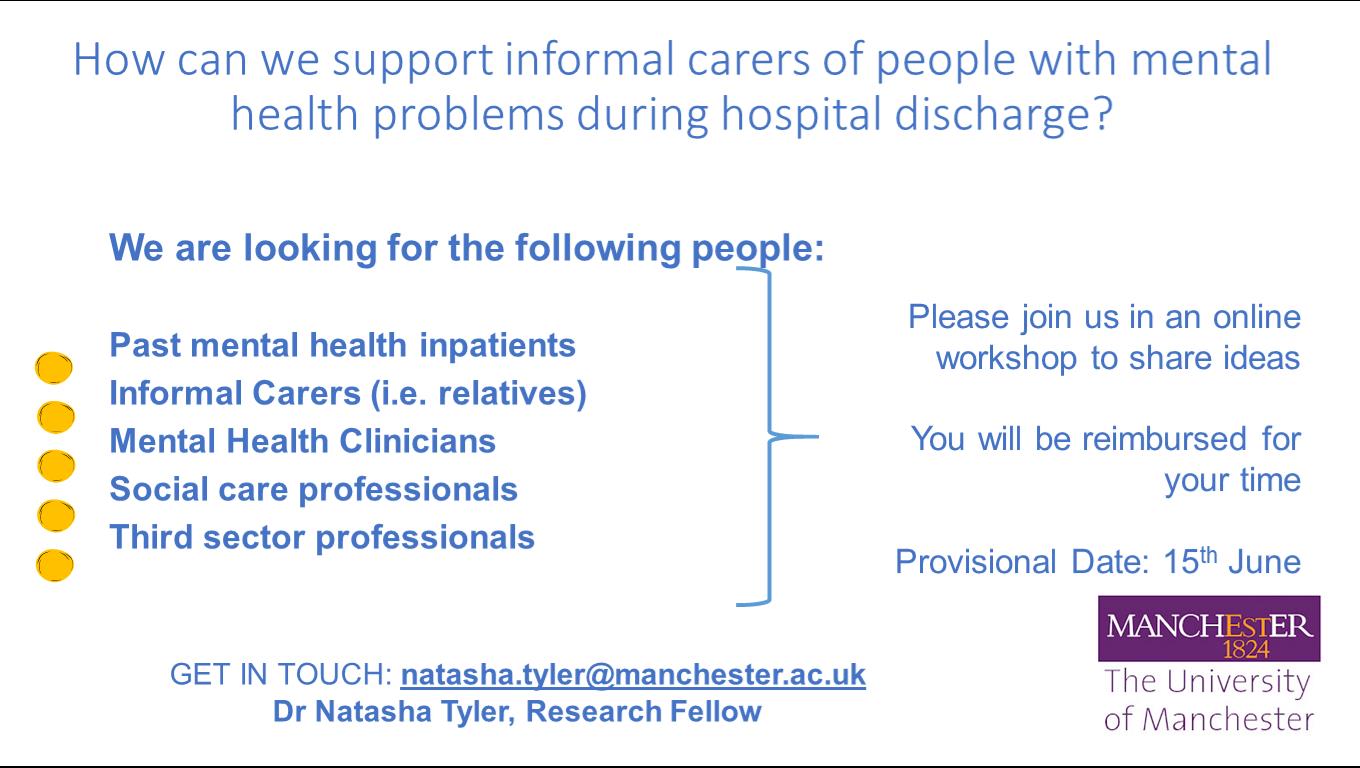
Supporting informal carers of people with mental health problems during hospital discharge

Welcome fellow unpaid carers. I am involved in this exciting new study, where I feel it is very much needed to help shape mental health services. I hope members of my carer’s network or other carers who fit this role can also get involved.

We are looking for carers who support someone with mental health problems during hospital discharge. Please view the image below to get involved or email Dr Natasha Tyler via natasha.tyler@manchester.ac.uk

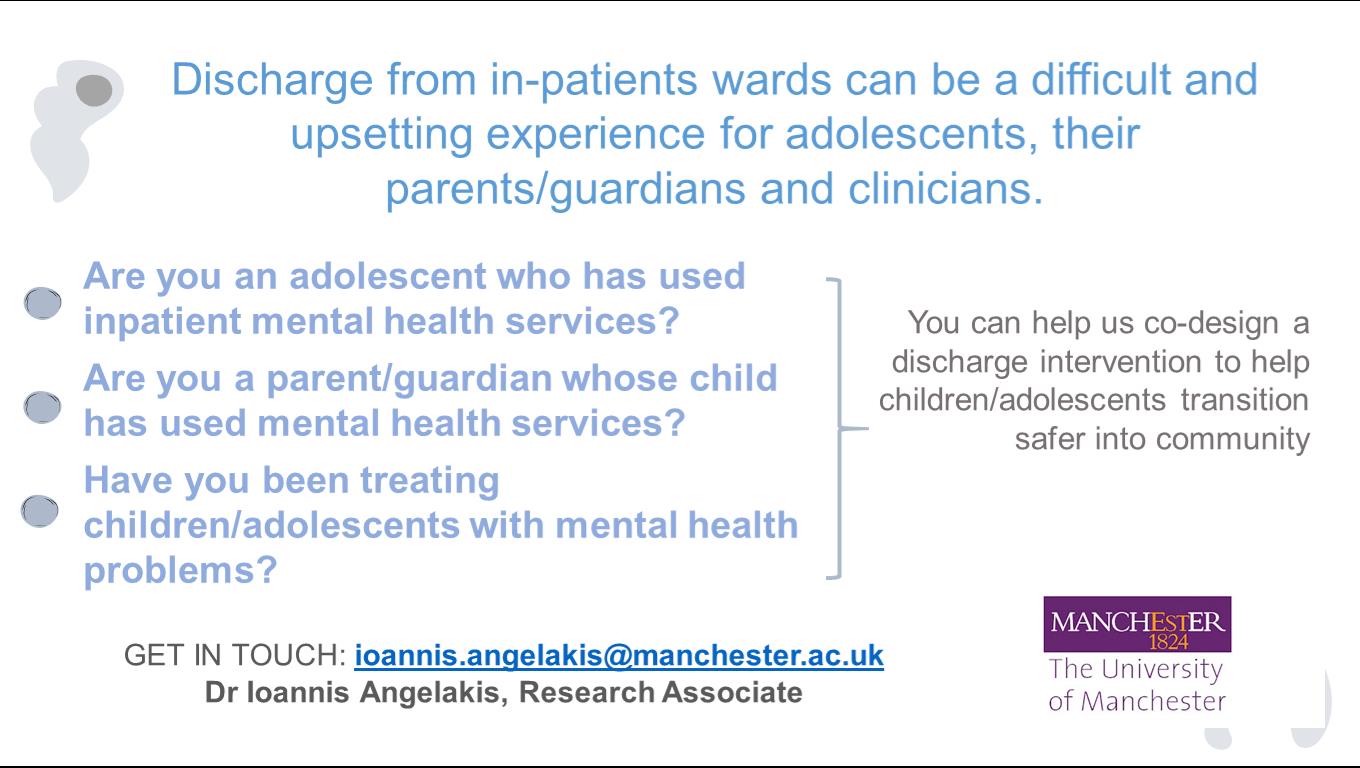
There is also more research carers can get involved in. This involves carers of adolescents or CAMHs services. You can also email ioannis.angelakis@manchester.ac.uk

Lewisham Mental Health Carers forum February 2022

Welcome to my February update of my Carers forum for Lewisham by former mental health carer Matthew McKenzie FRSA. This forum allows those who care for someone suffering mental illness to get togther, network, gather information and get engagement from Health & social care services. I also allow for particular speakers on carer empowerment, carer’s rights, advocacy, campaigning and discussions.

For february our speakers were

  • Charolette from Healthwatch Lewisham
  • Cath Collins from South London & Maudsley
  • The new Lewisham service user network
  • Plus Wendy Dewhurst who is the General Manager for Lewisham Community Services (SLaM)


Charlotte Bradford from Healthwatch Lewisham presents

As you can probably tell from my previous blog posts, Healthwatch tends to listen and engage with my carer groups every so often. I am thankful for healthwatch to also help promote my carer groups to spread the word. Charlotte who is a project officer from Healthwatch Lewisham remembered attending one of my carer groups before Christmas, and this is her first into 2022. Charlotte oversees a number of different reports that healthwatch Lewisham produce on a yearly basis.

The most recent one that they published on their website is the digital exclusion report. Healthwath Lewisham spoke to a number of residents to hear more about their experiences over the past 18 months with accessing health and social care services. This will help Healthwatch Lewisham look at what their priorities will be for this year. Plus they will be focusing on the next report where they will be conducting a number of interviews on visits to care homes.

  • Cath Collins – carers social worker updates the group

Where ever I go and engage mental health carers I often ask if their mental health trust have a focus on unpaid carers. It really helps if there is a designated person whose role it is to focus on unpaid mental health carers. Over in Lewisham, we have a social worker whose job it is to focus and support unpaid carers. Cath Collins is employed by Lewisham council, but works closely with South London & Maudsley NHS trust.

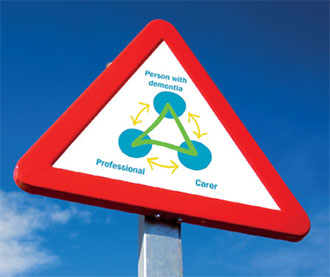
I am glad we have Cath to update our carer members over in Lewisham. Cath mentioned that as of this moment for inpatient mental health services for Lewisham particularly on the wards they are going through a process called the “Triangle of Care” audit, which is a very good practice when it comes to supporting the mental health carers.

In a nutshell, it was put together by a carer (Alan Worthington). The triangle of care policy is kind of like a checklist. So you have the six key areas to check whether you are mental health carer friendly on your inpatient NHS wards in your services.

All five wards at the (SLaM) ladywell unit are going through their submitted assessments, these being the home treatment team assessment, although she is still waiting on the psychiatric liaison team to submit theirs. Basically it is all about making them think on how they support carers. These things could be : –

  • How do they evidence that?
  • How can we how can they prove that they do that?
  • What information do they give people?
  • How do they involve people in the assessment of the person who needs support.
  • If the staff are carer aware and that they know about the needs of carers and the impact of caring?
  • Do they have a lead in their team who supports carers?

So the triangle of care audit is really thorough and even though it seems like an exercise it’s been really good. Cath mentioned it’s really sort of good practice on going on some of the wards and in some of the teams it’s helped them to highlight and really think about visitors be it the mothers, partners, brothers and sisters who come to the wards who support someone in hospital.

Cath also reminded my carers group about the carers support session that evening, which is run in conjunction with Carers Lewisham.

  • Linda from Lewisham service user network presents

Our next speaker to the carers forum was Linda Amoakohene who is the Sun Project Lead and Senior Occupational Therapist. Linda works for the Lewisham personality disorder service. She is also leading on the Lewisham service User network which is part of the Lewisham personality disorder service.

Linda was here to tell us a little bit about a new project. Even though it is new it actually was launched in October 2021. So they are still relatively new. The project is open to really anyone in the community of Lewisham who may be having some mental health difficulties. It doesn’t have any particular mental health labels even though the service Linda is providing is sitting within a specific service the personality disorder service, the project is actually available to anyone in the community in Lewisham. So whether you identify yourself as a carer or a patient of South London and Maudsley or just a patient of a GP or a member of the community. It is open access.

The Service User network is a peer support group. So people who attend the group come to get support when they’re in crisis, or perhaps they are struggling with things that impact on their mental health. So people end up self referring where they can come as often or as little as they like. Linda also mentioned that they don’t have to be under the South London and Maudsley NHS services to access the project, they could just be under the GP. There are also leaflets about the project or people email the team, and then they will send you the link to self refer to the project. So once the person self refers, they then make contact with the person on the phone, to find out a little bit more about them.

At the team they then complete something called a “Crisis and support plan”, which is basically applied to help someone think and plan, especially when things are really tricky. This can lead to questions on what sorts of things help or don’t help. This is so people basically go away with something that they can sort of use in a dynamic way, whenever they need it.

As of this moment, the project has got three groups a week, and they’re happening online. They might launch a face to face group since the COVID situation is obviously changing, and the government rules are relaxing, but they may still maintain some of the health requirements because COVID hasn’t gone away, and they still want to protect lives.

I thought to ask Linda a Carer question : Where I was happy about the new project and service, but I was interested in what support will be provided to unpaid carers.

Linda responded at length that this group is for anybody, they don’t identify carers or service users

  • Wendy Dewhurst from South London & Maudsley presents

Wendy apologised for being a little late due to just catching up from coming off another online meeting. Wendy introduced herself as the general manager for community services in Lewisham, which essentially means that she has the day to day oversight and operational management for all of the services in the community. So that’s the primary care teams, community mental health teams, early intervention, low intensity and the personality disorder. Wendy has been in the role about a year and a half and during that time, She has taken all services through the transformation into the new model, which they are now trying to embed an implement, which is an ongoing process and is not going to happen overnight. However they have certainly seen some good results, particularly at the front end.

Wendy answered a few questions from group, where she fed back concerns about access to mental health services. Currently, the access is by the GP, although she is in the process of setting up a mental health advice line which should be operational, hopefully in the next month, where people that have any sort of concerns can talk about a mental health crisis. The service will be manned by the mental health charity MIND.

So if following a conversation with someone who mans that line and they feel that the person needs a service then they can put you directly into that team. So it will be a sort of option for self referral. Wendy thinks that there will be some people that maybe don’t want to engage with statutory services like GPS and maybe don’t trust particular services, so it’s another option to get that much needed support and they very keen on being able to process self referrals. This so SLaMs (South London & Maudsley) primary care mental health teams have something in Lewisham, which is where they can provide the most appropriate treatment that’s the least intrusive.

So it’s an intervention that services which involve psychology, Occuptional therapy and mental health advisors from MIND. Where they will work in an alliance, SLaM will work with the local authority and Bromley, Lewisham & Greenwich Mind.

Wendy mentioned they have an enhanced multidisciplinary team, where they work very closely with the GPS in the primary care team, and the GP tends to remain as the responsible doctor. The enhanced multidisciplinary team and the consultant will focus more on serious mental illness and longer care term needs where maybe patient might be subject to CPA (care Programme approach), still the move is that CPA is going to not exist going forward.

Wendy gave a talk describing the CPA where it has certain sorts of conditions with it. This is where you have to review every six months, you have a care coordinator, social worker and psychiatrist. Although what they found is that so often people that were on CPA, all the care was focused on that, and people that didn’t have CPA might not have got the same level of care. So what they want is for everybody to have the same level of care, irrespective of of what what that is, so has the same rights.

  • Final update from Cath Collins

Cath reminded us that our mental health NHS trust has a carer’s strategy called the family and care strategy. This is what they are doing in Lewisham and are trying to make it Lewisham specific. So things that are in the carer strategy as a whole will be relevant. So making sure the wards and the crisis services adhere to that good practice of the triangle of care. There’s another priority about young carers, identifying those 18 and under who are caring for their parents or brothers and sisters. Other things like making that SLaM’s carer information is up to date and relevant for mental health carers.