Are you caring for someone? maybe a close relative or friend? Perhaps a neighbour or maybe you are keeping an eye on your work colleague, but what if you have been caring for someone suffering mental health problems? What I mean is if you are being there for someone suffering addiction problems, psychosis disorders, bipolar, chronic stress or others that I have not mentioned.
Welcome to another blog post from a carer who is caring for a close relative using the mental health services. This particular blog post is about a mental health forum over in Croydon, which is free to attend as service user, carer or even mental health professionals.
This slideshow requires JavaScript.
This mental health forum is called the ‘Hear Us Open Forum, but what is Hear Us all about?
Taken from their website.
Hear Us is Croydon’s Mental Health Service User Group which acts as a coordinating body to facilitate, and ensure service users involvement in, the planning, delivery and monitoring of mental health services in Croydon. Helping to improve the quality of the services commissioned and delivered in Croydon objectives.
To relieve the needs of people living in the London Borough of Croydon and surrounding areas who have mental health problems by provision of services and advice.
To advance education about mental health for the public benefit in the London borough of Croydon and surrounding areas with the object of creating awareness and reducing the stigma attached to mental health.
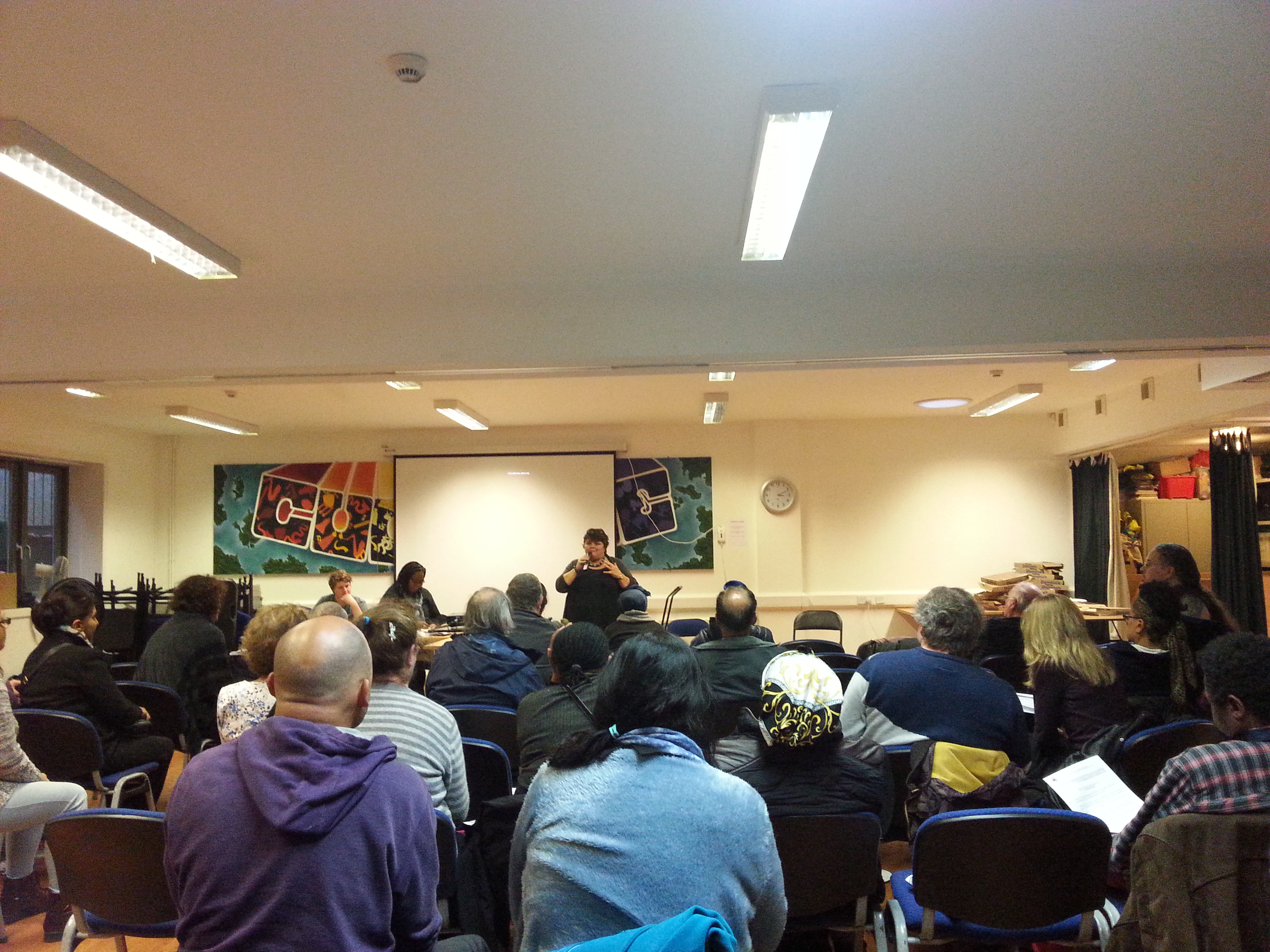
Now Hear Us run their open forum every 2nd Tuesday of each month. Unfortunately I have been so busy that I have missed 2 of their past open forums, but this time I was determined to catch their December forum and I was not disappointed.
So what was in store for us at the December Hear Us forum?
Well first we got to hear about the latest Hear Us AGM.
Next was the presentation by Lee Roach on the Reablement Service
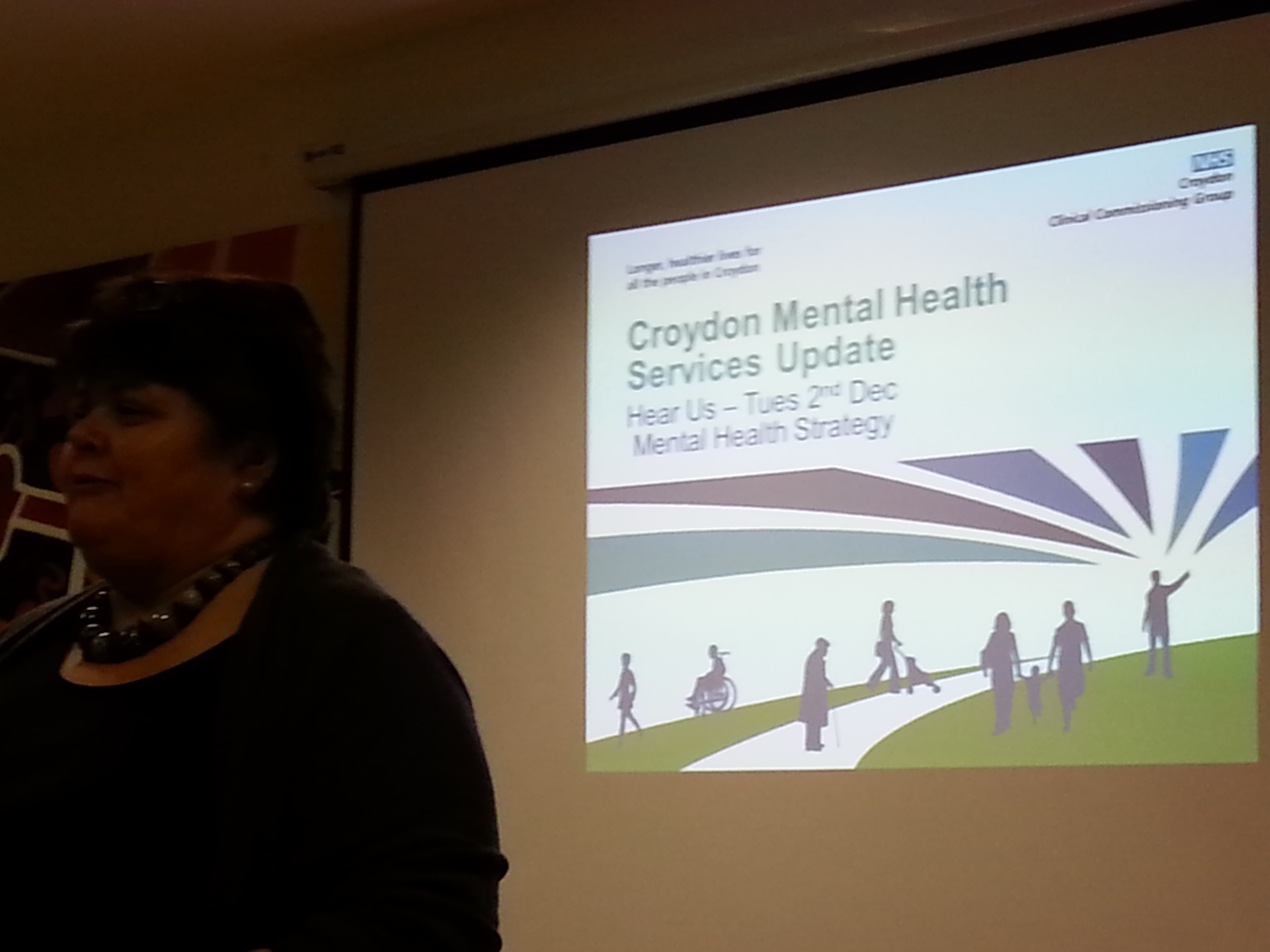
Plus last but not least was the Mental Health Strategy from Susan Grose one of the Croydon CCG Commissioners.
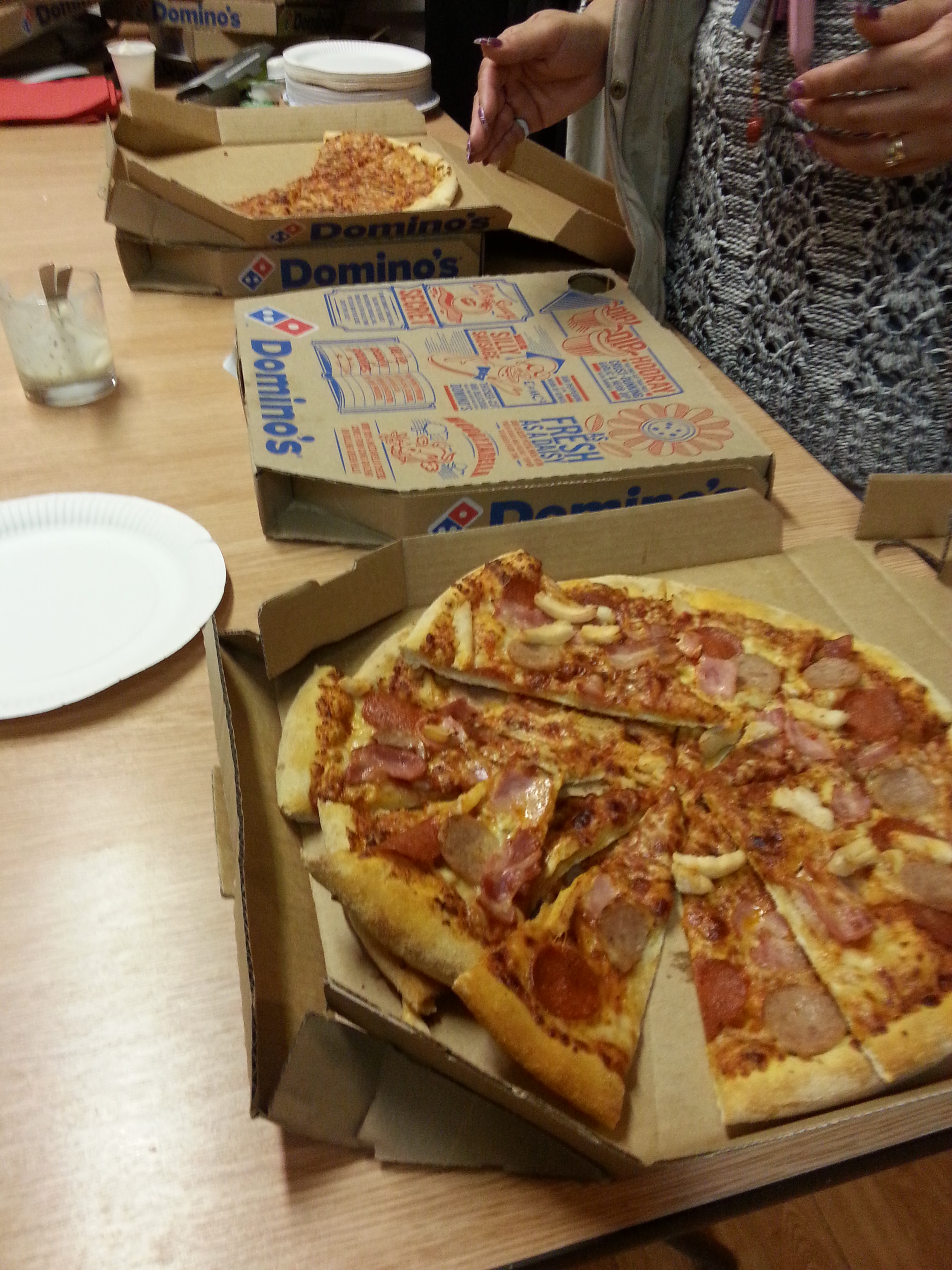
First we had a lovely hot lunch for the cold December day. I was fairly greedy and had several slices of pizza.
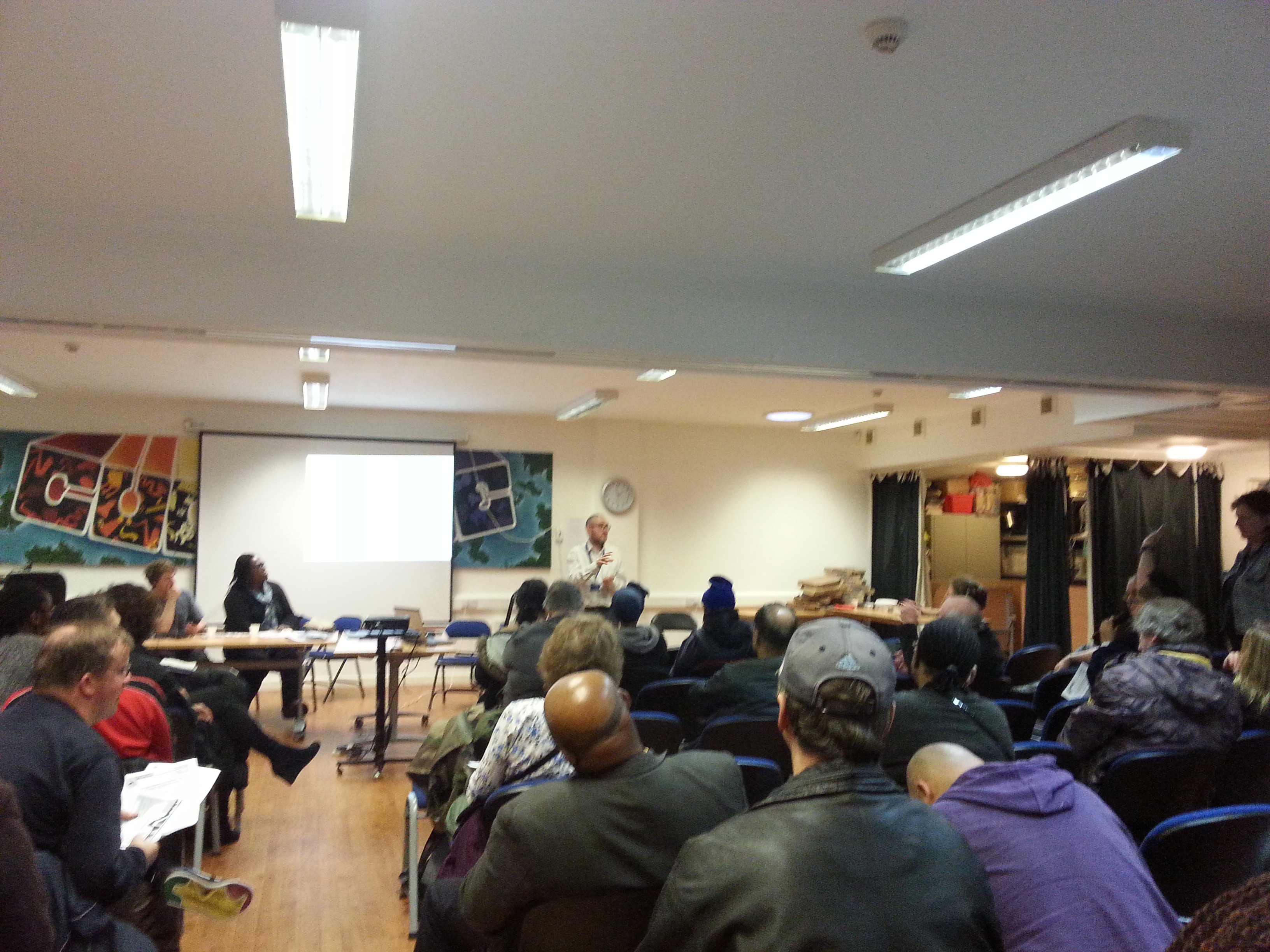
Next up was David Ashton chairing the event and going through the forum procedure and agenda for the day.
We discussed the Hear Us annual report for 2013/14. We were all handed out a copy of the report and members of Hear Us actually got the report earlier on. The report was an interesting read where we got to hear from the Chair, an introduction to members of the Hear Us board. We also got to read up about the latest developments on the Linkworking project and view the Hear Us accounts and financial review.
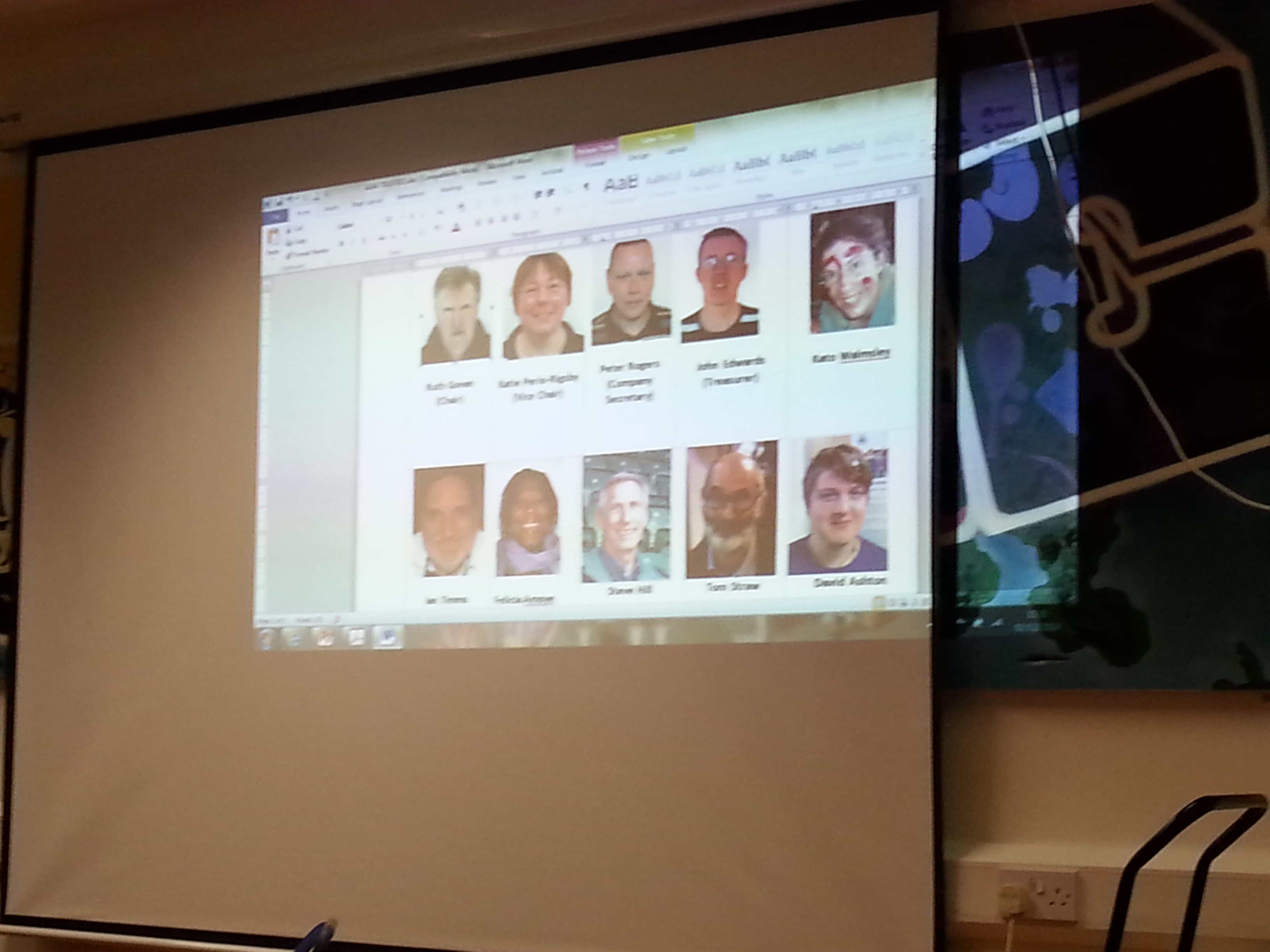
At the forum we heard more about the members of the Hear Us board and some of them introduced themselves to the attendees of the forum. There were also some interesting and probing questions, here are some I picked up at the December forum.
One member was interested in Hear Us aims on Autism.
Another person asked on how people became trustees
I remember one of the Hear Us workers replying to the question about how rigorous the process is on applying to become a trustee.
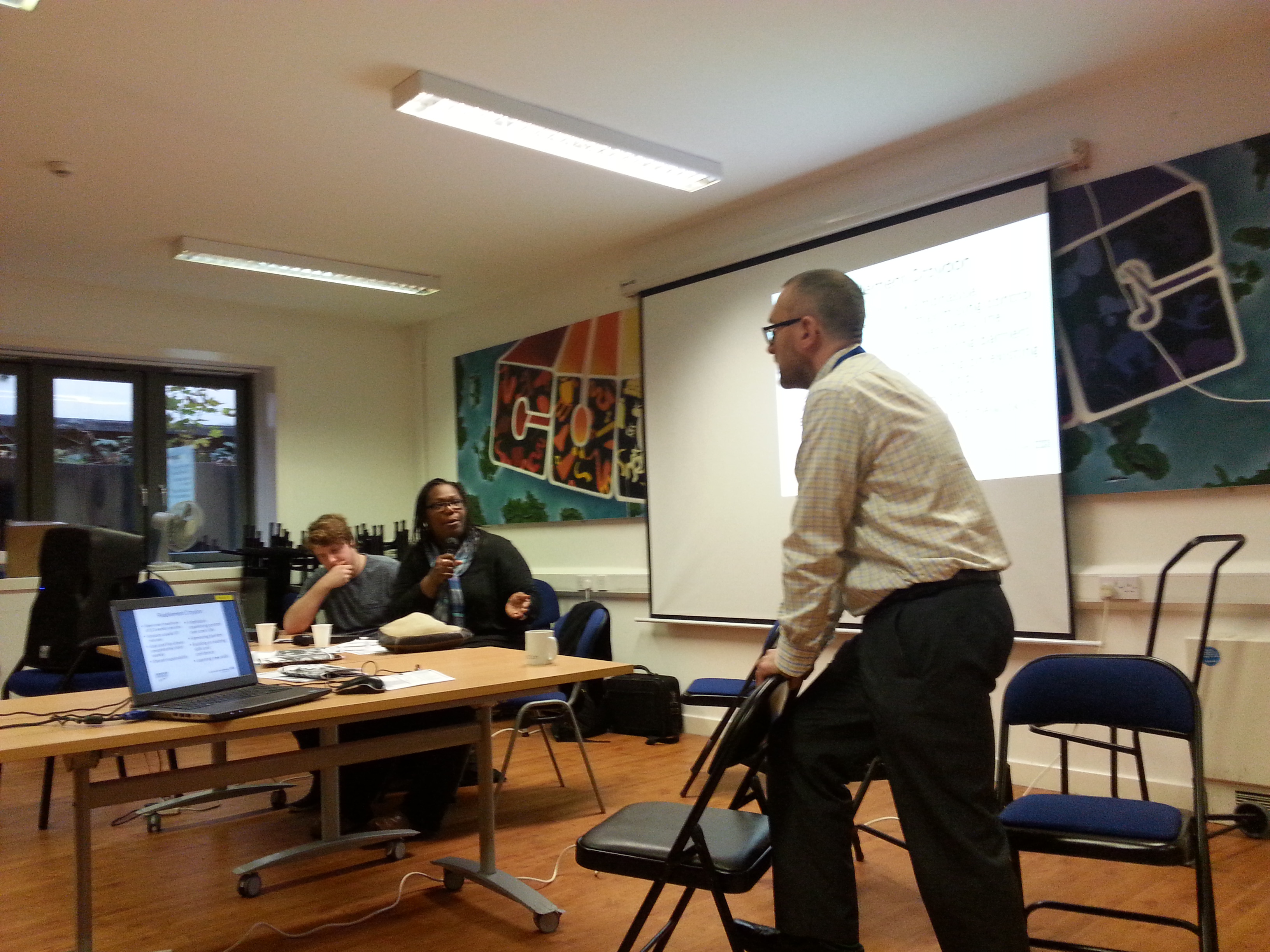
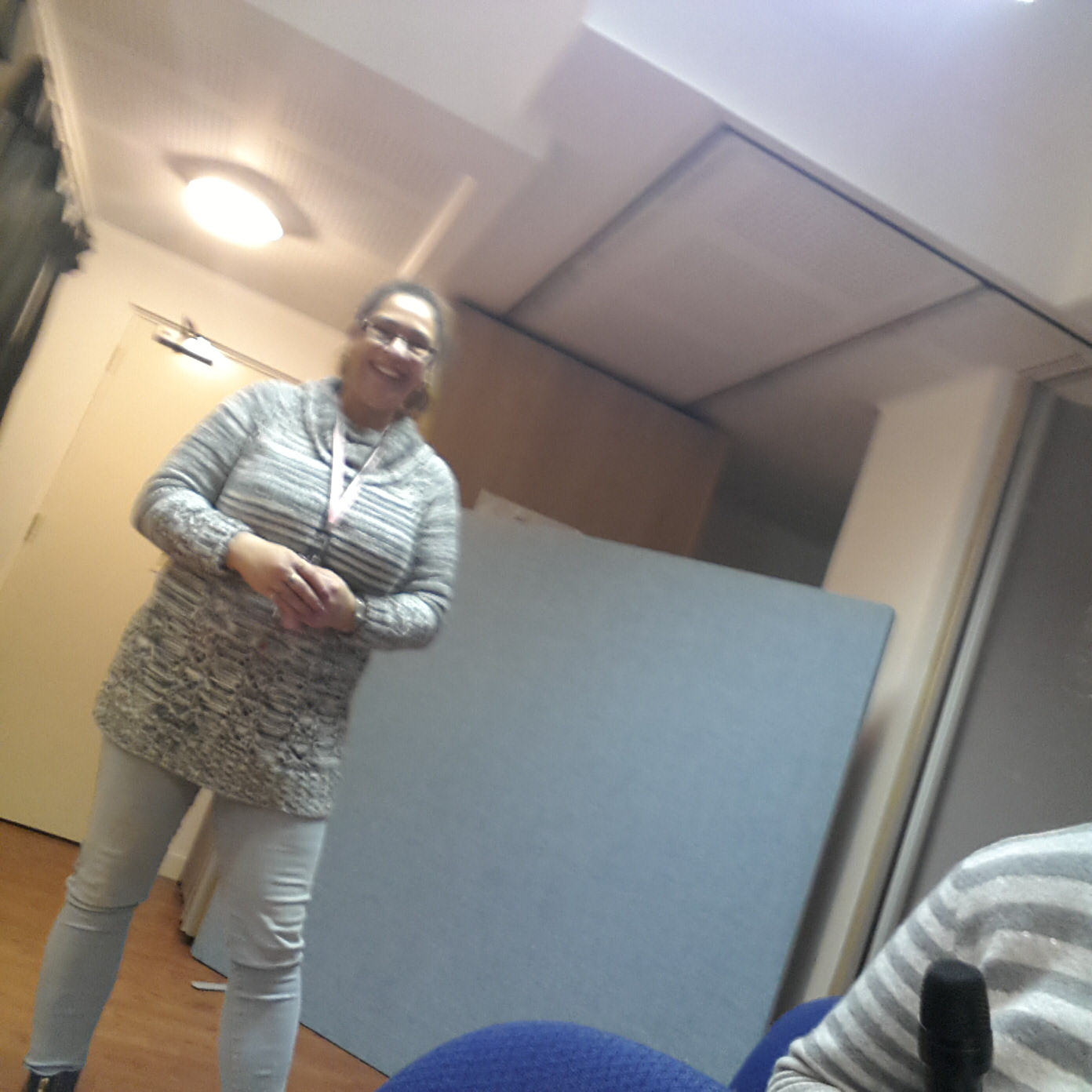
This was when some of the Trustees of the Hear Us board introduced themselves to us. One of them Felicia who was sitting next to chair of the forum David Ashton. Felicia explained how much experience she has within mental health and the mental health services.
The attendees of the forum were asked if they were happy with trustees, which I felt was a good question and showed that Hear Us valued their member’s opinions.
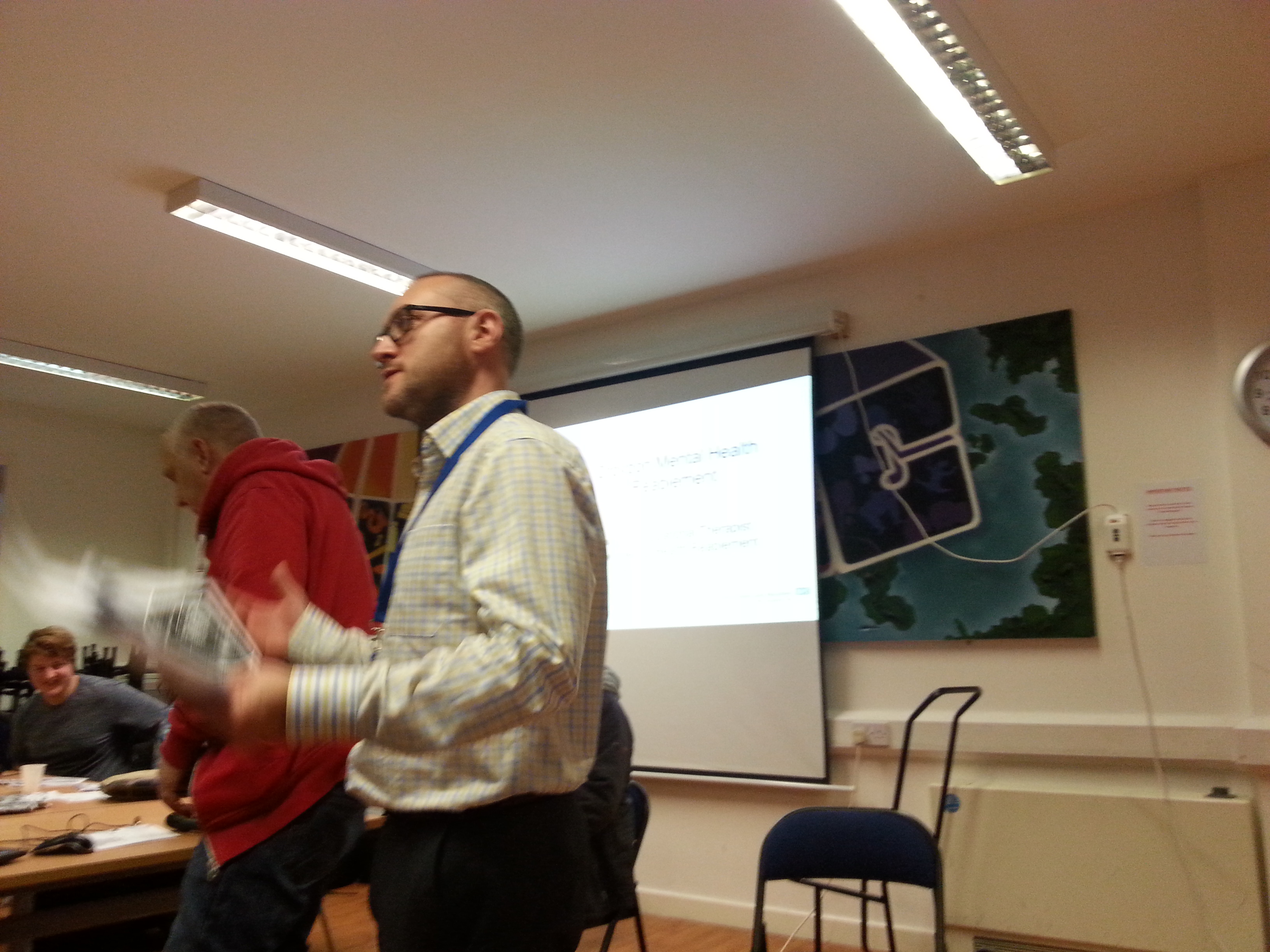
The first presentation at the forum was Lee Roach who is an Occupational Therapist on the Croydon Mental Health Reablement Project.
Lee told us the following at the forum.
Who he is and what he does
What the Mental Health Reablement service project in Croydon
How important it is for Reablement project to be inline with the new care act coming out in 2015.
Lee mentioned that the Reablement services are still fairly new and there are not many reablement services out there.
Lee also explained a bit about what Reablement actually means. Basically reablement means helping people regain the ability to look after themselves as in self care.
Lee then talked about how some are referred to their Reablement service although they do not take referral from GPs.
However anyone can be referred from IAPTs or Community Mental Health Teams.
The reablement project is actually a pilot, which means it is under evaluation at the same time to see how the project affects the community. The project has been running for 2 years and a report out in 2015.
However some people at the forum were worried that people being reffered back to GP and they wondered why the GP can’t refer patients back to services.
There also was other important questions aimed at Lee and they were.
Why could the reablement project not run in conjunction with services.
– It was mentioned that it is important to state the reablement service does not deal with medication and those referred are at a point of recovery when being reffered to the service. However someone followed up on the answer and stated if you do not support on medication, what happens if there are medical issues after refferal?
One member of the audience felt that the Care act must be empowering to Service User and that they feel dis-empowered in the London borough of Croydon, he wondered who is making these decisions on these services.
– We are under a steering group under Mind and HearUs, take makes sure our services are in the best services levels in regarding service users.
Another interested discussion was on the option on ‘easy in easy out’ service over in Purly where the GP refer back to team faster if they are concerned, this is where urgent appointments available in 7 days.
A felt another good question was someone asking what are the evaluation of the service so far?
Lee stated so far there are positive findings of the service, but they need to engage with carers more. Plus they are also focusing on leisure and work of people’s lives, plus learning new skills (reading and writing, new courses, yoga, exercise).
One last question I noticed was that one person was worried about those who do not have a care coordinator, but were passed on to outside agencies, seems two-tiered group.
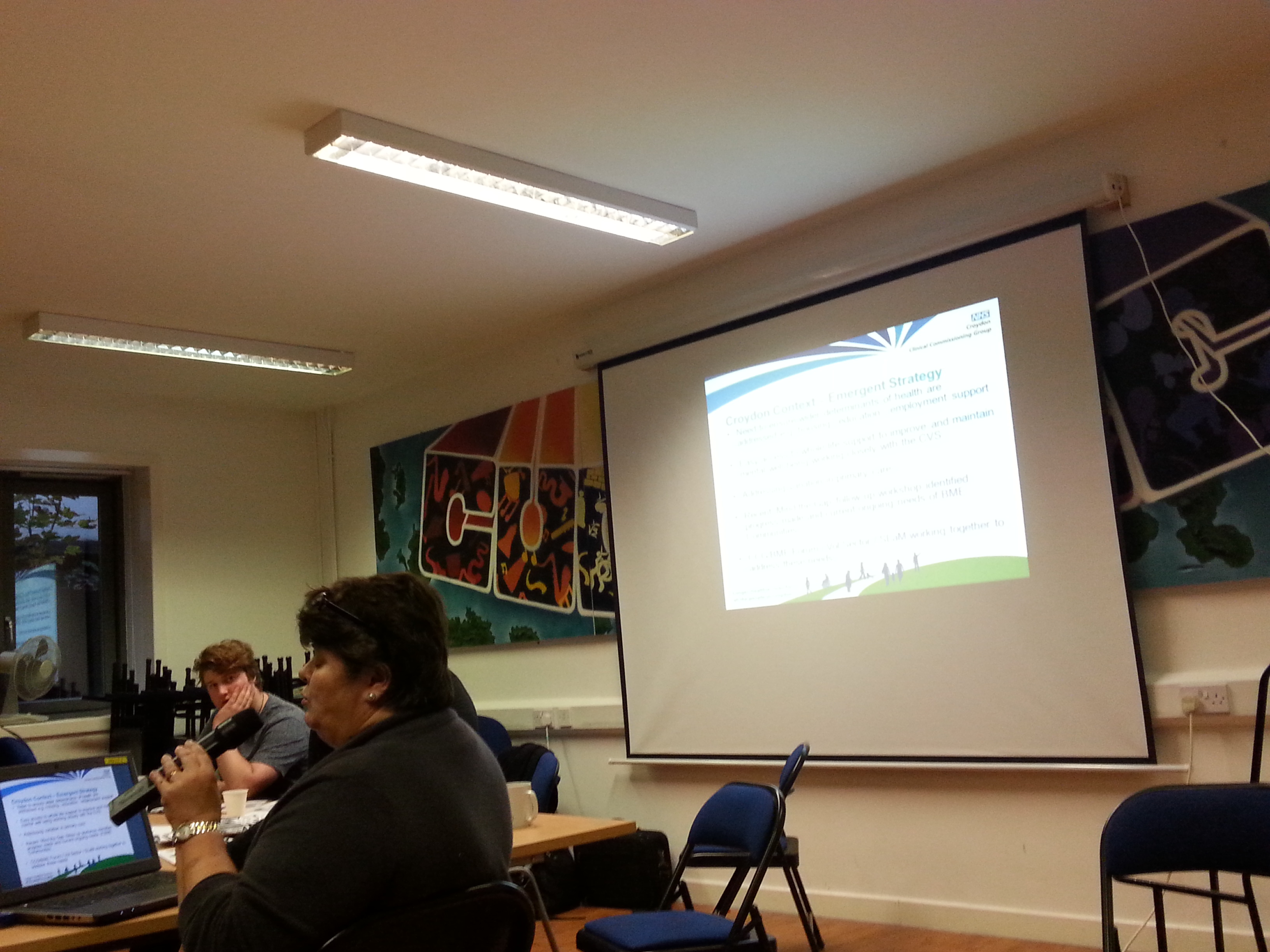
After a short break and some networking we moved on to the next presentation, which was presented by Susan Grose the Croydon CCG mental health Commissioner. Susan spoke about the Croydon CCG MENTAL HEALTH STRATEGY and wanted to hear the views of service users, carers and members of the public.
Susan Grose was actually an Interim commissioner in Lewisham a while back and is now a commissioner for Croydon
Susan spoke about how the borough of Croydon is changing and is more likely going to be more deprived. One in Six adults in Croydon has a hemtal health need and it is stated that Anxiety and depression are projected to increase by 5%.
Susan mentioned the need to improve integration of mental health with physical health, which is something I clearly agree and support. Susan also spoke about the need to better address the needs of BME communities where there is a 40% of acute admissions. Croydon CCG have also invested in the use of IAPT services, which basically means Increasing Access to Psychological Therapies.
Susan then moved on to presenting the need to ensure the wider determinants of health to be addressed, that being housing, education and employment support. Plus also addressing variation in primary care and easy access to whole life support to improve and maintain mental well being.
Croydon CCG have been busy consulting with service users and stakeholders, they have held a number of workshops with GPs and developed associated strategies for CAMHS and OAMH. They have committed to the investment of £5.2 million to stabilise the system and invest in community services, plus invested £600K in IAPT services.
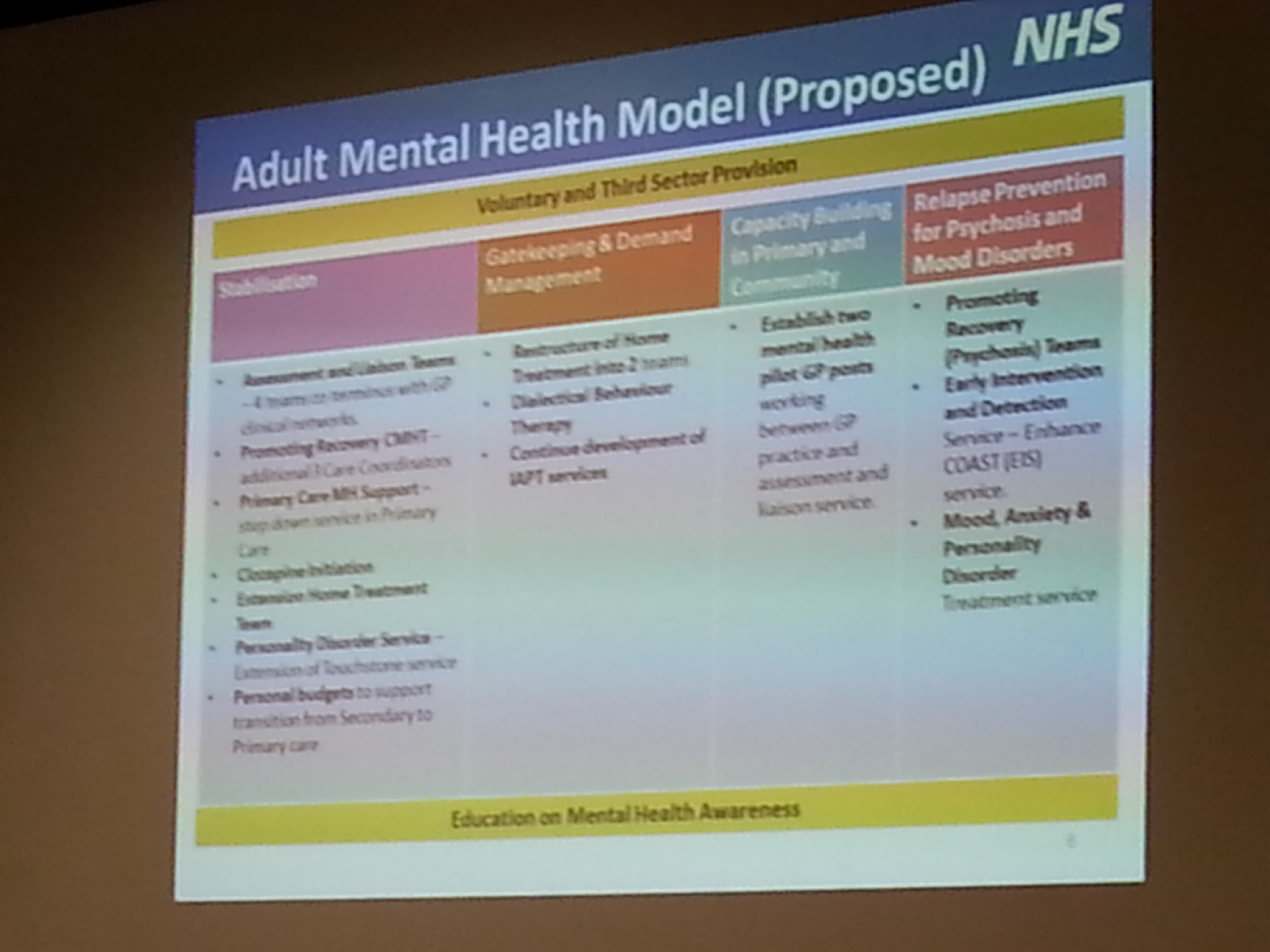
Susan spent some time at the forum showing us the Proposed Adult Mental Health Model where we were explained the steps on stabilisation of the mental health services in Croydon and how gatekeeping, capacity building and relapse prevention can fit into this model.
Some of the Key aims of the strategy is to ensure voluntary and third sector provision works alongside with primary and secondary health services. Another aim is to improve the quality of life of people with mental health needs, improve access to mental health services, strengthen partnership working and ensure there is education available on mental health awareness.
The next steps for the strategy is to develop a strategy action plan with service users and stakeholders although I do hope they involve the carers. Other steps are to continue to work in collaboration with other CCG commissioners and also refine the community adult mental health.
So what questions came up in the discussions?
One person was worried about waiting times on IAPTs, However it was explained that lack of funding was a result of this and they are working to improve waiting times.
Another question was on the cutting beds to increase throughput was not the best idea, the person felt it is best to keep those beds, the commissioner agreed with this statement.
A good question was on the problem of hostel’s closing and the concern of hostel provisioning. It was stated that there was worry about many of the hostel’s are privately owned, need to look carefully at where those in those areas, receiving services in the right setting, its not an easy problem to solve, so no answer as yet.
Another interesting question was on how to access dementia services, which takes too long. Susan did agree and stated that dementia is high on national agenda. The UK is an ageing population and dementia is a silent time-bomb, we need to educate people.
There was also many other interesting questions, but overall I really enjoyed the forum and look forward to the next forum, I felt David chaired the forum very well and the staff were friendly and kind.
Welcome to a caring mind blogsite. A site dedicated to a carer’s perspective on mental health awareness and sometimes other health topics and events. On this post I want to talk about carers rights. You see Carer’s Rights Day is on the 28th of November and I am writing this post just before the day.
However, what is a carer? and why is it important that carers need to be aware of their rights?
Well basically a carer is someone who looks after either a close relative, friend or neighbour who are not able to take care of themselves. The caree (the one receiving care) can either be suffering from a physical or mental health problem. Now I am a carer of someone suffering mental ill health, so as a carer I am passionate about what carers have to go through.
Carers unfortunately do not have it easy, if you are caring for someone who is chronically ill, then as a carer you will spend more time caring than looking after your own needs. Another difficult situation is carers have to SACRIFICE so much to able to carry out their role. Carers find it hard to work normal hours, carers have to spend a lot of time and energy in their roles, plus carers sometimes have to navigate the difficult maze of confidentiality.
The problems I have pointed out above only make a small percent of what carers have to tackle. So if there are even more difficulties in a caring role, what could make the difference? What could make a caring role more easier to bear?
The answer is carers having their needs supported, plus also having their rights protected. As of this writing we have two acts over in the UK, these are “The Children and Families Act” and “The Care Act”. The Children and Families Act 2014 introduces a system of support which extends from birth to 25, while the Care Act deals with adult social care for anyone over the age of 18. These Acts, which hopefully will become bills will help support carers in their role.
I expect Carers Rights Day to focus on these acts and help explain what rights carers are meant to be given. There are around 6 to 6.5 million carers in the UK and carers save the NHS £87 billion every year!! However looking at carers these days, you would not think anyone would notice how much value carers add to the community. The problem is that carers help save money, but if carers were buying into something then carers would be protected.
Now we have two new acts which looks to protect carers, but this is not the end of the story, how does Carers Rights Day help in carer awareness? Well if you are a carer, you may have already known how difficult it is to get support in order to make your role easier, or make your life easier. Carer’s Rights Day makes it known that carers have a right to information that supports their role, it is also important to help raise awareness of carers rights.
Carers also have the right to have financial support and also be aware of where to get that financial support. This is because carers just do not have the time to work if they are so busy caring, which is something so many people do not understand. Carers are financially poor not because they do not work, but they just do not always have the time.
A national carers organisation called CarersUK has released a report which examines how financial pressures affect health, wealth, and well-being of carers. It is worth reading off their site.
Carers also struggle to find information, sometimes its difficult for carers to find the right person to get such information, but What can be worse is if that the carer finally finds that person who may end up withholding information for other reasons. Carer’s Rights day should also focus on how carers can get access to information within the right context to carry out their role.
Time and time again carers can be driven back into a role that is unsafe, unhealthy and unnerving for many carers not only across the UK, but across the world. Carers need to take a step forward and be counted for their efforts. Not everyone has the time and patience to look after someone. Carers should be valued for their skill-set in keeping the family together and keeping the community together. For far too long carers have been denied access to so much support.
Carers Rights Day should also be a celebration for carers across the UK. I for one am going to spend part of the day visiting Carers Lewisham and I am also keen to see what the other carer’s centers are up to on the day.
What amazes me as a carer is wondering what would the situation be for carers if there was no Carers Rights day? How bad would it have to be for carers to continually care for someone with little support, before that carer suffers from bad health themselves?
We can all make that difference on Carers Rights Day. As a carer I urge other carers to blog about their experience of Carers Rights day, I also hope many people attend carers awareness events and pick up information about Carers Rights Day.
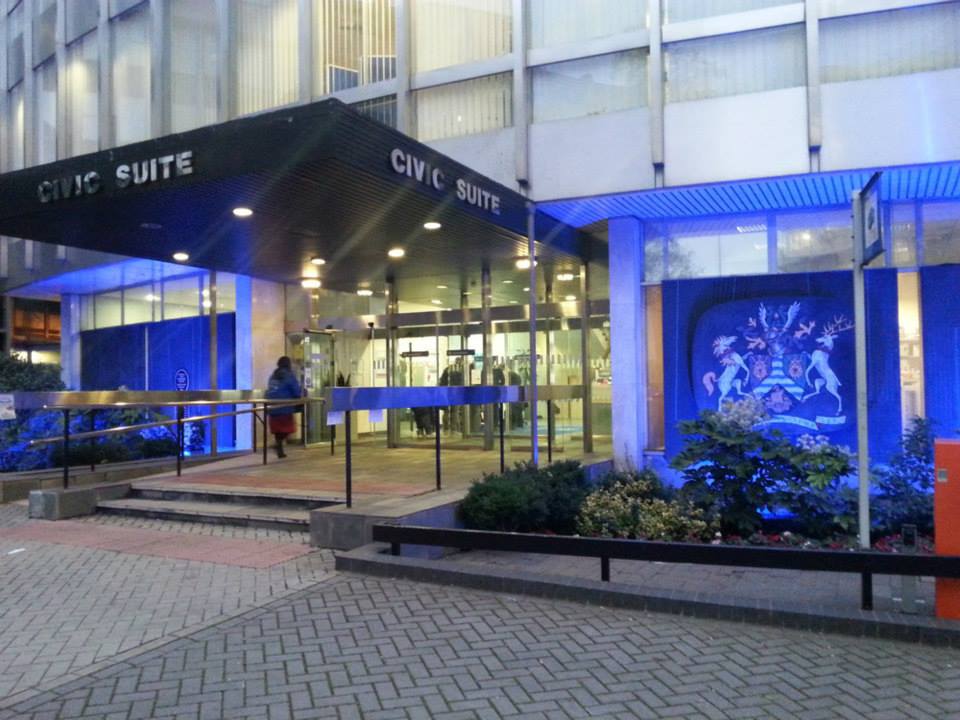
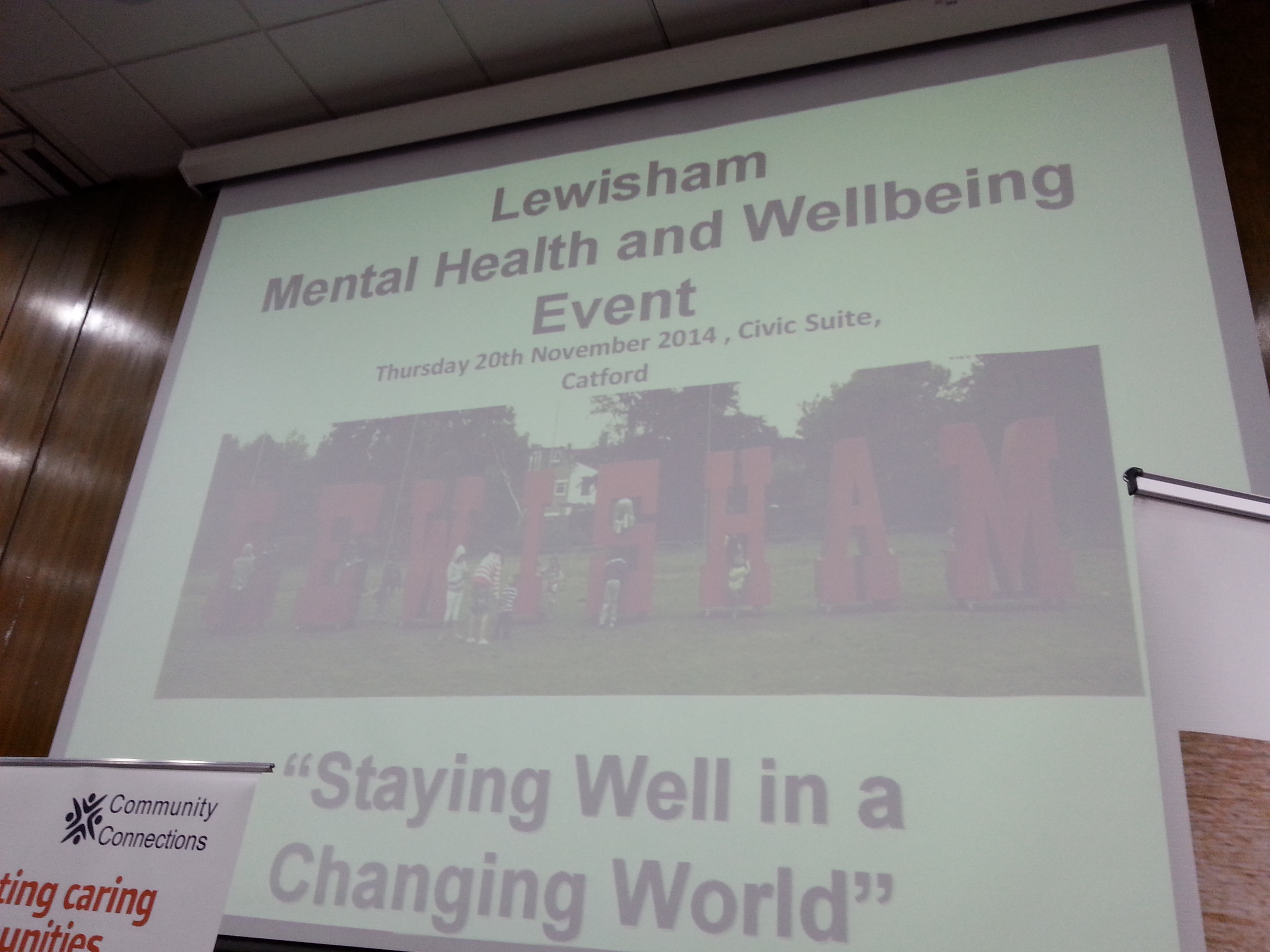
Hello again and welcome to another blog post on a carer’s perspective on mental health and wellbeing. Talking about those two last points, there was a mental health and wellbeing day on the 20th of November over at the Catford Civic Suite in Lewisham.
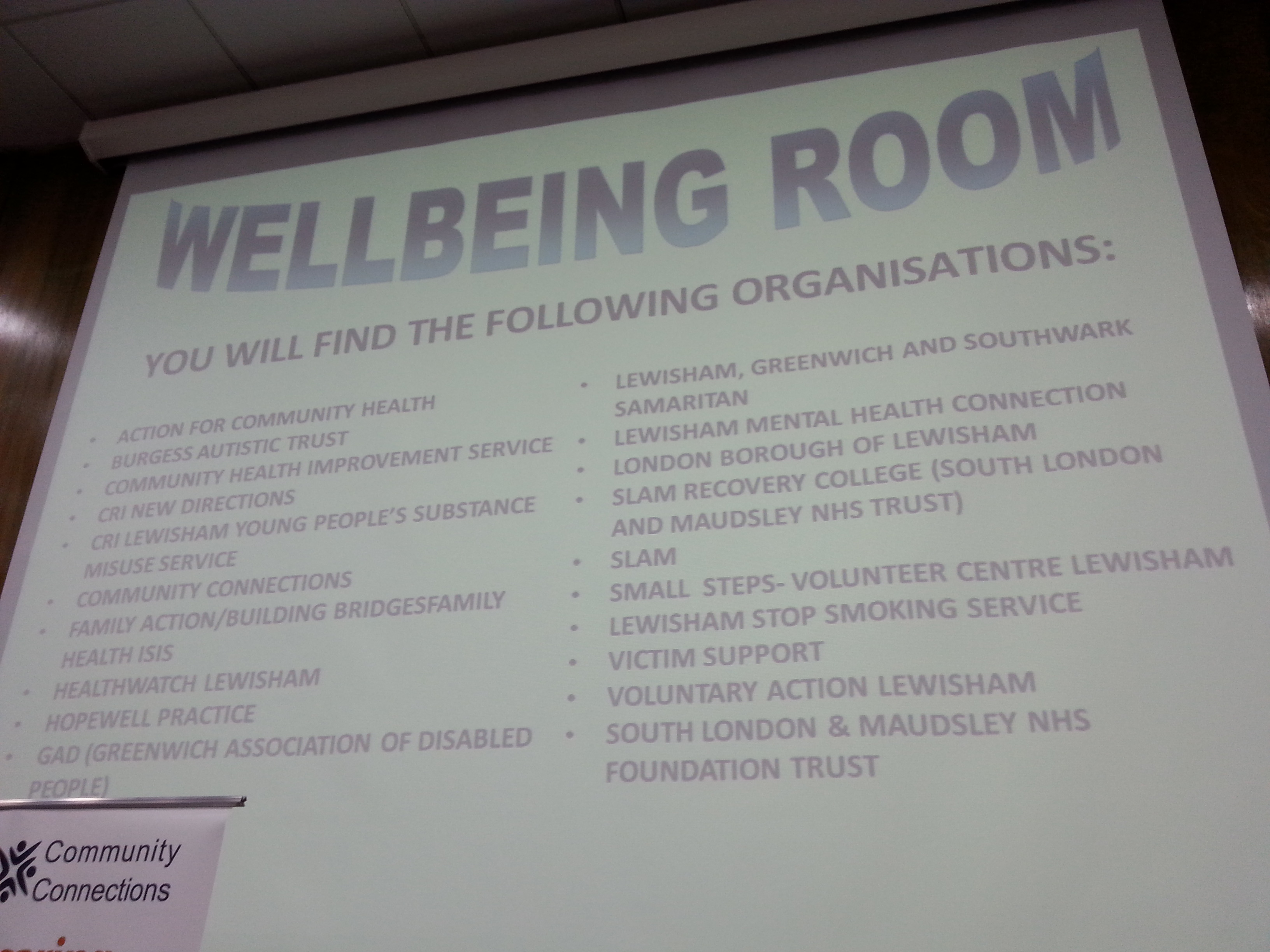
The Lewisham Mental Health and Wellbeing Day is presented by the NHS Lewisham CCG, South London and Maudsley NHS Foundation Trust and Lewisham Council.
I just had to attend the mental health and wellbeing event, this is because I am a carer of a close relative suffering mental ill health. Last year I was lucky enough to chair the 2013 event and perhaps I ll place the video of that event later on in this blog post, but what was in store for us this year?
Well this year the MH and Wellbeing stakehold event wanted to concentrate on the service user/survivor aspect. So we had Carmine De Rosa chair the event. Next was a Mental Health commissioning update for 2014 and this was presented by Pamela Martin, GP Mental Health Lead for Lewisham CCG.
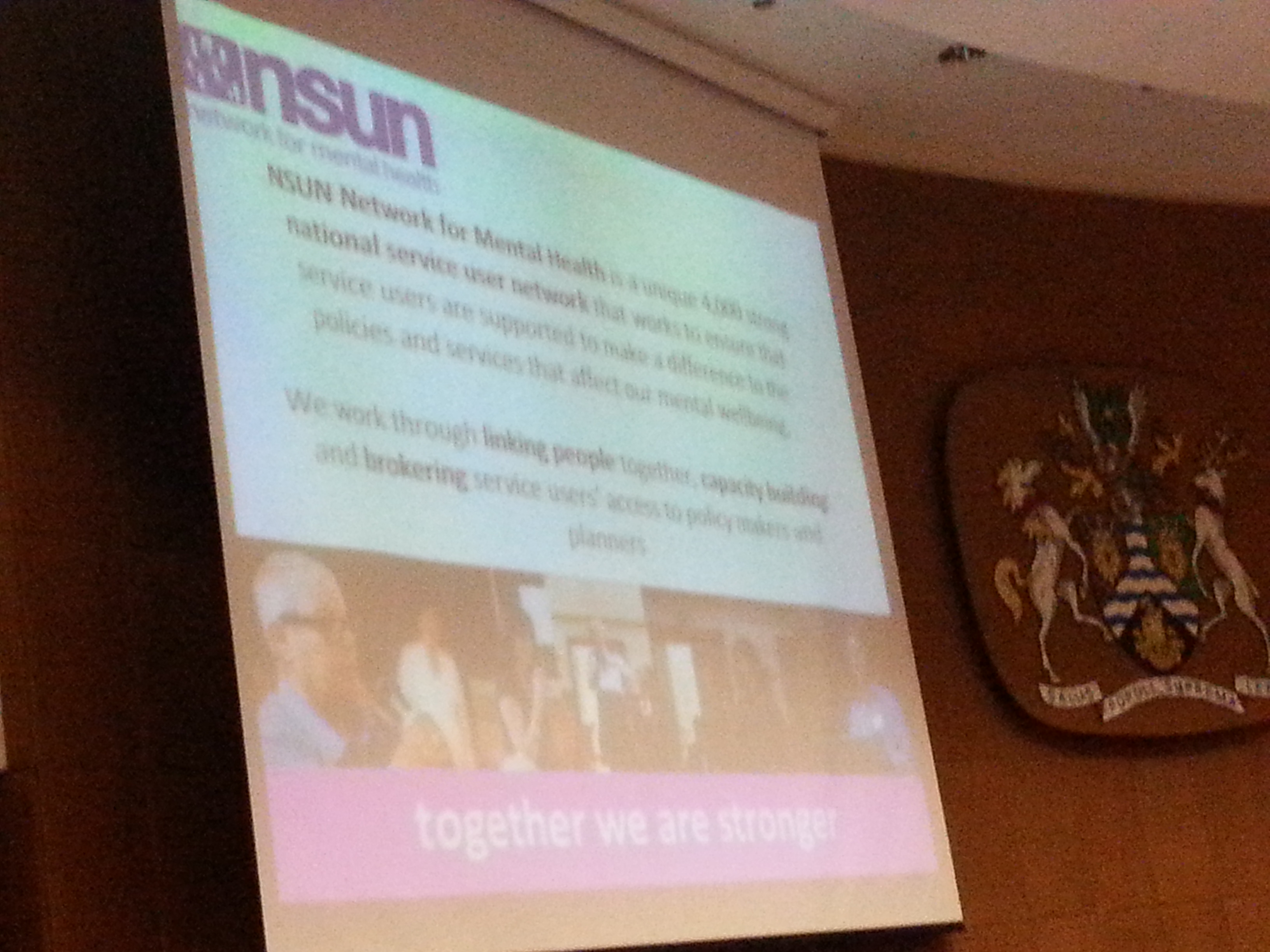
After Pamela’s talk came the presentation from Sarah Yiannoullou who is the Managing Director from NSUN (National Service User Network). Her talk was on inclusion, involvement and influence of those using the services and the NSUN 4PI standards.
Then last to speak was John Ryan talking about an alternative view of the Mental Health system, John is a comedian and his talk certainly lightened up the mood since we all know Mental Health can be a difficult subject to discuss.
Still, the event was not just about talks, throughout the day from 10.00 am till 4:00 pm the event numerous workshops, stalls, wellbeing activities, refreshments and a chance to network and most importantly gain information to aid in recovery or getting support in caring. I also noticed some members of the public attended to try find out what mental health is all about.
Unfortunately I cannot go into so much detail about the event this time, but why is this? Well for one I was recovering from a horrible cold, so I could not gain access to the talks or workshops because I kept coughing and sneezing. Secondly I do not want to repeat what is found in booklets about the event, I perfer this blog post to be about how I experienced the event and what I got up to most of the day.
Well on that sunny morning as I entered the Civic Suite, I was greeted by friendly staff who signed me in and handed out the agenda and activity information for the day. I then explored around the building and watched the impressive presentation slide of the wellbeing event.
Unfortunately my cold was getting the better of me so I had to sit down and gobble up some oranges kindly left for visitors to take. I was then greeted by Gráinne from Lewisham CCG and a few others who were glad I attended the event.
Eventually the public were called into the main chamber to hear the talks and I also went in for around about…..5 minutes before I started coughing and wheezing again. I just managed to get some of the talk where they presented on improving recovery and challenging mental health labels in order to reduce stigma.
Soon I had to head back out to the waiting area and check to see if I could go back in the conference chamber, but it was no good so instead I took a trip to Civic Suite’s Lower floor. There were a vast array of stalls and I could not visit them all, but I ll explain what stalls took most of my attention.
The first stall that took my attention was SLaM Stall or the South London and Maudsley Stall. I could see many booklets and information about the mental health trust and also more information on how to become a member of the trust. I also picked up a flicked through SLaM’s latest newsletter about the Happy Heads event, which is an event aimed at teenagers to promote mental health and wellbeing. I think I did a blog post about that event.
After a while I tried again to enter the conference chamber and just caught a bit of the talk by NSUN on the 4PI standards, but what is NSUN all about? NSUN stands for National Survivor User Network and is a network for mental health in England. NSUN gives and promotes a powerful voice for those using the services and their carers, but they also do a lot more.
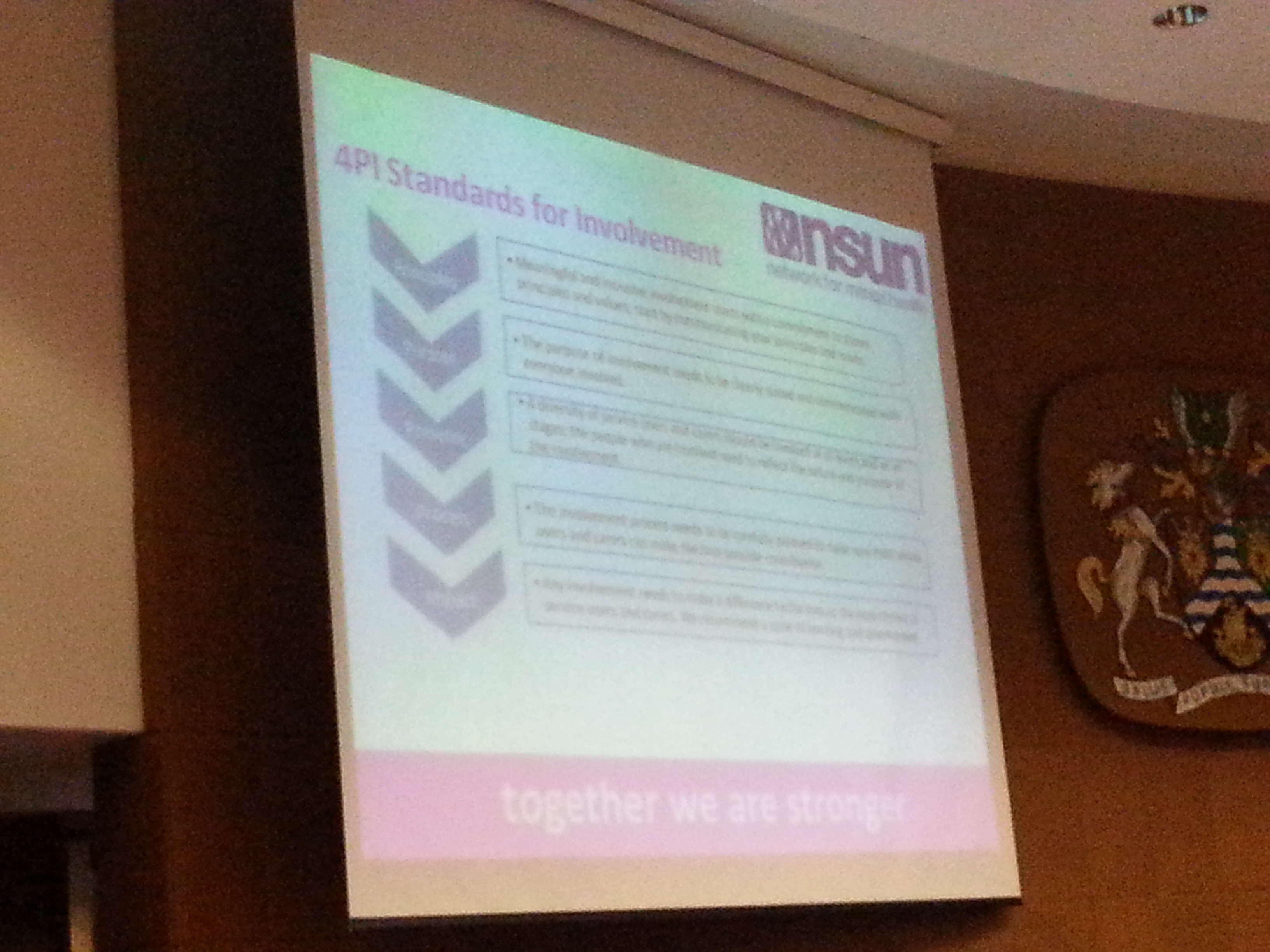
The talk was about how their work has led to the development of the 4PI framework for involvement: a simple, yet robust framework around which to base standards for good practice, and to measure, monitor and evaluate involvement.
– Principles
– Purpose
– Presence
– Process
– Impact
Involvement of those using the mental health services is critical not only in aiding in recovery, but reducing the isolation felt by those using the services. At the core of mental health services should be the service user perspective. Such implementations are of course not an easy thing to archieve, but must always be one of the aims of any mental health service provider.
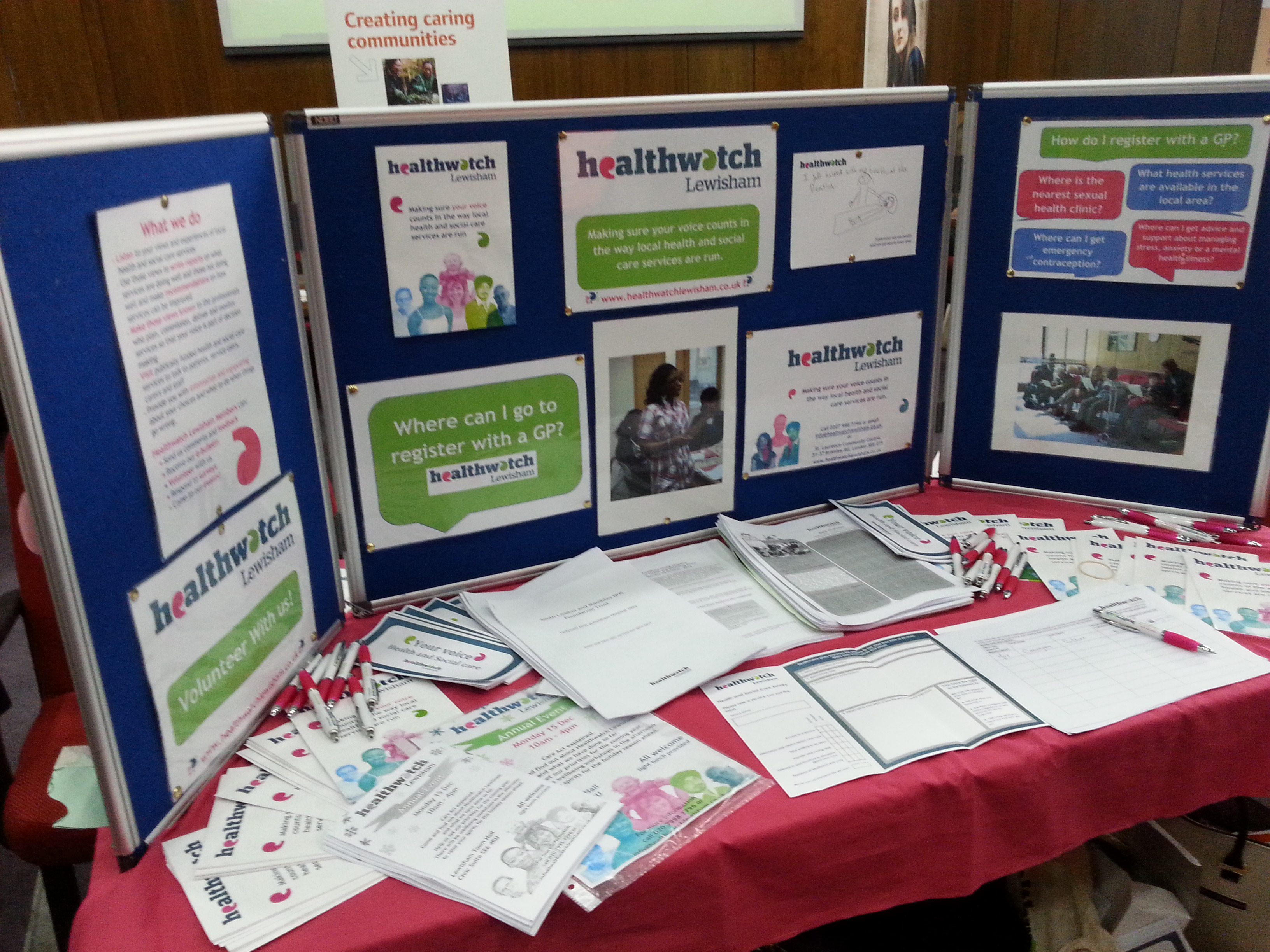
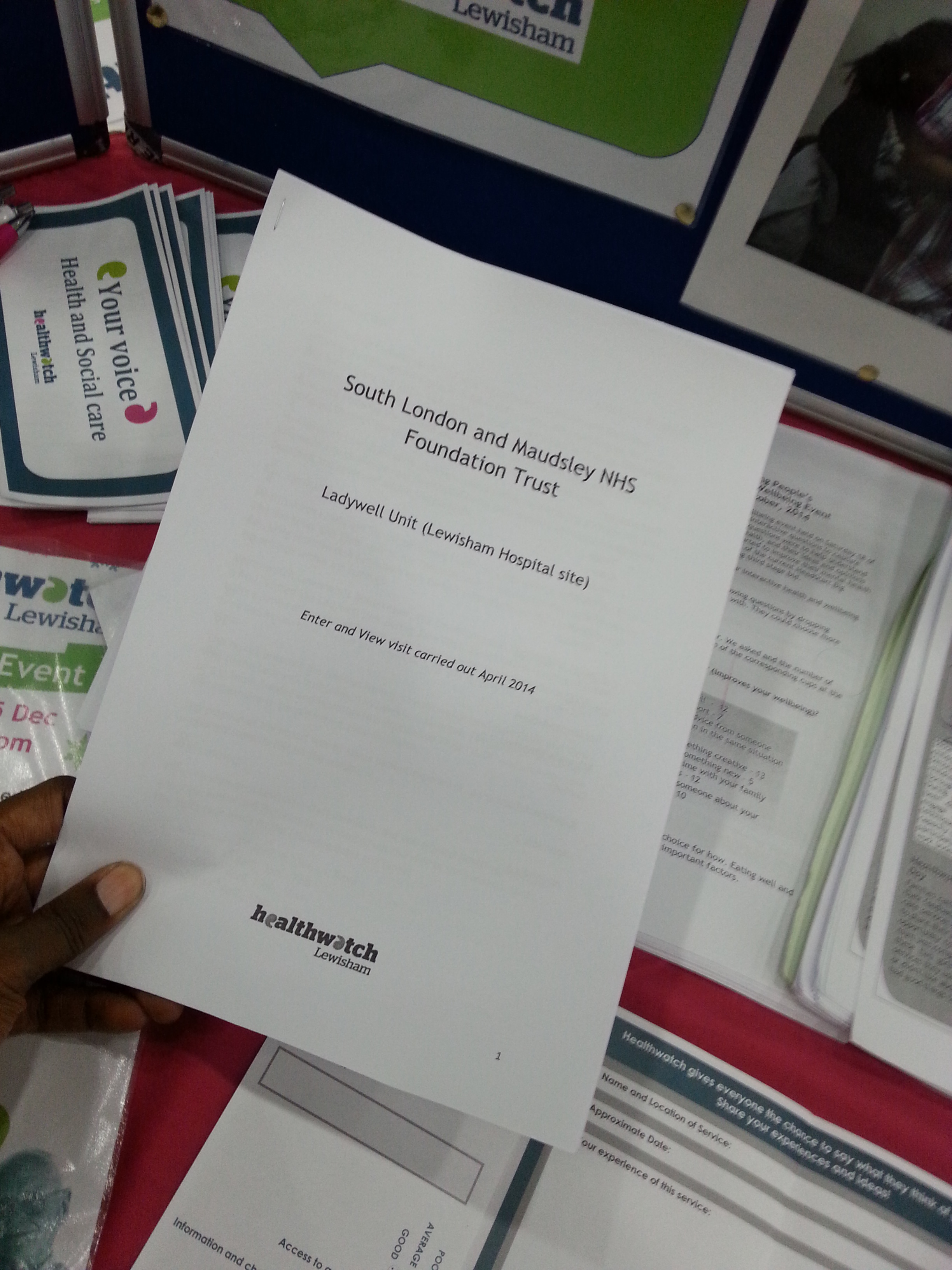
Again my cold played up on me and I found myself beating a hasty retreat back to the lower floor again to view some more stalls. The next stall was impressive and this was the lewisham healthwatch stall. Healthwatch is an independent consumer champion that gathers and represents the public’s views on health and social care services locally or nationally. The most interesting document I picked up from this stall is their report on one of SLaM’s units, which I flicked through. What came to mind when I went through the report was transparency and cooperation with other independent organisations.
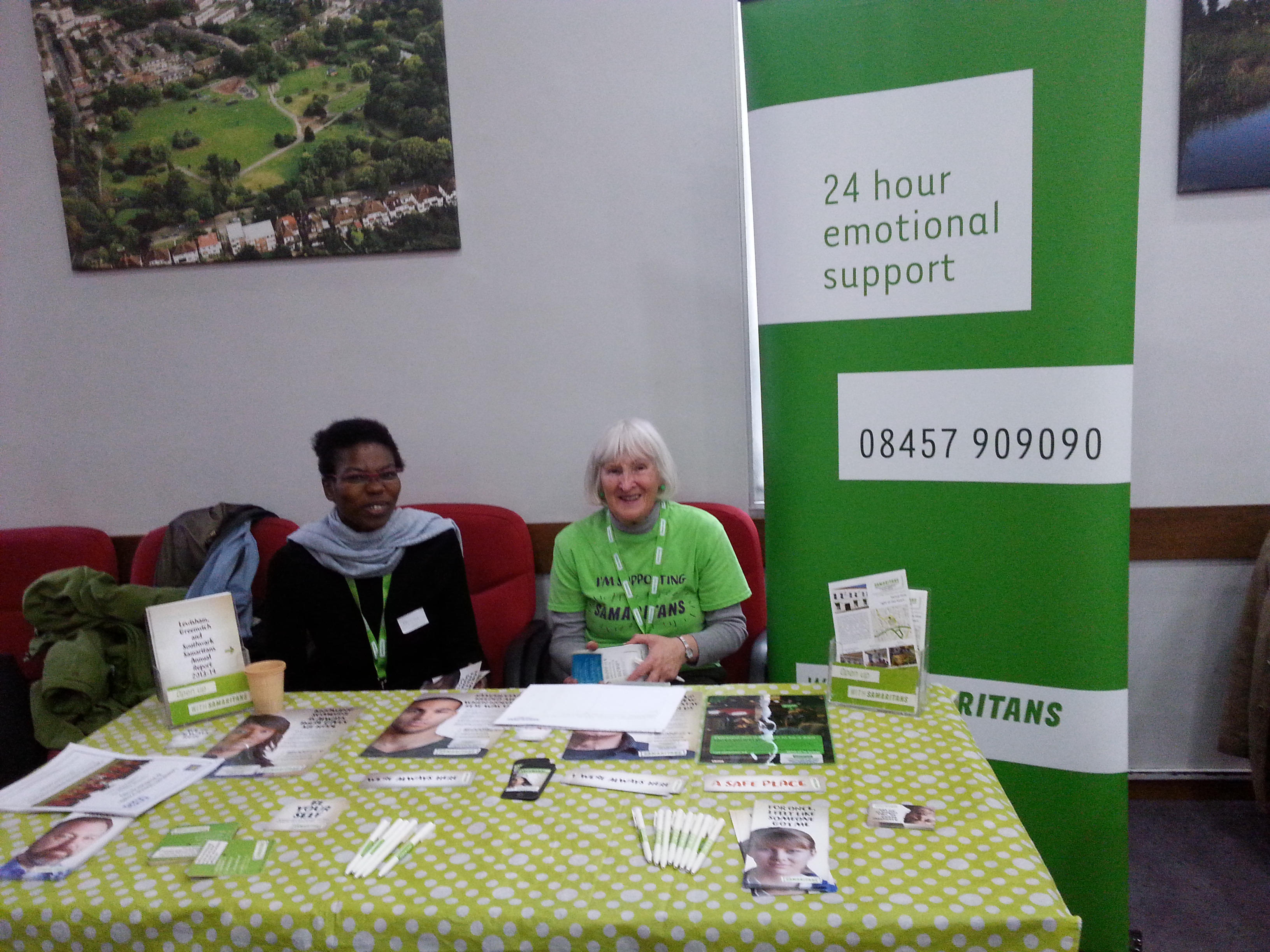
The next stall I visited was the Samaritans stall, I have spoken to the Samaritans several times on many events. Basically the Samaritan’s are a registered charity aimed at providing emotional support to anyone in emotional distress. I spent quite a long time on this stall swapping ideas and networks, because one of their staff is a member of the Lewisham mental health connection, which I am also a member.
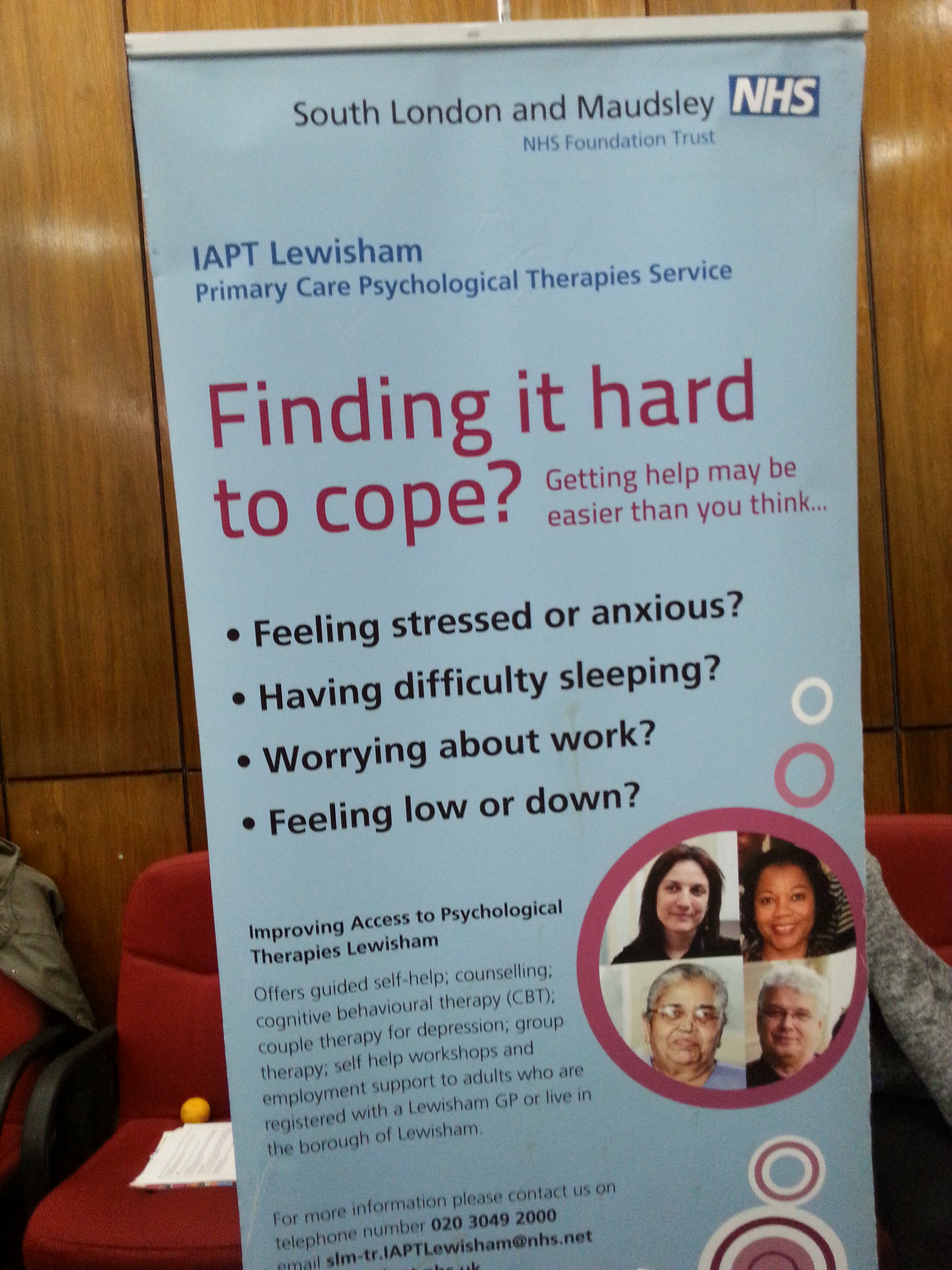
The next stall was on IAPTs (Improving Access to Psychological Therapies
), which offers a range of psychological therapies to adults 18 years and over. I glanced over a few of their leaflets to take home and read, plus I have been on many IAPTs courses in the past.
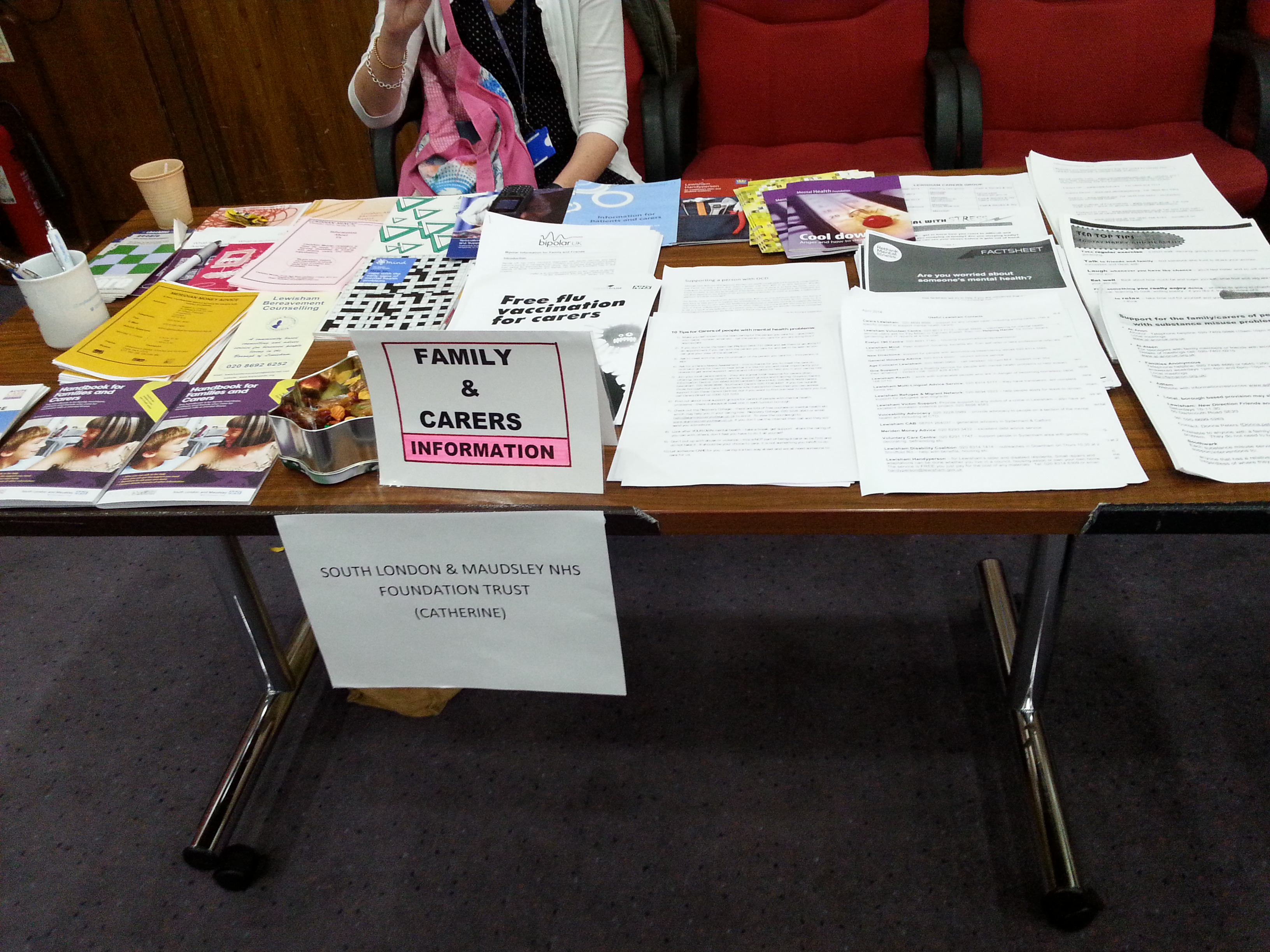
Eventually I wandered over to chat to a the SLaM’s carers support officer who I have known for many years, she was busy minding the SLaM’s Family & Carers information stall and I could see the purple family and carer booklet which I was lucky enough to contribute to. The Mental Health Trust aims to support carers as much as they can and this stall shows they are working hard to help carers of those using the services.
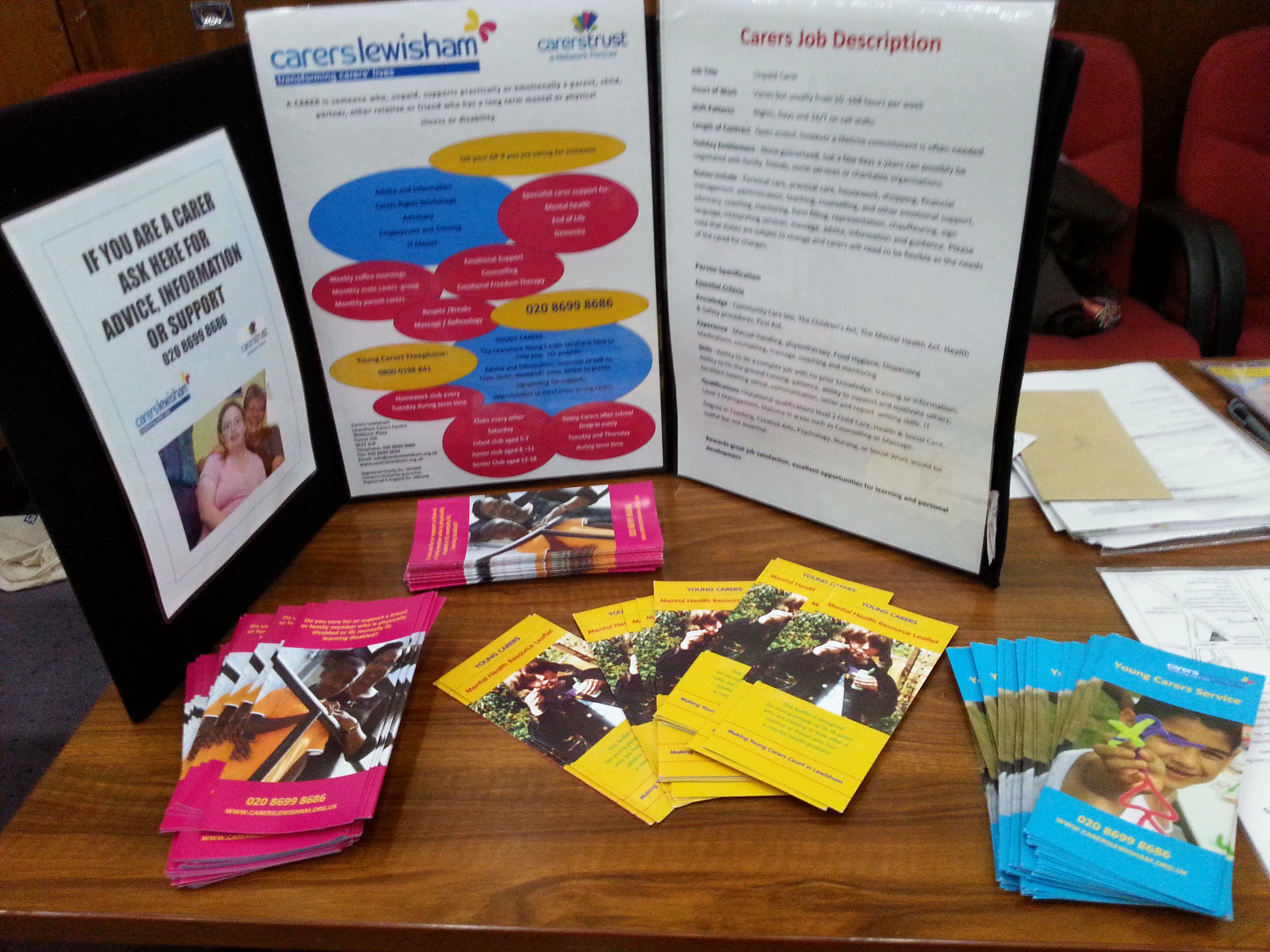
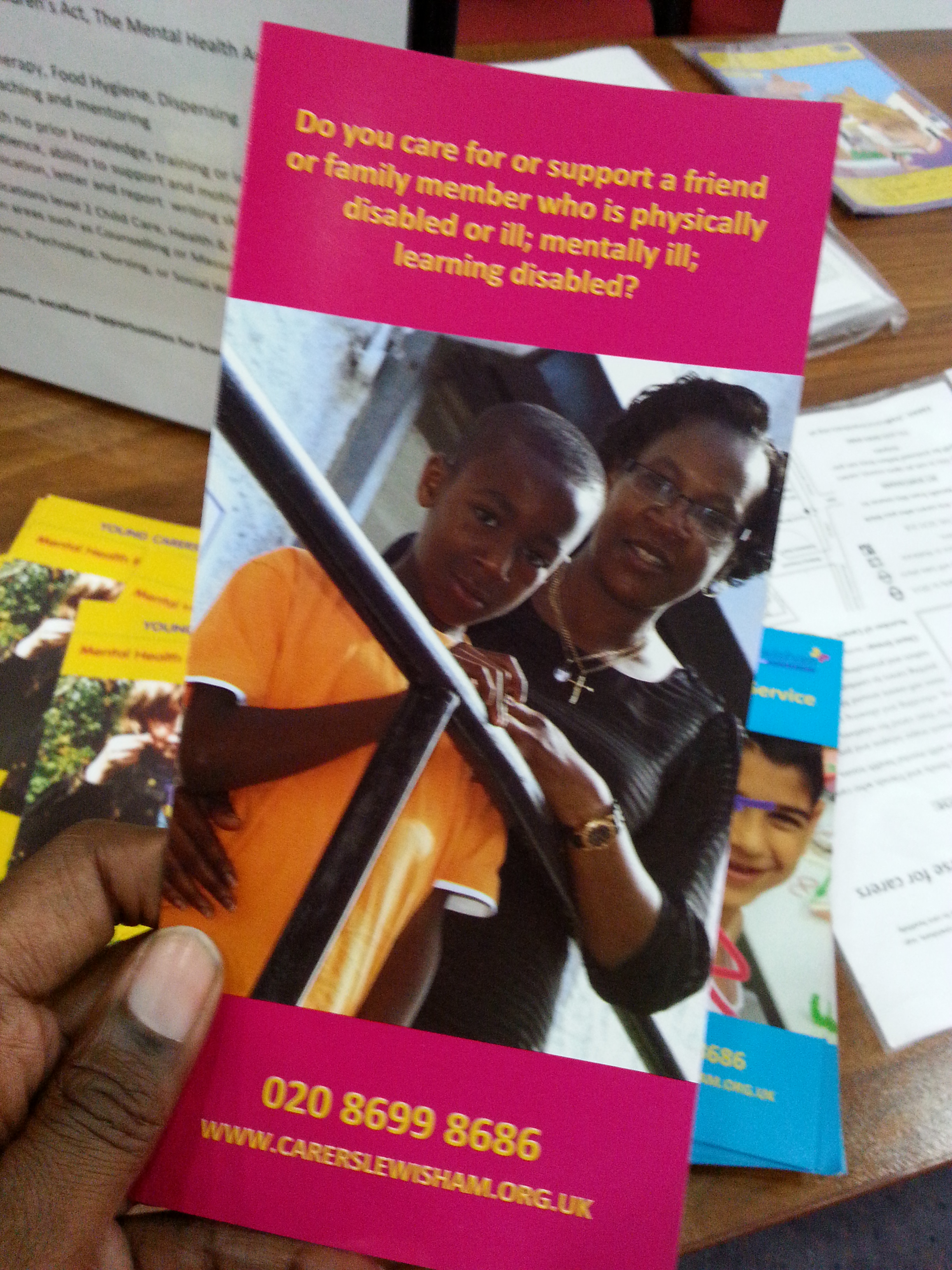
After visiting the SLaM Family & Carers support stall, I moved on to the Carer’s Lewisham Stall and spoke to Jey and her new volunteer who specilises in dementia support. I picked up one of their leaflets, which was very colourful and flicked through it. As a carer, I have been using Lewisham Carers a long time.
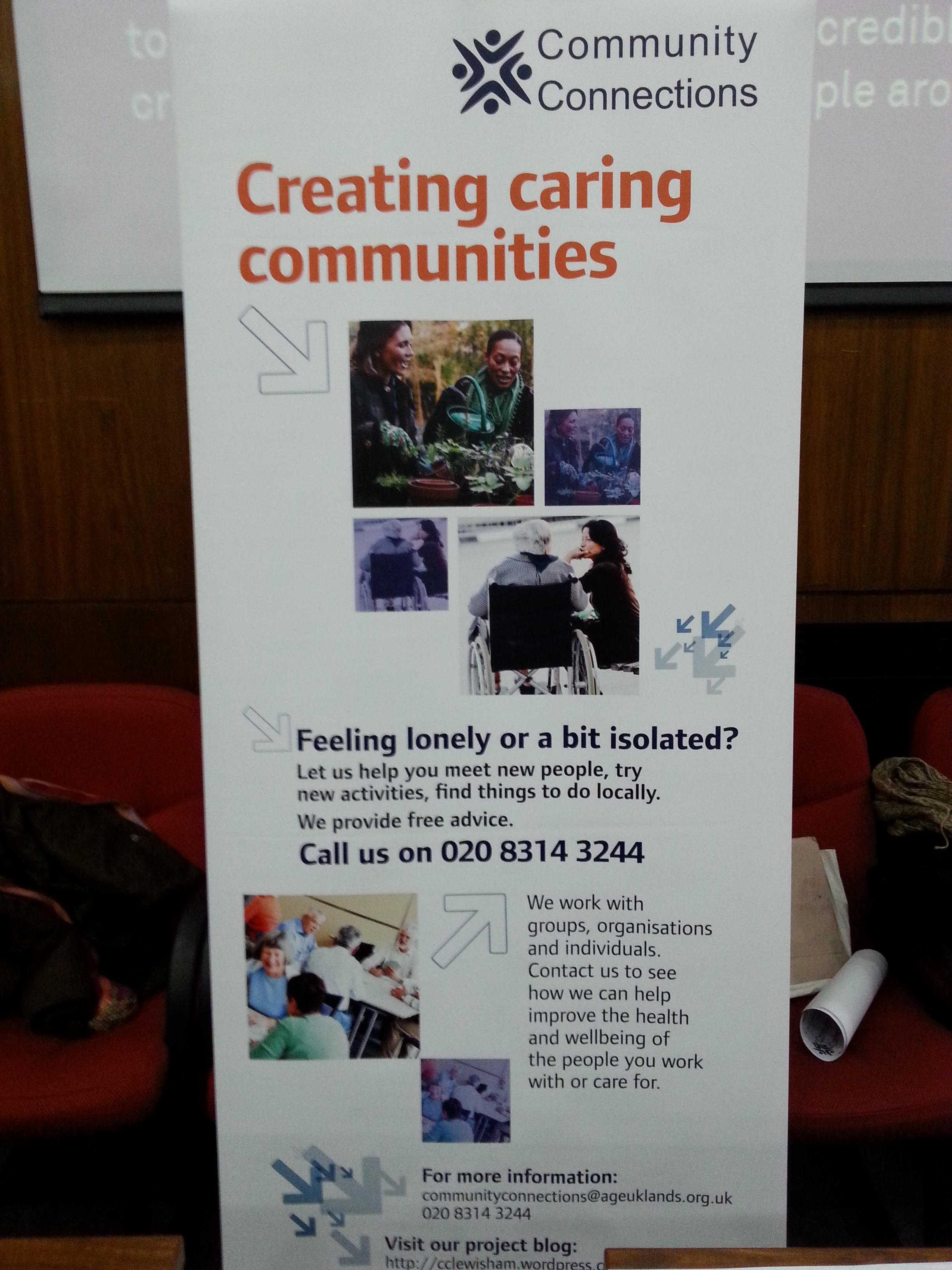
Then next stall was on “Community Connections”. Community Connections is a development and access-facilitation project with a preventative health and wellbeing focus. I picked up one of their leaflets which was on a wellbeing story, just on the focus for the day. Soon I moved on to another impressive stall which is the SmokeFree campiagn for lewisham.
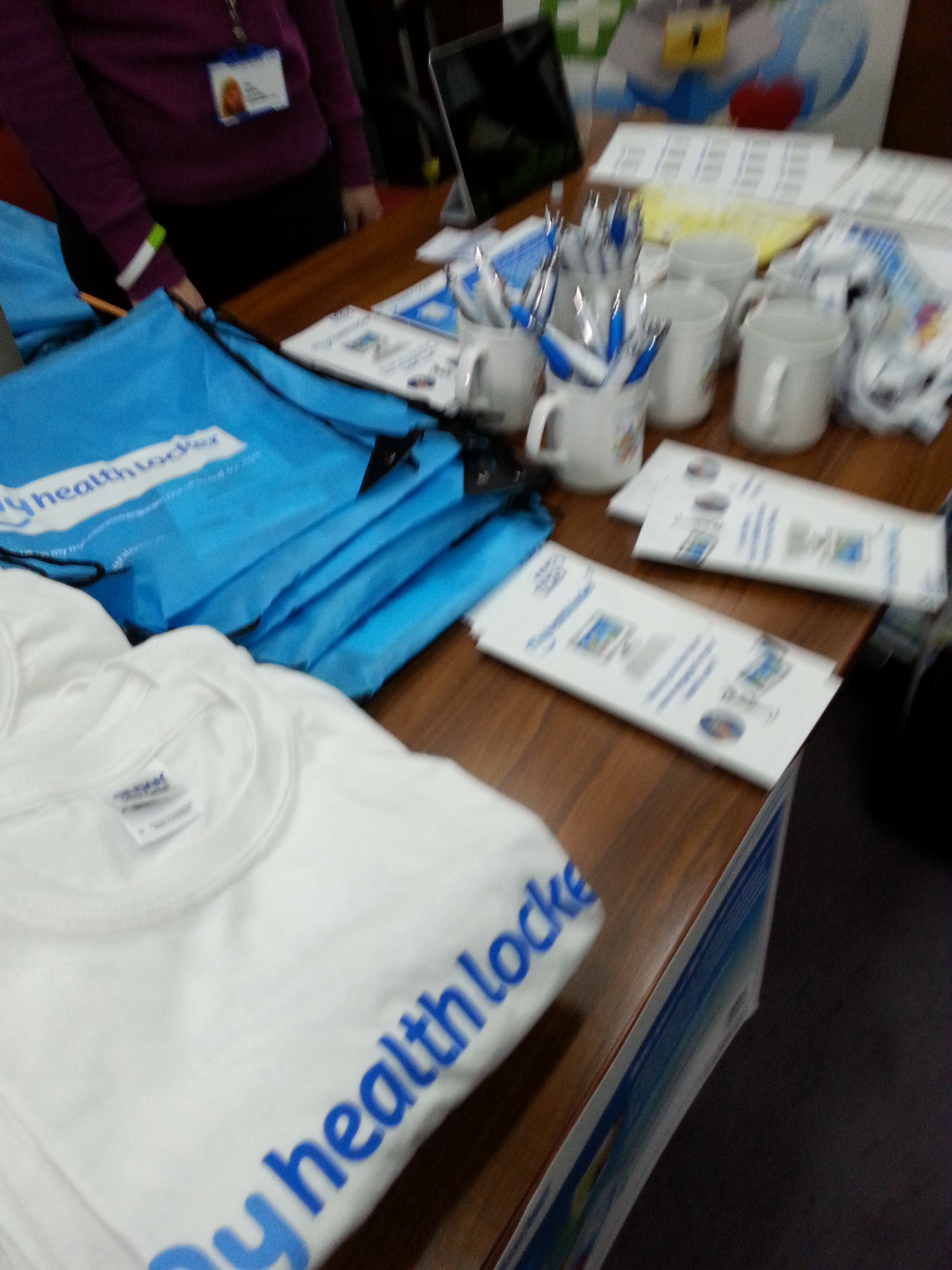
I eventually I ended up at the MyHealthLocker stall. This stall is about self empowerment using technology to monitor your own health and allow doctors and even carers to aid in your care. myhealthlocker allows you to have control over your health information. Service users can access their care plan from the South London and Maudsley NHS Foundation Trust, keep track of how they are feeling, access resources and tips on staying well and manage their health and wellbeing. I was given a free T-shirt for attending the stall.
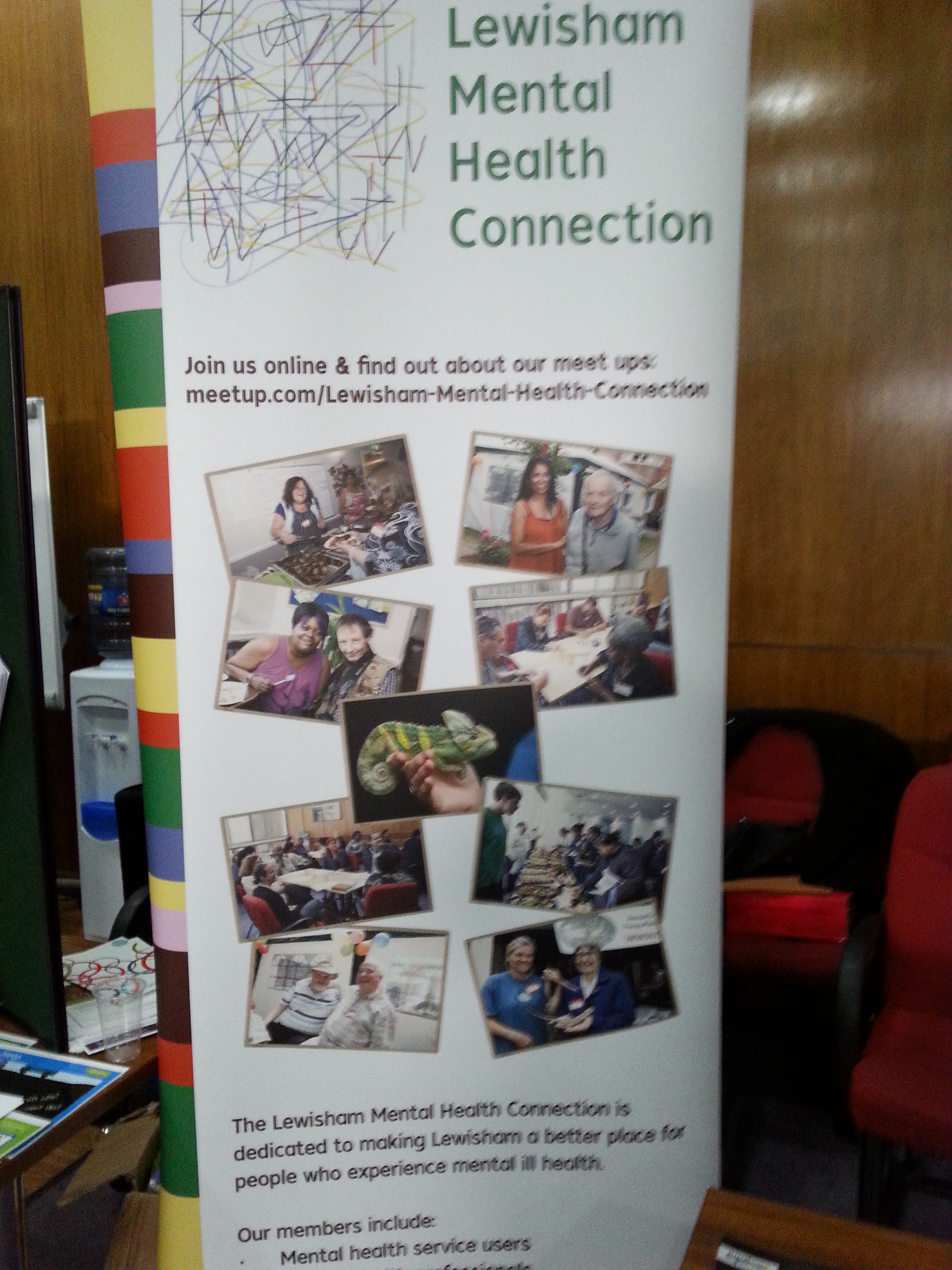
The next stall I spent talking to the staff for a while in order to catch up with them. This stall is about the Lewisham Mental Health Connection are group of people working in the voluntary sector who are committed to improving mental health in Lewisham.
After a few more visits to some stalls, I ended up back in the upper floor to have some nice carribean lunch and continued to network with many others.
Unfortunately I missed out on the workshops and more talks, but I guess its impossible to be everywhere and considering I had a cold, I really enjoyed the day. I can’t wait for next years event.
Welcome to another blog post. I hope you have been checking out most of my blog site as you might already be aware that this site is aimed at those interested in mental health, however a fair bit of the blog site is about mental health through a carers eyes.
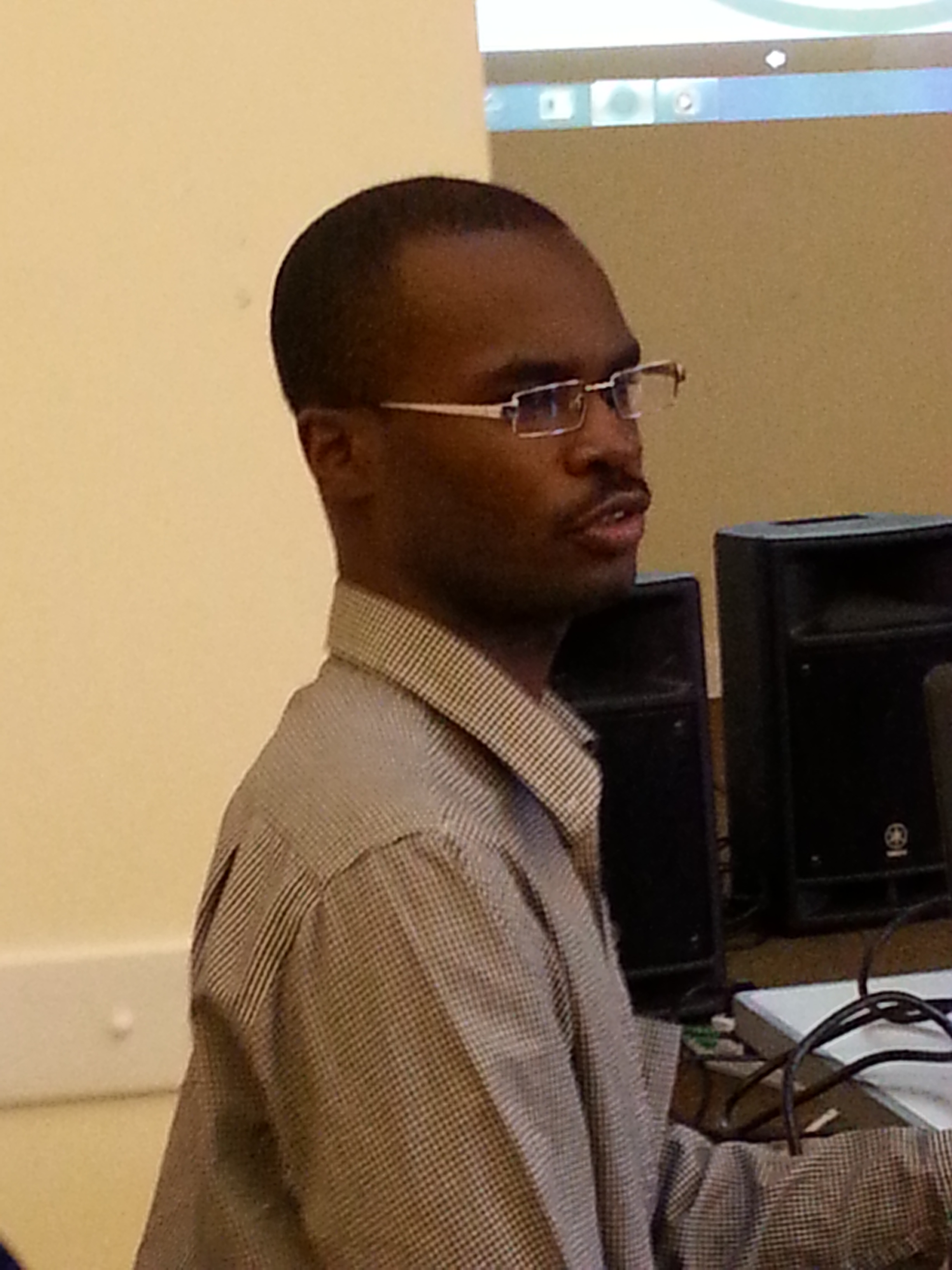
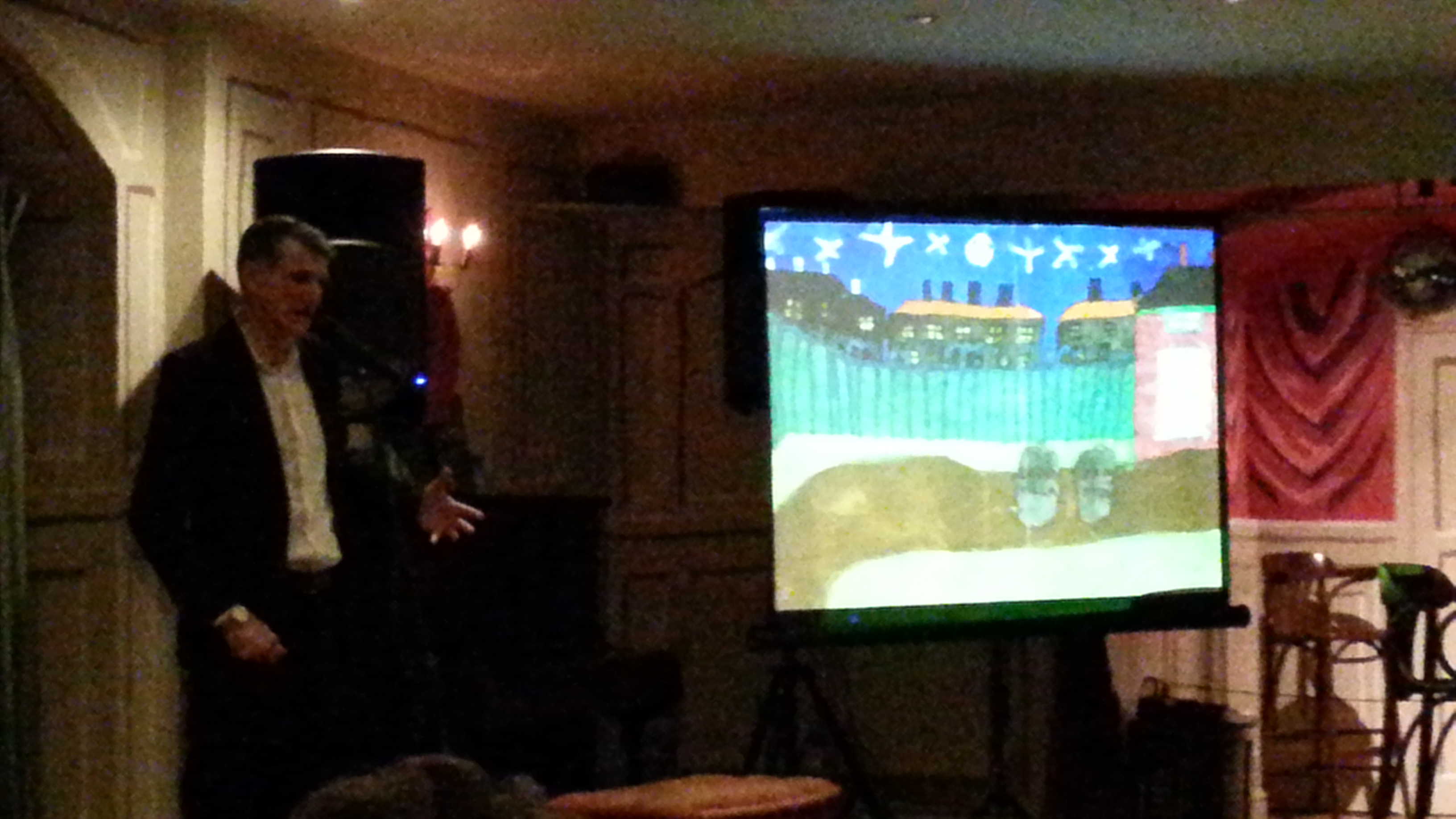
Anyway with this particular blog post, I am back over in the art world and I am not sure if you have managed to check out one of my videos on World Mental Health Day 2014, but at the last section of the video I attended a talk by Dr David O Flynn who is the head of the Adamson Collection the largest collection of Psychotherapeutic art.
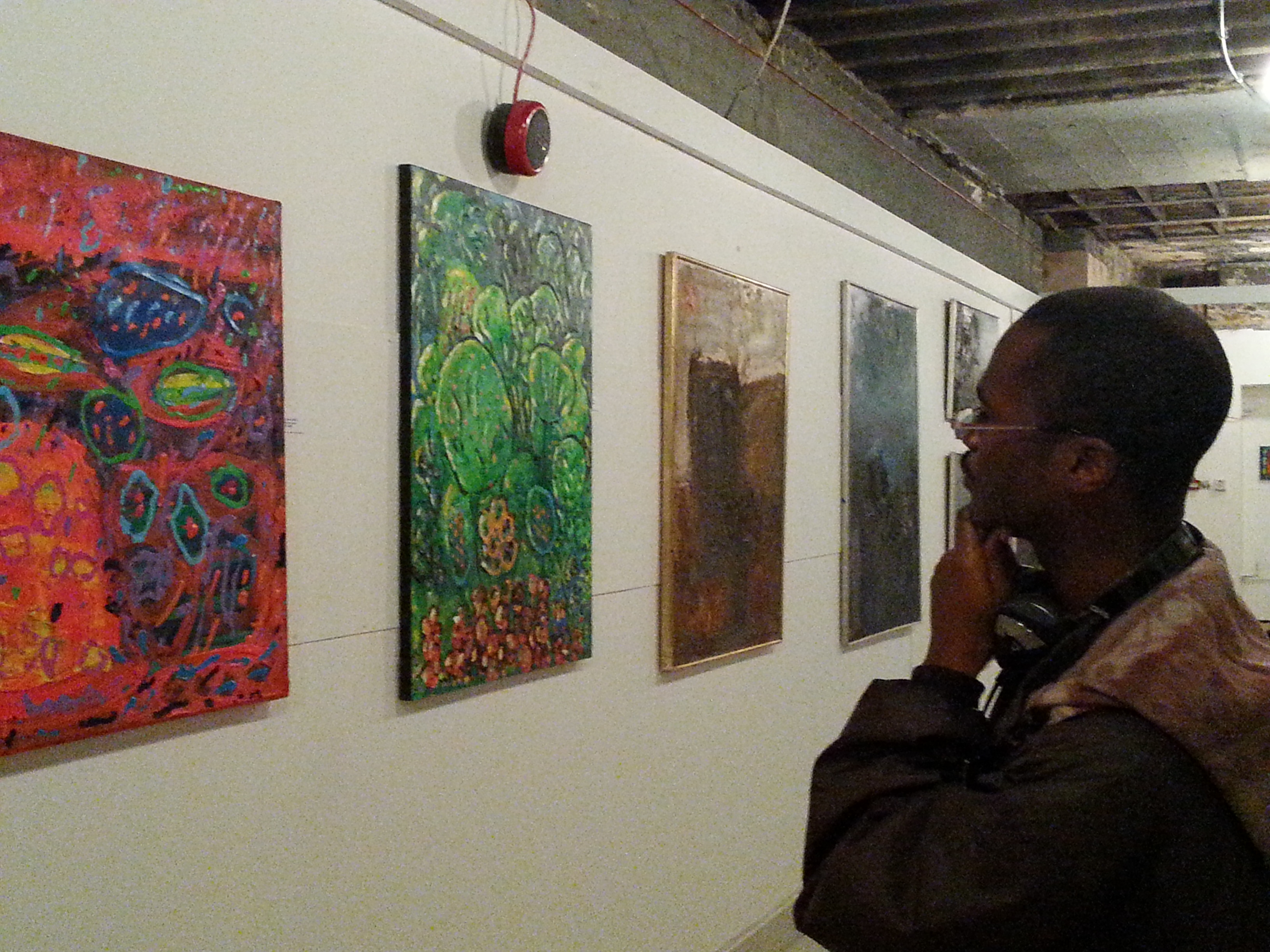
I thought that this time I wanted to hear more about the Edward Adamson collection, so I attended another event on the 12th of Novemeber 2014. The event was held over at Vout-0-Reenee located over in Tower Hamlets, which is a lovely club where people can swap ideas on art and also attend events on art, poetry and creativity.
The club is run by Sophie Parkin and her Dutch husband Jan Vink. The club also has a lovely art gallery where many of the paintings I managed to view.
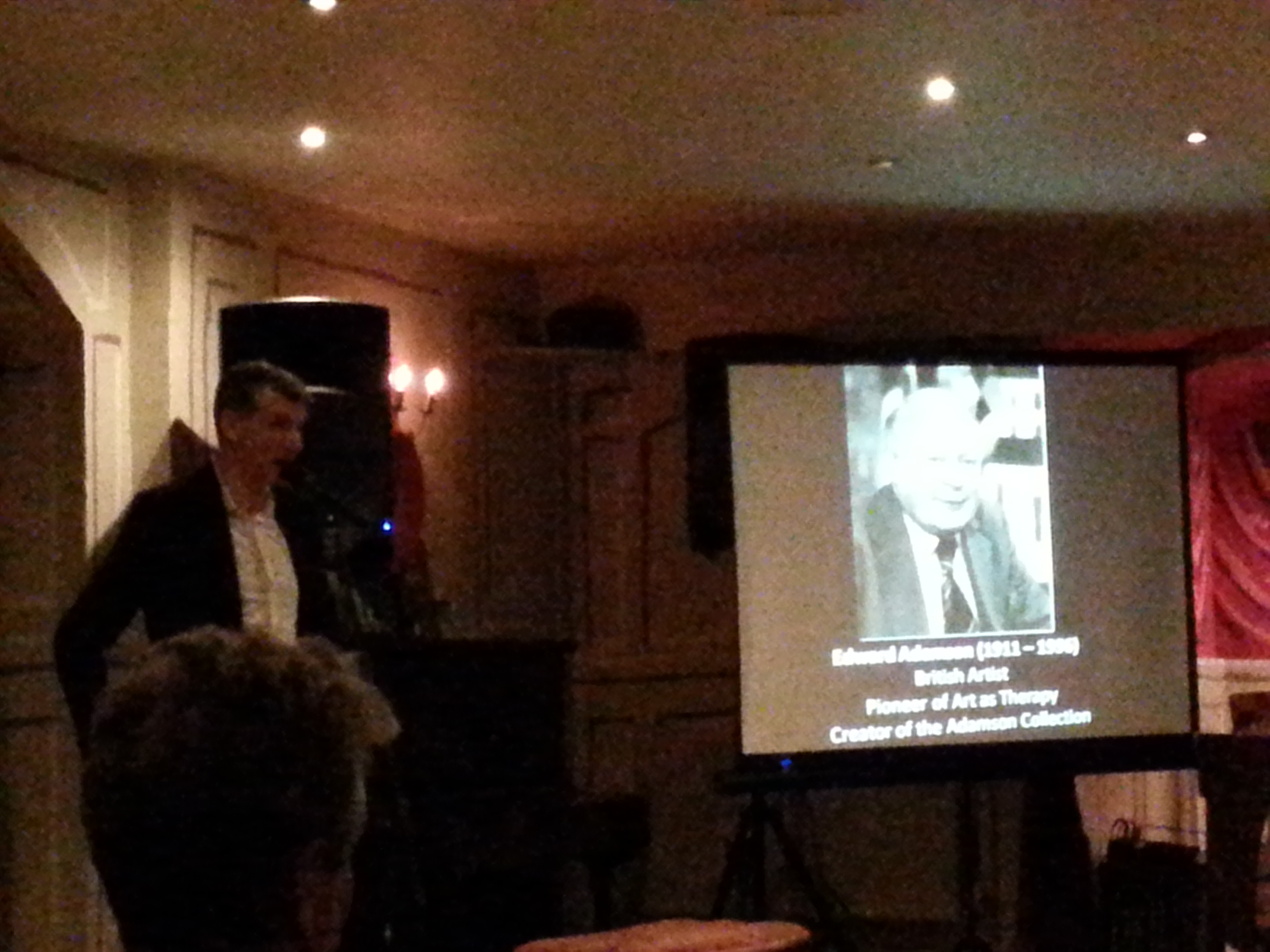
After a while David who is a psychiatrist over at Lambeth Hospital begun his talk about Edward Adamson and Edward’s art collection, but who is Edward Adamson?
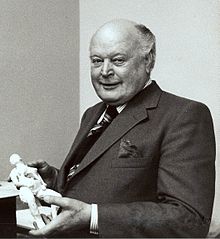
Edward Adamson was a British artist, and he is known as the father of Art Therapy and also the creator of the Adamson Collection. Edward Adamson died 3 February 1996, but he left a legacy on Psychotherapeutic art.
Edward main emphasis was on using art to heal people, that being where the inpatients of the asylums would use art as a way to try and slowly recover from mental ill health. The sad thing is that patients of the asylums would be closed off from the world or society and so art therapy was critical for those shut away from others.
Edward Adamson worked alone with 100s of people where he helped them to create and express themselves in art.
The one thing I ve noticed when David does his talks is how he mentions that creativity can lead to healing and I sincerely agree with him. Edward also viewed art as something not to be over examined or analysed. The main thing was to get the patients to just create things and project themselves into their art.
The Adamson collection has had a wide media coverage, exhibition and a festival. The collection is comprised of over 5,000 paintings, drawings, sculpture and ceramics produced by patients who worked with him from 1946 to the mid-1990s.
Talking about festivals. There was a Adamson Arts Festival held over at South London and Maudsley where the festival took placed over at the Maudsley Learning center around mid 2014.
The festival was joined by RAW Sounds, which is a project of creative media sessions for people accessing mental health services, open to young people and adults between the ages of 16-65 accessing mental health services.
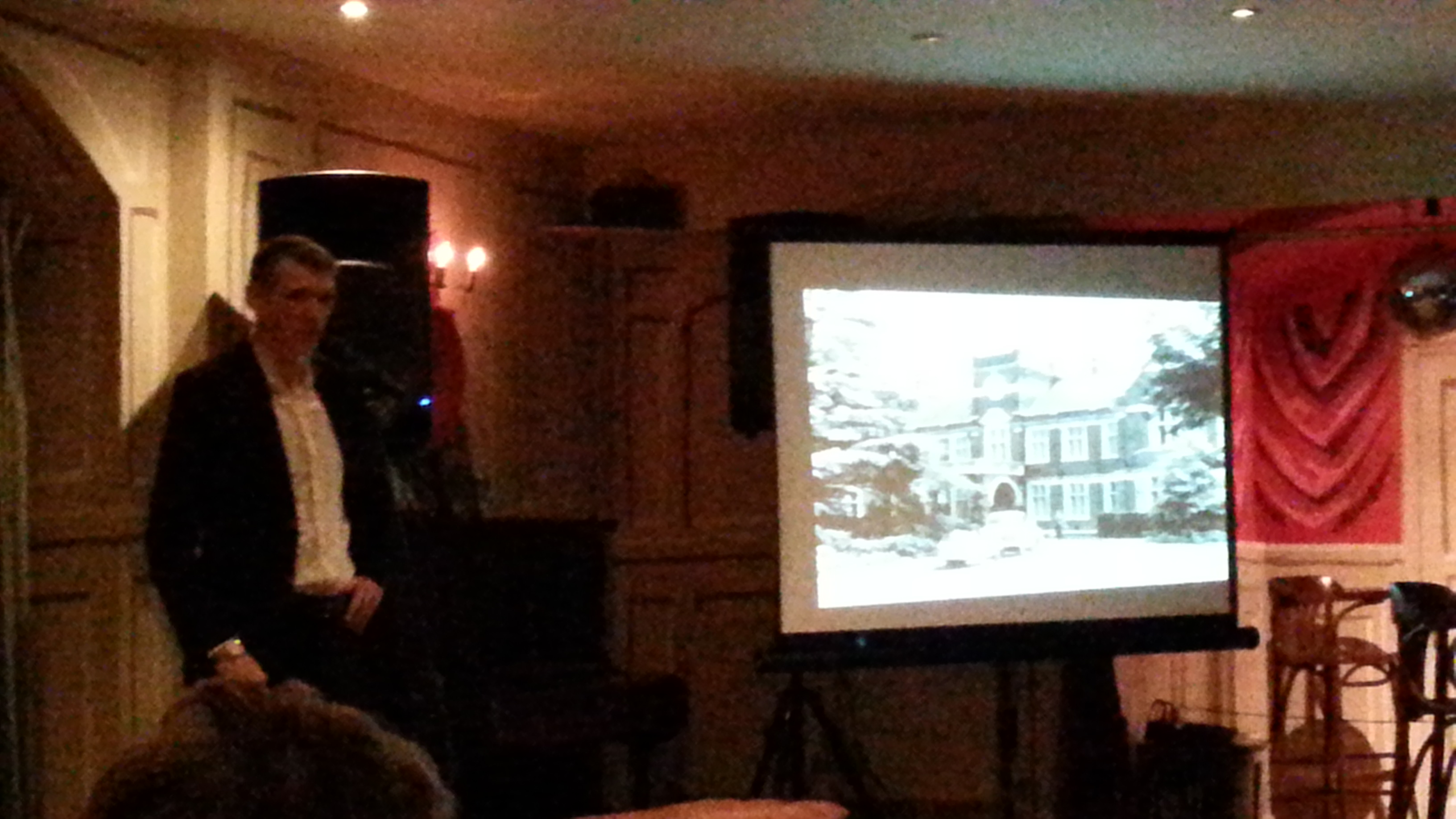
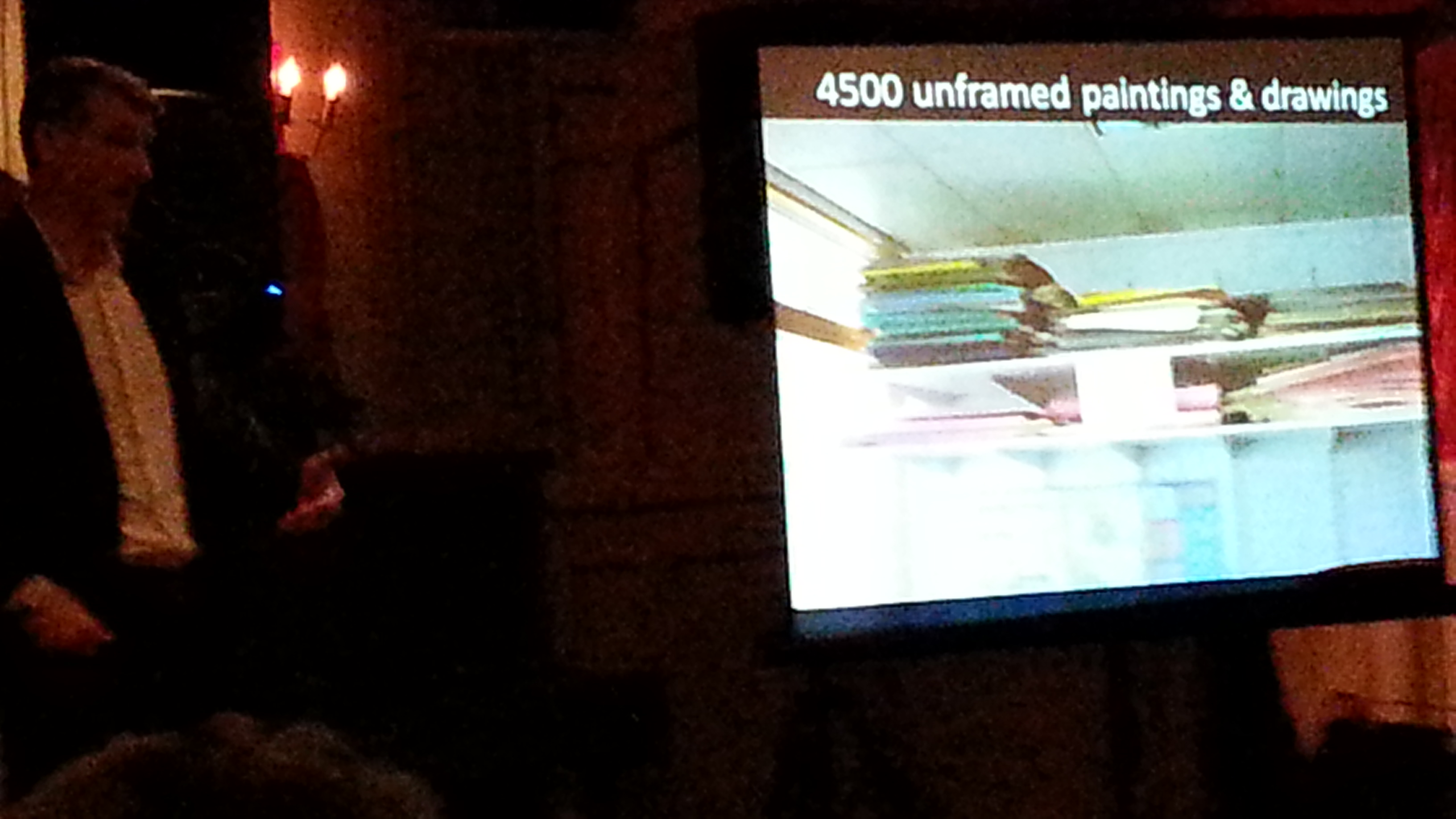
David talked about how the collection was placed in Lambeth hospital, but after a while the art became in danger of being neglected. There were 4,500 unframed paintings that was needed to be placed in a safe location.
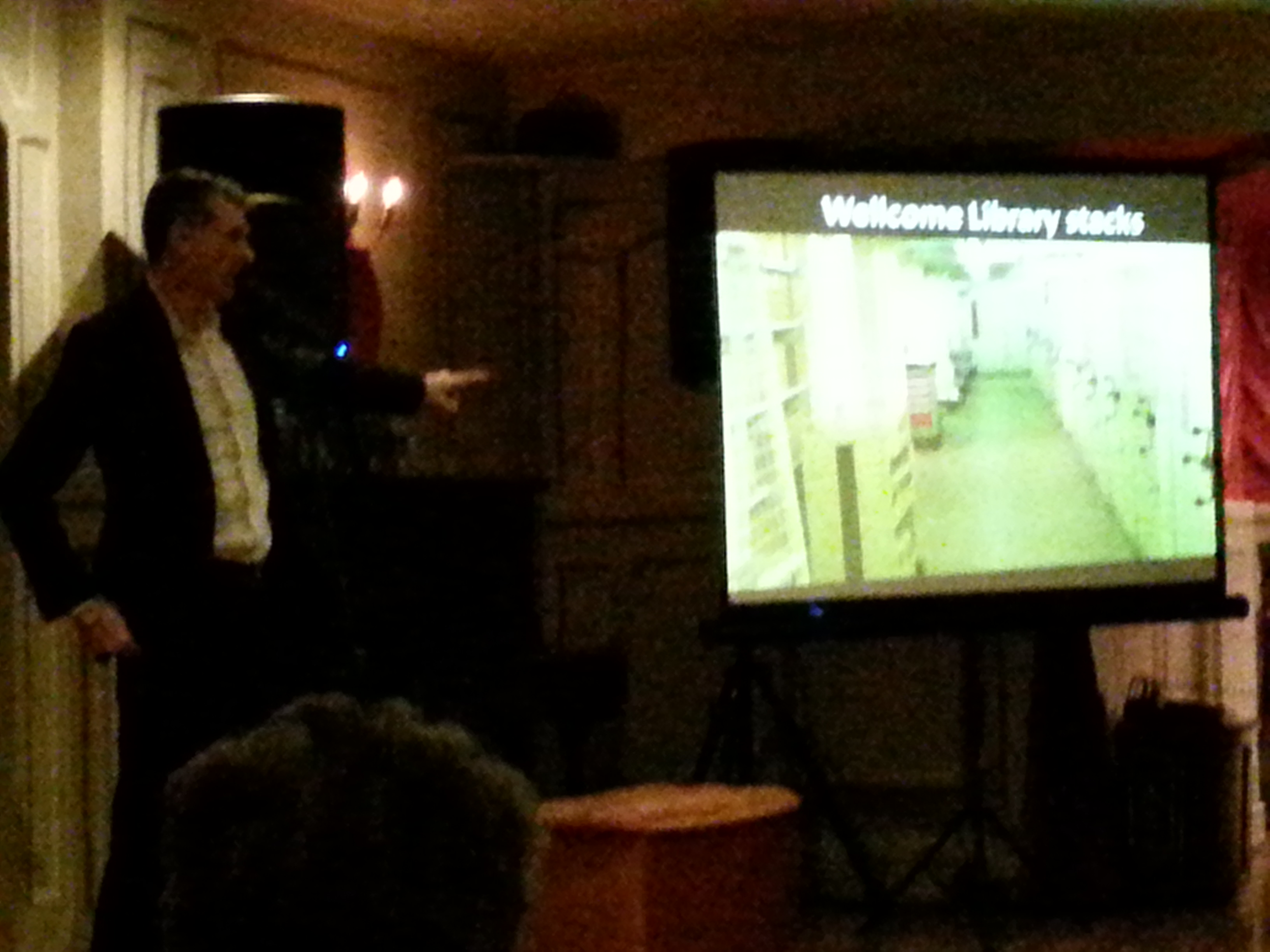
David managed to have the Wellcome Library relocate a large number of paintings to a safer storage facility.
Throughout the talk, I was very impressed on how much David talked about the use of Art as therapy and his knowledge about Edward Adamson’s view on art. David talked more about the number of different types of art collections from Edward Adamson.
David also talked about the patients work of art and how Edward’s paintings have a strong representation of women.
At the talk we were shown a film called “Insulin Coma Dreams”, which showed more about the Adamson Arts festival, this film was directed and filmed by Andrew locke, who also gave a talk about the film and what it represents.
Andrew locke who is an expert by experience was also inspired by work of Adamson, so he made the film on the closing event of the Edward Adamson Festival.
All in all I enjoyed the presentation and talk by David and Andrew, there was lots to learn about the collection. What is more impressive is the energy and dedication by those who wish for people’s works of art to live on.
Welcome to another of my blog posts. Did you know that caring for someone can come with some difficulties? There are many difficulties in providing care, but one of those difficulties is stress. Did you also know that the date of this blog post is written on National Stress Awareness day 2014?
National Stress Awareness day 2014 is promoted by many organisations, but the one that initially pushes the awareness campaign is The International Stress Management Association which is a registered charity dedicated to Promoting Wellbeing and Performance.
Well hopefully you have managed to attend some events about stress awareness or perhaps you have read up on what stress can do to people, especially workers or carers. However what exactly is stress?
Basically our thought processes control our body and this can be done at such speed, that our body quickly reacts to our thoughts. The thing is Stress happens when we feel that we can’t cope with pressure and this pressure comes in many shapes and forms, and triggers physiological responses. What are these things called pressure? How can pressure affect how much stress a person can take?
Pressures come in many form, basically the idea that we should set out to achieve a specific task or number of tasks, but what happens if those tasks become increasingly difficult to do?
Let me go back to the world of carers, many carers find out they have to set themselves a task to provide care with almost next to no support. Of course this is depending on what care is expected from a carer, but unfortunately the tougher the aliment of the caree (person receiving care) then the tougher the caring role.
If the task of caring seems never ending or other tasks get in the way, then the pressure increases, if a specific carer cannot cope with the pressure, then stress increases, if the carer cannot find a way to cope with the stress or no support is available to cope with the stress then the carer can suffer many difficult symptoms.
What are the symptoms of stress?
Stress can affect people differently and this can also boil down to the level of stress. Below is a small list of how stress can affect some people.
Inability to concentrate – If a person worries all the time due to stress, they can find it hard to concentrate. Seeing only the negative – Stress can cause people to lack confidence, especially if they fail at a task. Many carers often blame themselves when faced with the difficult task of providing care. Anxious thoughts – One of the most common symptoms of stress, we become so anxious that we cannot decide what task to achieve. Constant worrying – Some stress can become a roundabout, we want to rid of stress, but worry about stress and eventually it can lead to worrying about worrying about stress. Moodiness – Some people can become short tempered of moody if feeling stress. Agitation, inability to relax – Since the body may be in ‘fight or flight’ mode, it can be very difficult to sit still. Feeling overwhelmed – Another common symptom of stress, especially if a carer is multi-tasking, a carer would feel overwhelmed Depression or general unhappiness – One of the most common psychological traits that can unhappiness Aches and pains – constant stress can lead to physical problems Chest pain, rapid heartbeat – Stress can also affect people physically. Loss of sex drive – Things that people enjoy can also be affected, too much stress can stop us relaxing or having an interest in many things. Frequent colds – One of the most common symptoms of stress, which affects workforce heavily, constant stress can affect our immune system, where it becomes harder to fight off infections. Trouble Sleeping – Stress can keep the body in flight or fight mode that it can be difficult to sleep due to constant worrying.
So can you imagine some of the situations a carer may find themselves in if they take on too much within their role. It might not be so bad for carers coming from larger families, since a another member of the family might take over, but if a carer is on their own then the stress can affect a carer till they feel they can no longer carer any more. Plus coming back to larger families, I have heard some families leave a single member caring for someone because the family refuses to get involved.
Well what can be done about this? What should a carer seek to do?
The first thing would be to understand when stress can become a problem for themselves. Here is a video I have made to explain more about National Stress Awareness day.
Other things a carer can try to get done is get a carers assessment, especially in the UK a carer can get assessed to see if their caring duties are are risk of overwhelming the carer.
The next task is for carers to try get themselves respite or a break away from the stress of caring, usually the assessment can indicate when respites are needed, a break might not solve the problems of caring but it at least it is a start.
The video I listed above can also be an educating factor for carers experiencing stress, there are steps where carers can look out for the signs of stress. The best steps are the following
– Take time out to do the things you enjoy
– Watch carefully for how you breathe, try slow down breathing during stressful situations
– Exercise whenever you can get the time
– Connect with friends, family or even other carers
– Try to stay positive.
Stress is such a huge problem for society, no wonder there are awareness days dedicated to stress problems. Stress also is a major problem for the workplace especially the NHS and organisations need to take notice to protect their staff. Even if the stress awareness opportunity was missed, let it not be a one time event, but a nudge to implement stress awareness into policies and protect staff.
Thanks for dropping by to read another of my blog posts, these posts are usually on mental health from a carer’s perspective. I am currently caring for a close relative suffering from mental ill health, so I have set up this blog as a form of expression, updates and support for myself and others.
Well ok lets get to this, I have been hearing lots of stories, news and thoughts on the new Samaritans RADAR app, for those who do not know. Let me briefly explain what the Samaritans do.
Thank you for visiting my blog on carers who care for those suffering mental health problems. I have just come from a carers group in Lewisham, which is run by South London and Maudsley carer support officers and a carers advocate from Carers Lewisham. I felt the group turned out very well for carers as also for myself, even if I did not learnt as much as I could, or felt I could not release any of the emotional turmoil as much as I had noticed other carers going through then that is ok, because I do not feel too alone when I walk the path with other carers facing a similar journey.
On this blog I want to talk about the changing role of a carer. The thing is if you are caring by yourself or in a family, you are still a carer, but the word carer runs a lot deeper than it seems. I am sure I have mentioned this many times, but carers are not usually trained to care when their loved one becomes unwell, this is more the case for carers who care for those suffering difficult but mysterious mental health crisis. I suppose eventually we know that a carer will pick up a few things alone the way in their journey of caring.
I will speak for you
However the road of a carers journey can be long with many winding paths and difficult uphill battles. Now I have been caring for many years and when I look back at my roles, I have begun to realise that I not just a carer. At times I have noticed that I would have to advocate on my loved ones behalf. Why is this?
Well as you might have guessed that if you are caring for someone who has difficultly with mental capacity, you will find that you may have to take that step forward to contact services on their behalf, which can cause relationship difficulties, because as a carer, you are drifting into the patients rights, but at the same time you as a carer cannot stand to see your loved ones life falling apart.
You as a carer may find yourself speaking up for your loved one on perhaps a ward round, you may end up ringing around to get your caree financial support, you as a carer may end up having to deal with correspondence, but in the long run you as a carer will speak to your loved one on what you feel they may need to get their life on track. Of course whether your loved one listens to you is another thing, but you are advocating on their behalf, unless they have an independent mental health advocate who advocates for them, which can be a good thing, but its not uncommon for even the carer to step in and update the IMHA (Independent Mental Health Advocate) on their loved ones situation.
So ok, we have one of the roles a carer will probably have to carry out or learn on their caring journey, but what are the other roles?
A healing hand
When a carer who is looking after someone suffering mental health difficulties, its only a matter of time before a carer deals with medication, its only a matter of time before the carer looks around for side effects, its only a matter of time before a carer tends to their loved one’s physical health problems. I may have already mentioned this in another of my blog posts, but those suffering schizophrenia unfortunately have a shorter life span than those who do not suffering such devastating mental health problems. The question is why? Could it be that those suffering such a condition are not proactive in seeking help when physical symptoms arise due to perhaps bad life choices? Maybe it could be mental health stigma or perhaps some health professionals may not take the patient seriously.
So we then have a carer whose role will change to a nurse and I do not mean a professional trained nurse, what I mean is that the carer will try and tend towards the carer’s physical health problems. The carer will also try to alert the GP or a health professional when critical symptoms arise. The carer will also check if medication is being taken on time and will look for side affects. Its not like I want carers out there to do all what I have mentioned, but I do realize that many mental health carers go through such roles almost on a daily occurrence.
The words we use can heal
So now we have covered two roles where the carer could shift into, but there are more, I would at least like to cover 3 more roles. What could these roles be? especially ones concerning those who look after someone suffering mental health difficulties?
The next role is a difficult one which many carers including myself struggle through. This role is when a carer ends up having to be a counsellor to who they care for. Now those looking after someone with physical aliments would have to try some counselling to someone who feels the world is collapsing around them, perhaps because the caree is not as independent at that particular time. However consider what a carer needs to do if they are caring for someone suffering mental health difficulties.
It is fairly well known that counselling can work benefits for those suffering anxiety, phobias, compulsive disorders, depression and other mental health disorders, but what happens if the service user cannot access a counsellor? We have to remember that the carer may be living with their loved one and there will be times when their loved one will reach out for reassurance.
The carer will have to listen to their loved one, sometimes the carer will have to second guess what their loved one is feeling. The carer will also have to be very careful what they say and try to see what words or suggestions could help their loved one make it through the day.
This role is without a doubt extremely tough and requires not only some training, but knowing the person you care for, since we all have different personalities, we are all different characters. The mind is a mysterious and wonderful thing, but it has many complexities where so much is unexplored, psychiatrists take years to train, so can you imagine the worry or fear when carers need to explore this role?
To serve and protect
You might frown at this next role, but fortunately it might not be too often a mental health carer needs to carry out the next role, but this role is where the carer becomes a safety guard. Now its not uncommon to hear the word “vulnerable” when you define someone suffering mental health problems. As a carer, your loved ones state of mind may have changed to where they may lack capacity internally, but unfortunately the world externally has not changed, your loved one is still under the same difficult situations where those not suffering mental ill health are exposed to.
Are you worried about those seeking to exploit your loved ones finances? Then yes you will take on the safety guard role.
Are you worried about fire hazards or if your loved one falls? Then think about the safety guard role.
How about abusive relationships where it might be your son or daughter loosing their mind due to abuse or neglect? As a carer you will take on that role to try protect them.
A Helping Hand
For the last role, it might turn out to be the most common. Unfortunately with this role, it can be used because of carer stigma. The thing is you see, not everyone likes to be labelled, some people feel they are only caring for someone because they are carrying out their duty as a family member. Some feel they do not need that special label because they are doing only what is required of them. Others out there feel the carer label is difficult to get rid of, so this next role is when a carer becomes……a helper.
With this role a helper does all the roles mentioned above and more, a helper aides, assists and carries out support when their loved one needs it. A helper may stand back quietly carrying out care without trying to disrupt their loved ones routine. You may tend to find helper roles in large families or in old aged carers who would have supported their loved ones anyway.
The many roles of a carers journey
No matter what role a carers definition may be, those roles usually fall under some form of caring. If you are caring for someone, it might be wise to think to yourself about these roles and ponder what information, course or help would be required for you to carry out such roles.
I do not wish it for carers to over burden themselves with switching from role to role, nor should carers smother their loved ones, because it is not right or fair for someone to sacrifice and care for so long, but the longer someone does provide care, then the more roles a carer will pick up along the way. It is important that carers like ourselves are more than just a label, we are ever changing and our journey requires many skills.
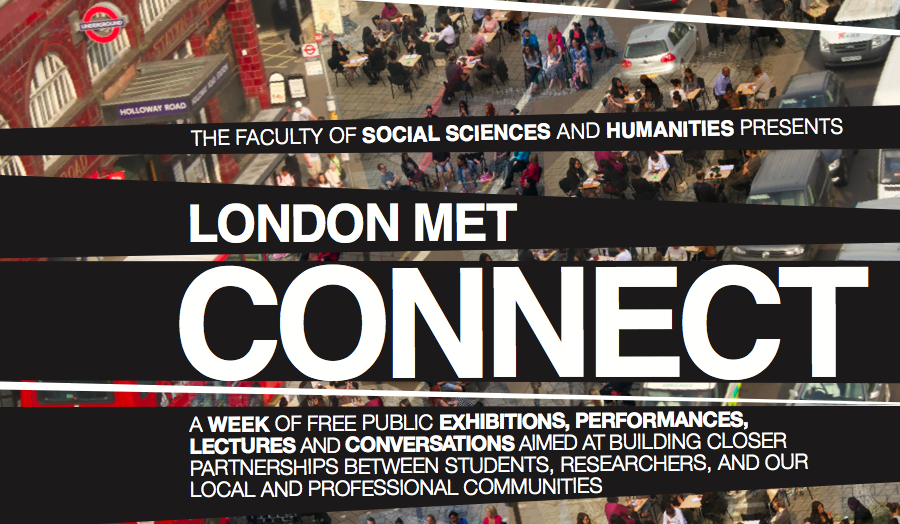
Welcome to another blog post. You know? I like attending well-being days and health events, especially events to do with mental health. Well I was in luck, on Thursday the 23rd of October, I just managed to attend the London Metropolitan university “London Met Connect”, which was presented by the Faculty of Social Sciences and Humanities.
The aim of the event was to get people thinking about mental health. The event gave attendees the opportunity to explore mental health and recovery from a number of perspectives, these including service user participation and local, nation and global initiatives.
Welcome to another one of my blog posts, on this particular post I want to talk about carers. Those who have regularly visited my blog might have some idea what a carer already is, but for those who are new to my blog may wonder “what actually is a carer?” What defines a carer and why do people, families and communities sometimes feel compelled to care?
What is a carer
Someone who looks after another persons needs
Lets say you have known someone most of your life or perhaps someone in your family who has fallen ill. That person tries to do their chores and live their life without much help or support, but after a while it will be noticed by most people that they are struggling.
This is when a person decides to take on some of the responsibilities of that person that has become ill, although the carer’s main focus is to provide help, some security and care for that person.
Not all carers are the same and some have demanding caring duties, while others care on and off for a short time, but no matter what the tasks, they are all carers.
They are mostly not professional carers
When I talk about carers, I am not talking carers who train up on a course and look for people to care for. I am talking about those who find out that care is directed at them due to a family member falling ill, or a neighbour or a friend in desperate caring need. I am talking about parents looking after their children who have sustained serious injuries, disabilities or impairment. I am talking about young carers who are not only trying to understand their place in the world, but also trying to understand why their parents are in need of assistance.
Its not that carers can’t walk away from the care they give, some carers have to make that decision on what they should sacrifice. Carers may have to give up work, education, time and commitments to provide care.
Carers are known as carers because they ARE standing by their loved one. If someone moves on they can still provide some care, but it might not be as demanding as those who are currently providing long term or full time care.
Carers have to juggle many things as if their own life is slightly put on hold while they seek to understand the illness that is affecting who they care for. This is more difficult if the illness happens to be a mental illness or perhaps a devastating physical problem.
Some carers might not have a clue on what they may face and will have to look for answers or support, but we ll get on to that later.
Types of carers
I am not going to make a long list, but I will want to try define at least some of the types of carers. There are always a long list of carers you can search for on the internet, but since all carers are not the same, it makes sense to point out different types of carers.
Carers for elderly
Here we have those who will end up looking after their parents, most do this because they are concerned or worried that their loved ones will end up in a home too far away from them. Quite a lot of older people prefer to stay at home for their own independence, while others fear abuse and neglect.
Some people may wish for their parents to move on, but carers may prefer old aged parents to stay at home. You can also have older aged carers who care for their partners who are ageing. Other older aged carers also may care even for younger people.
Below is a list of symptoms carers may have to care for when looking after older aged loved ones.
List of symptoms these types of carers provide care for
Heart conditions
Dementia, including Alzheimer’s disease
Depression
Incontinence
Arthritis
Osteoporosis
Diabetes
Breathing problems
Frequent falls, which can lead to fractures
Parkinson’s disease
Cancer
Carers for the disabled
These type of carers can be of any age, but this time care can be demanding depending on the disability the caree has, when I mean caree, I am talking about the person receiving the care.
Types of disabilities a carer will have to care for.
This is not a full list, but shows what carers may need to tackle in order to provide care. I have two brothers who have Autism and providing care and safety as well as treating them with dignity can be a juggling act, but be aware Autism is a range or spectrum of disabilities.
There are also different ranges of paralysis putting strain on carers wanting to care for those who lack the function to care for themselves.
Carers for mentally ill
Another type of carer who often can be hit pretty hard because they can lack the knowledge of how to deal with mental illness that has struck their loved one. How can you care for someone who may not wish to receive care and yet is recognised by the mental health system as user of the services. What happens if the caree does not wish to engage with services? Where does this leave the carer, what rights do they have?
Some disorders can vary in the type of care needed, while other disorders are devastating and require support not only for the patient or person with lived experience, but also for the carer who can at times be overwhelmed in providing care.
Youngs Carers
One of the most difficult experiences for a carer is that of a young carer. Young carers can lack decisions on if to provide care or how to cope. Young carers face carer stigma and bullying from other young people who may find it funny that the person is caring for someone with disabilities or other illnesses.
The strain on young carers can be so difficult that often family relationships break down, although relationship breakdown is a common theme among many other types of carers.
Young carers especially need help in supporting their relatives and usually this can depend on how good social services are. One strain could be that pressure is put on the caree to have their child put in some form of care, but this can cause added strain to the child who now lacks family support, but could have freedom to enjoy their childhood. The balance of growing up as a young carer is a very fine line.
What MAKES a person a carer
You do not want to see your loved one hurt physically, emotional
A carer is not a sudden role, usually a carer is formed as a slow process. Since I have been a carer for most of my life, I have come to the conclusion that being a carer is something you become and the role will change.
As a carer you do not wish anyone else to take over your role due to fear that role will not be carried out, but this does depend on the type of care needed. I am now going into controversial mode. In the UK some of the health systems have failed loved ones, the systems designed to protect communities, families and those who fall ill have ended up as part of the problem due to power culture and lack of information share.
The elderly, frail, sick or mentally ill have been put at risk time and time again due to lack of resources, lack of finances, mistrust and neglect and lack of…..care.
I am not going out on a limb to blame the NHS as a whole. Since in the UK this is one of the biggest and best placed institutions, which Britain has to be proud for, we have skilled health professionals working overtime to provide care in difficult circumstances and even then we have carers who fail their loved one due to abuse and also neglect.
However we are always asked this question, the question asked of a carer is who do you trust?
The NHS or care system in any country has to be responsible somewhere, too many stories of failure to provide care and families and communities will mistrust the health system, they will then provide their own care. The primary role of a carer is to not see any more harm come to those that they love.
Carers share time and energy in their role to care
Although carers are put under pressure, but carers noticed that they can share their time to provide some care otherwise a carer would more likely step back and walk away.
There is a threshold where a carer will decide to stop if their caring duties become too much, but carers can see time and energy placed in their role. The resources of time, care and energy must be planned in order to stop a carer from being over burdened, this is not an easy thing to get right and it depends again on what the caree is suffering from as present.
Caring sometimes can be overwhelming, which is why carers need support themselves
No one is a born carer and carers often worry about their own health, be it physical or mental support. Carers who care do not get paid unless its a form of benefit, however caring is almost like a job to most carers, but carers aren’t bankers or engineers, they do not serve the public in that way.
Carers try to keep their families together, families try to keep community together, without the community then what do we have left? That is a frightening thought.
Carers have to emotionally second guess what their loved ones needs are, carers may also have to advocate on behalf of their loved one, sometimes the law may try to support carers, but at the same time block carers access to information (for a good reason), but this can cause conflict in the caring role.
Carers have to do physical chores, shopping, cooking, hygiene care, financial support and keeping the family together as well as sacrifice their own future.
The problem is caring is not something that can be physically traded, care is provided behind doors, caring is just something that is not often seen, so perhaps society does not value carers as they value material things. Maybe this is a human condition, but this human condition has a flaw, because not all in society will be carers, but one day we will all need care ourselves. Think about that for a second.
Carers can be trapped by outside forces who may not recognise them
Carers can be easily trapped, as I have mentioned before no one is forced to care, since caring can be a decision process. Some people can walk away from care, while for other carers the role has become too much and rightly so.
Maybe carers just feel they are not getting that support, but each day a carer will question themselves on how much resources do they have left?
Carer Stigma
Some people do not wish to be labelled as carers because they feel they are caring out the role as if they are a family member or doing this out of honour for the community. Others prefer that they are labelled supporter or helper, but no matter what they are called, they are providing care and assistance. Some carers are fortunate to have bigger families who can help take turns in the role, while other carers are litarily a one man army digging deep in vast energy resources.
Society is only as strong as the people who live within it and test it. Society is just not the be all and end all, society is changing all the time. The problem is society also must remain a state where community wishes to live within it. We all wish for society to be civil, but the problem is so many things are tied to economics and that includes the health system. Its a numbers game, less resources here and someone has to pay the price and the cost is painful.
Society has rules and unfortunately rules can trap carers. Carers can end up paying the price where they are only trying to help their family or the community.
Carers need to speak up, but not all can speak
Carers need to speak up, if carers wish to be valued for what they do, they need to let others know what battle they face almost every day. Some carers cannot easily do this, while others face the stigma of caring.
I have come across some people who feel carers are just lazy people who should get a real job, and some do have a point, there are other carers who abuse their position, but for most of the time a lot of carers are under huge amounts of pressure. Throughout my caring role I have encountered many organisations in the UK speaking up for carers that being CarersUK or Carers Trust and many more.
We also have engagement and participation groups and healthwatch springs to mind, because they play a greater role on access to quality health care.
Some support
If you are a carer yourself or know someone who is starting out as a carer, you are not alone, there is some help to support you on your journey
Going on line to find resources
Its a tough one, but I have always found going online to look for examples of providing good care. Some will say the internet has too much nonsense to make any good idea of what care should be, but use your judgement, compare different sources. Get numbers and ring around, join forums. CarersUK has a forum which offers support, advice and experience.
As for other countries, there usually is some form of carers forums online. If you do not have access to the internet, usually a library or a carers center has some online facilities for carers to use. Use these facilities to also plan your future, since it is important to work on your skillset, since you might not be a carer forever.
Visiting carer centers
You can always physically get support and that is by booking some time at a carers center. I use carers Lewisham myself and sometimes I pop over to other boroughs in London. At carers center you can get emotional support as counselling, financial advice, advocacy and meet other carers. The rule is do not try to cope by yourself.
Speaking to other carers
As I have mentioned before, speaking to other carers is vital. I can say safely say I have written this blog in one sitting, but I have only 10% of knowledge of what is required of carers. Speaking to other carers has several benefits but the biggest is to show that you are not the only one out there, you are not on your own. Carers can also offer advice on starting out on care, they can also offer some emotional support and advocate if need be. The other side of the coin is you can offer advice to carers who are at their wits end.
Information is your currency to your caring role
People often value currency as in money, carers lack financial capital, but money cannot buy love or care. So the thing is what can buy good love or care?
The answer is Information.
Carers should look online, speak to others and do not be afraid to ask. Get information and turn it into knowledge, then apply the knowledge. We are not perfect and the human condition is frail as is also society is not perfect and can also be put under pressure.
As a carer you will make mistakes, you will judge and be judged. You will get angry, you will be pushed aside and lied to and be undervalued, but deep down you can look yourself in the mirror. Money comes and goes, but memories of those who care will last generations to come.
 Are you caring for someone? maybe a close relative or friend? Perhaps a neighbour or maybe you are keeping an eye on your work colleague, but what if you have been caring for someone suffering mental health problems? What I mean is if you are being there for someone suffering addiction problems, psychosis disorders, bipolar, chronic stress or others that I have not mentioned.







 A Caring Mind