By Matthew McKenzie BEM, FRSA – Carer Activist, Unpaid Carer and Triangle of Care Community Chair
On Thursday 8 October 2026, I was delighted to attend, present and support the East London NHS Foundation Trust (ELFT) Annual Social Work Conference, held at Regent Hall, Salvation Army, Oxford Street, London.
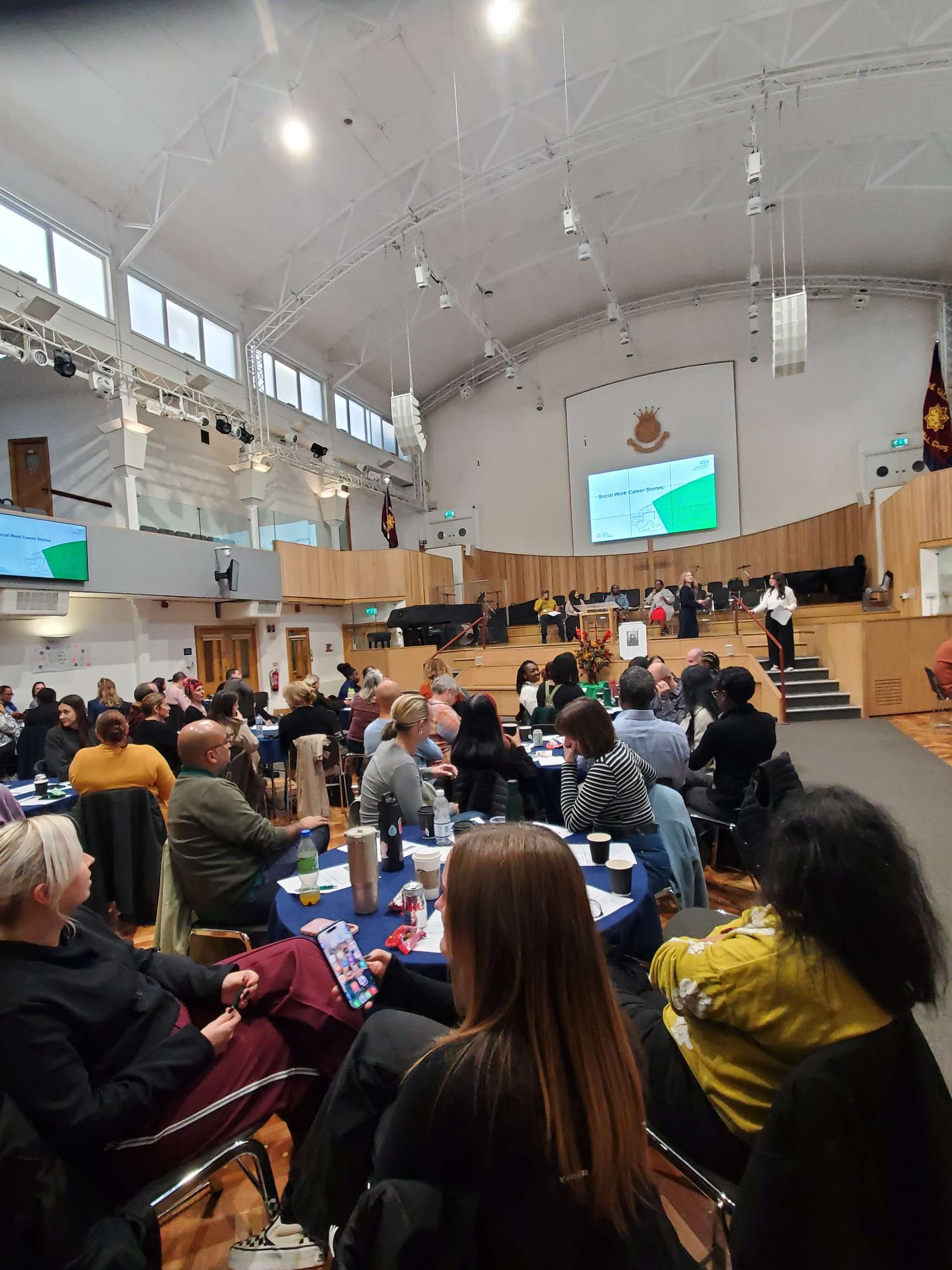
It was an opportunity to celebrate the important work of social workers, hear their professional journeys and share my own experiences as an unpaid mental health carer.
I was invited to deliver a presentation to around 150 ELFT social workers entitled “The Carer in the Triangle: What Social Workers Need to See, Ask and Do”, focusing on the importance of recognising unpaid carers and strengthening their involvement in mental health services.
A conference celebrating social work
The conference brought together social workers, NHS leaders and guest speakers to explore a range of important subjects.
The programme included updates from Social Work England, cyber and technology-facilitated domestic abuse, mental capacity and non-engagement, and an interesting debate about artificial intelligence and its implications for social work.

Later in the afternoon, we heard personal career stories from ELFT social workers, reflecting on the different routes they had taken into the profession.
I particularly appreciated hearing about their challenges, achievements and motivations for supporting people. Their stories reminded me that social workers bring much more than professional qualifications into their roles. They also bring personal experiences, compassion and a commitment to making a difference.
The Triangle of Care: Seeing the person beside the patient
My presentation drew upon my lived experience of supporting my late mother, who lived with schizophrenia, alongside my ongoing caring responsibilities for my two autistic brothers.
I wanted to remind social workers that the person beside the patient is often carrying a story of their own.
Carers may understand the history behind a mental health crisis, recognise changes in behaviour and provide support that professionals do not always see.
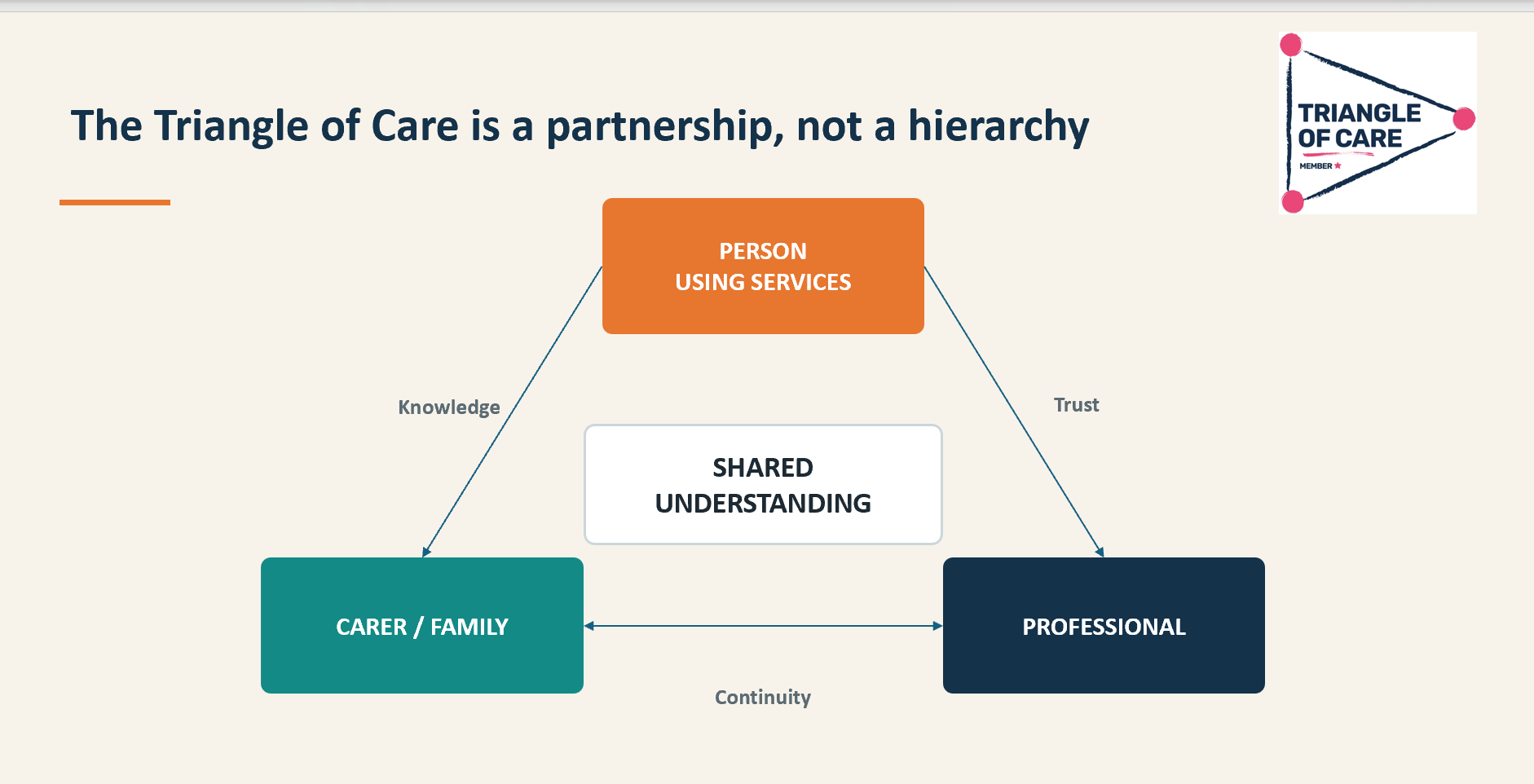
Yet carers can remain invisible within services.
The Triangle of Care, developed by Carers Trust, promotes partnership between the person using services, professionals and unpaid carers.
I emphasised that this partnership should be based on trust, shared understanding and respect, rather than a hierarchy in which carers’ knowledge is overlooked.
My presentation centred on three simple messages:
SEE – Recognise the carer.
Look beyond family relationships and identify who is actually providing support. Notice the emotional, practical and financial pressures that carers may be experiencing.
ASK – Listen without making assumptions.
Ask carers about their experiences, what they have noticed and what support they need. A simple, respectful question can uncover valuable knowledge that might otherwise be missed.
DO – Turn recognition into meaningful action.
Record the caring role, explain confidentiality, involve carers appropriately in care and discharge planning, offer referrals for carer assessments and follow up when circumstances change.
These three actions can help transform carer involvement from good intentions into everyday practice.
Race, culture and inequalities in carer involvement
An important part of my presentation explored the Triangle of Care through an anti-racist lens.
As facilitator of the National Ethnic Mental Health Carer Forum, I regularly hear about the barriers experienced by carers from diverse communities.
These may include cultural assumptions about family responsibilities, language barriers, mistrust arising from previous experiences and racial inequalities in mental health services.
I highlighted the importance of connecting the Triangle of Care with the Patient and Carer Race Equality Framework (PCREF).

Having the same organisational standards does not necessarily mean every carer experiences services equally.
Social workers have an important role in challenging assumptions, recognising cultural knowledge and ensuring that carers from different backgrounds are heard and supported.
The journey towards becoming a carer-inclusive NHS organisation
I also wanted to highlight that implementing the Triangle of Care is an ongoing organisational journey.
It requires more than policies, posters or achieving accreditation.
Just as I support and promote PCREF/Triangle of care at many NHS organisations. I feel they need committed leadership, trained staff, meaningful carer involvement and opportunities to learn from feedback.
This is especially important during mental health crises and hospital discharge, when communication failures can leave carers feeling unsupported.
Organisations should regularly ask whether carers are being identified, whether their knowledge is valued and whether they are receiving the information and support they need.
The true measure of success is not simply achieving recognition through the Triangle of Care, but whether unpaid carers notice a real difference in their experiences.
The Carer They Didn’t See: Poetry and lived experience
One of the most personal moments of my presentation was reading my poem, “The Carer They Didn’t See.”
The poem reflects on my experiences supporting my mother and the feeling of being present during her care while not always being recognised as someone who also needed information, understanding and support.
I was particularly grateful that ELFT kindly displayed my award-winning photograph, “The Carer They Didn’t See,” at the conference.
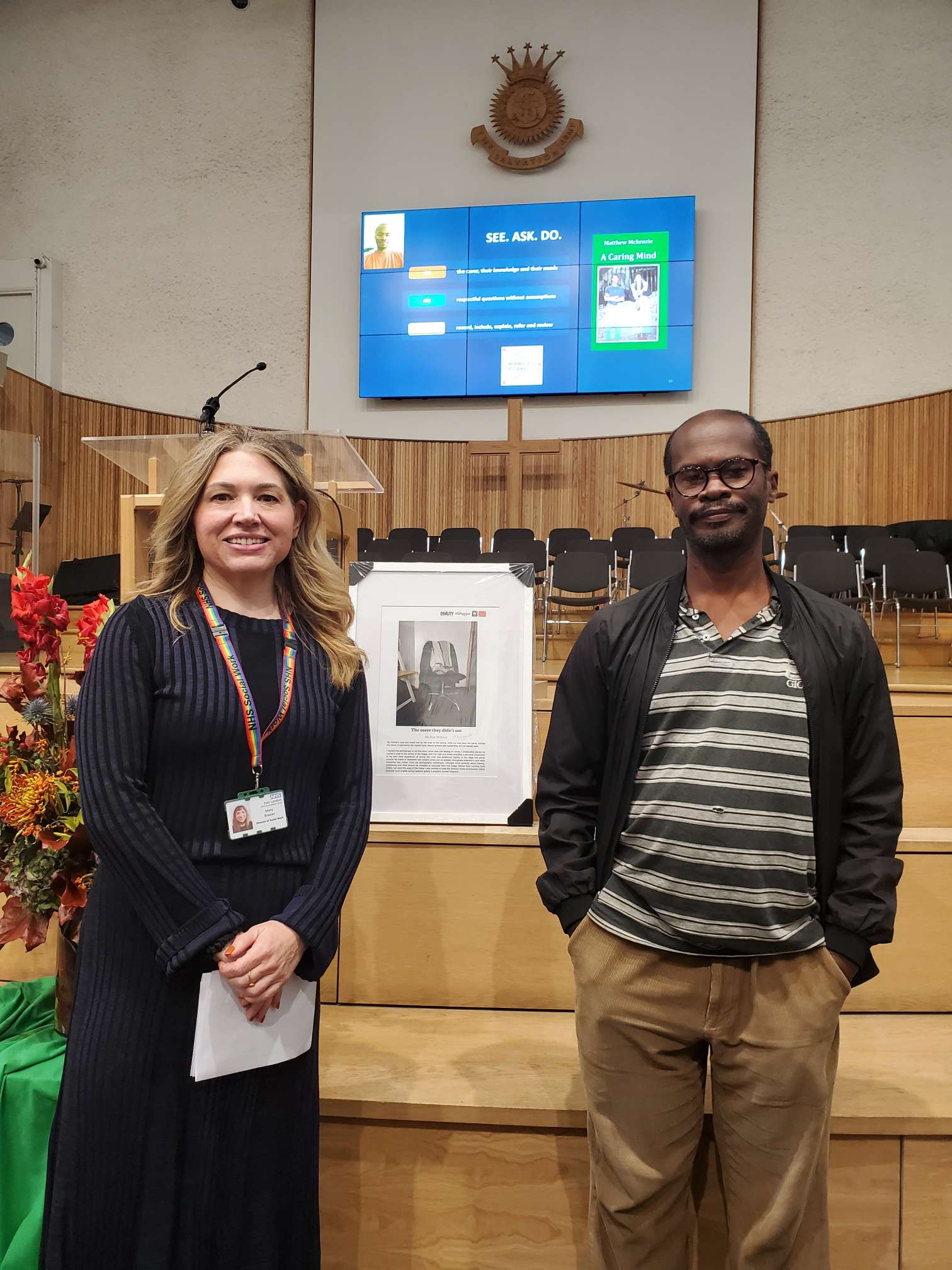
The photograph features my late mother’s coat and shawl resting on a chair, symbolising her absence and the memories that remain from my caring journey.
Seeing the photograph displayed alongside my presentation was meaningful to me. It offered another way of communicating the emotional experiences of unpaid carers.
Sometimes poetry and photography can express what organisational policies and professional frameworks cannot.
Hearing from ELFT’s leadership
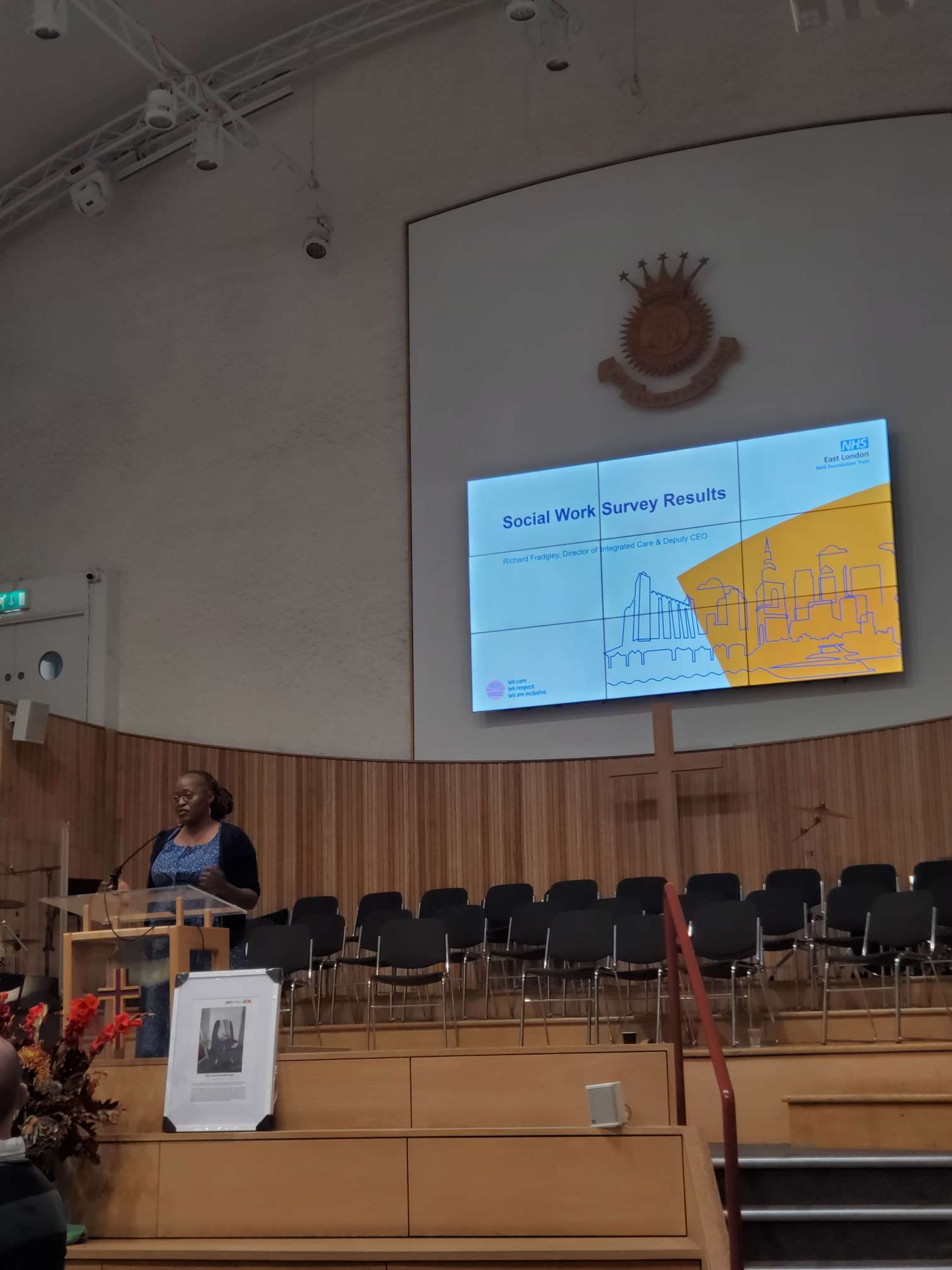
Towards the end of the conference, we heard from Richard Fradgley, ELFT’s Deputy Chief Executive and Director of Integrated Care, who discussed findings from the Trust’s social work survey.
There were encouraging improvements in leadership visibility, multidisciplinary working and professional development.
However, challenges remained around processes between NHS services and local authorities, as well as linking staff appraisals with career development.
These issues particularly interested me because carers often experience the consequences when services struggle to work together.
ELFT Chief Executive Lorraine Sunduza also acknowledged the contributions of social workers, the importance of their professional and personal experiences, and the need to support people through organisational change.
I appreciated the recognition that good care depends on relationships, compassion and working together.
Final reflections
I would like to thank ELFT for inviting me to contribute to its Annual Social Work Conference and for providing space for unpaid carer lived experience.
It was encouraging to see social workers sharing their stories and NHS leaders acknowledging both their achievements and the challenges facing the profession. It was also encouraging to hear that the Trust’s involvement as an early adopter of both the Triangle of Care and the Patient and Carer Race Equality Framework (PCREF), emphasising the importance of improving carer involvement and addressing racial inequalities in mental health services.
For accuracy, ELFT was one of four original PCREF pilot trusts from 2021 and joined a separate national pilot in 2026 to integrate PCREF with the Triangle of Care.
For me, the Triangle of Care is about ensuring that the expertise of unpaid carers is recognised alongside professional knowledge, while respecting the rights and wishes of people receiving care.
I hope my presentation encouraged social workers to reflect on what they can do differently when they next meet a family member or unpaid carer.
My closing message remains simple:
SEE the carer. ASK about their experiences and needs. DO something meaningful with what you hear.
Because the carer should never be the missing point of the triangle.

