Monthly Archives: February 2024

Opportunity for Lived Experience involvement – Oxehealth

Oxehealth is a health technology company focused on inpatient mental healthcare. Oxehealth is looking to extend their co production activities to bring together a wider range of voices from both patients and carers. They are planning to run both in person and online focus groups to deep dive on specific areas of product development. There may be further opportunities for participants to extend their initial involvement and join their core expert by experience group.
Who should attend? Welcome to both service users and carers with experience of inpatient mental health settings. Experience of Oxehealth vision based patient monitoring system is desirable but not essential.

What the sessions will cover? Focus group 1: Patient monitoring – privacy and choices Aim is to get feedback to help prioritise initiatives designed to enhance privacy, agency and choice for patients on inpatient wards when using vision based patient monitoring systems. Focus group 2: Developing sleep reports for patients and carers Aim is to get feedback on design and content for reports for patient and carers which provide information on how patients have slept.

Will I get paid for attendance? Yes, compensation will be paid at the rate of £30 per hour. Each session will last for 1.5 to 2 hours. Reasonable travel expenses for face to face attendance (with receipts provided will be compensated up to the value of £30

When will the meetings be held? We will hold 4 sessions with c 6 – 8 attendees each in March/April (2 on each focus group topic). The sessions will be c. 1.5 hours each and will be on weekdays either a morning or afternoon session. 2 sessions will be in person in central London; 2 sessions will be online on Microsoft Teams

What work will I have to do in advance of the session? Before each session, we will meet online with each prospective participant for 30 min to 1 hour meeting to provide an opportunity for participants to find out more about the technology and the company.

To express interest please contact Karen West – karen.west@oxehealth.com

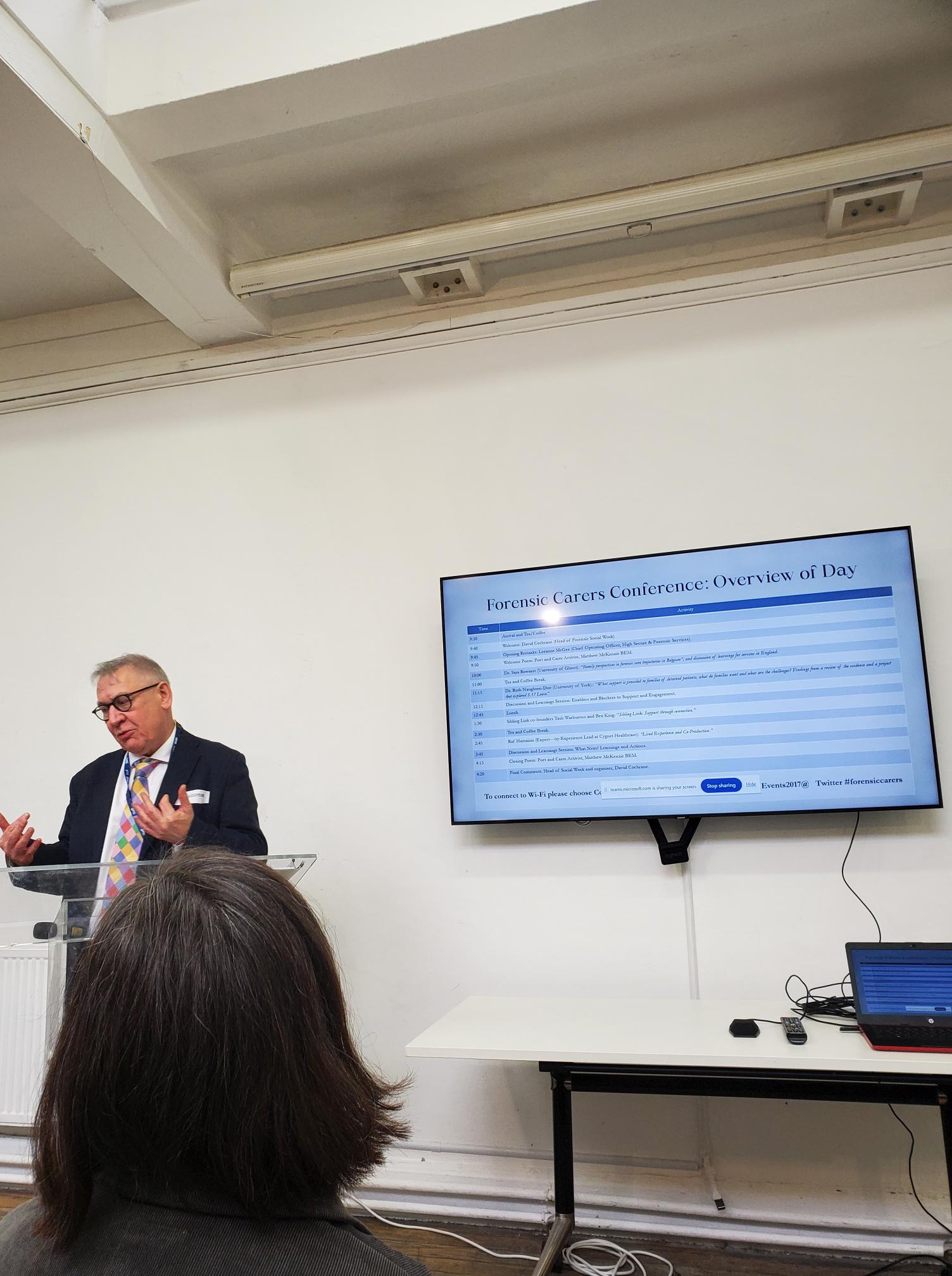
Forensic Carers Conference 2024

Welcome to another quick blog by carer activist Matthew McKenzie. I run many carer groups aimed at those caring for someone with mental ill health, most of the groups are voluntary, but there are a few that are co-run with NHS trusts for partnership working and carer empowerment.

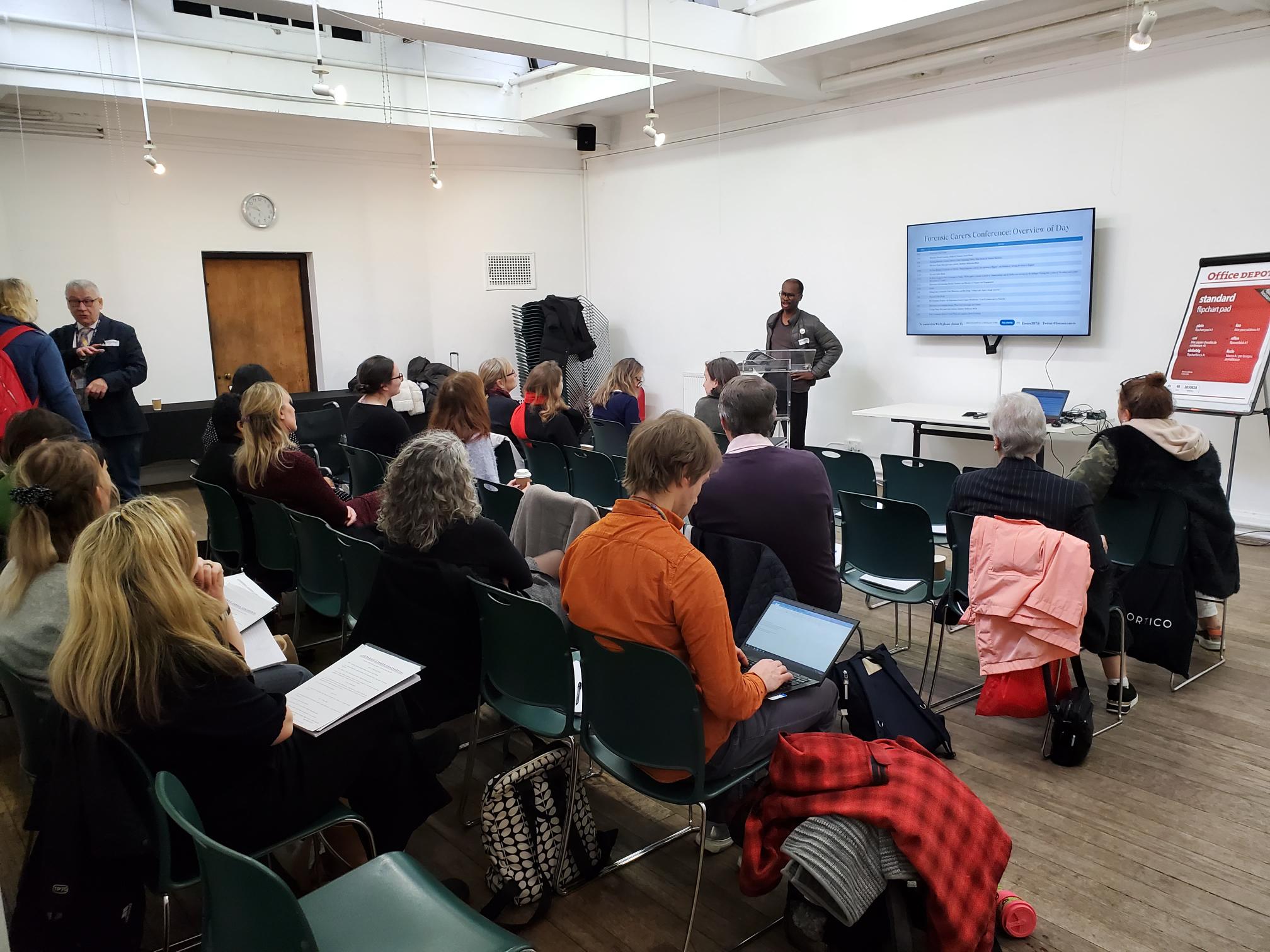
I do a lot of carer engagement at West London NHS trust and was delighted to participate in the Forensic Carers Conference held at Conway Hall. The conference was a showcase of what is happening for those who care for someone using Forensice services, it was also to allow carers to promote their lived experience and raise their profile. We also heard from various researchers both national and international.

The event was funded by North London Forensic Consortium. The North London Forensic Consortium consists of the following NHS trusts:

Barnet, Enfield & Haringey Mental Health NHS Trust
Central and North West London Foundation Trust
East London Foundation Trust
North East London Foundation Trust
West London Trust

The North London Forensic Consortium’s core aim was to reduce the number of people who were cared for out of area and create the services their population.

  • Forensic Carers Conference throughout the day

The conference was very well attended and was opened by David Cochrane who is Head of Forensic Social Work at West London NHS trust high secure unit being Broadmoor.

We then had opening remarks from Leanne McGee who is the Chief Operating Officer for High Secure & Forensic services. Next I read one of my carer poems from my book “The mental health carer poetry book”.

I spent a good 10 minutes getting feedback from the audience on what the poem could mean to them and why families and carers would be anxious of the mental health of their loved ones.

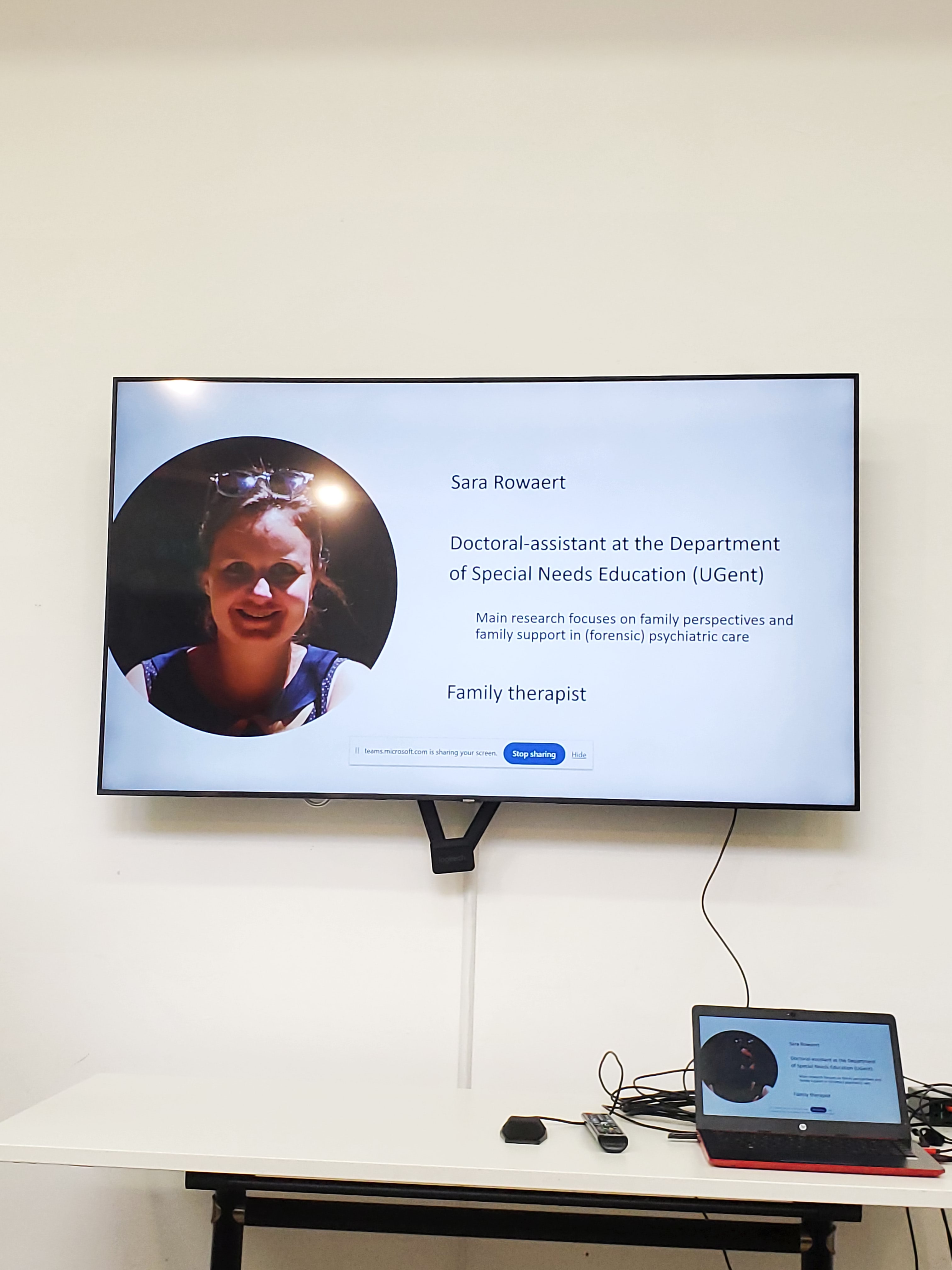
We then had a presentation from Dr Sara Rowart from the University of Ghent (Belgium). Dr Sara presentated on “Family perspectives in forensic care trajectories in Belgium”. This then led onto a discussion of learning and comparison of forensic services in the England.

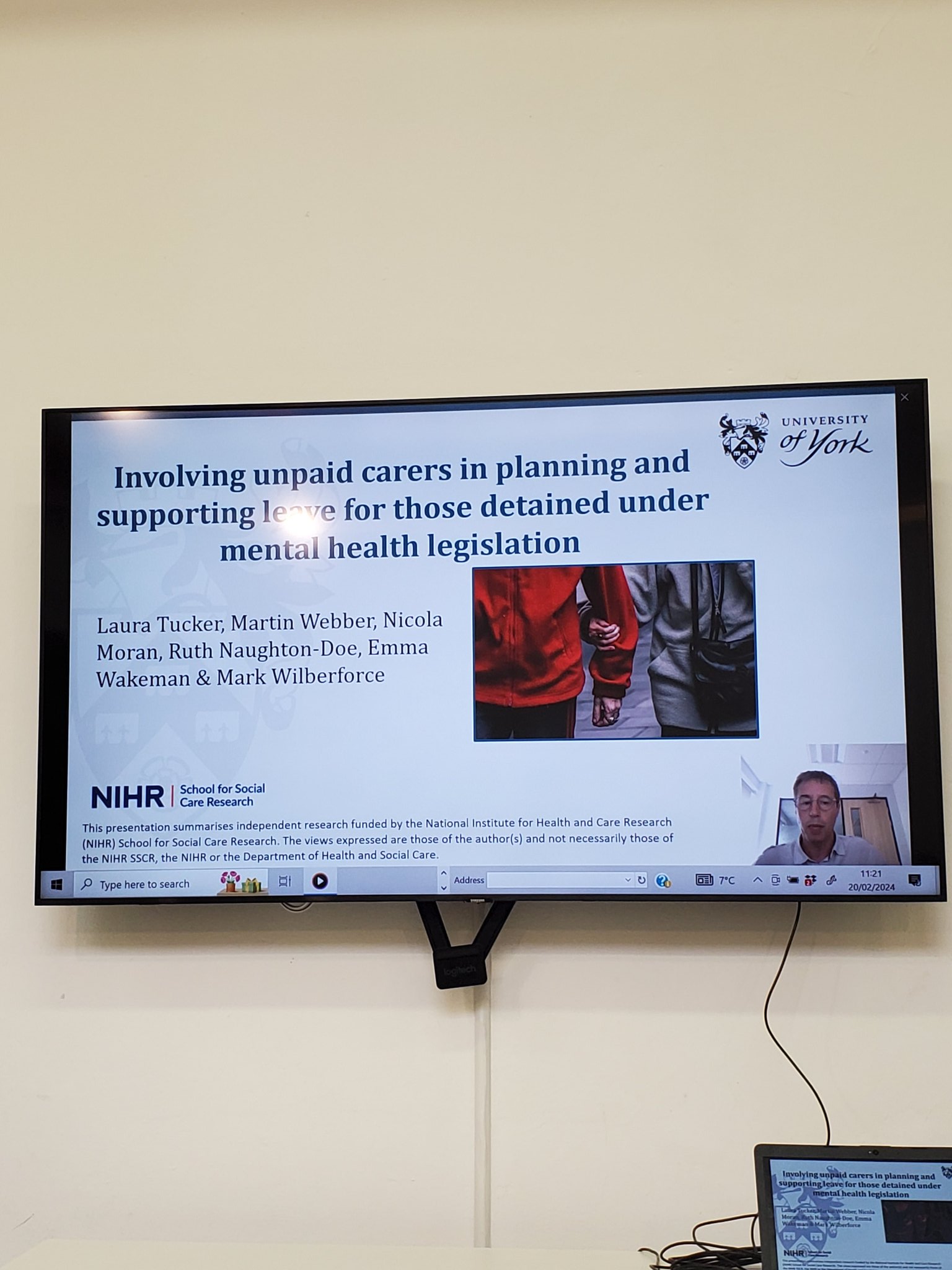
After the coffee break, we heard from Dr Ruth Naughton-Doe (University of York). She and her team presented on “What Support is Provided to families of detained patients, what do families want and what are the challenges?”. We also got to watch a video on the work the team has done so far.

You can also view the research paper of the work in the link below.

https://bmcpsychiatry.biomedcentral.com/articles/10.1186/s12888-024-05602-9

The Forensic Carers conference was useful for getting feedback from carers, professionals and researchers. So there were several feedback and discussion sessions.

We then heard from sibling link CiC who run peer support groups for adults; one for those who are caring for, affected by or worried about their sibling who is experiencing mental ill health. We heard from co-founders Tash Warburton and Bex King who both presented on “Sibling Link: Support through Connection”.

You can view their website from the link below.

Sibling Link

Next we had Raf speaking about expert by experience from Cygnet, unfortunately Laura Sheridan who oversees the Cygnet Carers Network was not able to be in attendance.

I help closed the event with a Joint poem from another Carer who attends my carer forensic group over at West London. My thoughts of the Forensic Carers event are that it was excellent and I am impressed they managed to make the event hybrid so others can join online to even contribute.

I will wait to see how the other NHS trusts promote their carer forensic events

Strengthening Cultural Sensitivity – Southern Health NHS / Touch Network

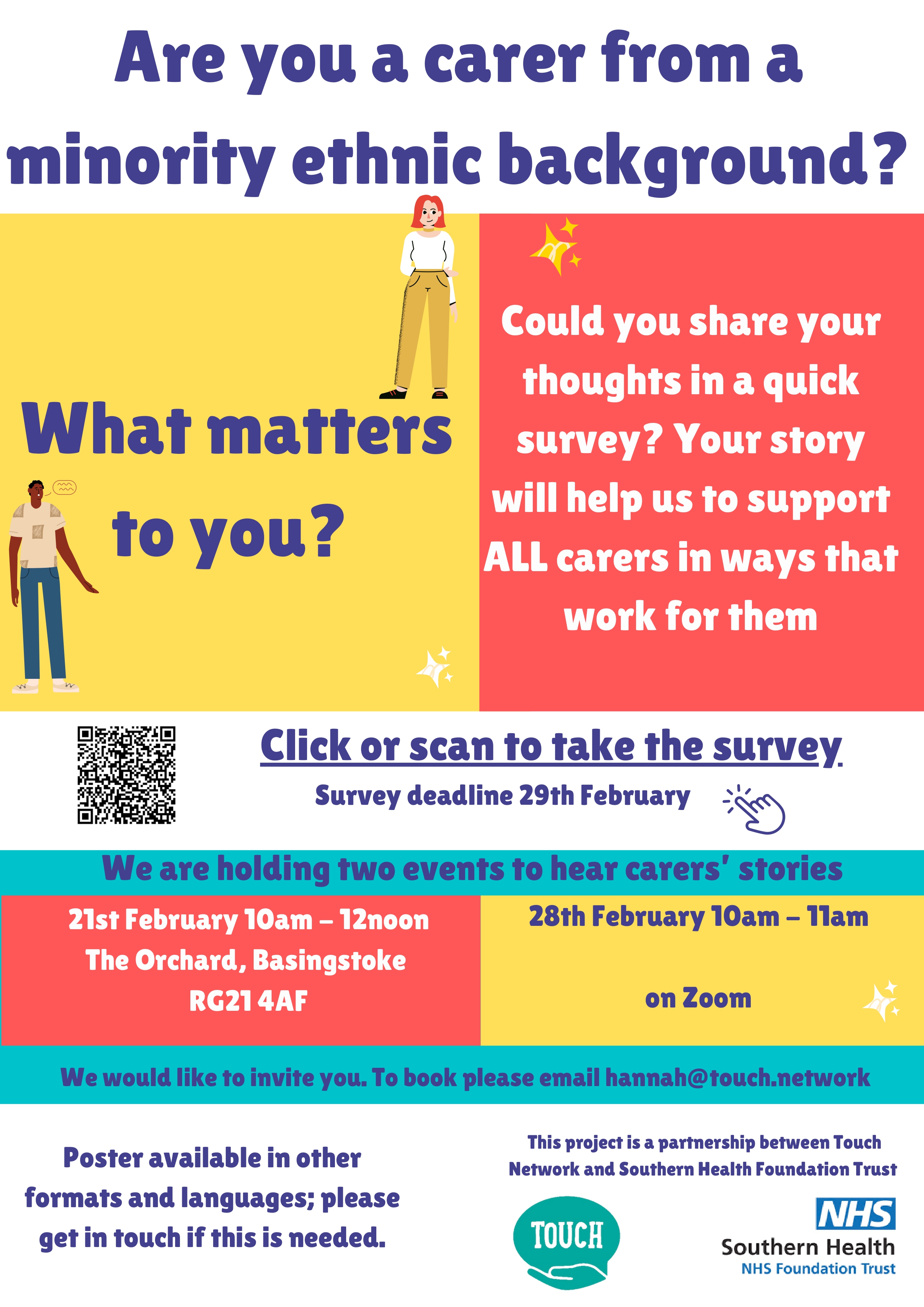
Are you a minority ethnic carer in the areas of Hampshire? Do you want to help improve mental health services for someone you are caring for? How about having your carer story being heard? It is your chance to help ‘Strengthening Cultural Sensitivity within Ethnically Diverse Carer Communities’.

It is time to be heard and also have an impact as a carer. Without your input as an ethnic minority carer then it is difficult for services to understand what is a priority for you. With the support of Touch Network CIC, Southern Health NHS trust wants to hear from you.

The next Carer Story meeting is on the 28th of February. If you are a carer whose loved one is using the services of Southern Health NHS Trust, please leave your contact details in the form or email hannah@touch.network.

Please see the poster below and get a chance to be heard and help set priorities.

We are all in this together and together we will strengthen our diverse communities.

Being part of something as a carer

Welcome fellow carers. Here is another blog post from Carer Activist Matthew McKenzie. This blog post is on the importance of being heard. If you have been caring for someone unpaid for a long time, you know what I mean by trying to get your voice heard.

I am sure you would have experienced the struggles of the person you are caring for. It might be their physical health or mental health or most likely both. It would have been so difficult to see your cared for’s quality of life suffer. You want to make that difference and you want the person you are caring for to improve. So you take up the role of unpaid carer.

It is not an easy role, you would have been through countless of hospital and doctors appointments. You might have gone through the tricky dialogue of communicating with the health professional to get a better outcome. There will be times that you have to take time off work to provide care. If you are not working then there would be challenges to meet bills and payments. This all adds up to mental and physical exhaustion and you wonder to yourself does anyone pay attention to what you are doing?

You are only trying to be there for your family, just like any other family. You know that the health & social care system is struggling, but if you do your bit then the cared for would not have to rely on the NHS.

Still; you have begun to realise that caring is not enough. You have been through so much for far too long and you want to be heard. You have been through such a long road, something has got to count. There must be others out there who have been through the caring role and would have knowledge to share. It has taken sleepless nights, constant anxiety, backbreaking work and feeling guilty from lashing out because you feel you have not been included.

The good news to all of this is that there are ways to be noticed as a carer. The difficult news is that you must take the steps to be heard. It is so important to be identified as a carer, even caring is not enough, it is so important for carers to be heard and to be taken seriously. I am not saying that there is something that can solve all the challenges that carers face. We need to be practical where we can work towards a better day for many carers.

As carers it is important to join a group that fights hard for carers. It is important to link up with other carers who can exchange ideas and also listen to you. A bigger group helps carry the load that each carer faces. Just by chance, the national charity CarersUK are running a campaign to recruit more carer voices.

This means you could become a member of carers UK for a more powerful way to be heard. Carers UK has many resources to help carers understand their role. It also helps that Carers UK understands that caring can be a difficult role and that they have campaigned for policies to make life easier for carers.

So if you want to counted, included and heard then take that step forward. Click on the following link and be part of something that will not give you a voice. but a way to be included.

Life does not have to be so hard because you care

https://www.carersuk.org/get-involved/join-us/become-a-free-member

Engaging people with severe mental illness with health research in Kent’

Researchers from the Centre for Health Service Studies at the University of Kent are working on a new project. They are currently working on a project around ‘Engaging people with severe mental illness with health research in Kent’. The goal of the project is to understand the experiences (if any) that people with a mental illness have with health research in Kent.

They hope to engage with people with mental illness and/or their carers, significant others, key stakeholders or those who have experience working with people severe mental illness. Researchers will collect information through interviews and focus groups in order to understand the ways of enhancing involvement and participation of those with a mental illness in health research.

If you are a carer of someone who has serious mental ill health, you can contact engagementalhealth@kent.ac.uk for more details.

London cancer caregiver forum – January 2024 update

Here is the brief update of my London Cancer caregiver forum. This is the only group I run aimed at those caring for someone with a physical illness. Cancer can strike at any time and it not only affects the patient, but also the family, friend or unpaid carer.

The London Cancer carer forum gets support from Macmillan Cancer Support and also the hospitals in London. A number of the hospitals have been helpful to advertise a carer led community group, which I run voluntarly.

Lewisham and Greenwich NHS Trust

Macmillan Cancer Support

Kingston Hospital

The speakers for the January London Cancer caregiver group were as follows.

  • Rachel Waddon – Macmillian community updates
  • Professor Sue Later – Supporting carers to manage pain medication in cancer patients
  • Caitlin Spooner RN – How does receiving a survival estimate affect the general health and wellbeing of people living with terminal cancer and their carers

  • Rachel from Macmillian Cancer Support presents

Rachel Waddon who is the new Macmillian Communities Manager for London and South East Regions has been very supportive for community groups. Rachel has provided engagement support and also helped support my cancer carer stall for front line engagement.

With the cancer carergiver network developing, it was great to have Rachel engage with the group. Rachel provided and summary of Macmillians Cancer Support services.

She took the group through the following support and information services.

  • Macmillan Website and Online Community
  • Macmillan Support Line (Nurses and Advisers)
  • Email campaign
  • Volunteer Services
  • Information from professionals
  • Information Centres
  • Wellbeing Coaches

Rachel also spoke about the impact of Money and Work when someone develops cancer, she mentioned what support is provided and also included the importance of Care Planning and Navigation, End of Life Care and Emotional and Practical support.

Rachel talked about Why there is a need to evolve Macmillan and how people will not settle for anything other than the best possible support for people living with cancer. As a charity, they can’t afford to stand still. Now more than ever, Macmillian need to evolve, taking every chance to make a difference.

If you are someone in London or the South-East of England who is living with or whose life is affected by cancer then please consider joining the Macmillan London Cancer Community. You’ll have opportunities to feed into cancer support services if you would like to and receive updates on information and cancer support in your local area. Join the Macmillan Cancer Networks.

  • Professor Sue Later from University of Southampton presents

There are lots of research into the experiences of patients, but did you know there is research which involves the experiences of those caring for someone with cancer?

Prof Sue Later presented her paper on “A community nurse-led intervention to support carers to manage pain medication in cancer patients at end of life” She spoke about what was known about unpaid carers.

  • Carers Play an important role in managing patients’ pain medicines at end of life.
  • Evidence suggests carers have concerns about pain medicines, and they feel they lack information and support.
  • Structured support for carers have not been adequately developed or tested for effectiveness.

Professor Sue paper presents what supports carers in managing medications at the end of life. The paper looks to raise the importance of intervention, which is acceptable, feasible and beneficial for patients and their carers. There is also identification of aspects of research design that could be tried on a larger scale.

The context of the paper looked at

  • How pain affects most people at end of life and can be severe for some.
  • Many patients at end of life report their preferred place of care.
  • Unpaid carers can be critical to medicines management and help patients to stay at home. This is done through knowledge and skills, monitoring and interpreting symptoms and also selecting, administering medicines effectiveness.

Prof Sue presented the objective of the research, which also led to a pathway of Cancer carer’s Medicines Management (CCMM) that is aimed at nurses.

Consent: Explain purpose, your role and consent from patient to discuss pain management with carer.
Assess: Explore beliefs & previous experiences, assess support and prioritise skills needs.
Review: Prescribe and review medicines chart
Education: Provide coaching for educational and information
Review: Make plans for review and provide resources
Support: Naming of what has been learnt.

All in all, the purpose was to equip carers to support their loved ones at end of life.

  • Caitlin Spooner RN from University College London (Marie Curie Palliative Care Research Department) Presents

The next presenter to speak was Caitlin on the impact of diagnosis when someone is told how long to end of life. This is called Prognostication. Caitlin wanted to measure the outcomes and develop standards.

She also wanted to compare other studies, but also wanted to involve patients and their caregivers and what was important to them. When comparing previous studies, this had to be done through online databases. Caitlin used 5 online databases that included

  • Patients with advanced cancer or those caring for someone with advanced cancer
  • Different definitions of Prognostication “Estimating length of survival”
  • Quantitive studies reported outcomes of prognostication

From searching the online databases Caitlin extracted the following outcomes and grouped into 5 key areas.

  • Death
  • Physiological/clinical outcomes
  • Life Impact
  • Resource use
  • Adverse events

Through a systematic review the most common outcomes of prognostication were

  • Treatment preferences
  • prognostic awareness
  • Quality of life
  • Depression.

It is important to note diagnosis of cancer especially length of survival not only affects the patient, but those supporting the patient especially the carer. It is important to note the impact of diagnosis on the carer.

South West London Mental Health carers January 2024 update

Welcome to the first SW London Mental Health carers forum for the year 2024. This group is aimed at those caring for someone with mental ill health within SW London. The group aligns itself with the same areas the mental health trust South West London & St George’s covers.

Our members are from the boroughs of Merton, Sutton, Kingston, Richmond and Wandsworth. The carers forum is co-facilitated by Ava who is also a carer. Ava focuses on the carer peer aspect in the group. She is also a strong member of the Kingston Carers Network and on involvement at SWLSTG.

The speaker requested by the SW London MH carers group was Stamatia Filippou. Stamatia is the Wellbeing Practitioner of the Wellbeing Team, NHS Merton Talking Therapies. She is based at SWLSTG. Members wanted to hear what services were provided by Merton Uplift.

Merton Uplift Presentation

Stamatia talked about the following.

On how NHS Merton Talking Therapies is a free service for anyone in Merton who has a mental health or wellbeing need, whether this is due to emotional difficulties or life stressors (low mood, feeling stressed or worried, stressful family situations, financial worries, parents who are worried about their children or feeling overwhelmed, life changing events).
The service is accessible to anyone living in the borough of Merton or registered with a Merton GP who are 18 years and over.

Stamatia also mentioned that they are an integrated service which consists of the following teams; Talking Therapies: Offering a range of psychological therapies, CBT (cognitive-behavioural therapy), IPT (interpersonal therapy), EMDR (eye movement desensitisation and reprocessing), Mindfulness based therapies, online, over the phone or face-to-face, self-guided, in groups or one-to-one.

There is also support for Wellbeing, where this helps individuals connect and access activities and resources to meet their physical, social and emotional needs. Their outreach work focuses on engaging with individuals who have historically not fully accessed talking therapies. Merton Uplift run a variety of wellbeing workshops e.g., Coping with Stress, Food and Mood, Living Well with Chronic Pain, Managing Anger, Managing Sleep, Self-care and Relaxation, Understanding Anxiety, Reaching your potential, Work, stress and burnout plus Wellbeing for carers.

After the presentation, there was a Q & A session where carers can feedback or query what was on offer.

For Talking Therapies referrals:
Phone: 020 3513 5888
Referral Email: mertonupliftreferrals@swlstg.nhs.uk
Via the website: Referral Form (mayden.co.uk)
The service’s admin team will register your referral and book you in for an assessment.

For Wellbeing workshop referrals:
Wellbeing Email: MertonWellbeing@swlstg.nhs.uk
Book directly on Eventbrite: https://mertonuplift.eventbrite.co.uk

Greenwich Mental Health carers forum update January 2024

Welcome to a brief update of my Greenwich MH carers forum. Like all my other groups apart from the London cancer carer forum, the Greenwich forum provides a platform for carers supporting someone with mental ill health.

The group seeks engagement from the mental health trust Oxleas, healthwatch Greenwich, social care, local authority and health services. It is important that unpaid carers are heard, included and involved regarding services.

For the January forum, we were joined by Healthwatch Greenwich on their update on the focus of including carer feedback about services.

The second set of speakers were Britt makhetshemu and Ana Stojanovic (South East London Mind) on the development of the new Greenwich Mental Health Hub.

We were also joined by Sue Sauter who is the Lead governor for Oxleas NHS trust.

  • Healthwatch Greenwich updates

Nakkita has a focus on topics such as Poverty, Vulnerability and Community Activism. Her interests are in how rights are upheld, especially during times of crisis and amplifying the voices of those most marginalised. She is passionate about giving back to the community she has grown up in and the services she has used, as a carer.

Nakkita De Silva who is the Admin & Project Assistant at Healthwatch Greenwich updated on the research project about improving services for adult ethnic minority carers in Greenwich.

  • Greenwich Mental Health Hub Presentation.

Next to present to carers and Greenwich carers was the development of the Greenwich Mental Health Hub. This is a partnership between South East Mind, Oxleas NHS and Bridge Support.

It was noted that the is a strong case for for Community Mental Health Transformation, because of the following.

  • Fragmentation and Transition Between Services
  • Thresholds and Barriers to Access
  • Challenges in Getting High Quality Care
  • Distance from Community

The Greenwich MH hub has a strong vision to develop:-

Personalised support. Where their commitment is to provide a diverse and personalised range of support for people facing mental health challenges within the community, addressing their psychological, physical, and social needs.

Crisis prevention. Their approach is to enable earlier support, foster recovery and staying well, and prevent the escalation of mental health issues that could lead to crises.

Making care fairer. The Greenwich MH hub are dedicated to reducing inequalities in access and experience of mental health care for all adult residents of Greenwich, regardless of where they live or their background.

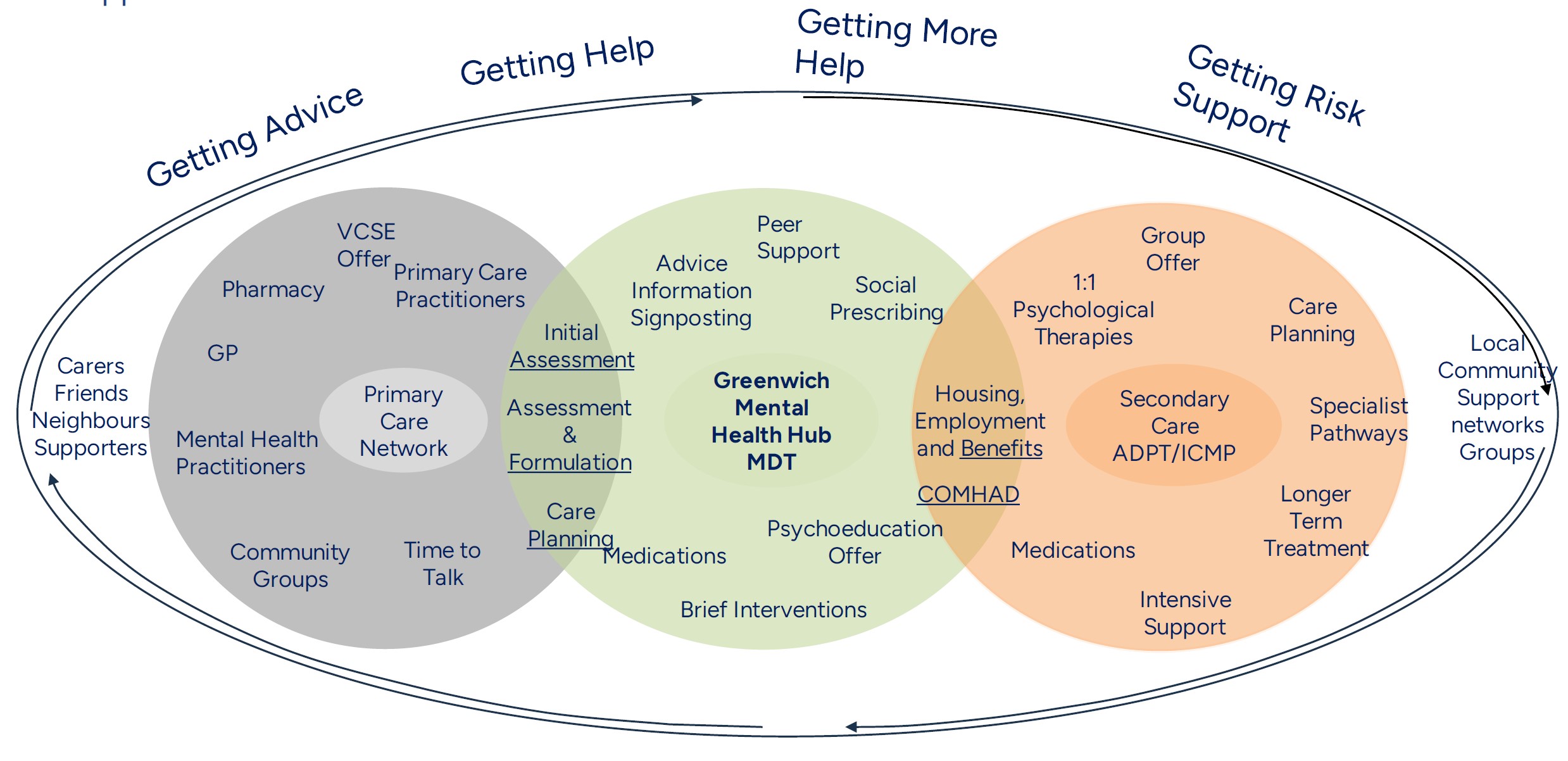
A lot of time was presented on what the Greenwich Hubs core model is looking like

It was presentated that people should be able to transition seamlessly between different types of help, care and support as their presenting needs change on their recovery journey from ‘thriving’ and ‘getting advice’ to ‘getting risk support’.

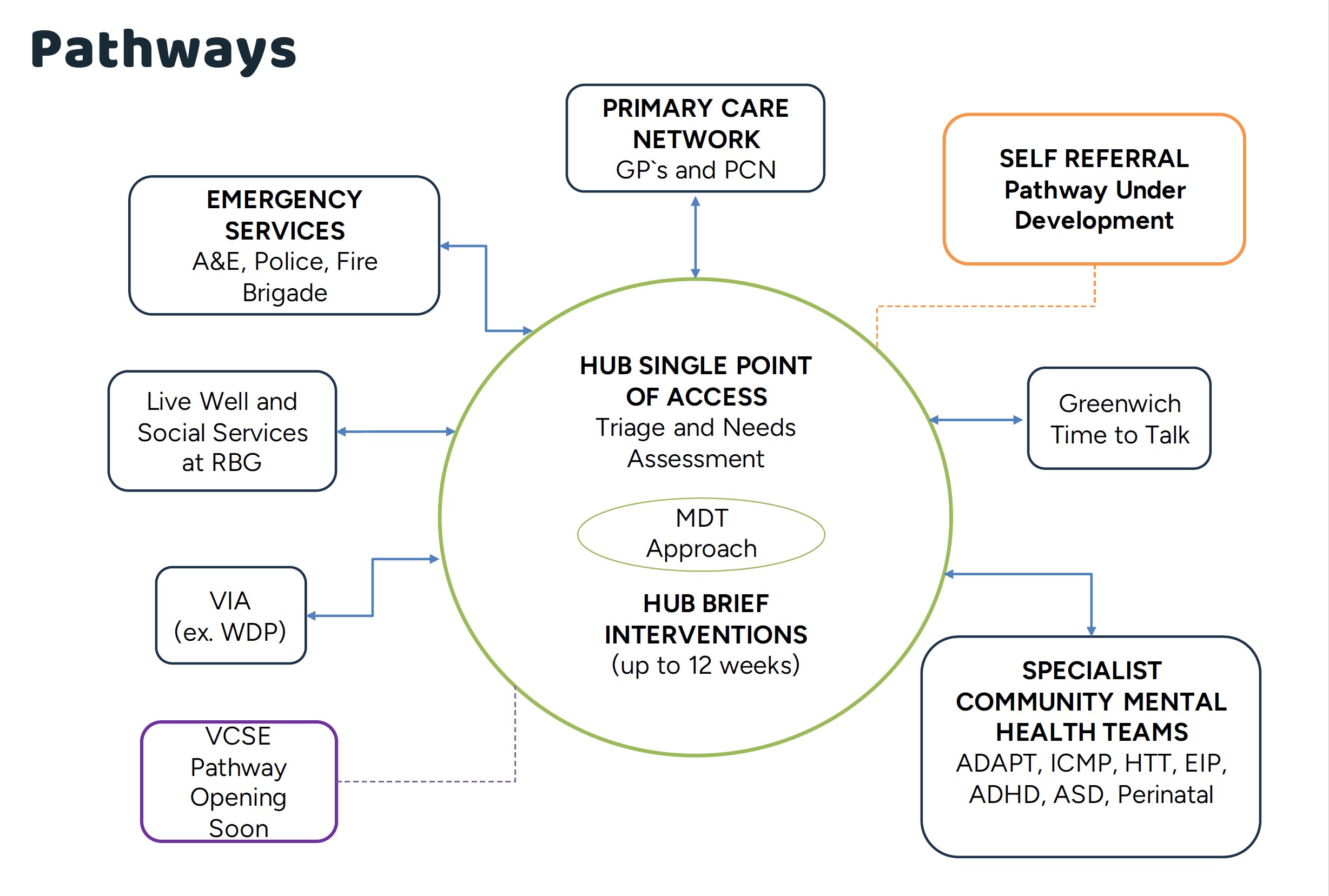
Presenters Britt makhetshemu and Ana Stojanovic also talked about the pathways people have to access inteventions at the Greenwich hub.

Oxleas Lead governor Sue Sauter engages with the carer forum

Did you know a lot of mental health trusts have governors hold to account their board? Governors are usually voted in by the public, patients, carers and staff. It was excellent to see the lead governor Sue Sauter.

Sue worked at the NHS for over 40 years as a Registered Midwife in both a clinical, managerial and supervisory capacity. During this period, she was also employed by the Nursing & Midwifery Council and was a member and latterly, a Chair of their Professional Conduct Panels.

Sue talked about the roles of a governor, where one of the roles is to ensure the voice of our members, the public, patients and staff is used to inform our trust’s decisions and improve medical care and patient experience.

Since governors are voted into the role, it helps that they can hear from community groups. Sue was kind enough to take views back from our group and feed this through their council of governors.

This concludes a brief update of the Greenwich MH carers forum.

Ethnic mental health Carer Forum Update January 2024

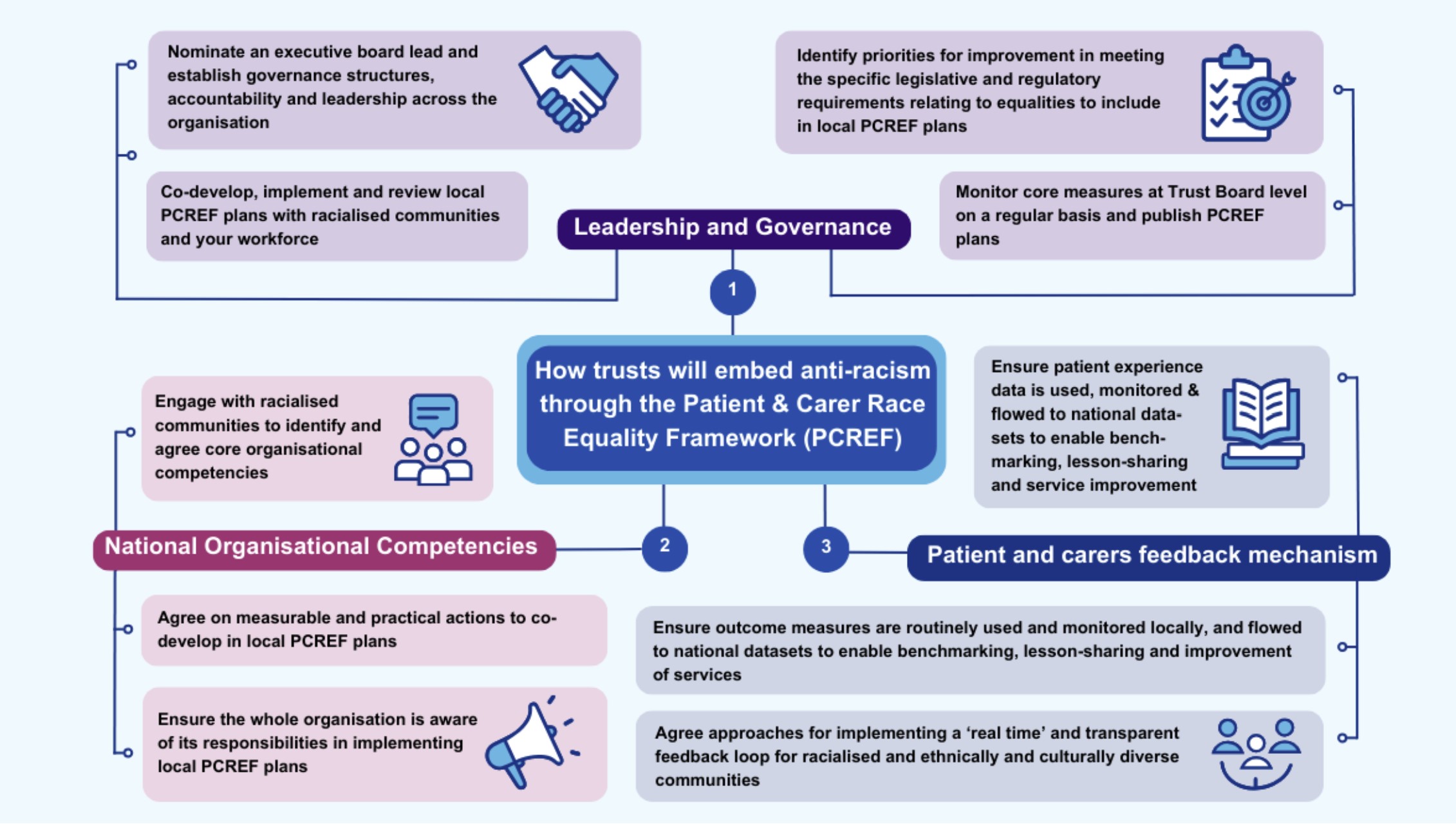
Welcome to a brief update of my ethnic mental health carers forum. This is the January 2024 update where the forum focused on updates from mental health NHS trusts. The update was specifically on the new equalities initiative from NHS England, which is the Patient Carer Race Equality Framework. (click on picture below to zoom in)

As of 2024 the mandatory framework will support NHS trusts and providers on their journeys to becoming actively anti-racist organisations by ensuring that they are responsible for co-producing and implementing concrete actions to reduce racial inequalities within their services

Usually for my ethnic mental health carers group, I focus on things outside PCREF, but since PCREF has a heavy focus on minority voices, my group looks to engage with NHS trusts and their PCREF ambassodors on updates. A special note is the group is interested on how minority carers are being identified and included.

I am aware many NHS mental health trusts learn from each other so for the January group we had the following attend and present

As usual I brought in a special guest speaker from Middlesex University to speak about the following topic which she published in The Practising Midwife for the 2023 edition in November. Kristina spoke about “Mental Health Context for Minoritised Ethnic Individuals” and was specifically interested in why Perinatal birthing minoritised ethnic women and people suffer from poorer outcomes. Just to note, Krishna is not a mental health nurse, but a nurse under midwifery at University College London Hospital. She also teaches Midwifery at Middlesex University.

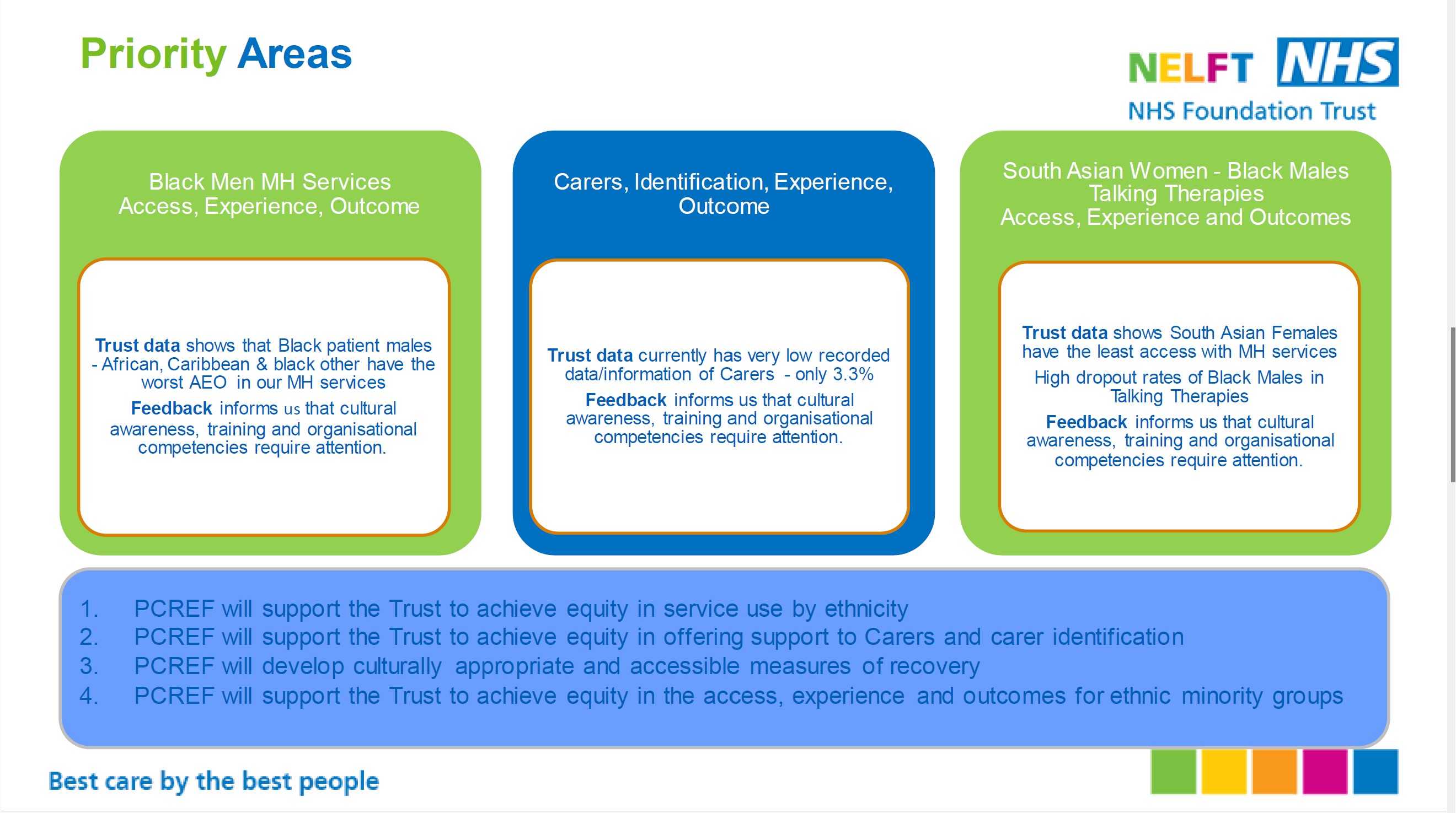
NELFT PCREF Presentation

Before we move onto Kristina’s presentation, the ethnic carer forum opened with a presentation from Asia Zaman who is the Transformation Project Manager for PCREF at North East London NHS FT. She was joined by Tarek Seeraullee who is the Havering Carers Lead at NELFT.

NELFT NHS has taken strong steps to not only incorporate PCREF, but also align it towards the hospitals carers strategy. The NHS trust presented that they admit their patients and carers have poorer outcomes, but things will improve through the following drives and more.

  • Upcoming workshops and events (increase cultural awareness) – carer led, to understand further about needs, perspectives etc.
  • increase Staff Knowledge and Awareness) – Develop workshops carer led, to share knowledge and awareness.
  • Increase Partnership Working – Task and Finish group- carer led, Havering best practice example? NELFT to consider aspects across all directorates.
  • Co-production – Carers group NCV-NELFT CarersVoice has been set up andrunning, for adults and young people.Workstreams in progress.

Presentated was 10 PCREF competencies where the carers strategy was aligned. We then had a Q&A session from attendees some carers were also from NELF.

SWLSTG PCREF Presentation

It was kind for South West London & St George to attend and present their focus on PCREF. This section was presented by Tom Carter who is the Peer Involvement Coordinator, Involvement Team. I know SWLSTG NHS trust fairly well as I have been hosting a carers peer forum for 4 years. My carers group in SW london covers the same areas as the MH trusts being Sutton, Merton, Richmond, Wandsworth and Kingston.

Tom presented the focus for PCREF at the NHS organisation, however we did have a few attendees from the area interested in the focus on ethnic minority carers. This is because they saw the presentation from NELFT and did not wanted to be left out. There was specific interest from Wandsworth carers centre and a few others.

On a side note, the mental health trust has developed a new induction video, which you might want to view below.

  • Kristina Goh presents on Mental Health Context for Minoritised Ethnic Individuals

As mentioned earlier, I was joined by Kristina to talk about her publication on why minorities groups giving birth had poorer outcomes. The group cannot always restrict itself to mental health NHS services as the equality challenge is presented in all other health sectors include acute services.

Kristina presented that one of the leading causes of maternal death antenatally and postpartum is mental ill health (10-20% of women).

Kristina mentioned that poorer outcomes could be challenged with the following.

Cultural competency training for healthcare professionals
Cultural competency vs cultural humility
Workforce needs to be reflective of the population we care for- think outreach, retention, development opportunities
Non-pharmaceutical interventions

You can view Kristina’s article from the following site. https://www.all4maternity.com/mental-health-context-for-minoritised-ethnic-individuals/

  • Kent & Medway Primary NHS Trust presents on PCREF

I have been involved at Kent & Medway for a long time and sit on their triangle of care steering group (see below).

https://www.kmpt.nhs.uk/carers/triangle-of-care

KMPT were very kind to engage with the ethnic MH carer forum to update us on their progress. We were joined by a number of Kent & Medway presenting their focus although time ran out before CNWL presented on their drive to include the Patient Carer Race Equality Framework.

CNWL, South London & Maudsley, plus Oxleas NHS and NHS England will update in February.

This concludes my brief update for the Ethnic mental health carers forum January 2024.