The Importance of Ethnic Minority Mental Health Carer Voices: Empowering Unpaid Carers from the Global Majority by Matthew McKenzie
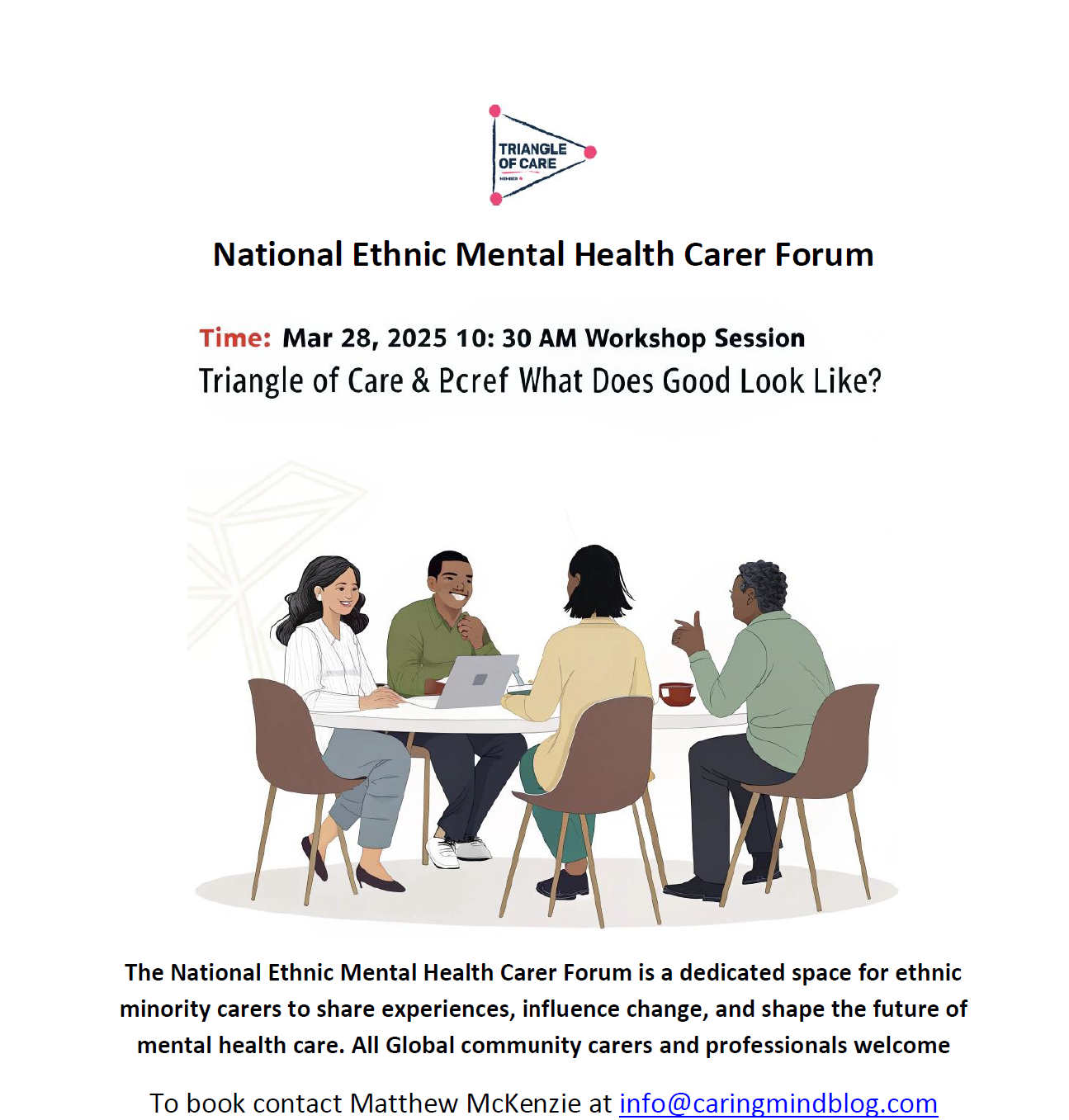
In today’s world, the voices of ethnic minority carers in mental health services must be heard and valued. The National Ethnic Mental Health Carers Forum meeting, held on March 28, 2025, underscored the vital role that co-production and lived experience play in shaping better services for those who care for loved ones with mental health needs.
As we continue to advocate for better mental health care, it’s crucial to recognize the significance of empowering unpaid carers, especially those from minority backgrounds, and ensuring their voices lead the conversation.
Co-Production: Carers Leading from the Front
One of the key themes that emerged from the forum was the importance of co-production on creating services in collaboration with those who have lived experience. Carers themselves must be empowered to shape the services they engage with, ensuring that their knowledge and insights are valued. As Matthew McKenzie, the forum facilitator, highlighted, carers are not just recipients of services but are integral to the decision-making process. The co-production model promotes collaboration between carers, patients, and mental health professionals to improve care delivery and outcomes.
By involving carers in service design, we ensure that mental health care systems reflect the realities of those who are most affected. This is particularly crucial for carers from ethnic minority communities, who may face unique barriers in accessing support and navigating complex mental health services.
The Role of Ethnic Minority Carers in Shaping the Future
The forum focused on the Patient and Carer Race Equality Framework (PCREF) and its importance in ensuring racial equality in mental health services. This framework is now mandatory for all mental health trusts, emphasizing the need to embed race equality principles within care systems. Matthew introduced this framework as a critical tool for addressing the gaps in mental health services for ethnic minorities, ensuring that both carers and service users can influence the policies and practices that affect them.
The forum provided a platform for carers from diverse backgrounds to discuss the challenges they face in accessing mental health services. At the group was a carer with over 20 years of experience, who shared how difficult it has been to find adequate information and support as an ethnic minority carer. This conversation revealed that there is still much work to be done to make mental health services more accessible, inclusive, and responsive to the needs of ethnic minority carers.
Overcoming Barriers: Access to Support and Cultural Sensitivity
One of the core challenges discussed at the forum was the difficulty minority carers often face in accessing support. Ethnic minority carers frequently experience cultural barriers, lack of understanding, and even exclusion from decision-making processes. This is particularly true in situations where the cared-for individual refuses consent, which can leave carers feeling invisible and unsupported.

Two key participants in the forum, highlighted how cultural insensitivity and inadequate training can worsen these challenges. Cultural competence in healthcare is critical, as many mental health professionals may not fully understand the unique cultural needs of patients and carers from diverse backgrounds. This lack of cultural sensitivity can lead to feelings of alienation and frustration for carers, who often struggle to communicate their needs effectively.
Training staff in cultural diversity and inclusion is not just about making mental health services more welcoming; it’s about improving the quality of care itself. A PCREF carer lead who participant at the forum, pointed out, professionals who understand the cultural context of mental health are better equipped to provide empathetic, effective care. This training is essential for creating an environment where carers feel heard, respected, and included in the care process.
Building Better Frameworks for Carer Support
The Patient Care Race Equality Framework (PCREF) and Triangle of Care initiatives discussed during the forum aim to address these issues. The Triangle of Care model, originally developed by Carers Trust and Mental Health Units, is designed to create an inclusive and supportive environment for carers by focusing on six key standards: identifying carers early, training staff on carer engagement, ensuring confidentiality and information sharing, and most importantly, recognizing the role of carers in care planning.
During the forum, participants discussed what “good” carer support looks like for minority carers, emphasizing the importance of clear communication, proactive outreach, and the involvement of carers in the care planning process. This approach aligns with the PCREF’s goal of fostering equality and inclusion in mental health services. The feedback gathered during the forum will contribute to shaping future standards and improving the Triangle of Care model, ensuring that ethnic minority carers’ voices are central to this work.
The Path Forward: Continuing the Dialogue
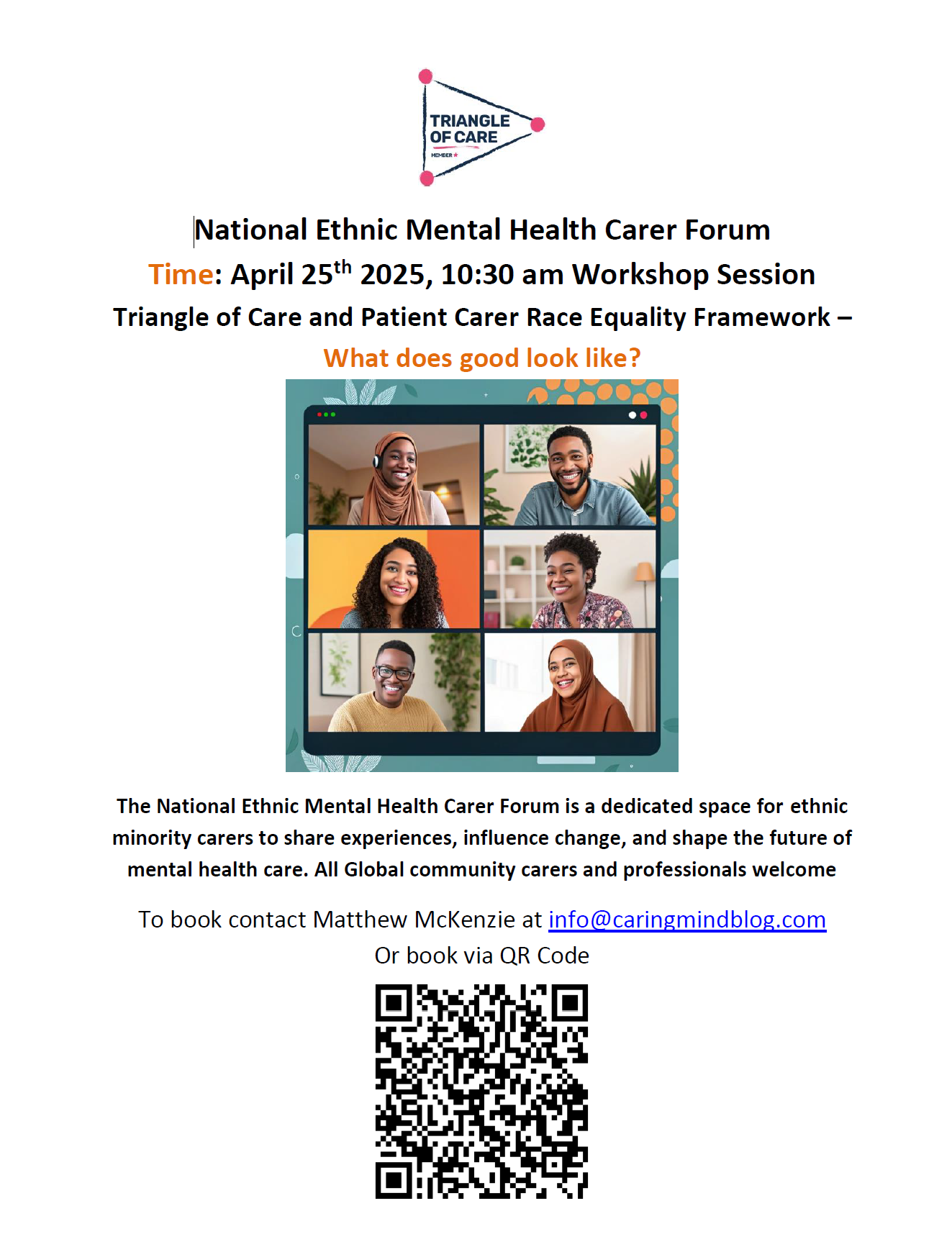
The meeting concluded with a commitment to keep the conversation going. Matthew emphasized the need for continuous feedback from ethnic minority carers to understand their unique challenges and aspirations for better care. Plans were made for follow-up workshops, including a session on April 25th, to explore these issues further and gather more insights from carers. Feedback will be collated and sent to triangle of care leads.
To book see details below.
As the forum wrapped up, the conversation shifted towards action. Attendees were encouraged to reflect on their own experiences and contribute to the ongoing work of Carers Trust, ensuring that the next generation of care services reflects the lived experiences of all carers, particularly those from ethnic minority backgrounds.
Conclusion: Empowering Ethnic Minority Carers for a More Inclusive Future
The National Ethnic Mental Health Carers Forum highlighted the importance of co-production, cultural competence, and the active involvement of carers in shaping mental health services. The voices of ethnic minority carers are essential to creating mental health care that truly meets the needs of all communities. As we move forward, it is crucial that we continue to listen to and empower carers, particularly those from the global majority, to ensure that they are leading from the front in the fight for better, more inclusive mental health care services.
By supporting and amplifying the voices of ethnic minority carers, we can create a future where mental health services are truly reflective of the diverse communities they serve. This requires ongoing collaboration, cultural sensitivity, and a commitment to co-production at every level of mental health care. Together, we can make meaningful change that benefits both carers and the people they support.
 A Caring Mind