Category Archives: SW London Carers Group

January carer forum updates 2023

Hello fellow unpaid carers. I am doing a quick update of most of my carer forums that I facilitate in London. These groups focus on mental health carers. Basically people who are caring for someone going through mental illness.

LEWISHAM MENTAL HEALTH CARER FORUM UPDATE

Members of the Lewisham group were interested in how the Ladywell Unit was performing for unpaid carers. The Ladywell mental health unit has several wards. The unit is based at Lewisham & Greenwich NHS trust. We were joined by Inpatient carer engagement Eunice Adeshokan who gave us an update. We were also joined by Cath Collins who leads on engaging carers in the community.

The next speaker was Caroline Norrie who is a research fellow at Kings College London. She spoke about research regarding addictions and the gambling industry.

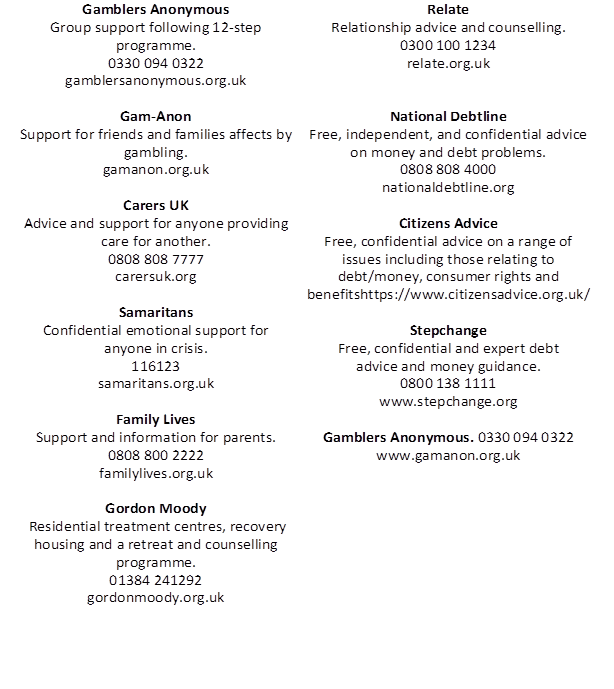
She kindly passed on details on support services

Online gambling: GamStop is a free scheme that can be used to allow gamblers to self-exclude from online gambling websites and apps run by companies licensed in Great Britain. http://www.gamstop.co.uk

Blocking software: A GamBan software licence enables people to block access to online gambling apps and websites. The licence can be obtained for free if it is requested through the National Gambling Helpline.
https://gamban.com

Blocking gambling banking transactions: Some banks offer blocks on gambling transactions, with some having a 48-hour cooling off period before it can be removed which may help to prevent relapse. For information about which banks offer a gambling blocking service go to: https://www.gamblingcommission.gov.uk/public-and-players/page/i-want-to-know-how-to-block-gambling-transactions

It is worth noting that people can no longer use credit cards to pay for gambling.

Betting shops, casinos, arcades and bingo halls:

All gambling premises such as arcades, bingo halls and casinos must be part of a multi-operator self-exclusion scheme (MOSES). This allows a gambler to make a single request (by filling in a form) to self-exclude from all premises offering the same type of gambling, such as betting shops. Once a self-exclusion agreement is made, the gambling company must close the gambler’s account, return money in it, and remove personal details from their databases.

For betting shops see https://self-exclusion.co.uk/ or ring 0800 294 2060
For casinos see https://bettingandgamingcouncil.com/sense-self-exclusion-scheme
For arcades see https://bacta.org.uk/self-exclusion/

For bingo halls see https://www.bingo-association.co.uk/self-exclusionThe National Lottery Healthy Play | The National Lottery (national-lottery.co.uk)


JOINT SOUTHWARK & LAMBETH MH CARERS FORUM

For my Southwark & Lambeth mental health carers forum, we were joined by Toby Lee-Manning who is the Carers Development Lead for St Christopher’s Hospice.

St Christopher’s Hospice exists to promote and provide skilled and compassionate palliative care, but there also should be a focus on unpaid carers who are caring for someone end of life. The difficultly appears when people who are providing unpaid care are not sure what to do.

Luckily St Christopher’s Hospice have developed online courses aimed at carers, this is what Toby presented to our group.

Caring for Carers – online course
https://www.stchristophers.org.uk/timetable/event/caring-for-carers-drop-in-course/

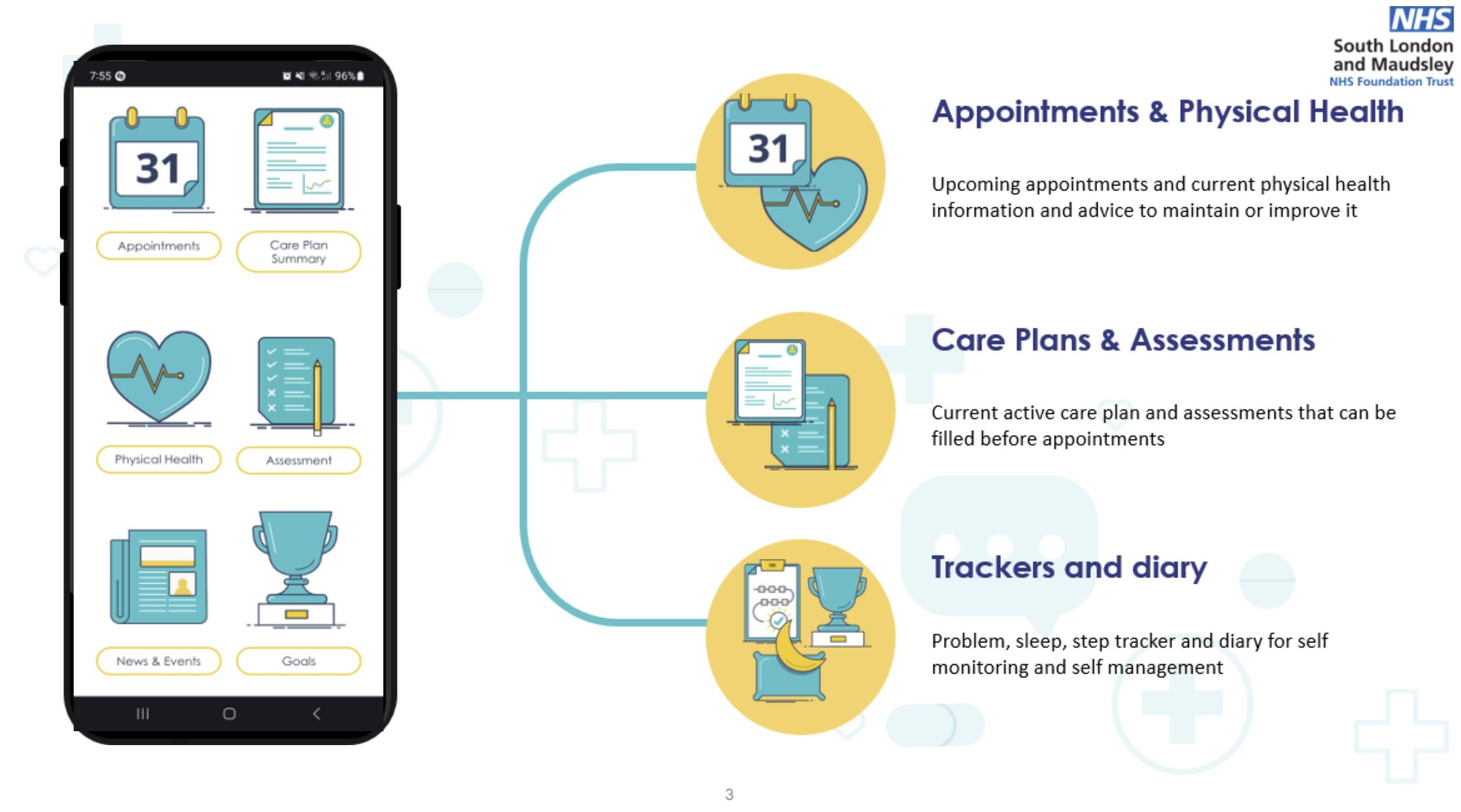
We were also joined by Damian Larkin who is the Digital Health Nurse Lead at South London & Maudsley NHS. Damian spoke about BETH. Basically Beth is a free and secure way for our patients and carers to stay connected with their care team.

If you are interested in BETH – please check out SLaM BETH site


ETHNIC MENTAL HEALTH CARER FORUM

For my ethnic carer forum we were joined by Carers UK. Patrick Knock presented a project where Carers UK is currently working a series of ‘Carers Active Stories’ videos to highlight to unpaid carers the benefits of being physically active from the perspective of a carer giving their firsthand experience.

Here is a video link below

Next was Simon Mayers who is the Equality, Diversity and Inclusion Lead for Maudsley covering the borough of Lewisham. Simon updated the group on how Lewisham is working with the new equality policy. This policy is called “Patient Carer Race Equality Framework”. This framework is aimed at mental health NHS trust across England and it is important carers get a chance to get updates and raise any queries.

We also had Tafadzwa Marapara from Oxleas NHS trust. Oxleas is also adopting PCFREF and it was only fair to hear what they plan on engaging black carers and patients using their services.

Kevlin one of our carer members is heavily involved in PCREF over at the maudsley, so I gave him a chance to update the group. Plus we also had Halima Ali join us to speak about her research project on What are the Occupational experiences of BAME unpaid mental health carers for people with a mental health diagnosis?”


SW LONDON MENTAL HEALTH CARER FORUM

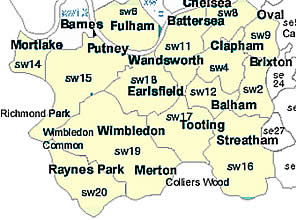
This carer forum is slightly different from my other carer forums. This one covers multiple boroughs as we are developing a strong carers network. This group covers Richmond, Merton, Kingston, Wandsworth and Sutton. We get support from all 5 carer centres.

This group also spends a fair bit of time for carers to update how things have been progressing. We were also joined by Nicole Smith who is a Darzi Fellow in Integrated Medicine. She spoke to the group about Virtual Wards and how they are important regarding the NHS. She is also doing some research.

You can give feedback on her survey at the link below

Virtual Ward survey


GREENWICH MENTAL HEALTH CARER FORUM

This forum is slightly different as it is linked the the Greenwich carer peer group I facilitate for the borough. Greenwich Carers centre help me run the group. This forum runs every 2 months.

The forum was filled with a lot of speakers so I was glad that Oxleas work hard to engage with carers.

We were joined by Catherine Seabourne who is Oxleas Head of Nursing. She talked about her role and answered queries from carers. We were hoping to hear developments from Jason McCulloch who Service Manager regarding Greenwich Carers Strategy, Jason was unable to attend.

We were also joined by Ariane Zegarra and Janice Williamson. Janice is the new Carers Network Lead for Oxleas. We were given updates regarding social care.

This was the January update for most of my carer groups.

SW London MH Carer Forum September 2022

Welcome to a very late update of one of my carer forums. These are updates of the groups I run whose members are those caring for someone with mental ill health. For my September SW London carers forum, we were joined by Professor Caroline Glendinning who is the Emerita Prof of Social Policy at the University of York.

  • Prof Caroline presents on Carers and personal budgets

Caroline thanks us for having the chance to engage with unpaid carers and a way to learn from them. She was interested in our personal experiences, especially from the experience of caring for someone with a mental illness. She was pleased to see there are carer led groups fighting to engage with services.

Professor Caroline spoke at length regarding how Personalisation and carer policies have developed separately. She mentioned what the choices are disabled people, being either direct Payments/Personal Budgets/Individual Budgets.

She then spoke a bit about Carer’s rights being the importance of having a carer’s Assessment, how Carers Allowance Support should work and also the need for carer respite.

Professor Caroline gave some examples regarding cash schemes, but also highlighted some problems. Comparisons were from the following.

Where schemes were designed to support carers (Germany / Austria)
Plus some plans aim to increase choice for service users (England/Nlds)

Professor Caroline then moved into what trigger her research into these areas. These were “How do local authorities recognise/balance the rights, needs and wishes of service users and carers?”.

She wanted to find out what roles should carers play in assessment /planning support? Carers at the group were interested if there was there any consultation or involvement that was flagged up by her research.

Professor Caroline surveyed many Local authorities by running.

Lead officer interviews
Focus groups with front-line practitioners
Interviews with service users and carers

The results from her research lead to several findings, which Professor Caroline explained at length to the forum.

  • Joint/holistic family assessments desirable – carers usually involved
  • In practice assessments focused on service users – little attention to carers’ needs, apart from ‘willing and able’
  • Carers offered separate assessments but low take up
  • Even where separate carer assessment done, little consistent practice in bringing 2 together
  • Service user budget reduced by carer support
  • No guidance on carers’ role in planning service user support
  • Carers often involved in managing service user personal budget
  • Carers’ organisations not involved in developing personal budget policies/practice
  • Poor coordination of subsequent reviews of service users’ and carers’ needs

Discussion time from the group

Professor Caroline wanted to find out our experiences in regards to her research paper. There was a lengthy discussion on the following.

What were members experiences?
Any feelings regarding Assessments
How did people feel about Planning support
When did Reviews take place?

Professor Caroline then spoke about the conclusions of her research

Carers not involved in developing personal budget policies/practice
Failure to assess carer needs:
Just asked ‘willing and able’
Too few separate carer assessments
Service user budgets routinely reduced because of carer help
Funds for carer breaks included in SU budgets

This was a brief update to my SW London mental health carers forum.

SW London MH Carer Forum March 2022

Welcome to my March 2022 update of our SW London mental health carers forum. The group is a hybrid group of my other forums. Usually my carer forums focus on engagement and updates, but this one sometimes acts as a peer and network group for those caring for someone with mental illness.

Speakers for March 2022

  • Karen Persaud – SWLSTG – Carers, friends and family involvement coordinator
  • Gary Baker – Carers Support Worker – Richmond Mind
  • Antonia Buamah – Patient peer support – EMHIP– Ethnicity and Mental Health Improvement Project.

Karen from South West London & St George Presents

Karen who sometimes attends and engages with our group updated us on carer developments at the local SW London mental health trust. Karen spoke about the new carers peer support worker Zoe Hannah. The new role will be running for one year and should hopefully continue onwards.

The trust is actually really committed to pushing forward the lived experience workforce as part of their overall service delivery. This is where they have four services user peer support workers in posts. SWLSTG are also currently reviewing the trust’s carers strategy, which is quite outdated.

The new strategy will also be reflecting on the need for the trust to do more around supporting carers through their carers recovery journey, because carers go through a recovery alongside supporting loved ones through their own recovery journey. This means it is trying to balancing out wellbeing needs.

The next update for SWLSTG is there new recovery college course, which is being facilitated by Kingston adults education, college. The course has been adapted for wellbeing techniques for carers, families and friends. The course should be running for 10 weeks. Karen also updated briefly on the friends, families and carers group incase new members of our forum are interested in trust involvement.

Last updates from Karen was on the carer awareness training for staff, especially on induction for staff. This would involve carer communication skills plus carer involvement in the planning and discharge.

Gary Baker – Carers Support Worker – Richmond Mind presents

Gary fed back on how Ricmond Mind works closely with Richmond carers regarding mental health carers. Carers can be self refered or be referred to by another professional. Once they received that referral, Richmond Mind will contact the carer. From there the carer will be given access to support and workshops.

Gary mentioned that quite a few people tend not to like the term carer and tend to prefer being called a client or the person’s relative.

  • Responses from carer members.

Are services at Richmond could be offered in Merton or Kingston? (quite a few members asked about the services)
My question was on engagement from SWLSTG, I wondered if Richmond Mind staff have been invited to meetings. Gary talked at length regarding carer champion meetings.
The next question I asked for engagement from community mental health teams. This is where Gary mentioned that there was not enough.

Antonia presents on the Ethnicity and Mental Health Improvement Project (EMHIP)

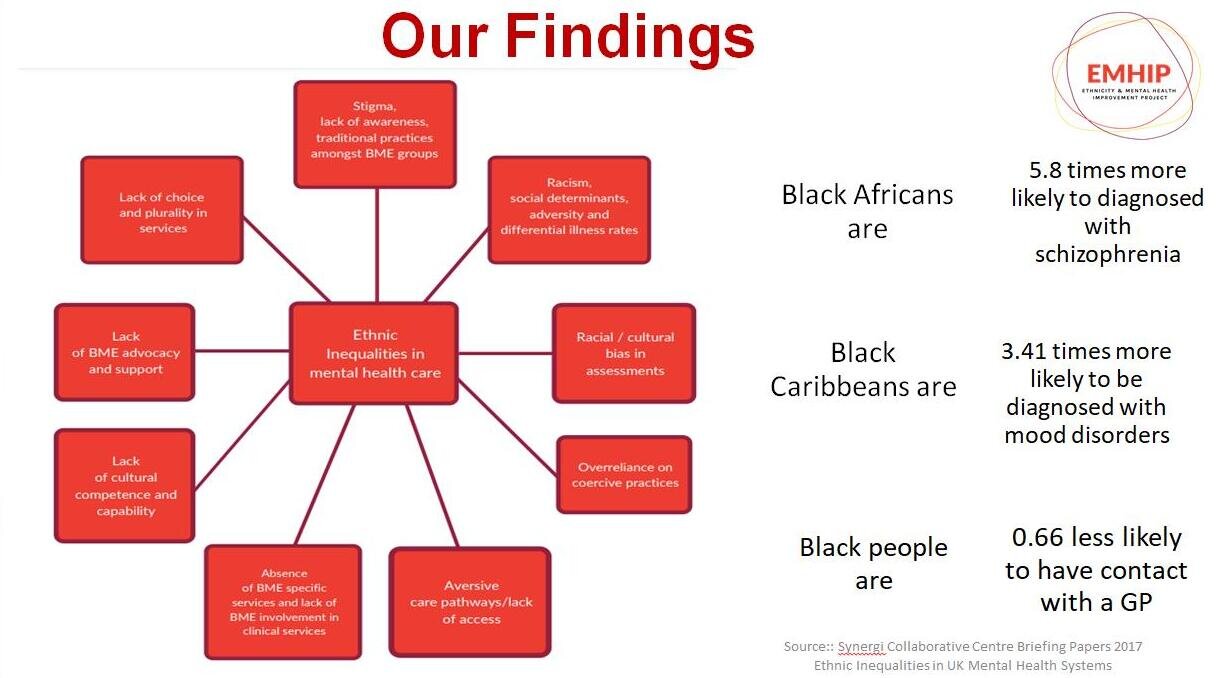
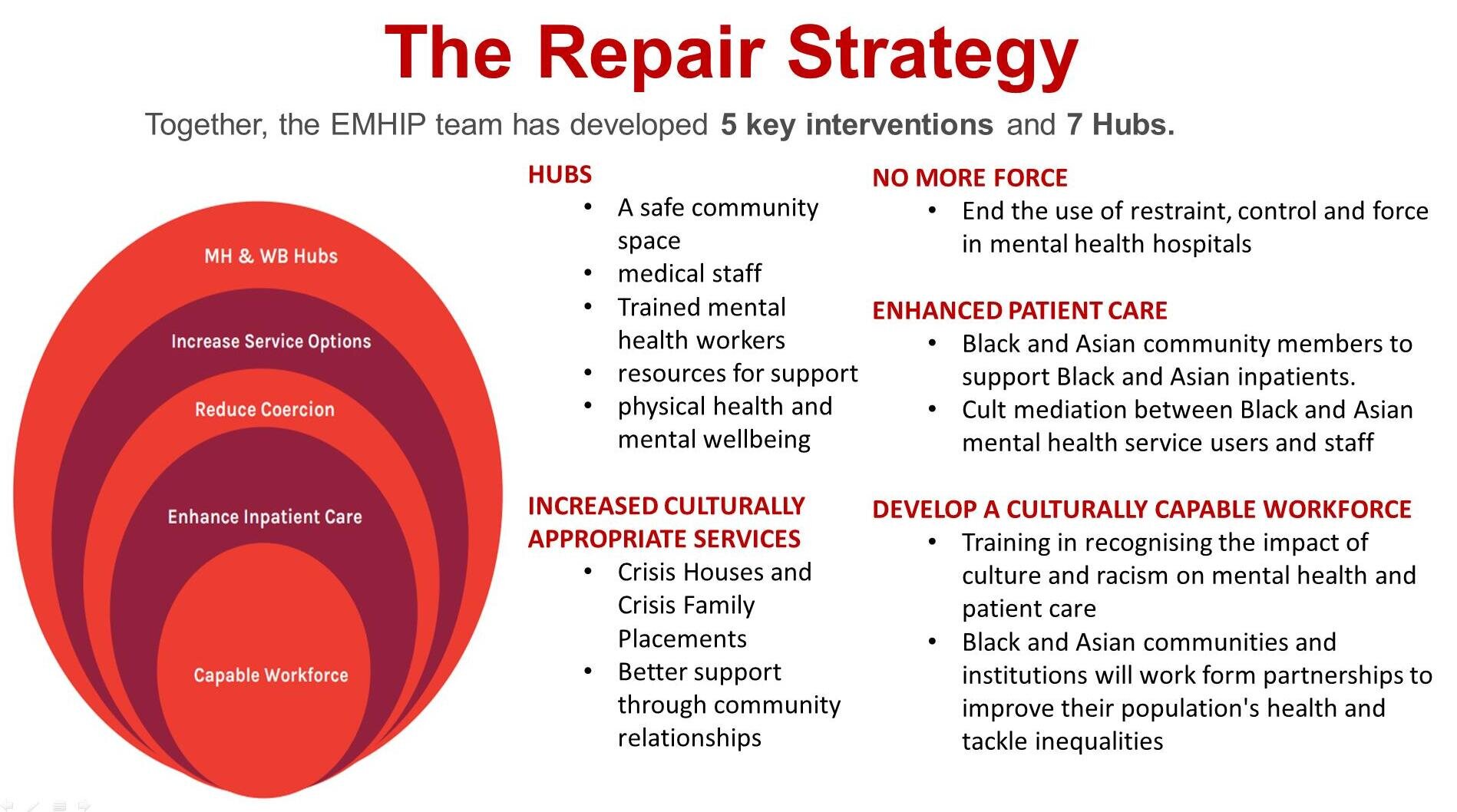
Antonia talked about how the Ethnicity and Mental Health Improvement Project (EMHIP) is an attempt to reduce inequalities in access, experience and outcome of mental health care in South West London (Wandsworth & Tooting, Battersea locality). It was developed through the leadership and activism of leaders within the African, African Caribbean, and Asian communities.

The EMHIP advocates for a practical, locally based service improvement programme, co-designed with service users and local Black and Asian communities, based on established evidence, building on existing community led, co-produced projects.

In the UK, people from the Black and Asian community are being denied equal and compassionate mental health care.

  • They more likely to be brought to and kept in without their consent.
  • They are more likely to access mental health services through the police and criminal justice systems.
    find themselves unwell and back again, once released, particularly men
  • be forcibly restrained and given more than the recommended amount of medication.
  • The fence of mental heath for the Black and Asian community has been broken for several generations and the many promises of repair (partial or full) has not materialised to date.
  • We have delved deep, hence, our toolkit EMHIP– Ethnicity and Mental Health Improvement Project.

Antonia pointed out that as a community we’ve recognised that our broken fence must be repaired once and for all and have forged collaborations and partnership with many friends

South West London CCG (CCGs are now replaced to Integrated Care Boards)
South West London and St. George’s Mental Health NHS Trust
Local context of Black and Asian – voluntary, faith and community groups

This can be organized via the non-profit Wandsworth Community Empowerment Network (WCEN)

The Hub offers our guests, visitors and other attendees a communal safe place to sit down, relax and have a conversation in a hospitable environment.

Service/Sessions provided:

¨ Physical Health and Wellbeing checks
¨ Citizen Advice Bureau/Housing First Aid
¨ Pastoral Systemic Therapy
¨ Mental Health and Wellbeing Out-patients type clinics
¨ Explore training or employment opportunities
¨ Promote on-going recovery
¨ Social life wellbeing
¨ Effective “active sign-posting” to the supportive local services or agencies

More information can be found below

Website: http://www.emhip.co.uk

Email: info@emhip.co.uk

This was a brief update for my SW London mental health carers peer group. For the month of July SW London NHS will be engaging our group regarding SW London’s mental health strategy. I for one will hope it will include families and carers.

SW London MH Carer Forum April 2022

Hello fellow unpaid carers. Welcome to a brief update of my South West London mental health carers forum. I am very behind on my updates because I have been busy working on my new poetry book on carer experiences. I am also developing online courses for carers. So if you want a bit of education, try some of my courses out.

Carer Identity

Carer Networking

Going back to my SW London carers forum. This one is for April and the following speaker from Hull University was


Dr David Barrett – Empathy and Nurse Education.

Dr David presents to the SW London carers forum

Dr David Barrett from the Department of Paramedical, Perioperative and Advanced Practice at Hull University wrote a paper on “Effectiveness of empathy education for undergraduate nursing students”.

David started out describing to the group on what is empathy. David felt that we would have our own thoughts on the term and what it means to us and why it’s important. David felt that it’s a tricky one, because there’s lots of people who have lots of different ideas on exactly what it is.

Dr David felt that empathy is about being aware of, and understanding what somebody else is feeling. Plus empathy is being able to demonstrate to them, that understanding as well. This mean’t that empathy awareness is not just not just internalising, but also demonstrating to the person that you understand how they’re feeling. Empathy is using that willingness to respond appropriately to those needs. David mentioned about a term “walking in someone else’s shoes, or it’s someone else’s pain”. David felt it was that as a concept.

There seems to be a problem on just how far you can take it as possible to understand what somebody else needs are? This is because everybody is an individual, we’ve all got our own backgrounds or experiences, our own ways of dealing with things. So whether it’s truly possible to ever understand what somebody else is feeling, He thinks it is a discussion that the group could looking into afterwards.

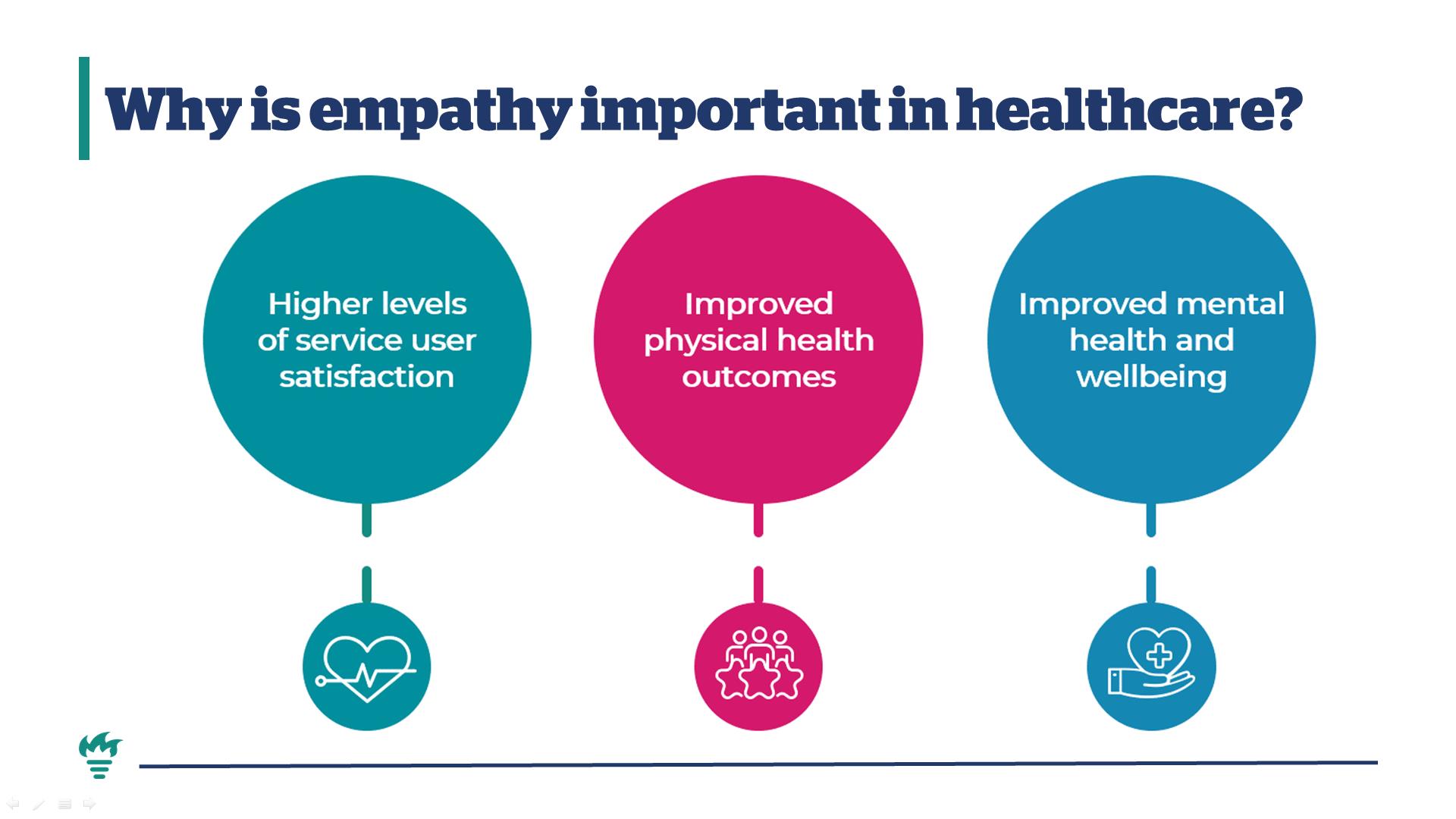
The reason why empathy is so important is that in an health care setting, it can provide some important benefits for people that nurses and other health care providers care for. There is good research that if somebody is empathetic as a health care provider, then the person they provide care for is likely to have a better experience might see higher levels of service user satisfaction.

If there is a healthcare team is demonstrating empathy, and it can, for example, reduce infection rates, improve what you’re feeling yourself, it can even reduce other complications, e.g. diabetes and other things. So in the end we can see improved physical health outcomes. Dr David stated that most importantly you can also see improvements in mental health and well being. This is where you can see lower rates of depression related distress or anxiety. It is also worth mentioning that improved mental health can also sometimes be seen in the healthcare professionals themselves.

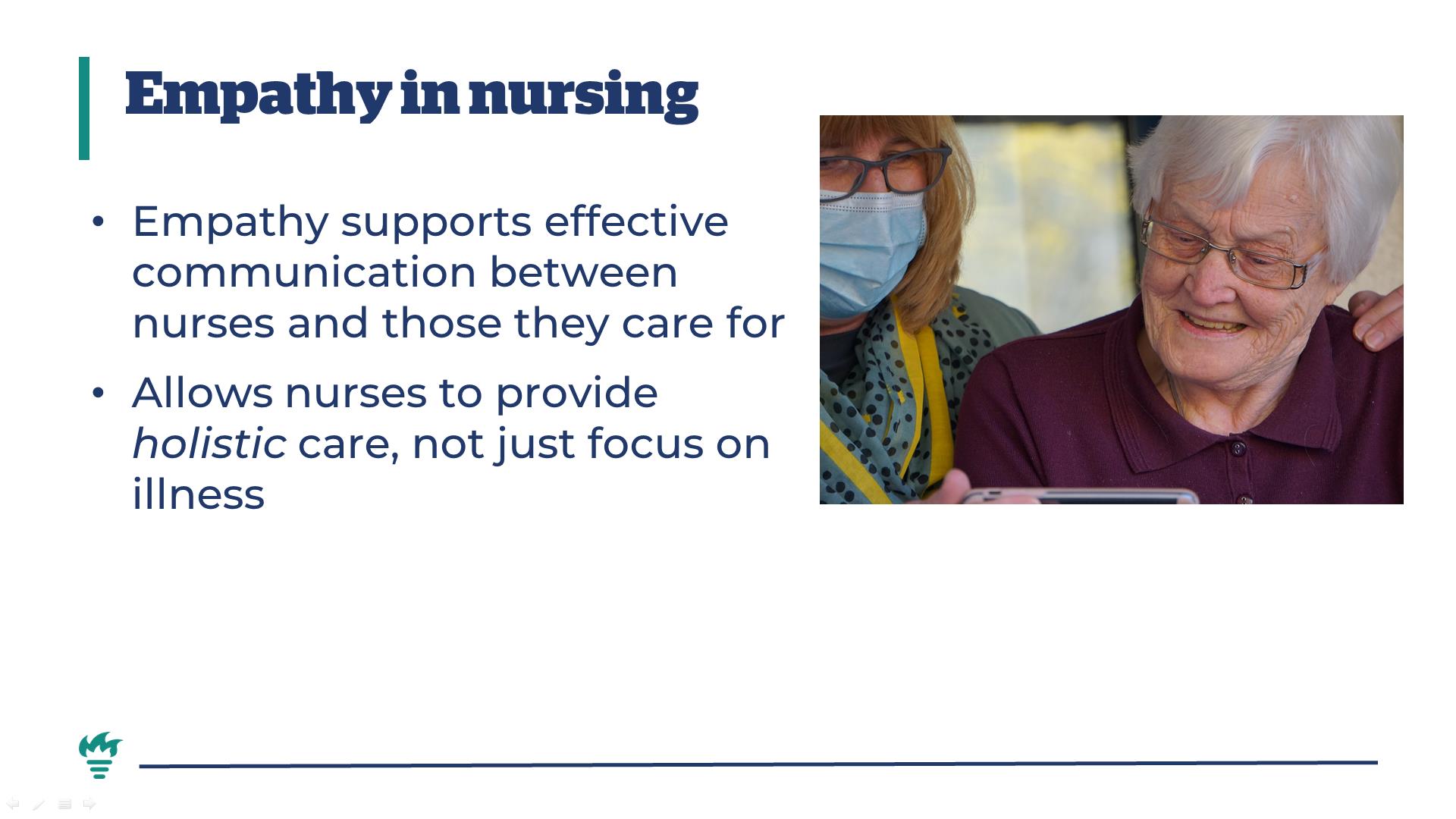
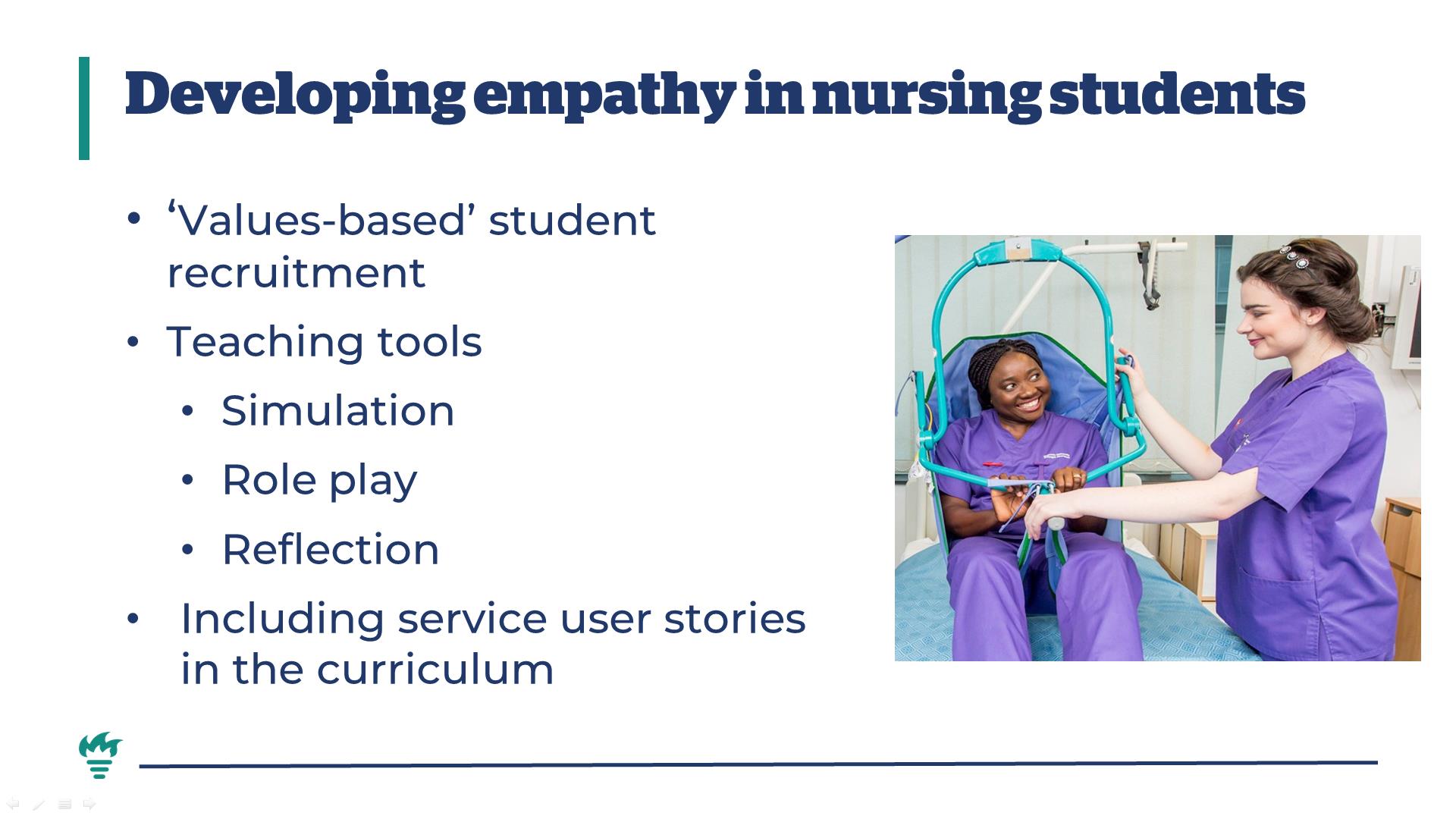
Dr David Barrett started talk about how nurses were trained in Empathy at the course and on the importance of families and carers being involved education from an authentic perspective.

Just to note, I missed a month by Jumping to April, but will add the blog for my SW London carer peer group for March later on.

You can get hold of Dr David’s paper from the link below.

https://www.researchgate.net/publication/353763640_Effectiveness_of_empathy_education_for_undergraduate_nursing_students

SW London MH Carer Forum February 2022

Welcome to a brief update of my South West London carers peer group. The reason this update is brief is because we had no speakers planned to attend and sometimes carer members just update on their situation.

A quick reminder is this group is aimed at those who are caring for someone with serious mental illness, they could be using the services of the local mental health trust South West London & St Georges or perhaps the person they are caring for is not in recipt of services. The carer group is a peer, engagement, networking and empowerment group covering the 5 boroughs SWLSTG covers (Richmond, Wandsworth, Merton, Kingston & Sutton).

For february we had a very good turn out and some new members. Most of the discussion was on sharing knowledge to those new to caring or those who were not sure what support they could get.

As usual I wont report anything confidential between members, only when speakers talk about issues that those unable to attend can catch up on.

Fast forward to May and engagement has been increasing between my groups and engagement from NHS England & Improvement and the local Healthwatches. Even if members struggle to feedback, they can at least understand what are the important issues of the day.

SW London MH Carer Forum January 2022

Back again with another blog post from unpaid carer Matthew McKenzie. I run many carer peer groups and forums and it has been a while since I updated on my SW London carers group. This is because I have been very busy working on my new poetry book for 2022.

Speakers for January
Karen Persaud – Involvement project
Discussion on speakers for the year
Matthew McKenzie – Involvement comparison

Karen Persaud Presents on SWLSTG involvement project

Karen come from a caring background and has been a carer for 14 years. Karen was impressed with the stories that have been shared at my group and felt they related to her at a deep level. Karen explained her past work as a carers champion and the work she did with the Royal College of Psychiatrists on formulating the Community Mental Health pathway, the Mental Health Act review and a few other bits and pieces she got involved in.

Karen felt she could actually influence the way carers were being treated because she was often ignored as a carer in the past and wanted to make a difference. In the long run Karen ended up having to make a lot of formal complaint and even though things were slow going through the formal complaints procedure, she felt thats when things were changed. All this ended up where doors were slowly open for her.

Now Karen is working with SWLSTG it has been quite inspiring. Karen added that she is in awe of what Matthew does especially his commitment and how much he actually takes on and actually gets done.

Karen thanked the carers group for having her and that she was really pleased to present what SWLSTG involvement team has been getting up to.

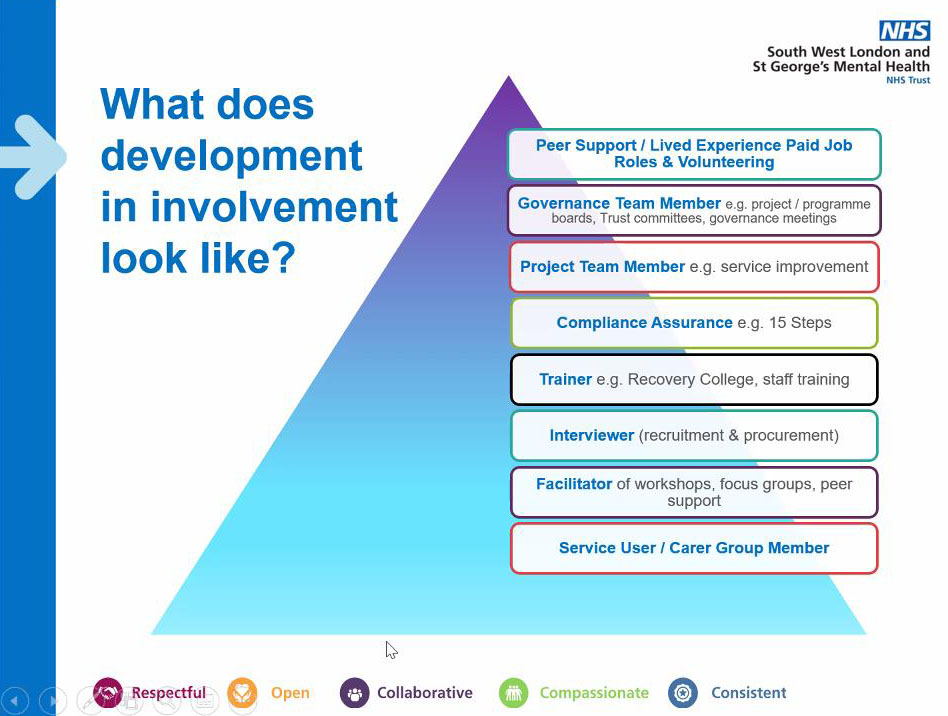
Karen mentioned about involvement team. The recruitment and the in patient involvement of people with lived experience of mental distress in developing services for the for the vocal trust in the community. What Karen is looking to do is involve from basic involvement to full Co-production as much as is humanly practicable.

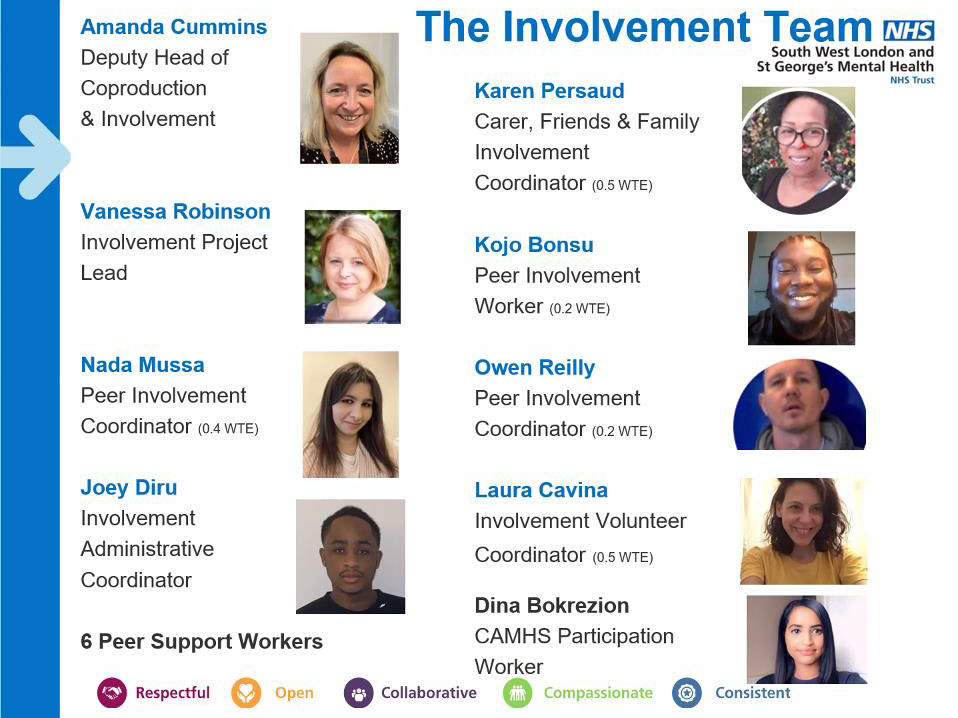
The team has grown over the last year. Since she has only been there for a few months at the mental health trust. Karen then explained who was in the involvement team and what day do.

Karen mentioned that she is also passionate about, one of them being CAMHS which is child and adolescent mental health services, but not something that she is directly involved in at the moment.

Since Karen only just started work she has noticed the involvement activities slowly increasing where they have now got six peer support workers who have started, one of whom is a dedicated carer, peer support worker, and her name is Zoe Hannah.

Members of the group asked why should carers be involved which lead Karen to explain the following.

  • Carers have a unique insight that can help shape a more appropriate recovery plan
  • Carers are more than a point of contact, they play a vital role in patient and service users recovery.
  • Carers will often be responsible for managing medication, accommodation, finances and a range of other social, emotional and healthcare needs.
  • They may not be clinically trained so it’s crucial that they are supported.
  • Carers are a vital piece of the puzzle and their health and lives are impacted by their responsibilities
  • SWLStG is committed to improving the experience of carers and supporting carers, supports patients and service users so improves outcomes.
  • To show SWLStG commitment, we invest in resourcing and embedding quality standards and processes outlined in Triangle of Care, Carers Engagement Thermometer, NSUN 4Pi in addition to NICE Guidelines and CQC Regulations.

Matthew presents on carer involvement

Since I am mainly on involvement at South London & maudsley, I wanted to compare how involvement was developing at another mental health trust who is part of the South London Partnership.

South London Partnership link

This part of the group where we want engagement on how involvement works at other NHS trust and I recently asked this off my local mental health trust in regards to involvement as a form of comparison.

I pointed out to the group that one of the worst aspects of being a carer is to be isolated and uninvolved. This means not on being involved for caring for someone, but being involved regarding changes to health & social care services.

The idea basically, you know, one of the worst aspects of care is to be isolated and uninvolved when I say uninformed, I mean getting involved in, I suppose veteran services Metro services not just involved in regards to the care of someone, but how services work and given their ideas and learning from other carers who’ve been involved just as what Karen presented before.

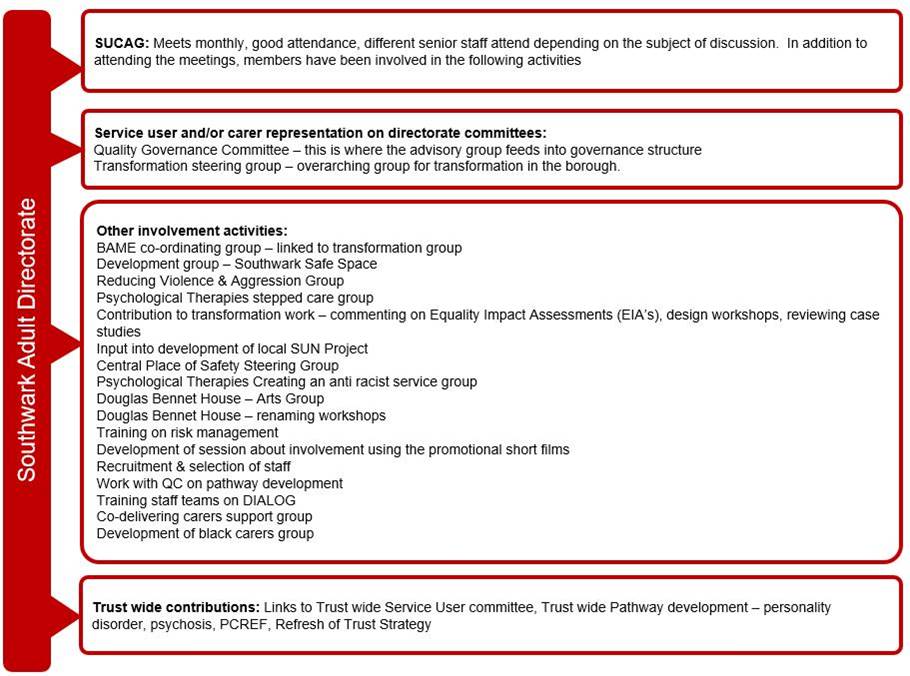
I explained to the group that a good involvements structure easily shows a bird’s eye view of services, and how it reveals involvement for both patient and carer.

The picture above shows an update on the projects showing involvement in the Southwark mental health services. I showed involvement updates and structure for some other services, but felt carers should do the same regarding SWLSTG.

This is the update for January for my SW London carers forum.

SW London MH Carer Forum November 2021

Here is a very brief update of my South West London Mental Health carer peer group. It is one of the 5 carer forums I do, but is a hybrid of a peer group and an engagement forum. As with all carer forums that I run, the forum seeks engagement from mental health services, since most members are carers of someone with mental health needs.

You might find it wierd that I am doing a november 2021 update at the begining of february 2022, but I have been so busy running carer groups, working on my poetry and helping out engaging with mental health trusts.

The SW london carers forum was packed with speakers including myself

Joy Hibbins – CEO of Suicide Crisis
Rachel Nethercott – Carers UK – State of Caring Report 2021
Diane Fox – University of Kent on experiences of unpaid carers
Matthew McKenzie – Carer Rep and Author – carers and poetry project

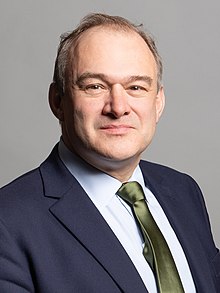
We were also joined by Sir Ed Davy’s team who plan to attend when they can to gain some insight into things affecting unpaid carers.

Sir Ed Davey
  • Joy Hibbins presents on the importance of suicide prevention.

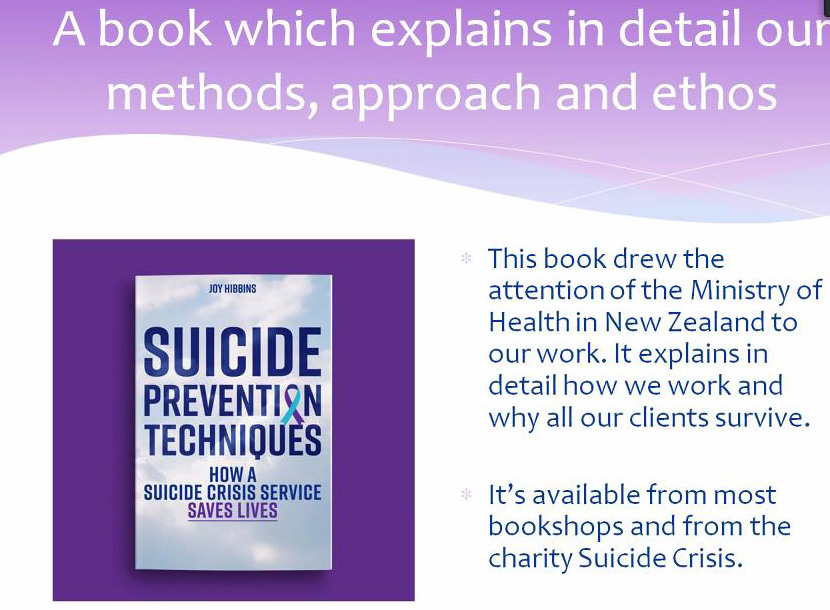
Joy Hibbins an author, runs a charity called suicide crisis, which provides suicide crisis services and trauma services. The reason why Joy wanted to set up a suicide crisis center was because of her own experience of suicidal crisis in 2012, after a traumatic experience. It led to her being referred to the mental health crisis team for the first time. She found that the services didn’t work for her and she could see very clearly why they weren’t working for her. She started to think that what was needed was a suicide crisis center, where people could come every day when they’re in crisis. Except if they were at imminent risk that they could be supported over a period of several hours. She started to think about the ethos and the methods she wanted to use because she felt that they needed to be different from those of psychiatric services.

Joy experienced a huge amount of skepticism and doubt that someone like her could even set up a suicide crisis center. Not only did she want to set up a crisis center she also wanted to set up a center, which would be about early intervention in order to try help prevent descent into crisis. So it was seen as a very ambitious project, particularly for someone like herself, who was a psychiatric patient that had recently been in crisis.

So with the suicide crisis center, people can either self refer or be referred. The referrals are from NHS, police charities, and all kinds of other agencies as well. From 2012 there was huge doubt and skepticism to where things are, plus it has been an extraordinary journey for the team in a very unexpected journey. where the work is having an impact in countries like New Zealand, where the Ministry of Health in New Zealand contacted Joy’s team, as they were devising their new national suicide prevention strategy to find out what they could learn and how they could use some of the learning that they took from Joy’s team in their strategy.

Some of the points about their suicide crisis center is that it’s in a central location, easily accessible, it’s not a drop in center, but they can see people at very short notice. So sometimes they state to people not to think of them as an emergency service. Altough Joy thinks there are times where they have to be and that there is a need to be able to see people within half an hour, whether that’s them coming for the service or the service going out to them.

Very recently Joy has published this 40 Is the suicide prevention pocket guide book. There’s a slight irony that it’s called a pocket guide book because she thinks When they planned the book with a publisher, it was going to be a pocket guide book. But in the end she wanted to also make it a really comprehensive, detailed book that would be full of relevant information.

Eventually it became 220 pages. So it’s much more of a comprehensive handbook. But she liked the idea of a pocket guide book because one of their clients made this wonderful quote a few years ago, and he said that he carries us in his pocket with him at all times. Joy thinks that really highlights the strong connection that they build with their clients so that even when they are not with them, they feel connected with the team. Joy always has kept this in mind.

Joy Hibbens will be engaging more with our SW London group members regarding suicide prevention workshops and talking to families and carers for 2022

See more about Joy’s work below.

Suicide Crisis Service

Suicide Prevention Pocket Guidebook

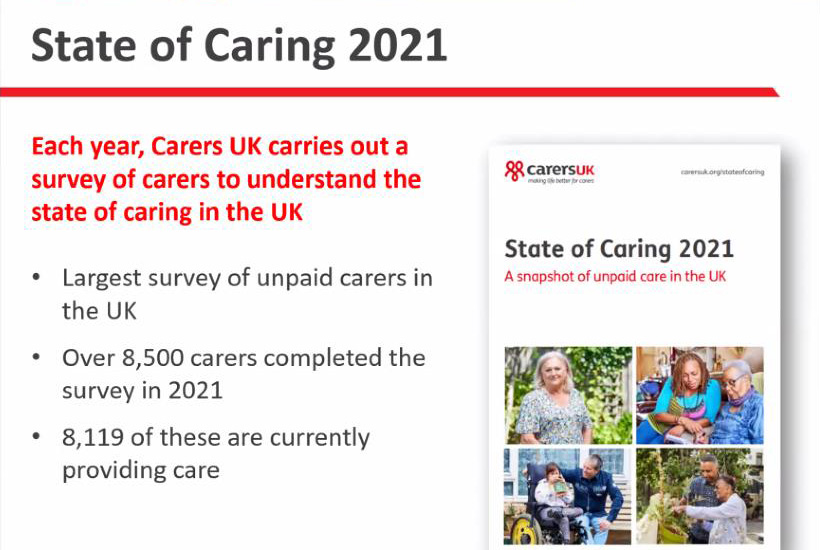
Rachel Nethercott – Carers UK – State of Caring Report 2021

The next speaker was from Carers UK and Rachel has been very helpful engaging with my carer forums to update us on what Carers UK has been doing.

This section was probably an interesting section for Sir Ed Davy’s team as they want to report back on the groups findings plus questions that were raised.

Rachel is the Senior Research and Policy Officer with carers UK. She was at the group to present some key findings from Carer’s UK annual State of caring survey, and also how these findings inform Carers UK practice, and policy. Rachel mentioned that some of us actually may well have completed the survey, in which she thanked us. She felt that our time added to the kind of painting a picture of the key findings.

She recommended if we have time that we go and read up the report. Rachel then gave us a quick overview of the report. It’s actually the largest survey of unpaid carers in the UK. Carer’s UK conduct this every year, except for 2020 due to the pandemic. Carers UK did another research instead. But normally, they do this every year. So for the year 2021 it was completed by over 8500 carers, the vast majority of them are currently providing care. The kind of stats she showed in the presentation are for people who are currently caring.

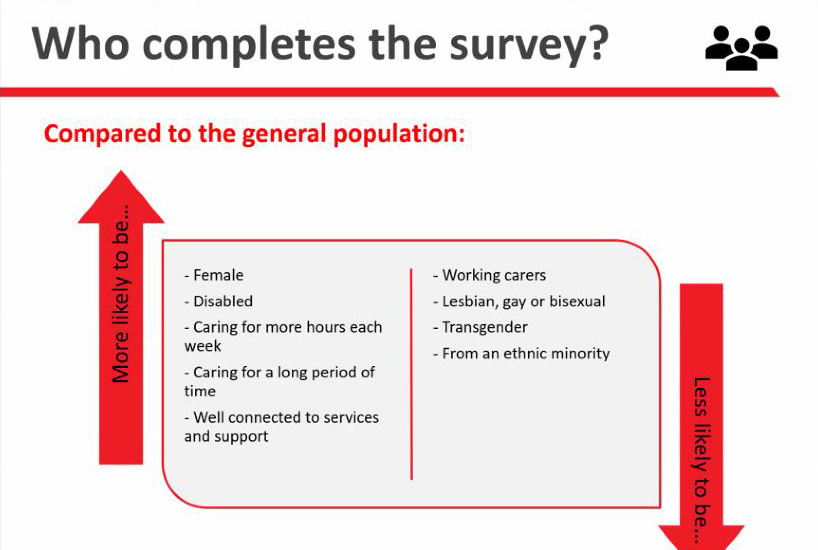
The people who complete the state of caring survey are more likely to be female, more likely to be women, more likely to be disabled. than the general population, and also likely to be at the heavy end of proving care than the average carer. Almost half of everyone that responded to this survey have over 90 hours a week.

Some people who completed the survey were also generally well connected to services and support, they identify as a carer in where they knew their rights and the support that they were entitled to. Unfortunately some carers who filled out the survey were less likely to be working, which can be your average carer. So only around a third of the people completing the survey are either in full or part time work, which is less than what Carers UK had expected to see. The average person who goes filling out the survey were British women. It’s still interesting findings, and it tells us a lot about carers as Carers UK would love carers from all backgrounds to fill in future surveys.

Diane Fox – University of Kent on experiences of unpaid carers

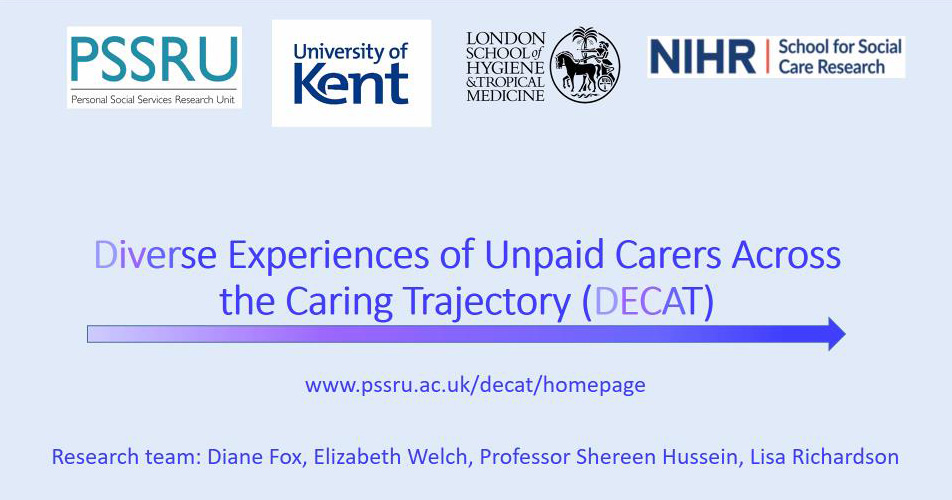
Diane Fox works at the University of Kent at the Persons Social Services Research Unit. She is working with a colleague from the London School of Hygiene, or medicine, on a project regarding diverse experiences of unpaid carers across the caring projectory, this being CCAP short.

Diane came her to give us a bit of background knowledge about the projects, and then hopefully get some of our input.

Diane mentioned that the research often doesn’t follow the same carers over time, and doesn’t often look at differences between subgroups, which ties in with what she is presenting. It’s a question about not just looking at White British carers that are female but strengthing the design to include other carers.

For this study, they are trying to look at how or why some carers maintain a good quality of life over time, and how or why others do not. The reason they want to do this research is to inform the support services for carers, because we know that people’s experiences of caring can vary quite widely. For instance, someone with a degenerative condition is likely to be very different to caring for someone who’s got a relapsing mental illness, caring for a spouse or a partner is likely to be very different caring for your adult child, or your aging parent. So it’s got four research questions.

Diane’s researchers looked at what’s associated with unpaid carers quality of life over time.
Does this differ between subgroups of carers?
What support services or other things enable carers to optimize their quality of life?
What barriers to frequently excluded care space in accessing services?
How can these be overcome?

So that, again, ties in to what Rachel was talking about that some groups are less likely to identify themselves as a carer or access services. So there’s five stages to research that feed into one another.

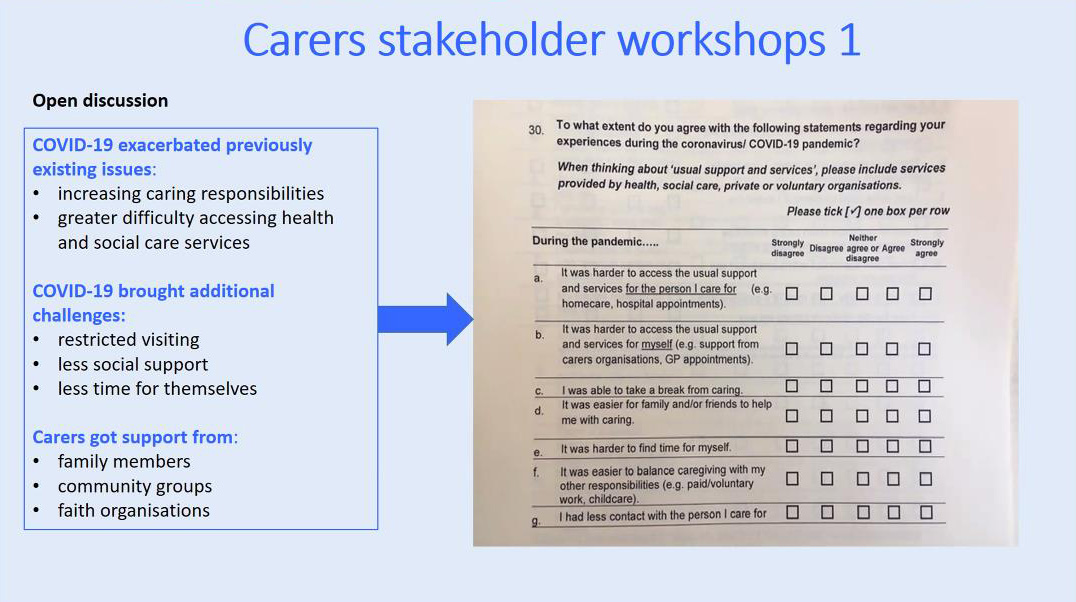
So first of all, the researchers did a scoping review to look at previous research and identify what’s associated with quality of life over time, they found that so many things are in that research that they needed to narrow down the scope of the project to keep it manageable. So for the second stage, they held a series of stakeholder workshops, which they invited a nationwide group of parents and service users, local authority commissioners, service providers, and community and voluntary organizations. At the workshops some of the things that they said in the open discussion where people would firstly outline their caring circumstance, identify it, identify areas of difficulty, and the sources of support that they found helpful.

So in the open discussion, the attendees spoke about particular issues but they were facing particularly related to the pandemic because that was very pertinent at the time just come out of one of the lockdowns. Diane presented how their input fed into the content of the questionnaire. So this is what the researchers got from the first bit of discussion they had with people.

Next, they asked carers to rank topics in order of importance, which was shown on a graph that shows what their preferences were. So more than half of carers said social support was the most helpful. Diane spent quite a bit of time presenting more of the research where we had a Q&A session to help inform Diane our experiences.

Matthew Mckenzie’s Poetry Project

As I have mentioned already, I am working on my poetry phase regarding the experience of care. I read out one of my poems call “On Alert” at my carers peer group and you can view the video of my poem below.

This concludes my November update of my SW London carers peer group

SW London MH Carer Forum October 2021

Welcome to a brief update of my South West London Mental Health carers peer group. The carers group covers the 5 boroughs of mental health trust South West London & St George and seeks to empower unpaid carers with engagement, information and a peer environment.

Speakers for the October forum 2021 were

  • Tristan Brice – London ADASS
  • Christian Sestier – On involvement of open dialogue at SWLSTG
  • Alison Crane & Yasmin Phillips (NELFT NHS) – Open dialogue

Tristan Brice presents on London ADASS carer focus

Taken off their website “LondonADASS is an Unincorporated Association that brings together the London based Directors of Adult Social Services (DASSs) to enhance the quality of adult social care across the Capital. Working in partnership with adult social service providers through Proud to Care London, they are committed to improving the recruitment and retention of the adult social care workforce across London.”

Tristan Brice who chairs the carer group at London ADASS was at the forum to speak on what priorites the organisation has for carers. One of the things Tristan presented on was the discounts for carers project, which gives carers a discount on shopping and other necessities. An interesting project is how ADASS will focus on NHS staff retention and how to improve retention. They want to do three things. London ADASS want to promote the sector as a as a place staff want to work. London ADASS also have a project on providing carer lanyards, just like what NHS staff have. There is a focus on raising the identity of unpaid carers as a way to say they should be valued as working for the same team.

When Tristan mentioned this, a lot of the carers eyes lit up as they wondered what the Lanyards would look like.

Tristan also spoke about the online carer groups that London ADASS are hosting, these usually being singing and dancing groups to reduce isolation and increase fun with creativity. Other priorities were on commissioning in regards to safeguarding, developing the workforce, particularly practitioners. The other priority is supporting integration with health colleagues.

You can see the safeguarding video below.

The big focus is trying to not see carers through a social care lens, but through the lens of them as doing an amazing task of looking after someone close to them.

The last presentation was on the success of the carer’s festival, which was online until things change regarding the pandemic. You can see the video below.

Open dialogue presentation

I am fairly well known for promoting the Triangle of care project for carers nationally, but there are other national projects which mental health trusts try to incorporate into their services. One of them is Open dialogue and with a request from carer members, I got support from North East London NHS Foundation trust to speak about how they are incorporating Open dialogue into their services.

First to speak was Yasmin Phillips who is a Community Mental Health Nurse and was the first full time psychiatric nurse using an Open Dialogue approach. Yasmin explained that she works in the dialogue first service at NELFT, and she trained in open dialog in 2014. The Open dialogue is now taking referrals all over England. Yasmin then moved on to explain what Open dialogue is about, which is a reflective approach in increasing dialogue.

Open Dialogue was pioneered in Finland and has since has since been taken up in a number of countries around the world, including much of the rest of Scandinavia, Germany and several states in America.

Some of the results so far from nonrandomised trials are striking. For example, 72 per cent of those with first episode psychosis treated via an Open Dialogue approach returned to work or study within two years, despite significantly lower rates of medication and hospitalisation compared to treatment as usual.

Next to speak a patient involved in Open dialogue in which he mentioned that discussions about the patient on ward rounds is a recipe for disaster, if the patient was not included. He referred to the phrase “Nothing about you without you”. So that just the idea that the patient is involved in that the conversation and it should not be done without them.

So when the involved parties come together, it might just be starting off saying “how do you want to use the time today?”, as non directive as that. And then wherever it goes, it could be lively, all sorts of things. But at a certain point, what one of us might say could be a reflection where they basically press pause on the meeting, and they just turn to each other and share just whatever’s coming up.

This concludes the brief update of my SW London MH carers forum for October 2021

SW London MH Carer Forum September 2021

Welcome to a brief update of my South West London mental health carer peer forum. This group is a mixture of carer peer support and mostly engagements from health & social carer organisations, especially the local mental health trust South West London & St Georges. This carer’s group cover’s 5 boroughs as all 5 carer centres including the mental health trust work hard to promote it.

South West London & St George NHS

An extra bonus of this group is I do open it up to national speakers so the following speakers for September

Continue reading

SW London MH Carer Forum August 2021

Welcome back to a brief update of my South West London mental health carers forum. It is not like my other forums since this one tends to be a hybrid of peer support and carer engagement. Plus its probably my largest carer forum which cover’s 5 boroughs or six boroughs if we engage with NHS South West London CCG, because the commissioners cover six boroughs that being the borough of Croydon.

Anyway, one of the main focus is on how South West London & St George engages with unpaid carers, especially about mental health services, but the forum can then become a networking forum for other carers even outside SW London as sometimes national speakers may appear.

The speakers for August were

Elizabeth Stirling the new CQC inspector for SWLSTG

Tristan Brice from London Association of Directors of Adult Social Services.

Elizabeth presents on what the CQC is about

Since the CQC spoke at length regarding roles and plans, I can’t blog too much about that, however Elizabeth was kindly referred to engage with our group since their interested in how the group is supported.

Elizabeth spoke on the following.

  • How she has Worked in health and social care for 23 years
  • Worked as a support worker for four years
  • How she has been a Social worker since 2005
  • Worked for Mental Welfare Commission for Scotland
  • Has lived experience on caring regarding mental health.

Elizabeth then moved onto what the CQC does as in that the Care Quality Commission monitor, inspect and regulate services to make sure they meet fundamental standards of quality and safety, and they publish what they find, including performance ratings to help people choose care.

The CQC also set out what good and outstanding care looks like, and they make sure services meet fundamental standards below which care must never fail. Obviously, the CQC use information and evidence throughout their work, including people’s views and experiences of care. The CQC work closely with the public, other organisations and local groups across everything they do, that includes patients and carers of course.

Next Elizabeth explained the core fundemental standards for the CQC and what they look for. These would be

Person-centred care
Dignity and respect
Consent
Safety
Safeguarding from abuse
Food and drink
Premises and equipment

To also mention although the above is important, the CQC do look for other things as well. With the list above, they apply to fundemental standards that apply to mental health trusts

There was a very long Q&A session regarding these standards that apply to the rating of SWLSTG, but the important distinction was that it was coming from a carer’s perspective.

Each of those standards mentioned must follow a criteria of questions usually 5 of them, which are

Safe: you as the patient protected from abuse and avoidable harm.
Effective: your care, treatment and support achieves good outcomes, helps you to maintain quality of life and is based on the best available evidence.
Caring: staff involve and treat you with compassion, kindness, dignity and respect.
Responsive: services are organised so that they meet your needs.
Well-led: the leadership, management and governance of the organisation make sure it’s providing high-quality care that’s based around your individual needs, that it encourages learning and innovation, and that it promotes an open and fair culture.

Of course there has been a massive impact regarding how the CQC works and I had asked Elizabeth to talk in depth on covid-19.

Elizabeth talked about how the CQC had to adapt on how they work. This was a mix of on-site and off-site methods. In March 2020, the CQC suspended their routine inspection programme in response to COVID-19 and developed their ability to monitor services using a mix of on-site and off-site methods. Other changes were on improving the CQC’s ability to monitor risk to help them be more targeted in their regulatory activity. With that, by bringing information together in one place for inspection teams, presented in a way that supports inspectors with their decision making and by testing elements of how they want to work in the future, including how they provide a more up-to-date view of risk for people who use services.

I myself have always stressed to carer’s that the CQC is not a one way system, unpaid carer’s must provide the CQC with information and also requests so carers are working in partnership with the CQC. Elizabeth expanded on this by stating Information from patients and carers is very important to the CQC. All the information the CQC receive will be added to the records they have for each care service. The CQC can use this information to help decide where to inspect next, and what to look at when they do. When the CQC receive information about a concern for someone’s safety, they will treat it as urgent.

The CQC also use what people tell them to understand the quality of care they get from services like care homes, care agencies, hospitals and GPs. It helps make care better for everybody.

Again there was a very long question and answer session from members of the forum, but for those reading this blog please see the below.

CQC Feedback site : https://www.cqc.org.uk/give-feedback-on-care?referer=promoblock

You can also call the National Customer Service Centre (NCSC) on 03000 616161 or email enquiries@cqc.org.uk.

  • Tristan Brice presents

To be honest the conversation stretched so long with the CQC, that Tristan had to come back another day, which I will blog at a later date.

This is the brief august update of my SW London mental health carer forum.