When someone you care about experiences a mental health crisis, the system needs to work quickly, safely and compassionately. But for many families and carers, the reality can involve delays, uncertainty, and distress especially when assessments or admissions happen under the Mental Health Act.
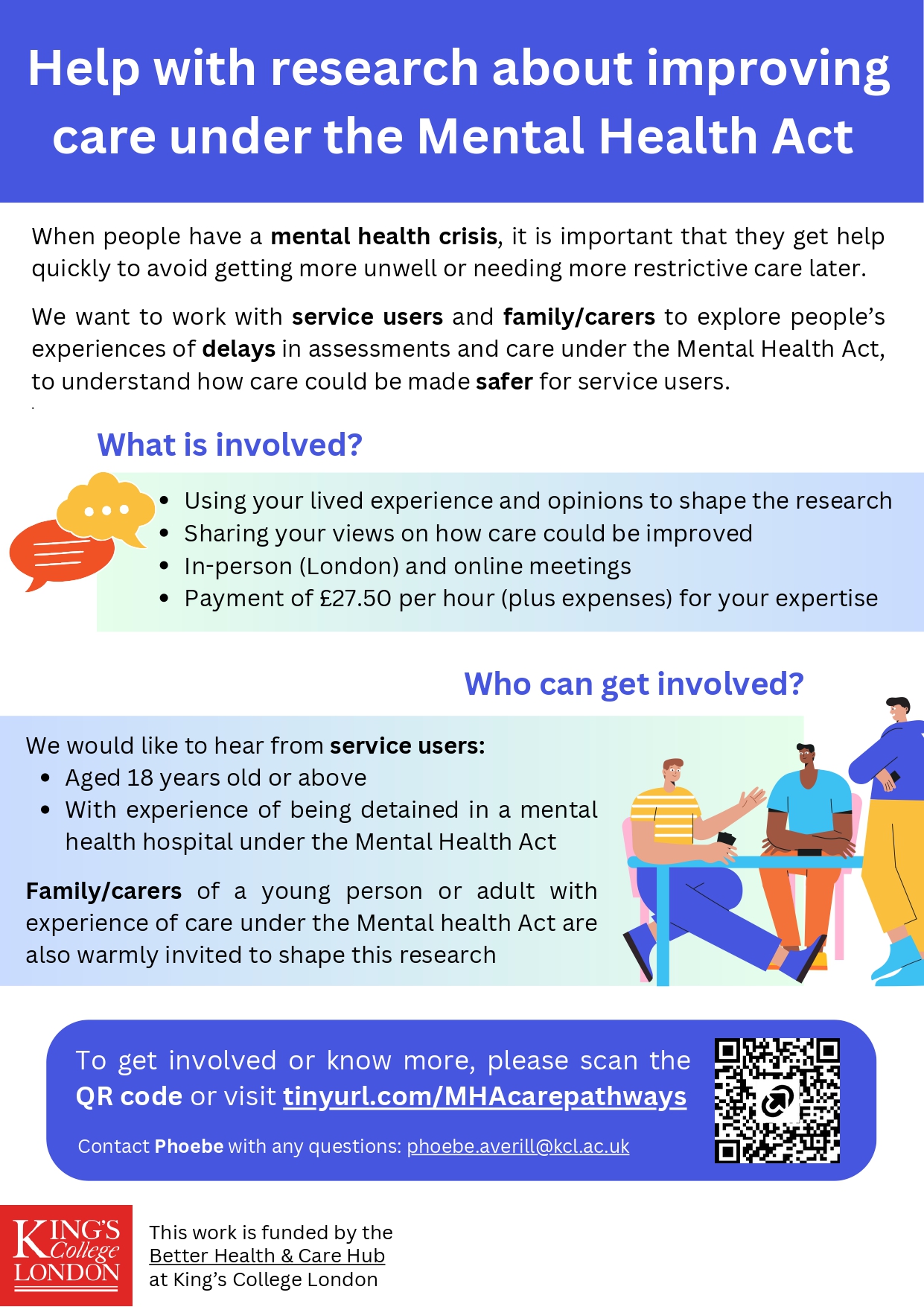
Now, there is a meaningful opportunity for carers to use their lived experience to shape research that aims to improve this care.
The importance of the Research
In times of crisis, timely support can prevent someone from becoming more unwell or needing more restrictive interventions later. Researchers at King’s College London want to better understand:
Experiences of delays in Mental Health Act assessments
What happens during admissions to hospital
How care pathways could be made safer and more responsive
Crucially, they want carers and service users at the heart of this work.
A Paid Opportunity to Share Your Expertise
Family members and carers of young people or adults who have received care under the Mental Health Act are warmly invited to join a Lived Experience Advisory Board.
As a carer, your insight is invaluable. You will help:
Shape the direction of the research
Share your views on how care could be improved
Ensure the work reflects real-life experiences
Meetings will take place both online and in person (London), making it accessible to a wide range of participants.
Participants will receive £27.50 per hour (plus expenses) in recognition of their time and expertise.
Who Can Get Involved?
The research team would like to hear from:
Adults aged 18+ with experience of detention under the Mental Health Act
Family members and carers of young people or adults with experience of care under the Mental Health Act
If you have supported someone through assessment, admission, or crisis care, your perspective could directly influence how future services are designed and delivered.
Be Part of Making Care Safer
This work is funded by the Better Health & Care Hub at King’s College London and is focused on improving safety and outcomes for people in crisis.
Your lived experience can help ensure future families face fewer delays, clearer communication, and safer care pathways.
To get involved or find out more, visit: tinyurl.com/MHAcarepathways
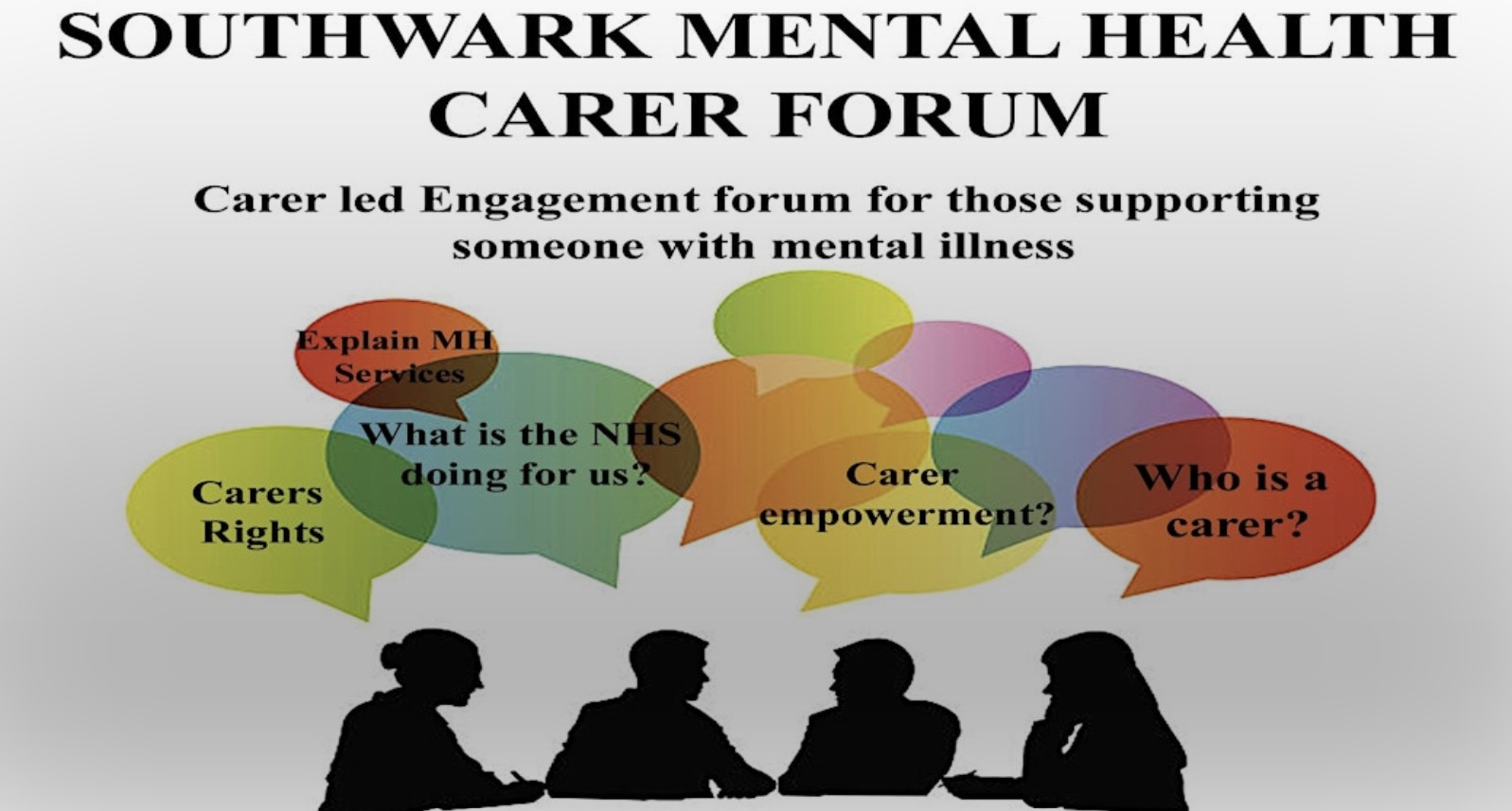
Here is a brief update of the joint Southwark & Lambeth mental health carers forum I run the last monday of the month. The forum is a space for those caring for someone with mental ill health to connect and get updates from service providers.
As facilitator Matthew McKenzie emphasized the importance of managing guilt as a mental health carer, challenging unrealistic expectations, and setting boundaries for one’s own well-being. Matthew also stressed the need for self-care, seeking professional guidance, and advocating for respite care. The conversation ended with discussions on the concept of guilt, the challenges of being a carer, and strategies for holding care coordinators and social workers accountable.
Welcome back to my second post on the role of nearest relative Vs Nominated persons in mental health care. This time we look at the risks and challenges regarding the change to the mental health bill.
If you want to watch the video for a more detailed lecture, see below.
This blog post explores the complexities and risks associated with the roles of nearest relatives and nominated persons in supporting individuals with mental health conditions. Learn how communication barriers, lack of understanding, and structural challenges impact the quality of care and advocacy in the mental health system.
Understanding the Debate: Nearest Relative vs. Nominated Person in Mental Health Care
Mental health care reform is an ever-evolving field, aimed at better supporting individuals experiencing mental health issues and those who care for them. With new legislation like the Mental Health Bill under consideration, there are key discussions to be had about the roles of nearest relatives and nominated persons. This blog will delve into these roles, their challenges, and the implications of the proposed changes.
Background of the Mental Health Bill
The Need for Reform
The Mental Health Act last saw significant updates in 1983. Given the vast changes in our understanding and approach to mental health since then, the need for reform is apparent. The current bill under debate introduces several amendments aimed at modernizing the act to better address patient rights and care quality.
Patients under the mental health system have historically faced challenges such as inappropriate detentions and overmedication. The reforms aim to address these issues by improving treatment plans, reducing the use of police and prison cells for those in crisis, and ensuring more humane treatment for individuals with autism and learning disabilities.
Nearest Relative: Challenges and Considerations
Conflict of Interest
One of the primary challenges with the concept of the nearest relative is the potential for conflict of interest. The nearest relative’s views on treatment may differ from the patient’s preferences, potentially leading to tension and disputes. This can result in the patient not receiving the care they desire, which could exacerbate their condition.
Lack of Understanding
Many nearest relatives may lack a deep understanding of mental health issues and treatment processes. This lack of understanding can hinder effective advocacy and support, leading to poorer treatment outcomes. Although nearest relatives can gain knowledge over time, newly appointed ones may struggle initially.
Consent and Preference
Being designated as a nearest relative can occur without that person’s consent, leading to discomfort or resentment. Both the patient and the nearest relative may feel burdened by this legal imposition, complicating care dynamics and potentially diminishing the patient’s support system.
Limited Legal Power
Although nearest relatives have certain legal rights, they often find themselves with limited actual power, especially if the individual resists treatment or if professionals don’t fully engage with the relative’s concerns.
Exclusion from Care Decisions
Professionals may prioritize patient autonomy over family involvement, leading to situations where the nearest relative is not adequately consulted. This can undermine their supportive role, creating feelings of helplessness and frustration. With the Nominated Persons rule, the exclusion can be stronger, especially if the nominated person is at odds with the family, which can lead to tensions for whole parties. This is a major concern for Approved Mental Health Professionals, something I will probably cover later.
Complex Family Structures
Family complexities can further complicate the designation and effectiveness of the nearest relative. Tensions between family members regarding the care of a relative with mental health issues can lead to disputes and negatively impact the entire support system.
Nominated Person: An Emerging Role
Patient Autonomy and Choice
One of the major changes proposed by the Mental Health Bill is allowing patients to nominate a person of their choosing to support them, rather than defaulting to the nearest relative. This shift empowers patients to make decisions about their care support structure, potentially improving their treatment outcomes by involving someone they trust and feel comfortable with.
Role Definition and Training
The effectiveness of a nominated person hinges on clear role definitions and appropriate training. Currently, there are inconsistencies in how nominated persons are recognized and engaged within mental health services. Undefined roles can lead to misunderstandings and insufficient support. This is something Approved Mental Health Professionals are querying, because if family dynamics become an issue then it opens the door to a raft of legal issues.
Legal Authority and Support
Unlike nearest relatives, nominated persons currently do not hold significant legal power. This limitation can hinder their ability to advocate effectively for the patient, especially in emergency situations where immediate decisions are required.
Identifying Suitable Support
Not all patients may have someone suitable to nominate. Strained family relations or limited social support can make it challenging to find an appropriate person. Additionally, those nominated might lack the necessary understanding of mental health issues, mirroring challenges faced by nearest relatives. Most of the time, close relatives tend to stay around longer and nominated persons could drop off the role due to many pressures.
Potential for Conflict
If the nominated person’s views conflict with medical recommendations or the patient’s wishes, this can lead to tension and complicate care. To mitigate these risks, the role must be clearly communicated and agreed upon by all parties involved.
Common Challenges and Systemic Issues
Communication Barriers
Effective communication between mental health professionals, nearest relatives, and nominated persons is crucial. However, misunderstandings and communication breakdowns can negatively impact care quality and patient outcomes.
Resource Limitations
The mental health system often faces high caseloads and inadequate resources. Such limitations can hinder the involvement and support provided by both nearest relatives and nominated persons. Increased support and training resources are essential to address these challenges.
Training and Education
Inadequate training for mental health professionals regarding the roles and rights of both nearest relatives and nominated persons can lead to ineffective engagement and support. Comprehensive training programs and clear guidelines are necessary to improve collaboration and advocacy.
Structural Challenges
Navigating the mental health system is inherently complex, and the introduction of new roles such as nominated persons adds another layer of complexity. Ensuring that systems and structures are adaptable and can accommodate these new roles effectively is critical.
Moving Forward: Balancing Support and Autonomy
Improved Guidelines
The introduction of clearer guidelines and ongoing training for mental health professionals can help mitigate many of the challenges associated with both nearest relatives and nominated persons. These guidelines should focus on effective communication, role definition, and conflict resolution.
Case-by-Case Assessment
Implementing a case-by-case approach when involving nearest relatives or nominated persons can ensure that patient needs and preferences are respected. Close scrutiny and tailored support plans can help address individual challenges and complexities.
Enhancing Resources
Allocating additional resources to support both nearest relatives and nominated persons is crucial. This includes providing access to mental health education, counseling, and advocacy support, ensuring that all involved parties can contribute effectively to the patient’s care.
Conclusion: A Collaborative Approach
Both nearest relatives and nominated persons play vital roles in supporting individuals with mental health conditions. The challenges associated with each role can hinder their effectiveness, but by recognizing and addressing these challenges, we can improve the overall quality of care.
Ongoing training, clear guidelines, improved communication, and increased resources are essential for ensuring that both nearest relatives and nominated persons can provide the necessary support. A collaborative approach that respects patient autonomy while involving a supportive network can lead to better outcomes for individuals navigating the mental health system.
The debate around the roles of nearest relatives and nominated persons continues, but what remains clear is the necessity of a system that values the input of both groups while prioritizing the well-being of the patient. By working together, we can create a mental health care system that is more responsive, compassionate, and effective.
Another blog post from carer activist Matthew McKenzie where this time he explores the positives of Nearest Relative and Nominated Persons.
The blog and Matthew’s video explores the benefits of nominated persons and nearest relatives in the revamped Mental Health Act 1983, aiming to empower patients and improve care outcomes through personalized support and advocacy. If you want to watch the detailed video, please watch below.
Understanding the Role of Nominated Persons in the Revamped Mental Health Act
Mental health care has undergone significant changes and discussions over the years, and one of the most notable at present is the revision of the Mental Health Act of 1983. As of the time this blog post was written, there are numerous updates being proposed in the new Mental Health Bill expected to come into effect in 2024 or 2025. This blog post aims to break down one vital aspect of these updates—the introduction of the role of nominated persons and how this differs from the historically established role of the nearest relative.
The Need for Change
The original Mental Health Act of 1983 has been considered outdated for various reasons. It had provisions that led to excessive sectioning, over-medicalization, and inappropriate detention practices. This bill not only failed to offer adequate support to those with mental health issues but also often resulted in patients being treated inhumanely. Thus, the overhaul is focused on modernizing mental health support, enforcing humane treatment, and addressing disparities in the system. It aims to introduce several reforms that include:
Treatment Plans Over Prisons: Stopping the use of prison cells to house those experiencing mental health crises.
Support for Autistic Individuals and Those with Learning Disabilities: Ending unnecessary detentions.
Increased Family and Carer Involvement: Ensuring better outcomes for patients by involving their families’ input in treatment plans.
One significant change flowing from these reforms is the introduction of a new role, the nominated person, which aims to provide more tailored and effective support for individuals experiencing mental health issues.
The Role of Nearest Relative
In the existing framework, a nearest relative usually falls into a specific legal family hierarchy and plays a crucial role in a patient’s mental health care. Let’s explore the benefits and duties associated with the nearest relative:
Legal Rights and Representation
The nearest relative has particular legal rights under the Mental Health Act, such as the right to be notified if their family member is detained. This notification process is essential because it ensures that the nearest relatives are aware of the situation and can provide rapid support.
Involvement in Decision-Making
Being a close family member, the nearest relative is often well-placed to advocate for the individual’s treatment preferences and wishes. They can ensure that the treatment aligns with the patient’s values and desires, although this heavily depends on the complexity of the family dynamics.
Emergency Support
During a crisis, the nearest relative can quickly step in to advocate for their loved one’s needs and preferences, ensuring that timely interventions are instituted.
Continuity of Care
The nearest relative is likely to maintain ongoing support for the patient, ensuring continuity of care from the hospital to home.
Facilitation of Family Communication
The nearest relative can help ensure that all family members are informed about the patient’s situation, thus fostering a well-rounded support system for the patient.
Limitations of the Nearest Relative Role
While the role of the nearest relative has these benefits, it also presents several challenges:
Family Dynamics: Relationships within the family can be complex and strained, potentially making the nearest relative unsuitable for the caregiving role.
Consent and Confidentiality: Issues can arise when the patient does not consent to share information with the nearest relative, leading to confidentiality disputes.
Safeguarding Risks: If there has been a breakdown in the family relationship, involving the nearest relative can sometimes pose a risk to the patient’s well-being.
The Role of Nominated Persons
The new bill introduces a concept that shifts some control to the patient by allowing them to choose a nominated person. The nominated person serves to advocate effectively on behalf of the patient, ensuring that their preferences and rights are respected.
Conflict Resolution
One of the significant benefits of having a nominated person is conflict mediation. This role can act as a neutral party to mediate between the patient, mental health professionals, and family members when disagreements about treatment arise.
Patient Empowerment
By allowing the patient to choose their nominated person, this role empowers the patient, giving them a greater sense of control over their treatment and care. This empowerment can dramatically improve the patient’s mental health outcome.
Personalized Advocacy
The nominated person is in a position to provide support tailored specifically to the patient’s individual needs and preferences. This focused support tends to align treatment more closely with the patient’s values.
Expanded Support Network
Designating a nominated person allows individuals to expand their support network beyond immediate family, including option close friends or other trusted individuals. This can be especially beneficial when the family dynamics are not conducive to supporting the patient’s needs.
Representation
The nominated person’s primary duty is to advocate effectively for the patient in care discussions, ensuring that the patient’s preferences are prioritized.
Facilitation of Communication
The nominated person can also facilitate communication between the patient and mental health professionals, ensuring the patient’s voice is heard.
Balancing Both Roles
Both the nearest relative and nominated person roles come with their distinct advantages and inherent challenges. It’s crucial to strike a balance to ensure that individuals receive the appropriate care that respects their rights and preferences.
Complementary Roles
When utilized effectively, these roles can complement each other. The nearest relative can provide a broad safety net of involvement, while the nominated person can offer tailored support.
Safeguards
Appropriate safeguards must be in place to ensure a nominated person is suitable, particularly when trustworthiness and the complexity of relationships come into play.
Holistic Approach
An effective approach would be holistic, examining each situation on a case-by-case basis. This individualized consideration should guide how both roles are utilized to support the patient’s well-being comprehensively.
Conclusion
The revamped Mental Health Act introduces important reforms that aim to modernize the support system for individuals with mental health conditions. By incorporating the roles of nearest relatives and nominated persons, the act seeks to strike a balance between structured legal advocacy and personalized support.
Key Points to Remember:
The nearest relative holds significant legal rights and plays a foundational role in emergency support, continuity of care, and communication.
The nominated person empowers patients by granting them the ability to select someone they trust to act as their advocate, focusing on personalized and effective mental health care.
Both roles have benefits and challenges, and the patient’s well-being should be the central consideration in determining their use.
The introduction of the nominated person role enhances the patient’s autonomy and choice, which is vital for their mental health recovery and well-being.
Balancing these roles requires careful consideration, safeguards, and a holistic approach to cater to each patient’s unique situation.
The goal is to provide an empowering, supportive, and respectful care environment for those experiencing mental health challenges. By recognizing the strengths of both roles, mental health services can better cater to the needs of their patients, ultimately leading to more positive outcomes.
Welcome to the South West London Carers forum. One of the new carer forums I co-chair along with another member who is on the involvement of South West London & St George NHS Mental Health Trust or SWLSTG for short. The carer forum is a hybrid of the other carer groups I run. What I mean by that is somethings us unpaid carers meet together and chat about how things have been going for us. Then other times we have selected speakers inform, educate and engage with us about mental health services and involvement in health and social care. The SW London carers forum started last year (2020) mainly as networking and peer support.
For the March SW London carers forum. We are continuing to seek more engagement, especially when it comes to carer strategies. The carer forum is easily one of the furthest reaching group, since SWLSTG covers mental health services in 5 boroughs that being Merton, Kingston, Richmond, Sutton and Wandsworth. A good thing about those boroughs is I have good relations with all the carer centers and one of them is contributing to my new book.
Here is May’s update of the Southwark mental health carers forum. This is one of the 4 to 5 carer groups I run each month. All carer forums and support groups are run online via Zoom due to social distancing because of COVID-19. I feel families and carers still need to know what is happening with services especially when health and social care is under strain.
In attendance for the forum we had carers from Southwark and also from Lambeth since the Lambeth carers forum is not running at the moment. We were also joined by trustees of Southwark Carers, plus Southwark Healthwatch were in attendance. We were also joined by Maudsley’s NHS Southwark inpatient carer lead, plus a carer who co-runs their carer groups. The main presentation was from Bernadette Pickerell who is SLaM’s Mental Health Act Team Leader and Senior MHA Co-ordinator.
I was recently invited to observe an important debate regarding the Mental Health Act review. The debate was held at Westminster Hall over in Parliament on the 25th of July 2019. It must be only the second time I have visited Parliament and if some of my forum members was not there, I would have easily got lost.
I have to thank the Lewisham carer members for attending the debate, it was a lot to ask of them. I wanted to also ask the Lambeth carer members, but that forum was on the same morning and I had to cut my chairing of the forum short. One of the members from the Southwark carers forum wanted to attend, but was held up and I know she is very involved in the mental health act review.
Before I continue, what is the mental health act?
The Mental Health Act 1983 is an Act of the Parliament and it covers how people who are brought into mental health treatment. The MHA also covers the care of mentally unwell persons. There are cases when a person can be detained, also known as sectioned, under the Mental Health Act (1983) and treated without their agreement.
It is important to remember that under the Mental Health Act (MHA), you can be detained if Mental Health professionals think your mental health puts you or others at risk, and you need to be treated in a safe environment.
When someone mentally unwell ends up being detained, they have certain rights.
– They have the right to appeal, and the right to get help from an independent advocate.
– To have someone explain what happens to you and why.
– The right to ask questions on why you are detained.
– The right to confidentiality, although this can be a tricky area.
– The right to be involved in your care plan.
There are also many other rights including equality, but these and other rights can be saved for another blog.
Why was there a debate on the mental health act?
The area many reasons for the debate on the mental health act, the most common being that the times have changed and the mental health act 1983 needs to reflect the changing environment. There are also problems with the mental health act, and I mean big problems.
The previous Prime Minister asked the Professor of Psychological Medicine at the IOPPN (Sir Simon Weesley) to review the Mental Health Act. There have been numerous challenging mental health cases that challenge the legislation of the mental health act. These cases are very tragic and have lead to many serious incidents and investigations. Some cases have had very long delayed investigations and many patients and their loved ones have suffered for it.












 Here is May’s update of the Southwark mental health carers forum. This is one of the 4 to 5 carer groups I run each month. All carer forums and support groups are run online via Zoom due to social distancing because of COVID-19. I feel families and carers still need to know what is happening with services especially when health and social care is under strain.
 I was recently invited to observe an important debate regarding the Mental Health Act review. The debate was held at Westminster Hall over in Parliament on the 25th of July 2019. It must be only the second time I have visited Parliament and if some of my forum members was not there, I would have easily got lost.
 A Caring Mind