Welcome to a brief update of our March mental health carers forum for the borough of Lewisham. The carer’s forum is chaired by unpaid carer Matthew Mckenzie who runs many engagement and peer groups in South London aimed at families and carers who care for someone suffering mental illness or mental distress.
The speakers for the month of March 2021 were
British Institute of human rights. Wendy Dewhirst SLaM new Community manager for Lewisham.
BRITISH INSTITUTE OF HUMAN RIGHTS PRESENTS.
It is clear that unpaid carers have rights, otherwise we would not have the ‘Care Act 2014’, but what is not clear is how unpaid carer rights are linked into human rights. This is why I am linking carers to understand more about human rights.
Welcome to the February update of my Lewisham BAME carers forum. Out of all the carer forums and peer support groups I run, this one focuses on BAME carer experiences and challenges. The forum although focuses on Lewisham, BAME carers from outside the borough are welcome since there is a lack of BAME carer networking groups, especially BAME carer-led forums. I might even consider changing the name to Bromley, Lewisham and Greenwich BAME carer forum since I am very active in Greenwich and the actually BAME carer forum is fairly linked to Bromley, Lewisham & Greenwich Mind via the Community Wellbeing Hub.
For February our speakers were.
Dr Shubulade Smith CBE Psychiatrist from South London & Maudsley.
Dr Shubulade Smith CBE is a British academic and consultant psychiatrist at the South London and Maudsley NHS Foundation Trust. She is a senior lecturer at King’s College, London and Clinical Director at the NCCMH and forensic services at SLaM. Dr Shubulade is a heavy supporter of BAME causes especially due to her field and experiences, so it was an honour to have her engaged with BAME carers.
Danielle Perlman is a senior Project Manager at SLaM NHS trust and is passionate about engaging with the community with the South London listens project. More on that later.
Welcome to february’s Southwark & Lambeth MH carers forum update. This forum is aimed at those who care for someone with a mental illness. The forum gives families and carers a chance to understand the complexities of mental health and social care services.
For February, we had the following speakers who were kind enough to have a chance and engage with carers, even if it ended up as a friendly debate. Although the forum represents Lambeth & Southwark carers, membership is open to many carers outside those boroughs, because I feel carers should network, connect and learn from each other.
The following speakers for February were.
Lee Roach who is the SLaM’s Occupational Therapist and carer lead for Lambeth inpatient wards
Rebecca Martland who is a PhD Researcher and Physio engaging with carers on the High intensity treatment exercise
Sam McGavin & Sophia Stevens from Southwark Council developing Southwark’s carers partnership
Annette Davies who is a carer working towards developing stronger networks to carers including a BAME carer group.
Welcome to the first January Lewisham BAME carer forum for 2021. The BAME carer forum is one of the 6 carer forums I run once a month. The carer forum runs online to adhere to covid-19 restrictions and allows members to attend a lot more easily.
The BAME Mental Health carer forum is aimed at BAME carers who are caring for someone with a mental illness, especially for someone using the services of South London & Maudsley, although I am not super strict who attends the forum since carers from other forums and boroughs often attend.
On the January agenda were the following.
NHS England presenting on their National Patient Carer Race Equality Framework (PCREF)
SLaM presenting on their Local drives for PCREF
SLaM older adults diversity drive
We were joined by Staff from Oxleas as well as Manchester NHS Trust who are also seeking to engage and improve services for the BAME community.
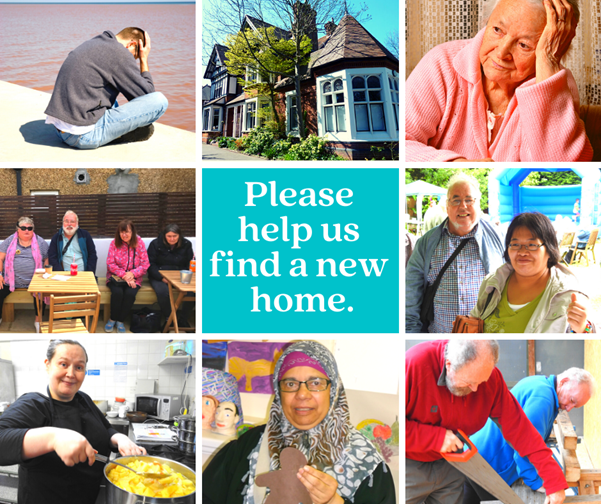
The Fircroft Trust are devastated to have been informed by RBK, without consultation or notice, to vacate our beloved Mental Health Resource Centre on Ditton Road.
The Fircroft Trust has leased this building for over 40 years and provide a haven for over 75 people who have varying degrees of mental health challenges. At a time when there is a national crisis in mental health, withdrawing this essential support system, which has not only been shown to improve quality of life for the individuals who accessed it, but also reduce hospital admissions and suicide rates, has been devastating for our local community.
The Fircroft Trust has worked hard to minimise the impact of the pandemic on the people who rely on their service and have continued to support the community by maintaining daily contact with their most vulnerable service-users, either via telephone, outside group activities or ‘COVID-friendly’ garden work and meet-ups. However, the impact of the pandemic has meant The Fircroft Trustfaced increasing demands for their service from vulnerable members of our community. This is something The Fircroft Trustcan’t ignore and they urgently need your help.
How you can help
Services needed by our community:
The Fircroft Trust are urgently seeking new premises in the Chessington, Surbiton or Tolworth area that would be suitable for us to resume the face-to-face support services that is so missed by our service users.
If you can help, or know of a local building, please contact Kay Harris on the details below. Please share this with your network and help us to continue supporting the people in our community who need us most.
Black Thrive is a partnership between communities, statutory bodies, voluntary organisations and the private sector. We work together to reduce the inequalities and injustices experienced by Black people in Lambeth.
According to the GSTC “One to Many” report, more than 1 in 5 residents in Lambeth live with at least one long-term condition. Over 19,000 live with multiple long-term conditions (three or more). Even though Black communities make up 18% of Lambeth’s adult population, they account for 27% of people with multiple long-term conditions. Furthermore,
in Lambeth, Black residents are four times more likely to be unemployed than white residents. When they are employed, they are disproportionately engaged in insecure, low-paid and dangerous work, which harms mental and physical health. In addition, Black people can face racism and discrimination in the workplace, which negatively impacts mental well-being.
Therefore, we know that people of African and African Caribbean descent in Lambeth are more likely to be unemployed and more likely to have poor health. One of the key drivers of these inequalities is structural racism and the fact that our current healthcare and employment systems prevent Black people from thriving.
As a result, in collaboration with Guy’s and St. Thomas’ Charity (GSTC), Black Thrive’s Employment Project is developing community-led solutions for improving employment outcomes for Black people with long-term conditions. Our goal is to ensure that Black people in Lambeth with long-term conditions are as likely to be in and sustain, meaningful employment as equivalent white people.
To do this, Black Thrive is partnering with community members, statutory bodies and local organisations to achieve justice for the Black community through radical systems change. In September 2020, we launched our £300,000 grant fund to pilot projects that consider the lived experience of Black people with long-term conditions and have the potential to create systemic change. Projects should test and pilot new ideas that have the potential to shift the dial on employment outcomes and improve the evidence base around what works for Black people in Lambeth with long-term conditions.
The fund was managed and distributed by our Employment Working Group; a group of local Black residents with lived experience of managing one or multiple long-term conditions. We believe that prioritising community-power and lived experience is a radical way of funding new and exciting initiatives that may be overlooked by the traditional system. After receiving 84 applications, the Employment Working Group decided to fund 8 projects – the vast majority of which are led by Black and disabled people.
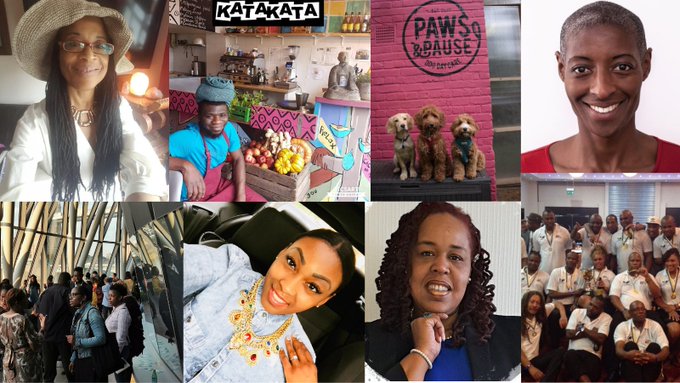
Funded projects include a radical self-care and wellness to work programme, the creation of a network of Black social entrepreneurs, supporting those recovering from mental illness and substance addiction back into employment through dog day-care traineeships and empowering Black people to develop employability skills through social action. To read more about all 8 projects please visit: https://employment.blackthrive.org.uk/our-grantees/
As the projects begin recruiting participants, it is important we ensure that the opportunities available reach the most marginalised people. This is a form of systems change in itself, as it will allow those people who fall outside of traditional referral pathways for services to still access support.
Given that carers have an intimate and trusting relationship with their loved ones based on an acute understanding of their needs, interests and goals, they are a vital network which cannot be overlooked! We strongly encourage all Lambeth-based Black carers to review the projects on offer, share them widely within your networks and follow the sign-up process if you, or someone you know, is interested in taking part.
Welcome back and thanks for stopping by. Have you ever heard of PCREF? There was a blog about it in 2019 regarding mental health inequalities for black people. Mental Health outcomes for those from the Afro-Caribbean community has been very poor for a long time. So there has to be some form of change, but how can this go about? I think it starts with the community and a way for black people to come together and query how mental health services and support the community.
The blog about health inequalities from NHS England is below.
South London & Maudsley short for SLaM are one of the mental health trusts looking to work with the black community on ways to support wellbeing and close the inequalities gap.
I recently made a short video as an intro into black health inequalities, although its not going to be the only video I am working on.
They are looking for members of the Black community to attend a series of events SLaM call ‘Fit for Partnership’. These events well focus on four boroughs they run services.
Croydon’s Black Community: Tuesday 19 January, 6pm – 8pm: Register here
Welcome to a brief update on the October Mental Health carers forum for Lewisham. I have been so busy of late, that I did not have much time to do any writing. For the carers forum, the guest presenters were Carol Burtt who is a Consultant Clinical Psychologist for Lewisham and she spoke more about IAPTs in Lewisham.
We also had Susan George from the CQC who inspects GP services in Lewisham engaging and updating carer members of the forum.
Going back to Carol, she spoke about how the service IAPTs provides are primary care where they essentially provide help for people with mild to moderate psychological difficulties such as mild to moderate depression and or anxiety. Anxiety might include panic attacks, or a state of worry. Carol talked the group through such symptoms like generalized anxiety disorder, social anxiety, health anxiety, some OCD, obsessive compulsive disorder, some relationship difficulties that might be leading to depression or anxiety.
Carol spoke about how mental health can cause some relationship difficulties that might be leading to depression or anxiety. So in fact, it might be more likely to be something that carers might experience themselves rather than the people that they are caring for. Carol then talked about how busy the service is, being that they had 880 referrals last month and they processed about 600 people who were seen last month.
For people to access IAPTs, you can get a telephone assessment within a few days, and this is what IAPTs is aiming for at the moment so that we can have a rapid response to people’s referrals. This is so people can get to speak to a clinician within a week, and a chance to talk about explaining the difficulties. People can get referred and then get directed to the most appropriate treatment.
Certainly last year, SLaM IAPTs did increase a lot of digital input so that people can actually have some treatments via online programs, which SLaM call computerized CBT, which could be an initial treatment. Carers can access that very quickly. So people can start such treatments within a week of having had your first telephone assessment with somebody. So that’s the benefit of that. Carol mentioned that IAPTs online is obviously not for everybody, some of the us know, that some people will want to have a direct face to face contact at the moment, obviously, with the COVID situation where SLaM working remotely.
Carol then explained more about the service as in how people are allocated to a psychological well being practitioner, SLaM have about 20 of those clinicians which Carol manages herself. These clinicians have had a training in a low intensity CBT cognitive behavioral therapy, so they’re trying to provide what we call Guided Self Help.
Carol then gave us an example of how people would have access to these different programs. One would be for depression. One would be for anxiety, one for social anxiety. The person would have some tasks and some information that they would have to deal with each week. Then each week, it finishes with checking in with person, either online or by telephone to see how you’re getting on.
Still, if people felt that their mental health was a bit more complicated, and SLaM felt that you need it, then any input with a psychologist or a cognitive behavioral therapist, or a counselor would be a three to four months, wait a moment.
Carol also explained that before the COVID situation, they were providing face to face workshops in groups where people actually attended their clinics, but since the pandemic has affected things, they are now looking at more online groups and workshops. Carol reminded us about our BAME forum where her colleague, Elaine presented and how she is leading on the development of some workshops, particularly for local communities in Lewisham.
QUESTIONS FROM THE CARER MEMBERS
A number of questions were asked of Carol from our members. One of the group members was interested in the following question on if the IAPTs service helps those with addictions when people have got the problems and they’re addicted smoking, drinking alcohol, or even taking illegal drugs?
Carol responded that they do is make an assessment as to whether addiction is a primary problem, or even if addiction is the biggest problem or there’s an element of depression and anxiety. For example, somebody who’s got a very serious drinking problem or significantly problem, then they would advise them to go to a specialist addiction service. Carol also repeated that they are trying to look at different ways in which people can access this help earlier, as soon as possible. They are looking at providing these online interventions, and online workshops as soon as possible so that people get some help. Very quickly, before I can say, for such problems develop further.
Another carer queried the struggles they have when the cared for has trouble accessing the service, especially from a mental health trust. The carer does not want to intervene, but notices how difficult it is for the caree to get lost in trying to access IAPT services. Carol mentioned that unfortunately, it’s the way things are organized. And they have a secondary care psychology that is very separate from primary care. So they don’t provide a service for people who’ve been admitted to secondary care psychology, which is a separate.
Another carer made a statement rather than a question and pointed out that she was referred to IAPTs on a series of six well-being workshops. She felt that the CBT there, she didn’t find that useful because it was too general.
CQC PRESENTS UPDATES
Susan from the CQC was listening closely to what carer members questioned or queried. Susan felt that its really important for representatives from CQC to hear our stories, and she really appreciates everything that was mentioned today. Susan continued that it’s also important because she is an inspector of GP Practices and part of her job is to ask providers what they’re doing in terms of providing care and support for carers. So it’s vitally important for her to hear carer members own experiences.
Susan mentioned that there was not too much time, but she would do just a quick summary of things she has been involved with, and what the CQC are doing at the moment. The CQC are looking around at communication with patients and patient populations, particularly with carers. The CQC are looking at a number of scenes of regarding the pandemic and how services have communicated with people.
Since the GP practices has started to shut their doors, the CQC are interested on what the GPs do to open up again, what are the GPs doing to tell people that they are open again, that they’re available for routine appointments? How are they telling people about the services that are available?
The CQC are also looking at sorts of communications, the CQC are looking at how GPS are maintaining equality of access or equity of access for people. There has been a huge change digitally in terms of the type of appointments and consultations that people will have. Not everybody is fluent in English or has access to digital means of equipment or resources.
Susan pointed out that some people who may find that trying to navigate their way through this new online world of appointments is baffling and terrifying. So the CQC are also looking at developing, how they talk to the GPs during inspections. The CQC are interested in what the GPs are doing to make sure that they’re communicating clearly with patient’s about the changes to appointments. Explaining to patients about the difference on treating for an emergency appointment, an urgent appointment, a routine appointment. There is a lot of assumptions that everybody knows all these phrases mean.
Susan updated us that the CQC have just published the “State of care 2019” for 2020. The report is available on the website, however Susan kindly sent us the link in the online zoom session.
The report is especially important because it pulls together some of the themes that the CQC have been looking at during COVID-19 and also pre COVID. The CQC are looking at some of the gaps in access to good quality care, especially mental health care. The CQC are also looking at the themes around system health inequalities around support and care for our better communities.
The CQC are also looking at communication and are interested in conflicting messages or conflicting nasty messages and guidance. It’s not always clear for patients and the CQC are interested in how GPs are engaging with their BAME communities.
Other things Susan pointed out was that the CQC have been working on questions about safe care and treatment and about the support for people living with mental health illness. The CQC are also asking providers specifically about how to be monitoring carers health and safety during the pandemic, have they been maintaining their registered unpaid carers and so what steps have the GPs taken to enhance the identification and management of the mental health issues of people living with mental health that includes people with dementia.
There were a lot of questions from the forum regarding the state of carer registers, some members are aware of the pressures GPs are under especially with new contracts, but others are keen to see where carers are being referred to and if social perscribers are doing their role.
HEALTHWATCH LEWISHAM ENGAGES WITH CARER MEMBERS
Healthwatch were there to listen to carer members regarding health services.
Healthwatch Lewisham are an independent charity. They are the patient champion for people who use health and social care services and so they listen to people on what’s going well on health services, what’s not going well.
Healthwatch Lewisham collect that feedback from patients and then at the end of every quarter they analyze and report back. Those reports are presented to sort of people in the borough of Lewisham that have the power to make change happen to like commissioners.
Healthwatch Lewisham also do project work and one of their recent projects was looking at the impact of the COVID-19 on Lewisham residents. That report has now been published. Healthwatch also has an advocacy service. So if anybody has complained about NHS service that they’ve used, and they can go through their advocacy service. So far healthwatch Lewisham have three advocates, and they basically help people through navigate the health system.
The reason Healthwatch Lewisham were at the forum was because they wanted to gather some feedback from people’s experiences with health and social care services. They were interested in feedback regarding GPs, hospitals, pharmacies, dentists, opticians, mental health services, Community Services, basically anything that carers and the person they care for has accessed.
Healthwatch Lewisham were kind enough to recognize that it’s a group environment and sometimes people don’t feel comfortable sharing their experiences. So even after the forum, members could feedback via the healthwatch email or site where they sent the link.
CARERS FEEDBACK TO HEALTHWATCH LEWISHAM.
Many of the group members fedback experiences on the following.
1) Lewisham Hospital 2) GP appointments 3) Positive aspects of using GPs 4) Dealing with receptionists 5) Dental appointments
This was the update for October at our Lewisham Mental Health carers forum.
Here is the brief update of the October Joint Southwark & Lambeth Mental Health carer forum. This is one of the five carer groups that I run per month. The carer forum is an engagement & empowerment group for carers to learn more about mental health services and at least query what is on offer.
SOUTHWARK HEALTHWATCH UPDATE
As usualy the group is supported by the local mental health trust South London & Maudsley, we also had southwark healthwatch in attendance as well as both Southwark Carers and also Lambeth Carers. Lastly both the engagement leads of Lambeth & Southwark CCG were to be in attendance, although only Southwark CCG could make it, due to Zoom blocking Lambeth CCG. It must be noted that the 6 CCGs are now merged into NHS southeast London clinical commissioning group, so its not always clear who is from what (more on that later).
The forum was co-chaired by carers Ann Morgan (Lambeth) and Annette Davis (Southwark). Our first update was from Southwark Healthwatch who are interested in the experience of those waiting for hospital treatments, like for surgery or chemotherapy, anything in a hospital. Southwark Healthwatch are doing that through phone interviews or online chats in a group, whichever people feel the most comfortable with. They just want to hear from as many people about how waiting times in hospital has impacted them, and what could be improved. Southwark Healthwatch are also interested in how the waiting times affect mental health and I suspect on how badly covid-19 is affecting waiting times in hospitals.
Members are very interested to see the outcome on feedback from Kings Hospital trust and Guys & St Thomas hospital trust on waiting times.
LAMBETH CARERS UPDATE
Ann morgan then introduce Josh Simpkins from Carers Hub Lambeth to talk more about the Lambeth Carers Card, which came from the Lambeth carer’s strategy. Josh mentioned that they made a recording of the launch, which is on their website, YouTube channel and facebook. Although at the joint forum he was going to do a bit of an introduction and background on the scheme itself.
The card scheme itself helps with emergency planning for carers, which is especially prevalent today due to the covid-19 situation. Josh also talked about how the schemes template on how a carer can use the template as a process to quickly make use of resources if the usual carer resources were unaccessible.
Josh talked more about the carer’s strategy, but members are hoping to hear from Polly on any developments for carers in Lambeth. There is still a hint of jelously from myself as I feel Lewisham has a way to catch up in regards to a carers strategy, what impressed me futher is the strategy is taking shape even during covid-19 as the Lambeth carers care helps protect against dwindling resources. A governor at the forum actually asked if the card was either Southwark and or Lewisham, but unfortunately its only for carers in Lambeth. We can only hope the other boroughs can emulate the successes for carers in Lambeth.
Ann Morgan queried if there will be a card for young carers, which was an excellent question since young carers can be forgotten when it comes to developments and projects. I personally think due to the lack of young carer empowerment groups, its harder for young carers to get a voice, so its often older carers who may try and speak up for young carers. Josh from Lambeth carers hub mentioned they were brain storming ideas to help young carers in Lambeth and so we should watch this space.
Josh did mention another thing regarding young carers is that when he went in with, with his colleagues into Lambeth schools. They found that young carers wanted space to get away from their peers and connect with other young carers in a different space, rather than just the other pupils in the school. There was more to this than connection purposes, but it certainly was a start on the needs of young carers. Josh mentioned there certainly was discrimination on young carers at school, which many at the joint forum were aware of.
It was also mentioned from the Southwark Carers inpatient lead that what strikes them is that the carers card links everything together. Although there will be times when obviously, the carer is overloaded and might not know where to look, but its really impressive as the Lambeth carers card puts everything together. He hopes we could do something similar in southwark because he feels there are lots of pockets where carers cannot find resources, so it would be great to get everything under one avenue.
SOUTHWARK CCG – South East London Clinical Commissioning Group UPDATE
Next we had Bola Olatunde from the Southwark CCG group engage with carers on how they were working to support mental health and carers in the 2 boroughs. Bola first explained that there is no Southwark CCG anymore. They became NHS SE London CCG from the 1st of April 2020. So they were Southwark CCG up until the 31st of March, then six independent CCGs came together and then joined as one NHS southeast London CCG from the first of April. Those were Southwark CCG, Lambeth CCG, Lewisham CCG, Greenwich CCG, Bromley CCG and Bexley CCG. As of the summer, the South East London Clinical Commissioning Group has been heavily supporting the carers groups since I am active in Lewisham, Greenwich, Southwark & Lambeth, although there are plans to expand BAME carers in boroughs I am not active in, depends on my time.
Bola explained the to carer forum that they are now borough teams, but we don’t have six CCGs anymore. So they are the southeast London CCG. Bola was here to just to let us know that the team is still here and if any updates or developments are taking place then they will seek to engage with us. Bola posted some information in the chat box of ZOOM to raise awareness for the flu vaccination if people are eligible and to to remind them to book their appointments with a GP practice or local pharmacy.
There were a lot of questions from the group members on the nature of the new CCG structure and who does what within the new development.
SOUTHWARK CARERS UPDATE
We had an update from Mary Jacob who is the chair of trustees from Southwark Carers and also a carer, she updated the joint Southwark & Lambeth carers forum on what Southwark Carers is doing. Mary mentioned that at the moment, Southwark Carers at looking at their premises and how they are going to continue giving the best services that they can under the restricted funding they are having. Southwark carers still need to get confirmation with Southwark about how much funding they are to receive and when they are going to be funded till.
Southwark carers
Southwark carers are at least very grateful for the support they are getting so far. Currently Southwark carers are continuing with their services to all ranges of carers in the borough. Southwark carers are in partnership with a fair shares Co-Op, so they are still providing food parcels to the carers who win the most who are in the most need. Southwark carers are also still providing online activities, including exercise classes, salsa classes and also a film club. The last film that was shown during Black History Month, was the film Black Panther. The Film Club not only provides the film a source of entertainment and social contact for carers.
They are also going to continue with their cultural events right the way through the year, not just in October, they have a program of events that’s now being finalized, including sharing different recipes from different countries and different festivals including celebrating Diwali, celebrating Hanukkah, celebrating all the different cultural festivals.
Southwark carers are also going to have mindfulness classes online and they are looking at how to reach carers that may be find it difficult to get onto zoom.
Another Southwark Carer trustee present at the Joint Southwark & Lambeth forum mentioned that lots of carers aren’t IT proficient and it is documented that carers are to face real challenges in regards to finding time for self care.
So with self care being much of a priority and looking at the 360 overview of carers responsibilities, southwark carers are having to look at how they are revising their service to actually be more accessible in light of covid-19.
UPDATE FROM SOUTHWARK INPATIENT CARERS LEAD
We then had an update from David Meyrick the inpatient ward carer lead for Southwark under South London & Maudsley. Currently he mentioned they have taken steps regarding wards and have revisiting them such distance measures. They have found that there was different arrangements across the wards that were visited and they were just concerned that might be a little bit inconsistent, especially if you had a loved one readmitted and found it difficult to visit the ward. So SLaM have taken the steps forwards across the five wards that obviously needs to be booked in this way, it makes things a lot safer. So the staff can facilitate two visits a time but in the same bubble, is keep it safe that way. David thinks it’s been working well, so far.
David is aware that some inpatient wards are reluctant to do this, because its not always possible to just spontaneously support the patient and the visitor. however he feels it’s just in the best interest of all. So crisis support is working well. Plus they have set up virtual cave surgeries towards information provision, inside work, and, and running cameras to support carers and patients. They have a monthly, a weekly support group that runs and I’m sure and that’s providing emotional support and peer support that carers need.
Annette co-chair of the joint forum and carer herself mentioned that since she started working with David carers attend the group regularly every week. Annette felt she can actually see the difference and what the most significant things for carers is they want to be heard.
UPDATE FROM LAMBETH HEALTHWATCH
Lastly we had an update from Lambeth Healthwatch in what they have been doing since the last meeting.
Mental health of young people
Transition of young people with mental health needs and learning disability. We are looking into the transition pathway for three cohorts of young people: young people known to Children and Adolescents Mental Health Services (CAMHS); young people who have complex needs known to SEN team; and young people who have social and emotional issues not meeting the criteria for secondary care or not accessing service. We will interview young people, their carers/parents, and health and social care professionals. We will also hold focus group discussions with different groups of young people.
Young people’s mental health and emotional wellbeing needs assessemnt – We are in the task and finish group of Lambeth Made. The group will investigate and analyse mental health needs of young people in Lambeth. This assessment will go beyond reviewing existing need but will also look at the protective and risk factors that influence mental health, modelled on a life course approach from maternity through to young adulthood. The findings of this assessment will feed into an overarching strategy to transform the offer of mental health and emotional wellbeing support we provide to CYP and their families; focusing on promotion and prevention, right through to specialist provision, seeking to uncover and address any unmet need. This needs assessment will replace the joint needs assessment carried out by Lambeth and Southwark Public Health Team in 2013/14 and will be informed by The Young Lambeth Emotional Wellbeing and Mental Health Strategy and Plan 2015-20.
Campaigns regarding world mental health day
Lambeth Healthwatch hosted an event to mark World Mental Health Day 2020 on 7th October which was well attended. They will be hosting more of these regular online events which are open for anyone to attend.
There will be a Webinar next week on Wednesday 4th to mark National Stress Awareness Day.
I asked if they was any updates from Lambeth HW MH lead.
Lambeth Healthwatch responded that there is ongoing work with Lambeth Hospital to support staff and service users with the move to DBH. Planning some remote engagement sessions in November. The sessions will be aimed at understanding the views of hospital staff and service users on the development of Lambeth Hospital.
Lambeth Healthwatch are also involved in several projects looking at maternal mental health and the impact of Covid pandemic. In particular, they are working with King’s College Hospital and partners from different organisations to access women who are expecting or have given birth during the pandemic.
Lambeth Healthwatch are supporting the Adults Safeguarding Board in planning a workshop to mark Adult Safeguarding Week 2020 on 19th November 2020. The event’s theme is Safeguarding in our Community and will explore how we assess safeguarding issues in a digital world.
The last update from Lambeth Healthwatch is that they are supporting the Care Quality Commission to promote its campaign. They will interview six service users (2 people with learning disability, 2 older people, and 2 carers) from which they will write case studies and record a short video of each service user’s experience. They will also ascertain the success of the campaign after publishing the videos.
This is the October update from my Joint Southwark & Lambeth MH carers forum. If you are caring for someone with mental ill health in Lambeth or Southwark, check out the next dates of this carer forum at the following page.






 A Caring Mind