Tag Archives: mental health

Recommended Carer books

10 Helpful Hints for Carers: Practical Solutions for Carers Living with People with Dementia – June Andrews, Allan House
A Carer's Chaos - Julie Nancy Wiltshire

10 Helpful Hints for Carers is an easy-to-read guide for carers living with people with dementia. It provides simple, practical solutions to the everyday problems family carers can face when looking after a person with dementia.

A Carer’s Chaos – Julie Nancy Wiltshire

10 Helpful Hints for Carers Practical Solutions for Carers Living with People with Dementia

When Julie Wiltshire’s husband, David, was diagnosed with cancer twice, he faced a series of treatments made all the more difficult by multiple complications. In A Carer’s Chaos, Julie records the details of David’s long journey of cancer treatment, but also offers a unique perspective into life as a carer to a loved one, exploring the love, hate, anger, loneliness and fear experienced on a daily basis by a carer.

A Carer’s Odyssey – Anna Chan

A Carer's Odyssey - Anna Chan

In the first part of A Carer’s Odyssey, Anna Chan describes how she and her husband Jeff were devastated 16 years ago by the diagnosis of their daughter Emma’s severe neurological disorder, called Rett Syndrome.

A Gift for Carers – William Long

A Gift for Carers - William Long

This book was written following the author’s personal struggle with the psychological and physical pressures of caring for his mum. His experiences and research led him to develop a solution which counters the devastating effects of what the medical world refers to as “Caregiver Syndrome.” He identifies seven areas that make for a joyful life.

A Gradual Disappearance – Elizabeth Lonseth

A Gradual Disappearance - Elizabeth Lonseth

“Dementia is like a maze. Its victims get lost in the labyrinth of their own minds, bringing confusion and despair to themselves and to others around them. Families watch helplessly as their loved ones drift further and further away from reality, and when decisions are made, emotions often get in the way of what is really necessary.” – Dr. Sameh Elsanadi, MD Geriatric Psychiatrist

An Introduction to Coping with Depression for Carers – Tony Frais
An Introduction to Coping with Depression for Carers

Looking after a person with depression can often leave carers emotionally and physically exhausted. This short, straightforward and easily understandable guide offers valuable advice on how carers can

BMA Carer’s Manual – British Medical Association
BMA Carer's Manual

Endorsed by the British Medical Association, this is the definitive guide to caring for the elderly or sick, offering practical advice and solutions for everyday concerns such as adapting living space and safe movement and handling. Step-by-step sequences explain essential activities such as helping someone in and out of a chair and special features focus on topics relating to common conditions.

Carer’s Bible – Amanda Waring

Carer's Bible

This accessible and detailed guide includes practical tips, checklists for best practice, descriptions of their experience from a wide range of carers that addresses solutions to common problems, and expert advice on how to deliver compassionate and dignified care to older people.

Caring for a Loved One with an Eating Disorder – Jenny Langley, Janet Treasure, Gill Todd

Caring for a Loved One with an Eating Disorder

Caring for a Loved One with an Eating Disorder: The New Maudsley Skills-Based Training Manual provides a framework for carer skills workshops which can be used by anyone working with these conditions.

Confidence to Care: A Resource for Family Caregivers Providing Alzheimer’s Disease Or Other Dementias Care at Home – Molly Carpenter
Confidence to Care A Resource for Family Caregivers Providing Alzheimer's Disease Or Other Dementias Care at Home

Confidence to Care is the essential handbook for the family caregiver offering practical insights to understanding, managing and preventing the behavioral symptoms associated with dementia and Alzheimer’s disease. Touching, personal stories come together with practical and easy-to-access tips and techniques drawn from decades of caregiving experience by internationally-recognized experts.

Guide to Mental Health for Families and Carers of People with Intellectual Disabilities – Geraldine Holt, Anastasia Gratsa, Nick Bouras
Guide to Mental Health for Families and Carers of People with Intellectual Disabilities

A practical and comprehensive introduction for carers to mental health problems, this accessible guide outlines a range of signs and symptoms of mental health problems that can affect people with intellectual disabilities. The guide explains why mental health problems develop, and advises on what can be done to help people with intellectual disabilities and carers themselves.

Living with Dying: A Complete Guide for Caregivers – Jahnna Beecham, Katie Ortlip
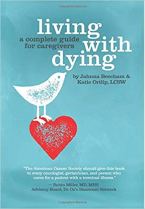
Living with Dying A Complete Guide for Caregivers

  • This easy-to-use guide for caregiving instructs you how to:
  • Have the conversation
  • Navigate the emotional and spiritual journey
  • Control pain
  • Address symptoms
  • Work with hospice
  • Care for yourself
  • Get your loved one’s affairs in order

Mindfulness for Carers: How to Manage the Demands of Caregiving While Finding a Place for Yourself – Cheryl Rezek
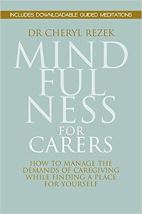
Mindfulness for Carers How to Manage the Demands of Caregiving While Finding a Place for Yourself

Carers are particularly vulnerable to feeling stressed, worried and worn down by the vast demands that often come with caregiving, be they physical, psychological or emotional. Mindfulness can be enormously beneficial to carers, whether professional or voluntary, as a means of developing greater inner stability, resilience and gaining more control over their thoughts, feelings and emotions.

No Saints Around Here: A Caregiver’s Days – Susan Allen Toth

No Saints Around Here A Caregiver's Days

When we promise “in sickness and in health,” it may be a mercy that we don’t know exactly what lies ahead. Forcing food on an increasingly recalcitrant spouse. Brushing his teeth. Watching someone you love more than ever slip away day by day. As her husband James’s Parkinson’s disease with eventual dementia began to progress, writer Susan Allen Toth decides she intensely wants to keep her husband at home—the home he designed and loved and lived in for a quarter century—until the end.

Self-Care for Caregivers: A Twelve Step Approach – Pat Samples, Diane Larsen, Marvin Larsen
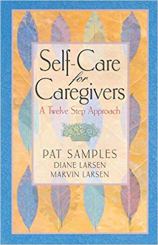
Self-Care for Caregivers A Twelve Step Approach

For those serving as a caregiver for a loved one, the authors of this down-to-earth, encouraging book can help you make the most of the experience without losing yourself in the process.

Supporting Families and Carers: A Nursing Perspective – Mary E. Braine, Julie Wray
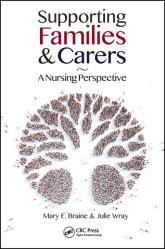
Supporting Families and Carers A Nursing Perspective

Understanding the perspective of carers is an essential aspect of nursing. Supporting Families and Carers: A Nursing Perspective offers insights into the fundamental principles of caring for families and carers irrespective of age, gender, ethnicity, sexuality or religion.

Take Care, Son: The Story of My Dad and his Dementia – Tony Husband
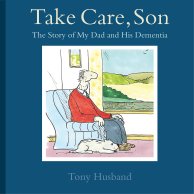
Take Care, Son The Story of My Dad and his Dementia

Hi Dad . . . can we have a chat about your dementia . . . Can you remember how it started?
When Ron Husband started to forget things – dates, names, appointments . . . daft things, important things – it took a while to realise that this was ‘a different form of forgetting’. But it was just the first sign of the illness that gradually took him away from the family he loved.

The Carer’s Handbook: Essential Information and Support for All Those in a Caring Role – Jane Matthews

The Carer's Handbook Essential Information and Support for All Those in a Caring Role

This indispensable guide aims to be a one-stop-shop for the huge percentage of the population who, now or later, find themselves in a caring role, whether that involves shopping for a housebound neighbour, or giving up work to care full-time for a disabled child or confused parent.

The Complete Carer’s Guide – Bridget McCall

The Complete Carer's Guide

There are around six million carers in the UK, a figure estimated to reach nine million by 3037. Being a carer can be rewarding, but it is often stressful and exhausting: it involves a range of tasks, such as providing personal care, managing medication and ensuring that the needs of the person being cared for are met. This practical, much needed guide discusses how to ensure that you have a life of your own while caring, how to make informed decisions and, most importantly, how to access the support and help you need.

The Essential Carer’s Guide – Mary Jordan
The Essential Carer_s Guide

Illustrated with individual case stories, this book covers physical, social, and financial needs, across the stages of immediate, intermediate and advanced care. It is useful as a practical companion for those caring for, or responsible for the care of, an elderly friend or relative.
The Selfish Pigs guide to caring – Hugh Marriot

The Selfish Pigs guide to caring

Over six million people in the UK…provide unpaid care for disabled or elderly relatives, friends or neighbours. Their job is long, lonely and hard, yet there is limited support and no formal training. As a result, carers suffer frequent damage to physical and mental health. Oddly, though carers by definition are anything but selfish pigs, they are liable to feelings of guilt, probably brought on by fatigue and isolation.

Where There is No Psychiatrist: A Mental Health Care Manual – Vikram Patel

Where There is No Psychiatrist A Mental Health Care Manual

Even though mental illnesses are common and cause great suffering in every part of the world, many health workers have a limited understanding about mental health and are less comfortable dealing with mental illness. This book is a practical manual for mental health care for the community health worker, the primary care nurse, the social worker and the primary care doctor, particularly in developing countries.

Young Carers and their Families: Working Together for Children, Young People and Their Families – Saul Becker, Jo Aldridge, Chris Dearden

Young Carers and their Families Working Together for Children, Young People and Their Families

Young carers are children and young people under the age of 18 who provide care for an ill or disabled parent or relative in the community, usually within their own home. They perform many of the same domestic, caring and other duties as adult carers but often without the recognition and support received by many adult carers.

Influential poem from Patrick Lee

cover

Welcome one and all to a new blog for the month of August. I have to apologise for not putting anything up for some weeks now since I have been really busy doing a lot of carer campaigning. To be honest I have not had much time to provide feedback from the 4 carer forums in South London.

I have also just recently come back from a lovely forum held over in West London, from the West London Collaborative, they do excellent work over there helping to build communities.

Going back to this particular post, I want to dedicate this blog post for its creative content. A while ago I met Patrick who provides peer support for those using the mental health services. He spoke to me how he used the power of poetry to help others express themselves. Poetry can be very creative and powerful in a non-combative way. Sometimes just saying things is hard enough, but if we use the power of poetry then anything is possible.

I have recently created a video about one of his poem’s which is from his book “The Nearly Man”. The Poem from the video is called “Cardboard City Dweller”. You can watch the full video below


Patrick has released several books of poetry, let me know if you want to try catch him in order to hear more about his work. I hope to do some more blogging real soon.

Thanks for dropping by.

Lambeth MH Carers Forum update May 2018

IMG_20180531_195653Welcome to the May’s update of the Lambeth Mental Health Carer forum. It has been a while since I did an update for the forum, since I could not attend the previous Lambeth MH carer forum and forgot to blog about the other previous forums.
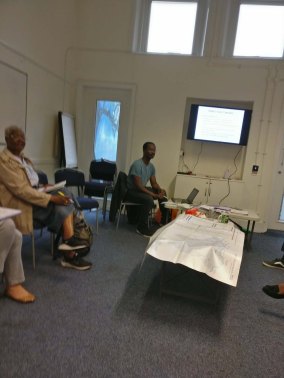
This forum caters for unpaid carers who are caring for someone with a mental health need, e.g. someone suffering from psychosis, eating disorder, depression, bipolar and other MH illnesses.

The forum is strategic and gives carers the involvement and empowerment to query, question and even compliment the mental health services in Lambeth and sometimes beyond e.g. we are hoping to have a representative from NHS england attend in future.

Continue reading

Lewisham MH Carers forum April 2018 update

IMG_20180529_135451Welcome to the Lewisham MH carers forum update for May. Out of all the four Mental Health carer forums in South London, this is the oldest one I chair. The MH carers forum ran on the 29th of May.
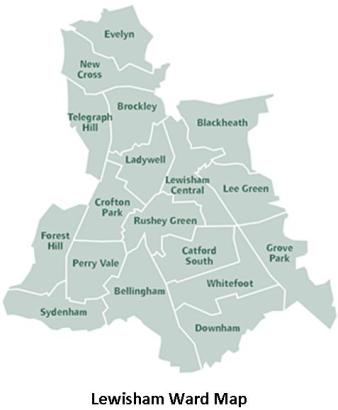
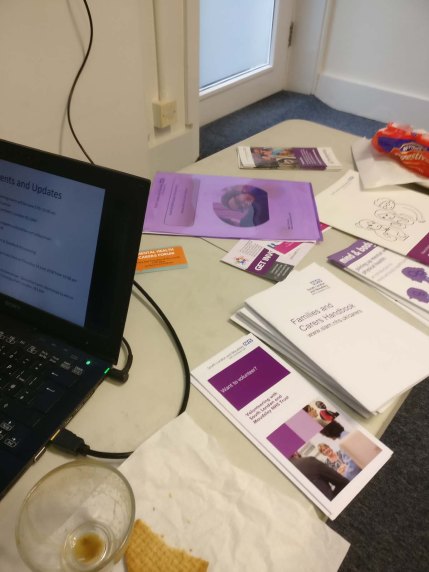
Carers Lewisham have been very good in supporting the forum and helping to advertise it, but we still need to reach other mental health carers in the borough of Lewisham. It is very important unpaid mental health carers know what is going on with the mental health services, let alone being engaged and trying to influence them.

For the month of May, we had guest speaker Stephanie Edwards who is the Clinical Team Leader for the Psychosis service in Lewisham. This forum was highly strategic as the forum members got a brief breakdown of the mental health services in Lewisham. The mental health service structure for the borough of Lewisham was complicated due to the current restructuring of SLaM staff, but hopefully we will have Donna Hayward-Sussex at the April forum, she is the Deputy Director of the Crisis Services within the Psychological Medicine Team.

The forum members need to know and query how mental health staff restructuring will affect service user and carers in the borough of Lewisham. As far as the forum knows, there will be be senior management consultations regarding interim posts.

Lewisham Ward Map

The mental health trust that covers 4 boroughs and a few more regarding mental health services is preparing for the CQC visit in July, they have spent a long time preparing services and involving carers and service users in ward/service inspections, which was good to hear. The MH carers forum appreciates staff have worked very hard.

IMG_20180529_145134

Regarding future forum engagement, the members look to be updated on the NHS trusts estate developments, governance structure and involvement oppertunities. I queried how many carers does Lewisham MH services have on the books, but it can be difficult to pin down the answer, still heard that around about over 800 Mental health cases are in the books, so it gives us some idea of the number of families and carers we need to reach.

Stephanie Edwards is preparing for Lewisham’s People’s Day, so the forum looks to provide cards, posters and leaflets.

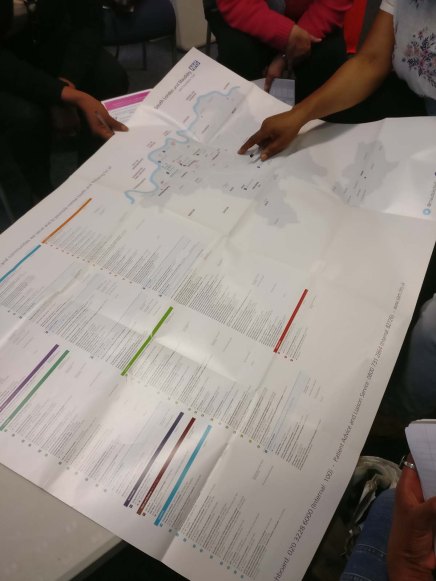
After discussions, I brought out a large map of SLaM’s services and Stephanie took time to explain what the services in Lewisham are about, who was responsible and answered queries from the forum members.

There is concern that not enough carers in the borough know what is going on and are not getting involved. There are plans to have the forum held alternatively in the evenings at the Depford community centre. We also hope the carers support group can be set up in Lewisham Hospital so new carers can gain therapeutic support since there is limited time for carers stories at a Carer MH Forum.

IMG_20180529_140109

The forum has requested an MP visit soon from the borough of Lewisham to boost carer empowerment and understand carer issues with the borough

This concludes the update for the Lewisham MH carer forum.

Embed from Getty Images

Southwark MH Carers Forum May 2018

Untitled-2

Here is the update from the forum I run after the BME MH Carer/SU forum in the afternoons.  This forum is aimed at unpaid carers in the borough of Southwark, although mental health professionals are free to attend.

The May carer forum was very well attended with representatives from Southwark CCG, Southwark Healthwatch, Kings Health Partners and nurses from the Southwark inpatient acute wards.

At the start of the forum I presented what a mental health carer is, that being basically an unpaid carer supporting someone with mental health needs.

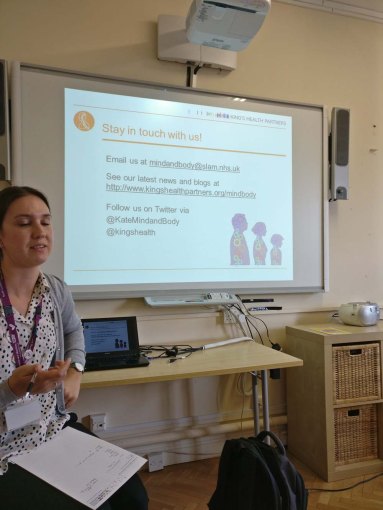
We then had Eliza Hinchliffe presenting on Kings Health Partners project ” Mind and Body Programme”

She presented on the new Mind and Body programme, which is a Kings Health Partners initiative between Guys&St Thomas, Kings College Hospital and SLaM. The Mind & Body programme looks to close the gap between mental health needs and physical health needs.

IMG_20180525_164456

The forum discussed ways engagement can be made with carers in mind. There is an offer to promote the forum via the hospitals in Southwark, which means families and Carers can link up on what is going on.

The forum hoped to have Mick Wright Turner – Head of PMIC Southwark Pathway, but he was unavailable.  However we were very impressed that nurses from the Mental Health unit attended the forum to speak about the carers pathway progress.

Next up to present was Karen Clarke who is the mental health lead at Southwark CCG. The forum is particularly interested in collaborating with her regarding updates on mental health services in the borough of Southwark, especially services that needs to give more thought/involvement and engagement about families and carers.

Karen spoke about her role and an introduction about Southwark’s mental health strategy. There will also be a IAPTs review,  the Southwark wellbeing hub review and more updates.  The forum spent some time comparing it to Lambeth’s Mosaic clubhouse. The forum would like southwark CCG to help promote what we do and let carers know there is a place to be heard.  Karen aims to continually engage with the forum, so carers and carer champions can be involved and spread the word.

Next was Southwark Healthwatch updating on projects regarding carers?

healthwatch

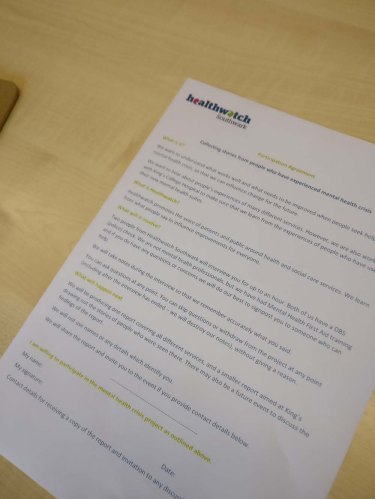
Southwark Healthwatch spoke about their new initiative to engage with carers about mental health services.

The engagement officers took the time to ask carers on what they think would be a mental health crisis and where would the carers take their loved one during a crisis and would like to interview carers about mental health services in the borough of Southwark.

IMG_20180525_175811

The forum again would like Southwark Healthwatch to help promote the forum, which Healthwatch agreed via their community board.

The next part of the forum looked into engagement requests Updates

There was a very short discussion on meeting the MP Neil Coyle, the MP has helped promote the forum and there will be a Southwark MH event in Parliament with members of the forum talking about why such a forum is needed.  All members noted that this will bring much needed awareness of what carers are trying to do while being empowered to do so.

Members are also excited that MP Helen Hayes is due to visit the forum in June.

Lastly we had an update from Carers involved in SLaM Foundation Trust

I have been helping train staff on the wards, one ward was actually done over at the Maudsley, this is in regards to carers & confidentiality. The training is being done with help from the trusts Modern Matrons.

Another member of the forum attended NHS England’s conference and raised if their 5 year plan includes try Triangle of Care.

This concludes the update for the Southwark MH Carers forum, stay tuned for the Lewisham carers forum update and also the Lambeth Carers forum update.


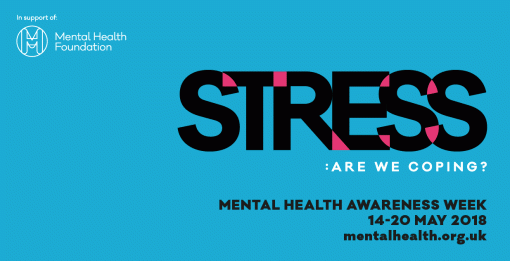
Mental Health Awareness week 2018

Welcome to a new blog from a mental health carer in South London. This video helps to raise awareness of mental health. Specifically mental health awareness week 2018.

stress-mhaw18

What on earth is mental health awareness week you say? I actually have done a few videos on the awareness event some years back, but let me refresh your mind.

As a note, I have also done a video version, press play to watch it.

Mental Health awareness week aims to raise awareness of mental health and mental illness or health needs. Mental illness can affect us all ranging from minor mental health problems to chronic mental health needs. Mental Health Awareness Week runs from 14th to the 20th May. For 2018 the theme is on stress. Research has shown that two thirds of us experience a mental health problem in our lifetimes

Without campaigns or events to raise awareness about stress and mental health, many people would fall victim to stress, which can actually get out of control. We all experience stress and minor levels can actually help us achieve what we are trying to do, but prolonged and high levels of stress can cause damage to our mental and physical health.

Sad man sitting head in hands on his bed in a bedroom at home

Stress can affect your mood, behaviour and body. Stress can cause any or a combination of the following.

  • Headaches
  • Sleep problems
  • Lack of focus
  • Social withdrawal
  • Feeling overwhelmed

Stress can also lead on to other mental health issues being

  • Anxiety
  • Sadness
  • Depression
  • Addiction problems in order to cope with stress
  • Eating issues

Sometimes what we need is to recognize when we are stressed and either stop or behaviour or seek help. Taking time out from stressful situations can do us a world of good, especially speaking to friends in the community.

So what have I done for MH Awareness week 2018? Not only did I promote awareness via this video, but I took part in a Curry & Chaat event over at Southwark carers. It is important not to forget those who try to protect and care for someone with mental health needs.

I hope this blog has been educational to you and hope you have a happy mental health awareness week 2018.

Lewisham MH Carers forum April 2018

Welcome back to my MH carer forum update from the Lewisham carers group. At the Lewisham Mental Health carer forum, we discuss carer engagement from our local mental health trust, 3 party organisations, the council and lewisham based GP surguries.

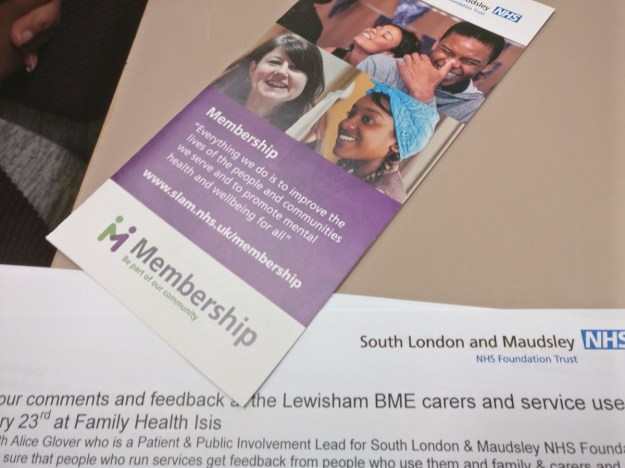
We also discuss carers rights, reports and learning about the carers role. For the april 2018 meeting. We discussed the report sent back from out local Mental health foundation trust, which is South London & Maudsley.

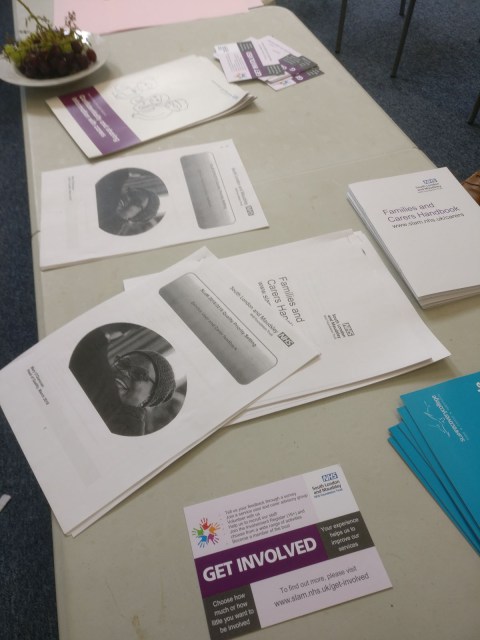
I usually attend and chair carer forums across South London, so it was important quality improvements for the mental health services get views from Carers. The report is fairly well written and easy to digest. I had printed out some copies for members to read at the Lewisham MH Carers forum.

We spent most of the time discussing the report, especially page 7 of the report, because that is where the write up of the carers forums were placed regarding carer issues. Despite the report being very easy to read, there were some problems. Some members felt the report was too vague and missed some things out. Other members of the Lewisham MH Carers forum felt the report is lacking in a conclusion on what needs to be done to tackle quality issues.

IMG_20180424_132738

One of the members of the forum is going to raise their concerns back at the trust, although I am glad the quality project did mention our concerns. We hope SLaMs Head of quality can engage with the forum regarding SLaMs quality priorites.

We also had a guest speaker at the forum who promises to return to the forum again. The head of the Ladywell Mental Health unit based at Lewisham Hospital engaged with the forum. I was delighted that she was able to make it, even though she had to deal with many emergency meetings. Sam Grey spoke about her role and what a Unit manager does. She described around 7 wards and their purpose and gave an update of changing service structures regarding borough based services rather than trust wide services.

I spoke about the need for a carer support group to be set up for the whole of the Unit, mainly because such a support group existed there years ago. Plus families and carers can always make the tuesday evening for a support group. I am fortunate enough to get support from the trust’s modern matrons who themselves focus on quality priorities. The forum wanted updates and engagement from the Ladywell Unit’s phamacist also the psychriatric nurse from Lewisham hospital, unfortunately we are not sure if it is possible to get their time, but the forum is interested on how such staff deal with medication issues and also how Lewisham hospital’s A&E engages with patients and their friends/families.

I hope the update was a useful read, see you next time.

Lewisham BME Mental Health Carer/SU Forum March Update 2018

Welcome to the March update of the Lewisham Mental Health Carer forum. This forum is filled with unpaid carers supporting someone close suffering mental health needs. We come together each month to discuss issues, work out what is working for Carers and service users agmonst the BME community and be engaged by our local mental health trust, CCG and third party providers.

This month we had the Clinical Service Lead for Assessment and Liaison based in Lewisham. He spoke about the kinds of services provided for lewisham resisdents who have mental health needs. We also discussed the use of Increasing Access to Psychology Therapies and how to access such a service.

The discussion moved onto why BME groups were not accessing such services and if there were thoughts and ideas of how mental health staff treat BME service users and their carers. Group members felt because of bad experiences, even young BME groups tend to stay away from services due to fear of trauma. The group queried how many people were being assessed in the borough of Lewisham, but I reminded that we need to examine the report “Meeting the public sector equality duty at SLaM”.

Some of the members would like to have the Patient & Public Involvement Lead for the Acute ward services back again to talk about further updates about the Acute ward services.

IMG_20180323_111237

More discussions were focused on the services provided at Southbrook road and the BME Service user/carer forum were handed out updates from the meeting in Feburary. The group were very pleased in how the report was laid out and presented and would like such a format to continue.

A large part of the discussion at the March forum centered on experiences with the police and how some members ended up at the Ladywell Unit. There is distrust from some members of the forum about the police, especially due to the recent death of a mentally unwell person brought in by the police. I however reminded the group, that engagement from SLaM’s Central place of Safety and the police mental health lead would help shape views and experiences. The forum looks forward to engagement from Lewisham Police & SLaM in the comming months.

Some of the members discussed the need for therapy/counselling and felt it was lacking in SLaM, they felt the need for such services due to trauma and bad experiences. Members of the forum were not interested in family therapy all the time and would want some counselling and engagement on how to understand their care plans.

Holding MH Trusts to account via carer forums

2000px-NHS-Logo.svgWhat Carer forums need to take note of

Welcome back to my mental health blogsite. Most of the time I write about Unpaid Carers who support someone close requesting mental health needs or are suffering from mental illness. On this blog I am going to write about why Carer forums need to take note of what their local mental health trust is doing.

Quite a few mental health trusts do amazing work regarding patient care, but there should be a place where carers can get together with the trust and raise concerns. We all know the mental health service is struggling as of present and this can affect service users and their families.

Meeting Of Support Group

Just as a reminder, not all carer groups are the same. You can have a carer support group, where carers get to tell their story in a safe closed space. We can also have a forum where time is put into presentations, discussions and agendas. Lastly some carer groups have a mixed of presentations and carer stories where carer seek emotional support, some carer groups act as information hubs where peer supports or MH staff aide carers on how to get support.

Most of the issues below are usually covered in a Carer forum, where there is little or no time for carer stories and more time is spent on understanding why certain Trust problems are occuring.

  • Delays in providing the treatment.

Out of all the issues listed, this would be the most common that affects carers and those they seek to support. If the patient cannot get any treatment or support, then most if not all the support falls onto the family or carer who all too often will lack the skills to provide the treatment.

  1. Such treatment could be a bed/room to stay while recovering from a mental health crisis.
  2. Access to medication e.g. antipsychotics
  3. Access to psycho-therapy
  4. Information about their mental health and so on..

Delays usually occur if there are no beds, but even then the trust may not be fully at fault as GPs can often misdiagnose a mental health need. Lack of mental health staff can lead to delays as no one is available to provide a mental health assessment, which can often end up with the police stepping in wondering what to do. Within a Carer forum, carers should query with the mental health trust if there are any delays regarding treatment and query reports on how many patients have been seen at the trust.

  • Failure to provide appropriate medication.

Again, This is one of the most common issues that can affect the patient and carer. Medication is usually one of the core aspects of mental health treatment. Wrong medication can often cause the patient to deteriorate even further. What is even worse is if no medication is provided. Often the patient can refuse medication, it is their right, but due to mental health laws or MH Trust policies (we ll come to this later) there could be high levels of failures in providing medication.

Embed from Getty Images

Without medication, service users can relaspe causing distress with family, friend and carer. Serious Incident levels begin to rise and Carer forums should query who is responsible for monitoring medication incidents.

  • Lack of referring patient or carer

This problem is not only common to mental health trusts, but also partner organisations. GP surgeries, Advice bureaus and even hospitals can fail here. Failure to refer patient or carer for support can leave both in isolation and desperation. Carer forums should not only query patient/carer leaflets, but also if there are a lack of carer information leaflets/booklets or why information has not been produced in a document.

  • Family/friend, GP or advocates ignored.

Going through past serious incidents, if you look back far enough you will find someone had been constantly ignored. Oddly enough even the gatekeepers to mental health services can be ignored. Carers can try to raise an issue with mental health professionals that their loved one is experiencing a crisis and needs to be assessed. Carers would either phone, email, write a letter or speak face to face with Mental Health Staff, but if nothing is done and a serious incident arises then it should be queried.

Embed from Getty Images

Carer forums should have an interest to query if members of the forum have experienced this and if the trust produces reports regarding such issues. Maybe a Mental Health trust have a policy to tackle carer/patient requests. Carer forums should certainly discuss developments regarding the trusts patient database system and ask for database queries.

  • Insufficient or poor risk assessments

A poor risk assessment can certainly lead to incidents as mental health problems can go misdiagnosed. This leads to carers having to struggle supporting their ‘cared for’ in a crisis for longer amount of time. The problem is risk assessments are notoriously difficult to measure or even regulate. Members of the Carer forum should not only query how a risk assessment is done, but ask for reports on the number of assessments carried out and who at the trust are task with doing them.

  • Insufficient or lack of training

Lack of training can lead to all of the problems raised so far in this blog and even more. A mental health trust has a duty to continually train its staff, not only to help the patient but improve the quality of its staff. Mental Health staff should be patient and Carer aware. Carer forums should make a lot of noise if they continually hear stories of staff who do not understand what a carer is. I myself am fortunate to be included in helping to train staff at South London & Maudsley about families and carers, but there are some trusts that may not even provide training about carers or might not involve carers in their service.

Carer forums should ask for engagement from a trusts Staff training forum. Carer forums should have members who are active in training mental health staff and there should be involvement protocols to allow carers to be involved at the trust.

  • Confidentiality Issues

One of the biggest issues regarding carer and patient. I have been to many carer forums talking about the good and bad aspects of confidentiality. I have also been making a lot of noise about confidentiality, which I am sure has annoyed mental health professionals.

Why is this?

If carer is continually blocked on asking how their ‘loved one’ is coping or being involved at meetings, it might boil down to patient confidentiality, sometimes the patient will not want the carer involved, but it is a lot more tricky than that. Mental Health trusts have the duty to help the patient understand why the carer would want to be involved unless it is a safe guarding issue. Unfortunately confidentiality can be used as an excuse to avoid dialogue with the family or carer. Lack of confidentiality policies or booklets can cause confusion with staff and carer not knowing what to do.

Embed from Getty Images

Carer forums should task themselves with who is responsible for confidentiality policies/booklets. Family and carers should also be involved in training staff about confidentiality.

  • Issues around discharge.

Due to bed management, patient discharge can happen too soon and sometimes might not happen at all. Some patients might be discharged because a bed is needed or a patient might be discharged because there has been a misdiagnoses of their MH needs. Discharge to a carer is risky if the carer is not prepared, informed or involved.

A carer forum should query a trust’s discharge pathway and seek engagement from the mental health trusts Quality improvement team.

  • Lack of appropriate care or continuity of care.

Another difficult issue to monitor or assess. Sometimes a mental health carer forum can pick up stories where carers are complaining that their ‘loved one’ is not getting any community care. It is vital a carer forum raises such stories to the trust otherwise families or carers may find themselves becoming the mental health team and being told to just “get on with it”.

  • Problems with protocols or policies.

Mental Health trusts can be pulled and pushed in all sorts of directions. Such problems can cause a trust not to update protocols and policies. If protocols and policies are not followed, then incidents can arise from them. Carer forums should ask for a list of policies related to carers (Expect the number to be large).

  • Patient was without care plan or the care plan in place was inadequate.

Difficult to measure due to confidentiality, but reports should be processed on the number of care plans done. Carer forums should most definitely be consulted with the CQC (care Quality Commission) who monitors and inspects health services. A patient without a care plan can often cause the carer to not know their role and this can lead to a lack of patient recovery.

Embed from Getty Images
  • Poor communications between agencies and/or staff.

This is often a culture problem and unfortunately a carer forum may have to poke their nose into what the local council is doing. Healthwatch should be able to help the carer forum engage with other agencies, but if there continues to be poor communication between agencies then a number of health problems will not be picked up or delayed.

  • Poor communications with the patient or his or her family.

This might also boil down to confidentiality, but quite a lot of issues can be down to training, misinterpretation, lack of time or difficultly in building relationships. Issues of trust can also cause an issue here. Carer forums should keep an eye open if poor communication is happening at their local mental health trust.

  • Poor record-keeping.

The CQC can come down hard on mental health trusts on this issue. Mental Health trusts have been fined large sums for poor record keeping. If a patient has no record or is not past information required to their care, then the quality of care can go downhill.

  • Staff shortages or a lack of funding, available facility or available beds.

It has been unfortunate that Trusts have an appetite for Bank Staff or temporary MH staff. There are policies that have come into place to reduce reliance on Bank staff, but due to pay issues it has been known for staff to move into the field of becoming temporary since it pays more. Care forums should query if the trust is spending vast sums of money on bank staff, because without a doubt other MH services will suffer funding shortages and skilled professions.

  • Cover ups

Very difficult to tackle and this might be down to serious incidents being confidential. Mental Health trusts do not like being investigated or being fined, no one likes their reputation damaged. Unfortunately families and carers cannot sit around and have a MH trust culture to become silent. MP’s, councilors, Trust governors and other agencies can aide Carer forums if something is not right with the trust. To make matters worse there can even be collusion as everyone is trying to save money.

No one is usually in a rush to highlight cover ups, but if they are not tackled then every one suffers. There are usually signs when something is not right or investigations are taking too long.

  • Poor excuses

Ever heard of the term “Lessons learned?”. I will perhaps create a blog to poor excuses. If a trust fails to provide care to a large number of patients repeatedly then a carer forum should have space to work out why this keeps happening.

Carer forums and members of the trust should be engaged at trust events and space given to query what the trust actually have learnt from successes of failures.

The issues listed are very basic and some items have been missed due to lack of time. I can only hope whoever is reading has the strength, time and conviction to engage with their carer forum if one has been set up around their mental health trust.

Thanks for reading

The book you should be reading this month

my face plus book‘Please Hear What I’m Not Saying’ is a poetry anthology featuring 116 poets, all writing about mental health. The profits from this book go to UK Charity, Mind.

Editor Isabelle Kenyon compiled the anthology following an international submission call out. Contributors were enthused by a common goal to raise money for the charity, Mind.

With poems focusing on mental health from a wide range of experiences (covering topics such as grief, trauma, anxiety, poverty, Alzheimer’s and therapy), the book aims to continue the worldwide conversation about mental health.

contents

Isabelle comments: ‘As an editor, I have not been afraid to shy away from the ugly or the abstract, but I believe that the anthology as a whole is a journey – with each section the perspective changes. I hope that the end of the book reflects the ‘light at the end of the tunnel’ for mental health and that the outcome of these last sections express positivity and hope.’’

You can buy the book on Amazon here: Please Here What I am Not Saying

Reader Photos

And more information about the project here: https://www.flyonthewallpoetry.co.uk/mind-poetry-project

Mind Anthology