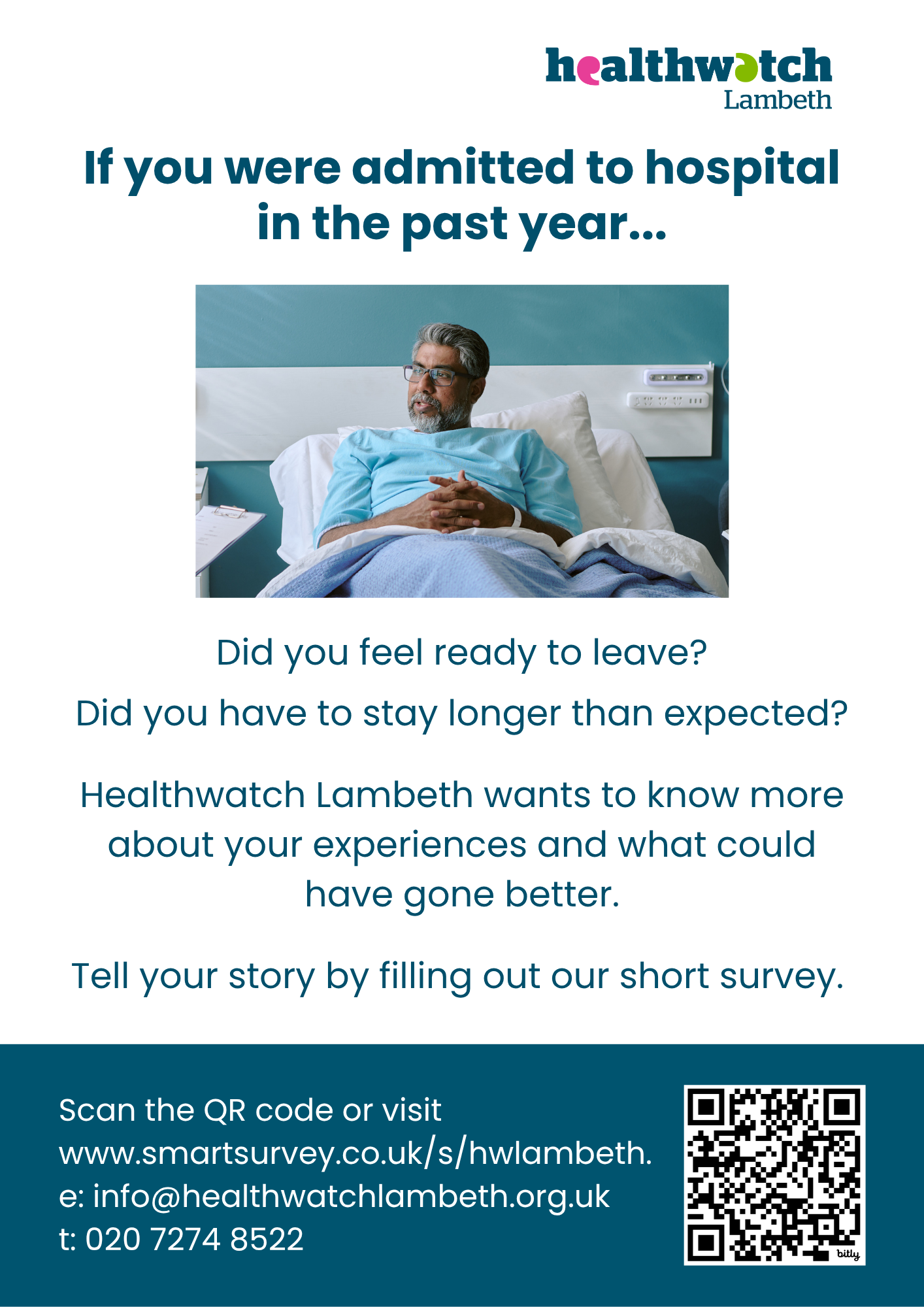
Healthwatch Lambeth is inviting patients and unpaid carers to share their experiences of leaving hospital.
The survey is part of a nationwide Healthwatch England project examining hospital discharge. Healthwatch Lambeth is particularly seeking responses from people living in Lambeth who have experienced a difficult hospital discharge within the past 12 months.
This may include situations where:
Discharge was delayed.
The patient was sent home before they felt ready.
Information about the discharge was unclear or incomplete.
Essential equipment or support was not available.
Follow-up care had not been properly arranged.
An unpaid carer was not sufficiently involved, informed or prepared.
The survey can be completed by patients themselves or by an unpaid carer describing the experience of someone they care for.
Healthwatch Lambeth is especially interested in hearing from people whose experiences may not always be represented in health and care feedback, including men and people from ethnic minority communities.
Hospital discharge can place significant responsibility on families and unpaid carers. When carers are not recognised, involved or given the right information, they may suddenly find themselves managing medication, personal care, appointments and recovery without adequate preparation.
Sharing these experiences can help identify what needs to improve and highlight the importance of involving carers as genuine partners throughout discharge planning.
Please share this survey with Lambeth residents, patients and unpaid carers who may have had a difficult hospital discharge experience during the past year.
On Monday 24 August, I facilitated another meeting of the South London Mental Health Carers Forum. The forum brings together unpaid carers and carer representatives from Lewisham, Lambeth, Southwark and Croydon, giving people a space to share experiences, learn about their rights and influence the development of local mental health services.
We welcomed carers with many different experiences, including parents supporting adult children with serious mental illness, autism and substance misuse, as well as people involved in advocacy, peer support, staff training and service development. Some members had been navigating the mental health system for many years, while others were newer to caring and looking for guidance.
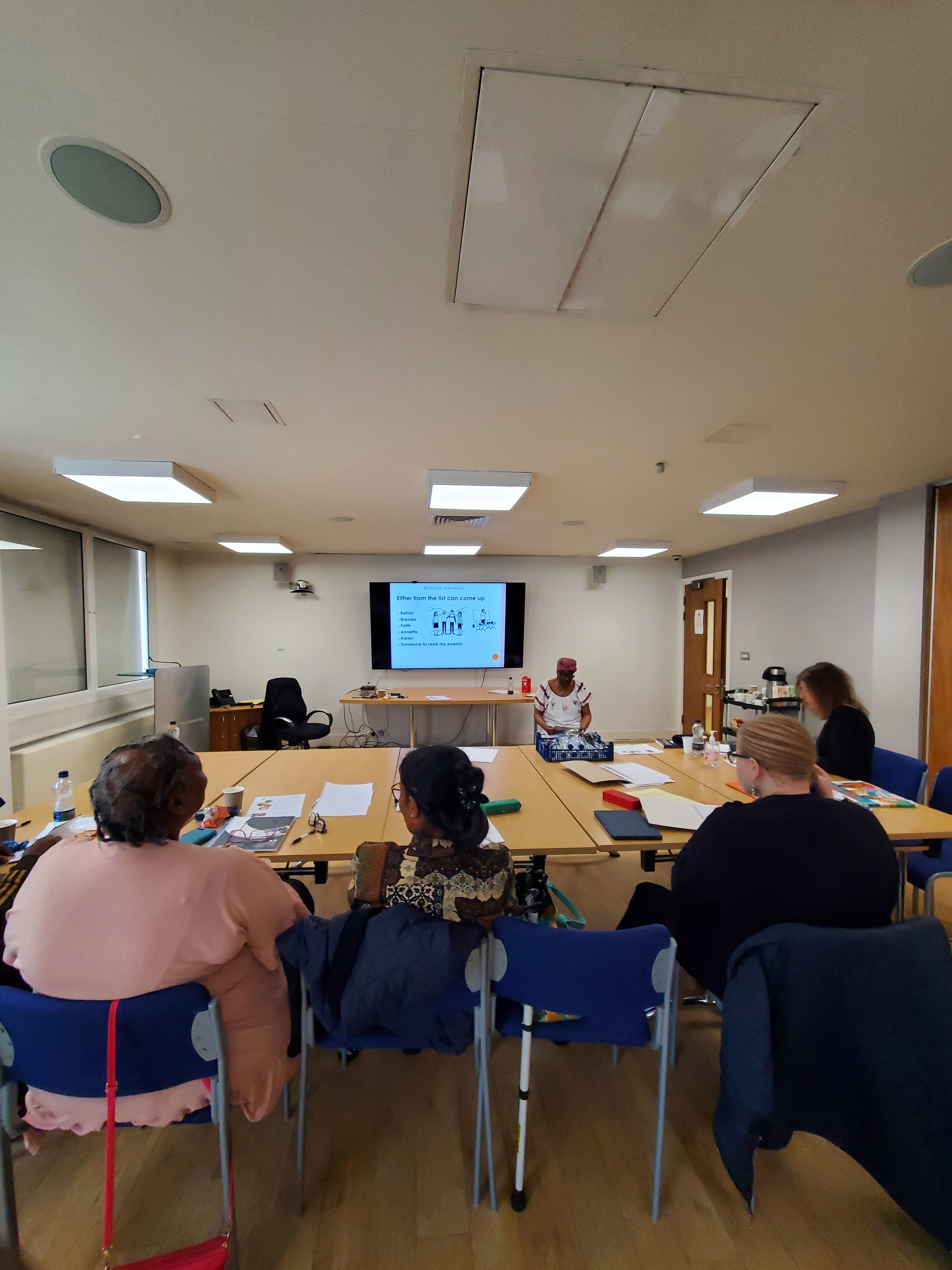
On Tuesday 28th April 2026, from 2:00pm to 4:00pm, we came together at Cygnet Churchill in Lambeth for what was described as a carers poetry event, but in truth, it became something much deeper.
It became a space where carers could speak, reflect, and be heard.
I hosted the session not just as a PCREF Carer Lead, but as someone with lived experience. That shaped everything the tone, the structure, and the intention behind every part of the agenda.
I made it clear: this was a safe, inclusive, and optional space. No pressure to perform. No expectation to share. Just an invitation.
We began with a simple check-in: “What’s one word you’re arriving with?”
Opening Readings: Creating a Shared Starting Point
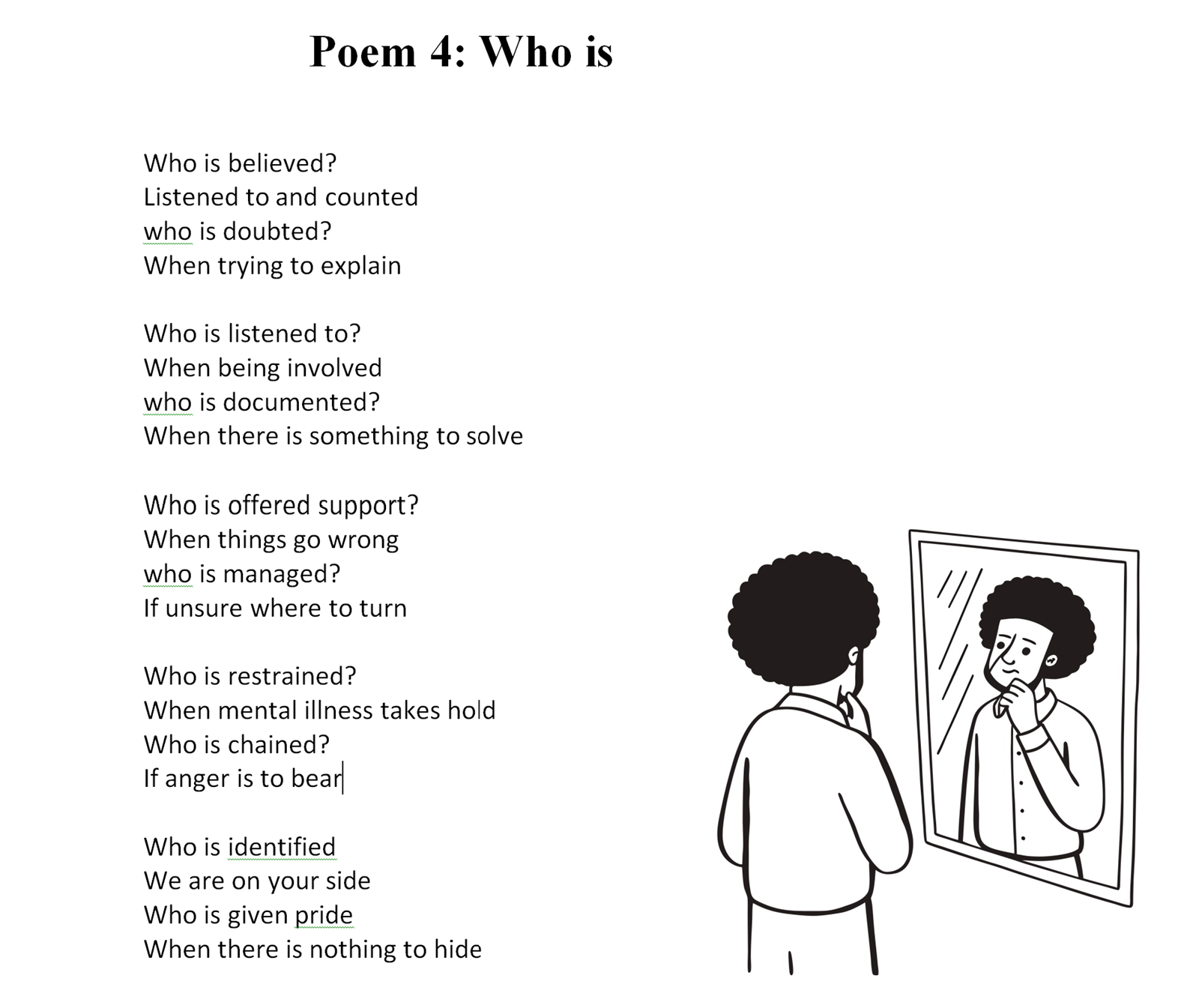
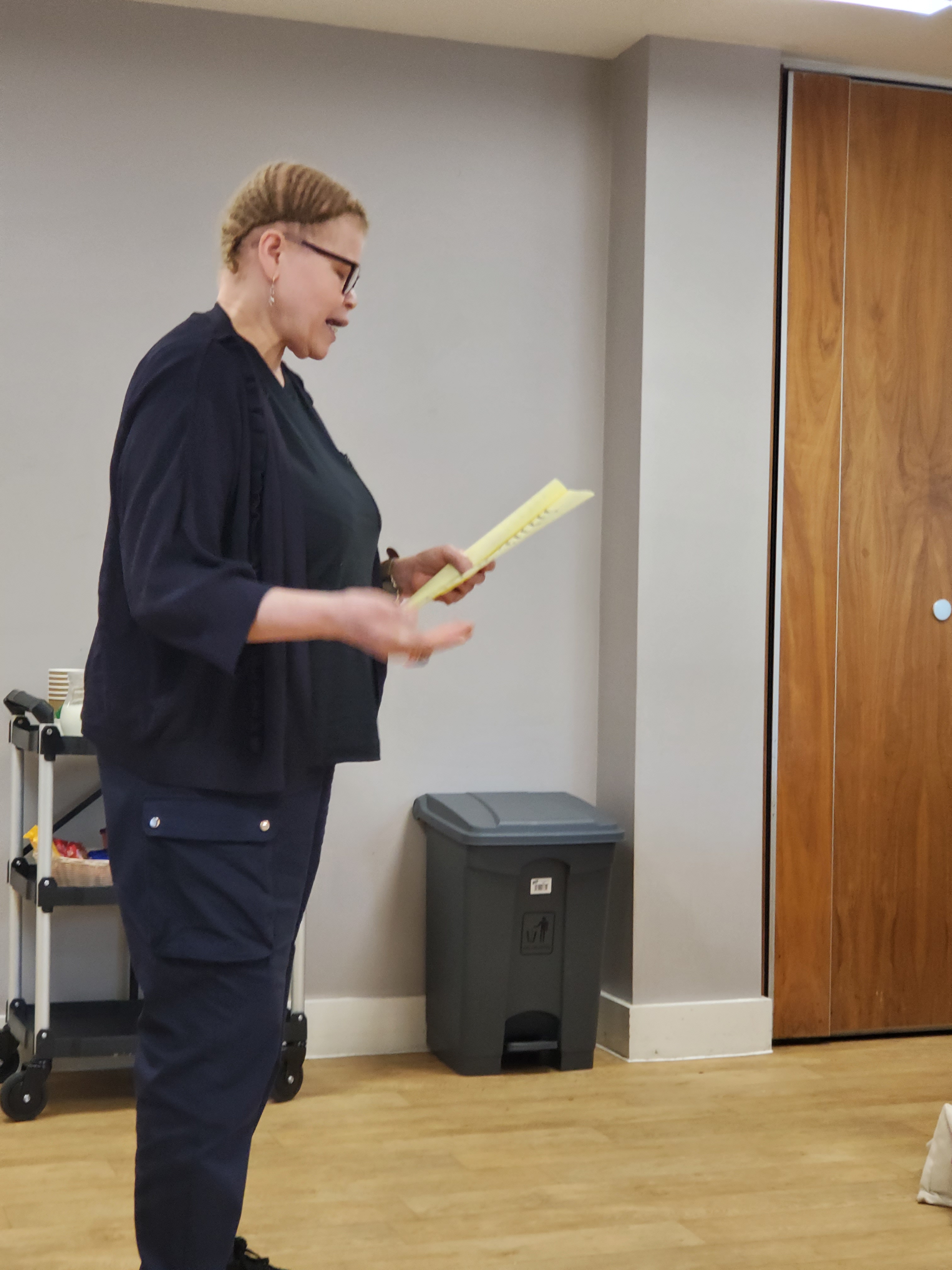
I started with a couple of my own poems, drawn from my work around carers, stigma, and racial inequality in mental health.
As shown above, one piece explored the question of who is listened to and who is overlooked within systems. Another focused on stigma and shame, particularly how cultural expectations and institutional barriers can compound the experience of caring.
These weren’t just readings—they were a way of opening the room. An invitation for others to see themselves reflected.
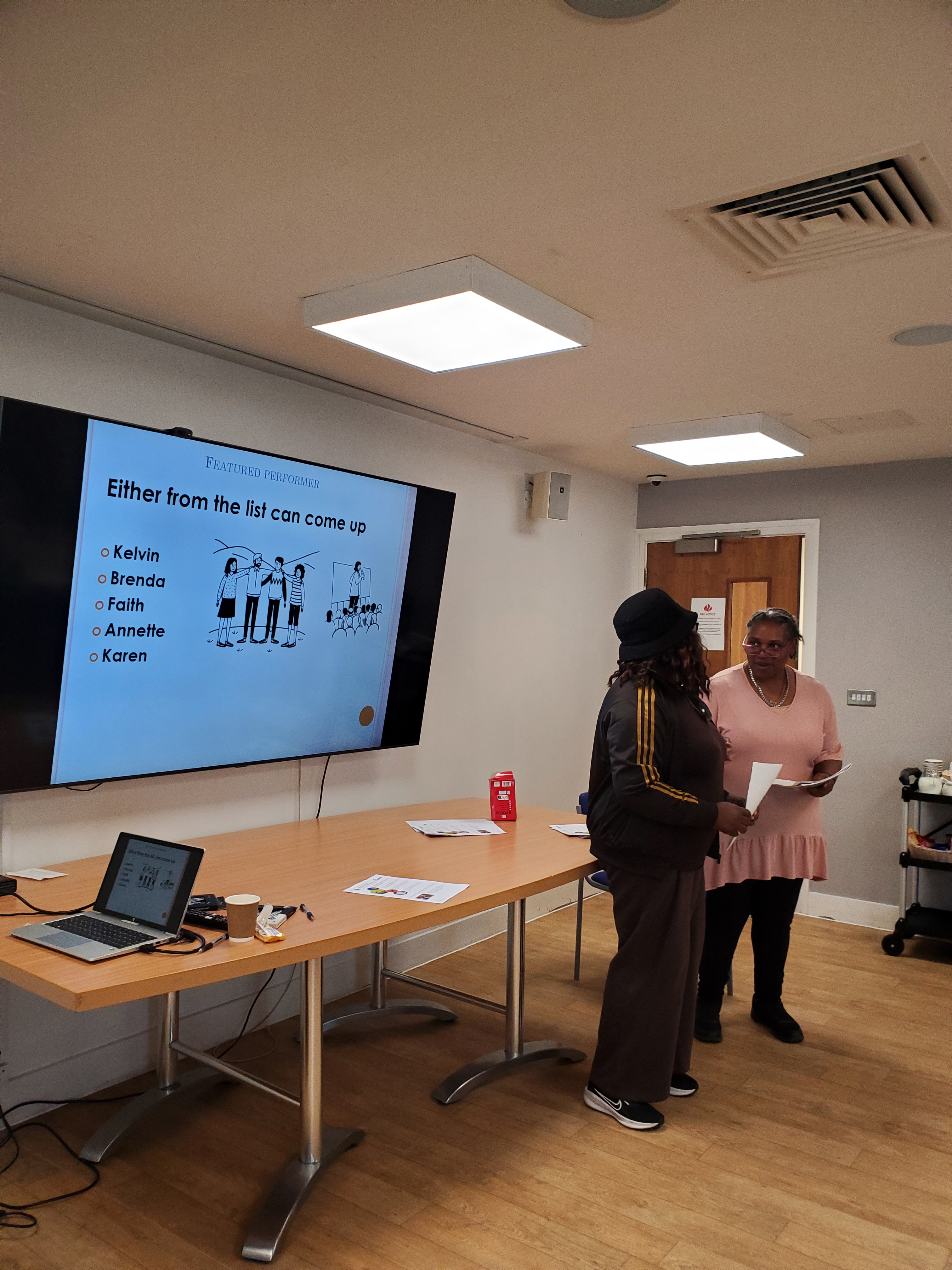
Featured Performer: Karen Ibrahim
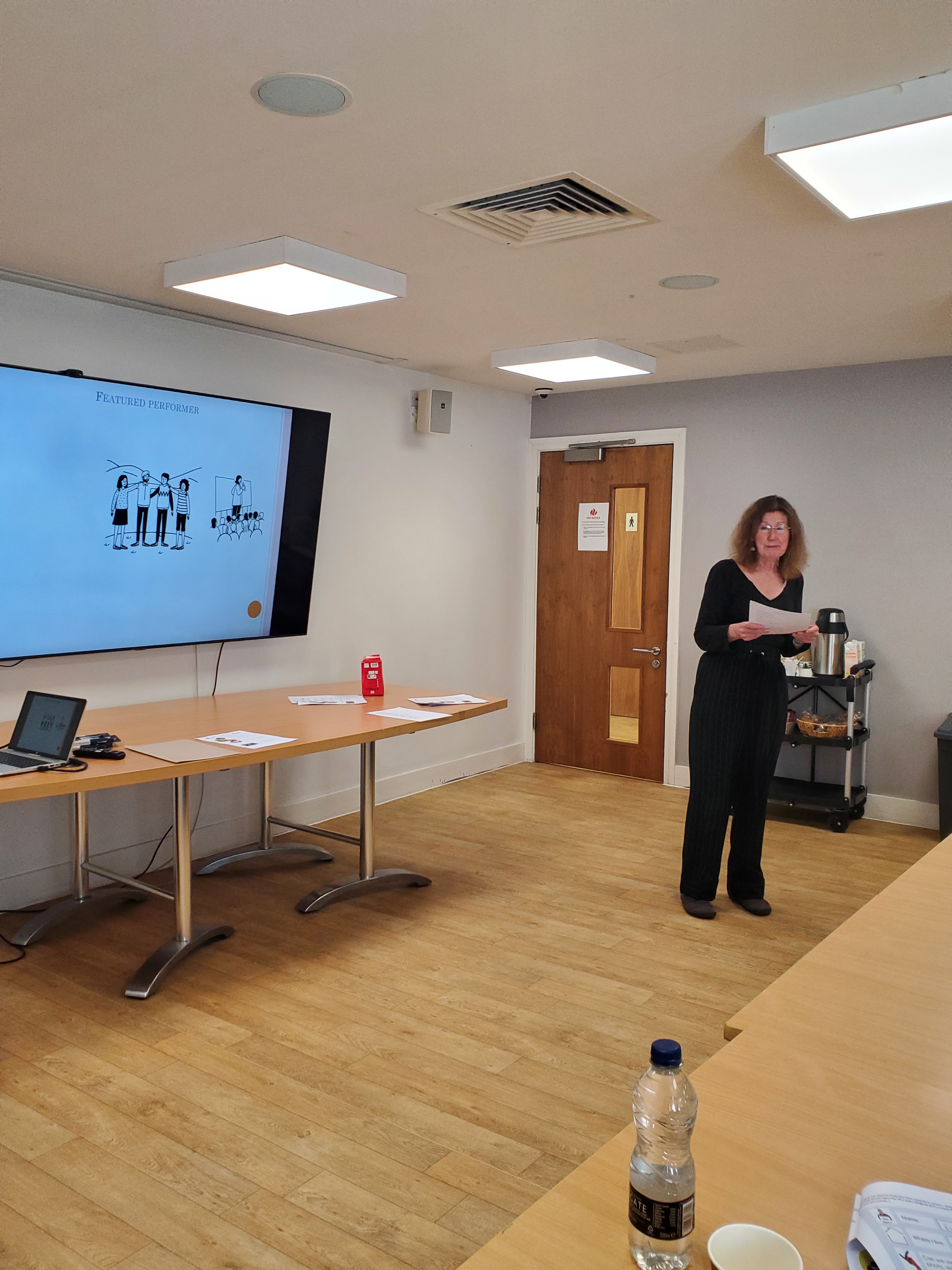
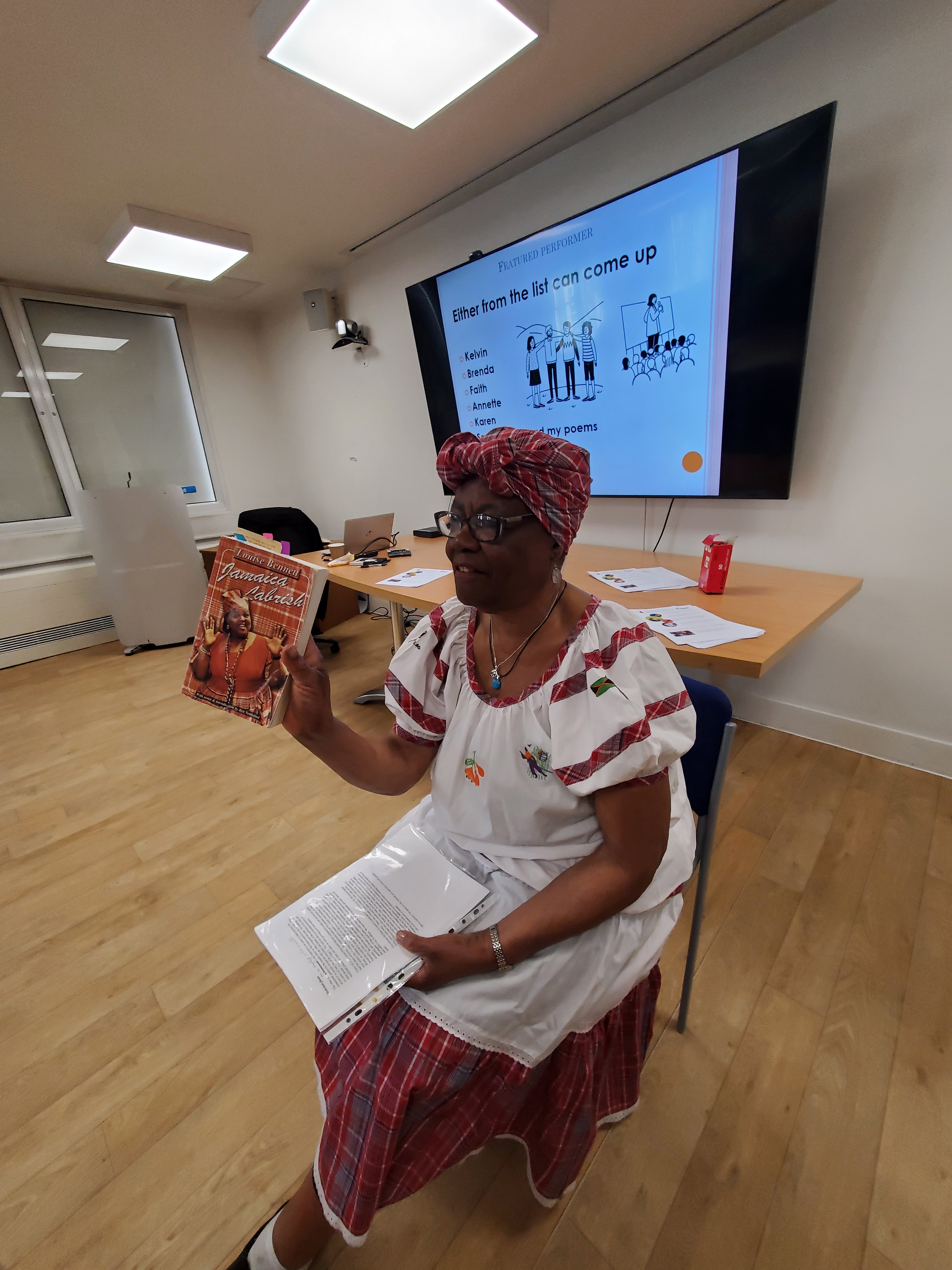
We then heard from Karen Ibrahim, whose poetry captured something deeply familiar to many carers the quiet, often invisible emotional labour of caring.
Her piece reflected the silence between carer and loved one, the fear of saying the wrong thing, and the reality of sitting with someone in distress without always knowing how to help. It spoke to that fragile balance carers hold every day.
Karen also shared a series of haiku-style reflections, drawn from carer experiences—short, powerful snapshots of emotion, nature, and coping. They reminded us that even the smallest expressions can carry deep meaning.
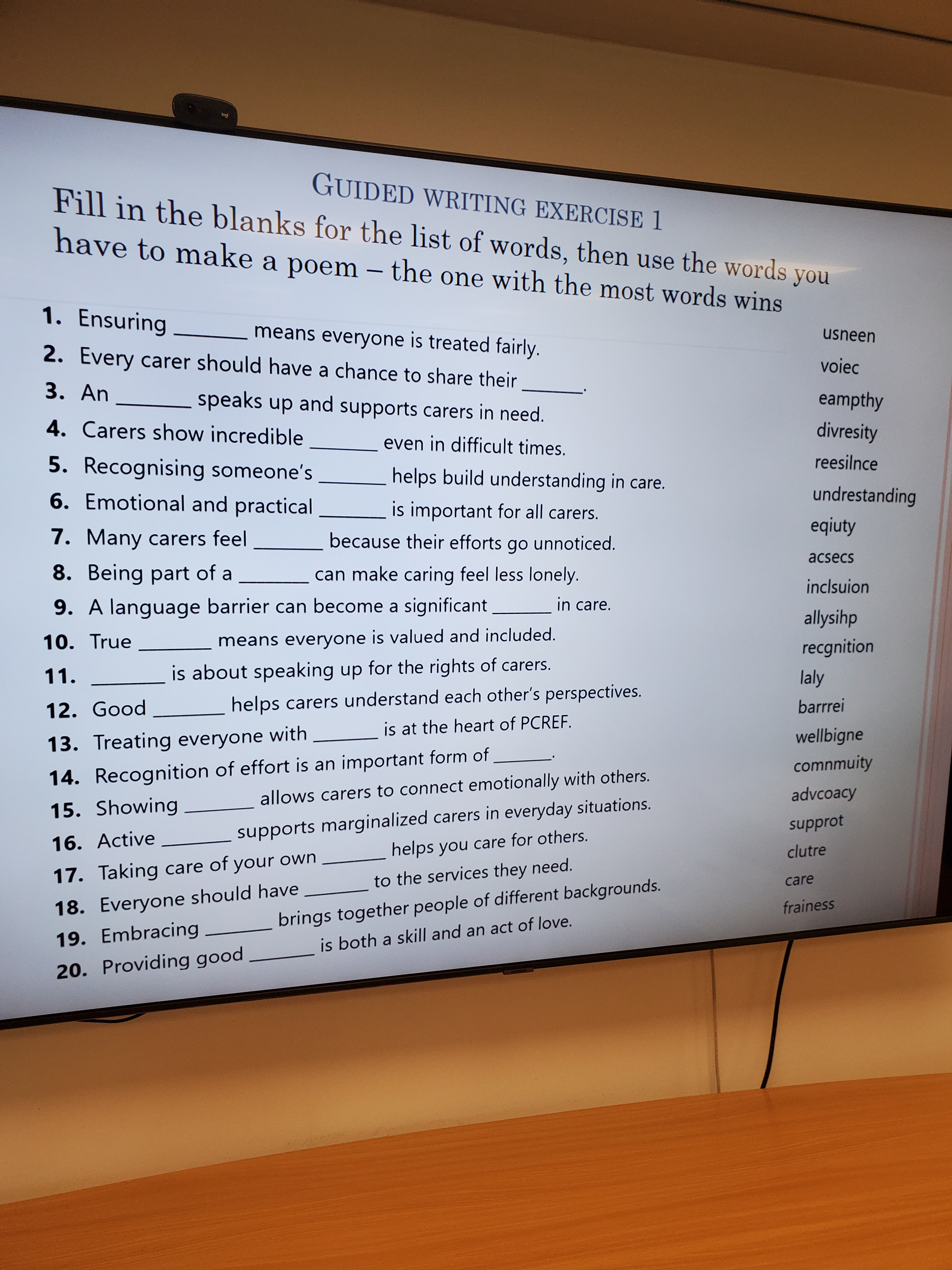
Guided Writing Exercise #1: Bringing PCREF to Life
We then moved into the first guided writing exercise.
I paired participants and asked them to:
Match PCREF-related concepts (like equity, advocacy, inclusion, resilience) to their meanings
Use those words to create a short poem or reflection
It was about translating PCREF from policy into lived language.
The results were powerful. Carers wrote about 4 poems altogether, below were the themes, which will be included in the new PCREF poetry book I am working on.
Feeling unseen and unheard
Wanting their voice recognised
Breaking down barriers in care
Finding strength through community
One group asked: “Is my voice not loud enough to be heard?”
I felt that line stayed with me, because it captures exactly what PCREF is trying to address.
Performer & Open Mic (Round 1)
We then moved into our first round of performances, where carers shared both prepared and newly written work.
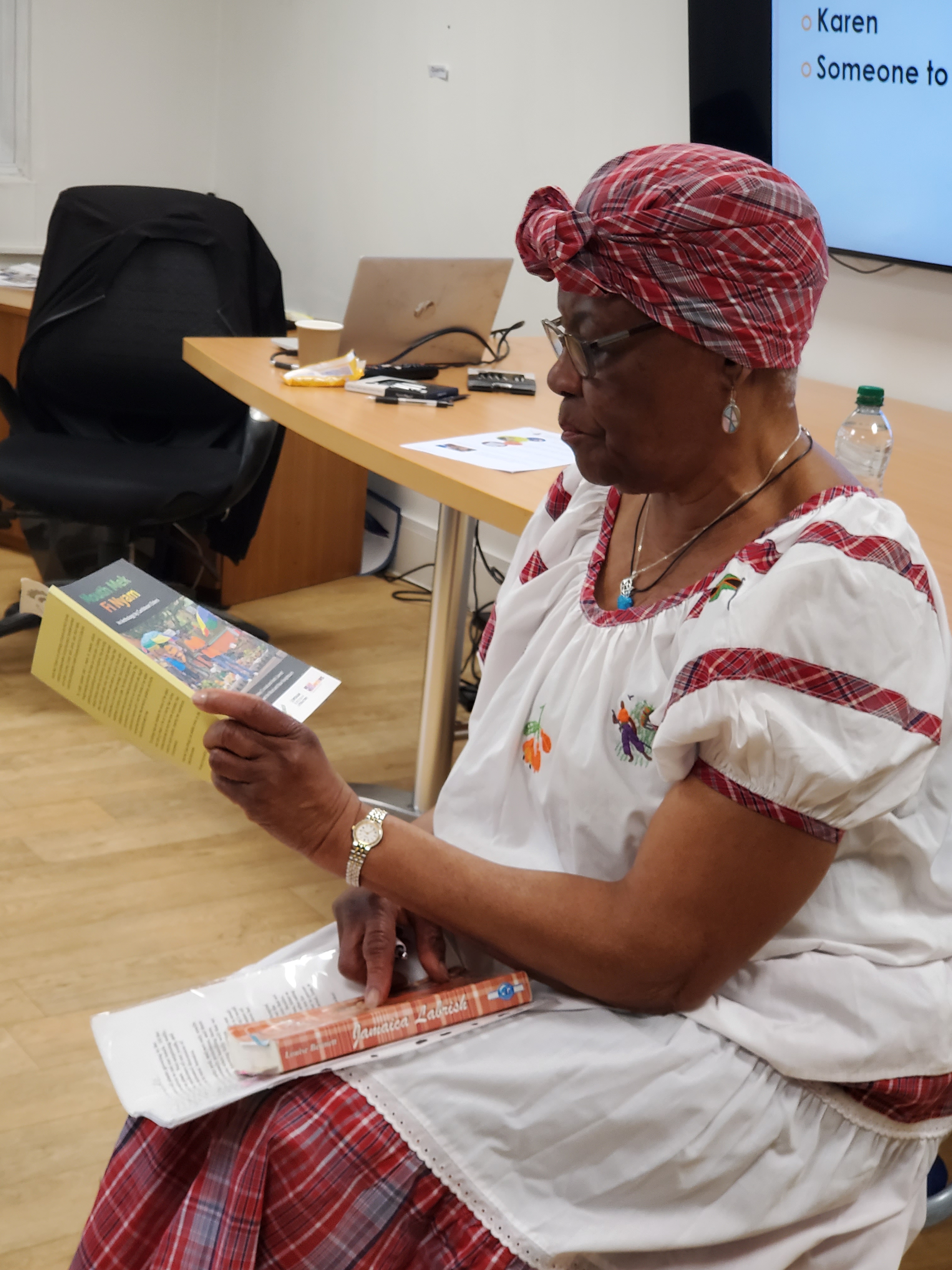
I felt Brenda brought something unique, blending cultural storytelling and poetry rooted in Jamaican heritage. She reflected on traditional knowledge, community wisdom, and the use of language and folklore as a way of preserving identity and healing. Her use of dialect and storytelling highlighted how culture shapes how we express and understand care.
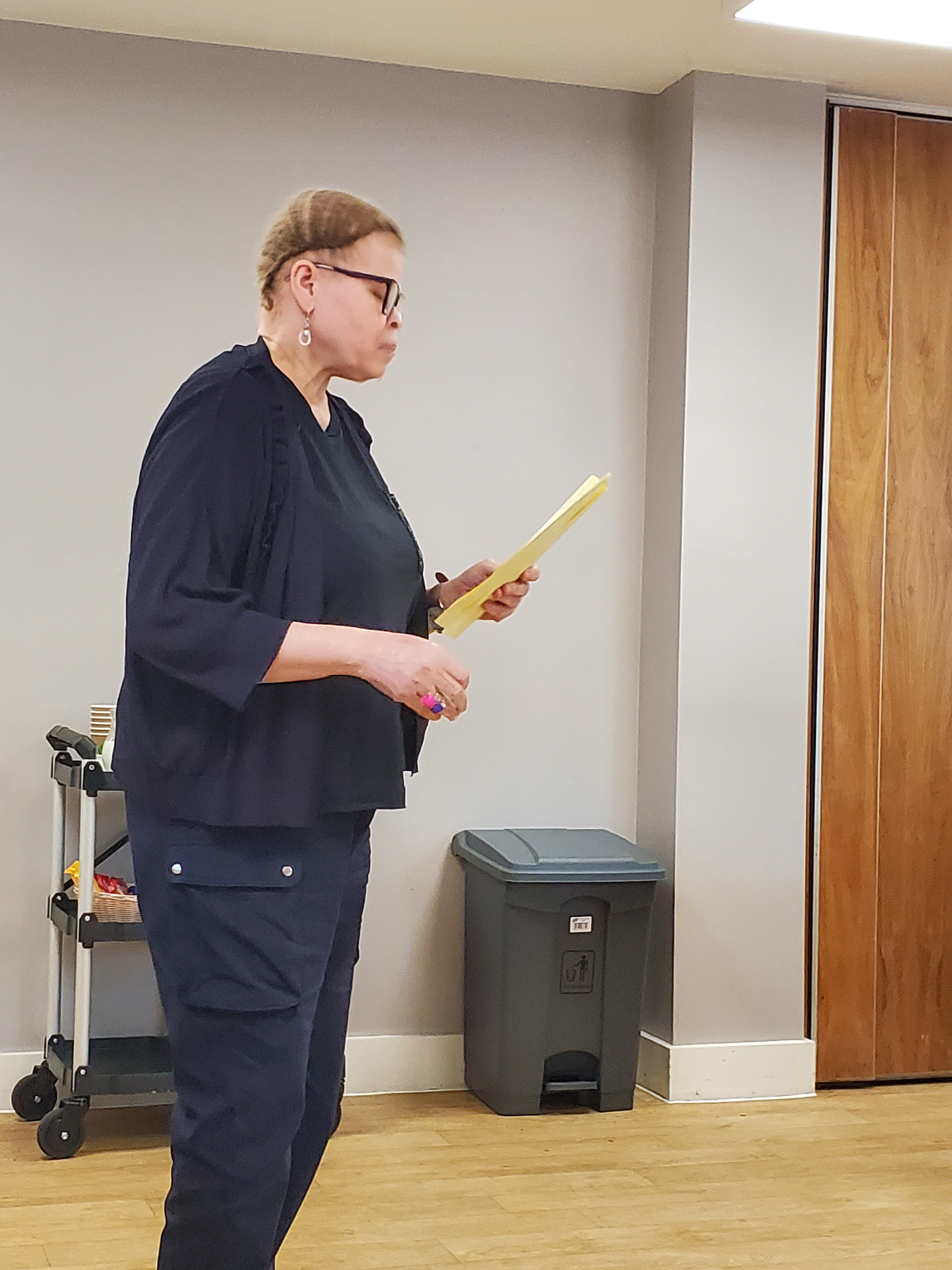
Next was Annette Davis shared a piece centred on the identity of being a carer, capturing the emotional strain, lack of recognition, and inner strength that comes with the role. Her poem questioned what it means to be labelled a “carer” while navigating burnout, resilience, and the need for self-care.
Next up was Faith Smith and Nadine sharing a powerful reflection on system inequality, exploring the daily pressures of navigating services, the lack of accessible support, and the feeling of being caught in processes that don’t always respond to real-life needs.
Each piece added another layer to the conversation, with different perspectives, but shared truths.
Break & Connection
We paused for a short break and refreshments provided by the kind and wonderful staff at cygnet, but for the poetry event the conversations didn’t stop.
Carers continued to connect. Share stories. and reflected on what they had heard.
This is something I always emphasise, community doesn’t just happen in structured sessions. It happens in those in-between moments.
Creative Exercise session #2: Exploring PCREF Language
After the break, I introduced a second exercise, which was more interactive and reflective.
Participants worked with a word-search style challenge, identifying key PCREF-related terms such as:
Voice
Inclusion
Equity
Community
Trust
Advocacy
Listening
Stereotyping
Rather than writing full poems, we focused on discussion: Which word stands out and why?
The responses were honest and grounded:
“Listening builds trust.”
“Community is where we belong.”
“Inclusion is what drives change.”
“Stereotyping still shapes how we’re treated.”
This is where PCREF becomes real, when people recognise themselves within it.
Performer & Open Mic (Round 2)
We continued with a second round of performances.
Carers shared reflections shaped by:
Cultural identity
Personal caring journeys
The emotional impact of systems
Hope, resilience, and change
Then ended with cultural carer songs by Brenda, see the video of part of the PCREF poetry session below.
In the end PCREF is about improving outcomes for racialised communities—but it cannot succeed if it remains purely clinical.
We:
Translated PCREF into lived experience
Used creativity to engage carers meaningfully
Created a culturally responsive space
Positioned carers as equal voices not passive participants
If you are caring for someone using Cygnet services, contact Family&Friends@cygnethealth.co.uk to join our Voices & Verses poetry group
By Matthew McKenzie – Carer activist and facilitator of the group
The group is a community of carers in Lambeth, Southwark and Lewisham that exists to provide support, advocacy, and connection for people looking after loved ones living with mental illness. It brings together unpaid carers of all ages and backgrounds to share experiences, learn from one another, and build confidence in dealing with health and social care professionals. A core part of its mission is reducing isolation by creating a safe space where carers can speak openly, develop skills, and access practical resources like advocacy services.
The meeting began with introductions and updates from various participants, including myselff where I discussed work with London Hospitals and the NHS app, while other carers introduced themselves to the group. In attendance was Tama from PohWer presented information about carer complaints and support services across different regions, including discussions about the potential impact of Healthwatch’s dissolution on patient and carer support services.
The meeting facilitated by Matthew McKenzie began with introductions from participants and updates on various carer support initiatives, including forum mergers and NHS plan changes.
Local council strategies and initiatives were discussed across different boroughs, with particular focus on Lambeth and Southwark’s carer support plans and the development of a carer’s forum in Lewisham. The group explored challenges faced by carers, including access to primary care and the need for better coordination, while discussing recent conferences and upcoming events aimed at supporting and advocating for carers’ rights.
Lewisham Carers Strategy and Service Updates
Lewisham is currently refreshing its Carers Strategy to strengthen support for unpaid carers and improve access to local services. The focus is on ensuring carers are included in decision-making through co-production and collaboration with the council, health providers, and community organisations. A major priority is improving well-being services, providing better information, and ensuring carers know their rights under the Carers Leave Act.
As part of wider NHS reforms, Lewisham is moving towards a neighbourhood-based care model designed to bring services closer to local communities. While this aims to make access more seamless, carers raised concerns about inconsistent GP access, gaps in communication, and challenges navigating between boroughs when supporting loved ones. The forum highlighted the importance of better coordination between primary care, hospital discharge planning, and mental health services to ensure carers are recognised and supported.
Lambeth Carers Strategy Refresh
Lambeth is currently refreshing its Carers Strategy with the aim of improving services, increasing visibility, and ensuring carers have a stronger voice in decision-making. The updated strategy focuses on key priorities such as well-being, access to assessments, respite options, and workforce training for those supporting unpaid carers.
There was a particular focus on improving support for mental health carers in Lambeth. The Carers Hub Lambeth team continues to facilitate peer support groups and collaborates closely with the South London and Maudsley NHS Foundation Trust to ensure carers are recognised as partners in care planning. Initiatives like Triangle of Care are gaining momentum, emphasising better communication between professionals and families while creating pathways for carers to get involved in shaping local mental health services.
Carers Hub Lambeth also celebrated the growing range of community-based activities available for carers and families in Lambeth. Over the summer, there have been several events designed to support young carers, including trips, tours, and group workshops aimed at helping them connect with others and access emotional support. These initiatives are part of Lambeth’s broader goal to make sure younger carers, who are often overlooked, receive the help they need both at home and within education.
One of the key upcoming events for Lambeth carers is the Lambeth Carers Strategy Event taking place on 25th September 2025 at 336 Brixton Road. The session will bring together carers, professionals, and decision-makers to review plans, share ideas, and set priorities for the future. Carers are strongly encouraged to attend to ensure their voices are heard and to take part in shaping the borough’s action plans moving forward.
Southwark Council Carers Support and Strategy Group
Matthew fed back on how Southwark Council continues to strengthen its approach to supporting unpaid carers, with a growing emphasis on improving access to information, assessments, and respite services.
The Unpaid Carers Strategy Refresh is a project running from August 2025 to April 2026, led by Southwark Council in collaboration with Adult Social Care, the NHS, local voluntary groups, and unpaid carers themselves. The plan focuses on improving support for carers by updating evidence on local needs, strengthening engagement with seldom-heard groups, and mapping gaps in current services.
Key priorities include better access to respite care, enhanced referral pathways, stronger partnerships with health services, and improved inclusion of young carers, carers with disabilities, and LGBTQ+ carers. The initial phase, from August to October, involves reviewing existing strategies, mapping current services, gathering insights through focus groups and surveys, and benchmarking against national policies and neighbouring boroughs.
The forum highlighted the importance of co-production, ensuring that carers are actively involved in shaping local strategies and service priorities.
Update on Key Themes from the final NHS England Carers Conference
Matthew highlighted that the 2025 NHS England carers conference placed a strong emphasis on recognising unpaid carers as essential partners in delivering effective healthcare. The NHS stressed its commitment to involving carers in shaping services and policies, ensuring their voices are reflected at every stage of decision-making. There was a clear acknowledgement that without unpaid carers, many health and social care systems would face significant pressure.
You can watch the conference below.
A major focus was on the NHS’s shift towards neighbourhood-based care models designed to bring services closer to communities. Matthew explained that this change aims to improve coordination between GPs, hospitals, and mental health services, but he also highlighted concerns raised about fragmented communication and the risk of carers being left out of local planning. Carers at the conference called for better access to information and more joined-up pathways across boroughs.
The conference also featured interactive workshops and discussion groups focused on co-production, digital innovations, and addressing inequalities among carers. Specific sessions explored improving support for young carers, carers from minority backgrounds, and those supporting loved ones with mental health needs. The event closed with a call to action for stronger collaboration between carers, NHS teams, local authorities, and community organisations. Attendees were encouraged to get involved in upcoming forums and engagement opportunities to help shape future services and ensure carers’ voices are at the heart of decision-making.
Matthew shared updates on national policy developments discussed at the conference, including the Carers Leave Act and commitments to expanding access to respite, assessments, and flexible working rights. There was also a discussion about new digital tools and support platforms designed to make it easier for carers to connect with professionals and access resources. However, many attendees expressed concerns that these initiatives need proper funding and training to work effectively in practice.
LLS Carers Forum – July Update: Voices, Concerns & Community Strength
Welcome to the July update for the Lewisham, Lambeth, and Southwark Mental Health Carers Forum. This month’s meeting, chaired by Matthew McKenzie, provided space for powerful updates, critical reflections, and a sobering insight into national developments affecting carer support.
🔸 Growing the Carers Voice
Our forum continues to evolve, bringing together unpaid carers from across boroughs. It remains a space for empowerment, where carers can speak openly, challenge services, and influence support structures. Several attendees introduced themselves and reflected on their caring roles, often crossing borough boundaries and facing ongoing questions about their own place in the system.
🔸 Spotlight: Healthwatch Update
One of the major concerns raised was the planned abolition of Healthwatch England and its local branches, which is a development that has deeply unsettled many in our community.
Anna from Healthwatch Lambeth joined us (on her day off—thank you, Anne!) to explain what’s happening:
Healthwatch functions—listening to service users, signposting, and enter-and-view visits, which are set to be absorbed by local authorities and ICBs.
As a statutory body, Healthwatch cannot be dissolved without legislation, so operations continue for now.
Carers voiced serious concerns over the loss of Healthwatch’s independence and trust, especially as a safe channel for feedback.
Anne reminded us: Healthwatch is still active and listening. A final report on black men’s experiences in Lambeth mental health services is due by mid-August.
🔸 Key Questions Raised
How will services preserve independent feedback mechanisms once Healthwatch is gone?
What accountability structures will replace them?
What are the implications of the broader wave of health service body consolidations?
🔸 Updates from the Ground
We also heard from other carer members:
A carer from Lewisham shared feedback she submitted to the Lewisham Unpaid Carers Forum regarding carer engagement, with little response so far unfortunately highlighting an all-too-common issue.
Other Carers reflected on Lambeth’s carer engagement structures, noting some decline in carer-led decision-making over the years.
Another Carer emphasized the importance of real, consistent carer champions within NHS teams particularly in mental health crisis services.
🔸 Carers Forum Reflections
Matthew provided a helpful comparison between Lewisham and Lambeth carer engagement models. While Lewisham has a formal Unpaid Carers Forum, its independence is limited. Lambeth’s model leans more on the collaborative network and carer support groups. Both boroughs face challenges in consistency, clarity, and co-production.
A concern raised repeatedly: carer champions are often named but rarely visible and sometimes, not even known by their own teams.
📅 Next Forum: August 25 or 26
Due to the bank holiday, the next forum will likely be held on August 26. We’ll aim to have a guest speaker and will explore new ways for carers to hold services to account especially in light of the potential Healthwatch closure.
If you’d like to contribute to future discussions or attend the next forum, please reach out. This is your space.
📣 Let’s continue to speak up, stand together, and push for better mental health support for all carers.
About the Forum: The Lewisham, Lambeth & Southwark Carers Forum is a collaborative online space that brings together unpaid carers, carer leads, mental health professionals, and support organizations to share experiences, raise concerns, and influence change. Focused primarily on mental health caregiving, the forum serves as a platform for peer support, policy updates, training insights, and service development. Led by carer advocate Matthew McKenzie, the group fosters empowerment through regular discussions, creative expression, and co-produced solutions, ensuring carers’ voices are heard across local systems and beyond.
Carers Week Collaboration Discussion
The meeting began with introductions from Matthew McKenzie, who leads a merged online carers group, and other participants including Yvonne, a carers navigator at Southwark Carers, and Margaret, a carer representative with the Royal College of Psychiatrists. The group discussed Carers Week activities and their various roles in supporting carers across different organizations. Karen Hooper, connected with the Lambeth Living Well Collaborative, while Lee Roach, the carers lead for South London & Maudsley in Lambeth, shared his involvement with the Trustwide Family and Carers Committee.
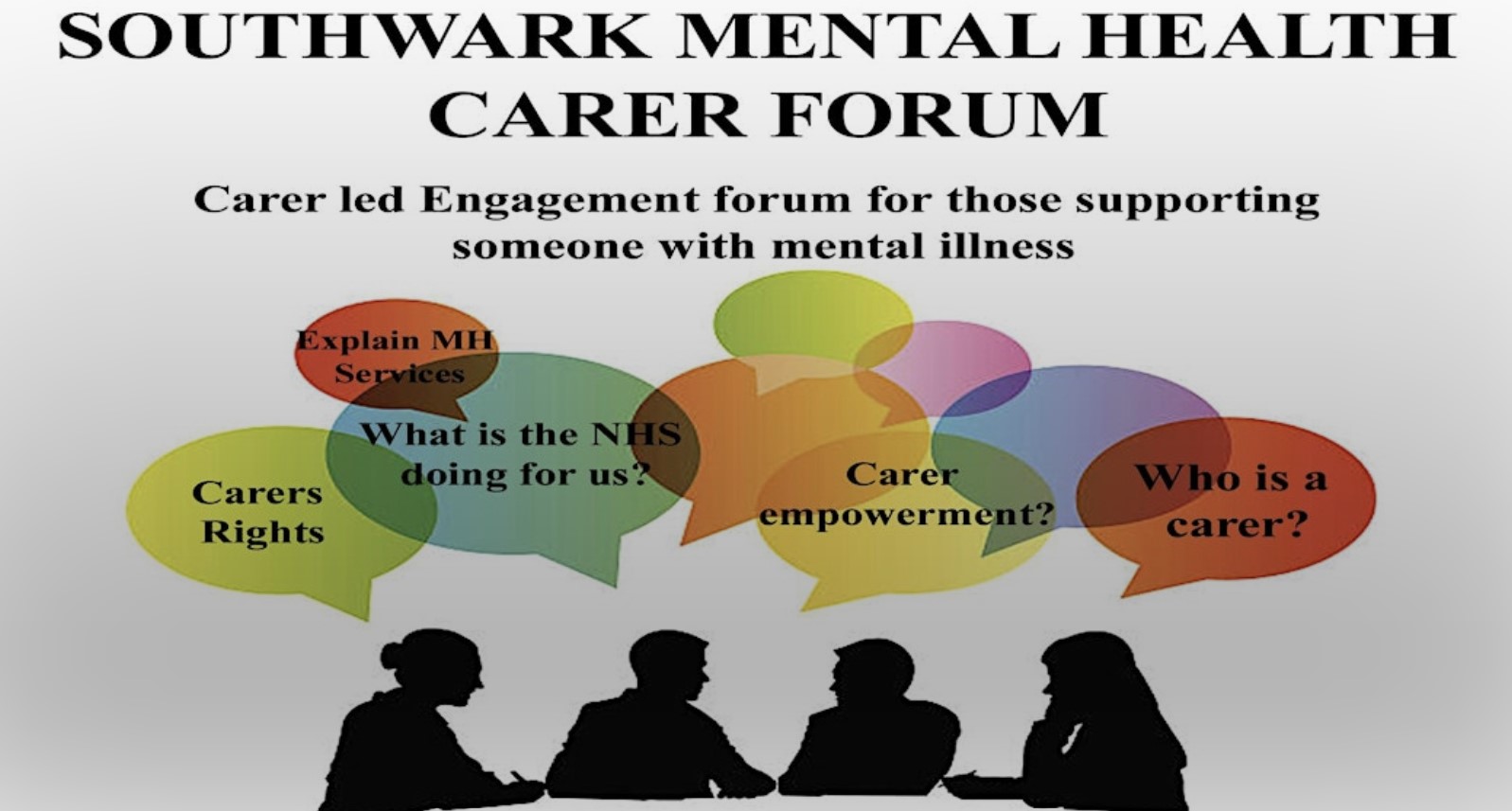
Welcome to my first forum update for the new year. The first forum is the Lambeth Mental Health carer forum, which took place over at Brixton 336 on the 23rd of January 2020. The Lambeth carers forum exists to give unpaid carers a chance to know what Health and Social services are doing for them and also what those services have planned.
Lambeth has some of the highest rates of mental health problems in the country and perhaps even further, it is important carers come together and ask why this is the case and what are the authorities doing about it. As you might already know, South London & Maudsley NHS Foundation Trust cover the mental health services in Lambeth and also in Lewisham, Croydon and Southwark, so he forum seeks to engage with the Mental Health Trust over the coming year.
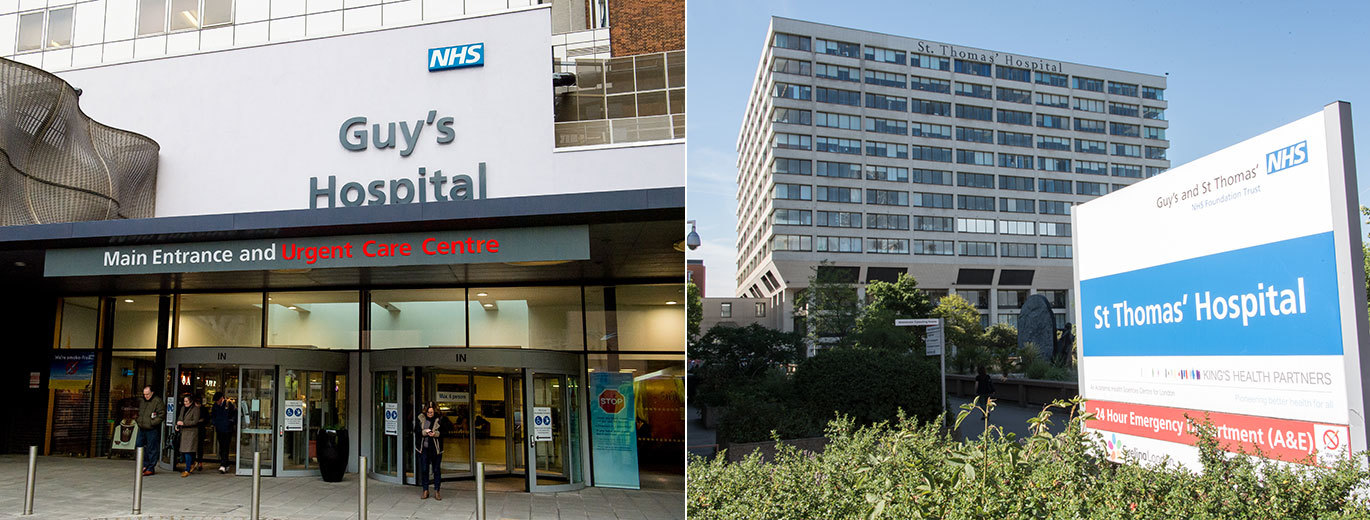
More importantly, there are other NHS trusts serving the community in Lambeth and we had the opportunity to have Guy’s and St Thomas NHS trust Mental Health lead engage with the forum, more on this later.
The January forum was very well attended and word is spreading about the importance of the Lambeth MH carers forum, with the help of Lambeth Carers hub, unfortunately the forum took place at the same time of the SLaM carers committee, so some members had to send apologies.
At the start of the forum, we took time to go through the minutes of the last forum which was held over at Moasic Clubhouse. The forum was attended by Helen Hayes Labour candidate for Dulwich and West Norwood and also Lambeth Healthwatch who are seeking consultation from Carers on the future of Lambeth Hospital. There was a lot of discussion from the updates from the last forum.
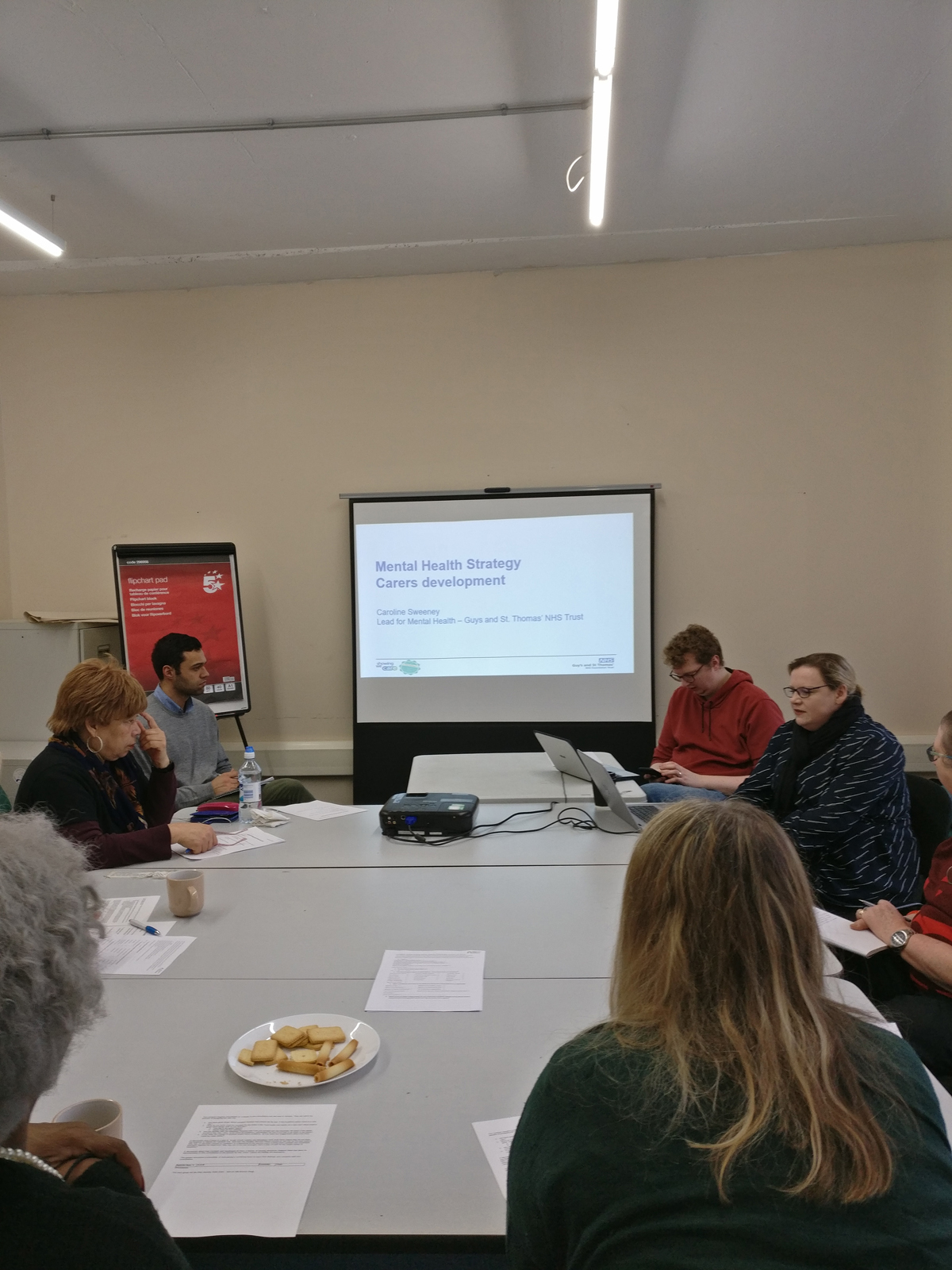
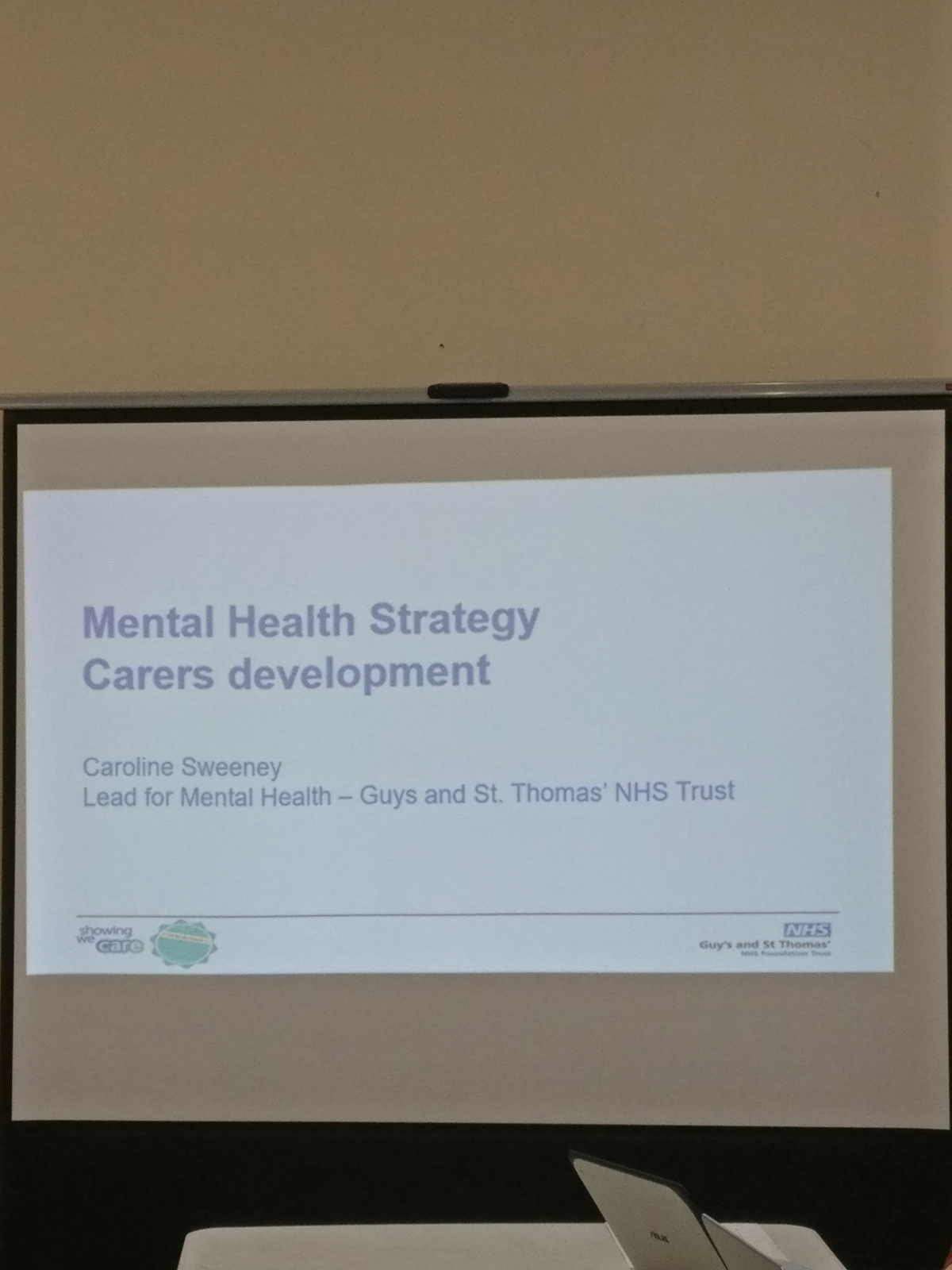
Next we had a presentation from Caroline Sweeney who is the Mental Health Lead for Guys & St Thomas NHS Trust. You might not already know, but Acute NHS Trusts tend to develop, renew or plan mental health strategies, however both Kings NHS trust, SLaM NHS Trust and Guys & St Thomas NHS trust are working on their Carer’s Strategies as well. If you are a carer or are lucky enough to attend a carers forum, certainly inquire if your hospital trust is working on either or both policies and strategies, especially carer engagement/involvement policies.
For the Lambeth MH carer forum, Caroline updated us on G&STT Mental Health strategy. The strategy was not developed in isolation as the trust held six workshops in the past via the hospital and its community sites.
Their external workshop had a range of stakeholders including Service Users and carers, London Ambulance service other MH Trusts, CCG’s, Black Thrive, Oasis and Papyrus (youth suicide prevention), Lambeth Alliance and more.
Their Strategy contained many important sections being
Developments and Good Practice.
Linking to National Drivers.
Objectives of the Strategy.
Overview on Patients, People and Partnerships.
There were more, but due to limited time, we could only cover a few areas off the presentation.
GSTT Developments and Good Practice
The plans and targets for GSTT are
Improving partnership working with South London and Maudsley NHS Trust
Delivery of training across in-patient and community services
Development of improved assessment processes for district nursing
Improve experience of patients who receive Enhanced care
Development of primary care hub for adolescents
Implementation of the Children and Young People Healthy Partnership (CYPHP), probably due to GSTT children’s hospital (Evelina London Children’s Hospital).
Mind & Body and IMPARTS service
GSTT psychology service
Linking to National Drivers
GSTT Long term plan is to
Increase Mental Health Liaison capacity e.g. specialised MH nurses in Accute wards
Equipping Ambulance staff to deal with MH crisis
Importance of improving child and adolescent MH care
Commitment to reducing National Suicide rates (Zero Suicide national driver).
Other drivers
GSTT also have internal drivers mentioned in their MH Strategy.
These drivers were from audits and reports about Liaison teams and children services experiencing an increase in referrals, this was especially noted in A&E departments and long waiting times for those experiencing MH crisis are not helping.
GSTT Mental Health Strategy Vision and Objectives
A MH Strategy would not be much without its Vision and Objectives.
GSTT seeks to improve quality of care that it delivers to Patients, carers and families living with serious mental illness.
GSTT also seeks to support patients with long term physical health conditions and manage their MH needs
GSTT seeks to ensure their workforce has the right skills, knowledge and attributes to care for patients, their carers and families dealing with MH needs.
There were other things discussed in regards to GSTT MH Strategy, that due to time I have not mentioned in this blog post.
GSTT and carers
We did not have GSTT carers engagement on their carers strategy, but Caroline did cover some part of that stategy, that being the introduction of Carers Passport to identify carers.
Use of Carer network study days
Dementia specific Carer days (which is still under development).
Continued work on Alzheimer’s society and Dementia UK.
There is more in the pipeline regarding how GSTT engages with Families and carers, but the above is a start.
The rest of the forum was discussing on the rota for chairing the meeting and future attendees for the Lambeth MH carers forum. Many hope for the Helen can update the forum regarding carers later on in the year and for other MPs to engage with the group. Other members want engagement from Lambeth leads who run social services.
This concludes the update from the Lambeth MH Carers forum for January.
Welcome to the August update of the Lambeth Mental Health Carers forum. As a reminder the Mental Health carers forums are not primarily focused on discussing mental health benefits, but are aimed at carers supporting those with mental health needs. The forum usually has organisation who either provide mental health services, commission them or oversee the services e.g. Lambeth Council, South London & Maudsley, Lambeth CCG and Lambeth healthwatch besides others.
For the August forum we were fortunate to members and representatives from Maudsleys Older Adults and Dementia Advisory group. They presented to the forum what the group does over at South London & Maudsley and how they work with unpaid carers who are caring for those suffering Dementia, Alzheimers, Parkinson and so forth.
Before I continue on with a brief update of the work of the older adults Clinical Academic Group, we also had on the August agenda the following.
Welcome to the May’s update of the Lambeth Mental Health Carer forum. It has been a while since I did an update for the forum, since I could not attend the previous Lambeth MH carer forum and forgot to blog about the other previous forums.
This forum caters for unpaid carers who are caring for someone with a mental health need, e.g. someone suffering from psychosis, eating disorder, depression, bipolar and other MH illnesses.
The forum is strategic and gives carers the involvement and empowerment to query, question and even compliment the mental health services in Lambeth and sometimes beyond e.g. we are hoping to have a representative from NHS england attend in future.







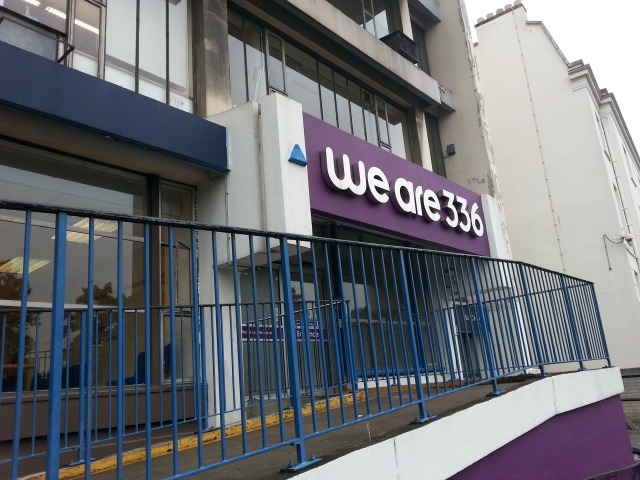 Welcome to my first forum update for the new year. The first forum is the Lambeth Mental Health carer forum, which took place over at Brixton 336 on the 23rd of January 2020. The Lambeth carers forum exists to give unpaid carers a chance to know what Health and Social services are doing for them and also what those services have planned.
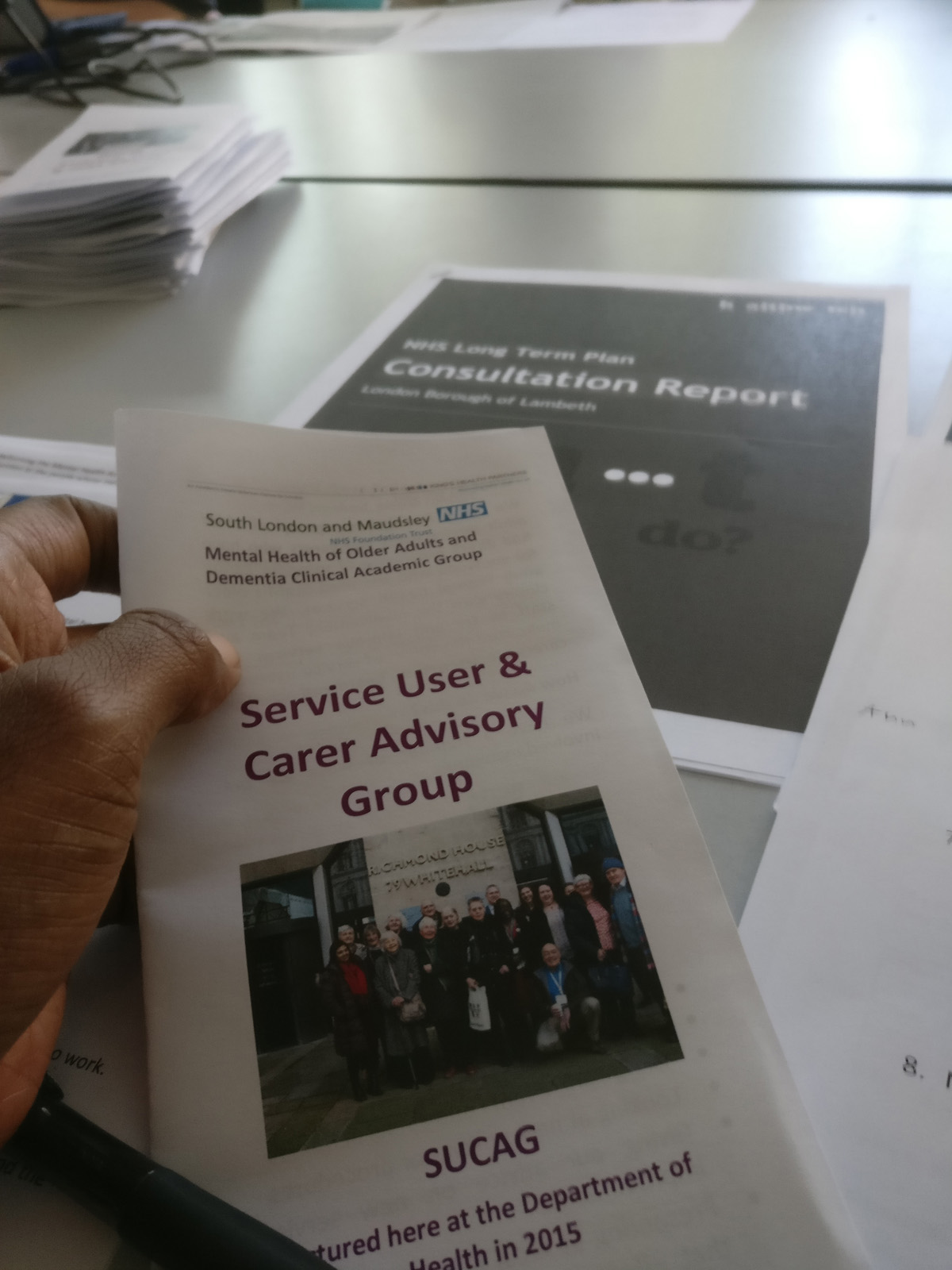
 Welcome to the May’s update of the Lambeth Mental Health Carer forum. It has been a while since I did an update for the forum, since I could not attend the previous Lambeth MH carer forum and forgot to blog about the other previous forums.
