By Matthew McKenzie, A Caring Mind (Carers UK Ambassador)
As an unpaid mental health carer, I have spent years navigating hospital corridors, GP practices, care plans, juggling crises, and long silences where carers are too often left out. I am sure unpaid carers are expected to hold families together, while notice early warning signs, and keep loved ones safe. Still I always mention most of us receive no formal training, and our knowledge is rarely recognised as expertise.
That is why recently teaching a module for the Masters course to mental health nursing students at King’s College London felt so important. Not after they qualify. Not once they are overwhelmed in practice. But before they step out into the field. The session took place 15th of January.

Why carer-led teaching matters
Unpaid carers sit at the sharp edge of the mental health system. We see what works, what harms, and what gets missed when professionals don’t fully understand the family context. When students hear directly from carers, learning moves beyond textbooks into real life into the emotional, practical, and ethical realities of care.
Training mental health professionals without carer voices is like teaching navigation without a map.
What I taught: lived experience as learning
The session I delivered was built entirely from a carer’s perspective and centred on one core message: you cannot deliver effective mental health care without working with carers.
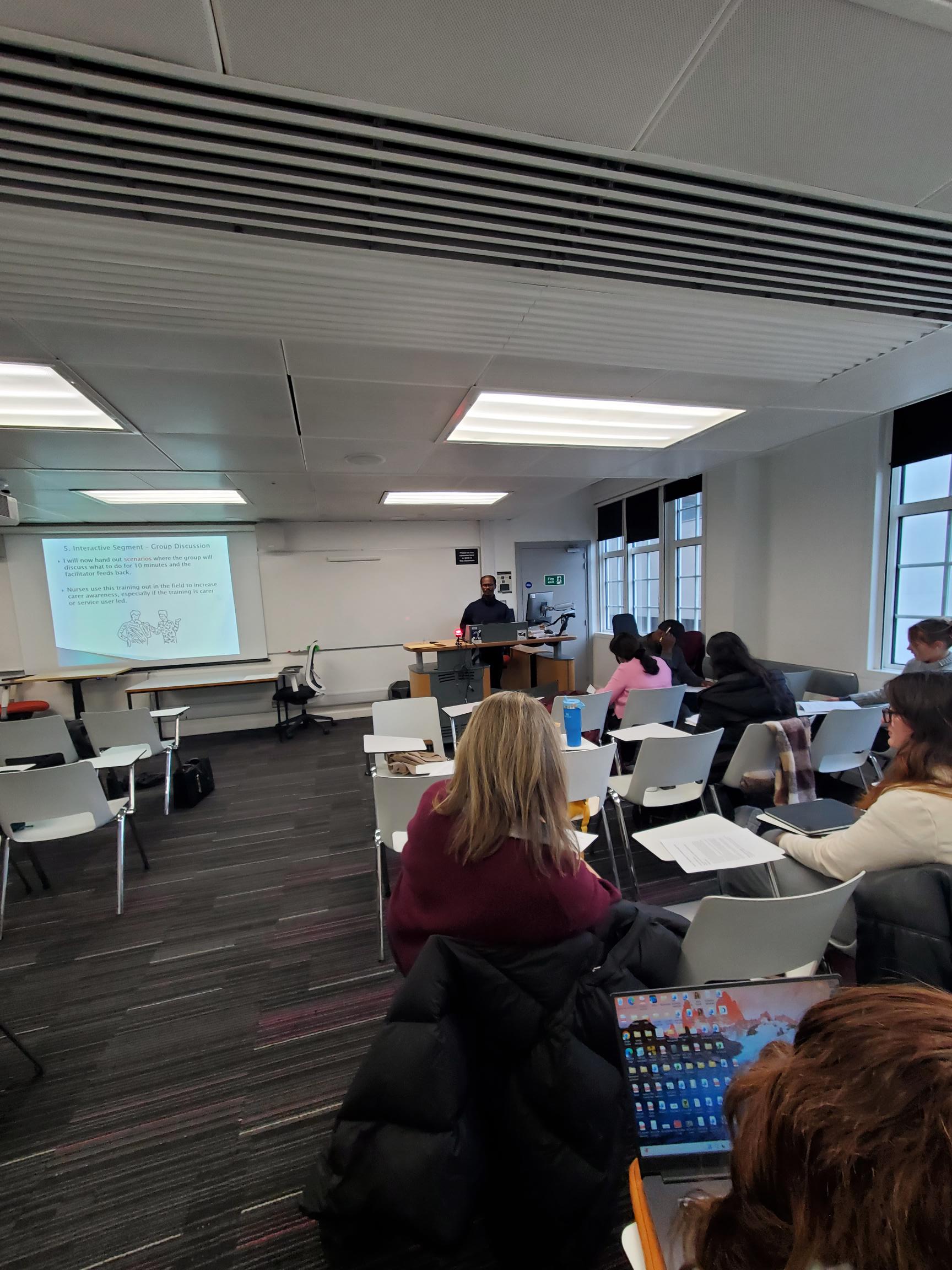
The module covered:
- My lived experience as an unpaid mental health carer
How I became a carer, the emotional impact, the daily responsibilities, and the toll caring can take on mental and physical health. - The hidden impact on carers
Burnout, stigma, isolation, guilt, and the reality that many carers are supporting professionals while receiving little support themselves. - Carers as partners, not problems
Exploring what happens when carers are ignored – and how outcomes improve when they are listened to, informed, and included. - The Triangle of Care
A strong emphasis on the Triangle of Care framework: the partnership between service user, carer, and professional. I challenged students to see carers as a vital link in the chain, not an optional extra. - Carers UK and carer identification
Highlighting the role of Carers UK in advocacy, rights, resources, and why professionals must help carers identify themselves early so they can access support. - Practical skills for future nurses
Listening without defensiveness, sharing information appropriately, involving carers in care planning, and understanding when carers need support themselves. - Interactive discussion and reflection
Students worked through real-life scenarios, asking: What would I do differently now that I understand the carer experience?
The shift we need in education
Most unpaid carers are not trained for their role. We learn through crisis, exhaustion, and trial and error. Mental health professionals, however, are trained, which means universities have a responsibility to ensure that training includes those of us living this reality every day.

Carer-led teaching builds empathy, improves communication, and ultimately leads to safer, more effective care. When students learn early that carers matter, they carry that mindset into practice.
A final thought
Unpaid carers are already part of the mental health workforce, it’s just the title unpaid, unsupported, and often unheard. So I feel bringing carers into universities is not a “nice extra”. It is absolutely essential.
If we want a mental health system that truly works, we must start by listening to those who never clock off.
 A Caring Mind