Tag Archives: medical research

Have You Supported Someone Through Womb Cancer? Your Experience Could Help Improve Care

By Matthew McKenzie – Chair of Cancer Caregiver group

Supporting a loved one through a cancer diagnosis is a journey that often goes unseen. Family members, partners, friends, and other caregivers provide emotional support, help navigate appointments, and stand alongside patients during one of the most challenging periods of their lives. Yet their experiences are rarely heard.

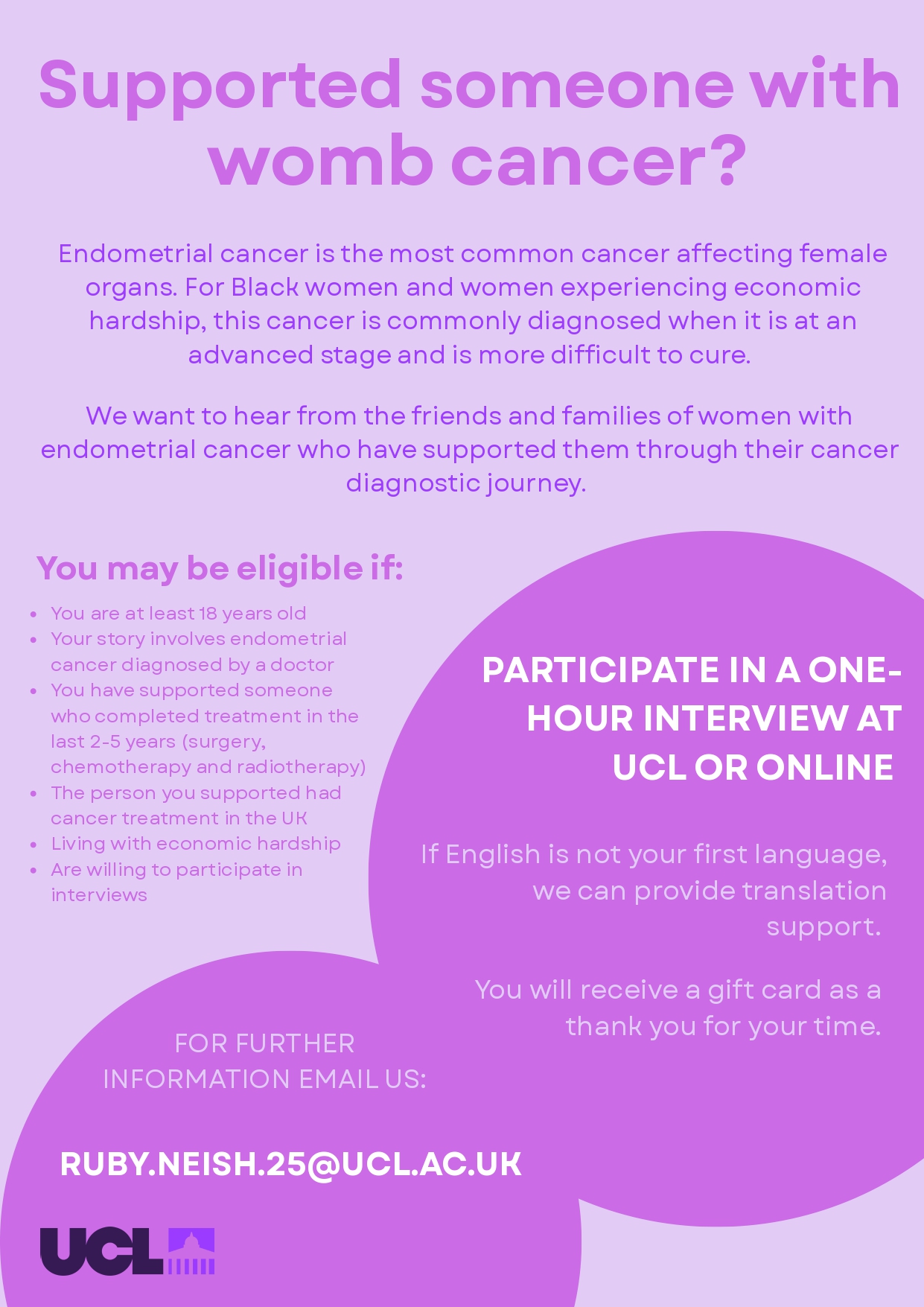
Researchers at University College London (UCL) are inviting people who have supported someone with endometrial (womb) cancer to take part in a research study exploring the cancer diagnostic journey. The study is particularly interested in hearing from people who have supported women experiencing economic hardship, as well as Black women, who are more likely to be diagnosed with endometrial cancer at a later stage, when treatment can be more difficult.
Your Story Matters

Every caregiver’s experience provides valuable insight into the challenges people face before, during, and after a cancer diagnosis. By sharing your story, you can help researchers better understand the barriers to timely diagnosis and identify ways to improve support for future patients and their families.

Your voice could contribute to research that helps reduce health inequalities and improve cancer care across the UK.

Who Can Take Part?

You may be eligible if:

  • You are 18 years or older.
  • You supported a friend or family member diagnosed with endometrial (womb) cancer.
  • The person you supported completed treatment (such as surgery, chemotherapy, or radiotherapy) within the last 2–5 years.
  • Their cancer treatment took place in the UK.
  • Your experience involved economic hardship.
  • You are willing to participate in a one-hour interview.

What’s Involved?

Participants will be invited to take part in a one-hour interview, either online or at UCL. Translation support is available for people whose first language is not English, and participants will receive a gift card as a thank-you for their time.

Interested?

If you think you may be eligible or would like to learn more, please contact the research team:

Email: ruby.neish.25@ucl.ac.uk


On a side note, remember I also run the Cancer Caregiver group the last wednesday of the month, see poster below.

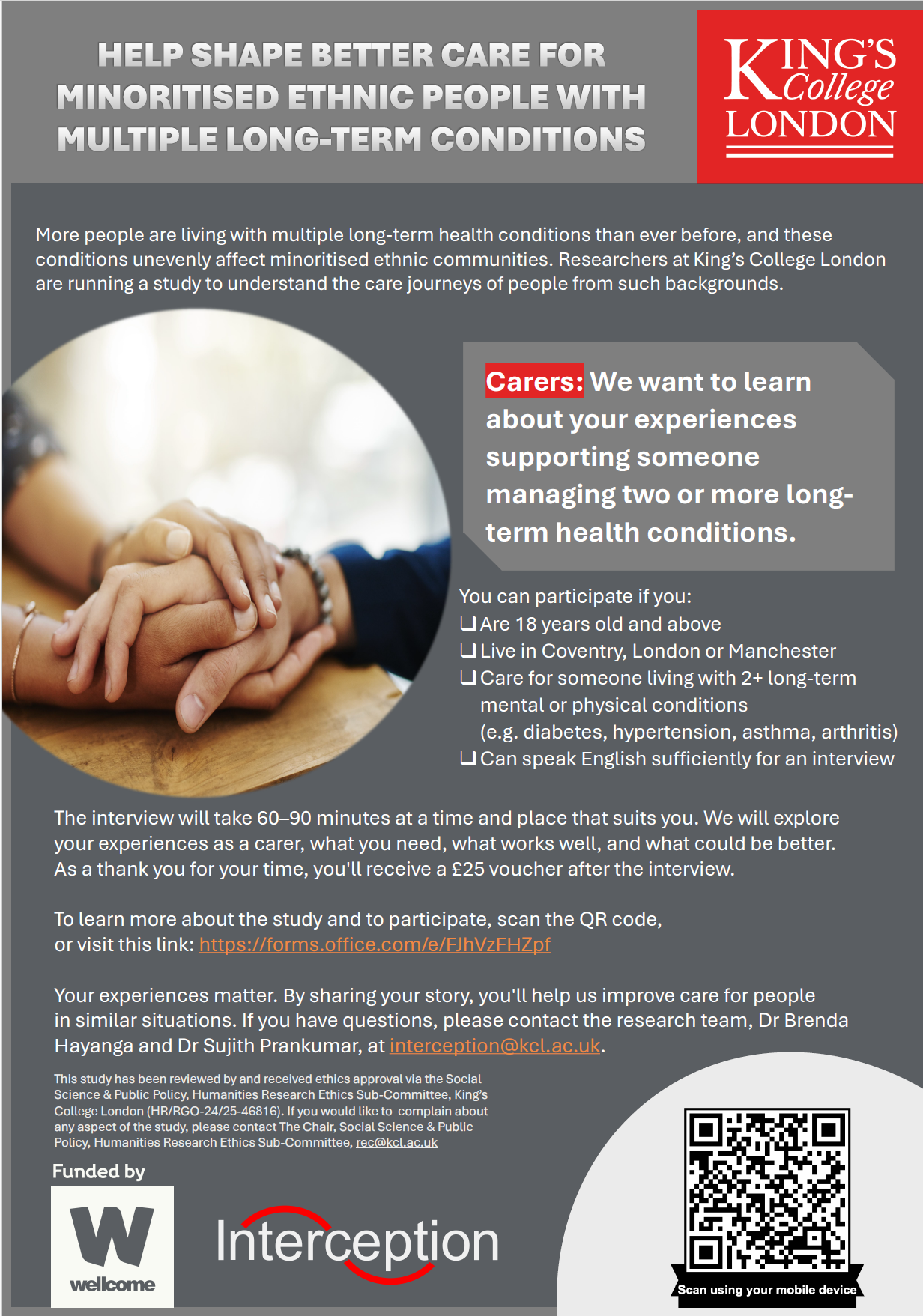
Help Shape Better Care for People with Multiple Long-Term Conditions

Caring for someone with multiple long-term health conditions can be both rewarding and challenging. More people than ever are living with conditions like diabetes, asthma, arthritis, or hypertension and these health challenges often affect minoritised ethnic communities disproportionately.

King’s College London is running the INTERCEPTION study to better understand the experiences of carers like you and the people you support. The goal is to improve how community leaders, healthcare professionals, and policymakers perceive and support those living with multiple conditions.

Your Voice Matters

Your experiences as a carer provide invaluable insights into what works, what could be better, and what support is most needed. By sharing your story, you help shape the future of care for people in similar situations, both locally and nationally.

Who Can Take Part

You can join the study if you:

  • Are 18 years old or above
  • Live in Coventry, London, or Manchester
  • Care for someone with two or more long-term physical or mental health conditions
  • Can communicate in English for an interview

What Participation Involves

The study involves a one-to-one interview lasting 60–90 minutes at a time and place that suits you. Everything you share will be kept confidential. As a thank you for your time, participants receive a £25 voucher.

How to Get Involved

To learn more or sign up, scan the QR code on the flyer or visit this link . If you have any questions, you can contact the research team, Dr Brenda Hayanga and Dr Sujith Prankumar, at interception@kcl.ac.uk.

Your experiences truly matter. By participating, you help researchers understand what carers need and influence better care for minoritised ethnic communities living with multiple long-term conditions.