By Matthew McKenzie – Chair of the South London MH carers forum
Another month has passed, and I would like to thank everyone who joined our South London Mental Health Carers Forum. It was fantastic to welcome carers, NHS professionals, voluntary sector organisations and local authority representatives from across South London to discuss issues affecting unpaid mental health carers.
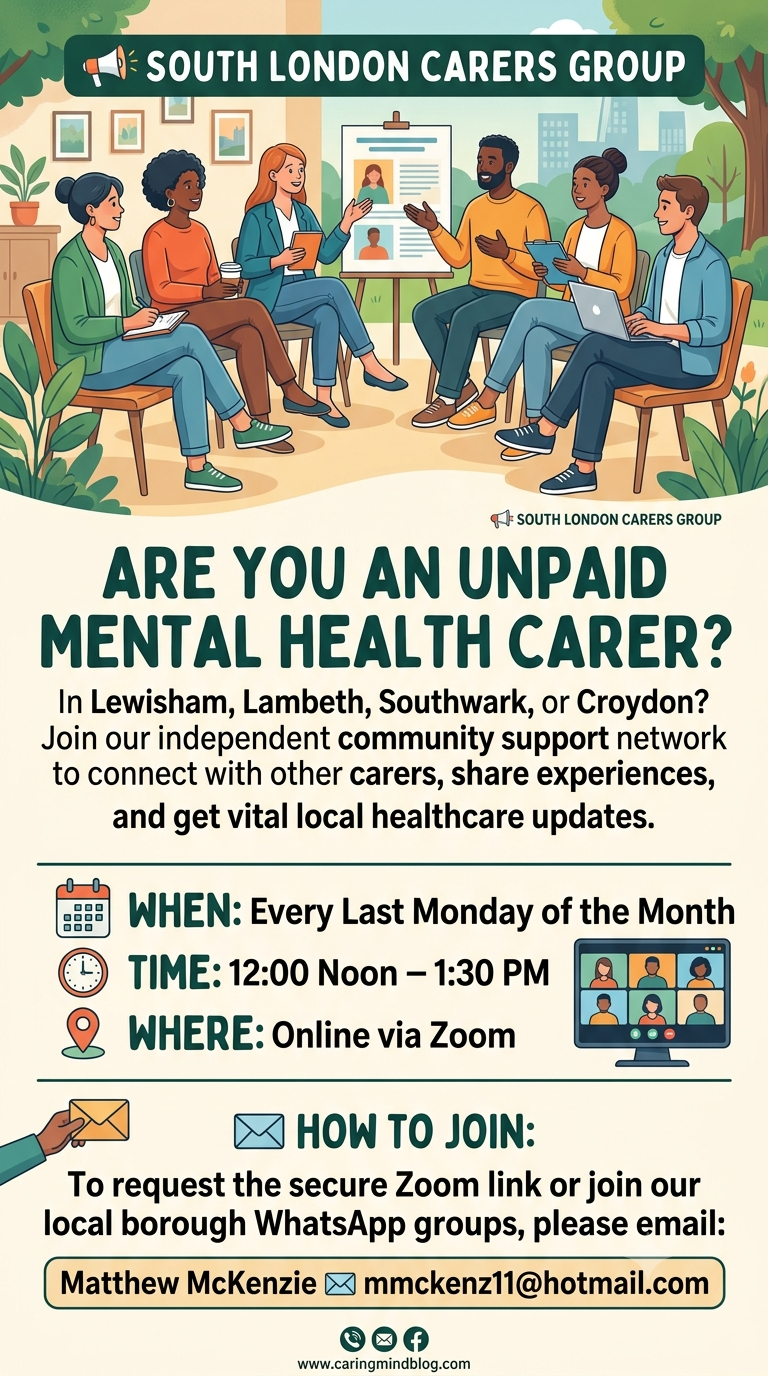
As always, the forum provides a safe place where carers can raise concerns directly with decision makers, hear about new developments, share experiences and help shape improvements across mental health services.
For those who were unable to attend, here is a detailed summary of the meeting.
Welcome and introductions
We welcomed carers from across Lewisham, Lambeth, Southwark, Croydon, Richmond and surrounding boroughs, alongside representatives from:
- Lewisham GP Mental Health Transformation
- Carers First Croydon
- Carers Hub Lambeth
- POWHER (NHS complaints advocacy)
- Southwark Council
- Carers with lived experience
- Voluntary sector organisations
The strength of the forum continues to be its mix of lived experience alongside professionals willing to listen directly to carers.
One particularly encouraging update at the beginning of the meeting was confirmation that South London and Maudsley NHS Foundation Trust (SLaM) is reviewing its Triangle of Care work and wishes to involve carers more closely in that process.

This is extremely important because Triangle of Care is one of the main national frameworks that helps mental health services work better with families and unpaid carers.
Lewisham Mental Health Transformation Update
Our first guest speaker was Dr Anna Robinson, GP Clinical Lead for Mental Health Transformation in Lewisham.
Dr Robinson explained that one of her main priorities is improving communication between GP practices and specialist mental health services. She recognised that many of the difficulties experienced by carers occur during transitions, particularly when someone moves between primary care and secondary mental health services. To help address this, she has already begun bringing together GP leaders and mental health professionals, creating opportunities for closer collaboration and establishing direct communication channels, including a new WhatsApp group linking GPs with mental health clinicians so concerns can be discussed more rapidly. She hopes these improvements will lead to better referral pathways, clearer discharge arrangements and more consistent communication between services.
Improving communication between GPs and mental health services
One of the biggest priorities is improving communication between GP practices and specialist mental health services.
Many carers know only too well how stressful it can be when someone is discharged from secondary mental health care back to their GP.
Communication delays often create uncertainty about:
- medication
- follow-up care
- relapse planning
- physical health monitoring
- who is actually responsible for ongoing care
To improve this, Lewisham has already begun bringing together GPs and mental health clinicians, including establishing direct communication channels so problems can be discussed much more quickly.
This was welcomed by carers, although many explained there remains considerable work to do.
Carers’ biggest concern: discharge back to GPs
This became the largest discussion of the afternoon.
Many carers expressed anxiety about people with severe mental illness being discharged from community mental health teams back to primary care.
Some of the concerns raised included:
- GPs may not know the patient as well as specialist teams.
- Carers worry relapses may not be identified quickly enough.
- Missed appointments are sometimes an early warning sign rather than a sign that someone is well.
- Some medications require specialist monitoring.
- Communication between services is still inconsistent.
One carer explained that if someone experiencing psychosis fails to attend appointments, it should trigger concern rather than assumptions that everything is fine.
Another highlighted that patients can sometimes cancel appointments themselves, meaning clinicians may never realise there is actually a developing crisis.
Dr Robinson acknowledged these concerns and confirmed they are exactly the type of issues she wishes to improve through stronger collaboration between GP practices and specialist services.
Early identification of mental illness in schools
Another important discussion focused on children and young people.
One parent shared how concerns about their child’s mental health had been dismissed at school months before a serious psychotic episode eventually occurred.
This led to discussion about whether all school staff should receive training to recognise early signs of serious mental illness as part of safeguarding training.
Dr Robinson explained that Lewisham is expanding mental health support teams in schools and is also developing alternative services for young people because traditional CAMHS services remain under enormous pressure.
The discussion highlighted how earlier recognition may prevent future crises for some young people.
Universal Care Plans and identifying carers
During the discussion I raised the growing use of the Universal Care Plan (UCP) across London.
One area we discussed was whether GP surgeries are identifying unpaid carers more effectively.
Many carers are still not recorded as carers within GP systems, meaning they may miss out on:
- health checks
- vaccinations
- support services
- referrals
- carers’ information
Dr Robinson confirmed GP systems can record carers through coding, but acknowledged this often depends upon carers identifying themselves.
This remains an important challenge because many people caring for relatives still do not think of themselves as “carers.”
Better identification continues to be essential if carers are to receive the support they deserve.
The discussion also broadened into medication safety, the role of GPs in supporting people with long-term mental health conditions and the identification of unpaid carers within GP practices. A carer shared her own lived experience of being misdiagnosed and suffering severe adverse reactions to medication before eventually receiving the correct diagnosis and treatment. Dr Robinson acknowledged that medication can sometimes initially worsen symptoms and stressed the importance of clinicians discussing potential side effects openly with patients.
As I raised questions about the rollout of Universal Care Plans and whether GP surgeries are preparing to identify carers more effectively through SNOMED coding and improved care planning. Dr Robinson explained that GP systems can record carers, although this often depends upon carers identifying themselves, and recognised that many people providing substantial care still do not see themselves as carers. The discussion reinforced the importance of improving carer identification, strengthening communication between services and ensuring carers are recognised as genuine partners in care rather than remaining invisible within the healthcare system
Carers First Croydon
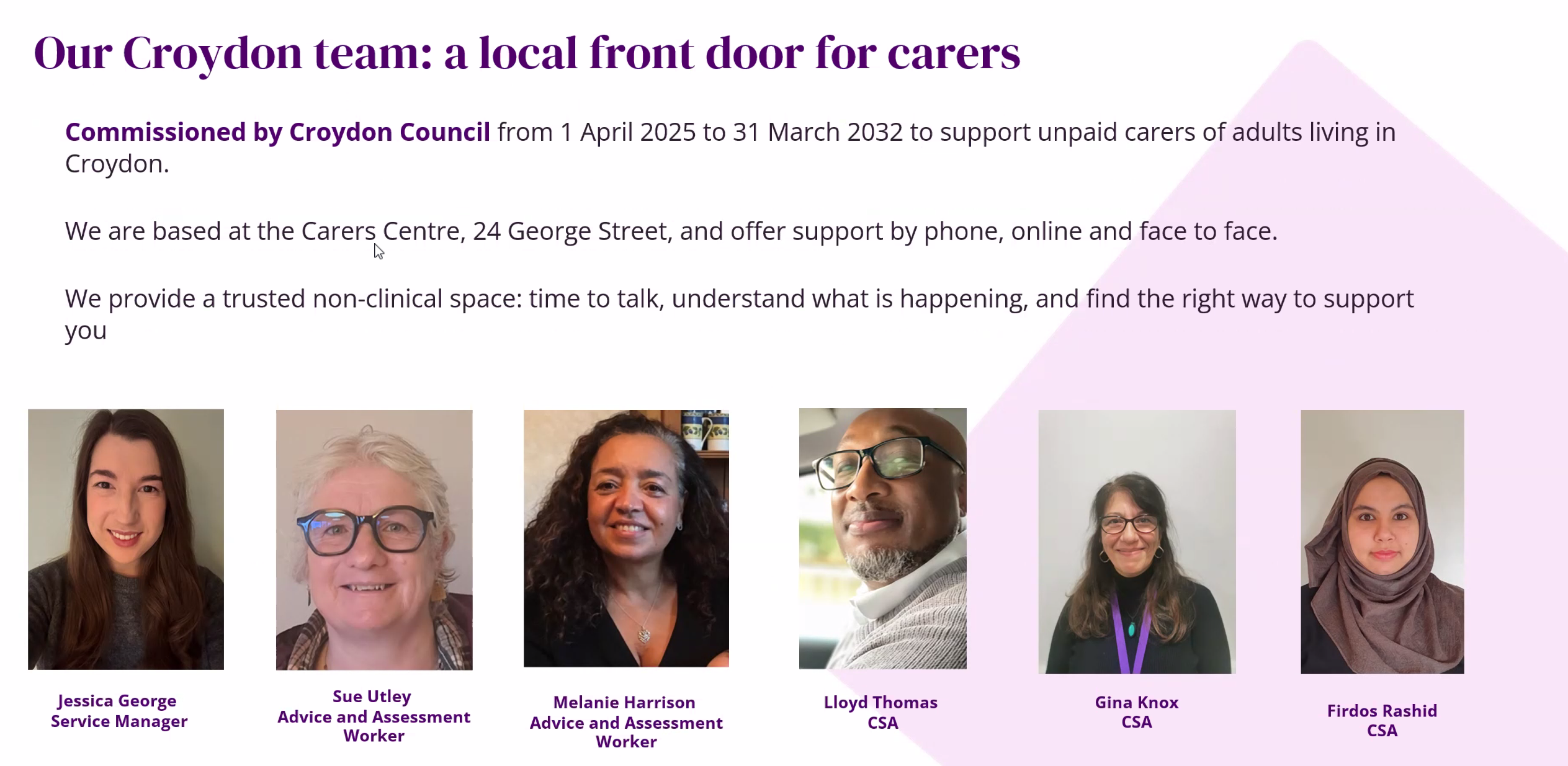
Our second presentation came from Carers First, the organisation delivering carers’ services across Croydon.

Jessica and Toby introduced their service and explained how they are developing support specifically for unpaid carers, including those caring for someone with mental illness.
Although their service supports all carers, they recognised that mental health carers often experience unique challenges.
These include:
- confidentiality barriers
- crisis situations
- unpredictable relapses
- emotional exhaustion
- isolation
- uncertainty around care planning
Their presentation showed a genuine understanding of the pressures faced by mental health carers.
I agree. For a blog, that section reads more like meeting notes than an article. Here’s a much smoother narrative version that still captures the main points without relying on long bullet lists.
Carers First Croydon: Supporting Carers Before Crisis
The organisation commissioned by Croydon Council to provide support for unpaid carers across the borough. Jessica and Toby introduced the service and explained how they are working to ensure carers receive support much earlier in their caring journey, rather than only when they reach crisis point. Although the organisation supports carers of all ages and caring situations, they recognised that those caring for someone with mental ill health often face unique challenges, including emotional exhaustion, confidentiality issues, unpredictable relapses and the constant uncertainty that can accompany serious mental illness.
A key message throughout the presentation was that support for carers needs to be holistic. Carers First offers statutory carers assessments, practical advice, emotional support, peer support and wellbeing activities, but these conversations extend far beyond simply discussing the caring role. Staff work with carers to understand the wider impact that caring has on everyday life, including issues such as employment, finances, poor sleep, housing difficulties, physical health and emotional wellbeing. The aim is to identify the pressures that make caring more difficult and then work alongside carers to find practical solutions, whether through grants, referrals to other organisations, respite opportunities or local wellbeing services.
The presenters emphasised that many carers wait too long before asking for help, often believing they should simply cope on their own. By the time support is requested, carers may already be physically and emotionally exhausted. Carers First hopes to change this by encouraging earlier referrals from GPs, mental health services and carers themselves, allowing support to be put in place before problems become overwhelming. The earlier carers receive advice and practical assistance, the more likely they are to maintain both their own wellbeing and their ability to continue caring.
There was also a strong focus on carers’ own health and wellbeing. The presenters spoke about activities such as carers cafés, Qigong sessions, volunteering opportunities and wellbeing programmes, not simply as recreational activities, but as an essential part of sustaining carers over the long term. One particularly powerful message from the presentation was that self-care should never be viewed as a luxury or something to feel guilty about. Instead, looking after carers is fundamental to maintaining safe, sustainable caring relationships. By supporting carers emotionally, socially and practically, organisations like Carers First help ensure that carers themselves remain healthy enough to continue supporting the people who rely upon them.
Southwark Council Engagement: Safeguarding Review
Later in the meeting we welcomed representatives from Southwark Council, who attended to discuss the council’s current review of safeguarding arrangements and, importantly, to hear directly from carers about their experiences. The discussion recognised that safeguarding is not simply about responding to abuse or neglect, but about ensuring that people with mental health needs receive safe, person-centred care while families and carers are appropriately involved throughout the process.
The review aims to strengthen safeguarding by making it:
- More consistent across services.
- More proportionate to individual circumstances.
- More person-centred and focused on outcomes.
- Better at involving families and carers where appropriate.
- More responsive to concerns raised by people with lived experience.
Council representatives emphasised that this was not simply a consultation exercise but an opportunity for carers to genuinely influence how safeguarding develops in Southwark. Those attending the forum were encouraged to continue sharing their experiences so that future improvements are informed by the realities of supporting someone with mental illness.
Questions and discussion
The discussion that followed highlighted a number of recurring themes experienced by carers across South London.
Several carers explained that they often recognise subtle changes in a person’s behaviour weeks before professionals become aware that something is wrong. As the people who know their relative best, carers felt that their observations should be taken more seriously when concerns are first raised, particularly where there is evidence of deteriorating mental health or increasing risks.
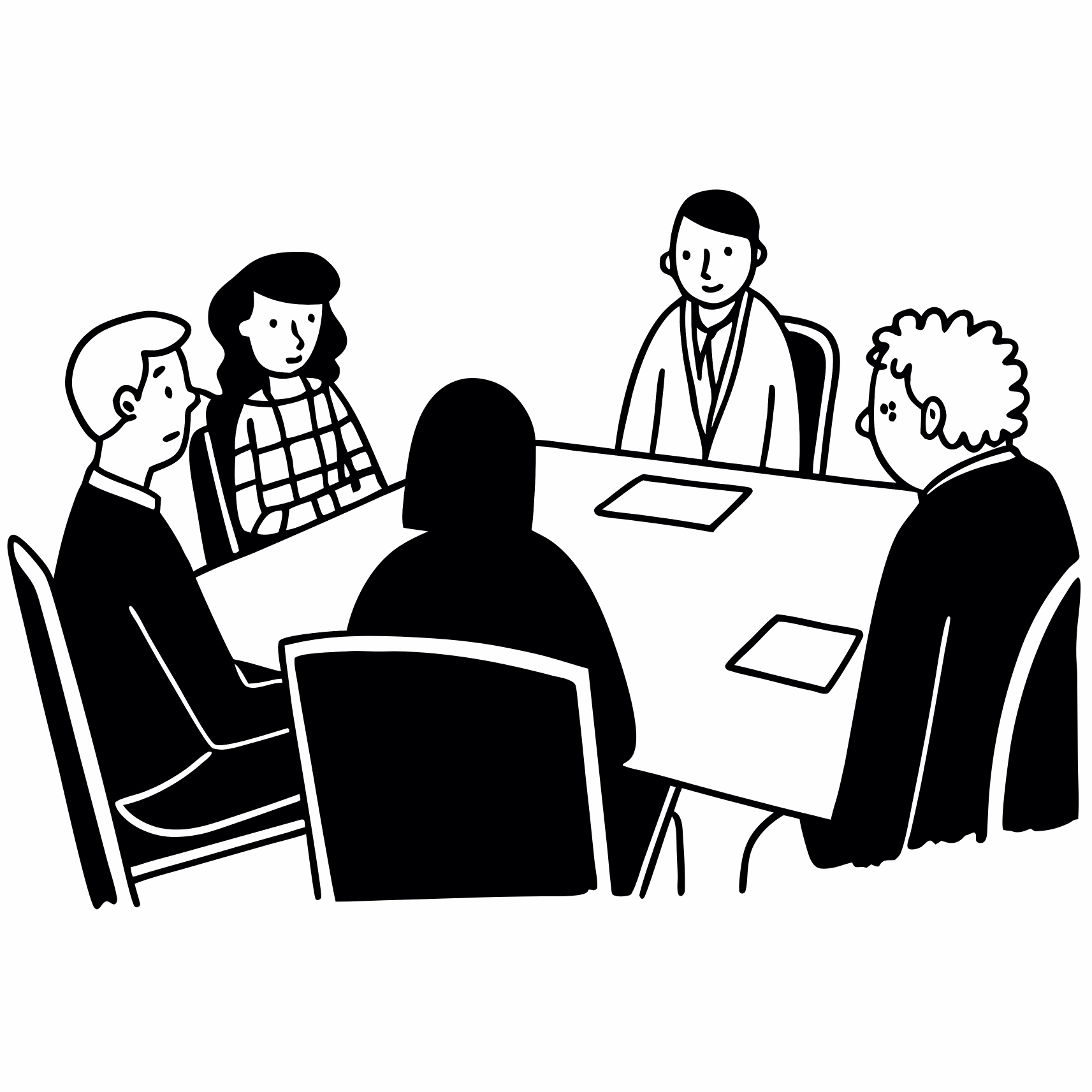
Questions were also raised around how safeguarding concerns are assessed and whether professionals always communicate effectively with families once a concern has been reported. Some carers described occasions where they were uncertain about what action had been taken, what the next steps were, or whether their concerns had been fully understood.
There was also discussion about balancing confidentiality with safeguarding responsibilities. Whilst recognising the importance of protecting an individual’s rights, carers emphasised that excluding families from conversations can sometimes mean valuable information about risks, changes in behaviour or previous crises is overlooked. Many felt that better communication with carers could strengthen safeguarding rather than compromise it.
Another important point raised was that safeguarding should not only focus on responding after a crisis has occurred. Instead, carers felt services should recognise early warning signs, intervene sooner where possible and view carers as partners in identifying emerging risks before situations escalate.
The representatives welcomed these reflections and acknowledged the value of hearing directly from lived experience. They encouraged carers to continue engaging with the review process so that future safeguarding arrangements better reflect the realities faced by families supporting someone with serious mental illness.
Lambeth Update
We were also pleased to receive an update from Karen Ibrahim, Mental Health Carers Coordinator at Carers Hub Lambeth, who shared a number of developments taking place across the borough to improve support for unpaid carers.
Karen explained that Carers Hub continues to expand its offer to carers, with several new initiatives now available. One of the most significant developments is the introduction of the Lambeth Carers Card, which is intended to help carers identify themselves more easily when accessing services and encourage wider recognition of the vital role unpaid carers play. Alongside this, Carers Hub has strengthened its welfare benefits support, enabling carers to access specialist advice on benefits, financial entitlements and income maximisation, an increasingly important service given the financial pressures many carers continue to face.
Another important area of work has been raising awareness of carers throughout local services. Karen described the continued delivery of carers awareness training for professionals, helping frontline staff better understand carers’ rights, the challenges families experience and why carers should be recognised as partners in care rather than simply relatives accompanying patients. She also highlighted the ongoing development of the Lambeth Mental Health Carers Group, which continues to provide carers with opportunities to share experiences, influence local services and receive peer support from others who understand the realities of caring for someone living with mental illness.
Questions and discussion
The discussion then moved towards some of the more difficult experiences carers continue to face within inpatient mental health services.
One issue raised was the safety of inpatient wards, with concerns expressed about incidents involving patient-on-patient violence and the emotional impact these situations can have on both patients and their families. Carers discussed the importance of ensuring that safety concerns are taken seriously and that families are kept appropriately informed when incidents occur.
Questions were also asked about how carers’ concerns are escalated when they believe someone is at risk or when communication between staff and families begins to break down. Karen acknowledged that these situations can be extremely distressing for carers and stressed the importance of maintaining open communication between inpatient teams, community services and families wherever possible.
The discussion also reinforced the wider importance of involving carers throughout a person’s mental health journey, rather than only contacting families during periods of crisis. Participants agreed that carers often hold valuable knowledge about changes in behaviour, early warning signs and previous experiences of relapse, and that this lived experience should be recognised as an important contribution to safe and effective care.
Karen thanked carers for continuing to share their experiences and encouraged everyone to remain engaged with Carers Hub Lambeth, emphasising that feedback from carers plays a vital role in helping improve local mental health services and ensuring carers’ voices continue to influence future developments.
Looking ahead
Our forum will continue bringing together carers, NHS services, local authorities and voluntary organisations to improve mental health support across South London.
If you are an unpaid mental health carer living in South London, you are always welcome to join us.
Together we can continue raising carers’ voices, influencing services and helping ensure that carers are recognised not simply as visitors to mental health services, but as valued partners in care.

