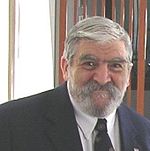
Prof Daniel N Robinson
Hello again. Hope that after reading this blog, you have time to check out my site. I do more than just the awareness series on mental illness. I also do a series of lecture reviews, mainly on psychology, psychiatry, sociology and ethics. Why on earth should a carer spend time on humanities and psychology? Well for a start it is interesting and fairly related in the mental health area.Hello again. Hope that after reading this blog, you have time to check out my site. I do more than just the awareness series on mental illness. I also do a series of lecture reviews, mainly on psychology, psychiatry, sociology and ethics. Why on earth should a carer spend time on humanities and psychology? Well for a start it is interesting and fairly related in the mental health area.
This particular review looks at one of the psychological greats lecture on his course “consciousness and its implications”. The lecturer is Daniel N Robinson who is a philosopher who is Distinguished Professor Emeritus of Philosophy at Georgetown University and a Fellow of the Faculty of Philosophy, Oxford University.
Unfortunately the course can be a little challenging to get into at first, but there is nothing wrong with replaying the lecture in order to get to grips with the subject material. The course has 12 lectures and as you can tell Prof Daniel spends time examining the mystery of what is consciousness.
As a carer, all the years I have been trying to support someone close to me struggling through mental illness, I found myself asking deep and profound questions. The most common question i would ask myself is “Where is the person that I used to know?”. How far has this mental illness taken from the person I used to know.
As of this blog post, the lecture I will focus on is lecture 12 titled “Consciousness and the end of mental life”. I did have some reservations playing the final lecture, because as you may have guessed there is this overwhelming fear of deep dark questions probing me on the challenges I will have to face.
The lecture begins off looking as several startling cases of patients trapped years in a coma only to slowly come out of a coma from severe brain trauma. One incredible story was of Terry Wallis – The man who slept for 19 years. Terry Wallis emerged from a 19 year coma and regained the power of speech.
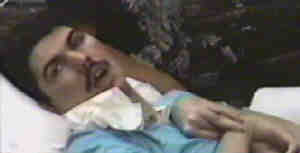
Medical professionals were astounded and started to examine the changes in his brain, it had always been the case that neurons were non-regenerative, but in the Wallis case there seemed to be strange activity in his neurons. How!?!?
Prof Daniel starts to talk about the Coma Recovery Association and how the association offered advice on how comatose patients can recover, but it is risky. Within the lecture we look at further cases where there was one woman who recovered from a coma only to complain that unconsciously she kept hearing the doctor by her bedside talking.
Another startling case was of was of Brian Kastler, neurosurgeon’s in this case were astounded at his slow, but gradual recover from devastating brain trauma. The lecture looks at many other cases and examples, but Daniel is quick to point out that these cases are not often the expect outcome.
Embed from Getty ImagesProf Daniel reminds us that the brain is not like skin or bones, if affected by trauma then the cells more likely will die. Still the regeneration is a lot greater in childhood, depending on the damage. However if the cerebral cortex is damaged then the greater the damage. The lecture points out that each patient case is unique and throws light into neuroscience. What was the deciding factors in each of the cases?
The lecture then moves on to the Terri Schiavo case, where a patient “Terri Schiavo” was a right-to-die legal case in the United States from 1990 to 2005, involving Theresa Marie “Terri” Schiavo, a woman in an irreversible persistent vegetative state. The lecture examines the problem of PVS (persistent vegetative state) cases and looks into cases where there has been misdiagnoses. This then shows the dilemma faced by doctors with several startling questions “When to turn off the life support system?”, “where are there signs of life?”, “What are the other possibilities?”.
Can you begin to see how the lecture is slowly moving into ethics? There is no mistake why I have added a link into ethics off my blog site because when practicing medicine, you are dealing with people’s lives and if doing that then ethics is not far away.
Embed from Getty ImagesProf Daniel lecture looks into more philosophical areas on American philosopher Thomas nagel’s question “what is it like to be a bat?”. Prof Daniel wants to raise the implications of consciousness. Prof Daniel also talks about Arestole’s work on the biological studies on sensation. Eventually the lecture gets into deeper questions on what is consciousness as he queries if someone dreaming is conscious regarding if they are aware of sensations. A good example is given on how we determine our own consciousness, which is down to epistemic justification (part of epistemology that attempts to understand the justification of propositions and beliefs). If no one believes that we are conscious, then we can only hope to share our experience with that person so they experience the same thing. e.g. pointing to an object in the room as validation.
Embed from Getty ImagesThe lecture then takes a greater step towards ethics and moral thought. With examining questions on.
- Our duty to others, our rights to others.
- They have a rights to be treated even though unwell, but how?
- We have a duty not to exploit the vulnerabilities of others.
- What are our duty to others whose rights cannot be protect by themselves?
Prof Daniel then throws up a dilemma not only for health professionals, but for carers or caretakers. Remember the question I asked myself at the beginning of this blog? So this is why I often say to mental health carers that they should take an interest in psychology and psychiatry. Do not be put off by its deep complex field, we all have something to contribute.

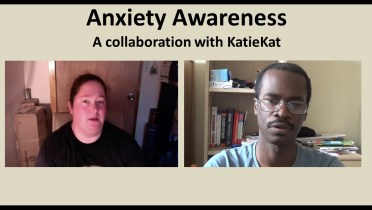
 Welcome back to another one of my collaborating on raising mental health awareness. This time I am collaborating with mental health survivor Psycopathic_ sociopath. That is the name of her Youtube channel. You may wish to check out some of her stuff, although she has just begun to do more videos on mental health.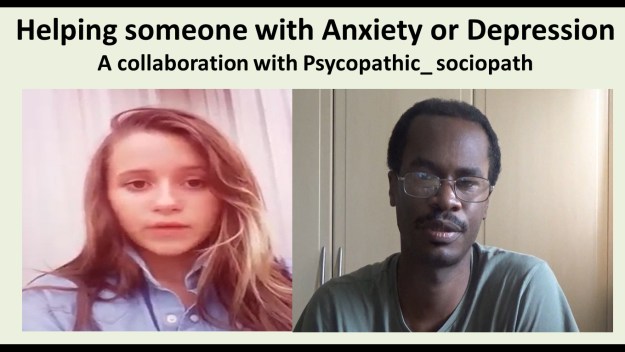
 Welcome back. Here is the first Mental Health Carer forum update for the London Borough of Lambeth.

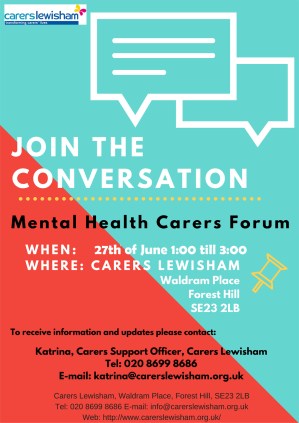 Welcome back to another update of the June Mental Health Carers forum 2017. The Mental Health Carers forum is a basically a forum for carers who care for someone using the mental health services. What I mean by a carer is someone who is unpaid and caring out of love, desperation or commitment. Carers are not care workers, carers do not get paid and they do not have clients.

 At long last, Carers Week is here. From the 12th of June till the 18th of June, there is a week long awareness about carers and what they go through. As far as I know, 8 important charities are engaging to get communities across the UK involved, encouraging people to register events and pledge support in the run-up to Carers Week 2017.
 A Caring Mind