Its about time I did another review, however this one is different. Usually I attend events, conferences, engagement events and awareness days. On the 23rd of October 2014 I decided to pop over to to the Battersea over in the borough of Wandsworth to watch an opera performed at Testbed1 which is a 7,000 sq ft creative events space located in Battersea.. Now I am usually just the person to go to the Cinema and yes I know that seems boring, but I thought why not check out this new opera called “The Anatomy of Melancholy”.
As you can guess Melancholy is a state of low mood or we could say Depression, so since this is a blog is about caring and mental health, I felt it was worth my time to view this Opera performance.
While I was travelling to the show, I kept thinking at the back of my mind how will this Opera performance describe the form of depression, but before I continue with the review, I think its important to describe a bit about depression.
Depression can affect us all, some get depression worse than others. If someone suffers chronic depression then this can be a serious mental health condition where the person begins to become very sad, hopeless, and unimportant and often is unable to live in a normal way. The person experiences
Loss of interest
Slowness of movement and thinking
Thoughts about hopelessness, suicide and death
Tiredness and lack of energy
In the UK Depression affects 1 in 5 older people. You can get more information about depression from the Royal College of Psychiatrists.
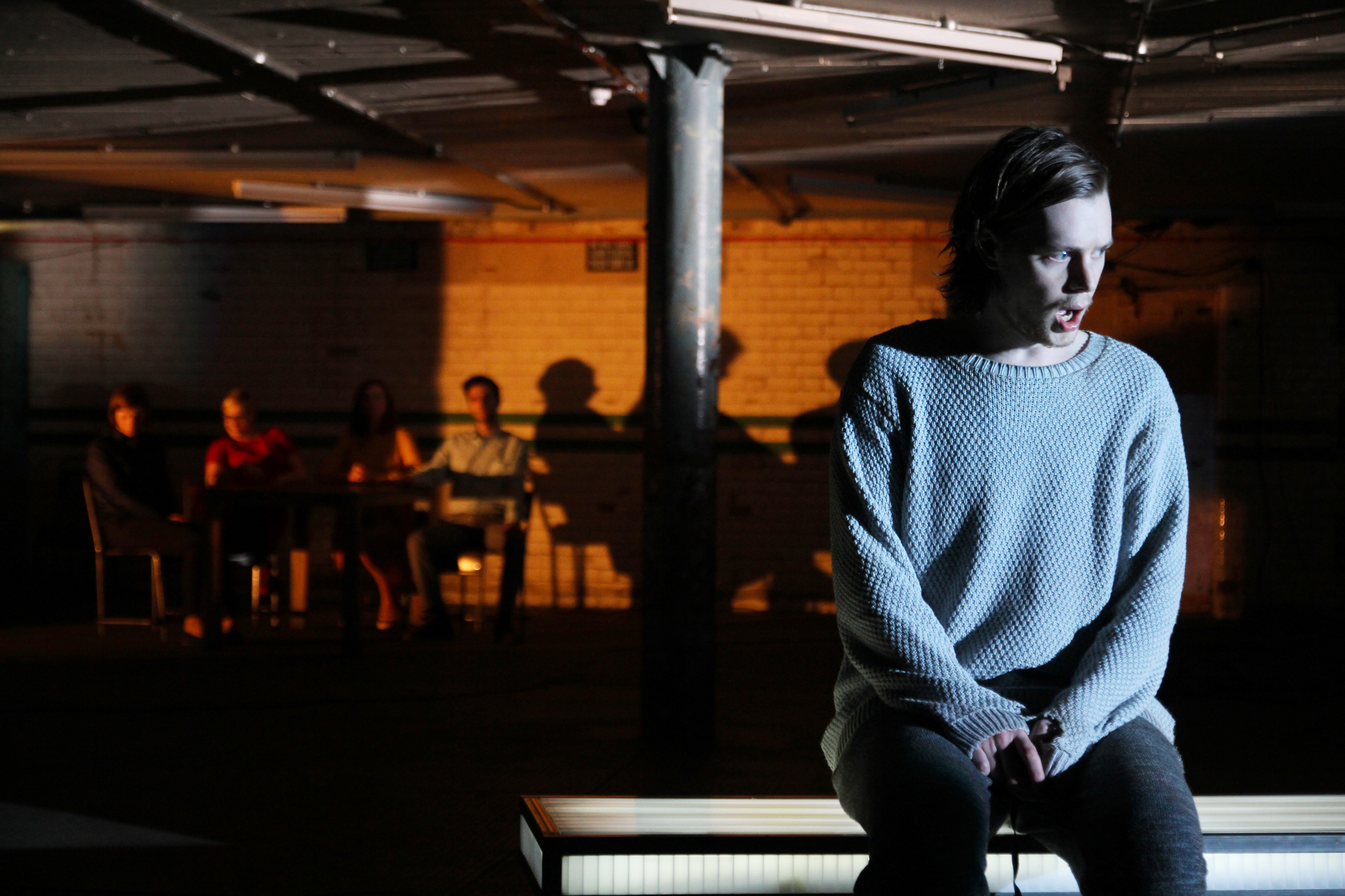
Going back to the Opera performance, as I entered to gain a seat around the stage, I was impressed with the use of lighting, which set the scene very well. I especially admired the use of shadows around the stage. The lighting was done by Joshua Pharo who has done many works across theatre, dance and opera.
The play was written and directed by Finn Beames who is also the founder of bodycorps. We also had OPUS2014 finalist Benjamin Tassie who composed the music for the play and the co-designer being Mayou Tikerioti who has designed many productions in the UK and Greece. The conductor of the play was Tim Murray who has already conducted a series of operas at the Gran Teatro del luceu, Royal Opera House and more.
The Opera centered on the old medical belief of the four humors: disease or ailment being caused by an imbalance in one or other of the four basic bodily liquids, or humors. These being Yellow, Phlegm, Black bile and blood. The Opera singers included
John Lattimore whose new work for autumn 2014 will cover John Adams at ENO.
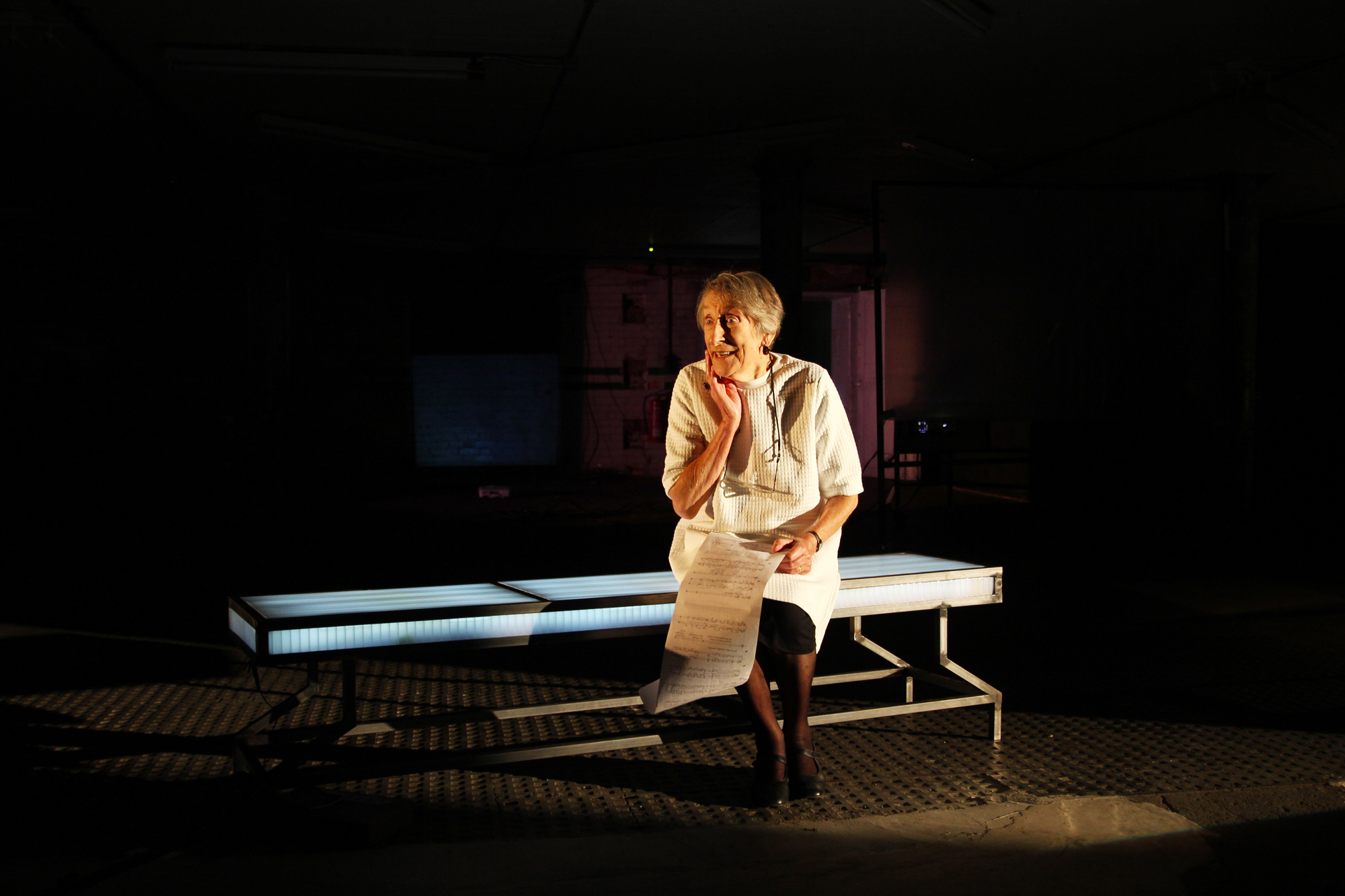
We also had actors Mark Beesley who sung as a principal solo singer at many major opera houses. We also had Janet Henfrey who has been performing over the last 50 years in many theatres.
Other members of the cast were Donna Lennard who has performed in many opera roles one being alice in Airborne, Dario Dugandzic whose credits include The Dark. Anna Harvey with her roles being “Daughter of the sea” and Maud Millar who made her debut Oliver Knussen’s Trumpets with the BBC Symphony Orchestra.
The style of the opera kept my interest going as I looked for references on how depression affects someone. The actors carried their characters well enough that you at least cared about what happens to them in the play. The opera highlighted not only the difficultly of living with depression, but how it affects families and carers, which was well performed by the Grandmother (Janet Henfrey) and the Profather (Mark Beesley).
The Opera also centered on the use of genetics and renaissance medicine, there was quite a lot to learn about the study into Melancholy.
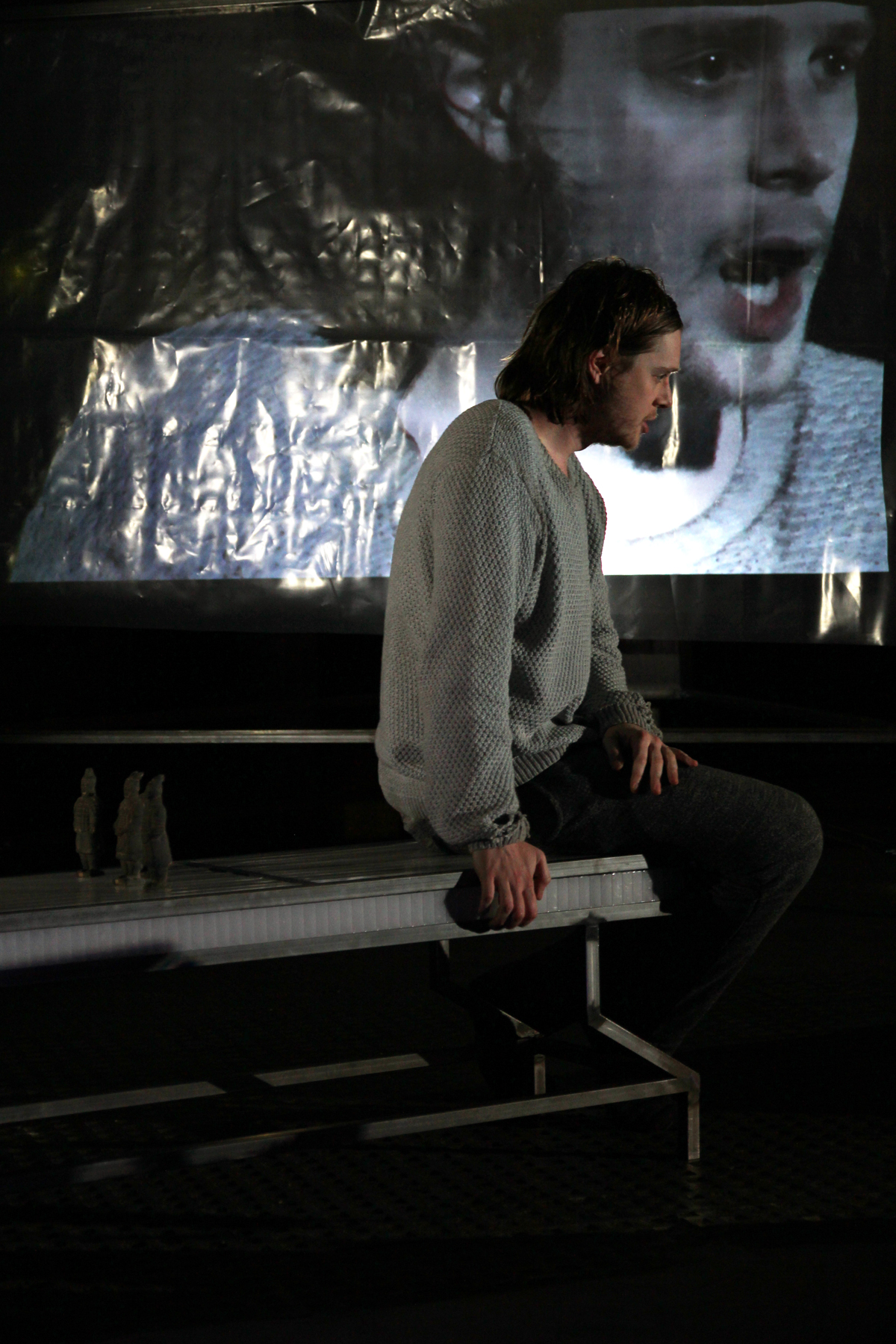
The performance was also very creative in using different scenes and equipment where inventiveness raised my curiosity about depression, especially with the use of film and equipment where I began to almost focus on several things going on at once.
The music played throughout the opera lent itself to the performance with its eerie sounds, frightening scores and gloomy moods. I must admit I am not one for opera performances and some parts of the play I couldnt understand in one sitting, but nevertheless I really enjoyed the show and would certainly see it again if I have the chance.
Welcome to another one of my blog posts, on this particular post I want to talk about carers. Those who have regularly visited my blog might have some idea what a carer already is, but for those who are new to my blog may wonder “what actually is a carer?” What defines a carer and why do people, families and communities sometimes feel compelled to care?
What is a carer
Someone who looks after another persons needs
Lets say you have known someone most of your life or perhaps someone in your family who has fallen ill. That person tries to do their chores and live their life without much help or support, but after a while it will be noticed by most people that they are struggling.
This is when a person decides to take on some of the responsibilities of that person that has become ill, although the carer’s main focus is to provide help, some security and care for that person.
Not all carers are the same and some have demanding caring duties, while others care on and off for a short time, but no matter what the tasks, they are all carers.
They are mostly not professional carers
When I talk about carers, I am not talking carers who train up on a course and look for people to care for. I am talking about those who find out that care is directed at them due to a family member falling ill, or a neighbour or a friend in desperate caring need. I am talking about parents looking after their children who have sustained serious injuries, disabilities or impairment. I am talking about young carers who are not only trying to understand their place in the world, but also trying to understand why their parents are in need of assistance.
Its not that carers can’t walk away from the care they give, some carers have to make that decision on what they should sacrifice. Carers may have to give up work, education, time and commitments to provide care.
Carers are known as carers because they ARE standing by their loved one. If someone moves on they can still provide some care, but it might not be as demanding as those who are currently providing long term or full time care.
Carers have to juggle many things as if their own life is slightly put on hold while they seek to understand the illness that is affecting who they care for. This is more difficult if the illness happens to be a mental illness or perhaps a devastating physical problem.
Some carers might not have a clue on what they may face and will have to look for answers or support, but we ll get on to that later.
Types of carers
I am not going to make a long list, but I will want to try define at least some of the types of carers. There are always a long list of carers you can search for on the internet, but since all carers are not the same, it makes sense to point out different types of carers.
Carers for elderly
Here we have those who will end up looking after their parents, most do this because they are concerned or worried that their loved ones will end up in a home too far away from them. Quite a lot of older people prefer to stay at home for their own independence, while others fear abuse and neglect.
Some people may wish for their parents to move on, but carers may prefer old aged parents to stay at home. You can also have older aged carers who care for their partners who are ageing. Other older aged carers also may care even for younger people.
Below is a list of symptoms carers may have to care for when looking after older aged loved ones.
List of symptoms these types of carers provide care for
Heart conditions
Dementia, including Alzheimer’s disease
Depression
Incontinence
Arthritis
Osteoporosis
Diabetes
Breathing problems
Frequent falls, which can lead to fractures
Parkinson’s disease
Cancer
Carers for the disabled
These type of carers can be of any age, but this time care can be demanding depending on the disability the caree has, when I mean caree, I am talking about the person receiving the care.
Types of disabilities a carer will have to care for.
This is not a full list, but shows what carers may need to tackle in order to provide care. I have two brothers who have Autism and providing care and safety as well as treating them with dignity can be a juggling act, but be aware Autism is a range or spectrum of disabilities.
There are also different ranges of paralysis putting strain on carers wanting to care for those who lack the function to care for themselves.
Carers for mentally ill
Another type of carer who often can be hit pretty hard because they can lack the knowledge of how to deal with mental illness that has struck their loved one. How can you care for someone who may not wish to receive care and yet is recognised by the mental health system as user of the services. What happens if the caree does not wish to engage with services? Where does this leave the carer, what rights do they have?
Some disorders can vary in the type of care needed, while other disorders are devastating and require support not only for the patient or person with lived experience, but also for the carer who can at times be overwhelmed in providing care.
Youngs Carers
One of the most difficult experiences for a carer is that of a young carer. Young carers can lack decisions on if to provide care or how to cope. Young carers face carer stigma and bullying from other young people who may find it funny that the person is caring for someone with disabilities or other illnesses.
The strain on young carers can be so difficult that often family relationships break down, although relationship breakdown is a common theme among many other types of carers.
Young carers especially need help in supporting their relatives and usually this can depend on how good social services are. One strain could be that pressure is put on the caree to have their child put in some form of care, but this can cause added strain to the child who now lacks family support, but could have freedom to enjoy their childhood. The balance of growing up as a young carer is a very fine line.
What MAKES a person a carer
You do not want to see your loved one hurt physically, emotional
A carer is not a sudden role, usually a carer is formed as a slow process. Since I have been a carer for most of my life, I have come to the conclusion that being a carer is something you become and the role will change.
As a carer you do not wish anyone else to take over your role due to fear that role will not be carried out, but this does depend on the type of care needed. I am now going into controversial mode. In the UK some of the health systems have failed loved ones, the systems designed to protect communities, families and those who fall ill have ended up as part of the problem due to power culture and lack of information share.
The elderly, frail, sick or mentally ill have been put at risk time and time again due to lack of resources, lack of finances, mistrust and neglect and lack of…..care.
I am not going out on a limb to blame the NHS as a whole. Since in the UK this is one of the biggest and best placed institutions, which Britain has to be proud for, we have skilled health professionals working overtime to provide care in difficult circumstances and even then we have carers who fail their loved one due to abuse and also neglect.
However we are always asked this question, the question asked of a carer is who do you trust?
The NHS or care system in any country has to be responsible somewhere, too many stories of failure to provide care and families and communities will mistrust the health system, they will then provide their own care. The primary role of a carer is to not see any more harm come to those that they love.
Carers share time and energy in their role to care
Although carers are put under pressure, but carers noticed that they can share their time to provide some care otherwise a carer would more likely step back and walk away.
There is a threshold where a carer will decide to stop if their caring duties become too much, but carers can see time and energy placed in their role. The resources of time, care and energy must be planned in order to stop a carer from being over burdened, this is not an easy thing to get right and it depends again on what the caree is suffering from as present.
Caring sometimes can be overwhelming, which is why carers need support themselves
No one is a born carer and carers often worry about their own health, be it physical or mental support. Carers who care do not get paid unless its a form of benefit, however caring is almost like a job to most carers, but carers aren’t bankers or engineers, they do not serve the public in that way.
Carers try to keep their families together, families try to keep community together, without the community then what do we have left? That is a frightening thought.
Carers have to emotionally second guess what their loved ones needs are, carers may also have to advocate on behalf of their loved one, sometimes the law may try to support carers, but at the same time block carers access to information (for a good reason), but this can cause conflict in the caring role.
Carers have to do physical chores, shopping, cooking, hygiene care, financial support and keeping the family together as well as sacrifice their own future.
The problem is caring is not something that can be physically traded, care is provided behind doors, caring is just something that is not often seen, so perhaps society does not value carers as they value material things. Maybe this is a human condition, but this human condition has a flaw, because not all in society will be carers, but one day we will all need care ourselves. Think about that for a second.
Carers can be trapped by outside forces who may not recognise them
Carers can be easily trapped, as I have mentioned before no one is forced to care, since caring can be a decision process. Some people can walk away from care, while for other carers the role has become too much and rightly so.
Maybe carers just feel they are not getting that support, but each day a carer will question themselves on how much resources do they have left?
Carer Stigma
Some people do not wish to be labelled as carers because they feel they are caring out the role as if they are a family member or doing this out of honour for the community. Others prefer that they are labelled supporter or helper, but no matter what they are called, they are providing care and assistance. Some carers are fortunate to have bigger families who can help take turns in the role, while other carers are litarily a one man army digging deep in vast energy resources.
Society is only as strong as the people who live within it and test it. Society is just not the be all and end all, society is changing all the time. The problem is society also must remain a state where community wishes to live within it. We all wish for society to be civil, but the problem is so many things are tied to economics and that includes the health system. Its a numbers game, less resources here and someone has to pay the price and the cost is painful.
Society has rules and unfortunately rules can trap carers. Carers can end up paying the price where they are only trying to help their family or the community.
Carers need to speak up, but not all can speak
Carers need to speak up, if carers wish to be valued for what they do, they need to let others know what battle they face almost every day. Some carers cannot easily do this, while others face the stigma of caring.
I have come across some people who feel carers are just lazy people who should get a real job, and some do have a point, there are other carers who abuse their position, but for most of the time a lot of carers are under huge amounts of pressure. Throughout my caring role I have encountered many organisations in the UK speaking up for carers that being CarersUK or Carers Trust and many more.
We also have engagement and participation groups and healthwatch springs to mind, because they play a greater role on access to quality health care.
Some support
If you are a carer yourself or know someone who is starting out as a carer, you are not alone, there is some help to support you on your journey
Going on line to find resources
Its a tough one, but I have always found going online to look for examples of providing good care. Some will say the internet has too much nonsense to make any good idea of what care should be, but use your judgement, compare different sources. Get numbers and ring around, join forums. CarersUK has a forum which offers support, advice and experience.
As for other countries, there usually is some form of carers forums online. If you do not have access to the internet, usually a library or a carers center has some online facilities for carers to use. Use these facilities to also plan your future, since it is important to work on your skillset, since you might not be a carer forever.
Visiting carer centers
You can always physically get support and that is by booking some time at a carers center. I use carers Lewisham myself and sometimes I pop over to other boroughs in London. At carers center you can get emotional support as counselling, financial advice, advocacy and meet other carers. The rule is do not try to cope by yourself.
Speaking to other carers
As I have mentioned before, speaking to other carers is vital. I can say safely say I have written this blog in one sitting, but I have only 10% of knowledge of what is required of carers. Speaking to other carers has several benefits but the biggest is to show that you are not the only one out there, you are not on your own. Carers can also offer advice on starting out on care, they can also offer some emotional support and advocate if need be. The other side of the coin is you can offer advice to carers who are at their wits end.
Information is your currency to your caring role
People often value currency as in money, carers lack financial capital, but money cannot buy love or care. So the thing is what can buy good love or care?
The answer is Information.
Carers should look online, speak to others and do not be afraid to ask. Get information and turn it into knowledge, then apply the knowledge. We are not perfect and the human condition is frail as is also society is not perfect and can also be put under pressure.
As a carer you will make mistakes, you will judge and be judged. You will get angry, you will be pushed aside and lied to and be undervalued, but deep down you can look yourself in the mirror. Money comes and goes, but memories of those who care will last generations to come.
Here is another lecture I came across which is quite suited to my blog. This lecture is from the course “Psychology of Human Behaviour” taught by Professor David W. Martin from North Carolina State University.
The course has 36 lectures, but the one lecture that caught my eye is lecture number 10 called “Schizophrenic Disorders”. I felt this lecture is important for a carer as myself since I am looking after someone suffering from such a condition.
So lets delve into this lecture further.
Professor David starts off from the lecture that he is going through the various mental disorders from the DSM IV, which as we know has gone up to DSM V, which stands for “Diagnostic and Statistical Manual of Mental Disorders”. This manual is very helpful to psychiatrists and others interested in mental health, but the manual also has a difficult and controversial history, but we can explore that for another time.
Welcome to my first review from a lecture I picked up this course from the teaching company called “Questions of Value”. This lecture although rather deep, is quite a fairly good start to my blog since it involves ethics, something family, carers and the community can become involved in from daily situations.
The course is taught by Professor Patrick Grim from State University of New York.
Within this particular course I look at lecture 19 out of 24 called “Choice and Chance”. Here this particular lecture looks at how the role of luck affects ethics and morality. We explore in this lecture Is life a mere matter of luck?
First the lecture explores why Immanuel Kant a famous philosopher thought that luck plays no role in mortality, Kant thinks that it is the good will that’s important and luck should not be a factor in moral decisions.
Here is a passage where Kant explains why he feels Luck has no place in the idea of moral decisions.
“A good will is good not because of what it effects, or accomplishes, not because of its fitness to attain some intended end, but good just by its willing, i.e. in itself; and, considered by itself, it is to be esteemed beyond compare much higher than anything that could ever be brought about by it in favor of some inclinations, and indeed, if you will, the sum of all inclinations.”
However Prof Patrick feels moral value of an action CAN depend on mere luck, there are factors of luck that can affect the outcome of an action. Some outcomes can be favourable, while others can cause disaster.
This lecture explores how morality is open to chance and for most of the lecture, Prof Patrick concentrates on factors of the law. We have several examples where ethics and the law are open to dispute. A good example brought up in the lecture was for instance the idea of crime of murder and the idea of attempted crime. The law has varying levels of different punishment, hence the act of attempted and the act of murder carried out.
Prof Patrick poses several questions
– How can these cases be treated so differently?
– What the person was trying to do, if successful?
Patrick starts that attempted murder may be unsuccessful because something outside your control could have happened e.g. Luck or something deeper that changes the outcome.
so here we have the law which allows one person to be executed to death, and the other is in jail a few years. The lecture looks at what how much of a difference that the mere amount of luck plays. Plus it seems unfair because of the ethical differences, but mainly just down to chance.
The lecture looks at the idea of intent, for instance when two drunken men fight in a bar and one yells out “I ll Kill you” and pushes the other man far back, which leads to the man falling and cracking his skull. We are asked what was the intent?
Another view from a philosopher Thomas Nagel, feels something seems unfair about this. Thomas feels moral luck does play a part in ethics and how it affects us. Thomas explored the ideas of 4 types of moral luck.
Being : –
Circumstantial Moral Luck
Constitutive Moral Luck
Causal Moral Luck
Resultant Moral Luck
The lecture examines the idea of “Resultant Moral luck” further by exploring the following example.
A speeding truck driver runs over a person, the driver will feel bad about this, however the truck driver can be negligence if he did not check his truck’s tires. While another truck driver also drives dangerously, but for him, even though he was speeding as well, the person was crossing on the road at the time.
Although negligence seems to be the case for both examples, the main difference is that outside forces e.g. the person being on the road must have played a part in how luck can affect the outcome.
Nagel shows our moral values can be self contradictory and he feels Kant conclusion of moral luck is unacceptable. However there are still some problems with this conclusion, the course feels Nagal is wrong, and there is a deeper level of ethics and intuition that plays its part in the human condition. Sometimes the legal system struggles take these factors into account because of the cost of social resources.
The lecture also looks into the problem of how social machinery operates, where we all know that no social machinery operates flawlessly, we are all prone to error. The social machinery design to present harm, can actually cause harm as it sways from one factor to another in balancing social issues.
So the fine line between the truck drivers is that they have both done something wrong, whether or not the person dies…which leads kant to be roughly right, but the social machinery needs to fit in to this structure, which it sometimes does not do.
How can this relate to families and carers? How can moral principles affect how society views them. we all question ourselves about if we are negligent towards our loved ones. We wonder if they suffer more because we have made the wrong decision. I sometimes feel that as a carer it is not possible to cover all bases, sometimes carers are in a position where outside factors can affect the result of care.
The lecture states that Morality has a social machinery as well, some moral principles are maybe too difficult to frame without expecting people to apply them without moral error.
The lecture finally looks at the problem of the transmission of ethical principles from generation to generation, such principles need to be generally effective and easily taught. Not all can be easily transferred, some are just not quite right where legal frameworks can also fail. for instance the idea of inherent wrongness cannot be easily identified.
There are problems where there are levels of social complexity in morality. The law also has is own problems because of social complexity. Prof Thomas feels that we have to take into account that some of our moral conditions or intuitions are far deeper than others, but the difficultly is identifying the ones that form some truth against the easy principles.
After spending some time thinking of what else I can add to my carers blog site, I wondered what could be of interest to others visiting the site. As you may have already known, I am bound to review things, such as the events I visit, but what about other subject criteria?
I mean this blog is not just about the world of caring, its also a reflection of what I have been through and what I have experienced in the realm of mental health. I actually have another blog, which reviews audio lectures. Some of the lectures are to do with history, but the problem is this particular blog site is on caring and mental health, so I took a long hard look at the subjects which I wish to include in the blog.
On this blog post, I have decided to do a post about World Mental Health Day 2014. Last year on World Mental health day 2013, I visited an event to do with service user involvement in research, which was held over at the London School of Hygiene & Tropical Medicine.
This year I am going to visit around 3 or 4 events in South London and experience how different people celebrate world mental health day 2014.
Please check out the video I made of the events I visited that day.
Going back to my blog post, ever since I have been a carer for someone suffering from schizophrenia, I have always wondered how such a mysterious illness can take the personality away from our loved ones.
I sometimes struggle to work out why my loved one does not understand me as much as she used to. It seems as far as I can remember my loved one seems so different as if there is lack of interest in many things, sometimes she is irritable and other times very withdrawn.
It feels like I could never understand mental health difficulties and I am sure my loved one struggles to explain how she feels.
I think that perhaps this is one of the reasons why there is a World Mental Health day 2014. The event is to allow others to reflect and think about mental health for the day. We cannot all experience what mental ill health fully means unless we are sufferers, but at least we can all help raise awareness and combat the stigma of mental ill health throughout society.
I feel it does not matter too much if you suffer from bipolar or severe depression, with world mental health day, it is so important to get our voices heard, it is so important to write down our thoughts and feelings so that others can learn from those affected by schizophrenia.
I only hope that as a carer and one that blogs fairly often, that others out there are inspired to blog about mental health. World Mental Health day need not be about depressing others about mental health, the day can also be a celebration of those who are clearly part of society.
We all go through difficult days and we all hit different levels of mental health. The blur between carers, health professionals and those with lived experience can encompass us all as anyone can be hit by mental health problems.
Society can only gain in the long run when no one is isolated, where no one is stigmatized and where no one ends up developing mental ill health in the first place. With events like World Mental Health Day, we can take that extra step to be aware of our own mental health, we can take that extra step to be aware of others suffering mental health problems.
I feel World Mental Health Day is about coming together and recognising what makes us human, no matter how fragile or strong we all are, we can forget that we are people, we end up forgetting our minds until its too late. We need to use such events as a way to remember that our mental health and emotions play a far bigger role than we ever take notice of.
Let us all celebrate, help raise awareness and use World Mental Health Day to aid us in to becoming healthier people and not only look after ourselves but to stop, reflect and look after others.
Welcome back to another blog post from a fellow carer. I would like you to check out the following scenario.
Just imaging this. Here we have a patient who talks to the doctor, the doctor sometimes struggles to understand the patient, then the doctor contacts the mental health consultant, the mental health consultant then contacts the care coordinator, the care coordinator contacts the patient, the patient then contacts an advocate and the advocate contacts the doctor, the doctor contacts the social worker who in turn speaks to the care coordinator who then is too busy to contact the patient who in turn does not contact anyone for a long time sinking futher into relapse.
Whats missing from this scenario?
Who is not being contacted or doing the contacting?
Anyone guess?
Thats it!! It is the carer. Each and everyone in that scenario is important and they all have their roles and responsibilities. However When there is a communication break down, which can often happen, when is it time to contact…….the carer?
Chain in the link
Time and time again, us carers who are looking after someone suffering from mental ill health will look to contact those involved in providing a service for the patient or for our loved ones.
There will be times that every so often carers feel shut out because we may not hear from anyone and yet us carers have to pluck up the courage and start raising issues, us carers have to start asking questions, because if we do not care then the ultimate question is who will care?
I am not stating that there is no reason for carers not to be contacted, there are plenty of good reasons and one being patient confidentiality. This goes to say that someone suffering mental ill health may not wish their family or carer to know what they are going through or suffering from. Some reasons are mental health stigma, other reasons are the fear of relationship break down and one of the most important is patient rights.
We all know there must be a balance to protect the patient, but this also does not mean that confidentiality can be used as an excuse, which it can sometimes be used as an excuse. I am no expert in patient rights or confidentiality, I can only speak as a carer of 11 years. Yet I have seen excuse after excuse as to why I have not been contacted if whoever I am looked after is suffering physical or mental health health difficulties, although at times I can see why information was not devulged to myself.
Us carers walk the fine line between fear, guilt and being isolated or pushed aside. We do not want our loved ones to experience any more pain, but we sit there at times silently waiting and guessing when to act. Us carers wonder when to ask more questions or when to raise concerns. Carers are that vital chain in the link, especially if we are caring for those who struggle to look after themselves.
It is known that those suffering mental health problems unfortunately have short life expectancies. They lives are about 10 years shorter than those who do not have mental health difficulties. This has become an issue in which the government is trying to tackle, but there is no easy solution.
When you hear of such depressing statistics then many are asking the question why are people suffering mental health problems dying far earlier?
Is this because suffers are so unwell that they cannot raise physical health problems sooner to the health professional?
Maybe the fault is with the health profession who might dismiss the patient because the service user is not making sense?
Perhaps isolation is the biggest killer of those suffering mental health problems as no one is there to listen to them, because the mental ill health has driven others away.
Or it could be the old numbers game where there just is not enough resources to check up on someone.
Another problem could be that of medication, which can aid in recovery, but can also pacify a patient to the point where they just do not even care about their own health or at worst speed up physical problems due to side effects.
I am not an expert in mental health and I am sure I am missing far more things off the reasons I have pointed out, I guess I can only speak from carer experience and to be honest I am sure this is also the experience of other carers out there wondering how many years are left for those they are caring for. It is an awful question to ponder, but this is usually on the forfront of many carers minds.
Back in 2013, I went to an interesting event held over at the Institute of Psychiatry. The event was called “Mental Health and the mortality gap: what is responsible and who is to act?”.
The event looked at the challenges and solutions surrounding the physical health of mental health service users.
The panel at the event were experts in their field and suited for such an event.
Where we had Professor Shitij Kapur, Deputy Vice-Principal (Health) and Dean of the IoP hosting the event.
On the panel was Dr Fiona Gaughran, Lead Consultant in the Psychosis Service at South London and Maudsley NHS Foundation Trust.
Simon Wylie, Clinical Lead for Southwark Acute.
Dr Ruth Ohslen, Lecturer in mental Health Studies at the Florence Nightingale School of Nursing and Midwifery.
You can listen to the recording of the event below.
In fact at around 33 minutes into the recording, you can hear me asking a question to the panel on my fears about the medication issue, which in fact I was absolutely terrified in asking, but ever since that event I am glad I did ask the question and I felt grateful to have been giving the oppertunity to do so.
However for any carer out there who is wrestling with such questions concerning mental health, I do urge them to attend events like the one I mentioned above. Even if as a carer you might not understand much of what is being discussed, at least you can feel that you making your presence felt, perhaps even form a network.
Going back to the issue of carers being part of the connection in communication. Us carers have to sometimes ask those difficult questions. I understand that pressure is placed upon the health professionals and there usually is a tug of war on who gets to know what about the patient.
The issue is even more tricky if deep down in the back of your mind you feel your loved one is lacking capacity to understand their own health risks, particularly if the physical health problems become more chronic.
I understand us carers cannot live someone else’s life for them and we should not smother whoever we care for either, but there is a threshold on when to act before its too late, which can be difficult for those providing the care and agonizing for those who are too late in raising the alarm.
In the end we are all part of the chain in helping to provide care for those suffering mental ill health and yes even the service user has to be proactive. We all have to communicate at certain degrees, that being the doctor, the consultant, mental health advocates and us carers.
The NHS is under pressure as resources become harder to reach, the outcome is that families and carers will play an even bigger part to fill what is left out of the gap of health service, to try close the mortality gap and finally to form the connection of communication.
Welcome back to another of my mental health and wellbeing event reviews. This next event I have been personally involved in helping to arrange with at least some of my ideas.
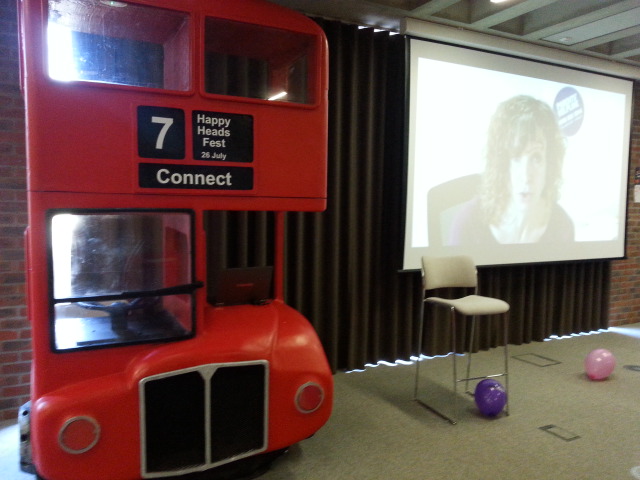
The event was on the 26th of July 2014 and it was aimed at young people to explore, learn and connect on expressing their views on wellbeing and mental health. The event was held over at the Maudsley Learning Center, which is a venue over in the London borough of Southwark that hosts wellbeing events, meetings and workshops.
I have written a blog post that led up to the Happy Heads event, which can be viewed here.
I have also made a 22 minute video about my visit to the Happy Heads festival. Feel free to watch the video below.
Going back to the blog post how did the event work out on the day? To be honest although I can give my views, I feel it would be great that a young person who attended the event should give their views on how they felt the event went.
My main view of the event was that the event lived up to its expectations and more, but engaging with young people on health and wellbeing cannot be done with just a festival alone, but this festival was a great start and was certainly well attended.
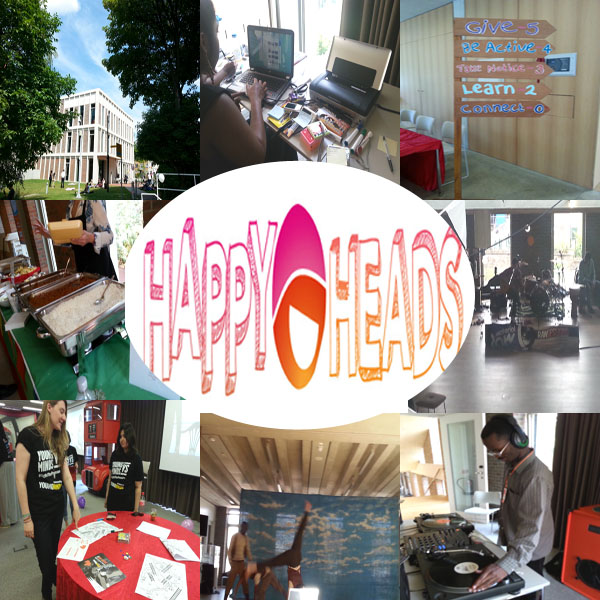
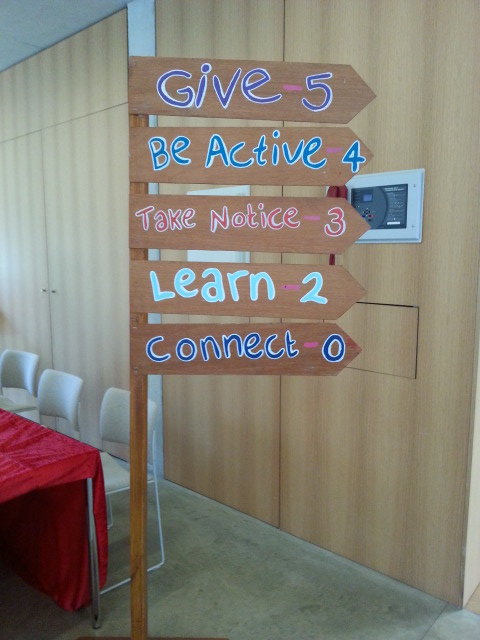
When I arrived for the event, I ended up volunteering to help out at the Timebanking UK stalls. I talked to a few people on what it means to giving your time and skill in order to help others. Infact the Happy Heads event was centered around five themes being
Being Active
Connecting
Giving
Learning
and finally “taking notice”
The Timebanking UK sections was on the “Giving” theme. I got creative in that zone and built one of my main talent in which I can help others. That talent was on computer skills, which was placed in the “Suitcase of Talent”.
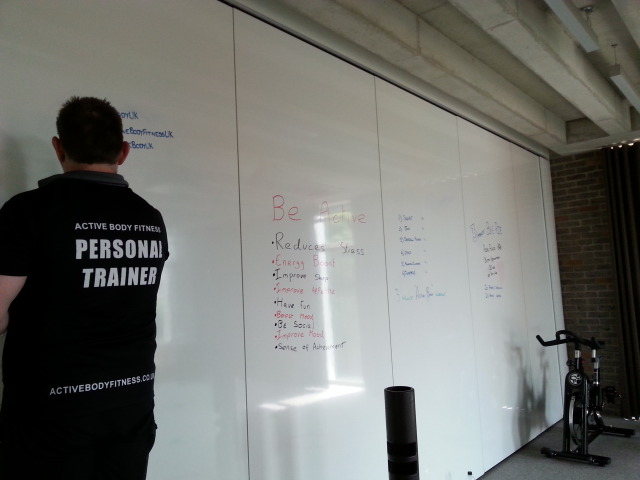
The next part of the festival which I visited was the “Being Active” zone, where I spoke to several fitness instructors on the benefits of being active.
Soon I arrived in a colorful and comfortable room facilitated by “IamGreeds”. Feel free to visited his site. Basically the poet was hoping some young people can express what wellbeing means to them using spoken word, which was read out on the free mic session later on at the festival.
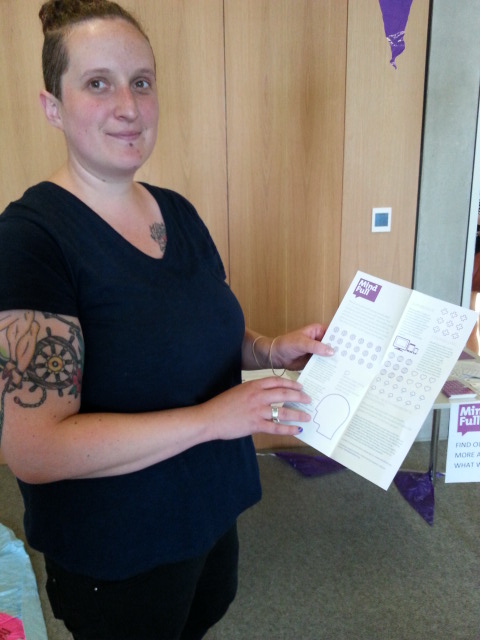
Another section I visited was the Mindfull Fun Fair zone, this area was linked to the “Taking Notice” zone. I spoke to the stall holders about why it is so important to be mindful and be aware of how we treat others or how others treat us. The stall holders were from Mindfull, which is an online support, information and advice about mental health and emotional wellbeing aimed at young people.
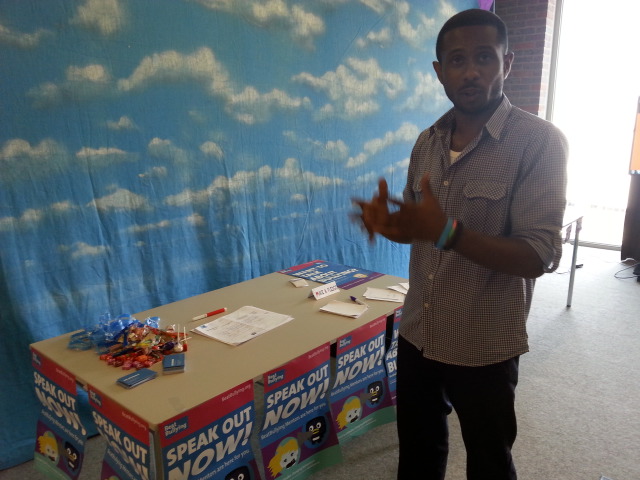
Another stall holder at the Mindfull Fun Fair zone was representing the “beatbullying” organisation. He gave me a run down on how bullying affects young people and why the beatbullying campaign was set up to tacking bullying.
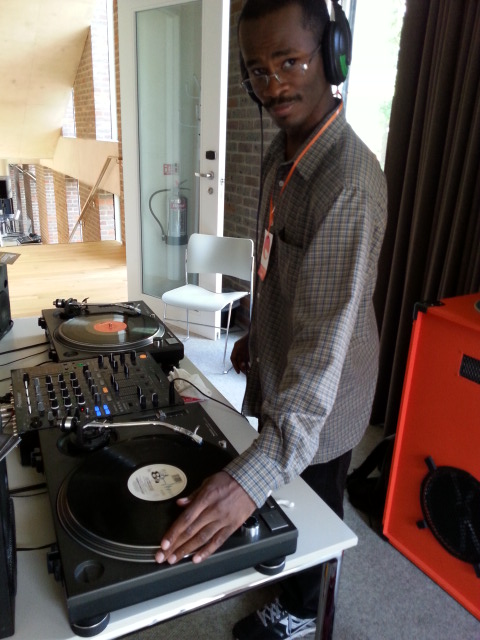
Soon it wasn’t long before I got my creative energies following and I wandered into the DJ mixing room, which had quite an impressive array of sets placed in the room and excellent DJ equipment. Mixing and scratching the records actually made me feel quite young again.
The music mixing zone was set up by RAW Sounds. Raw Sounds is a programme of creative media sessions for people accessing mental health services. Feel free to visit their site here.
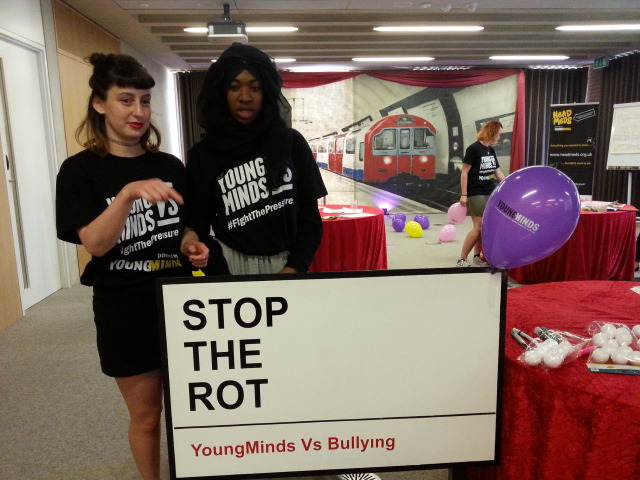
One of the most impressive displays I noticed was actually situated at the basement level of the Maudsley Learning Center. This section was being used by the YoungMinds Vs project. YoungMinds vs has been set up to tackle School stress, bullying, sexual pressure, and lack of jobs for young people. I had a great time talking to teenagers at this particular section of the festival on why they feel mental health and wellbeing awareness is important for many in the community.
There are other videos from the Happy Heads festival which I thought to help advertise, feel free to check out those videos as well.
I am in a group of around 15 people with a special interest in
emergency mental health services (eg A&E psychiatric liaison or home treatment), and mental health services where there are links with physical health (eg eating disorders, chronic fatigue, brain injury). We are interested because we have direct experience of using these types of services or of supporting someone who does.
We meet monthly and work with managers and clinicians to keep the views of
service users & carers at the heart of all service developments and improvements. 10 of us were at the September meeting along with senior staff including the Clinical Director, and the Service Director.
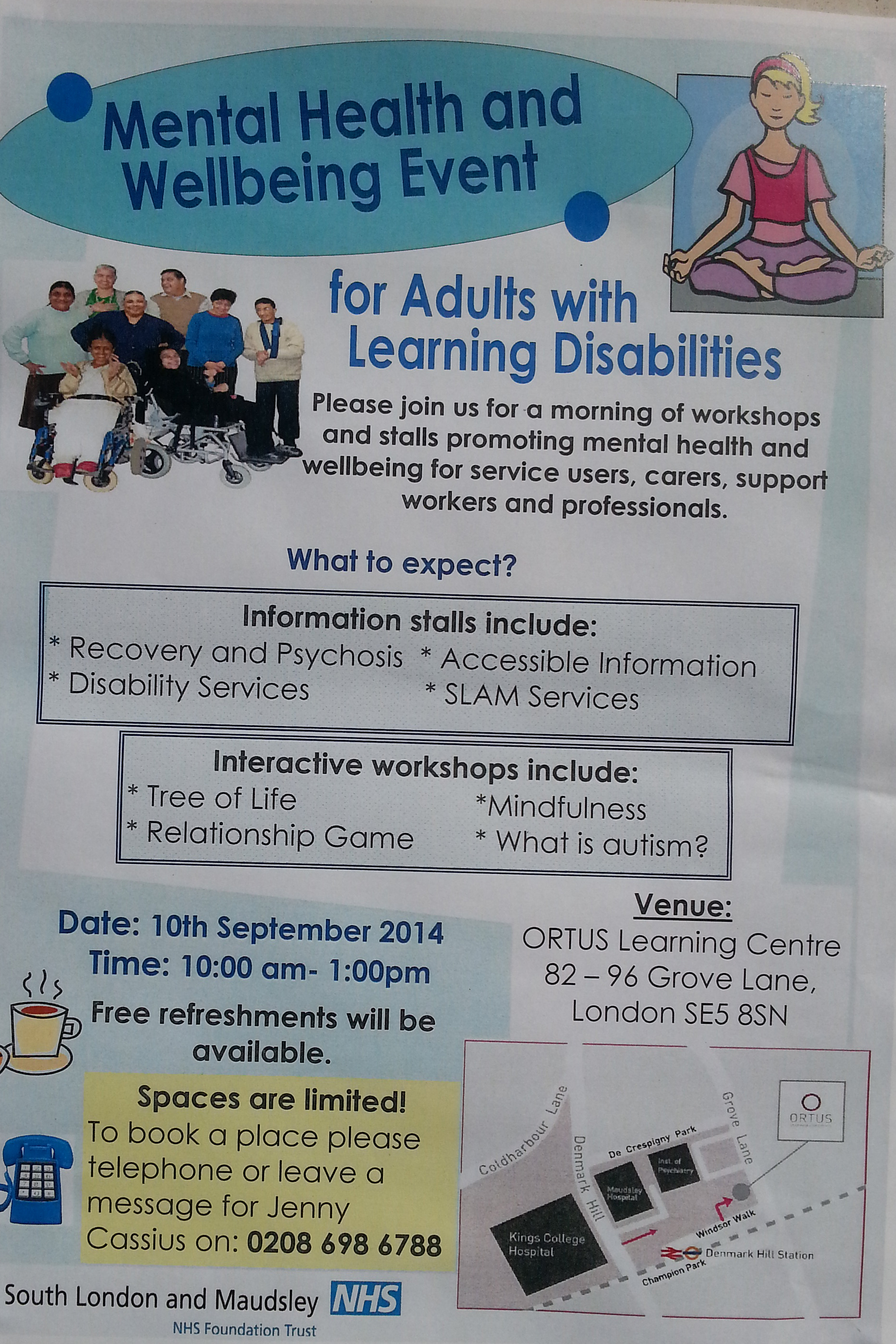
Welcome to another of my event reviews. Its been a while since I have last blog, but that does not mean I have not been busy. On the 10th of September 2014 I decided to check out the Mental Health and Well-being Event, which was aimed at Adults with Learning disabilities.
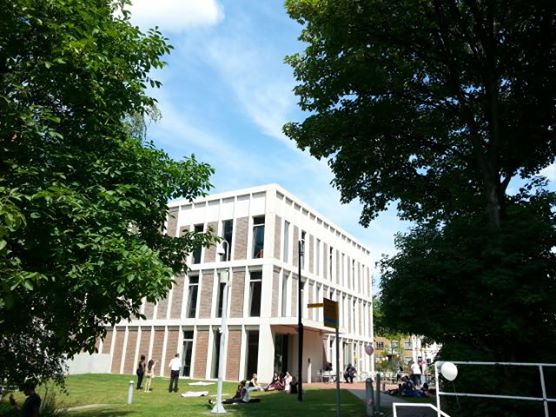
This event took place over at the Maudsley Learning center, which is also known as The ORTUS.
I usually visit the Maudsley Learning Center to check out mental health awareness events or conferences that can often be held there, but the ORTUS is more than just an events building, it does many other things where the community can relax and learn more about well-being.
Now I do not know if you had seen my video blog of last years well-being community event, but feel free to check out my video of last years community well-being event. There is also a video blog of the recent 2014 video event near the end of this blog.
This year being 2014, the Well-being event was big, and I mean more stalls, more workshops, more rooms and more involvement. There was lots on offer and everyone was so friendly, engaging and cooperative.
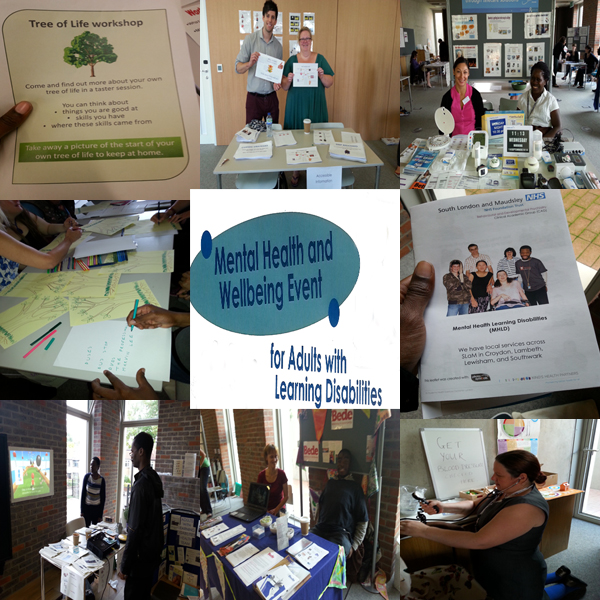
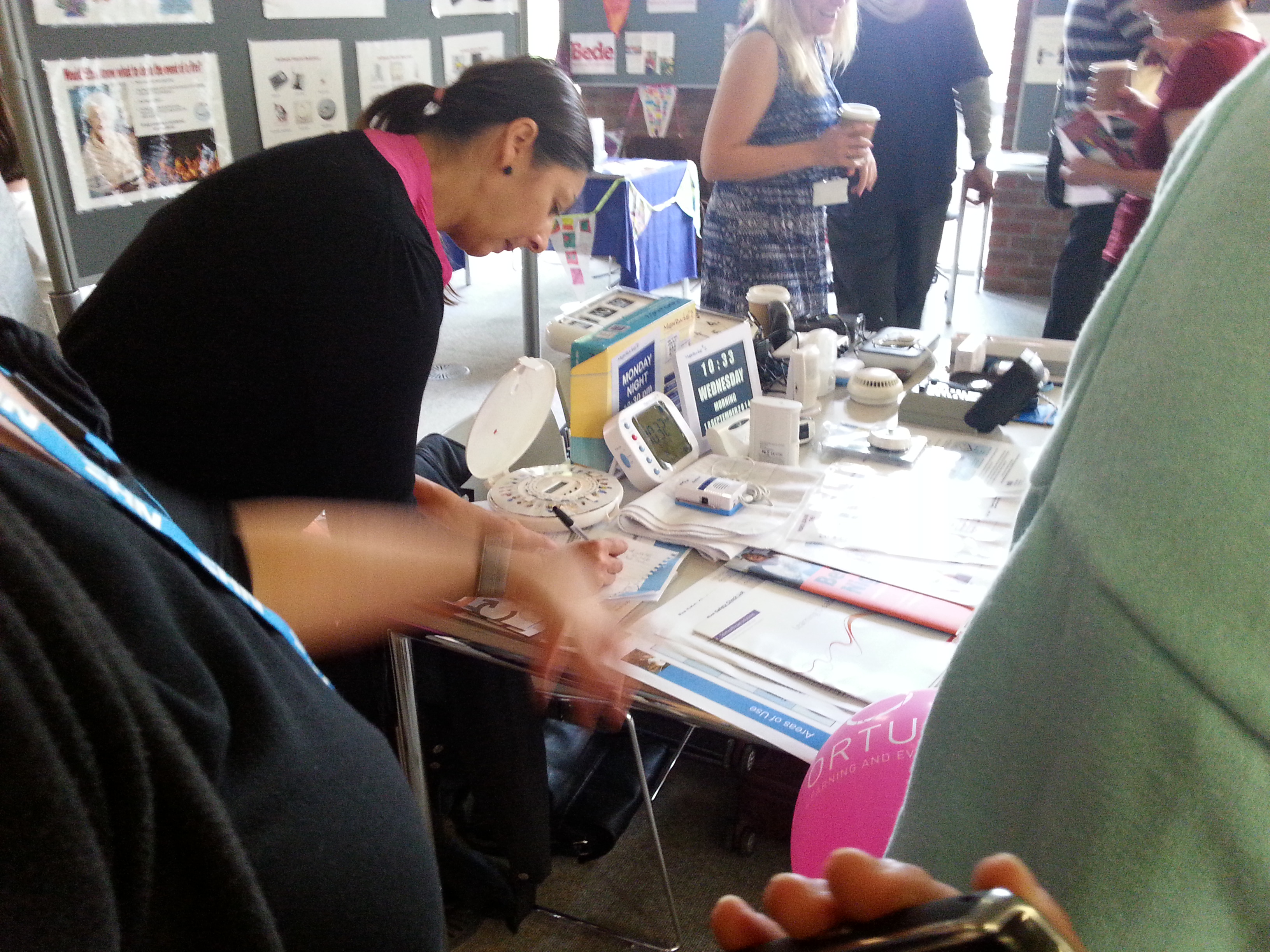
We have three floors of activities at the event and at the ground floor there were numerous stalls, where I checked out around 13 of them.
The next floor up was some more stalls and a coffee and tea area, then 2 floors up we had to workshops, each workshop running every half an hour, but first lets check out briefly what stalls were on ground floor, before I continue I would like to apologize in advance if I missed any names out.
I cannot go through all the stalls I checked out off the written blog, but if you want something more interactive, you can view the video blog I made of the event.
You might have noticed the video blog is around 11 minutes longer than the last years video blog, but this goes to show how much was put into the event this year.
My favourite stalls that I was on the lookout for were the ones which had those who use the services actually helping out off the stalls. This showed me that the service users were inclusive in the services that were provided for them, this meant there was more control for those who may have challenging behaviour.
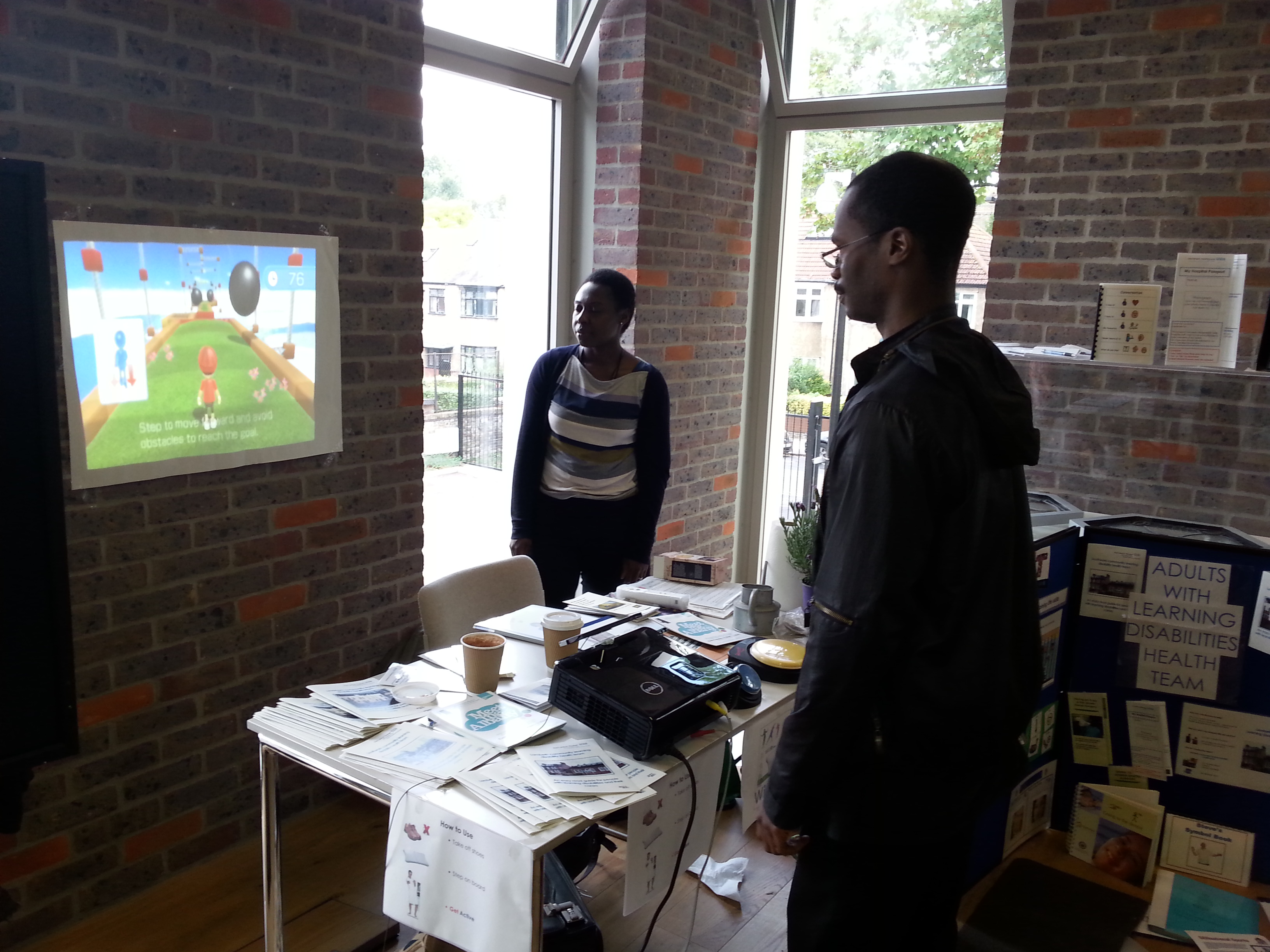
Other stalls of interest was the “Adults with Learning Disabilities Health Team”. The team must have had around 2 to 3 stalls where each were focusing on a specific health area. One of my favourite stall to visit was the interactive game, which helped divert your mind from how much exercise you was doing.
I always feel learning should be fun and games are one of the powerful way to challenge your mind and at times your body.
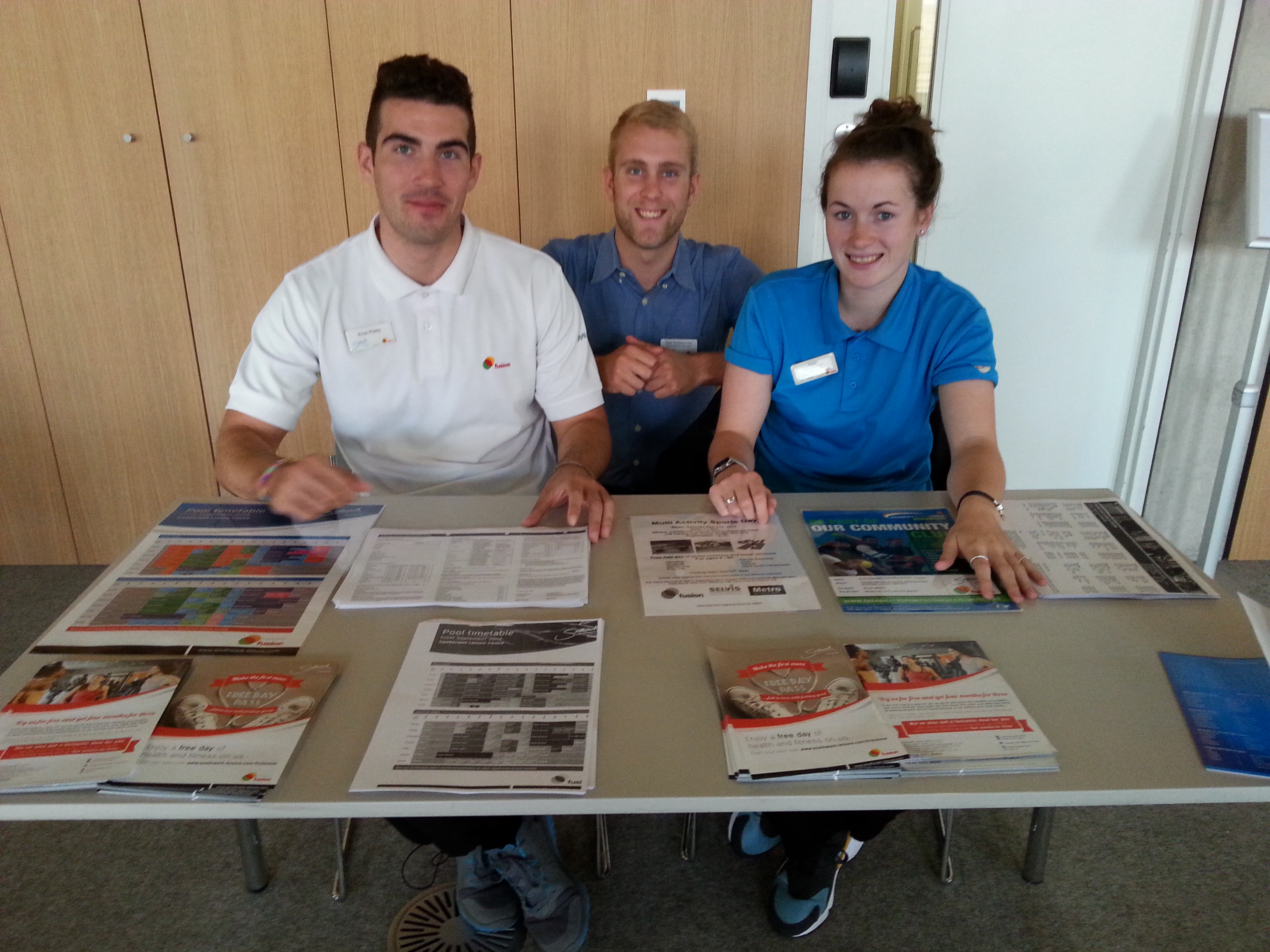
Talking about bodies, Quite a few stalls were focused on advertising the sports and health centres dotted around the Southwark area, so many people can take advantage of the sports centers, there were quite a number of discounts on membership that its such good time to get fit and active.
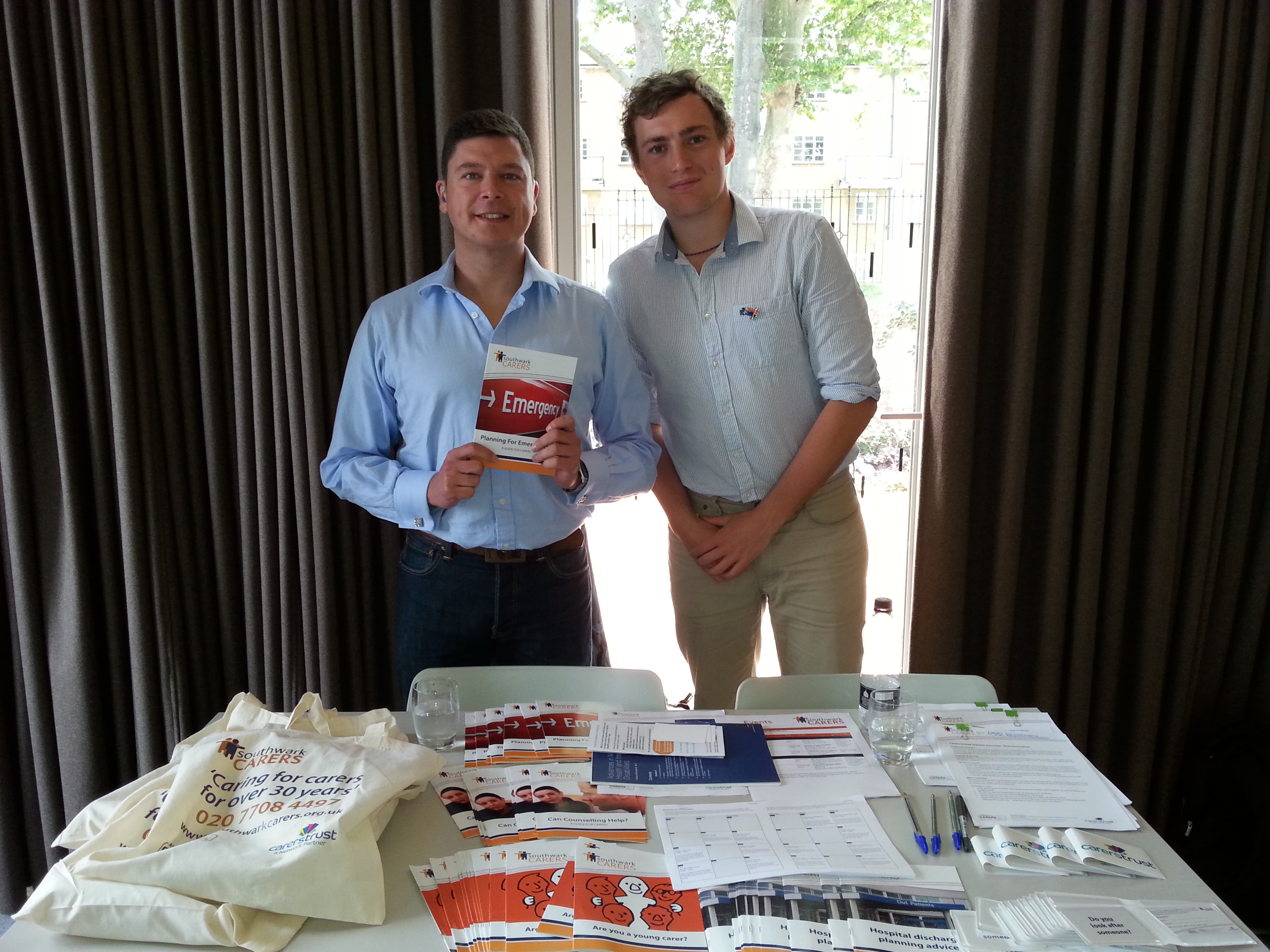
It was also great to see Southwark carers at the well-being event. We must not forget the families or carers who form the backbone of care for those with mental health difficulties or intellectual behaviours. So many carers out there silently cope and do their role without a moments thought for themselves. So hopefully if carers and families of those who have learning disabilities visited that stall, I would hope they get the support they need.
After visiting a few stalls, it was time to check out the workshops. There were quite a few workshops running and fortunately all the workshops were packed.
The workshops running were
What is Austism?
Mindfulness
Cognitive Behavioural Therapy
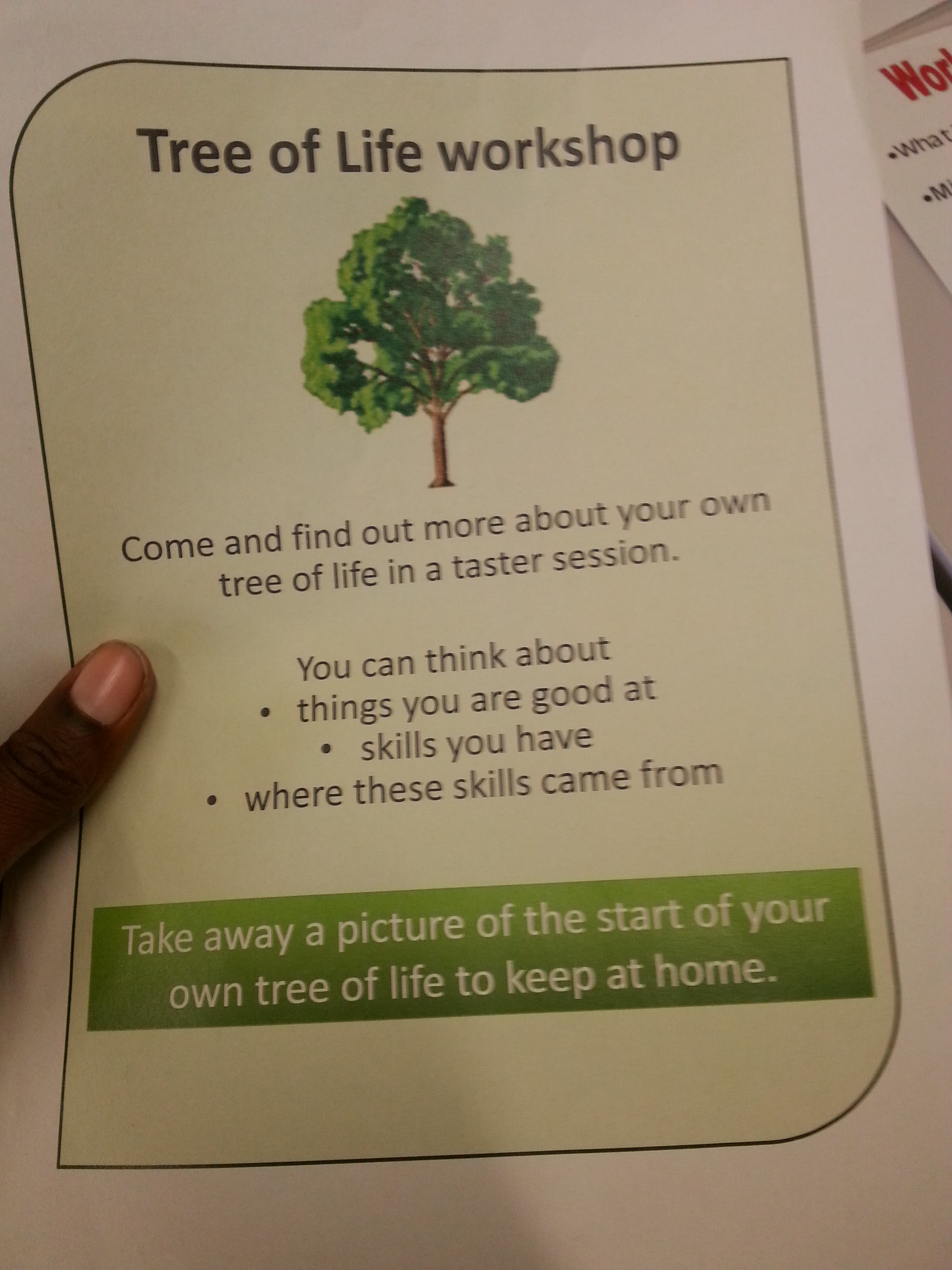
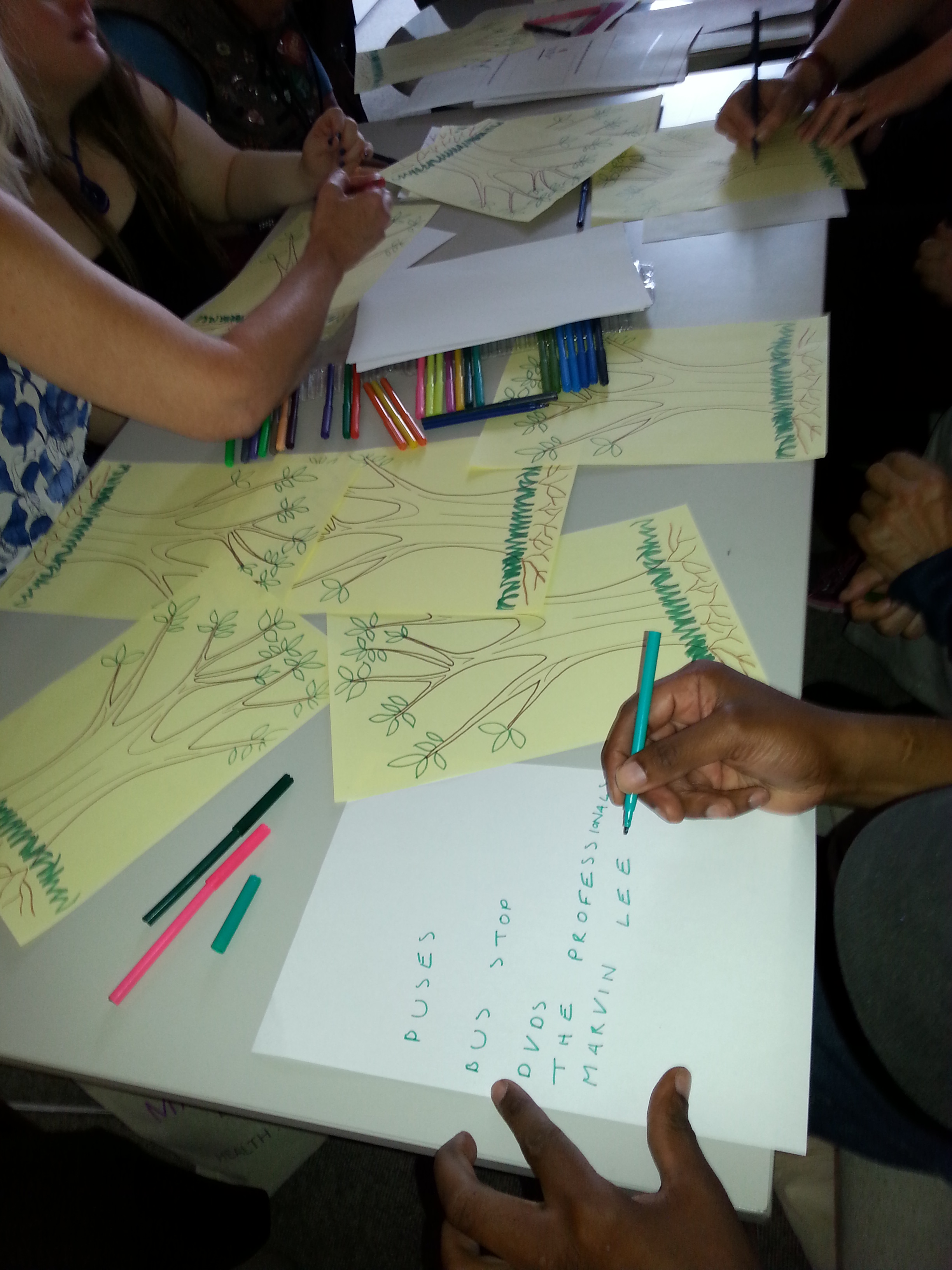
The tree of life
Role of medication
What is Mental Health?
So there were six workshops in all. I could not stay for the full length of time since I was busy exploring the other parts of the event, but what I saw at the workshops made me feel that the organisers spent a large amount of time and energy to get the workshops running.
Unfortunately I could not stay the whole event, since I had a meeting to go to, but I feel so glad to be invited to help cover and promote the event.

 A Caring Mind