Tag Archives: depression

International Survivors of Suicide Loss day 2024 – Top ways to cope with losing someone to suicide.

Did you know that November the 23rd is International Survivors of Suicide Loss day 2024?

The day is a time dedicated to coming together, supporting one another, and finding healing after losing loved ones to suicide. Survivor Day is an annual event that provides a safe space for individuals to share their stories and connect with others who understand the deep pain of such loss. It’s a global day of remembrance filled with activities including speaker panels, film screenings, and group discussions, all often hosted by local organizations, mental health groups, and the American Foundation for Suicide Prevention.

To see the video that I use to raise awareness, please view the video below.

Losing someone to suicide is a profoundly painful and complex experience. Healing takes time and patience, but it’s crucial to remember that you are not alone on this journey.

Here are five ways to cope and find hope after such a devastating loss.

Allow Yourself to Grieve

Grief is a natural response to losing someone you love, and it’s okay to feel a mix of emotions such as anger, guilt, confusion, and sadness. Each person’s grief process is unique, and it’s important to allow yourself to experience and process these emotions without rushing. This process can be long and non-linear; some days will be harder than others, and that’s a normal part of healing.

Seek Support

Connecting with friends, family members, or trusted individuals who can offer comfort and understanding is essential. Expressing your feelings and sharing memories of your loved one with those who care about you provides both relief and a sense of connection. Additionally, joining a support group, whether in person or online, through organizations like the American Foundation for Suicide Prevention can be incredibly beneficial. These groups provide a community of individuals who have experienced similar pain and can offer empathy and support.

Educate Yourself

Understanding mental health and the factors that lead to suicide can aid in making sense of your feelings and help reduce self-blame. It’s important to remember that mental health struggles are complex and multifaceted, and the loss of a loved one to suicide is not your fault.

Create Rituals of Remembrance

Remembering and celebrating the life of your loved one is a powerful way to cope with loss. This can be done by sharing stories, creating a memory book, planting a tree, or participating in activities they loved. Engaging in awareness events such as walks, vigils, or fundraisers in their memory can also be incredibly meaningful. These rituals provide a way to honor their memory and create a lasting legacy.

Practice Self-Care

Grieving is both physically and emotionally exhausting. Taking care of your own needs is integral to your healing process. Ensure you’re eating well, resting, and engaging in activities that bring you peace. Setting boundaries and taking breaks from conversations or situations that feel overwhelming is also essential. Be patient with yourself during this time; healing is not a straightforward process, and it’s okay to have good and bad days.

Finding Hope and Healing

On this Survivor Day, it’s important to remember that healing is possible and that hope is within reach. Together, we can find strength and comfort in our shared experiences. If you need more resources or support, please utilize the links provided in the description below. Stay connected, stay hopeful, and take care.

Survivor Day reminds us that while the journey after losing a loved one to suicide is incredibly difficult, there is a community ready to support and understand. Engaging in commemorative activities and reaching out for support are powerful steps towards healing. Always remember, you are not alone.


14 Tips to Tackle Depression: From Seeking Help to Self-Care

Here is another blog post by carer activist Matthew McKenzie

We all go through depression at varying levels. It is important to learn what tools can be used to tackle depression and develop those skills. I focused on this subject because even if you are caring for someone, there will be days when depression strikes. These tips however are for anyone, because we all need mental wellbeing.

To watch the short video version, please check out my video below.

Overcoming Depression: 14 Effective Tips for a Brighter Tomorrow

Depression is a pervasive and debilitating condition that affects millions of people worldwide. If you’re feeling overwhelmed by depression, know that you’re not alone. On today’s post, we’ll delve into 14 effective tips that can help you tackle depression, drawing from practical advice and therapeutic techniques designed to uplift your mood and improve mental health.

Seek Professional Help

Consulting with Mental Health Professionals

The first and foremost step in managing depression is seeking professional help. Consulting a mental health professional can provide you with personalized treatment options such as cognitive behavioral therapy (CBT), talking therapy, or medication. Each individual’s experience with depression is unique, and professional guidance can make a significant difference in finding the right approach for you.

Build a Support Network

Reaching Out to Friends and Family

Isolation tends to worsen the symptoms of depression. Unpaid carers are especially prone to isolation. So building a strong support network by reaching out to friends, family, or joining a support group can aid substantially. Simply knowing that someone understands your struggles can lighten the emotional burden and provide a sense of community and understanding.

Exercise Regularly

The Mood-Boosting Power of Physical Activity

Physical activity is not just beneficial for your body; it’s also crucial for mental health. Exercise releases endorphins, often referred to as “Feelgood” chemicals, which naturally boost your mood. Start small. Even a short 20-minute walk can significantly improve your mood and energy levels.

Focus on a Healthy Diet

Foods that Boost Brain Function

What you eat can have a direct effect on your mental health. A healthy diet is essential in influencing your mood and energy levels. Foods that are rich in Omega-3 fatty acids, such as fish and walnuts, can improve brain function. Meanwhile, cutting down on sugar and processed foods can prevent energy crashes and stabilize your mood.

Establish a Routine

The Importance of Daily Structure

Depression can sap your motivation, making daily tasks seem insurmountable. Establishing a daily routine can provide structure and a sense of normalcy. Set small, achievable goals and maintain a regular sleep schedule to help manage your symptoms more effectively.

Practice Mindfulness and Relaxation Techniques

The Benefits of Mindfulness Meditation and Deep Breathing

Mindfulness meditation and deep breathing exercises are powerful tools for managing negative thoughts and reducing stress. Practicing mindfulness helps you stay present, grounding your thoughts and emotions in the here and now rather than letting them spiral out of control.

Challenge Negative Thinking

Recognizing and Reframing Distorted Thoughts

Depression often distorts your thoughts, leading to a cycle of negative thinking. Recognizing these distortions and actively working to reframe them is crucial. Keeping a journal can be a helpful practice for tracking your thoughts and emotions, identifying patterns, and challenging negative beliefs.

Engage in Activities You Enjoy

Reconnecting with Hobbies

Depression might dull your interest in activities you once enjoyed, but re-engaging with hobbies is an important step in alleviating symptoms. Start small and be patient with yourself as you rediscover activities that bring you joy and fulfillment.

Limit Alcohol and Substance Use

The Long-Term Effects of Alcohol and Substances on Mood

While alcohol and substances might provide temporary relief, they can worsen depression in the long term. Reducing or avoiding them altogether can help stabilize your mood and improve your mental health over time.

Set Boundaries and Manage Stress

The Importance of Saying No and “Me Time”

Learning to say no and setting personal boundaries are crucial for managing stress and preventing burnout. Carve out “me time” to relax and recharge. Remember that your mental health is a priority, and taking time for yourself is not just acceptable, but necessary.

Practice Self-Compassion

Being Kind to Yourself

Depression is a medical condition, not a personal failing. Practice self-compassion by being kind to yourself and avoiding harsh self-criticism. Understand that managing depression is a journey, and it’s okay to take steps that prioritize your well-being.

Get Outdoors

The Calming Effect of Nature

Spending time in nature has a profoundly calming and uplifting effect on your mental health. Green spaces and sunlight exposure can boost serotonin levels, which are crucial for mood regulation. Make it a point to spend some time outdoors regularly.

Consider Alternative Therapies

Exploring Art, Music Therapy, Acupuncture, and Yoga

While traditional treatments are essential, alternative therapies like art or music therapy, acupuncture, or yoga can also play a significant role in managing depression. For instance, poetry has been shown to be a useful outlet for emotional expression and self-exploration.

Be Patient with Yourself

Understanding the Recovery Process

Recovery from depression is a gradual and ongoing process. Celebrate small victories and understand that setbacks are a normal part of the journey. Patience and perseverance are key. Surround yourself with supportive individuals who can help you stay motivated and hopeful.

Immediate Help for Severe Symptoms

Addressing Thoughts of Self-Harm or Suicide

If you experience thoughts of self-harm or suicide, it is critical to reach out for immediate help. Contact mental health professionals, hotlines, or trusted individuals who can provide the urgent care and support you need. Remember, you are never alone in this battle, and there are resources available to help you through the toughest times.

Depression is a challenging condition, but with the right support and strategies, it can be managed effectively. Implement these tips, seek professional help, and surround yourself with a supportive community. In time, with patience and dedication, you can begin to see improvements and work toward a brighter, more fulfilling tomorrow.

Here are some helplines for depression in the UK:
Samaritans: Call 116 123 for 24/7 emotional support
Shout: Text 85258 for 24/7 confidential support
CALM Helpline: Call 0800 58 58 58 or use their webchat from 5 PM–midnight, 365 days a year
Rethink Mental Illness: Call 0300 5000 927 for advice and information on therapy, medication, benefits, and more
Mind infoline: Call 0300 123 3393 for information on types of mental health problems and where to get help
Papyrus UK: Call 0800 068 4141 or text 07860 039967 for confidential support and practical advice for people under 35
Childline: Call 0800 1111 or talk to them online for children and young people under 19

Why World Mental Health Day 2024 Matters: Advocacy and Awareness

Welcome to another blog post from carer activist Matthew McKenzie for World Mental Health Day 2024.

Raising Awareness for Mental Health: The Significance of World Mental Health Day 2024

On October 10th, the world comes together to observe World Mental Health Day, a day dedicated to raising awareness around mental health issues and mobilizing efforts in support of mental well-being. Established by the World Federation for Mental Health in 1992, this day serves as a crucial reminder for governments, organizations, professionals, and individuals to advocate for mental health awareness and promote positive mental health practices.

The Importance of Raising Awareness

World Mental Health Day shines a global spotlight on mental health issues, encouraging open and honest conversations about mental health. Breaking down the stigma surrounding mental illness is a key aspect of this day. When mental health is discussed openly, it becomes easier for people to seek help and support. This not only includes individuals struggling with mental health conditions themselves but also those who care for someone facing these challenges.

Advocacy for Mental Health Care

A fundamental focus of World Mental Health Day 2024 is advocacy for mental health care. This year’s theme, “Mental Health at Work,” highlights the importance of access to quality mental health care for everyone, regardless of their location or financial situation. Ensuring that everyone has the opportunity to get the help they need, even in the workplace, is a critical message being communicated globally.

Educational Initiatives

Education plays a massive role in World Mental Health Day. Many organizations use this opportunity to host events, discussions, and seminars aimed at educating the public about mental health issues, their symptoms, available treatments, and the importance of having a solid support network. Knowledge truly is power, and understanding mental health can significantly improve how we support ourselves and others in our communities.

The 2024 Theme: Mental Health at Work

The theme for World Mental Health Day 2024, “Mental Health at Work,” emphasizes the need for safe and healthy working environments that protect our mental health. This powerful message reinforces the notion that mental health care should be available to everyone and that no one should face barriers to access due to stigma, geography, or financial constraints.

Key Messages to Take Away

From World Mental Health Day 2024, there are several essential messages we should embrace:

  1. Mental health is just as important as physical health.
  2. Openly discussing mental health can reduce stigma.
  3. Seeking help for mental health concerns is okay.
  4. Mental health services should be accessible to everyone, including services at the workplace.

Community and Organizational Activities

Around the world, communities and organizations celebrate this day in various ways. Hosting events, running campaigns, and participating in activities such as mindfulness workshops, mental health seminars, and workplace initiatives aimed at supporting mental wellness are some approaches taken to mark the occasion. These activities not only raise awareness but also foster a supportive community environment.

Moving Forward: Making a Positive Change

World Mental Health Day 2024 is not just a day on the calendar but an opportunity to create lasting positive changes. By continuing the conversation about mental health, advocating for accessible mental health care, educating ourselves and others, and supporting workplace mental health initiatives, we can help ensure that mental health matters.

In conclusion, as we observe World Mental Health Day, let us commit to making mental health a priority in our lives and communities. By doing so, we honor the fundamental principles of this day and contribute to a world where mental health is recognized, understood, and supported.

Thank you for reading. Remember to take care of yourselves and each other. To watch the video version see the video below.

Latest carer story – Just when I needed you

Welcome back fellow carers. This blog is by Matthew McKenzie, carer activist, author and poet. I write and campaign to raise awareness of unpaid carers. A lot of my focus goes on those caring for someone with mental illness.

I also have a focus on cancer carers, but more on that in a moment.

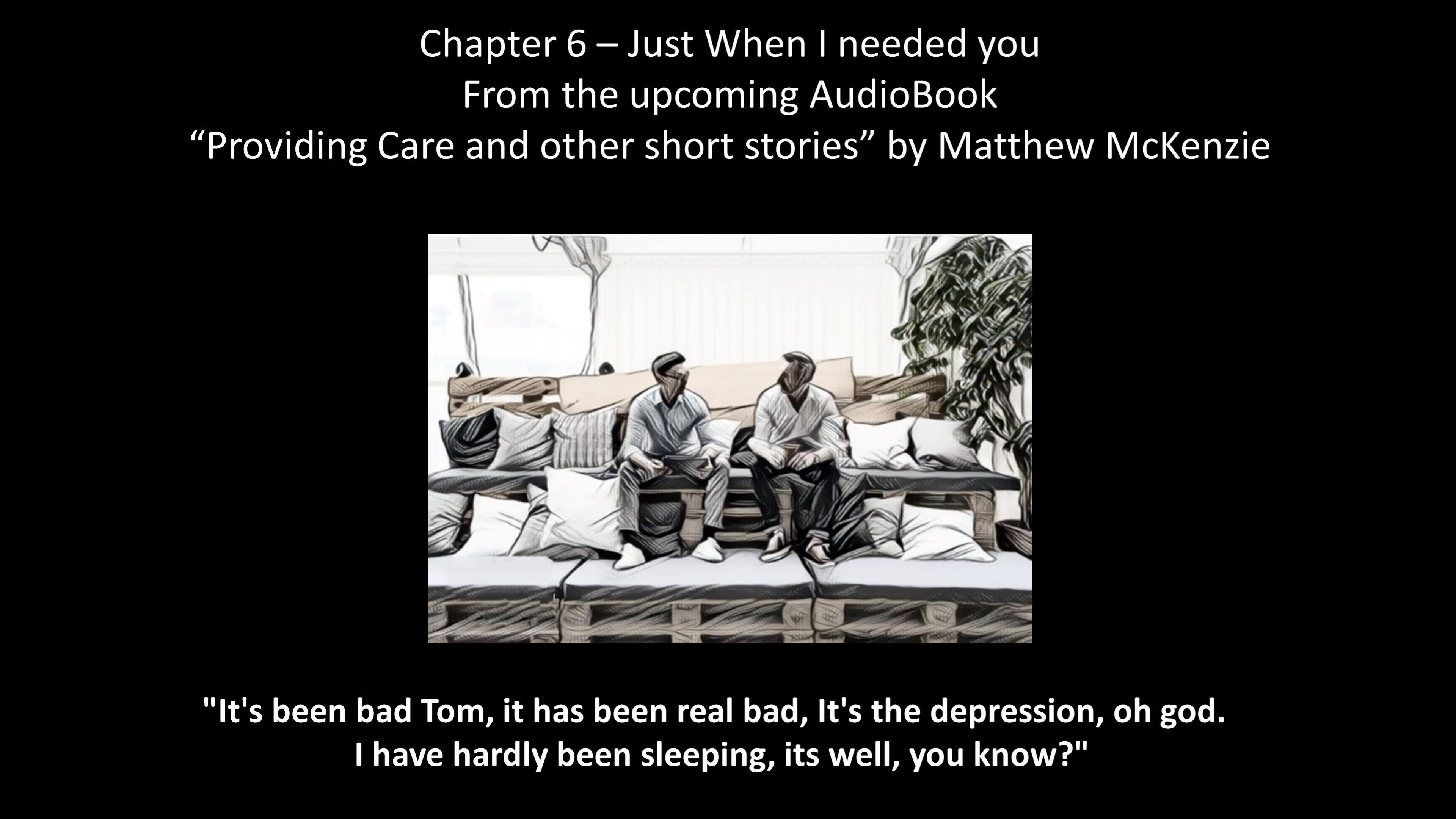
I have just released my 6th audio story about the importance of carer peer support. The story is called “Just when I needed you”. You can actually watch the story for free at the end of this blog.

The audio story revolves around the struggle to show empathy and the challenge someone faces with their faith. When people care for each other then the community carers, but this is not always the care as the carers in this story have their own struggles.

It takes a couple to walk that journey of someone damaged by the community. They are there for that person when he feels the world has abandoned him. The couple find a bond with their close friend as Barbara who is providing unpaid care can sympathize because she also experienced mental illness.

The audio story provides a story of hope, but raises challenging questions for those caring for someone. Things are not always so clear cut and it can be very difficult to be involved in someone’s care. This is especially problematic if someone is suffering depression.

Watch the video below and enjoy the carer awareness.

My next audio story will soon be released titled “A story of Hope”

Caring for someone with Depression or Anxiety

10177241_747738765268892_5890142387668348507_nWelcome back to another one of my collaborating on raising mental health awareness. This time I am collaborating with mental health survivor Psycopathic_ sociopath. That is the name of her Youtube channel. You may wish to check out some of her stuff, although she has just begun to do more videos on mental health.
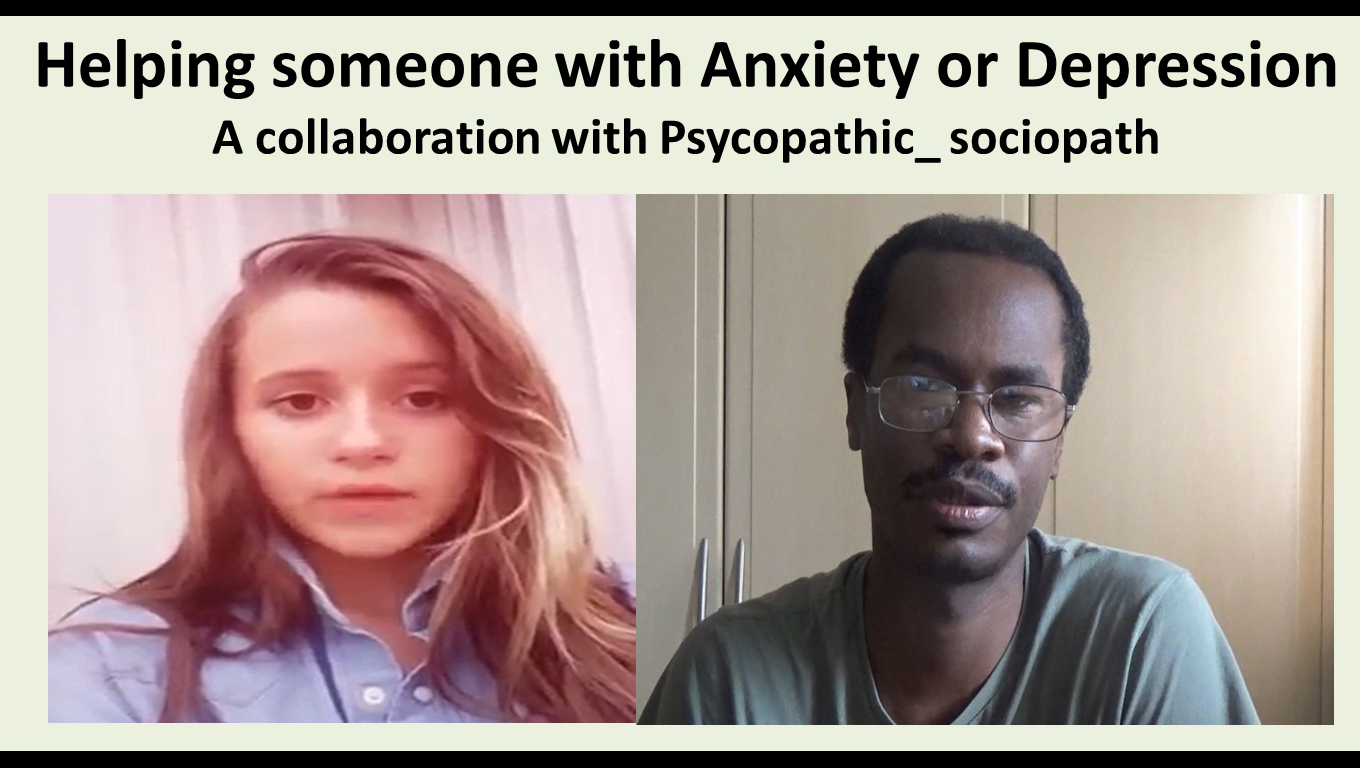

Since my link from the states has suffered through Depression and Anxiety, we decided to base our latest video on caring/supporting someone going through both mental health illnesses. She spoke about what she feels would help someone going through depression and anxiety, plus I also did the same.

If you wish to watch the video, please click on the video below.

Supporting someone with depression

On my section, I spoke in depth about supporting or caring for someone suffering through depression. Most of my tips were fairly basic and quite common. Mainly being there for someone going through such a hard time. Being there for someone can help them no matter whatever mental health problem the person is experiencing.

You may also want to ask how they are from time to time. It always helps to check as it shows you care. My link from the states mentioned that if you are going to use comforting words, then try be sincere about it. People can often tell when someone is not honest about how they care for someone.

cover

One more tip I placed in the video was When the person talks, it is important that you listen and do this actively. Not always an easy thing to do, but it does pay off in the end.

The last section of the video covers anxiety. I hope you get time to watch the video and I hope you have enjoyed reading the blog post. See you next time and have a good healthy mental health journey.

Time To Talk day 2015

As of this blog post. It is Time to Talk day  over in the UK, which falls on the 5th of February. It has been a while since my last blog post and to be honest, I have been fairly busy with work and mental health involvement, but going back to the subject at hand. What is “Time To Talk” day all about?

conversation-badge

Time To Talk day focuses on the point that we should at least try to spend 5 minutes of that day talking to someone about our health, especially mental health. In fact I would go so far to state we should try to open up a bit more about ourselves, especially with a close friend or someone you trust.

Time To Talk day is support by Time To Change, who are Led by Mind and Rethink Mental Illness which is England’s biggest programme to challenge mental health stigma and discrimination.

ttc_mentalhealth_bloggerbadge

You see the problem is mental health discrimination and stigma are still prevalent in today’s society. There are so many cases of people falling into mental ill health, because they do not get the support. Some who develop mental health problems might have stigma or shame about their symptoms and may often refuse to talk about it or refuse to seek help. For those who do not open up about what is bothering them, this situation can be risky because if they do not talk about their health or seek help, then its highly likely their mental health situation may get worse.

Embed from Getty Images


There can be a large number of mental health cases that could be reduced if we all took the step to at least phone a friend. The emphasis need not be on the sufferer, but we as friends, helpers or carers can phone others who we are worried about.

Unfortunately so many of us know deep down that someone is developing a mental health issue or are struggling.  It could be stress, depression, compulsive disorder or many others mental health problems.

The sad thing is that people often sit back and feel it is not their problem to check up on someone. Perhaps the person feels that they are being nosey or are imposing themselves on others. Maybe a lot of us do not have time to check up on others, but the situation is that if we do not check up on those who might be suffering in silence, then its quite likely someone may deteriorate in their mental health.

Embed from Getty Images


It is so important to talk to others on what is worrying or brother in us, but also on the other hand it can be important to check up with our friends on how they are feeling. Its not like we have to say much, but at least listen to them.

Embed from Getty Images

Being a carer myself of someone using the services, I know only too well what other carers may go through. Over the 12 years of caring, I have spoken and listened to so many carers in carers groups, networks, forums and events. I hear time and time again how carers have been isolated and brought to their wits end, because they had no one to turn to or no one acknowledge their situation. We carers need to step up and support not only ourselves, but each other.

The thing is mental ill health does not discriminate, if you are a carer or support of someone who unfortunately has developed mental ill health, I am sure at times that  you have been upset, depressed, anxious, worried and guilty. Taking these feelings to the next level, there is always a risk that carers themselves can develop mental health problems if not supported or listened to.

To counter act such problems, its important carers talk to those who we trust about how we are coping. A carer does not always need someone to wave a magic wand to solve our problems. A carer can just have someone acknowledge what carers have or still are going through.


So I hope that I have pointed out some of the reasons I think “Time To Talk” day is important. We need to push back on a society that feels that its good to be busy. As a society its good to take time out and spend it with a friend. It is good as a society we open up about mental health issues and combat the stigma and discrimination. As a society we need to change and there is no better time than to do this now.

Its Time to change!! Its Time to Talk.

Happy Time to Talk Day.

Review of “The Anatomy of Melancholy”

Its about time I did another review, however this one is different. Usually I attend events, conferences, engagement events and awareness days. On the 23rd of October 2014 I decided to pop over to to the Battersea over in the borough of Wandsworth to watch an opera performed at Testbed1 which is a 7,000 sq ft creative events space located in Battersea.. Now I am usually just the person to go to the Cinema and yes I know that seems boring, but I thought why not check out this new opera called “The Anatomy of Melancholy”.

cover

As you can guess Melancholy is a state of low mood or we could say Depression, so since this is a blog is about caring and mental health, I felt it was worth my time to view this Opera performance.

While I was travelling to the show, I kept thinking at the back of my mind how will this Opera performance describe the form of depression, but before I continue with the review, I think its important to describe a bit about depression.

Depression can affect us all, some get depression worse than others. If someone suffers chronic depression then this can be a serious mental health condition where the person begins to become very sad, hopeless, and unimportant and often is unable to live in a normal way. The person experiences

  • Loss of interest
  • Slowness of movement and thinking
  • Thoughts about hopelessness, suicide and death
  • Tiredness and lack of energy

In the UK Depression affects 1 in 5 older people. You can get more information about depression from the Royal College of Psychiatrists.

Going back to the Opera performance, as I entered to gain a seat around the stage, I was impressed with the use of lighting, which set the scene very well. I especially admired the use of shadows around the stage. The lighting was done by Joshua Pharo who has done many works across theatre, dance and opera.

The play was written and directed by Finn Beames who is also the founder of bodycorps. We also had OPUS2014 finalist Benjamin Tassie who composed the music for the play and the co-designer being Mayou Tikerioti who has designed many productions in the UK and Greece. The conductor of the play was Tim Murray who has already conducted a series of operas at the Gran Teatro del luceu, Royal Opera House and more.

The Opera centered on the old medical belief of the four humors: disease or ailment being caused by an imbalance in one or other of the four basic bodily liquids, or humors. These being Yellow, Phlegm, Black bile and blood. The Opera singers included

John Lattimore whose new work for autumn 2014 will cover John Adams at ENO.

John Lattimore - 2

We also had actors Mark Beesley who sung as a principal solo singer at many major opera houses. We also had Janet Henfrey who has been performing over the last 50 years in many theatres.

Other members of the cast were Donna Lennard who has performed in many opera roles one being alice in Airborne, Dario Dugandzic whose credits include The Dark. Anna Harvey with her roles being “Daughter of the sea” and Maud Millar who made her debut Oliver Knussen’s Trumpets with the BBC Symphony Orchestra.

The style of the opera kept my interest going as I looked for references on how depression affects someone. The actors carried their characters well enough that you at least cared about what happens to them in the play. The opera highlighted not only the difficultly of living with depression, but how it affects families and carers, which was well performed by the Grandmother (Janet Henfrey) and the Profather (Mark Beesley).

Janet Henfrey

The Opera also centered on the use of genetics and renaissance medicine, there was quite a lot to learn about the study into Melancholy.

John Lattimore

The performance was also very creative in using different scenes and equipment where inventiveness raised my curiosity about depression, especially with the use of film and equipment where I began to almost focus on several things going on at once.

The music played throughout the opera lent itself to the performance with its eerie sounds, frightening scores and gloomy moods. I must admit I am not one for opera performances and some parts of the play I couldnt understand in one sitting, but nevertheless I really enjoyed the show and would certainly see it again if I have the chance.

You can find out more about “The Anatomy of Melancholy” from their site http://www.bodycorps.org/