The recent Carers Forum brought together unpaid carers, health professionals, and community organisations from across South London to share updates, experiences, and ideas for improving mental health support. The event, chaired by Matthew McKenzie, created a safe and open space for carers to connect, exchange information, and have their questions heard by local health leaders.
Setting the Scene
Matthew opened the session by welcoming carers from across Lambeth, Lewisham, and Southwark. He spoke about the importance of providing carers with dedicated time to hear from service providers, particularly those supporting someone with mental ill-health and to ensure their voices shape local mental health strategies.
Among the speakers were Ceri Jacob, Place Executive Lead for Lewisham at the South East London Integrated Care Board (ICB), and Ellen McGill, Commissioning Lead for Adult Mental Health and Wellbeing. They were joined by academics and representatives from Healthwatch Lambeth and Healthwatch Lewisham, where Healthwatch Lambeth shared findings two key reports:
- A Fulfilling Life: What Matters to Me – exploring the experiences of Black African and Black Caribbean men living with Severe Mental Illness (SMI) in Lambeth.
- Time for Our Ethnic Voices – highlighting the experiences of Black carers supporting men with SMI.
Understanding the Local Picture
Ceri and Ellen began by outlining how mental health investment is being managed in Lewisham despite wider NHS budget pressures. They explained that while the NHS faces financial strain, mental health remains a growth area, with funding for carers increasing through organisations such as Imago, Dementia Hub, and Resources for Autism.

They also spoke about the development of Integrated Neighbourhood Teams (INTs) – multi-agency teams bringing together GPs, social workers, community services, and voluntary sector partners to deliver joined-up support at a neighbourhood level.
Carers were encouraged to engage through ongoing consultations, including the new Lewisham Unpaid Carers Action Plan (2025–2028), and to participate in the Lewisham Open Carers Forum, held bi-monthly at Catford Civic Centre.
Carer Involvement and Co-Production
The speakers emphasised the growing recognition of carers in commissioning and service redesign. Carers are now involved through the South London and Maudsley NHS Foundation Trust (SLaM) Family and Carers Network, contract monitoring panels, and community redesign programmes such as the upcoming 24/7 Mental Health Centre.
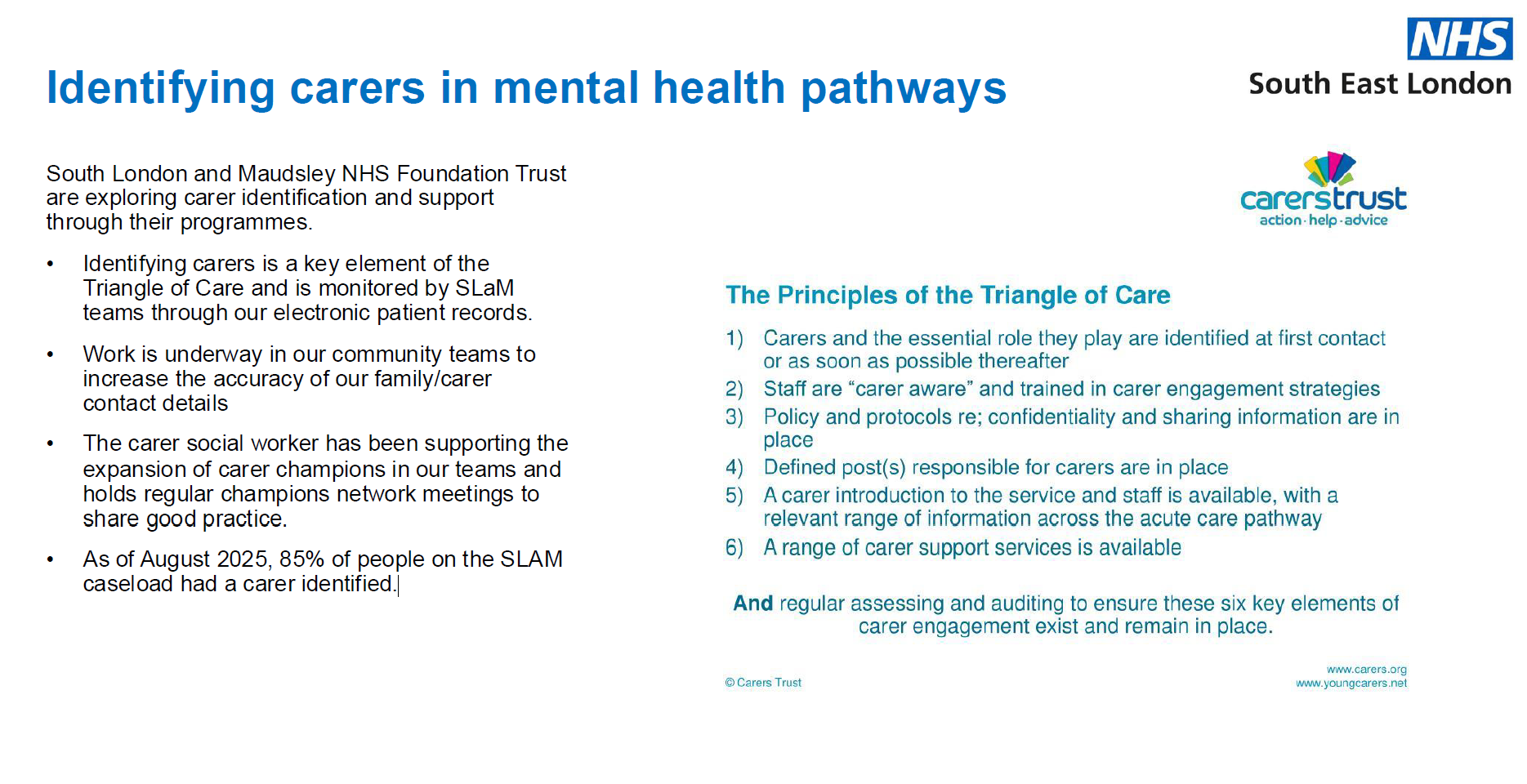
Ceri noted, “We want to make sure carers are identified early, included in care planning, and supported in ways that reflect their role and wellbeing.” As of August 2025, SLaM reported that 85% of people on their caseload have a carer identified, an improvement supported by regular meetings of carer champions across teams.
Carers’ Questions and Reflections
During the forum, several carers raised important questions and concerns:
- Joining up services: One carer described how difficult it was to navigate the system when their family member moved between primary care, community teams, and hospital services. They asked how the new neighbourhood model would ensure better coordination.
Ceri and Ellen responded that the integrated teams will bring together key professionals to reduce “bouncing between services” and improve continuity of care. - Recognition and communication: Another carer asked how professionals would ensure that carers are informed about appointments and changes in treatment. Ellen explained that improving the accuracy of carer contact details in patient records is a current priority, along with strengthening communication protocols.
- Equality and inclusion: Carers asked how Black, Asian, and minority ethnic carers’ experiences would be reflected in future service design. Kerry referenced ongoing work under the Patient and Carer Race Equality Framework (PCREF) and reaffirmed the need for culturally sensitive engagement and monitoring of outcomes.
Linking Research with Real Experience
Anna from Healthwatch Lambeth presented findings from A Fulfilling Life and Time for Our Ethnic Voices.

The reports, co-produced with carers and community partners (including Matthew McKenzie), highlight how stigma, delayed access to help, and lack of culturally appropriate care continue to affect both Black men living with SMI and their families.
Key findings included:
- Carers often don’t recognise themselves as “carers” until formally identified by professionals.
- Many feel excluded from care planning and decision-making.
- Cultural understanding and trust are vital to effective support.
- Carers experience emotional strain and sometimes discrimination when advocating for their loved ones.
These findings echoed the forum discussions reinforcing that meaningful involvement, clear communication, and cultural competence are essential for progress.

To find out more about the report click the link to Healthwatch Lambeth’s site below.
https://www.healthwatchlambeth.org.uk/report/2025-10-15/a-fulfilling-life-what-matters-to-me
Looking Ahead
The session closed with reflections on next steps. Carers expressed appreciation for open conversations but emphasised the need for continued action. As one carer summed up, “We don’t just want to be heard, we want to see things change.”
Matthew McKenzie thanked all speakers and carers for their contributions, noting that future forums will continue to track how local systems respond to carers’ feedback, especially around integration, equality, and inclusion. He also encouraged carers to stay connected through local forums and Healthwatch networks to keep the dialogue alive.
 A Caring Mind