By Matthew McKenzie – Chair of Cancer Carer forum
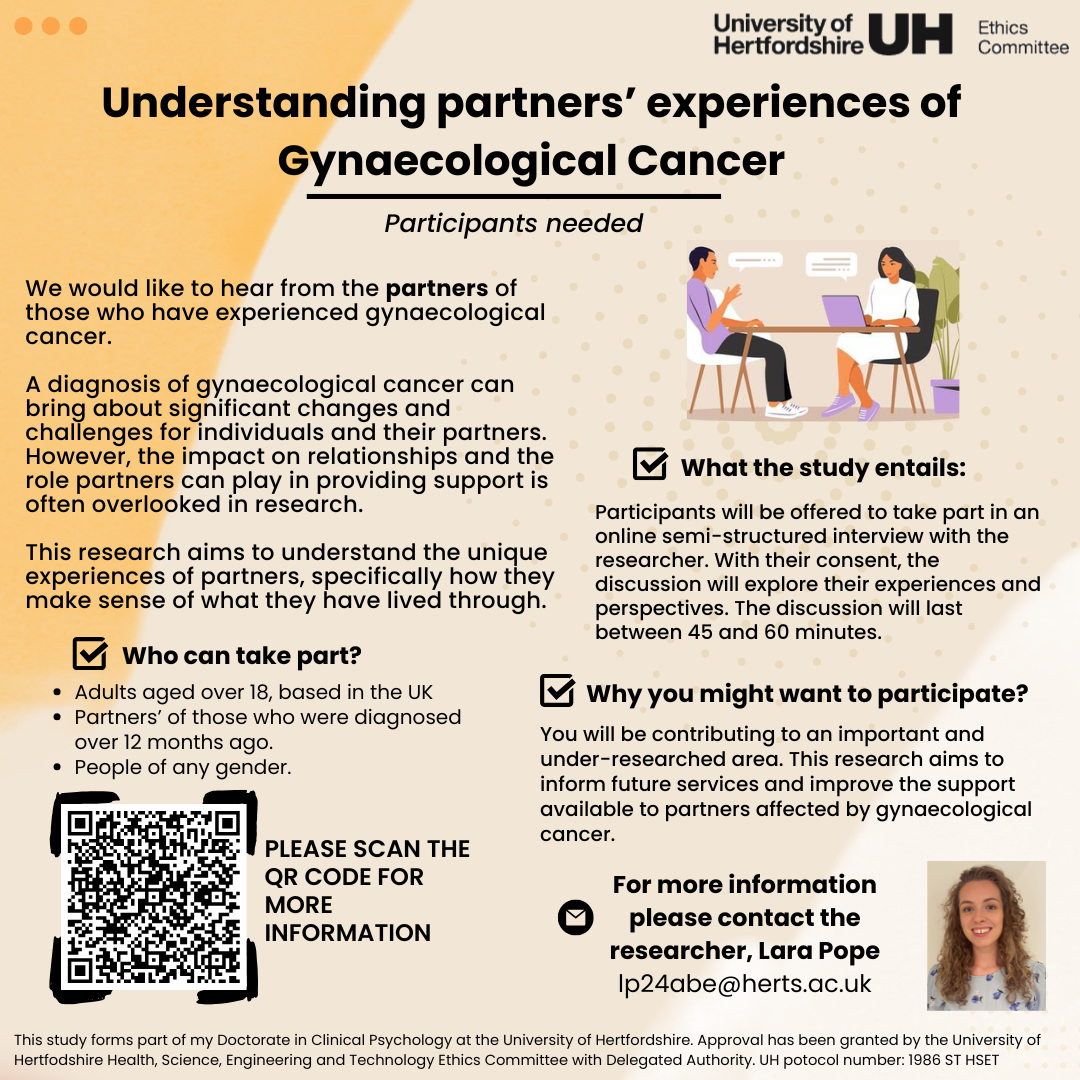
I am pleased to share a research opportunity from Lara Pope, a Doctoral Clinical Psychology student at the University of Hertfordshire, who is looking to hear from partners of people who have experienced gynaecological cancer.
As someone who campaigns for greater recognition of unpaid carers and those supporting someone affected by cancer, I know that the experiences of partners can sometimes become overshadowed by the understandable focus on the person receiving treatment.
Yet partners can experience considerable emotional, practical and relationship changes of their own.
About the research
“Exploring partners’ experience of gynaecological cancer: An Interpretive Phenomenological Analysis.”
The research aims to better understand what it is like to be the partner of someone who has experienced gynaecological cancer, including how partners navigate their own needs, relationships, identity and intimacy.
Lara is particularly keen for the research to reach people whose voices can sometimes be less visible in research, including male partners, people from Global Majority communities and LGBTQ+ communities.
Who can take part?
You may be eligible if you:
- Are aged 18 or over
- Live in the UK
- Speak English
- Are the partner of someone diagnosed with gynaecological cancer at least 12 months ago
There are some additional eligibility considerations which Lara can discuss with anyone interested in participating.
What does taking part involve?
Participants will take part in an online semi-structured interview, providing an opportunity to talk about their experiences and perspectives as a partner.
The interview will last approximately 45–90 minutes.
Participants can choose either a £20 Love2Shop voucher or have £20 donated to one of three selected cancer charities in recognition of their participation.
The importance of the research
Cancer does not only affect the person receiving the diagnosis.
Partners may find themselves providing emotional support, attending appointments, managing additional responsibilities and trying to support the person they love while also dealing with their own fears and emotions.
Research that listens directly to partners can help improve understanding of these experiences and potentially inform recommendations for services, professionals and organisations supporting families affected by cancer.
Interested in taking part?
Please see the research recruitment poster accompanying this article, including the QR code for further information.
You can also contact the researcher directly:
Lara Pope
Doctoral Clinical Psychology Student
University of Hertfordshire
Email: lp24abe@herts.ac.uk


Pingback: National Cancer Caregiver Forum – October 2026 Update | A Caring Mind