Grief affects us all at some point in our lives, but for unpaid carers who have dedicated their energy and resources to looking after someone with a long-term illness, the passing of their loved one carries a unique weight. This article by carer activist Matthew McKenzie delves into the ways unpaid carers can cope with this profound sense of loss, exploring the emotional depths of grief and offering practical advice on navigating these difficult waters.
Welcome back to another Carer Champion interview. Carers play an essential role in our society, often operating behind the scenes and without pay. In this interview, we meet Maz, a volunteer with Carers UK, who sheds light on the nature of unpaid care work, the challenges carers face, and the significant support networks available for them. Let’s dive into her invaluable insights.
To watch the video, please click play on the video below.
The Hidden Army of Carers
Maz describes unpaid carers as a “hidden army” that tirelessly provides care for loved ones, often without much recognition or support. Unlike professional care workers who are trained and compensated for their services, unpaid carers usually step into the role out of necessity and affection for those they care for. Maz herself is an example of a “sandwich carer,” a term used for someone who cares for both their elderly parents and their adult children.
Welcome back to another blog post by carer activist Matthew McKenzie. I am involved in quite a few things and one of them is being one of the Carer Network Ambassadors for Cygnet. This means we have a keen interest in networking and support families, friends and carers throughout the community.
One way to connect to carers is through carer led events. You see, we are more than just our roles, we are more than carers and just once there should be a space for families, friends can carers to express themselves, take time out for themselves despite the emotional and difficult journeys they face.
So following off the successful event held over at one of the Cygnet sites Churchill hospital.
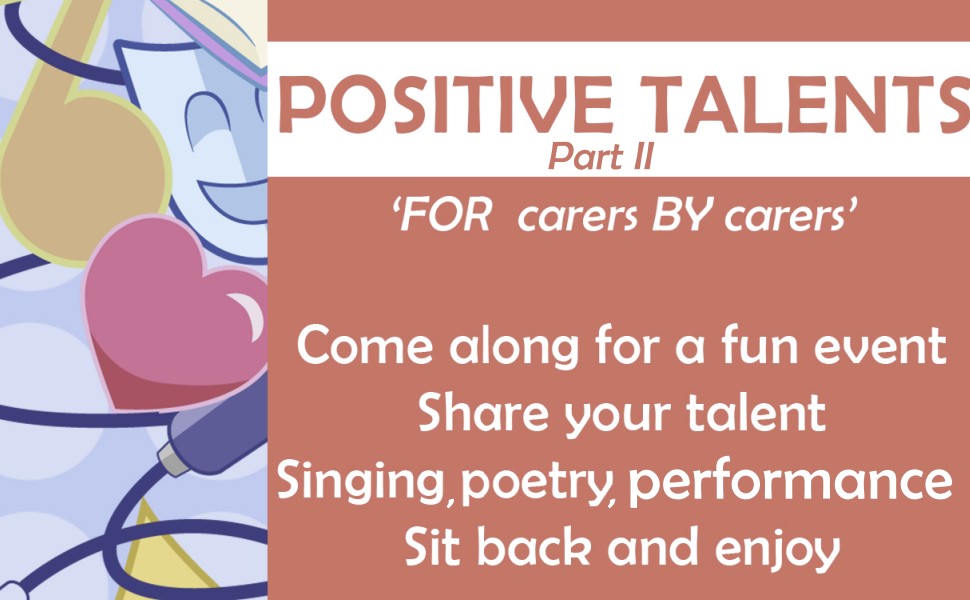
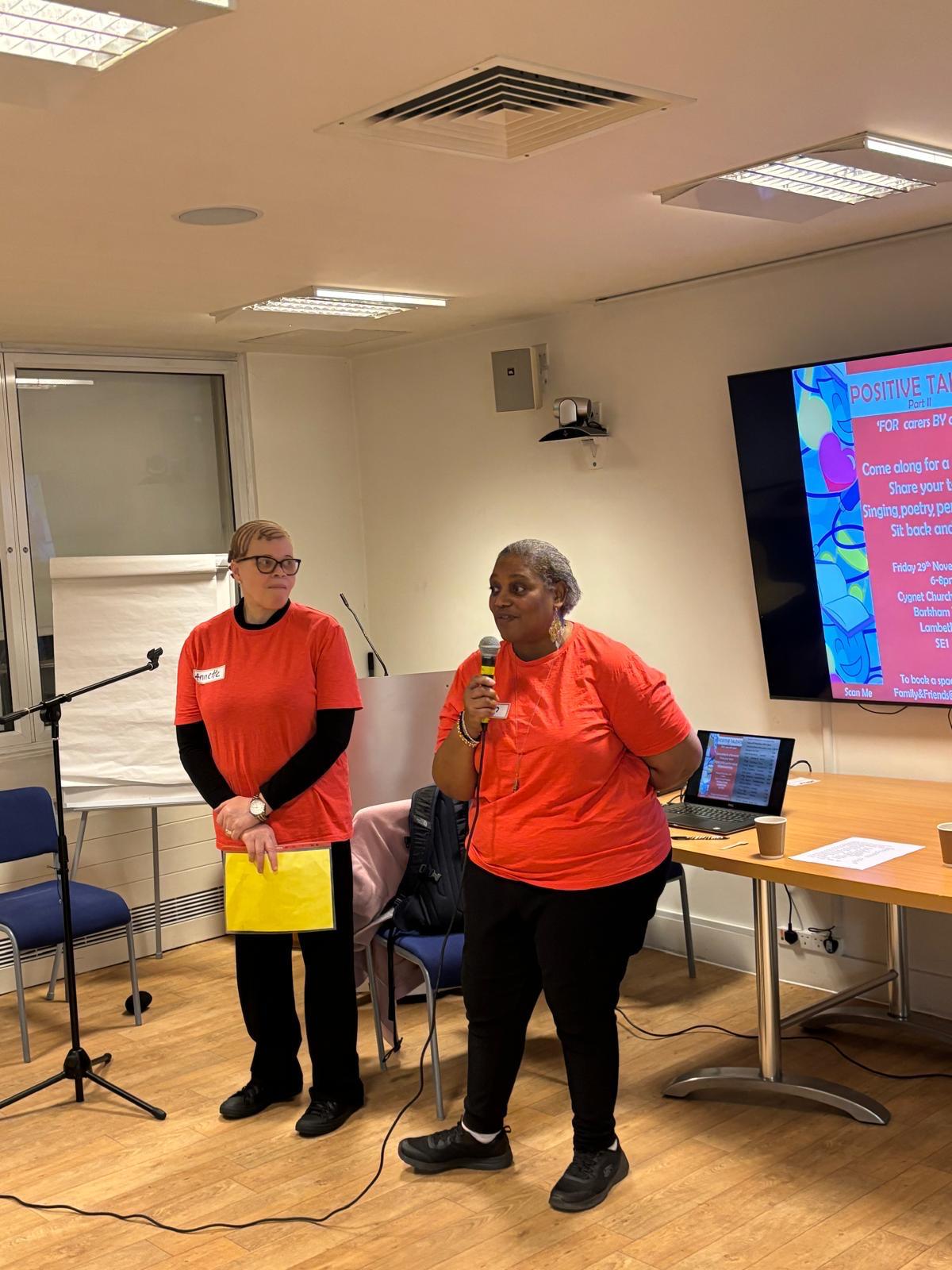
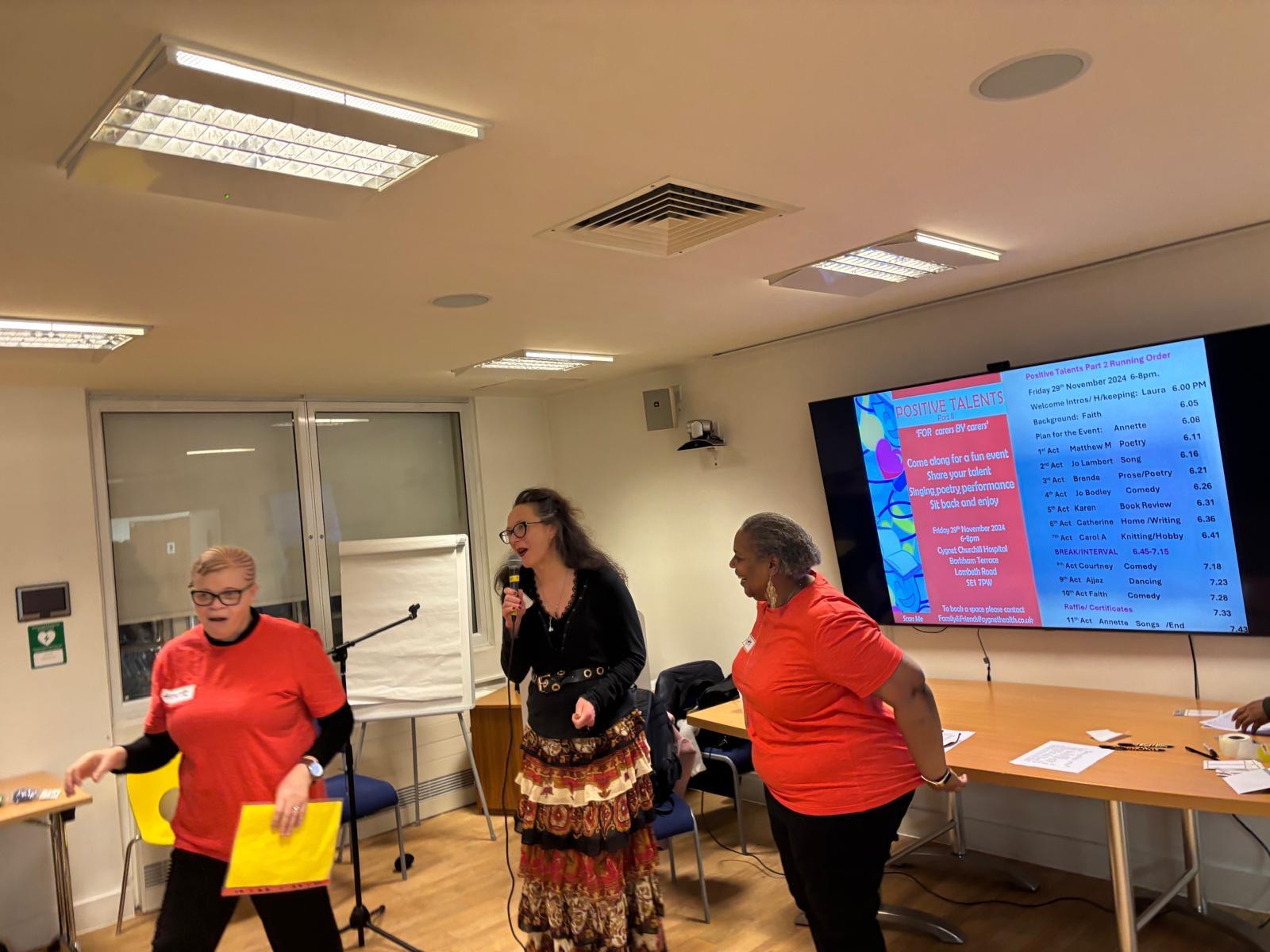
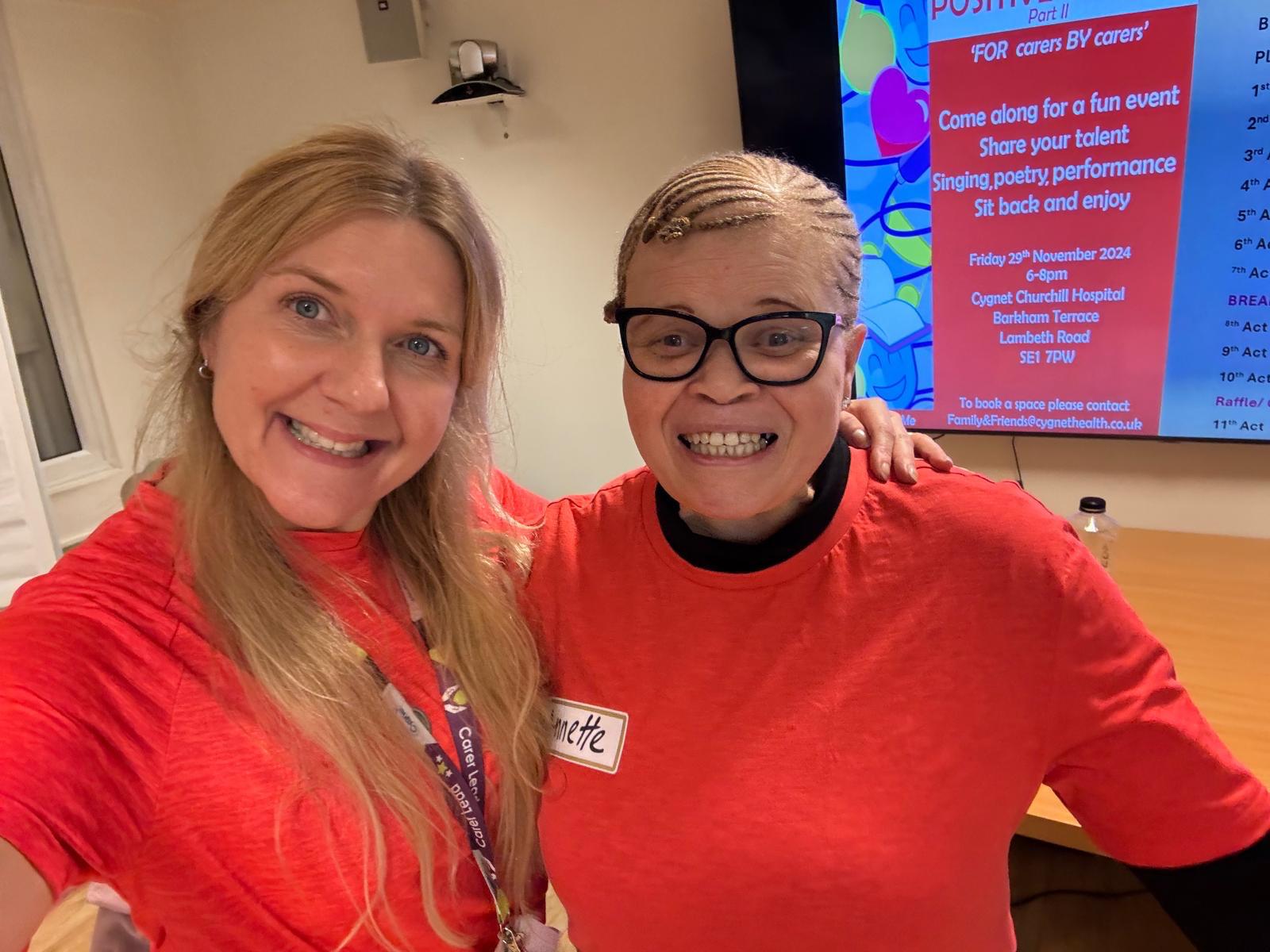
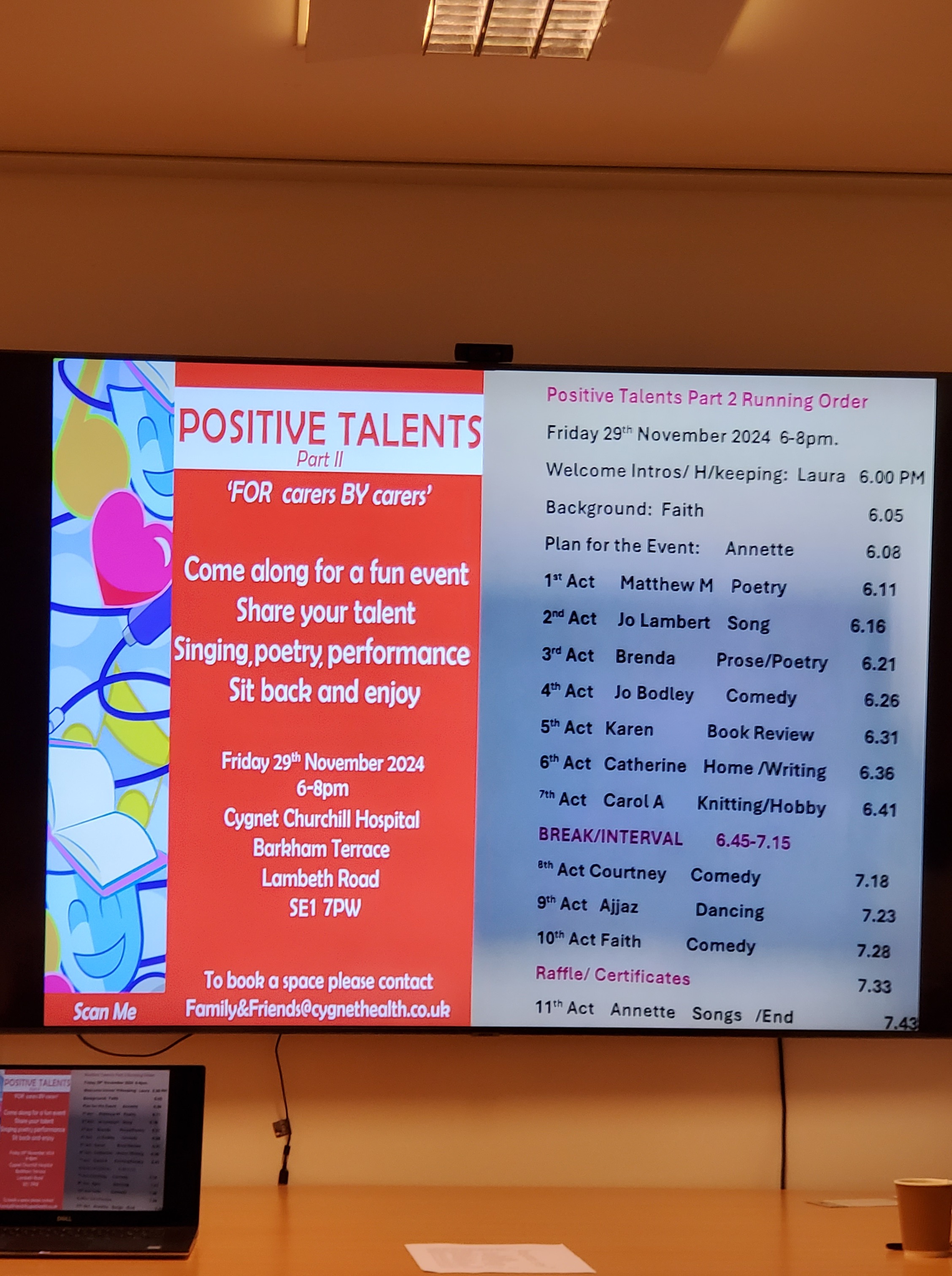
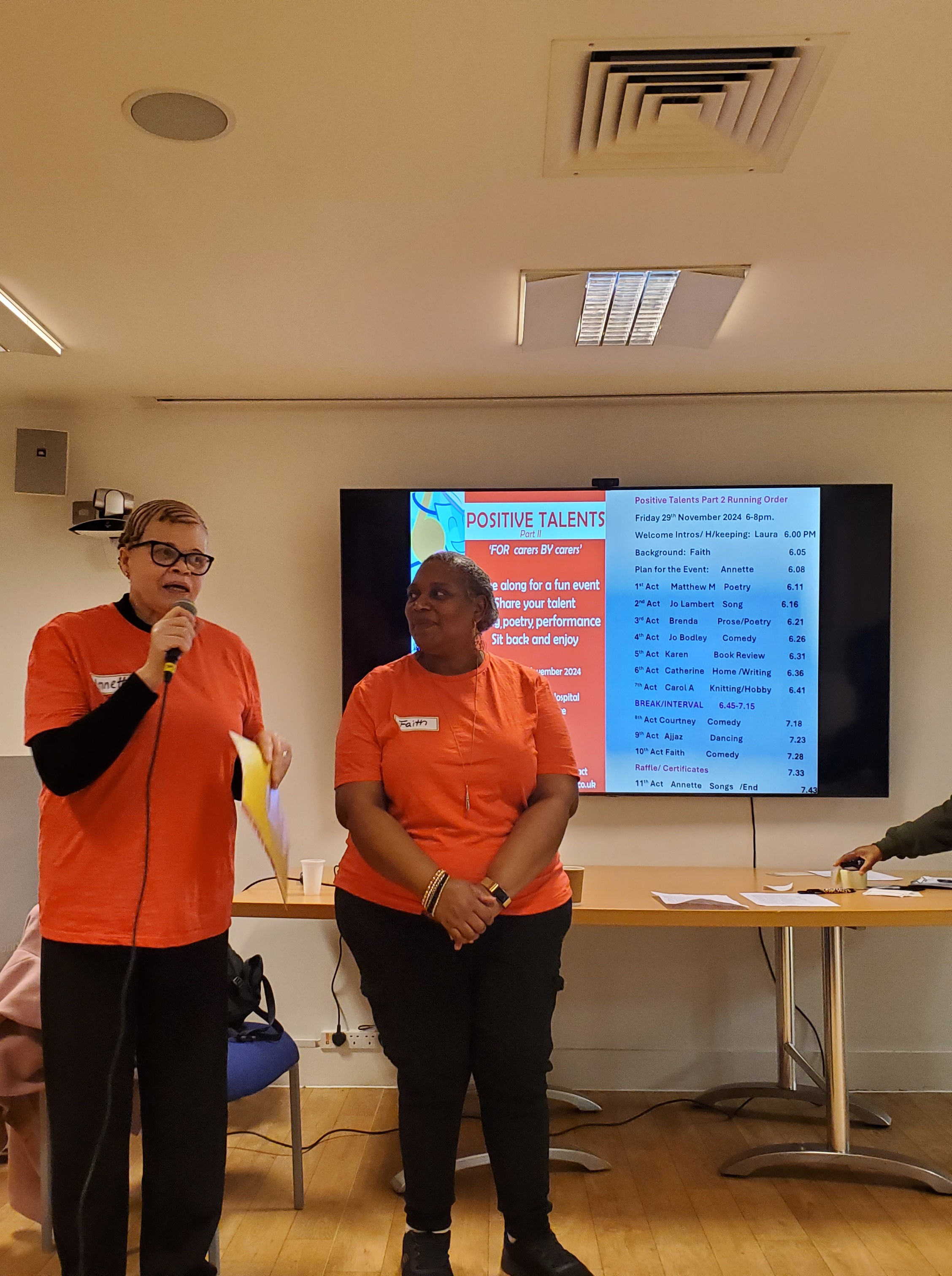
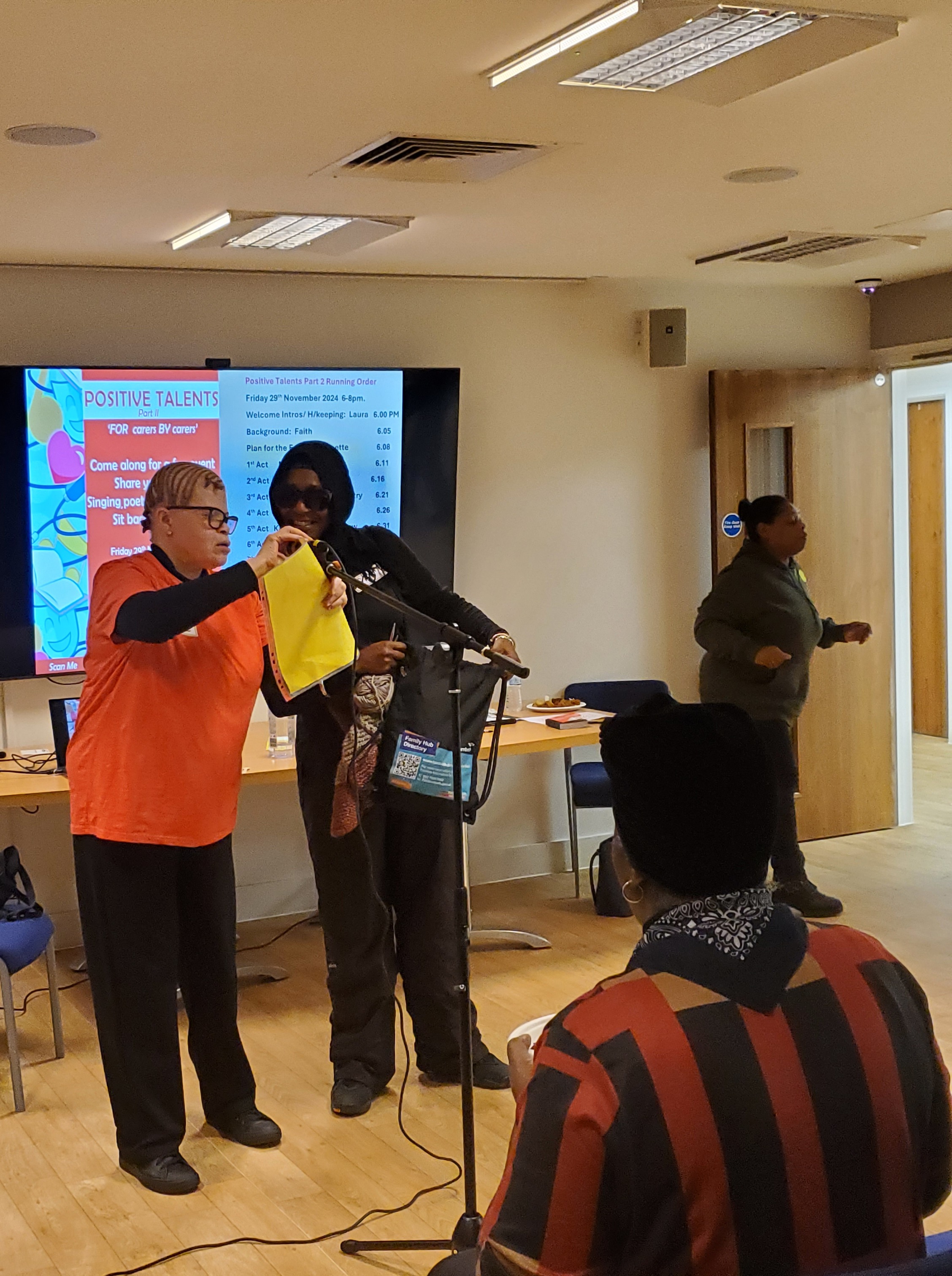
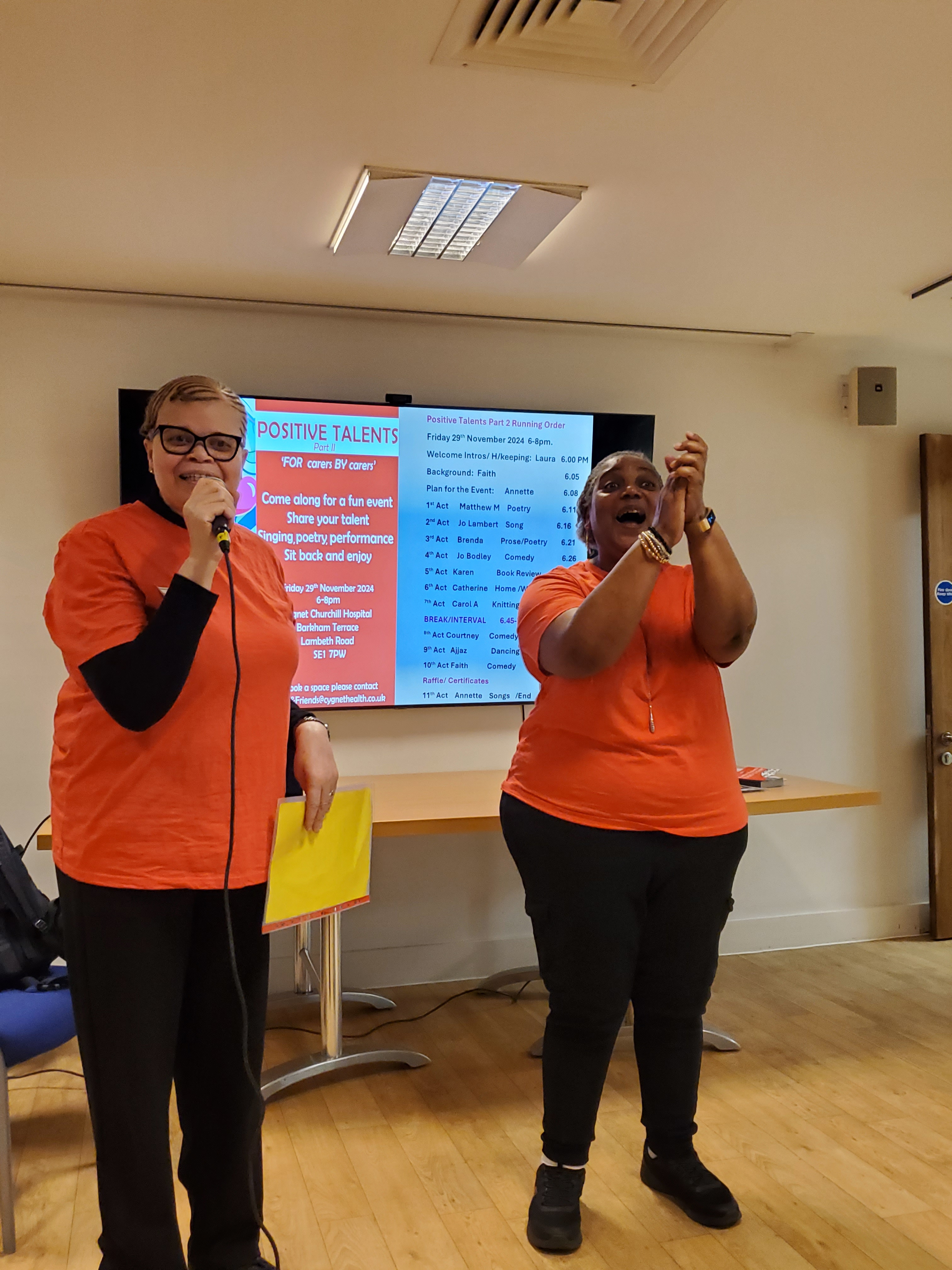
Carers Annette Davis and Faith Smith set out to host Postive Talents part 2 to give a chance for carers to showcase their talents and have a night out for entertainment to reduce isolation.
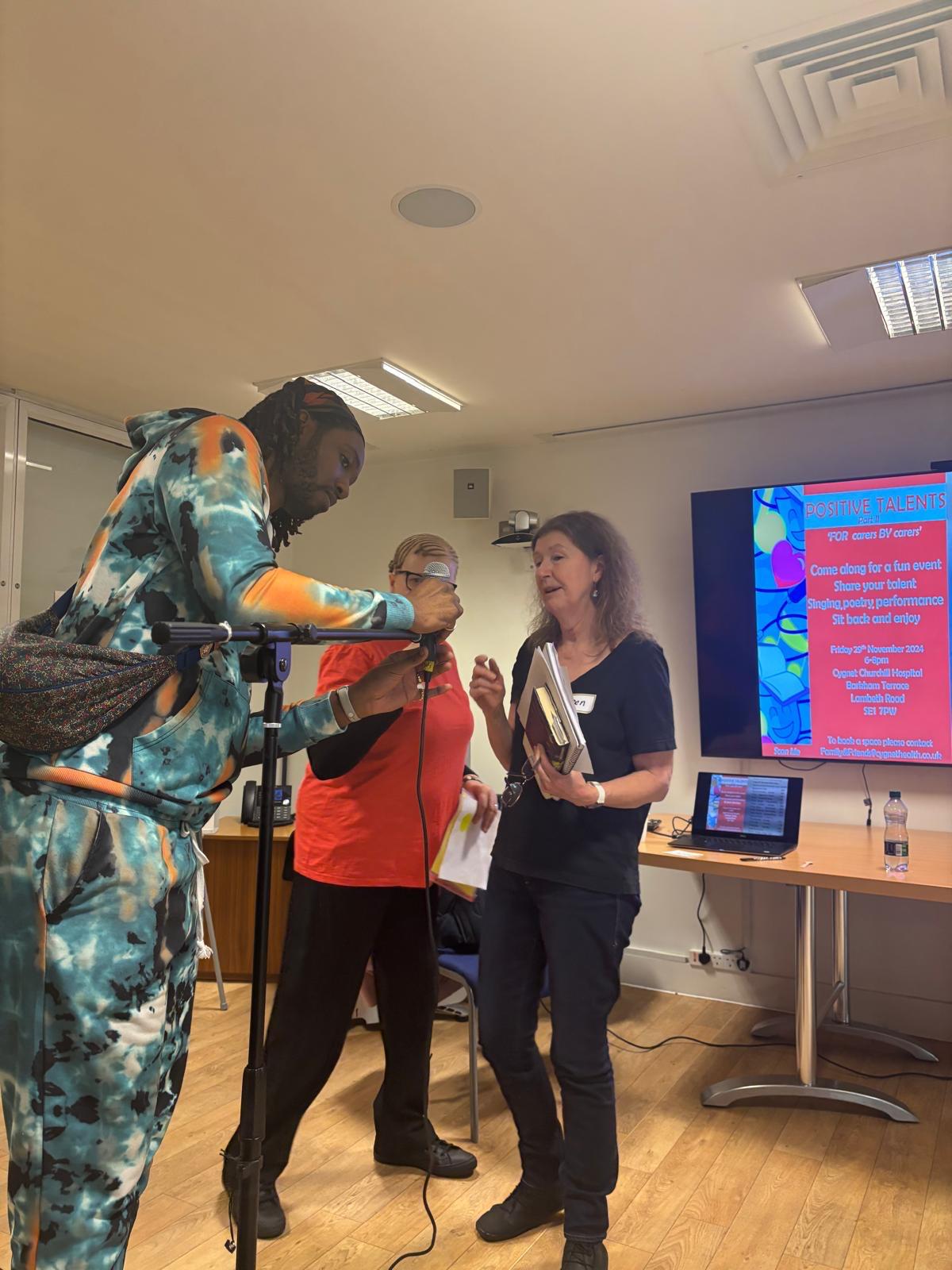
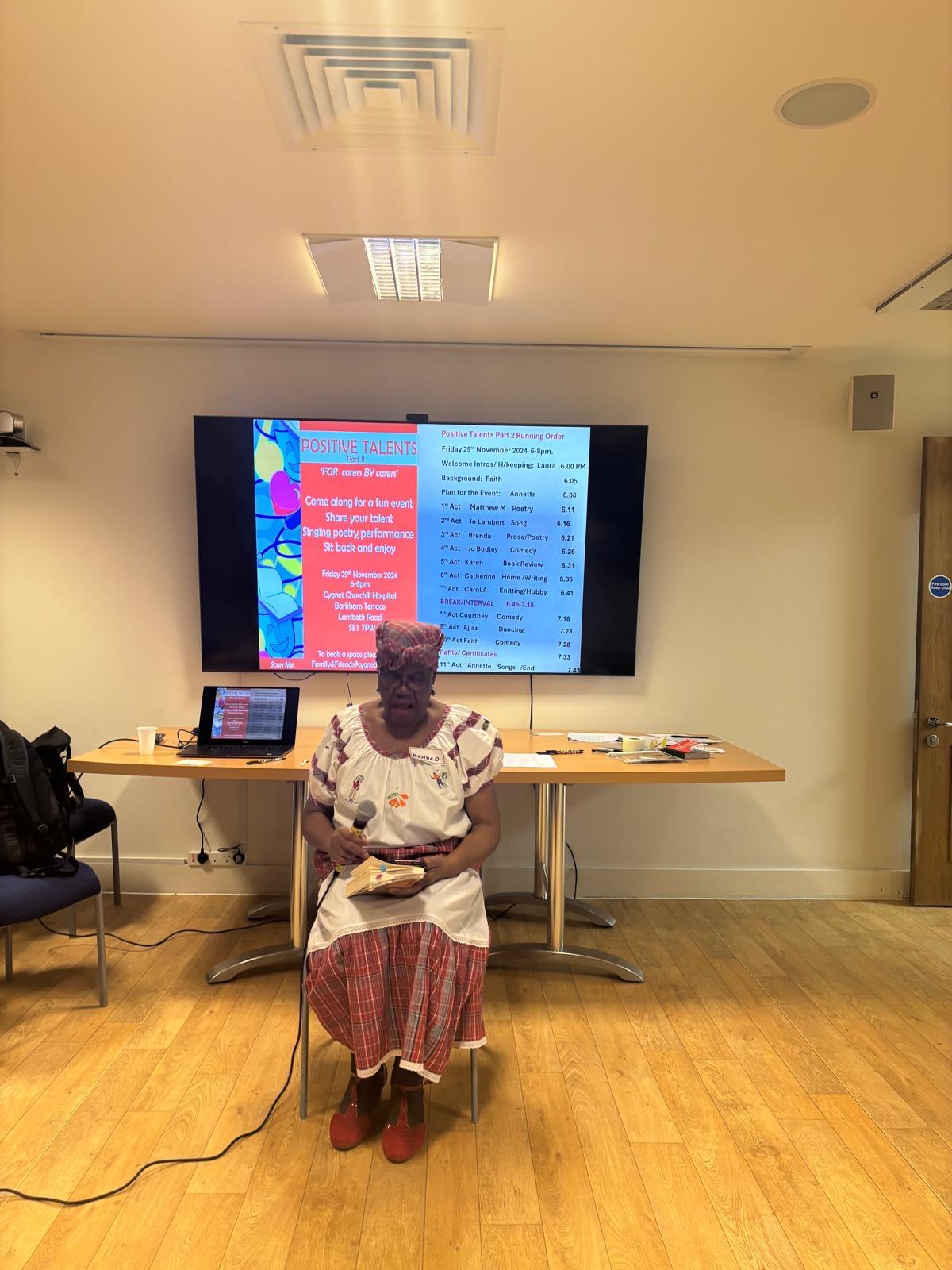
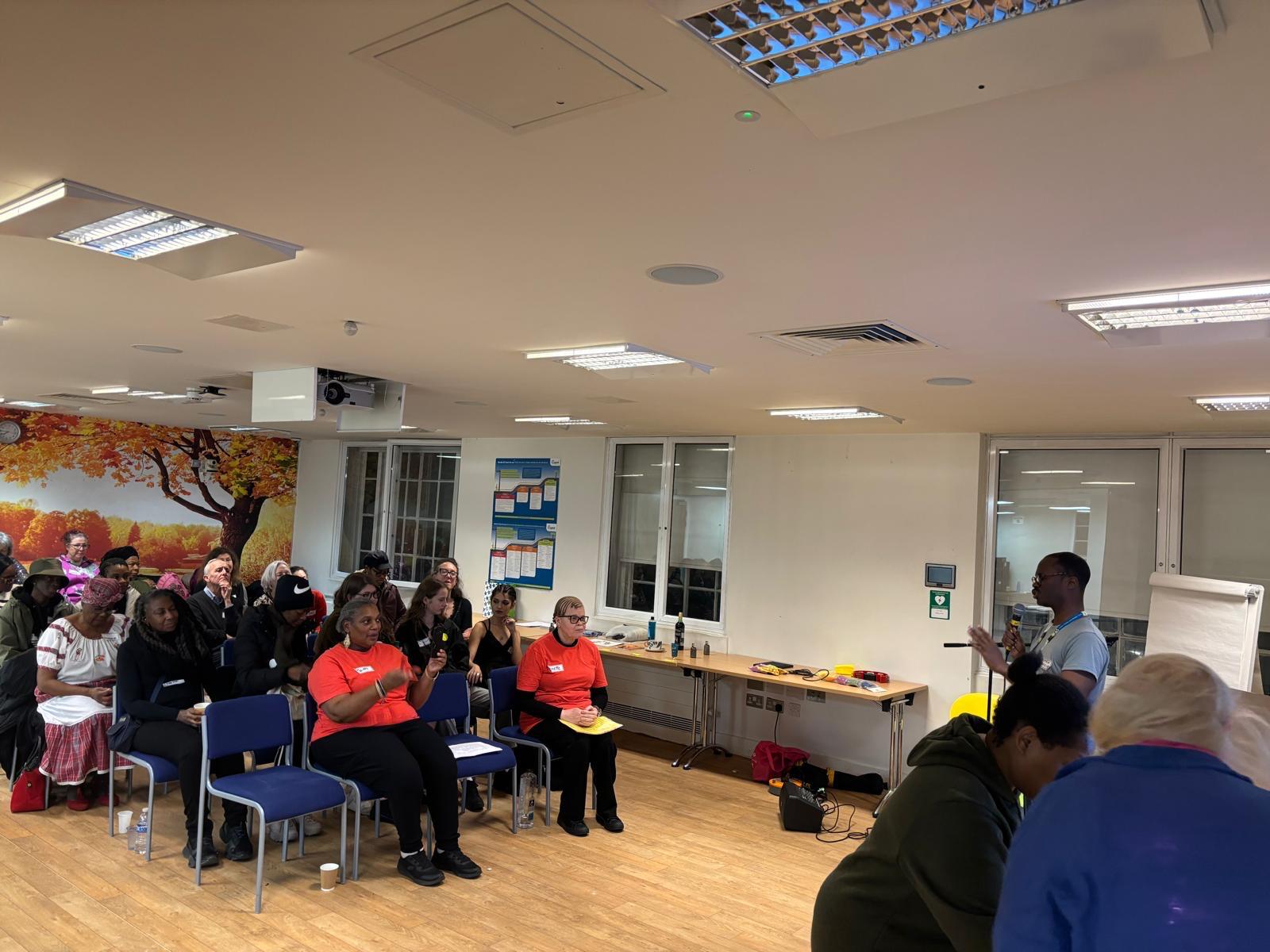
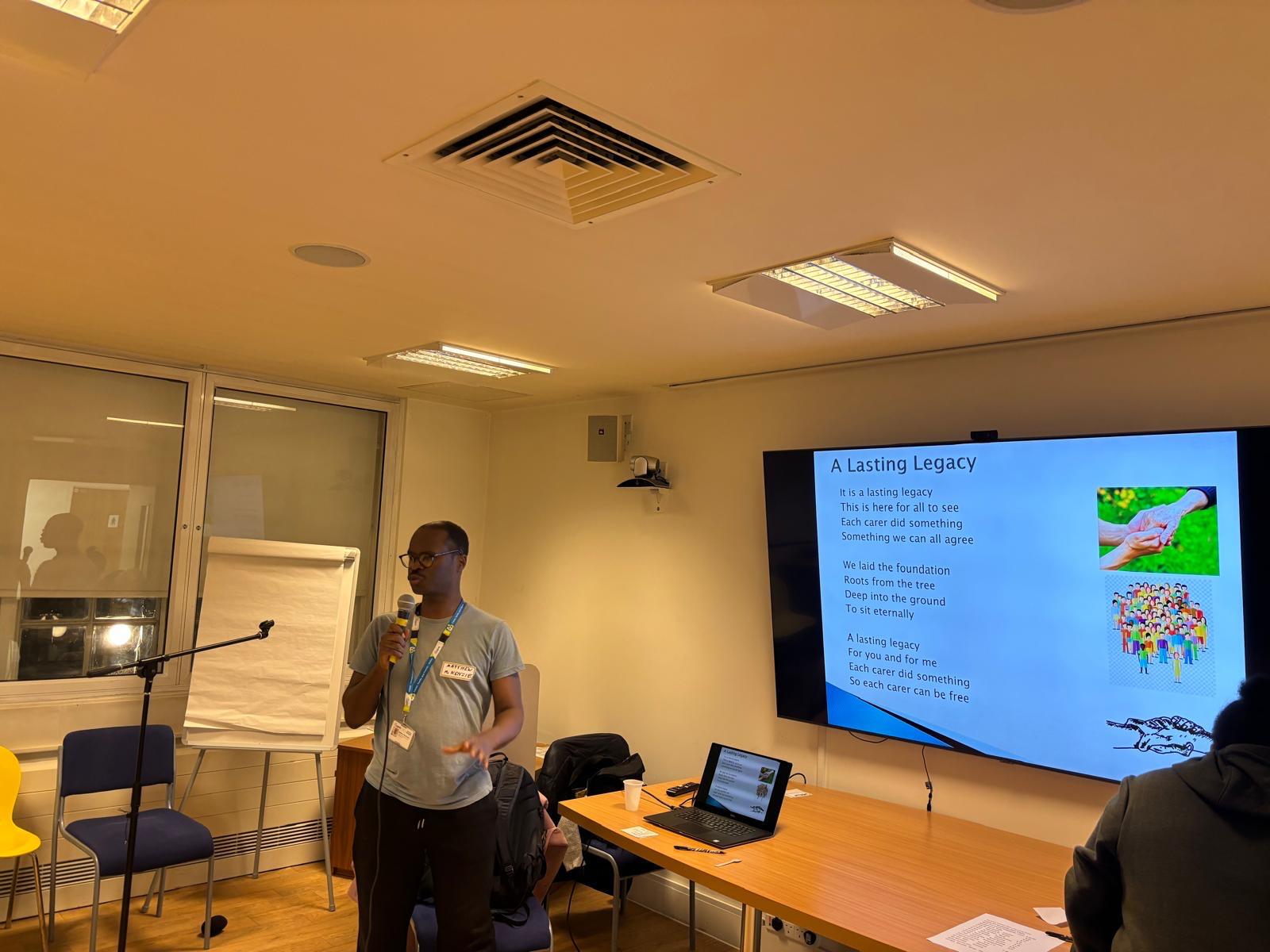
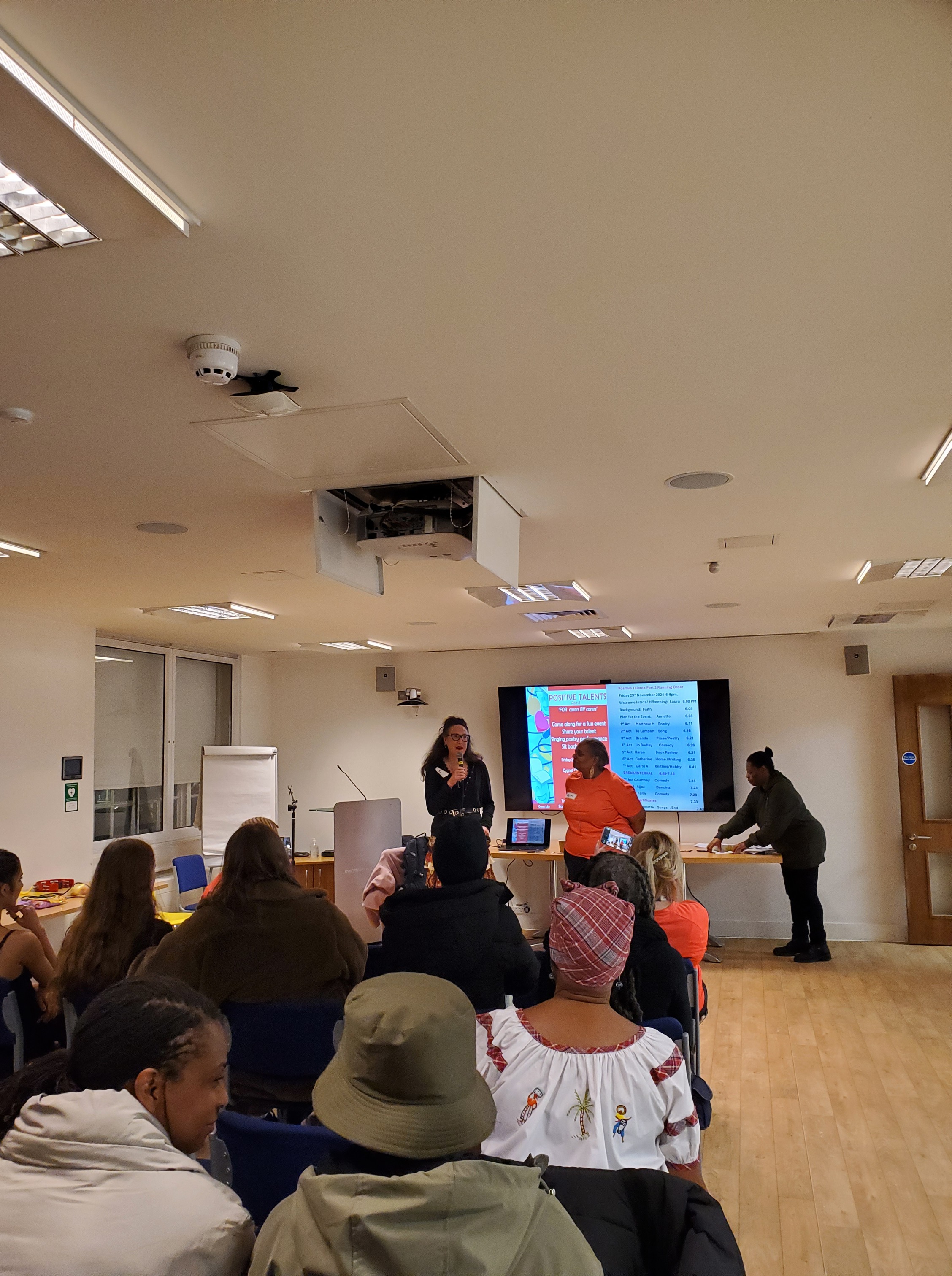
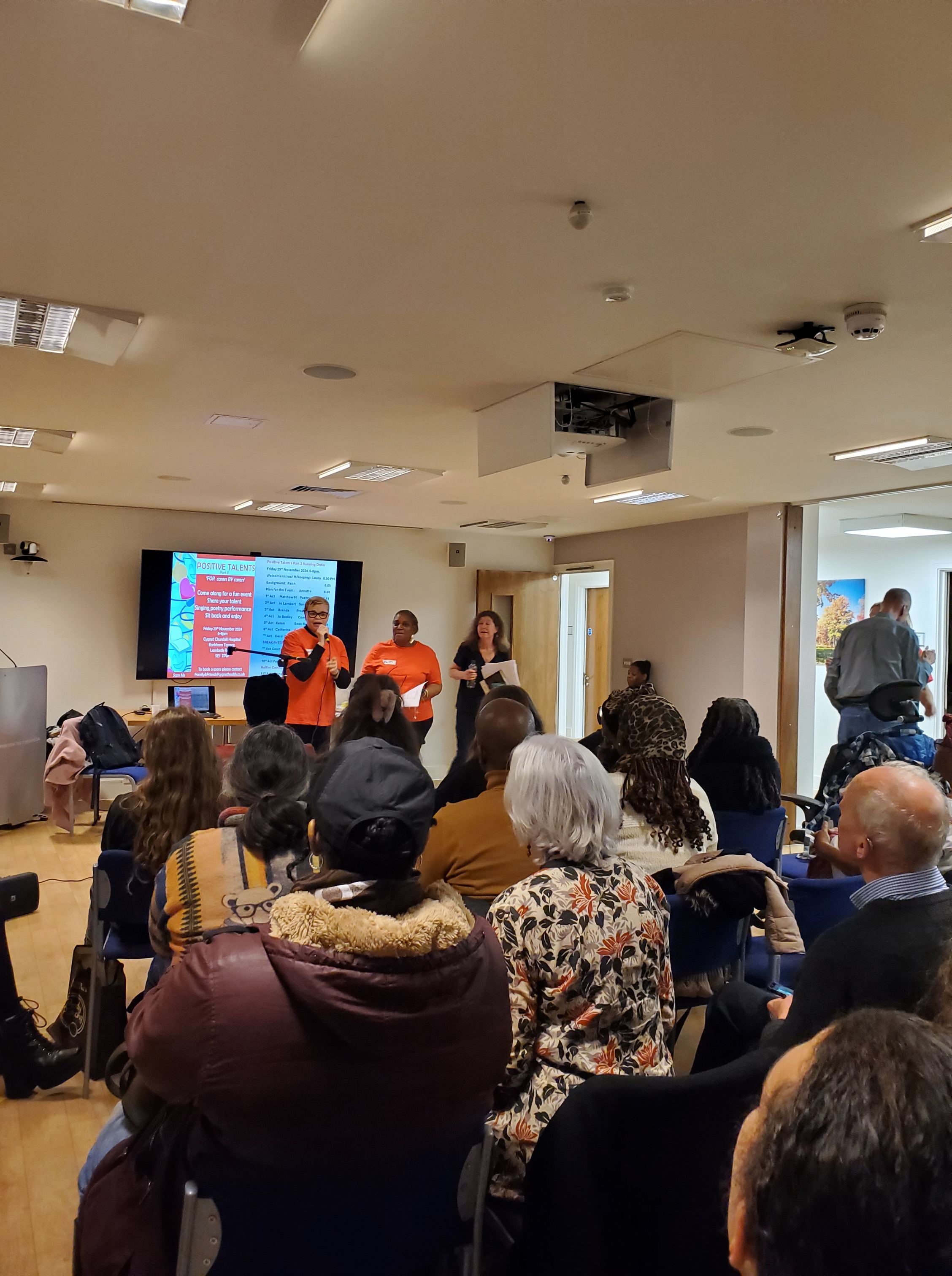
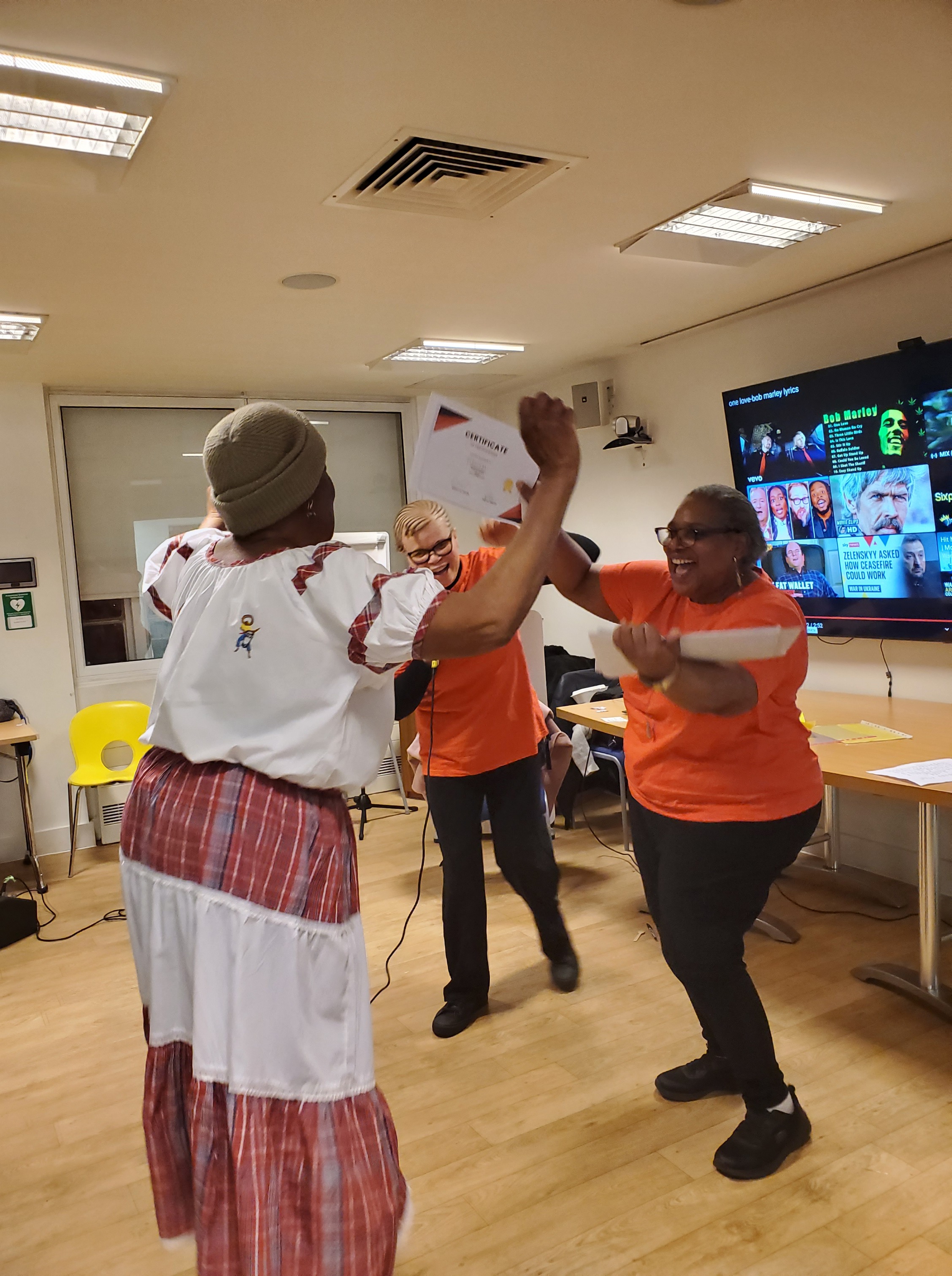
The Positive Talents – Part 2 event took place on friday 29th of November 2024. For this event we had an amazing range of performing acts, including poets, singers, dancers, book readings and interests that those with lived experience of caring promoted.
I will not go fully into all the acts as you can watch the video below and fast forward to any of the performances you want to see.
The event included a Raffle section, food and refreshments and a way for carers to network to reduce isolation and stigma.
However the event was worth attending to give carers of London a chance to have space for them with thanks to Laura Sheridan Cygnet Head Carer & Service User Engagement and staff at Cygnet for the excellent hospitality.
Well done to all the carers who performed at the event who were awarded certificates.
We look forward for the next Positive Talents show.
Supporting unpaid carers is a greatly unrecognized yet profoundly impactful endeavor. In our latest interview from a series dedicated to highlighting those who go out of their way to aid and uplift unpaid carers, Matthew McKenzie had the opportunity to speak with Ionie Hughes.
Ionie talked about how she tries to reach parent carers through her charity, Socialising Angels, which is a C.I.C that was created to help reduce isolation, which focuses to help young adults with social, emotional and mental health needs.
You can watch the full interview below.
Drawing from her personal experiences and relentless advocacy, Ionie provides invaluable insight into the unique challenges and necessities of unpaid carers. Below, we delve into Ionie’s story, her organization, and the far-reaching influence of her work.
Training and Positive Influence
Ionie is trained in Rational Emotional Behavior Therapy, reinforcing her belief that altering one’s mindset and belief systems is crucial for overcoming challenges. She emphasizes positive thinking and speech, offering powerful encouragement and practical advice to other carers. Her ability to balance personal experience with professional training enhances her effectiveness as a support figure.
Socializing Angels: A Community Endeavor
About the Organization
Socializing Angels CIC, founded by Ionie in 2022 and operational since 2023, is based in Brixton. The organization aims to bring young adults with various disabilities into the community, providing them with social engagement opportunities. This initiative not only enriches the lives of the young adults but also offers respite to their parent carers.
Challenges of Running a Non-Profit
Running a community interest company like Socializing Angels comes with its own set of challenges. As the CEO, Ionie juggles multiple responsibilities without financial compensation, as most of the organization’s funds are directed toward service provision. The startup phase of the CIC is heavily reliant on external funding and the dedication of its founder.
Ionie’s work extends beyond service provision for her own son to advocating for and supporting other young adults and their families. This dual role often leads to overwhelming exhaustion and the risk of burnout. However, her steadfast commitment to both her son and her organization underscores the dedication and resilience inherent to unpaid carers.
The Unseen Challenges of Unpaid Carers
Daily Struggles and Lack of Recognition
Unpaid carers perform a plethora of tasks around the clock, often without recognition or financial remuneration. Their roles are multifaceted, ranging from advocacy to personal assistance and emotional support.
Ionie points out that unpaid carers frequently experience burnout due to the nonstop nature of their responsibilities. The mental toll of continually advocating and caring for a loved one, compounded by the financial strain of a cost-of-living crisis, is immense.
Integrity and Unwavering Commitment
Despite these challenges, the integrity and love that motivate unpaid carers are evident. They dedicate themselves selflessly to the welfare of others, driven by an unwavering commitment to their loved ones. This spirit of selflessness is emblematic of the unpaid carer community.
Essential Skills for Carer Outreach
Knowledge of Community Resources
For carers seeking to make a difference, understanding the community landscape is crucial. This involves attending meetings, forums, and various community events to stay informed and engaged. Personal interactions and shared experiences are key elements in creating a supportive network.
Empathy, Compassion, and Understanding
Ionie highlights the importance of empathy, compassion, and active listening in supporting fellow carers. Building a rapport and a community based on mutual understanding and shared experiences can provide both practical support and emotional solace.
Personal Experience and Advocacy
Personal experience is a powerful tool in advocacy. Ionie’s own journey has been instrumental in shaping her ability to help others. By sharing her story and the strategies that have worked for her, she provides a valuable blueprint for other carers seeking guidance and support.
Conclusion
Ionie Hughes’ journey and dedication shine a spotlight on the often-overlooked world of unpaid carers. Her relentless advocacy, personal sacrifices, and the establishment of Socializing Angels CIC stand as a testament to the incredible impact one person can have in making the world a more inclusive and supportive place.
Through recognizing and addressing the challenges faced by unpaid carers, we can begin to create a more understanding and supportive environment. It is imperative to appreciate and uplift those who selflessly dedicate their lives to the care of others, often without any form of compensation or recognition. Ionie’s story is a powerful reminder of the strength and resilience that define the carer community.
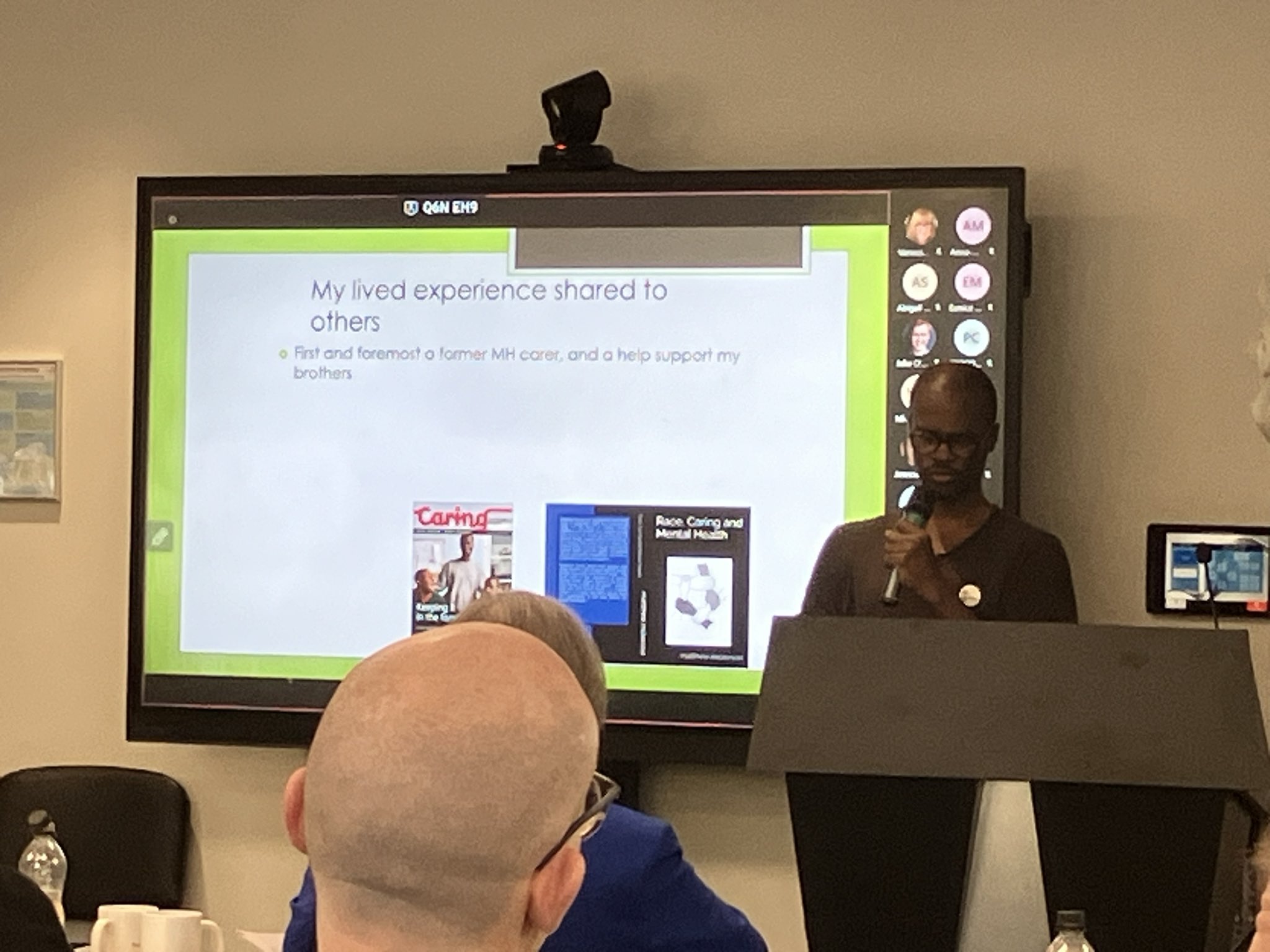
Welcome to a brief update of my ethnic mental health carers forum. For this month we were joined by South West London & St George research team. The team from a training company introduced a cultural capability training program aimed at reducing race and ethnic disparities in mental health care, while Matthew presented a summary of various reports highlighting health inequalities faced by ethnic minorities in the UK. The Forum also discussed the importance of advocacy for carers, the challenges of engaging with diverse communities. A carer from South Yorkshire also discussed the potential for setting up a group to support black people in the area.
Cultural Competence Training for Trusts The training company introduced a cultural capability training program they are developing for the South West London and St. George’s Mental Health Trust. The program is part of an ethnicity and mental health improvement project and aims to reduce race and ethnic disparities in mental health care. Representatives from the team also discussed their evidence review on cultural competence in mental health care and their use of a model of cultural competence. The training is expected to impact staff, carers, and patients by promoting culturally sensitive care plans and reducing inequalities. The team also discussed the potential to tailor the training for other trusts.
Addressing Health Inequalities and Disparities Matthew presented a summary of various reports highlighting health inequalities and disparities faced by ethnic minorities in the UK. He emphasized the importance of these reports in supporting the Patient Care Race Equality Framework (PCRF) and other initiatives addressing health inequalities, discrimination, and racism. The reports, from organizations such as the NHS Race and Health Observatory, Public Health England, and the CQC, demonstrate that ethnic minorities face higher risks with certain health conditions, barriers to accessing services, and poorer health outcomes.
Matthew also mentioned the role of institutional racism, socioeconomic disparities, and cultural barriers in perpetuating these disparities. He concluded by emphasizing the need for systematic reforms to ensure equitable health outcomes for all.
Addressing Healthcare Disparities and Trauma Laura from Cygnet HealthCare expressed her appreciation for Matthew’s ability to present information in an understandable and accessible manner, which she believes is not done enough. She also highlighted the importance of Matthew’s role in educating others and ensuring the right actions are taken. A carer member of the group then brought up a report from the Race Equality Foundation and Learning Disability England, which highlighted disparities in access to healthcare for ethnic minorities with learning disabilities. She shared her personal experience of a young person with a learning disability, autism, and mental health issues facing challenges during the COVID-19 pandemic. The group acknowledged the system-generated trauma faced by carers and the need for more awareness and action on these issues.
Mental Health and Learning Disability Event In the meeting, A carer highlighted the upcoming mental health and learning disability listening event, which was previously cancelled due to lack of awareness. Others at the meeting expressed their support for the event and the importance of advocating for carers.
A representative from Surrey & Borders NHS trust who is the programme lead for carers and co-production, discussed the Trust’s co-production framework and their efforts to reach a diverse community for co-production opportunities. She also mentioned the Trust’s strategy to mirror the triangle of care. Matthew shared his experience at the Trust’s learning event and his plans to help promote the Trust’s work, particularly in relation to carer involvement.
Mental Health Event Postponement Concerns A carer expressed surprise at the postponement of a mental health and learning disabilities listening event, which was initially scheduled for September. Another carer, who is relatively new to the Maudsley, had not been aware of the event’s postponement and was concerned about its lack of awareness. She had reached out to various individuals within the organization, including others, to discuss the event. Carers suggested that the carer should also speak to Zoe Reed or Shania, who are in charge of PCREF, to ensure the event’s success. The carer agreed to continue her efforts to promote the event and ensure its awareness.
Supporting Black Mental Health Groups Carers discussed the potential for setting up a group to support black people in South Yorkshire, with Matthew suggesting that funding could be sought from the ICB and the charity associated with their NHS trust. A carer shared his experiences with a similar group in Peterborough, emphasizing the need for more conversation and less medication in mental health care for black people. A Carer, who is involved in setting up a group in Kent, shared her challenges due to the predominantly population in her area. Matthew also mentioned an upcoming event on the new Mental Health Act and its potential impact on carers. The team agreed to reconvene in January.
Welcome back to a brief update of another group I chair with support of London Hospitals and the carer centres of London, along with carers who want the best service of those using the NHS.
The group is called the “Carers hospital discharge toolkit meeting”. This group runs every 2 months and follows off the work the previous NHS England carer lead for London developed.
The community deserves the best care possible from the NHS and that includes carers who support those they care for using the hospitals in London and beyond. This was taken up by NHS England Carer lead for London Debbie Hustings who worked very hard to produce the toolkit linked below.
Feeling passionate on continuing the work, Carer centres and hospital representatives came together to support me in driving this brilliant toolkit. The group has been running 2 years and developing rapidly.
Here is the update for November 2024
The meeting for November focused on the development and progress of various resources aimed at supporting carers and families during hospital discharge, including a comprehensive carers’ pack, a digital resource, and a new pilot project at the Carers Hub Lambeth. The group members discussed the importance of collaboration, sustainability, and language accessibility in these resources, with plans for further development and translation. The meeting also highlighted the challenges faced in hospital discharge and capacity, and the need for more integrated work with partners and other local authorities.
Matthew Mckenzie welcomed everyone to the London Hospital Discharge Toolkit group meeting. The meeting aimed to keep the momentum going on a resource that helps hospitals engage more families and carers, especially during discharge. Matthew encouraged participants to introduce themselves and share their experiences. The attendees included representatives from Tower Hamlet Carers, Barnet Carers, Sutton Carers Centre, Lewisham & Greenwich NHS Trust, Greenwich Council, Greenwich Carers Centre, St Georges University hospital trust or GESH, Lambeth Carers Hub, Bexley Carers Centre and unpaid carers. Each participant shared their roles and experiences in their respective organizations, with a focus on hospital discharge and carer support. The conversation ended with Matthew encouraging further participation and updates on the toolkit’s progress across the London hospitals in order to work with carer centres and local authorities.
Carers Hub Pilot Project Update Rachael discussed the progress of a new pilot project at the Carers Hub Lambeth, which involves a hospital discharge lead supporting carers and promoting carer awareness. She mentioned the introduction of an additional tier of service for registered carers and the need to join forces with other GSTT and Kings College NHS trust to support carers. Rachael also expressed interest in discussing the project developments further with Matthew and others in the New Year.
Greenwich Council then presented the Greenwich Carers Pack, a comprehensive information booklet developed in co-production with unpaid carers in Greenwich. The pack includes information about carers’ rights, assessments, and support, as well as details about local community resources. Greenwich council mentioned plans to translate the pack into Nepalese and distribute physical copies to hospitals, GP surgeries, and community centers.
Carers Pack Development and Resources Evie who chairs Greenwich Councils Carers Partnership board then discussed the development of a carers pack, which was designed to be interactive and easy to navigate. The pack covers various resources available to carers, including local and national ones, and provides bite-sized notes for carers to jot down important information. It also includes sections on employment rights, respite, legal responsibilities, financial support, home safety, and advocacy. The pack is designed to be a one-stop resource for carers, with links to all the resources mentioned. Evie also mentioned that the design team has done an excellent job, and the pack will be further developed as it goes to double pages. Matthew expressed his appreciation for the pack and requested the link to it when he runs his carer stall at the hospitals.
Digital Resource and Carer Navigation Greenwich Council thn discussed the development of a digital resource and physical copies for a project, with plans for posters featuring QR codes for easy access. The project was well-received, with a carer and Matthew expressing their appreciation and interest in using it for their respective areas. A carer also highlighted the importance of connection and navigation for carers, noting that many learn from other carers rather than official sources. The team agreed to continue developing the project and to share it with other local authorities.
Improving Carers’ Information Pack Development A carer expressed concerns about the lack of connection and input from various parts of the system in the development of the carers’ information pack. She highlighted the need for a more comprehensive approach, especially considering the cross-borough nature of some carers’ support. Greenwich council representive acknowledged these concerns and explained that the pack was developed by a different team, with input from Oxleas NHS trust and other organizations. She also mentioned that they are working on a more summary version and translations. The team agreed on the need for more integrated work with partners and other local authorities.
Comprehensive Carer Handbook Development Discussed Members continued to discuss the development of a comprehensive handbook for carers. The presenters clarified that they were not planning to create a smaller, bite-sized version of the handbook, but were open to feedback suggesting such a change. The handbook will be available in various locations, including GP practices, libraries, and community centers, and can be accessed digitally via QR codes. THey also mentioned the importance of keeping the information up to date and being mindful of sustainability policies. A hospital representative expressed interest in sharing the document with other boroughs and asked about contacts within the hospital for potential distribution of the handbook. They agreed to check with colleagues about existing contacts and welcomed any additional contacts. The group encouraged others to share relevant contacts.
Consistent Information for Carers Greenwich Council reps emphasized the importance of having consistent information spread across South East London, particularly for carers. Greenwich Carers representative praised the new greenwich council carers resource, noting its potential to be a valuable resource for carers. She also mentioned the commitment to keeping the information up-to-date, particularly on the digital portal. Evie added that they plan to translate the pack into Nepalese and other key languages for carers in the borough, and also consider developing an easy-read version. Matthew ended the conversation by noting the ease of language changes in a digital format.
St Georges Hospital NHS Trust Progress and Future Plans Wendy from St Georges hospital who shared her team’s achievements, including virtual training sessions, bespoke staff training, and the upcoming launch of a carers’ information section on the St. George’s website. Wendy also mentioned her goal for 2025: developing a carers’ charter and survey. The team expressed their anticipation for the upcoming carers’ forum, which Matthew will be attending.
Carer Support Challenges and Progress Tower Hamlet Carers Centre discussed the challenges and progress of their work in Tower Hamlets at royal london hospital which one of the 5 hospitals under Barts NHS Trust.
Tower Hamlet Carers centre representative is expressed her hope for having volunteers who were carers themselves to help provide the service. She also mentioned a plan to create a co-produced pack of resources for carers, which would be based at the hospital’s front desk. She highlighted the difficulty in discharge planning due to the pressures of the hospital system, which sometimes led to carers not being fully involved. Despite these challenges, Tower Hamlets Carers centre expressed optimism about the service’s progress and future plans, including the potential addition of more carer support workers. Wendy from St Georges offer her support, which I thought was very admirable.
Barnet Carers Centre update Matthew then handed over to Mike the CEO of Barnet Carers Centre, who presented a project aimed at directing carers to the right support organization through a portal. The portal, currently under development, would direct carers to the appropriate center based on their postcode. Mike also mentioned the project’s expansion to include mental health and allied health professionals this would be the merged Mental health trusts Camden & Islington and Barnet, Enfield & Haringey who have combined into north london mental health partnership.
A carer raised a question about identifying carers during pre-assessment, to which Wendy Doyle responded that their system includes a question about whether the patient is a carer. The possibility of discussing this further in a future meeting was left open.
This concludes the short update to continue progression of the excellent legacy Debbie husting has left for London hospitals and beyond.
Hello all. Especially those who support someone with mental ill health. Treat someone with mental ill health or those who are interested in Carer’s Trust Triangle of Care. As an expert by experience regarding mental health unpaid care. I am delighted to be given the chance to chair these meetings, which I have been doing for around 2 years.
The meeting I chair is the national community group, which I try to run every 2 months and usually, I do not have the capacity to chair, organise and minute them, but now I have decided to attempt to update via my carers website. The main reason is to let carers know of the important themes that will affect them if caring for someone with mental ill health.
Topics covered for the ToC community meeting November 2024
The meeting covered various aspects of carer involvement in mental health care, including the Triangle of Care approach, challenges faced by carers, and the development of tools to improve communication between patients, clinicians, and carers. Discussions also focused on the Making Carers Count program presented by Carers Trust “Making Carers Count” programme lead Ben O’Hanlon, which aimed to support underrepresented carer groups.
Lastly we discussed the potential impacts of the new Mental Health Bill on carers. Concerns were raised about the implementation of the Mental Health Act reforms and their implications for carers, highlighting the need for better support and representation in the decision-making process.
Triangle of Care Update Meeting The meeting discussed promoting the Triangle of Care approach to involve families and unpaid carers in mental health care settings. Mary Patel, the new co-lead for Triangle of Care at Carers Trust, introduced herself and her background. A carer raised concerns that mental health services seem less willing now to genuinely listen to carers compared to when Triangle of Care was first launched.
We then had Marta, a researcher, who requested help from carers in London to complete a survey on shared decision-making in mental health that includes a carer version. The group then heard presentations from Alan Worthington on engaging carers in primary care and Karen on the Mental Health Act reform’s impact on carers.
Developing Patient-Clinician Carer Questionnaires In the meeting, Marta discussed the development of questionnaires for patients, clinicians, and carers to evaluate the effectiveness of conversations and identify discrepancies. She emphasized the importance of involving patients in treatment decisions and the need to make the questionnaires as succinct as possible while still capturing valuable information. A Carer raised concerns about the cultural aspects of the questionnaires and the need to address diversity issues. Another carer shared her experience as a carer lead at a mental health trust, highlighting the importance of co-producing carers questionnaires to gather valuable feedback.
Engagement and Support in Medical Practices Alan Worthington discussed the importance of engagement, involvement, and support in medical practices, particularly for carers. He emphasized the need for professionals to be prepared to talk to carers, share information, and break confidentiality. Alan also highlighted the significance of patient public involvement and feedback in improving the system. He shared his experience with a complaints book in his surgery, which became a valuable resource for patients to express their experiences. Alan also touched on the issue of support from medical staff, particularly doctors, and the need for special time with them. He concluded by discussing the impact of Covid-19 on carers and the need for self-help and monitoring.
Regular Health Monitoring With Alan Alan also discussed the importance of regularly checking weight and blood pressure, using a digital thermometer and blood pressure meter. He emphasized the significance of monitoring blood pressure, as it can be a lifesaver and help identify potential health issues. Alan also highlighted the importance of using a digital thermometer, as it provides quick and accurate readings. He further discussed the use of urine testing strips, which can help detect urinary tract infections. Alan concluded by emphasizing the importance of having a blood pressure meter, oximeter, and urine testing strips in one’s medical kit.
Covid-19 Risks and Carer Support Alan discussed the ongoing risks of Covid-19 and the importance of being vigilant. He also highlighted the potential benefits of certain painkillers and promoted their use by carers. Alan emphasized the need for carers to take charge of their situations and seek help when necessary. He also shared a personal experience caring regarding stroke and the importance of quick action. Alan suggested that the Carers Trust could share this information with unrecognized and unheard carers.
Making Carers Count Program Outcomes Ben discussed the Making Carers Count program, a three-year initiative aimed at supporting carers from underrepresented groups. A lot of the presentation was aimed at carer centre representatives, especially those involved in the “Making Carers Count” programme.
The program, which concluded earlier this year, focused on improving access to digital, online, and peer support. Ben highlighted the program’s positive outcomes, including improved reach, support, registration, and engagement for carers from these groups.
He also mentioned the publication of a final evaluation and five practical good practice guides based on the program’s key themes. These guides are intended to be accessible resources for organizations looking to improve their services for carers. Ben also mentioned the program’s legacy projects and the appointment of a new EDI lead at Carers Trust. Matthew McKenzie raised concerns about the program’s sustainability and the risk of losing the momentum and funding. Ben responded by emphasizing the importance of embedding the program’s work across the network and the potential for organic changes in practices.
Mental Health Bill Key Reforms Karen Machin discussed her passion for the Mental Health Bill, which has been in the works for a while. She highlighted the bill’s key reforms, including a higher bar for detention, stricter criteria for community treatment orders, and the establishment of a mental disorder within 28 days for detention. Karen also expressed concern about the support for family and friend carers in the bill, as well as the potential for a public discourse around risk. She encouraged everyone to read the full document of her presentation for more information.
Mental Health Act Changes Impact Carers Karen Machin presented on the changes to the Mental Health Act, focusing on the impact on carers. She expressed concerns about the potential decrease in the number of people detained, which could lead to increased responsibility for carers. Karen also highlighted the importance of considering the impact on carers’ mental health and the need for their voices to be heard in the decision-making process. She suggested that carers should contact their MPs to raise their queries or concerns and ensure their voices are represented. The group agreed that the changes of the Mental Health Act are welcomed, there will be significant implications for family carers and it is important that their input is crucial in shaping the future of mental health care.
UK Mental Health Act Reforms In this meeting segment, the key points discussed were concerns around the new Mental Health Act reforms in the UK. A carer shared her worrying experiences where her relative, who lacks insight into their mental illness, could potentially nominate an inappropriate person to make decisions on his behalf instead of his family carer. The group discussed how this law, while well-intentioned, fails to account for complex family situations and resource constraints in mental health services. There were also concerns about lack of funding for proper implementation of the reforms, and the need for better training and preparation for families and carers to understand their rights under the new law. The discussion highlighted the importance of mental health trusts and carer organizations being proactive in addressing these issues and advocating for the voices of carers to be heard.
Hey there! Another blog post from Matthew McKenzie carer activist and author of “Experiences of Mental Health unpaid caring”. This post will look at the problem of carer assessments and trust me, there are many.
If you want to watch the more detailed video (26 mins). Please click below.
The Complex Landscape of Carer Assessments: Challenges and Solutions
Caring for someone with long-term ill health presents a unique set of challenges. One crucial element in ensuring caregivers receive the support they need is the carer assessment. However, the current system of carer assessments is fraught with problems. In this article, we will delve into the multifaceted issues surrounding carer assessments and explore potential solutions to make the process more effective and compassionate.
What is a Carer Assessment?
A carer assessment is designed to identify the needs of those who are providing unpaid care for someone with long-term health issues. Carers are entitled to these assessments, which should help identify their needs and the kind of support they require. However, even with the concept in place, many caregivers remain unaware of their rights or find the process of obtaining an assessment challenging.
The Problems with Carer Assessments
Lack of Awareness and Accessibility
One of the primary issues is the lack of awareness among caregivers about their rights to an assessment. Many carers do not identify themselves as such and, consequently, do not pursue the assessment they are entitled to. This gap in awareness leads to unmet needs, whether for respite care, accessing support information, or funding specific equipment to aid in their caregiving duties.
Inconsistencies in the availability and clarity of information further exacerbate the problem. The accessibility of carer assessments varies significantly across different regions, with some local authorities setting high barriers to entry. This lack of uniformity leaves many carers without the support they need.
Focus on the Person Being Cared For
Carer assessments often prioritize the needs of the person receiving care over those of the carer. This patient-centric approach, while essential, can sideline the carer’s physical, emotional, and financial well-being. In many cases, assessors might be inadequately trained, leading to an incomplete understanding of the carer’s experiences and roles. This can result in inefficient support and a lack of appreciation for the carer’s everyday challenges.
Inconsistent Implementation
The quality and scope of carer assessments can vary significantly depending on the region. While some areas manage to provide thorough and beneficial assessments, others offer superficial or rushed evaluations. This disparity is often due to the resources and training available in different regions, leading to unequal support for carers across the UK.
Inadequate Training
A significant issue lies in the training of those performing the assessments. Without adequate training, assessors may lack a comprehensive understanding of unpaid care’s emotional, financial, and health complexities. This inadequacy can lead to inappropriate recommendations or missed support opportunities for carers, especially for those from minority groups or different cultural backgrounds.
The Emotional and Practical Challenges
Feeling Judged
The process of undergoing a carer assessment can feel intrusive and judgmental. Carers may hesitate to be honest about their struggles due to fear of being labeled as unable to cope, which could lead to unwanted interventions. This fear is particularly pronounced among young carers, who may worry about the possibility of family separation if their caregiving situation is deemed inadequate.
Time-Consuming Process
Setting aside the time and energy required for a carer assessment can add to the strain carers already feel. The process is often not user-friendly, and without adequate preparation or advocacy, carers might find it difficult to articulate their needs fully. This situation can lead to rushed or incomplete assessments, making the entire exercise feel futile.
Limited Scope and Follow-Up
Many carer assessments focus on immediate needs, neglecting long-term planning and sustainable support. This short-term focus means that carers might have to repeatedly push for assessments as circumstances change, which is both exhausting and demoralizing. Moreover, there is often an inadequate follow-up after the initial assessment, leaving carers in the same position as before, with no tangible support or improvement in their situation.
Potential Solutions
Raising Awareness
One of the first steps to improving carer assessments is raising awareness about carers’ rights and the availability of assessments. Information campaigns and outreach programs can help inform carers about the support they are entitled to, encouraging them to seek out assessments.
Streamlining the Process
Simplifying the process of accessing carer assessments is crucial. This streamlining can be achieved by standardizing forms and procedures, making the process less time-consuming and more accessible. Clear information about who is responsible for conducting the assessments and how to request one should be readily available.
Improved Training
Investing in comprehensive training for assessors is vital. Training should cover the complexities of unpaid care, including the emotional, financial, and health aspects. It is also essential to ensure that assessors understand and can address the specific needs of diverse carer groups, such as young carers and those from minority communities.
Consistent Standards
Implementing national guidelines to ensure consistency and fairness in carer assessments across different regions is another necessary step. A standardized approach would help eliminate the postcode lottery effect, ensuring that all carers receive the same level of quality and support, regardless of where they live.
Focus on Action and Long-Term Support
Carer assessments should lead to tangible support and actionable steps. Regular follow-ups and adjustments to care plans as circumstances change are essential to provide continuous support. This approach would help carers feel that the assessment process is meaningful and beneficial, rather than a bureaucratic tick-box exercise.
Conclusion
Carer assessments are a crucial tool in supporting those who provide unpaid care for individuals with long-term health issues. However, the current system faces significant challenges that need to be addressed. By raising awareness, streamlining the process, improving training, implementing consistent standards, and focusing on actionable support, we can create a more effective and compassionate system that truly meets the needs of carers.
By addressing these issues, we can ensure that carers receive the support they need to continue their essential work without feeling overwhelmed, judged, or unsupported. Improving carer assessments is not just about meeting immediate needs but also about providing long-term, sustainable support that acknowledges and values the critical role carers play in our society.
Here is another blog for to raise awareness of Carers Rights Day 2024 – Recognising your rights as a carer.
This blog is written by Carers UK volunteer Matthew McKenzie who runs many carer groups and is also a poet and author.
I have also created a video to help raise awareness of Carers Rights day.
Exploring the Importance of Carers Rights Day 2024
Carers Rights Day 2024, a significant annual event in the UK, is organized by Carers UK, a leading charity dedicated to supporting unpaid carers across the country. This day focuses on raising awareness about the legal rights, support, and resources available to unpaid carers and ensuring they can access the help they need. Traditionally held in late November, this year, Carers Rights Day will occur on Thursday, 21st November, under the theme “Recognizing Your Rights as a Carer”.
The Role of Unpaid Carers in Society
Unpaid carers play an essential role in society by providing invaluable support to family members, friends, or neighbors who cannot manage daily activities due to illness, disability, mental health issues, or old age. Despite their crucial contributions, unpaid carers often face significant challenges, including financial strain, emotional stress, and lack of recognition. Carers Rights Day is vital in shedding light on these challenges and educating both the public and carers about their rights and the available support systems.
Objectives of Carers Rights Day
Raising Awareness
One of the primary objectives of Carers Rights Day is to raise awareness about carers’ rights. This involves highlighting the critical role that unpaid carers play in society and the unique challenges they encounter. Awareness campaigns are designed to educate carers about their legal rights, encompassing financial, practical, and emotional support they are entitled to receive.
Educating Carers and the Public
Carers Rights Day aims to educate not only carers themselves but also the broader public. By informing carers about their entitlements and the support available to them, the day helps empower them to advocate for their rights and the rights of those they care for. The day is also geared towards educating society about the crucial work done by unpaid carers and the need to support them better.
Empowering Unpaid Carers
Empowering unpaid carers is another critical objective of Carers Rights Day. This is achieved by providing vital information on various entitlements, such as benefits, workplace rights, and access to health and social care services. By understanding their entitlements, carers can feel more confident in seeking the support they need and advocating for themselves and those they care for.
Access to Benefits and Support Services
Carers are often unaware of the full range of benefits and support services available to them. On Carers Rights Day, information sessions and workshops are held to educate carers about these resources. This could include details on financial aid, respite care options, and mental health support, all of which are crucial in ensuring carers can continue to provide high-quality care without sacrificing their well-being.
Influencing Policy Change
Carers Rights Day also aims to influence policy changes that will improve the lives of unpaid carers. By encouraging conversations about necessary policy adjustments, the event aims to engage organizations, policymakers, and communities in recognizing and supporting unpaid carers. This advocacy is crucial for driving systemic changes that can lead to better support and recognition for carers nationwide.
Engaging Policy Makers and Organizations
The day provides an opportunity to engage with policymakers and organizations, urging them to consider the unique needs of carers when designing and implementing policies. By involving these stakeholders, Carers Rights Day can foster a more inclusive and supportive environment for unpaid carers, encouraging initiatives that can significantly improve their quality of life.
Activities and Events on Carers Rights Day
Information Sessions and Workshops
Throughout the country, various activities and events will be held to raise awareness about the rights of unpaid carers. These may include information sessions and workshops hosted by local authorities, NHS health organizations, and charities. These sessions aim to educate carers and the public about the support available and how to access it.
Local Authorities and Health Organizations
Local authorities and NHS health organizations play a pivotal role during Carers Rights Day by hosting events that educate carers about their rights and available resources. These organizations can provide insights into local support services, advice on navigating the healthcare system, and information on how carers can claim their entitlements.
Support Clinics and Drop-In Sessions
Support clinics and drop-in sessions are organized to provide carers with the opportunity to ask questions and seek advice from professionals. These sessions offer a personal touch, addressing individual concerns and guiding carers on how to manage their unique situations.
Personalized Support and Advice
Personalized support is essential for carers dealing with specific challenges. Drop-in sessions aim to offer tailored advice, covering various issues such as managing stress, accessing financial support, and understanding workplace rights. These sessions provide a crucial support network, enabling carers to feel less isolated and more confident in their roles.
Campaigns and Advocacy
Carers Rights Day also features numerous campaigns, both online and offline, to amplify the voices of unpaid carers. Advocacy efforts aim to raise public awareness and generate broader support for carers’ rights.
Online and Offline Campaigns
Campaigns conducted both online and offline help spread the message about the importance of supporting unpaid carers. Social media campaigns, public service announcements, and community outreach programs all contribute to raising awareness and encouraging societal support for carers.
Events Hosted by Care Centers and Charities
Care centers and charities often host events to commemorate Carers Rights Day, further raising awareness about the essential role of unpaid carers and the challenges they face. These events can include workshops, information sessions, and community gatherings aimed at providing support and resources to carers.
Collaboration with Carer Centers
Collaboration with care centers ensures that carers are connected to essential services and support networks. Events hosted by these centers typically focus on providing practical advice, emotional support, and opportunities for carers to connect with others in similar situations.
Conclusion
Carers Rights Day 2024 stands as a crucial event dedicated to recognizing, supporting, and empowering unpaid carers. By raising awareness, providing essential information, and advocating for policy changes, Carers Rights Day aims to improve the lives of carers across the UK. Whether through information sessions, support clinics, or advocacy campaigns, the day offers various ways for carers to access the resources and support they need to continue their vital work. As a society, understanding the importance of unpaid carers and the challenges they face is paramount in ensuring they receive the recognition and support they deserve.
Welcome to another blog post by Carer activist and author Matthew McKenzie, volunteer of Carers UK.
In this blog post you can learn why unpaid carers lack essential rights and how understanding and advocating for these rights can empower carers to improve their quality of life and protect those they care for. Discover the importance of lobbying, engaging with media, and participating in awareness campaigns to drive policy changes for unpaid carers.
To watch the indepth video lecture (44 minutes). Click to view the video below.
For this blog post, Matthew delves into the often-overlooked world of unpaid carers and explore why it’s crucial for them to understand their rights and well-being. As we approach Carers Rights Day 2024, it is a pertinent time to highlight the challenges faced by the millions of unpaid carers in the UK and other parts of the world. These individuals provide care for relatives, friends, or neighbors with long-term illnesses, and their role is indispensable yet challenging due to a lack of adequate rights and support.
The unpaid Carers’ Challenge
Financial Hardship
One of the most glaring issues for unpaid carers is financial support, or rather, the lack thereof. Unpaid carers, by definition, do not receive payment for their services, leading to significant financial strain. While some financial support is available through carers’ allowances, these are often insufficient and heavily scrutinized. Many carers find themselves embroiled in legal issues when claiming these benefits, exacerbating their financial insecurity.
Employment Rights and Flexibility
Despite the introduction of the Carers Leave Act 2024, which grants some rights to flexible working, much needs to be done. Employment protection and flexibility for carers are limited, with many facing harassment or pay cuts due to their caregiving responsibilities. The need for robust employment policies that safeguard carers’ rights is evident.
Lack of Respite Care
Respite care is crucial to prevent carer burnout, yet it has become increasingly scarce due to funding cuts. The high cost of respite care means that many carers, especially those not working, cannot afford it. Without adequate respite care, carers risk their mental and physical health deteriorating.
Health Care Access
The current healthcare system is predominantly patient-centered, often neglecting the health needs of carers. Unpaid carers face challenges in accessing healthcare for themselves, including regular check-ups and mental health support. Despite some protective measures, such as flu and COVID-19 vaccinations for carers, comprehensive health care access remains limited.
Social Inclusion and Isolation
Caring responsibilities often result in social isolation and exclusion from community activities, negatively impacting carers’ mental well-being. Though technology can offer some relief through virtual connectivity, it is not a panacea, particularly for those unable to afford it.
Legal Recognition and Support
The fact that caregiving is unpaid means that it often goes unrecognized legally. Services and the community may take carers for granted, providing little to no support and failing to inform them of their rights. Early intervention and legal recognition are crucial in ensuring carers receive the support they need.
Educational and Personal Development
Caring responsibilities can severely disrupt education for young carers and hinder personal development for adult carers. The lack of time and resources makes it difficult for carers to pursue educational or career opportunities, stalling their future prospects.
Mental Health Support
Mental health support for carers is critically inadequate, with many carers unaware of available resources or how to access them. Isolation, lack of social inclusion, and insufficient health care severely impact carers’ mental well-being.
Rights Carers Currently Have
Carers’ Assessment
Carers have the right to a carers’ assessment, which helps document their situation and needs. Although essential, many carers report that these assessments often result in little to no tangible support, making the process seem futile.
Carers’ Allowance
While carers’ allowance exists, it is fraught with issues, including restrictive eligibility criteria and the risk of punitive action against claimants. The allowance, as it stands, is minimal and controversial, insufficient to alleviate financial strain.
Rights to Flexible Working
The Carers Leave Act 2024 provides the right to flexible working, though it is limited and not uniformly enforced across the country. Advocacy for increased hours and broader implementation is necessary for meaningful support.
Rights to Respite Care
Carers have the right to respite care, though it is increasingly difficult to access due to high costs and stringent criteria. Ensuring carers can take breaks from their roles is vital to prevent burnout.
Protection from Discrimination
Carers are protected from discrimination, though many are unaware of this right. Discrimination in caregiving roles is vast and complex, and the lack of HR resources for carers makes it challenging to identify and address such issues.
Right to Information and Support Services
Carers have the right to information and support services, though access is limited by the inadequacy of trained staff and the lack of comprehensive dissemination of information.
Rights to Health and Well-being Support
Carers have the right to support for their own health and well-being, including check-ups and mental health services. However, these services are not readily accessible, and many carers are unaware of their rights to such support.
Educational Support for Young Carers
Young carers have the right to educational support, though accessing it remains a challenge. Ensuring that young carers can pursue their education without undue disruption is crucial for their development.
The Importance of Understanding Carers’ Rights
Understanding their rights can empower carers to advocate for themselves and the people they care for. Knowledge of their rights can improve their quality of life by ensuring they receive proper treatment, support services, and protection from discrimination. It enables carers to make informed decisions and seek legal advice when necessary.
Legal Protections and Support
Legal protections rooted in human rights principles, such as financial support and workplace regulations, are essential. Carers who understand these protections are better equipped to access available resources and advocate for their needs.
Reducing Social Isolation
Human rights principles emphasize social participation and inclusion, which are often limited for carers due to their responsibilities. Understanding these rights can help carers advocate for policies and support systems that promote inclusion and reduce social isolation.
Advocacy for Systematic Change
Aligning with human rights principles can help carers join larger advocacy movements, strengthening calls for systematic change. It can include campaigning for social safety nets, legal protections, and mental health support.
Lobbying for Carers’ Rights
Joining or Supporting Carer Organizations
Organizations like Carers UK and Carers Trust offer valuable resources and advocacy channels. They provide templates for contacting MPs and collect data through surveys to lobby for carers’ rights effectively.
Contacting Government Representatives
Carers can reach out to MPs and government officials to discuss the challenges they face and advocate for their rights. Being proactive is essential in ensuring carers’ issues are recognized and addressed.
Engaging with Media
Media engagement can amplify carers’ voices and raise public awareness about their rights and challenges. Participating in interviews, writing articles, and using social media platforms can draw attention to carers’ issues.
Participating in National Awareness Events
Events like Carers Week and Carers Rights Day offer opportunities to advocate for carers’ rights and raise awareness. Engaging in these events helps build a history of advocacy and increases focus on carers’ rights.
Utilizing Social Media
Social media platforms like Twitter, Facebook, and Instagram are powerful tools for raising awareness and advocating for carers’ rights. Sharing stories and engaging with advocacy organizations can help amplify carers’ voices.
Collecting and Sharing Testimonials
Sharing personal stories and experiences can highlight the wide range of issues faced by carers, making advocacy efforts more impactful. Initiatives like podcasts and video interviews can provide platforms for carers to share their stories.
Petitioning for Policy Changes
Petitioning for policy changes is a crucial step in advocating for carers’ rights. Signing petitions from organizations like Carers UK and Carers Trust helps build support for policy changes that benefit carers.
Conclusion
Empowering carers through knowledge of their rights is essential for their well-being and the well-being of those they care for. By advocating for their rights and participating in larger movements, carers can contribute to systematic changes that provide better support and recognition of their invaluable roles. As we approach Carers Rights Day 2024, let us remember the importance of supporting unpaid carers and ensuring their rights are respected and upheld.