When someone you care about experiences a mental health crisis, the system needs to work quickly, safely and compassionately. But for many families and carers, the reality can involve delays, uncertainty, and distress especially when assessments or admissions happen under the Mental Health Act.
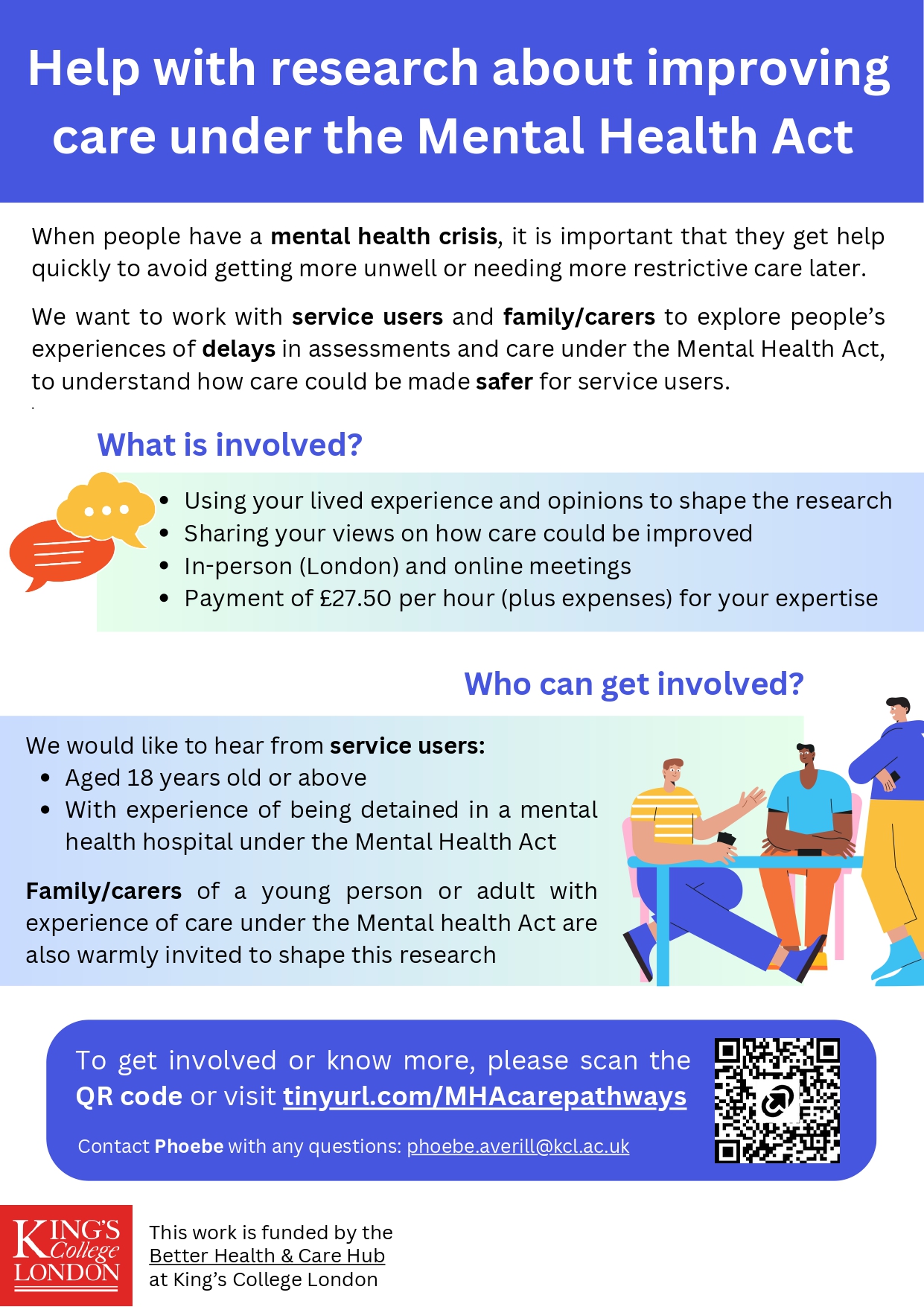
Now, there is a meaningful opportunity for carers to use their lived experience to shape research that aims to improve this care.
The importance of the Research
In times of crisis, timely support can prevent someone from becoming more unwell or needing more restrictive interventions later. Researchers at King’s College London want to better understand:
Experiences of delays in Mental Health Act assessments
What happens during admissions to hospital
How care pathways could be made safer and more responsive
Crucially, they want carers and service users at the heart of this work.
A Paid Opportunity to Share Your Expertise
Family members and carers of young people or adults who have received care under the Mental Health Act are warmly invited to join a Lived Experience Advisory Board.
As a carer, your insight is invaluable. You will help:
Shape the direction of the research
Share your views on how care could be improved
Ensure the work reflects real-life experiences
Meetings will take place both online and in person (London), making it accessible to a wide range of participants.
Participants will receive £27.50 per hour (plus expenses) in recognition of their time and expertise.
Who Can Get Involved?
The research team would like to hear from:
Adults aged 18+ with experience of detention under the Mental Health Act
Family members and carers of young people or adults with experience of care under the Mental Health Act
If you have supported someone through assessment, admission, or crisis care, your perspective could directly influence how future services are designed and delivered.
Be Part of Making Care Safer
This work is funded by the Better Health & Care Hub at King’s College London and is focused on improving safety and outcomes for people in crisis.
Your lived experience can help ensure future families face fewer delays, clearer communication, and safer care pathways.
To get involved or find out more, visit: tinyurl.com/MHAcarepathways
Welcome to a brief update of my Hospital Carers Discharge group. The Carers Hospital Discharge Toolkit Working Group is a collaborative initiative dedicated to improving the hospital discharge experience for carers and their loved ones. Chaired by myself a carer with lived experience, the group brings together a diverse mix of voices, including fellow carers, representatives from local carer centres, and, at times, hospital public and patient involvement (PPI) leads or staff. This inclusive approach ensures that the toolkit remains grounded in real-world experiences while benefiting from professional insight and support.
The meeting began with introductions from various participants who shared their roles related to carer support and hospital engagement, including updates on the Universal Care Plan and NHS 10-year plan from NHS England. We also had a presentation on the new project to support carers across North Central London, covering five boroughs and 11 hospital sites, which will help identify and support carers through various initiatives and resources.
The group discussed upcoming events for Carers Week 2025, new carers charter development at one of London’s largest NHS trusts, and various support programs, while addressing challenges and opportunities for improving carer support across different organizations and locations.
Carer Support and Hospital Engagement
The meeting began with introductions from various participants, who shared their roles and affiliations related to carer support and hospital engagement. Matthew highlighted his involvement in various mental health hospital trusts and carer engagement initiatives, while Eleanor discussed her new role as project manager for the North Central London Carers Support Project, which covers five boroughs. Ros from NHS England provided an update on the Universal Care Plan for carers, noting that more updates are needed. The conversation ended with plans for Eleanor to present later, focusing on developments in carer support across the region.
Universal Care Plan Implementation Update
As mentiioned earlier, there was a discussion the Universal Care Plan, which launched in January and will soon allow unpaid carers to initiate their own plans through the NHS app, expected by late summer or early autumn.
It was noted that while some organizations like hospitals and local authorities are familiar with the plan, there are knowledge gaps in the community and voluntary sectors. It was noted that the Urgent Care Plan team are addressing technical questions about IT systems and interfaces, and they are working towards a coordinated London approach. Also highlighted was the need for more training and support in having conversations with carers about the importance of being identified and registered in the system.
NHS 10-Year Plan Updates
There was also updates on the NHS 10-year plan, expected to be published in July, which will emphasize patient experience and care. An update on the integration of carers’ work streams between NHS England and the Department of Health and Social Care, with a likely focus on working-age carers. It was also mentioned on the uploading a video recording of the UCP Carer Contingency Plan launch to NHS Future, which participants could access by requesting to join.
Universal Care Plan Resources
The group discussed the Universal Care Plan (UCP) and its resources for carers, with an offer to connect with the UCP team in South West London.
Matthew shared a website link for UCP One London, which provides information and updates on carer technology initiatives.
The group also discussed plans for Carers Week next month and a new mental health resource for hospitals, though it was noted that details about the latter were still pending.
Carer Support Project Launch
Eleanor presented a new project to support carers across North Central London, covering five boroughs and 11 hospital sites. She explained how the project will identify carers through self-referral or hospital staff identification, using a website with translation tools and referral forms that can be submitted by carers.
Eleanor also discussed plans for carer awareness training and the distribution of informational materials in hospitals to help identify and support carers. Harrow Carers centre raised questions about how hospitals can alert staff to carers involved with patients and how to better identify carers, to which Eleanor responded with plans for training and collaboration with other initiatives like the Universal Care Plan.
Carer Strategy and Resources Discussion
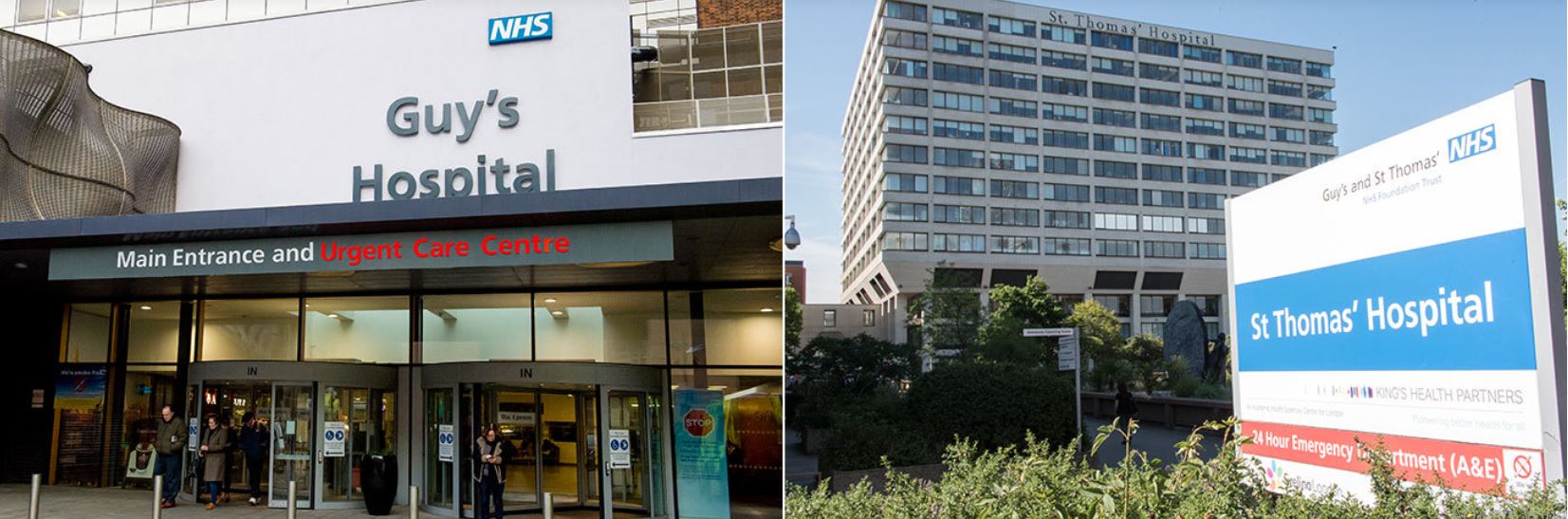
Eleanor discussed her previous work with Guys and St Thomas’s, noting that she had been involved in creating a carer strategy. She offered to provide the email address of a former colleague for more accurate information. The group also discussed a returning from home resources project led by Guys in southeast London, which the CEO of Bexley Carers Centre planned to present at the next meeting.
Carer Support Program Updates
The meeting discussed a carer support program that targets all carers, including young carers, with no specific threshold or type of carer required. Eleanor explained that local carers organizations would decide how to support identified carers, and hospital staff would have a centralized referral system. Matthew McKenzie provided an update on Carers Week events, highlighting various topics and resources available.
I have placed the link below from the NHS England site.
Tower Hamlet Carers Centre shared developments at the Royal London Hospital, including the addition of two carer support workers, a new base on the 13th floor, and efforts to raise awareness among staff and carers.
Carer Support Events and Initiatives
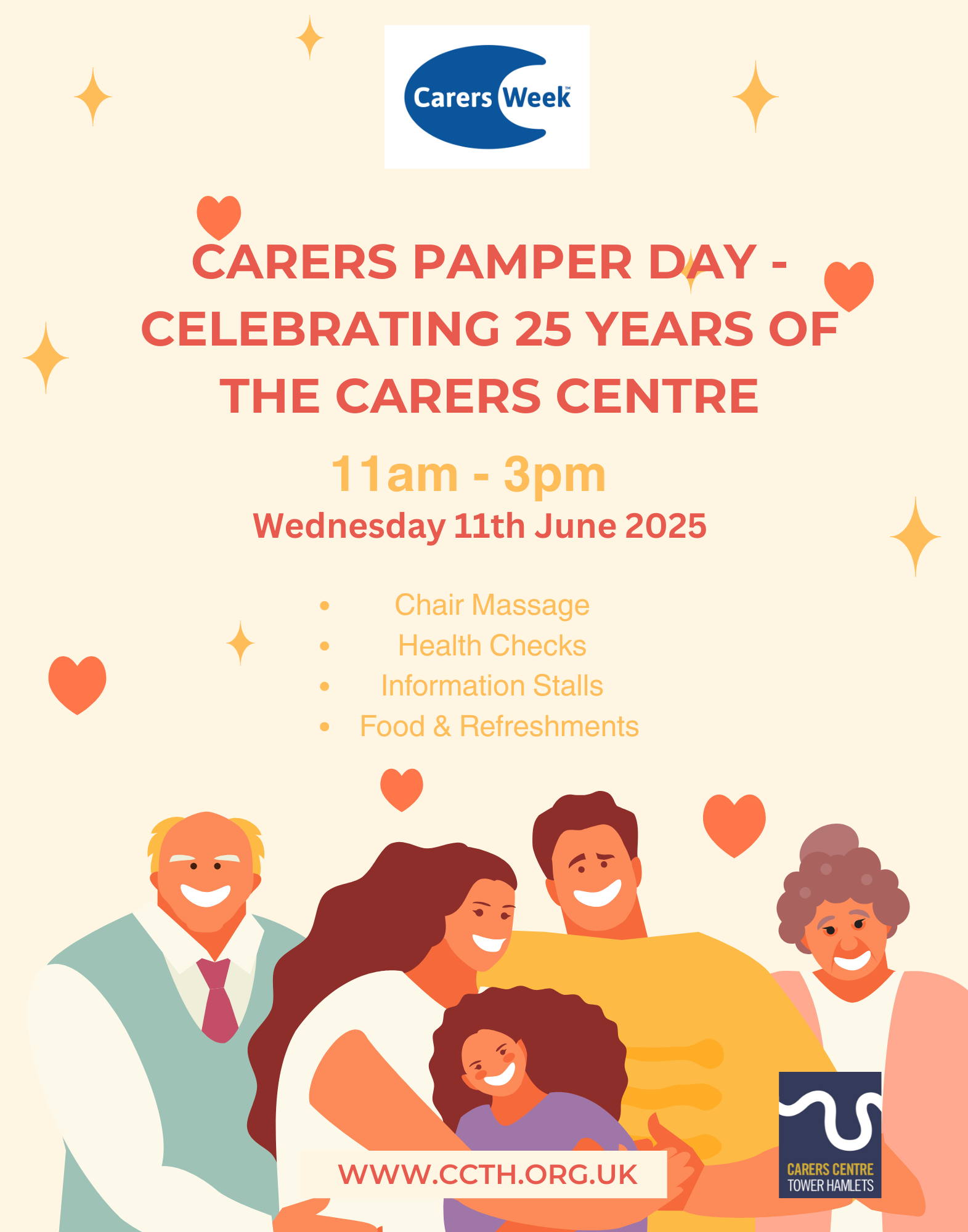
Tower Hamlets Carer centre discussed upcoming events to promote carer support, including a community day on June 11th.
Plus an information stall at the Royal Hospital on June 13th.
Tower Hamlets Carer Centre mentioned plans to start a coffee morning at the hospital’s 13th floor carers hub. Harrow Carers shared that the carers support lead stopped in April due to funding issues, but the NHS trust is now considering joining the Triangle of Care scheme. He requested help finding a suitable presenter for an upcoming meeting with high-level trust members. Matthew offered to connect the centre with Triangle of care leads, who might be able to help with the presentation.
Carers Week Planning and Support
The team discussed upcoming events for Carers Week 2025, including a joint event with the local authority and a new event in the north of the borough in partnership with Greenwich carers. St Georges hospital NHS trust (GESH) shared the development of a new carers charter based on feedback from listening events, which will be shared with various groups and staff to demonstrate commitment to carers’ needs.
SONY DSC
Bexley Carers mentioned the availability of the Household Support Fund for carers facing cost of living issues, with grants of up to £150 available through local authorities.







 A Caring Mind