By Matthew McKenzie FRSA BEM, Chair, Triangle of Care Community Group
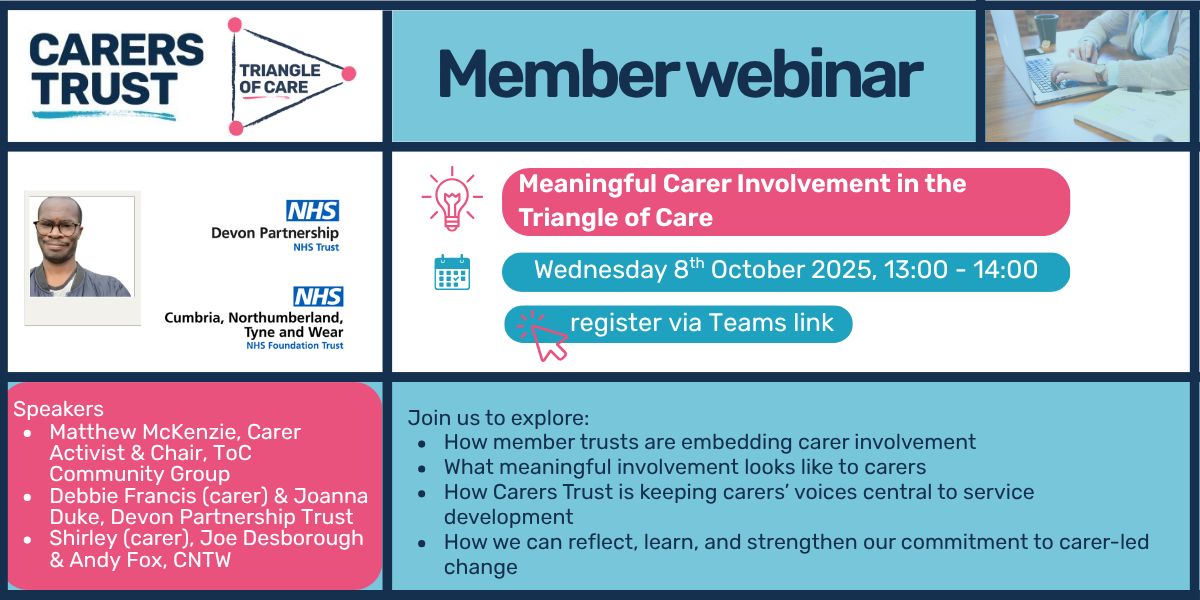
This week’s Triangle of Care Member Webinar, hosted by Carers Trust, which focused on a vital question: What makes for meaningful carer involvement?

We heard from across the Triangle of Care network, these being carers, professionals, and trust representatives coming together to share what genuine involvement looks like in practice.
I spoke about my own lived experience as a carer, supporting two non-verbal brothers with autism and my late mother with mental health challenges and how this journey has shaped my advocacy for stronger partnerships between carers and professionals.

Over the years, through the Triangle of Care, I’ve seen how much difference early and equal involvement can make.
What Meaningful Involvement Is and What It Isn’t
In my presentation, “What Does Meaningful Involvement Look Like for Carers in Mental Health”, I shared that meaningful involvement is not just about ticking a box or being invited to a meeting. It’s not about hearing from carers only when there’s a crisis or after decisions have already been made.
When carers are genuinely involved, it strengthens trust, improves safety, reduces crisis episodes, and fosters resilience for everyone involved.
Learning from Practice: Trusts Leading the Way
During the webinar, we heard powerful examples of carer-led work in action.
- Devon Partnership NHS Trust shared how carer co-production has shaped their award-winning suicide prevention work, embedding carer insight into training and care planning.
- Cumbria, Northumberland, Tyne and Wear NHS Foundation Trust spoke about how co-produced strategy and “safe spaces” empower carers to share their experiences and knowledge.
As I mentioned in my talk involvement isn’t a “nice to do”, it’s a statutory duty for NHS healthcare providers under national guidance: Working in partnership with people and communities (NHS England, 2023).

Meaningful carer involvement isn’t just good practice; it’s essential to improving outcomes, building safer systems, and valuing unpaid carers as equal partners in care.
A Call to Action: Support Young Carers in the Mental Health Bill
As Chair of the Triangle of Care Community Group, I also want to highlight an important opportunity to strengthen support for young carers through the upcoming Mental Health Bill, due for debate in Parliament on Tuesday 14th October.
Carers Trust has been working with the Liberal Democrats on Amendment NC27, which would place a duty on hospital managers to identify and support children caring for a parent with severe mental illness. These children are too often invisible in the system despite facing significant risks to their own mental health and wellbeing.
I urge every carer, supporter, and professional to contact their MP and ask them to back this amendment. You can find and message your MP easily through TheyWorkForYou.

 A Caring Mind